Ficus trees have long been popular among houseplant enthusiasts. They thrive and thrive. These plants produce a large amount of oxygen. However, sometimes ficus leaves turn yellow and fall off. There can be many causes, from a simple loss of foliage to serious diseases. We suggest taking a closer look at this issue.
Content
- 1 When is it normal for ficus leaves to fall?
- 2 Ficus leaf drop due to stress
- 3 Mistakes in care as a cause of ficus leaf loss
- 4 Diseases as a cause of leaf loss in ficus and mistakes in dealing with them
- 5 Ficus leaf loss due to pests and how to control them
- 6 Helpful tips from Top.tomathouse.com on how to prevent ficus leaves from dropping
When is it normal for ficus leaves to fall?
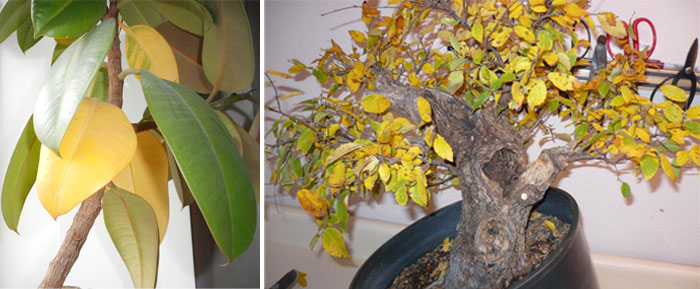
Leaf shedding is a natural process for many plants. Ficus trees are no exception. For some species, a shedding rate of 30-50% of yellowed foliage is considered normal. In drafty conditions, this figure can be higher. However, this doesn't necessarily mean the plant is dead. This phenomenon typically occurs with the onset of autumn. New leaves begin to grow after approximately 3-4 months. Leaf shedding is most common in upright ficus trees.
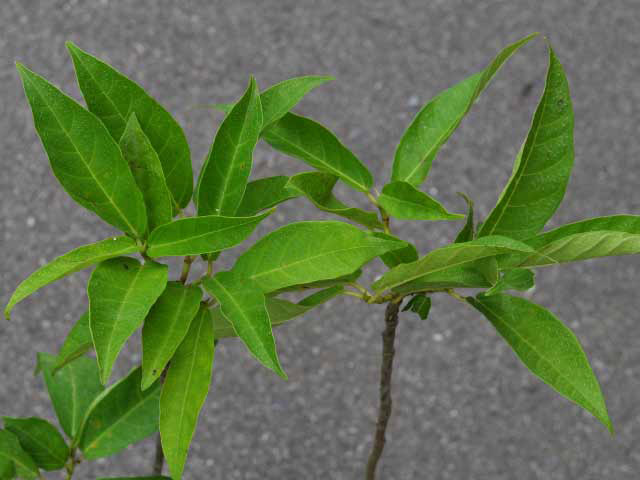
Some species of ficus, such as the dyer's ficus, can shed their leaves in both fall and spring. New leaves appear at the ends of shoots, but most of the older ones may still remain on the trunk. This indicates that the plant is alive and will soon renew its foliage.
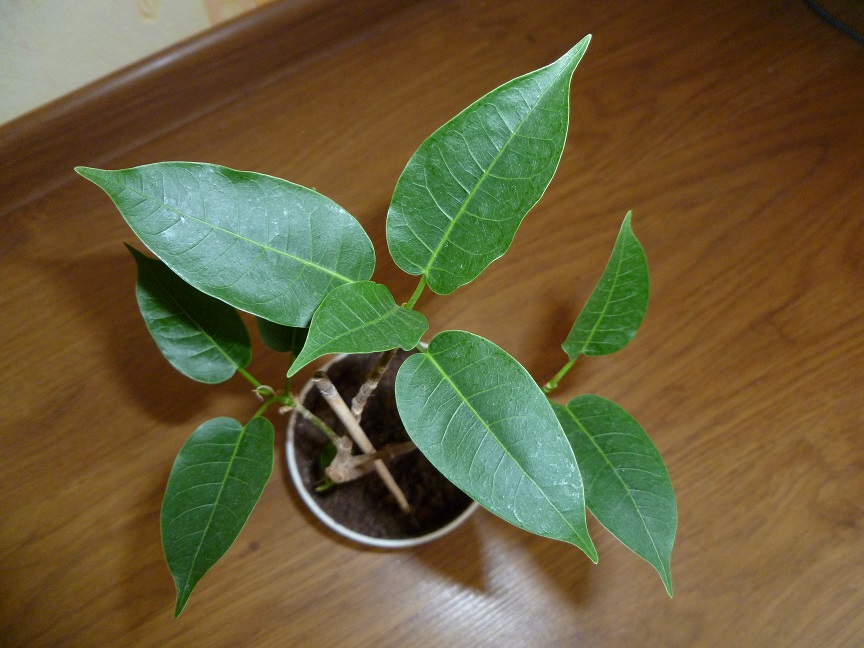
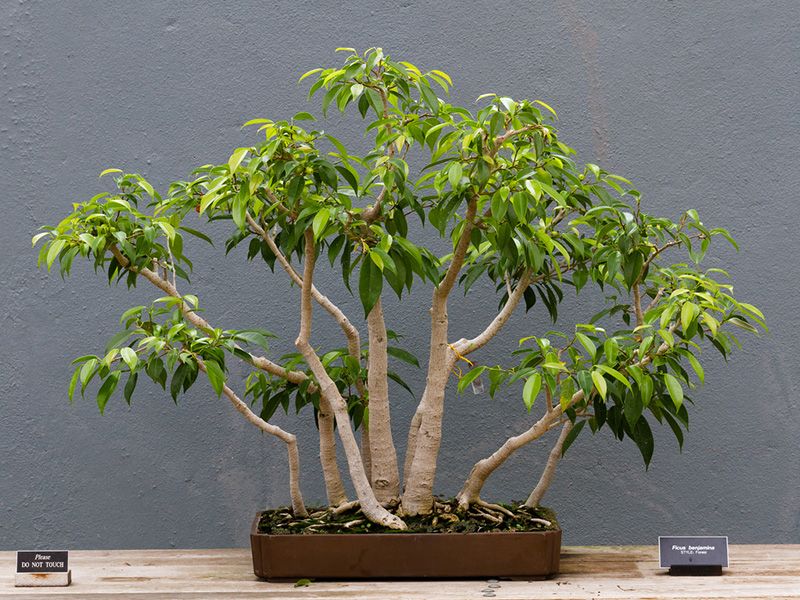
The most common is Ficus Benjamina (or, as it's commonly known, birch). It includes over 20 varieties. This plant thrives in warmth, so as soon as the air temperature drops below 20°C, the leaves begin to fall. This phenomenon is hardly normal, as this ficus is an evergreen. Stress can cause it to become diseased. Therefore, it's important to monitor its growing conditions, watering it once every 10 days in winter and misting it periodically.
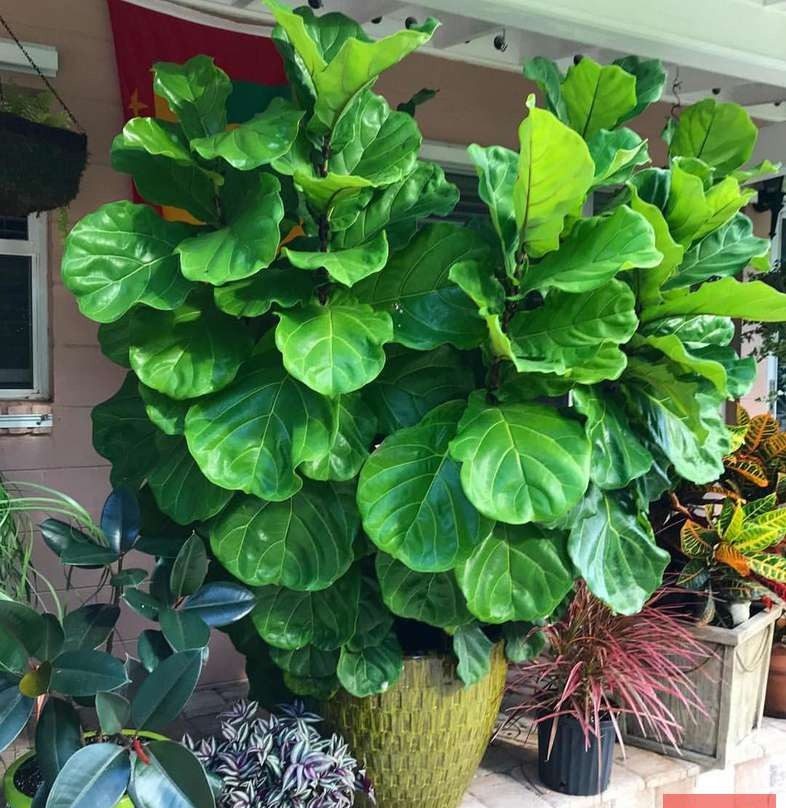
Many evergreen ficus trees are characterized by tall stems and large, unusually shaped leaves. For example, the Ficus lyrata resembles a lyre due to the distinctive leaf structure and their unusual size of half a meter. The Rubber Plant (Ficus elastica) has thick, fatty leaves, also known as Robusta.
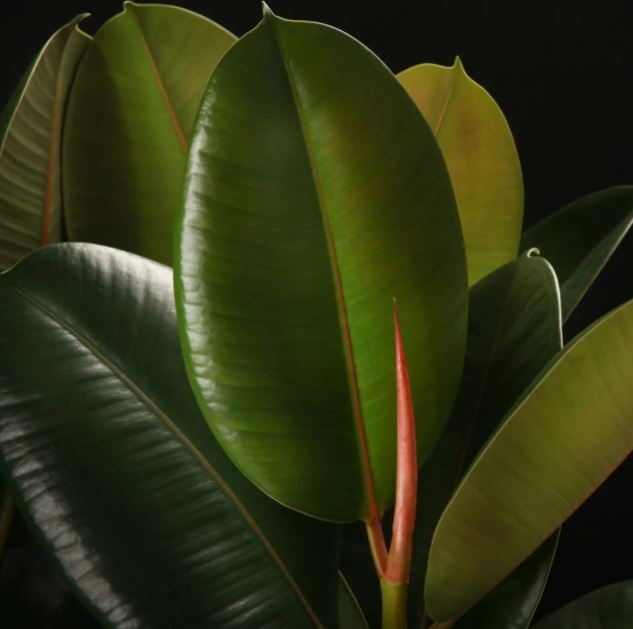
A seasonal loss of 10-15 leaves is considered normal. This occurs in anticipation of winter and is not a cause for concern. With the arrival of spring warmth and longer daylight hours, new leaves will grow in place of the fallen ones.
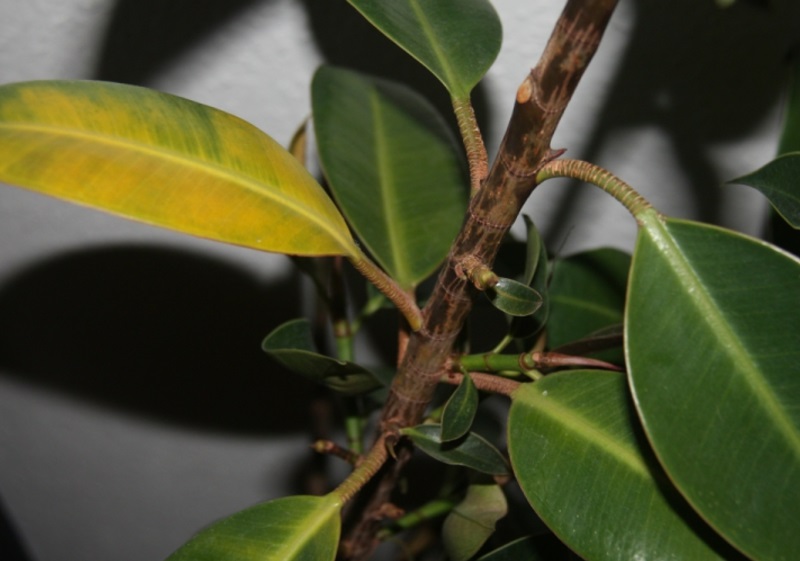
If the plant appears healthy and shows no signs of disease, it should be left alone. Avoid moving it to a different location or exposing it to artificial light.
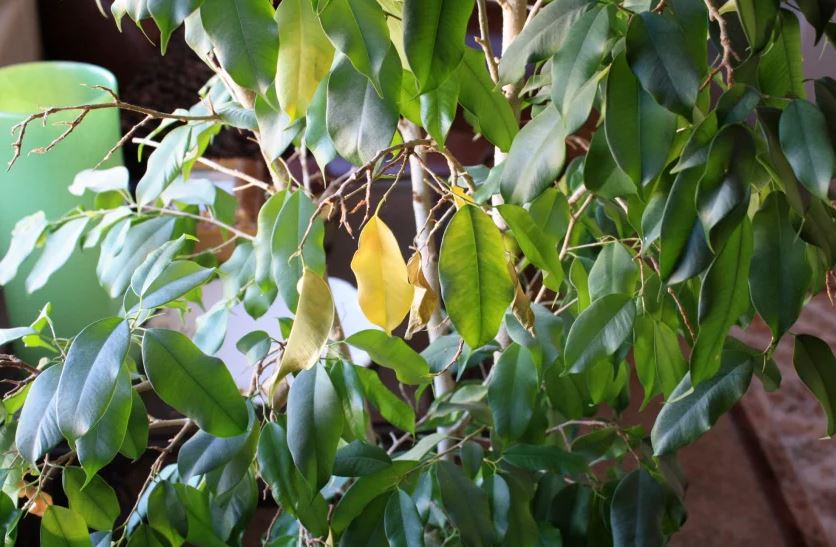
But sometimes leaves start falling out of season, and their quantity is also alarming. In this case, another cause for this process must be sought.
Ficus leaf drop due to stress
Plants, like all living things, can experience stress. This is often the cause of leaf drop in indoor ficus plants.
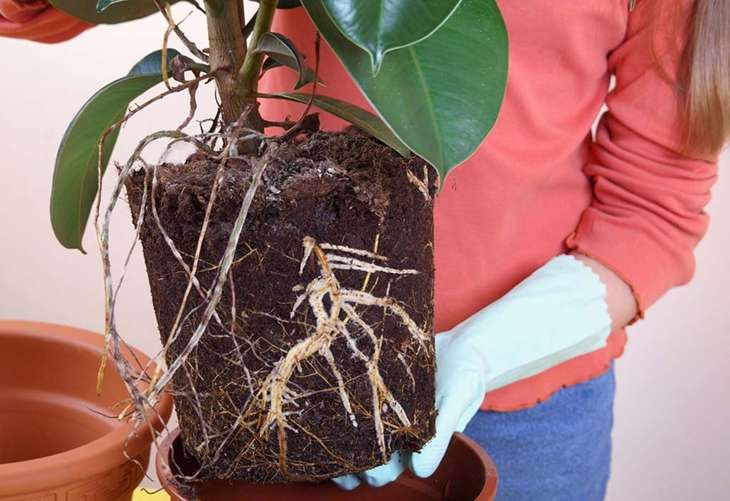
Any change, even minor ones, can cause stress: a change of location, repotting, rearranging, or even rotating the pot. When a ficus is growing well and its condition is not causing concern, it's best to leave it alone. If the leaves have dropped because you moved the plant to another room, return it to its original location. Incidentally, this applies to any other plant. There's no need to move them around the apartment if they're thriving in their current location.
Mistakes in care as a cause of ficus leaf loss
Ficus leaf drop is often caused by improper care. Although this plant is relatively easy to care for, it requires proper watering, careful repotting, and a specific microclimate.
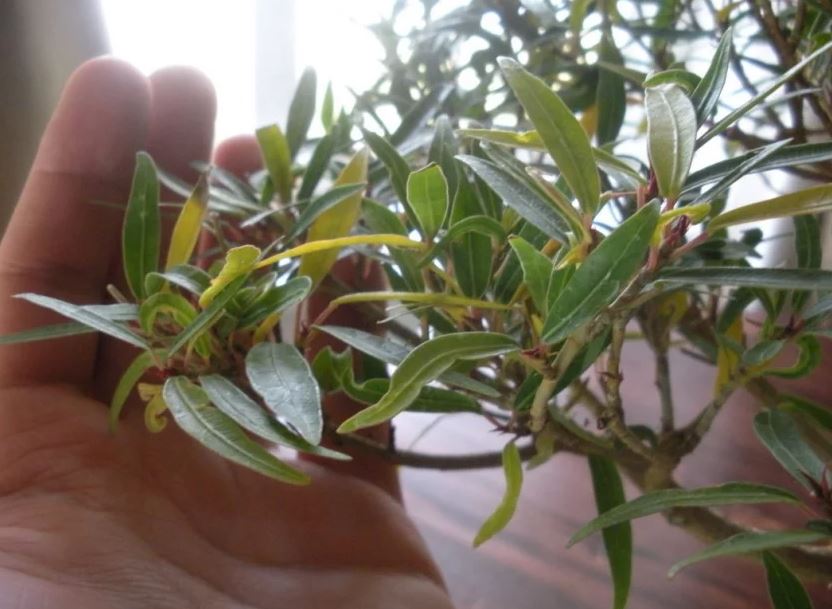
Incorrect conditions: lighting, temperature, air humidity
Ficus trees are sensitive to temperature fluctuations. As soon as the air temperature drops below 16°C, the leaves, especially the lower ones, immediately begin to turn yellow and fall off. Drafts and open windows can also cause stem baldness.
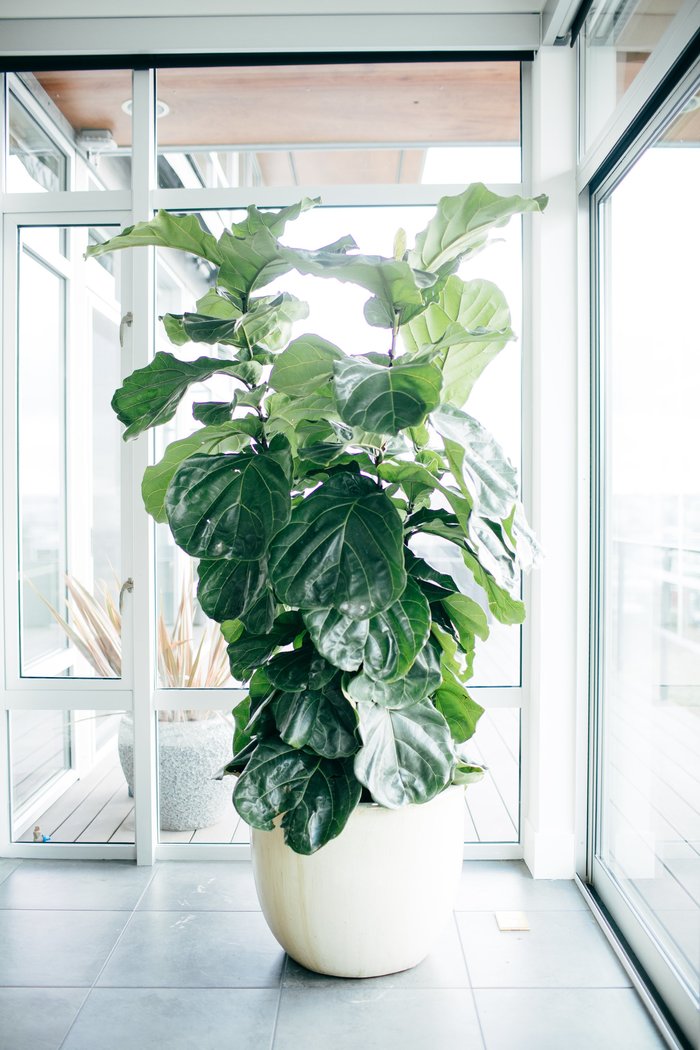
Important! Any changes in the microclimate (decrease or increase in humidity, light, or temperature) can cause leaf drop. It is undesirable to make any changes to the ficus's normal life.
At extremely high temperatures, when the thermometer rises above 30°C, the leaves become weak, change color, and eventually fall off. Therefore, it is very important to pay attention to the characteristics of the chosen variety, as their care requirements may vary slightly.
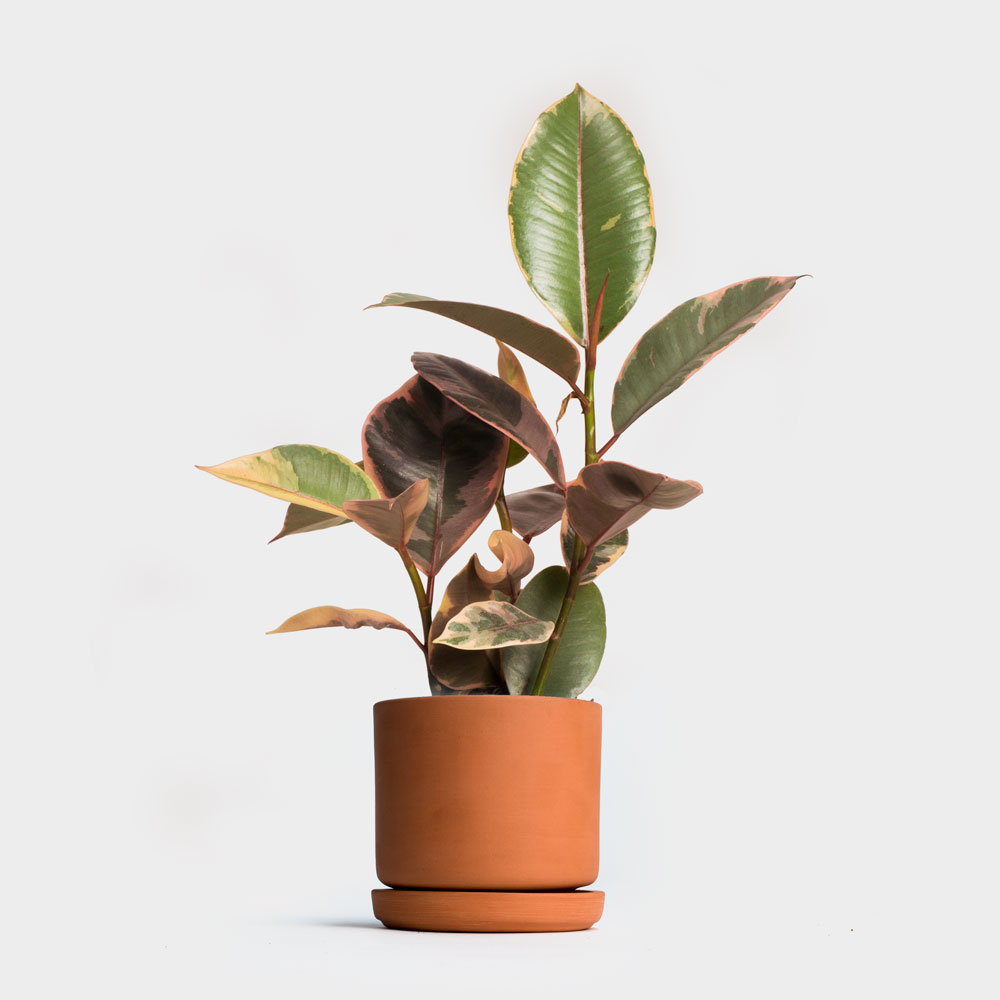
Ficus plants thrive when the indoor air is sufficiently humid. When it's too dry, the risk of leaf drop increases significantly. This is especially true if the pot is on a windowsill near a heating vent, or if the weather outside is extremely hot.
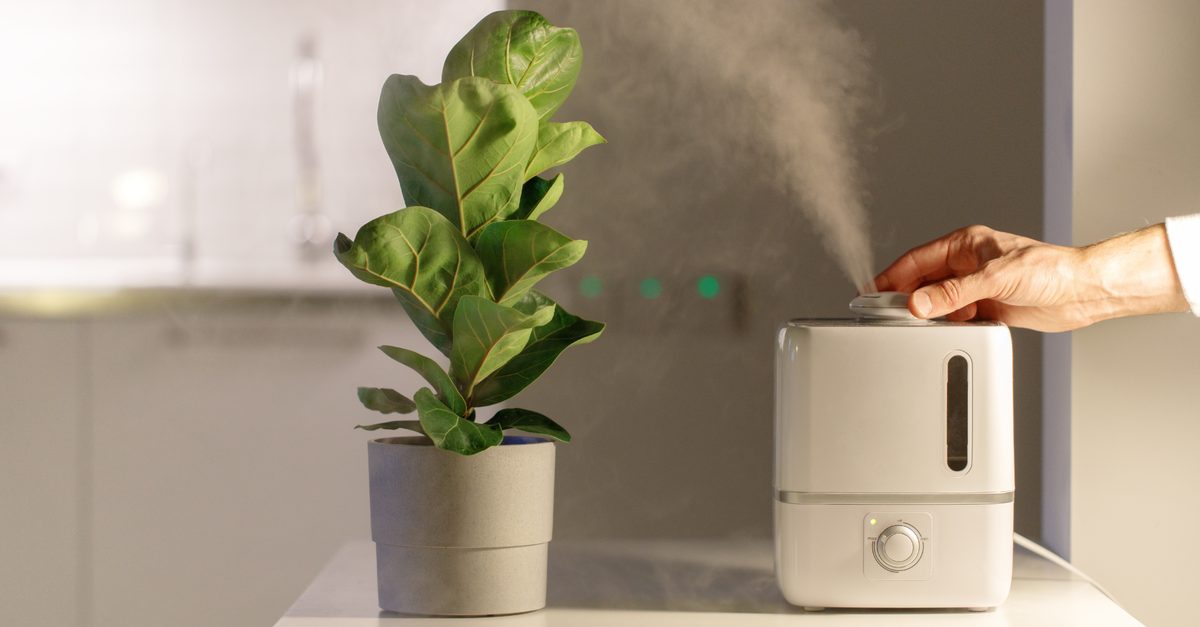
To adjust the humidity level, you can place a container of water near the flower or use special devices - humidifiers.
If your ficus has uniform, rich green leaves, it can easily grow in partial shade. Varieties with variegated leaves, however, require good light. The higher the light, the brighter and more vibrant the plant will look.
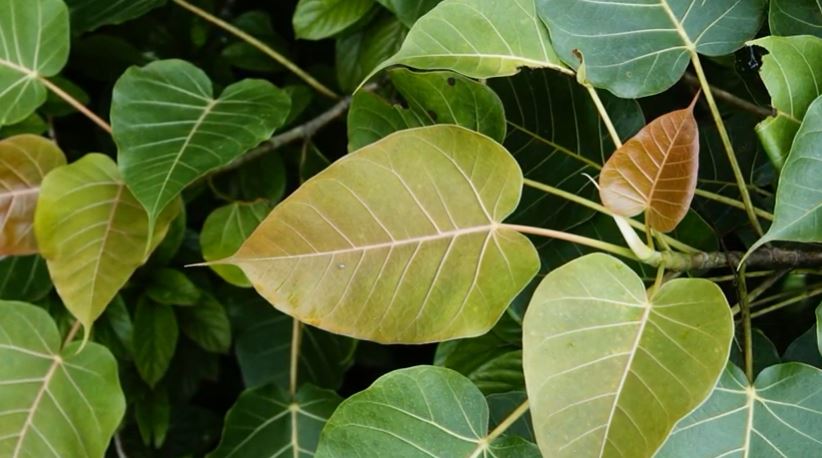
Very often, it's a lack of light that causes plants to wilt, lose their elasticity, and dry out. Almost any ficus species will grow poorly in a dark location, even with good watering and fertilizing.
Mistakes when watering
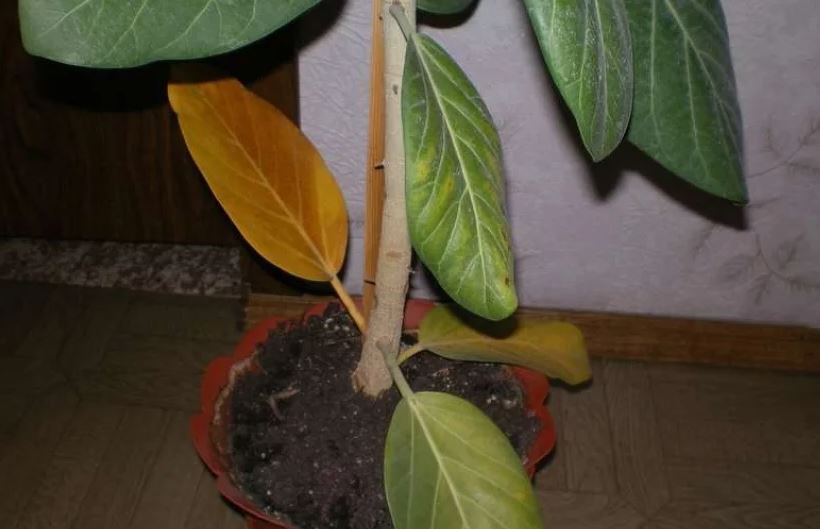
Overwatering can also cause the ficus to lose its leaves. However, too little water and the soil dries out can also be detrimental to its health. Constantly wet soil makes the roots vulnerable to various diseases. Rot or mold may develop. This can be identified by a characteristic unpleasant odor emanating from the soil. The difficulty is further compounded by the fact that the roots are hidden by the soil, making it difficult to see. Disease can be identified by the milky sap—pinch off a portion of the shoot. If the sap turns brown instead of white, it's time to begin treatment. If leaves have fallen from only one branch, it's best to remove that branch.
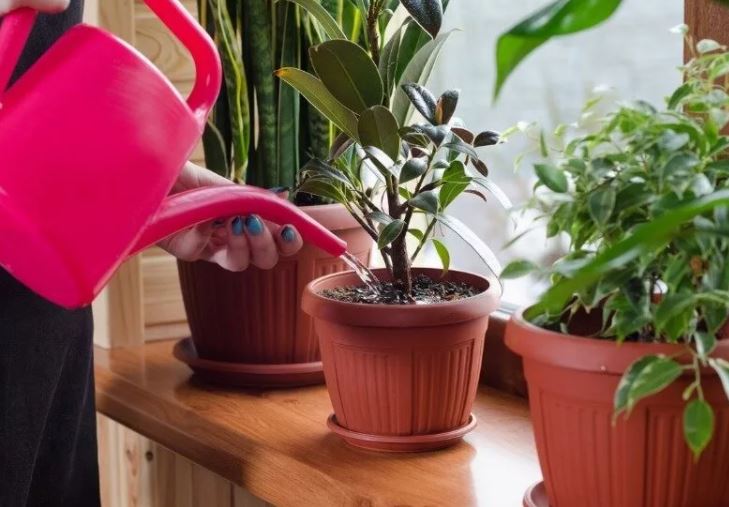
How to help a ficus:
- Stop watering.
- If there is no improvement within the next few days, you will have to remove the plant from the pot and rinse the roots with warm water, after shaking off any soil.
- If there are affected roots showing signs of disease, they must be cut off in advance with disinfected sharp scissors.
- The cut areas must be powdered with crushed activated charcoal tablets.
- Replant the ficus in fresh soil, then leave it alone for 2-3 weeks, without even watering it.
Sometimes leaves begin to wrinkle. This may indicate insufficient moisture. Misting can help correct the situation.
Incorrect transplant
As we mentioned above, ficuses don't like to change their location and don't tolerate any interference in their quiet existence. Even forced repotting is stressful for the plant, to which it immediately reacts accordingly.
If a flower has outgrown its pot and requires more space, it should be repotted with extreme care—literally transferring it to the new location along with the existing soil. Fill the remaining space with moistened soil. After this, watering should be completely avoided for 7-10 days. Watering should also be avoided immediately after repotting.
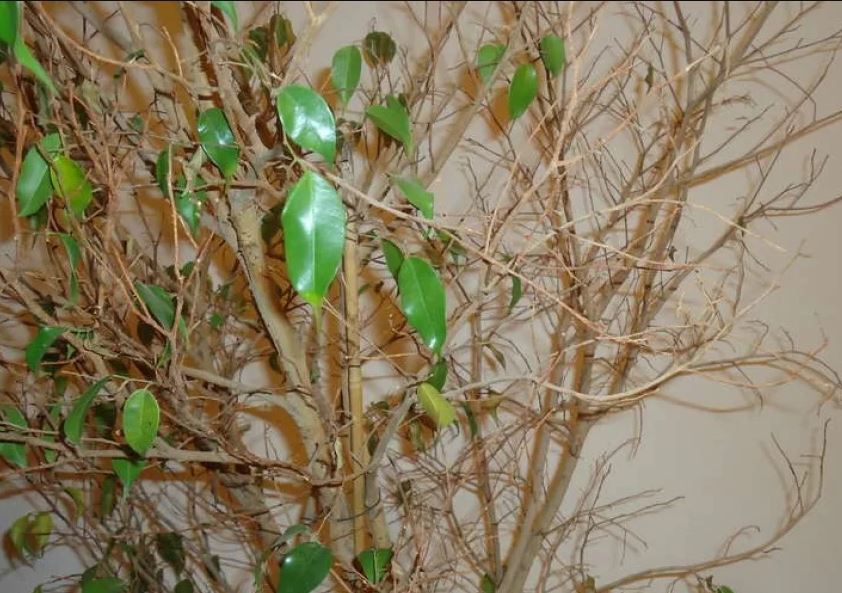
Sometimes, after being placed in a new pot, a plant begins to actively shed its leaves. It's important to understand what it's not happy with:
- A pot that was too large was taken, which was more than 4 cm wider than the previous one.
- The land was watered abundantly.
In both cases, the ficus will have to be repotted, taking into account the mistakes made. If everything was done correctly, it's quite possible that the leaf drop is a reaction to stress. You'll need to wait for the plant to adapt, which can take anywhere from 1 to 4 months.
Lack of micro- and macroelements
A deficiency of macro- and micronutrients causes plants to develop small leaves. This can also cause them to fall off.
If the soil is poor and depleted, then you need to organize proper fertilizing or transplant the flower into new soil.
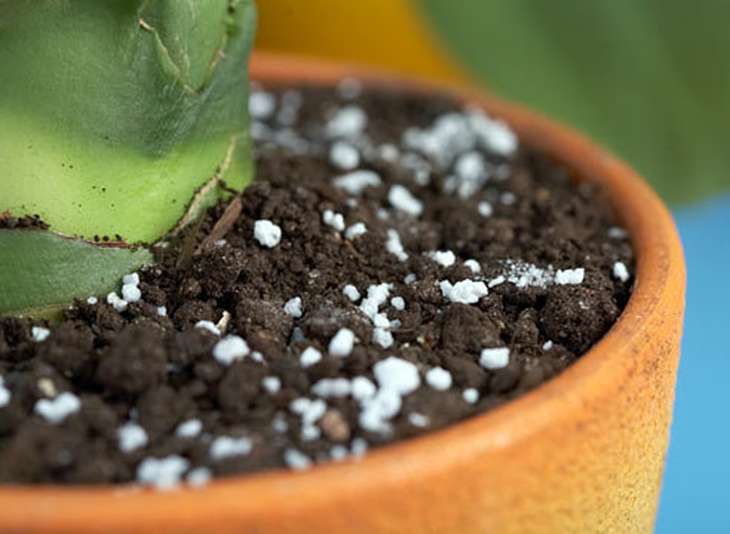
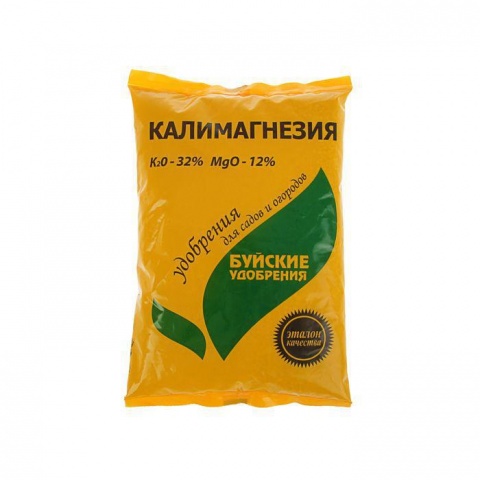
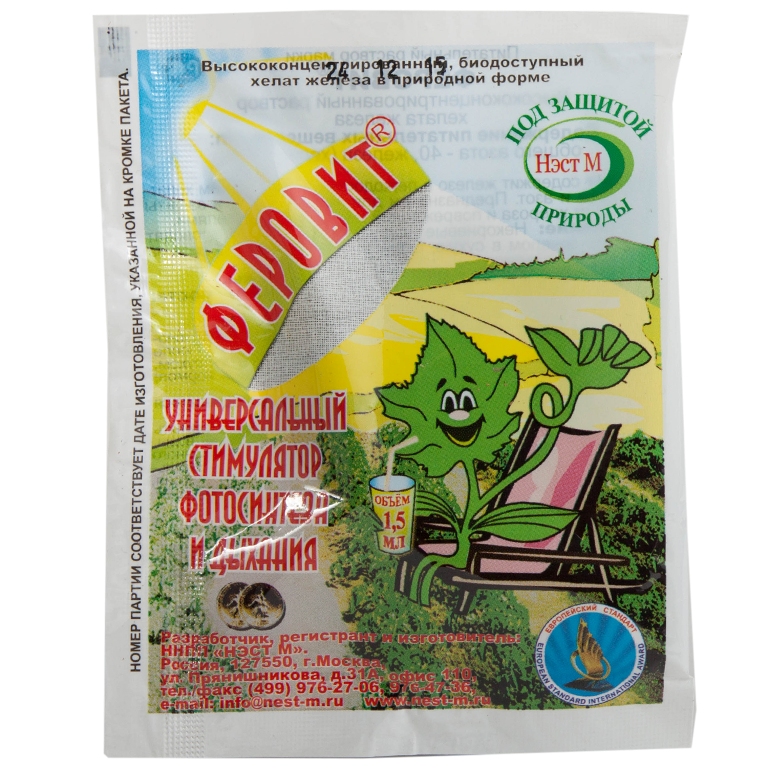
Houseplants respond best to nitrogen fertilizers. They promote lush foliage growth. A magnesium deficiency causes leaves to fade and turn yellow. In this case, magnesium sulfate, potassium magnesium sulfate, or dolomite flour can be used as fertilizer. Some gardeners prefer specialized fertilizers, such as Emerald. If the soil has low iron levels, Ferrovit or iron chelate should be added to prevent leaf drop.
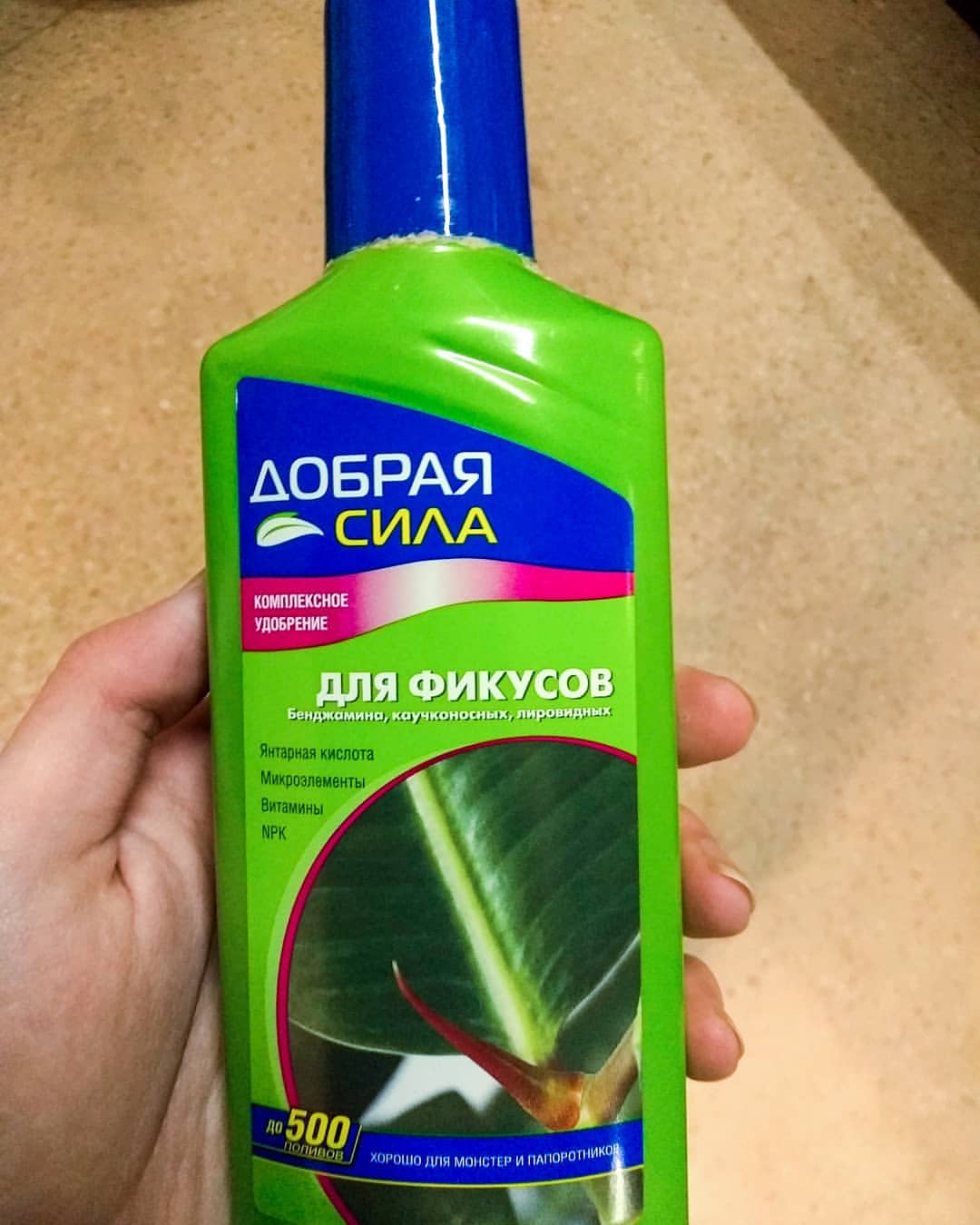


Important! All fertilizers should be applied only to well-moistened soil. Water thoroughly on the first day, and only on the third or fourth day should you begin fertilizing. Otherwise, you risk burning the roots.
If the ficus appears too weak, the concentration of the preparation recommended by the manufacturer should be halved.
"Maintenance therapy" for houseplants should be performed between March and September, when the plant's development is in full swing. With the onset of winter, the ficus enters a dormant state, the rate of nutrient absorption by the roots decreases, and photosynthesis ceases.
Many tree varieties, especially the Ficus benjamina, regularly shed their leaves when the concentration of macro- and microelements in the soil decreases. If all other causes for this behavior have been ruled out, apply a specialized fertilizer designed for indoor ornamental plants. It's best to ensure the plant receives sufficient nutrition in advance and fertilize it twice a year during the active growth period.

Important! When repotting a ficus plant in a new pot and using prepared soil, there's no need to add any additional fertilizer—the specialized soil already contains sufficient nutrients. Don't apply the first fertilizer until after 1-1.5 months. Doing so too soon can easily burn the root system.
To ensure your ficus grows well and is green, make it a rule to fertilize it in the spring and summer. Fertilize twice a month, and it's best to alternate the nutrients. Essential macronutrients include nitrogen, potassium, phosphorus, magnesium, and the biogenic element iron.
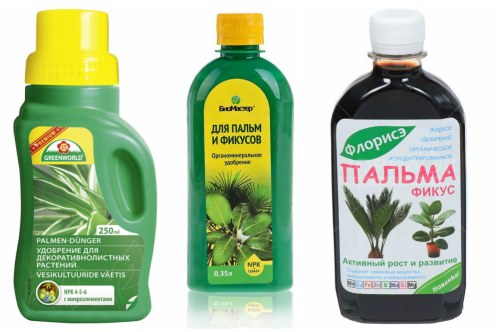
To make your work easier, it is best to purchase ready-made preparations, for example, Ideal or Palma.
An interesting video about caring for a rubber plant (watering, fertilizing, and why leaves fall, dry out, and turn yellow):
Diseases as a cause of leaf loss in ficus and mistakes in dealing with them
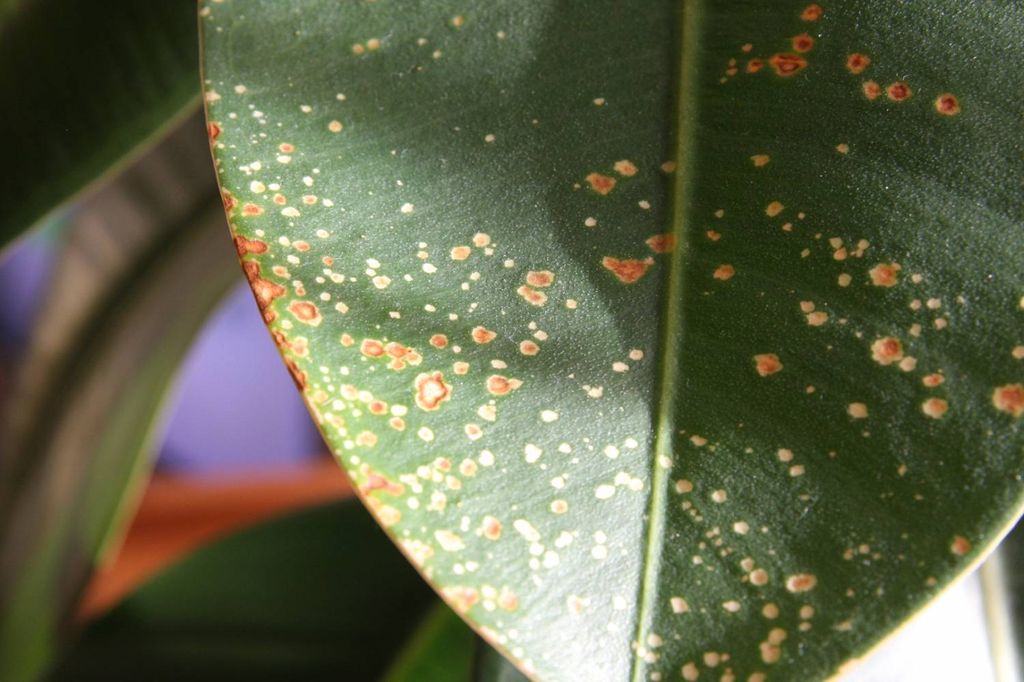
Very often, spots of various shapes begin to appear on the leaves. These may indicate the presence of a fungus. Fungicides can help combat this, the most popular of which is copper oxychloride.
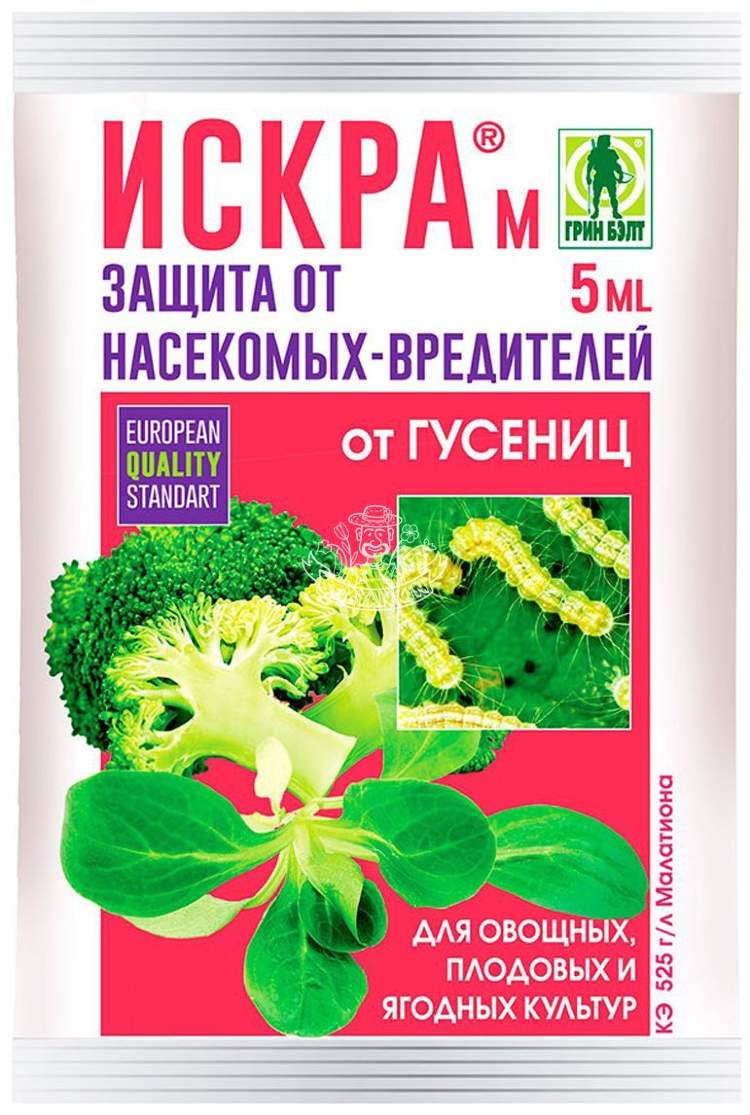
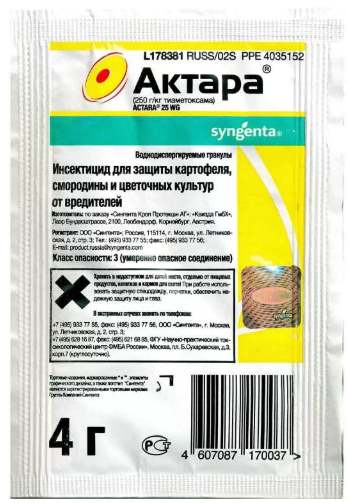
If insects are visible in the soil or on the plant, they must be destroyed immediately. Any insecticide approved for indoor gardening (Iskra, Aktara, and others) is suitable for this purpose.

Thoroughly rinsing the leaves with a brush or a hard sponge will help get rid of an infestation of mealybugs or scale insects.
Botrytis or gray mold
The pathogen becomes active at high temperatures and humidity. Lack of ventilation and poor soil drainage increase the risk of disease development.
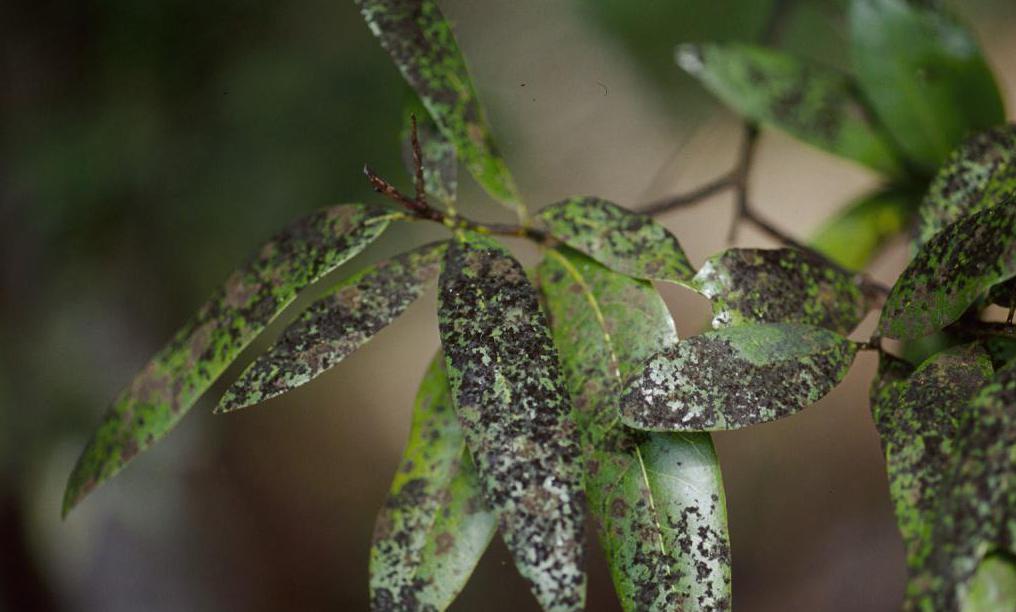
It all begins with a grayish coating appearing on the leaves and stems. If in doubt, shake the ficus—fine dust will fly off if the disease is present. The leaves then begin to darken and curl, eventually drying up and falling off. If treatment is not started in the early stages of rot, the ficus may die.
The treatment process takes place in several stages:
- Remove all damaged areas from the plant. Next, prepare a disinfectant solution: dissolve 1 tablespoon each of chalk and ash in 10 liters of warm water, then add a teaspoon of copper sulfate, stir thoroughly, and strain. Use the resulting solution to thoroughly wipe the healthy areas of the ficus.
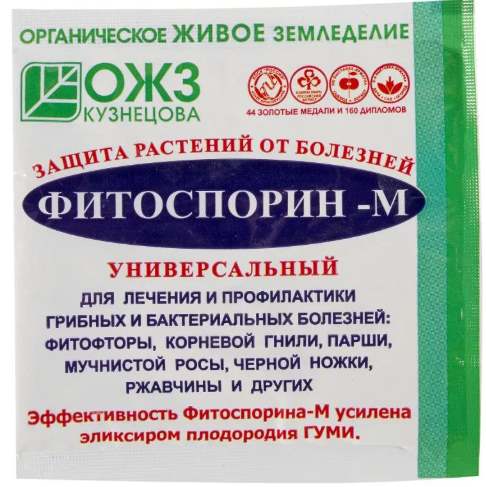
- If the affected area is large or previous treatments have failed, the plant should be treated with a fungicide. Fitosporin-M has proven effective.
- After completing the work, the room must be ventilated, preventing stagnant air.
- After a few days, you can begin watering, stabilizing it to the required volume based on the time of year, the size of the pot, and the type of ficus.
Sooty mold
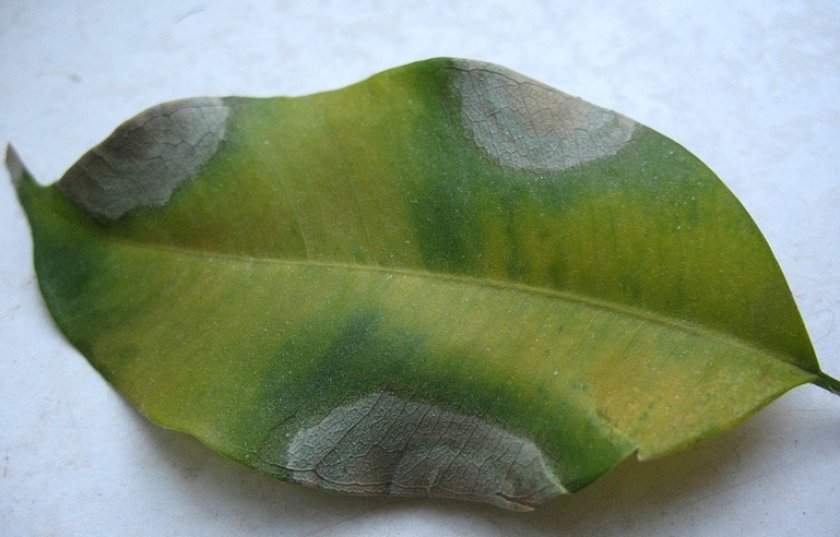
If your ficus starts to turn black, it's most likely due to sooty mold. If the leaves curl, carefully examine the plant for any black deposits. The fungus is caused by the waste products of parasitic insects.
How to get rid of this problem:
- Leaves with extensive infestation should be removed from the bush and destroyed. Wipe the remaining plant with a solution of real laundry soap. To help it dissolve, rub it first.
- The root system and stems will need to be treated with fungicides according to the manufacturer's instructions. This will help kill any insects that may be present in the soil.
Rhizoctonia, pythium, late blight
If you notice your ficus's growth has slowed, its leaves are losing color, wilting, and spots are appearing on the stem, it's most likely a fungal infection. Overwatering and a lack of drainage in the pot could be the cause. If the roots or base of the stem have begun to rot, treatment is pointless. The only option is to discard the ficus to prevent the disease from spreading to other houseplants.
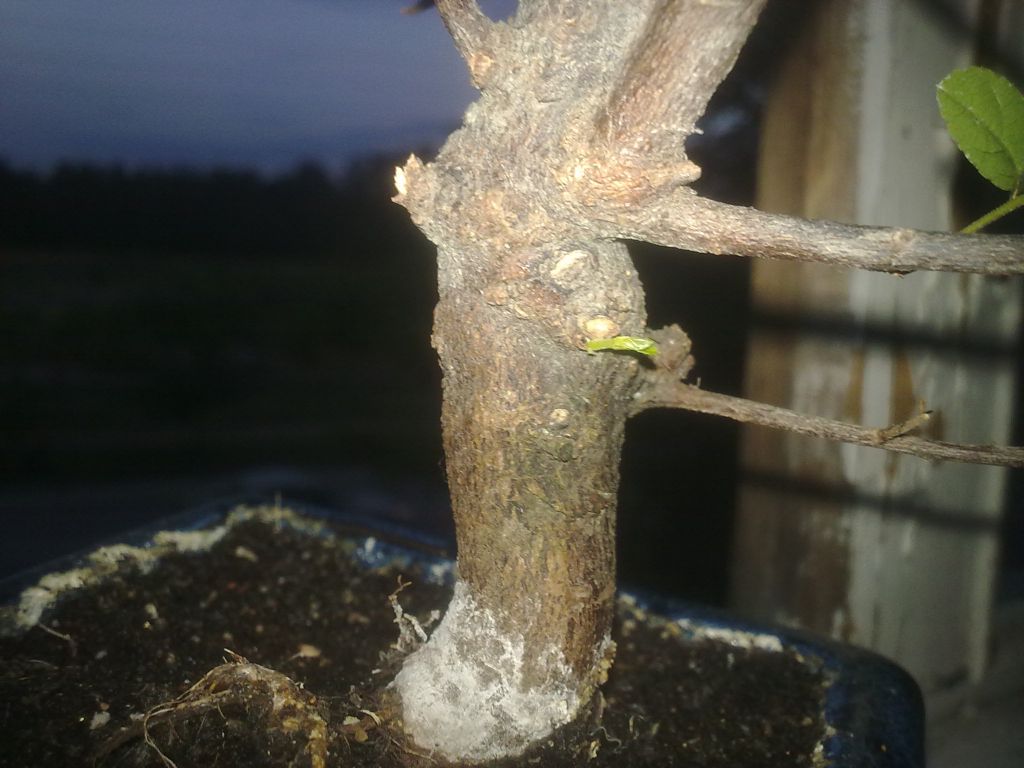
To prevent fungal diseases, reduce watering, ensure that water does not stagnate in the soil, ensure drainage when replanting, and disinfect the soil once a month with a weak solution of potassium permanganate.

Powdery mildew
The disease manifests as white, powdery spots on leaf blades. It is very dangerous for houseplants due to its rapid spread. Powdery mildew typically appears on ficus plants grown in hot, humid rooms with poor ventilation.
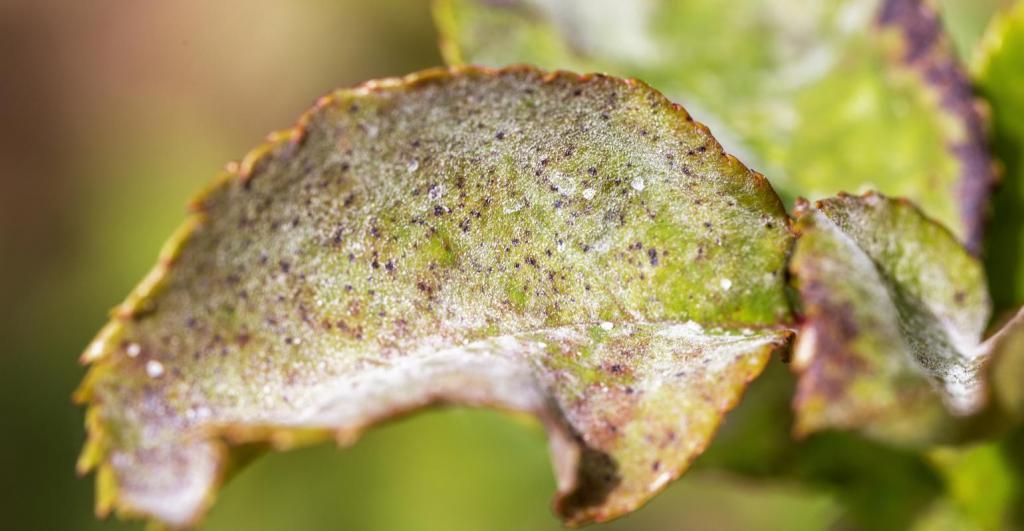
At the initial stage, the disease can be treated in the following way:
- Take a liter of warm water and add 10 g of soda and 2 g of grated laundry soap.
- After the ingredients have dissolved, add 2 g of copper sulfate.
- Dilute the resulting concentrate with water to obtain a volume of 2 liters.
- Spray the ficus.
Rust
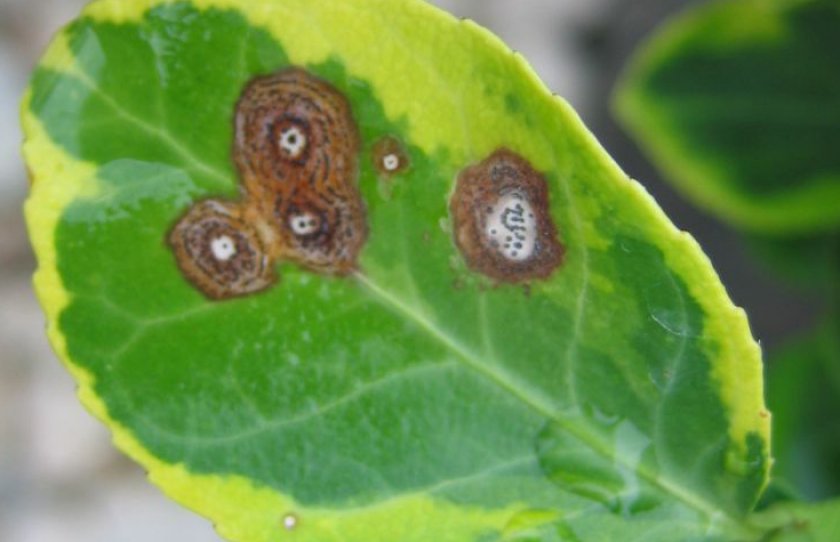
If you notice a coating on the leaves that closely resembles rust, your ficus has anthracnose. The key is to not let the disease progress; in its early stages, it's easily treatable. Simply wipe all the leaves with water and remove the affected ones. Afterward, treat the soil with fungicides. Next, monitor the ficus's progress, and repeat the treatment after 7-10 days if necessary.
Read about Growing Ficus microcarpa, including ginseng, at home.
Ficus leaf loss due to pests and how to control them
Sometimes, ficus leaf drop is caused by insect pests, which can be introduced from other houseplants or contaminated soil. Below, we'll look at the most common houseplant pests.
Scale insect
Scale insects have taken a liking to the undersides of leaves. Their presence can be identified by small, light-colored bumps. This pest feeds on plant sap, causing the plants to become diseased and wither.
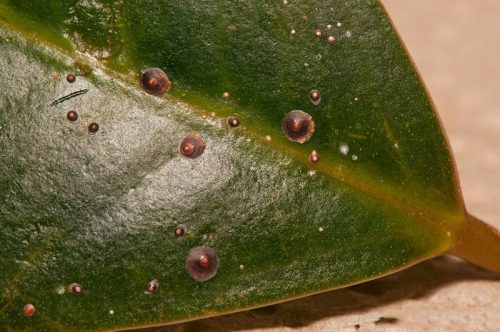
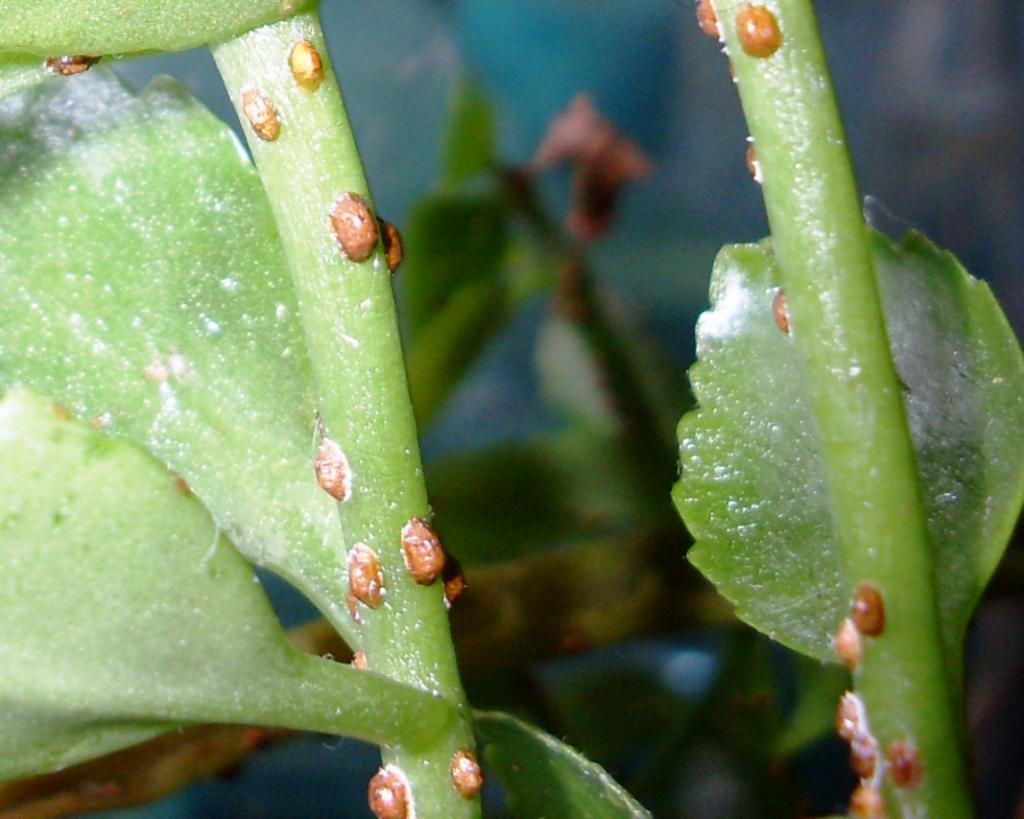
The white spots are nothing more than the parasite's waste products. They remain on the leaves and become a breeding ground for sooty mold, which we mentioned above. You can get rid of scale insects in the following way:
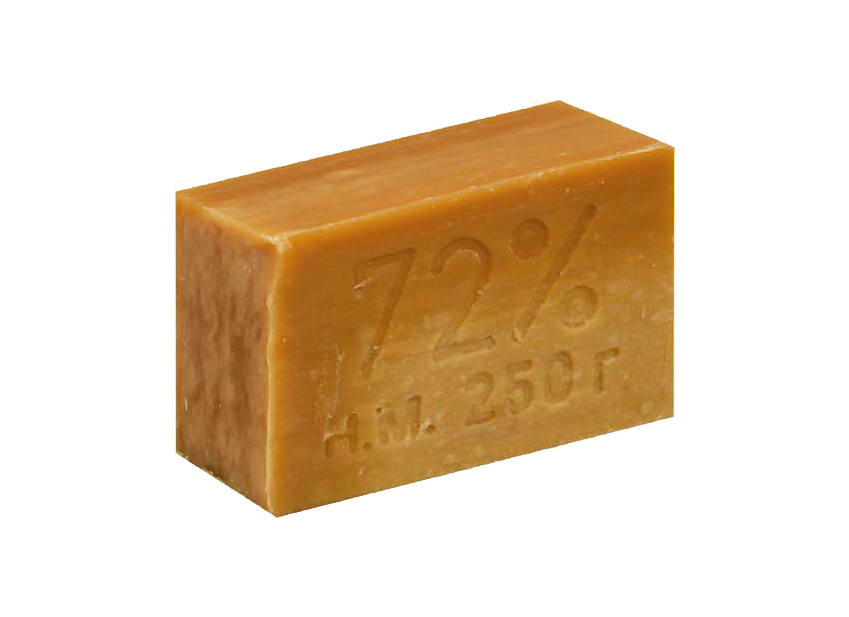
- Dissolve a little laundry soap in water and wipe all damaged leaves.
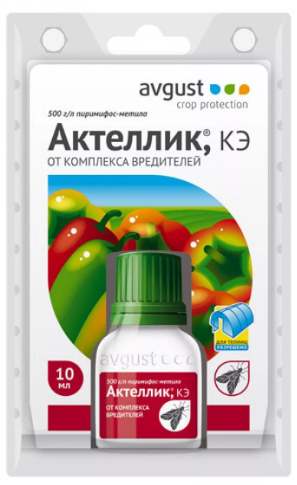
- After the plant has dried, treat it with Actellic. For maximum effectiveness, apply this three times, spaced 7-10 days apart.
Spider mite
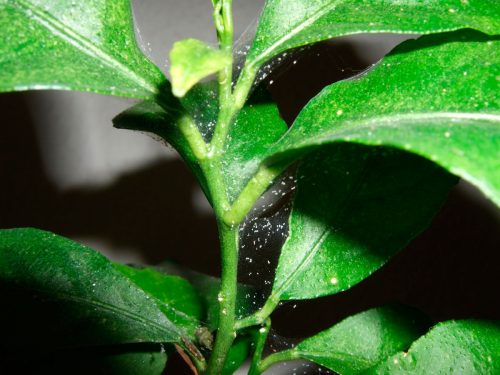
This pest affects a large number of not only garden but also houseplants. With timely treatment, it is easily eradicated. Signs of the mite include gray spots and a thin, barely noticeable webbing between leaves. The parasite becomes active with rising temperatures and increased humidity.
Methods of control:
- The plant must be treated with any suitable insecticide.
- Next, transplant the plant into a disinfected pot with treated soil. Ideally, the soil should be thoroughly baked in the oven to kill all bacteria.
Avoid placing the pot back in its original location, as mites or insect larvae may remain there and return. They can survive in cracks and crevices for up to three years without losing their activity. The windowsill or table where the affected plant stood should also be disinfected.
As a preventative measure, regularly ventilate the room and monitor humidity and temperature levels. Disinfect all soil used for planting beforehand.
Aphid
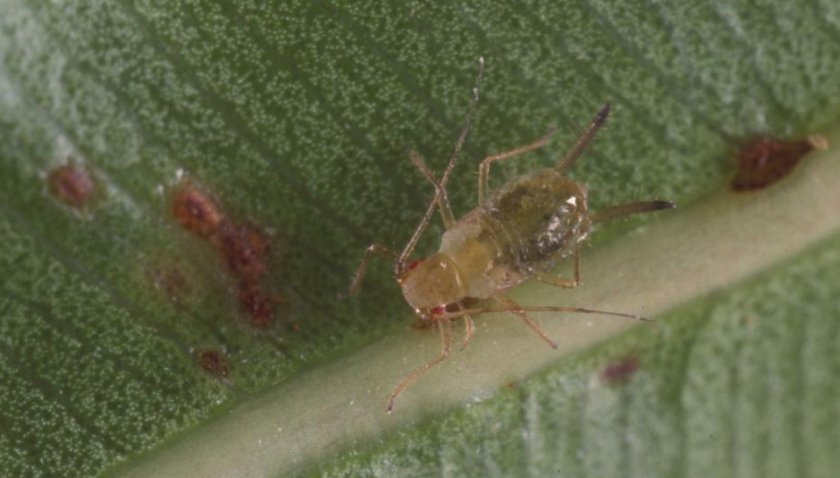
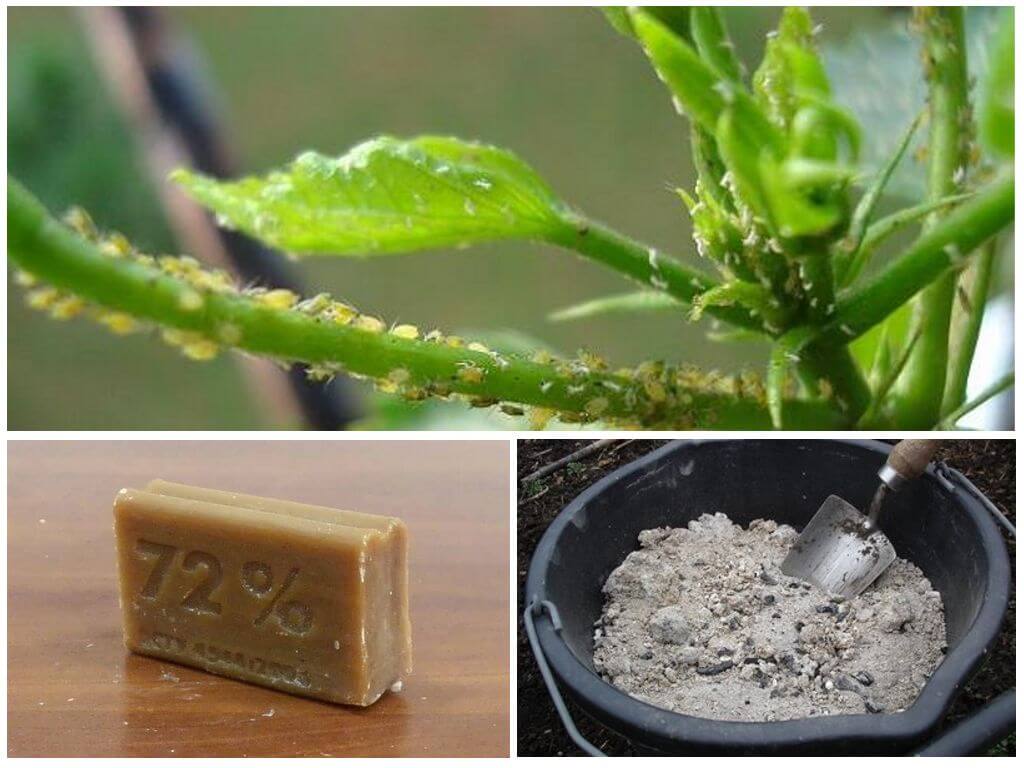
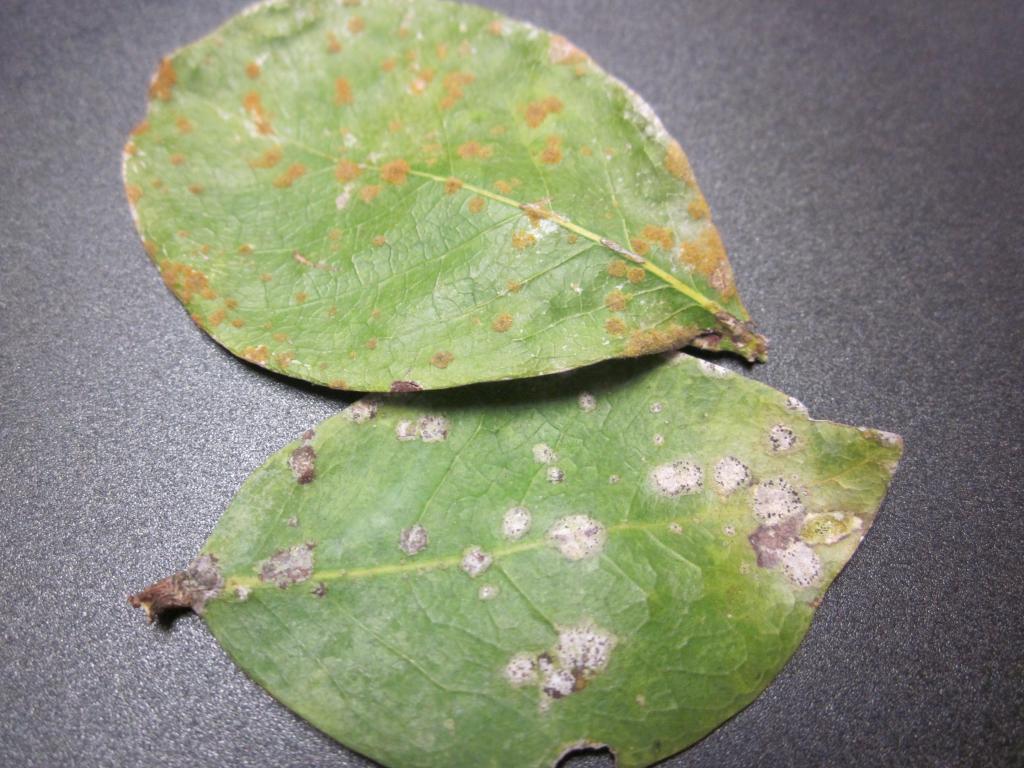
Ficus trees are often a tasty morsel for aphids. They settle on the leaves, causing them to become coated with a film, curl, and turn yellow. If you notice signs of aphid infestation, wipe all the foliage with a soapy solution, add a little ash to the soil, and treat the soil with insecticides.
Thrips
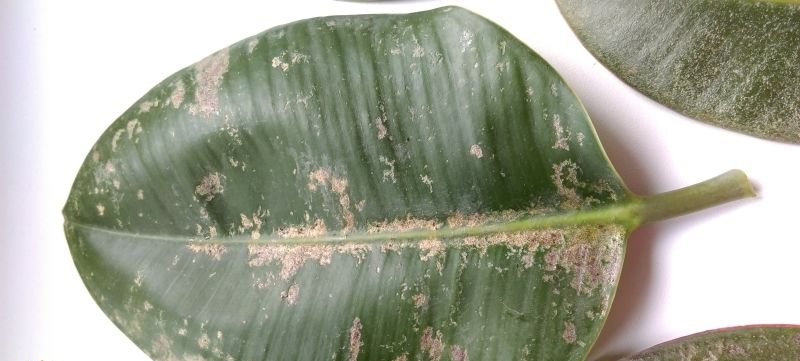
Small, voracious bugs called thrips can infest the underside of leaves. They cause distinct white, brown, or yellow spots to appear on the leaf blades. Thrips feed on plant sap, which severely weakens the immune system and causes illness.
Insecticides such as Aktara or Actellic can help kill pests. Treatment methods are detailed in the product instructions.
Mealybug
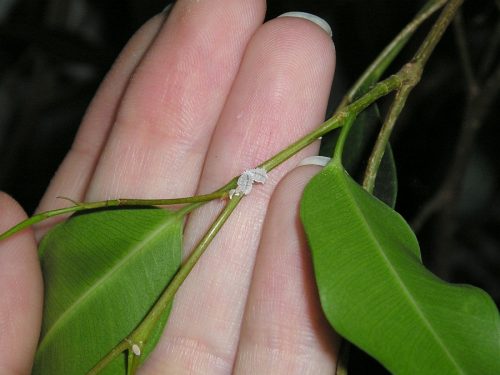
White lumps can be found both in the soil and on the plant. The disease is dangerous because the pests spread very quickly, putting all nearby flowers at risk.
Methods of control:
- Remove all visible insects.
- Wipe the plant with a soap or tobacco solution. Repeat this procedure weekly until the pests are completely eliminated.
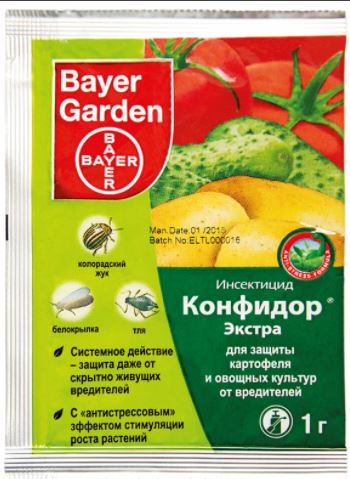
- If this treatment doesn't produce visible results, use an insecticide, such as Confidor. It can be used twice, 10 days apart.

Nematodes
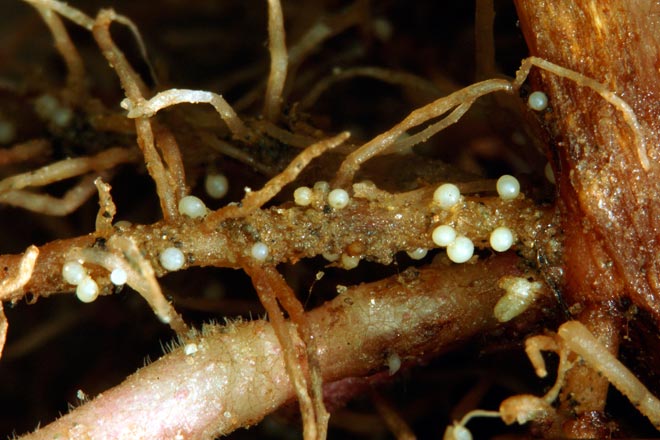
The pest's insidious nature lies in its attack on the root system. Externally, the only visible symptoms may be leaf drop. If you look at the roots, you'll see clearly visible spherical growths. These release toxic substances that enter the soil and are then distributed throughout the plant. The plant begins to wither and die.
If the affected area is not yet too large, you can try to save the ficus; resuscitation will help:
- Remove the plant from the pot and shake off the soil. The remaining soil and the pot itself can be safely discarded. They cannot be used again.
- Rinse the roots thoroughly under warm running water.
- Prepare a solution of insecticides and soak the root system in it for about 3 hours.
- Heat the soil for transplanting in the oven to disinfect it.
Helpful tips from Top.tomathouse.com on how to prevent ficus leaves from dropping
The best way to combat leaf drop is prevention. Therefore, our portal http://top.tomathouse.com reminds you:
- Monitor microclimate conditions, ventilate the room, and place plants in well-lit areas.
- Don't disturb the ficus unnecessarily; it loves consistency in everything.
- Young plants can be replanted once a year, adult ficuses no more than once every 4 years.
- Don't add too much fertilizer to the soil.
- Provide moderate watering. Do not allow moisture to stagnate in the soil.
- Regularly check the plant for pests and suspicious spots that may indicate the onset of disease.
Did you know? One of the varieties of ficus is fig tree, from which the figs we know are collected.
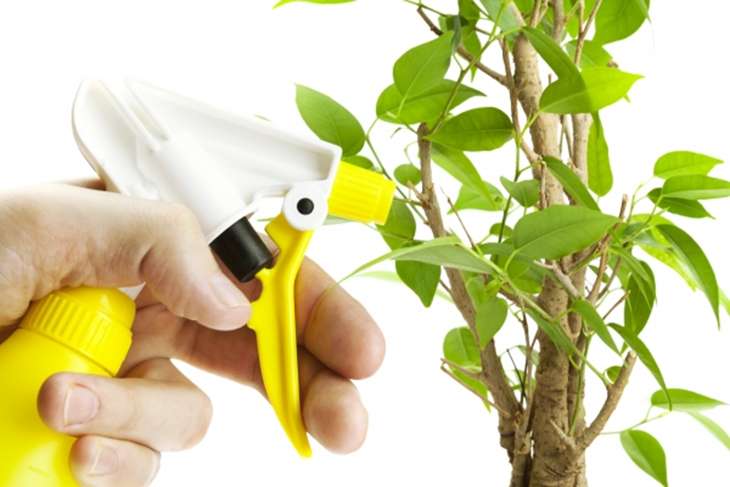
To ensure the plant grows and develops beautifully, it is important to follow basic care rules:
- Ficus trees are easy to plant. The main thing is to disturb them as little as possible and not move them unless there's a problem. It's acceptable to move a mature tree onto a balcony or terrace during warmer months.
- If your room doesn't have well-lit areas, you can purchase a special lamp for plants at gardening stores.
- Water for watering should be at room temperature. Ficus plants also don't like hard water.
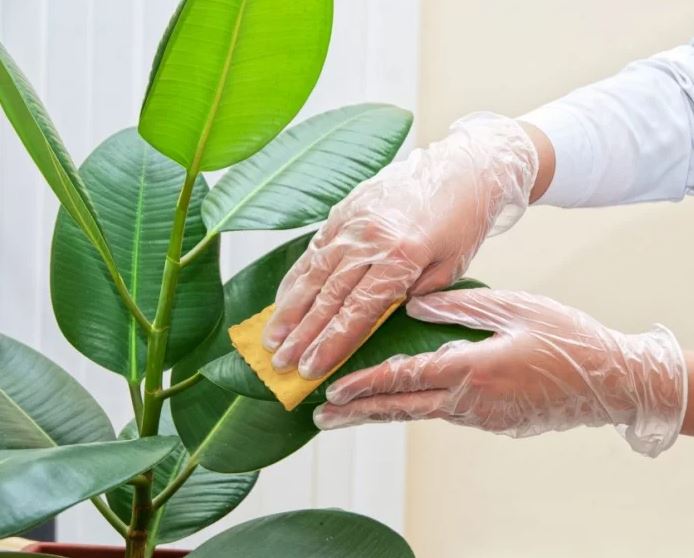
- Periodically rinse the plant to remove dust and dirt under warm running water.