The maple tree is widespread not only in Russia but also worldwide (especially in Asia, Europe, and North America). Before planting one in your garden, familiarize yourself with its species and characteristics. We'll tell you everything you need to know about maple in this article.
Content
- 1 Description of maple
- 2 Maple distribution
- 3 Species, subspecies and varieties of maple
- 3.1 Platanus (Acer platanoides)
- 3.2 Box Elder (American) (Acer negundo)
- 3.3 White (pseudo-, false sycamore) (Acer pseudoplatanus)
- 3.4 Tatarian (black maple) (Acer tataricum)
- 3.5 Ginnala (riverine) (Acer ginnala)
- 3.6 Field (plain) (Acer campestre)
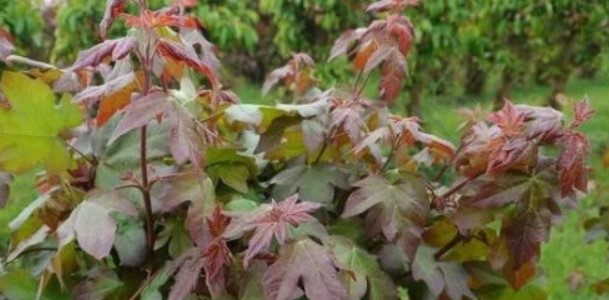
- 3.7 Manchurian (Acer mandshuricum)
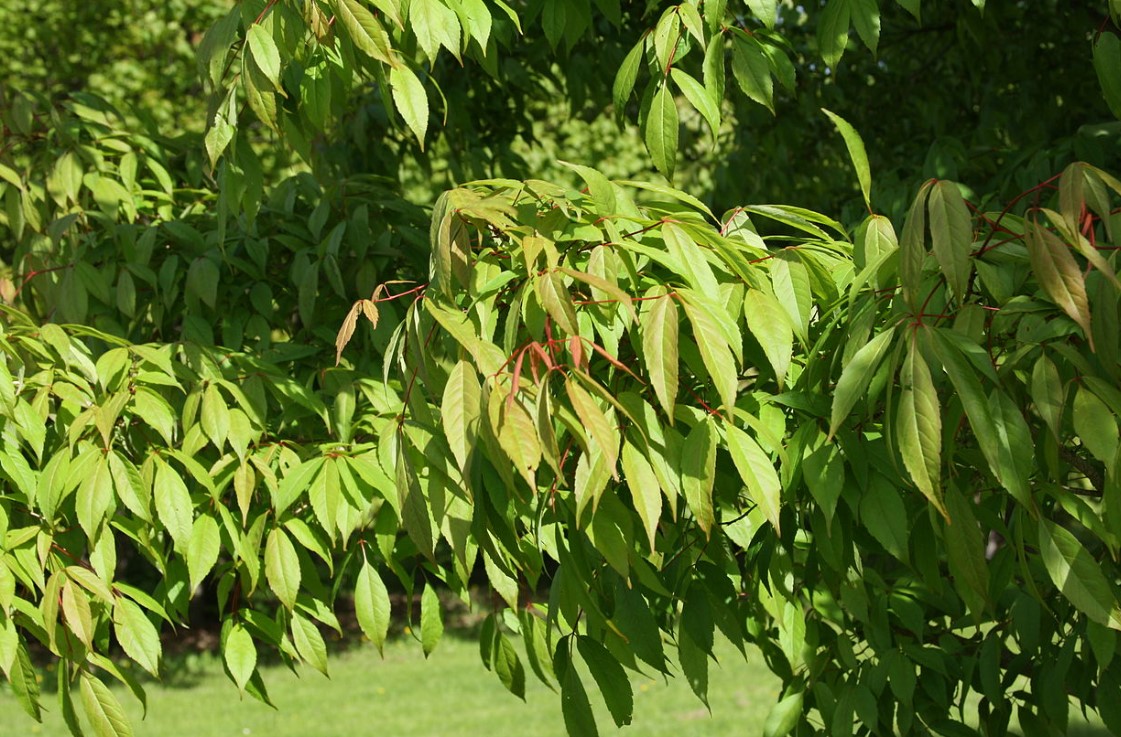
- 3.8 Greenbark (Acer tegmentosum)
- 3.9 Red (Acer rubrum)
- 3.10 Japanese (Acer japonicum)
- 3.11 Curly (Acer circinatum)
- 3.12 Black (Acer nigrum)
- 3.13 Three-lobed (Acer monspessulanum)
- 3.14 David's (Acer davidii) (snake-barked)
- 4 17 Popular Maple Varieties for Landscapes
- 5 What kind of tree is the Australian maple (Flindersia brayleyana)?
- 6 Planting a maple tree
- 7 Care
- 8 Maple propagation
- 9 Diseases and pests
- 10 Useful properties of maple
- 11 Preparation of raw materials and recipes
- 12 Gardeners' reviews of different types and varieties of maple
Description of maple
Maple belongs to the Sapindaceae family. It can grow 10-40 meters in height. Its leaves have large veins, and the shoots have oppositely arranged blades on the leaflet petioles.
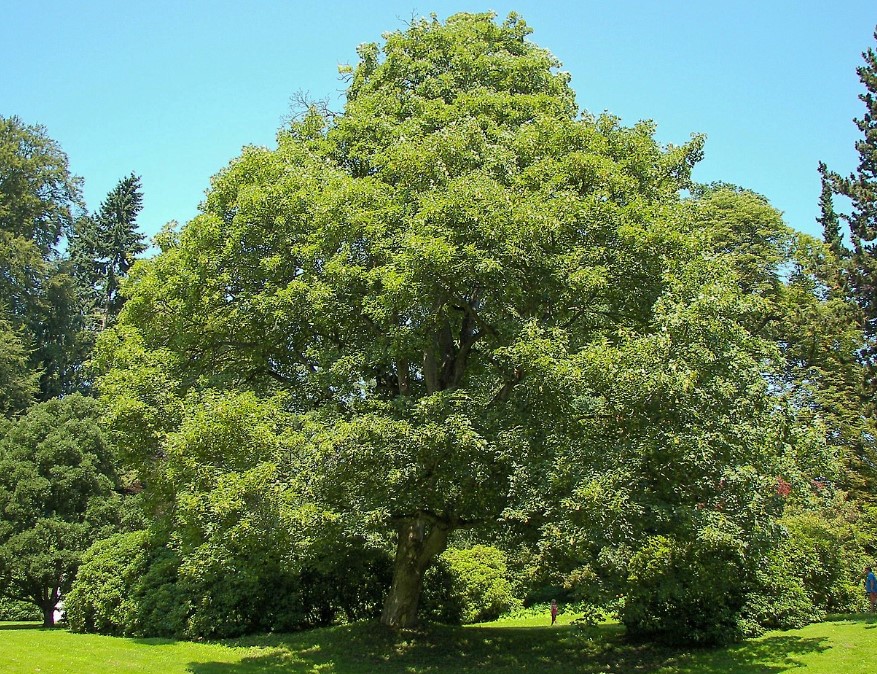
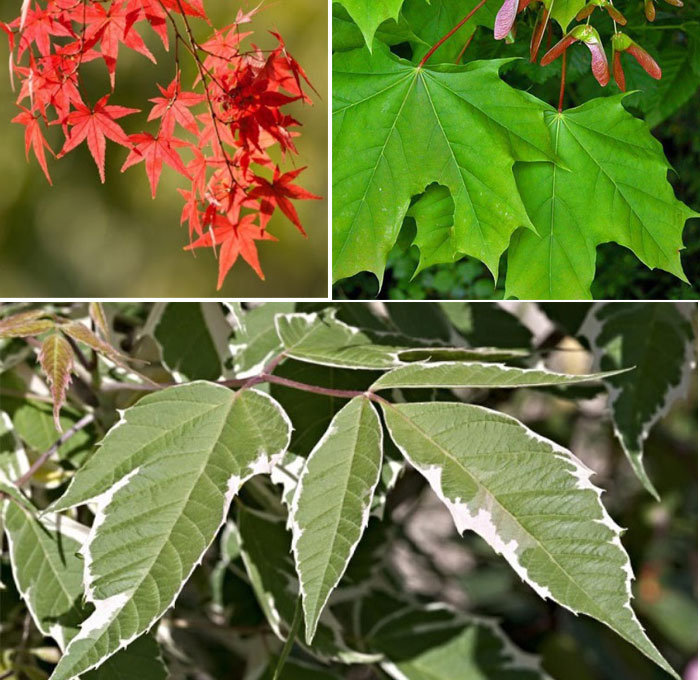
Maple leaves can vary in appearance, from palmate to trifoliate. The buds have five petals and are green, orange, or reddish in color. The buds themselves are very small and are gathered into single umbels or racemes.
Do maples bloom? Maples bloom in late winter or early spring. Some maple species bloom before their leaves appear. Flowers come in yellow, green, or red.
Maple tree bloom photo gallery
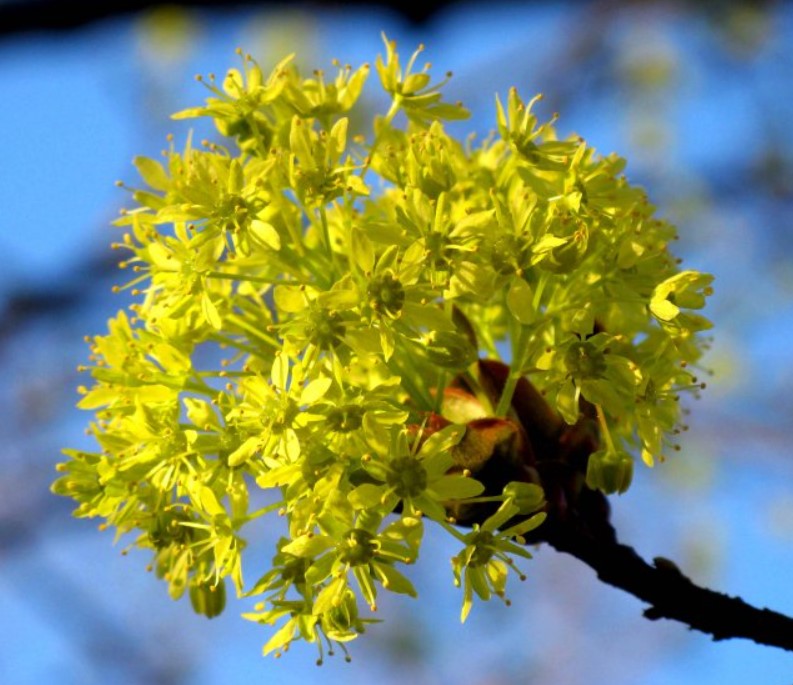
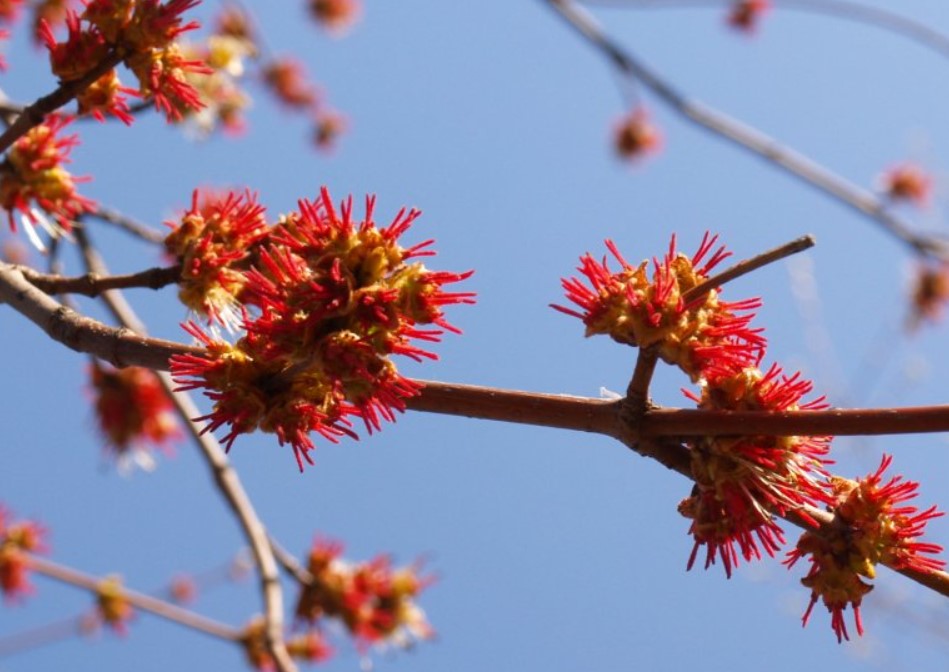
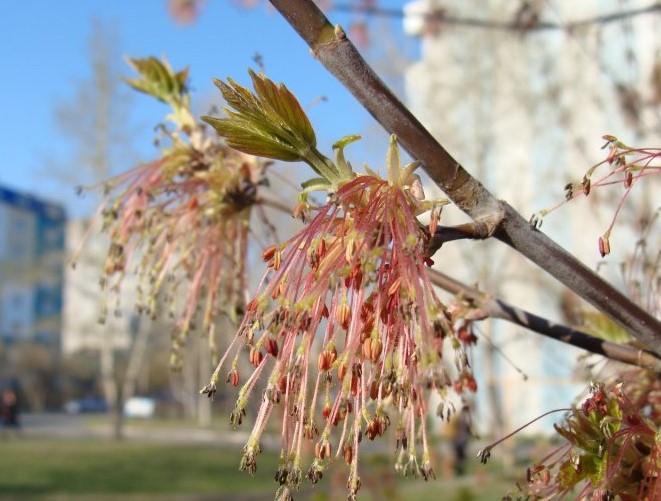
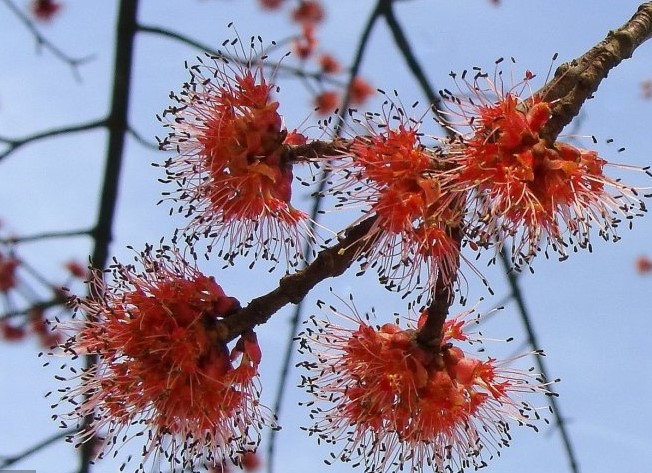
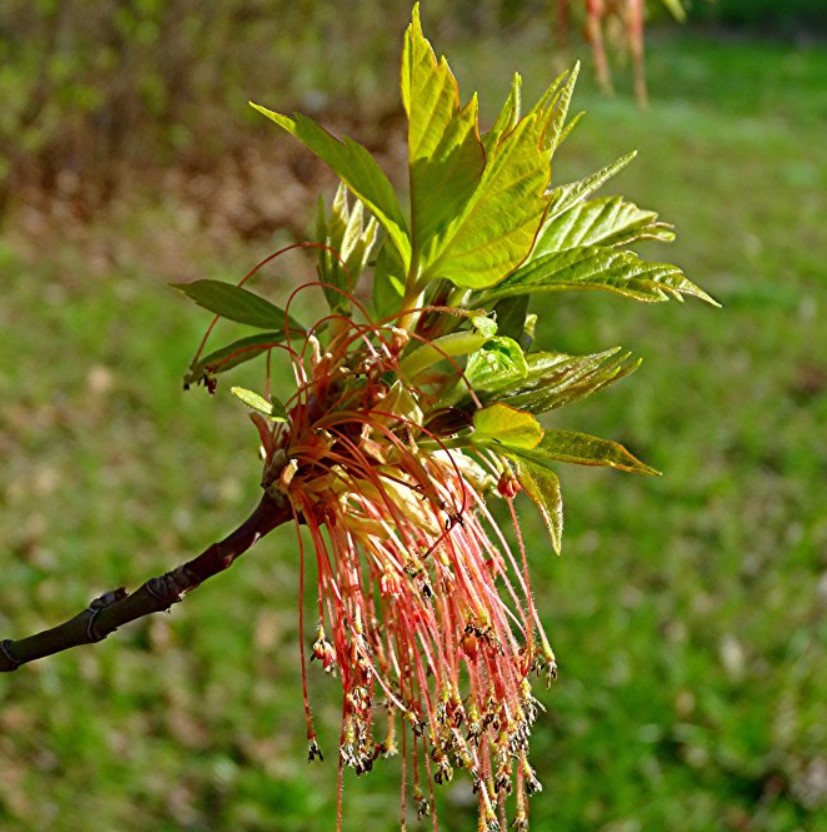
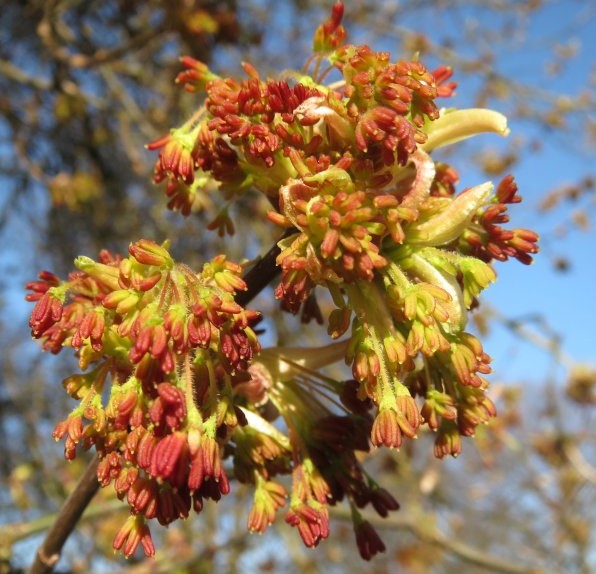
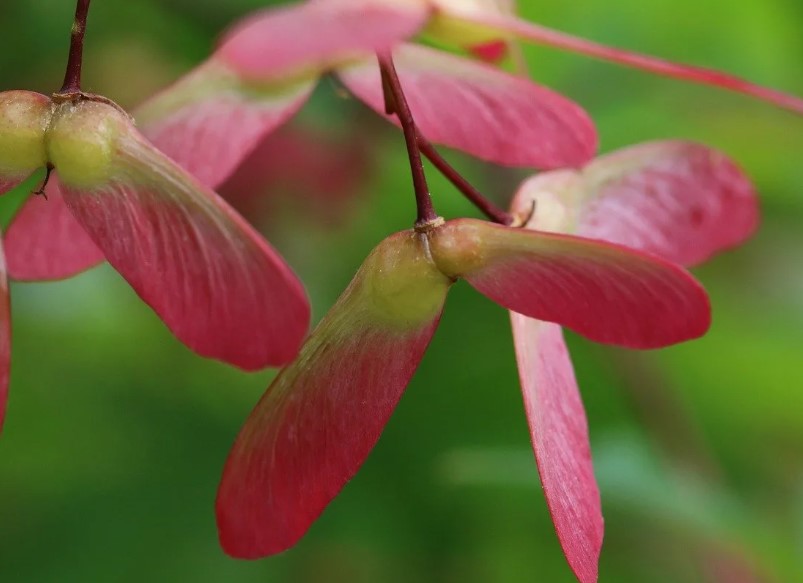
Approximately two to six weeks after flowering, maple trees develop winged fruits, which have two identical halves. These fall from the tree and can be carried by the wind over considerable distances.
Maple distribution
Maple prefers a temperate climate and is almost never found in the tropics. It sometimes grows in Central America or southern Asia.
Maple is typically found throughout the Northern Hemisphere. It is occasionally found in the polar regions of Eurasia.
The main distribution area of maple is considered to be temperate latitudes.
There are approximately 20 species of this plant in Russia. Several of them are even listed in the Red Book due to their rarity. The tree can grow at altitudes of 3,000 meters above sea level.
Species, subspecies and varieties of maple
Maples come in many varieties. Let's look at the most common ones.
Platanus (Acer platanoides)
One of the most common species, the tree is very beautiful and has impressive dimensions.
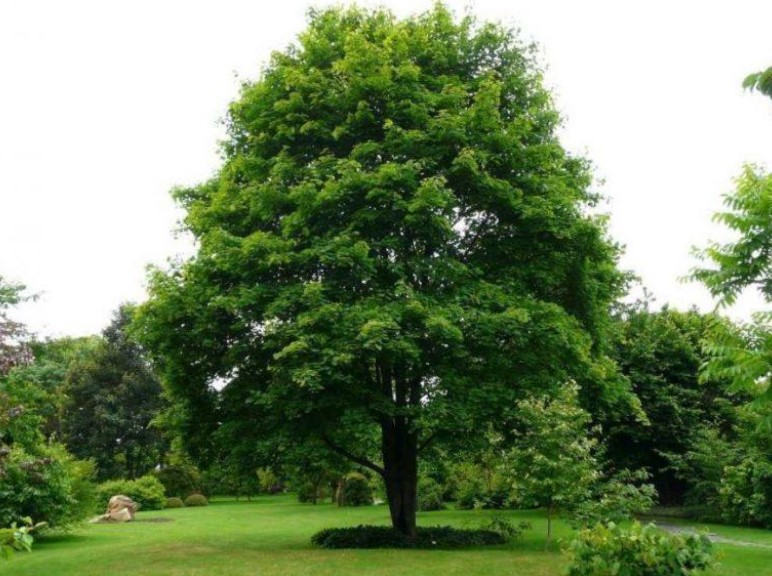
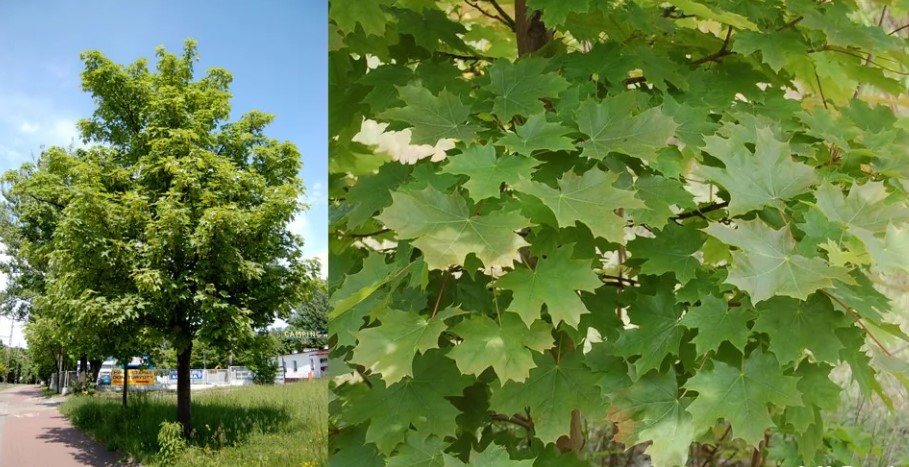
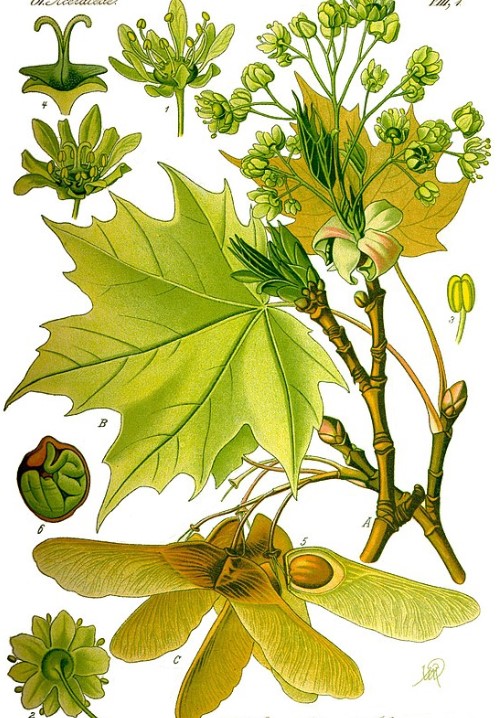
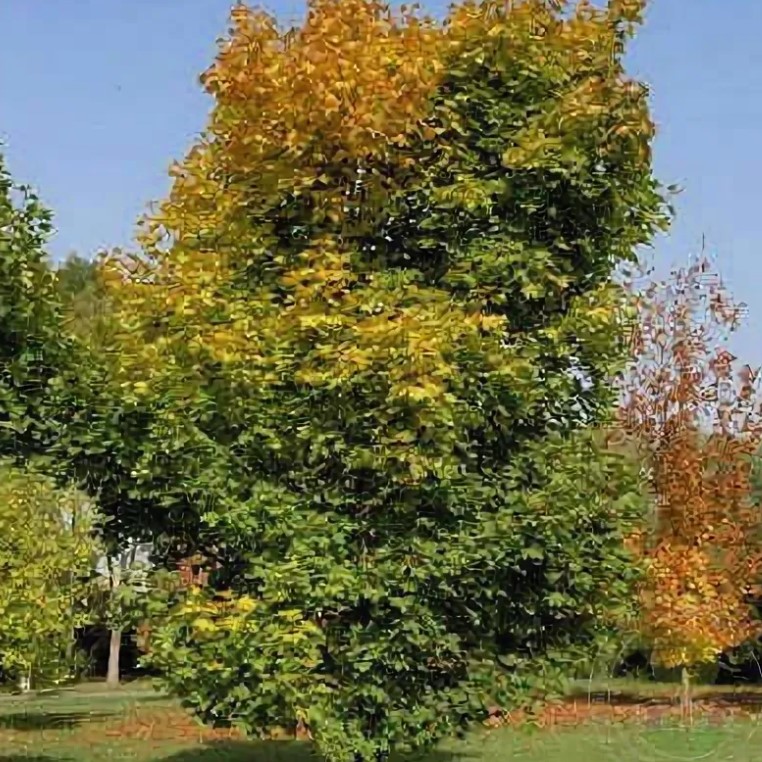
| Description | The maximum height is 28 meters. It has a dense crown that forms a ball. The branches are strong and grow upward. The bark darkens with age (from grayish-brown on a young tree to black on an older tree). The buds are yellow-green.
|
| Spreading | Europe, central Russia, countries of southwest Asia. |
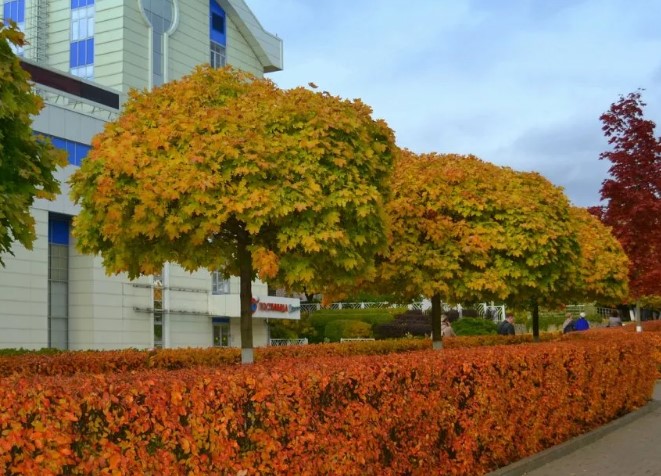
| Varieties | Golden globe - with golden leaves;
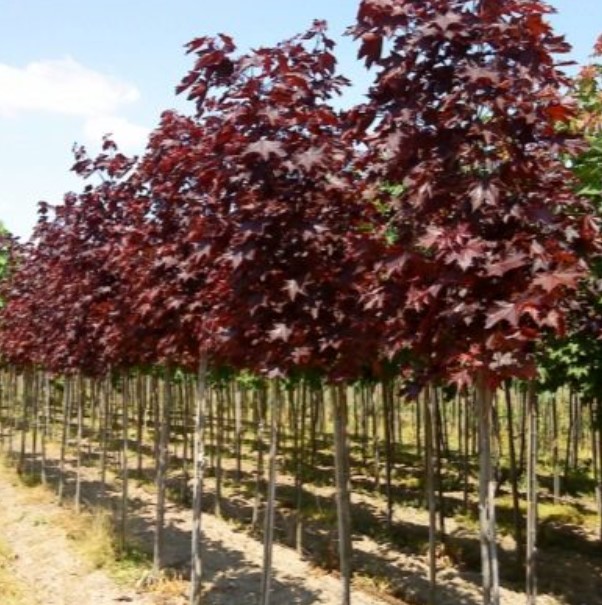
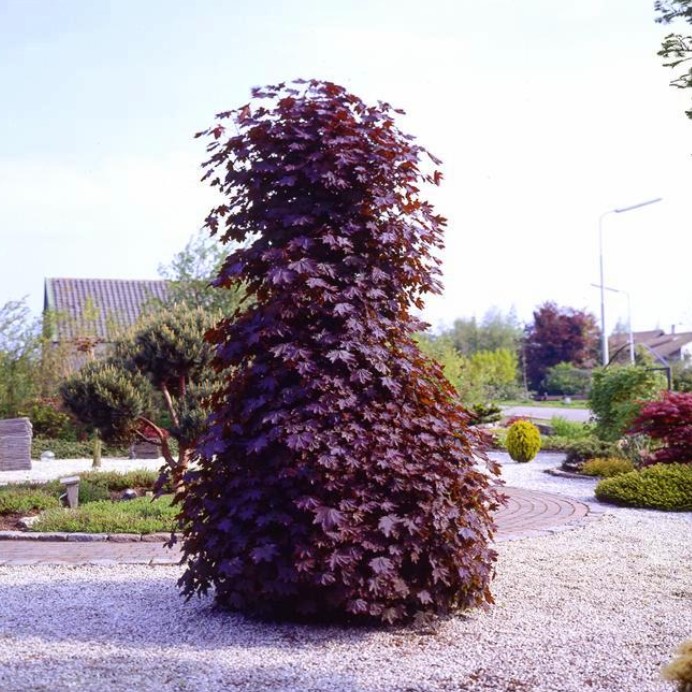
Crimson King - dark purple;
Drummondii - with a white border. Pink when blooming;
Globosum is a compact, low growing tree;
|
| Application | Widely used by breeders, it is also used as an ornamental tree along roadsides. |
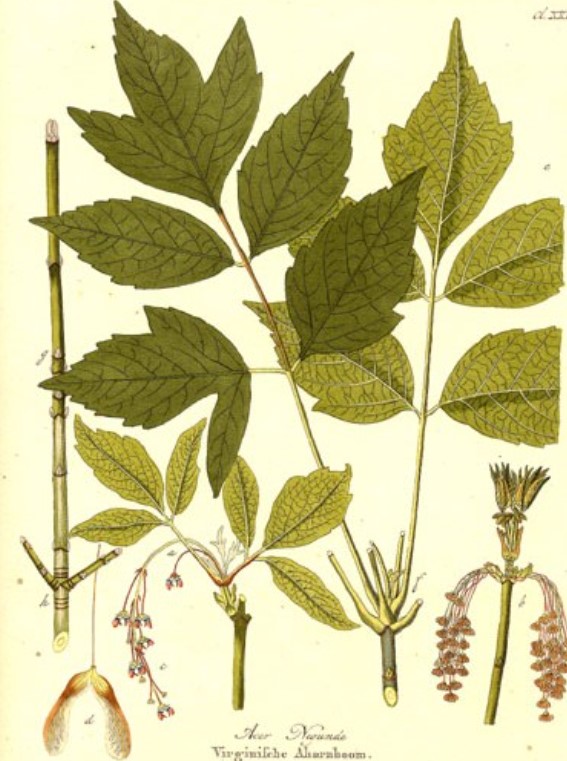
Box Elder (American) (Acer negundo)
The plant causes many problems in urban life because it grows and reproduces quickly. It is often referred to as a weed.
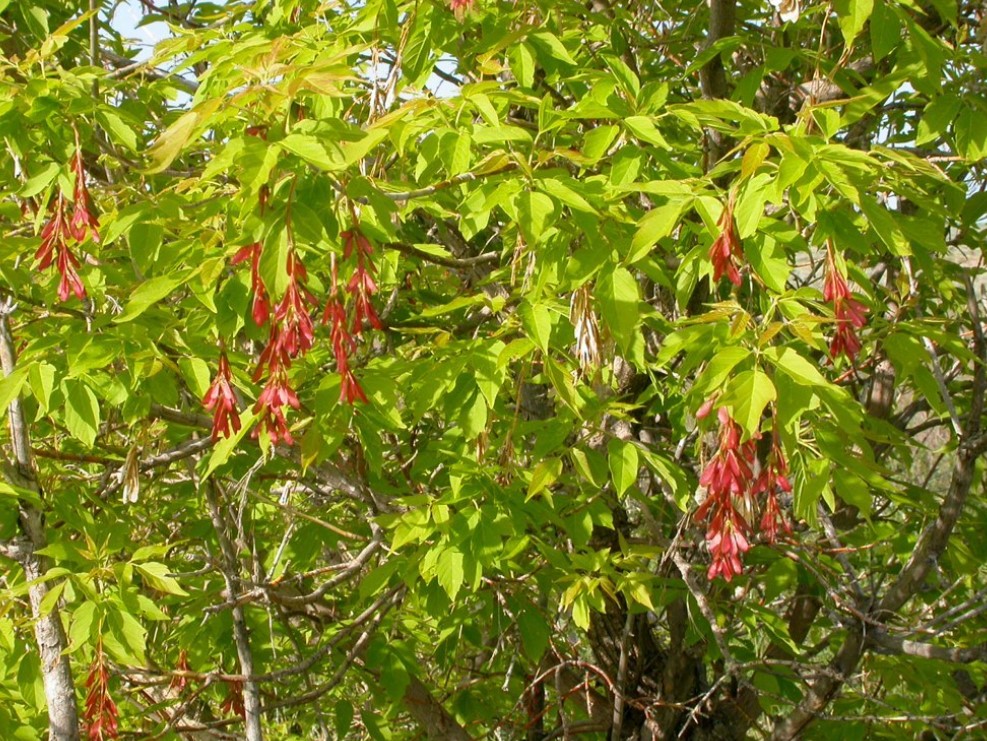
| Description | The foliage is complex and pinnate. The crown has no distinct shape. It grows very quickly, reaching 1.5 meters in a year.
|
| Spreading | It grows almost everywhere: North America and Eurasia, Siberia. |
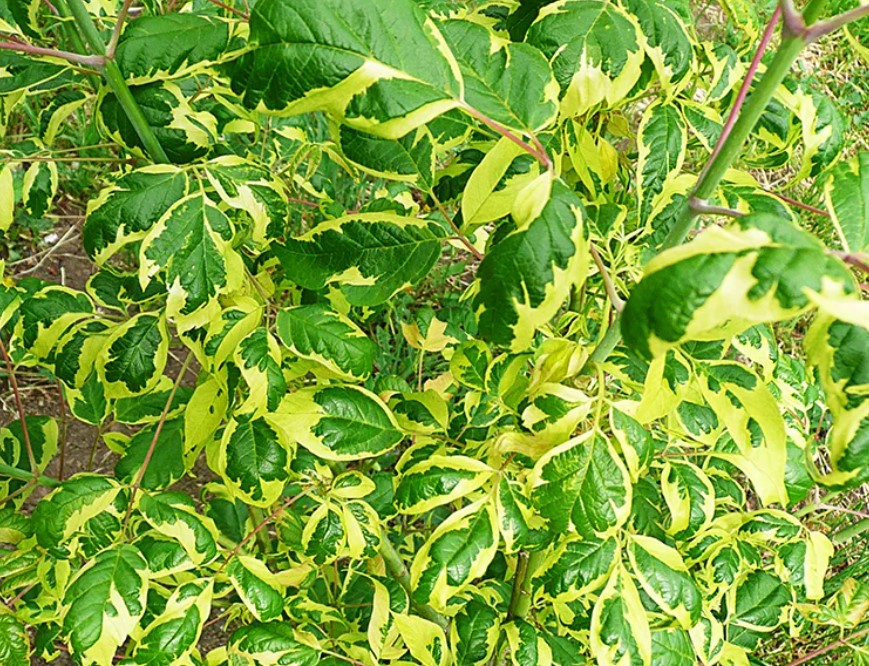
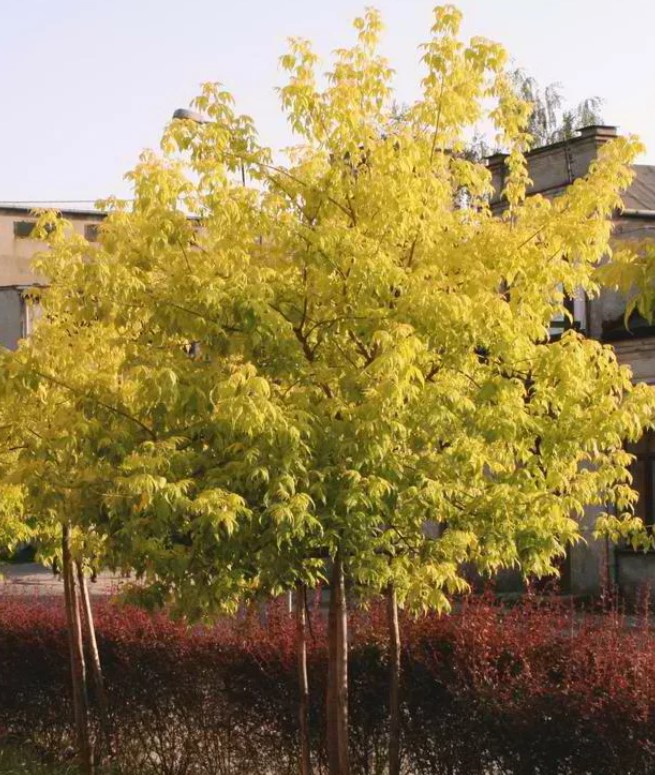
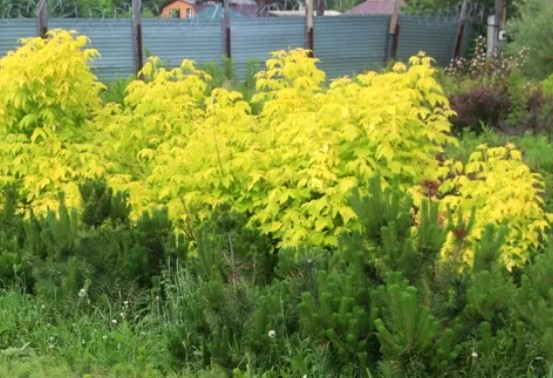
| Varieties | Aureovariegatum - leaves with a yellow border;
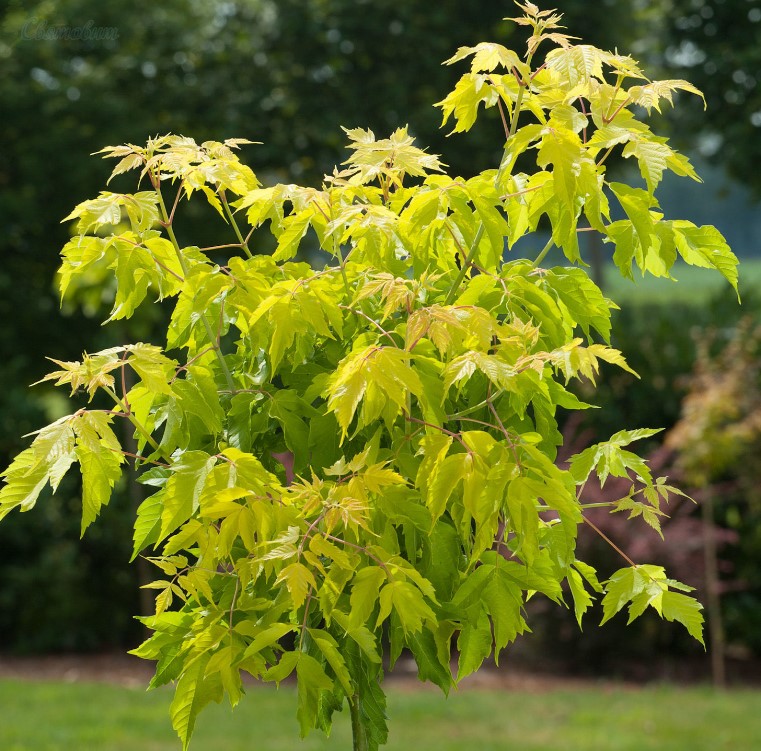
Kelly's Gold - bright yellow in spring, then loses its color;
Aurea - golden-yellow leaves; |
| Application | Some species are used for ornamental purposes, such as hedges. Their wood is also used to create wooden containers. |
White (pseudo-, false sycamore) (Acer pseudoplatanus)
Another name for white maple is sycamore. It is very beautiful and weighty.
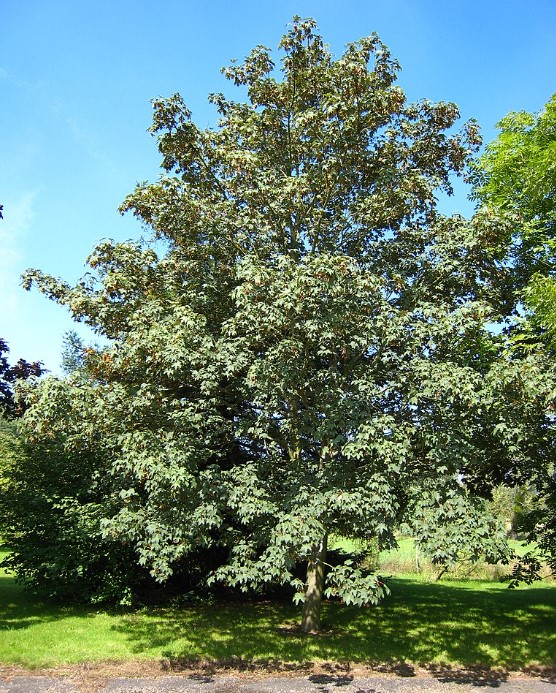
| Description | The crown is wide and round. It grows very tall (30-35 meters). Large leaves with long rootlets. It blooms in spring. |
| Spreading | Europe, Caucasus, Asia. |
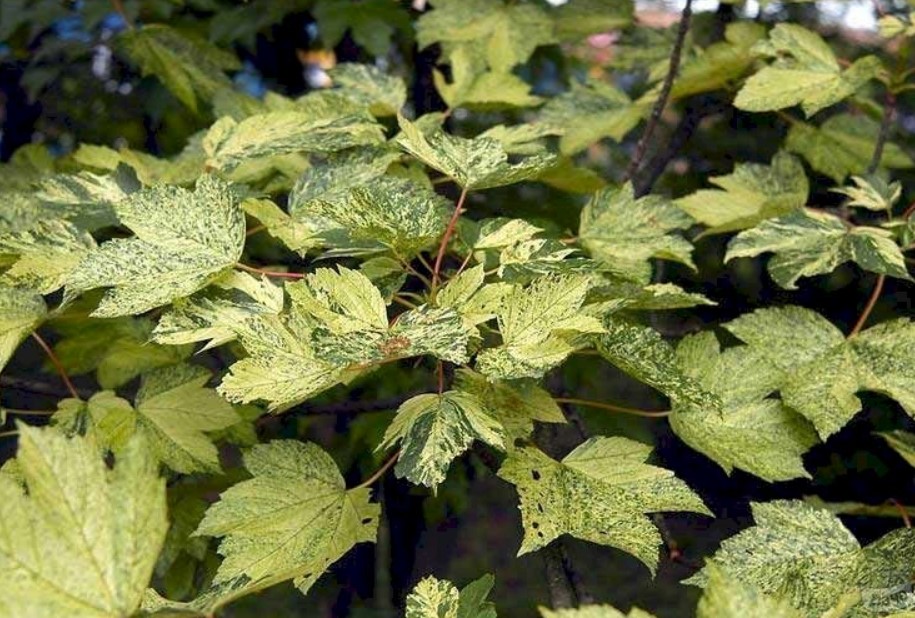
| Varieties | Atropurpureum - slow growing 4m, bright red leaves turn dark burgundy;
Brilliantissimum (Brilliantissimum) - 4-8 m, slow-growing, young leaves are pinkish, later yellow, gradually turn green;
Leopoldi is a pyramidal tree reaching 20 m, with pink-yellow leaves turning into light green speckled.
|
| Application | Wood is used to make furniture because it is very durable. |
Tatarian (black maple) (Acer tataricum)
This maple species is undemanding and widespread throughout Russia.
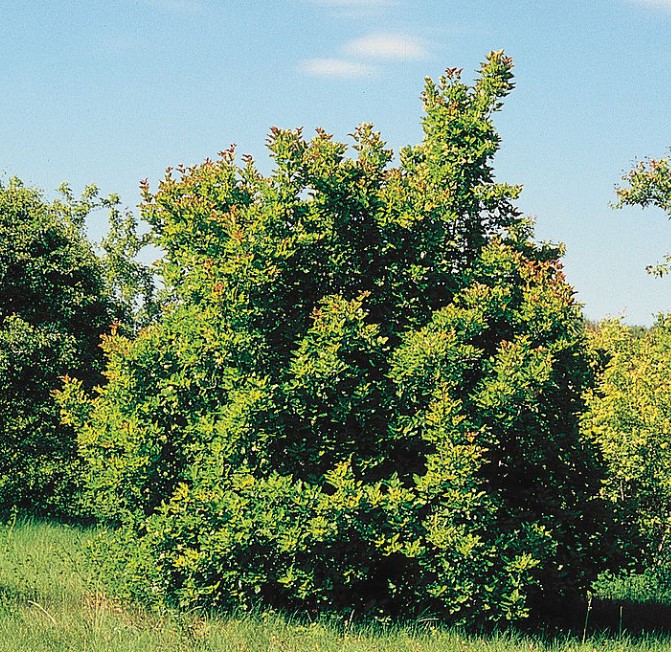
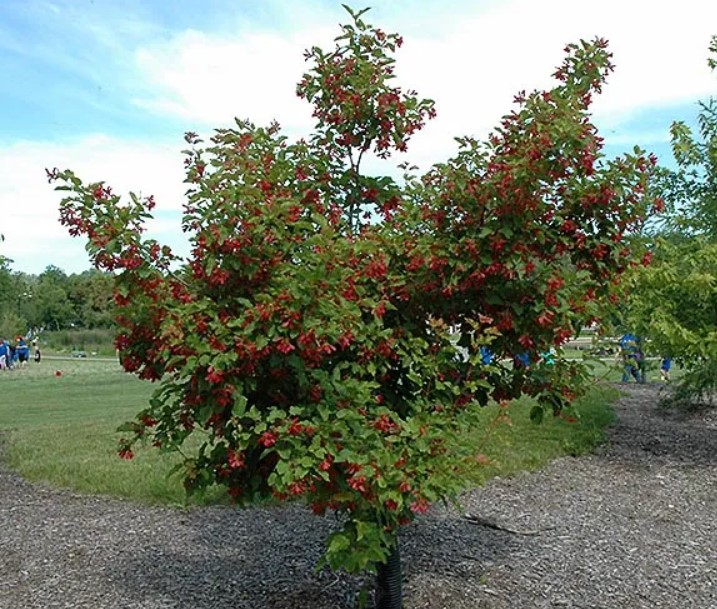
| Description | A small tree or shrub (2-12 meters). The bark is almost black. The leaves are entire or with 2-6 lobes. It has yellow flowers and red fruits. The crown is spherical. |
| Spreading | The European part of Russia, central and eastern Europe, Asia Minor. |
| Varieties | Hot Wings - 7.5 m, red wings, green leaves, yellow, almost copper in autumn;
PatdelI - a tree 7.5 m high, wings and shoots are bright red, leaves are red-orange in autumn;
Summer Splendor – 4-6 m tall with red fruits. |
| Application | A hedge, a source of beneficial minerals and vitamins. A honey plant. |
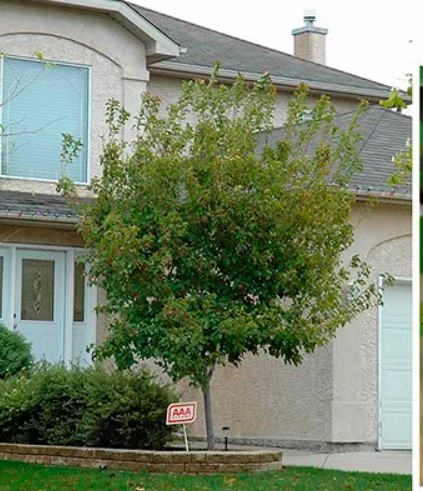
Ginnala (riverine) (Acer ginnala)
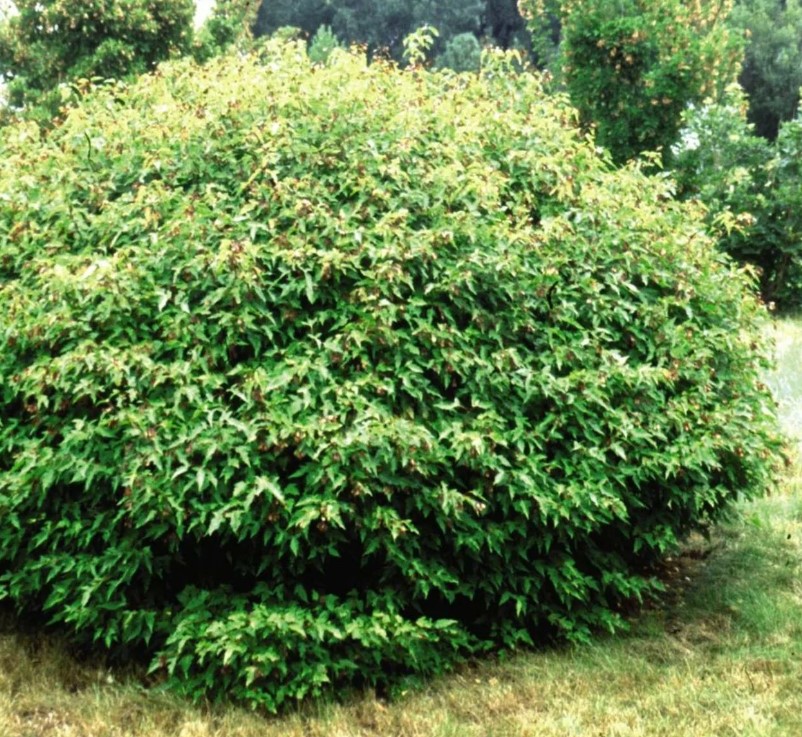
The Tatarian maple has a subspecies, the Ginnala maple, which was once considered a separate species. This species is considered one of the most beautiful trees in the world. It tolerates frost well.
It is more compact and susceptible to diseases such as verticillium wilt.
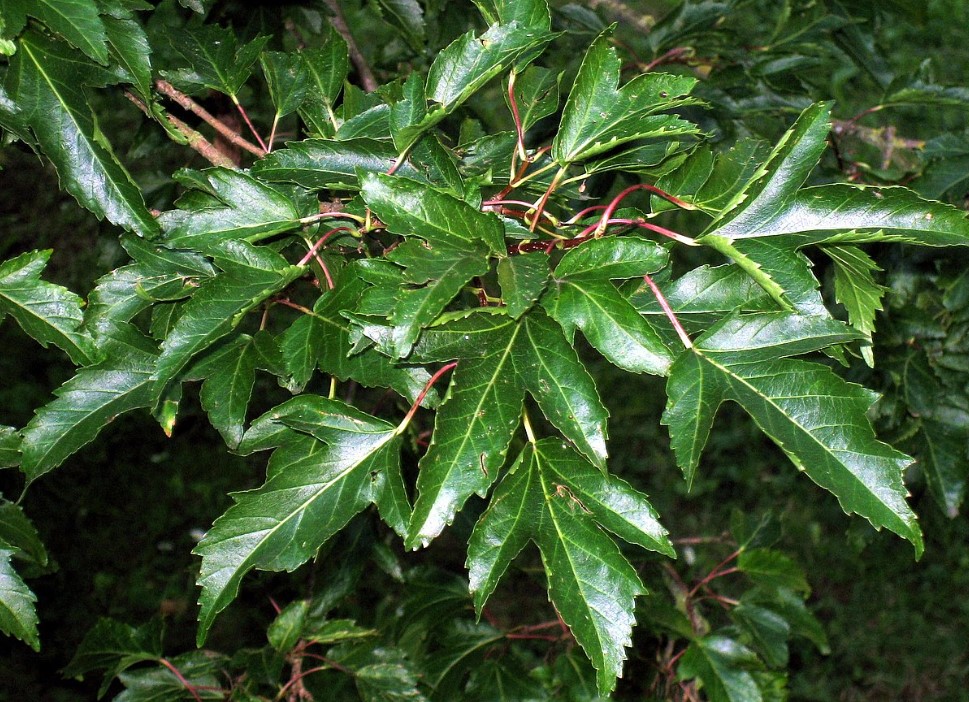
| Description | The shrub or tree grows to a height of no more than 10 meters. The bark is gray-brown, cracking with age. The leaves are simple, deeply cut, and glossy, turning reddish-orange in autumn. The flowers are yellow-green, and the fruits are reddish. |
| Spreading | East Asia, Korea, Japan, Primorye, Amur Region, southeastern Siberia |
| Varieties | Bailey Compact is a shrub 1.8-2.4 m wide and 2.4 m wide. Orange to red in autumn.
|
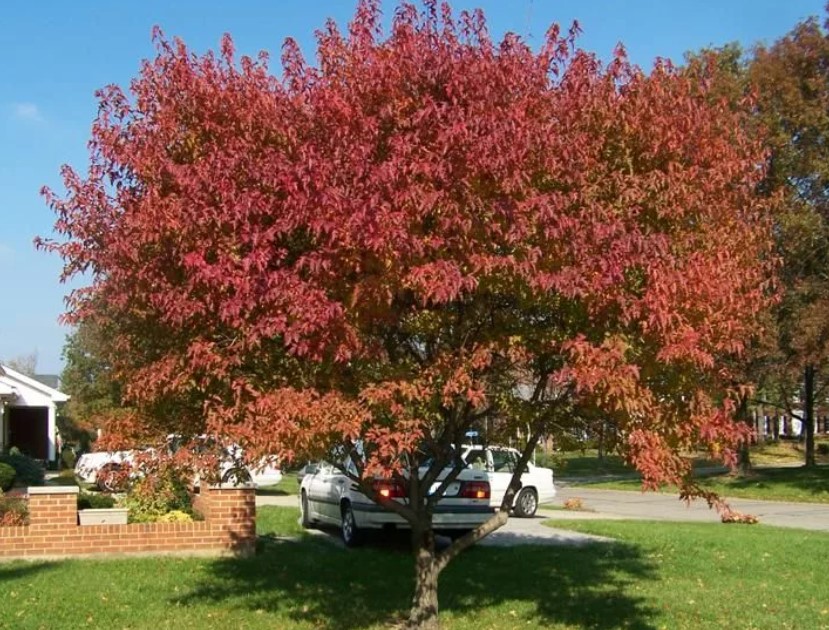
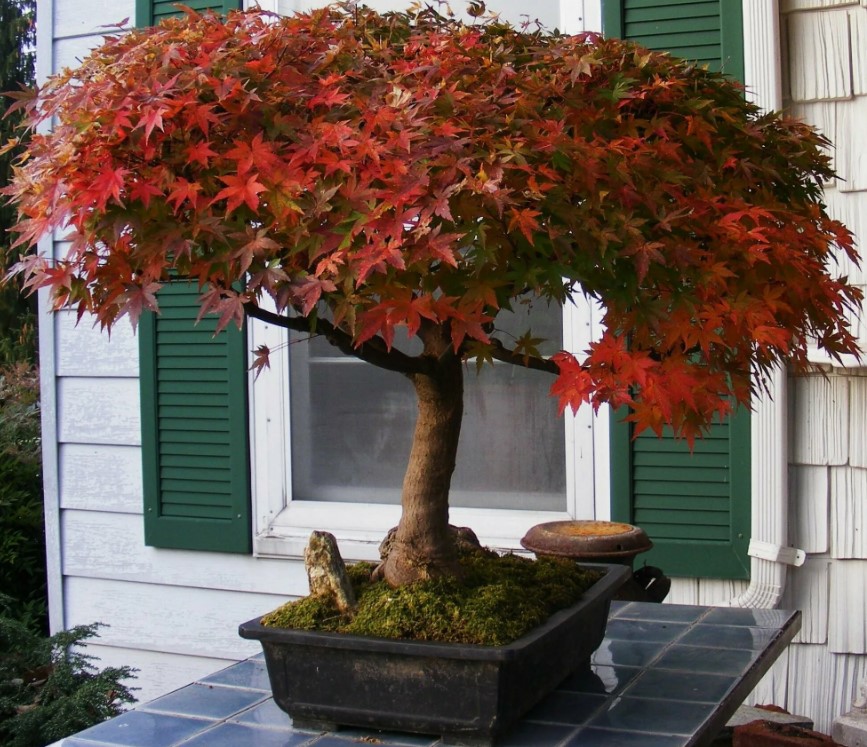
| Application | Ornamental, used as a hedge. Excellent honey plant. In Japan, it is used to create bonsai.
|
Field (plain) (Acer campestre)
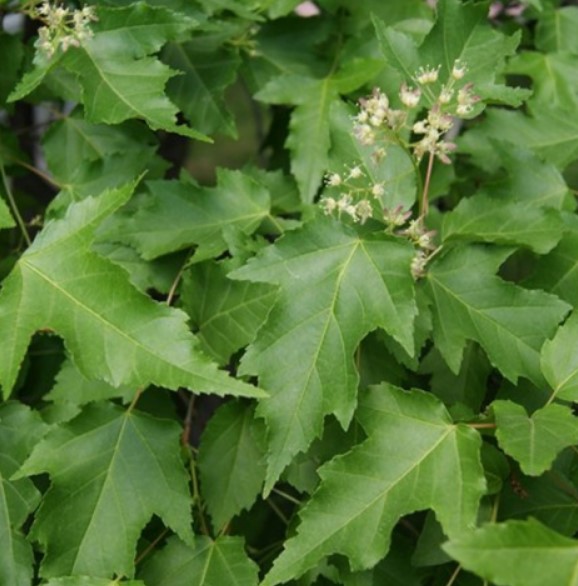
Field maple is widespread throughout Russia.
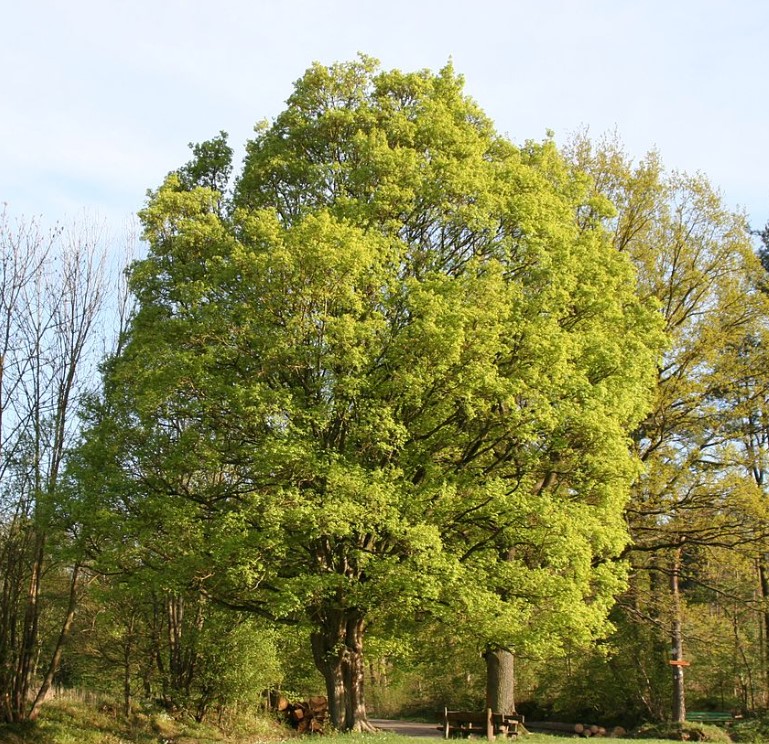
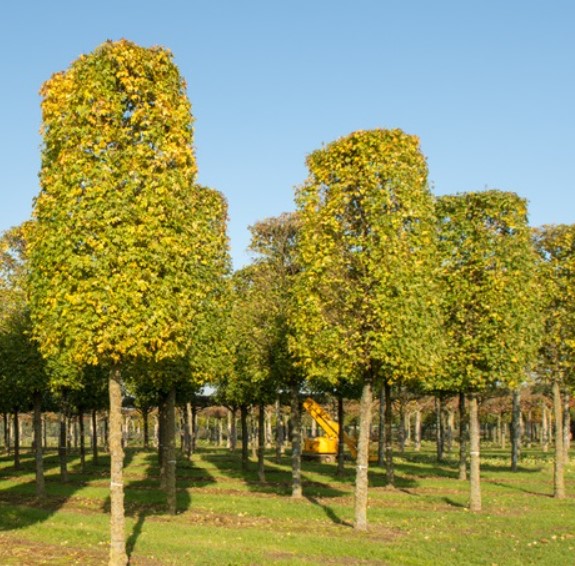
| Description | It has a dense, spherical crown and grows up to 15 meters in height. The bark is grayish. The leaves are usually five-lobed and dark green. |
| Spreading | Europe, Caucasus and Iran. |
| Varieties | Elsrik - height up to 12 m, width up to 6 m, wavy small relief foliage;
Red Shine - height 5 m, width 3 m, spherical, spreading, shade-tolerant, moisture-resistant.
|
| Application | As an ornamental tree. |
Manchurian (Acer mandshuricum)
This tree species is considered ornamental and is a very undemanding plant.
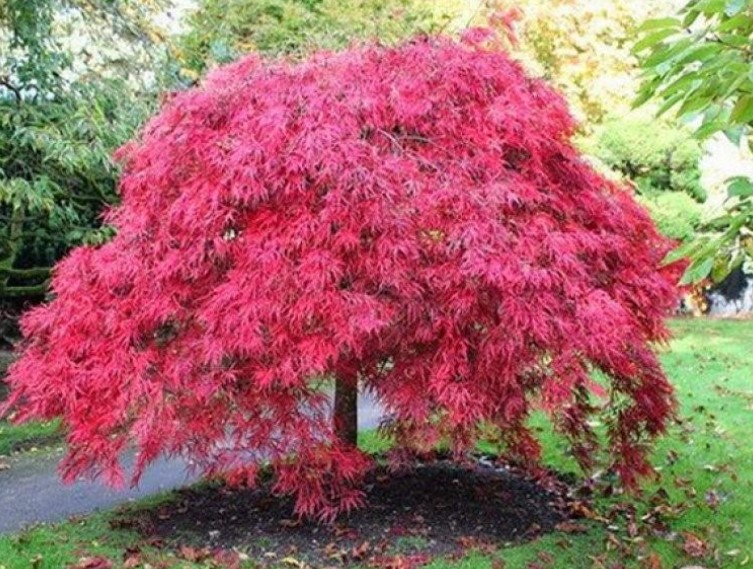
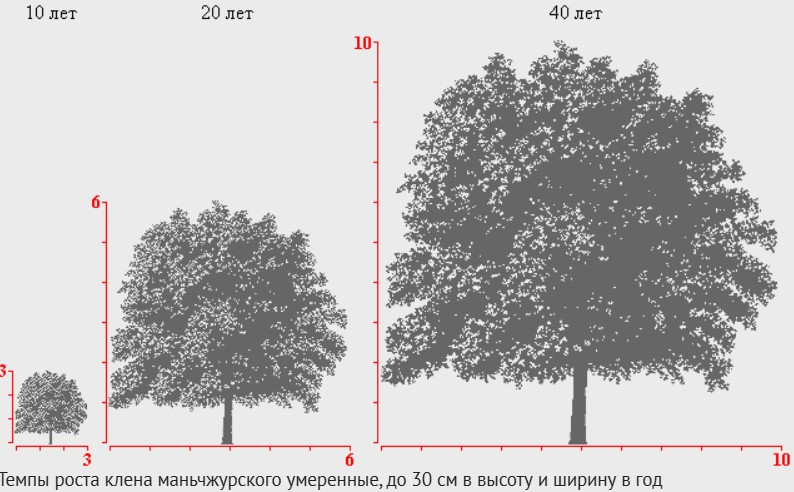
| Description | Reaches 20 meters in height. The bark is gray. Large yellow-green flowers. The foliage is bright red in autumn. |
| Spreading | Korea and China, south of Primorsky Krai. |
| Application | As a wood, honey plant. |
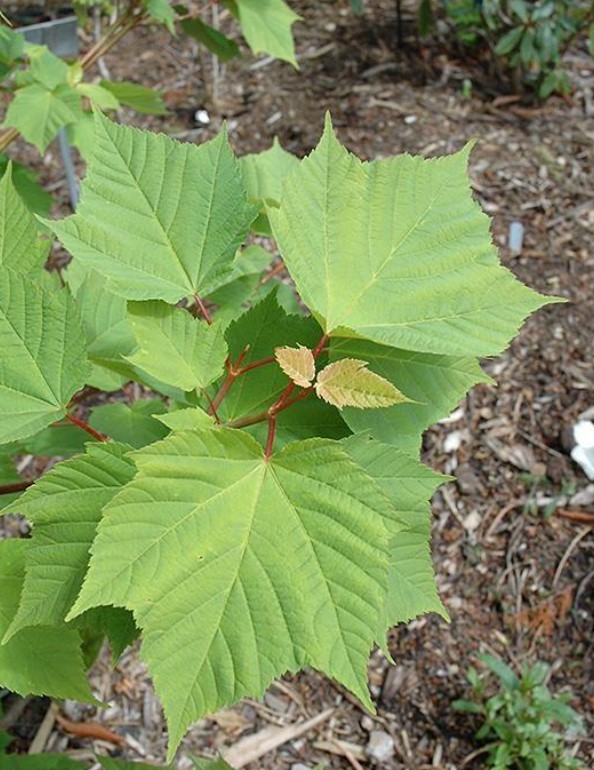
Greenbark (Acer tegmentosum)
This is an unpretentious maple species and is very cold-resistant.
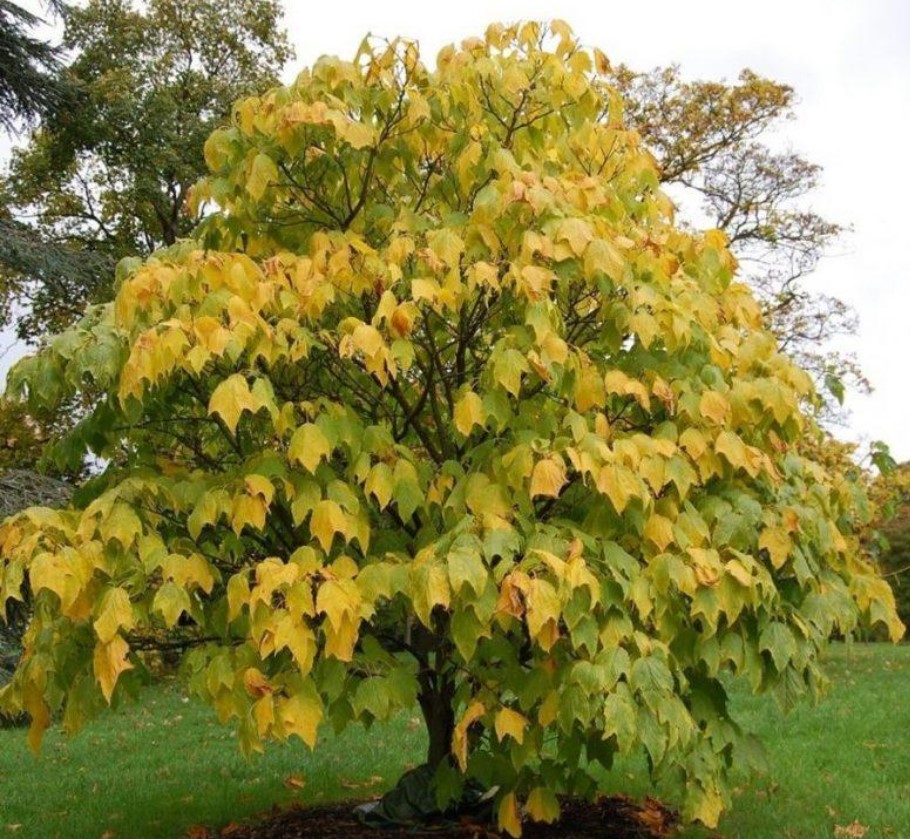
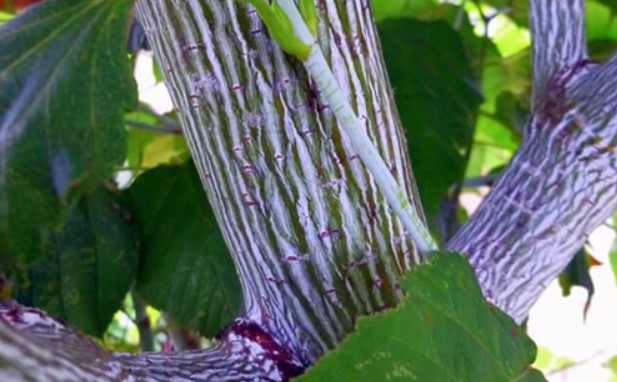
| Description | Perennial plants have lush crowns. The bark is light green. The buds are green and yellow. |
| Spreading | Asian countries |
| Varieties | White Tigress - has green and white stripes on its trunk, which is why it is often confused with birch;
Joe Witt - in autumn the trunk turns white and the foliage loses its green color;
|
| Application | In gardening for ornamental purposes. Honey plant. |
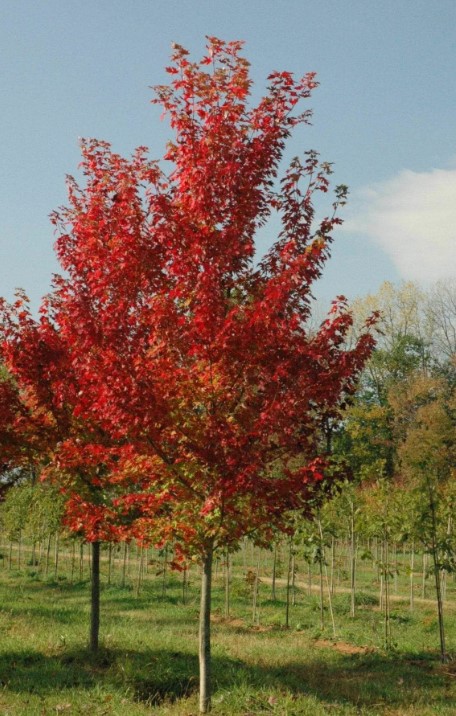
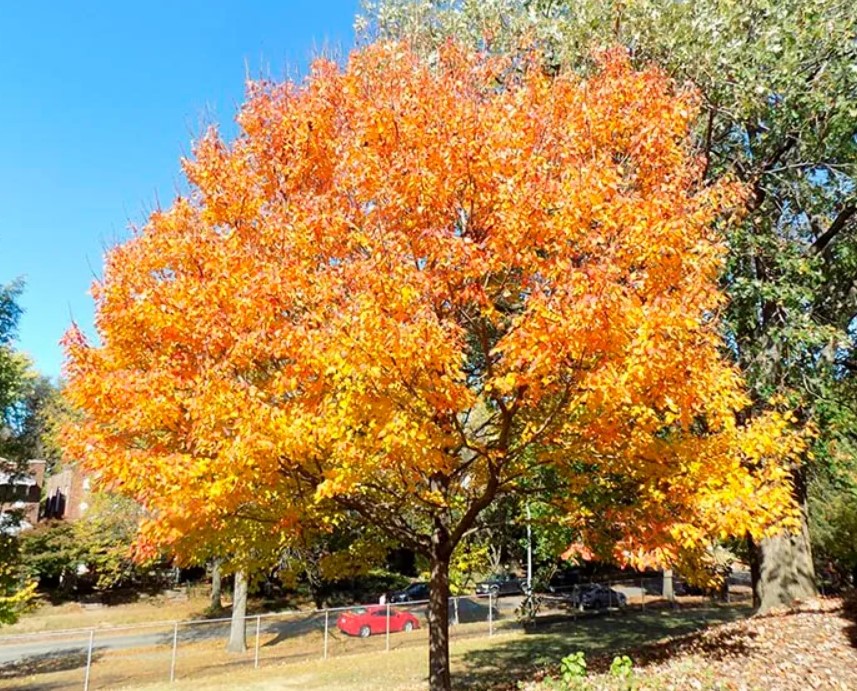
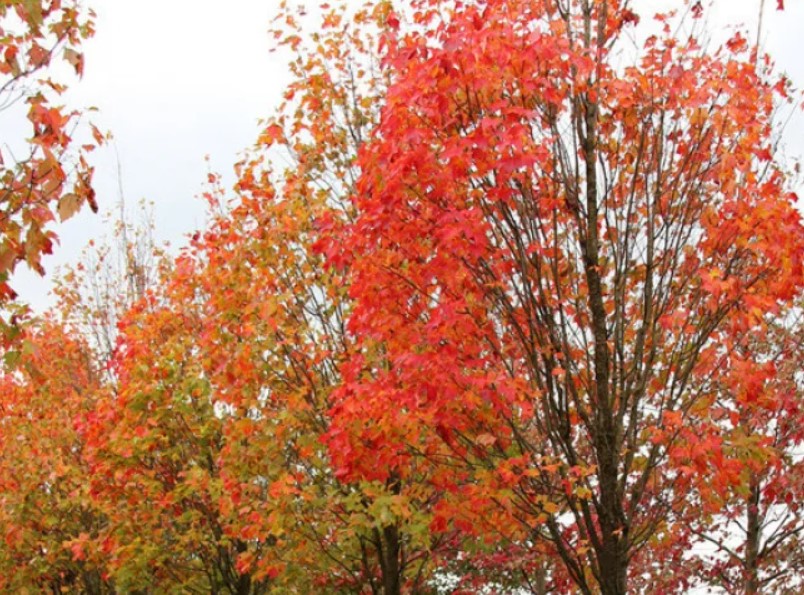
Red (Acer rubrum)
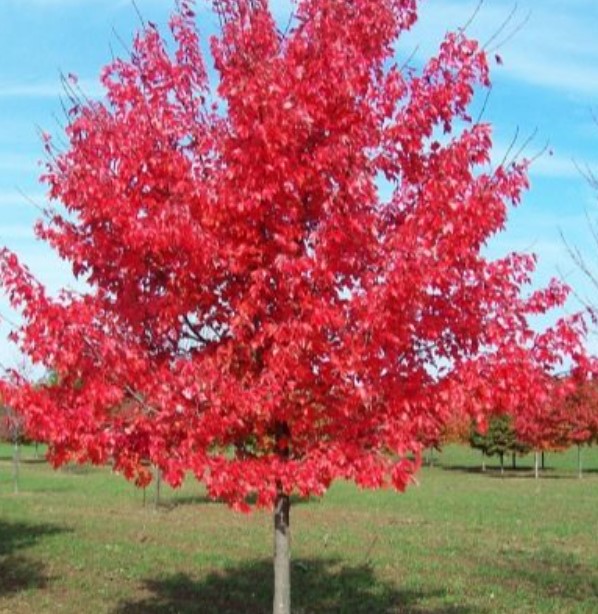
This maple has bright red foliage, which makes it particularly eye-catching.
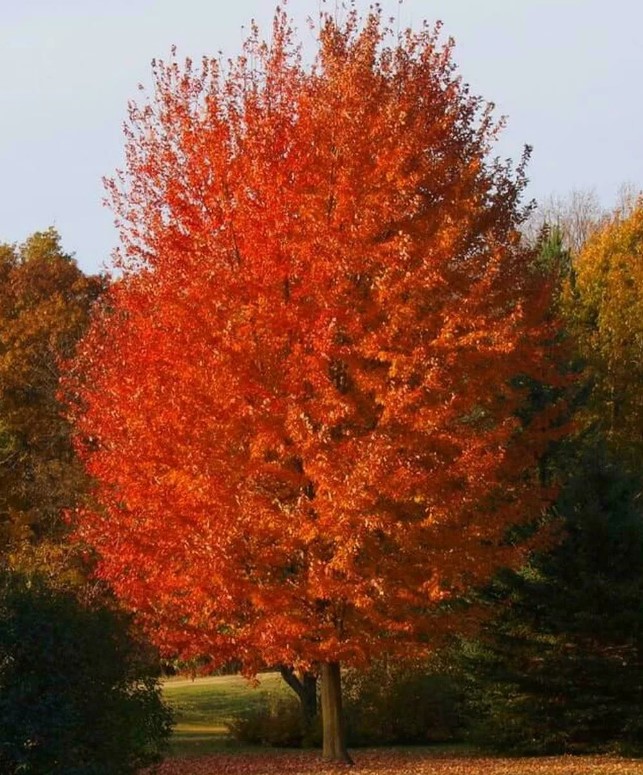
| Description | The leaves are inconspicuous in shape. The bark is pale gray. It blooms in spring. Height can range from 9 to 38 meters. Found in Russia and Japan. |
| Varieties | The species has 150-160 varieties. Autumn Flame – reaches 15 m in length and width. Autumn leaves remain bright red with orange spots for a long time;
Northwood is a seedless male cultivar. It grows up to 18 m. The foliage is glossy green above and dull green below in summer, turning orange to reddish in autumn.
Scanlon (Scanlon) – tree height 10 m, width 3 m. Foliage is orange-red in autumn. Hardiness zone 4. October Glory, Brandywine (see description below) |
| Application | For landscape design. |
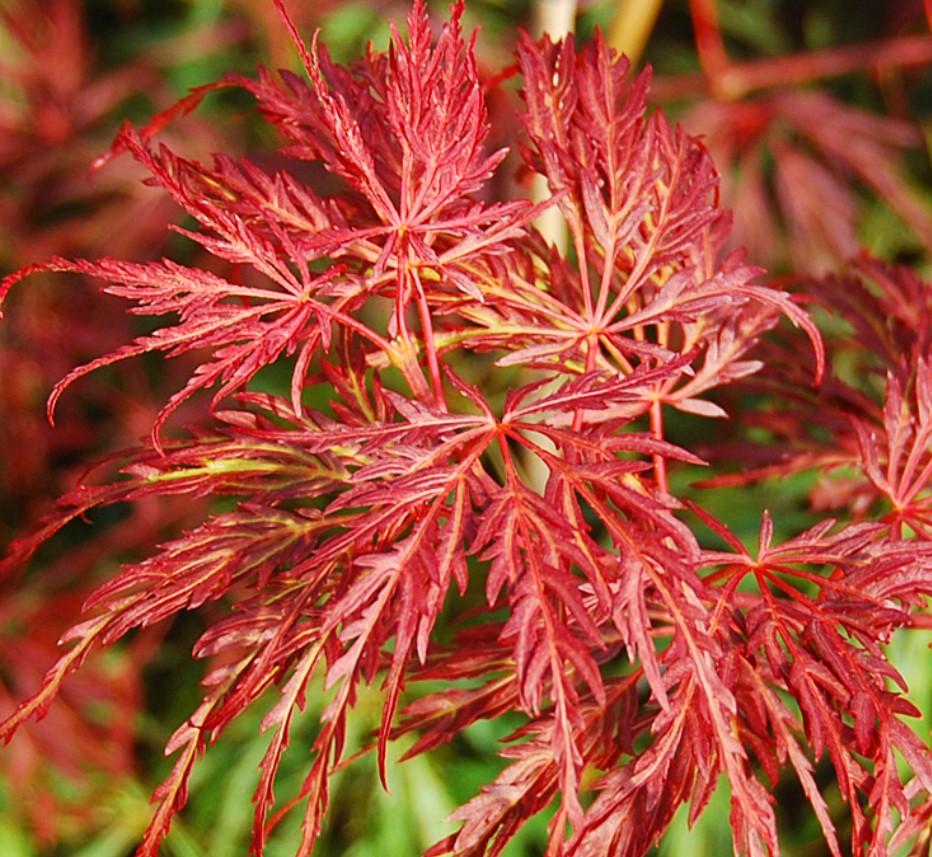
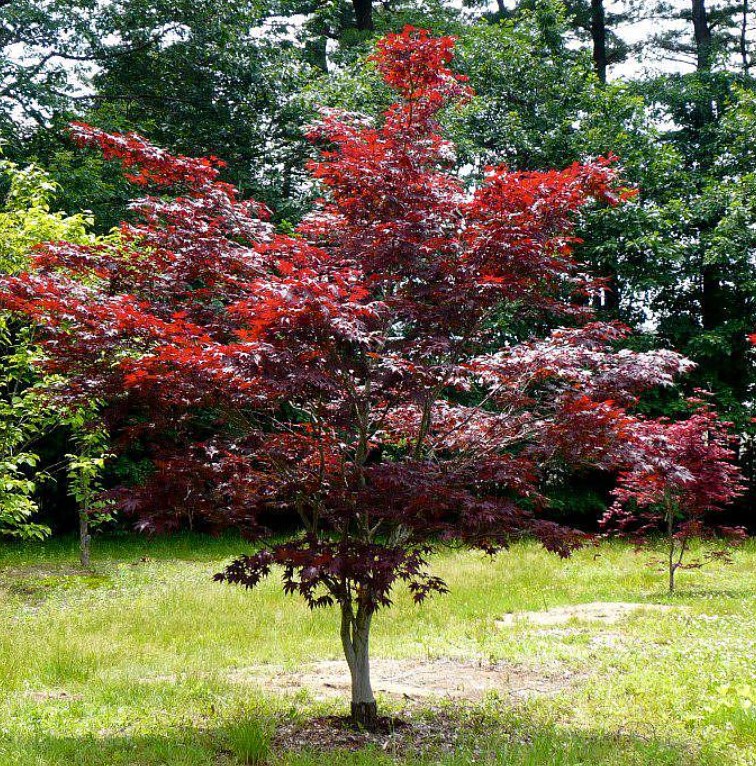
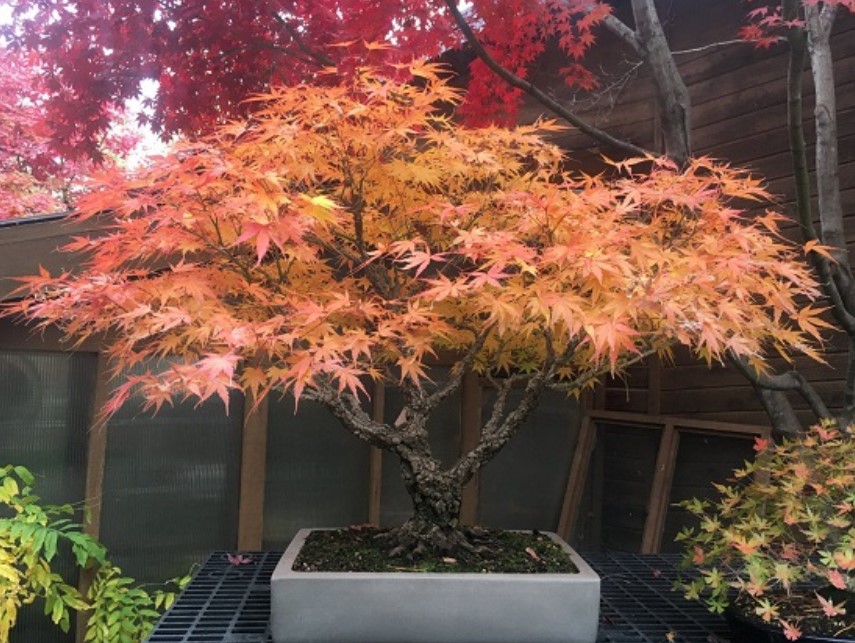
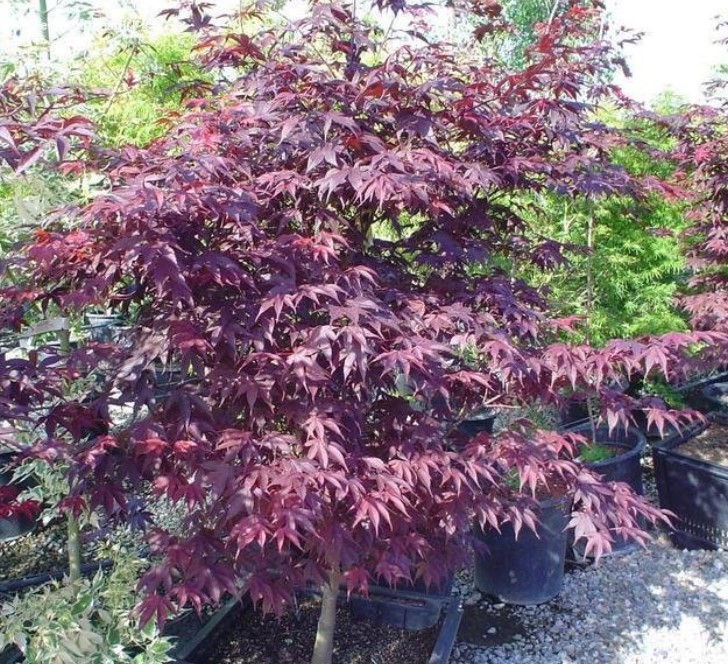
Japanese (Acer japonicum)
An ornamental plant, this maple has a very attractive appearance.
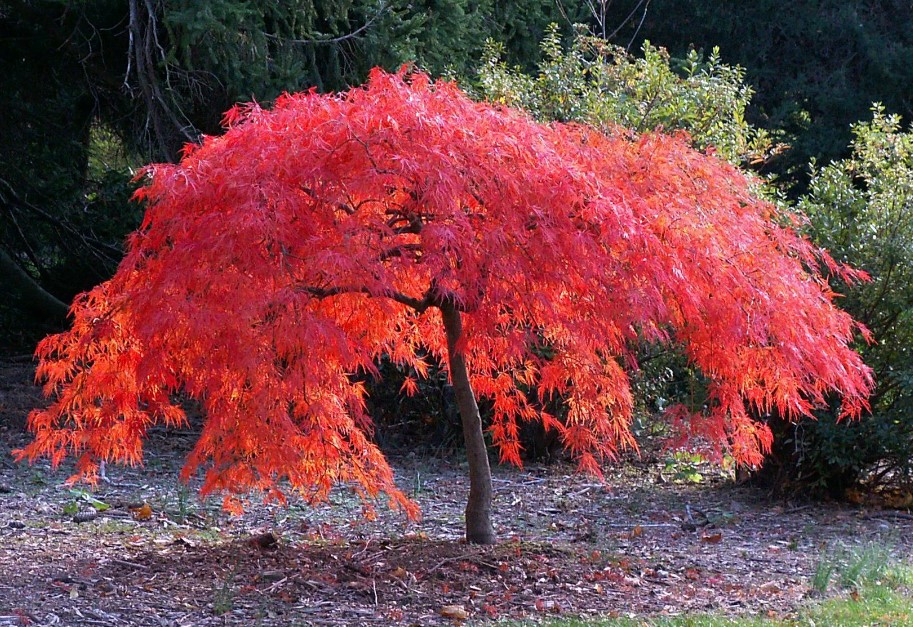
| Description | The height is about 10 meters. |
| Spreading | Japan and South Korea. Some varieties grow in Russia. |
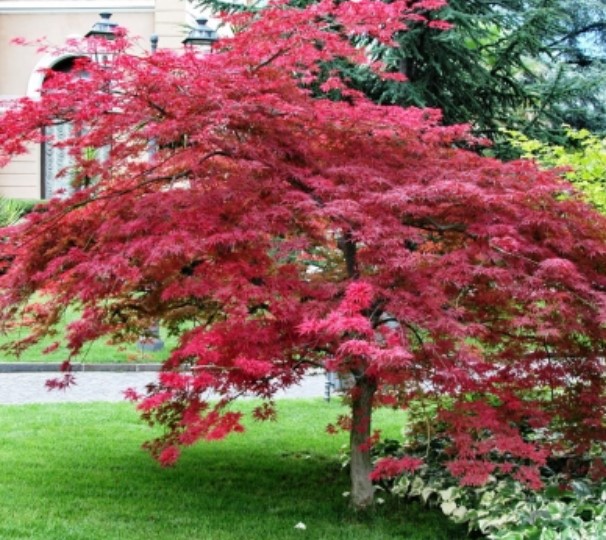
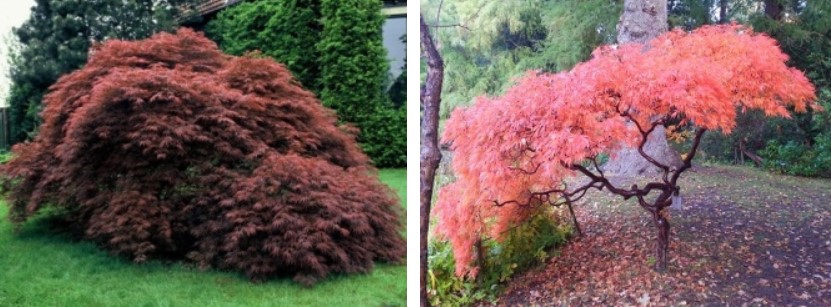
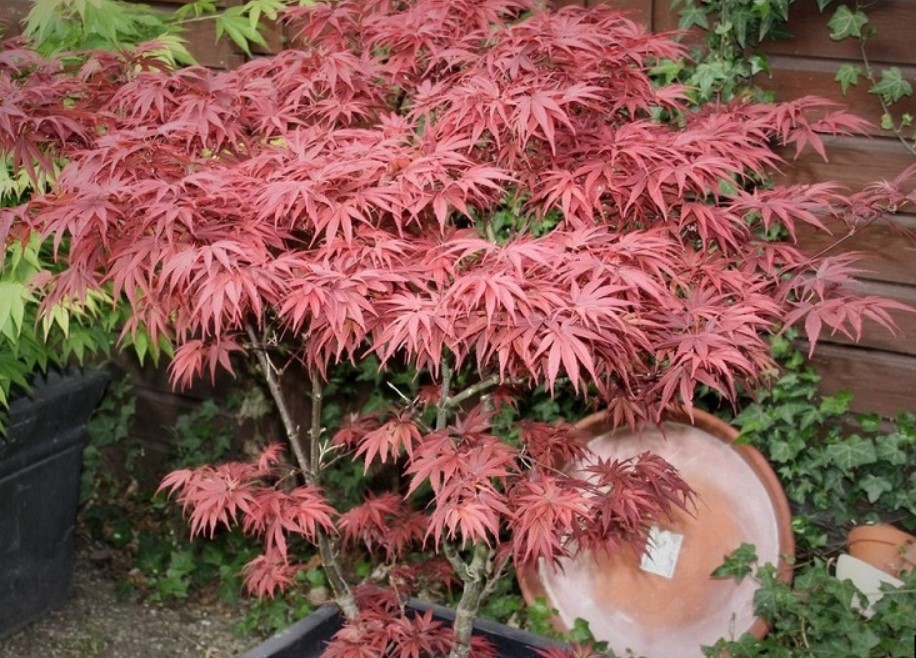
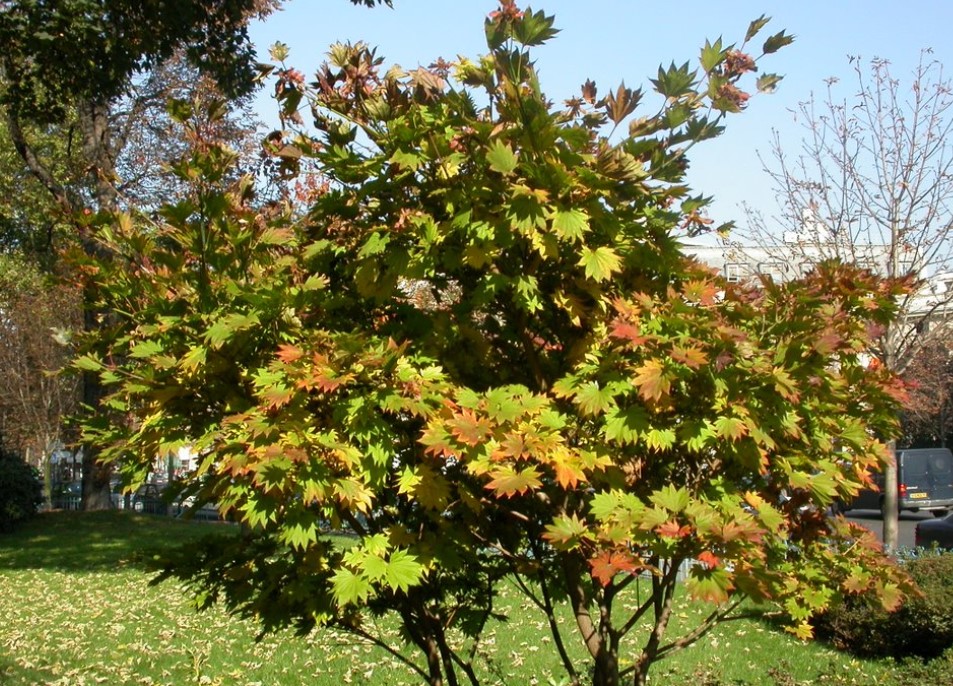
| Varieties | Fan-shaped (palm-shaped) - leaves resemble palms, a low tree or shrub about 6-10 m, the crown is rounded and resembles a tent.
It has many varieties: Bloodgood - 4 m by 2.5 m, bright red to purple foliage,
Yellow - 1.5 m by 2.5 m, in summer - dark red turns to yellow, in autumn - purple, Red - the name includes mixes of different maples: Red Wine - foliage colored like red wine, Red Emperor - dark in summer, bright in autumn, Red Blush - red-orange foliage with green veins,
Dissectum (Dissectum) - includes several varieties, the most popular are Dissectum Nigrum - 2 m with a lush purple crown and Dissectum Ornatum - 3 m, red-orange foliage, Pixie - 6 m, scarlet foliage all year round;
Atropurpureum, Garnet, Phoenix (see description of these varieties below); Shirasawa (Acer shirasawanum) - a dwarf shrub 1.5 m, wide foliage turns bright orange in autumn, has several hybrids;
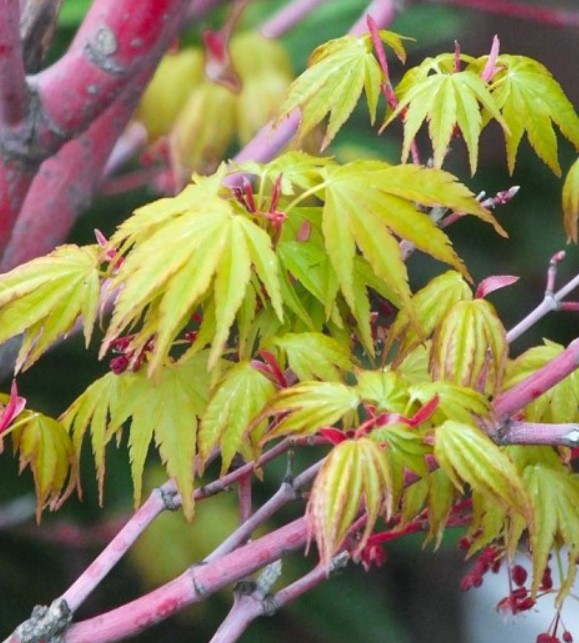
Beni Kawa — a type of Japanese maple with salmon-red bark and ruby-red foliage in autumn; |
| Application | For decorative purposes, to create Japanese gardens. |
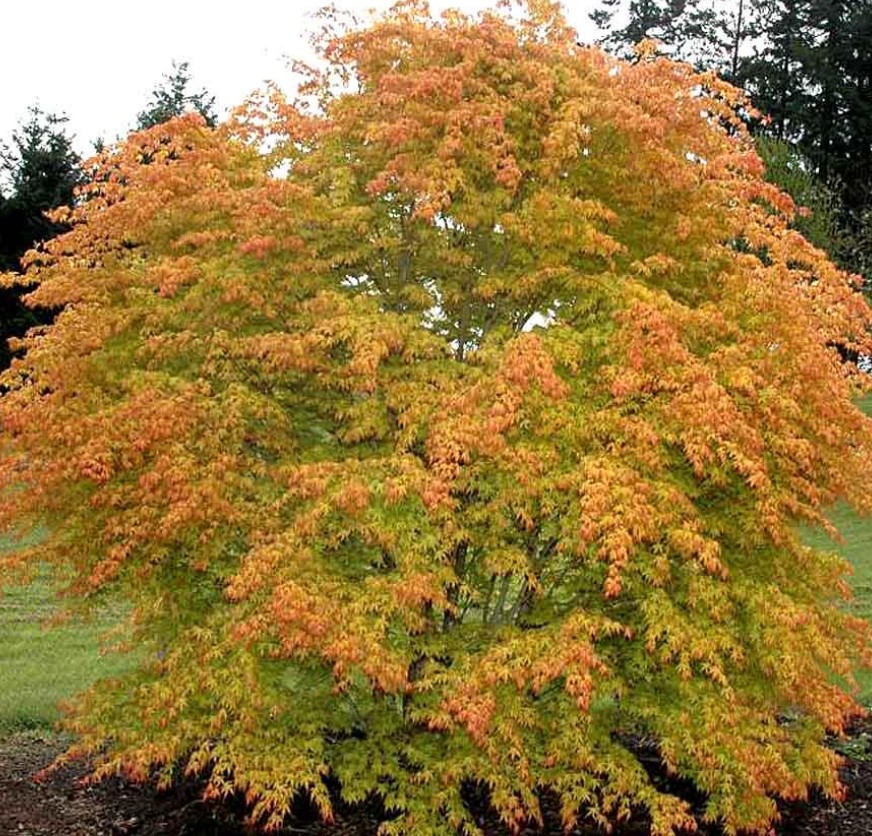
Curly (Acer circinatum)
This species of maple is a shrub, often forming dense thickets.
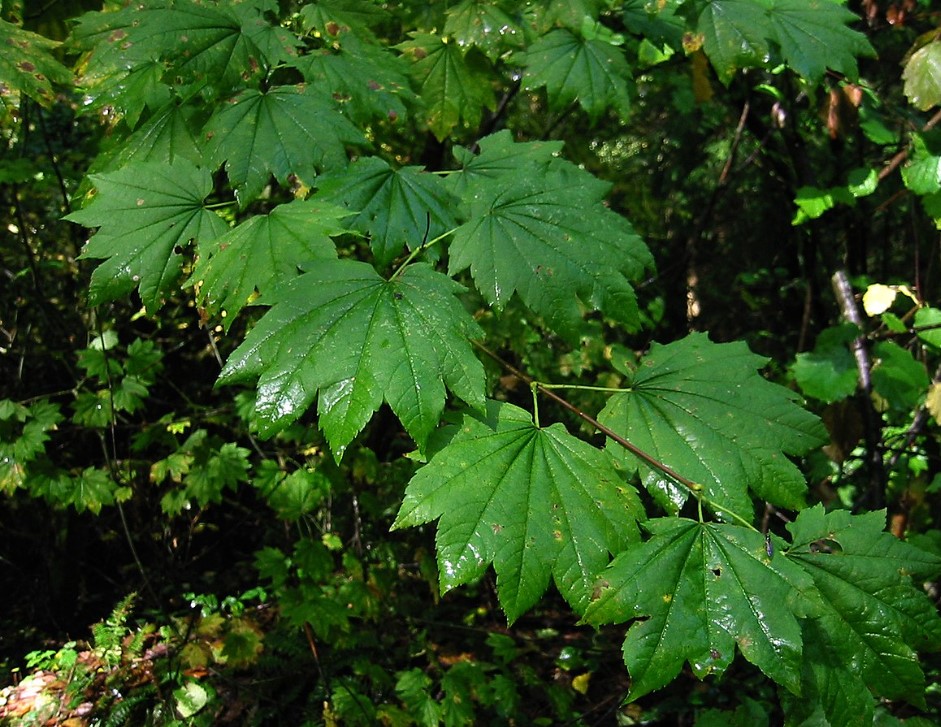
| Description | It reaches a height of 8 meters. Flowering occurs in April-May. |
| Spreading | Western North America. |
| Varieties | Little Jem – slow growing, leaves 2-3 cm;
Monroe is a multi-stemmed shrub reaching 8 m, the bark is light green to reddish with a white coating, the leaves are green in summer, and from golden yellow to carmine red in autumn;
Pacific Fire - this variety has bright red branches, leaves turn yellow in autumn.
|
| Application | Ornamental plant. |
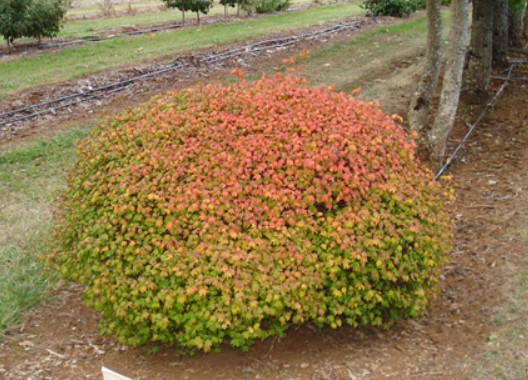
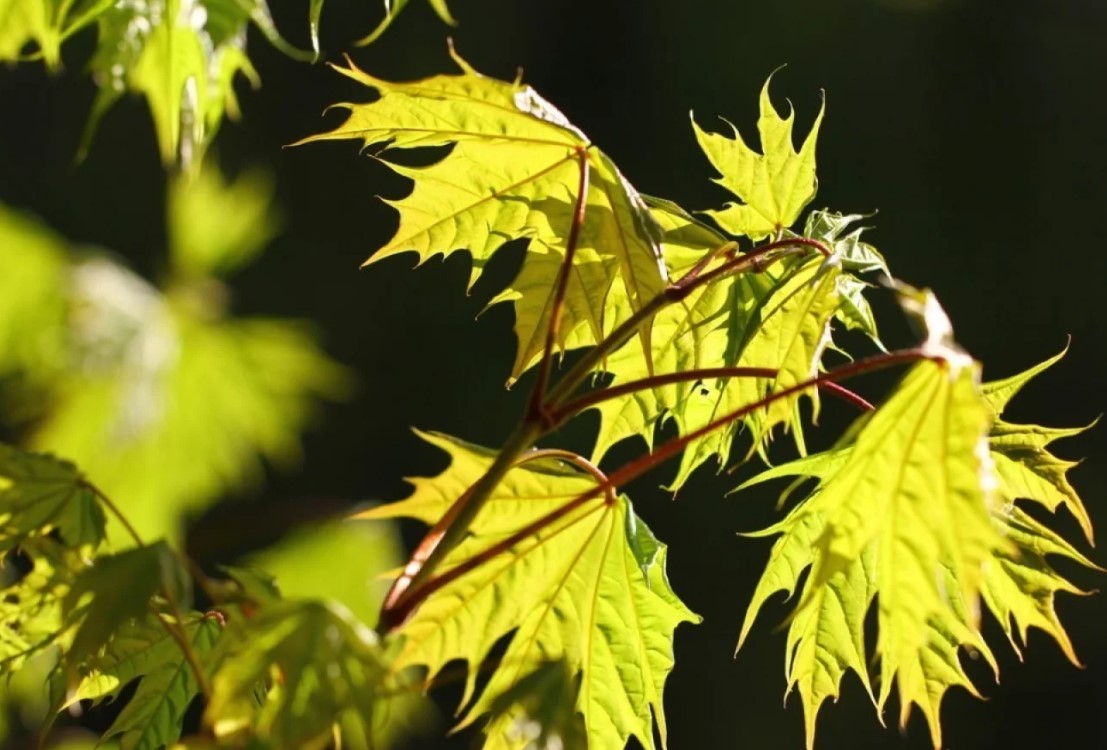
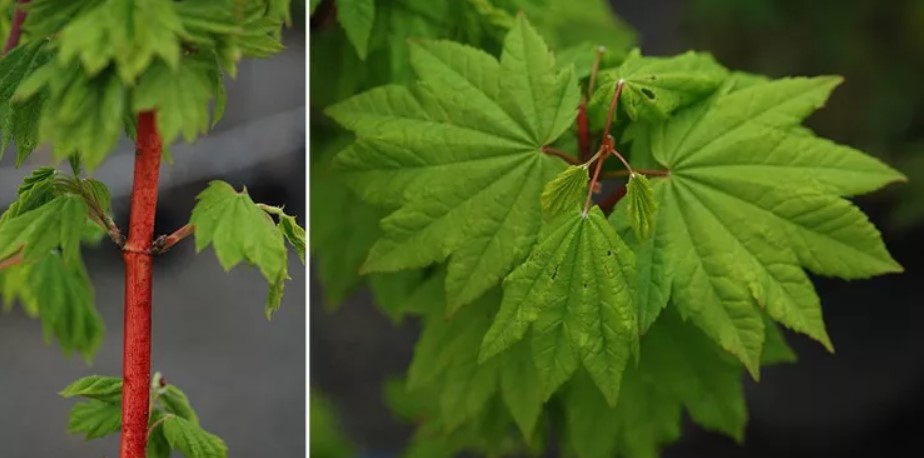
Black (Acer nigrum)
This maple species is prone to hybridization, making it sometimes difficult to identify.
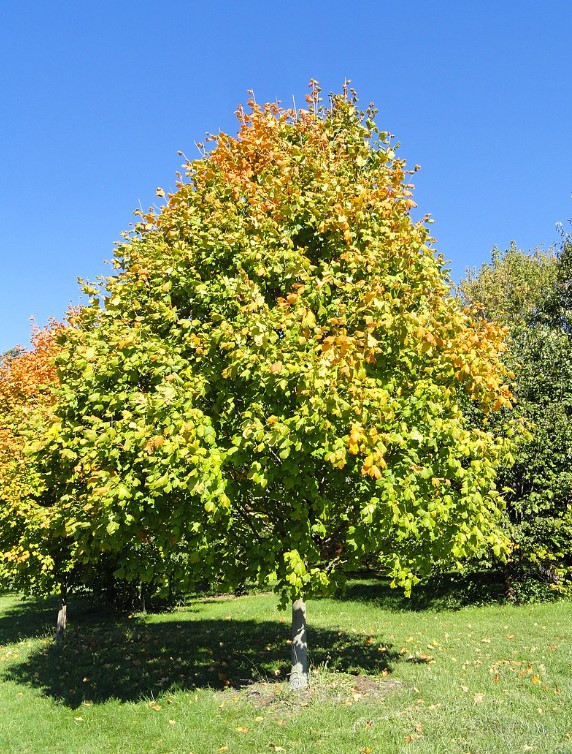
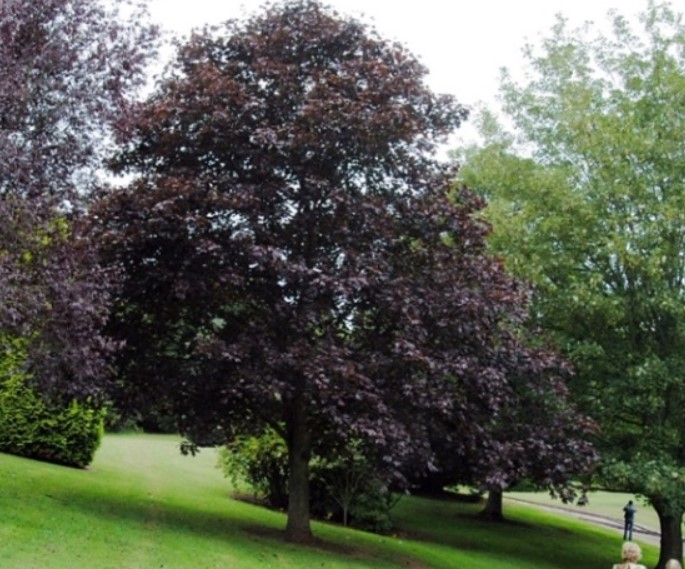
| Description | Trilobate leaves. Height reaches 21-34 meters. |
| Spreading | Midwest USA. |
| Application | For maple syrup production, landscaping and as timber. |
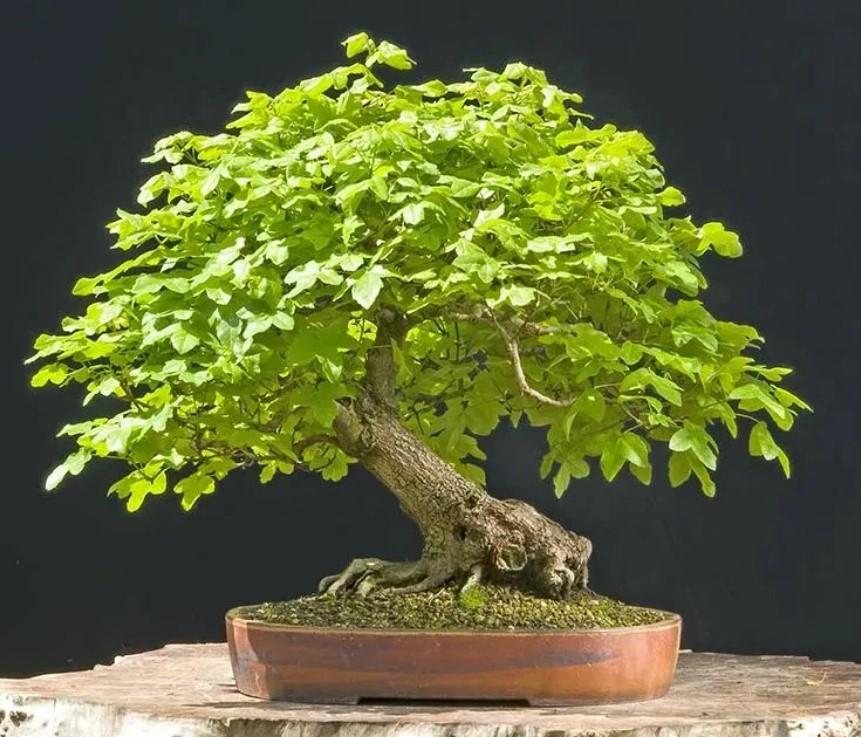
Three-lobed (Acer monspessulanum)
This species of maple is a shrub. The seeds germinate in early spring.
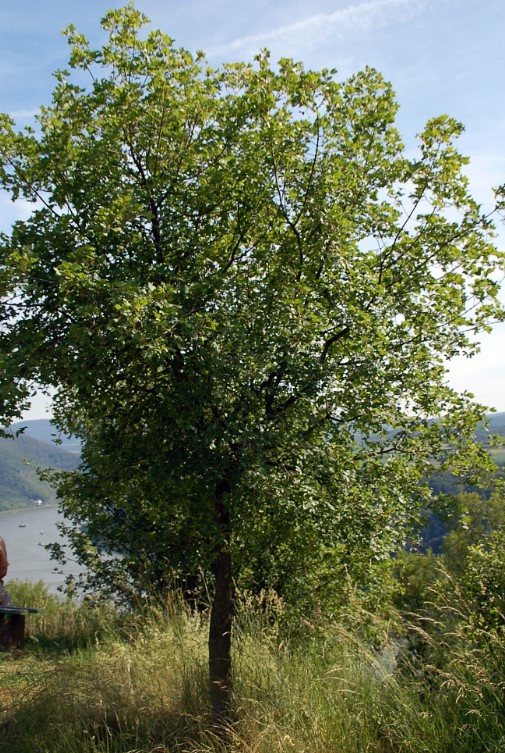
| Description | A deciduous tree, it grows to a height of 10-15 m, sometimes 20 m, with a crown 0.7 m. The leaves are small, three-lobed, leathery, dark green, and fall in November. The crown is irregularly shaped. The bark is dark gray. The inflorescences are yellow-white. |
| Spreading | Mediterranean. |
| Application | Bonsai.
|
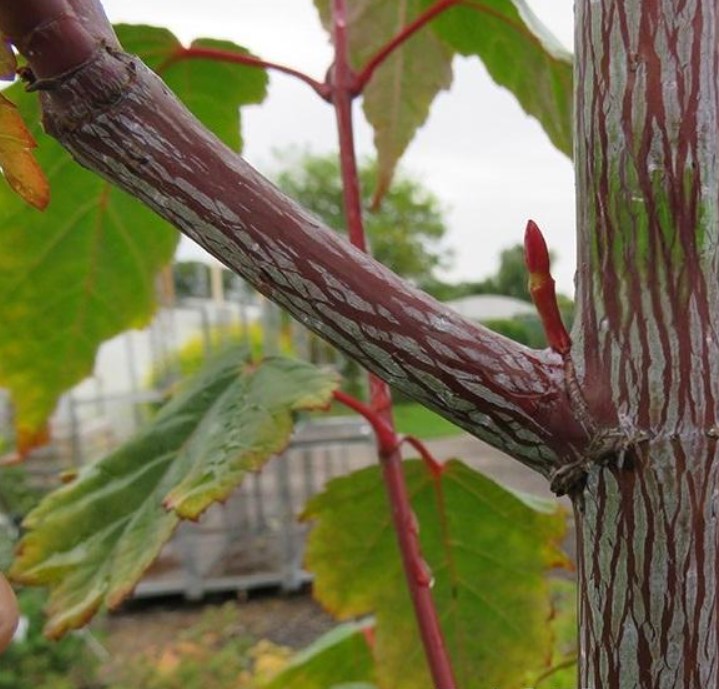
David's (Acer davidii) (snake-barked)
It can grow in the mountains at altitudes of up to 3000 m. It is found in many botanical gardens.
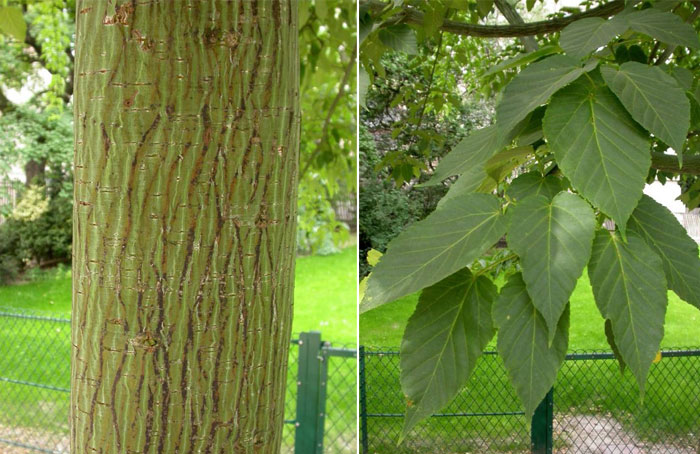
| Description | Height: 15 m. The bark resembles snakeskin in texture and color. The foliage is dark green. |
| Spreading | China. |
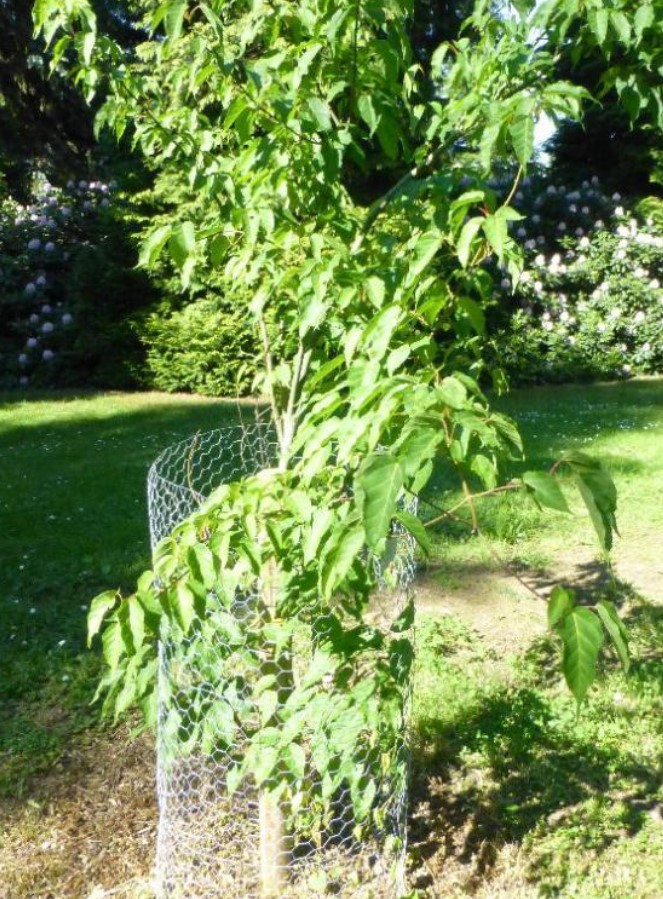
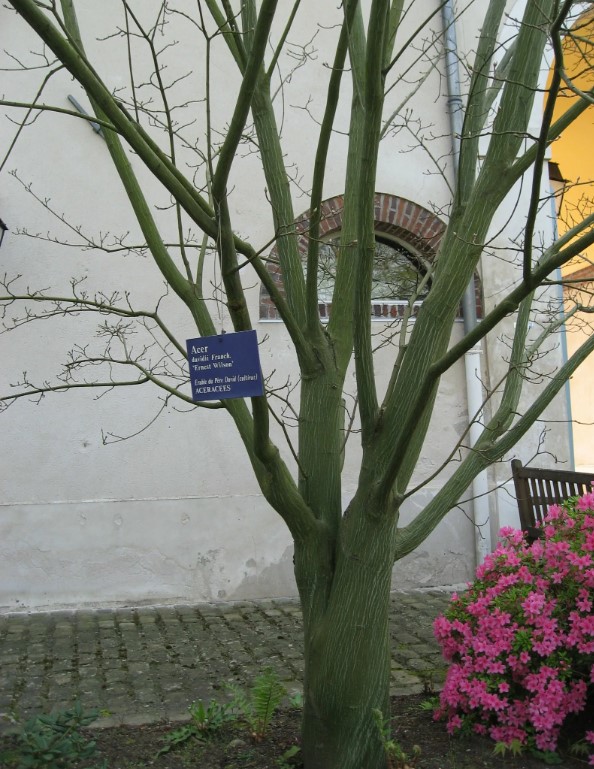
| Varieties | Rosalie is a deciduous tree growing to 15 m tall with opposite, ovate leaves, interesting bark color, and yellow-green flowers. It blooms in April;
Ernest Wilson is a deciduous tree up to 9 m tall, with leaves that turn from pale green to bright orange;
George Forrest – red branches contrast with dark green foliage; a mature tree reaches 12-15 m by 6-7 m. Yellow flowers produce red-brown fruits. In autumn, the foliage turns bright orange and red. |
| Application | Grown as ornamental trees. |
17 Popular Maple Varieties for Landscapes
Maple is often used in landscape design. Let's look at the most popular species.
| Name | Variety | Description | Application |
| Atropurpureum
|
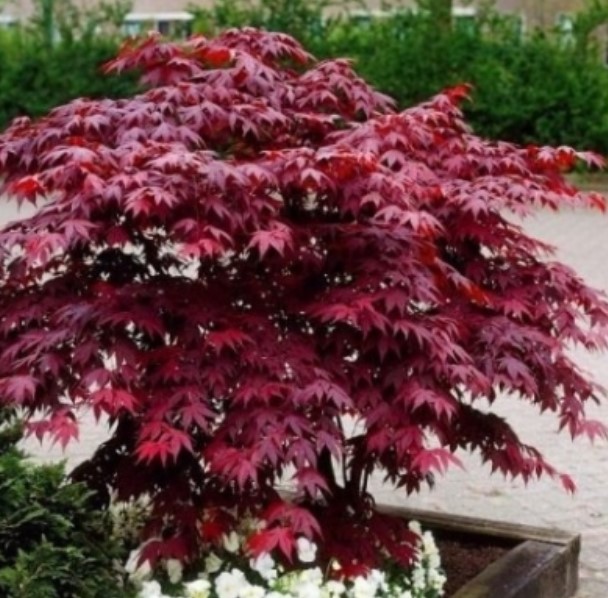
Japanese | A low-growing tree, 4 m by 3 m, with a spreading crown and large, serrated leaves, bright red to purple-burgundy, and bright red inflorescences. It blooms in May and June. | As a hedge and single planting in landscape design. |
| Brandywine
|
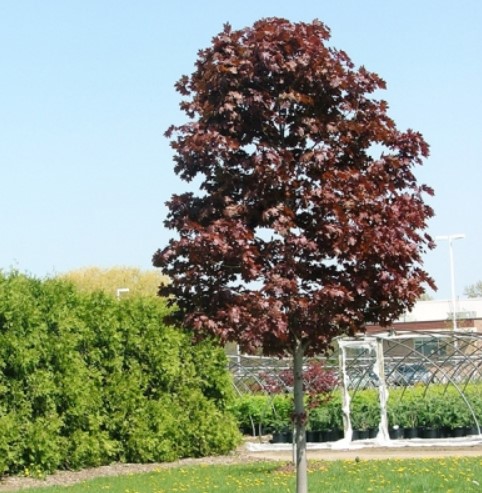
Red | A hybrid of the 'Autumn Flame' and 'October Glory' varieties, this seedless tree has a beautiful, decorative crown. A mature plant is approximately 9 m tall, while an older plant can reach up to 15 m. The crown is oval and approximately 10 m tall. The autumn foliage is vibrant, lasting up to two weeks. The leaves are reddish-green, and the inflorescences have a reddish tint. It blooms in April and May. | Used in landscapes for planting singly or in groups, to create seasonal alleys and compositions. |
Garnet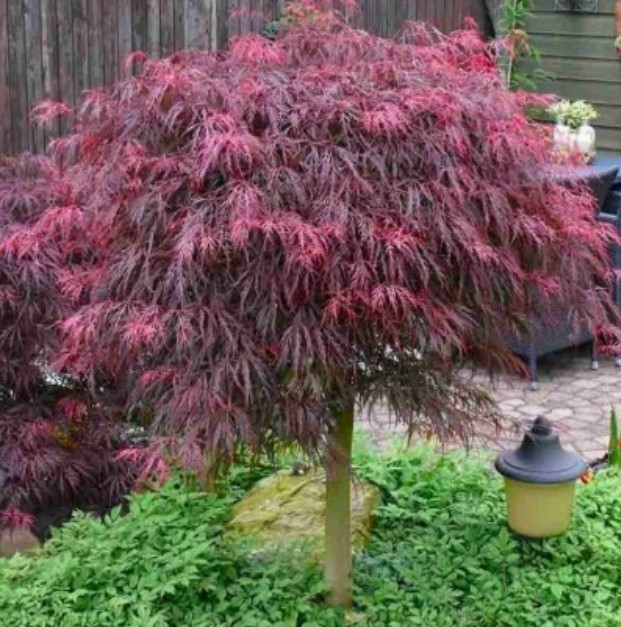 |
Japanese palmate | A dwarf tree, 1.5 m by 2.5 m, with a spreading, hemispherical crown and complexly shaped leaves, red in summer and dark brown in autumn. The inflorescences are creamy white. | They are planted in squares and parks along paths. |
| Globosum
|
Holly-leaved | A dwarf tree 1.5 m tall with a rounded crown up to 5 m high. It has large green leaves and yellow-green inflorescences. It blooms in May. | It can be found in landscape design of gardens and is planted for greening streets in cities. |
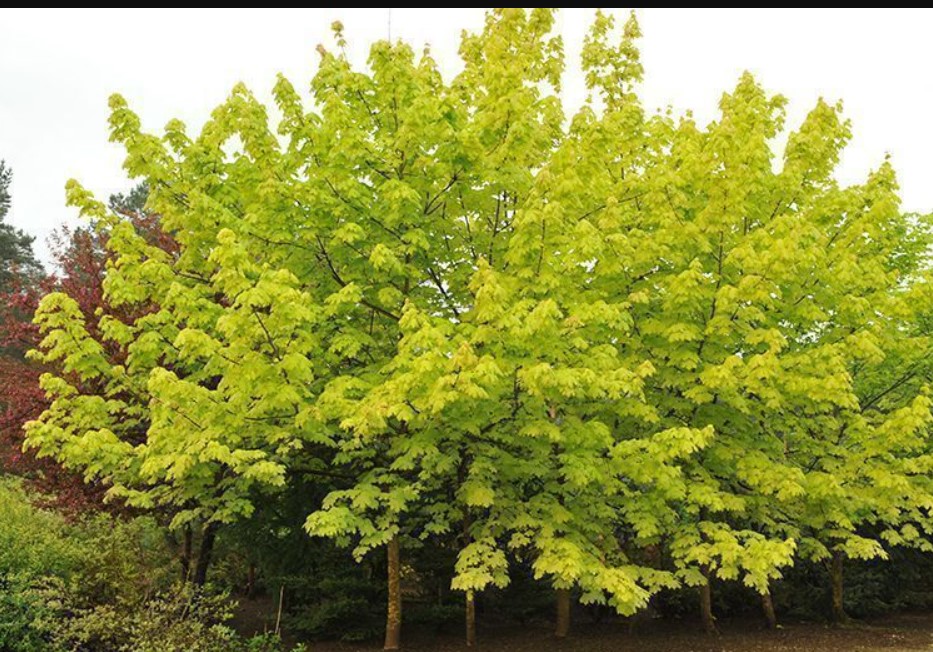
Golden Globe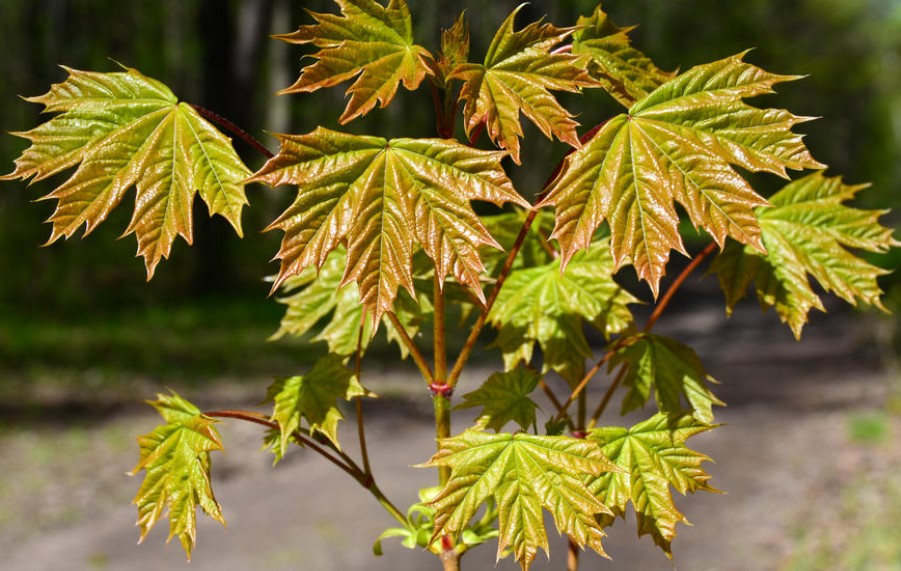 |
Holly-leaved | A low-growing tree with a dense, wide crown. It has large leaves and yellowish-green inflorescences. It blooms in May. | For urban landscaping, alleys, and parks. Also used in private gardens. |
Drummondii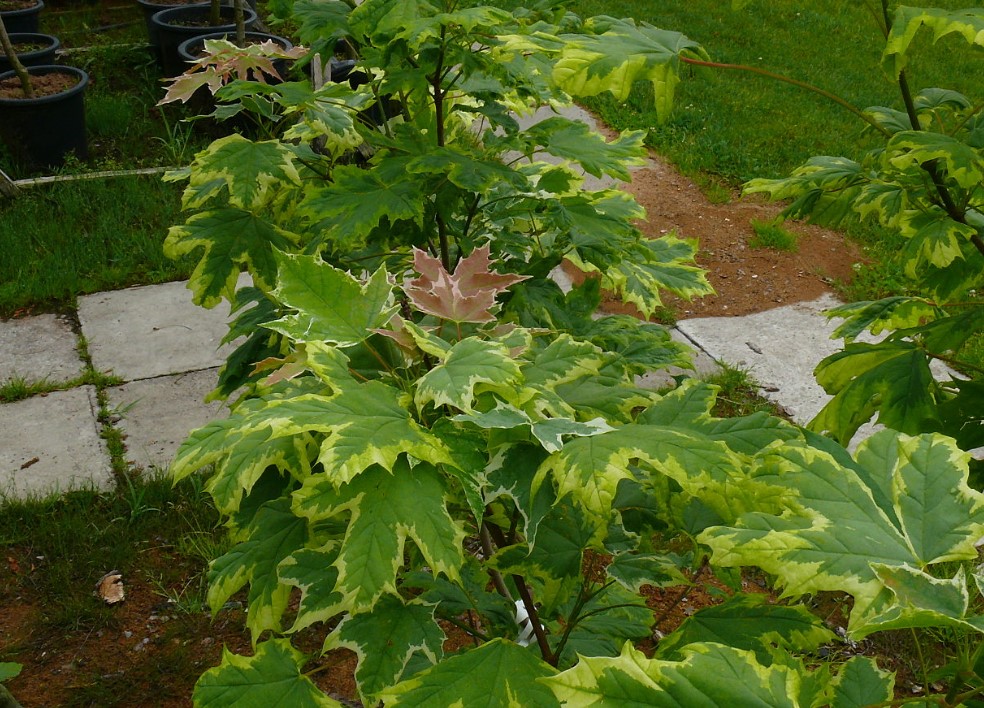 |
Holly-leaved | A medium-sized tree with a pyramidal crown. Large leaves with a pinkish tint and yellowish-green inflorescences. Plant in autumn or winter. | For growing in the garden. |
Carnival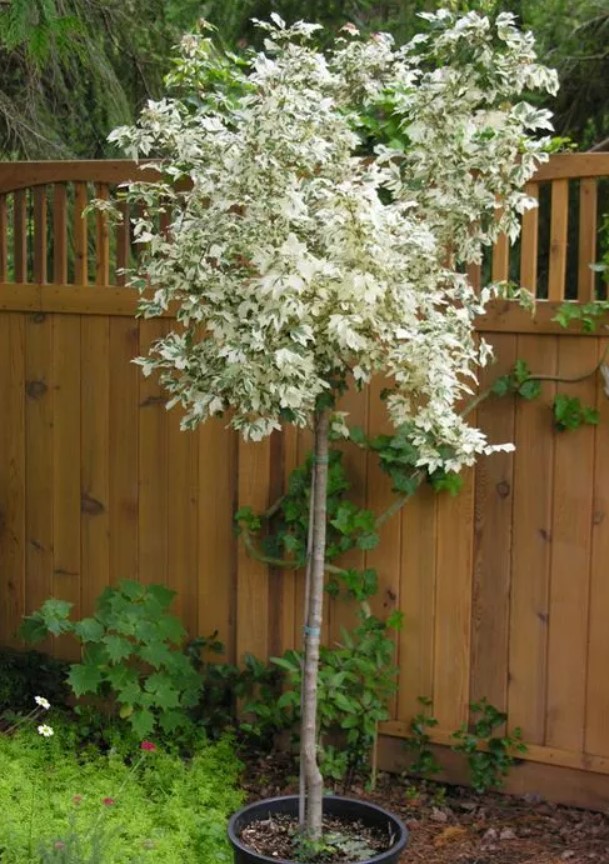 |
Field | A dwarf tree with creamy, almost white leaves. | Grown in gardens in sunny places. |
Krimson King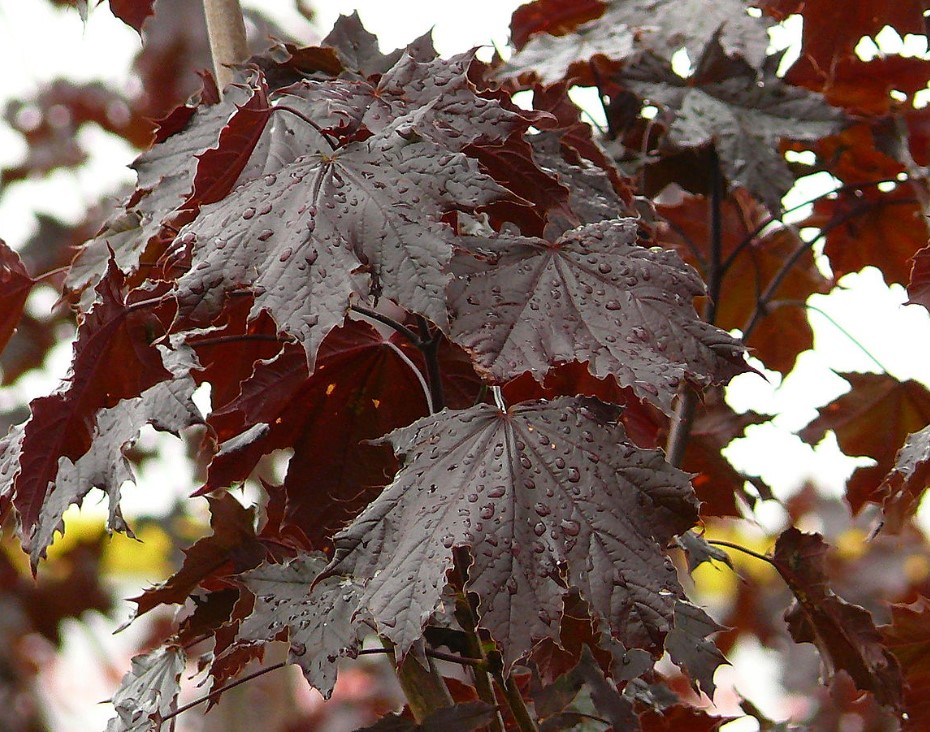 |
Holly-leaved | A tall tree with unusually colored foliage. It bears fragrant yellow-orange flowers. | Planted in parks. In private landscaping, it is used as a single planting. |
| Crimson Sentry
|
Holly-leaved | A medium-sized tree, 8 m tall, with a spreading, dense crown 4 m high. It has small red leaves and yellowish-green inflorescences. It blooms from late May. | Used for planting in alleys as a color accent. |
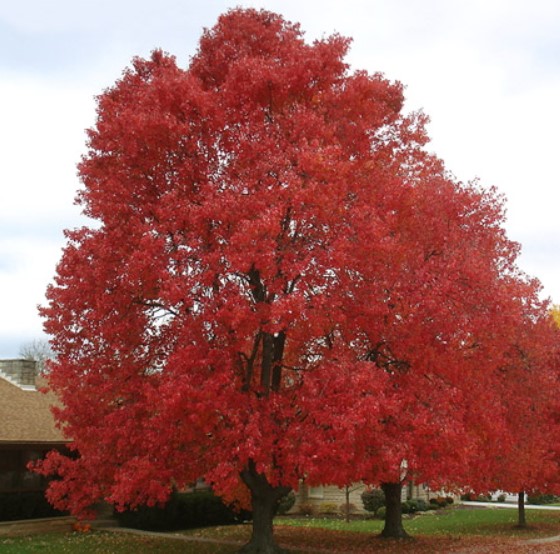
October Glory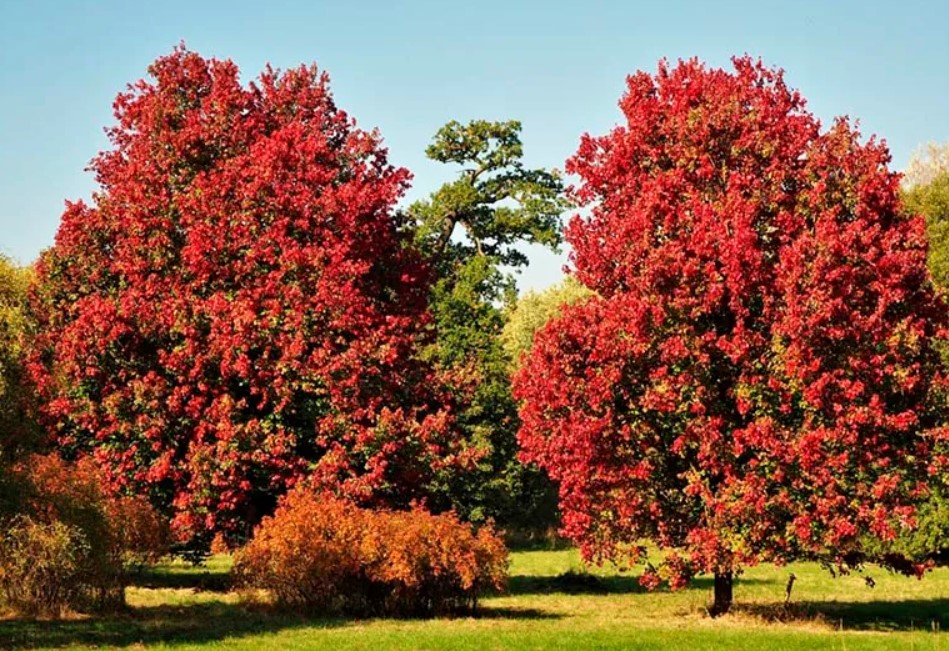 |
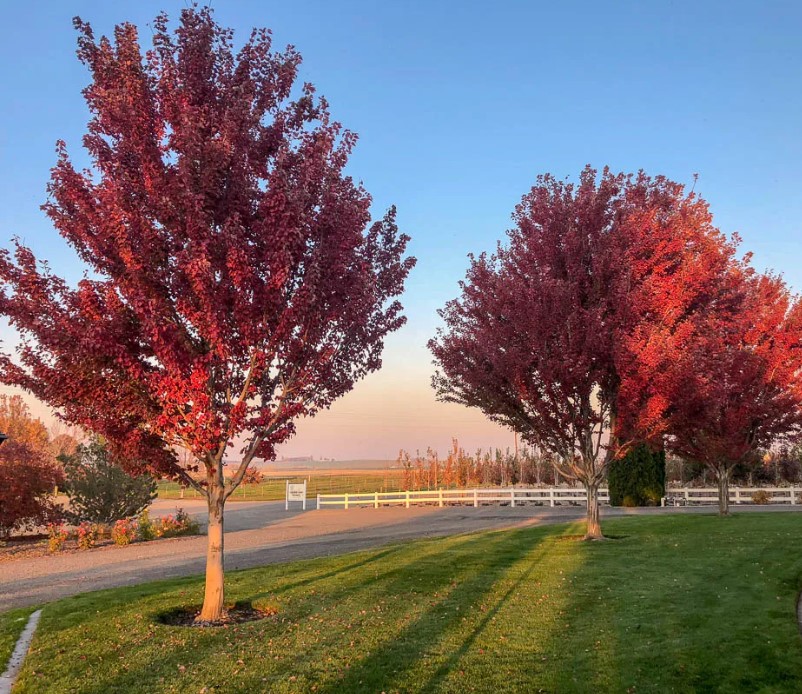
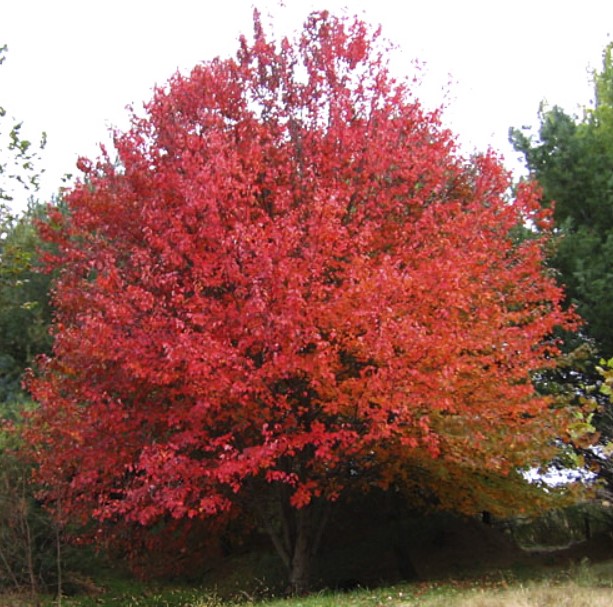
Red | This tall tree grows up to 18 m tall with a spreading, rounded crown up to 8 m high. It is a female cultivar. Flowers and fruits are red. Flowers appear before the leaves unfurl. The leaves are glossy, bright green until late autumn, then turn orange to red. It is heat-loving and not suitable for central Russia. It blooms from April to May. | Used in single and group plantings in gardens and city parks. |
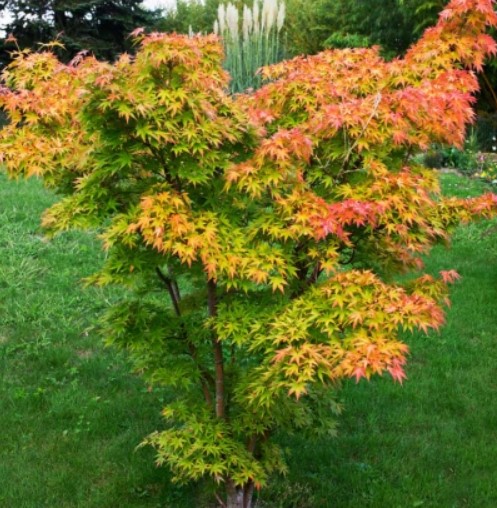
| Orange Dream
|
Japanese, palmate | A dwarf tree with a dense crown measuring 1.6 m by 0.7 m. It has golden-orange leaves and purple-red inflorescences. It blooms in May and June. It tolerates temperatures down to -29 degrees Celsius. | Used mainly in solitary plantings. |
| Princeton Gold
|
Holly-leaved | A tall tree, 10-12 m tall, with a dense, bushy crown, 6-8 m high. It has large golden-yellow leaves and fragrant yellowish inflorescences. It blooms in early May. | Used to create contrast in landscape design. |
| Red Sunset
|
Red | A tall tree, 12 m tall, with a rounded, pyramidal crown 7 m in diameter. It has green leaves (bright scarlet in autumn) and dark red inflorescences. | Suitable for any landscape solution. |
| Royal Red
|
Holly-leaved | A tall tree up to 20 m tall with a dense crown up to 8 m high. It has large red leaves and yellowish-green inflorescences. | Used to create color accents in compositions. |
| Sun Valley
|
Red | A tall tree 10-15 m high with a rounded crown 9-12 m high. It has large green leaves and dark red inflorescences. | For group and individual compositions. |
Phoenix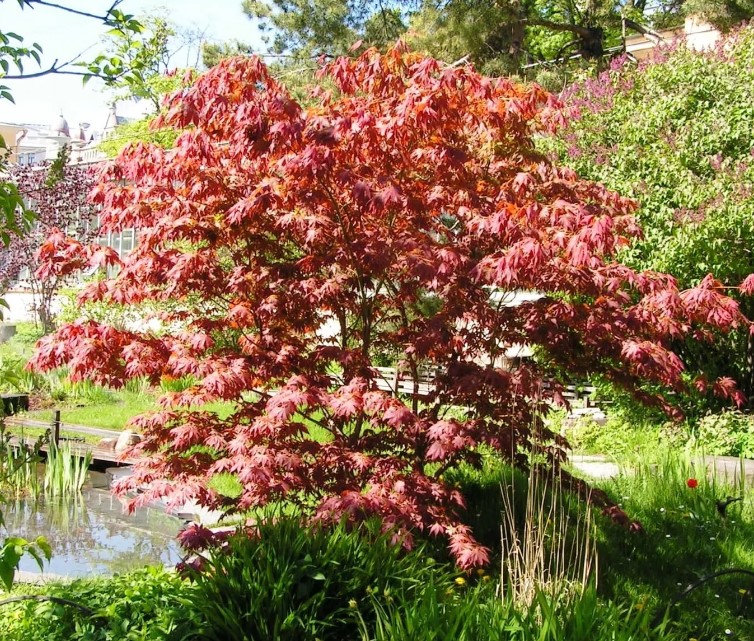 |
Japanese, palmate | A dwarf tree with a compact crown, 1.5 m by 1.5 m. It has small pink-red leaves in spring, turning green, and orange-yellow to red in autumn. Purple inflorescences. | Used in Japanese garden design. |
Flamingo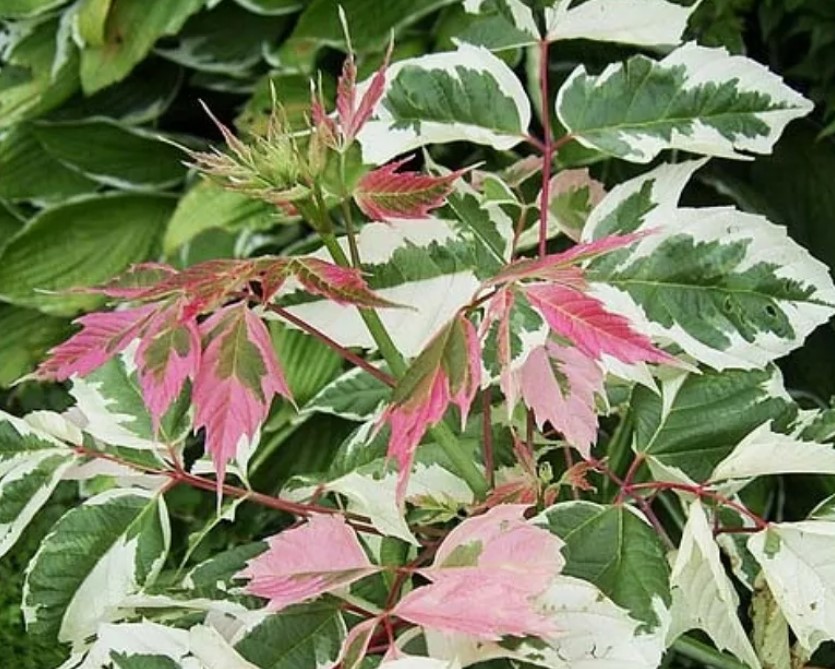 |
Ash-leaved | A low-growing tree with a rounded crown. Its leaves are complexly shaped, green with a white border and pink spots. | Used for planting along paths. |
What kind of tree is the Australian maple (Flindersia brayleyana)?
The Australian maple or Queensland red beech belongs to another family, Rutaceae.
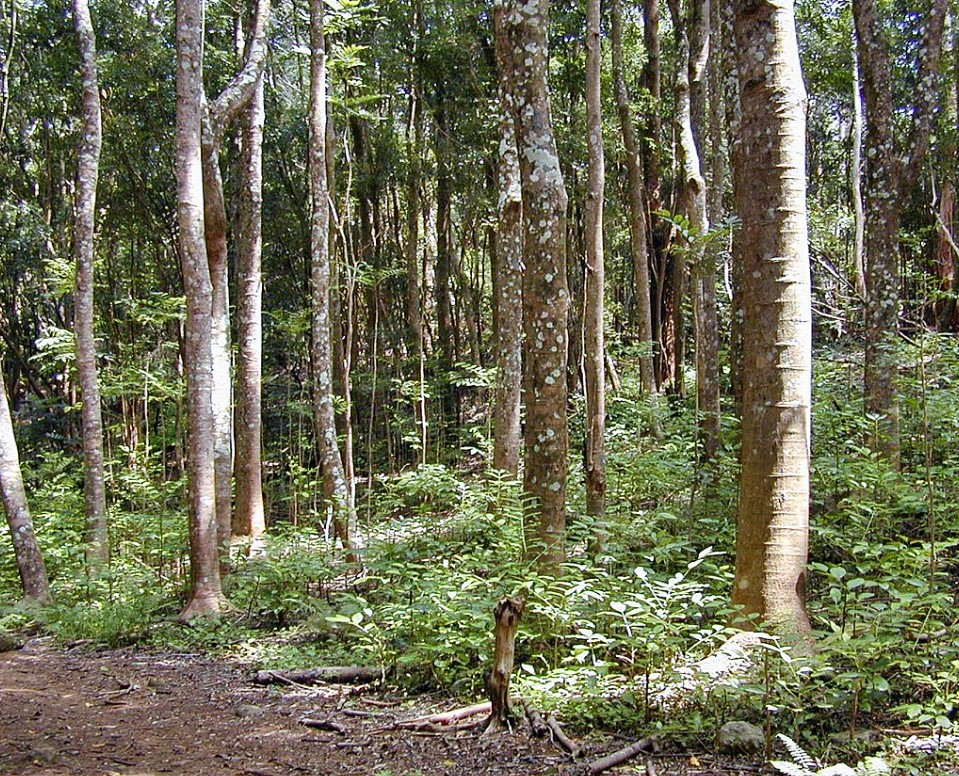
This shade-loving species has pinnate leaves and white inflorescences. It grows up to 35 m in height. The Australian maple grows in the tropics. Its wood produces high-quality decorative furniture.
Planting a maple tree
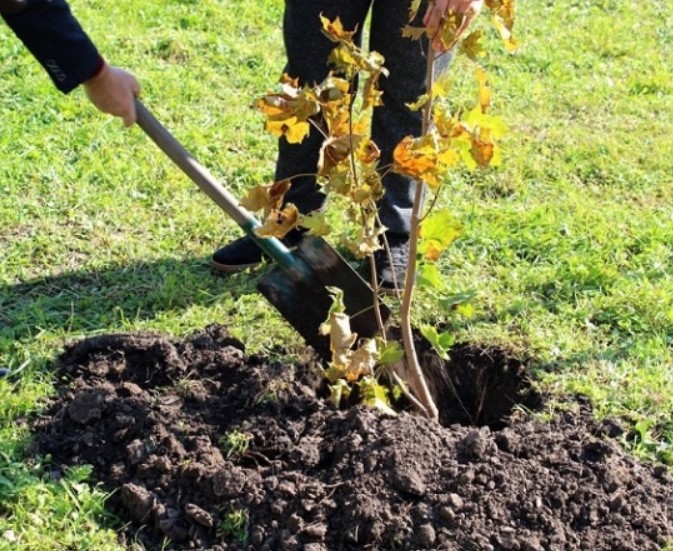
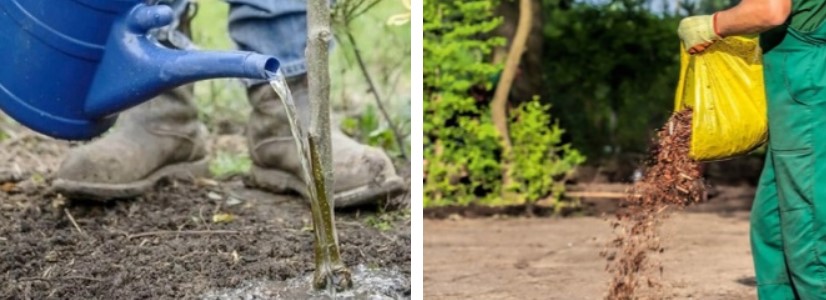
Important aspects in planting maple:
- plant the tree where it will not interfere with other plants;
- the seedling should be 2-3 years old;
- the soil needs to be fertilized;
- the depth of the pit is approximately 70 cm;
- sand and gravel drainage;
- The seedlings need to be tied up.
It is better to choose not very tall trees for planting.
Care
Simple rules for maple care:
- watering should be done once a week;
- Fertilizer must be added during planting;
- Only young trees can be replanted;
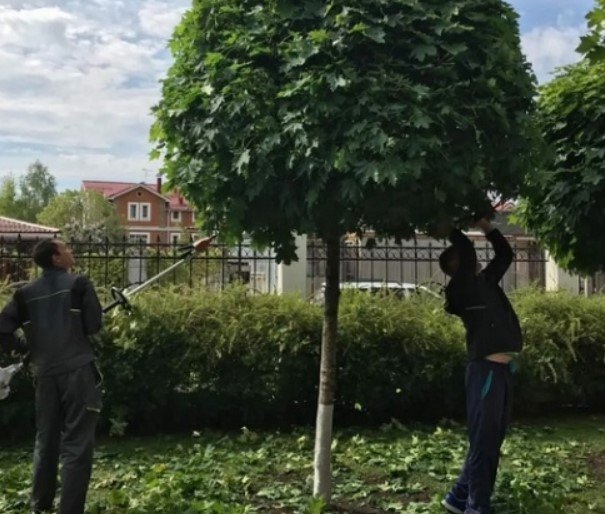
- pruning must be done carefully, focusing on the growth of the crown;
- For wintering, you should choose only those varieties that are frost-resistant.
All this will help you keep your maple healthy and beautiful.
Maple propagation
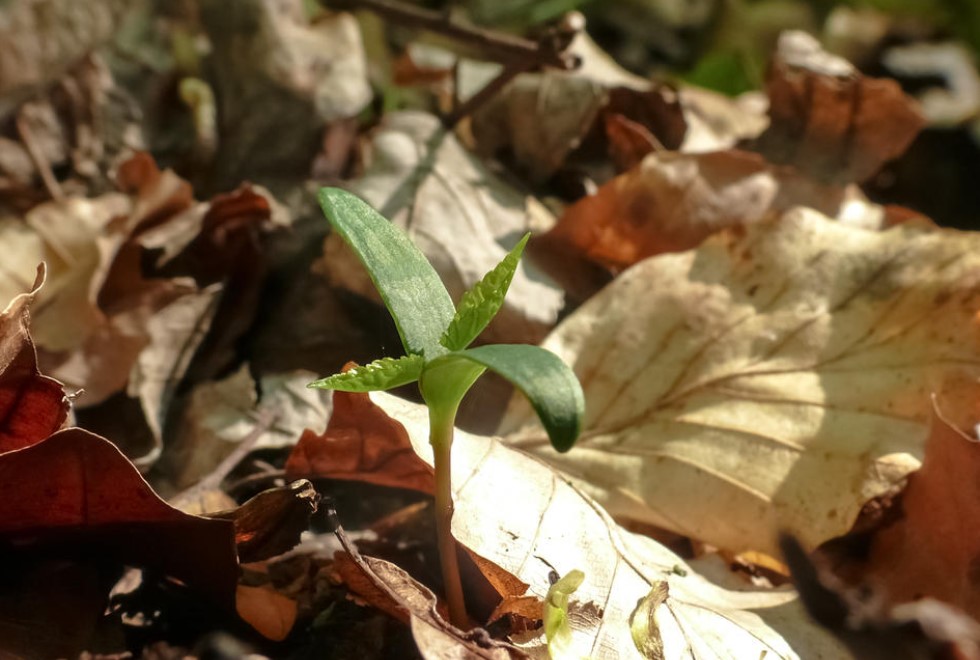
Cuttings are considered the most effective method of propagation. Propagation by seed is a very long and tedious process.
Diseases and pests
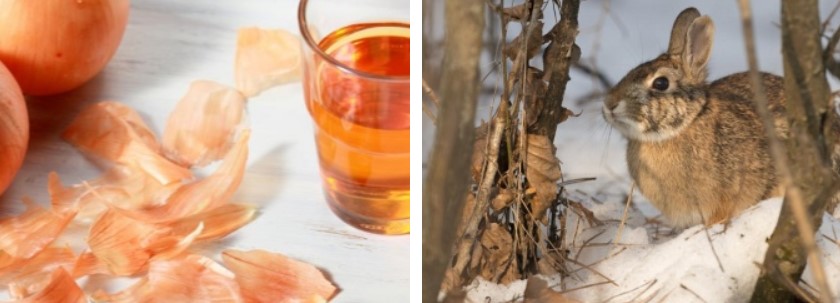
Main types of diseases and pests:
- powdery mildew;
- parasitic fungi;
- hares;
- mice.
It is necessary to carry out preventive measures and treat trees.
Useful properties of maple
Maple sap contains many useful substances:
- fiber – reduces the level of “bad” cholesterol, prevents the formation of atherosclerotic plaques;
- carbohydrates – serve as sources of energy;
- organic acids – remove harmful substances from the body, normalize the functioning of the gastrointestinal tract;
- alkaloids – improve blood circulation, calm the central nervous system, relieve joint pain;
- lipids – improve the functioning of the central nervous system and hormonal system;
- fatty acids – participate in energy balance;
- tannins – eliminate the negative impact of pathogenic microflora;
- carotene – protects cells from free radicals;
- Vitamin B – normalizes blood pressure, prevents atherosclerosis, and expands vascular lumen to improve blood circulation;
- ascorbic acid is a powerful natural antioxidant
- Vitamin E – improves the functioning of the reproductive system, accelerates tissue healing, and prevents blood clots.
Maple has the following medicinal properties:
- antibacterial;
- immunostimulating;
- disinfectants;
- tonic;
- diuretics;
- cleansing.
Indications for use
- joint problems;
- ICD;
- vitamin C deficiency;
- acute and chronic bronchitis, pneumonia, acute respiratory viral infections;
- radiculitis;
- problems with potency and inflammation of the prostate gland;
- gastritis, ulcer;
- herpes.
Please note that maple should only be used as a complementary treatment to the main one. It is not a cure-all.
Preparation of raw materials and recipes
Pain-relieving infusion
Analgesic infusion is an effective remedy for reducing pain and swelling.
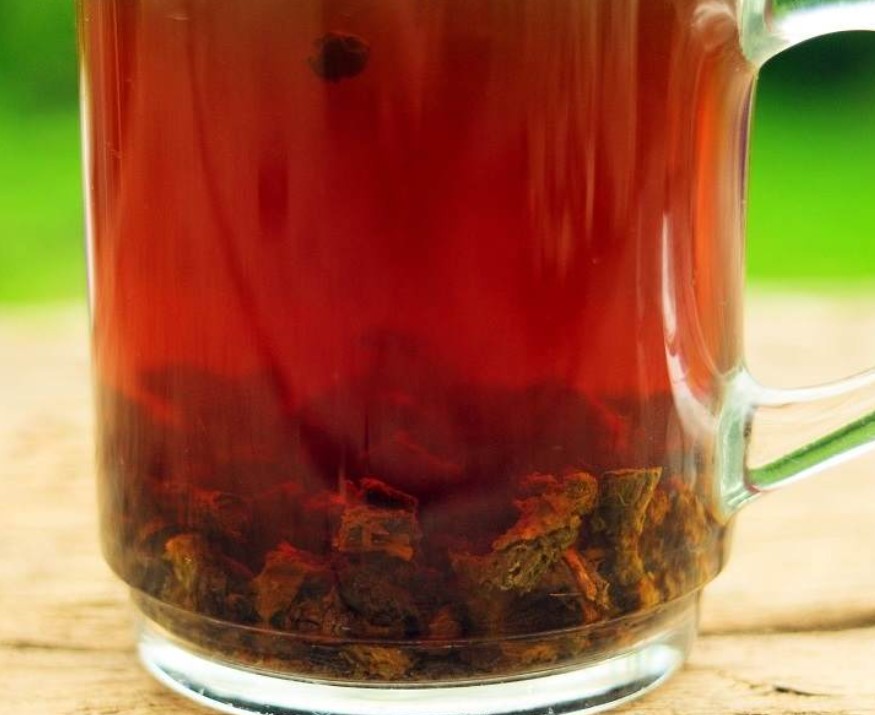
To prepare it you need:
- 3 dried medium-sized maple leaves without visible damage;
- 300 ml of boiled, preferably purified water.
Place the leaves in water and let steep for an hour. Prepare the infusion every morning, never ahead of time, as it will lose its medicinal properties if left standing for several days. Drink the infusion 10-15 minutes before meals for a month. Then take a two-week break and then drink the infusion again for another month. After this two-week break, complete the treatment.
Infusion for the treatment of polyarthritis
To treat complex polyarthritis of the joints, you can use an infusion of green young maple leaves:
- Pour 100 g of green leaves into 1 liter of purified boiling water.
- Let it brew for at least 12 hours, or better yet, a day.
Take the infusion internally as described above.
Infusion for complex therapy
This tincture is particularly effective for gout and has a comprehensive effect on affected joints. It can be used both internally and externally. Ingredients:
- 20 g crushed maple leaves;
- 100 ml of 96% alcohol.
Let it steep for 45 days, then take ten drops of the tincture three times daily before meals. The tincture can also be applied to joints during flare-ups to relieve pain, as maple has an analgesic effect.
Lotions for affected joints
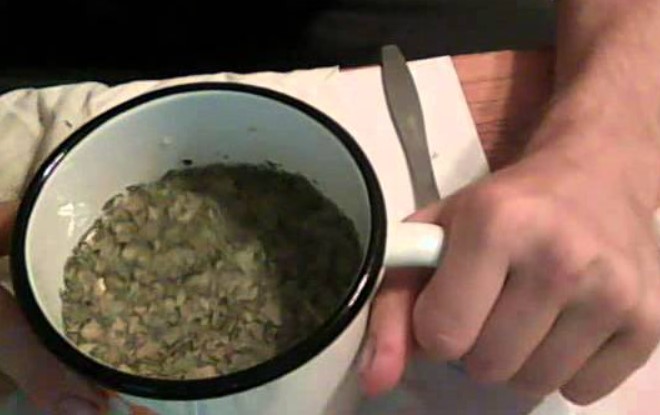
A topical poultice is an excellent remedy for reducing swelling, numbness, and skin discoloration. To prepare the poultice, you will need:
- 10 (or more, depending on which joint needs treatment) washed and thoroughly crushed maple leaves;
- sterile bandage.
Apply a bandage to the affected joint, then spread the medicinal paste evenly over it. Secure with several layers of bandage. It is not recommended to keep the compress on the joint for more than 2-3 hours.
Tea for colds
To prepare this tea you will need:
- several crushed and dried maple leaves;
- 200 ml of boiling water or cold water.
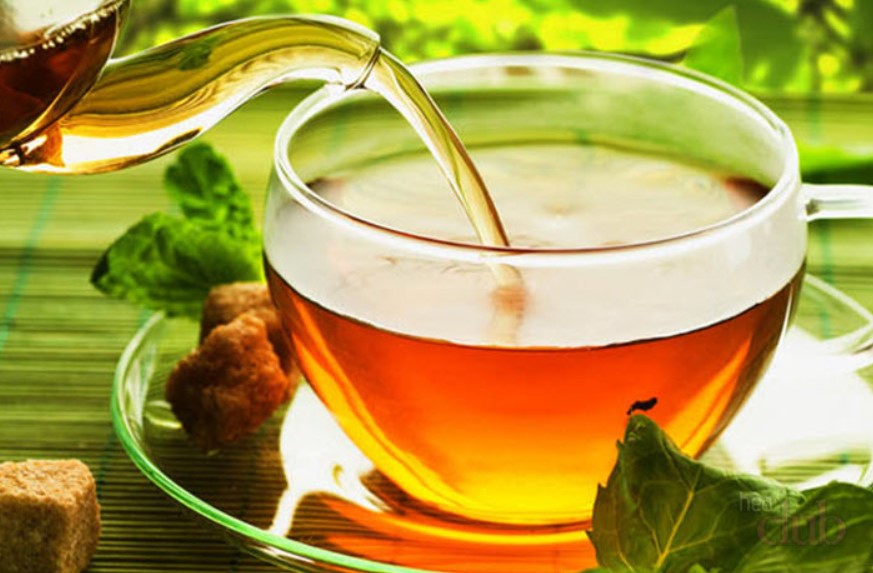
Brew like regular tea and drink it warm. This drink helps cleanse and restore the mucous membranes of the upper respiratory tract, and also has a mild calming and sleep-inducing effect. Drinking this tea daily for at least two weeks can help relieve and recover from pneumonia and chronic bronchitis.
Maple syrup
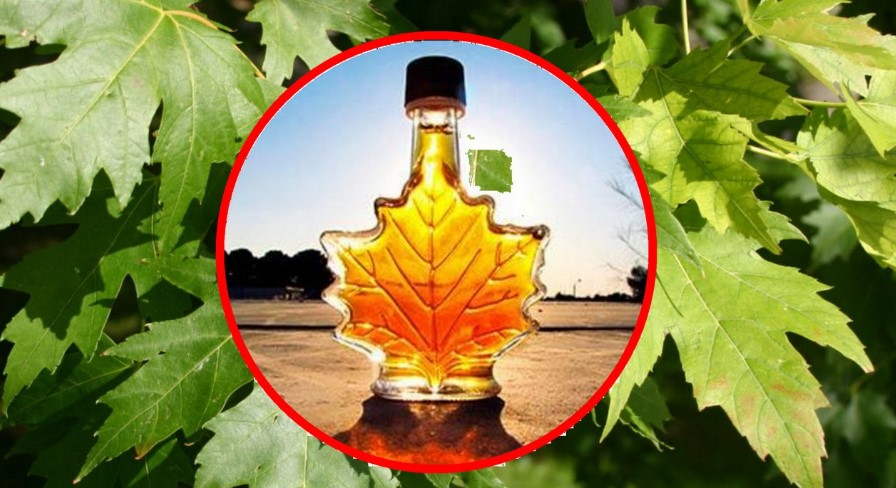
The syrup is obtained in early spring from the sugar maple (Acer saccharum), native to Canada. The leaf of this species is depicted on the flag. It is susceptible to strong winds, freezing rain, and frost.
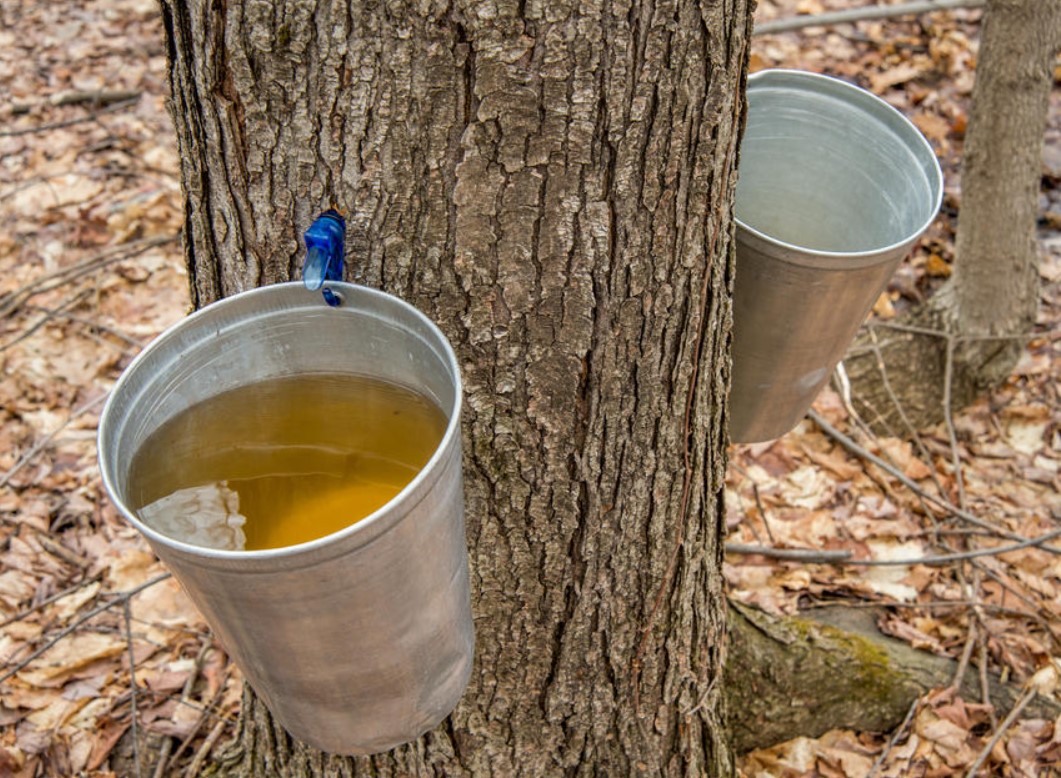
Maple is a unique tree, divided into many species, each with its own unique beauty. It is used not only in landscape design but also in medicine and furniture making.
Gardeners' reviews of different types and varieties of maple
The unusual leaf shape, the variety of their colors, the ability to change color depending on the season, the varied crown shape, bark color, and other interesting features—this is what makes the maple one of the most beautiful and beloved ornamental trees (shrubs) in the eyes of many gardeners! We are no exception; my wife and I love maples too!
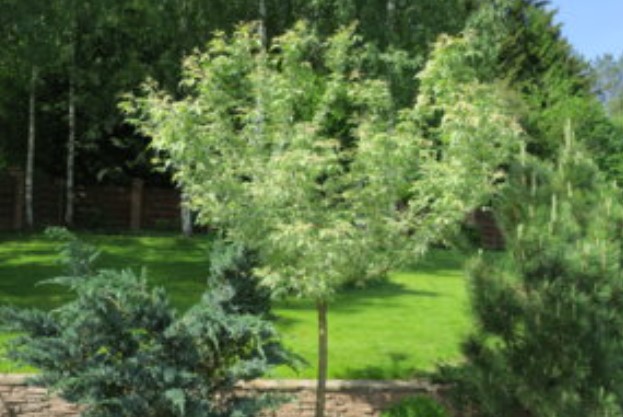
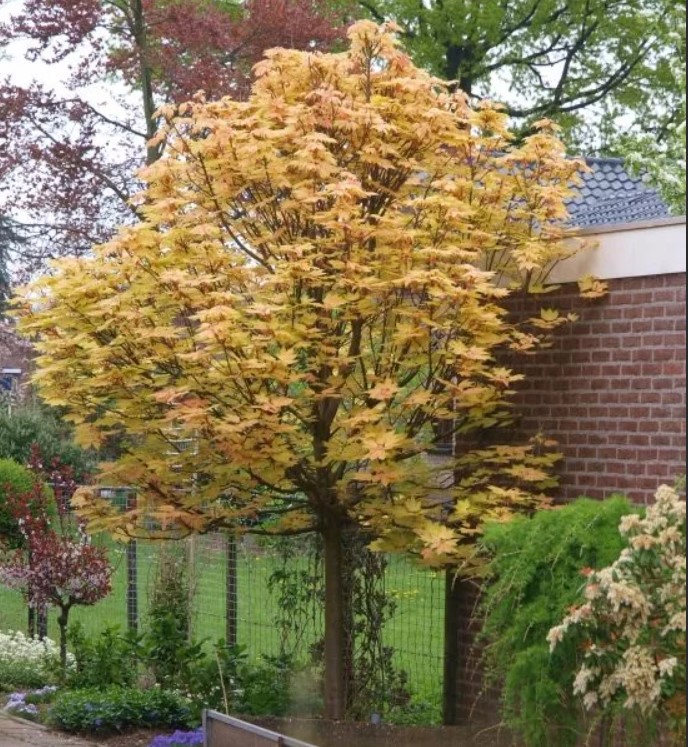
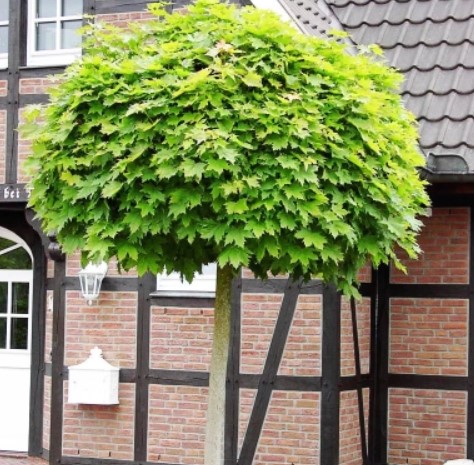
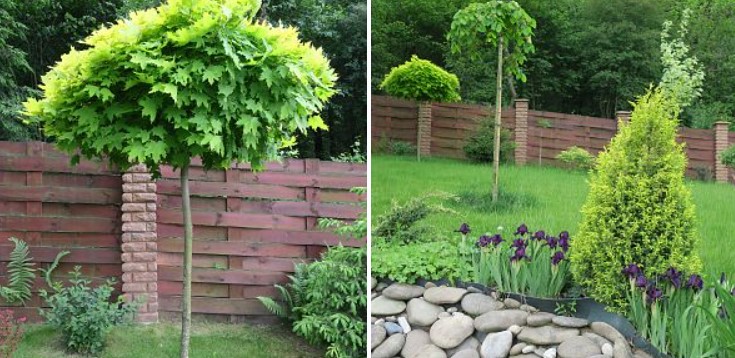
One of them, the Norway maple 'Golden Globe' (standard), is a robust variety with a rounded, regular crown, reaching 4-5 meters in diameter at 10 years of age. The leaves are palmate, 5-lobed, and bright yellow when young, later turning orange with red pigmentation.
Thanks to the bright, even sparkling, color of its foliage, the maple's crown is noticeable from afar, so from a distance (photo 2), the tree resembles a cloud hanging over the lawn itself (the trunk is not very noticeable)... :) The Norway maple 'Golden Globe' is recommended for planting in slightly shaded areas; in our case, it grows in the shade of birch trees, protected from direct sunlight for most of the day... Thanks to its frost resistance zone 4, almost any gardener in the middle zone who likes this maple can have this variety on their plot...
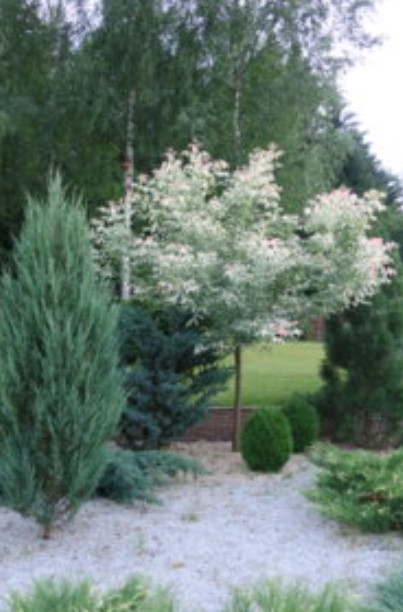
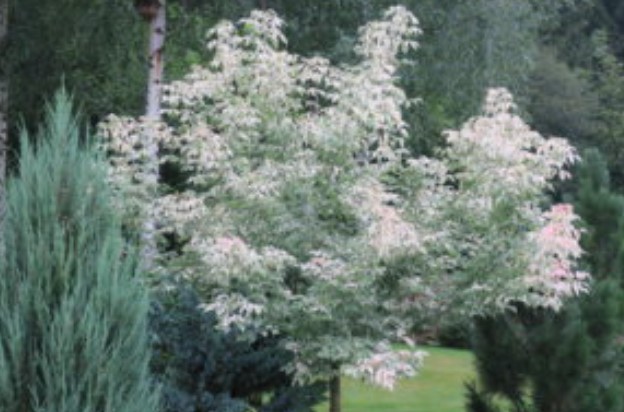
Norway maple (Acer platanoides) 'Drummondii' is a cultivar with a regular crown and white-edged leaves, giving the impression of a light-colored tree from a distance. Young leaves have a pink tint, later developing a wide creamy margin. At maturity, this maple grows up to 12 meters tall and 7 meters wide.
It's undemanding of soil, frost-hardy (zone 4), and can be planted in both sun and partial shade. In full sun in summer, the leaf edges can sometimes dry out, so partial shade is preferable. Here, it only receives sun in the morning, so the aforementioned foliage issues don't arise. The light color of the leaf edges allows the maple to look bright and spring-like even in summer, making it an effective companion to darker-toned trees and shrubs.
I'm sure everyone has made what are called unplanned impulse purchases, including plants. Once, while stopping at a mini market on the highway to buy potatoes, we couldn't help but notice a wonderful, brightly colored maple. It was a long time ago, and we hadn't even heard of frost hardiness zones back then. :) The salesman said it was a very valuable "Japanese" maple (but he was selling it for cheap), a good winter-hardy tree, and so on. So, about 8-9 years ago, we acquired this beauty. Only later did we figure out what kind of bush we'd actually bought.
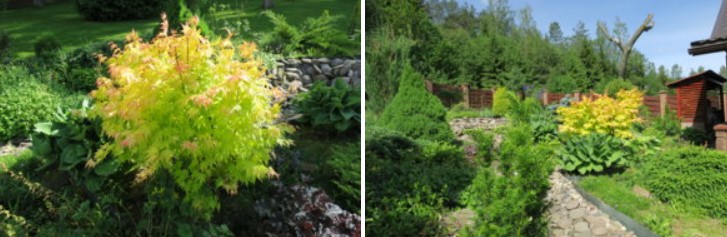
Maple palmate or palm-leaved () is a shrub or small tree with interestingly shaped leaves and vibrant colors, but according to the description, it's not at all frost-hardy in temperate climates, as it's hardy in zones 6-7. But by now, it's already overwintered here for several years. Yes, it does freeze on top, and some of last year's growth has to be cut back. But by May, after this pruning, it looks like this.
It grows very quickly. By midsummer, it has doubled in size.
In autumn he is already like this.
And so it goes, every year. At first, I'd bend it down and cover it with spruce branches. In recent years, I've done nothing (and the thick branches can't be bent down anymore). Everything follows the same pattern: the top freezes over, and in the spring the maple quickly sprouts new shoots, as if nothing had happened.So, in our garden with frost hardiness zone 5 (and sometimes 4), a beautiful plant from zone 6-7 lives, which my wife and I are very happy about.
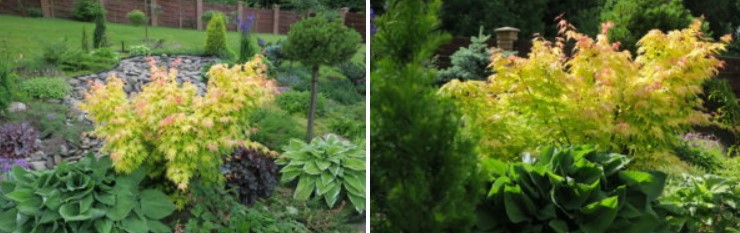
Dmitry, that's a very beautiful maple! Did you consider the silver maple when you were choosing yours? I just bought one at Timiryazevka this year—it's very similar (from memory) in both color (young shoots are pinkish) and leaf shape. Young shoots also freeze in our climate, but otherwise it grows quickly. I have a palmate-leaved maple—my second try, my second year. Of course, there are many varieties of these maples, especially the palmate-leaved one, and they're all very beautiful.
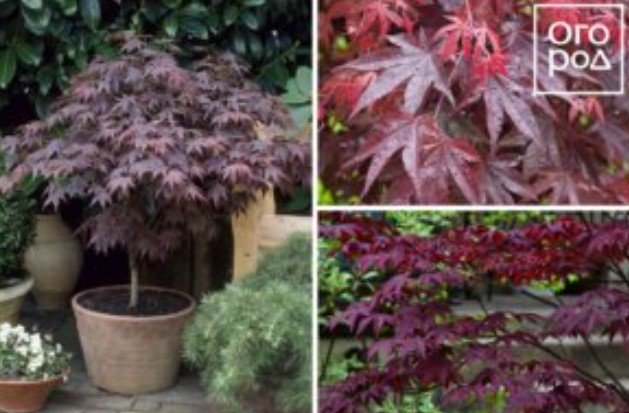
I also had a palmate maple, only it was burgundy, like this (Internet photo)
I dug it up last year. In Tver's climate, I think it would only grow well in a winter garden. It doesn't have time to grow properly over the summer; Tver isn't Belarus, after all. I planted a Lanciniatum vieri maple—its leaves are very similar to Japanese maple, but it doesn't require any special treatment.
This photo is from two years ago—the maple on the left. It's growing from a two-year-old sapling, planted in 2012 or 2013, and is about 50 centimeters in size.
Acer saccharinum 'Laciniatum Wieri'
It is decorative with a wide, spreading crown and lacy silvery-green foliage.
A tree 12-15 meters tall (maximum 20) with a crown diameter of up to 10 meters, with branches extending low from the trunk. The bark is light gray with long, shallow fissures. The leaves have thin, narrow, deeply lobed leaves. They are pinkish when unfurling, then green on the upper side, and silvery-white on the underside. The leaves are very lacy, turning light yellow in autumn. Blooms in April before the leaves unfurl. The flowers are reddish. It grows quickly.
It loves sun but tolerates some shade. It is undemanding regarding soil conditions. It tolerates temporary flooding and slight dryness. It also tolerates soil compaction.
Planting is recommended in windless locations, as this maple is prone to branch fragility, often breaking off in strong gusts of wind and snow accumulation. (I haven't seen any yet, even though the site is open and the trees are still small.) It's winter-hardy, but shoots may freeze in severe winters, especially when young. (I haven't seen any, either, perhaps because I bought it from the Rokhlins' nursery in Rzhev, where it was grown.)
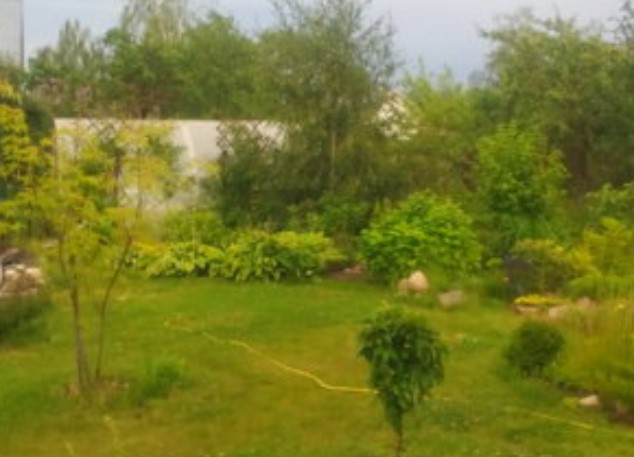
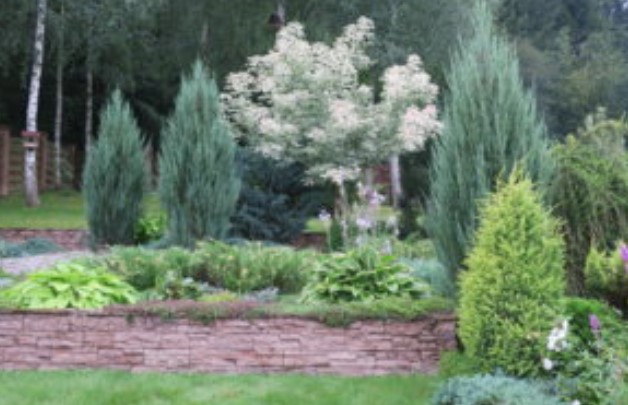
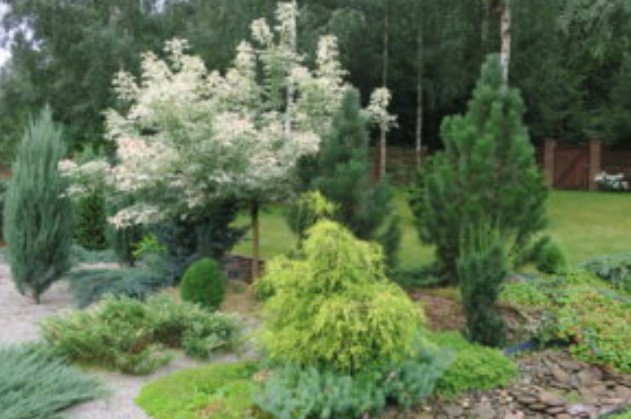
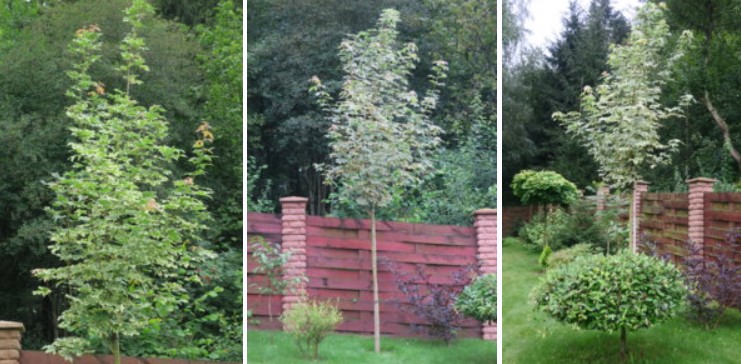
Box elder or American maple (Acer negundo) 'Flamingo' is a tree or shrub with a broad crown and striking foliage. It grows up to 5 meters tall and 4-5 meters wide. Its young leaves are pink, later turning white and variegated. Our 'Flamingo' maple, planted in 2013, was slightly larger in diameter than yours. But it grows rapidly, much faster than our other maples.
Here's a timeline of his growth. There's a little over a month between the first photo (early June) and the second (July).
And here he is already in August.
It's undemanding of soil and adverse weather conditions. It survived the winters here four times without problems (temperatures reached -32°C). Last winter, the tops of the young shoots froze slightly, but after a couple of weeks, it was unnoticeable. The only issue is that its leaves begin to emerge significantly later than on many other trees. So, don't be alarmed by the early spring...