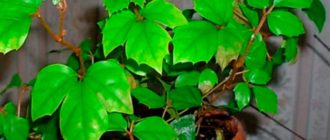
Absolutely all varieties of Physocarpus viburnifolia have beautiful appearance, are hardy, and require absolutely no special care. Furthermore, different varieties offer a wide range of leaf colors, allowing you to create a unique, vibrant palette in your garden.
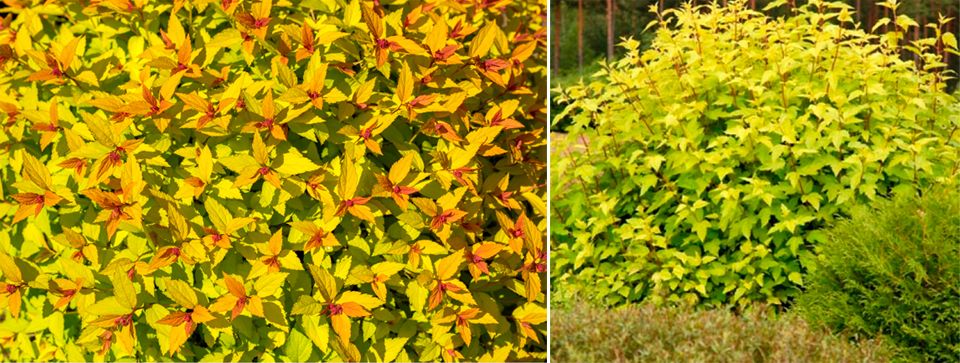
The Nugget bladder senna (golden nugget) is a golden placer, varying in purity at different times of the year, sometimes lighter, sometimes darker. Its uses are quite extensive, from growing in a garden for beauty to using it in urban landscapes and parks.
Distinctive features and advantages of the Nugget bladderwort
The main advantage is its versatility. There are very few plants that are so well suited for a variety of applications, have high temperature tolerance, are immune, and are easy to care for.
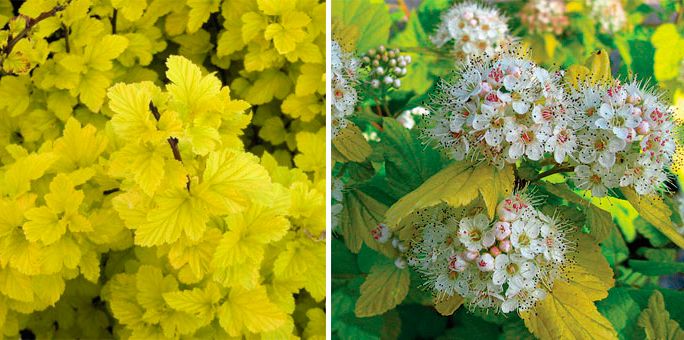
The flowering period lasts for three weeks, beginning in mid-June. During this period, the inflorescences can be white or soft pink. The red stamens on the small flowers are particularly striking. Viburnum arvensis grows to a maximum height of up to 2 meters. It can be shaped into any desired form, limited only by the gardener's imagination. However, it's important to keep in mind that not all arrangements will look beautiful and harmonious in small spaces.
A big plus is its longevity, a full 40 years. By all accounts, it's an ideal plant for decorating a plot or garden.
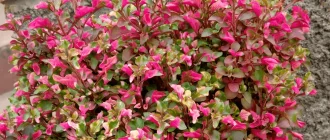
Among other varieties, Nugget stands out with its lush, broad foliage of a bright yellow hue, sometimes tinged with lemon. The leaves also change color depending on the season. In spring, they acquire a pure, unadulterated yellow hue; as summer approaches, a green accent appears, creating a beautiful transition. In autumn, the color reaches its peak, reaching a beautiful, rich yellow hue.
Propagation of Physocarpus Nugget
There are several ways to propagate this plant: by seed, cuttings, dividing the bush, and using layering.
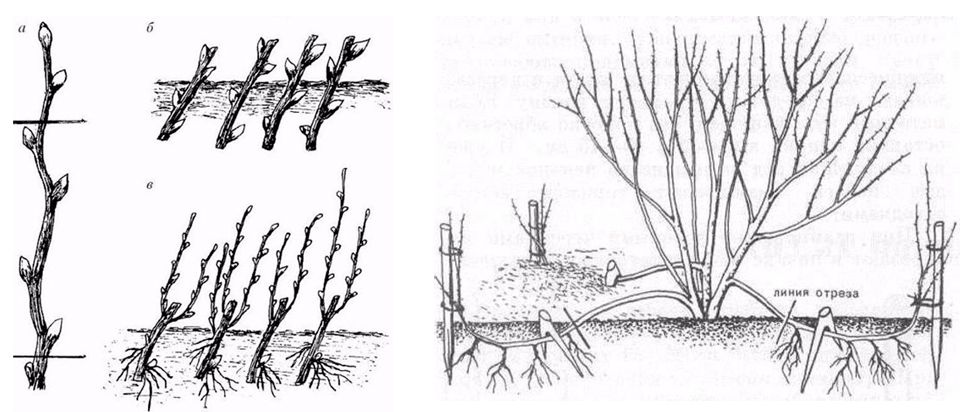
It is impossible to say exactly which of them is more effective, since each one performs well in certain conditions.
Gardeners prefer cuttings and division.
Cuttings are planted in late summer. Division of shrubs occurs in early spring.
Layering is done at any time except winter.
Propagation by seeds is the least popular of all other methods.
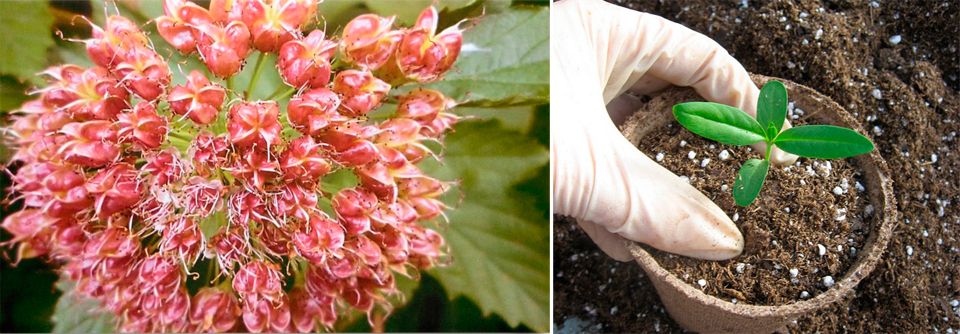
It produces many young bushes, but their appearance will, with a probability of about 75%, differ from the mother plant, i.e., they will have a completely different foliage color.
This method is used by people who favor bold, unexpected solutions. In most cases, the resulting color scheme looks very beautiful and harmonizes with virtually all other plants and flowers.
Features of growing Nugget Physocarpus
All the nuances of care are based on basic gardening principles: timely watering and fertilizing (optional), regular disease prevention.
Before planting seedlings in open ground, it is necessary to analyze it, as the plant does not like waterlogged soil.
It is best to place them at a distance of at least 60 cm from each other, as the bush is very lush.
Seedlings must be regularly treated with insecticides in the initial stages, since the immune system is still very weak at this time and the risk of infection is high.
When choosing a site, it is worth remembering that although the plant is unpretentious in care, it still has some preferences.
For example, it does not prefer calcareous or waterlogged soil.
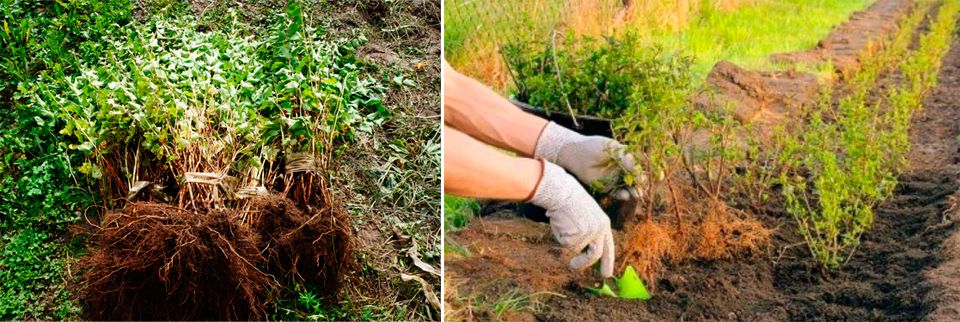
If you're aiming to create a beautiful living wall, choose a planting site that's exposed to full sun and never in the shade. It's in such locations that the plant's foliage fully reveals its full range of colors.
If you plant the shoots in a shady place, the bush will look gloomy and will not catch the eye.
If it is necessary to organize a unique recreation area with a small forest, the planting is done in a checkerboard pattern at the same distance from each other.
You should also not overdo it with watering, as if water stagnation occurs, it will lead to the development of rot, as a result of which the plant will die.
However, if the plant was planted for decorative purposes, care becomes more difficult.
Spring fertilization is necessary. For every 10 liters of water, add 1 kg of manure or 10 g of urea.
Once the plant has formed and grown to at least 1.2 m, care is reduced to a minimum, since it receives everything it needs from the soil.
An important nuance: if the bushes grow near a road, it becomes necessary to constantly carry out sanitary treatment throughout the life of the viburnum.
To give the shrub its original shape, regular pruning is necessary. This should be done exclusively in early spring or fall.
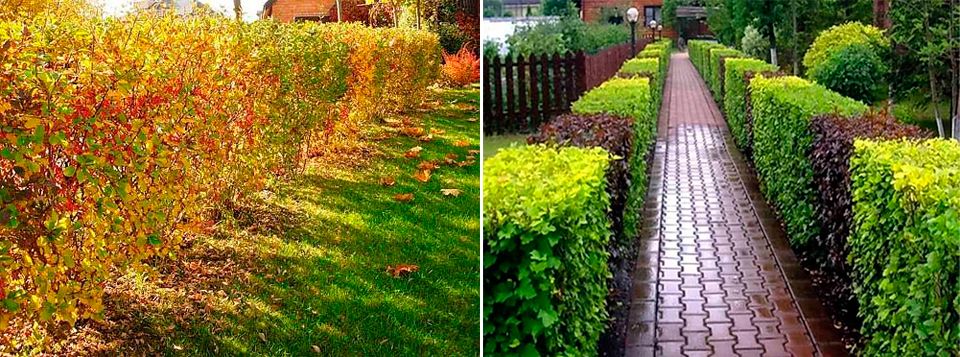
Formative pruning is often combined with sanitary pruning, removing dead branches and excess shoots. This procedure promotes more luxuriant branching, creating an even more striking appearance.
Top.tomathouse.com recommends: Using Nugget Physocarpus in the landscape
Viburnum has only recently found its way into landscape design. Other time-tested plants have been used more often.
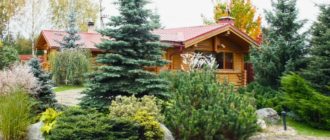
Nugget has proven to be an excellent choice for creating a living fence in a garden. This is primarily due to its high adaptability to the environment and strong immunity. Planted in a row, these shrubs will eventually grow, forming a veritable natural wall with a variety of colors.
Each variety has its own leaf color, but in addition to this, they sometimes shimmer, creating a kind of palette.
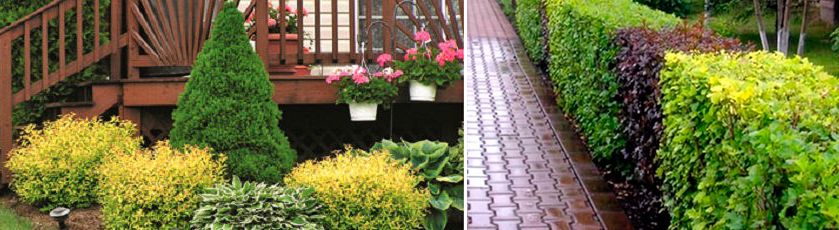
If you take care of the pruning issue, you can bring to life beautiful pictures of fairytale magical forests.
In addition to private use, it is widely used by city administrations to give park areas a spectacular appearance and create an atmosphere of peace and tranquility.