Houseplants that require little or no special care have always been and will always be popular in homes and offices. A houseplant pleases the eye, purifies the air, and brings good luck and money to its owner, as is the case with the crassula, or money plant, as it is more commonly known. It belongs to the succulent family Crassulaceae and is native primarily to Africa (Southern and Tropical Africa), though some species can be found on the Arabian Peninsula.
The main reason for its popularity isn't its diminutive size, low maintenance, or even its medicinal properties—the crassula is considered a money talisman. There's a superstition that having a crassula (mostly the arborescent variety) will inevitably bring prosperity. This belief is shared by those who plant it in a pot in the office, like a bonsai.
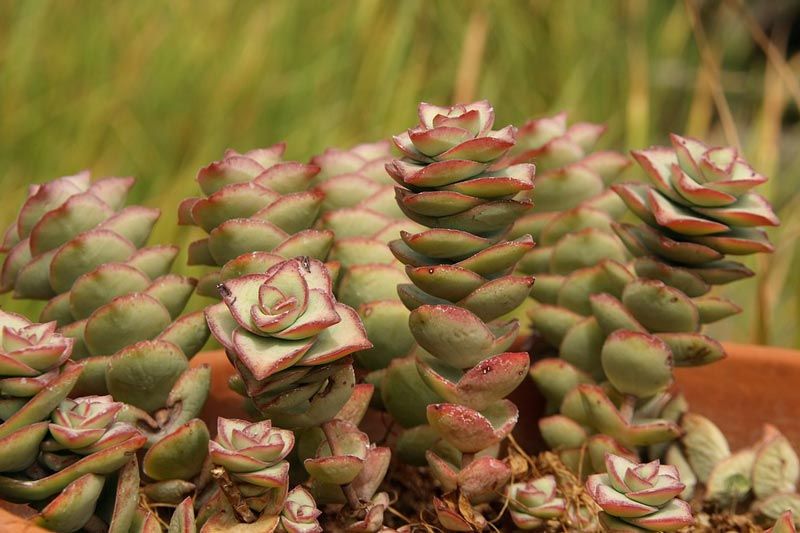
Varieties of Crassula or Money Plant
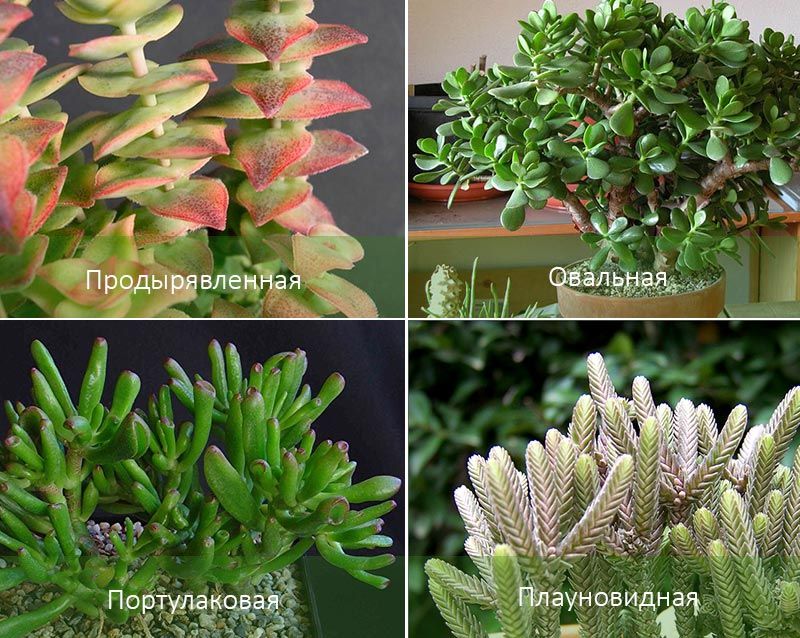
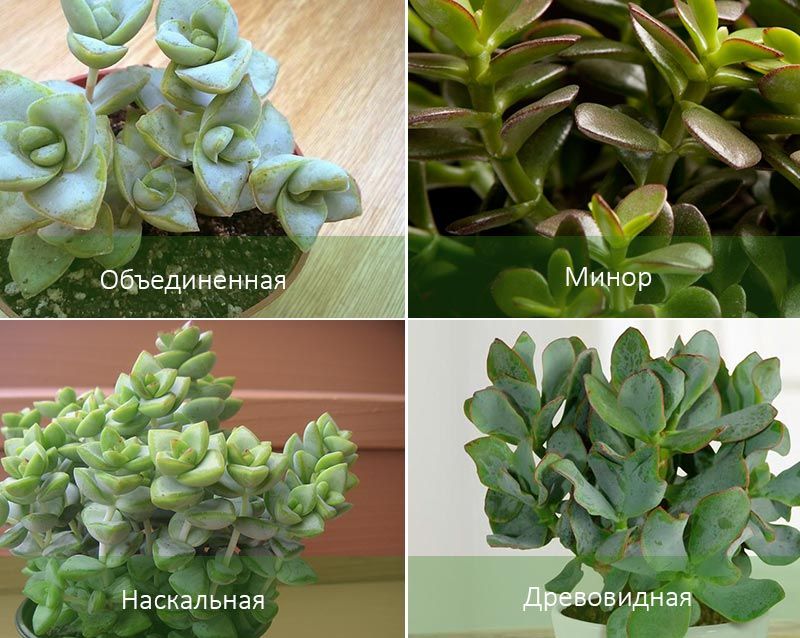
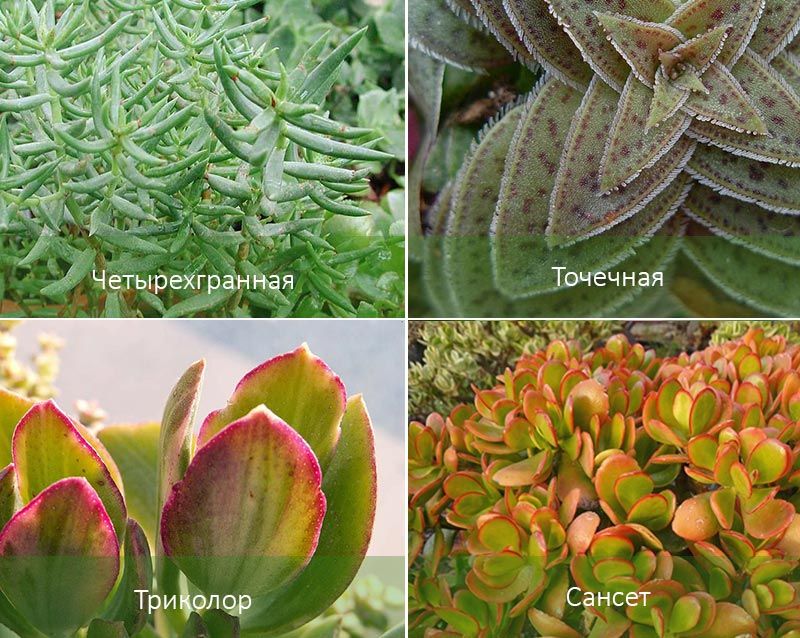
Most people associate the money tree with a specific variety of Crassula, but in fact, there are quite a few species. Botanists distinguish three main groups of Crassula, which are further subdivided into cultivars. Not all are equally popular with gardeners, as their appearance and growing conditions vary significantly.
| Group | Varieties | Description |
| Arborescent |
|
Characterized by woody stems, these plants are typically short, compact, and hardy, and are best grown in pots. |
| Columnar |
|
The most unusual group, whose leaves and flowers form into bizarre columnar shapes, reminiscent of figurines. |
| Ground cover (creeping) |
|
They grow parallel to the ground, spreading outward. Despite this, they can be kept indoors. |
The varieties of this amazing plant are completely different from each other and can be used by gardeners for a wide variety of purposes.
It can be planted either outdoors (after checking the soil's general suitability) or in a designated spot indoors. It all depends on the variety and whether propagation is the goal.
Caring for a money tree (crassula) at home
Crassulas are succulents, meaning they are resilient to high temperatures and humidity. Over the years of evolution, they have adapted perfectly to these conditions and don't require frequent watering.
Caring for them at home is simple – just learn how to do it once and all indoor flowers of this type will never cause problems again.
The only thing both novice and experienced gardeners need to keep an eye on is the seasons. This applies not only to external conditions, but also to the plant's internal biorhythms, which humans cannot influence.
To ensure that this perennial plant stays with you for a long time, grows well, and is healthy, you need to take into account seasonal differences in the needs of the crassula.
| Conditions | Summer | Spring | Winter/Autumn |
| Location/lighting | It's recommended to periodically take the plant outdoors, but avoid direct exposure to ultraviolet light. A moderately lit windowsill is a good choice. | It is better to place it on a window facing south, if possible; it should not be taken outside until the weather gets warmer. | The plant is dormant and shouldn't be disturbed unnecessarily. If possible, place it on a south or east side. |
| Temperature | +20…+25 °C | +15…-4 °C | +15…-4 °C |
| Watering/humidity | Twice a week. | Once every two weeks. | |
| Fertilizer | Fertilize twice a month, regardless of the season. | ||
It is not recommended to place a flower pot near heat sources in any season.
In addition, crassula owners should pay special attention to the soil, especially if the plant is in a small pot. Avoid turning the soil into a hardened mass of soil mixed with roots—this is very harmful to the plant.
Overwatering a flower will cause exactly the same harm – the succulent will not withstand such an amount of moisture and may begin to rot.
If the plant doesn't die immediately, treatment for the species' typical diseases will be necessary. Excess or insufficient moisture is the main contraindication for crassula care.
Transplanting and pruning
In general, gardeners advise against repotting unless absolutely necessary. Succulents don't appreciate frequent human intervention; excessive attention can lead to leaf drop or excessive soil loosening.
An exception can be made if the plant has grown too large for its current pot or if the bush needs to be propagated. In this case, simply carefully remove the plant from the pot, remove the old soil (not all the way – don't shake the plant clean, let alone wash it), and replant with new soil in a different pot.
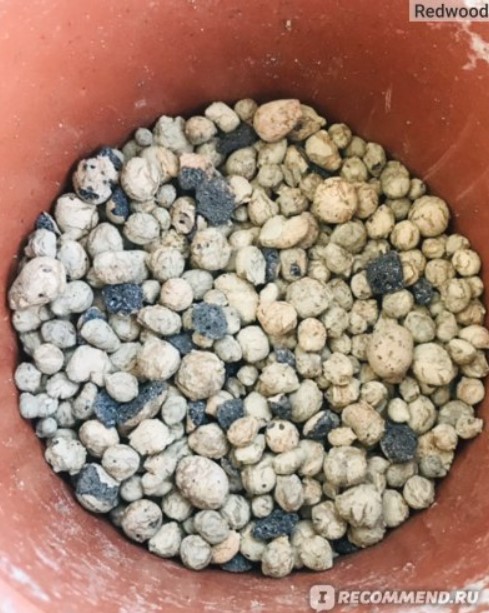
Add drainage along with the soil to maintain the moisture balance in the pot. The soil itself should be suitable for succulents, and can be found at any gardening store.
Pruning a Crassula is usually done for aesthetic purposes. Scissors or pruning shears are suitable for large varieties with strong stems and shoots. Carefully trim away any shoots that seem unnecessary, but avoid cutting right to the base of the shoot to avoid damaging the growth bud. Otherwise, you could permanently kill the side stem. Pruning young plants is not recommended.
Reproduction
Crassula can be propagated both vegetatively (by cuttings) and by seeds. The latter method is more difficult, as not everyone can grow it from scratch—it's a rather lengthy process. Propagation by shoots, however, is very simple, especially if you have a mature specimen—almost any branch from it can serve as the starting point for a new crassula.
The separated cutting should be placed in water to encourage the future young plant to take root; charcoal can be used to speed up the process. Once roots appear, the crassula can be transplanted into its first, still small, pot. Some gardeners plant the cutting directly in soil, but this carries a slight risk of damaging the young plant. The water method takes longer but is completely safe.
New crassulas are kept in pots just like mature plants, except they require a slightly warmer temperature of 18 to 16°C. They need to be watered daily at first.
Problems in growing
Although the crassula is an exceptionally easy-to-grow plant, growing it can still be problematic. This is usually the result of improper care and improper maintenance.
If you provide the crassula with the minimum conditions for its growth, most problems and diseases can be avoided.
Common problems:
- Delayed flowering/absence of flowering. Many people don't even realize that crassulas are blooming – this is because the light cycle is disrupted. The plant doesn't suffer significantly from a lack of light, but it won't bloom either. To see it bloom, you need to increase the lighting.
- Root drying out. This occurs when a plant sits in a pot with hardened soil for too long—the soil compresses the roots, hindering the plant's growth.
- Leaf drop, wilting, and yellowing. These flowers have fleshy, heavy leaves that appear firmly attached to the stem at first glance, but easily deteriorate and fall off under prolonged exposure to sunlight.
Diseases and pests
Many inexperienced gardeners believe that no pests can harm flowers at home, but this is not true. Some are not even visible—they damage the roots and remain in the soil, making them difficult to spot.
| Pest | Signs of appearance | How to fight |
| Scale insects (a type of mealybug) | Brown, yellow, reddish spots on the leaf surface. | Treat leaves and shoots with a soap solution (using a spray bottle) or medicinal products Fitoverm or Fufanon, which can be purchased in specialized stores. |
| Spider mite | The pest gives itself away by a small amount of webbing between the leaves and at the intersection of the stems. | |
| Mealybug | The pests are visible on the plant, and when they eat the flower's juices, they leave behind a characteristic white coating on the stems and leaves. | A solution of laundry soap will help, and rubbing alcohol is also recommended. However, this method has its detractors, as it can be toxic to sensitive plants. If the scale insects have become too numerous, insecticides are the only option for saving the plant. |
Top.tomathouse.com recommends: beneficial properties and signs
The main superstition associated with the money tree is its magical ability to attract money. Money doesn't disappear from a room where a money tree is kept, but rather multiplies. The owner of the plant who cares for it and maintains regular contact with it will experience double luck. It is also mentioned in the Eastern teaching of feng shui, which emphasizes harmony and health.
The medicinal and simply positive properties of crassulas are also no secret - they are used to purify indoor air, improve a person's psychological state, and relieve stress.
Reviews of the money tree, crassula, or fat plant
Why you shouldn't keep a fat plant (crassula) at home ✦ How to get rid of the plant correctly ✦ Despite all the advice, I actually propagated my Money Tree.
Hi all!I can't even remember where the Crassula, also known as the Money Tree, came from. But the fact is, it's probably the most low-maintenance plant I have, after the cactus.
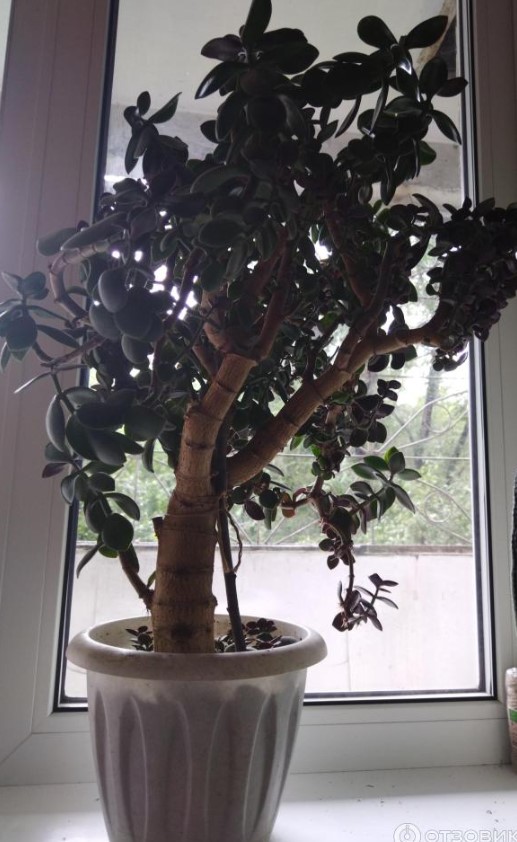
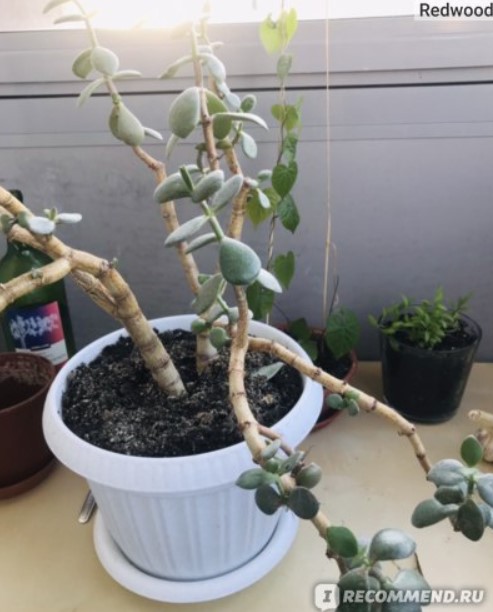
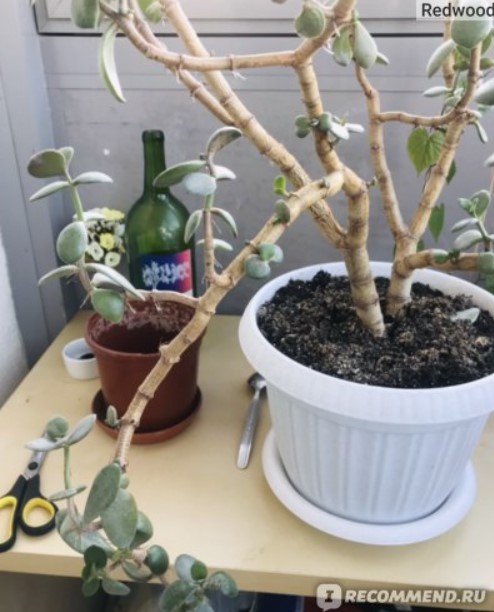
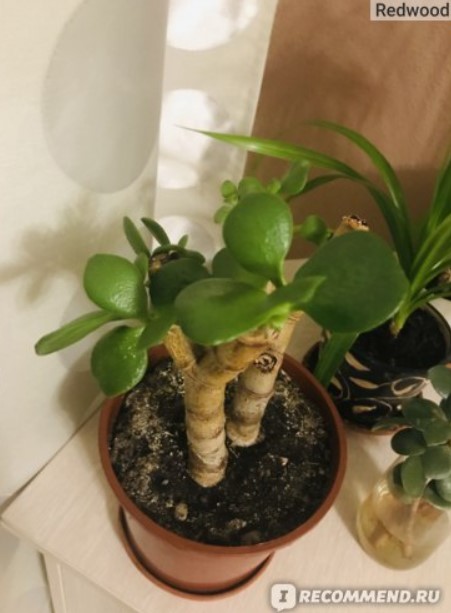
And since I'm not much of an amateur gardener, it just grew on its own and I didn't do anything to the Crassula. As a result, I ended up with this unsightly bush with a thick, long trunk and minimal leaves, which turned a dull green.
What is Crassula anyway?
The money tree (Crassula) is a perennial succulent plant in the Crassulaceae family. The plant's name speaks for itself. The money tree is named for the appearance of its leaves, which have a thick, fleshy texture. Their color is usually dark green, but light green can also be found.
Plant care:
In general, the Crassula is the perfect plant for me because it doesn't require a lot of attention. Did you put the Crassula pot in the shade? No problem. In the sun? That's fine too. Forgot to water it for a couple of weeks? Fine. Especially since the Crassula doesn't need frequent watering:
After a hot summer, it's best to keep the soil in the money tree's containers slightly dry. Watering should be done once a week, as autumn is considered the plant's preparation for winter, with sap flow slowing and dormancy.
In winter, watering the plant a couple of times a month is enough. I rarely mist the Crassula, except occasionally, combining it with watering. However, I do try to regularly wipe the leaves with a damp cloth, as they accumulate dust very easily.
Benefit:
Incidentally, despite its simplicity and unsightly appearance, the Crassula is a very useful plant. Its leaves are used externally for various ailments. Here's what they're used for:
hemorrhoids;
varicose veins;
tonsillitis and dental diseases;
runny nose, cough and cold;
herpes;
nail fungus;
cystitis and inflammatory diseases of the genitourinary system;
joint diseases.Signs and reality:
In fact, the Crassula is probably the plant most associated with various superstitions. Starting with its alternative name, "Money Tree," it's believed that the better-looking the plant and the more leaves it has, the better its owner's financial situation.
However, one superstition says that Crassula shouldn't be kept indoors. Although this is more related to the art of feng shui than to superstition:
According to feng shui, wood carries yin energy (it's a feminine plant). If most of the plants are succulents, an excess of feminine energy will develop. This can lead to a bad mood, apathy, reluctance to do anything, and pessimism.
However, there is a more realistic explanation for why the Crassula is not the best plant for the home. It's all because its leaves contain
arsenic
And, as everyone knows, it's a powerful poison. Therefore, if there are small children or animals in the house where the Crassula grows, you should carefully supervise them to ensure they don't put the plant's leaves in their mouths.
But if you do decide to get rid of the plant, simply throwing it away is also not recommended. Here's how to properly dispose of a Money Tree:
take the tree outside and bury it;
Give the Crassula to a person who wants to take care of it;
Throw away the flower, leaving the shoot for yourself and planting it.
You can believe in these signs, or you can not, everyone decides for themselves))) I did not get rid of my ugly bush, but decided to revive it
Transfer:
This is how it grows on its own, the trunks are heavy and always try to knock over the pot.
However, if you want to get not a shapeless bush like mine, but a beautiful lush flower, you need to shape its crown.
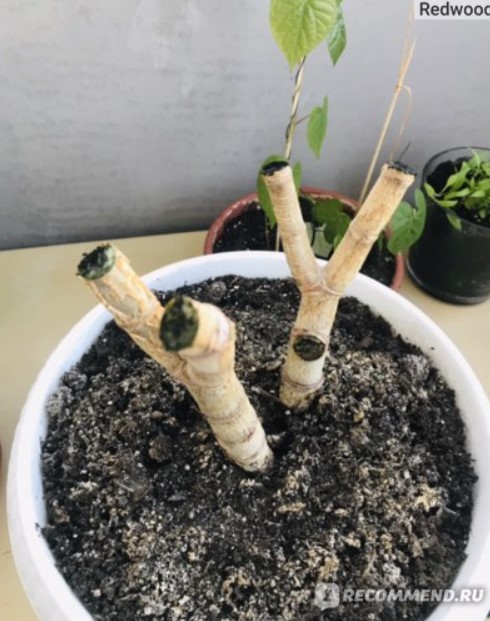
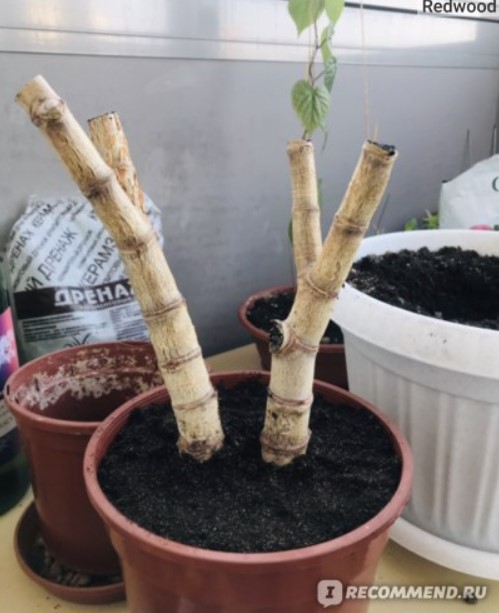
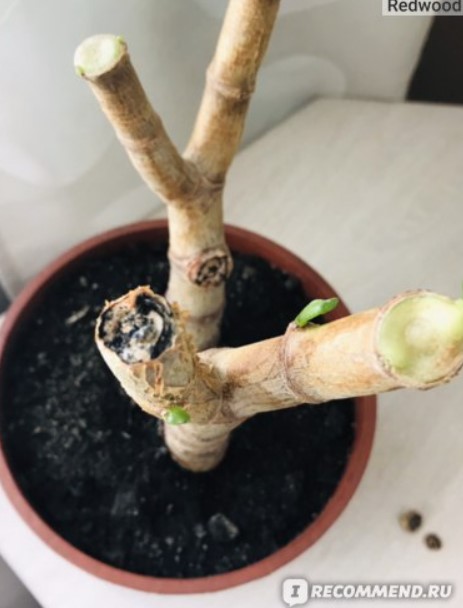
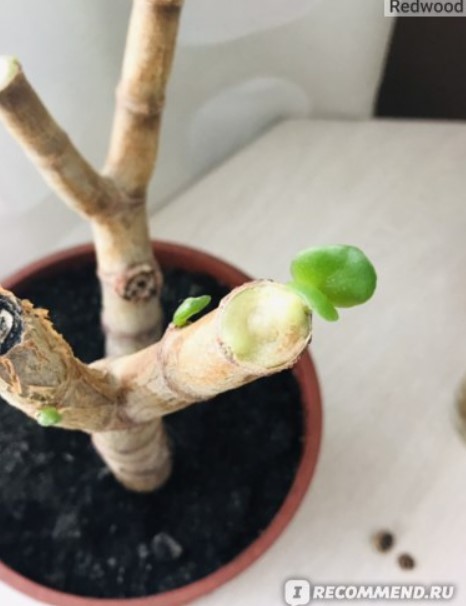
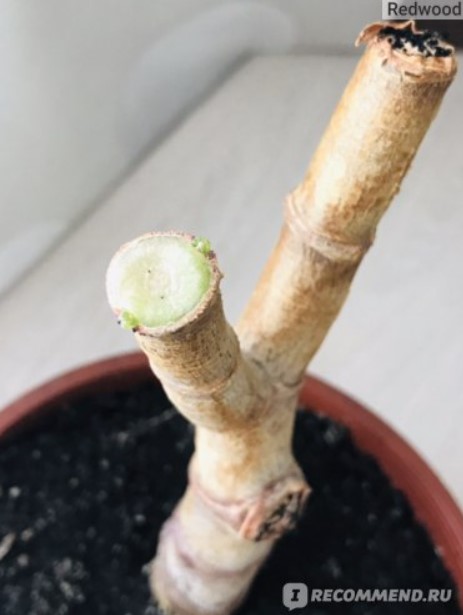
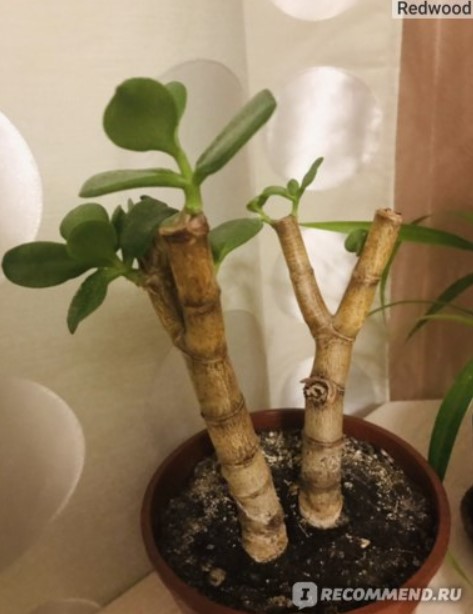
With my plant, any crown shaping was no longer helpful. I really didn't like the plant's appearance. It had become one solid trunk. So I decided to prune it and begin to bring the Crassula back to its normal state.
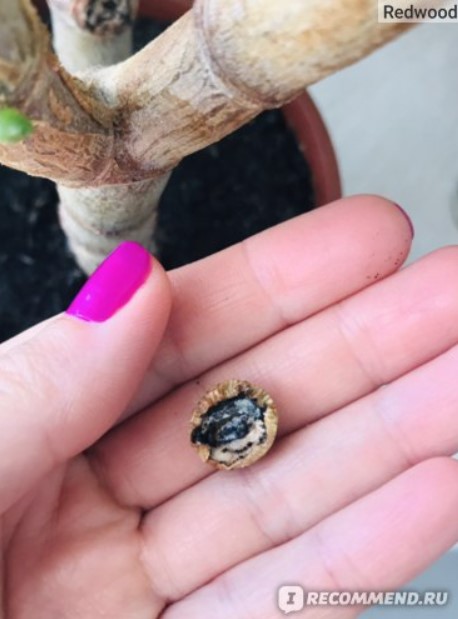
I cut off the top of the trunk and a few shoots. And as I read in the instructions, I applied activated charcoal to these areas to help them heal faster.
I transplanted the main trunk itself, or rather two, into a new pot.
I filled it with drainage material and then soil. Because the previous pot didn't have any drainage, which isn't quite right.
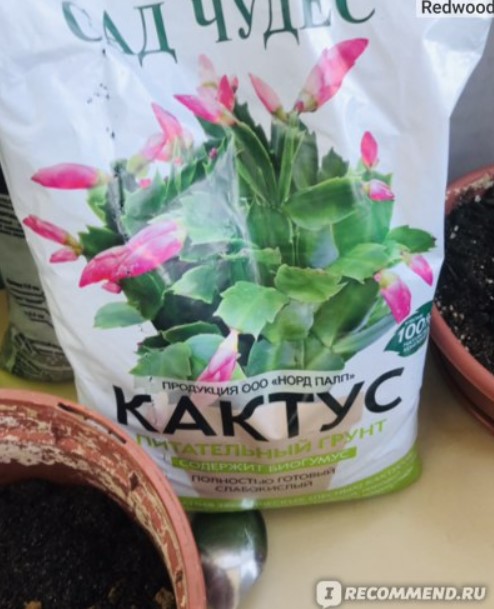
I took the soil for the cacti.
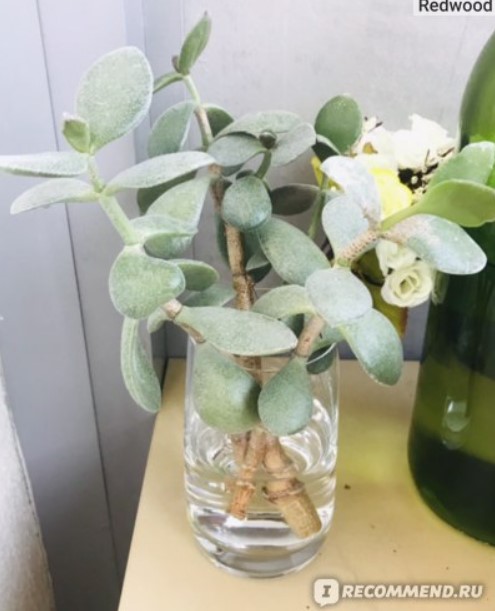
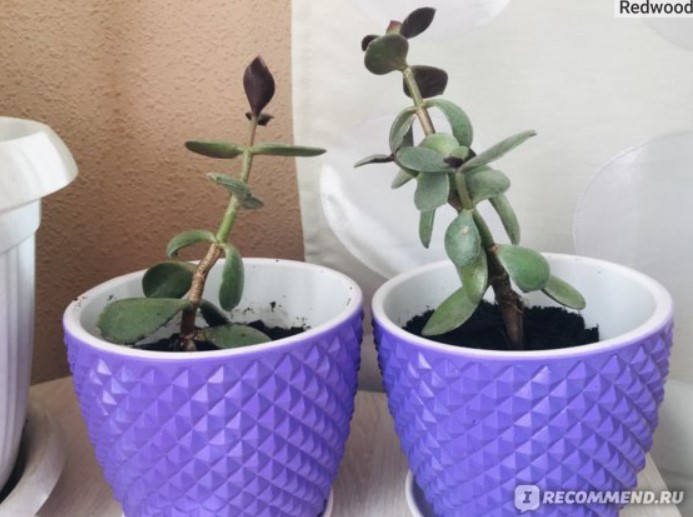
And I put several good cut branches in water so that they would take root.
Literally within a few weeks after pruning and replanting, new leaves began to appear on the bare trunks.
And the tops with the applied coal fell off
They grew quite quickly.
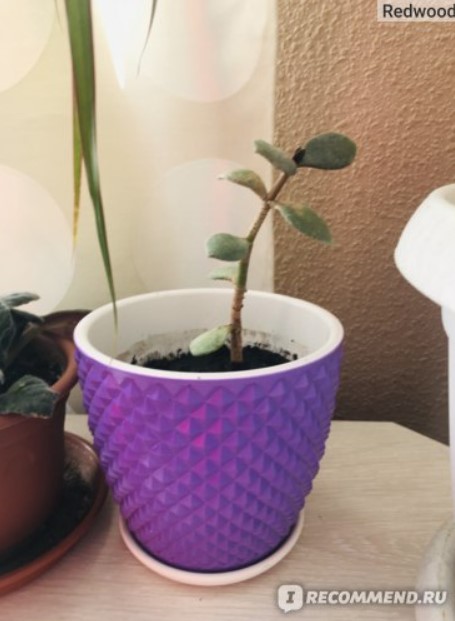
Well, roots appeared quickly on the cut branches, too. I planted them, each in its own pot.
That's why now I have 4 pots with Crassulas)))
My conclusions:
Crassula, fat plant, money tree—you can call this plant by many names, but one thing remains constant. It's an easy-to-grow flower, and with a little effort, you can shape it into something quite attractive.
And the most important thing is that it doesn’t require any special care, and that’s what I like most about it.
The fat woman is a very unusual plant, and this is confirmed by the numerous signs and superstitions associated with it.
So I continue to grow my money trees and hope that I will soon become very, very rich 😄
Advantages
If you believe in it, it's magical.
It is easy to care for
Not afraid of the sun
An unpretentious plant
Flaws
No
Redwood
recommends
Review: Crassula plant - An unpretentious houseplant
Advantages: Plant appearance. Beneficial properties. Easy to care for.
Disadvantages: None.
Hi all!I have a lot of houseplants at home. One of them is a money plant, or crassula. I'll be honest—I got this plant not because of the belief that it brings wealth or money, but for variety, so I could have a variety of flowers in my home.
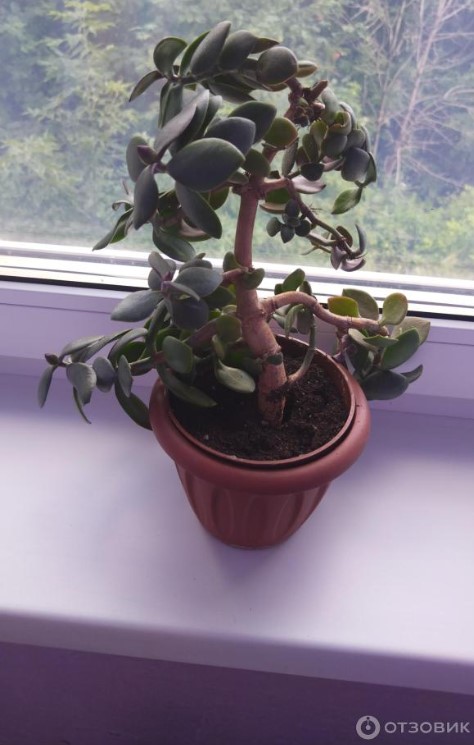
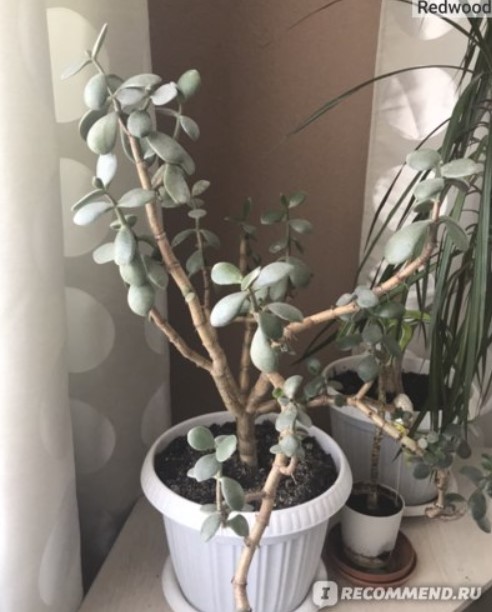
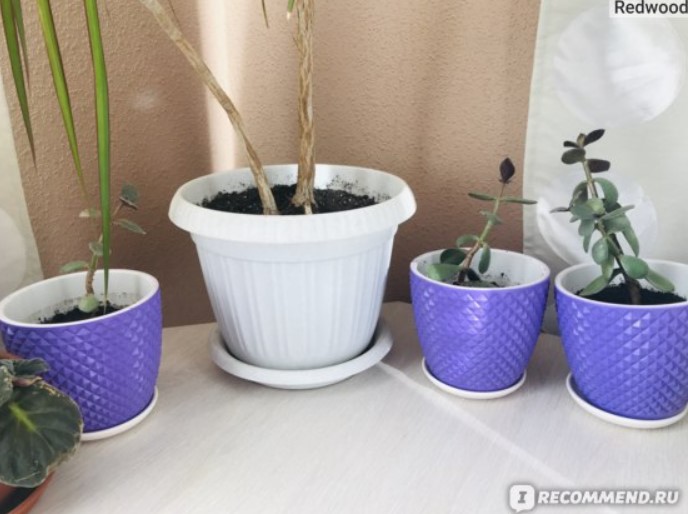
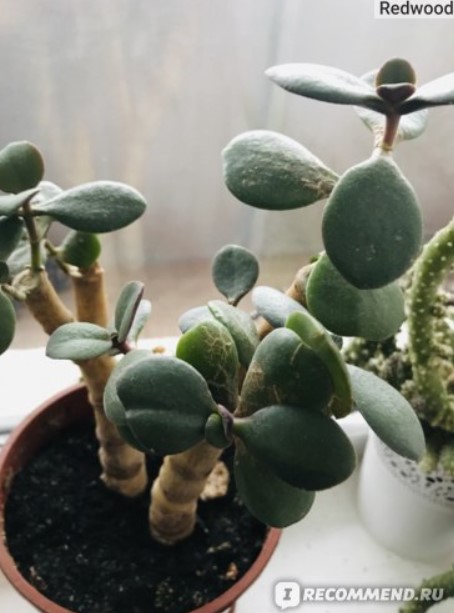
My jade plant is still quite small, but it has a thick stem that somewhat resembles a tree trunk. The leaves are oval and slightly elongated. Gradually, the plant grows and truly begins to resemble a tree.
My fat woman looks like this for now.
This plant is easy to care for, but it prefers filtered sunlight. Watering is moderate. I water it once a week. I periodically wipe the leaves with a damp cloth.
The fat woman is propagated by cuttings or leaves.
The jade plant is used in folk medicine and cosmetology. Personally, I believe in the beneficial properties of this plant. I've heard that the juice from the jade plant leaves can treat nail fungus—just regularly drip the juice from the leaves onto the affected nail. Nasal drops are also made from the jade plant juice and used for runny noses. I even apply jade plant leaves to external hemorrhoids.
Thus, the flower is not only easy to grow but also beneficial. It perfectly purifies the air and provides a source of oxygen.
I recommend this houseplant and give it five stars.
Year of manufacture/purchase 2022
General impression: An unpretentious houseplant
My rating
5
I recommend it to friends YES
Review: The Crassula plant is a wonderful plant! Unpretentious! It could be turned into a bonsai if you're so inclined!
Pros: Beautiful and easy to maintain! Bonsai is possible!
Disadvantages: None for me
Good day everyone! I haven't checked in on the site in a while! I've missed you so much!
Well, I won't keep you in suspense, I'll tell you a little about this plant and show you my crassula (money tree)The history of the money tree begins with legends that say the tree was created by the god of wealth and good fortune, Cuajuto. One legend says Cuajuto created the money tree to help people become rich and happy.
Another legend tells of how a money tree was found on Easter Island. The people who discovered it decided to plant it on their island and began worshiping it as a symbol of wealth and prosperity.
The money tree is currently a popular plant worldwide. It is often used as an ornamental plant in homes and offices. Its leaves are also used in folk medicine to treat various ailments. Crassula crassula, also known as the money tree or dollar tree, is a popular houseplant that attracts attention with its thick, succulent leaves and symmetrical shape. Considered a symbol of prosperity and financial well-being, it is often chosen to decorate homes and offices.
Caring for the Crassula crassula is relatively simple and doesn't require any special gardening skills. It prefers bright light, so a south- or east-facing window is the best location. However, it can also adapt to lower light conditions.
Watering the Crassula crassula should be moderate. It tolerates periods of drought well and prefers the soil to dry out completely between waterings. Before watering, check the soil moisture to avoid overwatering, which can lead to root rot.
A break in watering the Crassula crassula should be taken during the winter, when the plant is dormant; at this time, the plant may require watering only once every few weeks.
It's recommended to repot the Crassula crassula approximately every two years. When repotting, replace the old soil with fresh, well-draining soil. Handle the roots carefully to avoid damaging them.
Fertilizing Crassula crassula is recommended during the active growth period, in spring and summer. Use a balanced fertilizer for succulents. Apply the fertilizer according to the package instructions to avoid overwatering and overdosing.
If you want to train your Crassula crassula as a bonsai, you should prune it regularly. This helps create a beautiful shape and a dense crown. New growth should be pruned, leaving enough leaves for photosynthesis.
Overall, caring for the Crassula crassula is not difficult. Proper lighting, moderate watering, periodic repotting, and fertilization will help you keep this plant healthy and beautiful. And don't forget to enjoy the beautiful leaves and symbolism of the money tree!
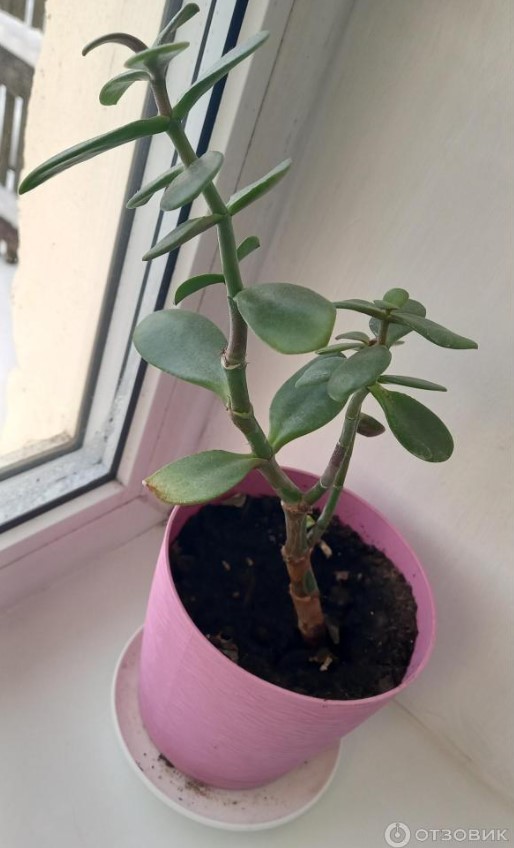
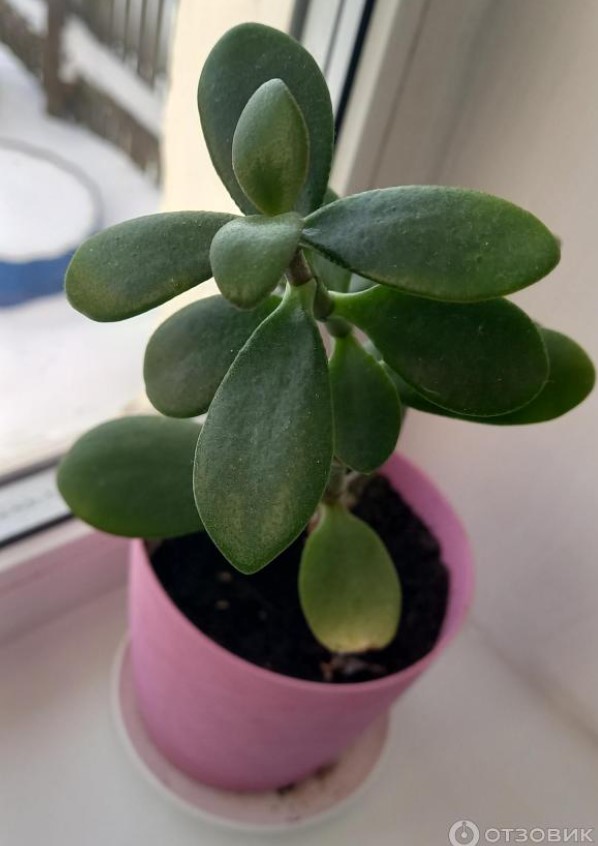
My crassula is already overgrown))) I haven’t trimmed it for a long time, and I probably won’t do it for a while)) I’m planning to replant it for now, I’ve already bought a new flowerpot, soil, drainage))) Now I’m rooting a new crassula in the soil.
I absolutely adore this plant))) I'm planning to buy some new succulents, since there are so many of them now that I can start creating a terrarium))) Anyway, if you're still thinking about getting a crassula, don't hesitate! Incidentally, you can easily find a large plant like mine (mine is 70 cm) at reputable flea markets, and the prices are very reasonable! While a small crassula can be found for around 600 rubles at Leroy, you can buy a huge tree secondhand for 400 rubles!
Thank you all for your attention!
Time of use: Long time ago
Year of manufacture/purchase 2023
Overall impression: A wonderful plant! Unpretentious! Could be turned into a bonsai if you're so inclined!
My rating
5
I recommend it to friends YES