Succulents are in high demand in indoor gardening. This is not surprising, as these plants don't require complex growing conditions, can survive for long periods without water, and are completely low-maintenance.
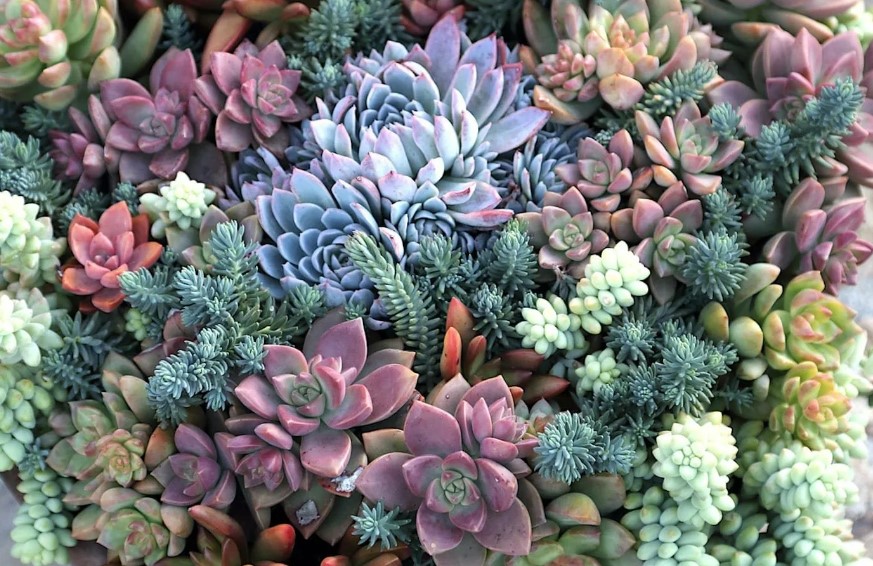
Content
- 1 What are succulents?
- 2 Classification of succulents
- 3 27 species + 160 subspecies and varieties of leafy succulents
- 3.1 Agave
- 3.2 Adromischus
- 3.3 Aichryson
- 3.4 Aptenia
- 3.5 Argyroderma
- 3.6 Bryophyllum
- 3.7 Gasteria
- 3.8 Gibbeum
- 3.9 Gymnocalycium
- 3.10 Graptopetalum
- 3.11 Delosperma
- 3.12 Dinteranthus
- 3.13 Dudleya (Dadleya)
- 3.14 Crassula
- 3.15 Kalanchoe
- 3.16 Carpobrotus
- 3.17 Conophytum
- 3.18 Lithops
- 3.19 Mesembryanthemum
- 3.20 Rejuvenated
- 3.21 Sedum
- 3.22 Pachyphytum
- 3.23 Portulacaria
- 3.24 Sansevieria
- 3.25 Titanopsis
- 3.26 Chiastophyllum
- 3.27 Echeveria
- 4 26 species + 155 subspecies and varieties of stem succulents
- 4.1 Adenium
- 4.2 Ariocarpus
- 4.3 Astrophytum
- 4.4 Austrocylindropuntia
- 4.5 Bovieya
- 4.6 Brighamia
- 4.7 Guernia
- 4.8 Dorstenia
- 4.9 Lewisia
- 4.10 Leuchtenbergia
- 4.11 Myrtillocactus
- 4.12 Euphorbia (euphorbia)
- 4.13 Prickly pear
- 4.14 Orbea
- 4.15 Oreocereus
- 4.16 Pachypodium
- 4.17 Pedilanthus
- 4.18 Polaska
- 4.19 Stapelia
- 4.20 Thelocactus
- 4.21 Faucaria
- 4.22 Hatiora
- 4.23 Epiphyllum
- 4.24 Echinocactus
- 4.25 Jubelmania
- 4.26 Jatropha
- 5 3 species + 14 subspecies of leafy succulents
What are succulents?
This is a group of plants united by a similar habitat and a unique ability to store moisture in specialized tissues. This feature allows them to thrive in desert and arid regions.
Classification of succulents
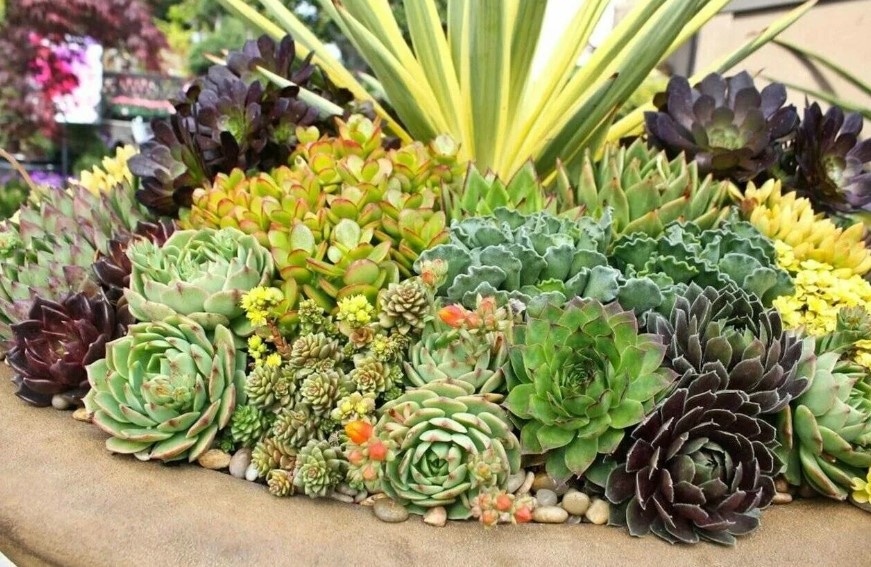
Succulents can belong to several different families, often not closely related to each other. The most common succulent families include Crassulaceae, Cactaceae, Agavaceae, Liliaceae, Aizoaceae, and Euphorbiaceae.
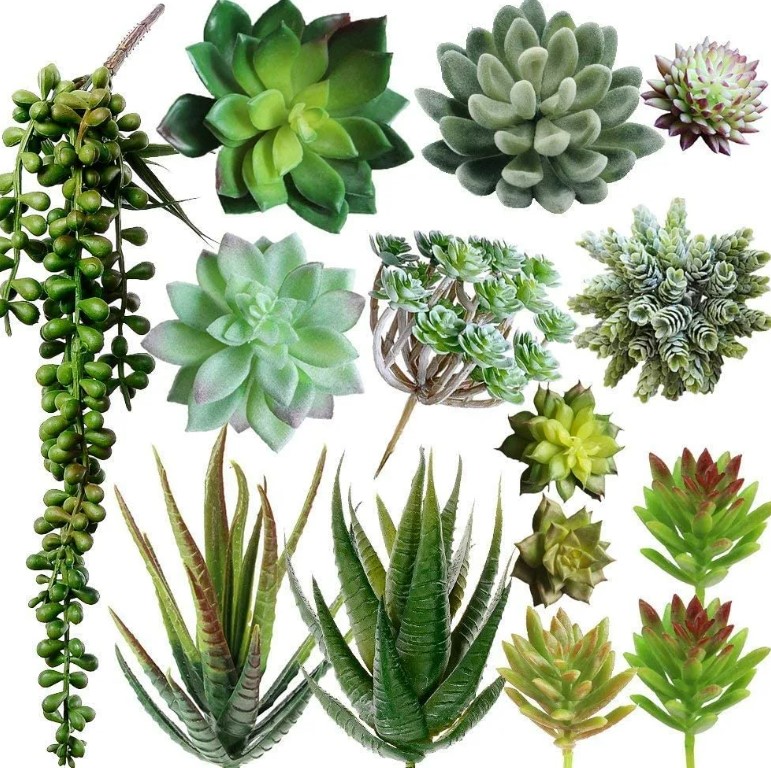
The classification of plants as succulents is not a fundamental factor in their biological classification. Within each of the families listed, species can be found that are incapable of storing water in their tissues. Therefore, automatically concluding that a particular species is a succulent based solely on its family name would be incorrect.
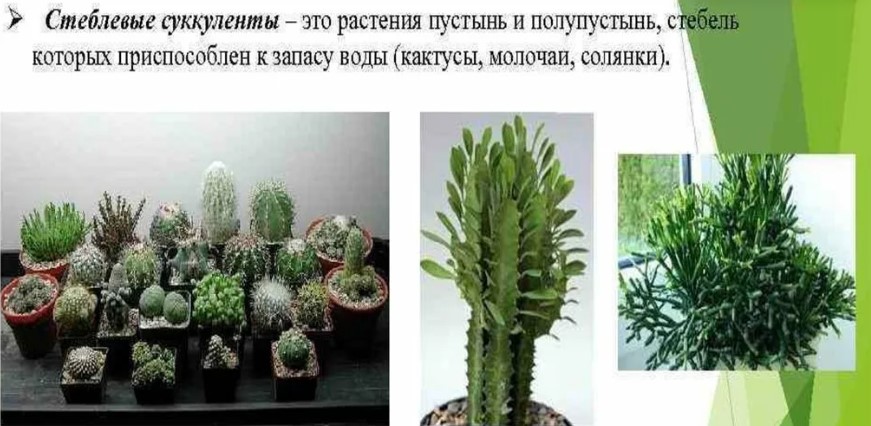
Succulents are generally classified into two main categories: leafy and stem.
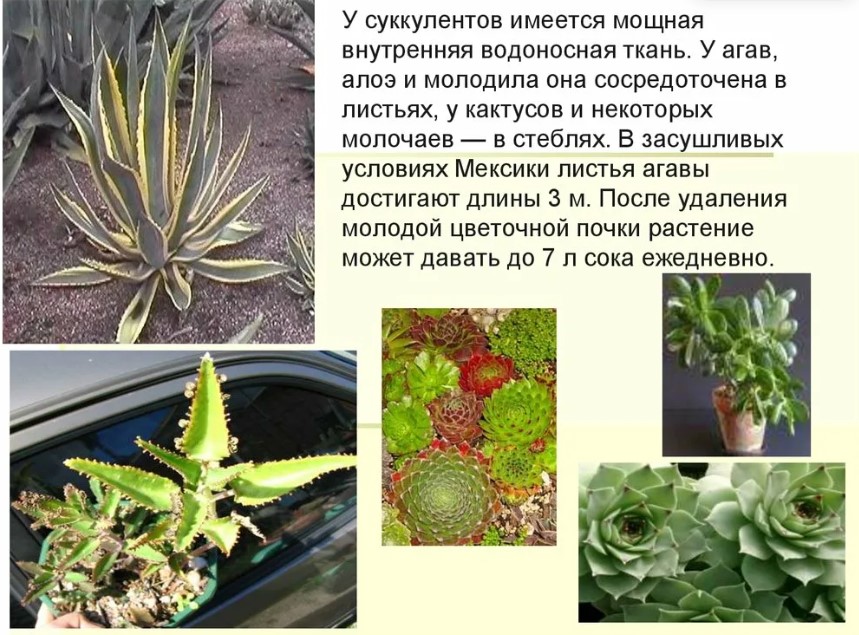
27 species + 160 subspecies and varieties of leafy succulents
They have leaves that store moisture. Classic examples of such succulents include the jade plant, aloe, and sedum. However, there are many other varieties.
Let's take a closer look at them, with photos of numerous varieties or species and tables of conditions for their growth and care features.
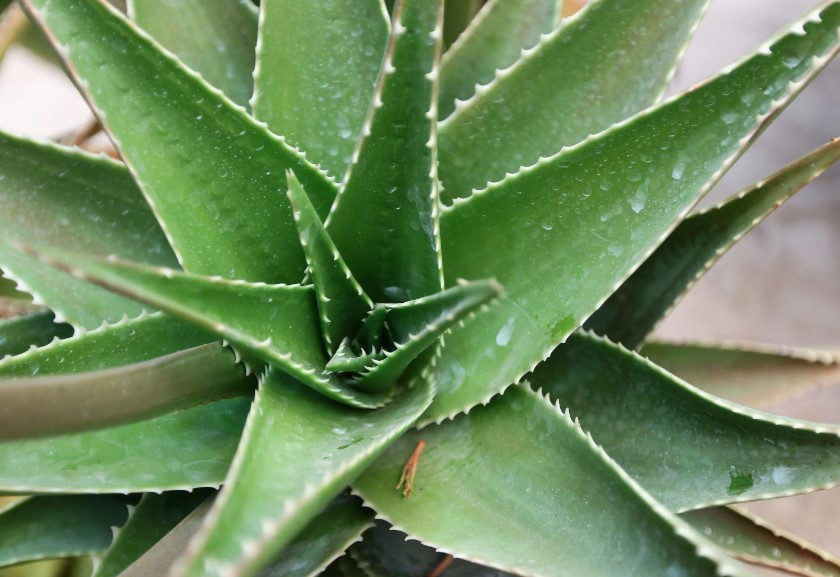
Agave
Family: Asparagus. Habitat: the mountains of Mexico and adjacent areas.
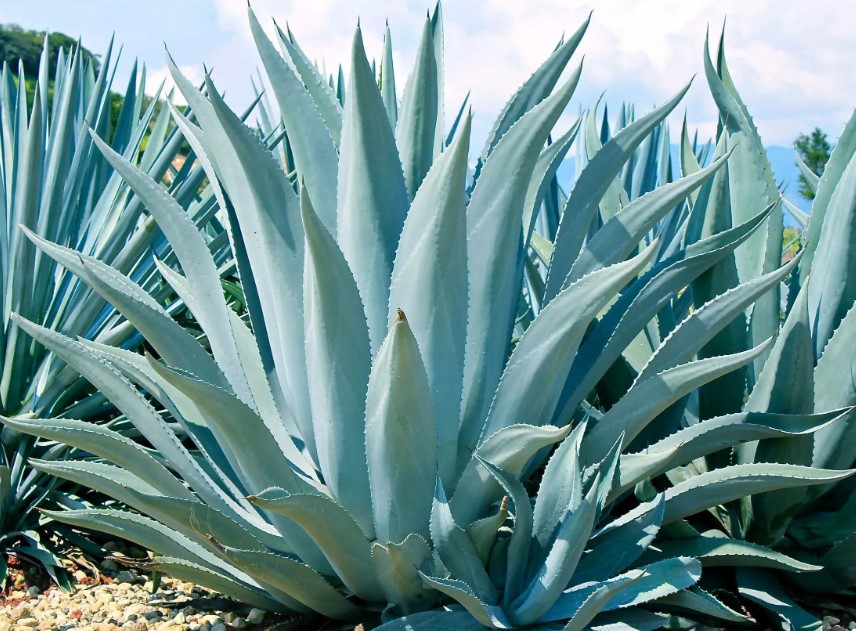
The stem is usually short, with a cluster of large, sometimes fleshy and spiny leaves. Flowering begins between the sixth and fifteenth year, with a large number of flowers (up to 17,000) forming on the tall (up to 12 m) stem.
Includes over 200 species. Here are some popular ones:
| Species name | Description |
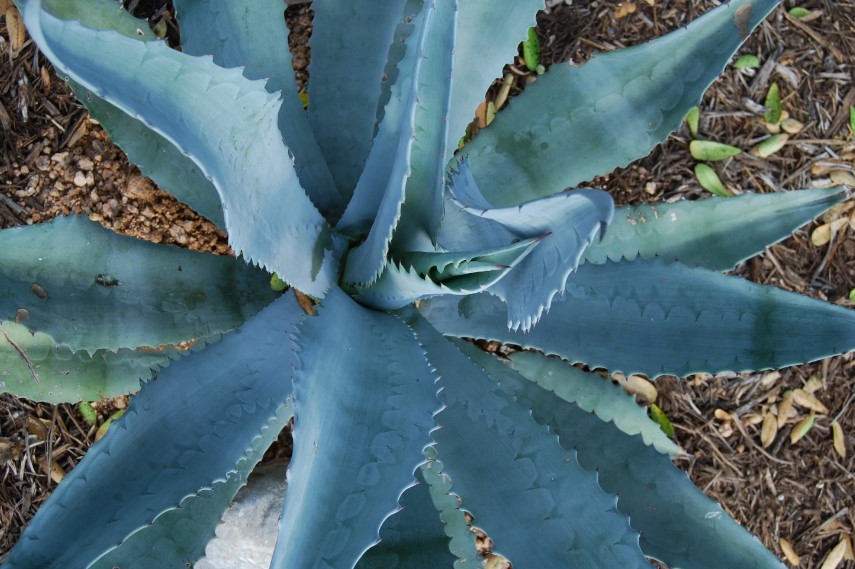
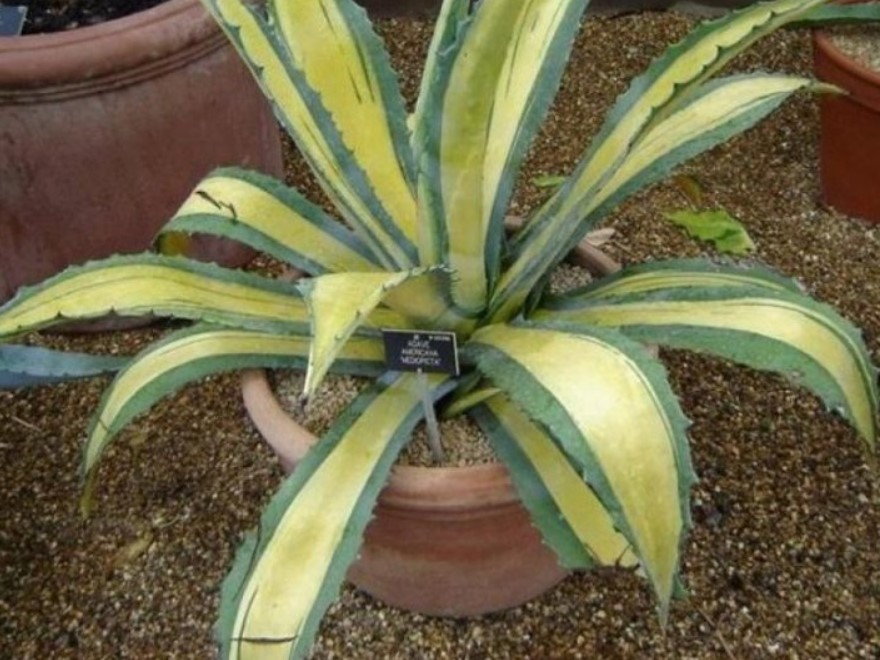
| Americana
|
The height reaches 2 m, the spread of the lanceolate leaves with serrations reaches 3 m. |
| Blue, Mexican, tequila
|
Used for the production of tequila. |
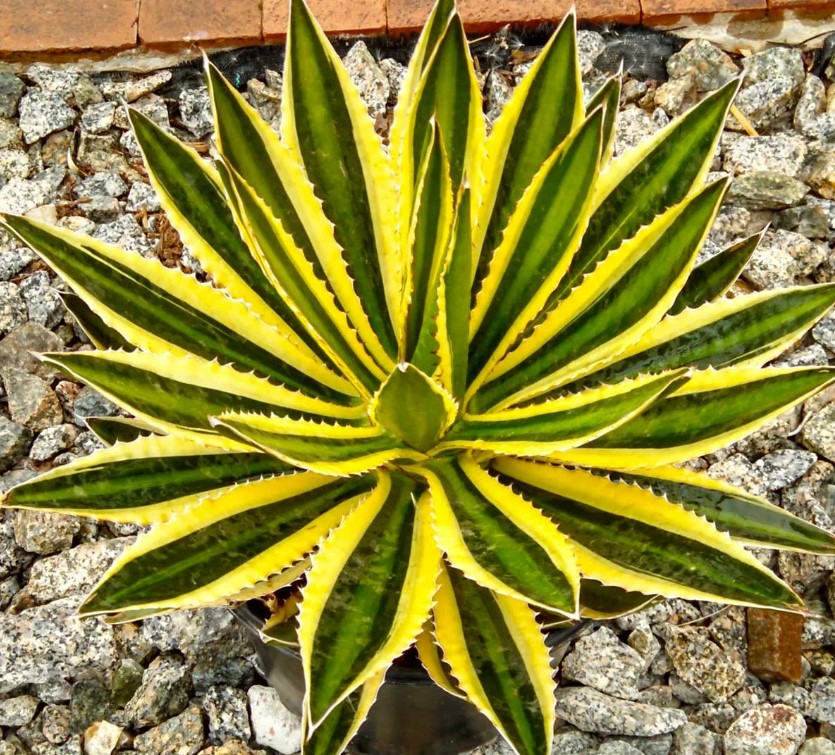
| Yellow-edged, variegated
|
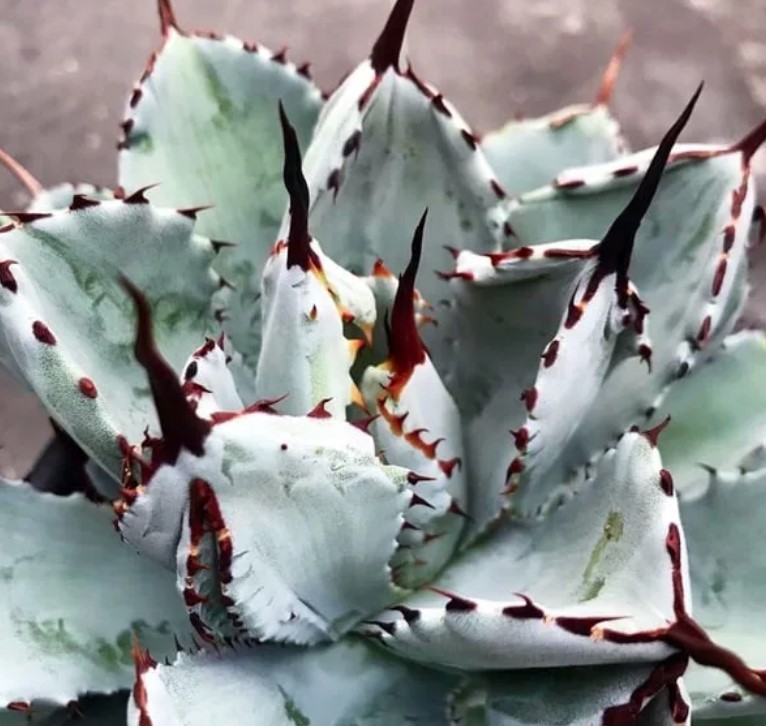
Compact growth habit. The tips of the stems are short, hard, and sharp. The leaves have a yellow edge. |
| Multicolored, decorated, striped
|
The leaves are narrow, about 70 cm long, about 0.7 cm wide at the base. |
| Compressed
|
Similar to the striped variety, but solid colored. |
| Queen Victoria
|
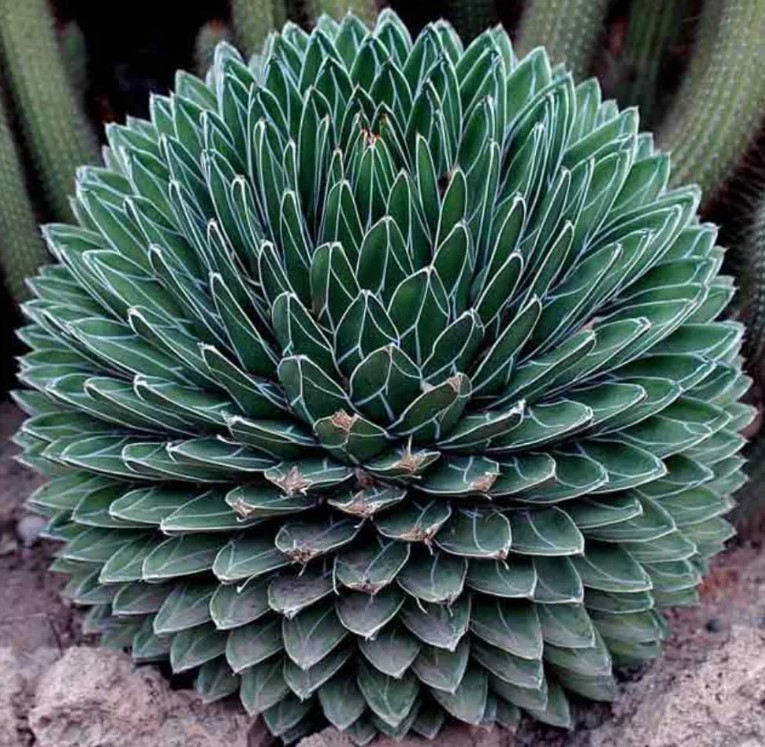
Best suited for indoor growing. It reaches 60 cm in adulthood and does not grow any taller. The color is rich green, with light, diagonal stripes. |
| Potatorum
|
A small plant about 25 cm, with original leaves in the form of a spade or obovate. |
| Thread-bearing
|
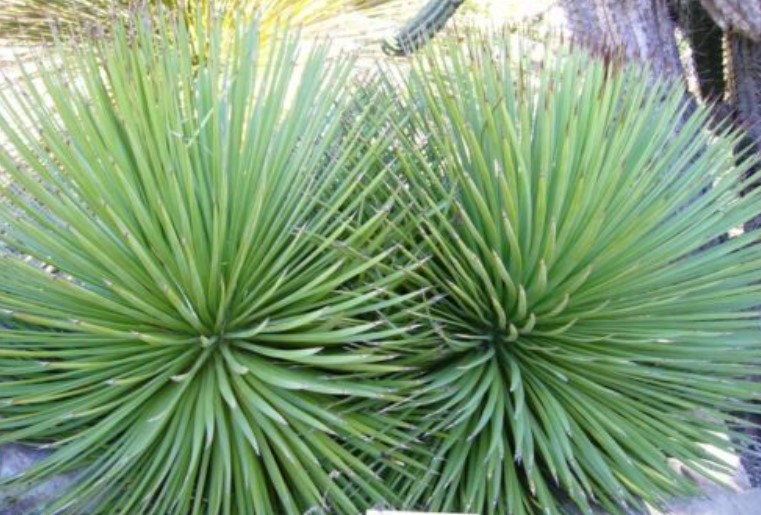
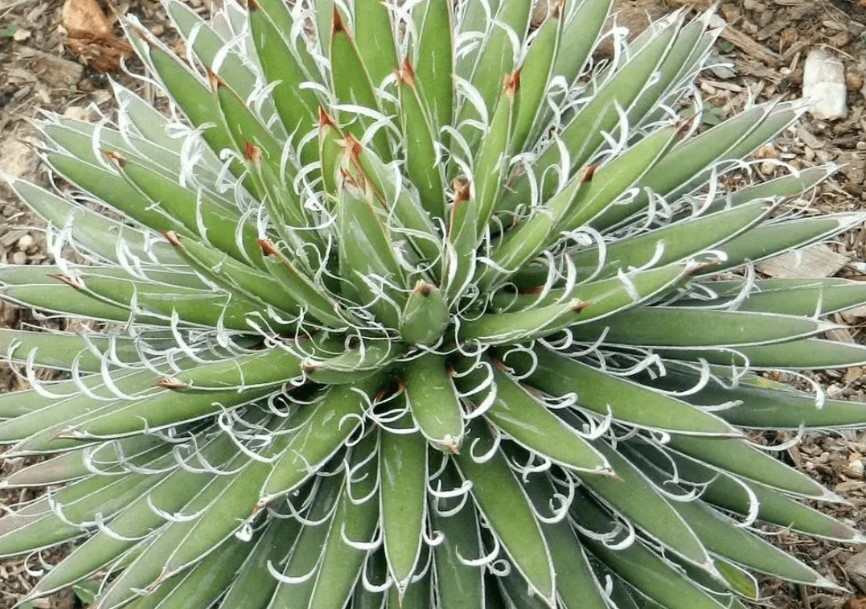
A compact perennial about 70 cm tall. Small spines up to 1 cm long are at the ends of the leaves. Long white threads hang along the edges. |
Let's consider the maintenance of agave at home:
| Illumination | Bright. |
| Temperature | +22…+28 °C. |
| Humidity | From 40%. |
| Pot and soil |
Ceramic pots with a large diameter and small height. Purchased soils for yucca, palm, dracaena. |
| Watering | Every week and a half. After the growing season ends, watering is reduced to once a month. |
| Top dressing | 1 time/2 weeks. Mixtures for succulents or other compositions with a limited amount of nitrogen are suitable. |
| Reproduction | By seeds, cuttings, lateral and root shoots. |
| Care Features | Clean the leaves periodically. If they become dirty, photosynthesis is disrupted. |
Want to know more about agave, read what gardeners have to say about it here.
Adromischus
Family: Crassulaceae. Native to South and Southwest Africa.
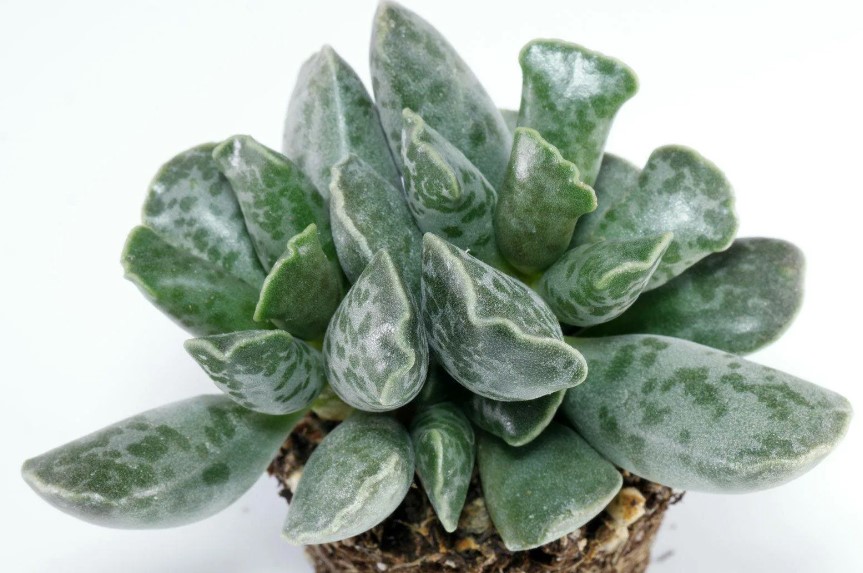
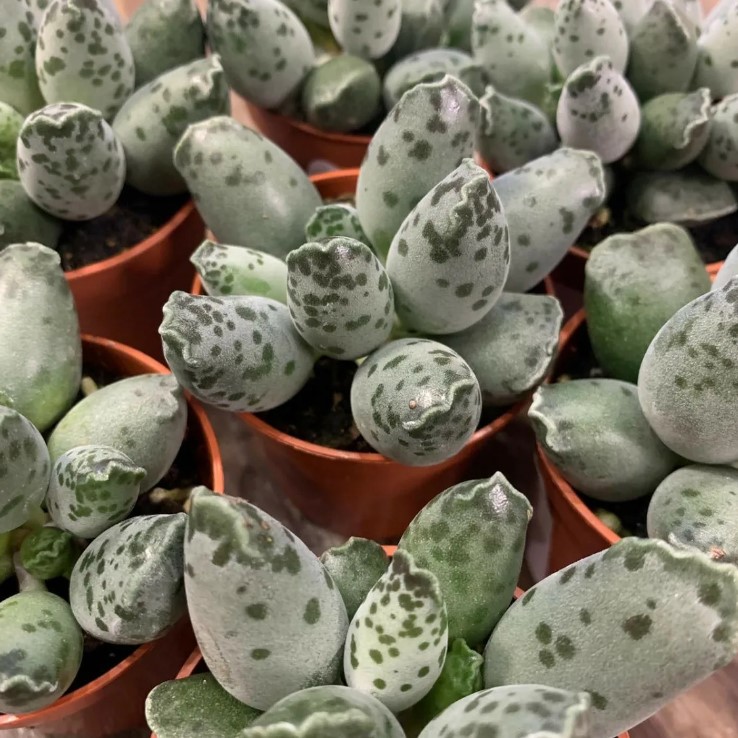
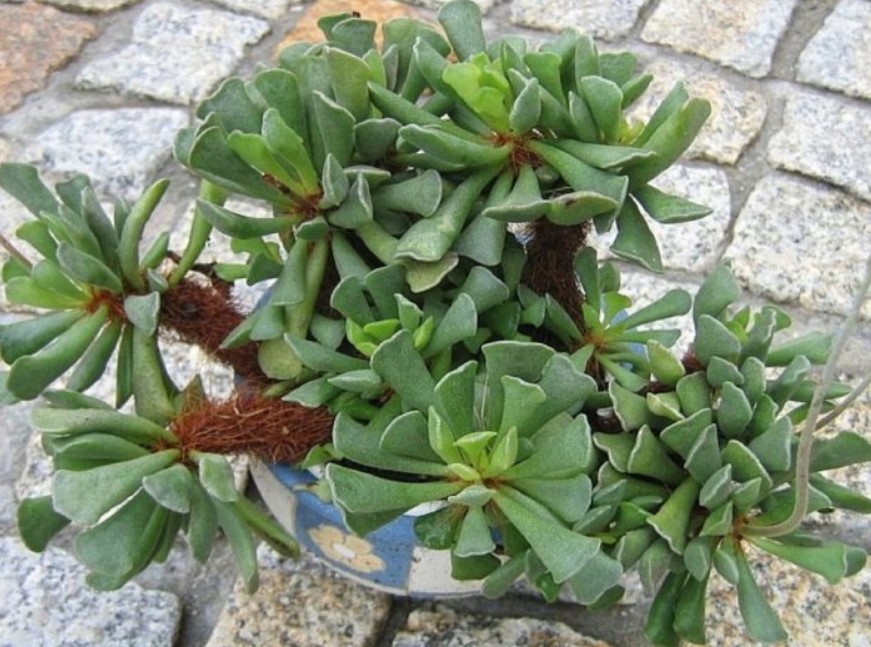
With a thick stem and rounded or pointed leaves, the leaf blades are either fuzzy or smooth, and can be green, uniform in color, or with brown spots.
There are several types:
| Cooper (copper)
|
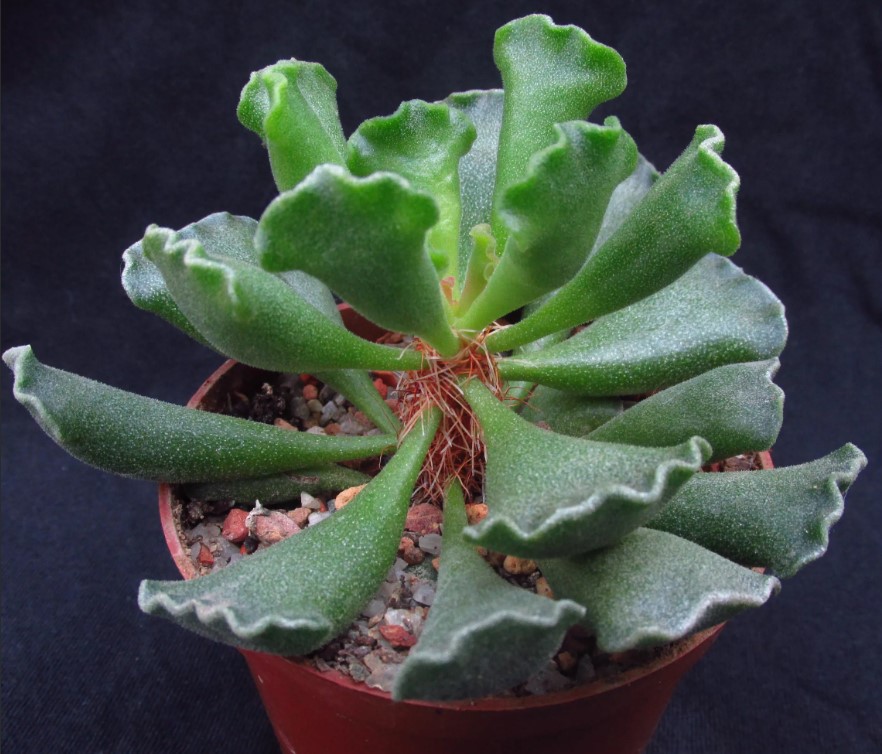
It has a short, highly branched stem. The glossy green leaves are smooth and can be uniformly colored, but when exposed to sunlight, they develop reddish-brown spots. The leaf edges are slightly wavy. The inflorescence is a spike with tubular flowers up to 1.5 cm in size. The fused red petals have white, pink, or purple hues at the edges. |
| Crisatatus (comb-shaped)
|
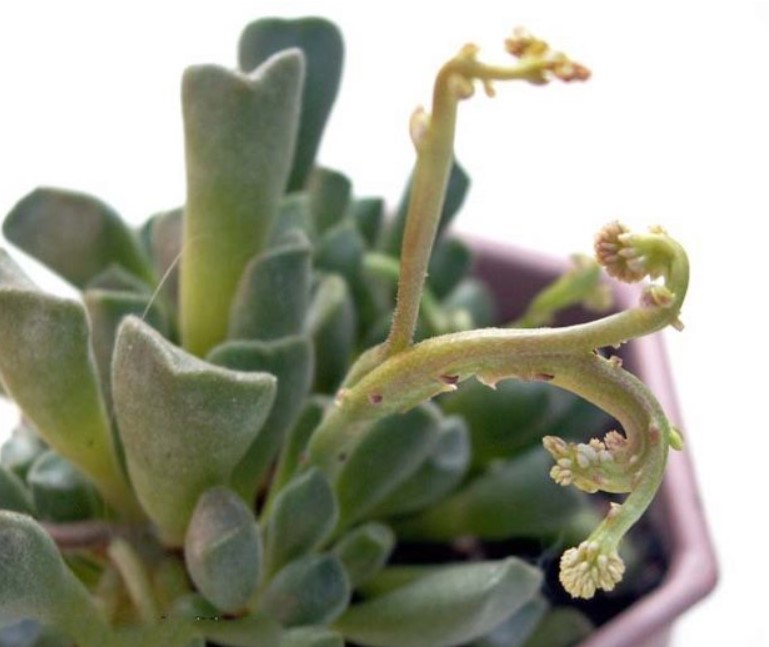
The stems initially stand upright, but then droop and creep along the ground, producing aerial roots. The leaves, with wavy and hairy edges, are shaped like an inverted triangle. The inflorescence resembles a spike and is studded with small white-green flowers with pink edges along the petals. |
| Spotted
|
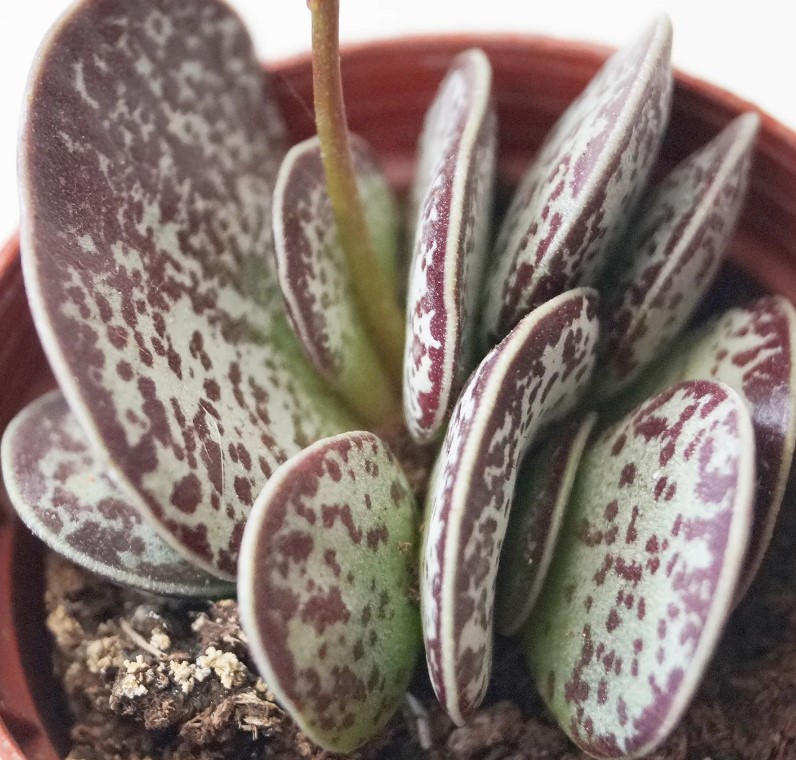
The flowers are red-brown and form a racemose inflorescence. |
| Pellnitz
|
It has a single, unbranched stem with light-brown aerial roots. The leaves are narrow at the base and widen toward the tip. The flowers are unattractive, green in color. |
| Grooved
|
A groove runs along the edge of its club-shaped green leaves. The leaves are rough and thick. When flowering, it produces a 25 cm long stem with pink buds. |
| Mariana
|
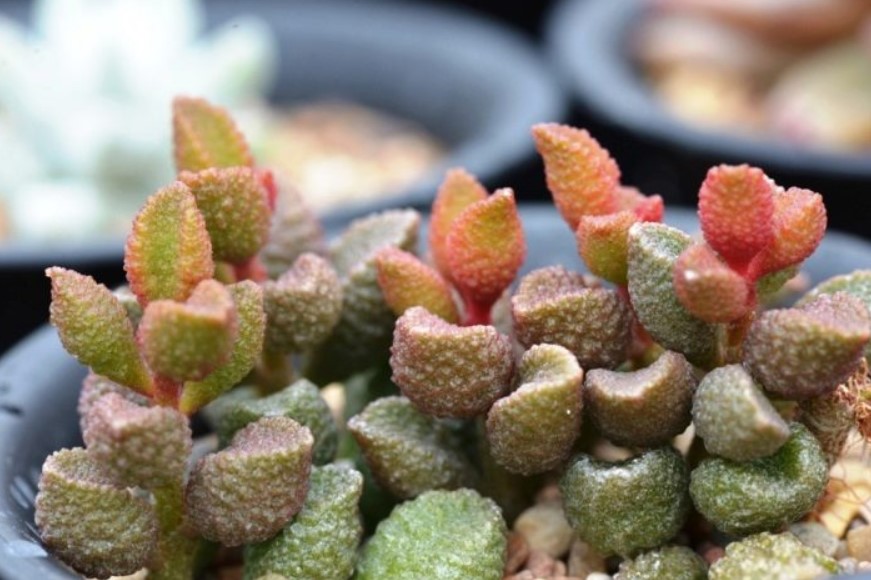
The leaves are ovate or elliptical, pale green, and wedge-shaped at the base. In bright light, a red tint appears on the upper surface of the leaf. The texture varies: some leaflets are smooth, others are bumpy. It forms simple paniculate inflorescences with white flowers. |
Care:
| Illumination | Bright, not afraid of direct sunlight. |
| Temperature | +30…+35 °C in summer, +10…+15 °C in winter. |
| Humidity | Medium, so no need to spray. |
| Pot and soil |
Choose a small container. For succulents or cacti. |
| Watering | Moderate. |
| Top dressing | In summer, apply fertilizer for succulents monthly. |
| Reproduction | Cuttings. |
| Care Features |
Do not spray, as this will cause the leaves to rot. Check regularly for aphids, mealybugs and spider mites. |
Florists characterize adromiscus, as easy to care for.
Aichryson
Family: Crassulaceae. Habitat: La Palma (part of the Canary Islands), the Antilles, Madeira, and East Africa.
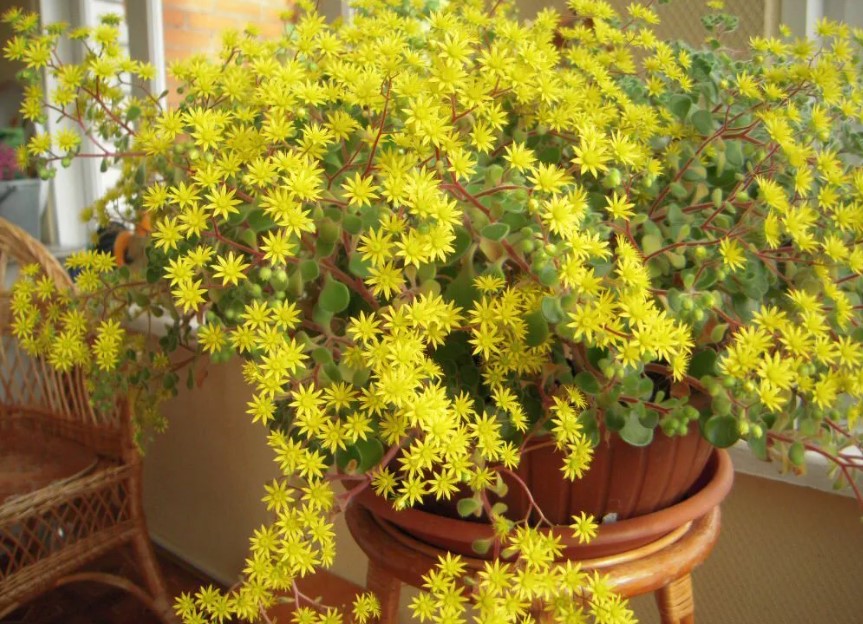
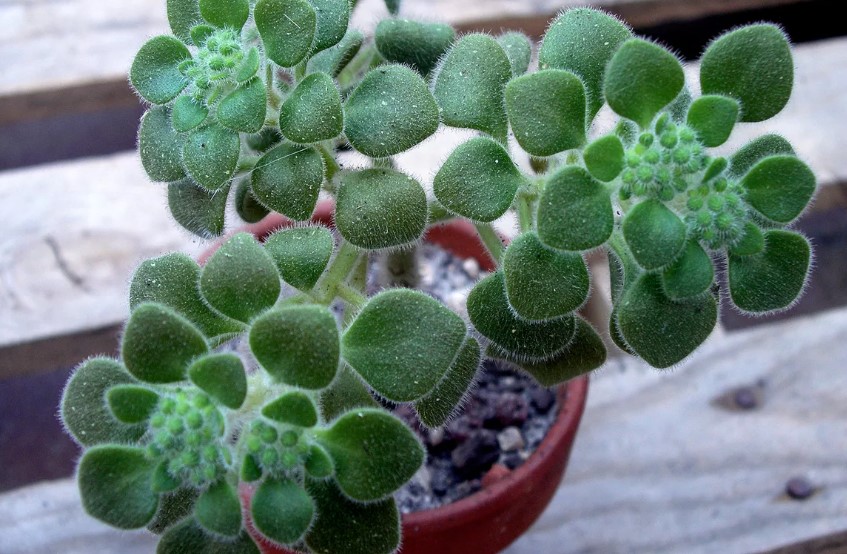
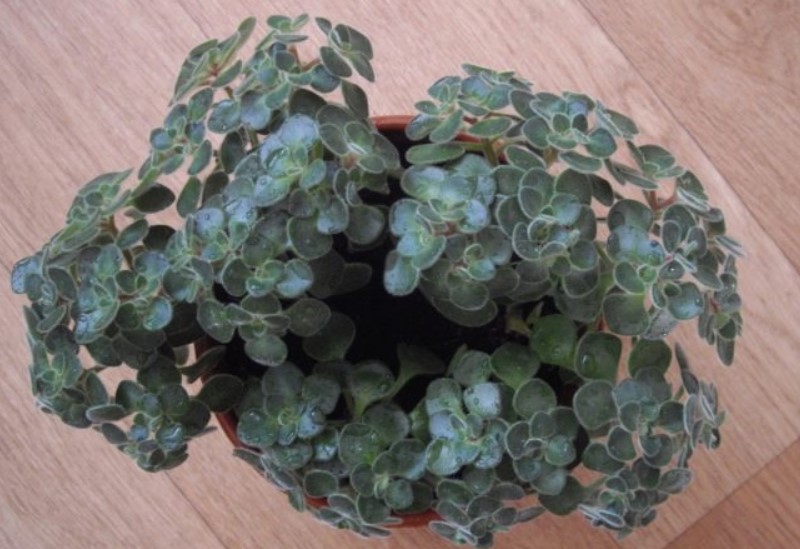
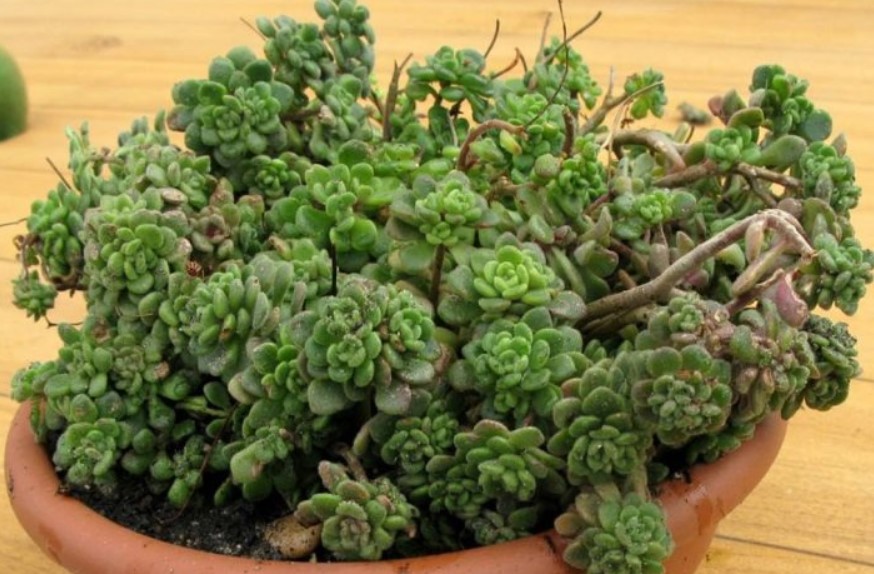
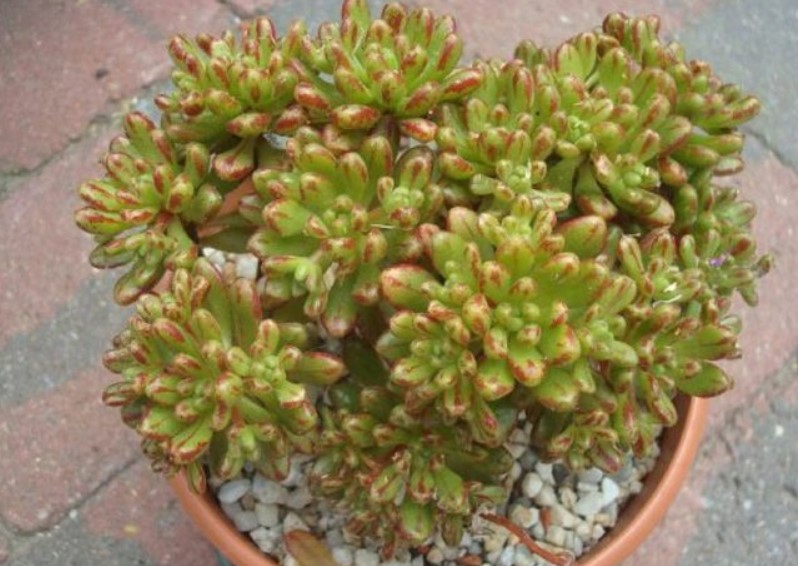
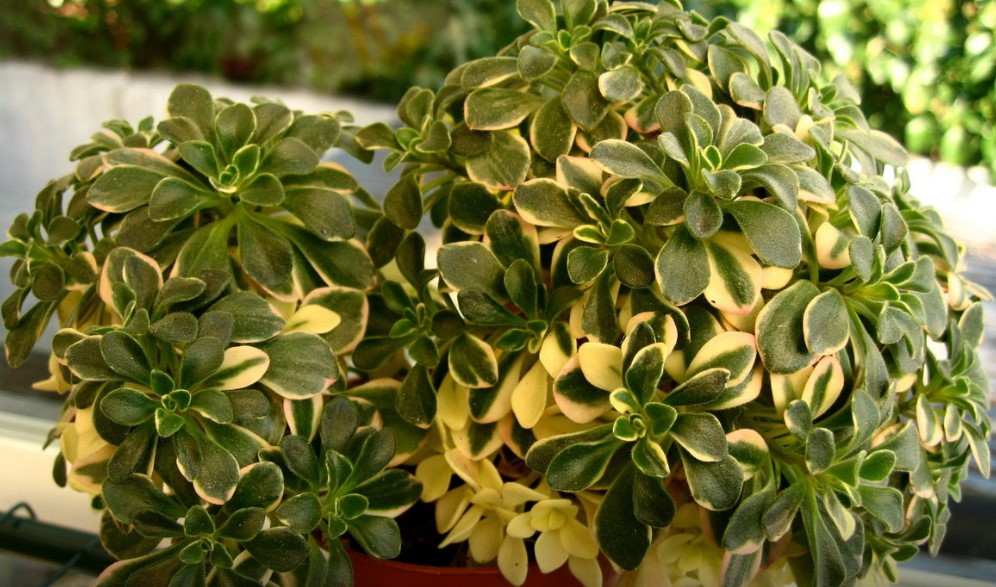
The stems are covered with short hairs. The leaves are green or reddish. The flowers are arranged in a branched cluster and consist of 50 small, star-shaped flowers of bright yellow.
| Spreading (loose, laxum)
|
The leaves are diamond-shaped, hairy, compact, and up to 3 cm in size. It typically blooms in early spring, with a flowering period lasting about 5 months. The flowers are yellow. |
| Point
|
The stems are green-brown, slightly pubescent on top. The leaves are diamond-shaped. |
| Winding
|
A compact plant. Light green leaves are covered with fine hairs and grow in tufts on petioles. It blooms from spring to September. |
| Cleansing-leaved
|
It has straight branches and broad leaves. Most specimens are green, but some are yellow-green. They may have scarlet stripes that secrete a sticky substance. |
| Home
|
This hybrid plant was created by crossing a dotted and a sinuous variety. Its leaves are small and heart-shaped. |
Care:
| Illumination | Requires high brightness, but with shade from direct sunlight. Daylight hours are 14 hours. |
| Temperature | +20…+25 °C in summer, +9…+10 °C in winter. |
| Humidity | Low. |
| Pot and soil |
The pot should be small in size, with a drainage layer. The soil mixture is prepared from turf and peat soil, coarse sand, and medium-sized gravel, mixed in equal proportions. Birch charcoal can also be added. |
| Watering | When the soil dries out. |
| Top dressing | From spring to autumn, apply fertilizers with a minimum amount of nitrogen twice a month. |
| Reproduction | By seeds, cuttings. |
| Care Features | Don't spray. Instead, use a warm shower to clean the leaves of any dirt. |
Find out about aichryzone more.
Aptenia
Belongs to the Aizoaceae family. Distributed in South Africa.
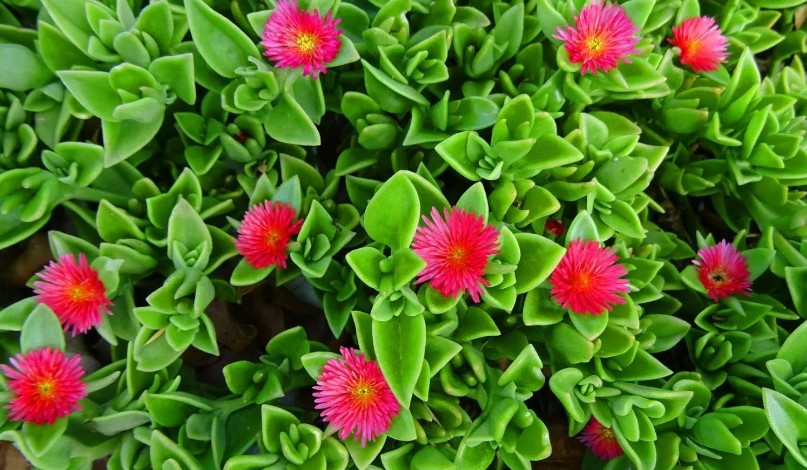
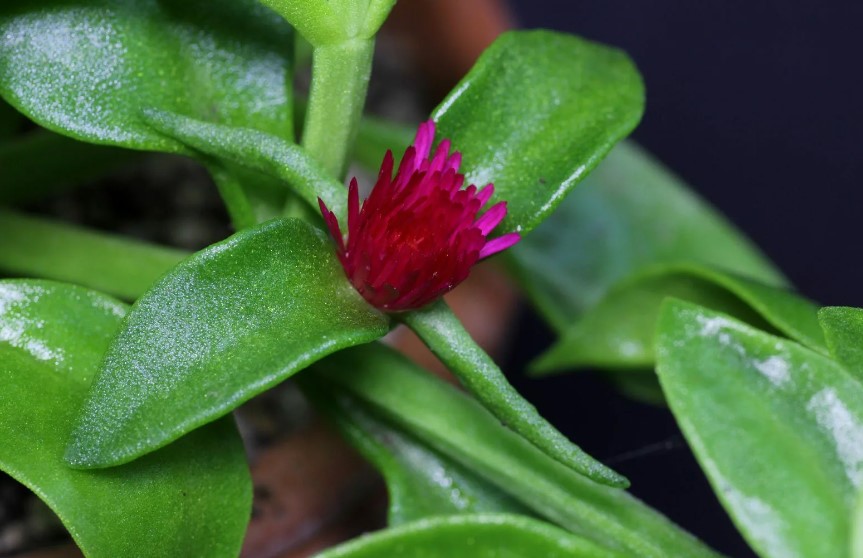
In the wild, stems can grow up to several meters in length. If left unpruned, indoor Aptenia can reach 150 cm. The stems are fleshy and grow at a moderate rate. They are adorned with numerous small, heart-shaped leaves of a rich green color.
| Heart-leaved
|
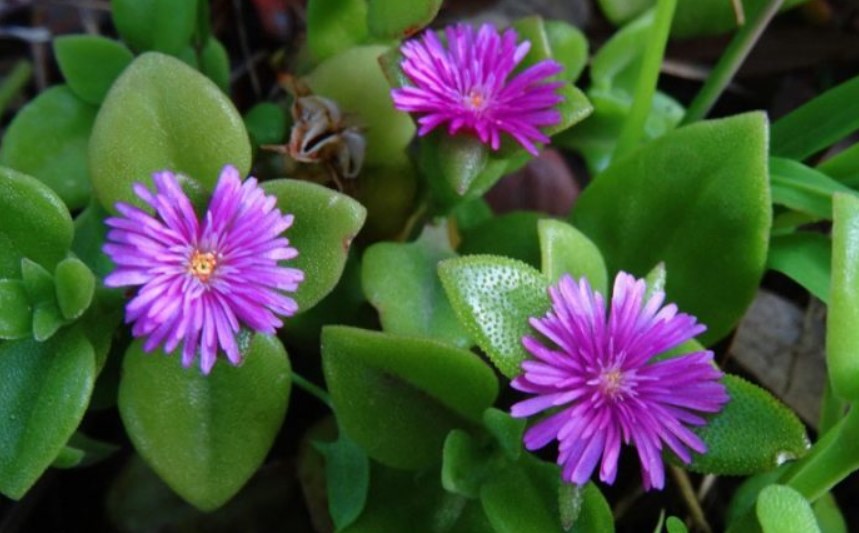
The stems are spreading. The small, heart-shaped leaves are a rich green. It blooms from mid-March to late August. The flowers are located in the spaces between the leaves or on the upper part of the stems. They have a lilac-pink or raspberry hue. |
| Variegated cordifolia
|
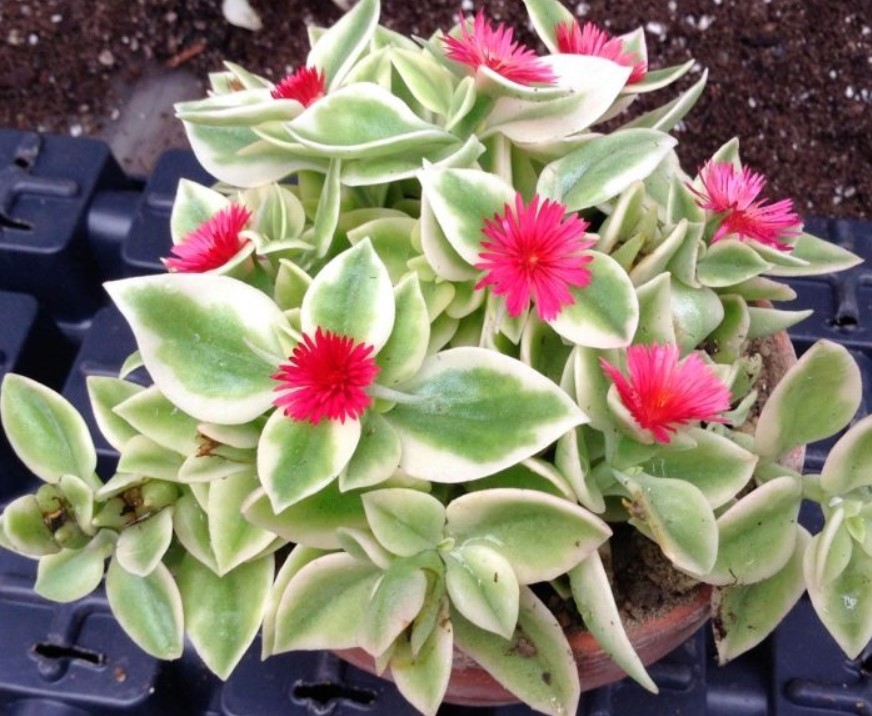
Compared to Aptenia cordifolia, this variety has slightly smaller leaves and stems. The foliage is a rich green with a light border along the edges. The flowers are vibrant scarlet and crimson. |
| Lanceolate
|
It has flexible, branching stems reaching 150 cm in length. Thick, fleshy, lanceolate leaves. It blooms from spring to early fall. The small flowers are pale pink or lilac. |
Care:
| Illumination | Requires plenty of bright sunlight |
| Temperature | +20…+25 °C in summer, +10…+15 °C in winter. |
| Humidity | Very dry air is suitable. |
| Pot and soil |
Any, but not too spacious. You can purchase a substrate for cacti and succulents. |
| Watering | During the growing season, water once every 1.5-2 weeks. During the dormant period, water once a month. |
| Top dressing | 2-3 times a year with mixtures for succulents. |
| Reproduction | By seeds, cuttings. |
| Care Features | It is important to provide the plant with suitable conditions, otherwise problems will arise in the form of lack of flowering, baldness, thinning and increase in the size of the leaves. |
Interested in the flower? Read on. here?
Argyroderma
Family: Aizoaceae. Native to the Cape Province of Africa, South Africa, and the deserts of Peru.
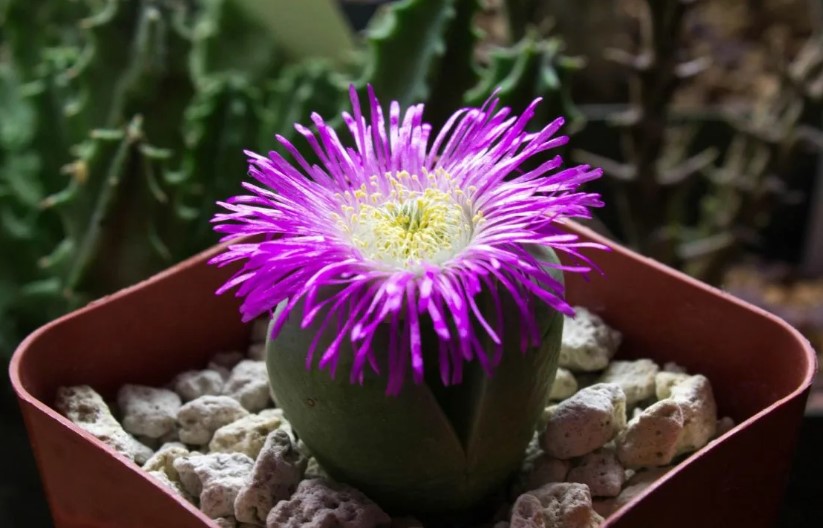
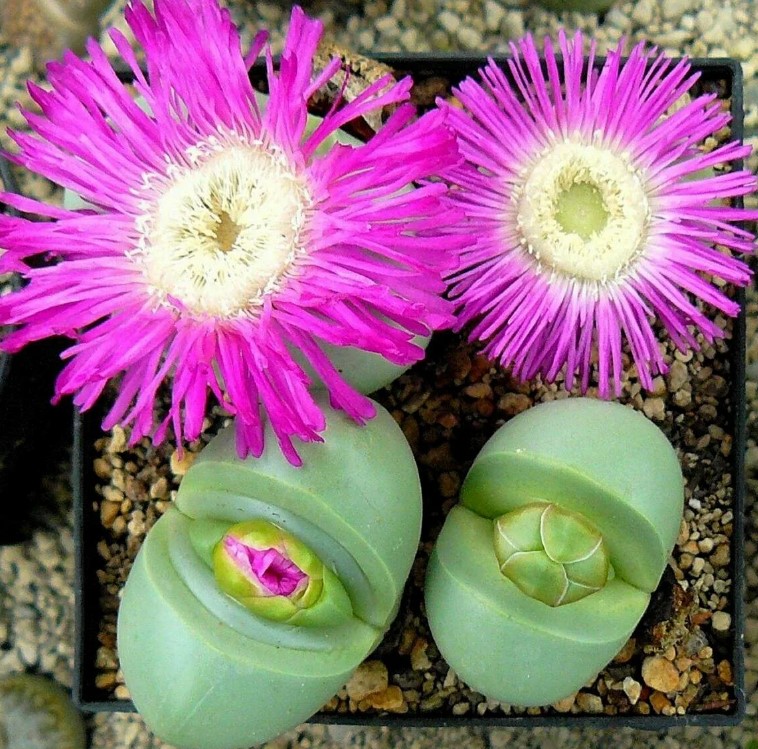
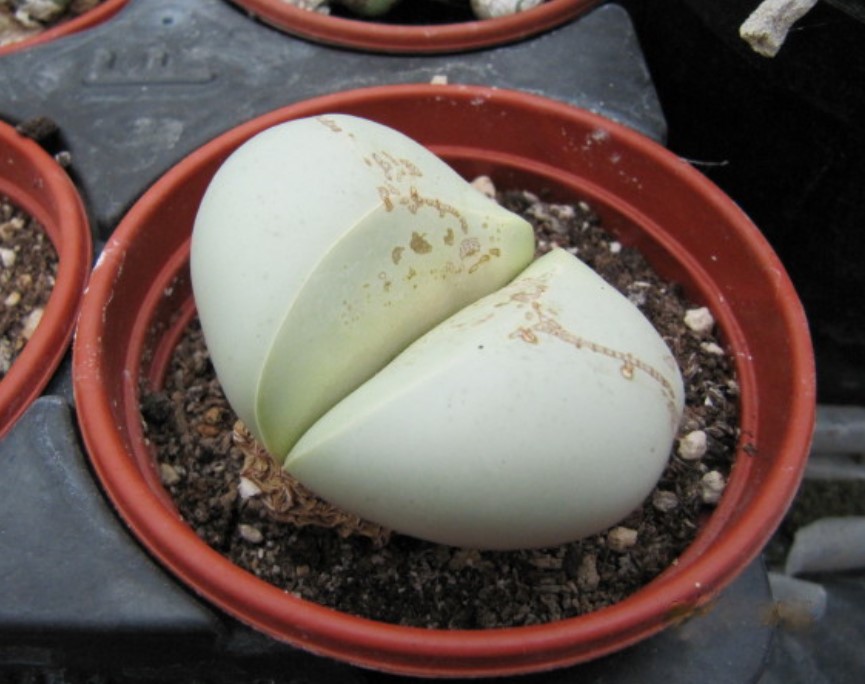
These are small, compact perennials. Each stem bears two leaves, but new pairs can produce four to six. The leaf blades are arranged spirally and are finger-shaped, hood-shaped, subovate, or hemispherical. They can be erect or spreading. The upper surface can be flat or slightly convex, while the lower surface is convex. The color ranges from silvery to gray-green.
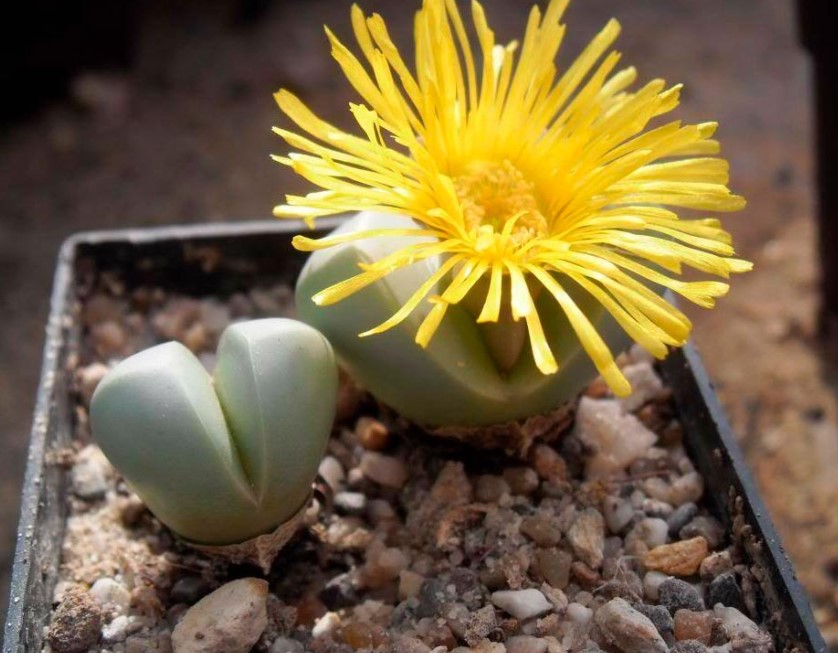
The flowers are solitary, located at the top of the stem. They open in the afternoon. The petals can be yellow, purple, red, or sometimes white.
| Cup-shaped
|
The leaf blades are thick, fused at the base, with a flattened side at the junction. The flower emerges from the space between the leaves. It resembles a daisy: glossy yellow petals, white stamens, and yellow anthers. |
| Oval
|
Rosettes consist of 2-4 cylindrical, fleshy leaves. Color can vary from greenish-gray to lime green. Flowers grow individually on short stalks between the upper leaves. |
| Oviform
|
A dwarf succulent. Each rosette consists of thick, fleshy leaflets. They face each other with their flat surfaces and can be greenish-blue or grayish-blue. Some of them have small dots on their surfaces. A short stem emerges from the spaces between the leaves, producing a daisy-like flower. |
Care:
| Illumination | Bright. |
| Temperature | In summer, room temperature is suitable. In winter, it drops to +12…+15 °C. |
| Humidity | Low, which is found in apartments. |
| Pot and soil |
With low walls and sufficient width. The soil mixture is prepared from leaf soil and sand (2 to 1). |
| Watering | Water only during active growth and flowering. Add water through the tray after the soil has dried out. |
| Top dressing | Fertilizer for cacti is applied during budding and flowering in 1/2 dosage. |
| Reproduction | By seeds, division. |
| Care Features | Replant once every 2-3 years. |
Bryophyllum
Family: Crassulaceae. The plant genus is sometimes considered a close relative of the genusKalanchoe. Homeland - Madagascar.
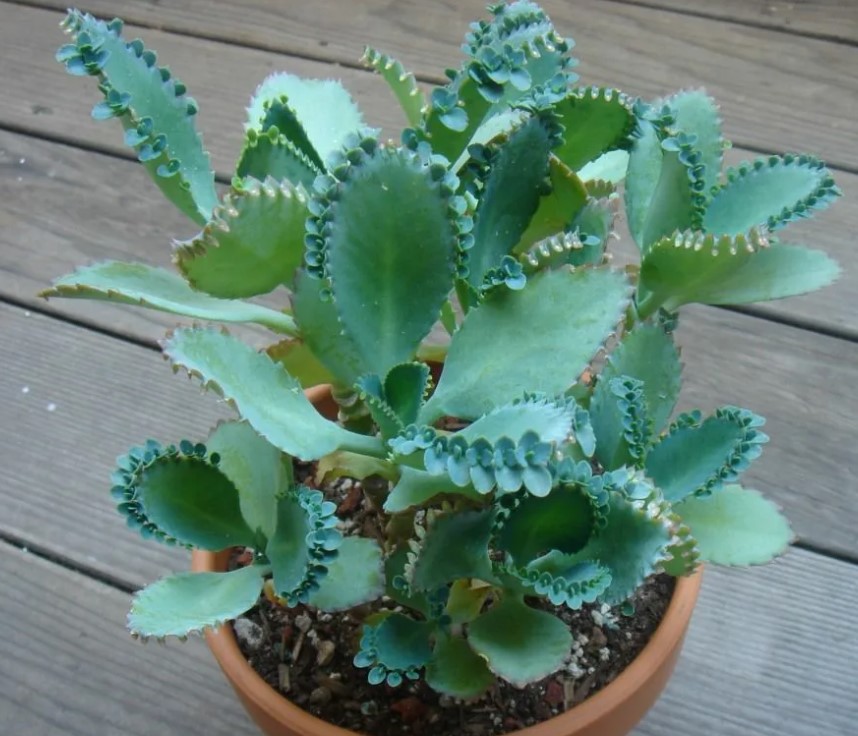
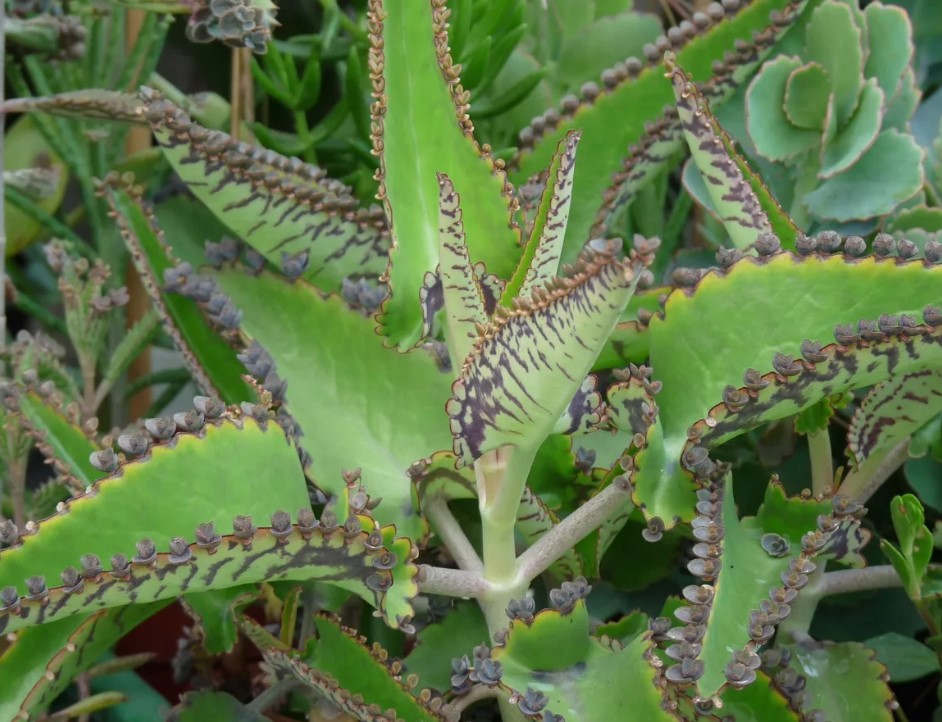
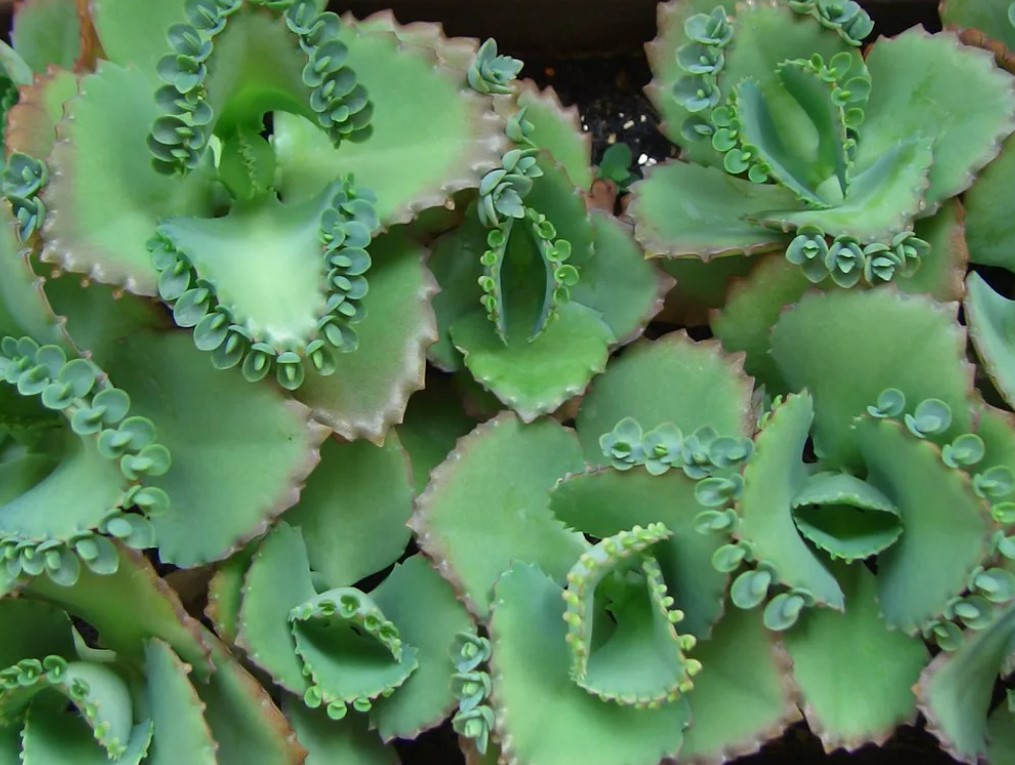
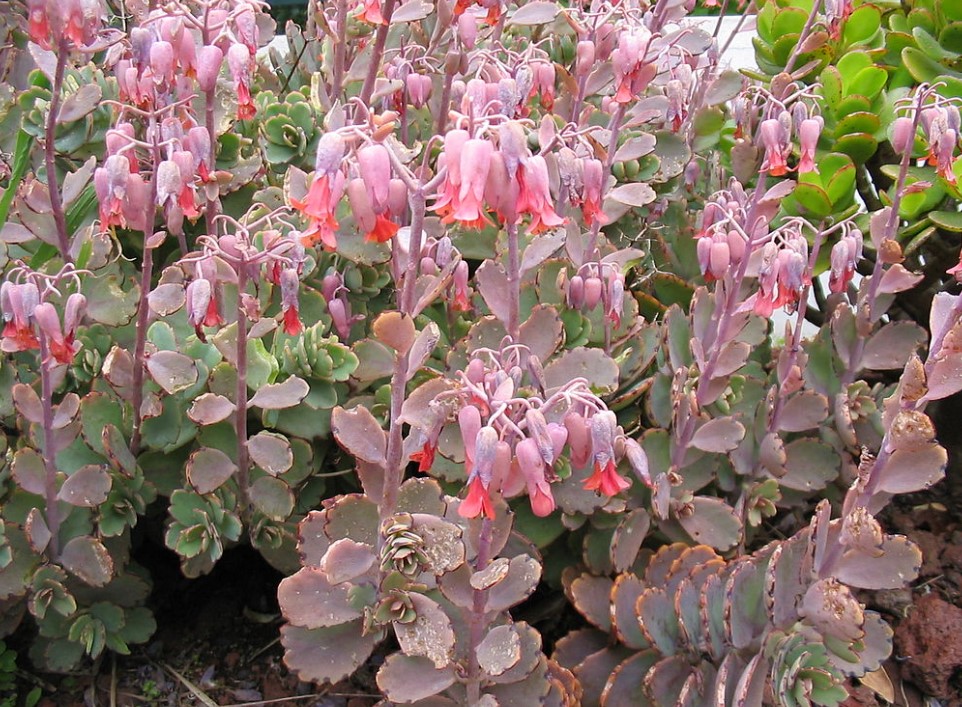
The leaves are arranged in whorls of three. Sub-shoots grow along the edges. The flowers are arranged in groups of four, hanging down in panicles or umbels. The petals are brightly colored. Unlike Kalanchoe, eight stamens are attached to the base of the flower tube. The fruit is a multi-seeded leaflet.
| Degremona
|
Forms small rosette-like bushes. The leaves are broadly lanceolate, glossy, and serrated along the perimeter. They are dark emerald in color, with a matte reverse side with brown stripes. The flowers are pinkish-purple bell-shaped. |
| Pinnate
|
The inflorescences are dark red. |
| Fedchenko
|
The leaves are matte and glaucous. There is a pinkish or reddish stripe along the edges. The flowers are large, yellow-orange. |
| Buvarda (Boveri)
|
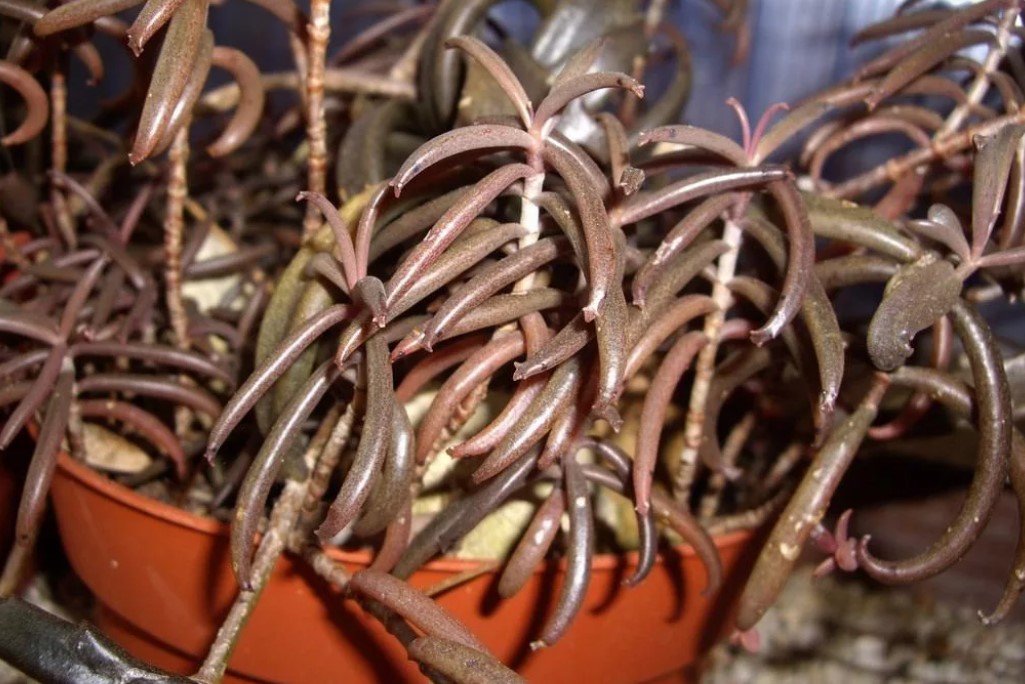
A trailing variety. The shoots are thin and long, reaching up to 60 cm when grown indoors. The leaf blades are brown-green and narrow, resembling tubes that curve downward like claws. The flowers are spotted, blackish-purple. |
| Trumpet-flowered
|
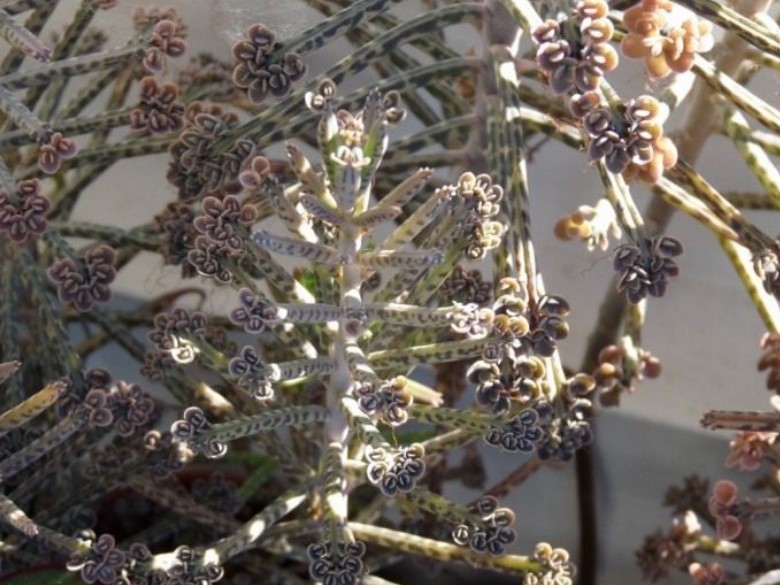
The leaves are narrowly linear, covered with spots at the edges. The flowers are bell-shaped. |
| Mangina
|
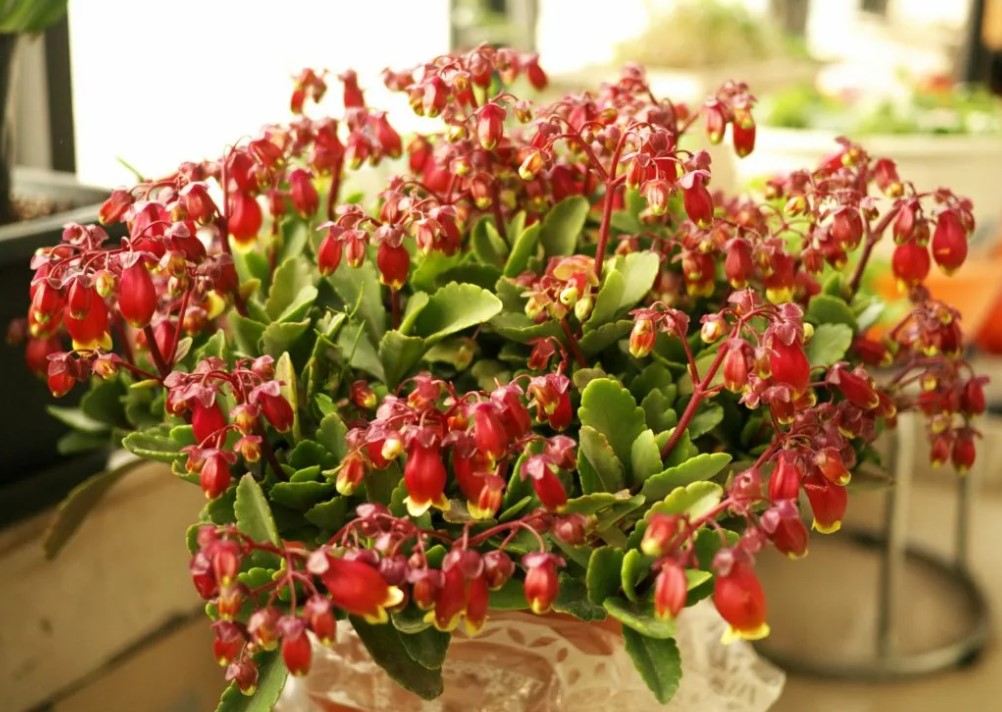
The bushes are formed by green, oval-shaped leaves. Bell-shaped inflorescences are located on drooping peduncles. |
Care:
| Illumination | Bright light with shading. |
| Temperature |
+20…+27 °C in summer. +12…+14 °C in winter. |
| Humidity | Tolerates dry air well. |
| Pot and soil |
Wide. For cacti and succulents. |
| Watering | Moderate. |
| Top dressing | In spring and summer, apply a cactus and succulent mix every couple of weeks. When using a general-purpose fertilizer, reduce the dosage. In winter, apply additional fertilizer if you want flowering. |
| Reproduction | By children, apical cuttings. |
| Care Features | When watering, avoid dripping onto the leaves. |
Gasteria
Family: Asphodelaceae. Native to the arid regions of South Africa.
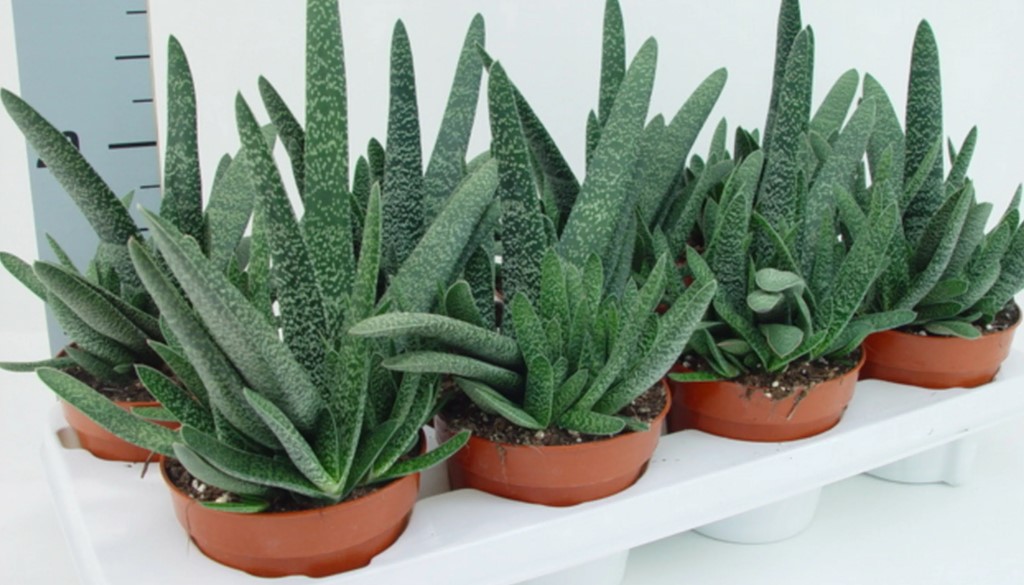
The peduncle reaches 40-70 cm. The flowers are collected in racemes and are green, orange, and yellow.
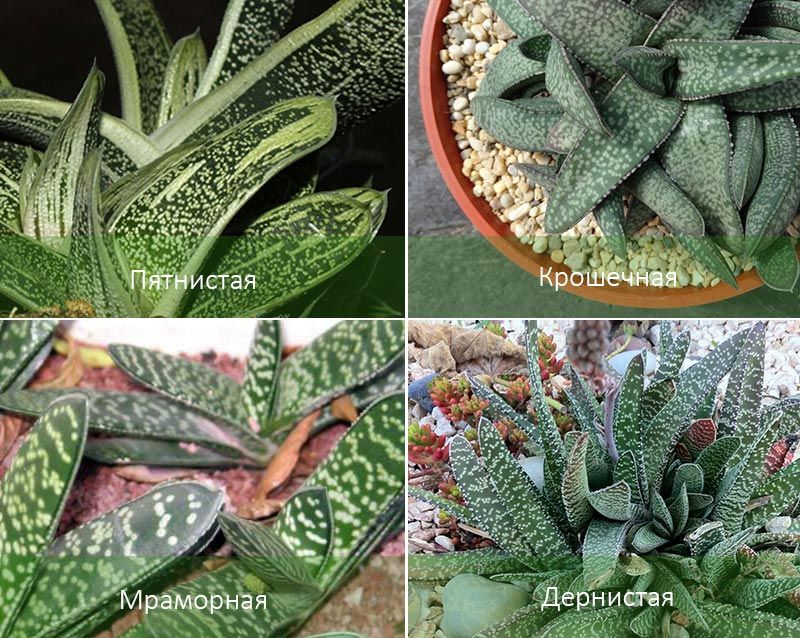
Types of Gasteria:
- warty;
- spotted;
- keeled;
- tiny;
- saber-like;
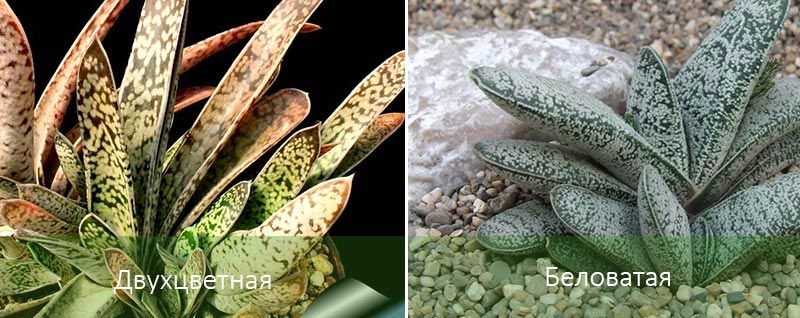
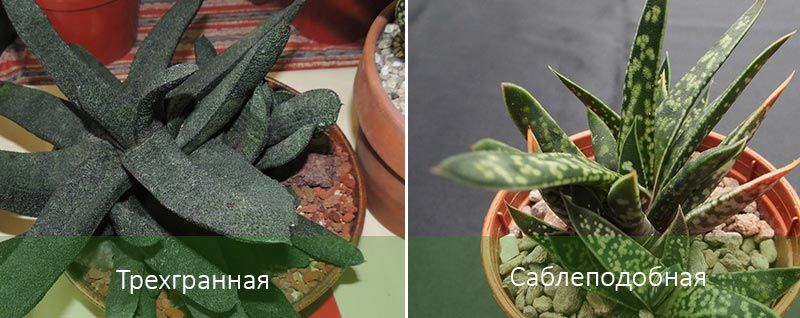
- Armstrong;
- two-color;
- turfy;
- whitish;
- marble;
- triangular.
Care:
| Illumination | It also grows well in the shade. |
| Temperature |
+18…+25 °C – during vegetation. +6…+12 °C – at rest. |
| Humidity | The indoor microclimate is suitable. |
| Pot and soil |
Wide but shallow. Moisture- and air-impermeable, with a pH of 5.5-5.7. |
| Watering | From early spring to late autumn, water abundantly. In winter, watering is reduced to a minimum. |
| Top dressing | From May to September, apply a mineral mixture for cacti and succulents once every two weeks. Use a lower dosage than indicated in the instructions. |
| Reproduction | By seeds and daughter rosettes. |
| Care Features | Every 2-3 years it needs to be replanted into a wider pot. |
How to grow gasteria, reviews and advice on our website.
Gibbeum
A genus of succulents comprising approximately 20 species, belonging to the Aizooniaceae family. It grows wild in the Cape Province of South Africa.
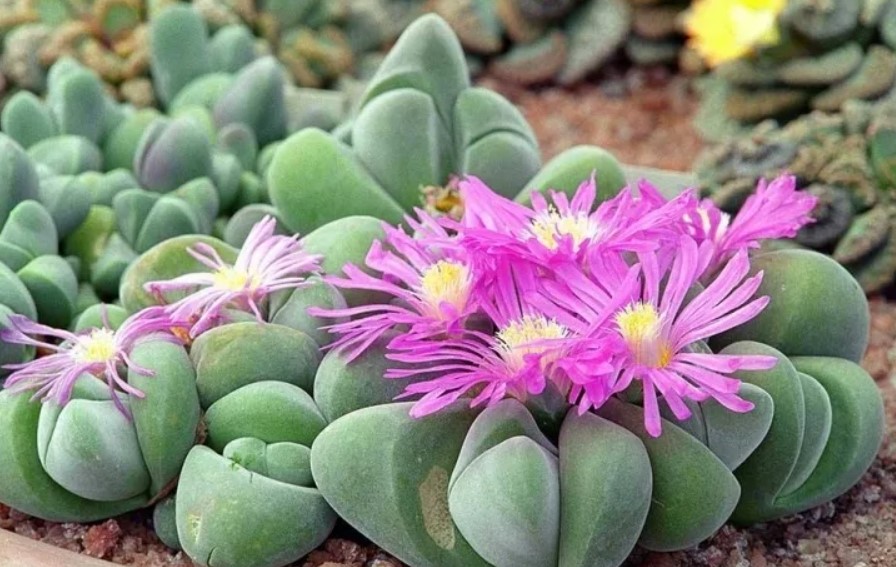
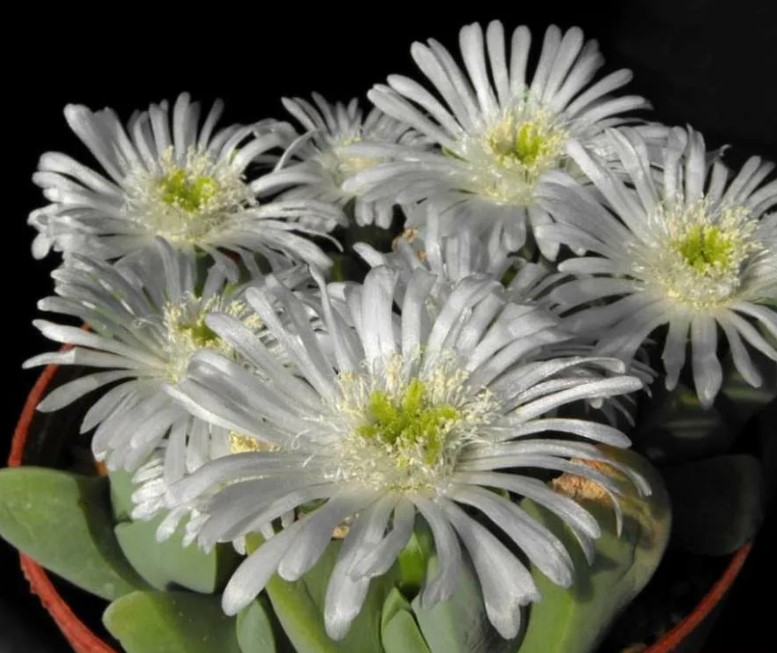
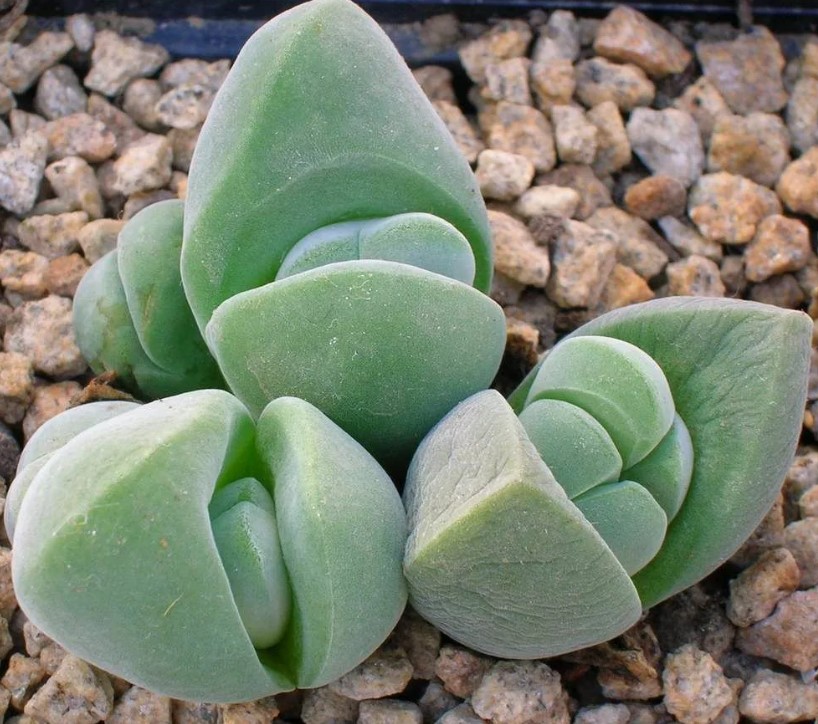
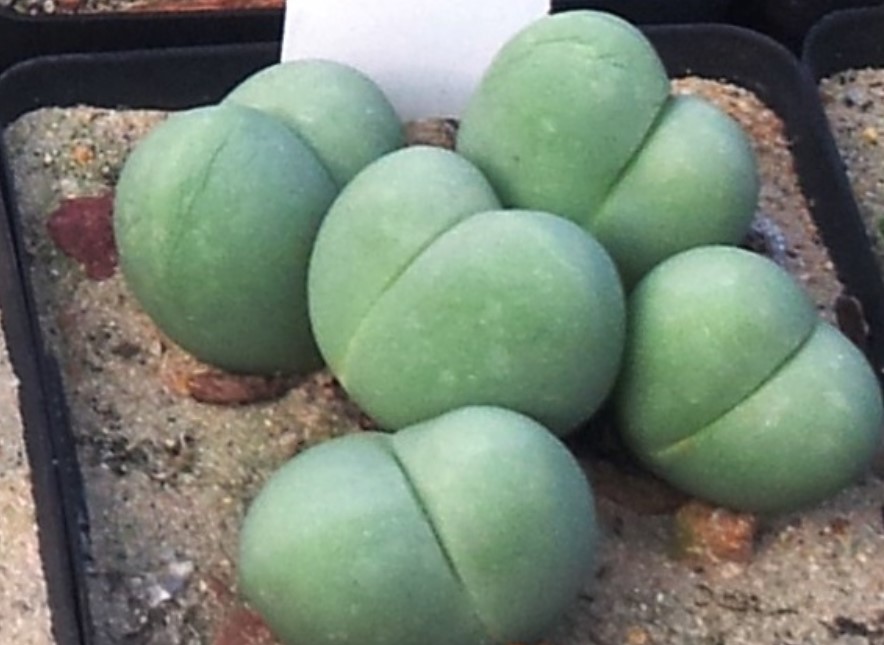
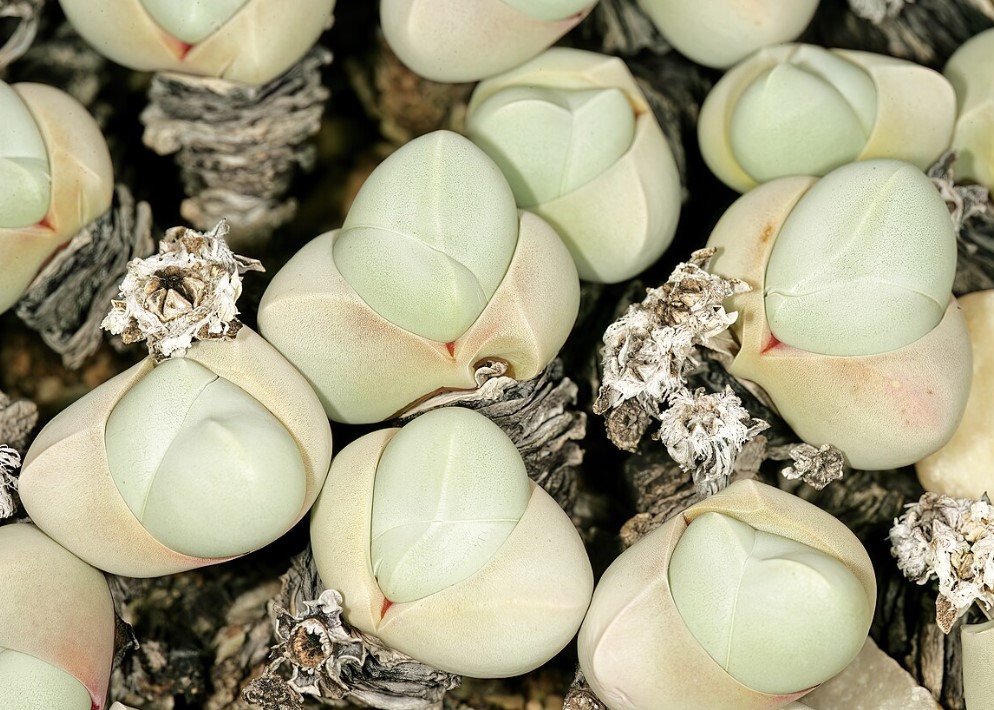
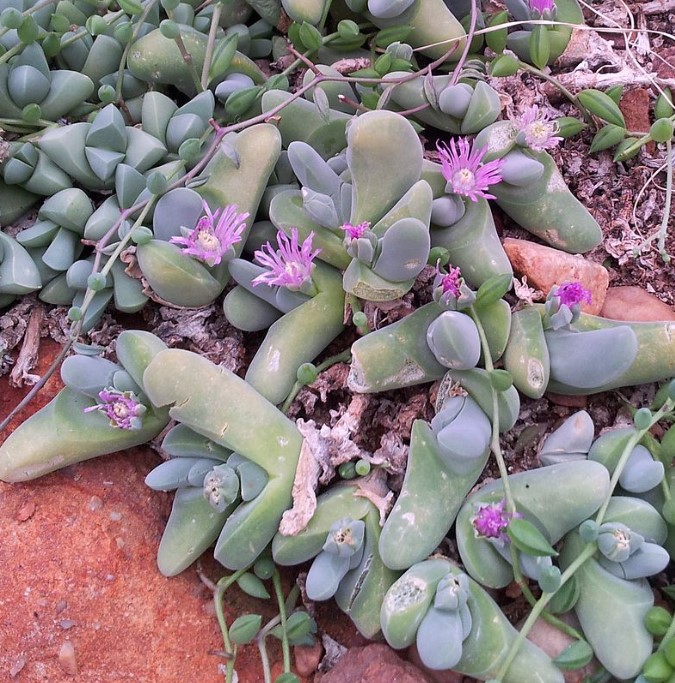
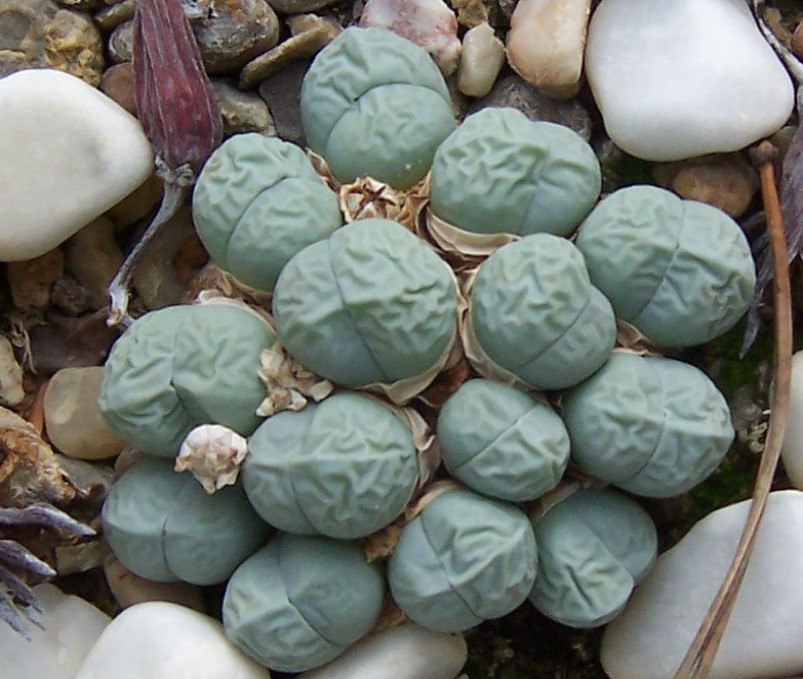
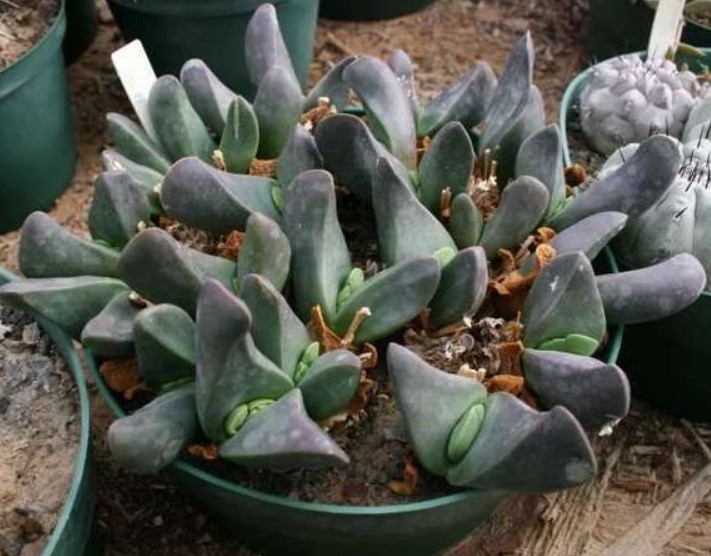
It consists of 1-2 pairs of leaves, partially or completely fused at the base. When young, they are strongly curved. Single flowers are borne on clearly visible peduncles. They can be pink, snow-white, purple, lilac, or (rarely) violet. Let's look at some popular varieties:
| Velvety
|
With paired blue or gray-green leaves, with a velvety texture, it blooms from early fall to spring. |
| Unequal
|
It has ovate leaves with a velvety gray-green surface, with each pair of lobes varying in size. The flowers are pink or purple-pink, blooming in December and January. |
| Hiti
|
It's known for its thick, intertwined leaves, which resemble a burst balloon or a stone with a crevice. Flowers range from pink to reddish, and sometimes even white. |
| White
|
It has a single pair of fused, keeled leaves, light green with a shimmering white hue due to the reflection of light on the fine white hairs covering them. Daisy-shaped flowers appear in the fall, ranging in hue from white to pink and purple. |
| Shanda
|
It has thin leaves with a greyish coating. |
| Petrenze
|
One of the smallest species. The leaf lobes are smooth and triangular, and the flowers are bright pink, 2 cm in diameter. |
| Esterisenes
|
With smooth triangular lobes of green or blue-green color. |
Care:
| Illumination | Bright both in winter and summer. |
| Temperature |
+17…+18 °C – in summer. +15°C – in winter. |
| Humidity | Average. |
| Pot and soil |
The container must be very deep. The soil mixture is prepared from leaf soil, turf and sand (1:2:2). |
| Watering | Intensive moistening begins in autumn. |
| Top dressing | In winter, 1-2 fertilizers for cacti and succulents are applied at a dosage 2-4 times lower than the standard. |
| Reproduction | Shoots, seeds. |
| Care Features | Remove dead leaves and flowers regularly to prevent disease. |
Gymnocalycium
A genus of succulents in the Cactaceae family. Native to parts of Argentina and Brazil, this spherical cactus produces terminal flowers with a long, scale-covered tube. It lacks spines and hairs.
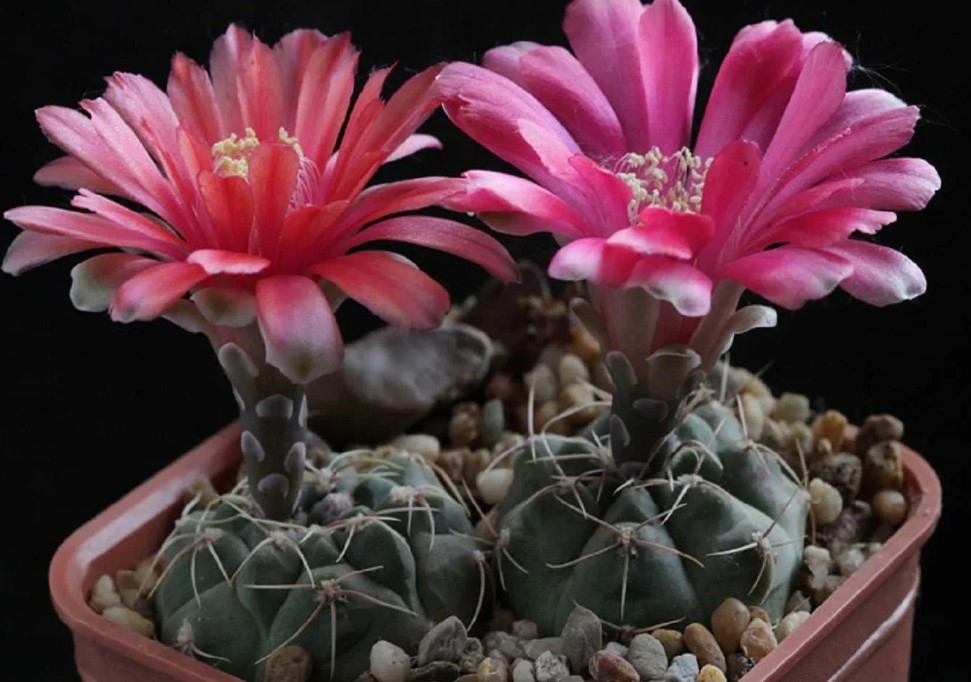
Common varieties of Gymnocalycium:
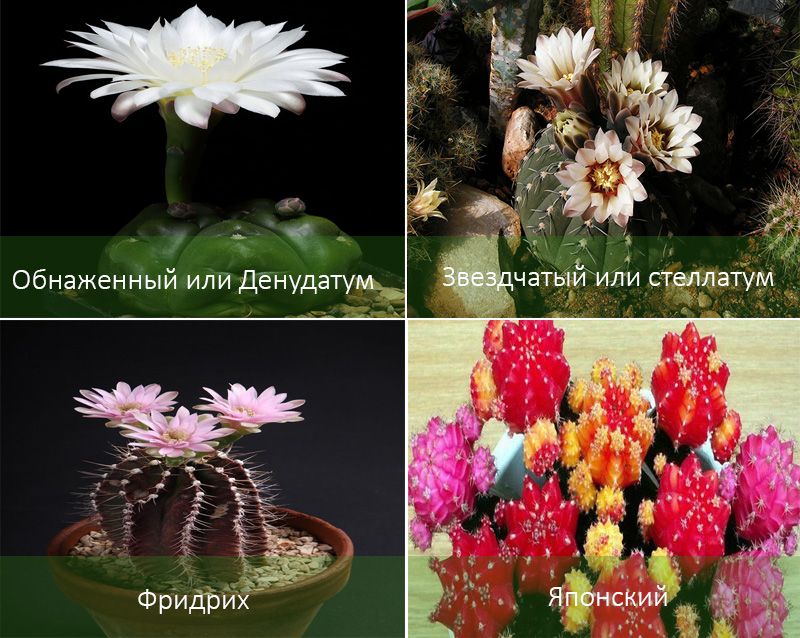
- naked;
- stellatum;
- Friedrich;
- Japanese;
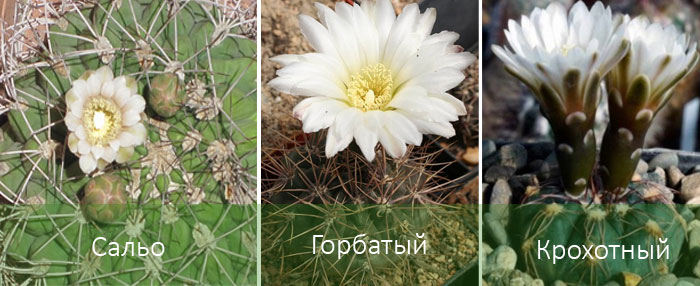
- Salyo;
- hunchbacked;
- tiny;
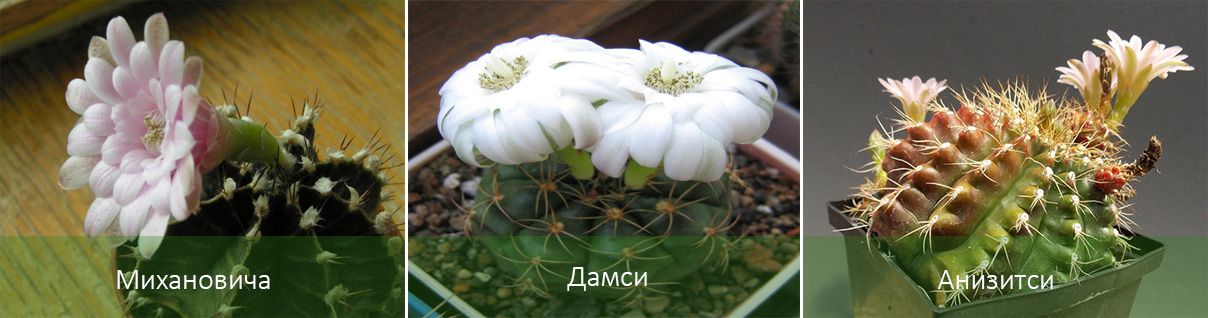
- Damsi;
- Anisitsi;
- Mikhanovich;
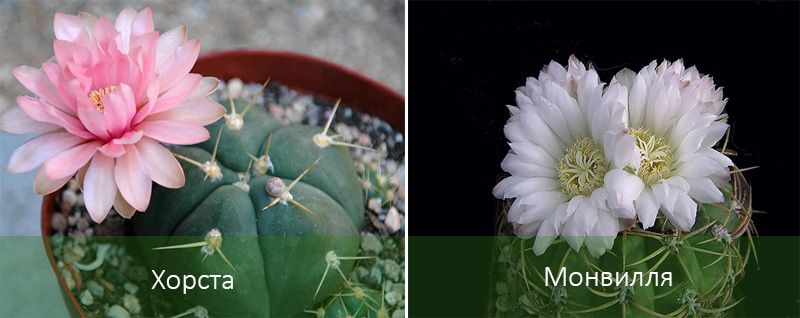
- Horst;
- Monville;
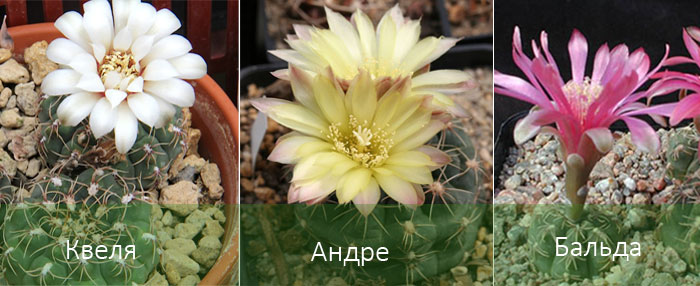
- Andre;
- Kvelya;
- Balda;
Home care:
| Illumination | Intense, requires additional lighting with lamps. |
| Temperature |
Up to +24 ºС – in summer. +14…+19 ºС – in winter. |
| Humidity | High. |
| Pot and soil |
The container is deep enough, but not wide. Loose, drained. |
| Watering | In spring and summer 1 time per week. |
| Top dressing | Complex mineral compositions. |
| Reproduction | By seeds and layering. |
| Care Features | The room should be regularly ventilated, protecting the gymnocalycium from drafts. |
Let's learn how to avoid mistakes in content Gymnocalycium.
Graptopetalum
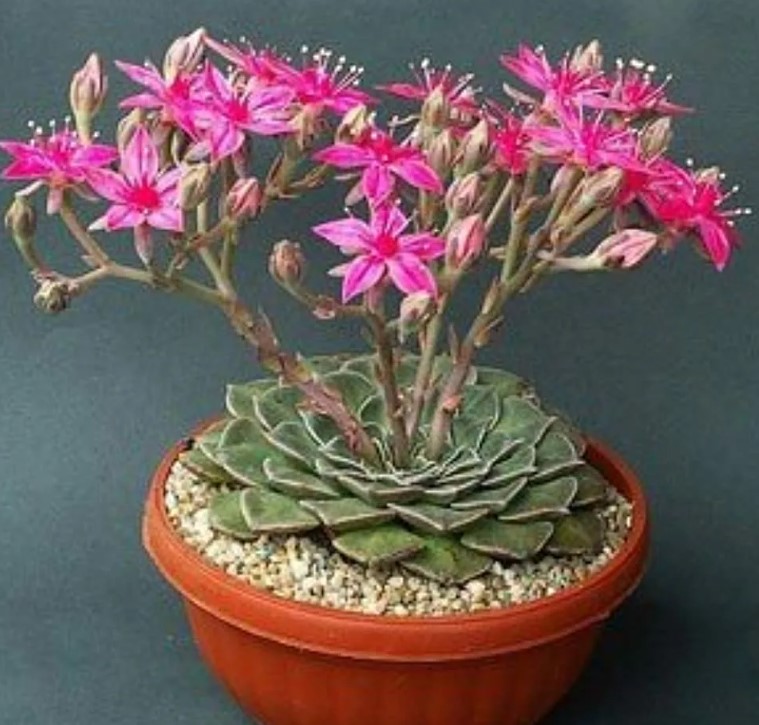
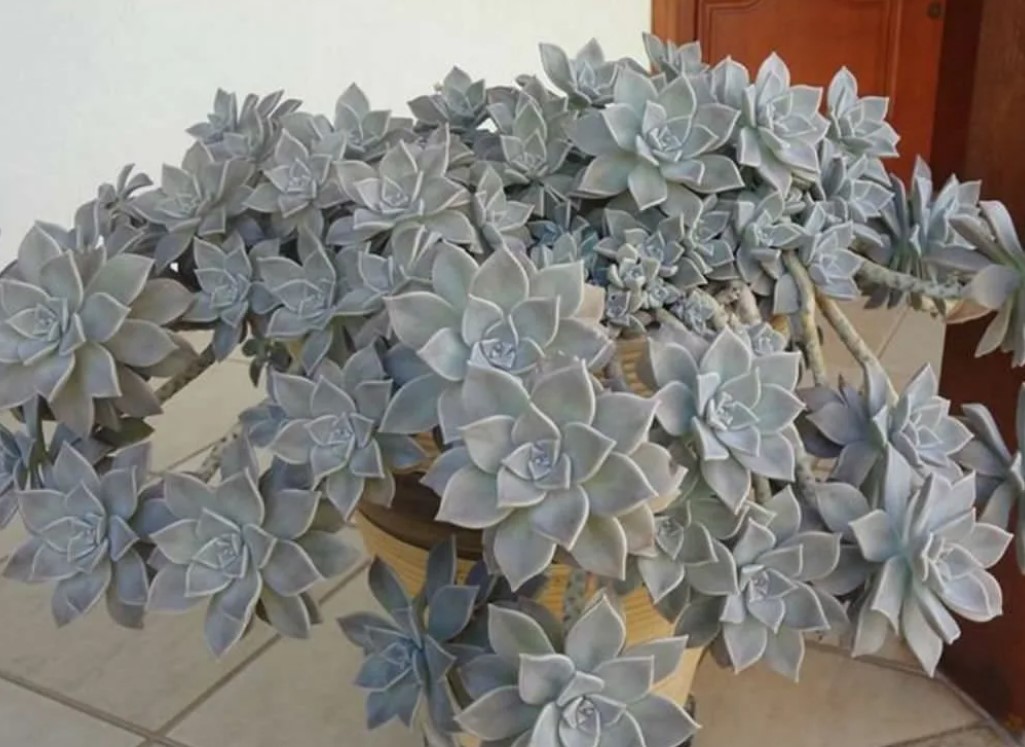
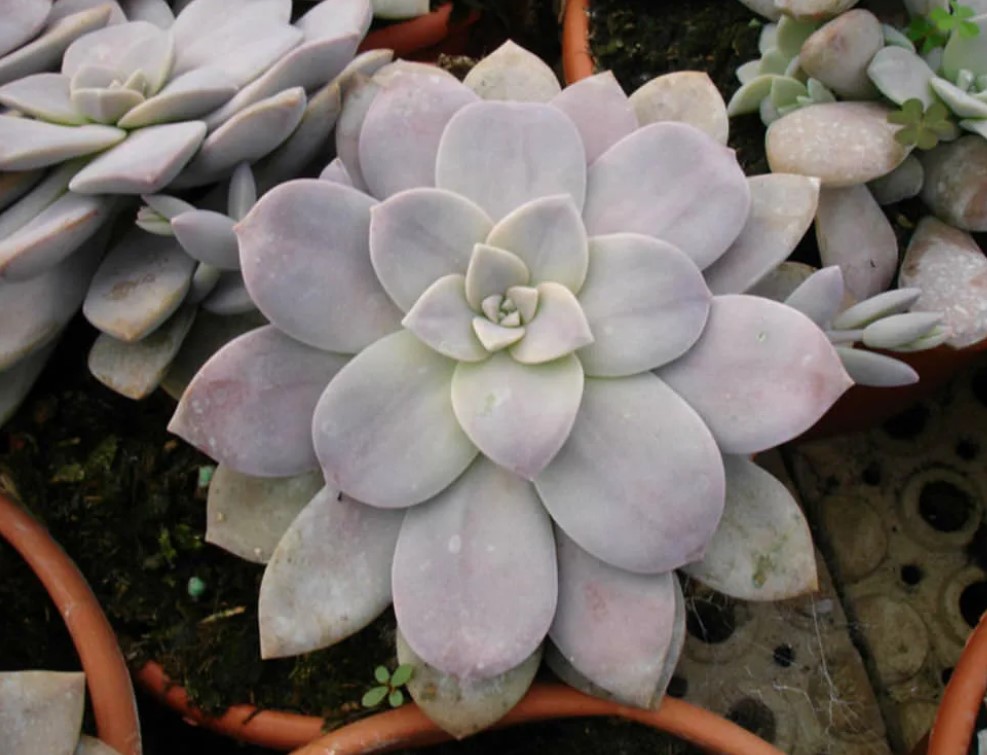
Family: Crassulaceae. Found in arid regions of the American continent. All species have a dense, rounded rosette of leaves (apical or terrestrial). The lateral axillary inflorescences bear branched, few-flowered racemose inflorescences. Flowering continues from May to June.
| Beautiful
|
The leaves are arranged spirally. Young leaflets face upward, but as they mature, they bend and assume a horizontal position. The leaves are green, with bronze margins. The flowers are small, with five petals. They come in a variety of shades, from reddish-purple to deep pink. |
| Paraguayan
|
With succulent, short stems. The leaves are fleshy, obovate, and glaucous-blue due to a waxy coating, though some varieties have a pinkish tint. The flowers are white, inconspicuous, and of no ornamental value. |
| Five-stamened
|
It resembles the previous species, but has a denser rosette and rounded leaves. It also has longer flower stalks, giving the plant the appearance of a small tree with a dense crown. |
Care:
| Illumination | Bright, easily tolerates direct sunlight. |
| Temperature |
Up to +25…+28 ºC – in summer. +6…+12 ºC – in winter. |
| Humidity | Low. Suitable for apartment humidity. |
| Pot and soil |
Low-walled, wide. Any loose soil mixture that allows water and air to pass through well is poorly nutritious. |
| Watering | This is done after the soil has dried out by ½. |
| Top dressing | During active growth, fertilizers are applied every 4 weeks. |
| Reproduction | By seeds, leaf cuttings and daughter rosettes. |
| Care Features | Make sure moisture doesn't stagnate in the pot. This can lead to rot. |
More details in the articleGraptopetalum: Description, Cultivation, and Care, reviews.
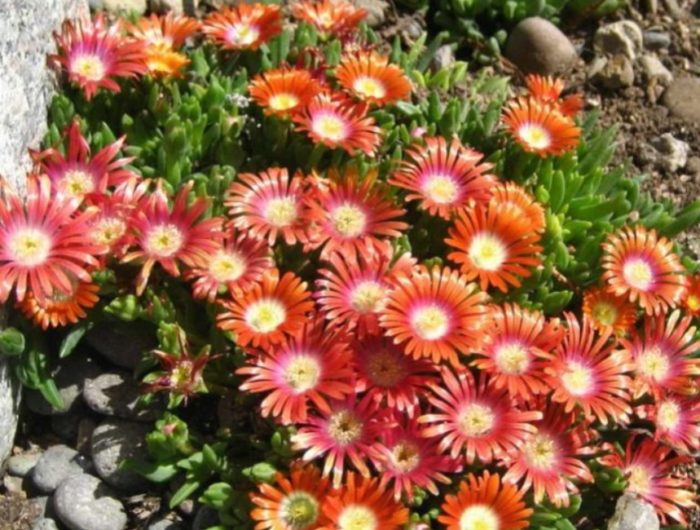
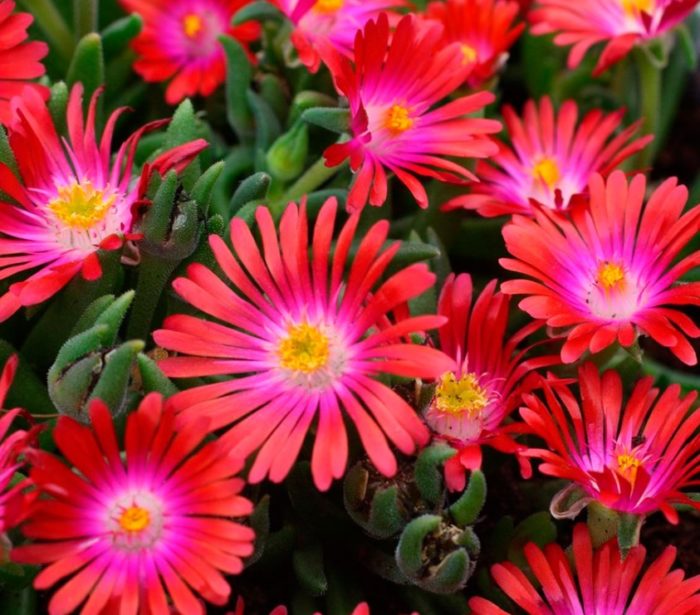
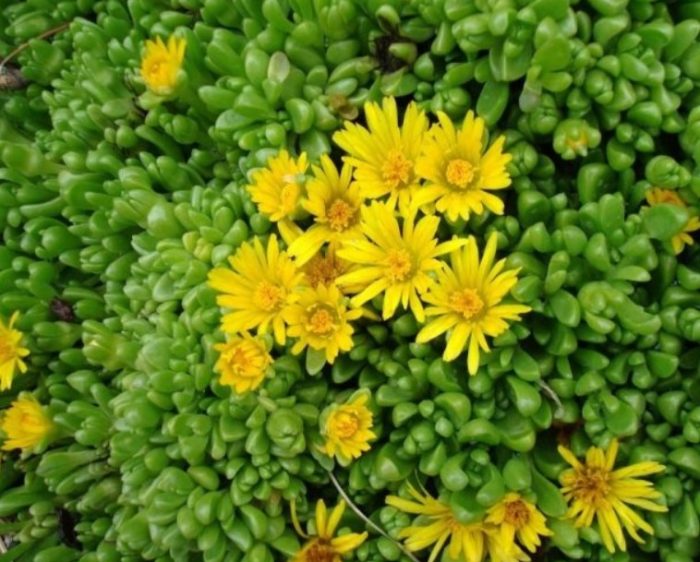
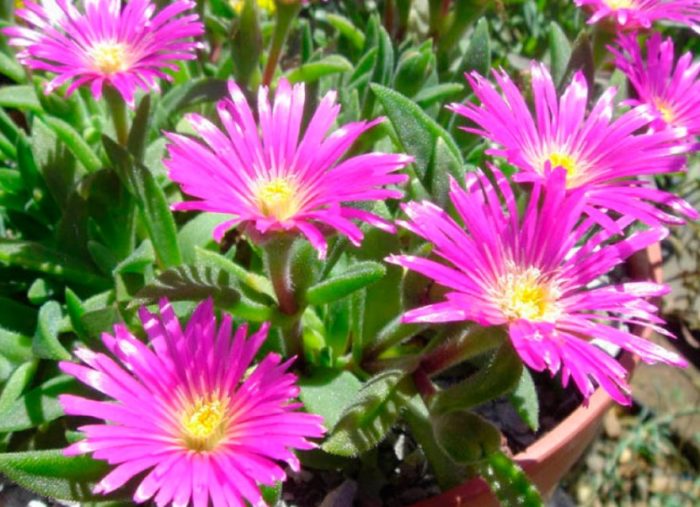
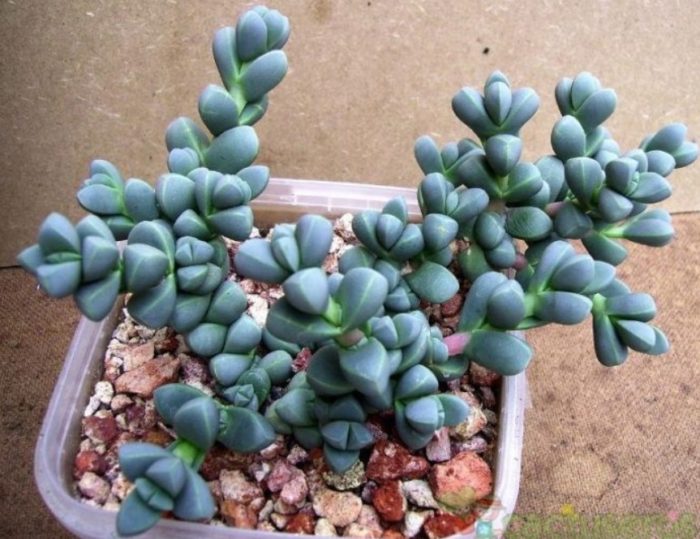
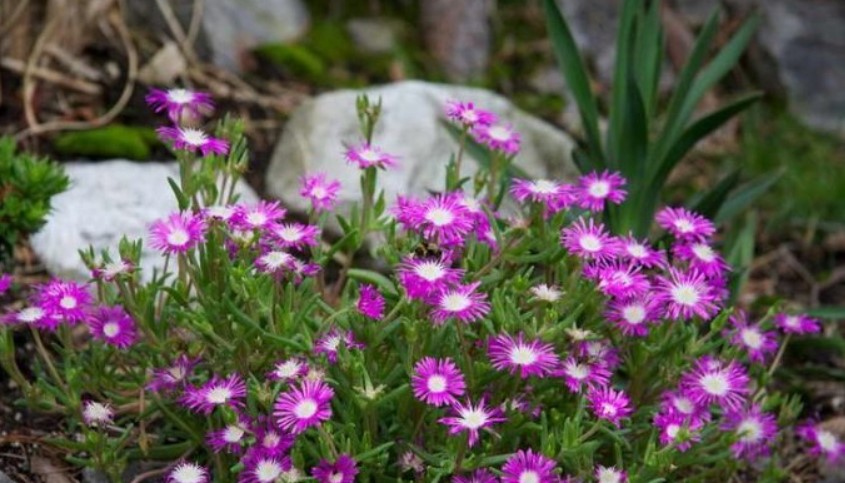
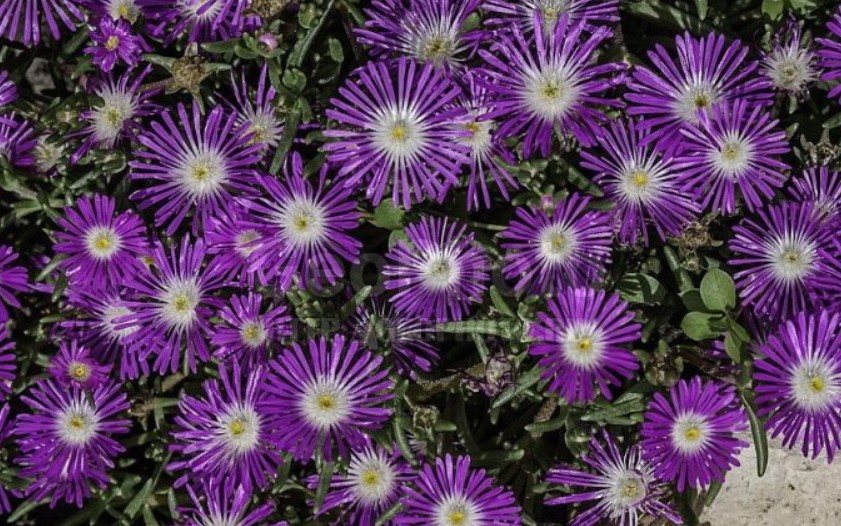
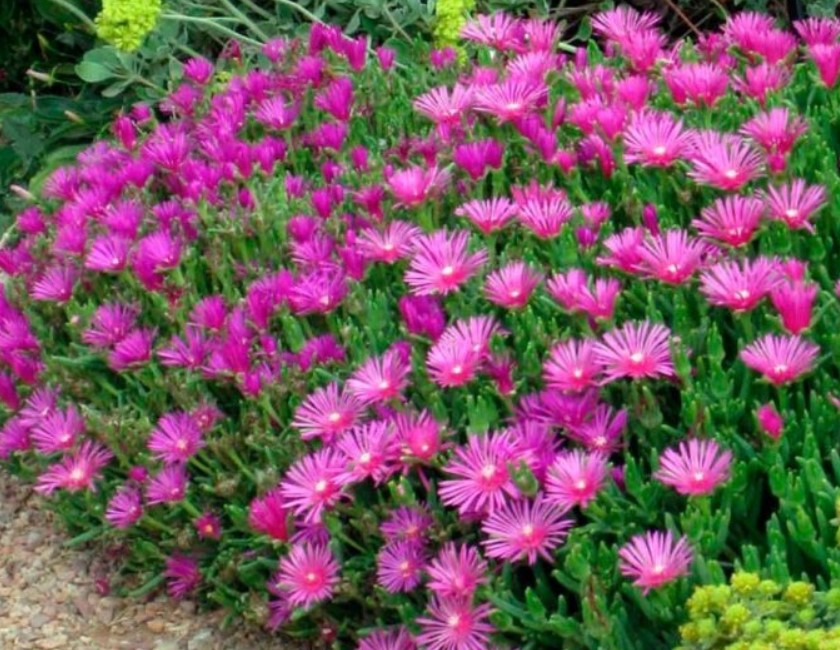
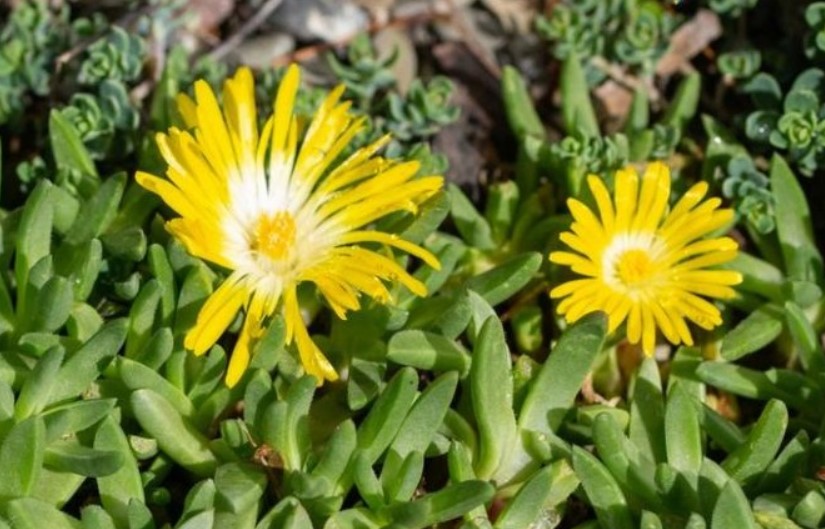
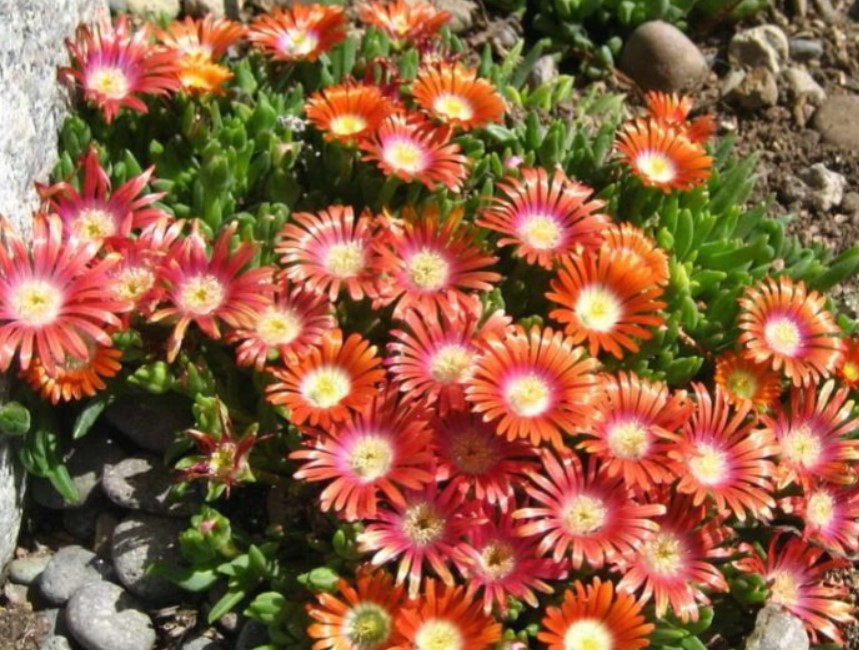
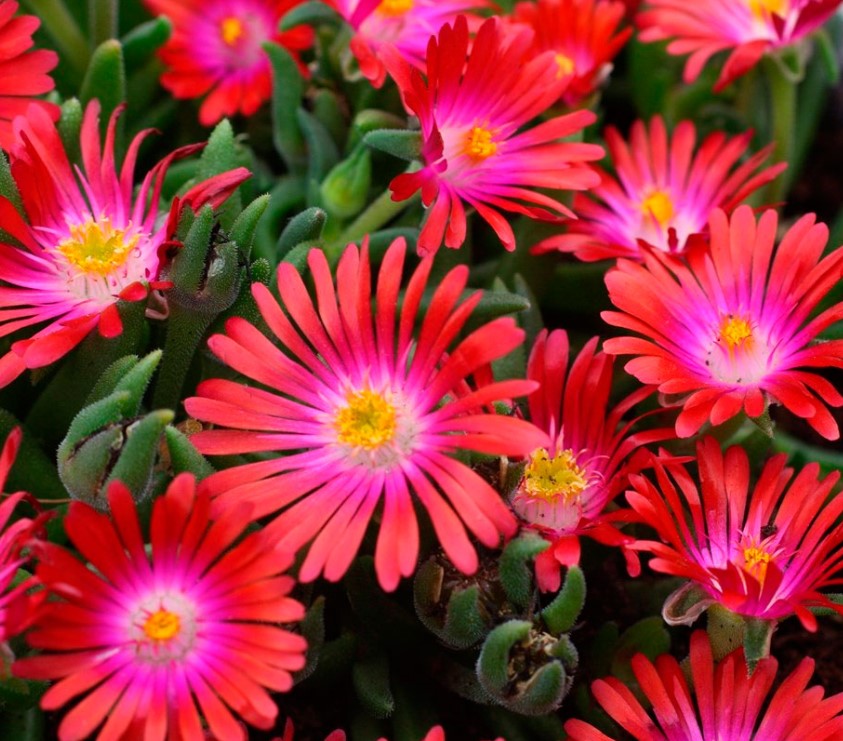
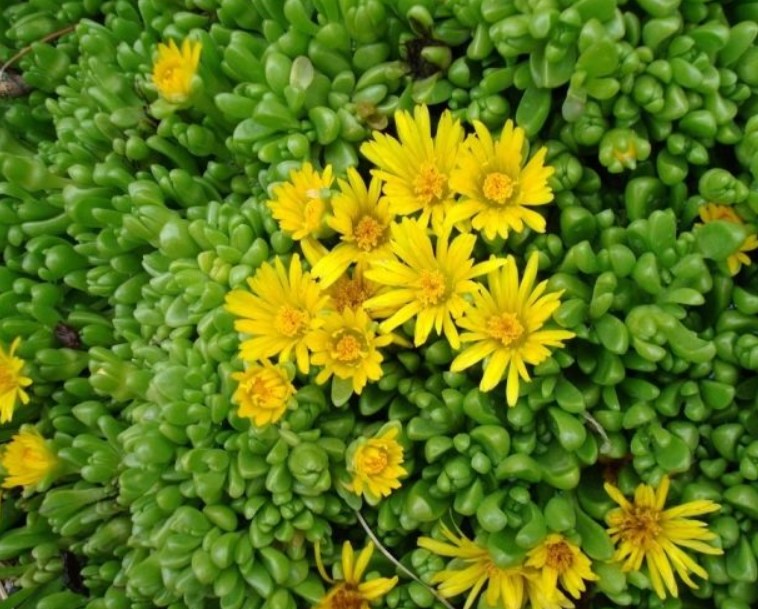
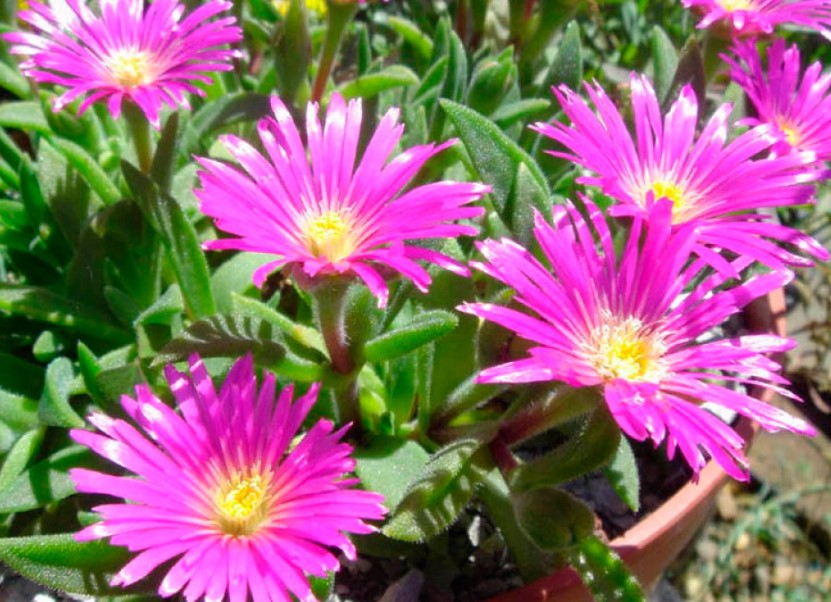
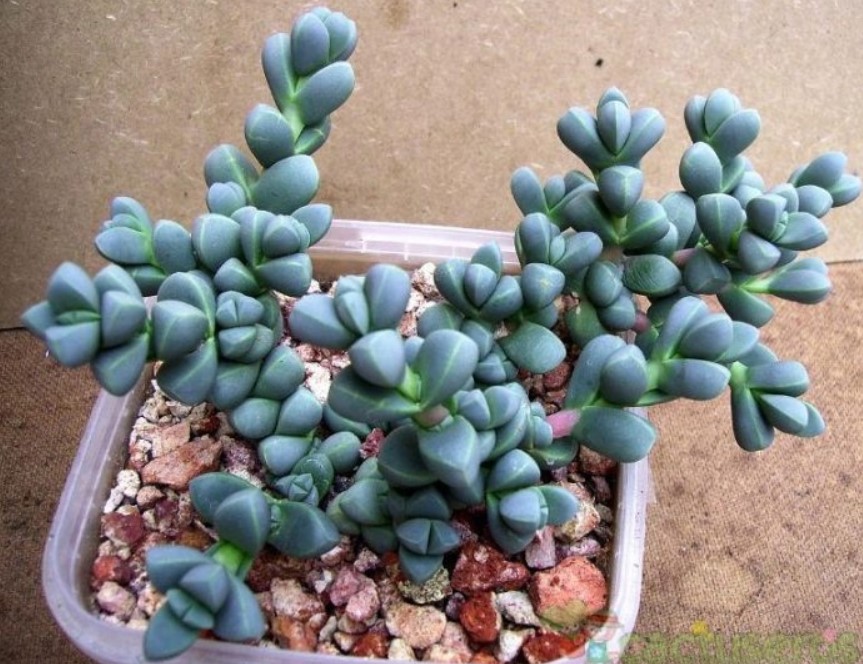
Delosperma
Family: Aizoaceae. Native to South and East Africa, this subshrub plant comes in a variety of shapes and colors.
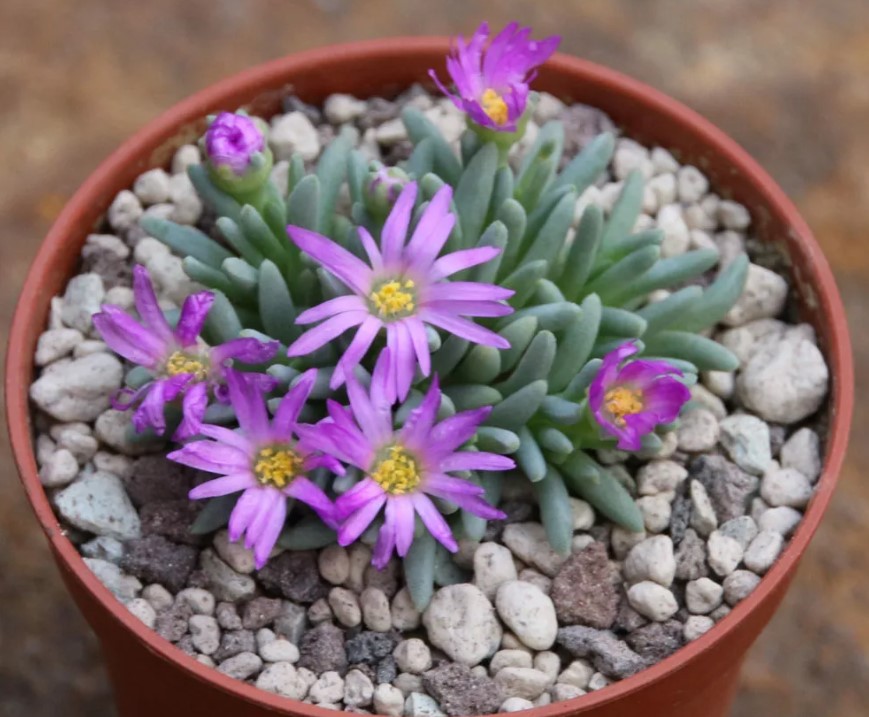
Varieties:
- prickly;
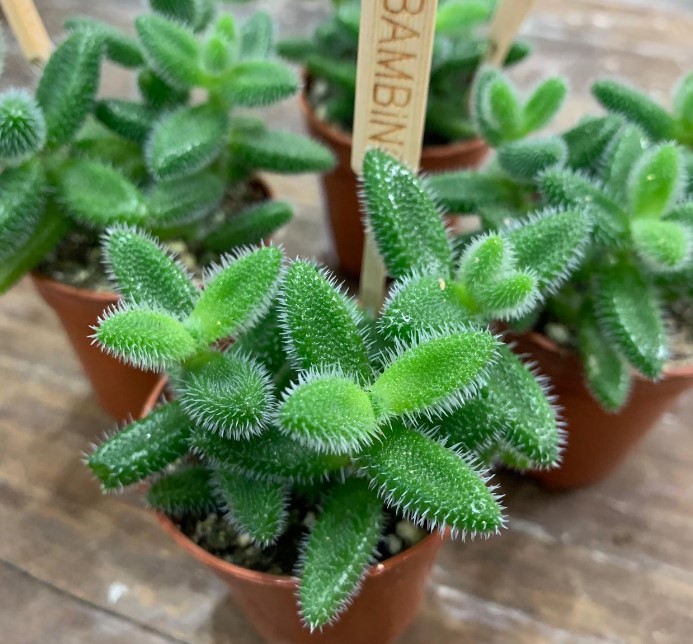
- profusely flowering;
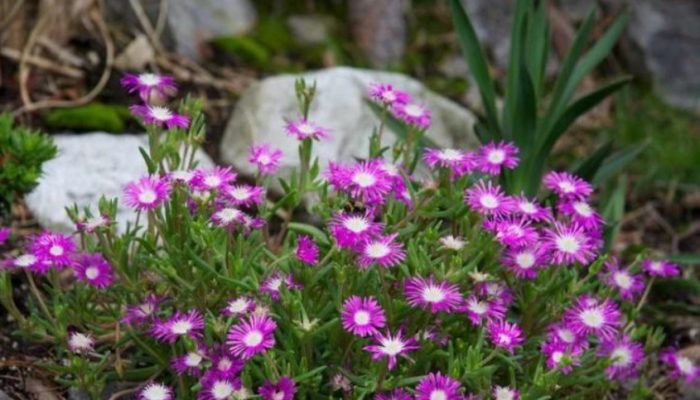
- Stardust;
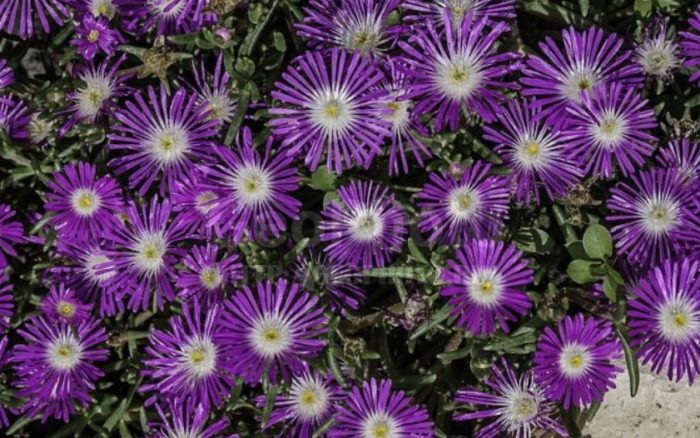
- Cooper;
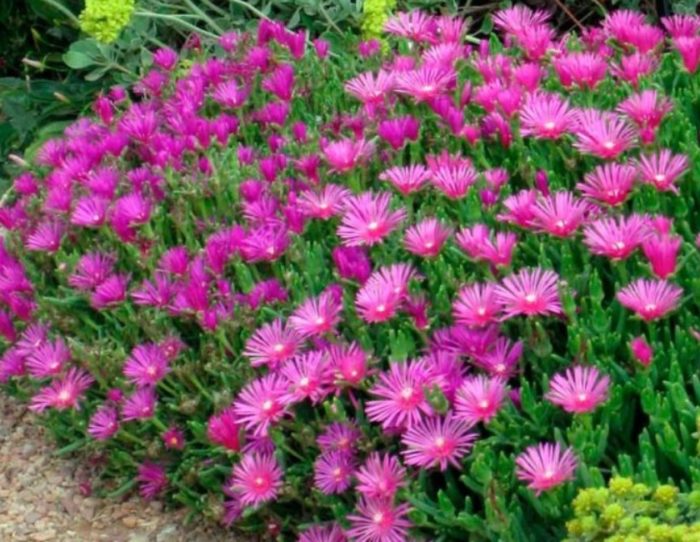
- twisted;
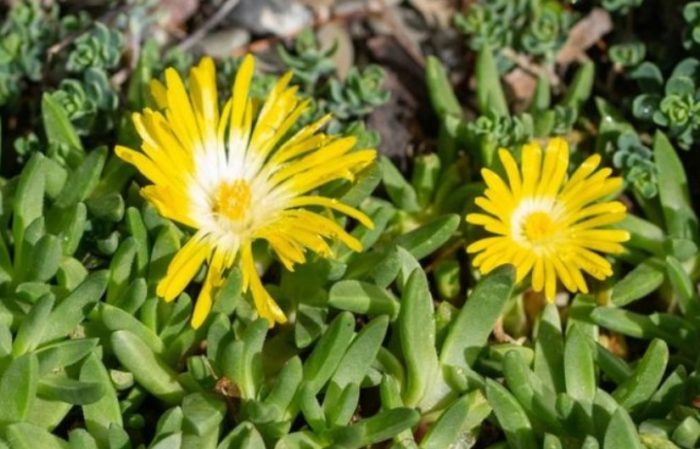
- tradiscant-shaped;
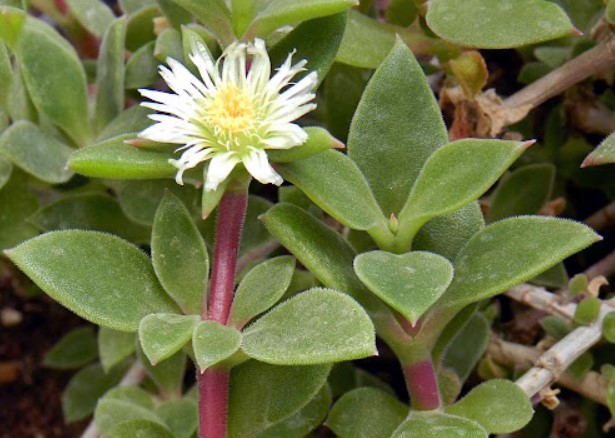
- Dyer
- pearl;
- cloudy;
- Sutherland;
- Lehman.
| Illumination | Lots of light from morning to evening. |
| Temperature |
+27 °C – in summer. +7…+10 °C – in winter. |
| Humidity | Any, but in extreme heat it is recommended to spray the area around the plant. |
| Pot and soil |
The capacity is wide. Loose and light, with a pH of no more than 6.5. |
| Watering | In summer, when the top layer dries out. In winter, when the root ball is half dry. |
| Top dressing | From the second half of April to mid-July, mineral fertilizers are applied in half the dose once every 20 days. |
| Reproduction | By seeds and cuttings. |
| Care Features | It is recommended to take it outside or transplant it into open ground. |
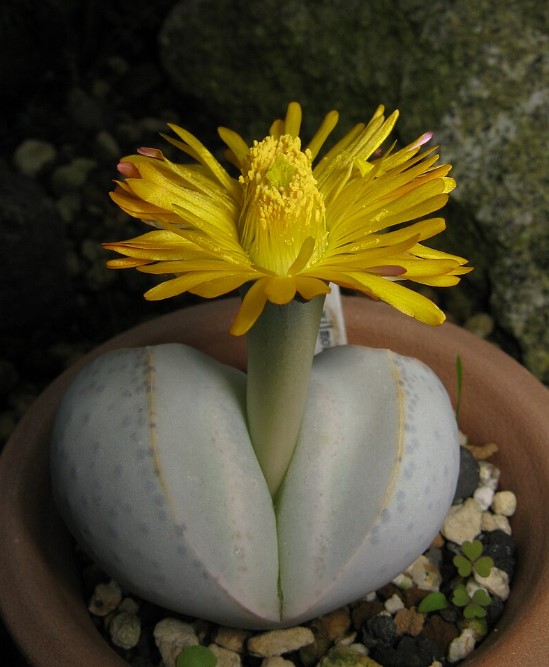
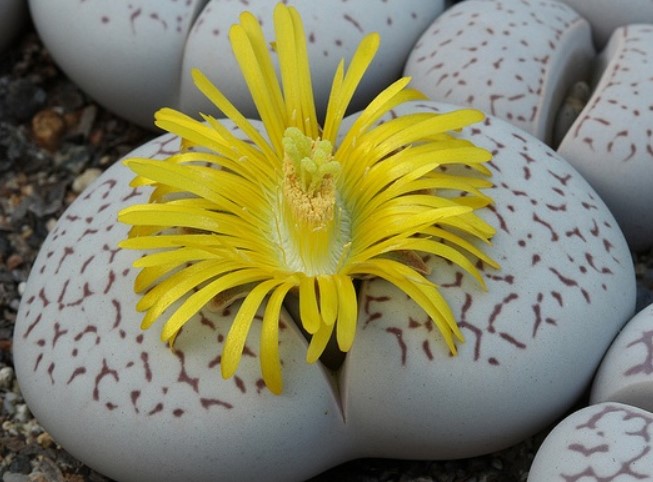
Dinteranthus
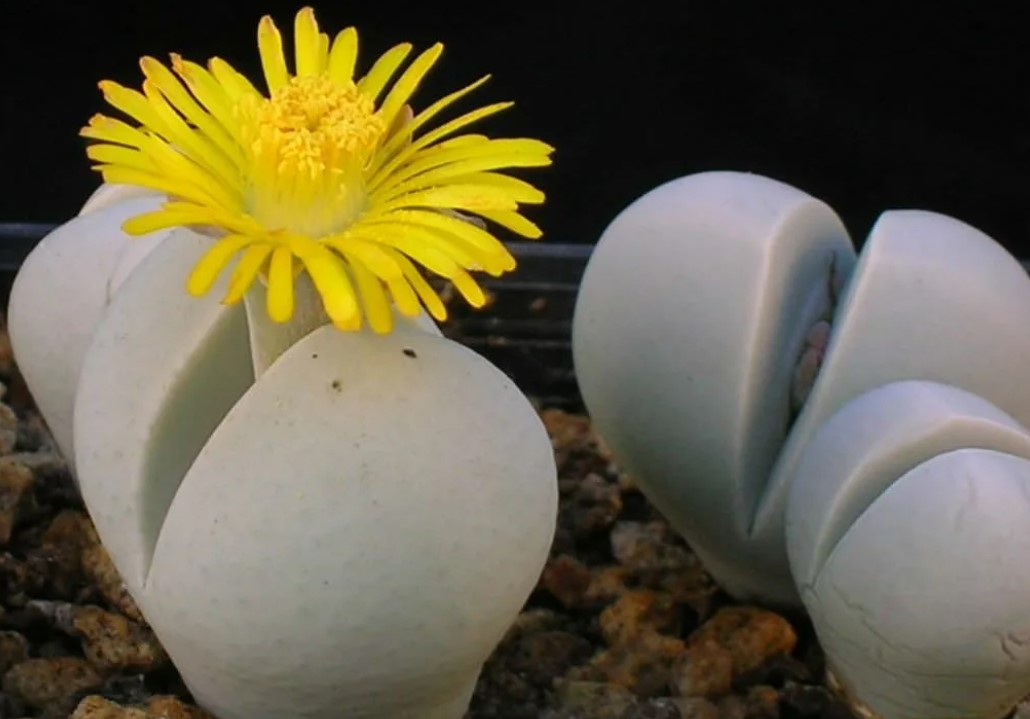
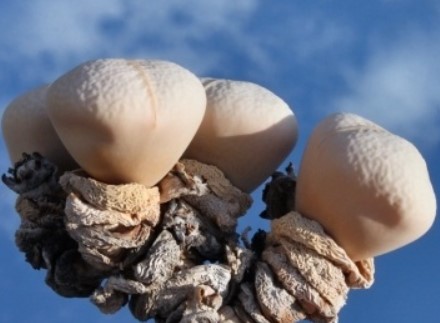
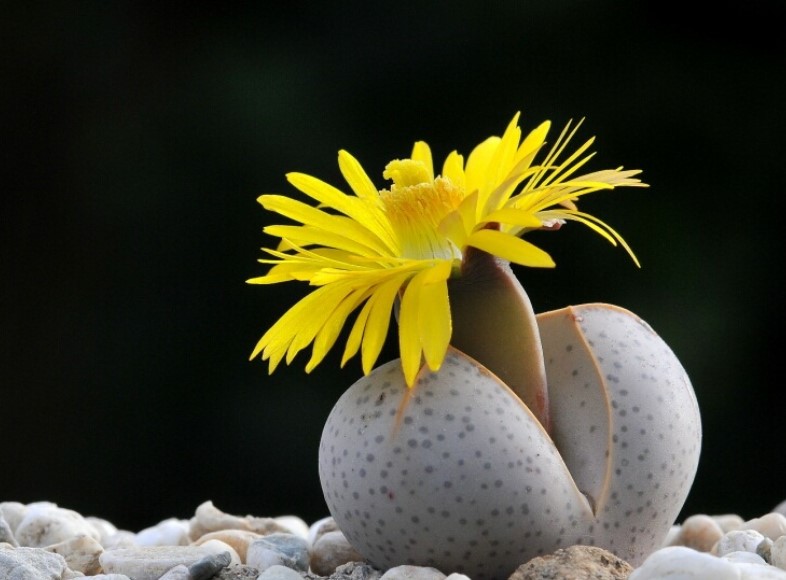
Family: Aizooniaceae. Includes 4 species and 2 subspecies. Native to South Africa. Belongs to the "living stone" group. Leaves are paired, equal in length and width.
| Van Zil
|
Up to 4 cm. Leaves are marbled. |
| Small-seeded
|
The surface is white with small green dots. In mid-spring, single yellow flowers emerge from the center. |
| Paula Evansia
|
The leaves are half-fused at the base, with yellow or red spots. The surface is gray-blue, yellowish, or reddish. |
| Wilmot
|
Visually resembles pebble pellets. The leaves are grayish or bluish-green. |
Care:
| Illumination | Bright. |
| Temperature |
+18…+25 °C – in summer. +5…+8 °C – in winter. |
| Humidity | Dry air. |
| Pot and soil | Leaf mold and coarse sand (1 to 1). Brick chips are added to the mixture. Acidity 5.5-5.6. |
| Watering | During the growing period, 1 teaspoon of water per plant. |
| Top dressing | Not required. |
| Reproduction | By seeds, division. |
| Care Features | Does not require special care. |
Dudleya (Dadleya)
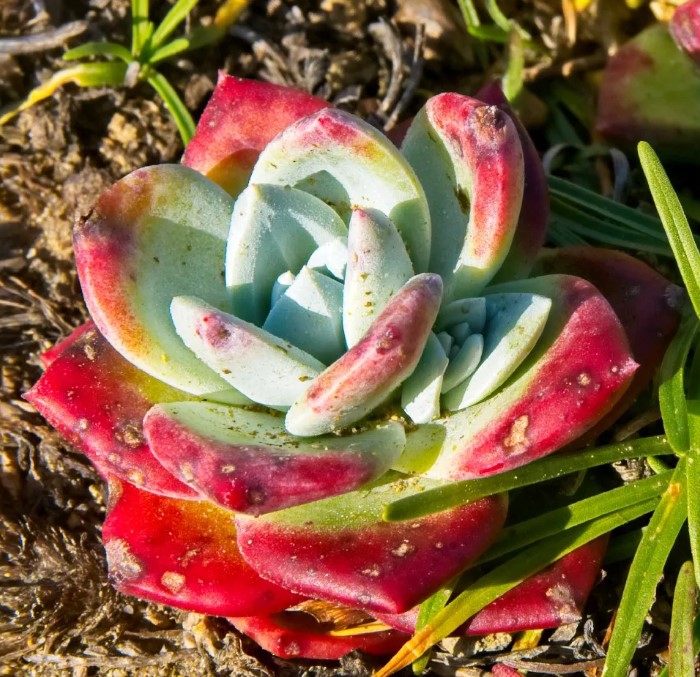
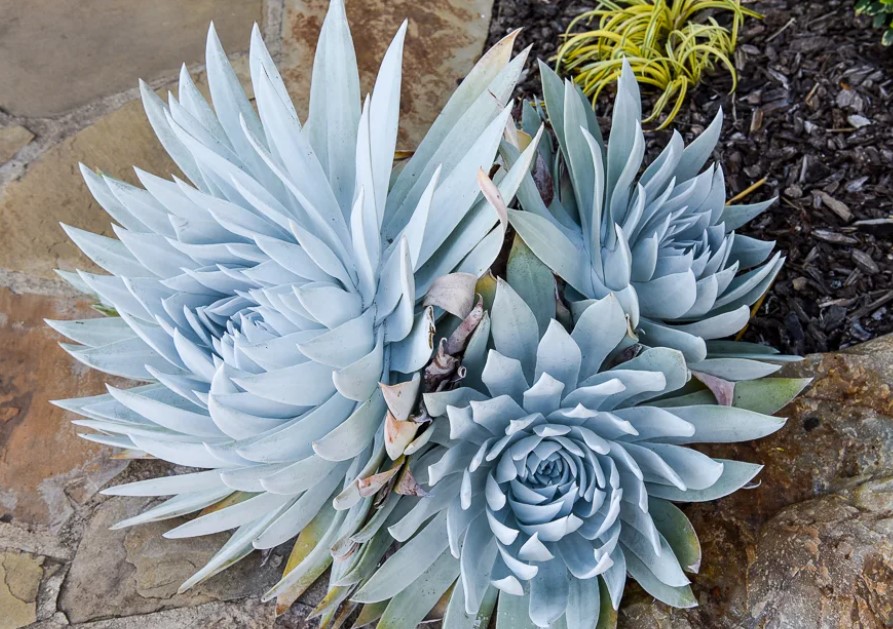
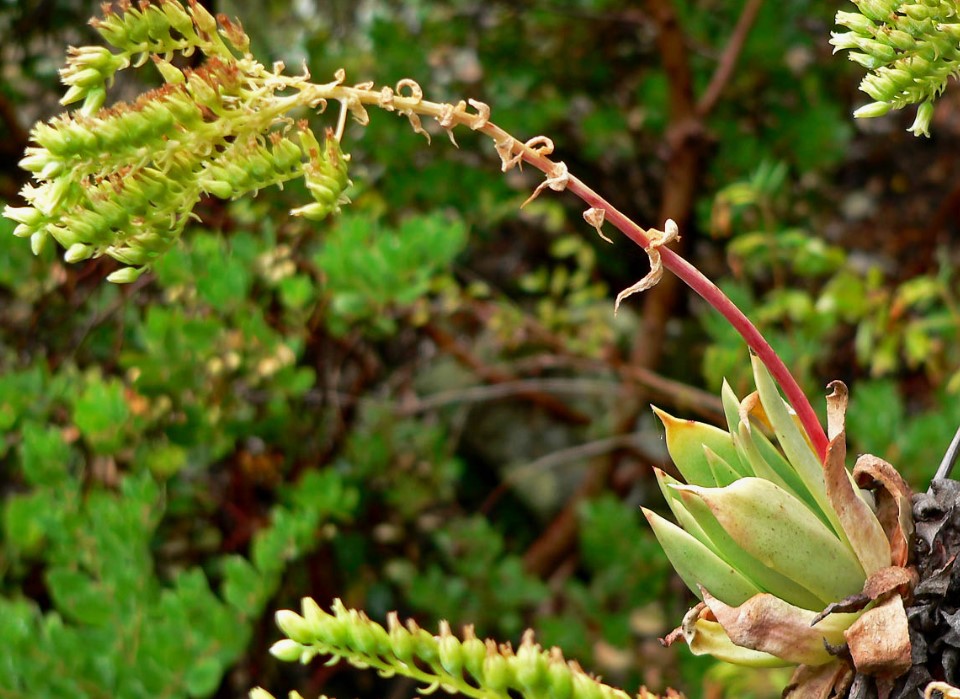
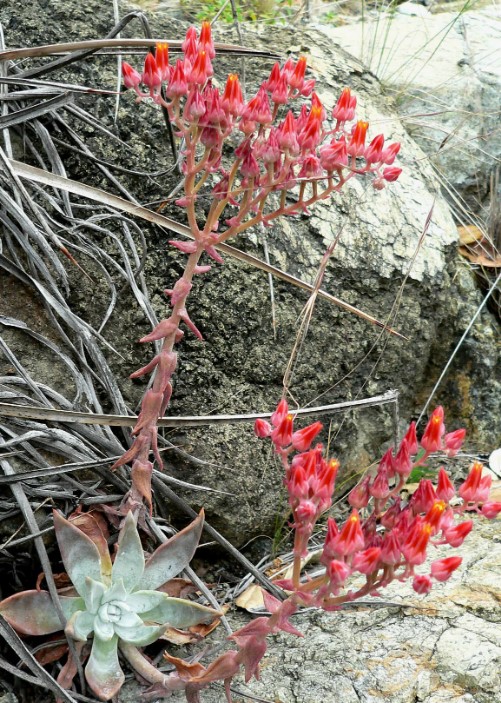
Family: Crassulaceae. Native to the southwestern United States and northwestern Mexico. A rosette plant with densely packed leaves in a basal or apical rosette. Flowers are erect or drooping, with sepals fused at the base.
| Powdery mildew
|
The leaves are wide, green, with a red border. |
| Britton
|
The leaves are narrow, raised, silvery-blue. |
| Chandelier
|
Green broad leaves with pointed ends. |
| Cymosa
|
A miniature variety with bluish-purple leaves. |
Care:
| Illumination | Minimum daylight hours: 12 hours. |
| Temperature | +18…+20 °C. |
| Humidity | There are no special requirements. |
| Pot and soil |
Small and wide. For succulents. |
| Watering | Moderate, after the soil has completely dried out. |
| Top dressing | Once in winter and once in spring with cactus fertilizer. |
| Reproduction | Seeds. |
| Care Features | Do not allow moisture to enter the center of the socket. |
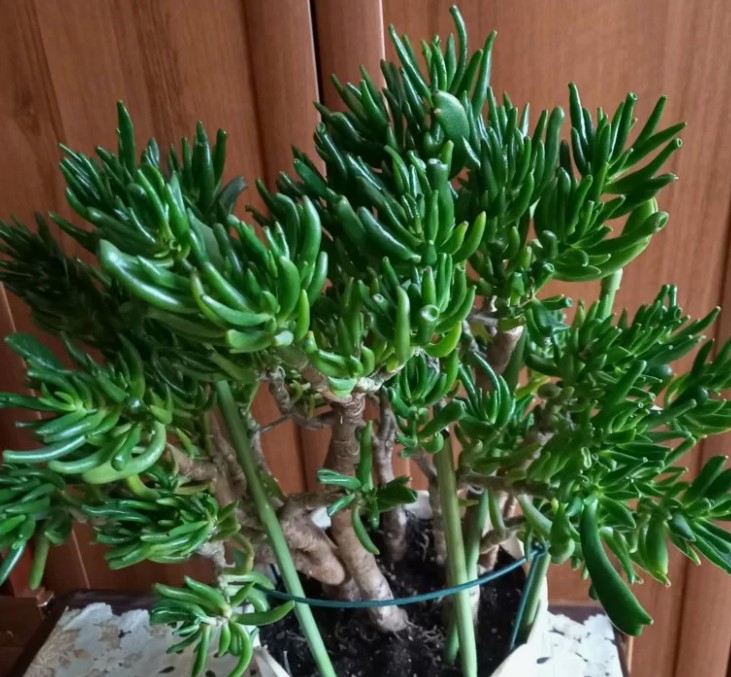
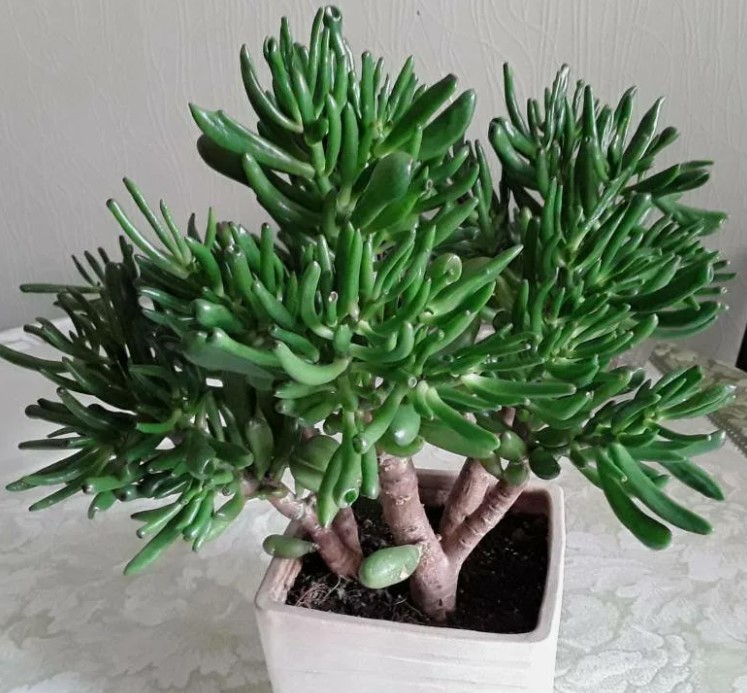
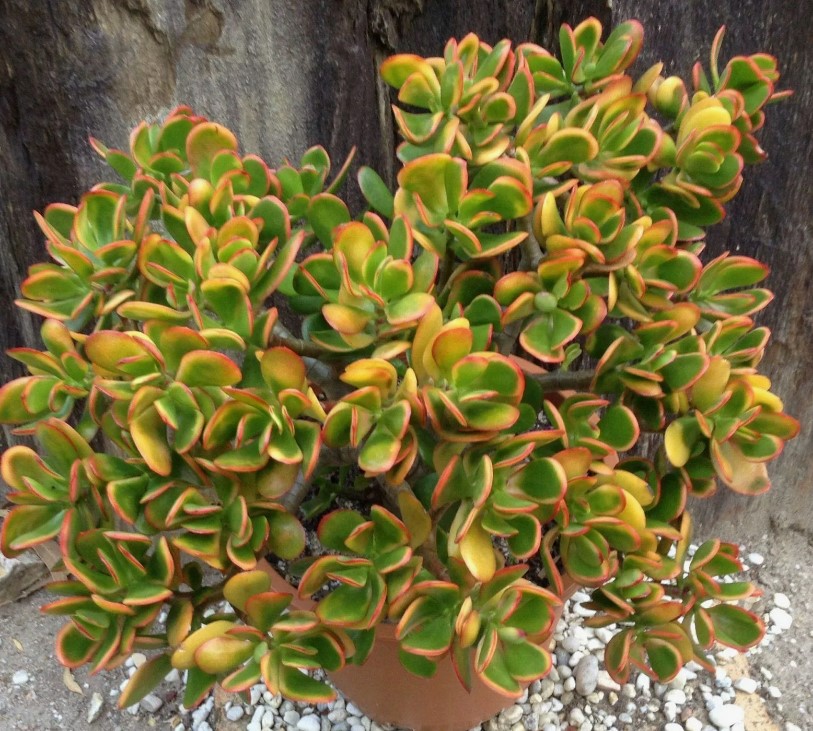
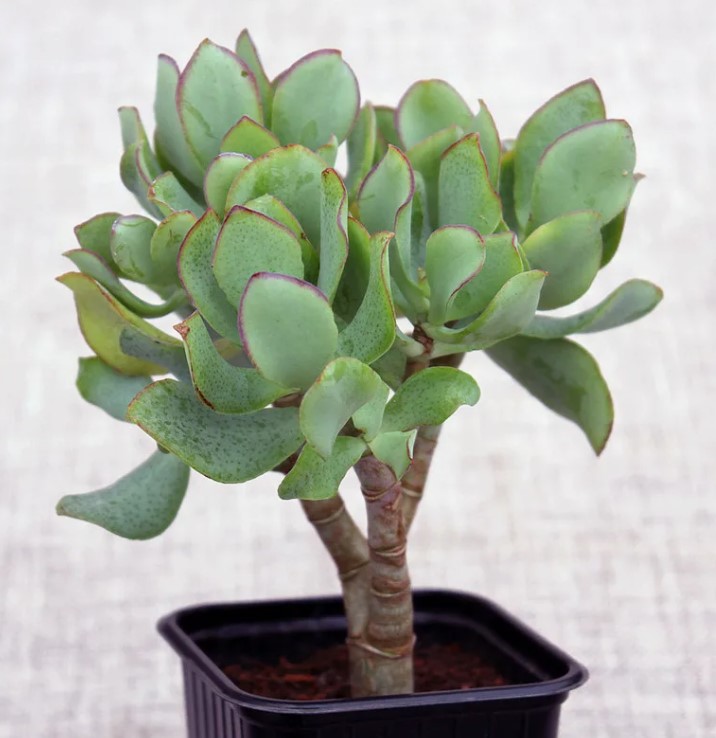
Crassula
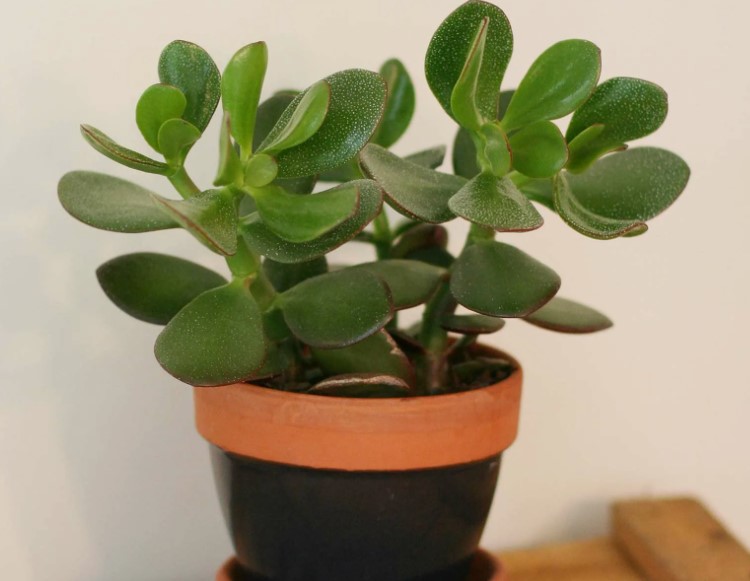
Family: Crassulaceae. Native to South Africa. It produces pinkish or white tubular or star-shaped flowers.
|
Oval
|
The leaves are oval and rounded at the tips. They are green with a red stripe along the edge. |
| Purslane
|
Externally it resembles the previous species, but with more elongated leaves. |
| The Hobbit
|
Leaves vary in shape, but are usually pointed. It doesn't bloom indoors and grows slowly. |
| Sunset
|
Larger than the oval-shaped Crassula, the leaves have bright red stripes along their edges. |
| Tree-like
|
With proper care it grows into a large tree. |
| tetrahedral
|
The leaves are awl-shaped, up to 4 cm long. |
| Bordered
|
The leaves are greenish-red. |
| Lycopodioidea
|
Reminds me of the tetrahedral species and the Hobbit variety. |
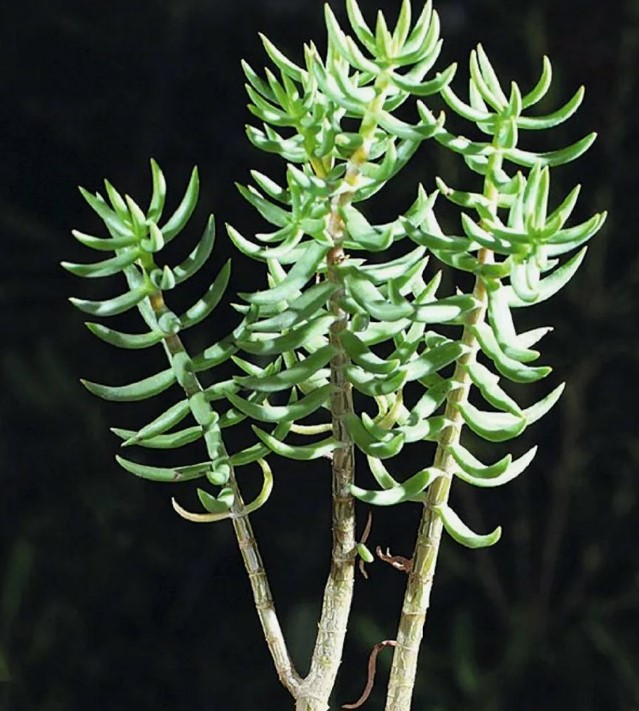
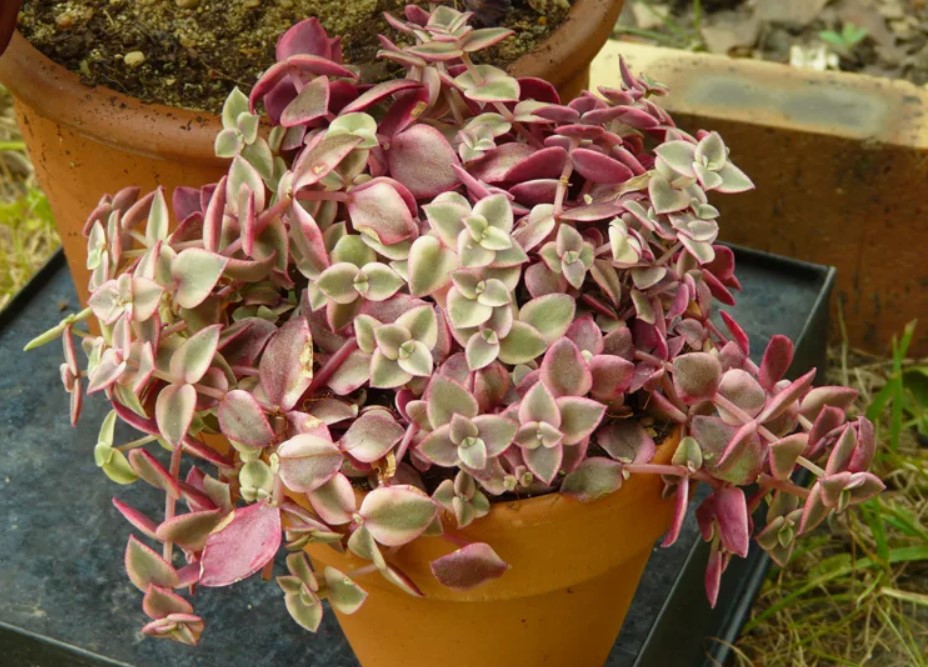
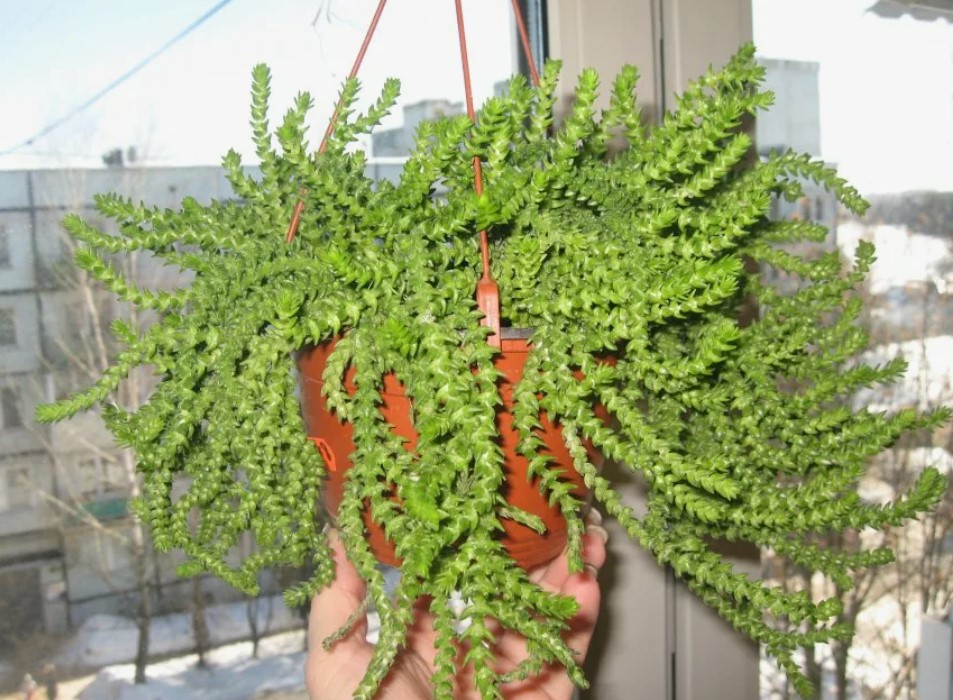
Care:
| Illumination | Bright. |
| Temperature | +10…+25 °C/ |
| Humidity | Low or medium. |
| Pot and soil |
Wide and not tall. A mixture of perlite, peat, leaf and turf soil (3:2:2:2). |
| Watering | During the growing season, once a week. |
| Top dressing | In spring and summer, apply cactus fertilizer at half the dosage once a month. |
| Reproduction | By seeds, cuttings. |
| Care Features | Pruning is carried out at the end of February - beginning of March. |
You know that fat woman is called a money tree?
Kalanchoe
Family: Crassulaceae. Native to tropical regions of Asia, Australia, and America. The genus includes succulents, subshrubs, and herbaceous plants. Flowering produces umbels of white, purple, red, or yellow flowers.
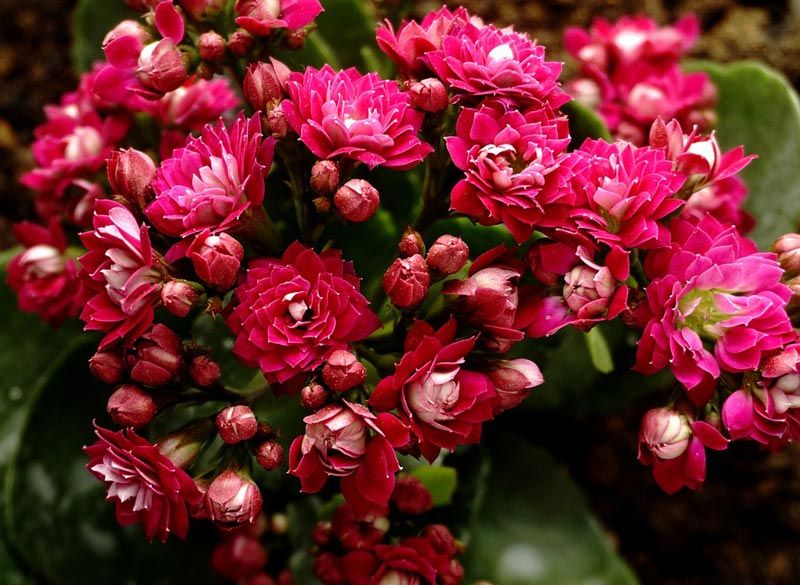
Kalanchoe includes more than 200 species, the most common are:
- Benta;
- Behar;
- Blossfeld;
- felt;
- Degremona;
- large-flowered;
- Mangina;
- paniculate-flowered;
- marble;
- feathery;
- fiery;
- tubular-flowered;
- dissected.
| Illumination | Daylight hours – 12 hours. |
| Temperature |
+18…+28 °C – in summer. +14…+18 °C – in winter. |
| Humidity | There is no need for spraying. |
| Pot and soil |
Wide, but not too deep. Peat, sand, leaf and turf soil (1:1:2:4). |
| Watering |
In summer – immediately after the top layer of soil has dried out. In winter – 3-4 days after the top layer has dried. |
| Top dressing | In summer, organic matter is applied twice a month, and complex mineral fertilizers are applied every week. |
| Reproduction | Cuttings, seeds, leaves. |
| Care Features | After flowering, pruning is done to give the bush a neat appearance. |
You can read more about it here.
Carpobrotus
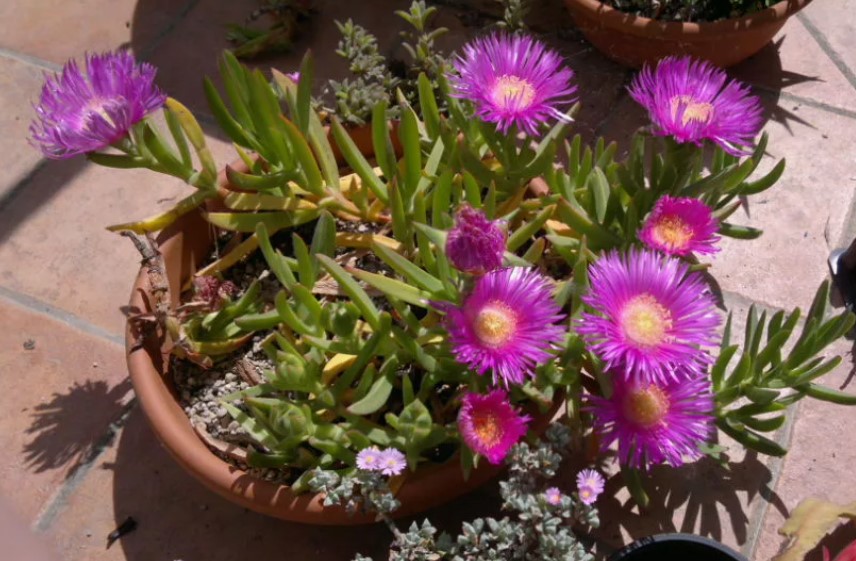
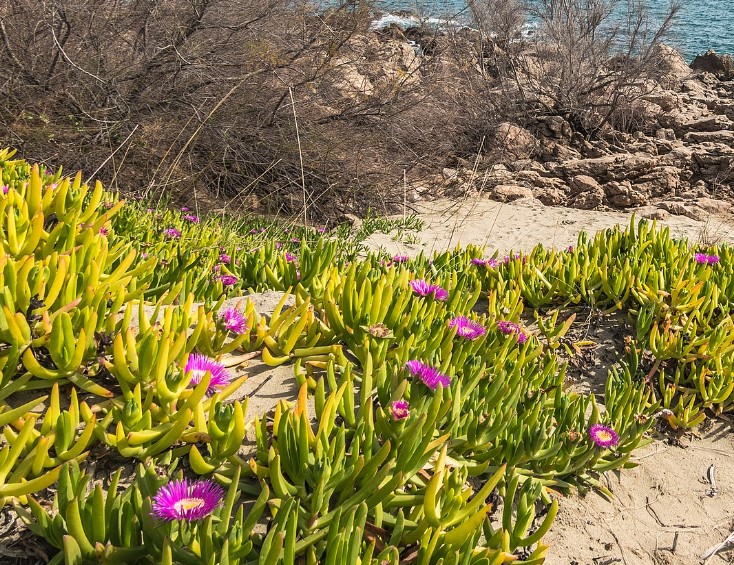
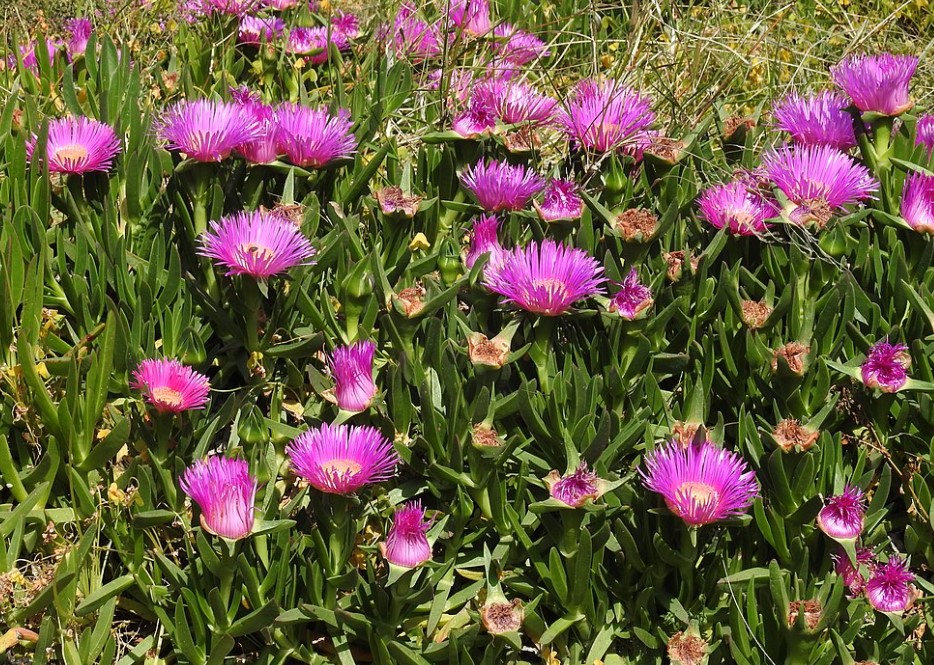
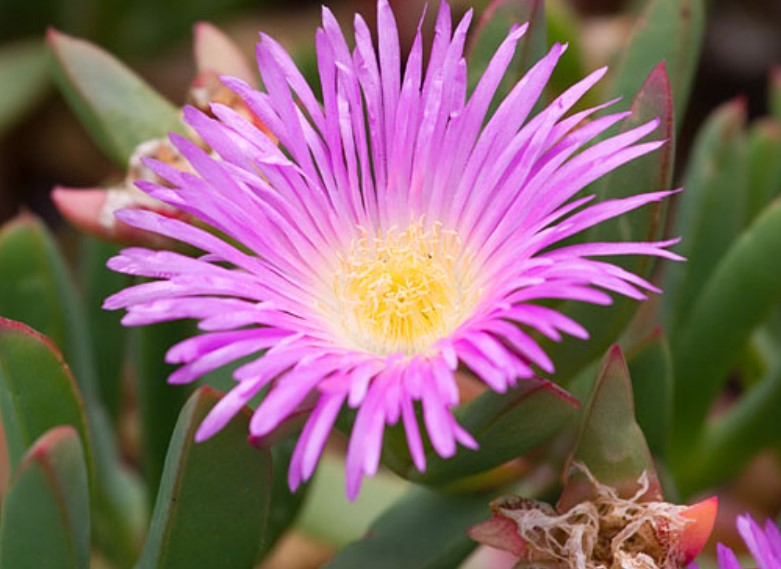
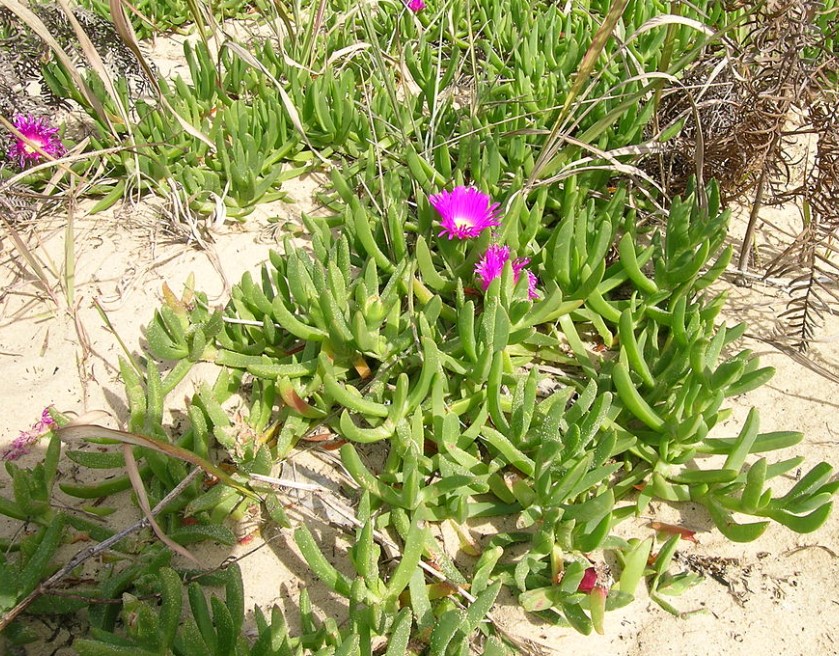
Family: Aizoaceae. Native to South Africa, Australia, South and North America. A perennial plant that quickly forms a dense carpet. Stems are fleshy and succulent, up to 30-50 cm. Leaves are yellow or green, triangular, and pointed at the tips. Single flowers are in the form of heads with pink, cream, or bright yellow petals.
|
Edible
|
The leaves are green with red stripes. In Africa, the fig-like fruits are eaten. |
| Saber-shaped
|
The leaves are grey-green, saber-shaped. The flowers are purple-pink. |
| Equilateral
|
The leaves are fleshy, blunt, and green with a gray tint. The inflorescences are purple with a white base. |
| Bluish
|
With green, tapering leaves. Flowers are lilac. |
Care:
| Illumination | Bright, but with shading at midday. |
| Temperature |
+20…+25 °C – in summer. +10 °C – in winter. |
| Humidity | Low and medium. |
| Pot and soil |
Shallow but large in diameter. Drainage holes are required. Loose, air- and moisture-permeable. |
| Watering | 2-3 times a week in summer, 1 time a week in winter. |
| Top dressing | In spring and summer, monthly with mixtures for cacti and succulents. |
| Reproduction | By seeds, stem and leaf cuttings. |
| Care Features | As it grows, it needs to be repotted into larger pots. This is done in the spring. |
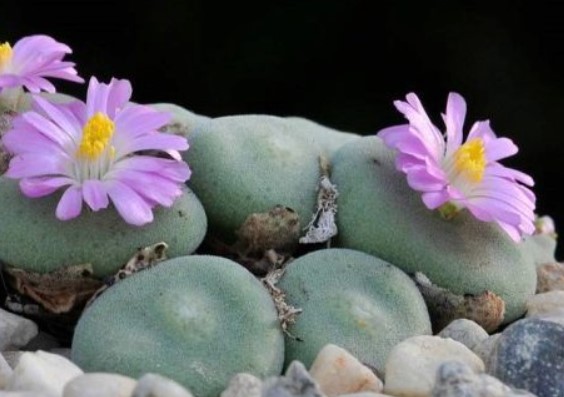
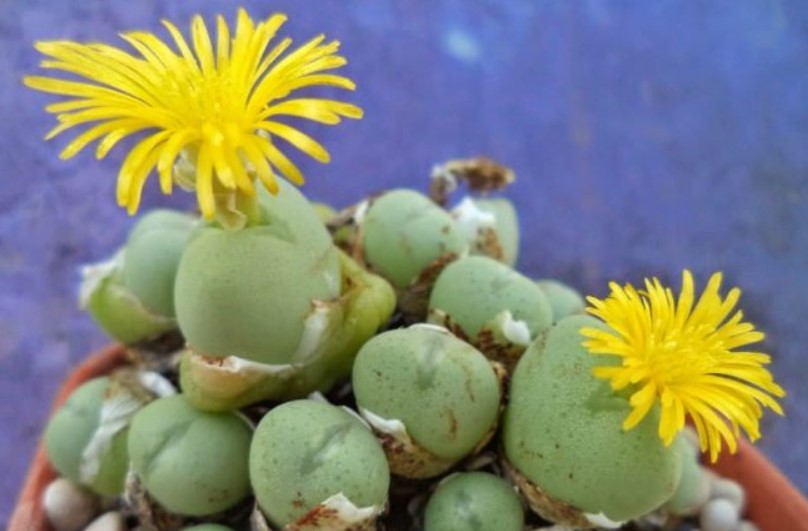
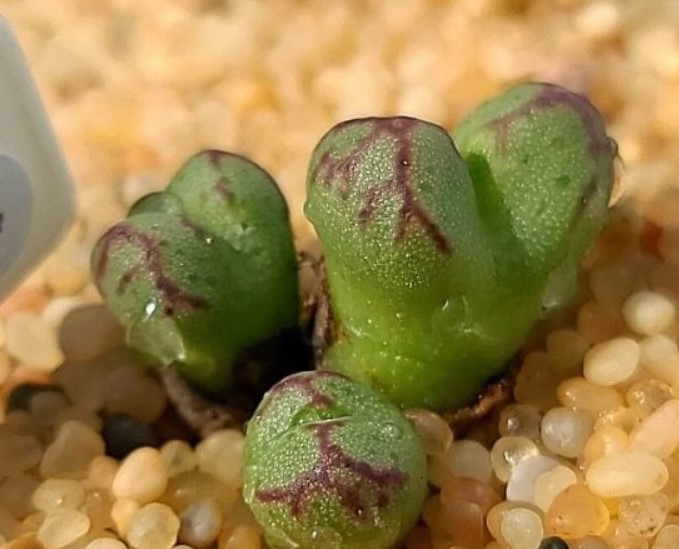
Conophytum
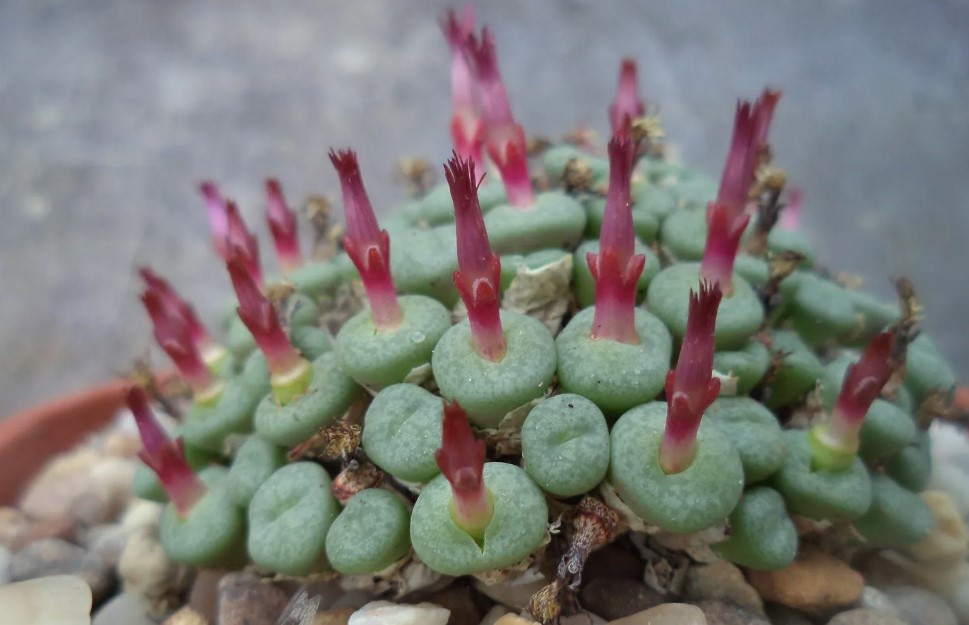
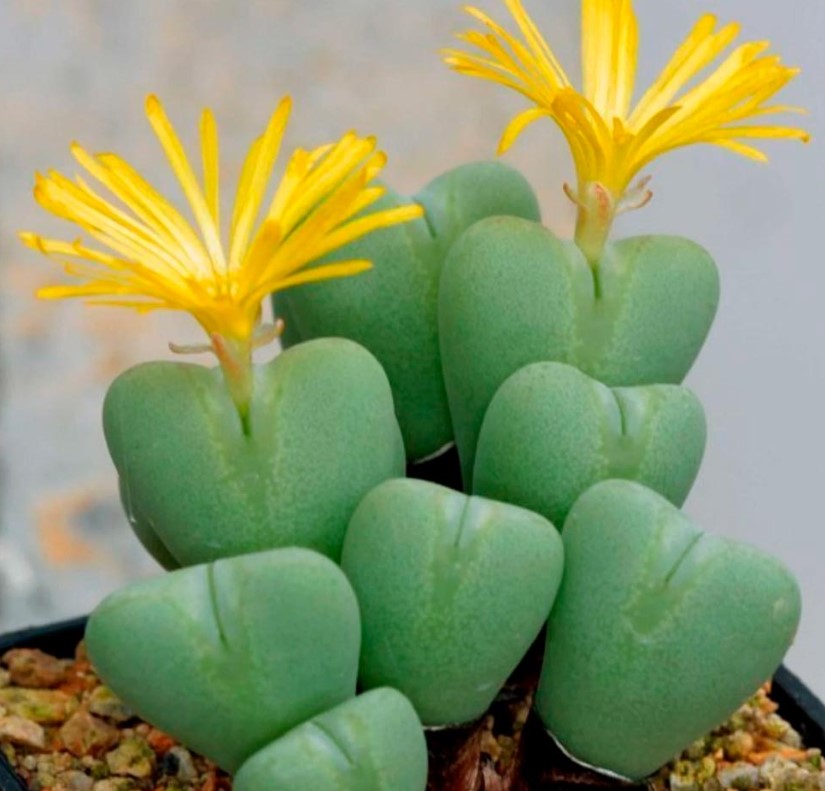
Family: Aizoaceae. Native to South Africa. A perennial plant whose pairs of leaves form a heart-shaped, inversely conical, or spherical body.
| Two-bladed
|
Visually, it resembles a heart. The leaves are light green, sometimes with a reddish, white, or gray bloom. The flowers are yellow with double inflorescences, reminiscent of dandelions. |
| Friedrich
|
It has a heart shape. The body is grayish and translucent. There are streaks and marks on the surface. The flower heads are white. |
| Calculus
|
It consists of two leaves tightly fused into a spherical body. The color is greenish-white or greenish-blue. The flowers are orange or yellow. |
| Mayer
|
Forms large mats of grayish-green leaves. Flowers are yellow and daisy-shaped. |
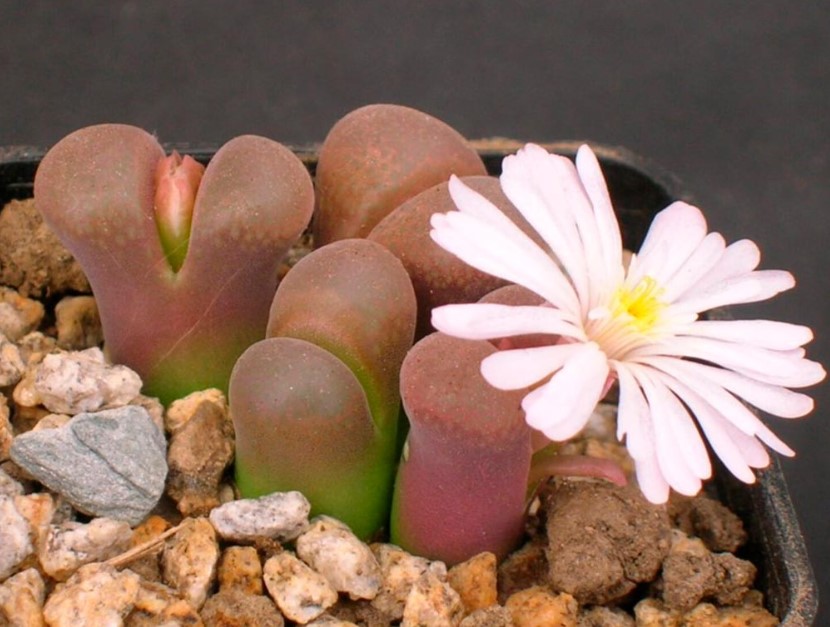
| Tantillum
|
Densely branched, with two lobed bodies. The leaves are grayish-green, reddish with dark green or red spots, and yellowish-green. The flowers are pink, daisy-shaped. |
Care:
| Illumination | Bright, artificial lighting is acceptable. |
| Temperature |
+28 °C – in summer. +15 °C – in winter. |
| Humidity | Average. |
| Pot and soil |
Tight, with little depth and width. Loose and light. |
| Watering | During the growing season, water once a week. Use bottom watering. |
| Top dressing | During the growing season – once every 2 weeks. |
| Reproduction | Cuttings, seeds (rarely). |
| Care Features | You cannot remove old leaf blades; they must renew themselves. |
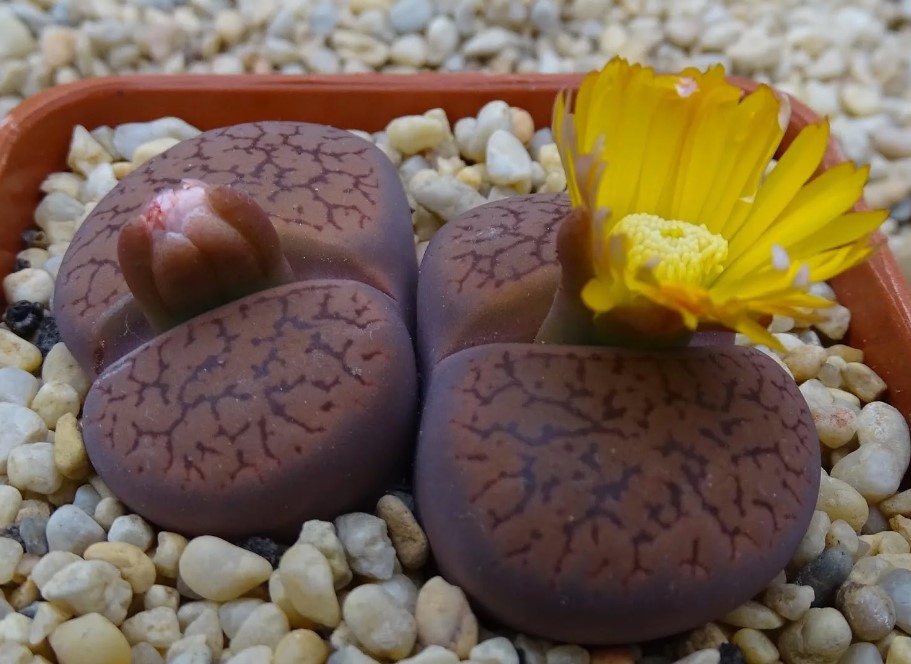
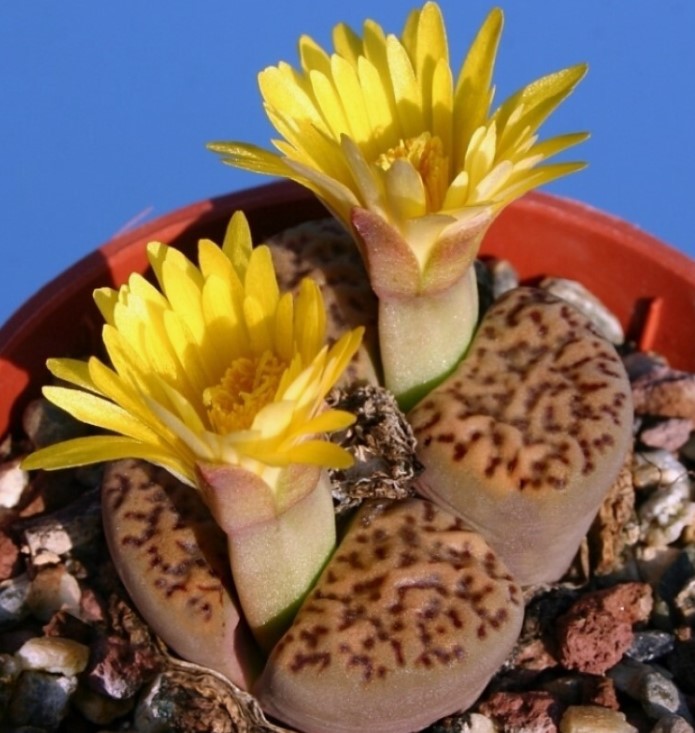
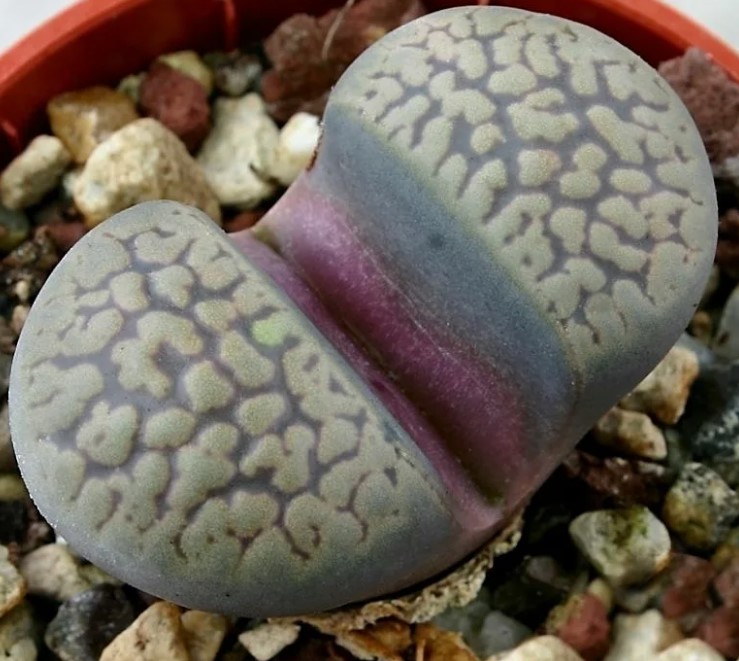
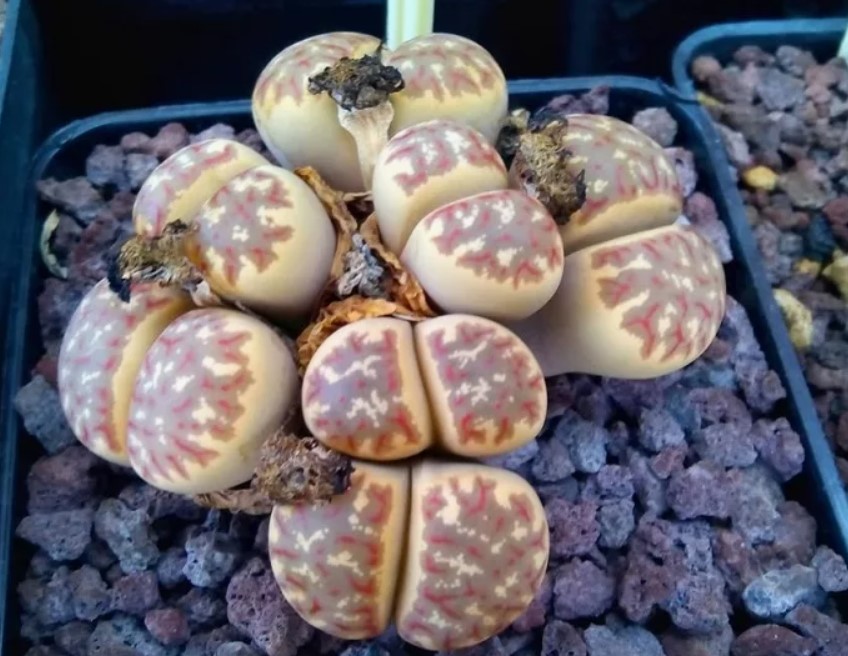
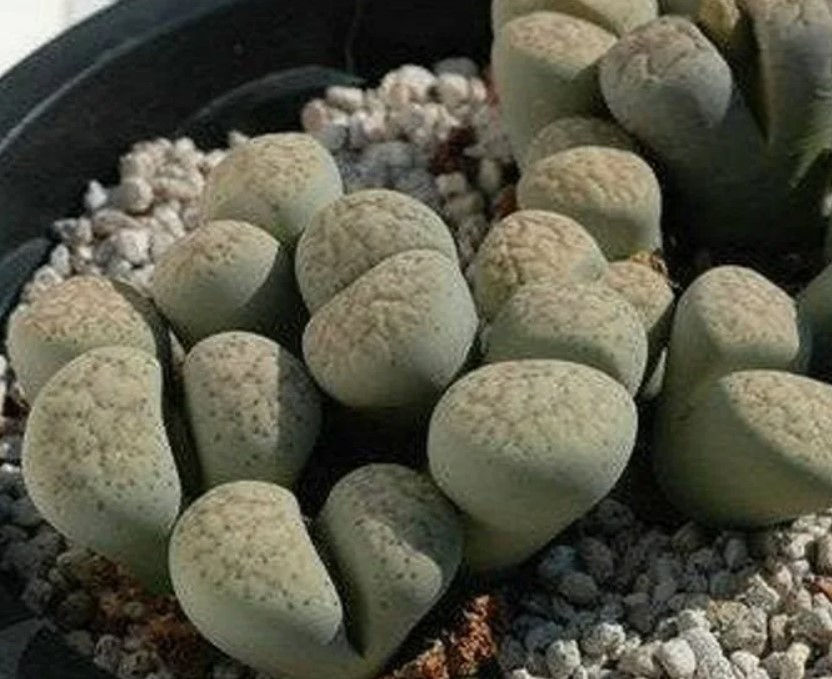
Lithops
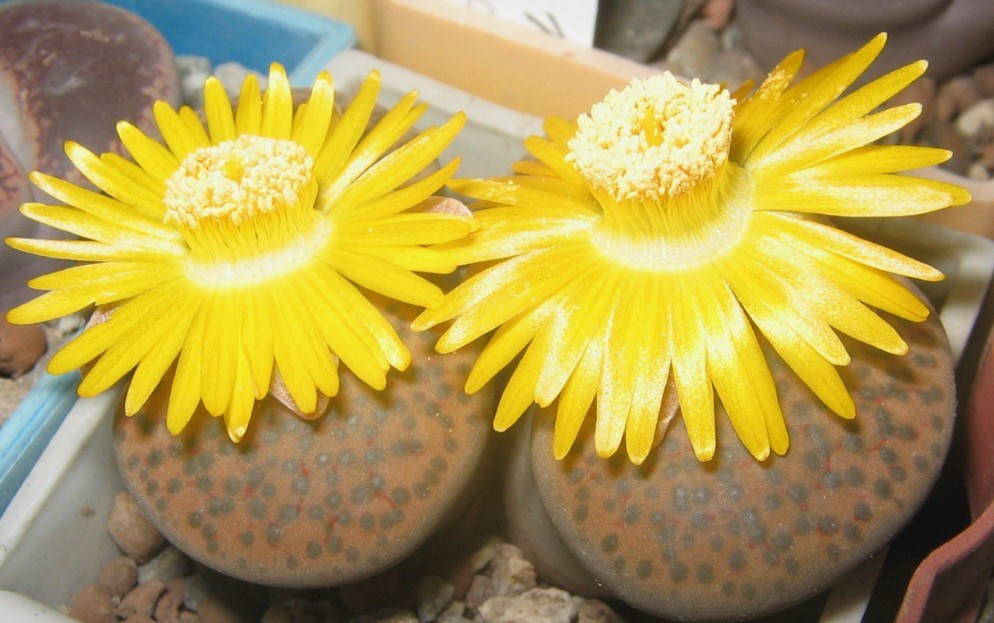
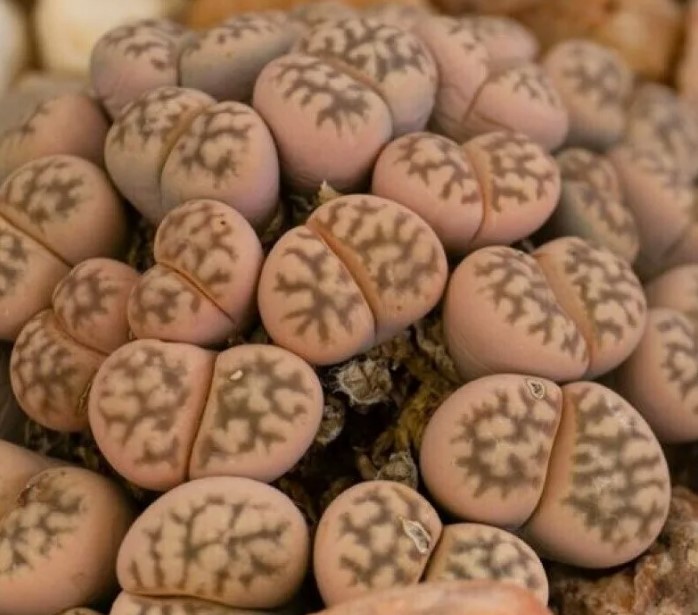
Family: Aizoaceae. Native to Botswana and Namibia. A representative of the "living stones." It has only a pair of leaves of equal width and height, each no more than 50 mm long. Flowers are white, yellow, or orange-yellow.
| Aucamp
|
The leaves are greyish-blue, greenish-brown at the base. |
| Bromfield
|
The leaves are cone-shaped with a flat top and a reddish tint. |
| Compton
|
The leaves are greenish-brown. |
| Dorothea
|
No more than 10 mm. Resembles quartz. |
| Franz
|
Leaves are olive colored. |
| Redhead
|
The leaf blades are cylindrical. |
| Karassky
|
Reminds me of quartzite. |
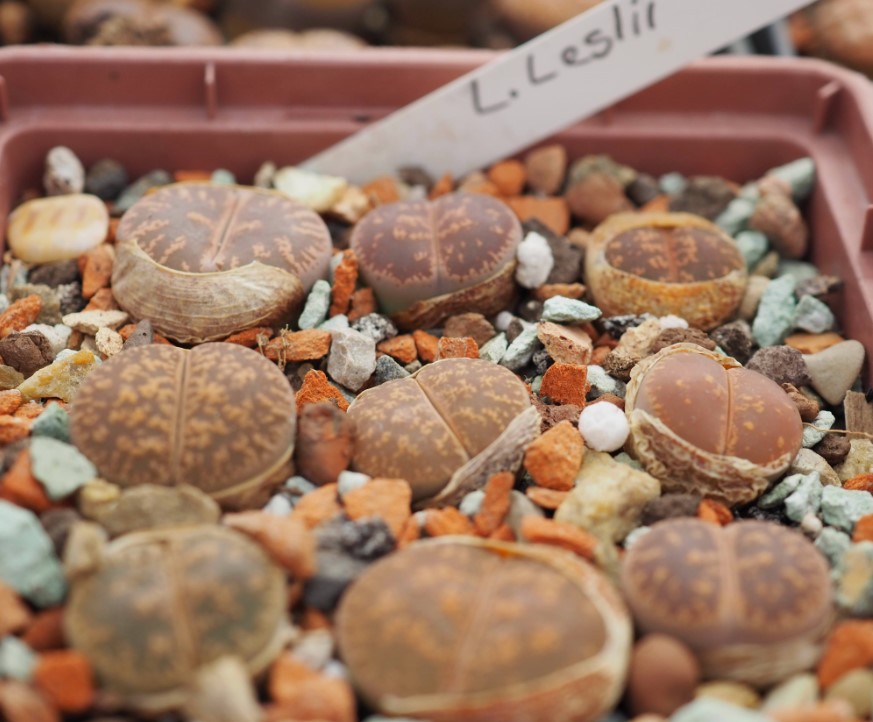
| Leslie
|
The leaves are brown, with a textured surface. The least numerous species. |
Care:
| Illumination | Intensive. |
| Temperature |
From +23 °C – in summer. +12…+12 °C – in winter. |
| Humidity |
Spraying is only required:
|
| Pot and soil |
Wide, not tall. Substrate for cacti without peat. |
| Watering | As the soil dries out, water to a depth of 10 mm. |
| Top dressing | Only if the plant hasn't been repotted for several years. Use cactus fertilizer at half the recommended strength. |
| Reproduction | Seeds. |
| Care Features | Do not remove old leaf blades. |
Read the article to learn how to grow lithops from seeds and more.Lithops: species, photos, growing and care tips by season, reviews
Mesembryanthemum
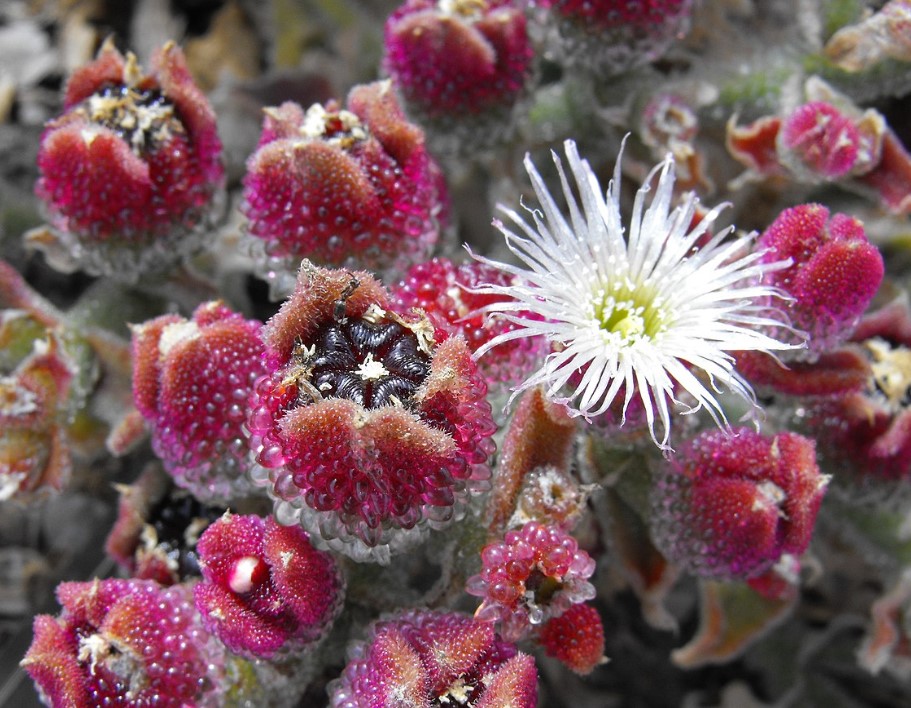
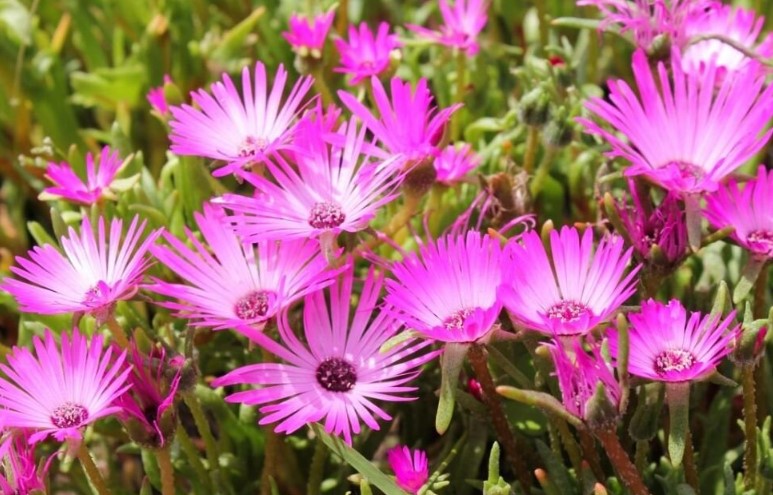
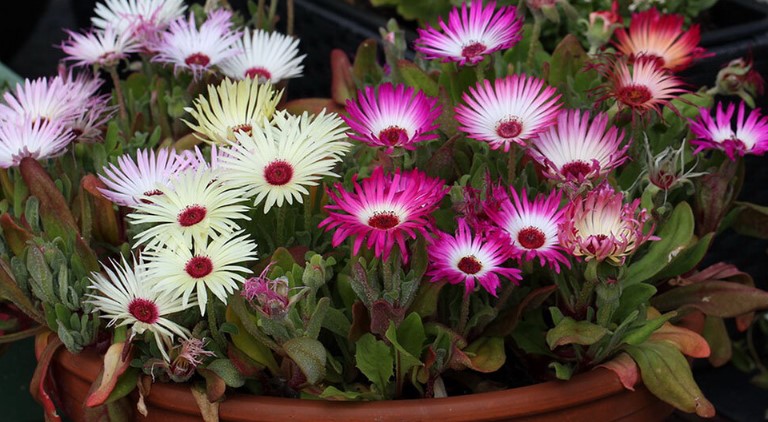
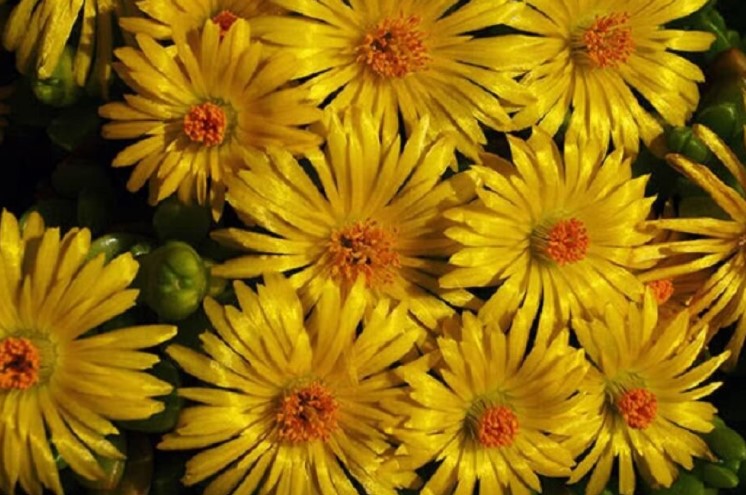
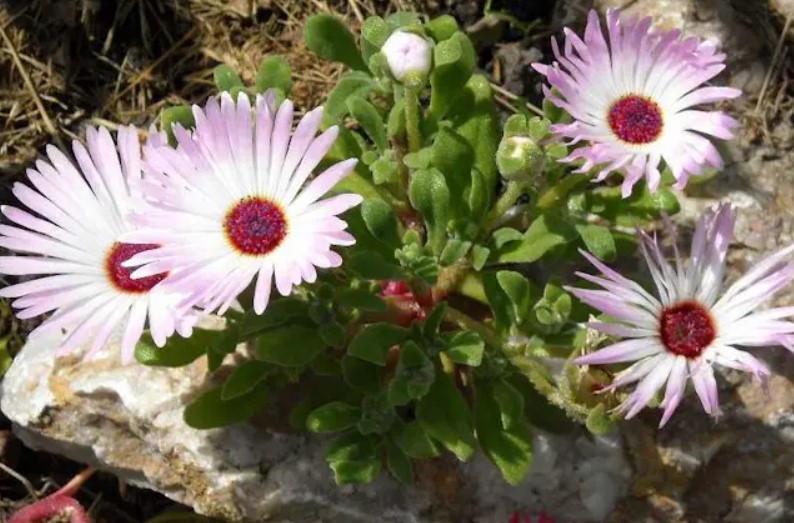
Family: Aizoaceae. Native to South Africa. The genus is represented by creeping, spreading plants, or subshrubs. The leaves are green, fleshy, spindle-shaped or rounded.
| Crystal
|
The flowers resemble daisies. |
| cereal-like
|
The shoots are reddish in color, with hairs. The petals are carmine-pink, darkening towards the center. |
| Daisy-shaped
|
An annual plant with pink, orange, bright purple, red, apricot, yellow or purple inflorescences. |
| Cloudy
|
As temperatures drop, the bushes turn bronze. Flowers are yellow, orange, red, or purple. |
| Glazokovy
|
The petals are yellow, and the core, stamen and pistil are bright red. |
Care:
| Illumination | Bright all year round. |
| Temperature |
+25 °C – in summer. +14…+16 °C – in winter. |
| Humidity | Doesn't play an important role. |
| Pot and soil |
Wide, deep, with drainage holes. Soil mixture for indoor plants with perlite. |
| Watering | During the growing season, regularly, as the top layer of soil dries out. |
| Top dressing | During the period of active growth, apply complex mineral fertilizers once every 2 weeks. |
| Reproduction | Cuttings, seeds. |
| Care Features | Watch for root rot. |
Curious about how to care for a plant indoors and outdoors? Read on. here.
Rejuvenated
Family: Crassulaceae. Habitat: Europe, the Caucasus, Asia Minor, and Southeast Asia.
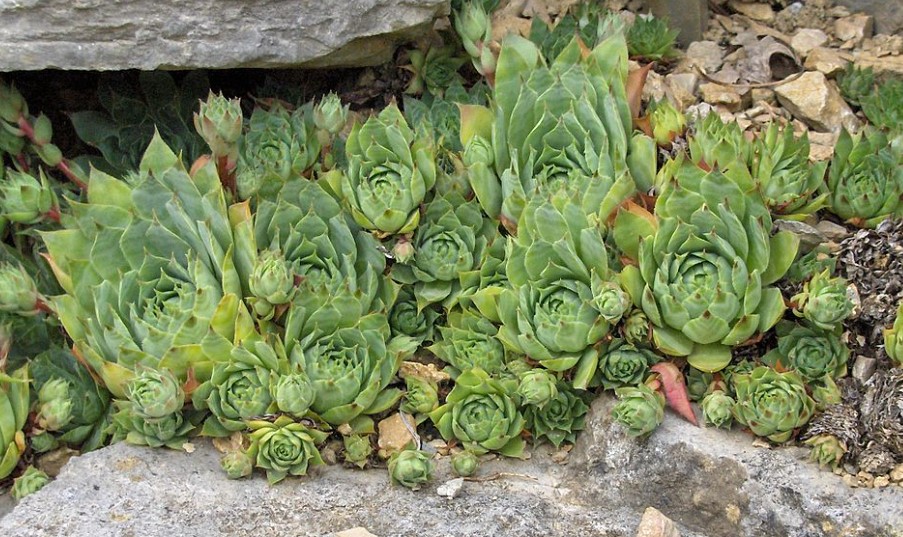
A perennial succulent with erect stems. The leaves are fleshy and entire. Types of sedum:
- roofing;
- cobwebby;
- Russian;
- shoot-bearing;
- spherical;
- Caucasian;
- mountain;
- Cassiopeia;
- Rosewood;
- Pharaoh.
Care:
| Illumination | To ensure sufficient light, place the pots on a western or eastern windowsill. |
| Temperature | Positive. |
| Humidity | Average. |
| Pot and soil |
With drainage holes. Poor, infertile. |
| Watering | Once a week – in summer. 2 times a month – in winter. |
| Top dressing | Doesn't need it. |
| Reproduction | Seeds, daughter rosettes. |
| Care Features | Provide a regular supply of fresh air. |
Sedum
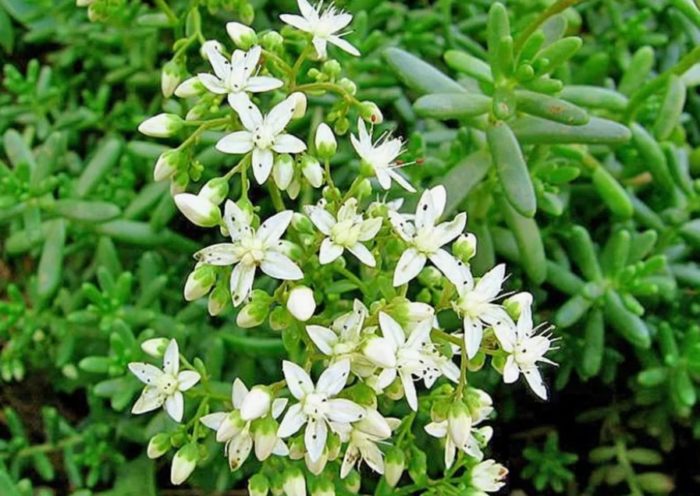
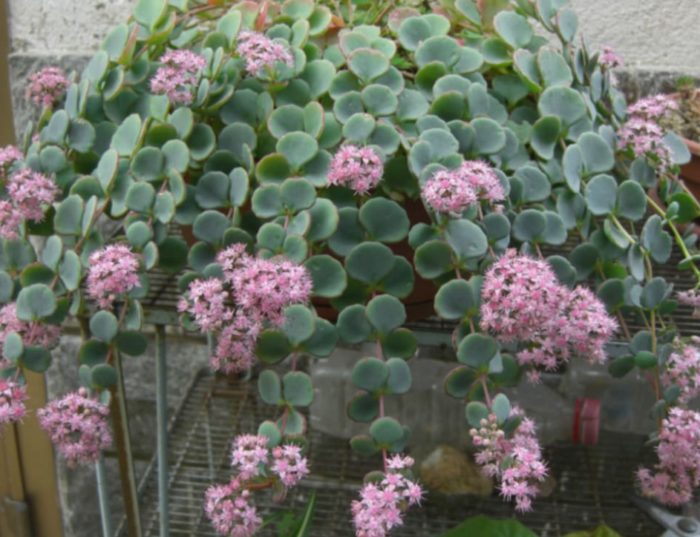
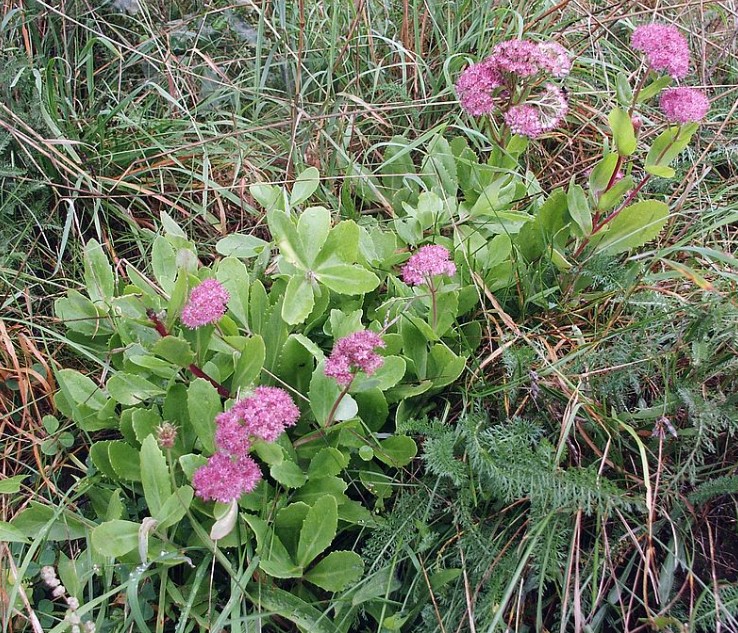
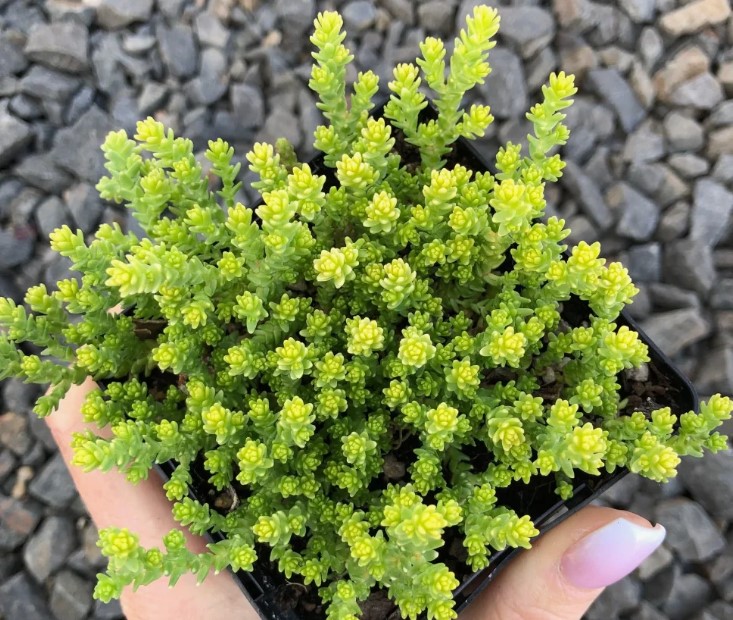
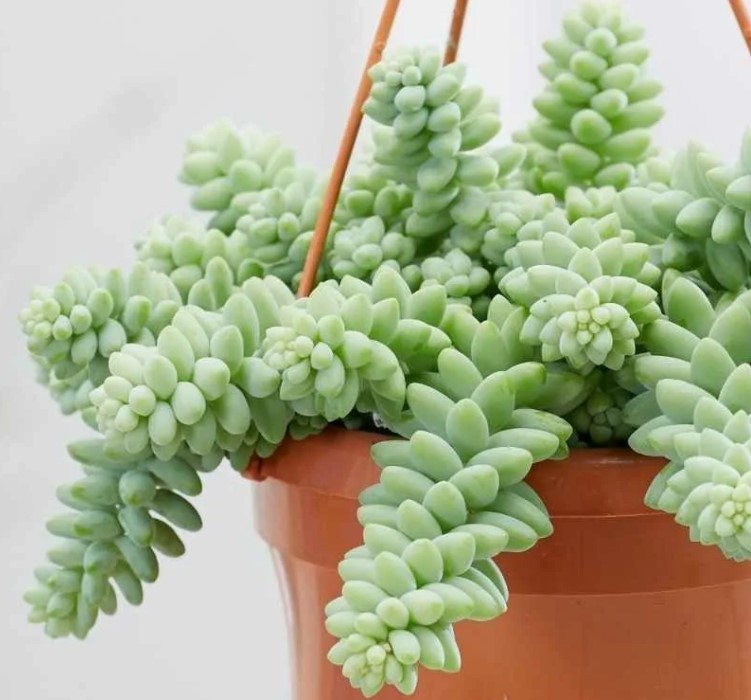
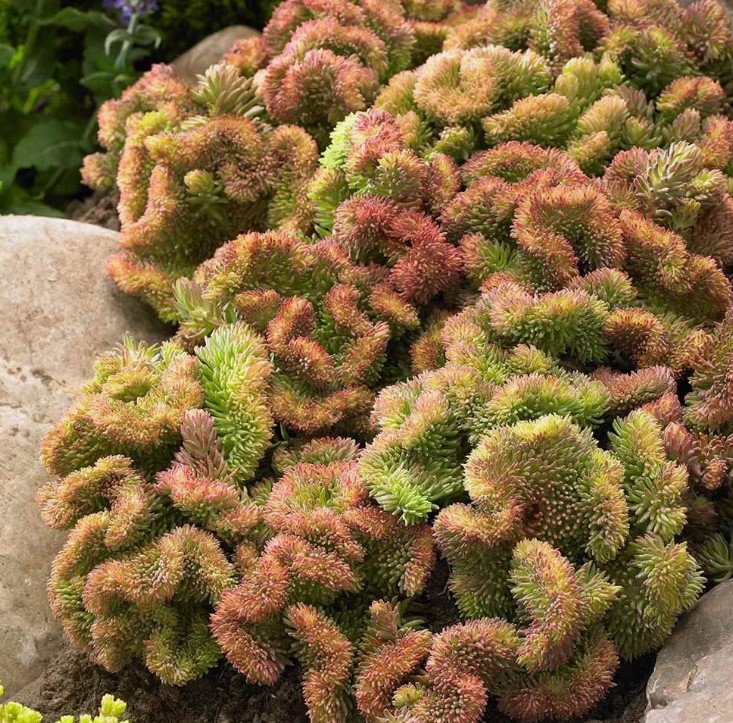
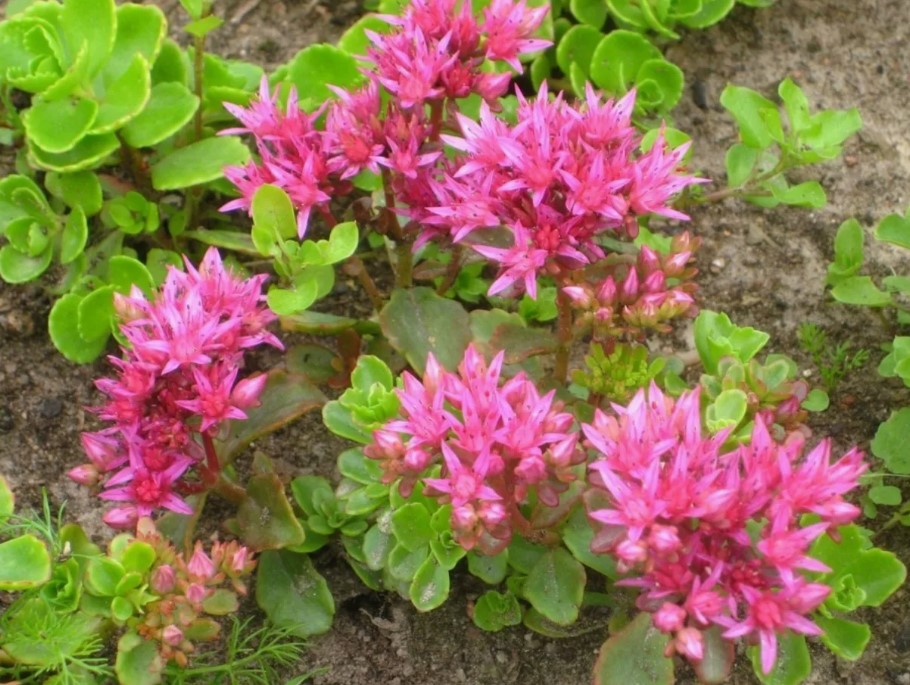
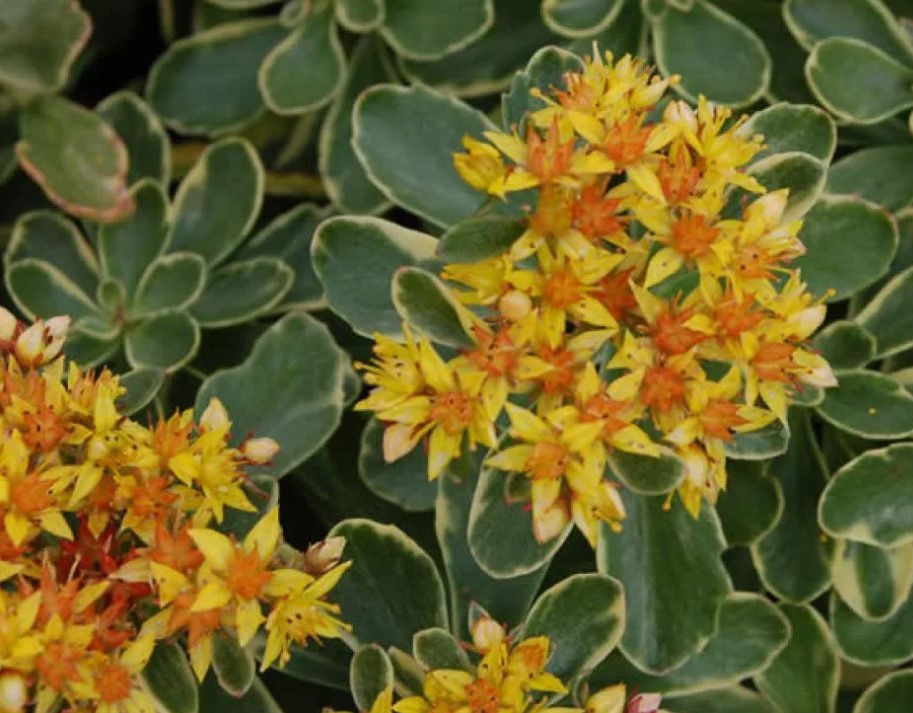
Family: Crassulaceae. Native to Africa, South America, Europe, Russia, and the Caucasus. The fleshy leaves come in a variety of shades, from grayish-green to deep purple. Star-shaped flowers are clustered in snow-white, yellow, pink, and lilac inflorescences. Grows well indoors and in the garden.
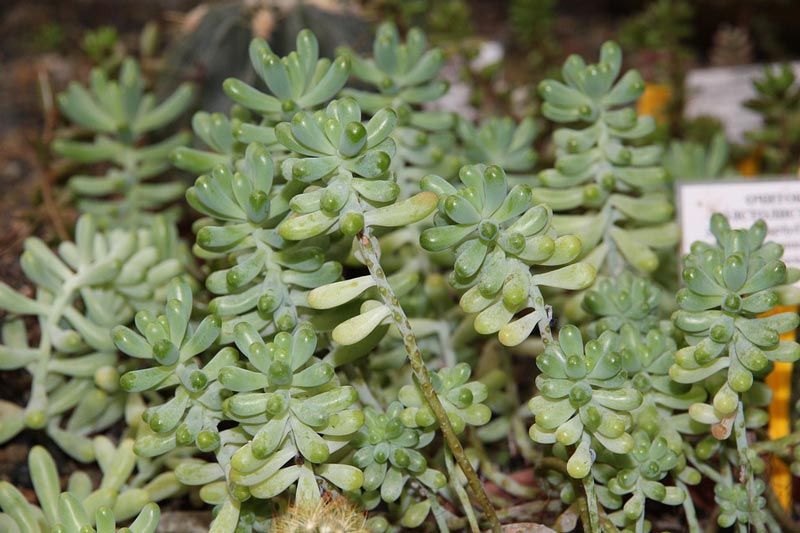
Sedum has many varieties and cultivars.
Common types of sedum:
- ordinary;
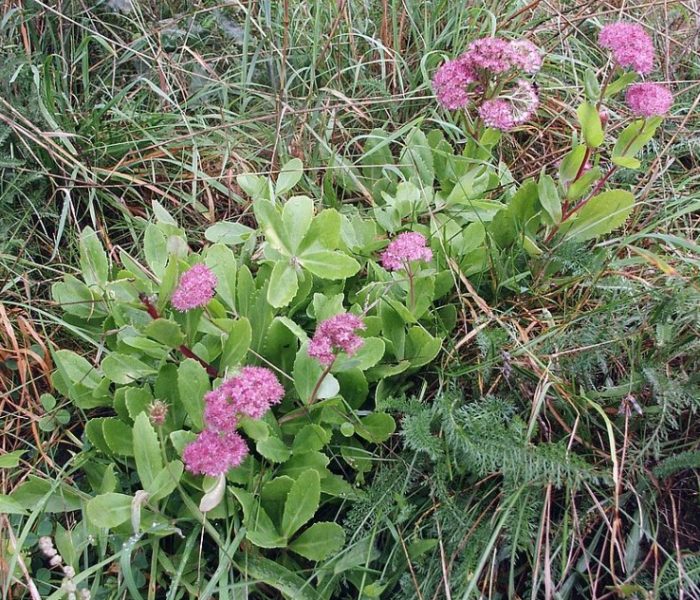
- caustic;
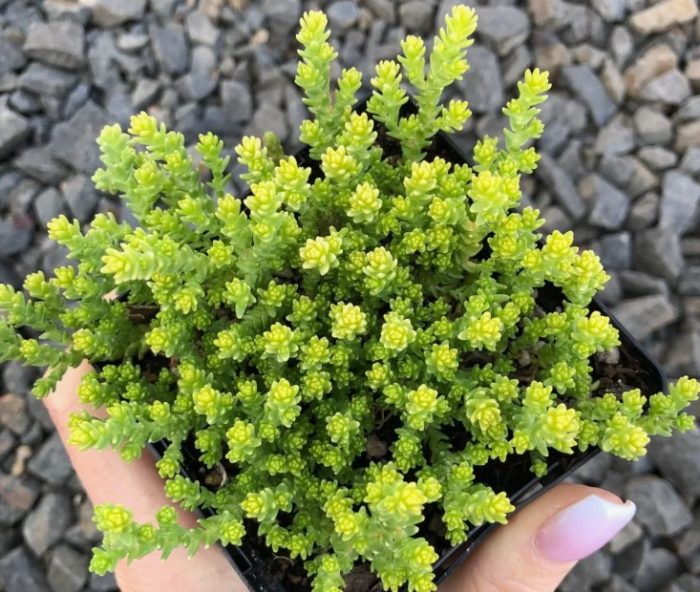
- Morgana;
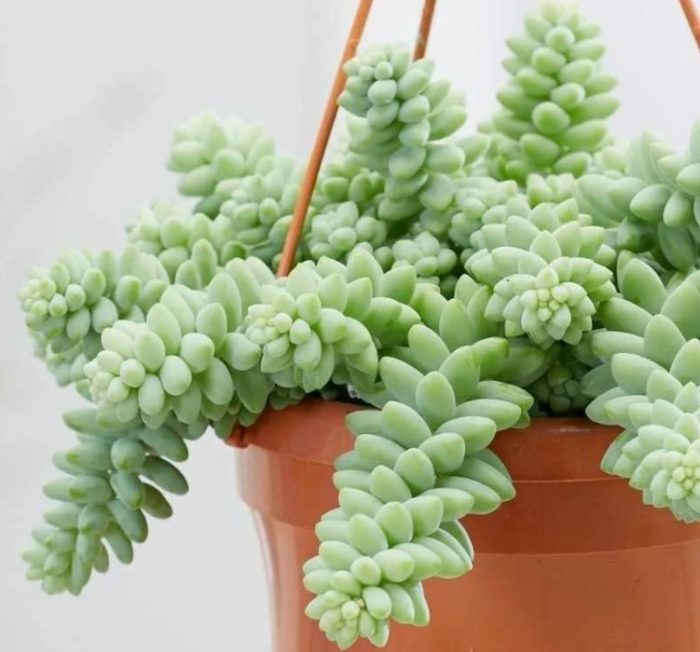
- bent;
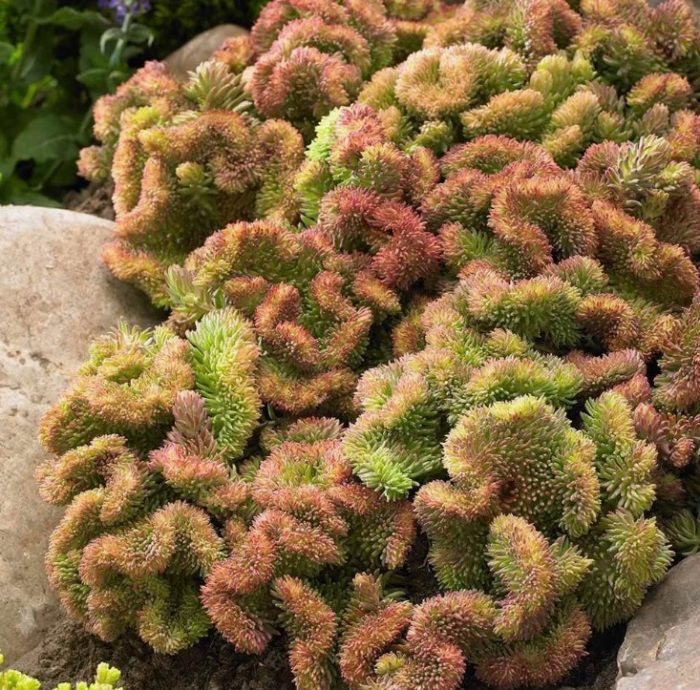
- false;
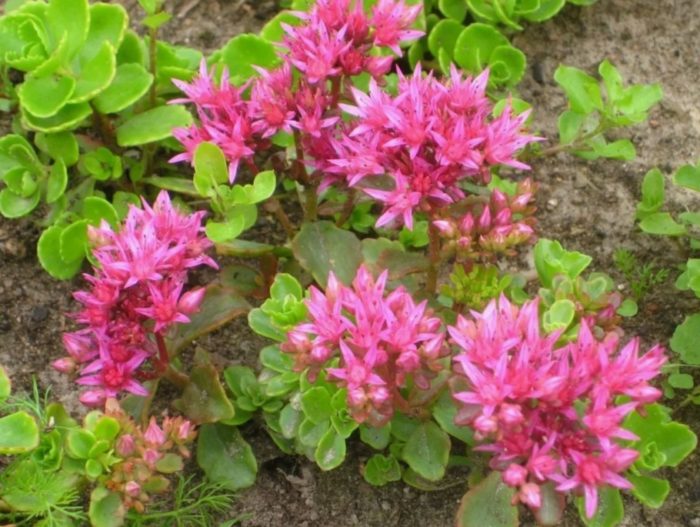
- Kamchatka;
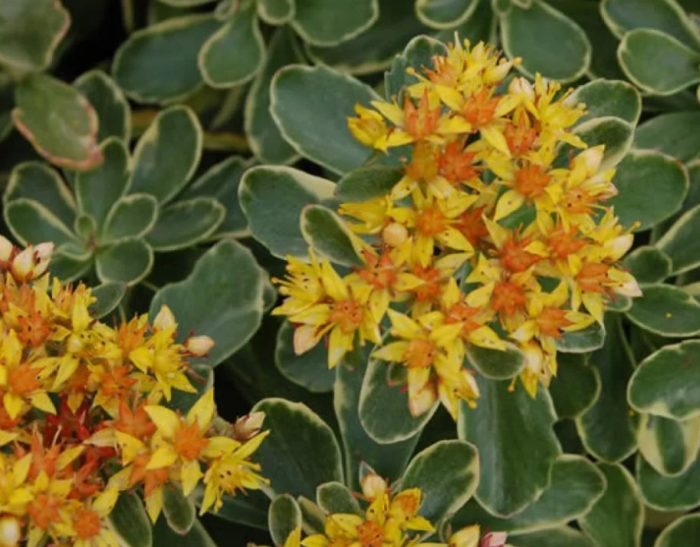
- white;
- Ziboldi;
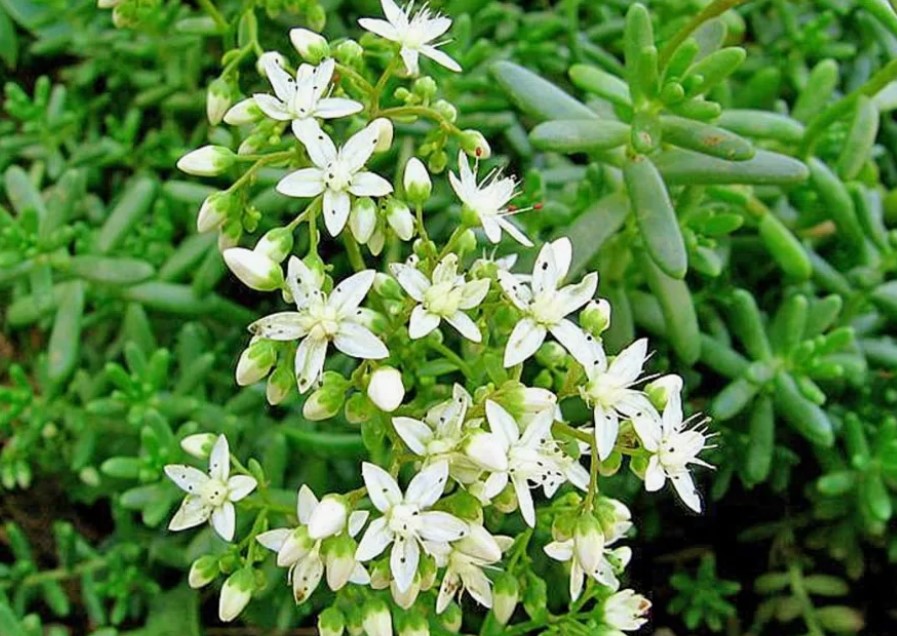
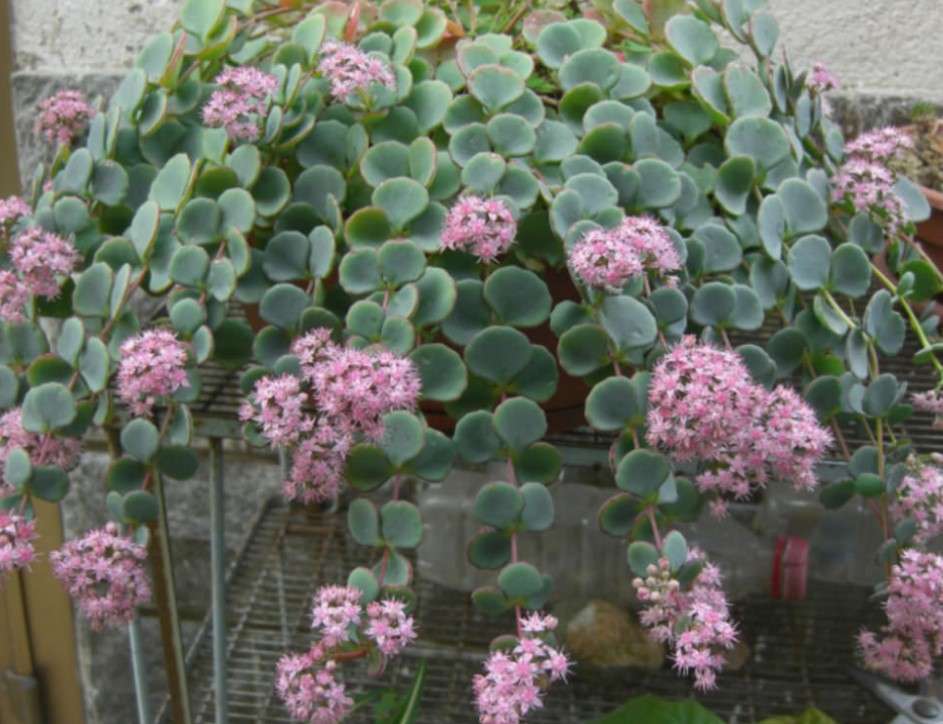
| Care | At home | On the street |
| Illumination | Bright, with additional lighting in autumn and winter. | Planting in an open area is recommended. |
| Temperature | + 25…+28 °C – in summer. + 8…+12 °C – in winter. |
Heat-loving varieties should be covered. |
| Humidity | Spraying is not required. | It doesn't matter. |
| Pot and soil | The container is wide but shallow.
Soil mixture for cacti. |
Turf, leaf soil, sand. |
| Watering | In summer once a week, in winter – every 14 days. | In the absence of rain, it is abundant. |
| Top dressing | Before and after flowering. | |
| Reproduction | By seeds, cuttings, division. | |
| Care Features | Conduct formative and rejuvenating pruning. | |
Read more about the types and varieties of sedum and reviews in the article. Sedum: Description, Planting, and Care
Pachyphytum
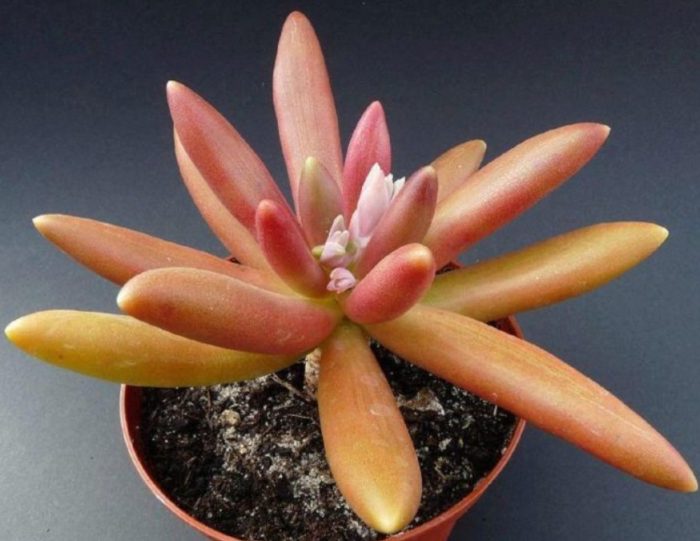
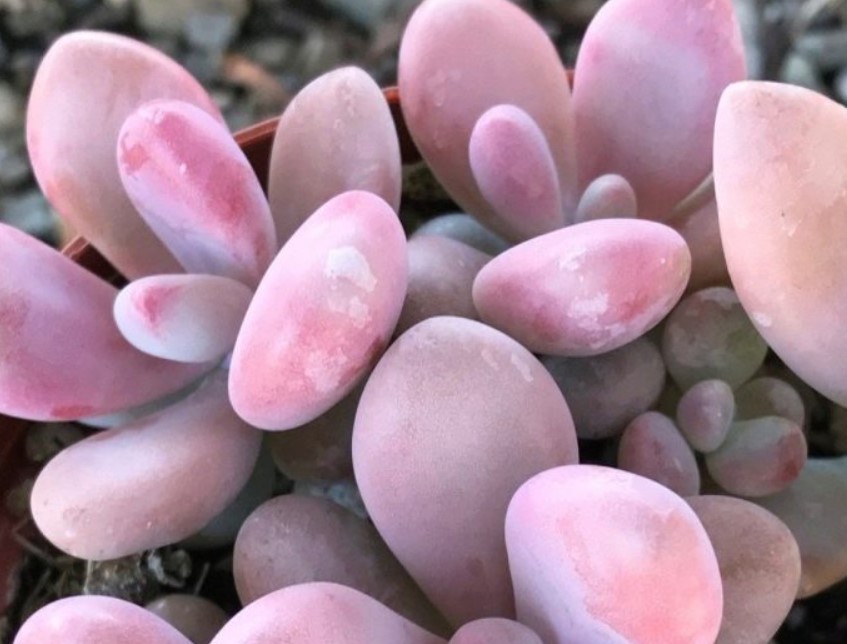
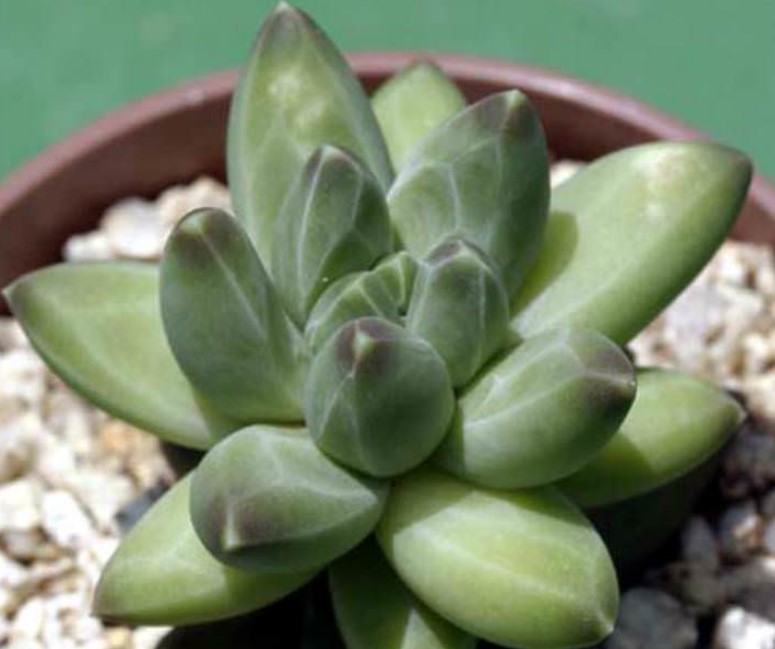
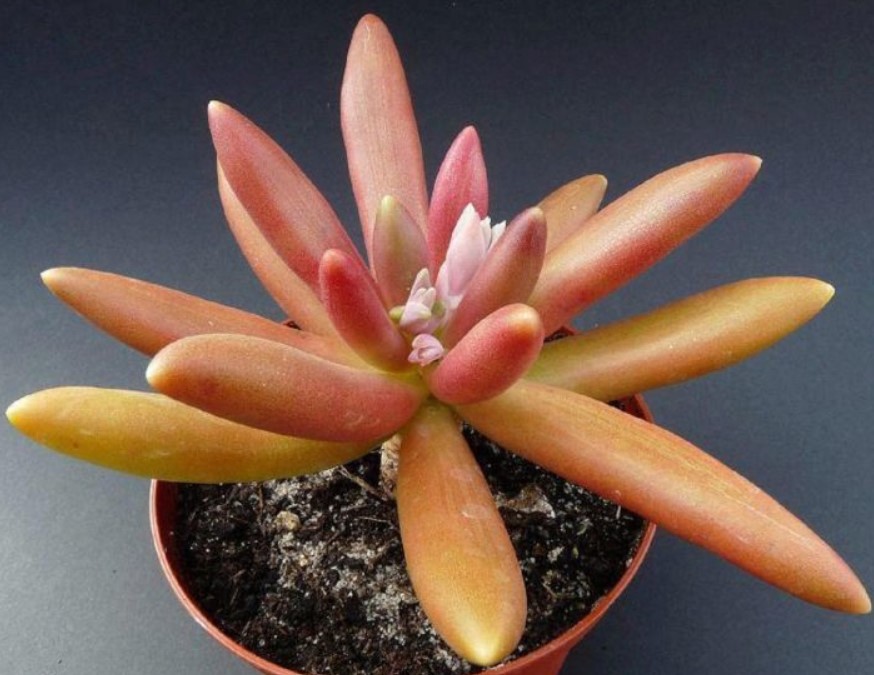
Family: Crassulaceae. Native to Mexico and the southern United States. The plant is similar in appearance to the graptopetalum, but differs in leaf color (from light gray to purple).
Types:
- Oviparous Rubra;
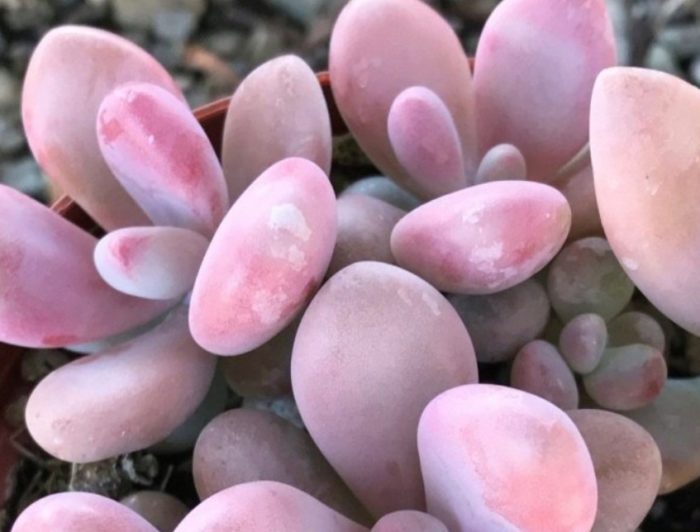
- Bracteosum;
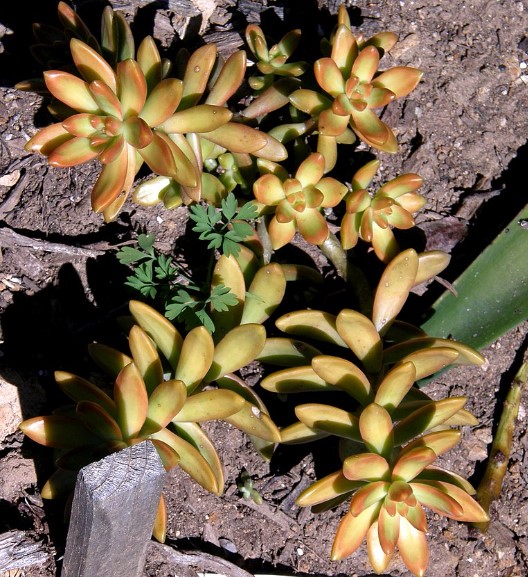
- Compactum;
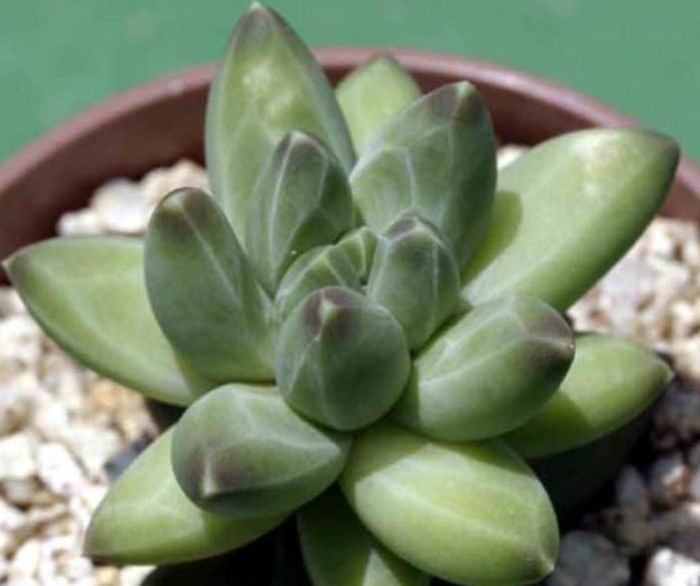
- lilac;
| Illumination | Bright, but with shading at midday. |
| Temperature |
+20…+26 °C – second half of April-August. +18…+20 °C – September-October. +16 °C (not lower) – November-February. +18…+20 °C – March-first half of April. |
| Humidity | Low or medium. |
| Pot and soil | Shallow, with wide walls. |
| Watering |
From spring to late autumn – once a week. In hot weather – once every 5 days. In winter – once a month. |
| Top dressing | Apply from spring to mid-autumn. Use a liquid fertilizer for succulents, which is high in potassium and low in nitrogen. Apply four times during the growing season. |
| Reproduction | Seeds, cuttings, leaves. |
| Care Features | Needs pruning and support. |
Pachyphytum is an interesting succulent, you can find out more about it here.
Portulacaria
Family: Didiereaceae. Native to South Africa. Visually resembles purslane. The plant has thick, sometimes waxy stems and succulent leaves.
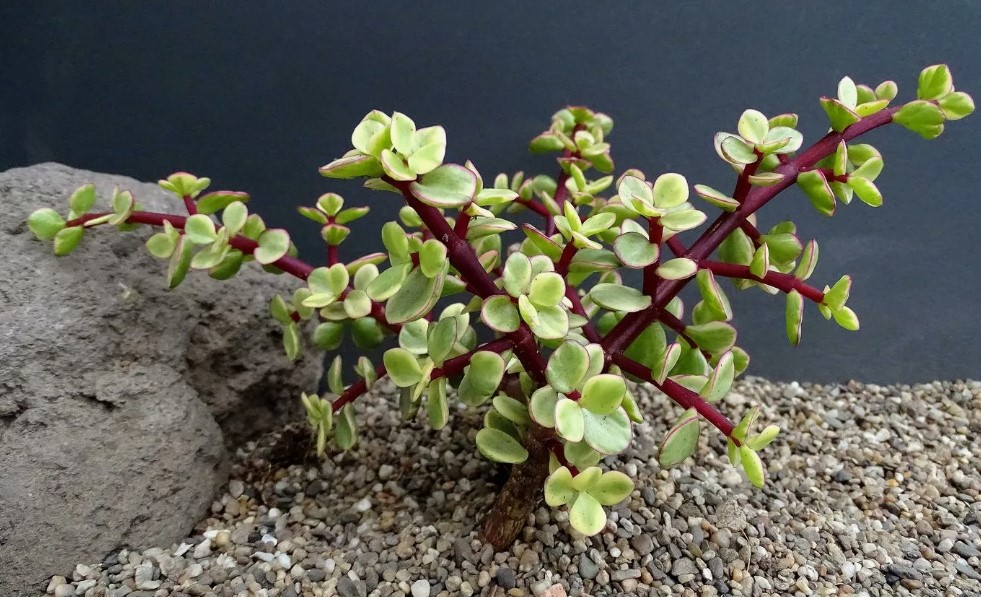
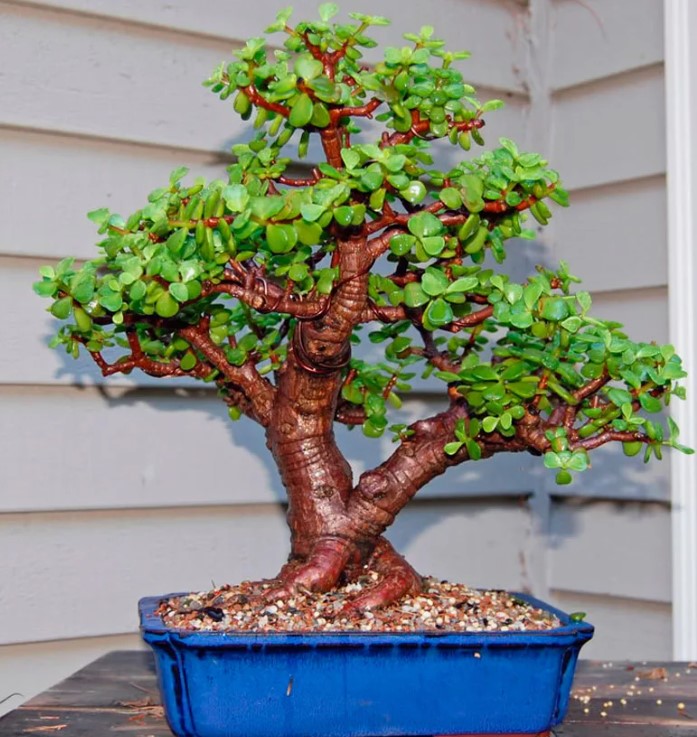
It is possible to create a bonsai from the species Portulacaria afra.
| Illumination | Light-loving plant. |
| Temperature |
+22…+27 °C – in summer. +12…+15 °C – in winter |
| Humidity | Tolerates dry room air. |
| Pot and soil |
Shallow but wide. Soil, humus, coal (2:2:1). |
| Watering | Moderate in summer as the soil dries out. |
| Top dressing | From spring to autumn, complex mineral fertilizers. |
| Reproduction | Cuttings, seeds. |
| Care Features | In summer, ventilation is required. |
You can find out more about Portulacaria here.
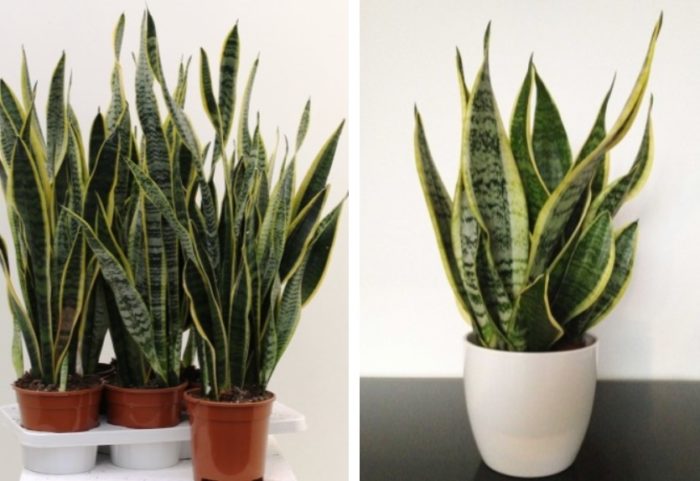
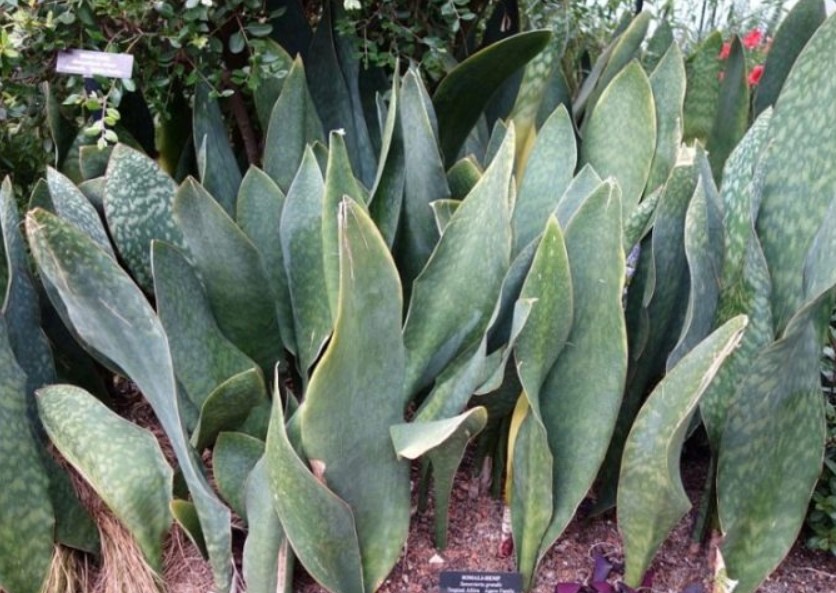
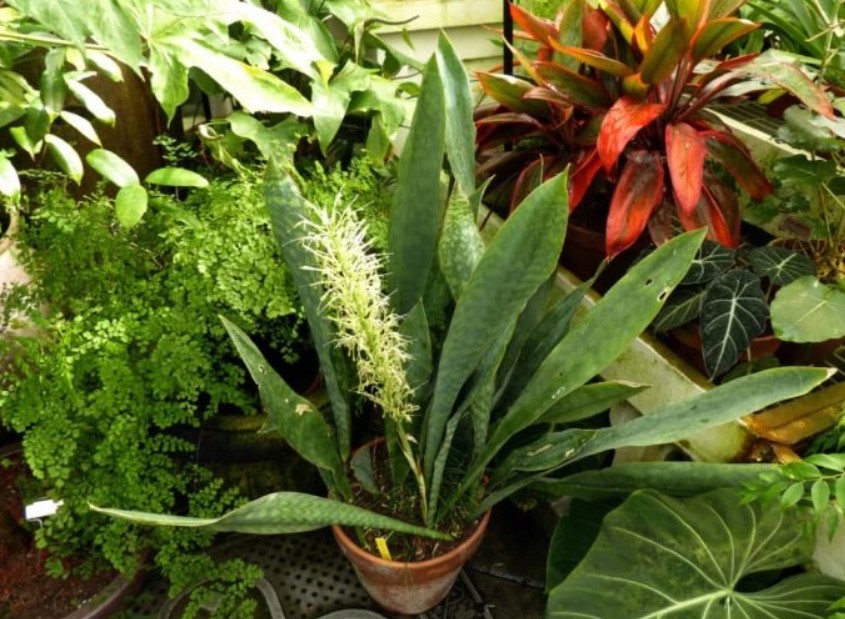
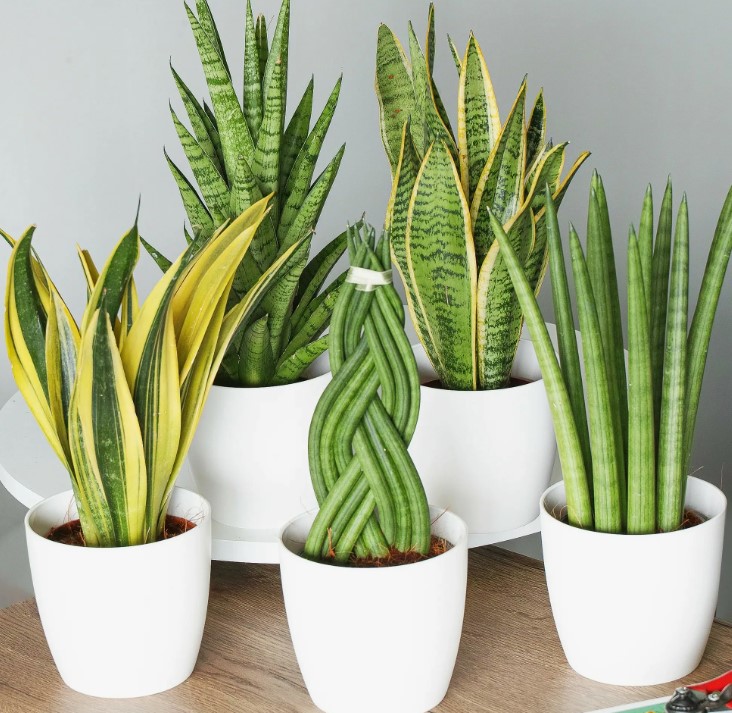
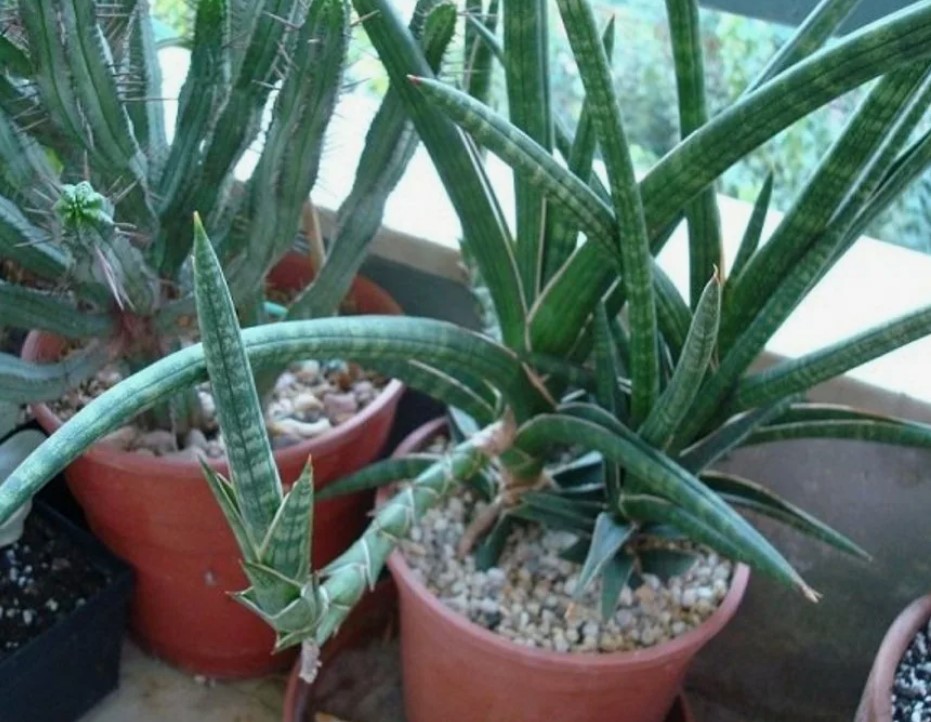
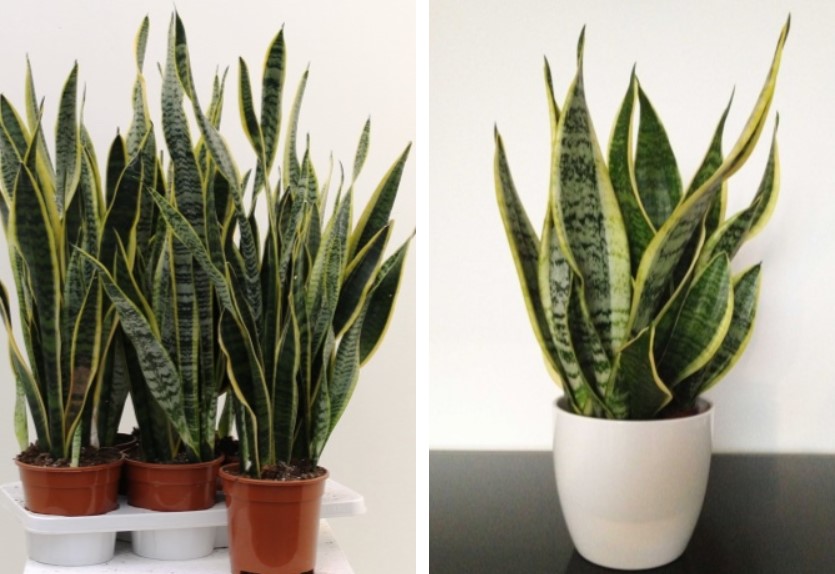
Sansevieria
Family: Asparagus. An obsolete genus of succulent plants, since 2014 included in the genus Dracaena.
Native to the subtropics and tropics of Madagascar, Indonesia, Africa, South Florida, and India, this perennial plant has erect, sword-shaped leaves that extend from the base.
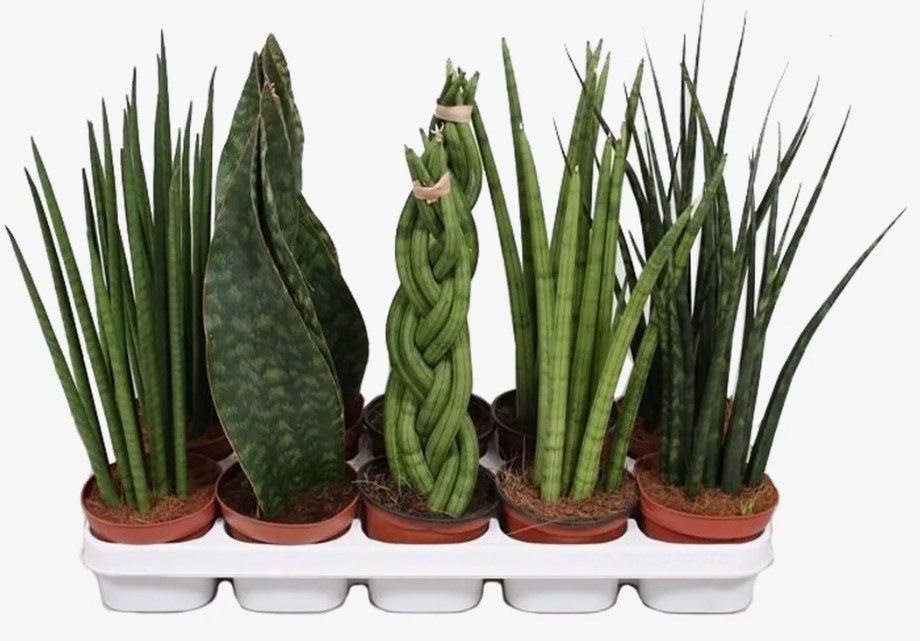
Types:
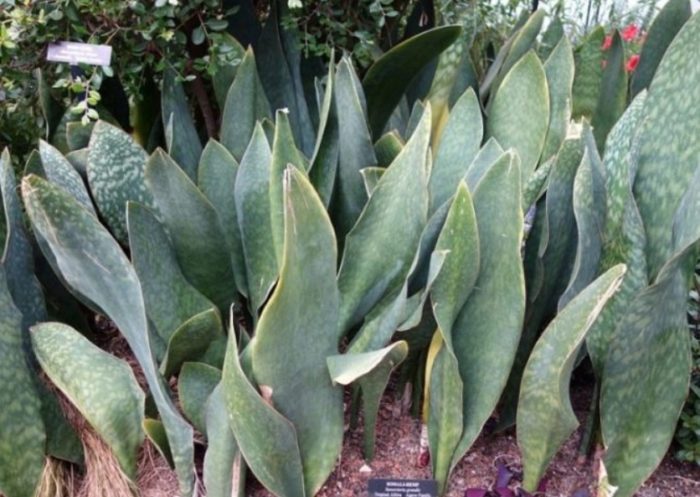
- big;
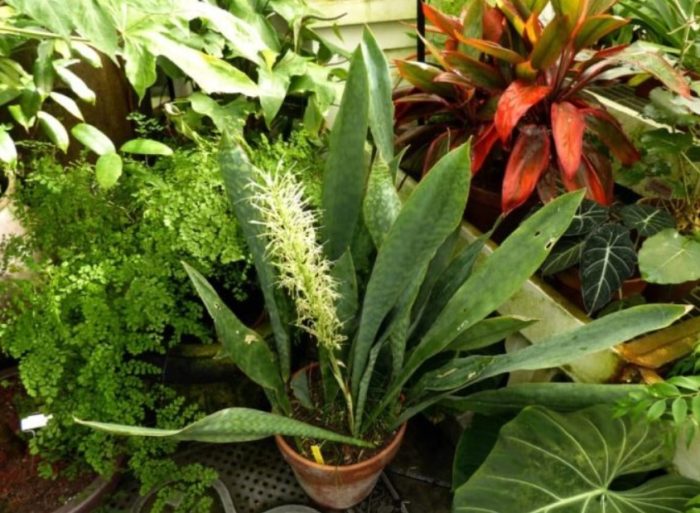
- hyacinth;
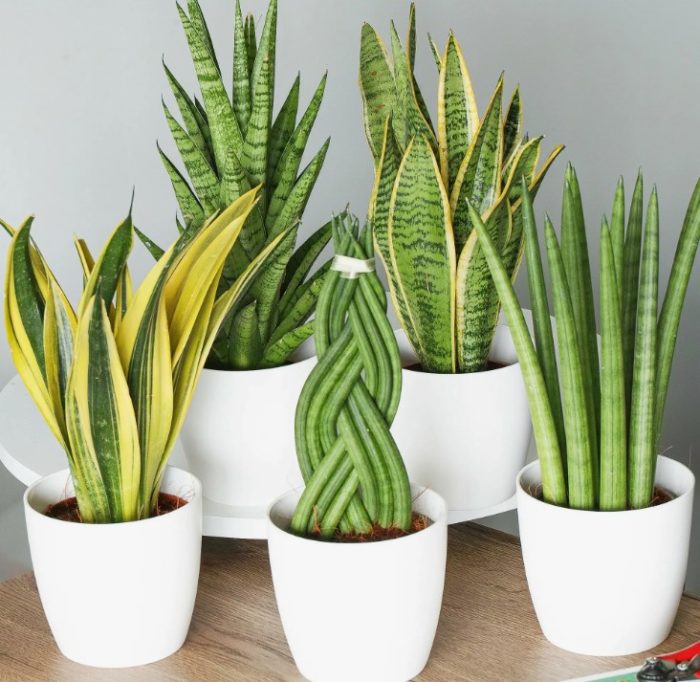
- cylindrical;
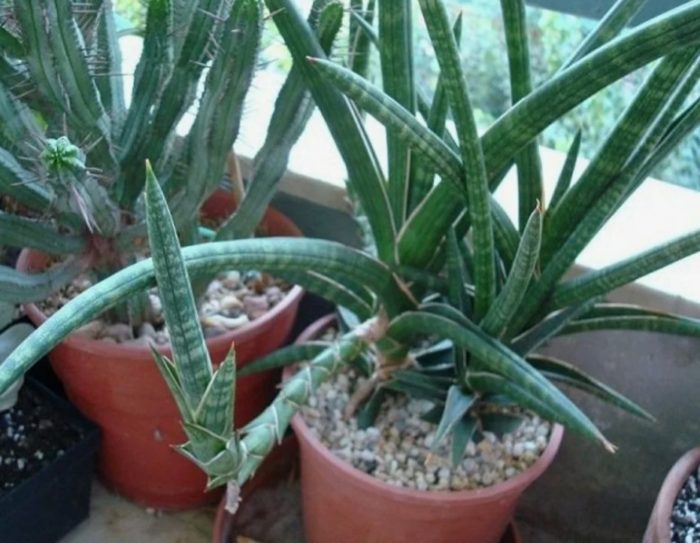
- graceful;
- three-lane.
| Illumination | Bright but diffused light, or with light shading. |
| Temperature |
Room temperature – in summer. +16 °C – in winter. |
| Humidity | Doesn't matter. |
| Pot and soil |
With thick clay walls and drainage holes. Turf and leaf soil, sand (2:1:1). |
| Watering | Regular but moderate watering. In summer, water only when absolutely necessary. |
| Top dressing | During the period of active growth, apply fertilizer for decorative foliage plants or succulents once a month. |
| Reproduction | By leaf cuttings, division of the rhizome. |
| Care Features | Replanting is required once every 3 years. |
Titanopsis
Family: Aizooniaceae. Native to Southwest Africa. The leaves visually resemble stones. They are thick, fleshy, and glaucous-green. Warty growths are located along the edges.
Types of Titanopsis:
Lime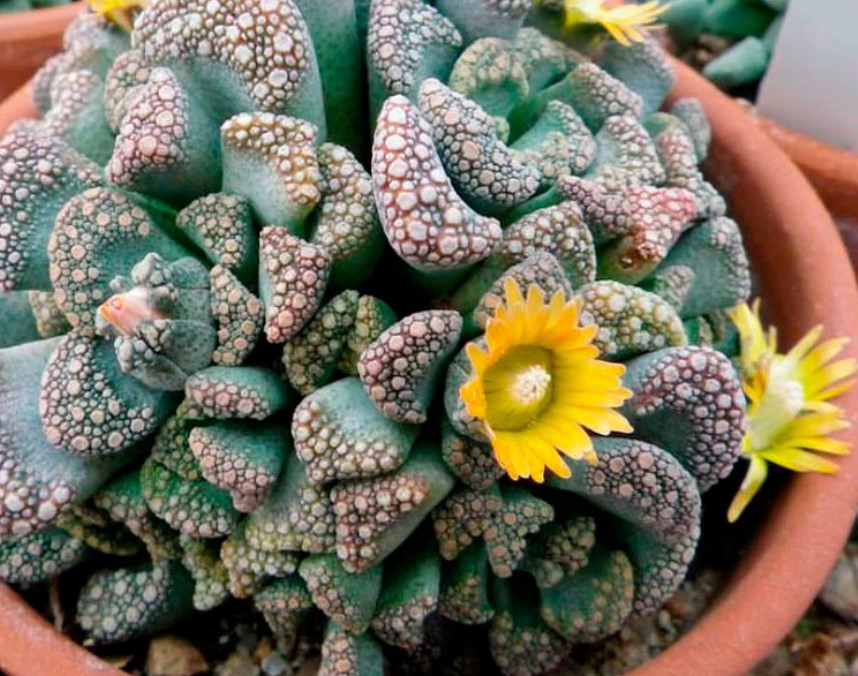 |
The most popular species of Titanopsis. The leaves are tuberculate. The flowers are bright yellow. |
Fuller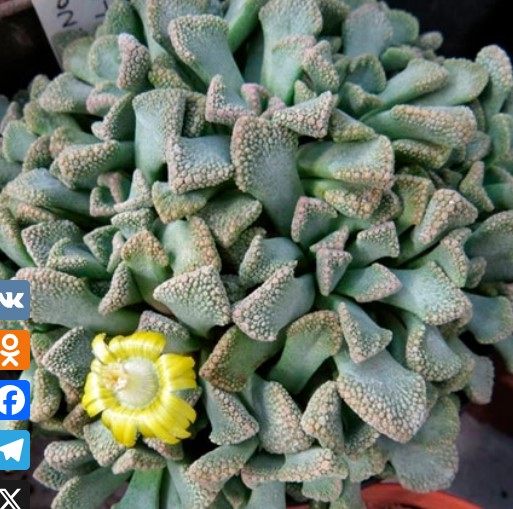 |
With yellow flowers. |
Hugo Schlechtery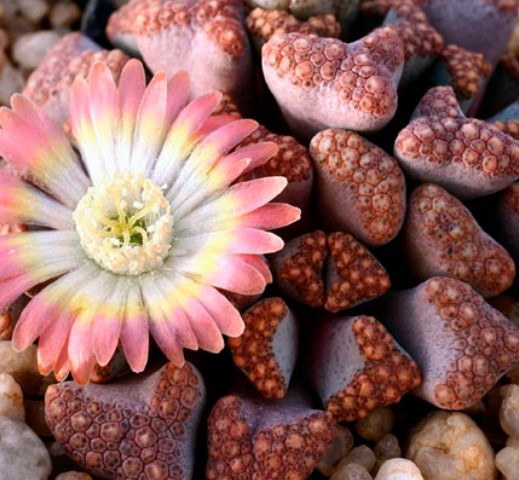 |
With ochre-orange inflorescences. |
Luderitsky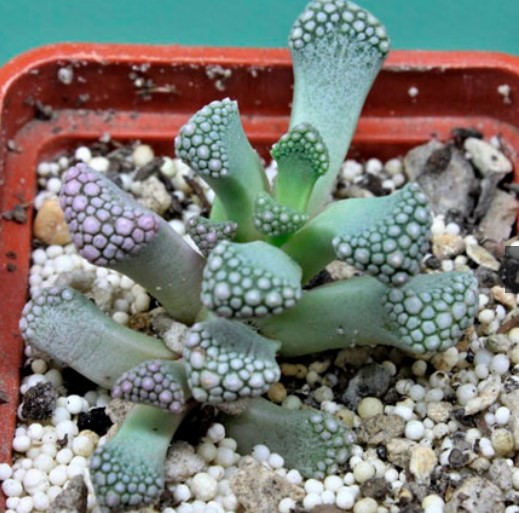 |
With lemon petals. |
Care:
| Illumination | Choose the most illuminated place. |
| Temperature |
+25 °C – in summer. +12 °C – in winter. |
| Humidity | Low or medium. |
| Pot and soil |
Wide and deep, with drainage holes. Loose and light. |
| Watering | In spring and summer – sparse and sparse. Do not water in winter. |
| Top dressing | Doesn't need it. |
| Reproduction | By seeds, by dividing the rosette. |
| Care Features | Cut off damaged leaves. |
Chiastophyllum
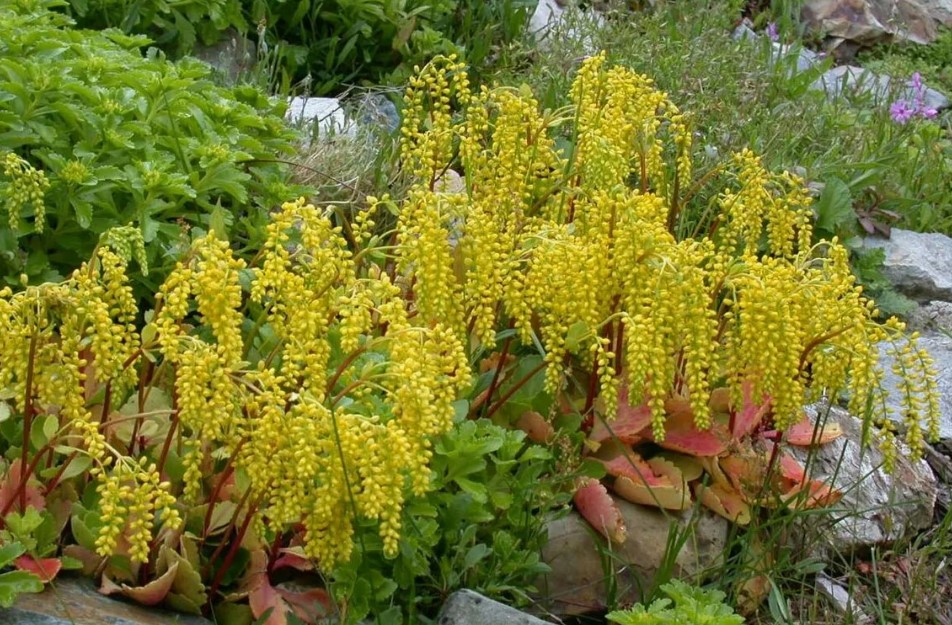
Family: Crassulaceae. Habitat: Austria, Great Britain, Russia (Krasnodar Krai, Adygea, the Black Sea coast, the Caucasus). It is an evergreen, fleshy plant with creeping and ascending shoots. The leaves are rounded or elliptical on short petioles. Flowers are yellow panicles. It has one species, Chiastophyllum oppositifolia. It is grown in gardens.
Echeveria
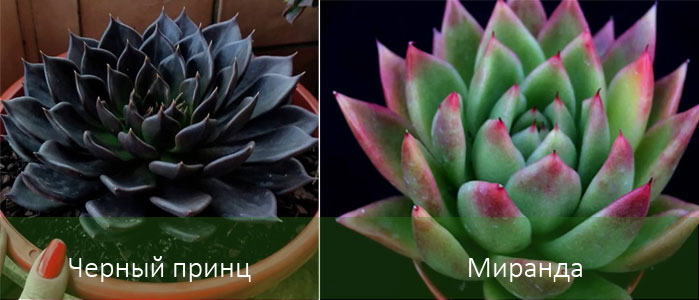
Family: Crassulaceae. Native to Mexico, South America, and the USA. The tough, succulent, fleshy leaves of this plant are gathered into dense rosettes. There are stemless varieties and species with long stems. Leaves can vary in size, shape, and color. Flowers can be brown-red, orange-red, or yellow.
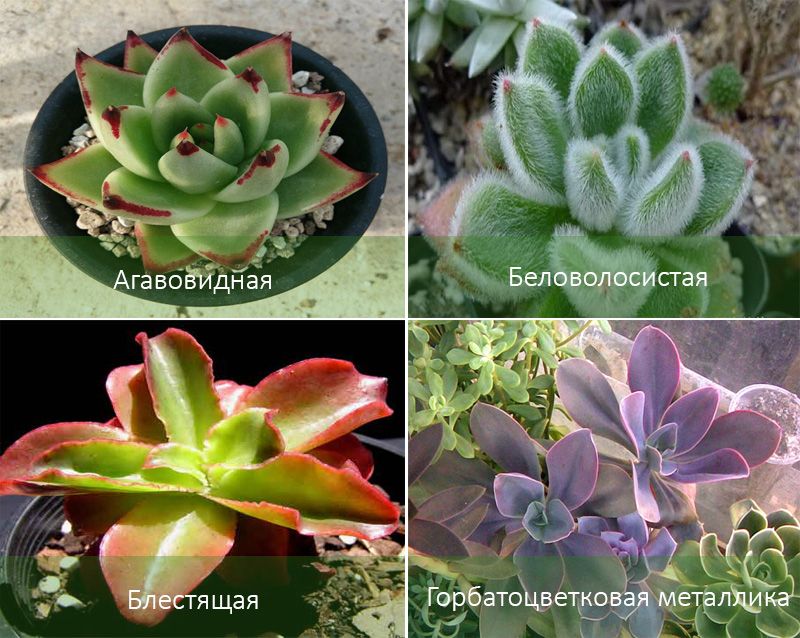
Common types:
- agave;
- white-haired;
- humpbacked-flowered;
- shiny;
- graceful;
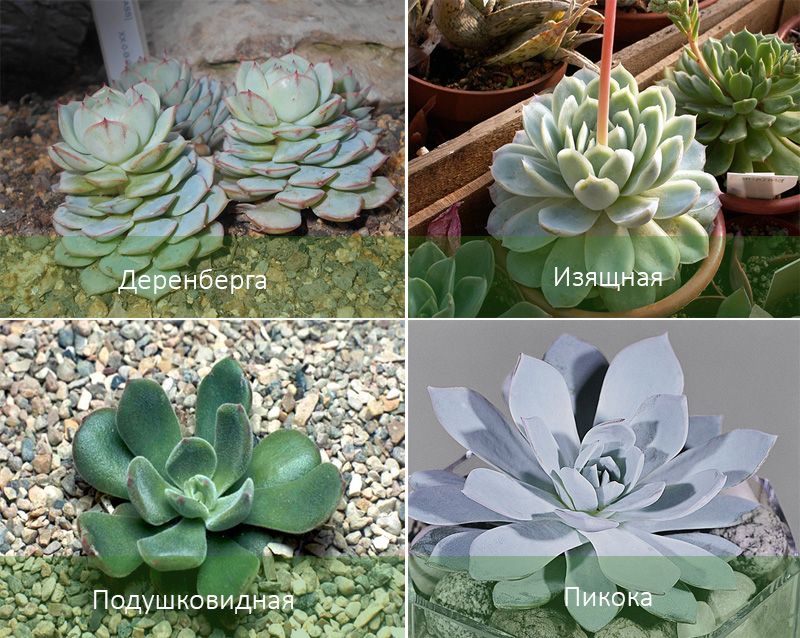
- Derenberg;
- cushion-shaped;
- Peacock;
- Black Prince;
- Miranda.
| Illumination | Direct ultraviolet rays. |
| Temperature | Spring and summer: +22…+27 °С. Autumn and winter: When dormant – +10…+15 °C. When flowering – not below +18 °C. |
| Humidity | Dry. Do not spray. |
| Pot and soil | Wide, shallow, with a drainage hole. For cacti and succulents with the addition of pebbles. |
| Watering | Spring and summer: as the soil dries out.
Autumn and winter: once a month if leaves wrinkle. |
| Top dressing | Spring and summer: once a month.
Autumn and winter: not needed. |
| Reproduction | Leaf cuttings, shoots, seeds (rarely). |
Interested in this flower? Find out more in the article.Echeveria: description, types, photos, tips, and reviews for home care.
26 species + 155 subspecies and varieties of stem succulents
In stem succulents, moisture accumulates primarily in the trunk. Leaf blades are small or absent altogether.
Adenium
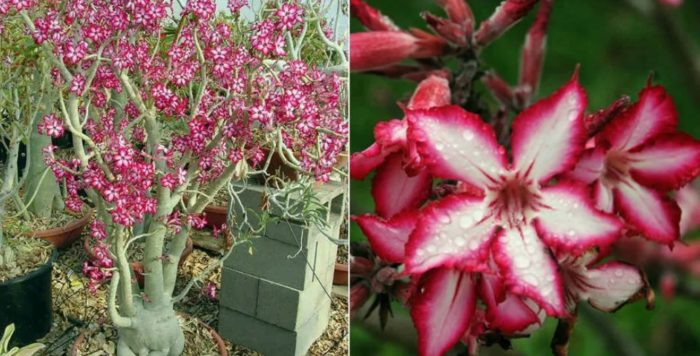
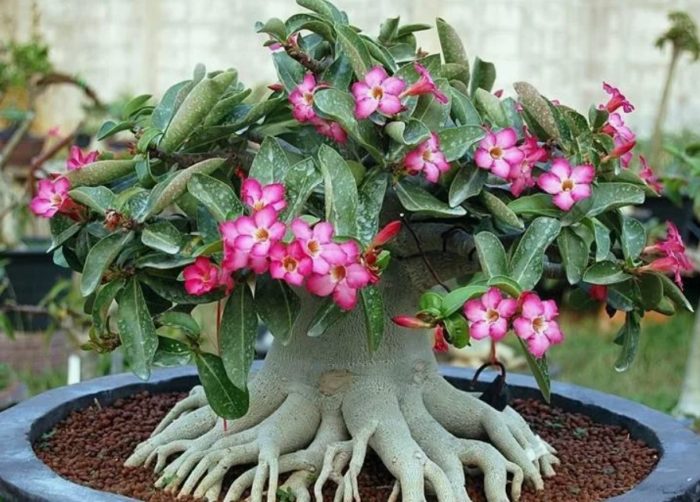
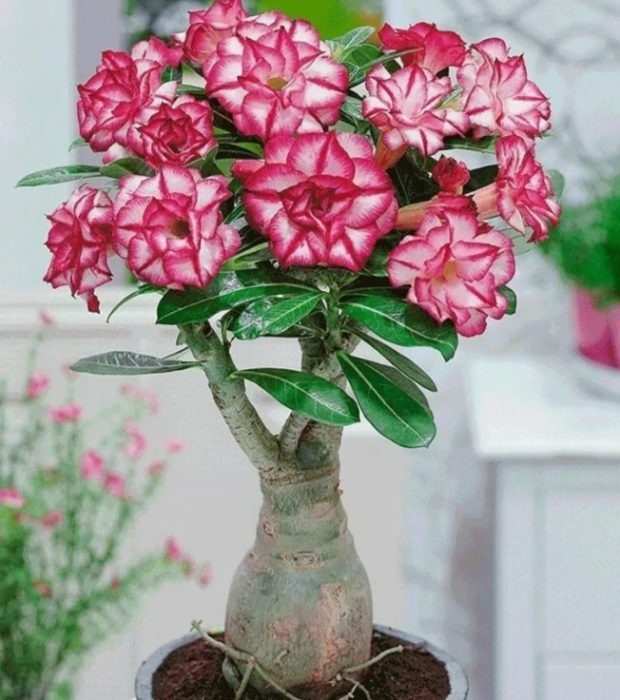
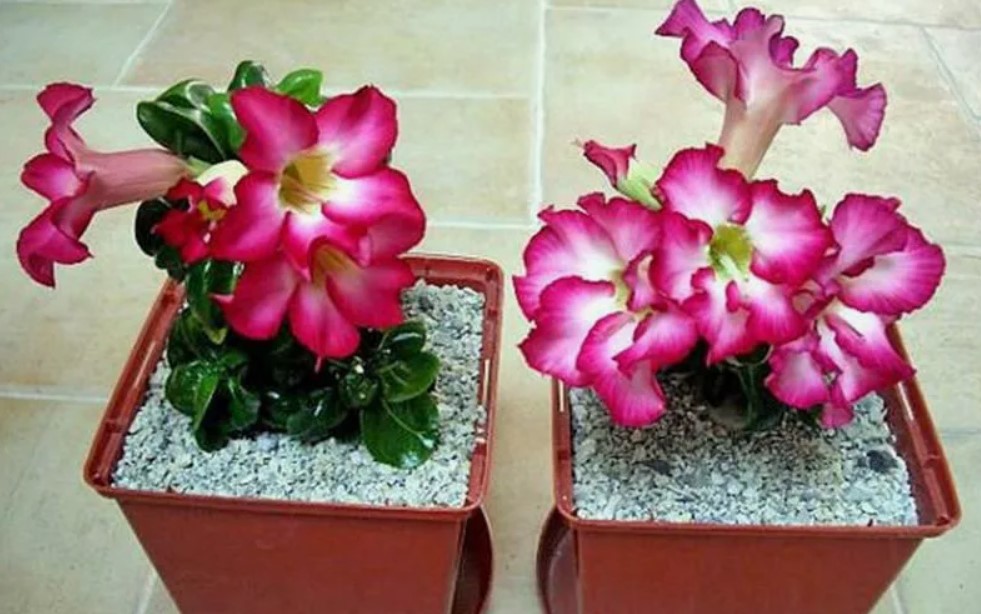
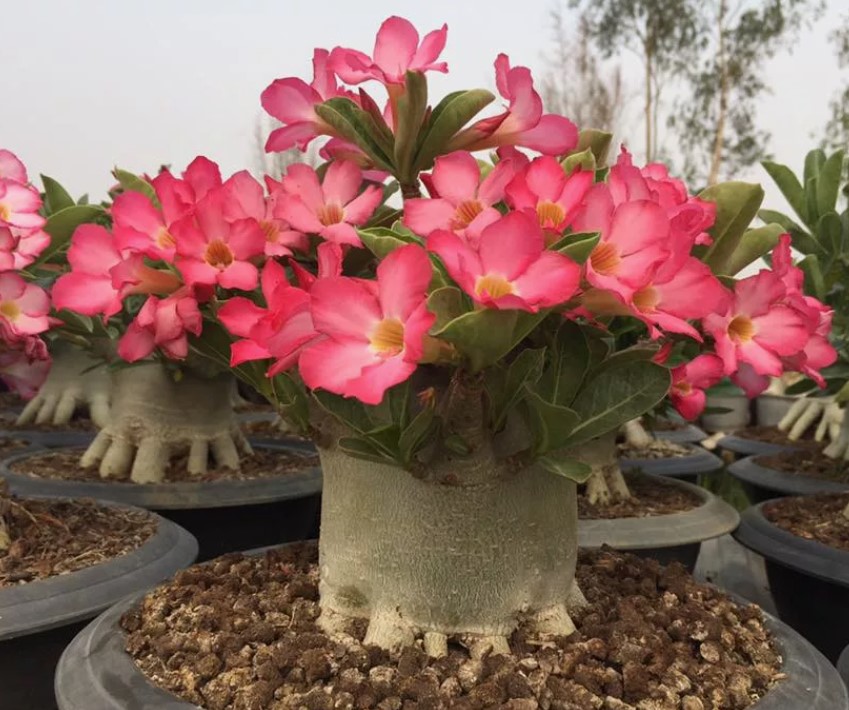
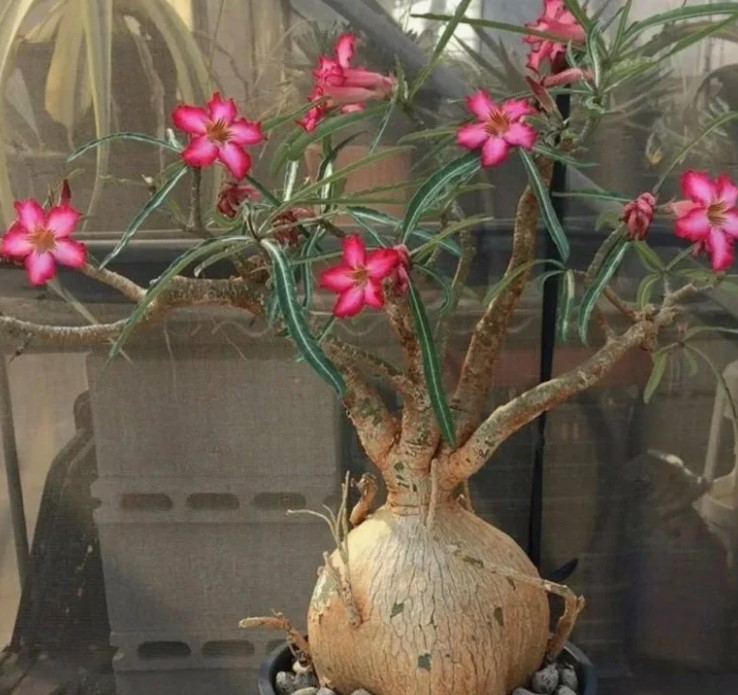
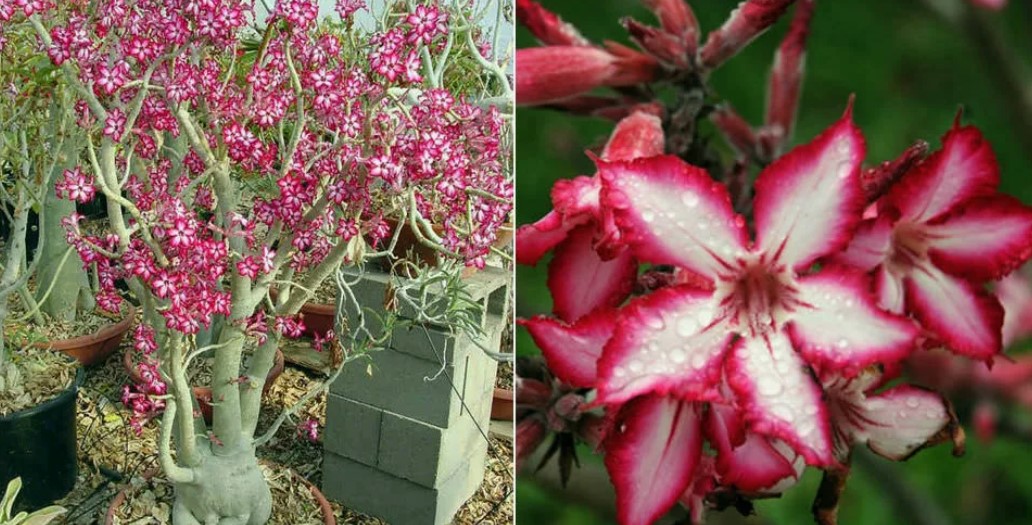
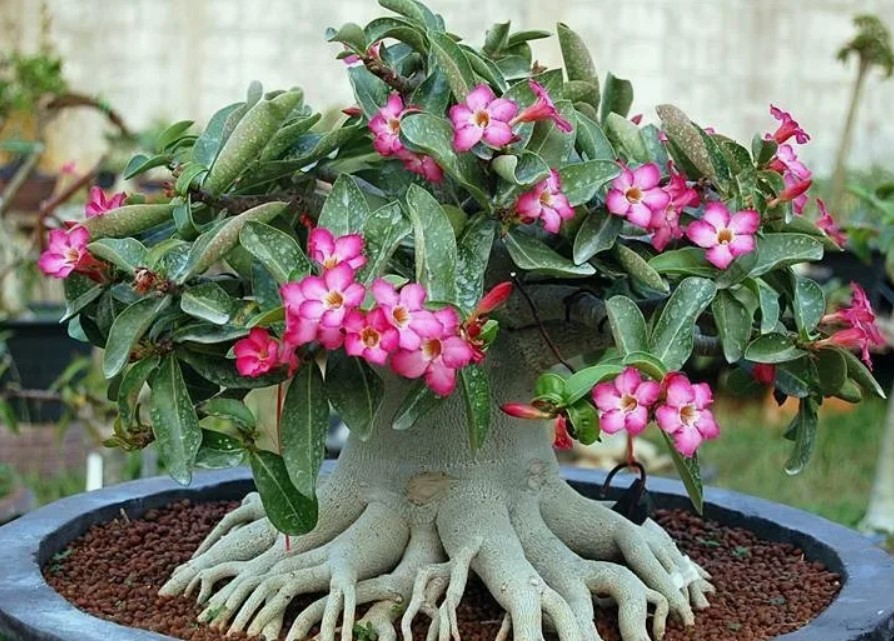
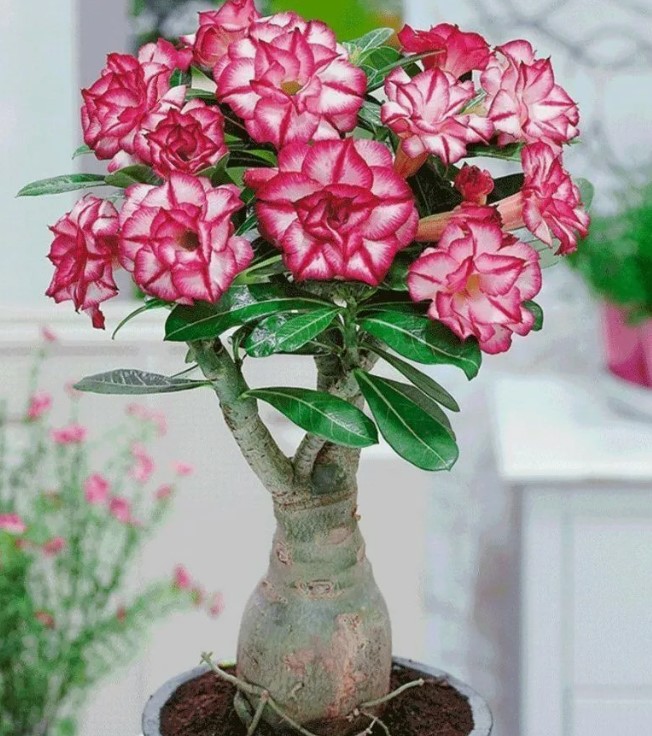
Family: Apocynaceae. Native to the African tropics. This plant has smooth, fleshy, swollen stems that can be entirely underground. Leaves have pointed or blunt ends. Flowers are pink, yellow, snow-white, and red-black.
Types:
- Mini;
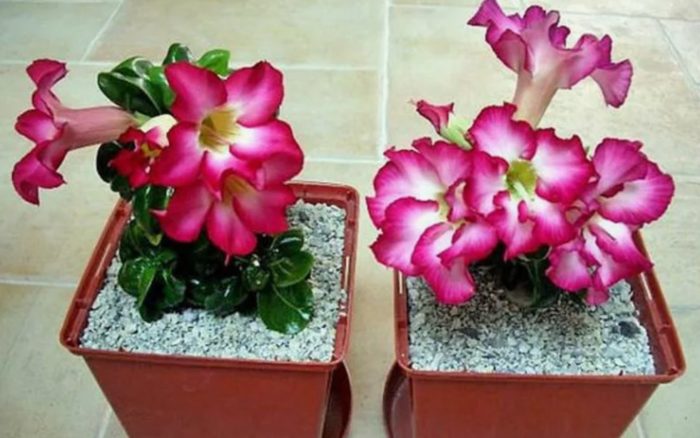
- Arabicum;
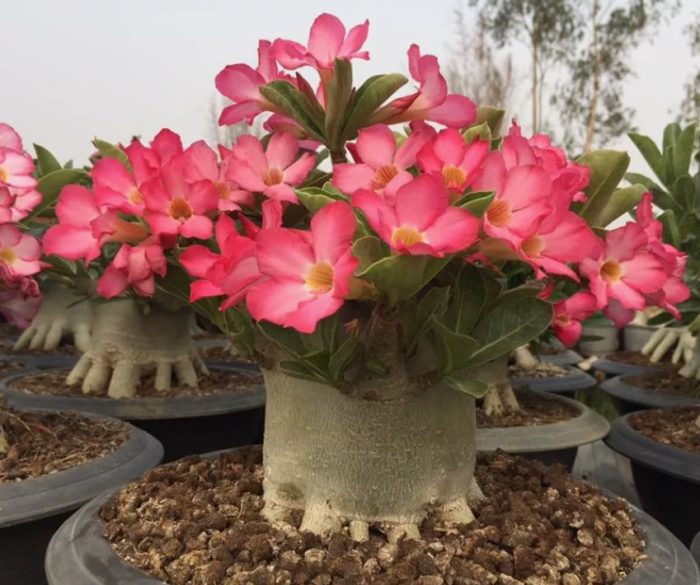
- Somali;
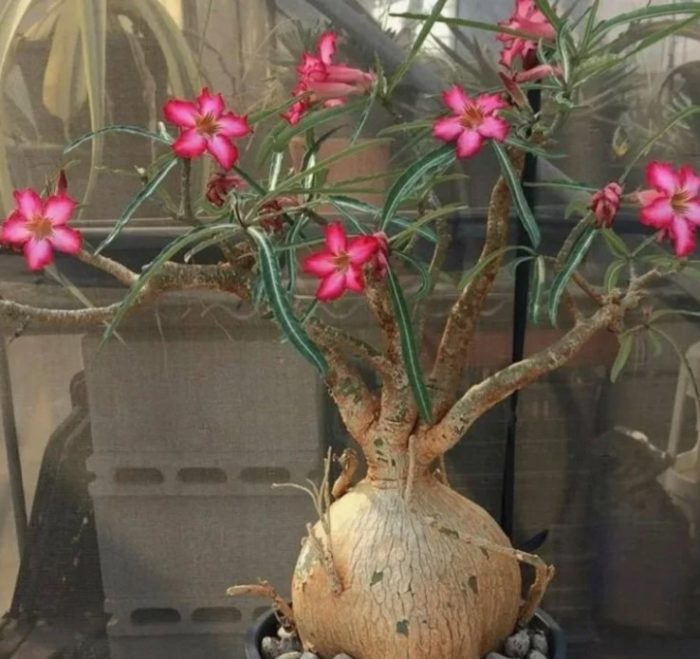
- multiflorum;
- Socotran;
- Obesum;
Care:
| Illumination | Bright, not afraid of direct rays. |
| Temperature |
+20…+35 °C – in summer. Not less than +12°C in winter. |
| Humidity | Doesn't matter. Spraying is required. |
| Pot and soil |
Wide, plastic. Waterproof and breathable. |
| Watering | Abundant during active growth and very moderate during dormancy. |
| Top dressing | During the growing season, apply complex mineral compositions at half the dosage every month. |
| Reproduction | Cuttings, seeds, grafting. |
| Care Features | Pruning is required to increase the number of inflorescences. |
Read the article to learn how to grow this poisonous, yet very unusual and beautiful plant, even from seeds. Adenium: Description, Types, and Home Care
Ariocarpus
Family: Cactaceae. Native to the United States and Mexico. It has a short, flattened stem. The leaves are grayish-brown or gray-green, reminiscent of stones. The flowers are bell-shaped and come in red, yellow, and white.
Types of Ariocarpus:
- agave-like;
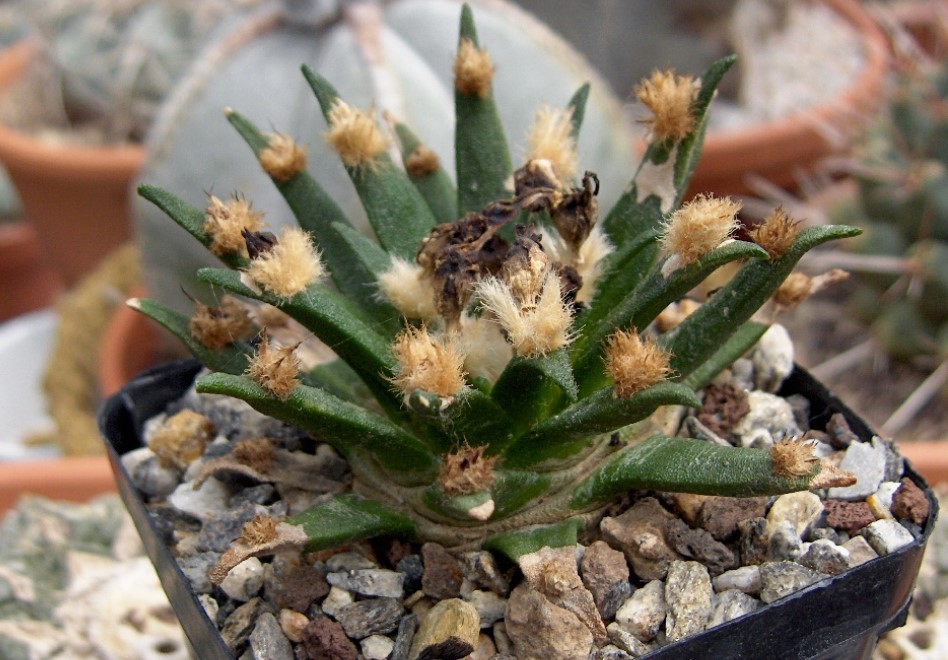
- dull;
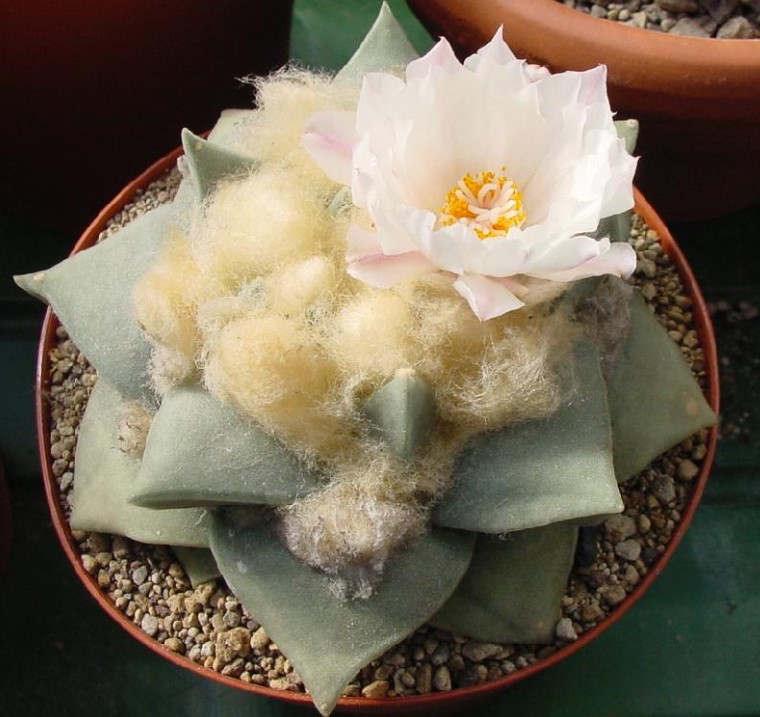
- cracked;
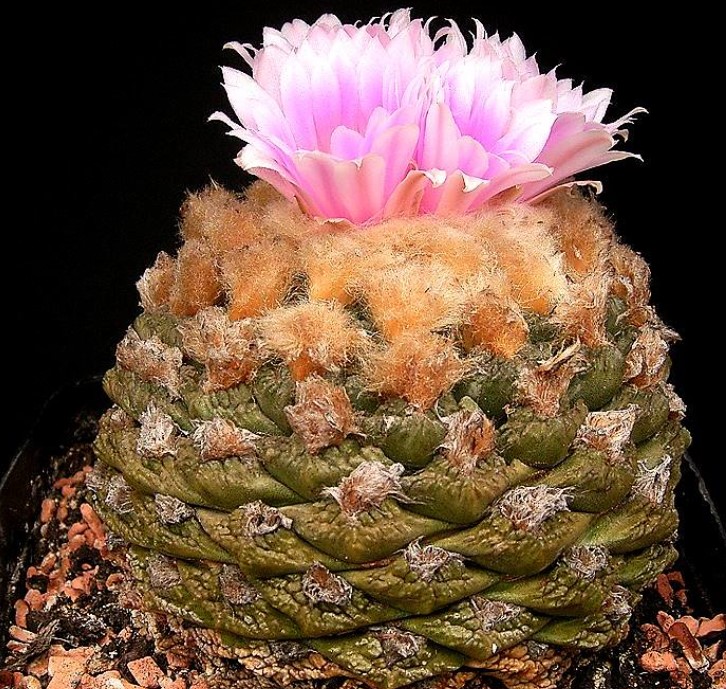
- flaky;
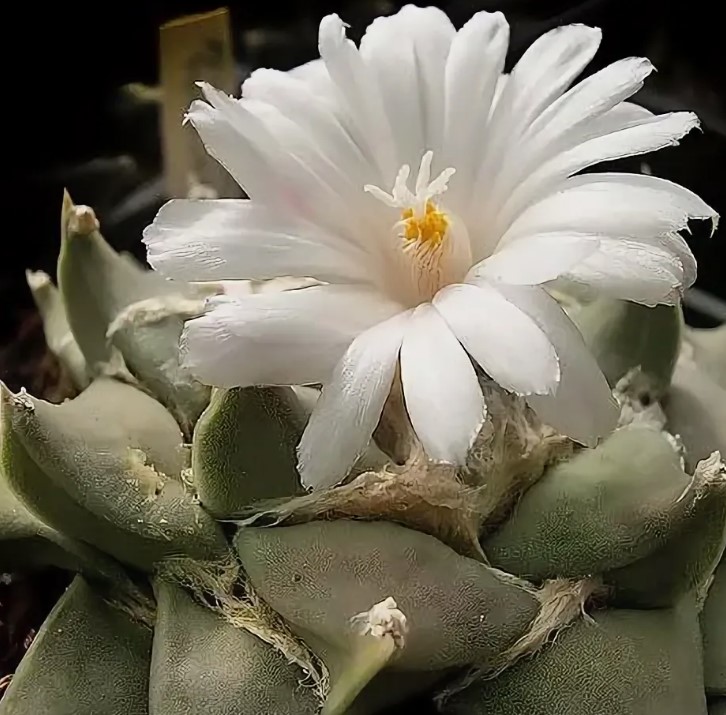
- Lloyd;
- keeled.
Care:
| Illumination | Place on the eastern or western windowsill. |
| Temperature |
+20…+25 °C – in summer. +12…+15 °C – in winter. |
| Humidity | Do not spray. |
| Pot and soil |
Wide, made of clay. Sand or pebbles. |
| Watering | Only after the soil has completely dried. |
| Top dressing | Apply fertilizer for cacti and succulents 3 times during the growing season. |
| Reproduction | By seeds, by grafting. |
| Care Features | As it grows, replanting by transshipment is required. |
Find out all about cacti.
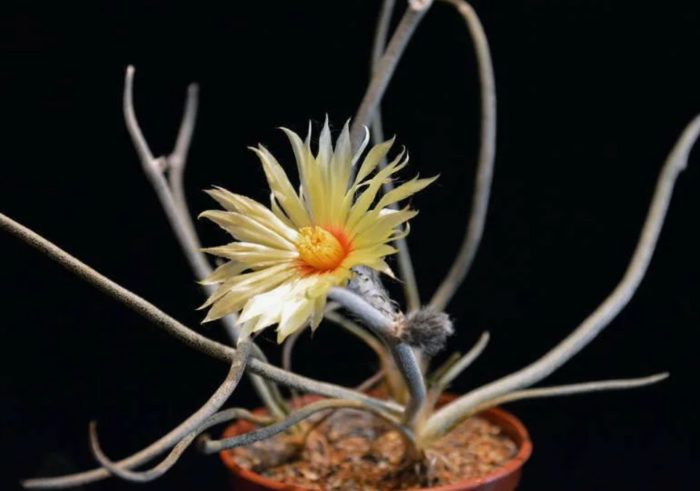
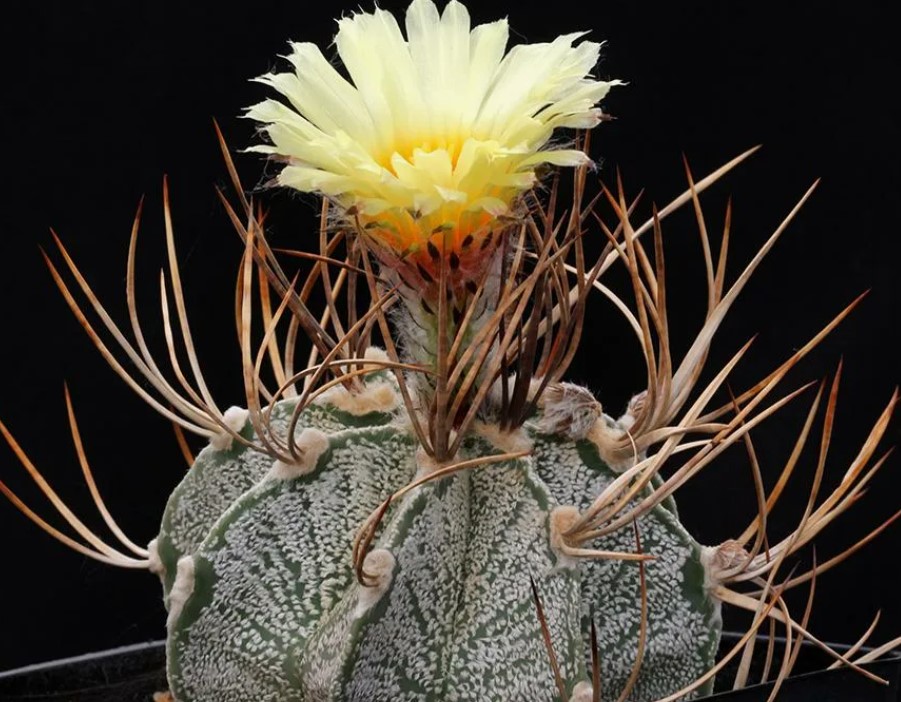
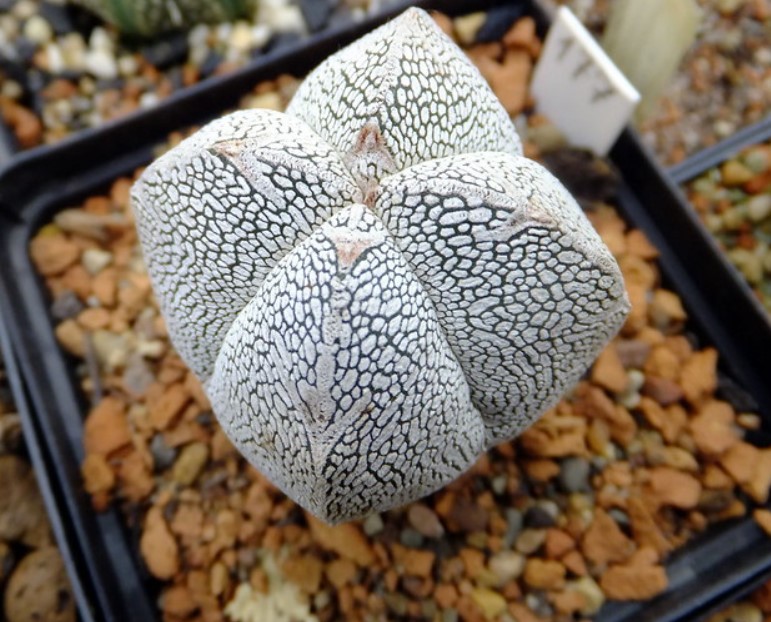
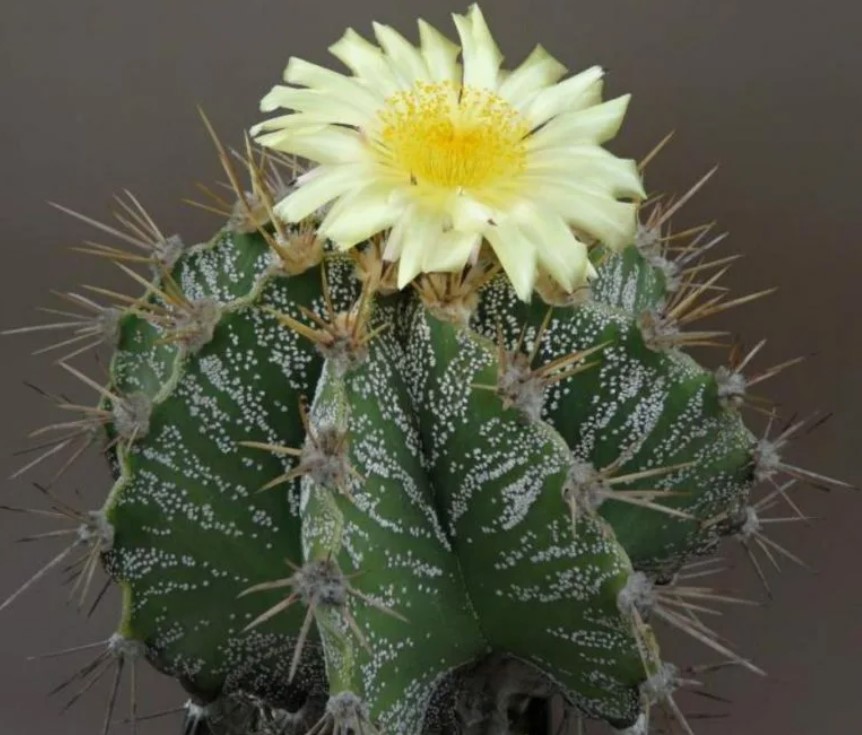
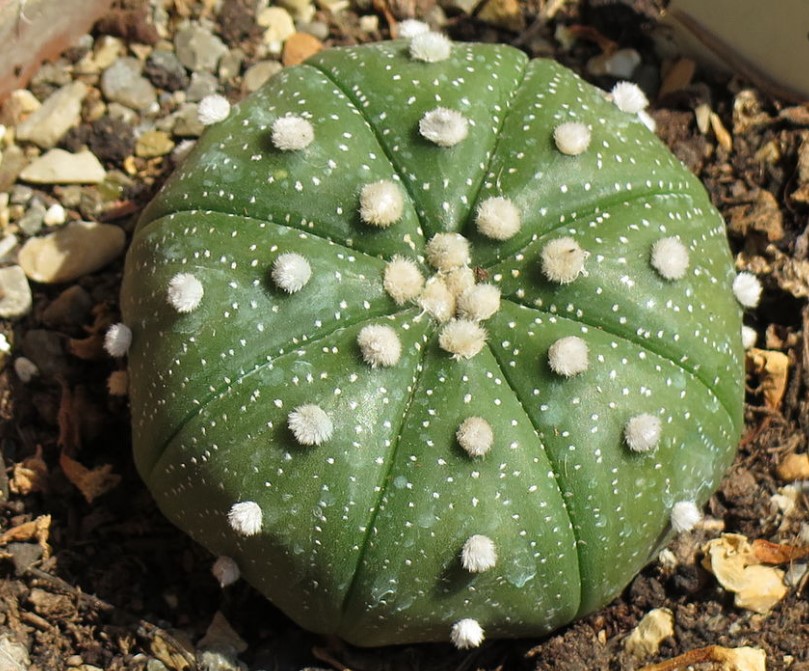
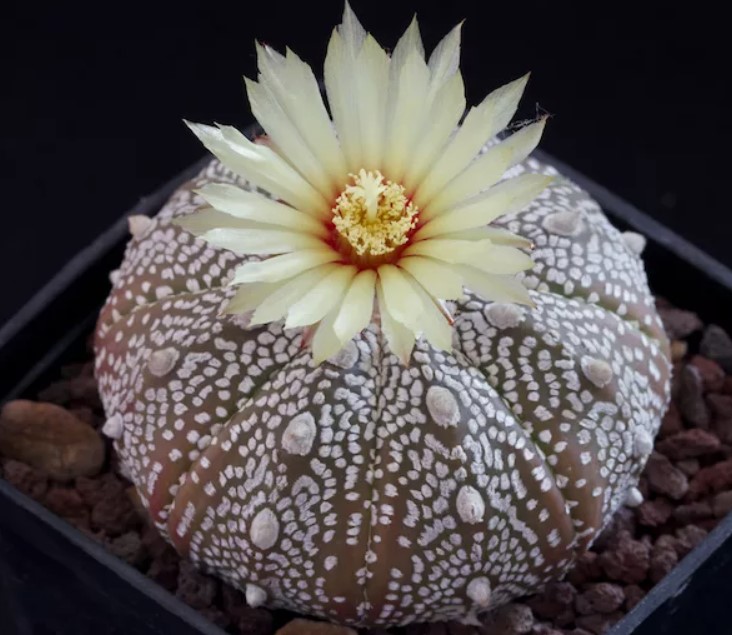
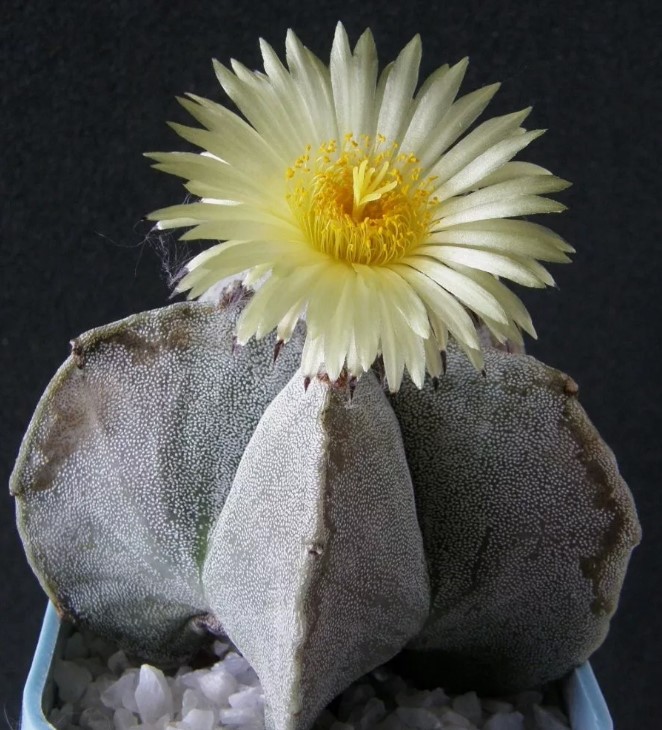
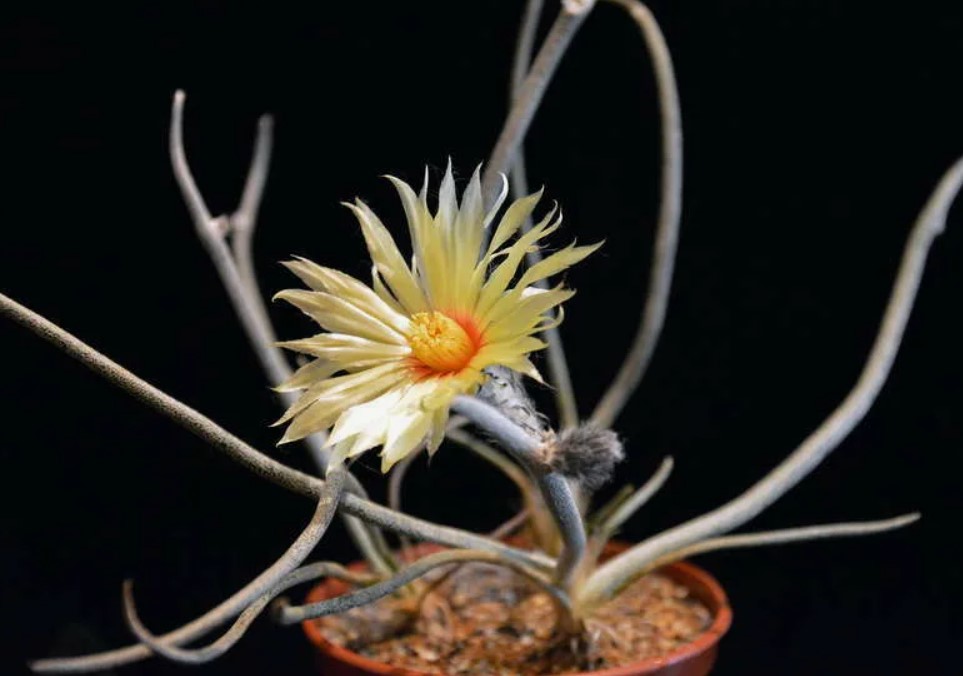
Astrophytum
Family: Cactaceae. Native to northern Mexico and the southern United States. This is a solitary, elongated cactus with several large facets. It can produce several flower stalks, each bearing a single, large yellow or cream-colored flower.
Types:
- Capricorn;
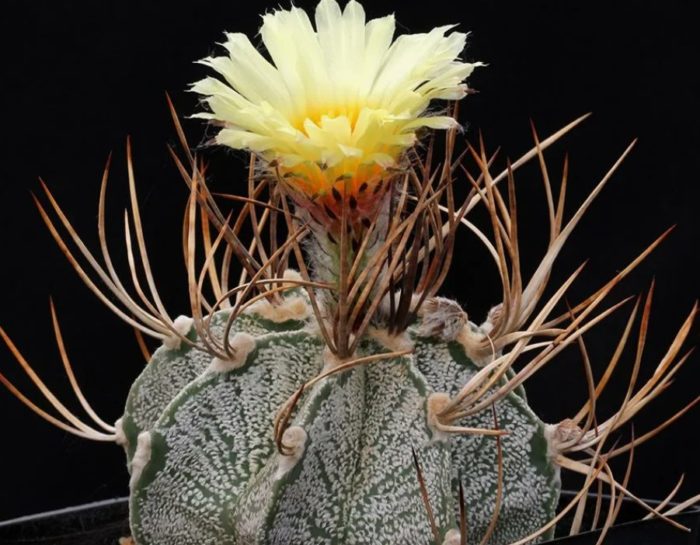
- mottled;
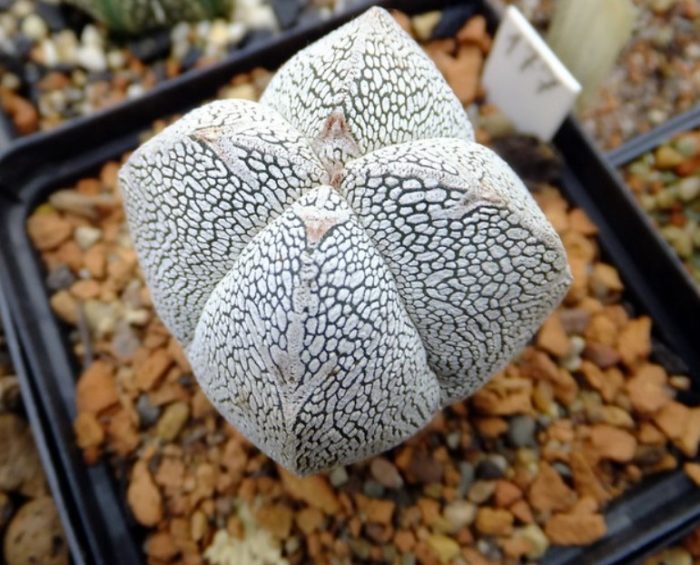
- Ornatum;
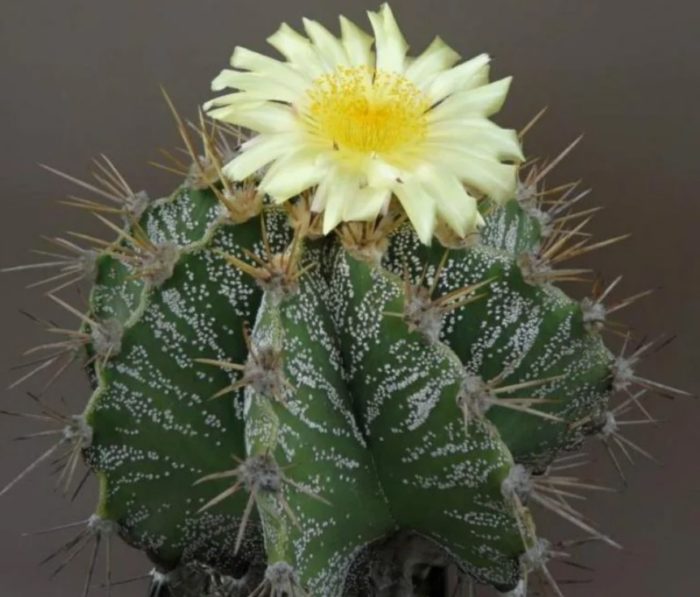
- Asterias;
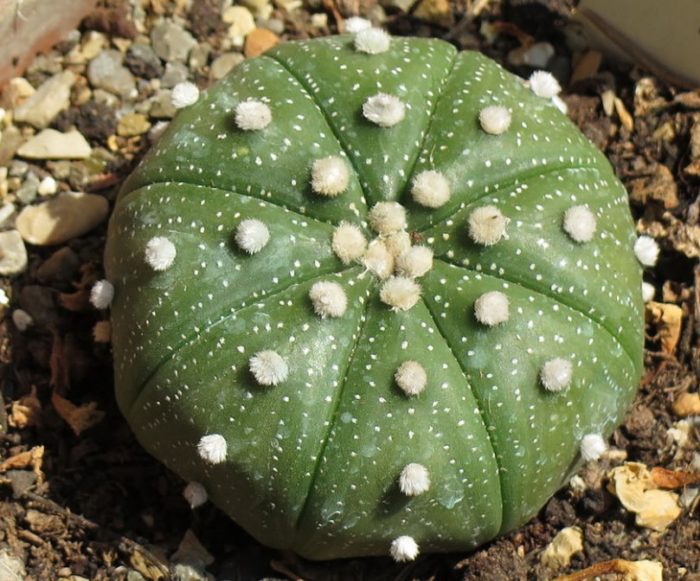
- Asterias Super Kabuto;
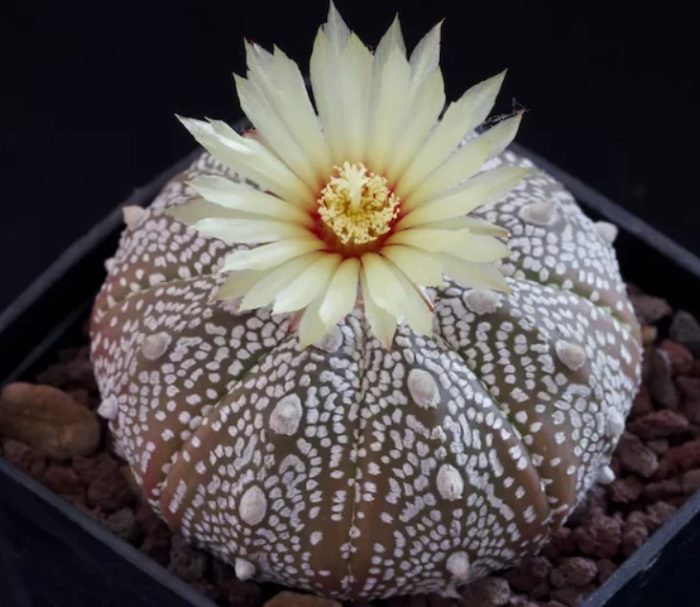
- polystigma;
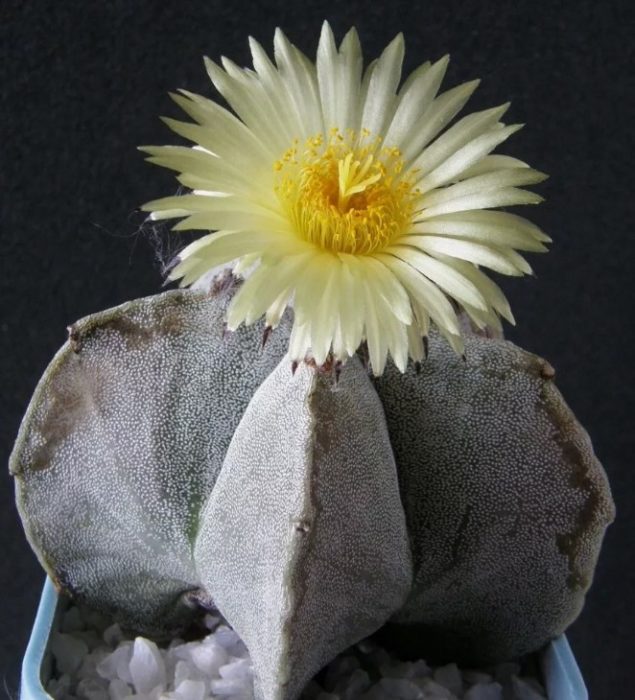
- Head of Medusa.
Care:
| Illumination | South or east window. |
| Temperature |
+20…+25 °C – in summer. +10°C – in winter. |
| Humidity | Doesn't matter. |
| Pot and soil |
With drainage holes. Sand, leaf soil, peat, turf in equal quantities. |
| Watering | During the growing season, water regularly but moderately. Do not water during dormancy. |
| Top dressing | With special fertilizer once a month in spring and summer. |
| Reproduction | Seeds. |
| Care Features | When planting and replanting, do not allow the root collar to become too deep. |
Austrocylindropuntia
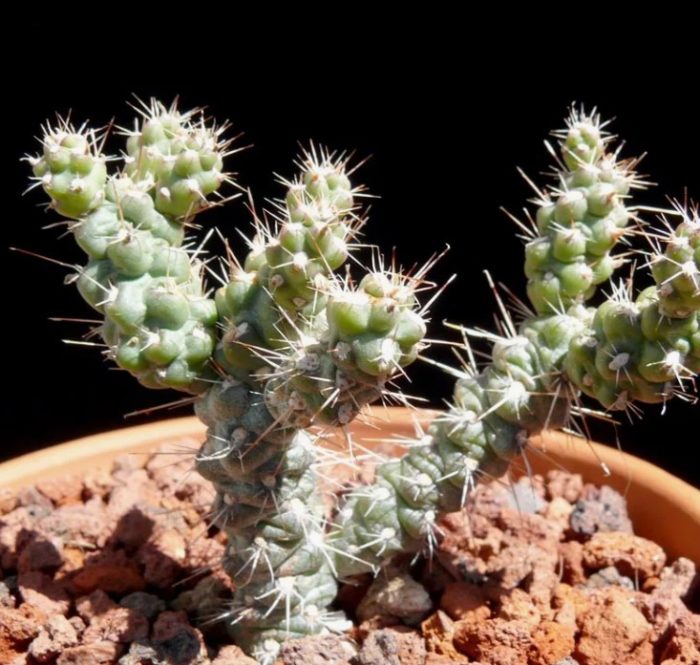
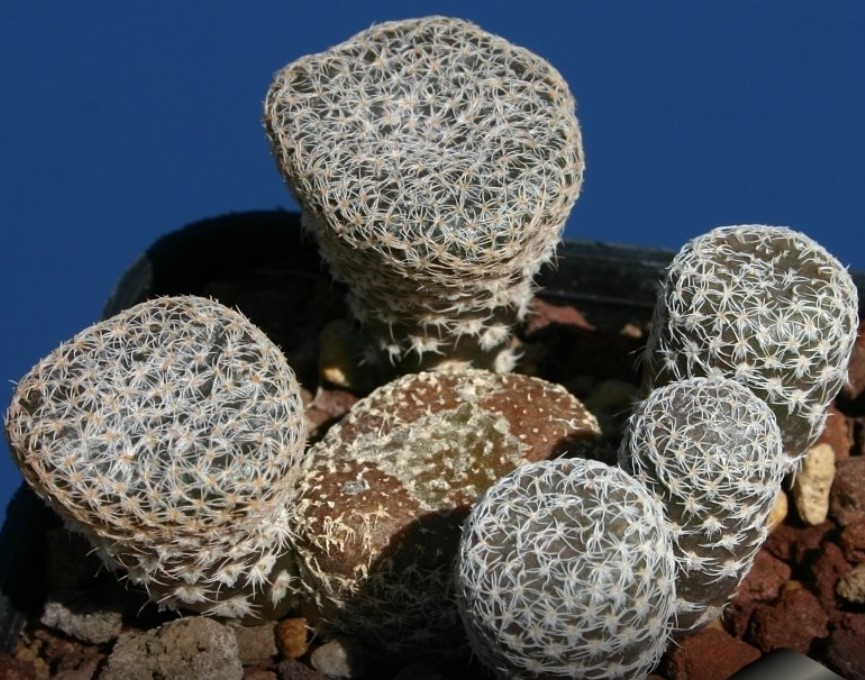
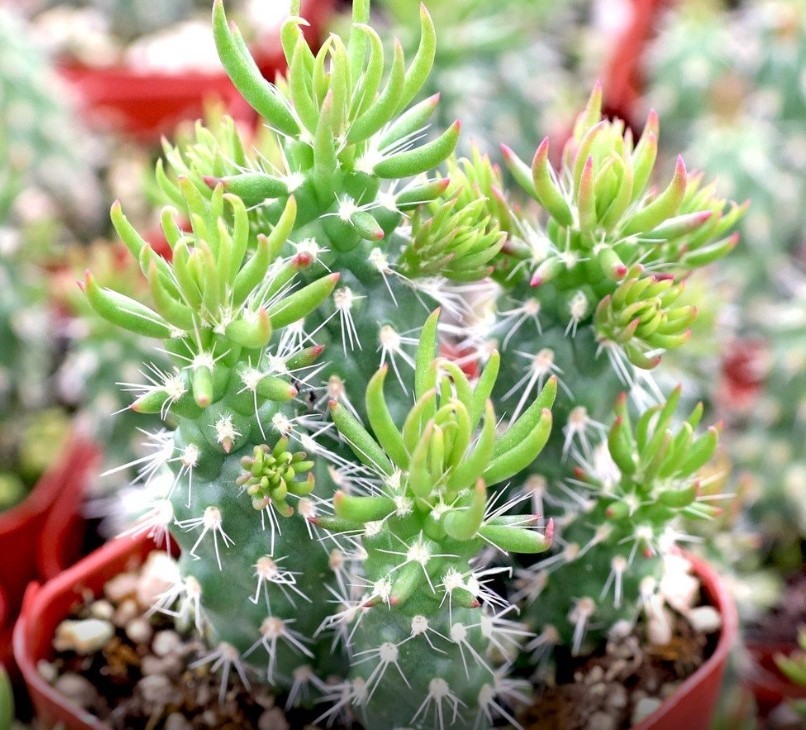
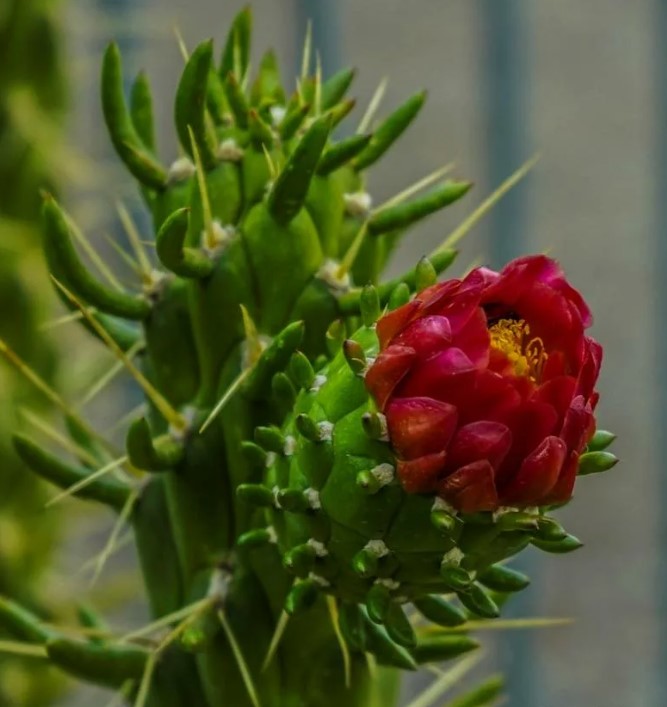
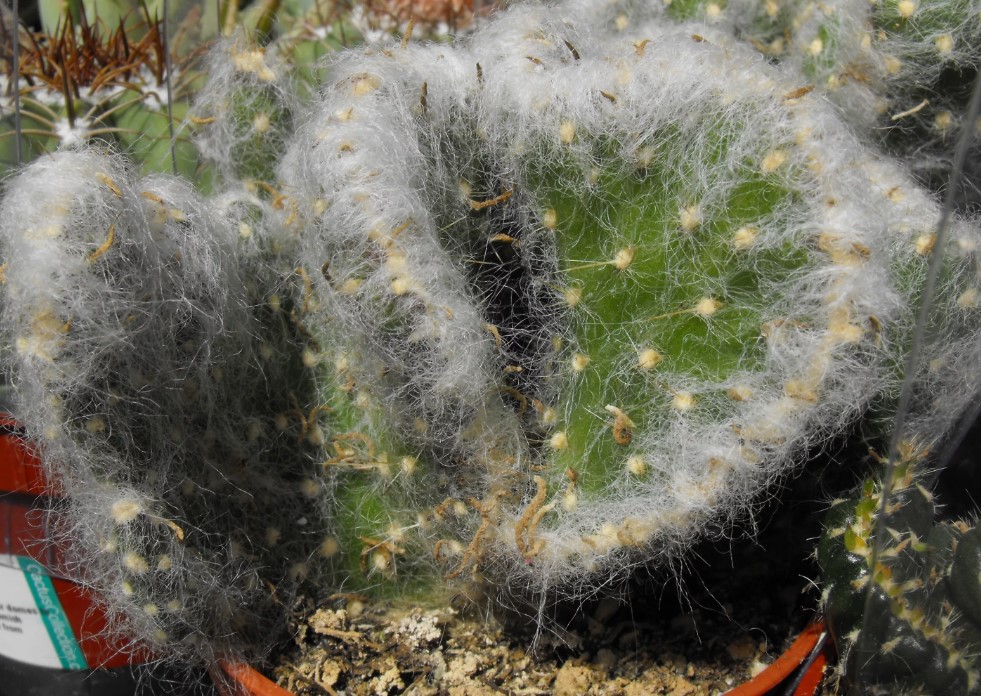
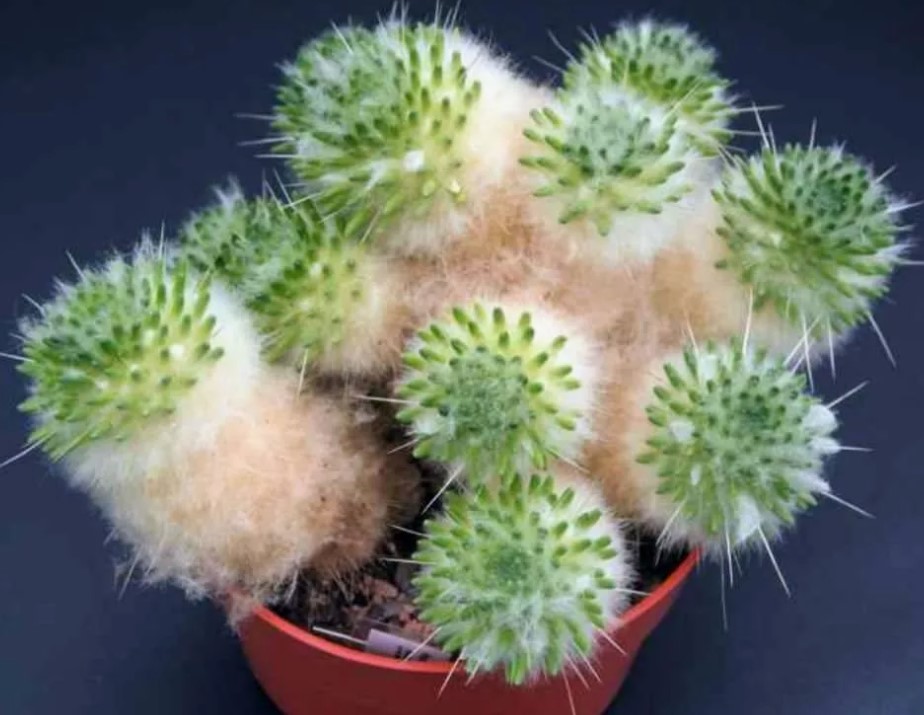
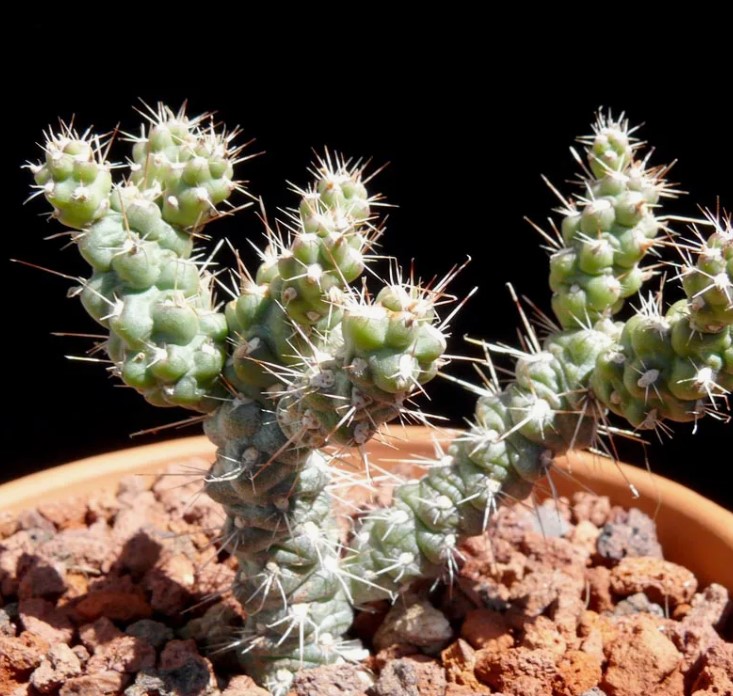
Family: Cactaceae. Native to South America, Bolivia, Argentina, Peru, and Ecuador. A tree-like plant with green, erect stems, long spines, and spike-shaped inflorescences.
Types of Austrocylindropuntia:
- club-shaped;
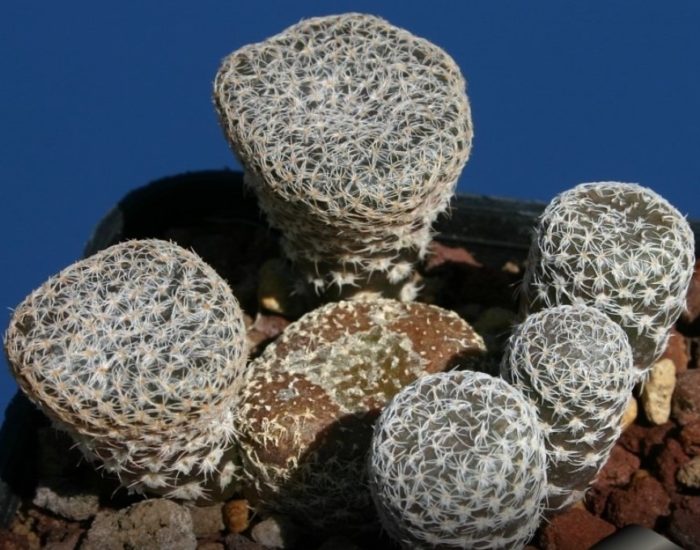
- subulate;
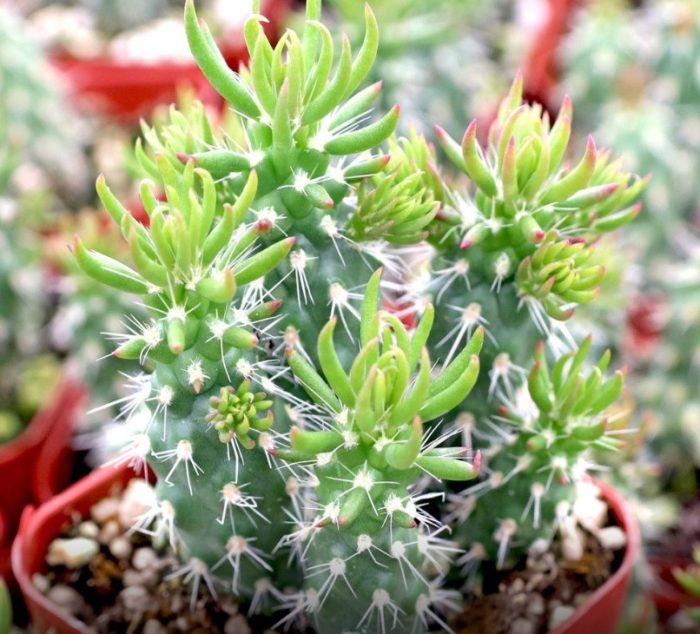
- cylindrical;
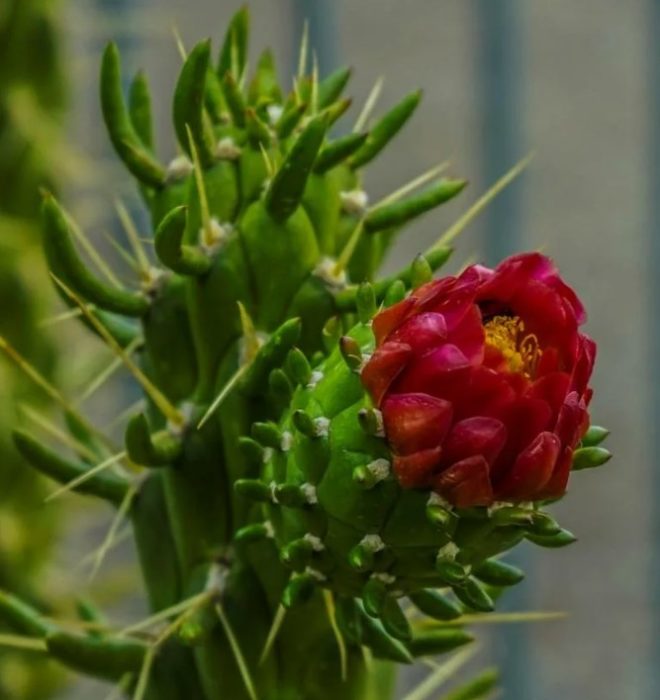
- Vestita;
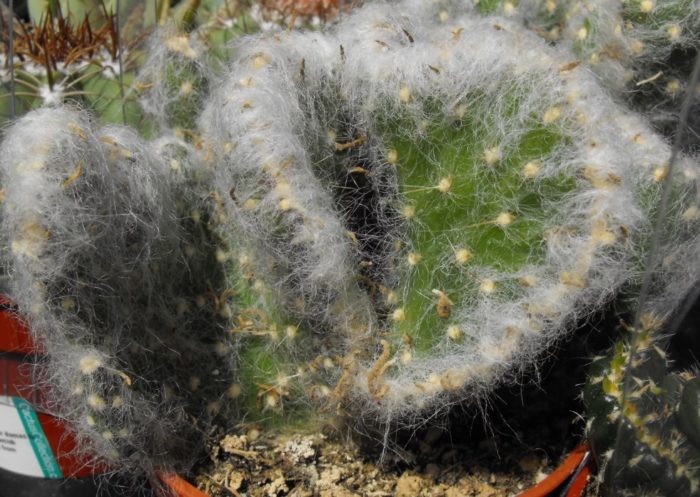
- Lagopus;
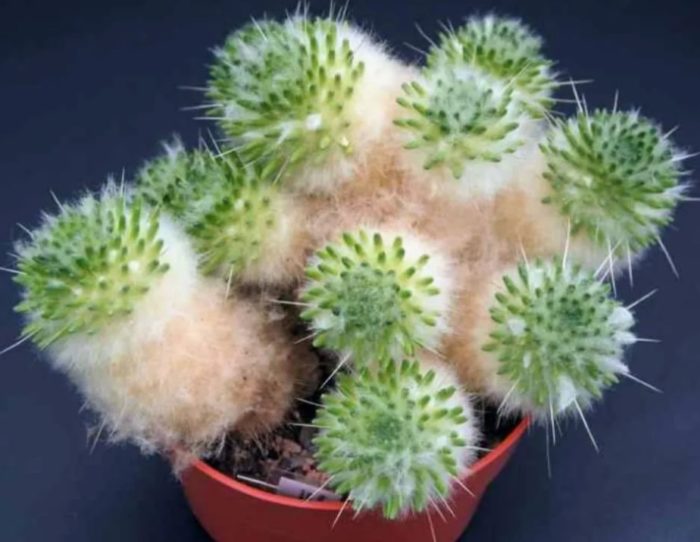
- Shaferi.
Care:
| Illumination | It tolerates even direct sunlight well. |
| Temperature |
Maximum – up to +35 °C. Minimum – not below +10 °C. |
| Humidity | Can tolerate anything. |
| Pot and soil |
Selected taking into account the root system. Leaf humus (40%) + turf (30%) + sand and gravel (30%). |
| Watering | As the soil dries out, to a depth of 2 cm. |
| Top dressing | From May to September, once a month. Use cactus fertilizer. |
| Reproduction | Cuttings, seeds. |
| Care Features | Pruning is performed when the growth is strong. |
Bovieya
Family: Asparagus. Natural habitat: from Kenya to the Cape Province of South Africa. A perennial succulent, it grows as a vine with long, creeping stems and extensive branching.
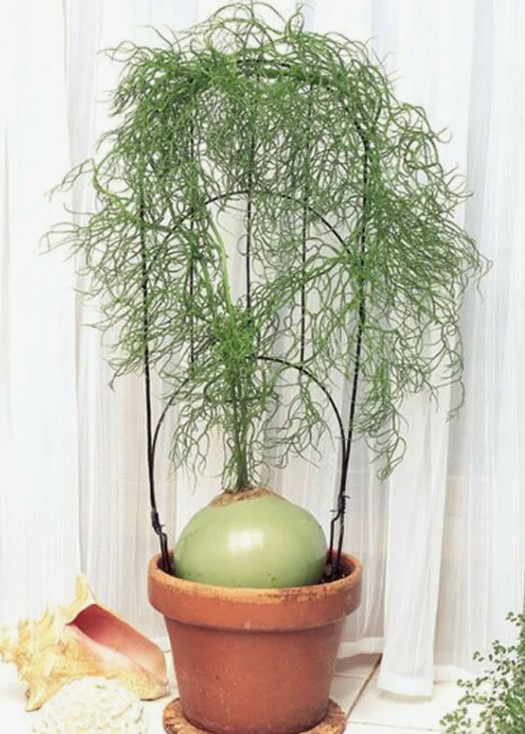
Types:
| Curly
|
It has a bulbous dark green root located on the surface of the earth. |
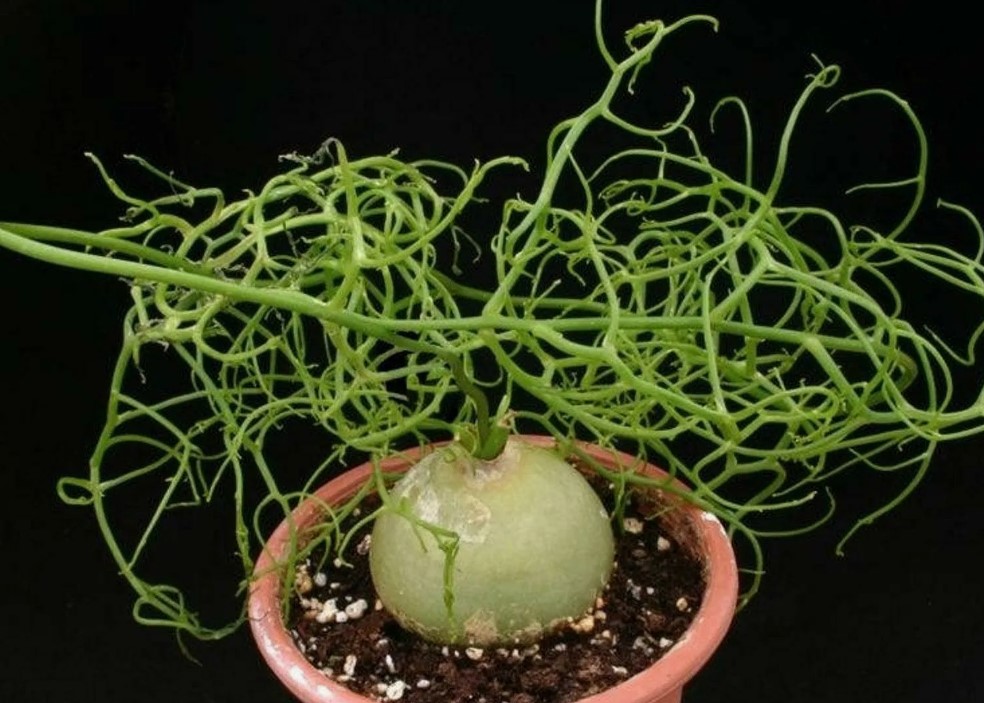
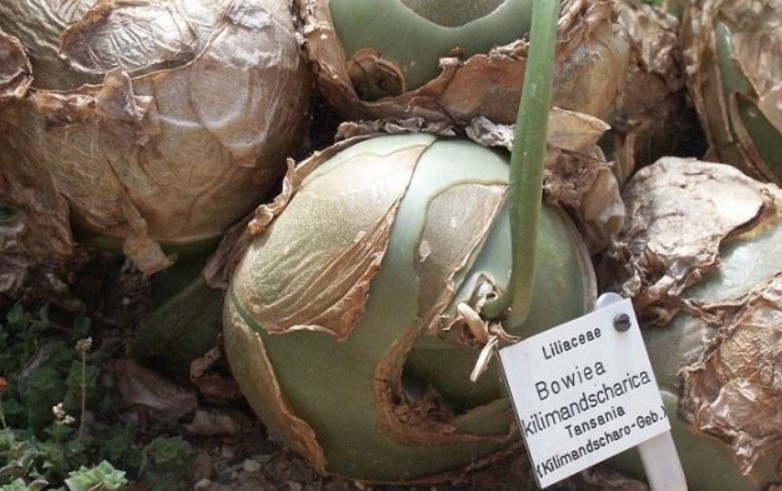
| Kilimanjaro
|
The bulb is small compared to other species. Over time, even young specimens develop numerous small bulblets. |
| Gariepskaya
(Bowiea gariepensis) |
Flowers appear on thick, wire-shaped stems. Over time, the stems twist and begin to branch heavily. |
Care:
| Illumination | Moderate. |
| Temperature |
+20…+30 °C – during vegetation. +12…+15 °C – at rest. |
| Humidity | No need to spray. |
| Pot and soil |
Large enough for the bulb to fit comfortably. Light, with weak or neutral acidity, air- and moisture-permeable. |
| Watering | Only after the top layer of soil has dried out. |
| Top dressing | A complex mixture for indoor plants, applied once every 8 days during the growing season. |
| Reproduction | Bulbs, seeds. |
| Care Features | Do not disturb when at rest. |
Brighamia
Family: Campanulaceae. Native to the Hawaiian Islands. The plant has a fleshy, bottle-shaped stem. Light green leaflets are gathered in terminal rosettes, resembling cabbage leaves. Flowers are clustered in 3-8 clusters and consist of 5 light yellow petals.
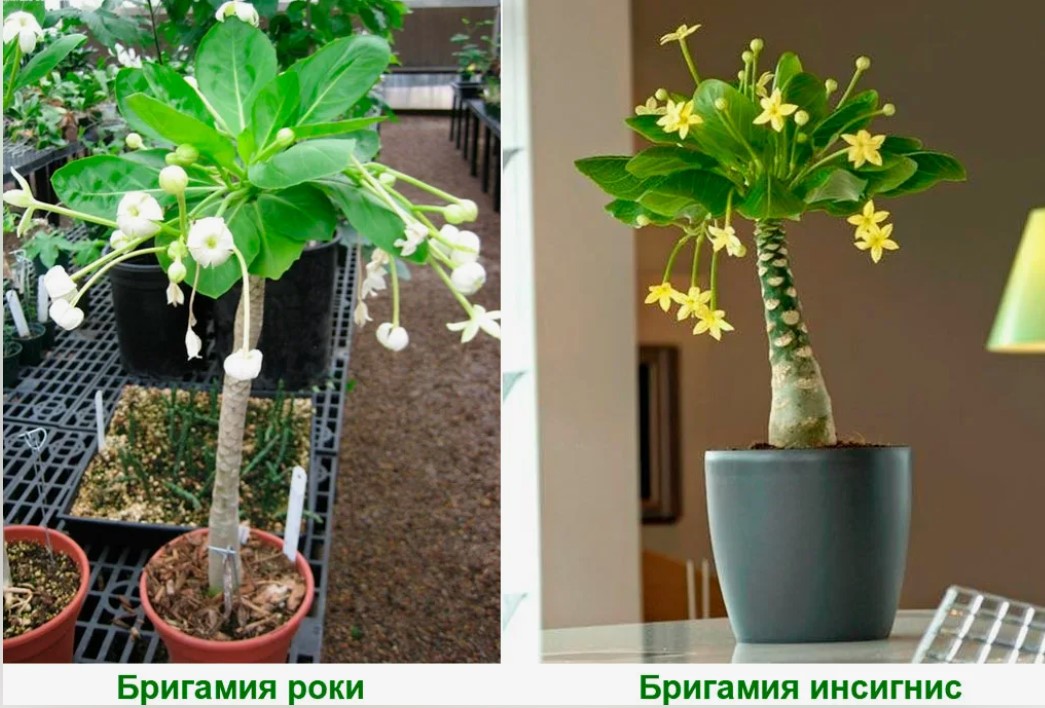
Types:
| Rocky | The stem is swollen at the base and tapers towards the top. The flowers are yellow. |
| Insignis | Flowers are yellow or white. |
Care:
| Illumination | In winter, place on a south-facing window. |
| Temperature |
+25…+27 °C – during vegetation. +15°C – at rest. |
| Humidity | 65-75%. |
| Pot and soil |
Wide and low. Drained, moisture-permeable, with low or neutral acidity. |
| Watering | During the growing season – once a week. At rest – once a month. |
| Top dressing | In spring and summer, apply cactus fertilizer once every 4 weeks. |
| Reproduction | By seeds, cuttings. |
| Care Features | Take a warm shower once every 4 weeks. |
You can find out how to care for the capricious Brighamia plant here.
Guernia
Family: Asclepiadaceae. Native to the arid regions of East and South Africa and the Arabian Peninsula. It has a stem that is heavily branched at the base. Smooth, brown or deep green shoots with 4-10 facets bearing sharp conical teeth. Flowers are collected in small inflorescences.
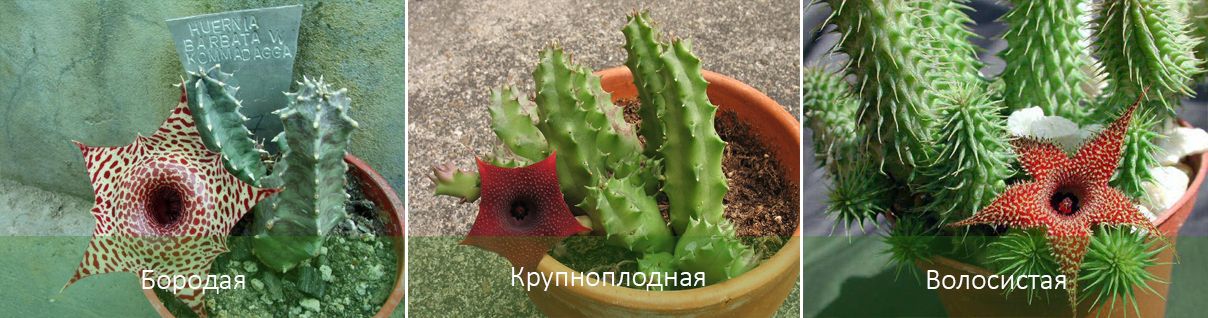
Types:
- large-fruited;
- hairy;
- Bearded;
- rough;
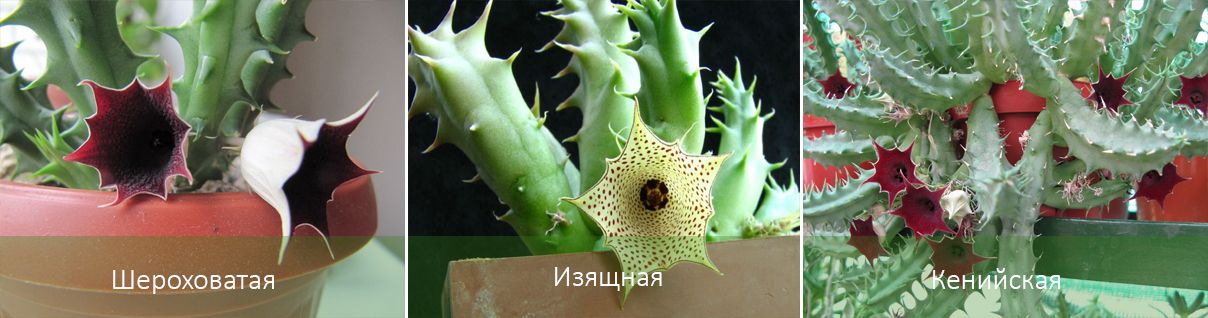
- Kenyan;
- graceful;
- primrose;
- prickly;
- Zebrina (striped);
- Bolean.
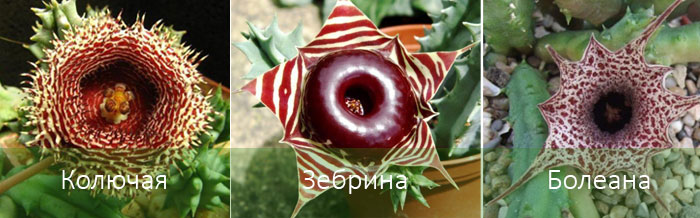
Home care:
| Illumination | Good. |
| Temperature |
+22…+27 °C – in summer. +5…+10 °C – in winter. |
| Humidity | Low or medium. |
| Pot and soil |
Not tall, but wide. Loose, slightly alkaline, with good air and water permeability. |
| Watering | In summer, water after half the soil has dried out. In winter, water only as needed. |
| Top dressing | During the growing season, once every 4 weeks with mixtures for cacti and succulents. |
| Reproduction | Stem cuttings, seeds. |
| Care Features | Annual replanting in spring.> |
Read more in the article Guernia: Description, Types, Care Guidelines, and Mistakes, Reviews.
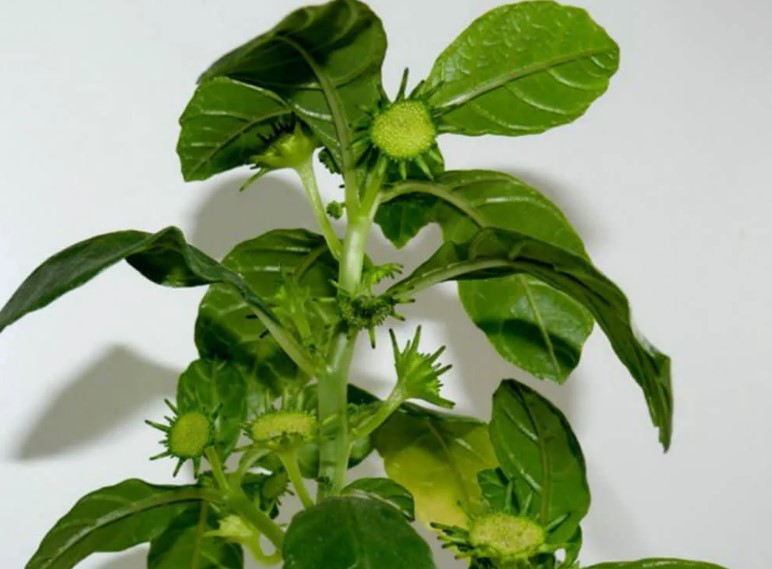
Dorstenia
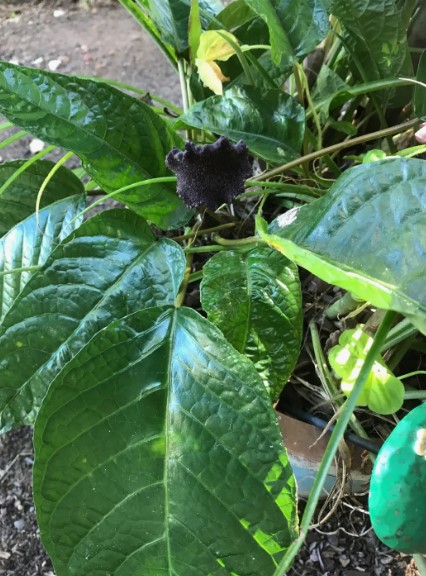
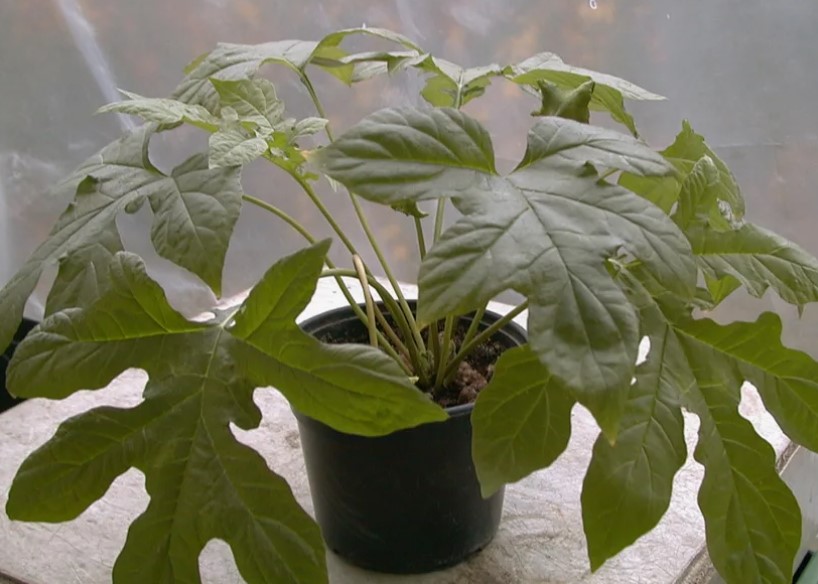
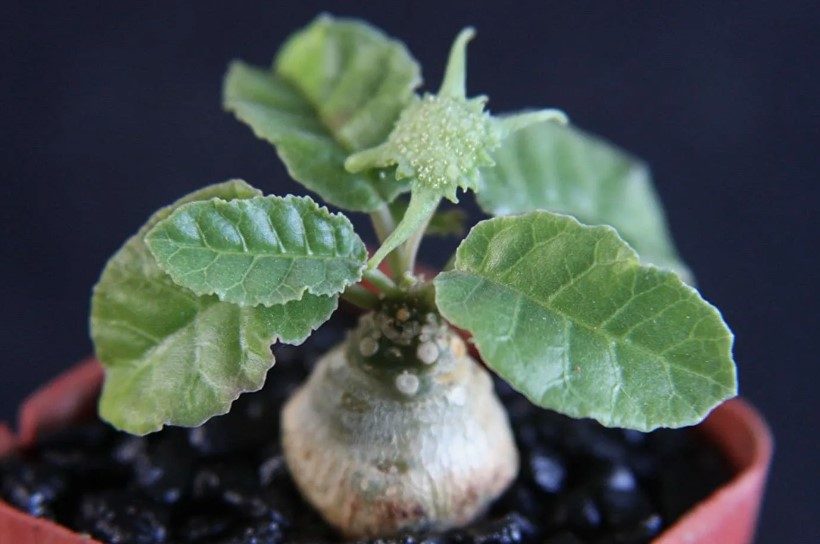
Family: Moraceae. Habitat: Ethiopia, Somalia, Kenya, Tanzania, Saudi Arabia, Yemen, Oman, and the Amazon floodplain. It has short, fleshy stems with large, rounded leaves on long petioles. The inflorescences are expanded racemes or clusters.
Common types:
- gigantic;
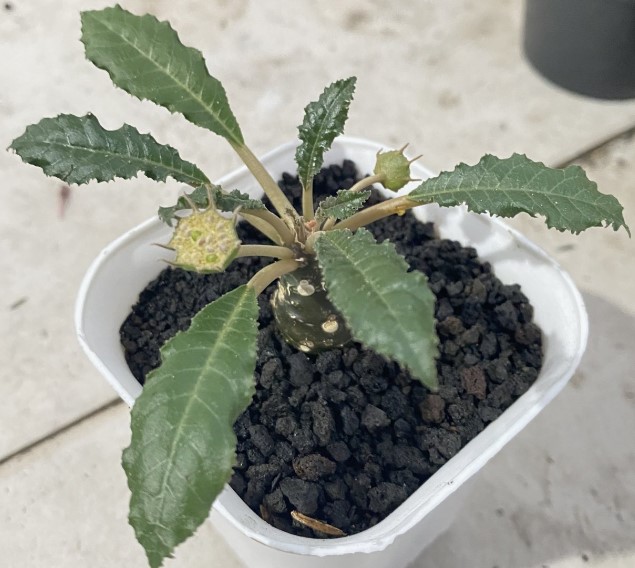
- antidote;
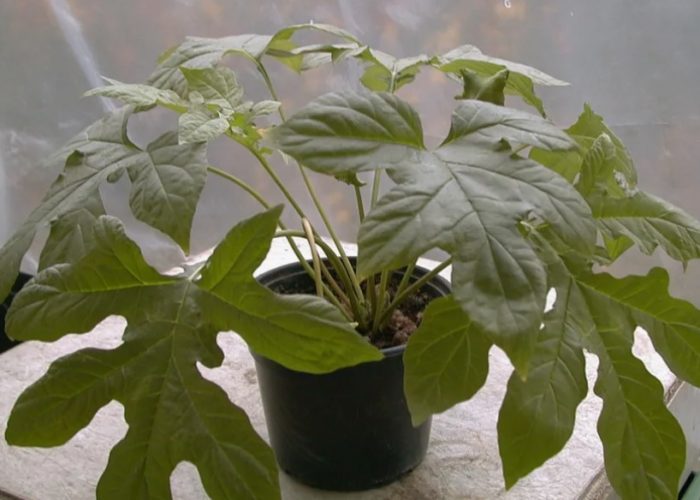
- smelly;
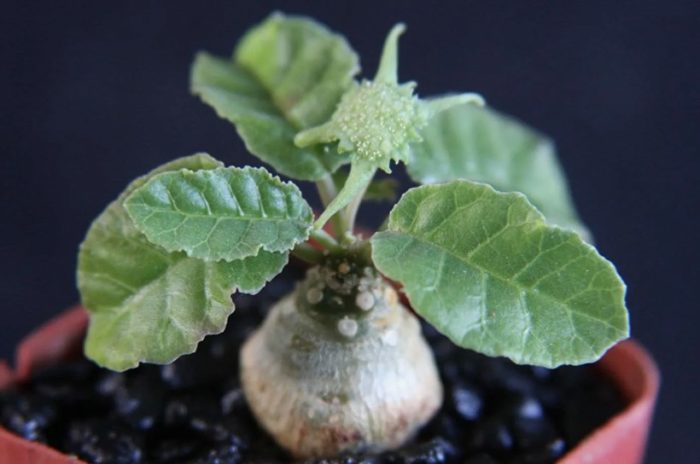
- Hildebrant;
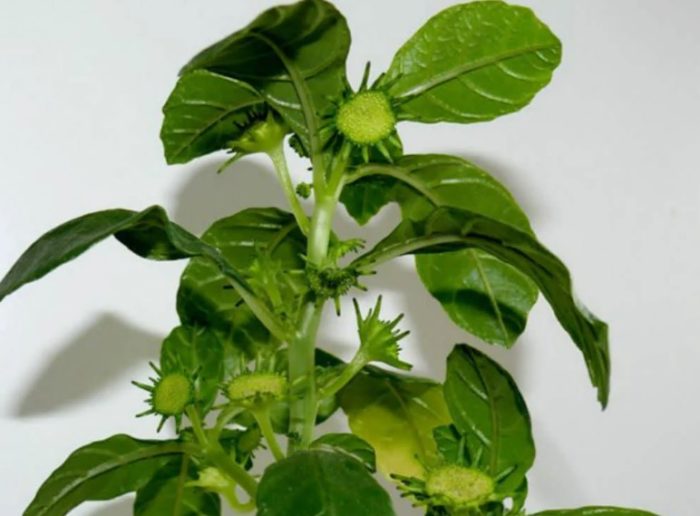
- curly;
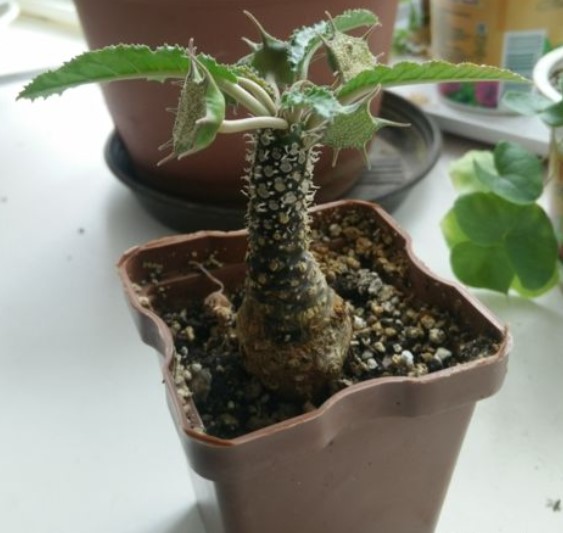
- Barnimiana;
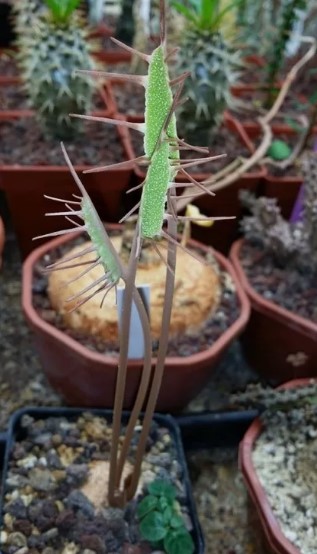
- springy.
| Illumination | Tall, but protected from direct sunlight. |
| Temperature |
+22…+30 °C – in summer. +15…+16 °C – in autumn and winter. |
| Humidity | It doesn't matter, but it's better not to place it next to operating heating devices. |
| Pot and soil |
With drainage holes. Lightweight, breathable and waterproof. |
| Watering | 2 times a week – in summer. Once every 2-3 weeks – in winter. |
| Top dressing | Not required. |
| Reproduction | By seeds, cuttings. |
| Care Features | Do not use cold or chlorinated water for watering. |
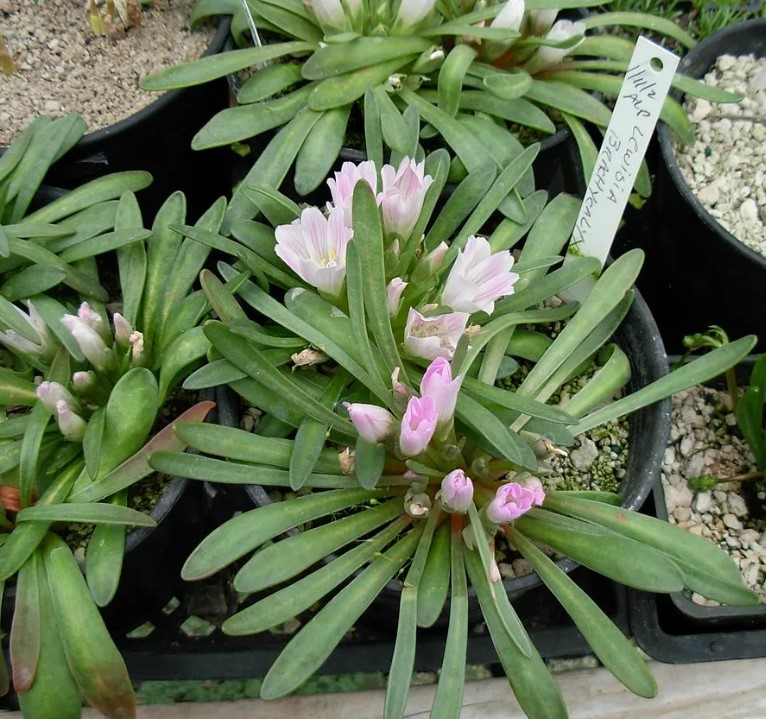
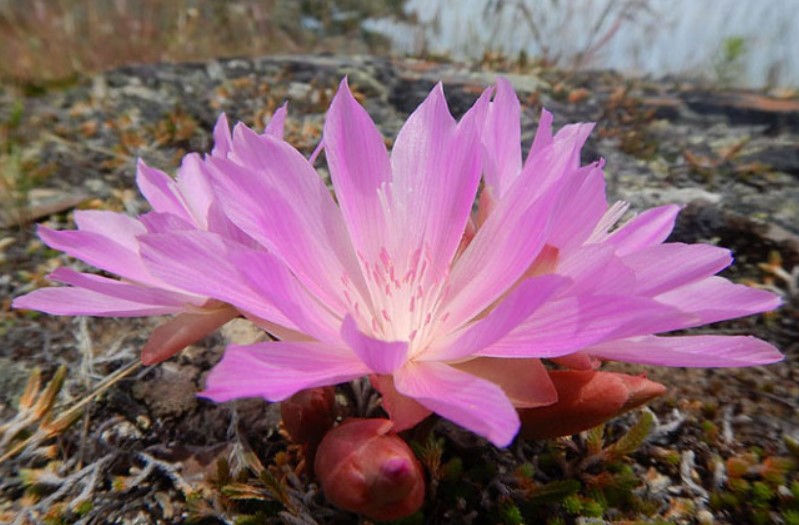
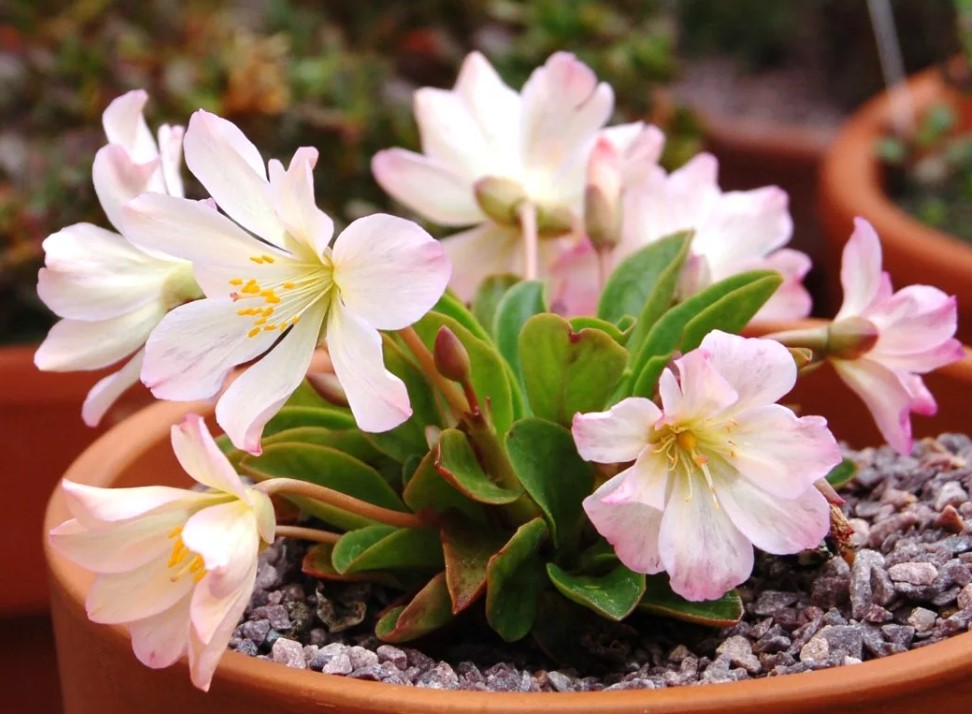
Lewisia
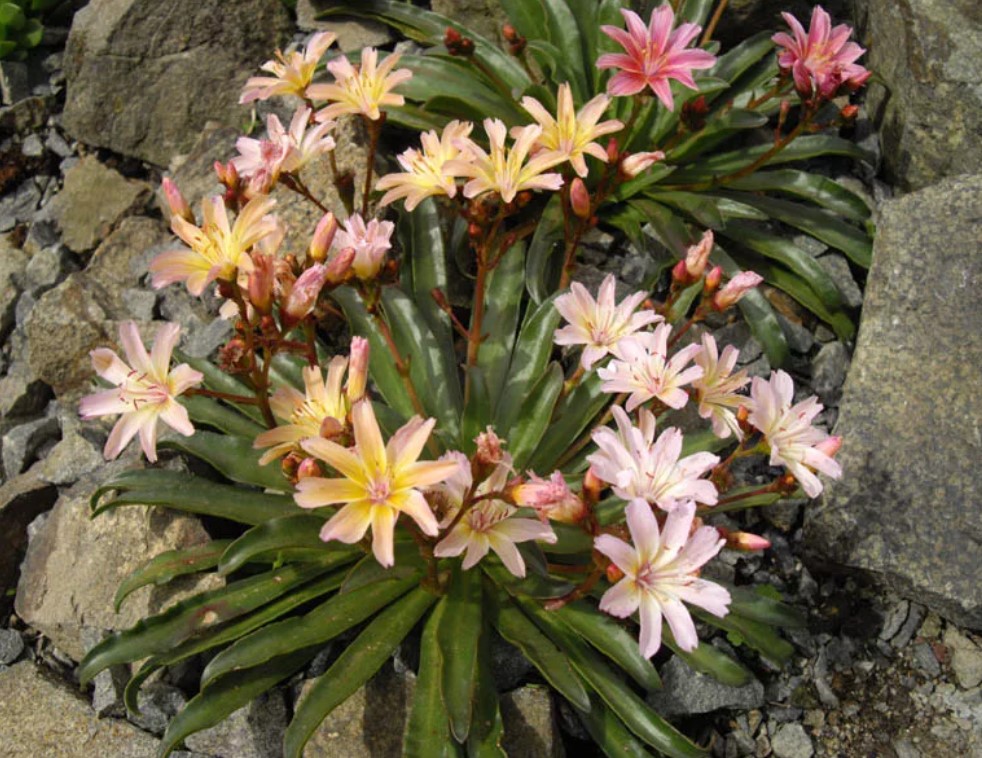
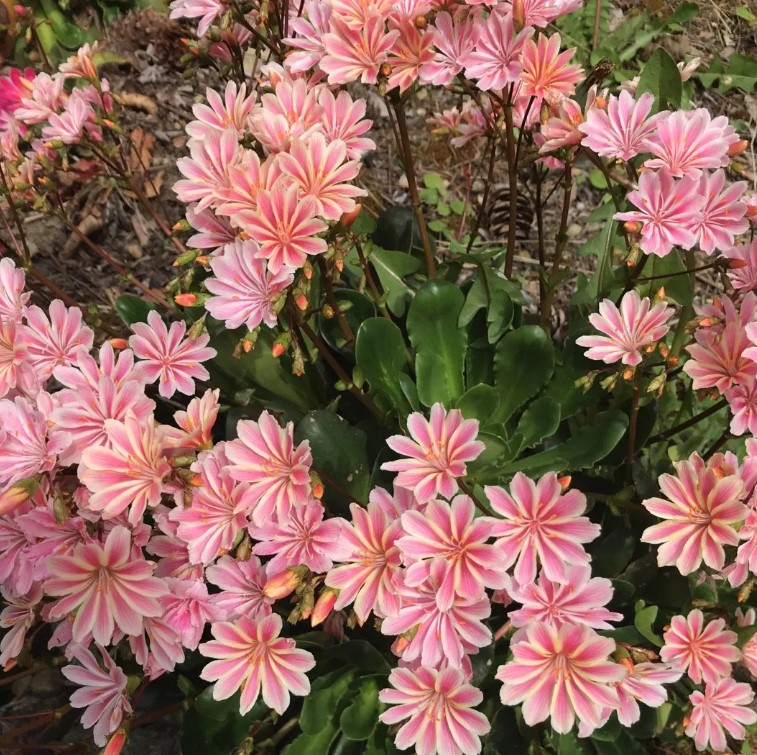
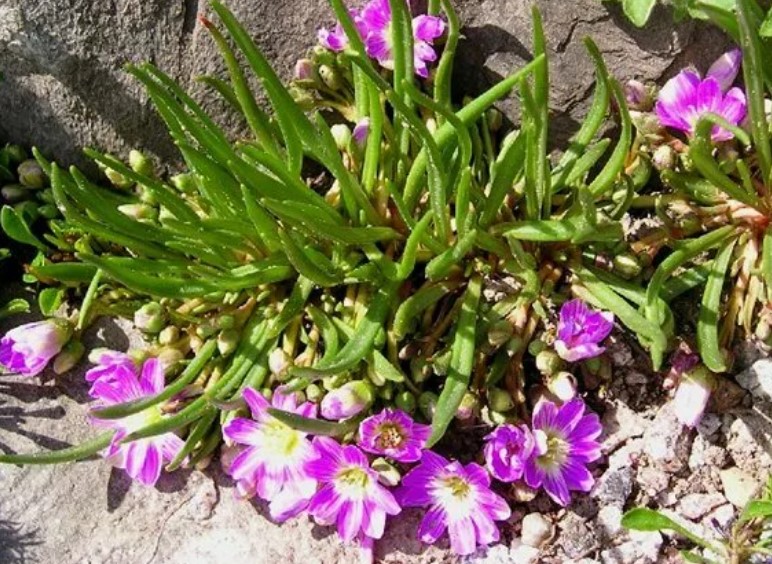
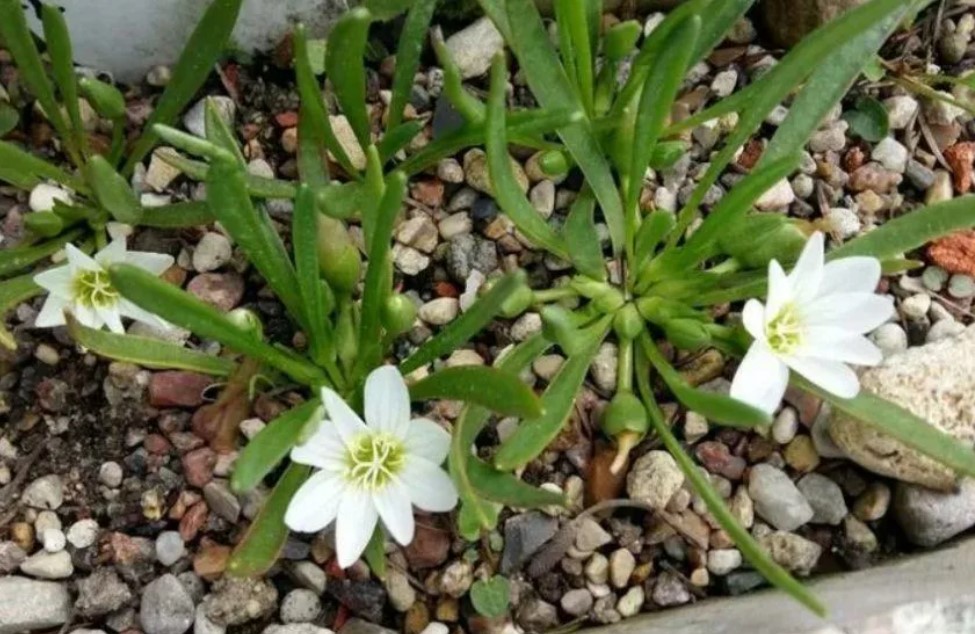
Family: Montiaceae. Native to North America. No more than 30 cm tall. Forms basal rosettes of lanceolate or oval-shaped leaves with a smooth, dark green surface. Flowers are large and vibrant. Common varieties:
- long-petaled;
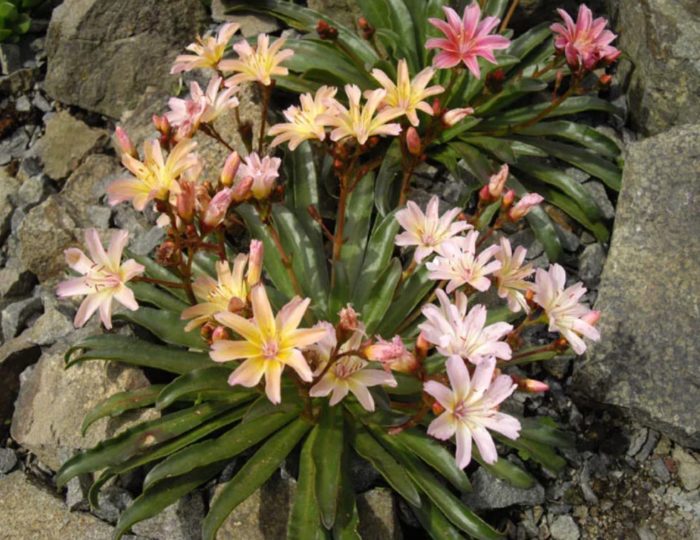
- obtuse-leaved;
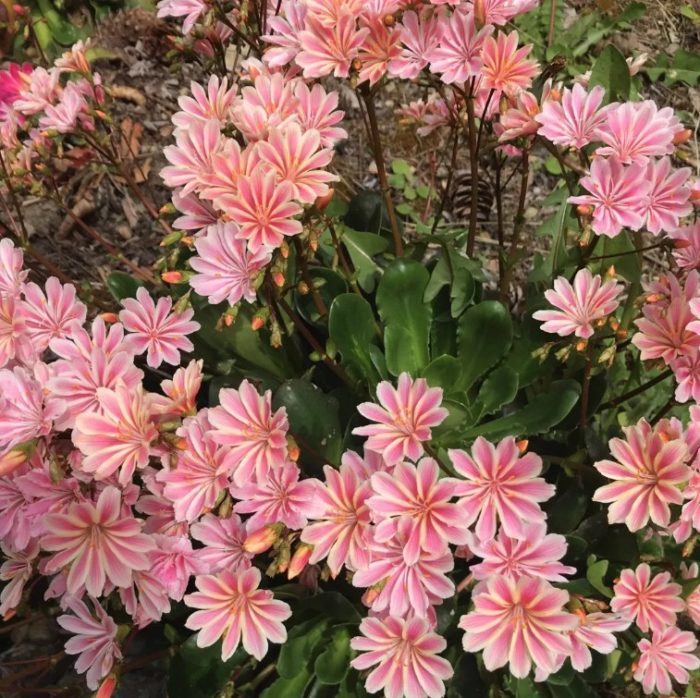
- dwarf;
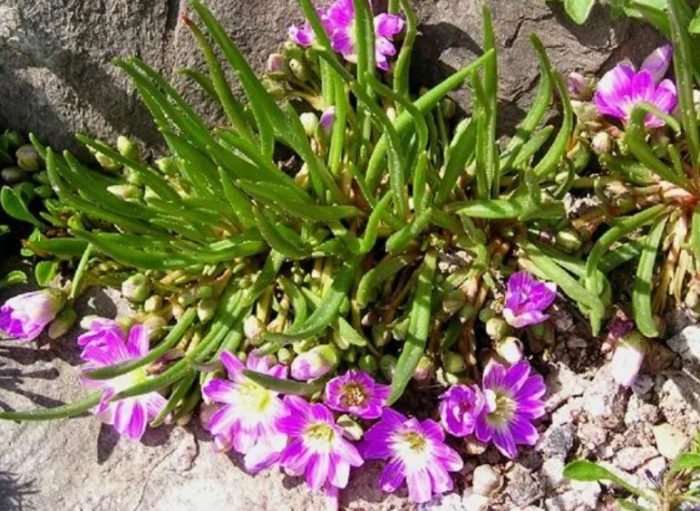
- Nevada;
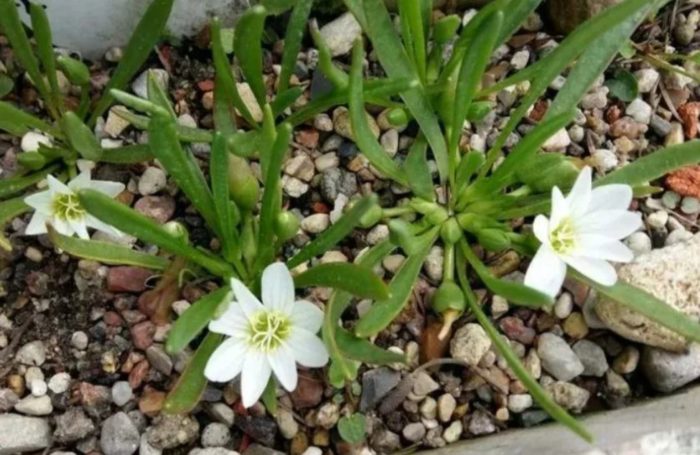
- short-cupped;
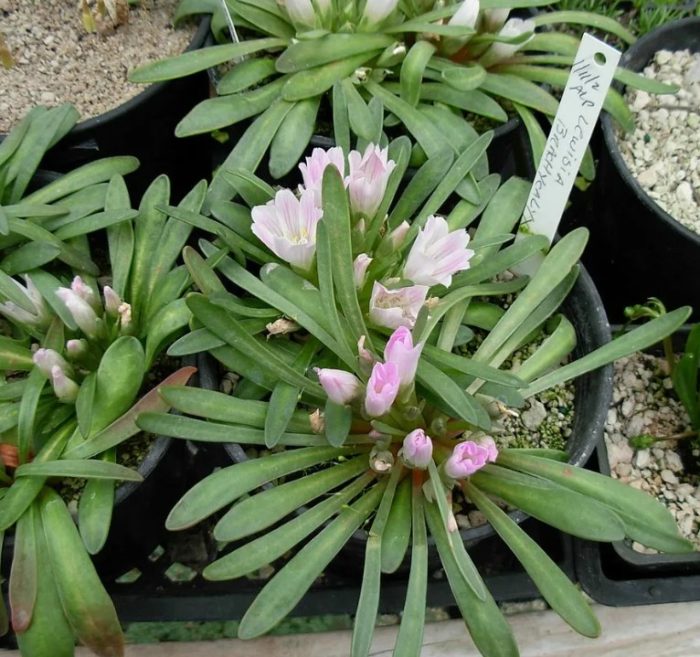
- updated;
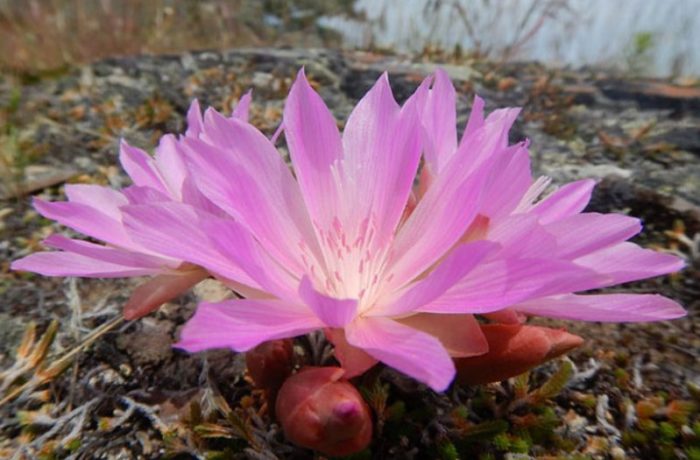
- Tweed.
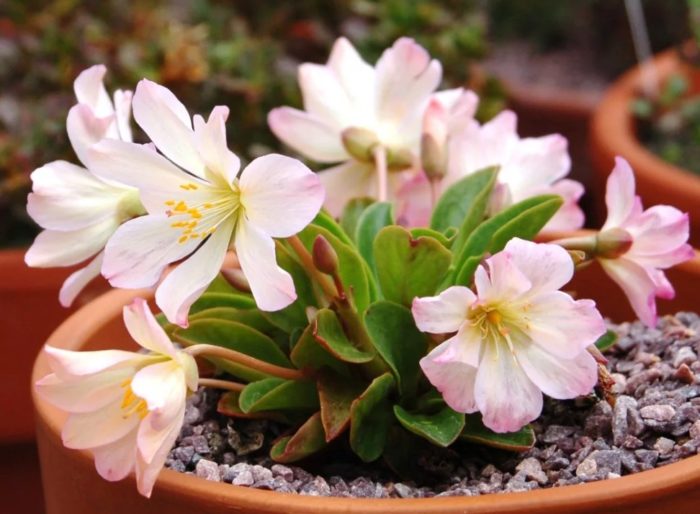
Care:
| Illumination | Bright, diffused light. |
| Temperature | +22 °C. |
| Humidity | Not less than 50%. |
| Pot and soil | With drainage. It consists of peat, humus, sand, crushed stone and manure. |
| Watering | Moderate and systematic. |
| Top dressing | Not needed. |
| Reproduction | By seeds, cuttings. |
| Care Features | Peduncles are cut only after flowering has finished and they have completely dried out. |
Even more species and varieties Lewisii on our website.
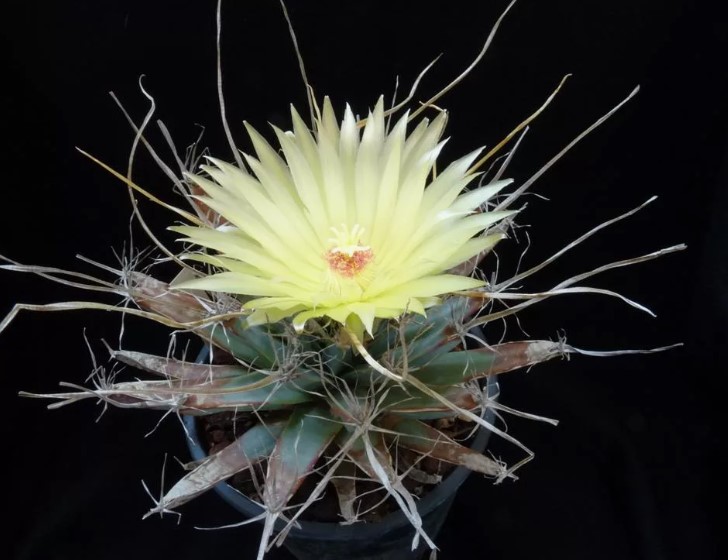
Leuchtenbergia
Family: Cactaceae. Native to Mexico. A solitary plant with a cylindrical, grayish-green stem, covered in red spines. Currently, there is only one confirmed species: Leuchtenbergia principis.
Home care:
| Illumination | Shading is required. |
| Temperature | +20…+28 °C. |
| Humidity | Up to 70%. |
| Pot and soil |
With drainage. Soil mixture for succulents. |
| Watering | Once a week only in summer. |
| Top dressing | Apply organic fertilizer once a month. No fertilizer is applied during flowering. |
| Reproduction | Generative. |
| Care Features | Replanting is required once every 2-3 years. |
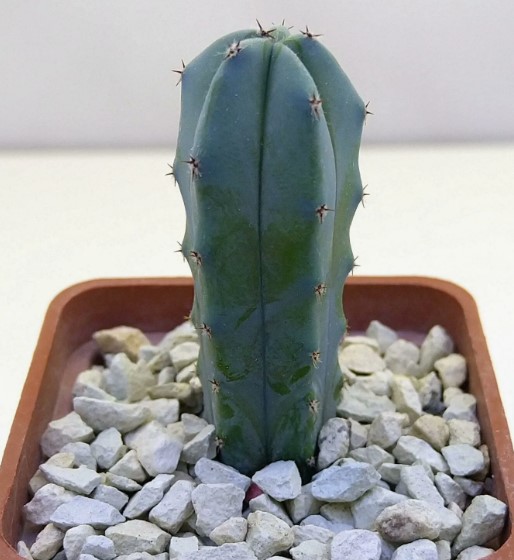
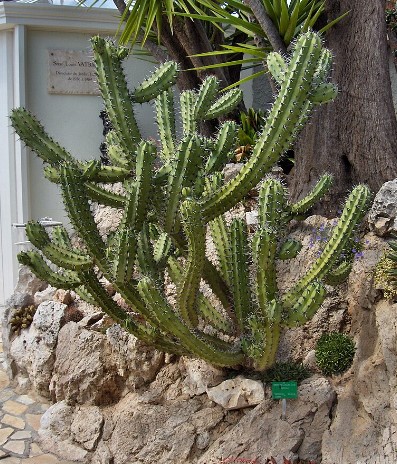
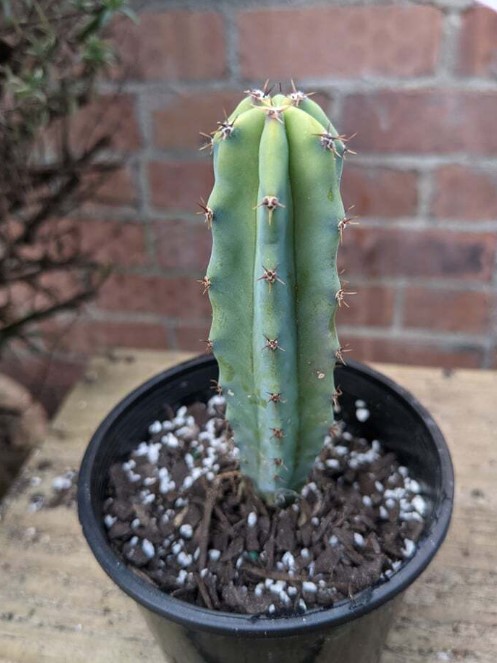
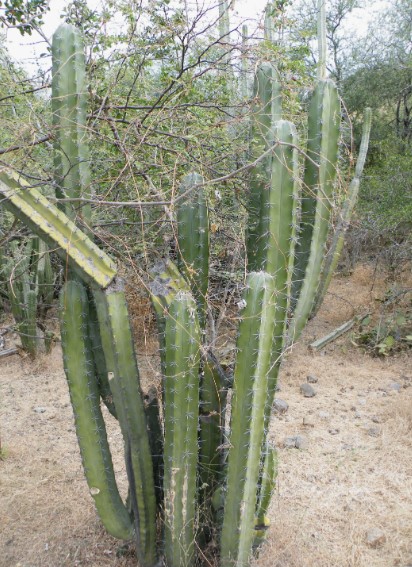
Myrtillocactus
Family: Cactaceae. Native to the mountains and steppes of Mexico and Guatemala. It has branched, bright green or bluish columnar stems. With age, it takes on a tree-like shape. The shoots have 5-6 facets. Areoles are located at their tips. The spines are predominantly radial. The inflorescences are funnel-shaped, located at the tops of the stems.
Types:
| Geometric
|
With short and sharp spines, blue stem. |
| Koch
|
With numerous lateral shoots and dark thorns. |
| Eichlamia
|
With white or yellowish-cream inflorescences. |
| Shenk
|
Candelabra-shaped, with moderate branching. |
Care:
| Illumination | Bright. |
| Temperature |
+18…+25 °C – from spring to autumn. +12…+15 °C – in winter. |
| Humidity | Any. |
| Pot and soil |
20% more root system. Loose, breathable, with a slightly acidic reaction. |
| Watering | After the soil has dried out by ½. |
| Top dressing | From mid-spring to September, liquid fertilizers for cacti are applied. |
| Reproduction | Vegetatively and by seeds. |
| Care Features | The first 2-3 years of life require annual replanting. |
Euphorbia (euphorbia)
Family: Euphorbiaceae. Native primarily to the subtropical zone. It grows as herbs, shrubs, and sometimes small trees. Can be grown indoors or in the garden.
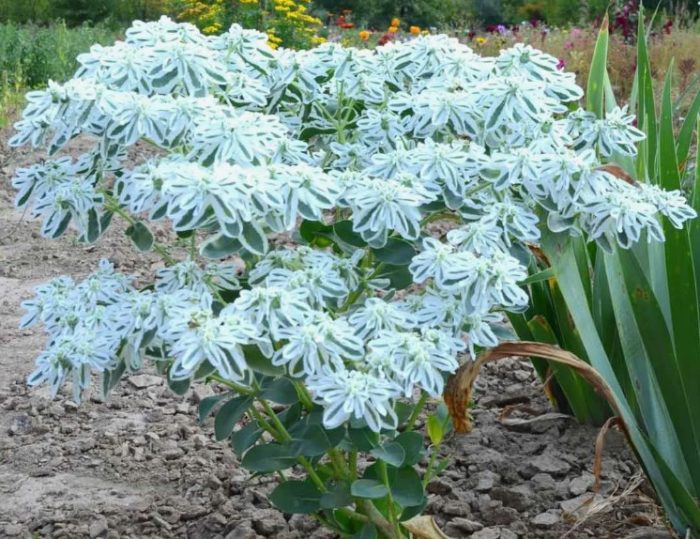
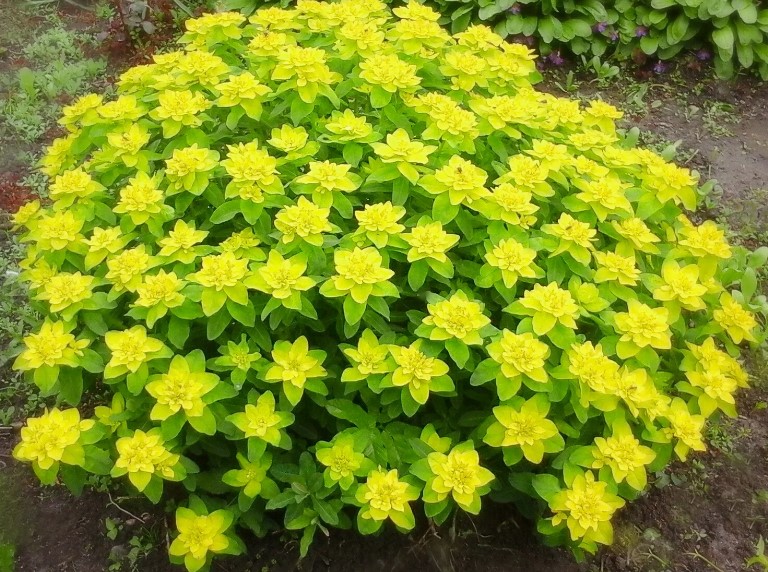
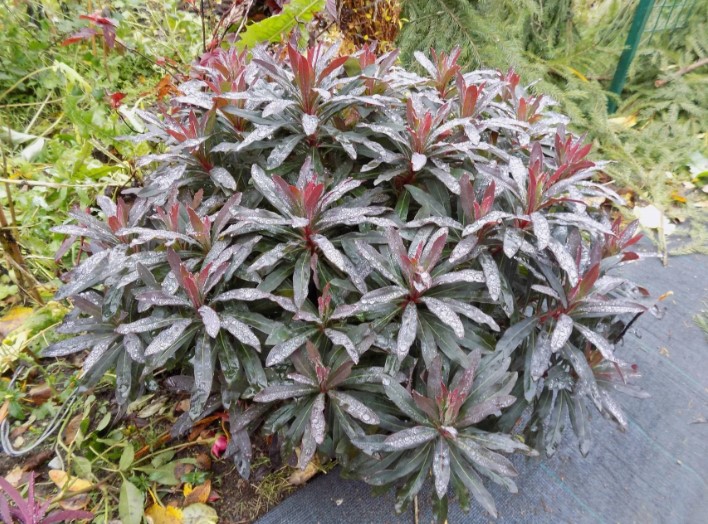
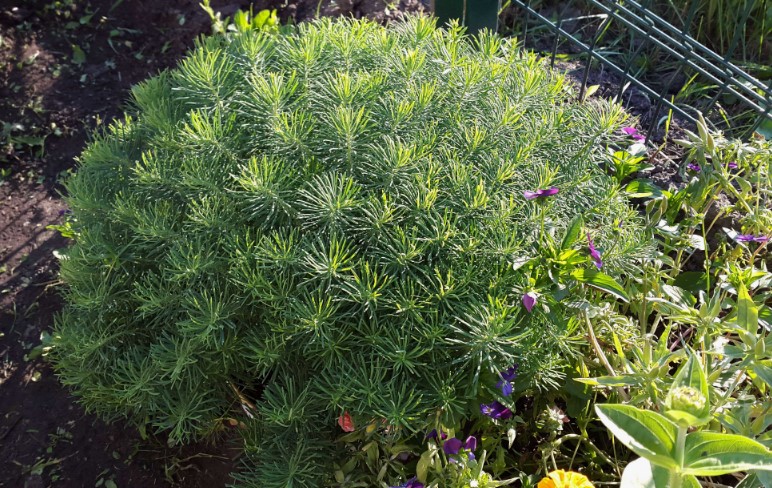
Garden species:
- multi-flowered;
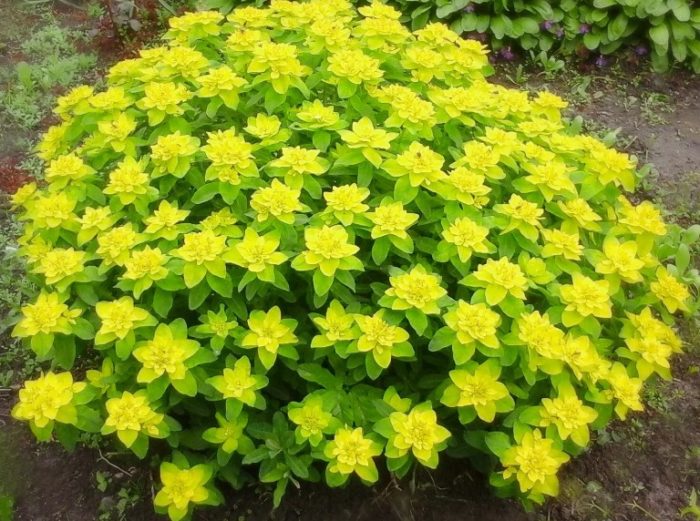
- almond-shaped;
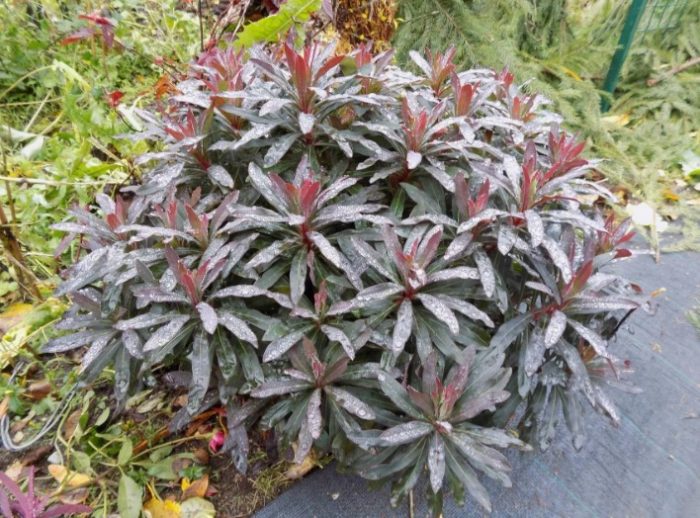
- cypress;
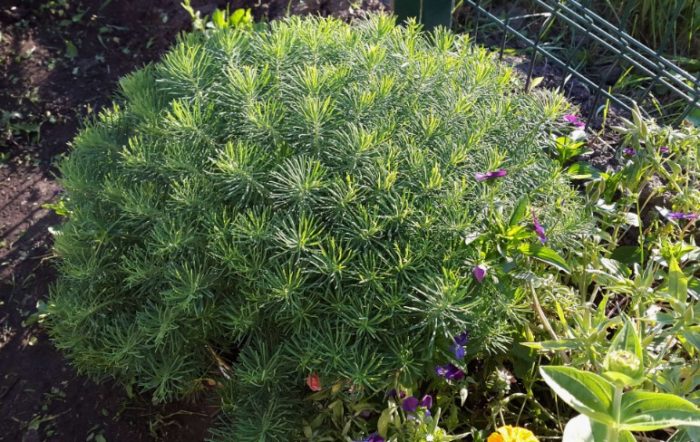
- capitate;
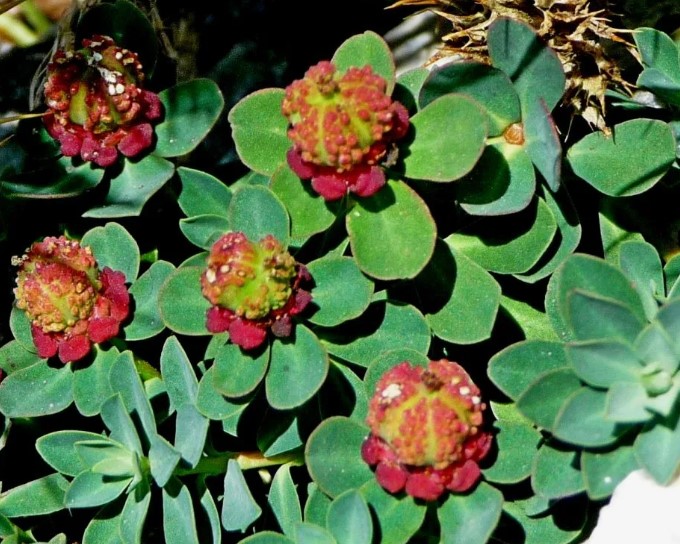
- bordered.
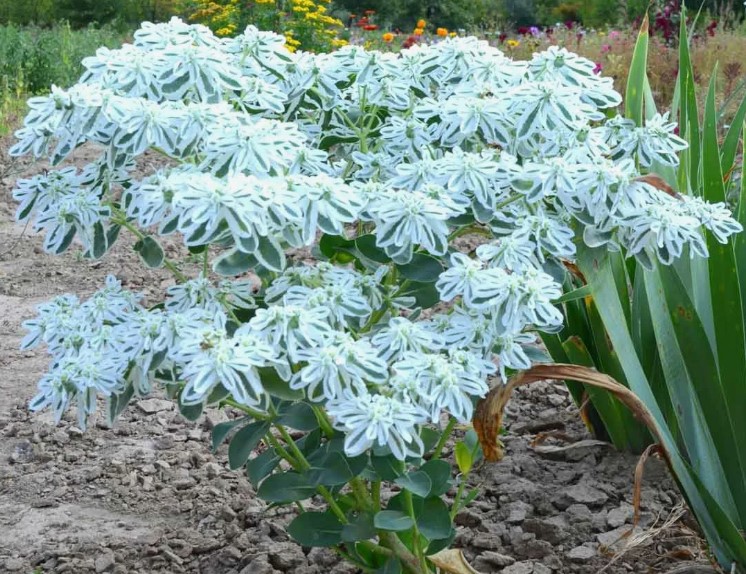
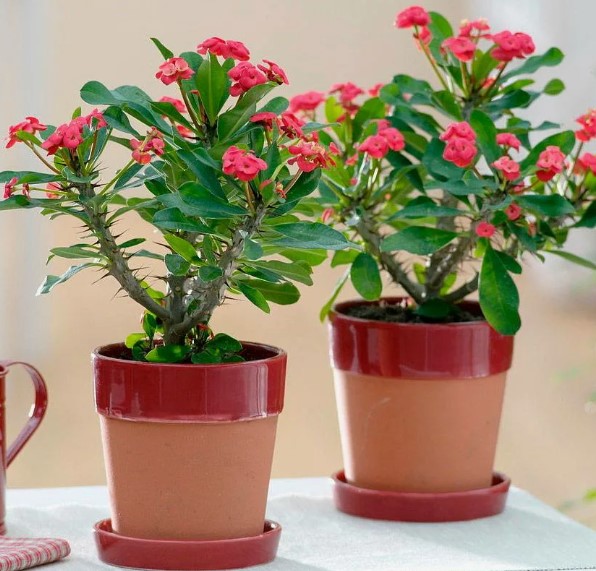
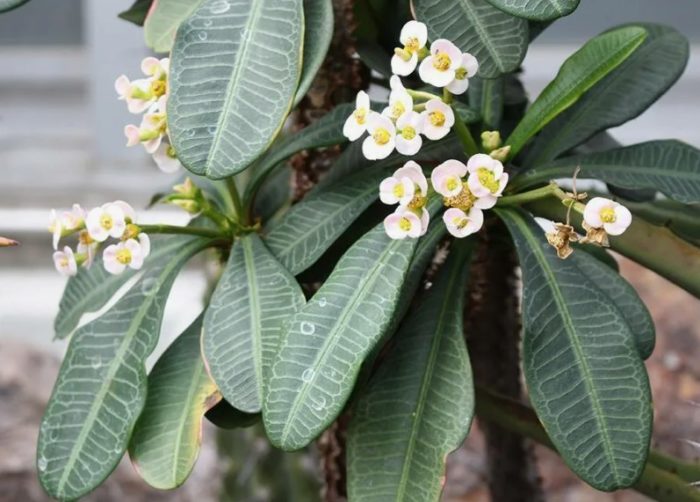
Indoor species:
- Mile;
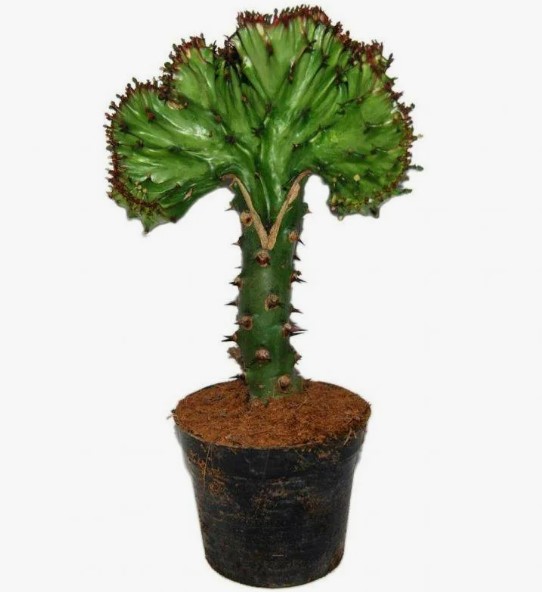
- Euphorbia Lactea;
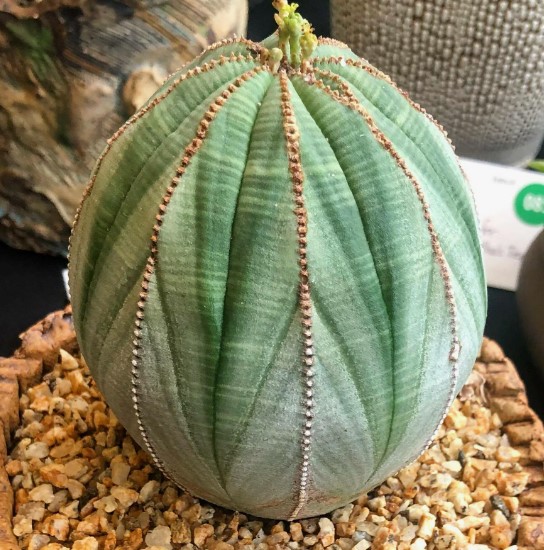
- obese (Obesa);
- Trigon;
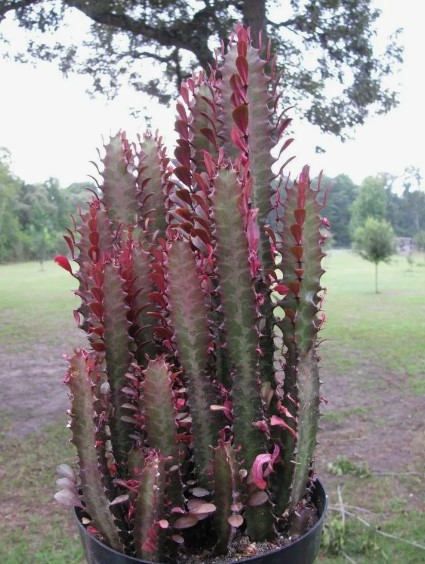
- Tirukalli;
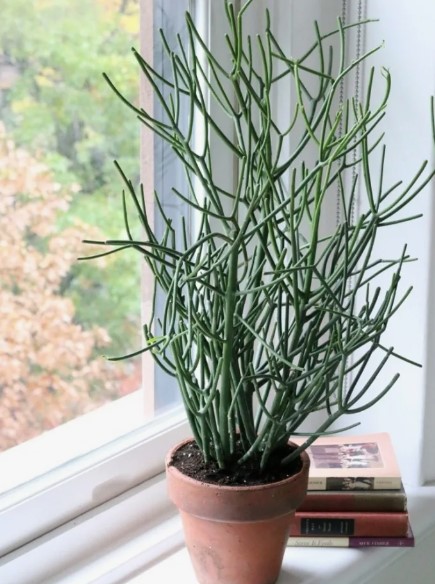
- Suzanne;
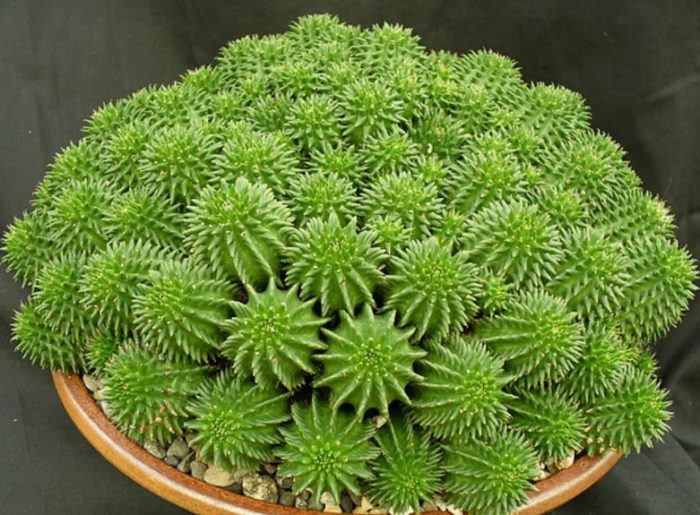
- Decari Crasicaulus;
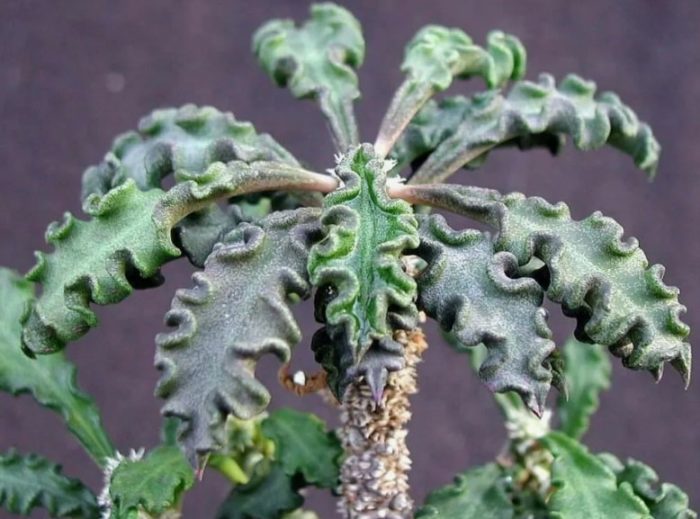
- Meloformis;
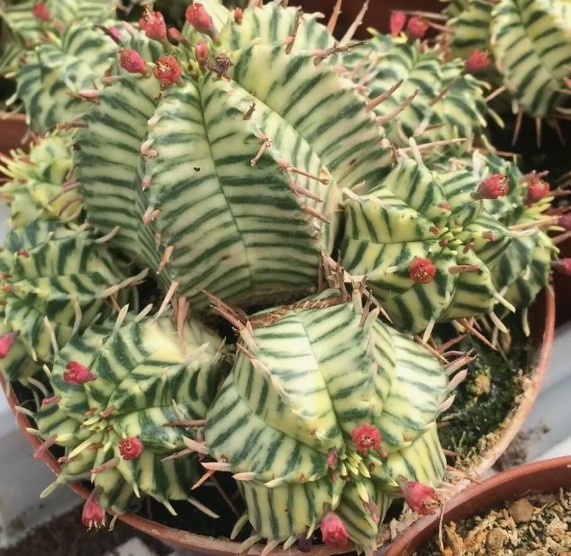
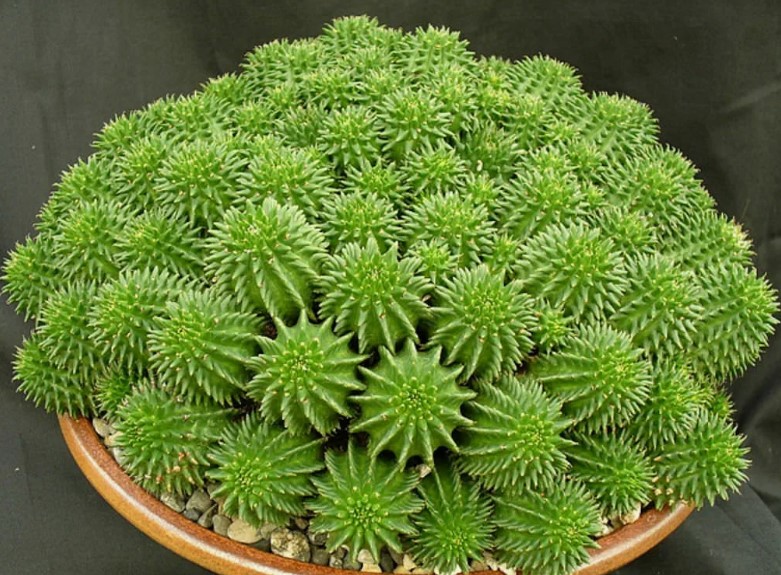
- Globosa;
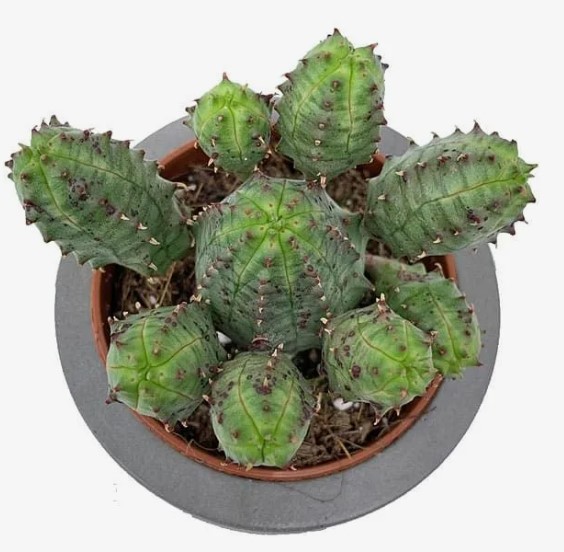
- comb-shaped.
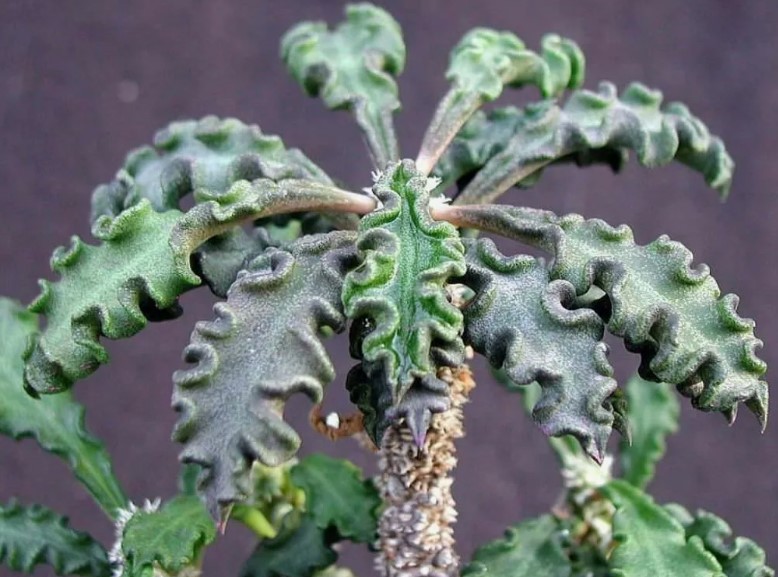
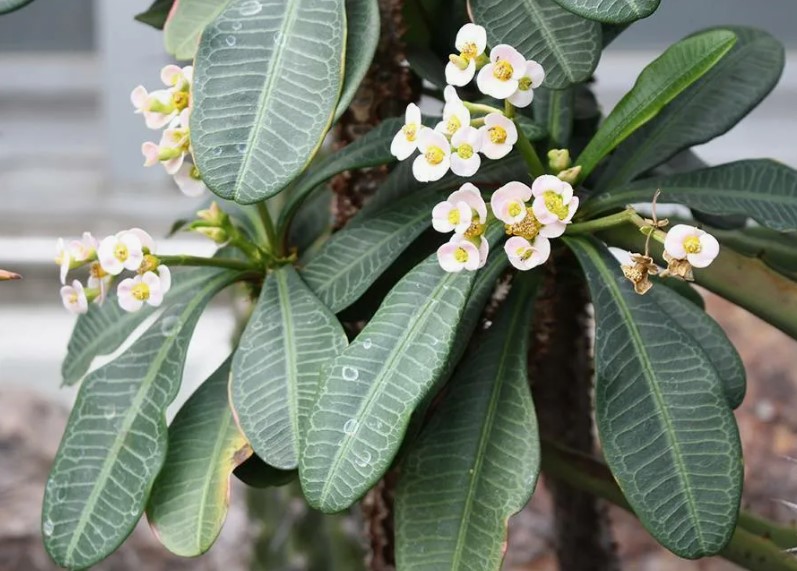
| Care | Street | House |
| Illumination | Planting in open sunny areas. | Intensive. |
| Temperature | If the temperature in winter drops below -12…-15 °C, winter cover is required. |
+19…+24 °C – from spring to autumn. +15 °C – in winter. |
| Humidity | Not demanding. | Moderate or low. |
| Pot and soil | Leaf soil, peat and sand in equal proportions. |
Durable, stable, with drainage holes. Soil mixture for succulents. |
| Watering | Only in hot, dry summers. | During vegetation – once a week. At rest – 1-2 times a month. |
| Top dressing | 2-3 times per season with complex mineral fertilizers. | Once every 2 weeks (from spring to autumn) apply fertilizer for cacti and succulents with a minimum dose of nitrogen. |
| Reproduction | By seeds, cuttings, dividing the bush. | Cuttings. |
| Care Features | Doesn't like frequent transplants. | Young bushes should be replanted annually, mature ones – once every 2-3 years. |
More details about garden And indoor types and varieties of milkweed, as well as about Euphorbia-synadeniumAnd poinsettias on our website.
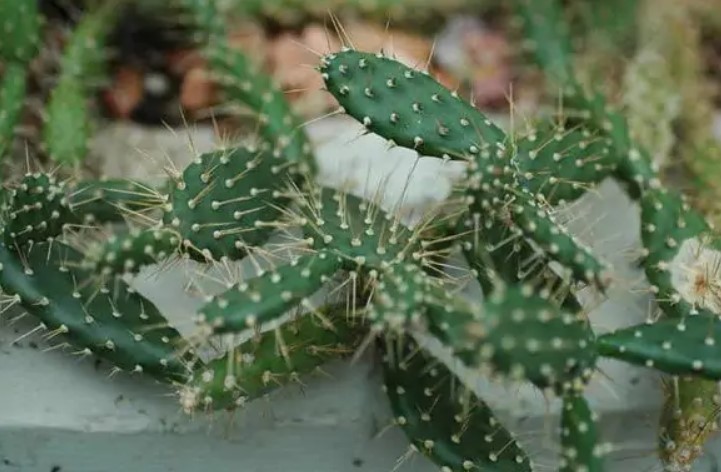
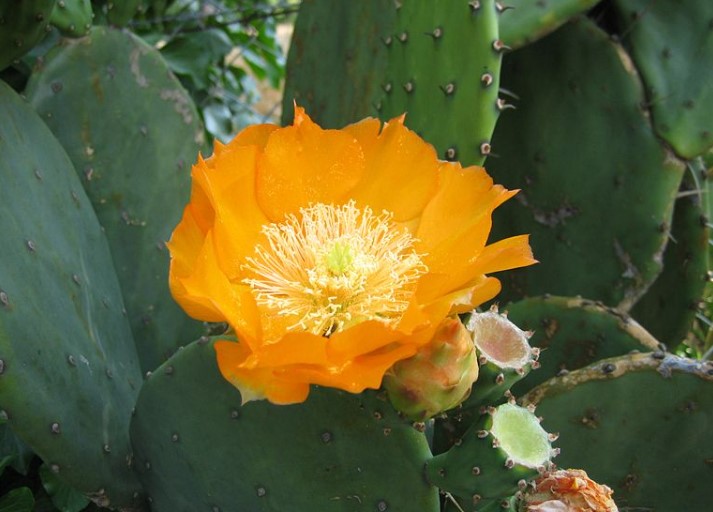
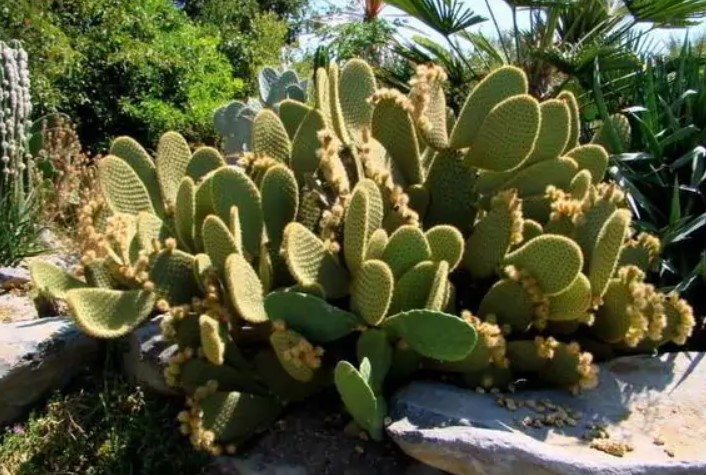
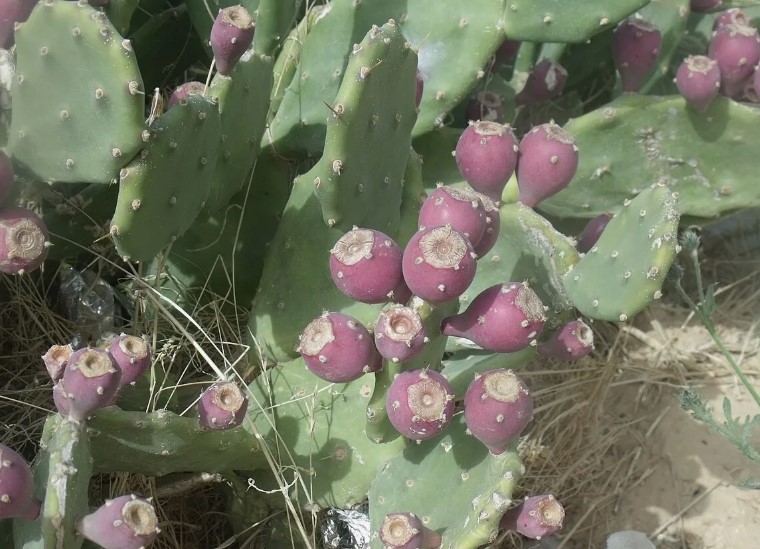
Prickly pear
Family: Cactaceae. Native to South and North America, Mexico. It is a prostrate or erect shrub or tree with succulent, flat shoots. The stems bear spines of varying sizes, called glochids. The flowers are solitary, yellow, orange, or deep red.
Types:
- white-haired;
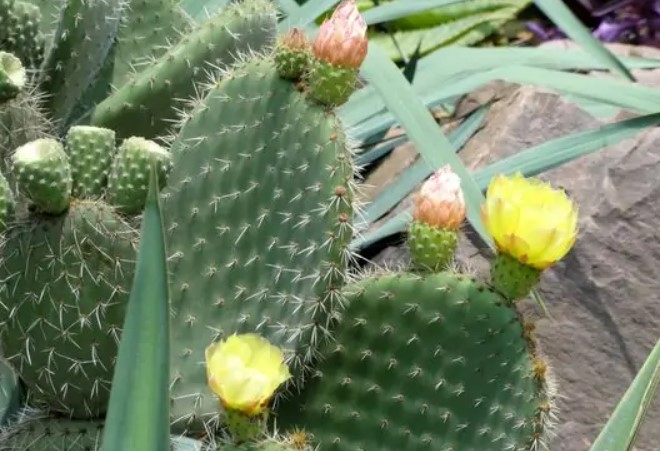
- Berger;
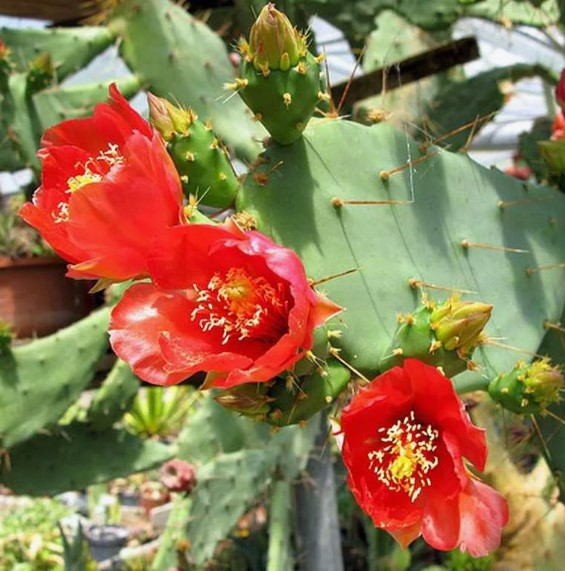
- home;
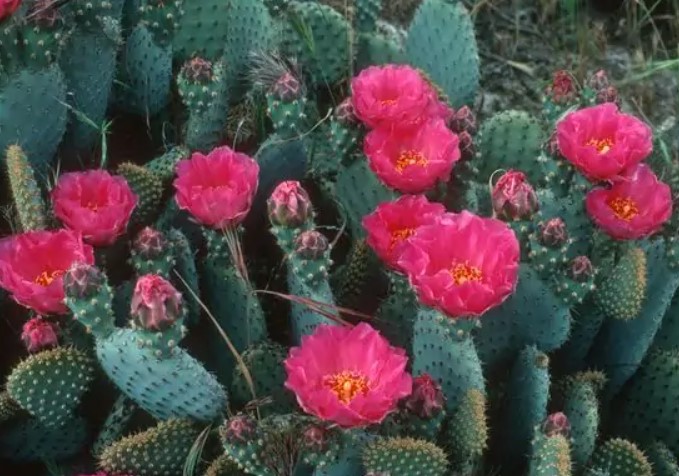
- long-skewed;
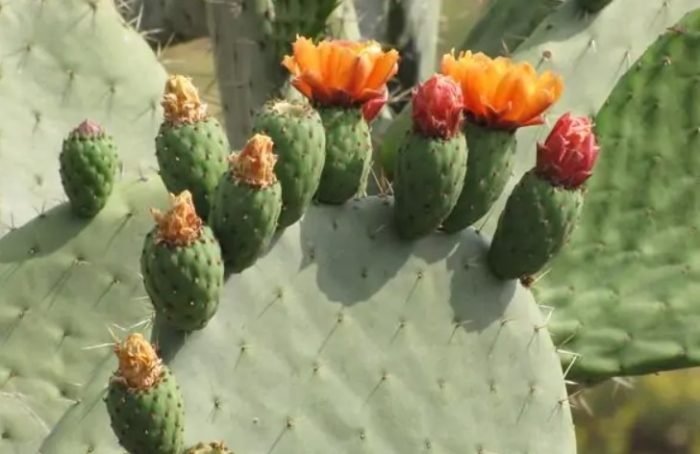
- Kurosawa;
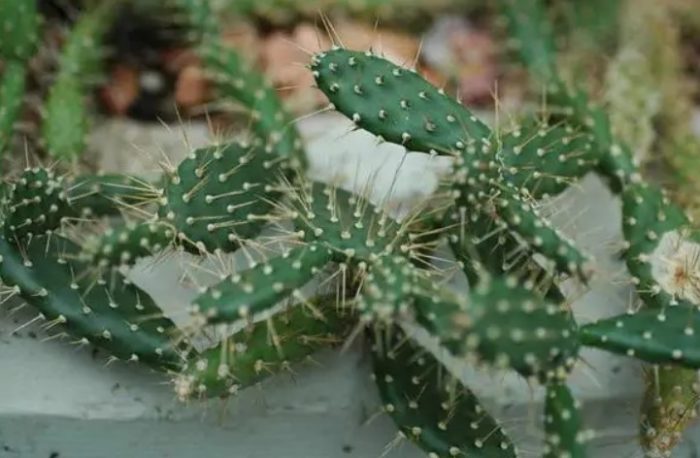
- fine-haired;
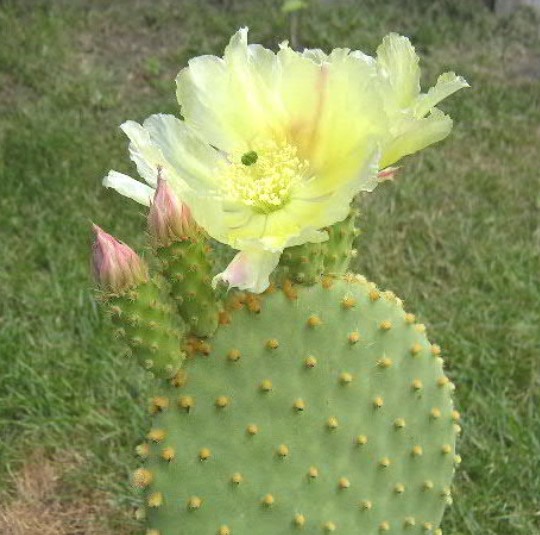
- Indian;
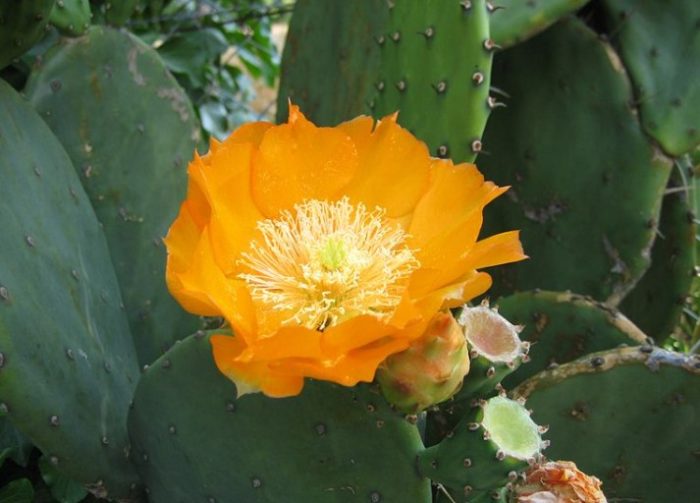
- Sheri;
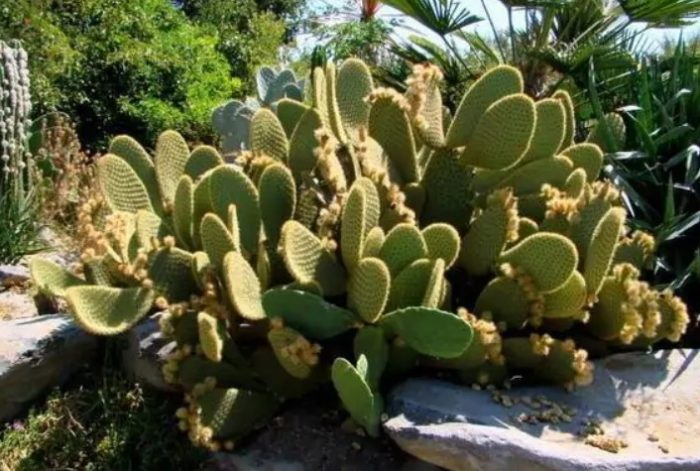
- compressed.
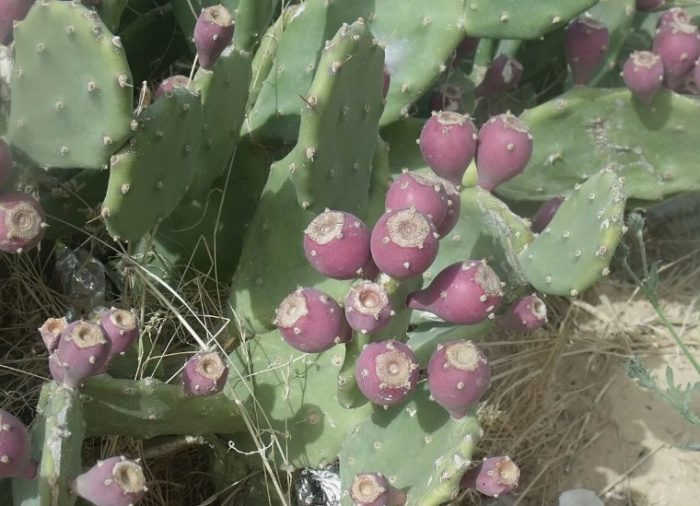
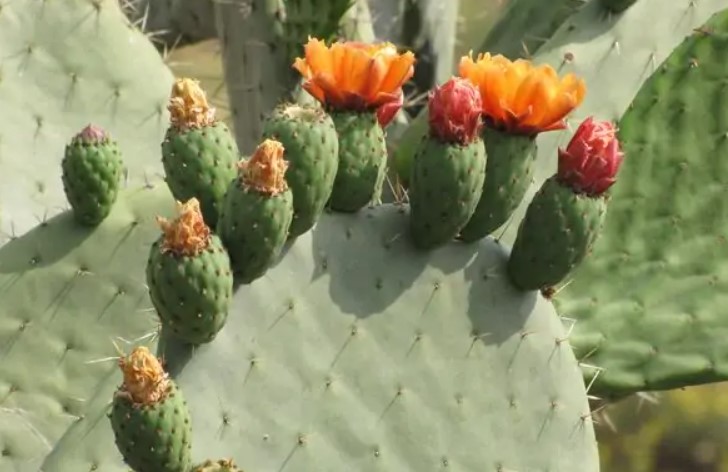
| Illumination | Bright and diffused light. |
| Temperature |
+25 °C – from spring to autumn. +5…+7 °C – in winter. |
| Humidity | Any. |
| Pot and soil |
Wide and low. Clay, sand, turf, leaf soil (2:1:2:4) |
| Watering | Through the tray in moderate quantities in spring and autumn. |
| Top dressing | From March to September, once a month, apply mineral mixtures with a minimum nitrogen content. |
| Reproduction | Segments, seeds (rarely). |
| Care Features | Young bushes are replanted annually. Mature bushes are replanted every 3-4 years. Replanting is done in the spring before the growing season. |
More about the prickly pear cactus in the articlePrickly pear: description, types, home care, reviews.
Orbea
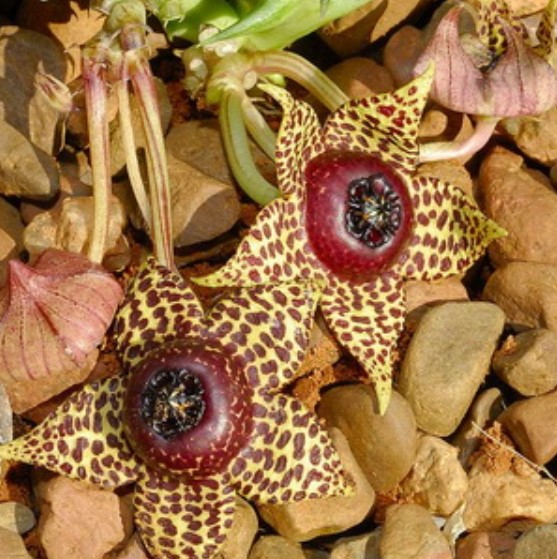
Family: Asclepiadaceae. Native to Africa and the Arabian Peninsula. This perennial, low-growing succulent has ribbed, smooth, or slightly hairy stems that are light or dark green. The edges of the ribs are toothed. At the top of the stems, one or more star-shaped flowers appear, each in a variety of colors.
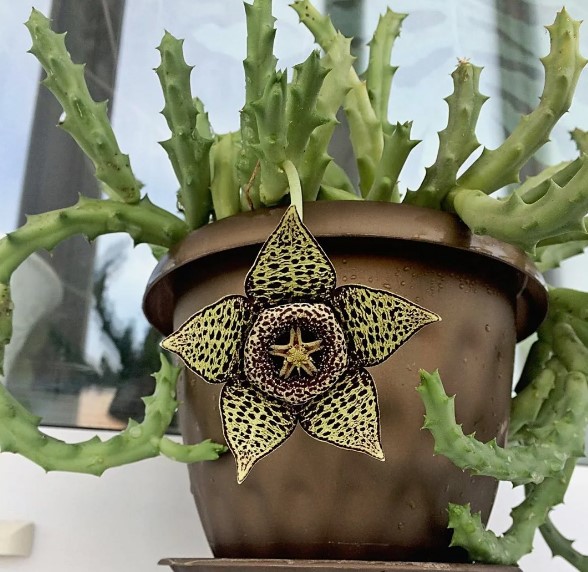
Types of Orbea:
- variegated;
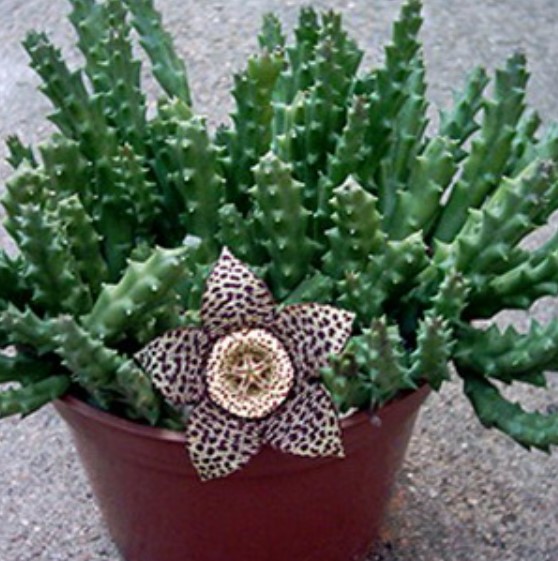
- commutator;
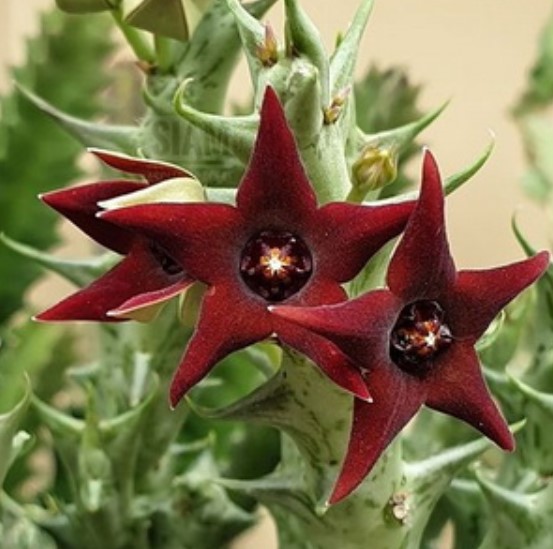
- yellow;
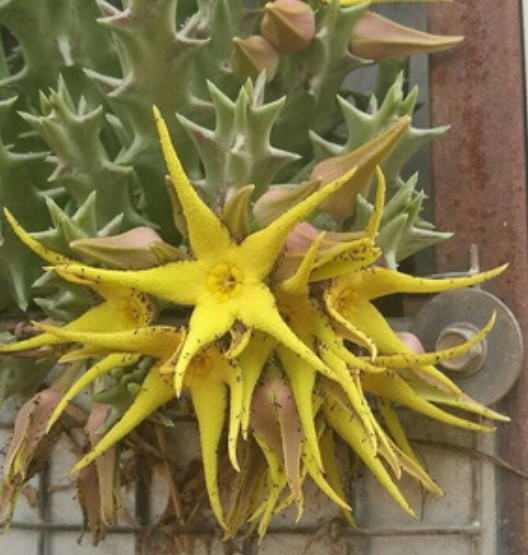
- Cooper;
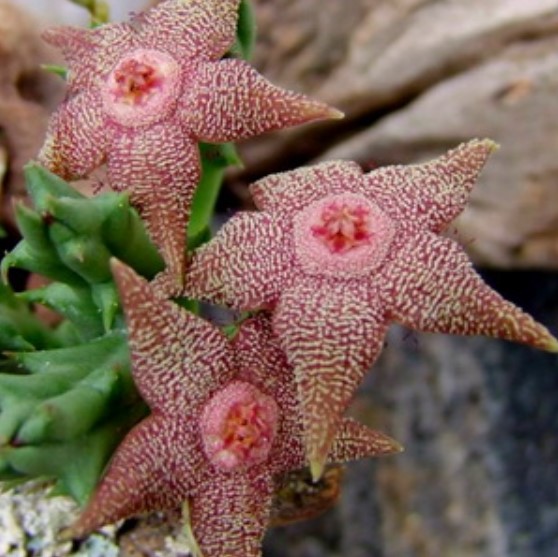
- graceful.
| Illumination | Intense, not afraid of direct sunlight. |
| Temperature | +24…+29 °C. |
| Humidity | Low. |
| Pot and soil |
Wide, shallow, with drainage holes. Loose, light, slightly acidic, containing coarse-grained sand. |
| Watering | Only after the top layer has dried. |
| Top dressing | In spring and summer, apply liquid mineral fertilizer for cacti once a month. |
| Reproduction | Cuttings. |
| Care Features | Replanting is required every 3 years. |
Oreocereus
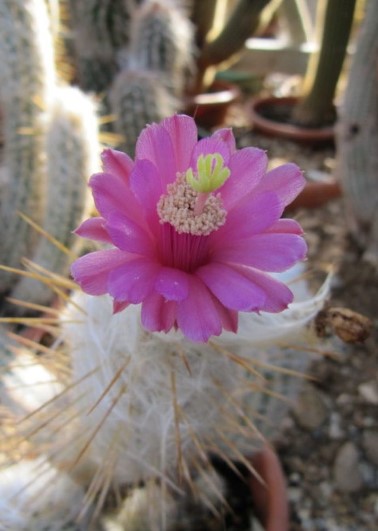
Family: Cactaceae. Native to Argentina, Bolivia, Peru, and Brazil. Up to 3 m tall, with tall, columnar stems and dense, snow-white hairs.
Types:
- Celsus;
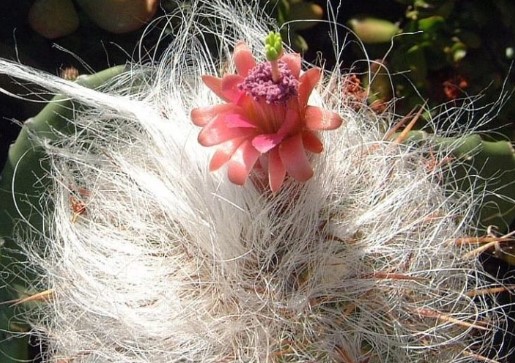
- Trolls;
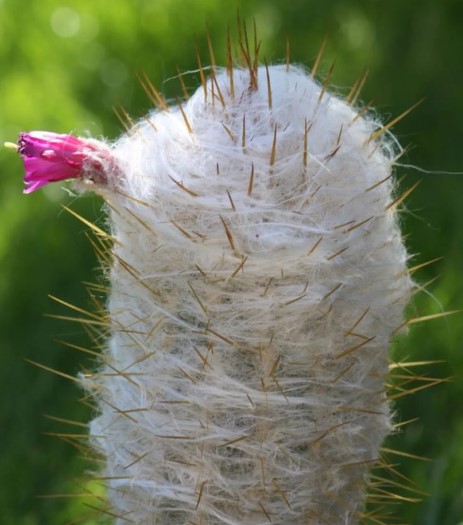
- businessman;
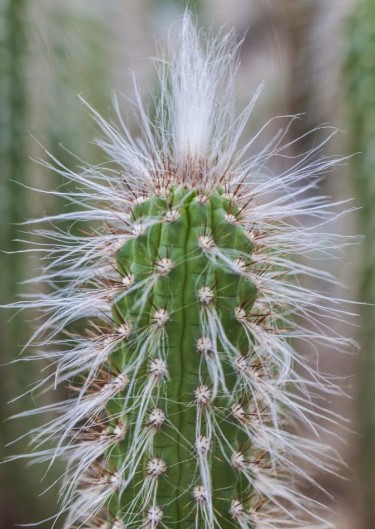
- Hempelianus;
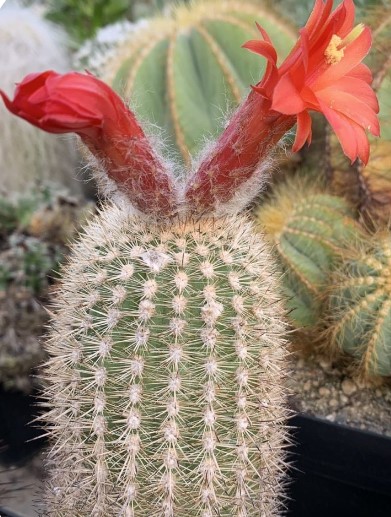
- Hendricksen;
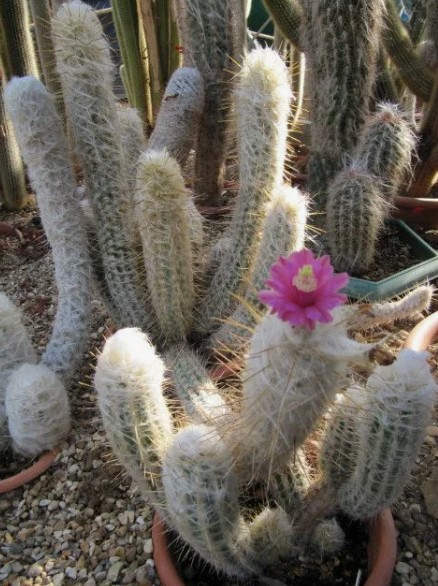
- White-haired.
| Illumination | Requires a lot of light. |
| Temperature |
+18…+30 °C – in summer; +7…+12 °C – in winter. |
| Humidity | Any. |
| Pot and soil |
Wide, with low walls. Loose, drained, pH 6.1-7.8. |
| Watering | In spring and autumn 3 times a month. |
| Top dressing | From April to September, apply fertilizer for succulents once a month. |
| Reproduction | Cuttings, seeds. |
| Care Features | You cannot use organic fertilizers containing nitrogen. |
Pachypodium
Family: Apocynaceae. Native to the arid regions of Madagascar, Australia, and Africa. It is a succulent tree or shrub. All species have a thick trunk with spines grouped in 2-3s. The spines are arranged in rings or spirals.
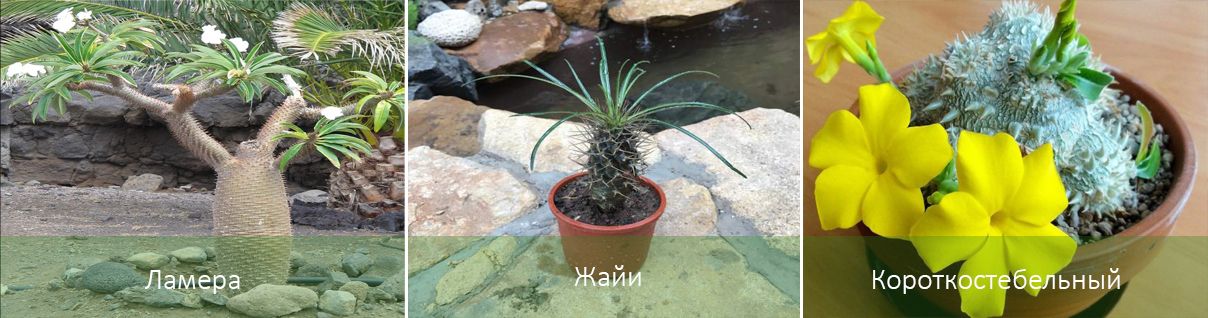
Types:
- Lamera;
- Zhayi;
- short-stemmed;
- Saunders;
- succulent;
- densely flowered;
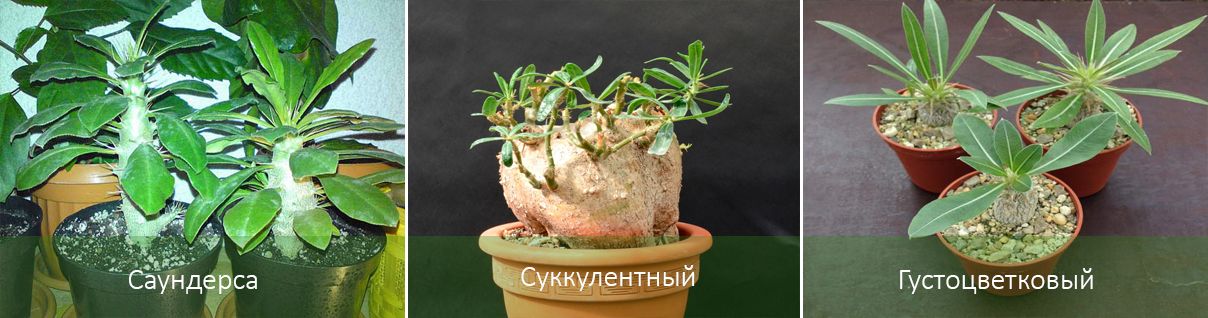
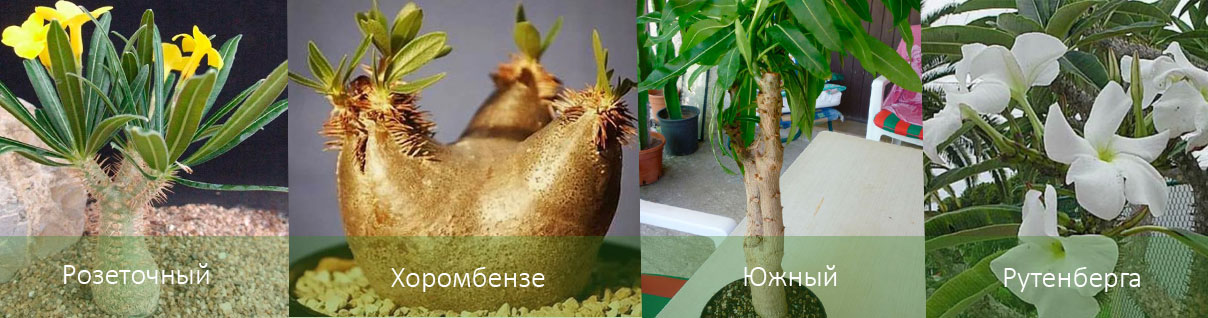
- horombenze;
- southern;
- socket;
- Rutenberg.
| Illumination | Intensive. |
| Temperature |
+18…+28 °C – in summer. +16…+18 °C – in winter. |
| Humidity | Increased. |
| Pot and soil | Leaf and turf soil, sand (1:1:1). |
| Watering | When the soil dries by 10 mm. |
| Top dressing | From early spring to mid-autumn, apply cactus fertilizer once every 4 weeks. |
| Reproduction | By seeds, cuttings. |
| Care Features | Young plants need to be replanted annually, mature ones – once every 3-4 years. |
You can learn more about the flower in the articlePachypodium: description, species, photos, care features, reviews.
Pedilanthus
Family: Euphorbiaceae. Native to North, Central, and South Africa. A low-growing tree or ornamental flowering shrub. It has a zigzag stem.
Types:
- tithymaloid;
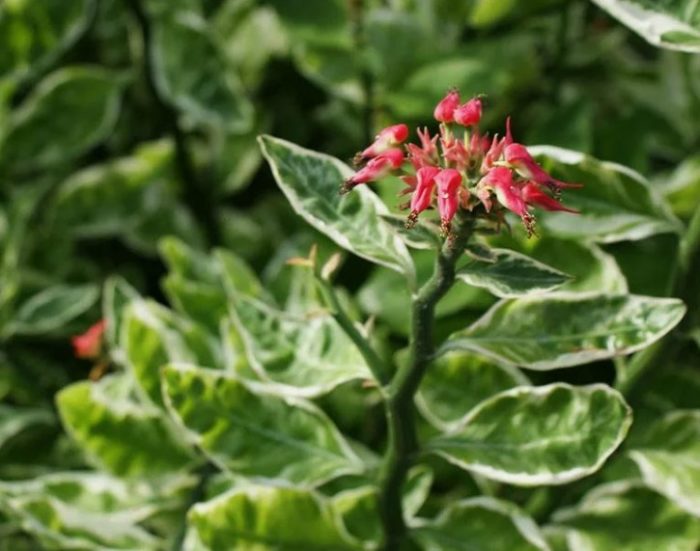
- Finn;
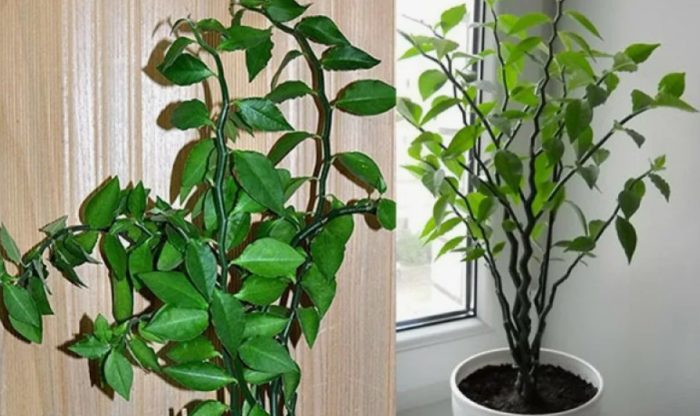
- large-fruited;
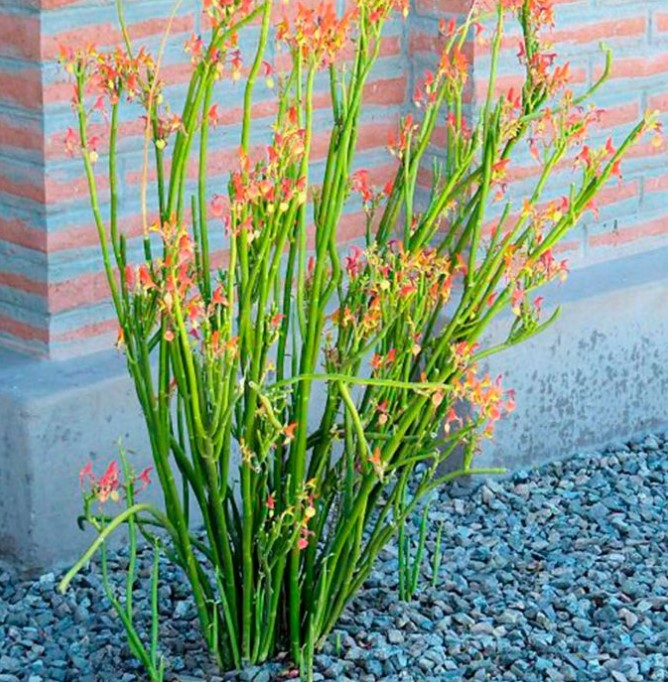
- spur;
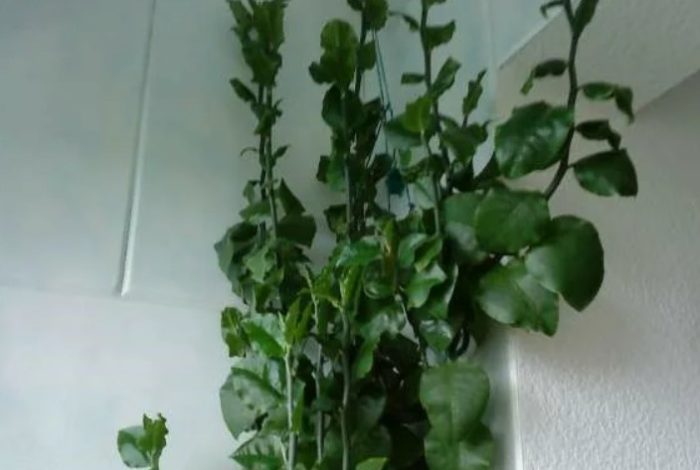
- Koalkomanensky.
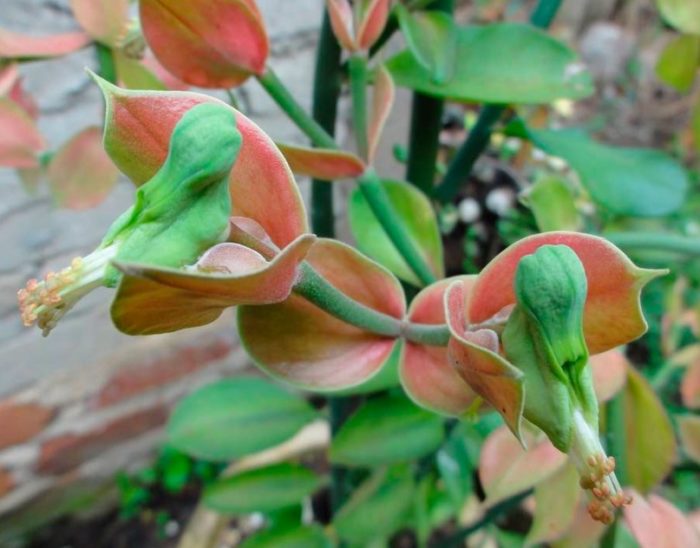
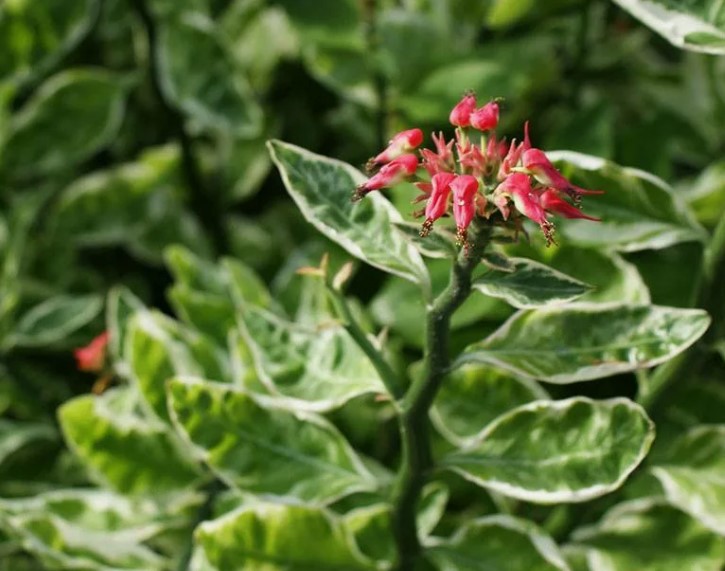
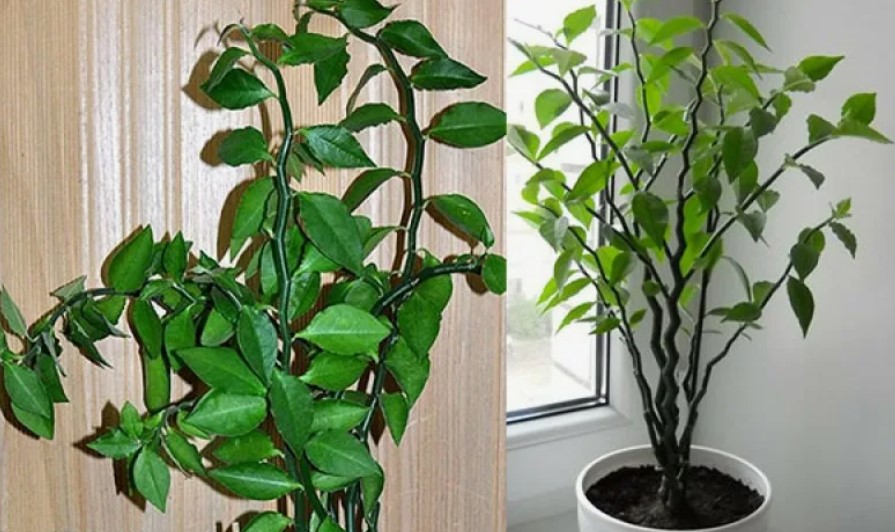
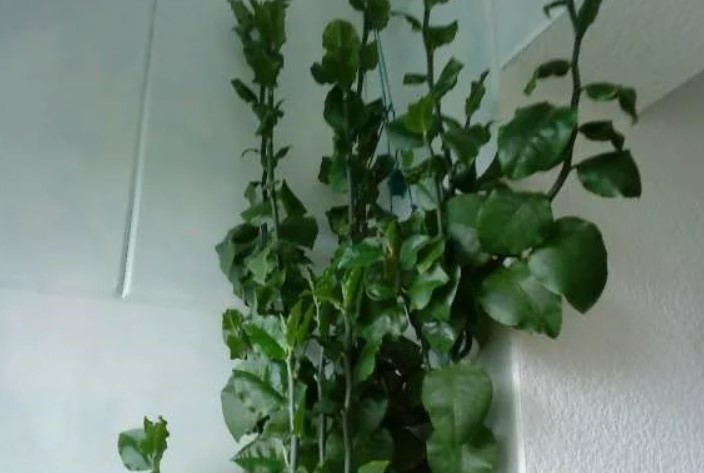
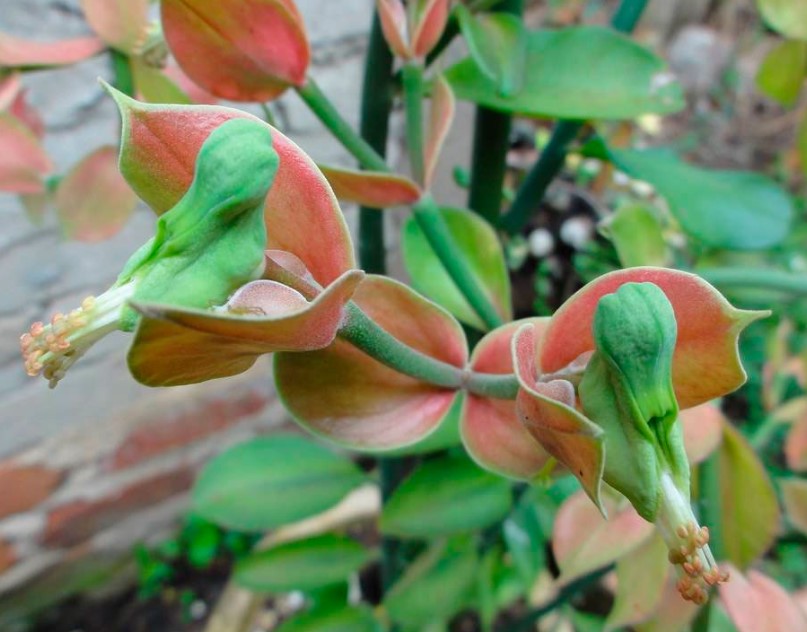
| Illumination | Bright, but with shading. |
| Temperature |
+20…+26 °C – in summer. +13…+15 °C – in winter. |
| Humidity | Medium or high. |
| Pot and soil |
With drainage. Turf and leaf soil and sand in equal quantities. |
| Watering | 3 times a week in summer, 1 time every 7 days in winter. |
| Top dressing | From April to September inclusive, mineral complexes with low nitrogen content are added once a month. |
| Reproduction | Cuttings, seeds. |
| Care Features | Perform transplantation only in case of emergency. |
Interested pedilanthus Read on our website.
Polaska
Family: Cactaceae. Native to Mexico. This is a tree-like cactus with a short, thick main trunk and numerous shoots that form the crown.
Types:
| Chichipe
|
With green or bluish-green stems. |
| Chende
|
With yellowish-green shoots. |
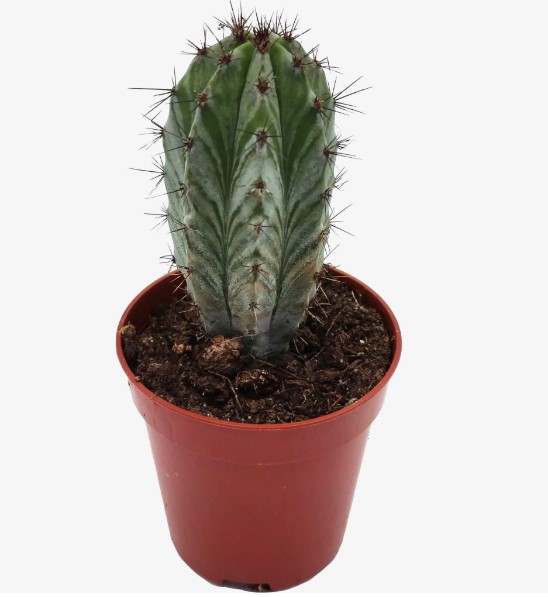
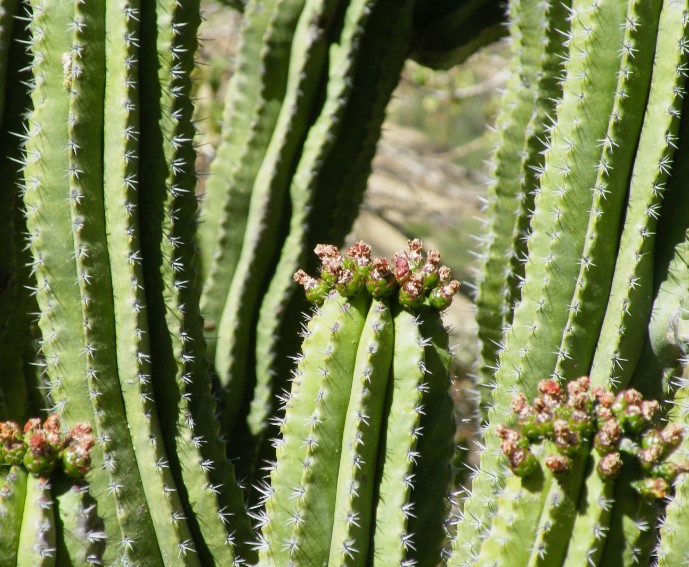
Care:
| Illumination | Bright light. |
| Temperature |
+18…+24 °C – in summer; +12 °C – in winter. |
| Humidity | It doesn't matter. |
| Pot and soil |
Deep and wide. Specialized soil for cacti. |
| Watering | After the soil has dried out by ½. |
| Top dressing | In spring and summer, use liquid fertilizers for cacti according to the instructions. |
| Reproduction | By seeds, cuttings. |
| Care Features | Provide good air circulation, but protect from drafts. |
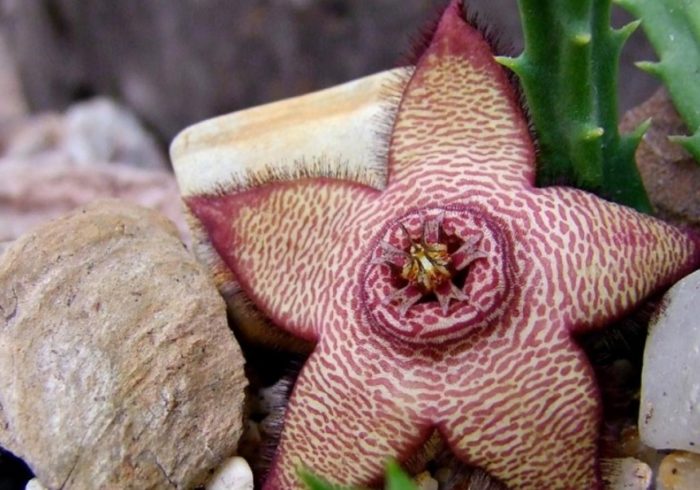
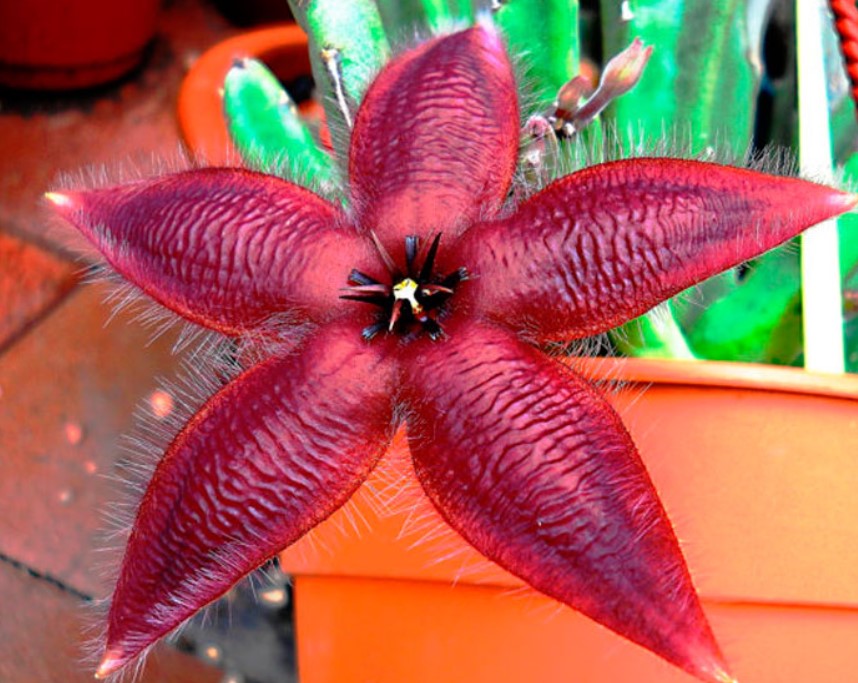
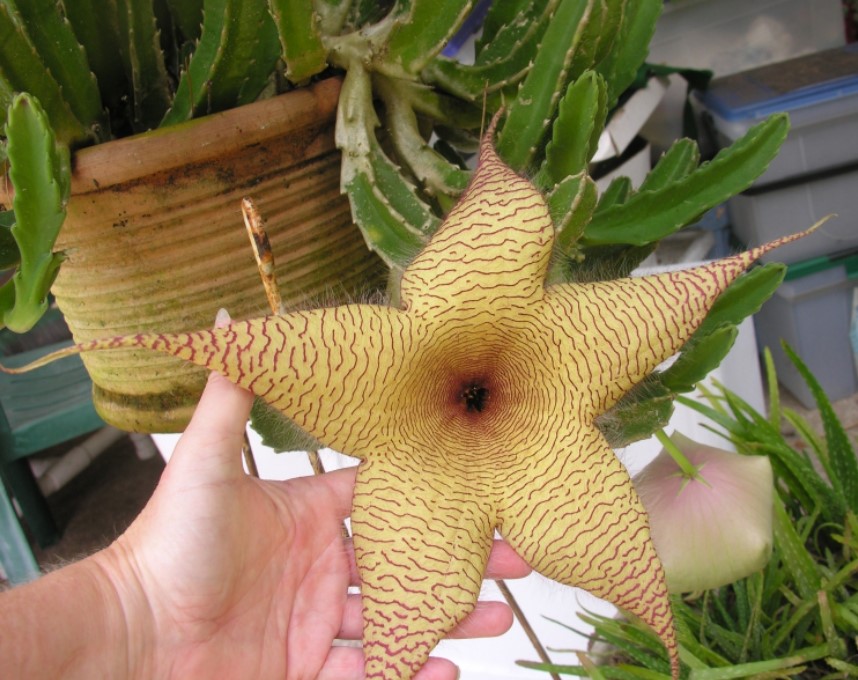
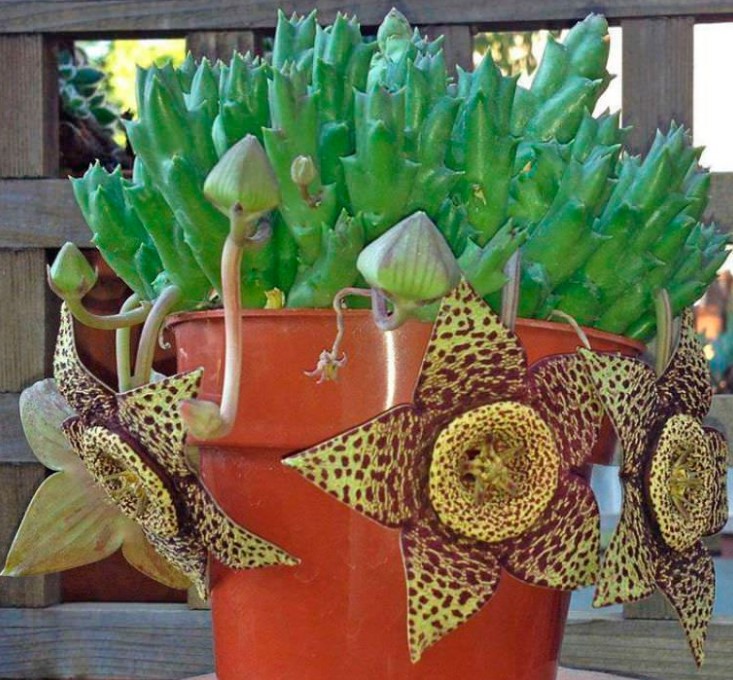
Stapelia
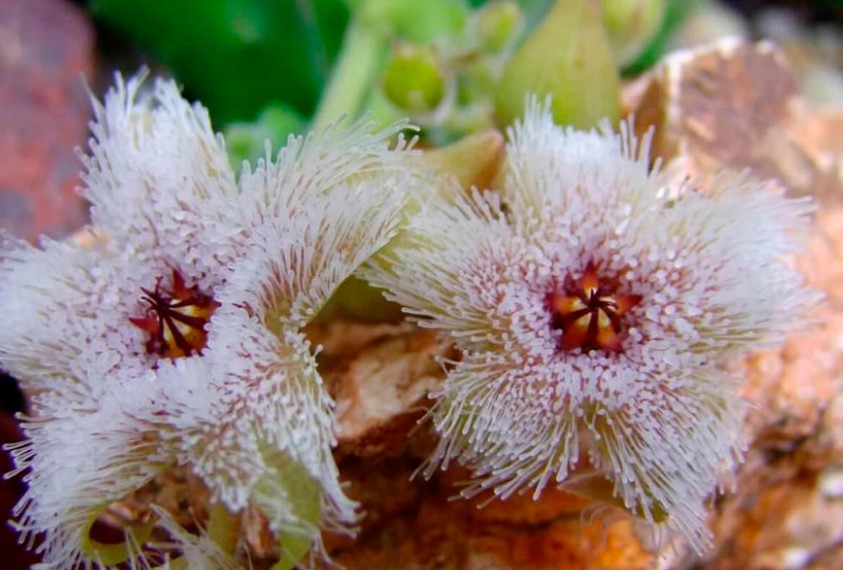
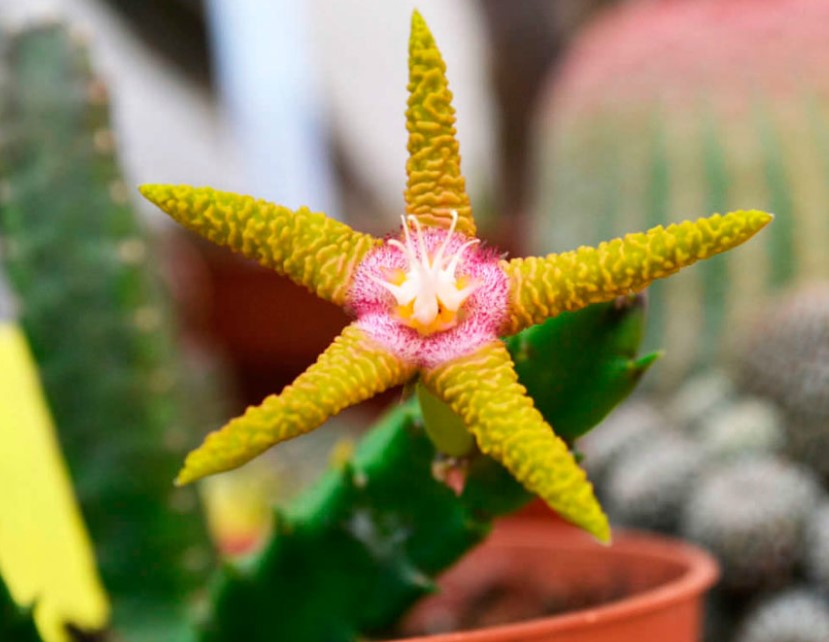
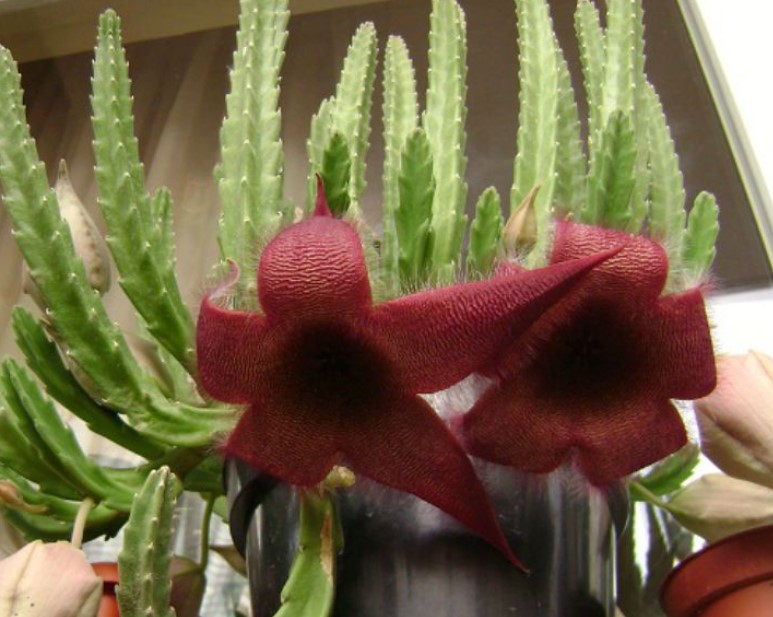
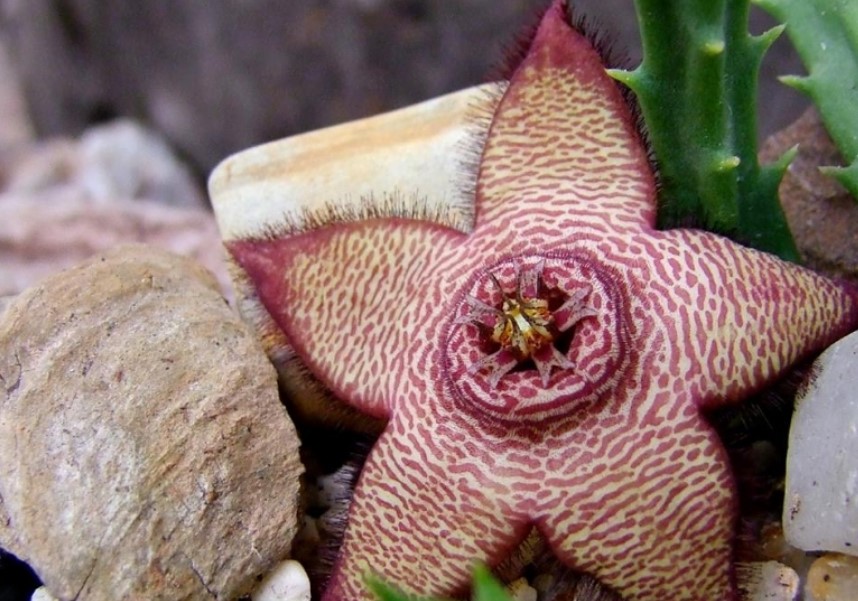
Family: Asclepiadaceae. Native to Southwest and South Africa. Perennial with quadrangular stems, branching at the base, bearing large, blunt teeth.
Types:
- star-shaped;
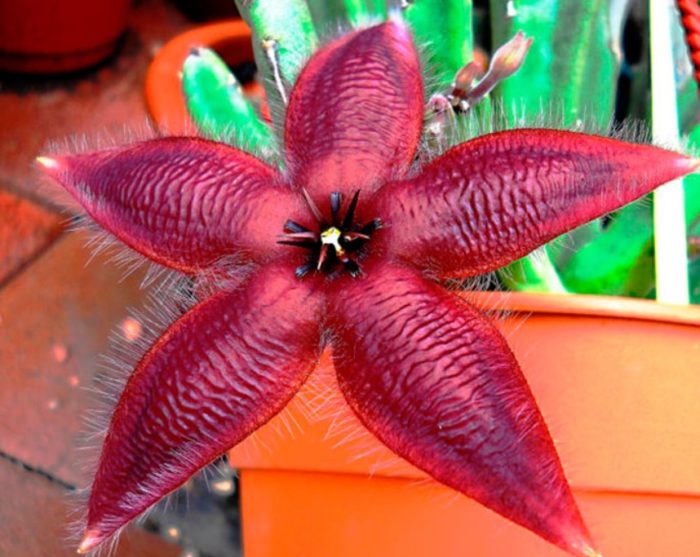
- gigantic;
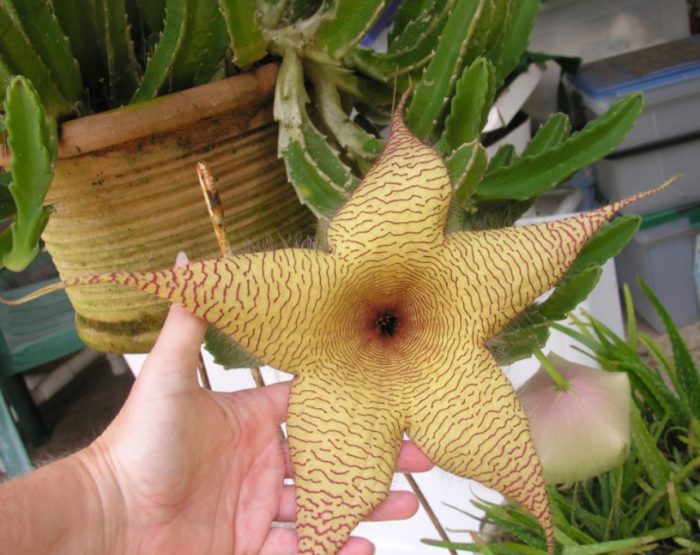
- variegated;
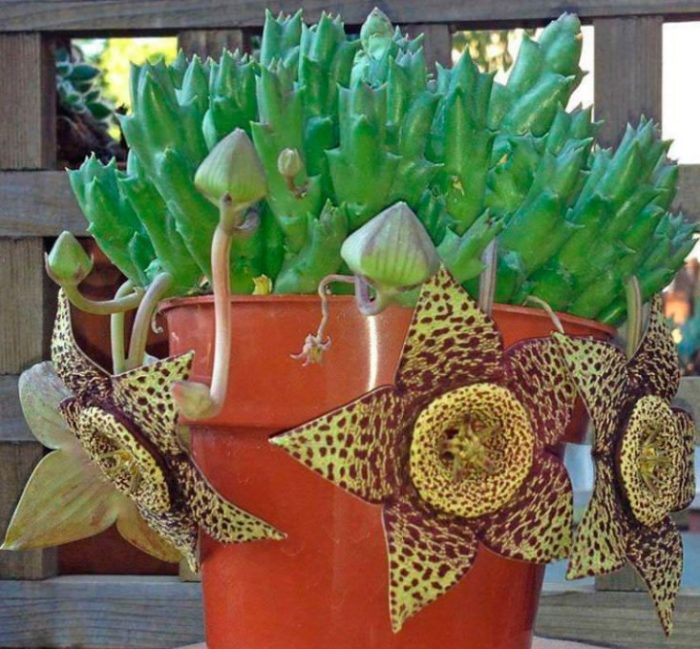
- glandular-flowered;
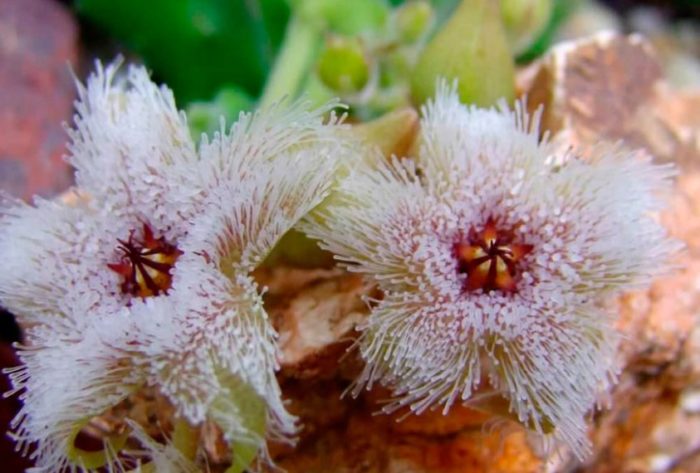
- golden purple;
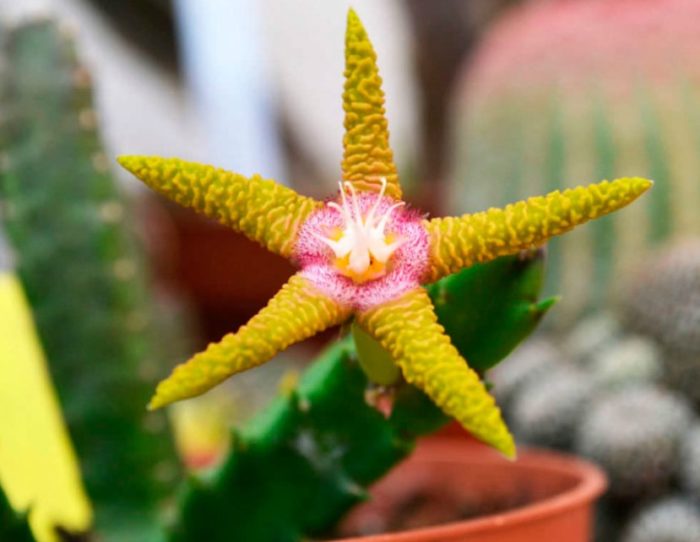
- large-flowered;
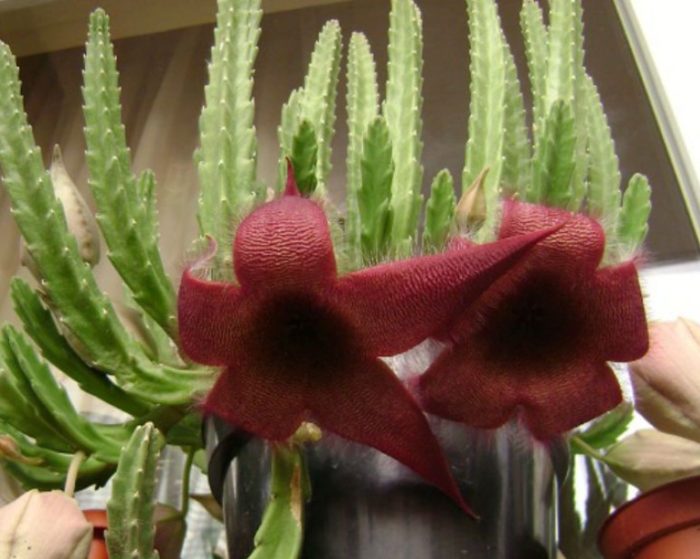
- changeable.
| Illumination | Bright, but with protection from direct rays. |
| Temperature |
+22…+26 °C – in summer; +15 °C – in winter. |
| Humidity | Any. |
| Pot and soil |
Deep. Coarse sand and turf soil (1 to 2). |
| Watering |
From March to September – 1 time per week. From October to November – 1 ruble/month. Do not water in winter. |
| Top dressing | During the growing season, once every 2 weeks with mixtures for cacti and succulents. |
| Reproduction | Cuttings, seeds. |
| Care Features | During flowering, the plant emits an unpleasant aroma, so it is better to move it to the balcony during this time. |
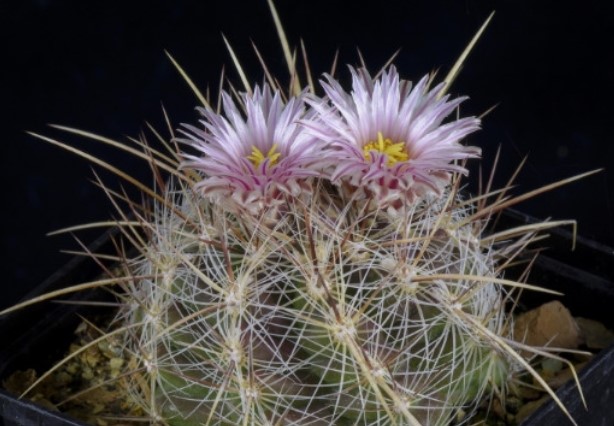
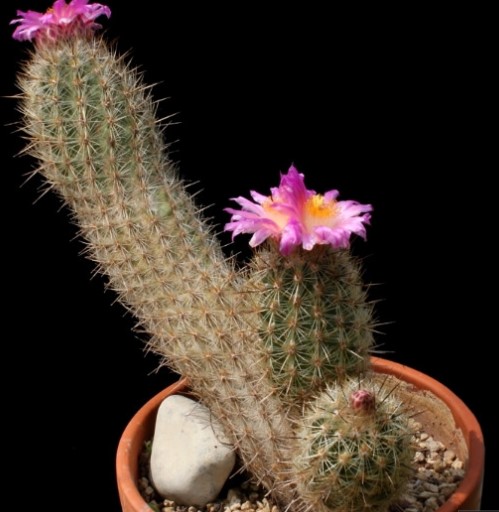
Thelocactus
Family: Cactaceae. Native to southern North America, the mountains of Mexico and Texas. It has a miniature size, a spherical or club-shaped stem, dark green or gray, with numerous spines. The flowers are large, up to 9 cm in circumference, located in the center. They can be white, pink, or lilac.
Types:
- hexagonal;
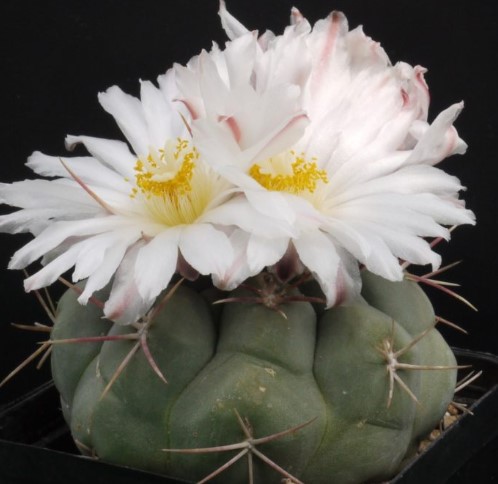
- bicolor;
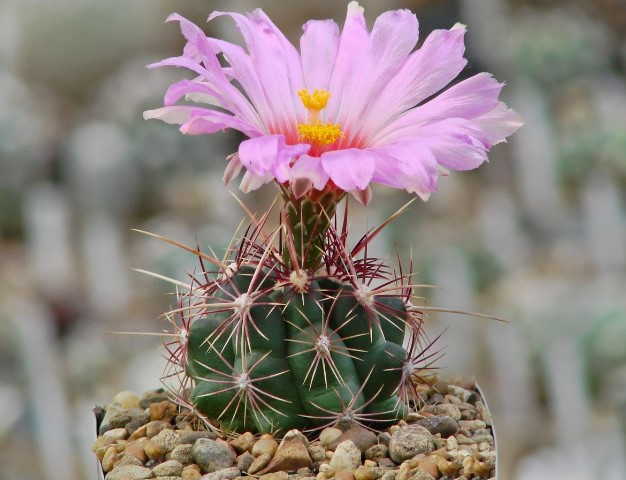
- cone-tuberculate;
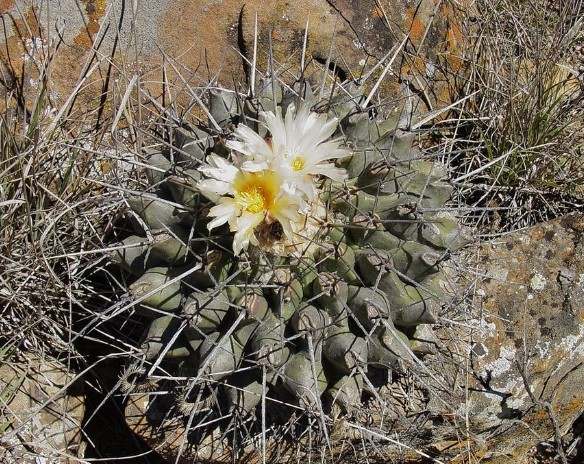
- Rinconian;
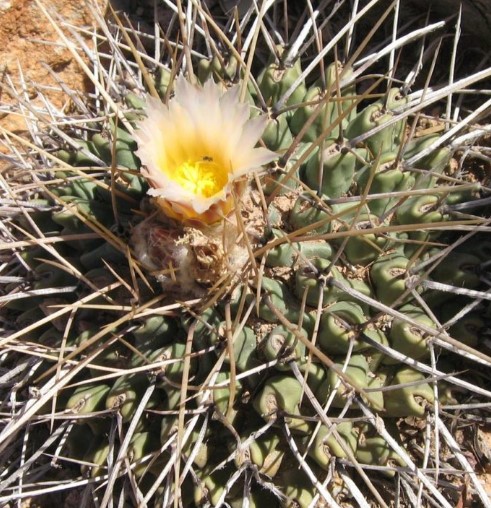
- setose-spiny;
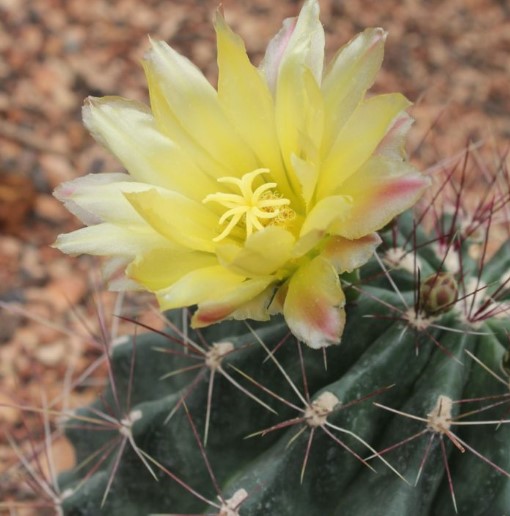
- multi-colored;
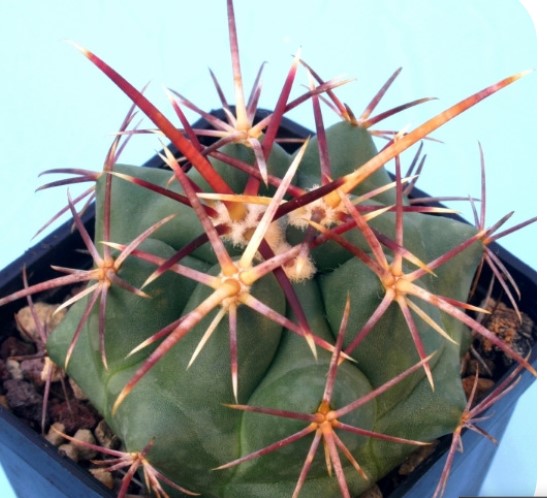
- Garcia;
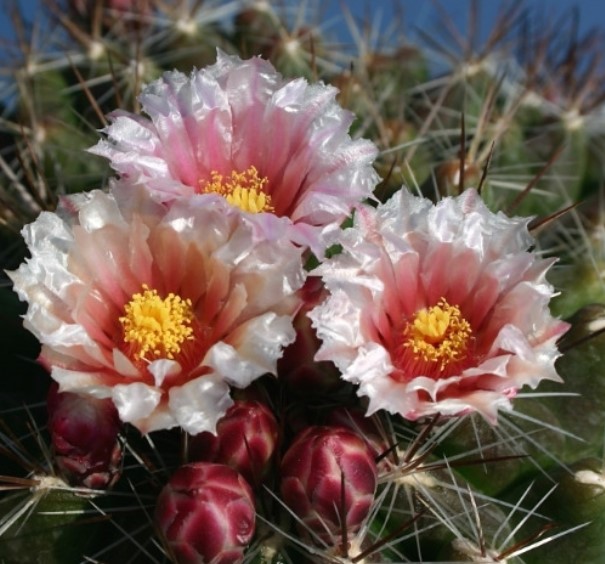
- McDowell;
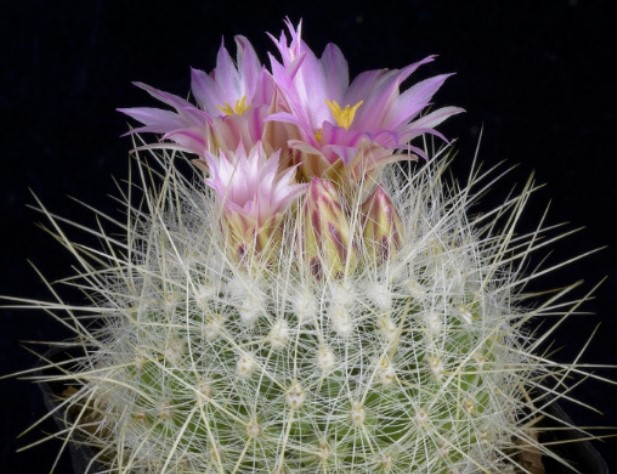
- Lausser;
- spear-bearing.
| Illumination | Moderate. |
| Temperature |
+25 °C – in summer; +5…+15 °C – in winter. |
| Humidity | Low or moderate. |
| Pot and soil |
Spacious. Substrate for succulents. |
| Watering | After the soil has dried by ⅓. |
| Top dressing | From April to September, 1 time per month with mixtures for succulents. |
| Reproduction | By seeds, cuttings (rarely). |
| Care Features | Every 2-3 years, replanting is carried out using the transshipment method. |
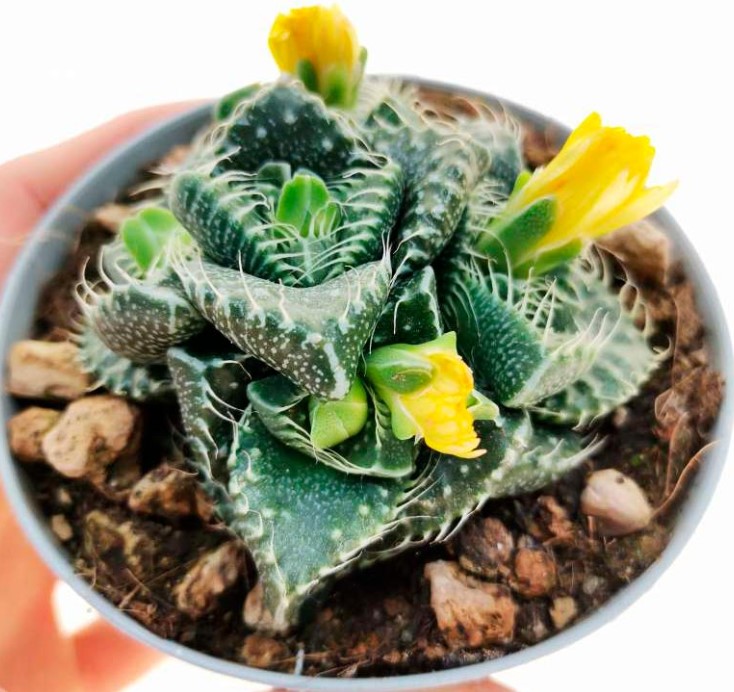
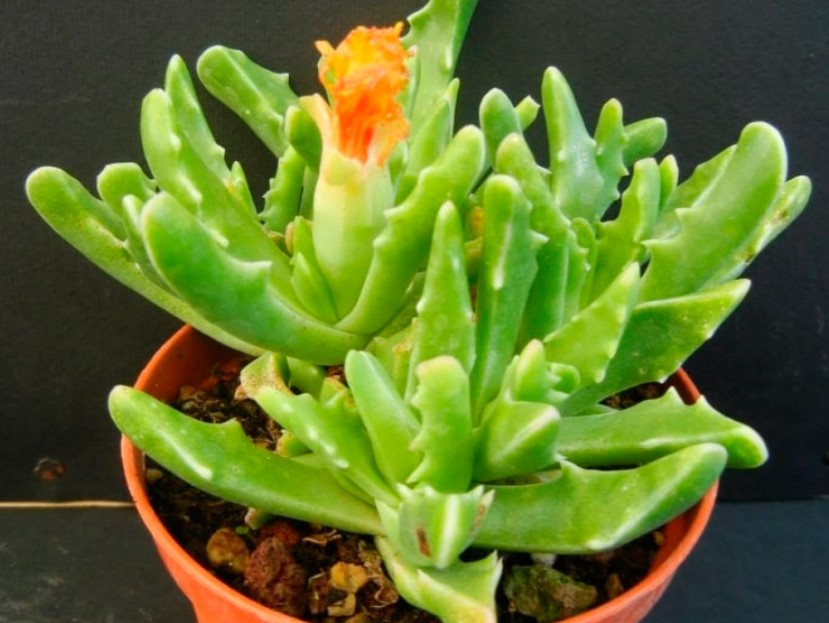
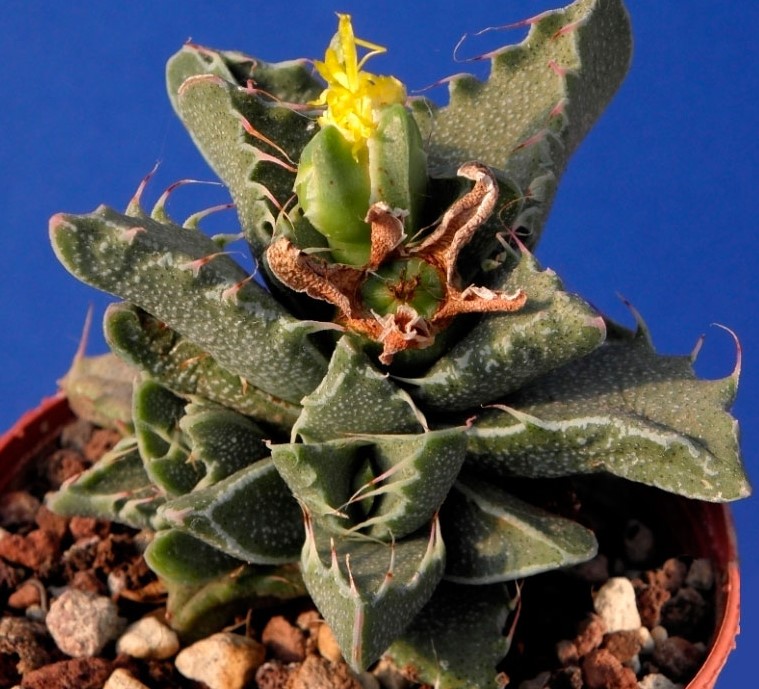
Faucaria
Family: Aizoaceae. Native to the arid regions of South Africa. A perennial with a short, fleshy rhizome and stem. Rosettes consist of 3-6 succulent leaves arranged in a cross. Their edges have spinous processes or hair-like teeth. Flowers are solitary and large.
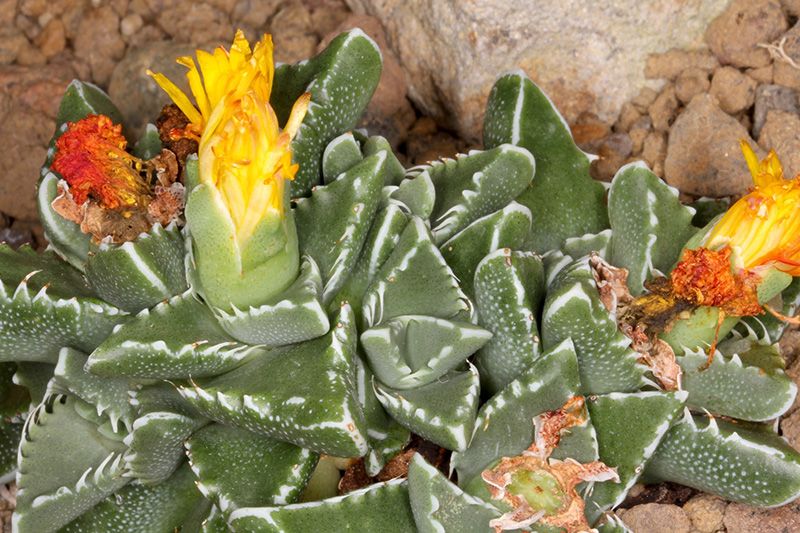
Types:
- cat's;
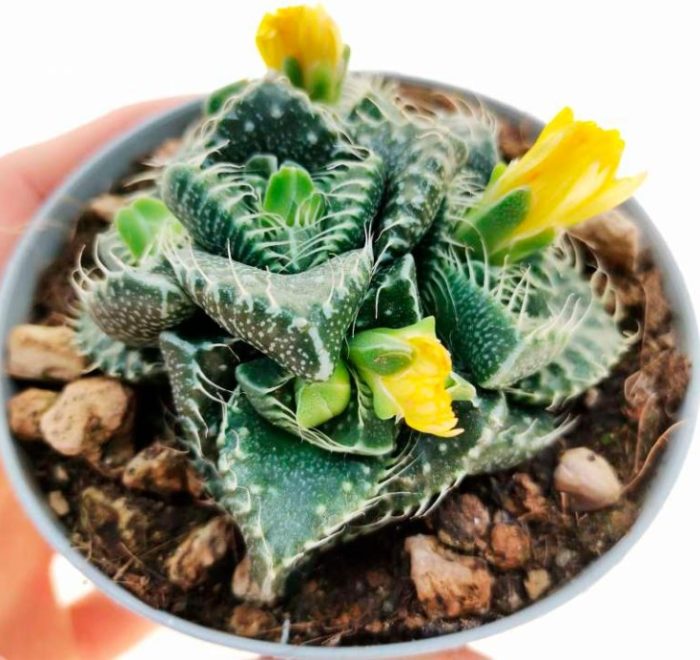
- small-toothed;
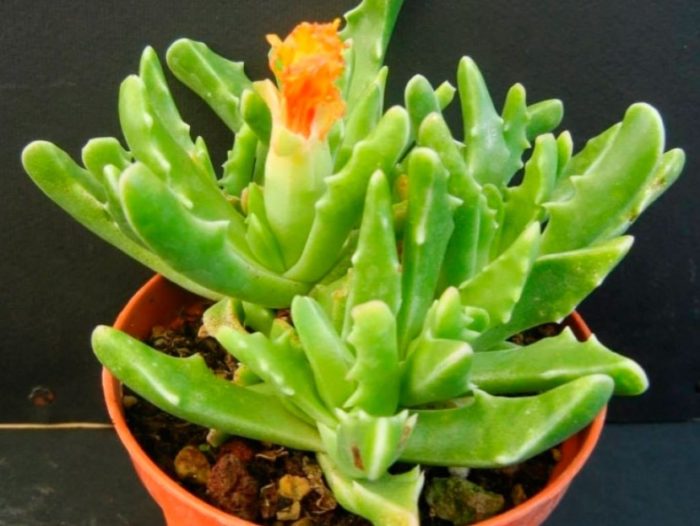
- beautiful;
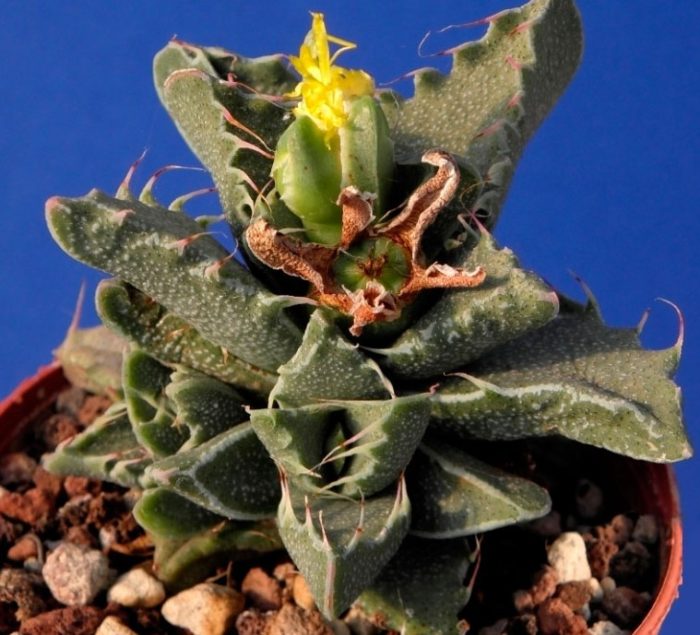
- tiger;
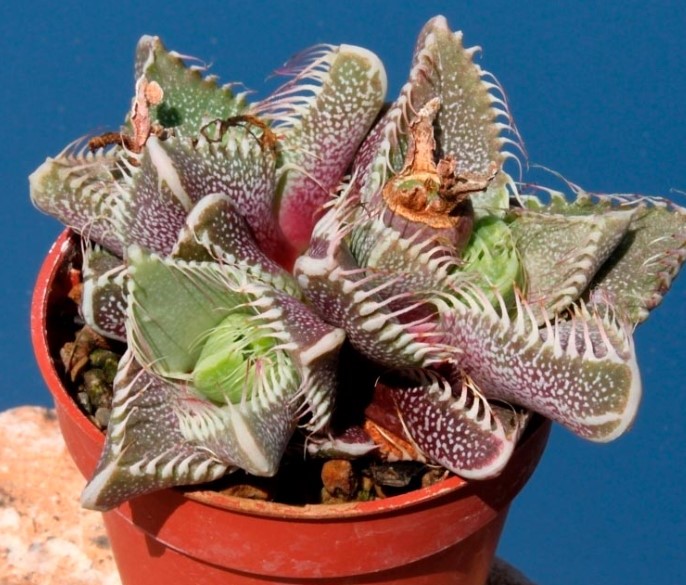
- tuberculate.
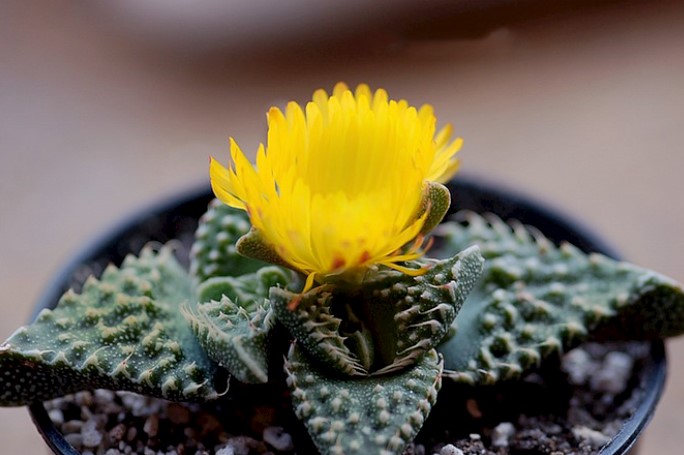
Care:
| Illumination | Bright |
| Temperature |
+25…+30 °C – in summer; +10 °C – in winter. |
| Humidity | It doesn't matter. |
| Pot and soil |
Low, wide. Turf, leaf soil, river sand (1:1:1). |
| Watering | In spring and summer, as the soil dries out completely. Reduce watering in autumn and stop completely in winter. |
| Top dressing | 1 time/4 weeks with fertilizer for cacti. |
| Reproduction | Seed method, cuttings. |
| Care Features | Requires replanting once every 2 years. |
The article discusses the difficulties of maintaining faucaria and reviews from experienced gardeners.Faucaria: growing tips, description, species, photos, reviews.
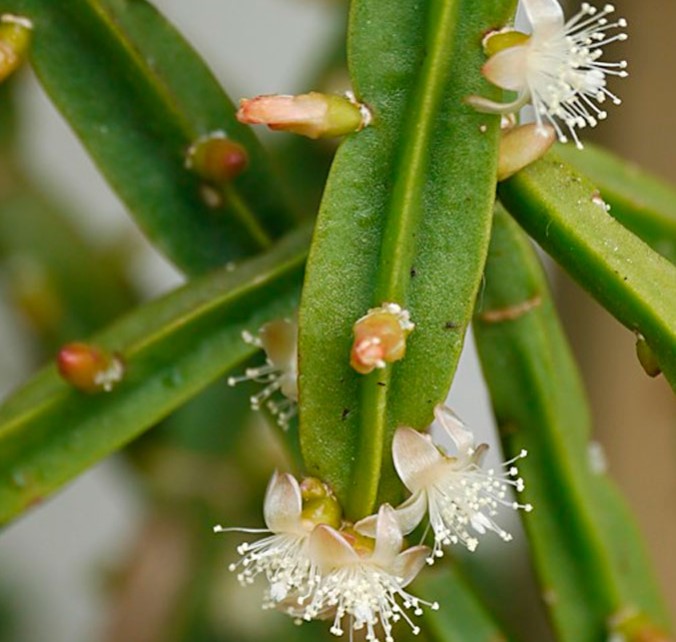
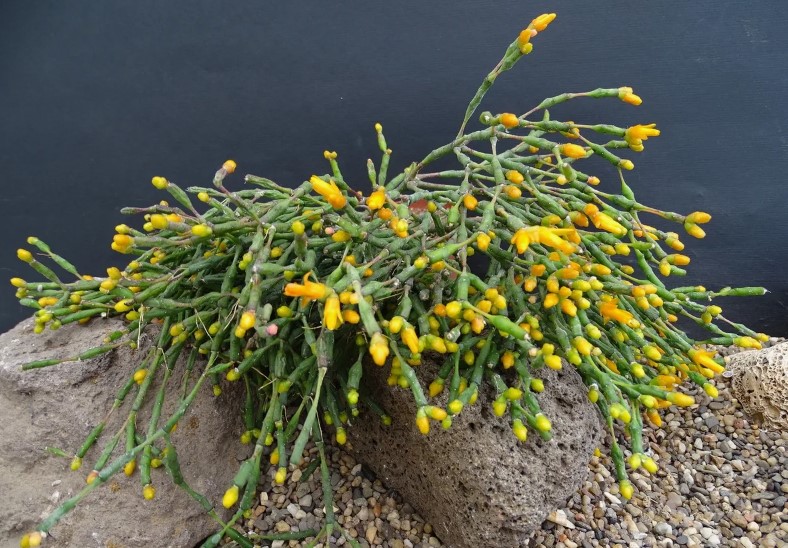
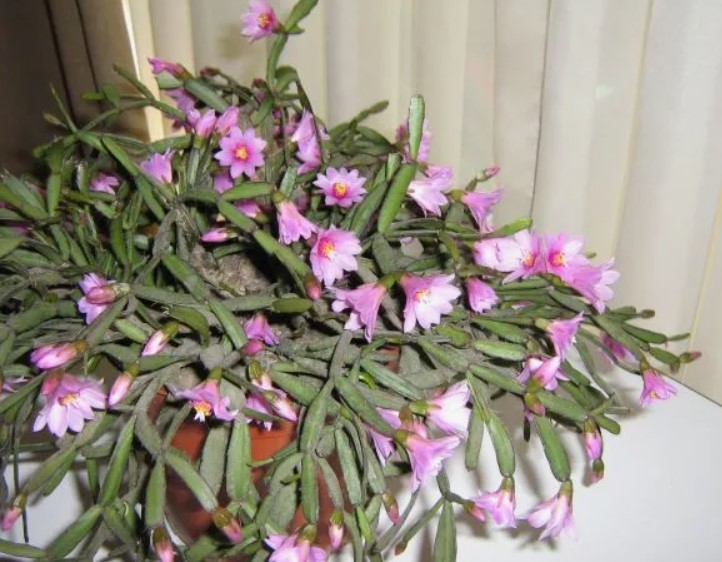
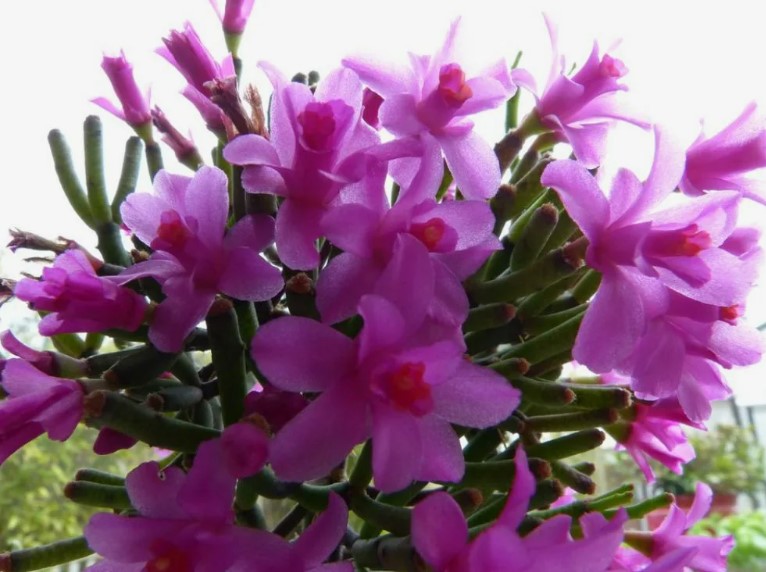
Hatiora
Family: Cactaceae. Native to the tropical forests of Brazil. This is a shrub with jointed shoots. Flowers are terminal, yellow, pink, or red.
Types:
- glasswort;
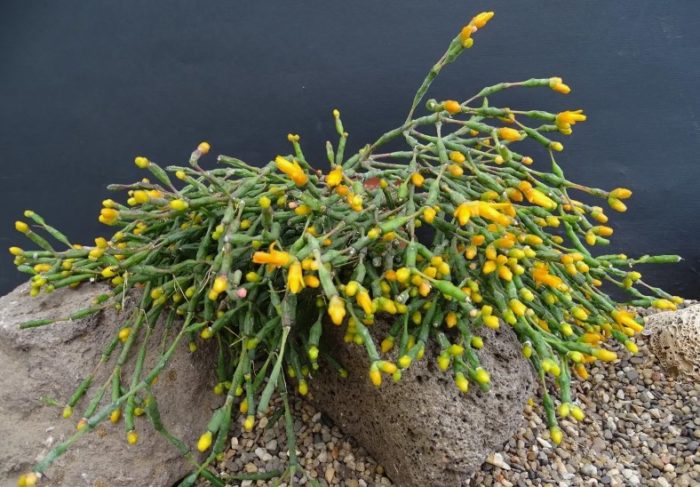
- pink;
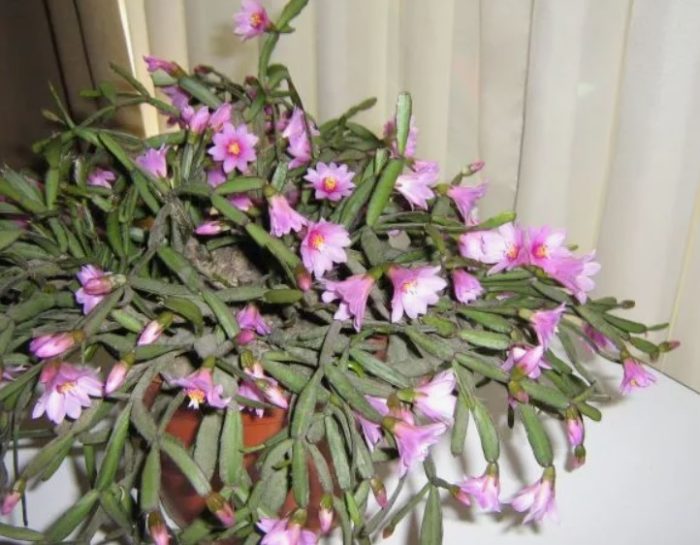
- Hermine;
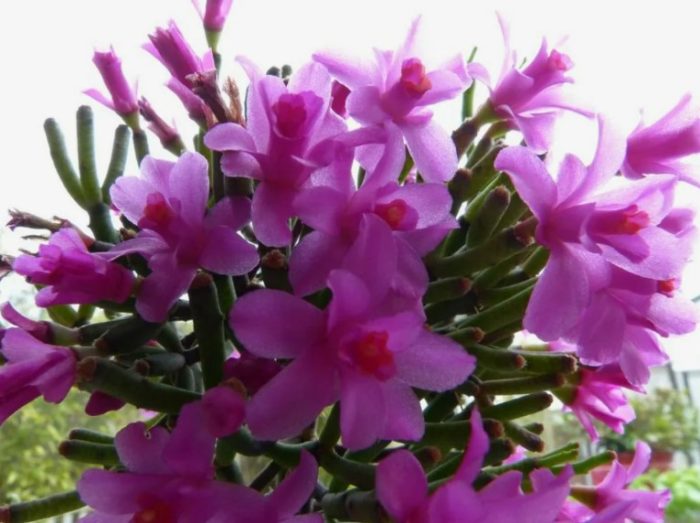
- Gartner;
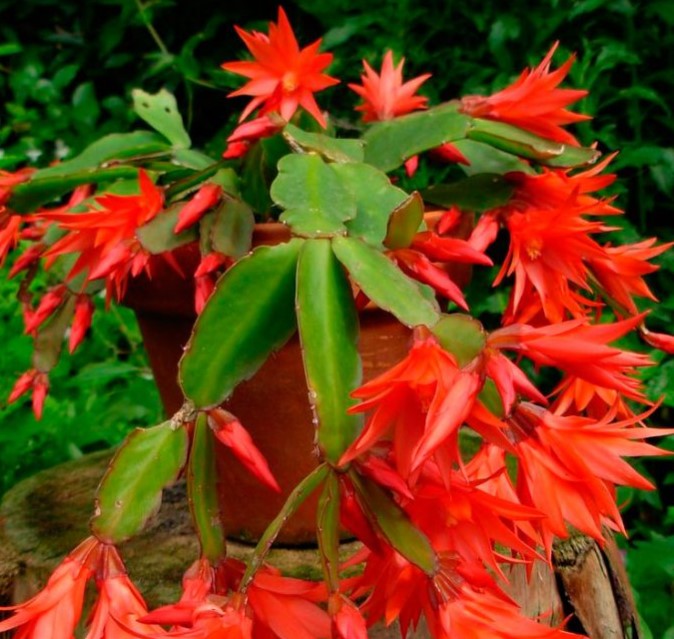
- Grezer;
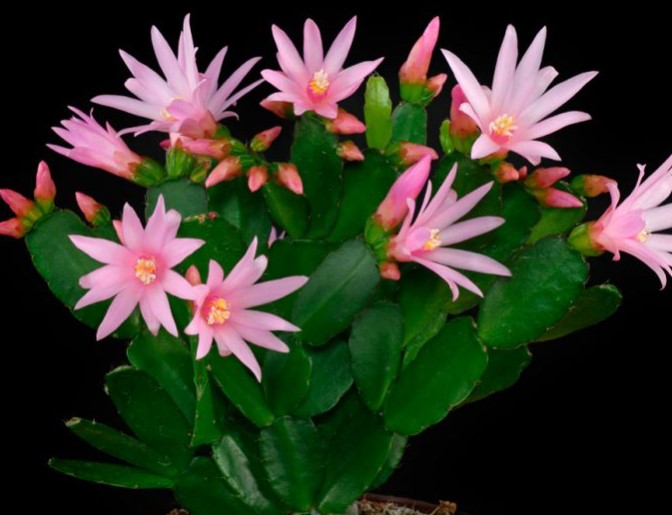
- five-winged.
| Illumination | A southern windowsill is suitable for growing, but shade is required at midday. |
| Temperature |
+18…+25 °C – in summer; +12…+14 °C – in winter. |
| Humidity | Medium or high. |
| Pot and soil |
Low, with drainage holes. Coarse sand, peat, leaf soil, turf (1:1:2:1). |
| Watering | When the soil in the pot dries out. |
| Top dressing | Fertilizers without calcium and with a minimum amount of nitrogen are applied during the growing season once a day/2 weeks. |
| Reproduction | By cuttings, grafting. |
| Care Features | In spring, pruning is required. To do this, carefully twist off the stems with your fingers. |
Want to know about the difficulties of growing hatiors, read about reviews about it on our website.
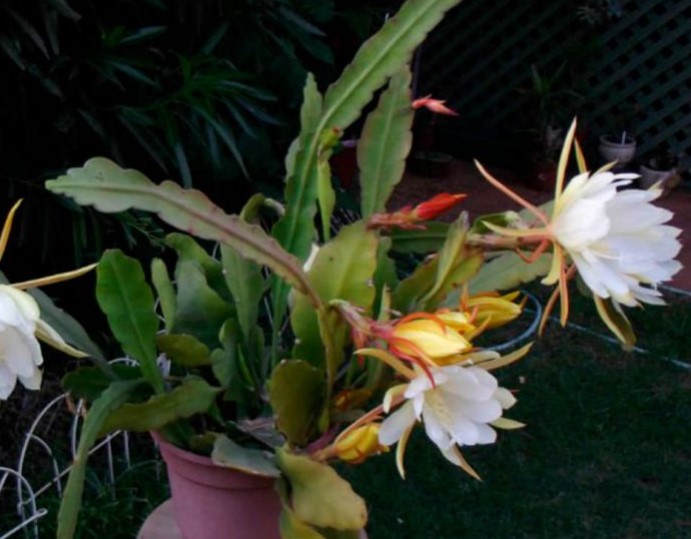
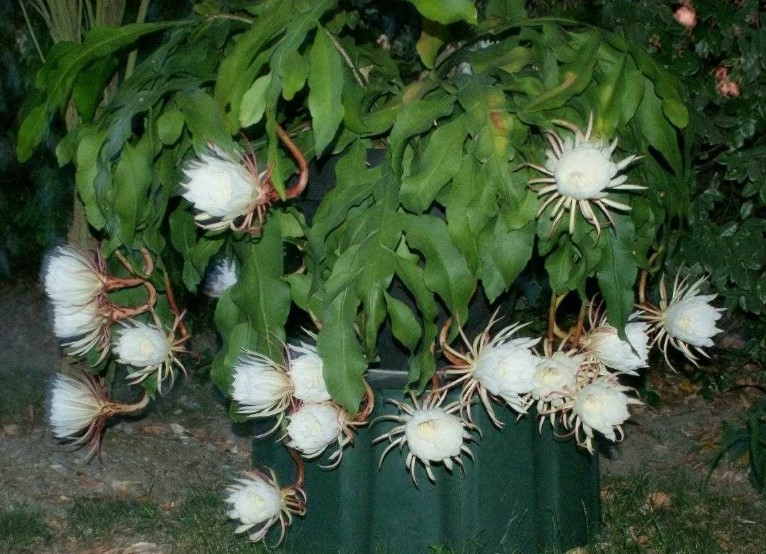
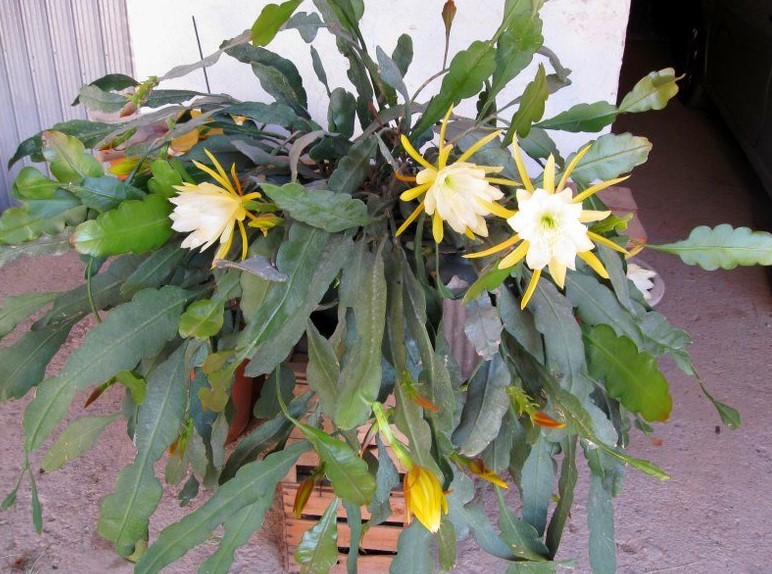
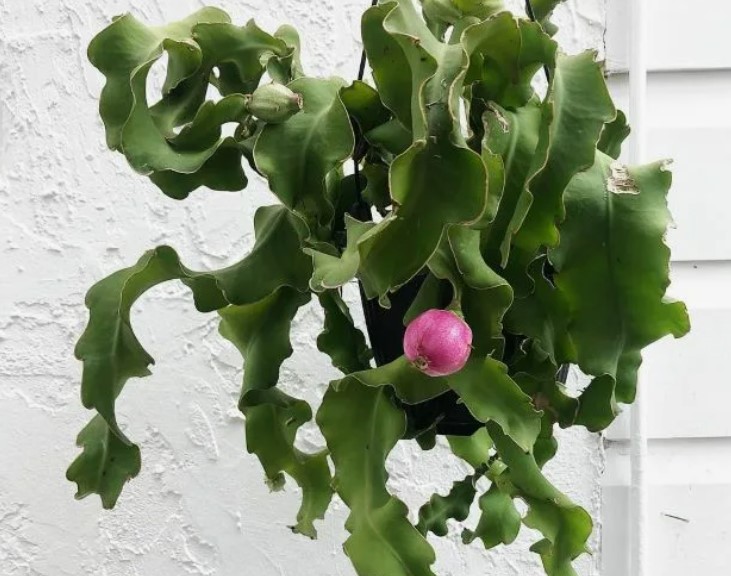
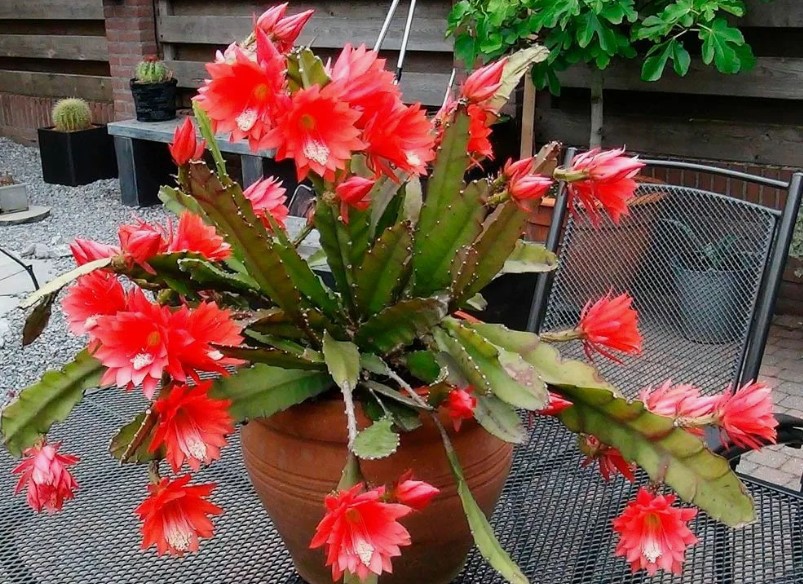
Epiphyllum
Family: Cactaceae. Native to the subtropics and tropics of America and Mexico. This is a succulent with creeping or drooping shoots bearing aerial roots. The flowers are funnel-shaped.
Types:
- oxypetalum;
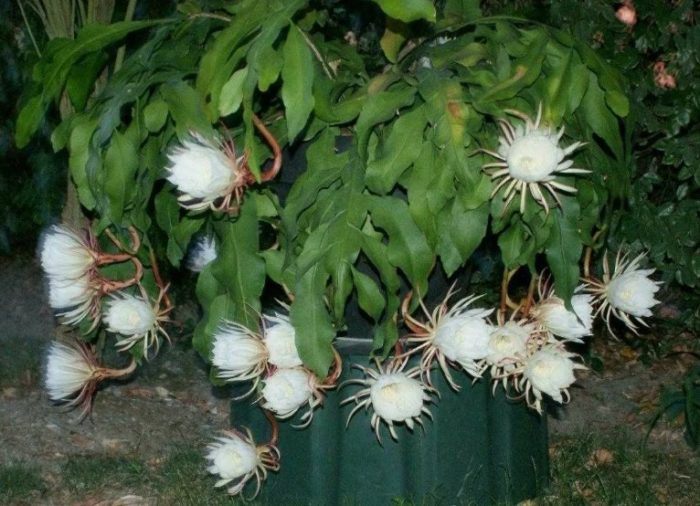
- anguliger;
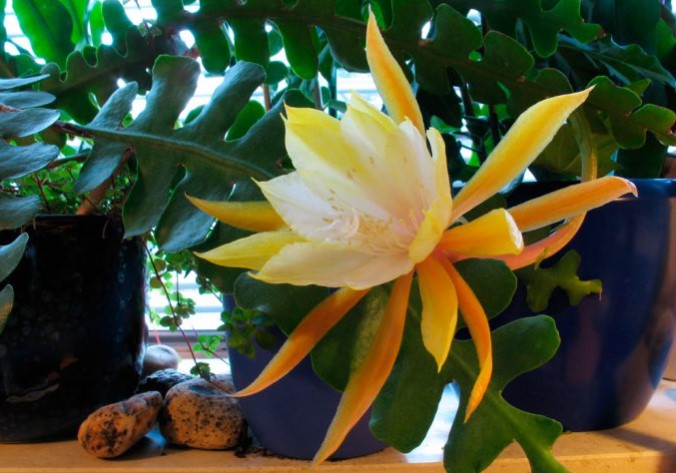
- Hooker;
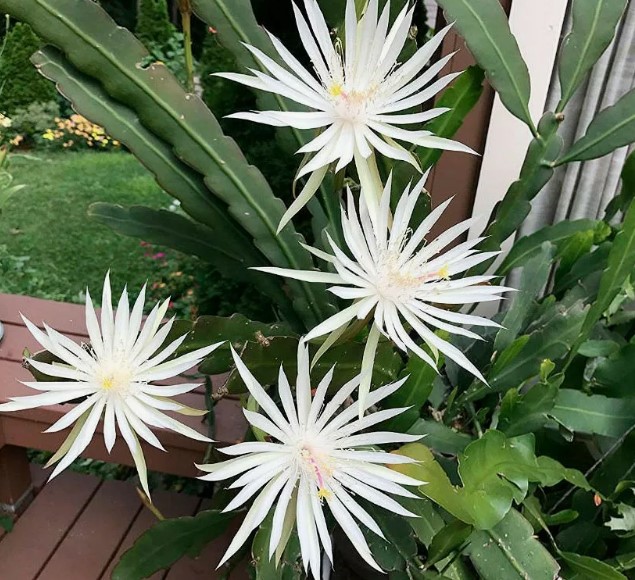
- jagged;
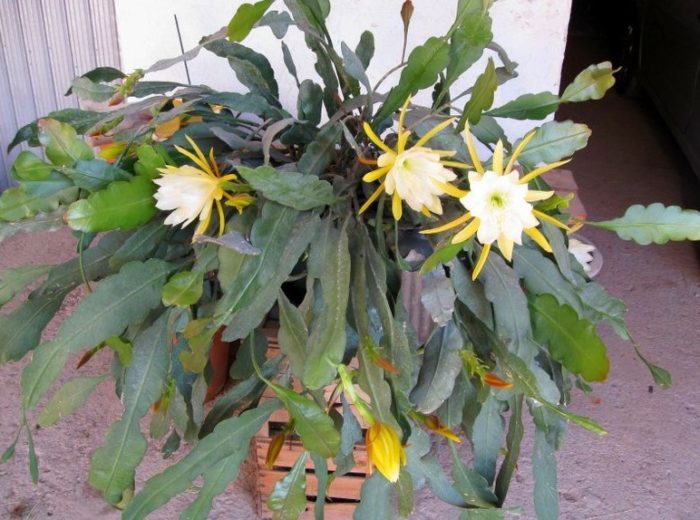
- phyllanthus;
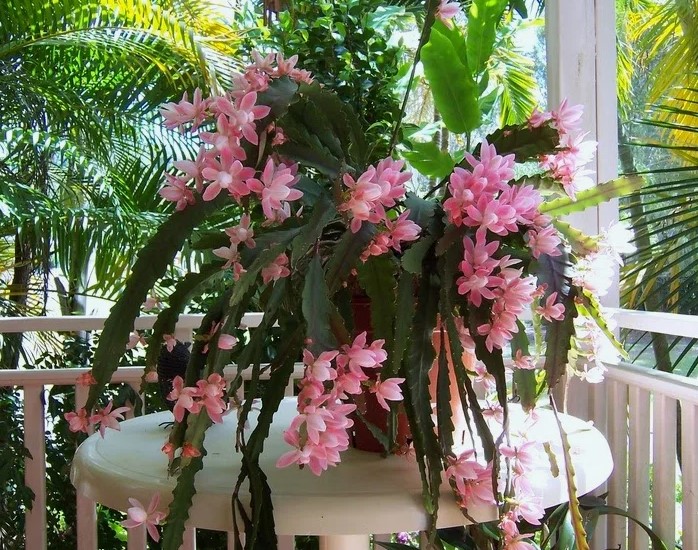
- Guatemalan;
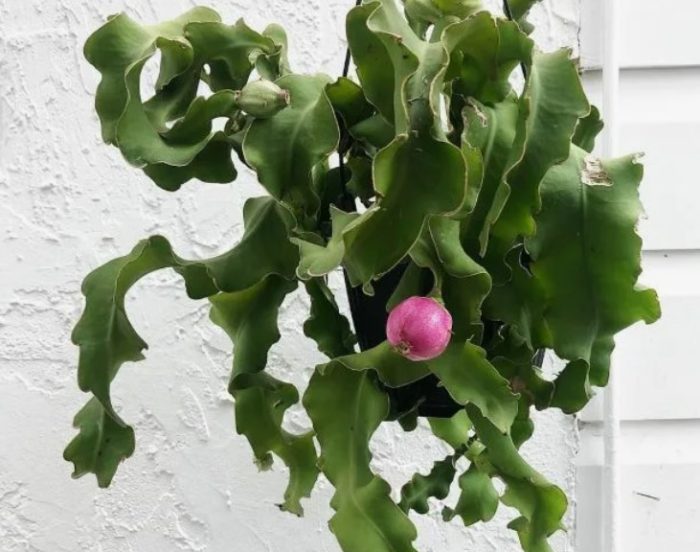
- Thomas;
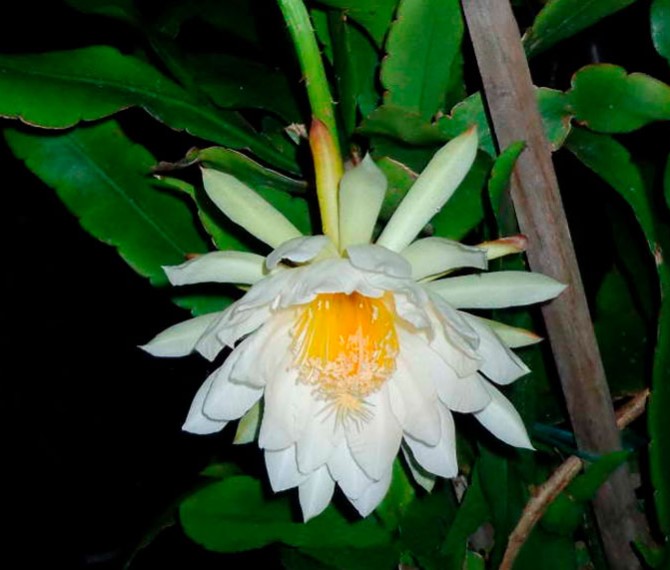
- Ackerman;
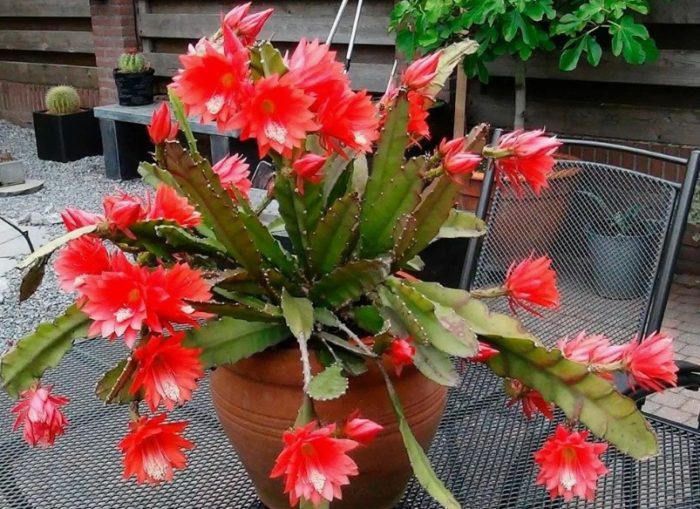
- Lau.
| Illumination | Bright but diffused light. |
| Temperature |
+20…25 °C – in summer; +10…+15 °C – in winter. |
| Humidity | Undemanding. |
| Pot and soil |
Low, wide, ceramic or plastic. Leaf soil, turf, fibrous peat, charcoal, coarse sand (4:4:1:1:1). |
| Watering | When the top layer dries in the container. |
| Top dressing | During active growth, apply cactus mixtures once every 15 days. During budding, apply organic matter (mullein and water in a 1:4 ratio). |
| Reproduction | Cuttings, seeds. |
| Care Features | Repotting is done annually while the plant is young. Mature plants are repotted only as needed. |
Care, signs and superstitions, reviews about epiphyllum.
Echinocactus
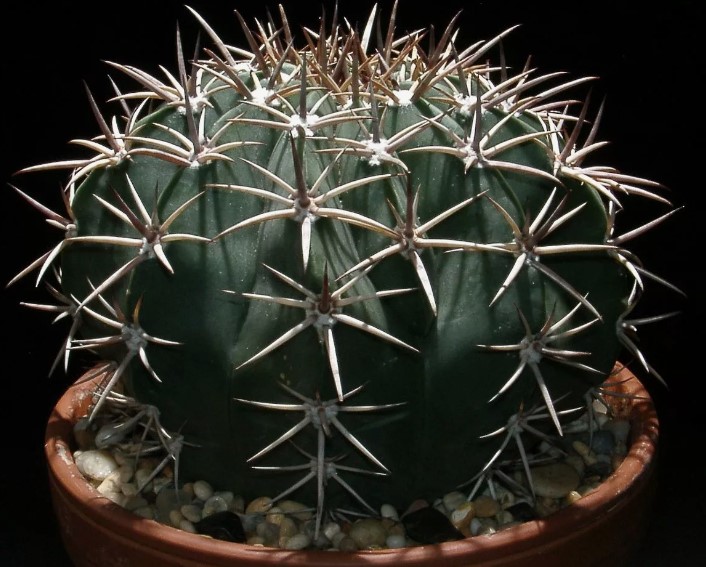
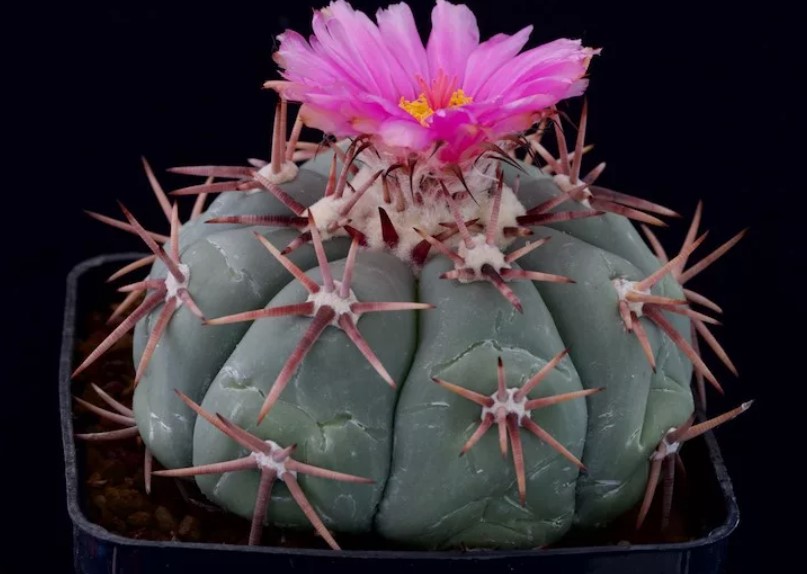
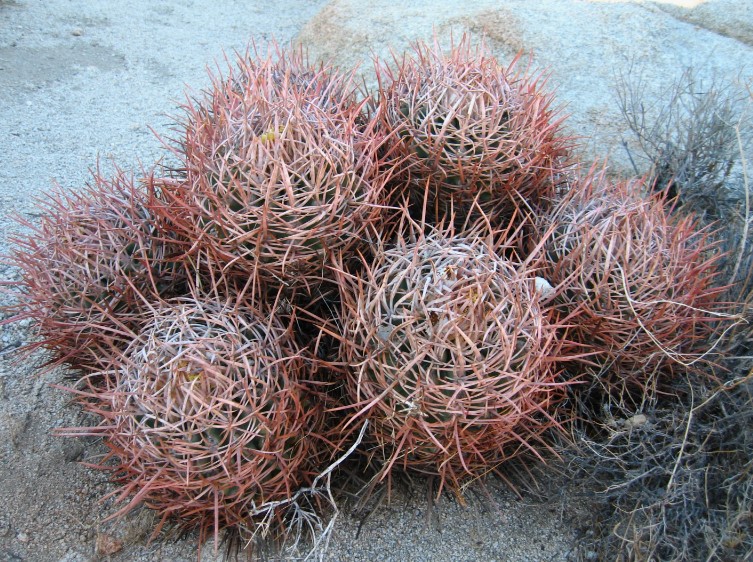
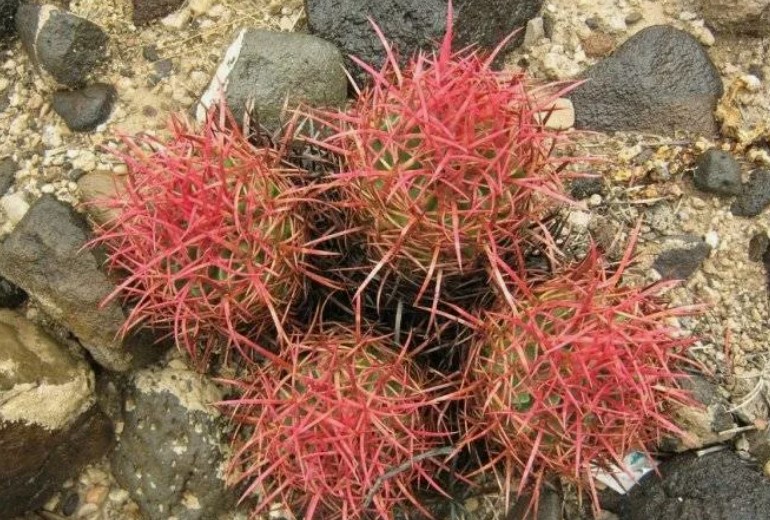
Family: Cactaceae. Native to the southwestern United States and Mexico. Spherical in shape with numerous protruding ribs and spines. Flowers are pubescent and come in red, pink, and yellow.
Types:
- cargoes;
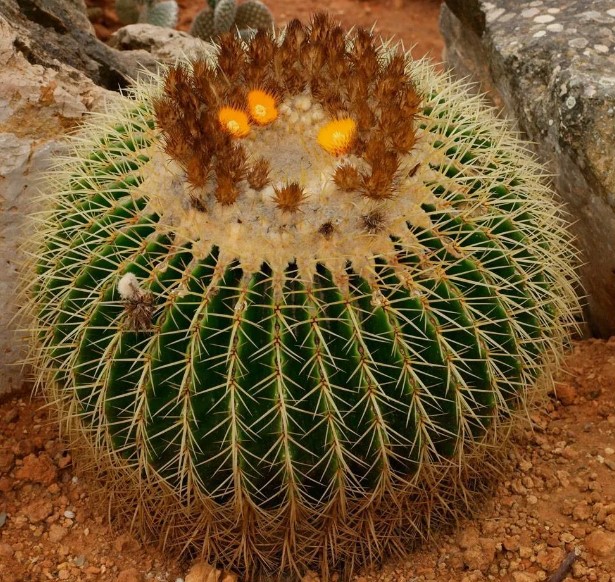
- flat-spined;
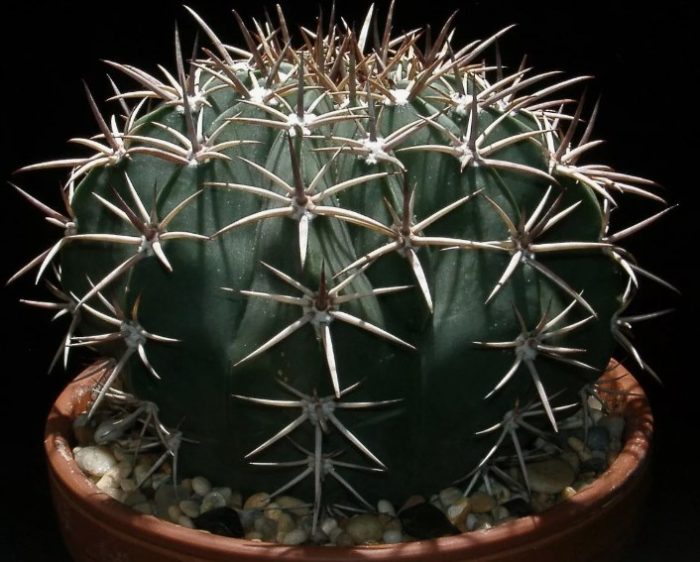
- globular;
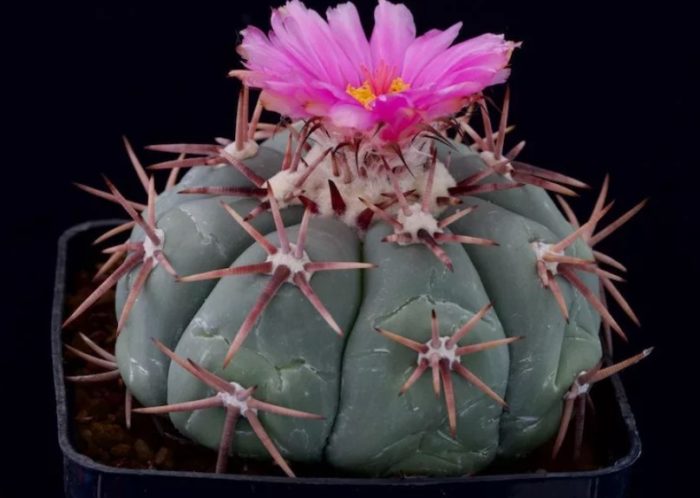
- polycephalus;
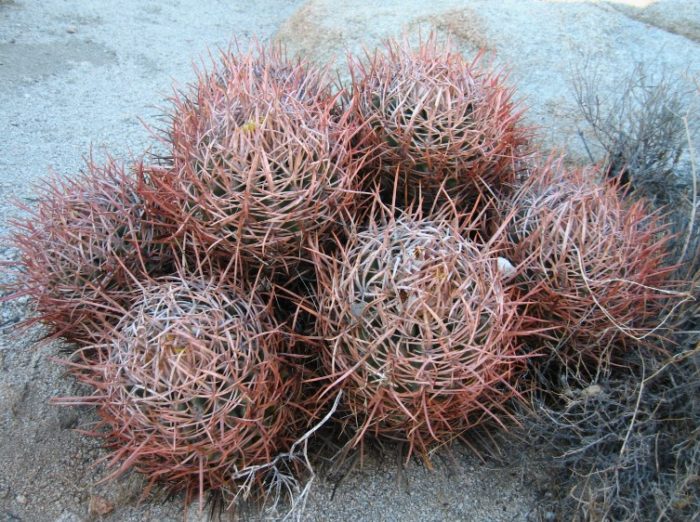
- Texan;
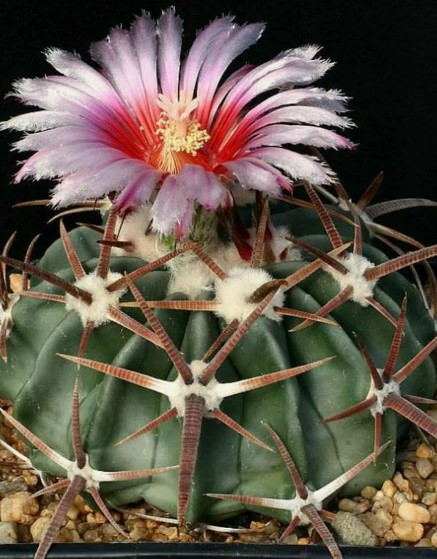
- parry;
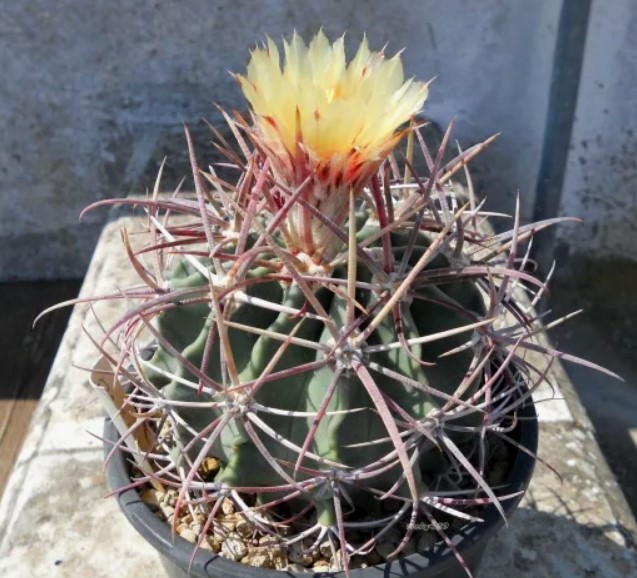
- multi-headed.
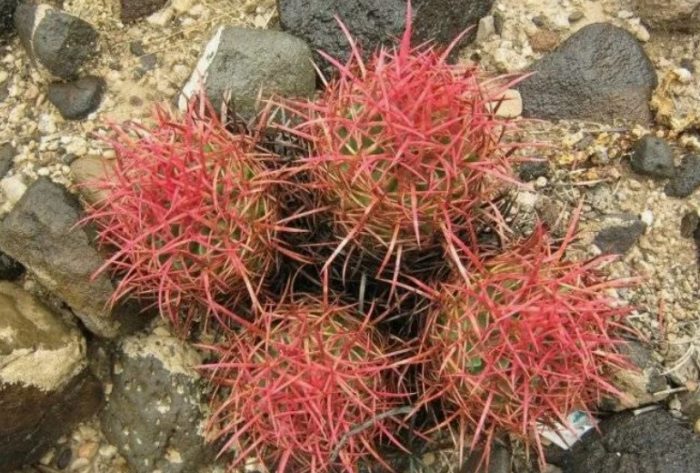
Care:
| Illumination | Bright and uniform light. |
| Temperature |
+28…+23 °C – in summer. +10…+12 °C – in winter. |
| Humidity | Average. |
| Pot and soil |
With a large diameter. Soil mixture for succulents. |
| Watering | In summer – 2 times a month. In winter – 1 ruble/month. |
| Top dressing | From April to October – once every 3-4 weeks with compositions for succulents. |
| Reproduction | Children, seeds. |
| Care Features | Replanting is required every 3-5 years. |
Read more about Echinocactus in the articleEchinocactus: species, photos, cultivation and care features, reviews.
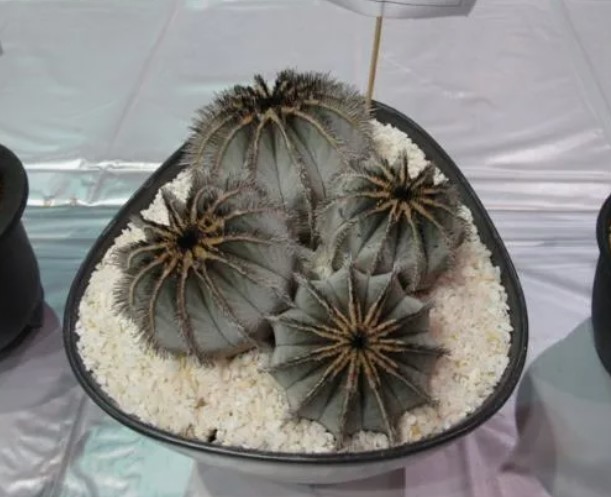
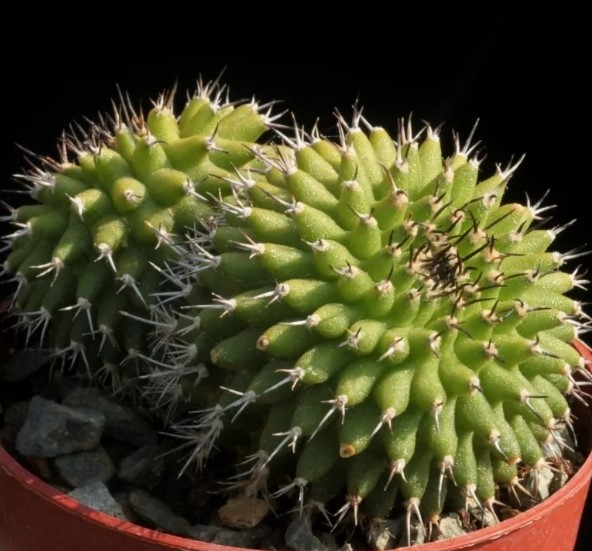
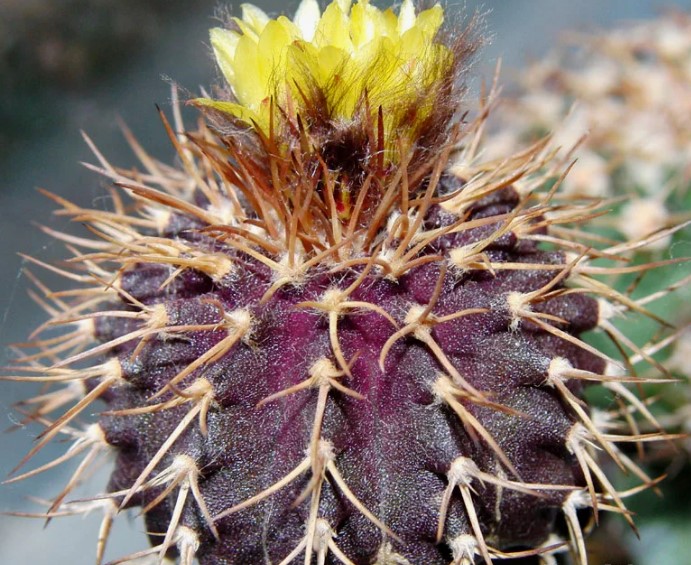
Jubelmania
Family: Cactaceae. Native to Brazil. A spherical succulent with purple-green stems. Species:
| Scallop
|
A solitary plant with 13-40 sharp, protruding teeth. |
| Gummifera
|
The stem is spherical, slightly elongated or cylindrical. |
| Buiningii
|
A miniature and profusely flowering species. |
Care:
| Illumination | Daylight hours should be at least 8-10 hours. |
| Temperature |
+20…+28 °C – in summer. +10…+12 °C – in winter. |
| Humidity | Moderate. |
| Pot and soil | Light, loose, slightly acidic. |
| Watering | Moderate. |
| Top dressing | Monthly with cactus fertilizer at ½ dosage. |
| Reproduction | By seeds, by grafting. |
| Care Features | A warm, humid environment is required, but without stagnant moisture in the container. |
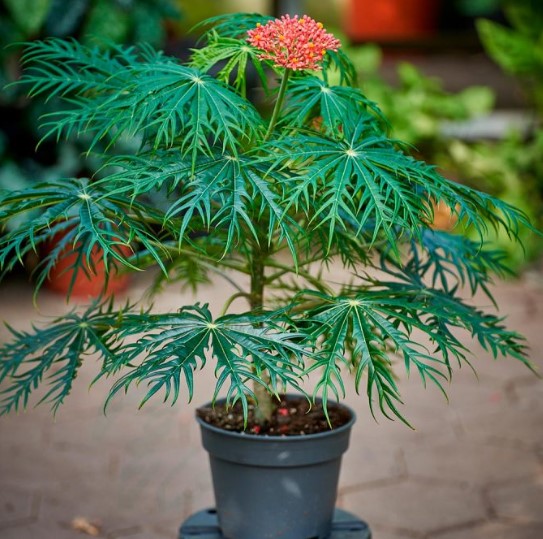
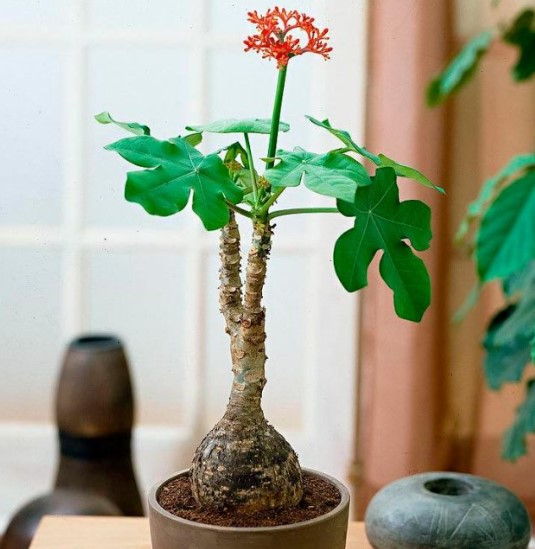
Jatropha
Family: Euphorbiaceae. Native to the tropics of Africa and America. The genus includes shrubs, trees, and herbaceous perennials.
| Dissected
|
The leaves are palmate. The flowers are scarlet, collected in inflorescences. |
| Gouty
|
The stem of this plant resembles a bottle. The leaves are lobed and dark green. |
| Illumination | Intense, but with shading. |
| Temperature |
+18…+22 °C – in summer. +14…+17 °C – in winter. |
| Humidity | Any. |
| Pot and soil | Turf, leaf soil, sand, peat (1:2:1:1) |
| Watering | Moderate. |
| Top dressing | 1 time/4 weeks in spring-summer with fertilizers for cacti. |
| Reproduction | By seeds, cuttings. |
| Care Features | Replanting is required every 2-3 years. |
You know that jatropha poisonous plant?
3 species + 14 subspecies of leafy succulents
They store moisture in their leaves and stems.
Claynia
Family: Asteraceae. Native to Africa, Western and Southern Asia, Madagascar, and the Canary Islands. A perennial herbaceous plant with erect or prostrate stems.
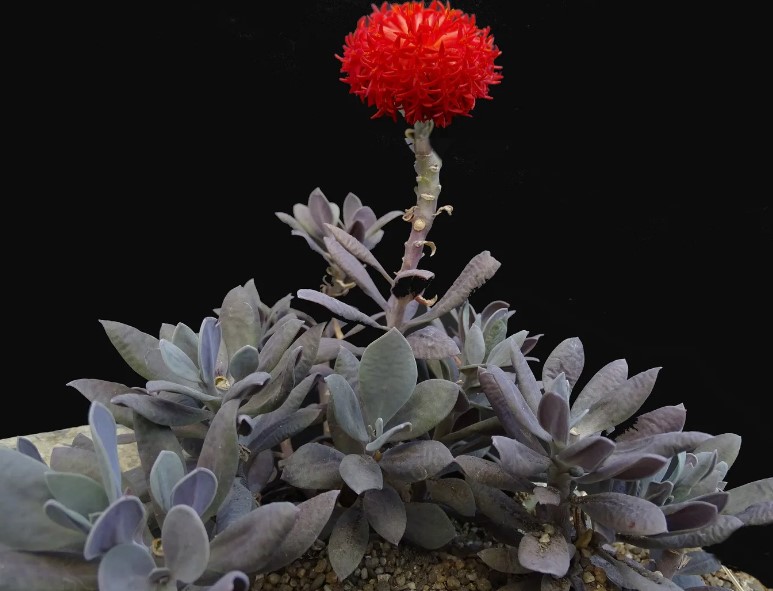
Common types:
| Complexa (Kleinia complexa) 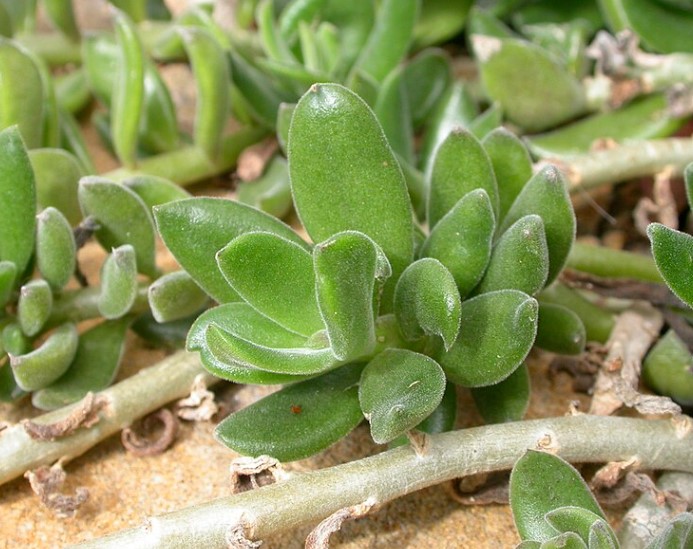 |
With long and thick shoots, small light yellow flowers. |
Oleander-leaved (Kleinia neriifolia)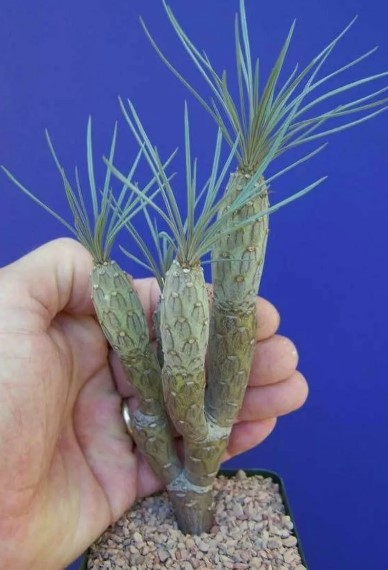 |
It can take the form of a small tree. |
Care:
| Illumination | Intensive. |
| Temperature |
+22…+24 °C – in summer. +6…+12 °C – in winter. |
| Humidity | Low. |
| Pot and soil |
With good drainage. Soil mixture for succulents. |
| Watering | Abundant from spring to mid-autumn. |
| Top dressing | During growth, apply potassium fertilizers or mixtures for succulents 1-2 times a month. |
| Reproduction | Leaf cuttings, daughter rosettes. |
| Care Features | If you provide bright light and breathable soil, the plant will grow well. |
Cotyledon
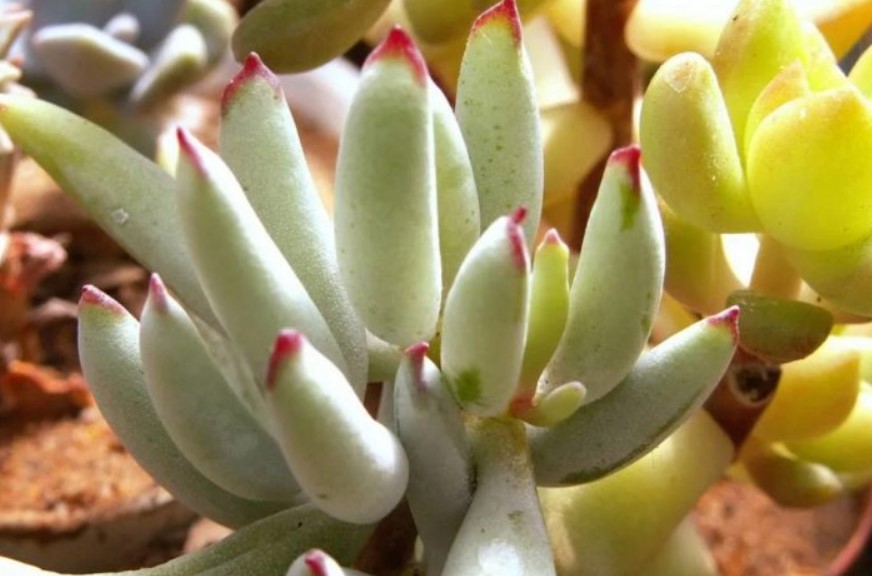
Family: Crassulaceae. Native to South Africa. An evergreen plant with unusually shaped, gray-green leaves.
Types:
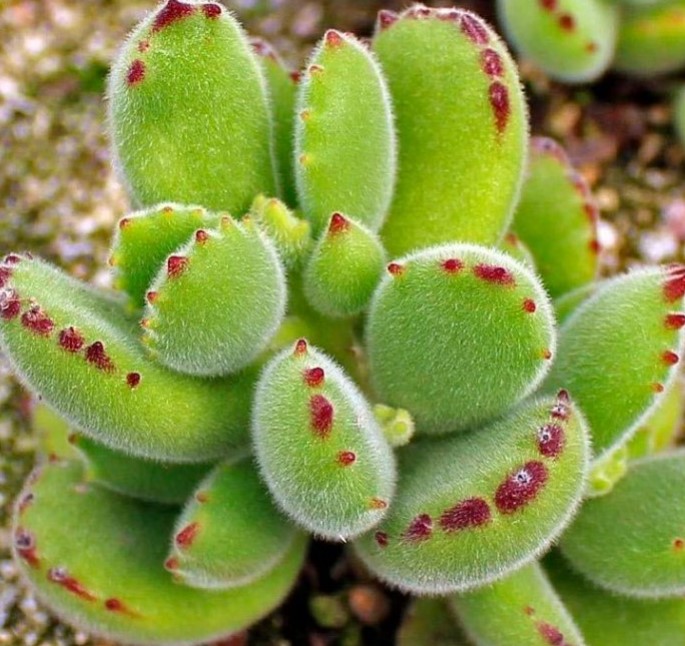
- felt;
(Cotyledon tomentosa)
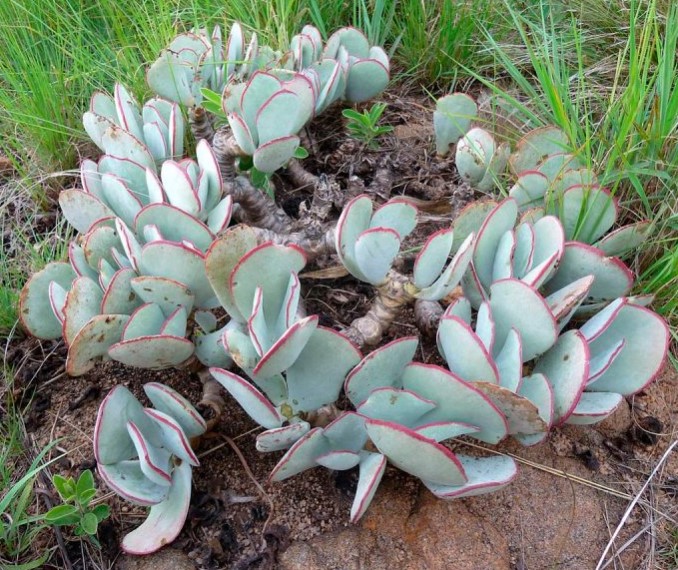
- rounded (Cotyledon orbiculata);
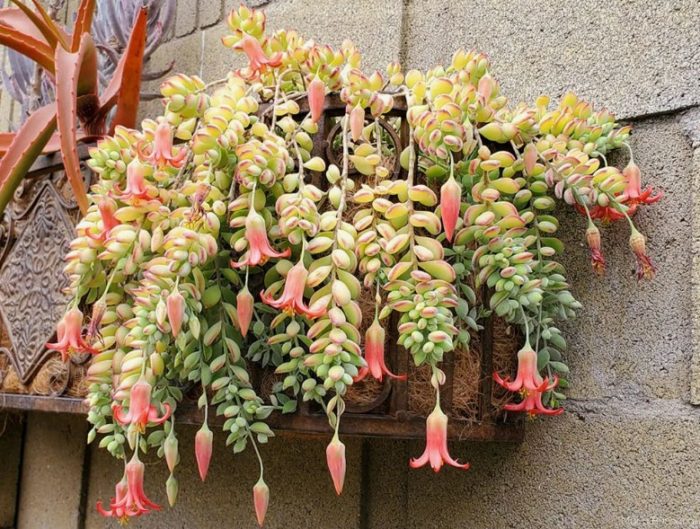
- pendant (Cotyledon pendens);
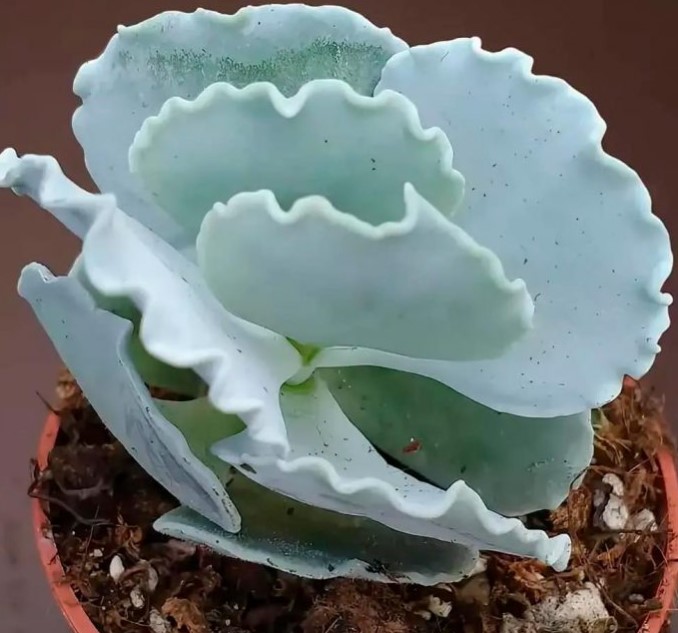
- wavy (Cotyledon undulata);
- Lady Smith (Cotyledon Ladismithiensis);
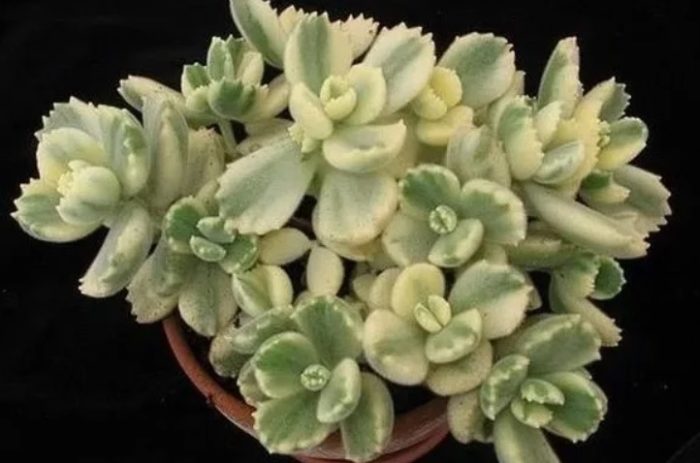
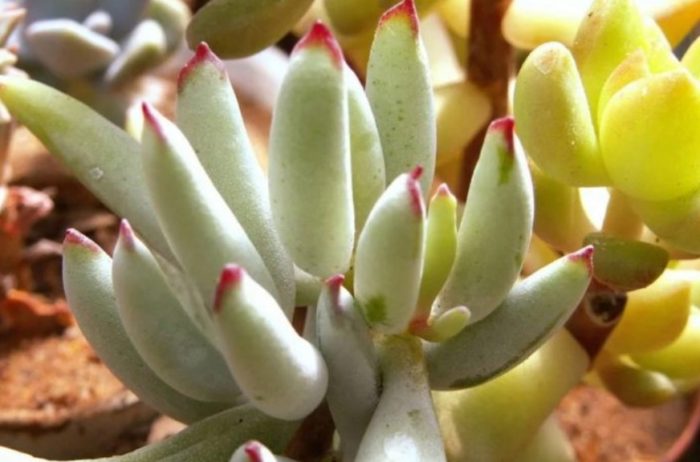
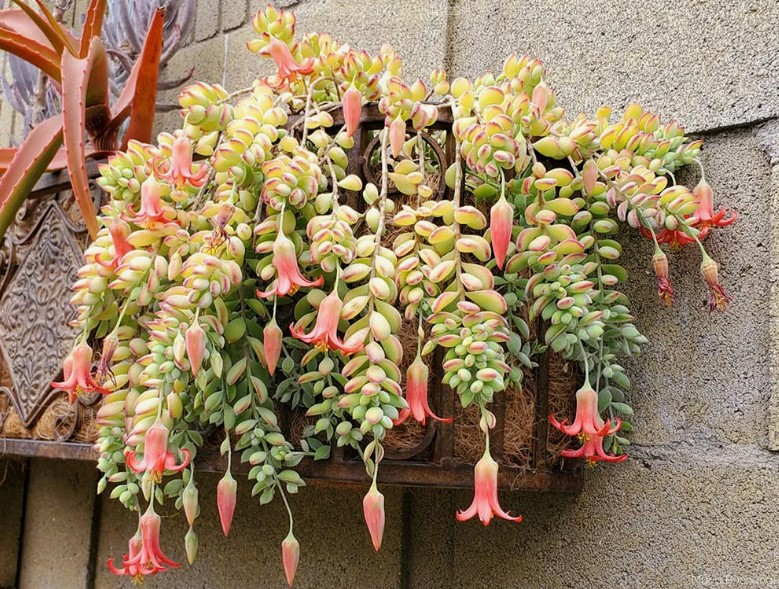
- Papillaris (Cotyledon papillaris);
| Illumination | Intensive. |
| Temperature | +20…+27 °C. |
| Humidity | Low, medium. |
| Pot and soil |
With drainage holes. Ready-made mixture for succulents. |
| Watering | 3-4 times a month. |
| Top dressing | 1-2 times during the growing season. |
| Reproduction | Seed, vegetative. |
| Care Features | Once every 3 years, replanting by transshipment is required. |
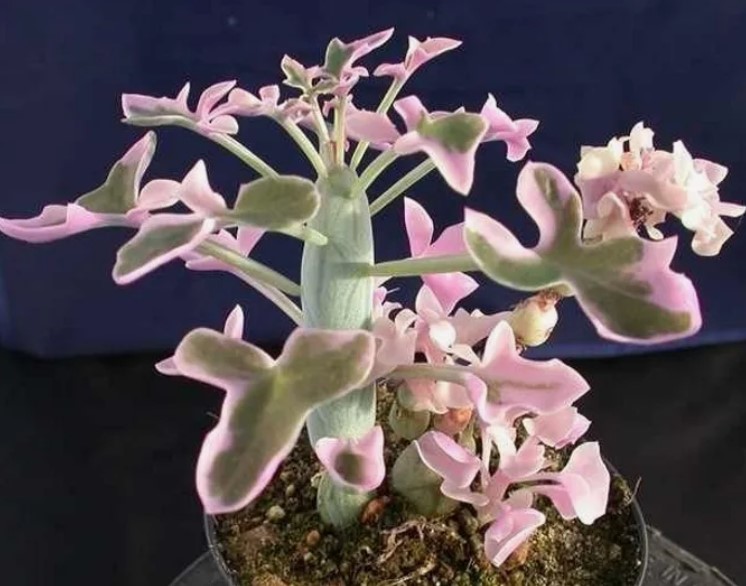
Ragwort
Family: Asteraceae. Distribution: Widespread. Plants include shrubs, subshrubs, herbaceous plants, and small trees. Some are succulents.
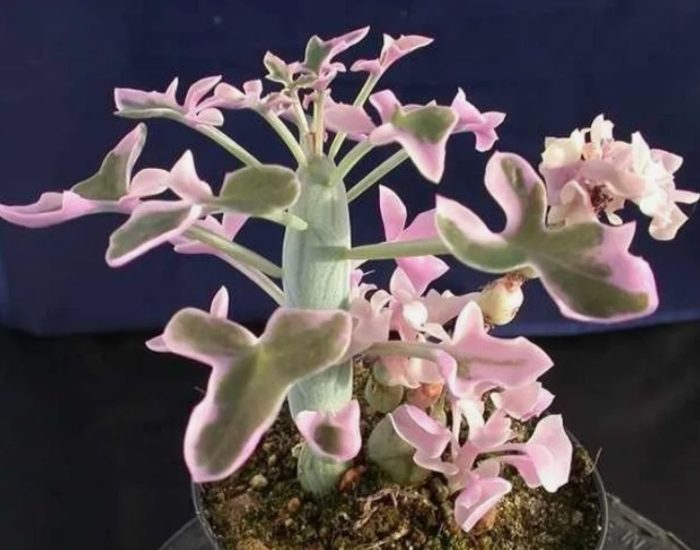
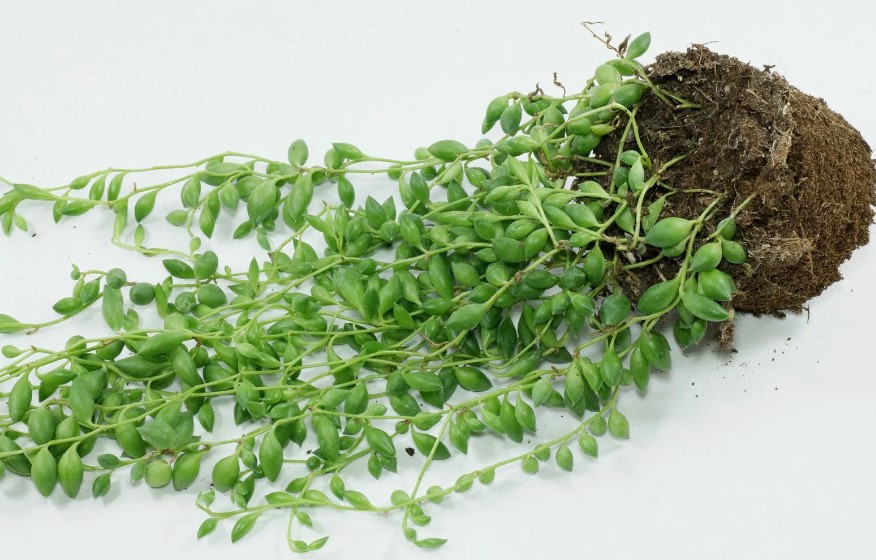
Succulent species:
- Rowley;
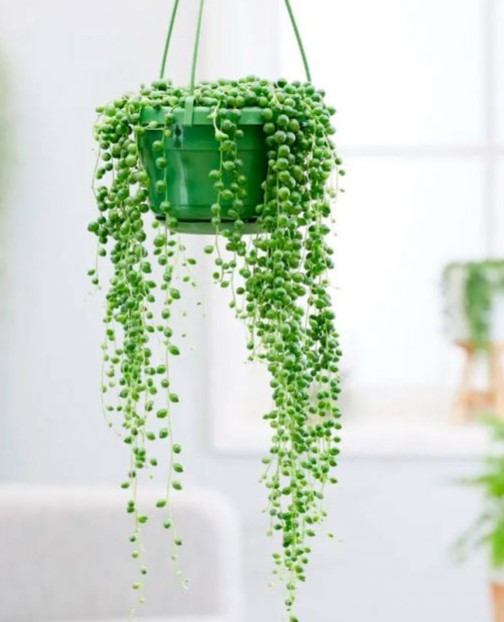
- stapelia-shaped;
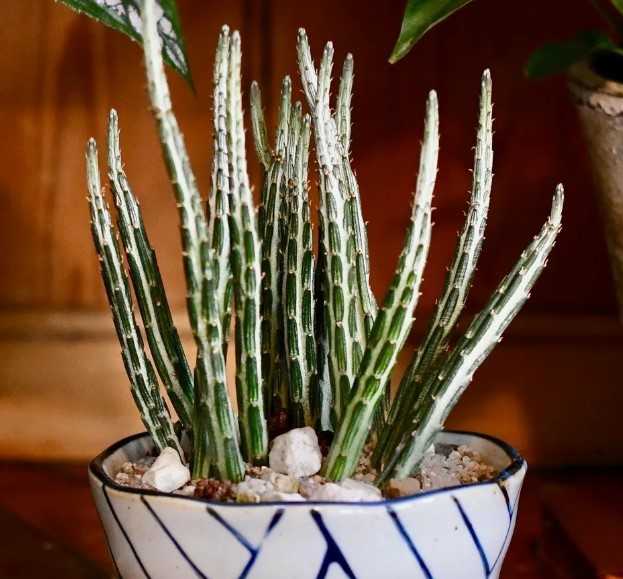
- rooting;
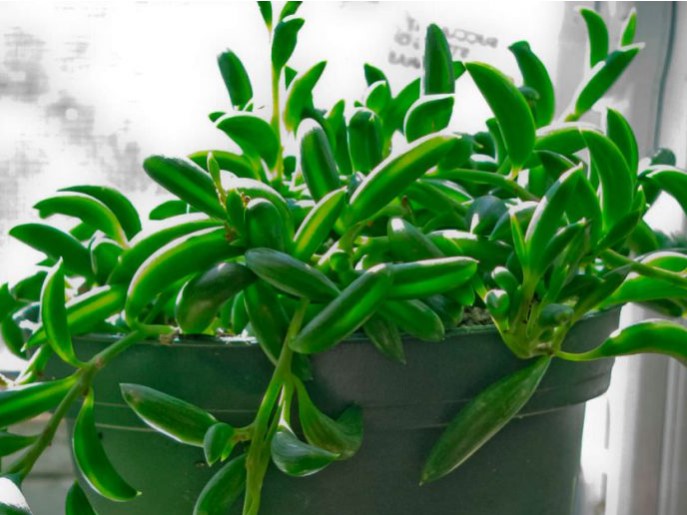
- lemon-like;
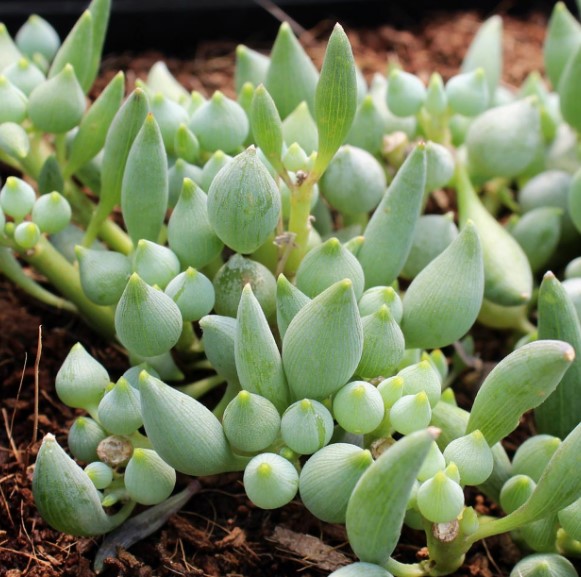
- Gerreina;
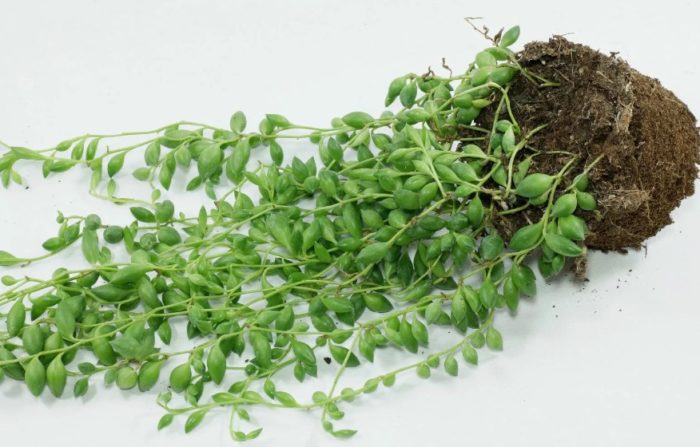
- Articulated.
Home care:
| Illumination | Intensive. |
| Temperature |
+22…+26 °C – in summer. +12…+15 °C – in winter. |
| Humidity | Any. |
| Pot and soil |
With drainage. Sand and leaf soil (1 to 2). |
| Watering | 1-2 days after the top layer of soil has dried out – during the growing season. Reduce the amount of watering or do not water at all in winter. |
| Top dressing | 1 time/2 weeks with fertilizer for succulents. |
| Reproduction | Cuttings, seeds, layering. |
| Care Features | Repot young plants annually. Mature specimens – once every 2-3 years. |
About other species ragwort You can find out on our website.