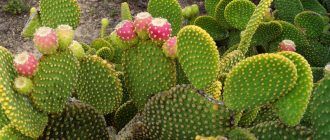
Cacti are a large family of the order Caryophyllales. Native to South and North America, these plants have spread widely throughout the world and have become popular among exotic flower lovers due to their wide variety of species.
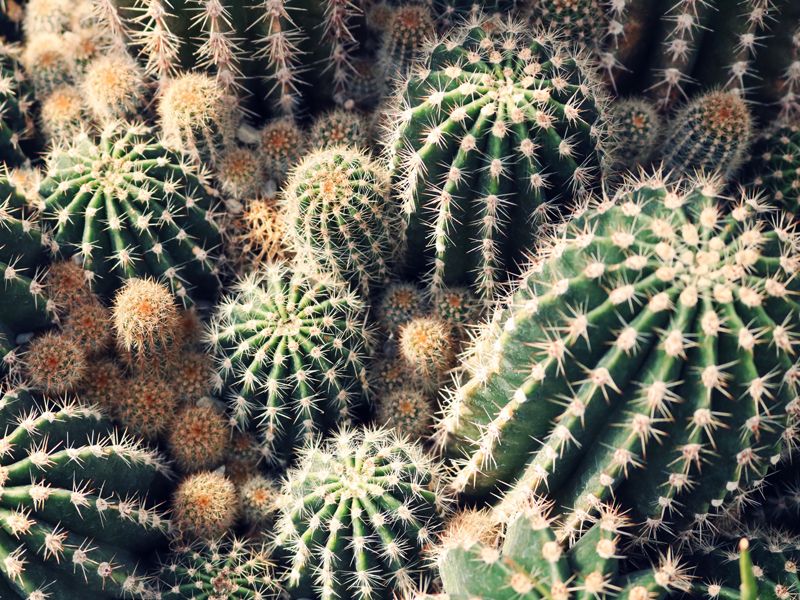
Content
Description of cacti
The stem has unique modified branches called areoles, from which spines emerge and which also serve as the site of cactus offshoot formation. Cactus buds also emerge from these buds. Indoors, the plant reproduces mostly vegetatively and rarely flowers. Like other succulents, cacti can survive for long periods without water due to their unique structure and life cycle. For example, photosynthesis occurs at night because the stomata close during the day to prevent water loss. The stem contains sap that nourishes the areoles. The root system is well-developed and highly branched to absorb as much moisture as possible. Some cacti are actively used in the food and pharmaceutical industries.
Types of cacti
Biologically, there are 11 genera and 4 subfamilies, including the Pereskiaceae, Mauchieniaceae, Opuntiaceae, and Cactaceae, which encompass species not included in the previous subfamilies. However, houseplant enthusiasts classify this plant by other visual characteristics, such as its appearance: trees, shrubs, vines, and herbaceous. Based on habitat, cacti are divided into desert cacti and forest cacti, found in the tropics of South America. These varieties represent a simplified version of the 11 genera. Simply naming the habitat and external characteristics immediately reveals the type of cacti.
Shrubs
This species is characterized by short, branching shoots that hang low to the ground. A distinctive feature are the flowers, which cover the stems abundantly: they are bright red-orange or purple. A typical representative is Hylocereus, the ripe fruit of which is called pitahaya and is widely consumed as a food in tropical regions.
Arborescent
They are distinguished by a large, massive, columnar, cylindrical stem, branching at the top. The diameter of tree cacti can reach gigantic sizes, especially in the wild. These plants can remain in active growth for over 300 years, after which they cease to grow, but continue to live for a long time. This is impossible to achieve indoors. Many specimens, such as Cereus, grow up to 25-30 meters.
Herbaceous
They are best adapted to arid climates and direct sunlight. Their whitish spines are tightly interlocked, forming a kind of web that protects the spherical stem and collects moisture. They are small in size: 30-40 cm in height and 15-20 cm in diameter. A striking example of this species is Mammillaria, which has gained popularity among cacti growers due to its low maintenance and decorative qualities.
Liana-like
These are epiphytic plants that twine around tree stems. Their size depends on the length of the support, but averages 5-9 m, with a stem diameter of about 2-3 cm. The bristly spines are brown or white. The areoles fall off after reaching 3 cm, and new ones appear over time. They have 5-8 ribs. This species is particularly prized for its unique flowers. For example, Selenicerius has elongated, bright yellow and beige, rounded buds that, when opened, resemble the sun.
Desert cacti
To survive in conditions of constant drought and sparse rainfall, cacti have evolved numerous characteristics, including needles and a dense stem. All desert species have a taproot system, but vary in branching frequency and length. For example, the roots of many species can occupy large areas, spreading small, thin branches in search of moisture. Others have a thick taproot that penetrates dry soil for tens of centimeters, allowing them to store large volumes of moisture. Another adaptation is the comb. During rainy season, when water directly enters the cactus, the liquid accumulates inside the cactus, causing the comb to swell, taking on a rounded shape. This helps retain moisture and prevents the skin from cracking. The following species are classified as desert cacti:
- Astrophytum. Numerous small hairs are found between the long spines. It has a spherical shape and variegated flowers.
- Ariocarpus. The stems are flattened and grow low.
- Gymnocalyciums can have pink, orange, and red colors due to the lack of chlorophyll.
- Cleistocacti. Densely covered with white spines. Bright flowers, located at the top.
- Lophophora. It lacks needles and resembles a pumpkin in shape.
- Cephalocereus. Sharp, long, thin needles that resemble hair.
Forest cacti
The structure of representatives of this group varies significantly. Most are epiphytes, growing on trees and rocks that serve as their support. Parasitic species, feeding on organic debris, are also present. The plants obtain moisture through numerous aerial roots. They lack spines, replaced by hairs on long, dense stems. Forest specimens require soft, diffused light and relatively high humidity.
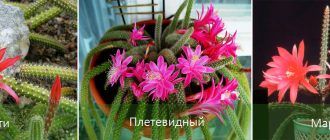
- RhipsalisThe stems are smooth, narrow, and rounded. The buds resemble bells.
- EpiphyllumFragrant flowers of various shades.
- Aporocactus. Reaches 2 m, has a silvery color.
Types of indoor cacti
Not all cacti can be grown indoors. Many require specific soil compositions that cannot be recreated manually. Furthermore, some can grow to enormous sizes, making them impractical to grow.
Home flowering cacti
There are several species forms that can delight owners with beautiful, bright inflorescences.
| View | Description | Bloom |
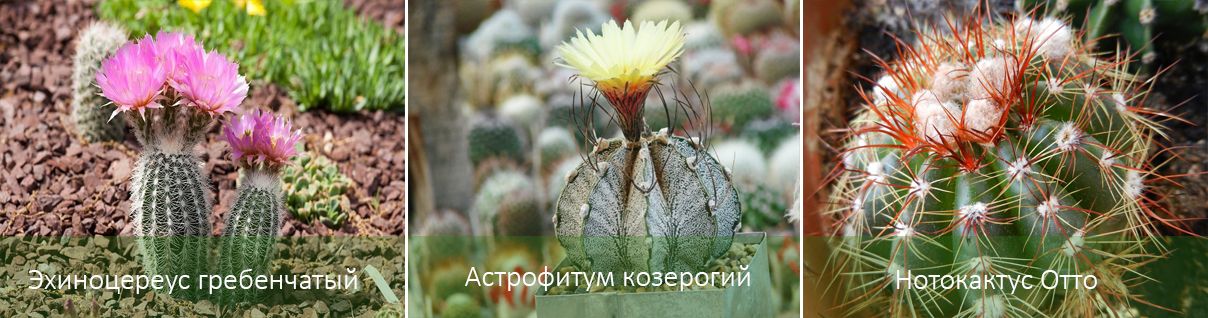
| Echinocereus cristatus | The stem is dense, 20-25 cm, the thorns are small, growing in a spiral. | Large, bright pink, purple, red or violet-yellow flowers with a pleasant aroma. |
| Astrophytum capricornum | Large, elongated ribs and rounded spines. In the early years, it has a round shape, but becomes longer with time. | Round, only mature cacti bloom. Yellow and orange petals are common. |
| Notocactus Otto | Spherical, elastic. The needles are large and straight. | Large, variegated, of varying colors, about 10-12 cm in diameter. |
| Rebutia miniscule | A miniature species, growing up to 5 cm. Grows in colonies. | Large yellow or red inflorescences cover the entire surface of the cactus. |
| Cereus | Up to 100-150 cm tall. There are thornless varieties with smooth, succulent stems. Does not tolerate direct sunlight. | Round, compact, white with a pinkish tint. |
Leafy cacti
These cacti get their name from their modified stems: they are flattened and elongated, resembling small leaves. Their main characteristic is their low maintenance, making these plants quite popular. The following species are classified as leafy:
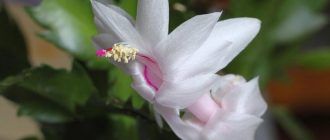
- Cactus Schlumbergera or DecembristLow-growing epiphytes that bloom in winter.
- RhipsalidopsisThe cuttings have numerous serrations, the buds are symmetrical.
- Pereskia. It has natural leaves and needles. The flowers are large and orange.
Growing cacti
Cacti are ideal for growing indoors. They are easy to maintain and delight their owners with beautiful buds every year. However, inexperienced gardeners may struggle to get flowers to appear at first. With proper care, the plant grows vigorously, producing offspring. Besides their outward appearance—a thick, fleshy stem and spherical shape—cacti possess beneficial properties. They have a surface that absorbs light and the light emitted by electrical appliances.
Soil and containers for cacti
Cacti require direct access to water, so standard potting mix isn't suitable. The substrate should consist of large, distinct particles to ensure fluid easily reaches the root system. Furthermore, the right soil will ensure free oxygen penetration, which is essential for plant life. Cacti die very quickly if the soil contains too much nitrogen, so it's best to prevent mineral fertilizers containing this element from getting into the soil.
Organic fertilizers also negatively impact the plant's health, causing weakness and disrupting its natural metabolic processes. Adding compost to the substrate is strictly not recommended. Charcoal, crushed stone, sand, and turf soils are excellent choices.
When choosing a container, consider the volume of the cactus's root system. Some species have extensive, small branching. The pot must accommodate these roots, otherwise the plant will become crowded and stop blooming. Cacti do not thrive in containers that are too large. Don't forget about drainage, placing it in the bottom. This can be foam, crushed stone, nut shells, or expanded clay. After planting, the top layer should be covered with pebbles or sand. The soil should be loosened regularly to allow air to reach the roots.
Landing
This is a fairly easy project, and even a novice cactus grower can handle it. However, it's important to follow a specific order:
- Before planting, you need to stop watering for a few days so that the roots can easily separate from the soil.
- First, you need to prepare a container and fill it with soil to about 1/3 of its total volume.
- Then carefully place the cactus in a small hole so that the entire root system is underground.
- Sprinkle the remaining space with river sand or ash.
Caring for indoor cacti
| Season | Necessary conditions |
| Spring | The active growing season begins. Spraying frequency should be increased slowly to avoid damaging the cactus. Once growth resumes, watering can be reduced to less frequent intervals. In late spring, with the onset of warm weather, plants should be moved outdoors. Pots should be slightly shaded and sun exposure gradually increased. Phosphorus fertilizers are recommended. |
| Summer | Most species enter a dormant state. Watering should be reduced. Fertilizing is also not recommended. Spraying should be done on hot evenings. In August, when cactus growth slows, fertilizing should be avoided altogether. |
| Autumn | Watering should be gradually reduced; by November, the cactus no longer requires additional watering. Plants placed in greenhouses and gardens should be brought indoors. |
| Winter | Create specific conditions: cool air, medium to low humidity, good lighting. The plant does not require watering or fertilizer. |
Read more in the article How to care for cacti at home.
Watering
Although cacti are naturally undemanding of regular moisture, watering shouldn't be avoided entirely. Like any plant, cacti require fluid for normal life, but in limited quantities, otherwise they will rot. With moisture, the root system absorbs important micronutrients that ensure regular flowering and vegetation. Each species requires its own specific watering requirements, but there are general watering guidelines:
- Use only settled liquid.
- It is recommended to water the cactus at the root or to water it from below.
- Make sure that there is no stagnation of water and arrange drainage.
- In warm months, do it in the evenings; in cold months, do it during the day.
- Plants whose stems are covered with a waxy coating do not need spraying.
Top dressing
If you use a special cactus substrate that already contains all the necessary components, you don't need to fertilize it. Otherwise, mineral fertilizers containing potassium and phosphorus are best.
It's recommended to use liquid fertilizer, mixing it with water and applying it during watering during the active growing season. Avoid fertilizing the plant too frequently, especially after flowering, when the plant enters dormancy. Guano (decomposed bird and mammal droppings) can also be added to the soil mixture at planting, but sparingly.
Transplanting cacti
Repotting should be done no more than once a year, in spring or early fall, to allow the plant time to fully establish and adapt by winter. The new container should be slightly larger than the previous one, otherwise the root system will not have enough room to develop. Before planting, the pot and prepared substrate must be disinfected to eliminate the possibility of fungal infections. The soil should be moistened, but the cactus should not be planted too deeply, as further watering will cause the stem beneath the soil to rot and die. The next watering should be done only after 3-4 days.
It is better to choose the location of the pot right away, plants do not like frequent changes of location.
If the cactus does not bloom
It's quite easy to achieve the appearance of bright, colorful buds; you just need to follow a few rules:
- Avoid turning the plant so that it faces the light differently. This will cause the stem to become significantly curved, but the cactus will continue to bloom for a long time.
- Work carefully to avoid damaging the thorns and root system. Plants spend a lot of energy regenerating, so buds may not appear.
- Do not over-water, especially in winter and autumn.
- When buds begin to form, do not apply fertilizer, otherwise the cactus will shed unripe inflorescences.
Top.tomathouse.com: Tips for growing cactus from seed
Propagation from seeds is a rather complicated but exciting process that can take a long time.
- The soil and container must be disinfected with steam or special solutions.
- Fill the pot with prepared, slightly moistened substrate, placing a drainage layer on the bottom.
- Place the seeds on top at a distance of 3-4 cm from each other.
- Sprinkle with a layer of sand or ash.
- Cover the containers with plastic wrap or glass and place them in a well-lit area.
- In two weeks, the first shoots will appear, then the cover should be slightly moved, but not removed, and the soil should be moistened using a sprayer.
- When the first needles appear, the film must be removed and the cacti must be planted in individual pots.