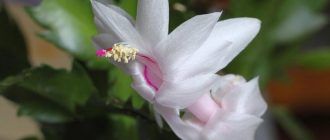
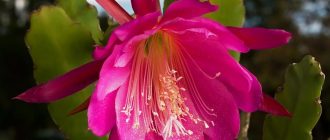
Prickly pear belongs to the Cactaceae family. A perennial native to the steppe regions of Central America and Argentina, it also grows readily in Turkmenistan, Crimea, and the Caucasus. Hardy varieties are found in Canada.
Content
Botanical description of prickly pear
In the natural environment, these are fairly large shrubs or small trees up to 6 m in height; in indoor conditions, they are compact bushes.
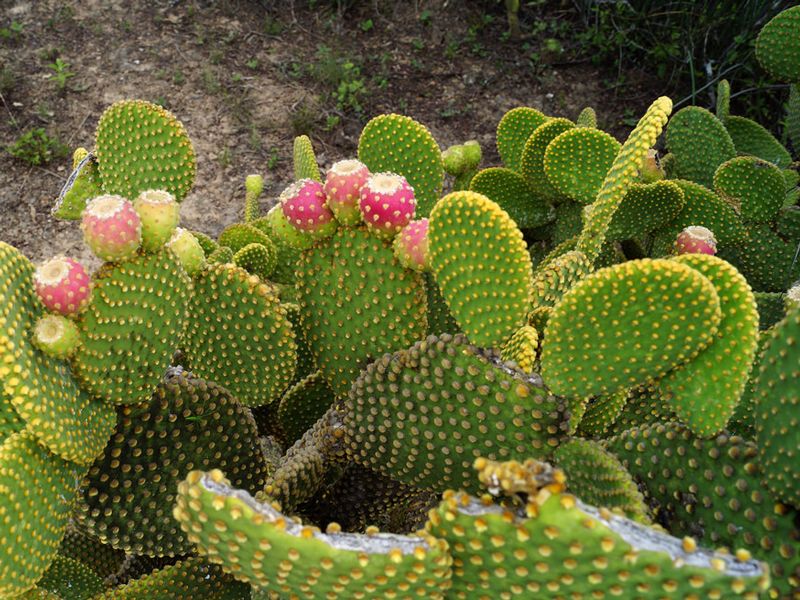
The flat, oval, fleshy segments are actually modified stems. The true leaves are hairs and spines. The solitary flowers, arranged fan-shaped at the top, are very decorative: large, vibrant yellow, orange, or red, with silky, shiny petals.
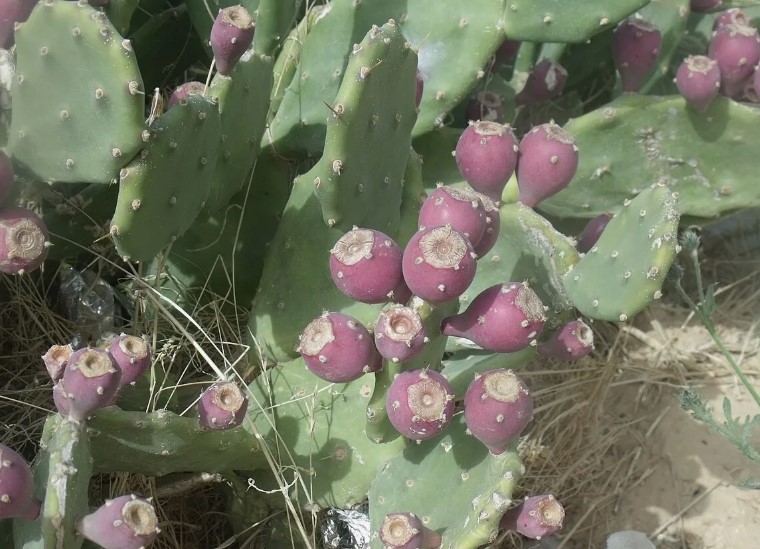
The fruits are edible and change color from green to bright burgundy as they ripen. They resemble berries in appearance and have a sweetish taste. They are a valuable food product, containing a whole range of beneficial substances: vitamins, macro- and microelements, antibiotics, hormones, enzymes, and sterols. They are not only healthy, but also medicinal, and are used in folk medicine.
Important: The fruits and leaves contain special types of spines called glochidia. They disguise themselves as harmless fuzz, but are actually quite stiff and have hooks. Touching them is dangerous: glochidia are difficult to see and remove, and they can cause severe damage to the skin. Therefore, the fruits must be cleaned properly and thoroughly before consumption.
Types of prickly pear
There are about 300 species in total. The most interesting are:
| Variety | Description | Flowers |
| Opuntia microdasys
|
Up to 1 m. On average, indoors it reaches half a meter. The branch segments are small and densely covered with glochids, giving the plant a shaggy appearance. There are no spines. | Lemon yellow, up to 5 cm. |
| Compressed (Opuntia stricta)
|
Up to 2 m. Segments up to 25-35 cm long, gray-green. Spines sparse. | Bright yellow, waxy, lush, up to 7 cm. |
| Fig, another common name is Indian fig (Opuntia ficus-indica)
|
Up to 4 m. Segments are large, the size of an adult man's palm, teardrop-shaped, light green, with sparse spines. | Yellow. |
| Berger's (Opntia Bergeriana)
|
Up to 1 m. Parts of the stems are up to 20-25 cm, bright light green in color, the thorns are strong, but few in number, the glochidia are concentrated near the buds. | Tomato-red, petals glowing, silky. |
| Home (Opuntia basilaris)
|
Up to 50 cm. Segments of an unusual, cool, blue-green color. Few spines. | Large, very juicy, fiery, pink, red or carmine. |
| Lindheimer's (Opuntia lindheimeri)
|
Up to 3.5 m. Segments up to 30 cm, wide, light green, with rare sharp spines. | Bright yellow. |
| White-haired (Opuntia leucotricha)
|
Up to 5 m. Parts of modified stems – up to 20 cm, spines and glochidia are very abundant. | Juicy yellow, very large. |
| Common (Opuntia vulgaris)
|
Up to 6 m. Segments are harmoniously oval in shape and light green in color. Only mature segments are spiny. | Light lemon-yellow, the fruits resemble an unripe mango in shape and color. |
| Long-spined (Opuntia longispina)
|
Up to 30 cm. Stem parts up to 4 cm. Spines are long and sharp. Glochidia are reddish and abundant. | Fiery red. |
| Curassow (Opuntia curassavica)
|
Up to 15 cm. Segments are small, bright green. Areoles are yellow, each with several spines. | Yellow, small. |
| Pubescent, felted (Opuntia tomentosa)
|
Up to 8 m. Segments are light green, up to 20 cm. Feature: spines are almost absent. | Large, tomato-red. |
| Sherry (Opuntia scheerii)
|
Up to 1.5 m. The segments are an unusual yellowish-green hue, very pleasing to the eye, and have a beautiful rounded shape. They are densely covered with areoles with spines and glochids. | Pale yellow, double like roses, they acquire a lilac-fawn hue with age. |
| Opuntia humifsa
|
Up to 30 cm. Stem parts are flat, pot-bellied, rounded, up to 10 cm long, light gray-green, with few areoles. Spines are long and solitary. | Yellow, up to 5 cm. |
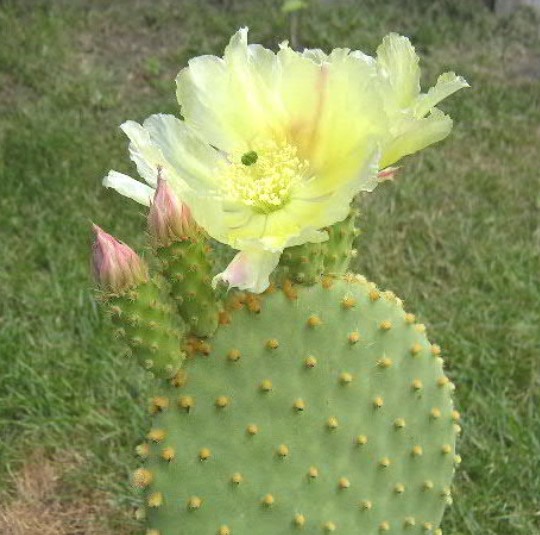
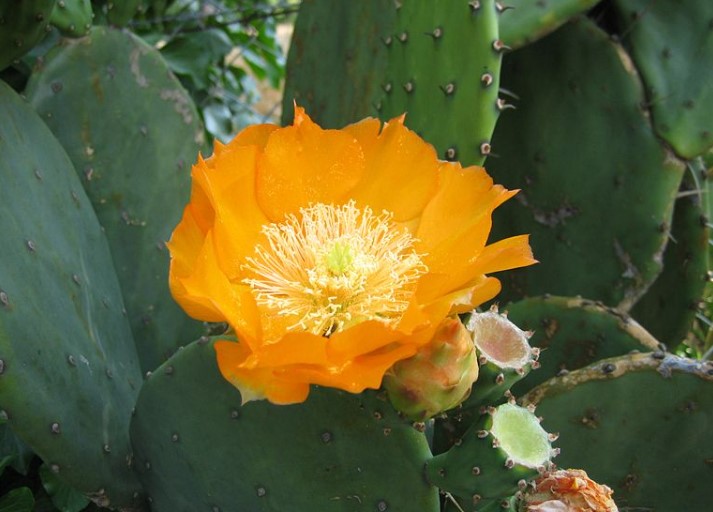
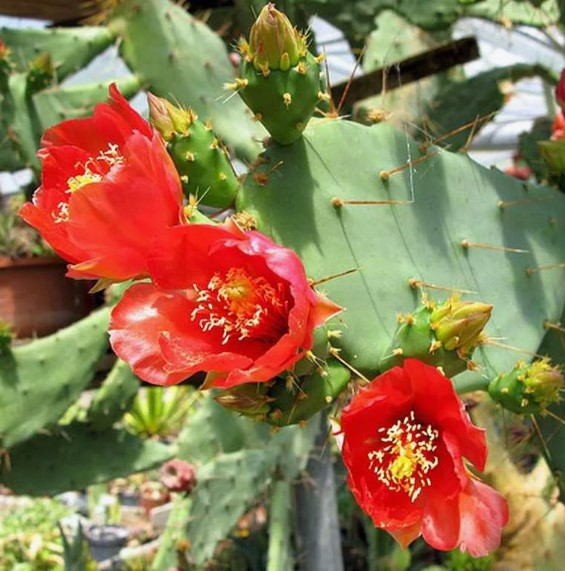
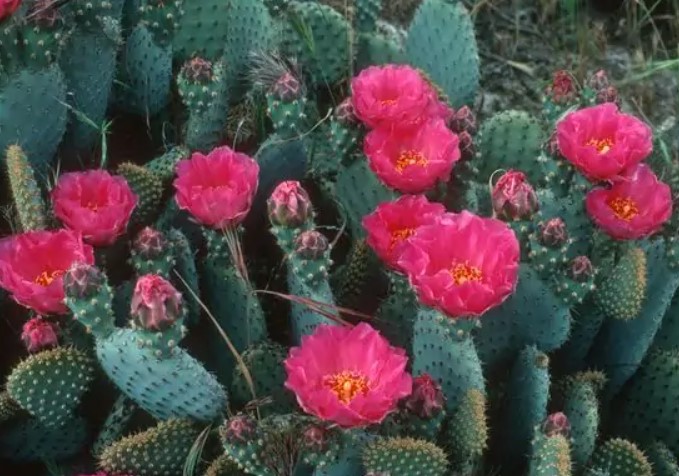
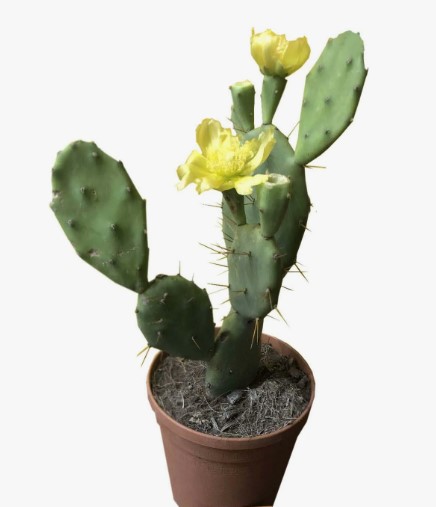
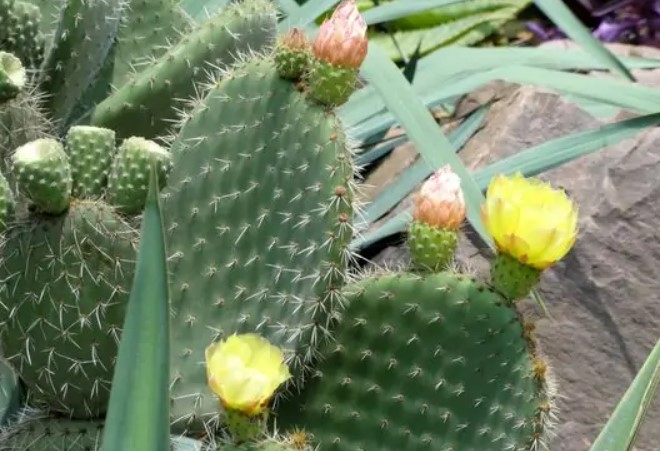
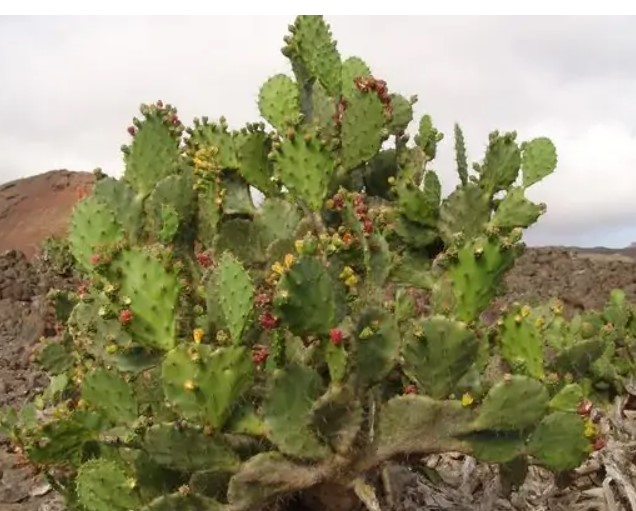
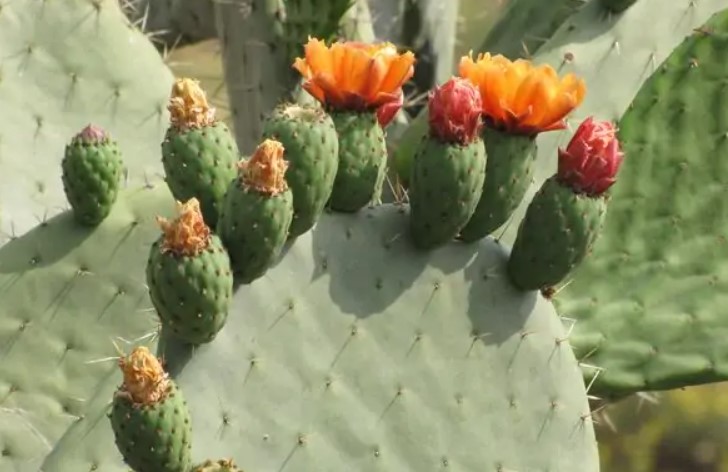
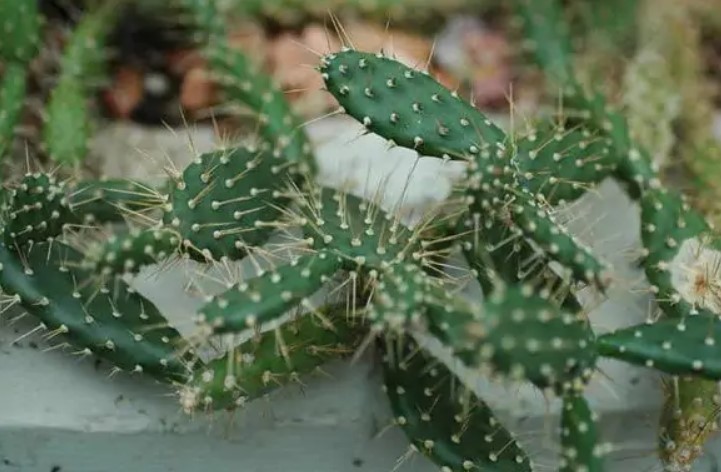
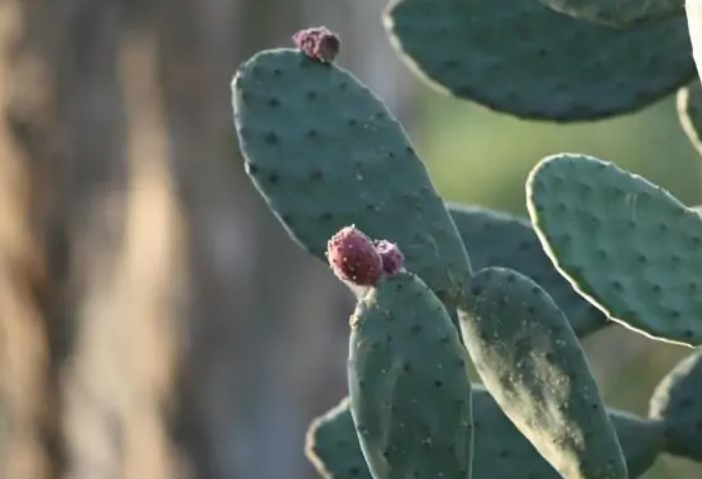
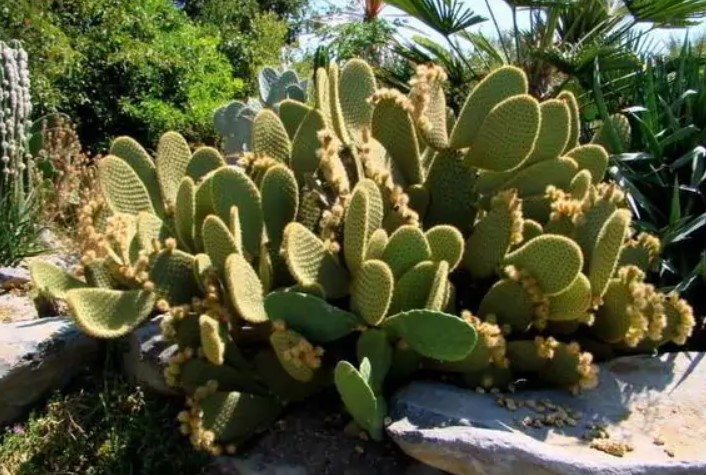
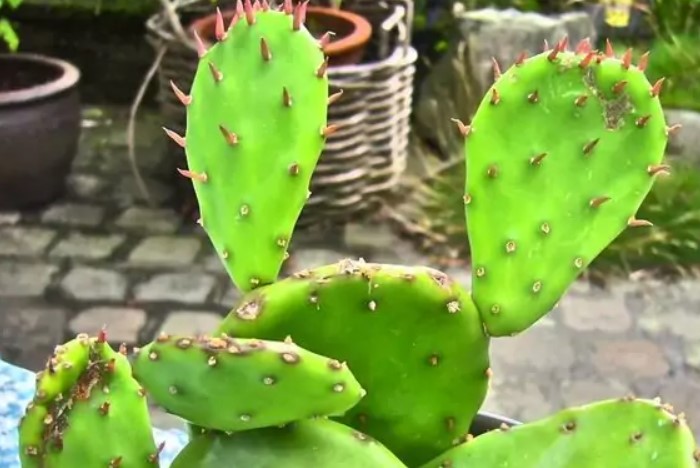
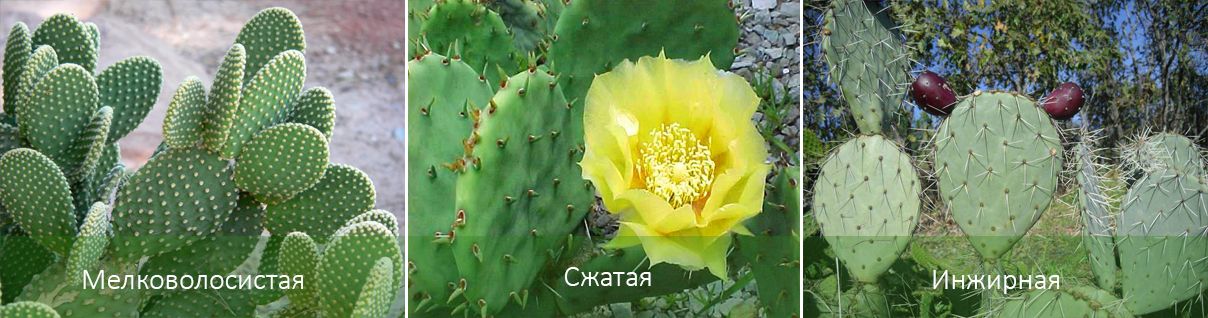
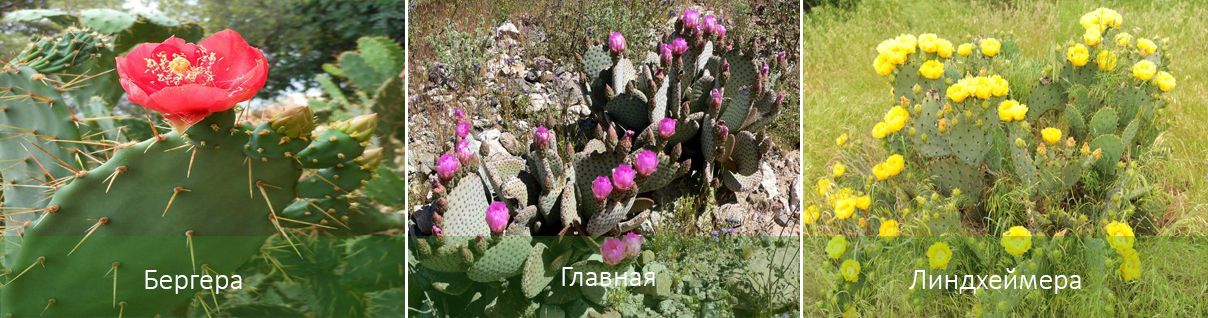
Some species, such as the finely haired prickly pear and the compressed prickly pear, are considered excellent air purifiers. The former is most often grown indoors, prized for its compact size. The most popular in commercial cultivation is the fig prickly pear. When discussing the benefits of prickly pear, it's the latter that is most often mentioned.
Caring for prickly pear at home
Caring for prickly pears is usually difficult simply because many novice gardeners struggle with the urge to constantly care for a new plant. However, prickly pears don't require constant attention.
Minimal watering and occasional but timely repotting are all the care required. Essentially, the most important thing is to place it in the right location, providing light, low humidity, and suitable temperatures in both summer and winter. After that, the plant should be left alone.
| The care factor | Recommendations |
| Place | South, southwest and southeast windows. |
| Ventilation | The plant loves space and plenty of fresh air. |
| Light | Full direct sun. |
| Humidity | 40-50% at any time of the year. |
| Temperature | +20…+28 °C in summer, +5…+7 °C in winter. |
| Fertilizers | Any mineral fertilizer with a low nitrogen content is not needed or is used very rarely (once a month in summer). |
Winter care in a regular apartment
Not everyone has the opportunity to provide their prickly pears with a cool winter at home. Typically, the room temperature is no different from summer. How can you make this winter easier for the plant?
- Provide additional lighting.
- Water the cactus occasionally, but do so sparingly and carefully. Preferably, water from below (by placing the pot in a container of water for 2-3 minutes).
- Protect from high humidity. It's best not to place nearby plants that require regular misting.
Important! Almost all prickly pear species do not bloom indoors. This is not only due to age, but also to conditions. A long, cool, dry winter is necessary for flower buds to form. Flowering is usually achieved only in greenhouses.
Seasonal watering and temperature
Seasonality should be taken into account. Watering should always be moderate, but there are some nuances.
| Season | Features of watering | Optimal temperature conditions |
| Spring | Only when the top layer of soil dries out. | +18…+24 °C. |
| Summer | By the same principle, but a little more often. | +18…+28 °C. |
| Autumn | The time between waterings is gradually increased slightly, almost completely reduced by November. | +18…+20 °C. |
| Winter | Not required. | +5…+7 °C. |
Planting, replanting, soil
Many Opuntia species, such as Stricta, grow wider than they do tall. All species have very robust root systems that spread outward rather than downward. Therefore, wide pots are recommended. This is also important for those wishing to encourage flowering. Most varieties bloom only when they reach maturity.
Prickly pear does not like to be disturbed, so the root system should be disturbed as little as possible.
Young cacti are repotted once a year, and once they reach 3 years of age, once every 4 years. This procedure is performed only in the spring, and only if the plant has no buds.
Soil in a 1:2:2:2 ratio: clay, sand, leaf mold, and turf. Good drainage is essential, reaching 1-3 times the height of the pot, consisting of a layer of pebbles and sand.
Reproduction
Prickly pear propagates by seed and vegetatively. Seed propagation is time-consuming:
- Prepare a mixture of sand, charcoal, and humus from fallen leaves - 1 part of each component.
- The seeds are scarified (treated with a file or sandpaper to help the sprouts break through the hard shell).
- Before planting, soak the seeds in a light pink solution of potassium permanganate for 10 minutes.
- They are spread over the surface of the prepared soil and sprinkled with a layer of sand.
- Cover with glass.
- Ventilate and humidify daily.
- Seeds can take different amounts of time to germinate. On average, they are slow to germinate—up to 3 months in the ground is acceptable. A well-scarified seed will germinate in up to 6 weeks.
- When the second segment appears, the young cacti are planted in separate pots.
Propagation by cuttings is more popular:
- At the end of spring, the segments are cut off at the points where they connect to each other.
- They are kept in the open air for 2-3 days. This is necessary for the cut to heal.
- Prepared cuttings are planted in sand and covered with glass jars.
- Every day, remove the jars for 40 minutes, otherwise there is a risk that the plants will rot.
- The soil is regularly moistened.
- The rate at which roots appear depends on the species, but it is generally a rapid process.
- When roots appear, the cacti are planted in individual containers.
Mistakes in caring for prickly pear
In addition to the main mistake – excessively frequent watering – the following are possible:
- If the prickly pear has bloomed, the pot should not be moved or even turned. Otherwise, the buds will fall off.
- Southern but shaded windows, northern, western and eastern windows are not suitable.
- Too sudden a change in conditions. If the prickly pear has been growing in a less-than-light location, don't immediately move it to a hot, south-facing balcony—this will cause burns.
- Winter temperatures are too high. The ideal temperature for prickly pears is between 5 and 7°C. Otherwise, the segments will stretch, and summer flowering will be weak or not occur at all.
- Nitrogen fertilizers. Nitrogen promotes foliage growth, but in the case of prickly pear, this will lead to elongated stems and loss of ornamental value.
Diseases, pests
Prickly pears are generally not susceptible to diseases or pests. However, if they are not cared for properly, or if an infected plant is introduced into an apartment garden, problems may arise.
| Disease, pest | Description of the problem, symptoms | Methods of struggle |
| Spider mite | Whitish webbing on the stems with small white dots in it, yellowing stems, weak growth. |
|
| Scale insect | Small spherical swellings on the stems are insects nesting in waxy "houses." The plant secretes a sticky sap and grows poorly. The tissues in areas where the insects congregate turn yellow. |
|
| Mealybug | Whitish coating at the junction of the segments. |
|
| Nematodes | Swellings on the roots are usually discovered during replanting. |
|
| Late blight | Brown spots on the stems. The disease is very aggressive and spreads quickly. |
|
| Root rot | Soft, yellow stems covered with brown, damp spots, characteristic rotten smell. | |
| Anthracnose | Brown spots-cracks with a light border. | Take the same measures as for late blight, but avoid repotting the plant. Repotting into fresh soil is recommended if removing the affected stems and using fungicides fails. |
Top.tomathouse.com informs: the beneficial properties of prickly pear
The plant's beneficial properties and health uses are extensive. The valuable qualities of its fruits and stems have been well studied using the prickly pear (Opuntia fig) as an example:
- The fruits are tasty and healthy both fresh and processed (dried, cooked). They are high in vitamin C and have been used as a remedy for scurvy.
- The fleshy stems are also edible. In Mexico, they are considered a healthy vegetable, rich in dietary fiber, vitamins, and minerals.
- Litramine stem extract has the ability to slow the absorption of fats and reduce appetite. It is used to treat obesity, promote weight loss, and normalize metabolism.
- Prickly pear fruits, thanks to their well-balanced content of bioactive substances, lower cholesterol levels, improve heart and vascular function, normalize hormone levels, blood sugar, and the nervous system, treat stomach ulcers, and act as a preventative measure against cancer and premature aging.
- Eating the fruit will help maintain beautiful skin and hair. Prickly pear oil is also used in cosmetics. According to reviews, the natural oil has a very pleasant nutty-herbal aroma, is easily absorbed, and is extremely effective against wrinkles.
The flower contains no poison, and contraindications are minimal. Avoid eating too many of the fruits, as this can cause constipation. However, the most serious danger comes from swallowing the glochidia, which can damage the gastrointestinal mucosa and can only be removed surgically. The fruits are cleaned with a metal brush while wearing thick gloves.
Clearly, appearances can be deceiving. The rugged, unassuming appearance of this common indoor cactus conceals a rich treasure. Add to this the vast number of varieties, from miniature creeping plants to giant ones, their spectacular blooms, and their low maintenance, and it becomes clear why prickly pears are so often collected or cultivated indoors.
Reviews of growing prickly pears
Review: Cactus "Opuntia pilosa" - My cunning Mexican.
Pros: Easy to care for. A little piece of Mexico in your home.
Disadvantages: Do not touch with hands!
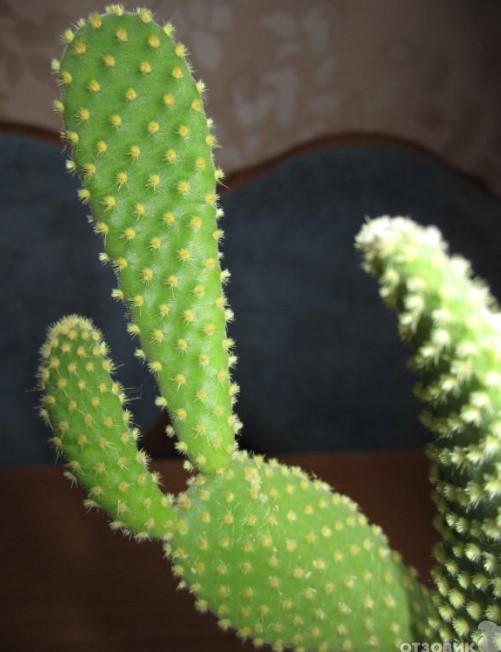
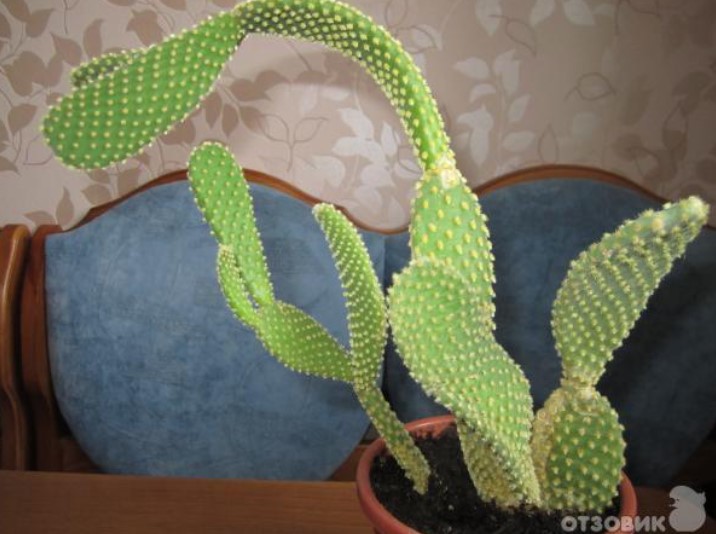
"Do you need bunny ears?" someone asked me at work one day. After I was offered "deer antlers," I was no longer surprised by anything. Intuitively, I guessed it was a flower again...Allow me, amigos, to introduce you to another resident of my windowsill: the prickly pear (Opuntia microdasys). Or, as they call it, the "bunny ear" cactus. It's called that because the top of each segment often develops two more, making it resemble a hare's head.
This plant has a couple of other names: "velvet cactus" and "golden prickly pear." I think this is because the "ears" are covered in lush tufts of delicate yellow glochids, which feel velvety to the touch. The plant is undoubtedly beautiful; the "ears" themselves are small, fleshy, and bright green.
It's probably clear why I called the cactus "Mexican." The prickly pear is a symbol of Mexico; it's even depicted on the national coat of arms and flag of the country. It can also be seen on the reverse of many Mexican coins.
What's so insidious about this flower? Oh, I'll tell you now.
Just touch a cactus and its soft spines will stick to your fingers... and no matter how hard you scrub or wash them, you're guaranteed to get itchy for about a couple of hours. And that's not all. If the glochidia remain on your fingers after touching them, they're permanently removed from the cactus's body—new ones won't grow, leaving bald spots. Of course, if someone decides to steal your eared prickly pear, you'll know it by the involuntary itching. Prickly pears also shoot their spines at nearby flowers and curtains.
Nevertheless, I still recommend this bastard for propagation. The plant is undemanding and easy to care for. Let it sit on a windowsill where it will get some sun, and water it occasionally. You can repot it wearing gloves. I've read that it rarely blooms indoors. Mine never bloomed, the bastard.
As for "flower folklore," I found information that "prickly pear has a beneficial effect on people who are fickle in their affections, whose reactions and behavior are unpredictable." Whatever that means, it's amusing.
The photo shows a "cloned" cactus that has survived several transplants. I'm thinking of replanting it again in the spring – the ears are looking a bit worn out...
P.S. It's a shame you can't make tequila from home-grown cacti.
Time of use: Many years.
General impression of My cunning Mexican.
My rating
5
I recommend it to friends YES
There are a few. One is cristate. All have the most vile character. Austrocylindropuntia are completely safe; rarely does anything remain in the skin, nor are the large-spined ones; you can't even get to the glochidia there right away. But the small-haired ones are a real monstrosity. One of those cuties with orange spines decided to fall off the windowsill, and I, like a crazy elf, set it up.