
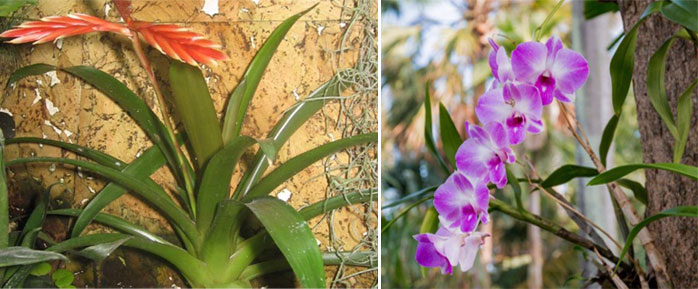
Epiphytes are plants that begin their growth not from the soil, as we're accustomed to seeing, but from the surface of larger plantings. They are not carnivorous, do not parasitize trees, and cause no harm, but rather obtain their nutrition through aerial roots that absorb moisture, oxygen, and other nutrients from the air.
Epiphytes generally don't bother their "neighbors." On the contrary, they are an integral part of the ecosystem. However, if they grow excessively, the support they support can become overwhelmed, and the branch containing the "resident" can break off. Adult epiphytes then begin to compete with their host for light and moisture.
Content
What is the name of the relationship between epiphytic plants and trees?
The relationship between epiphytes and trees is called neutralism. The relationship between epiphytes and trees is entirely peaceful; the epiphytes have virtually no impact on their hosts, do not drain them of vital energy or sap, but simply use them as a support point, clinging to the tree bark.
Of the total number of epiphytes, 89% are flowering plants. Today, most of them can be found not only in the wild but also in homes.
Definition of epiphytes
Epiphytes (from the Greek ἐπι- — "on" + φυτόν — "plant") are plants that grow or are permanently attached to other plants (phorophytes) and do not receive any nutrients from the latter. In addition to terrestrial epiphytes, there are various aquatic algae that are epiphytes of other algae or aquatic flowering plants.
Characteristics and description of epiphytic plants
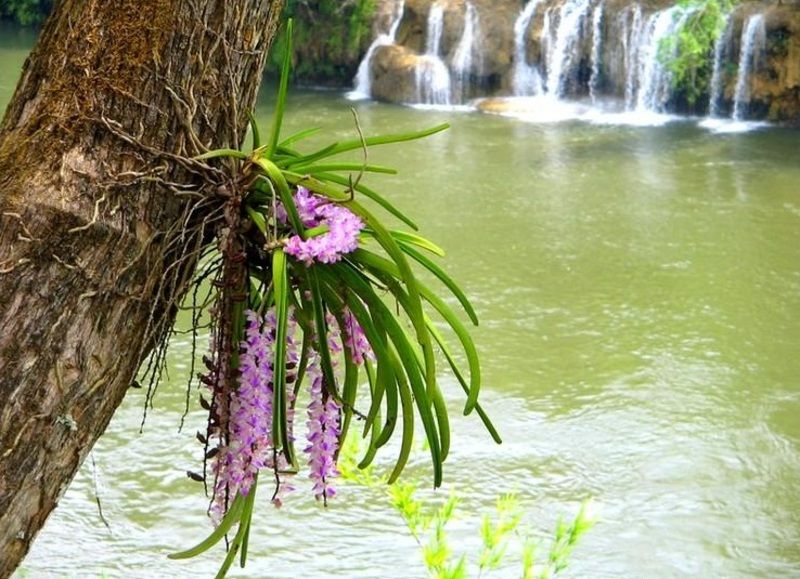
Epiphytic plants are most common in tropical climates with high humidity. They don't particularly need soil for normal growth and development; they attach themselves to large plantings. Most often, they grow in large shrubs and trees. This habit is due to their habitat: in the tropics, all plantings grow very densely and thickly, and competition for light is intense. Therefore, over the course of evolution, some plant species have acquired the ability to attach themselves to other crops. This solved two problems at once: they gained more light due to their elevated location and reduced the risk of damage from ground-dwelling pests and amphibians.
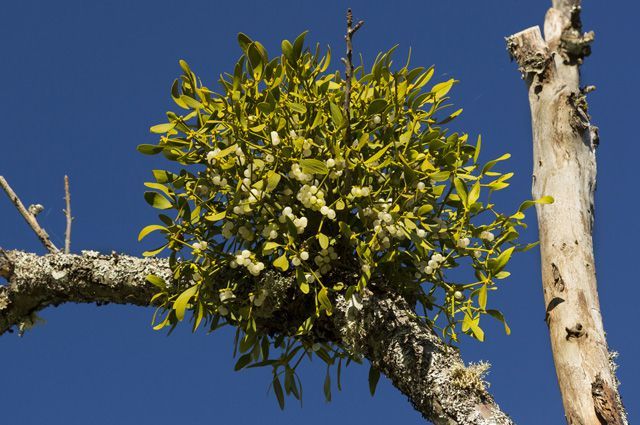
For epiphytes, an above-ground existence has become the only way to preserve their species. The main challenge is obtaining the necessary amount of moisture. But even here, the plants have found a way, developing fleshy leaves that can store moisture for a rainy day.
Classification of epiphytes
German scientist Andreas Schimper devoted a significant part of his scientific career to the study of epiphytes.
In 1888, he classified these plants according to their adaptation to living conditions.
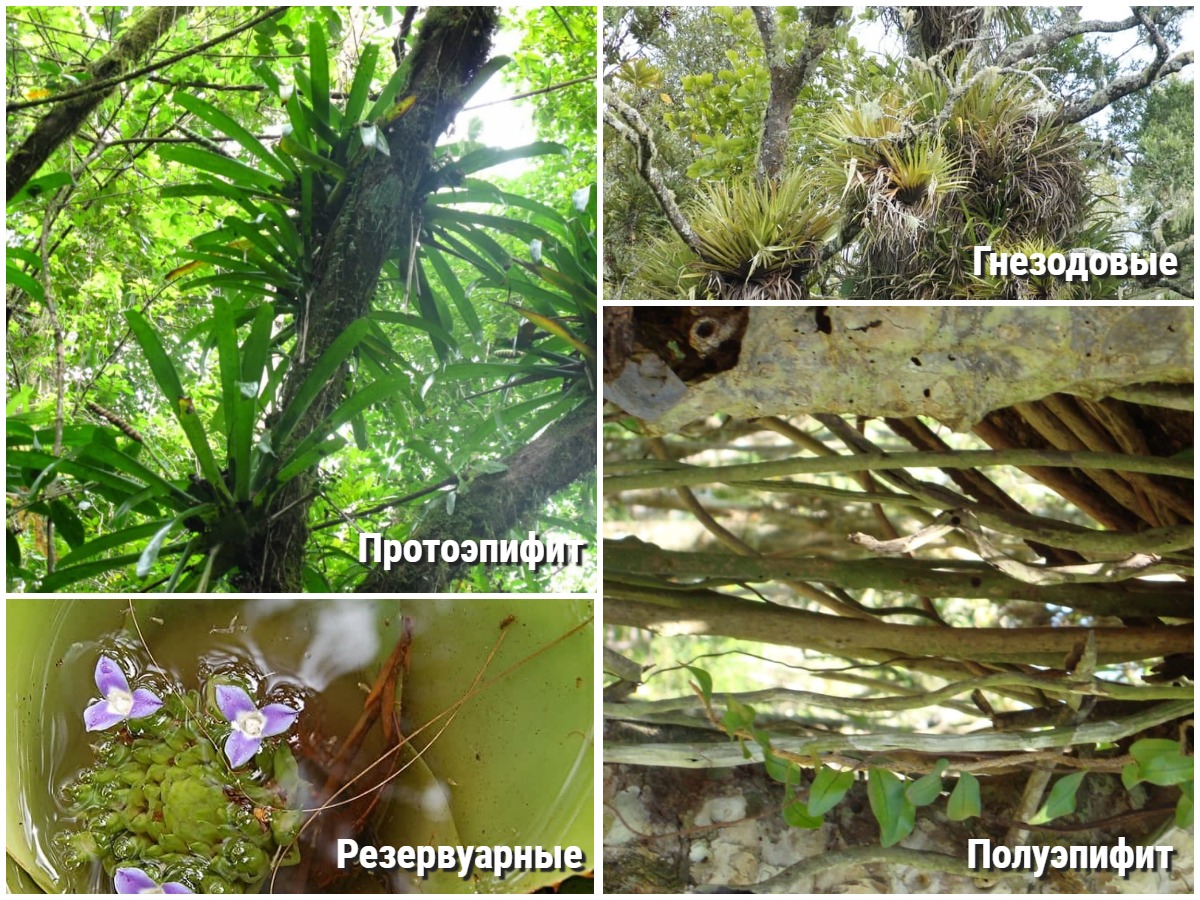
- The first group included protoepiphytesThey are distinguished by thick stems and fleshy leaves, but have virtually no additional means for nutrition and moisture absorption.
- The second group consists of pocket and nest epiphytesTheir aerial roots gather into a dense lump or pocket, where water remains after rains, and various organic remains accumulate, serving as a source of nutrients.
- The third group contains reservoir epiphytesThey've gone even further in their adaptive tricks, weaving thick leaves into dense reservoirs. Sometimes they hold up to 5 liters of water at a time. Various algae and bacteria thrive in it, creating a unique microflora that serves as a nutritional resource.
- The fourth group includes hemiepiphytesIn their pure form, they develop as opportunists only for part of their life. As they grow, their roots expand and eventually reach the soil. From there, they draw moisture and nutrients, which is why the survival rate of these plants is much higher than that of other varieties.
According to another classification developed by biologist P.W. Richards, epiphytes can be divided into types depending on their fluid requirements:
- Xerophilic – can survive in harsh conditions of moisture deficiency.
- Shade-tolerant – prefer to exist under the canopy of their host and are content with a small amount of water.
- Light-loving – they try to get the most out of being close to their owner by climbing to the very top and competing for water and food.
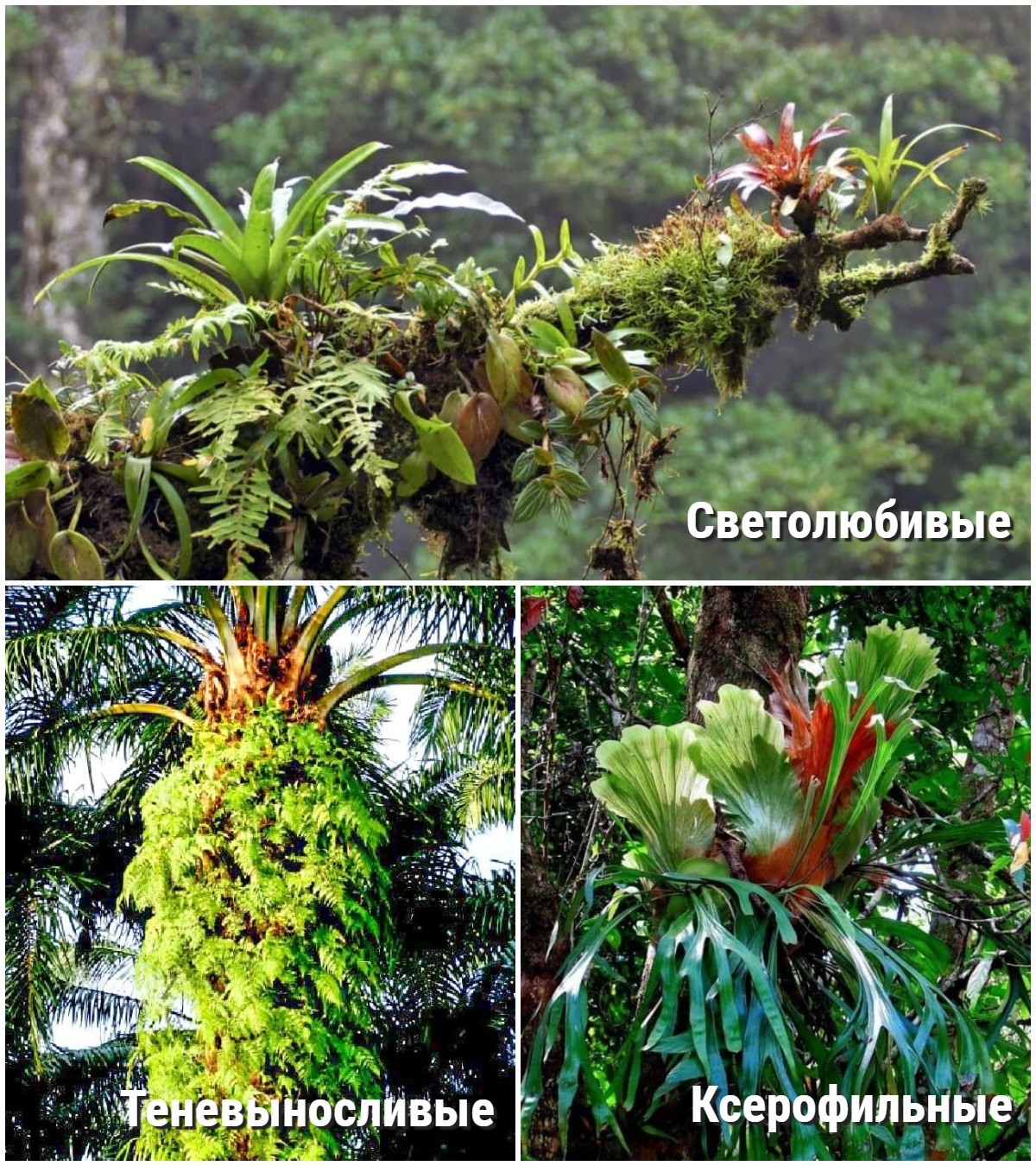
Types of epiphytes
Today, epiphytes can be found not only in the forests of America, Africa, and other continents, but also on windowsills in our country. There are many varieties of these plants. We'll discuss them in more detail below.
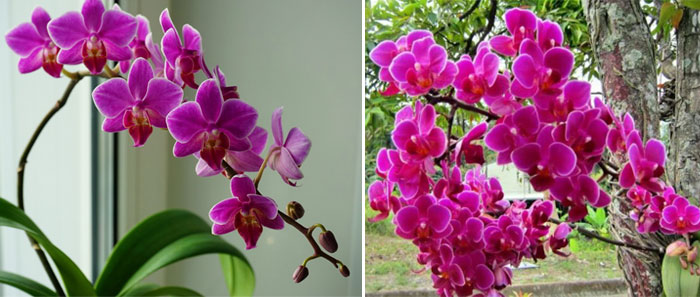
Epiphytic orchids
In the wild, orchids grow on tree trunks, but in Australia they are more often found above ground than above. They have become widely used in indoor gardening.
Dendrobium Nobile
An orchid with abundant fragrant flowers, which can be single- or bicolor. It thrives in temperatures ranging from 15°C to 25°C. It prefers moisture but requires a slightly damp soil.
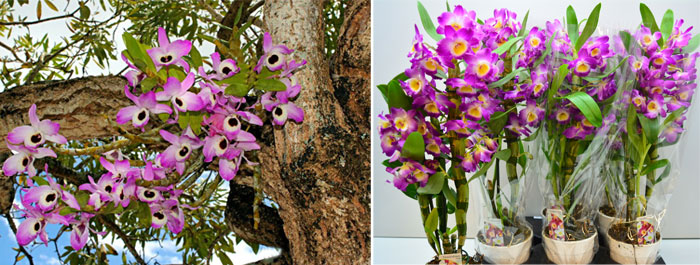
It renews itself after a shoot that has lived for two years dies. New stems form to replace it.
Read about Dendrobium nobile.
Phalaenopsis Aphrodite
This orchid is more heat-loving, preferring temperatures of 22 to 30°C and intolerant of cold. Its flowers are very beautiful and white, but they are unscented. Blooming is long-lasting and can continue all year round with proper care. However, due to its moisture-loving nature, regular misting and watering are recommended.
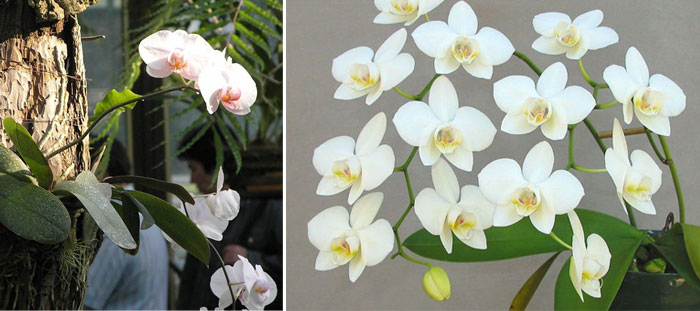
Read more about Phalaenopsis orchid.
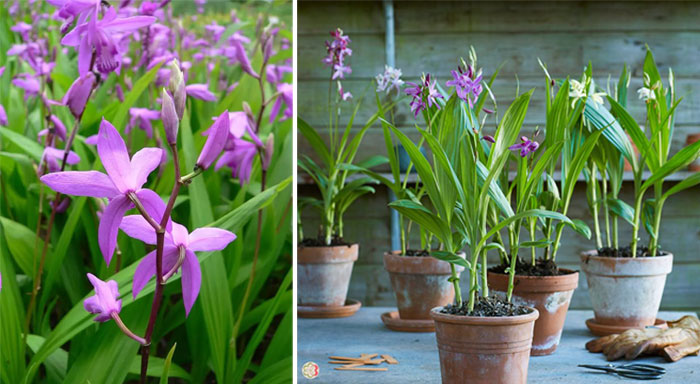
Bletilla striped
A very easy-to-grow plant that thrives in both regular soil and a special substrate. It prefers partial shade; direct sunlight can cause leaf burn. The optimal temperature is considered to be +20…+25°C. The flowers are purple with distinct light stripes.
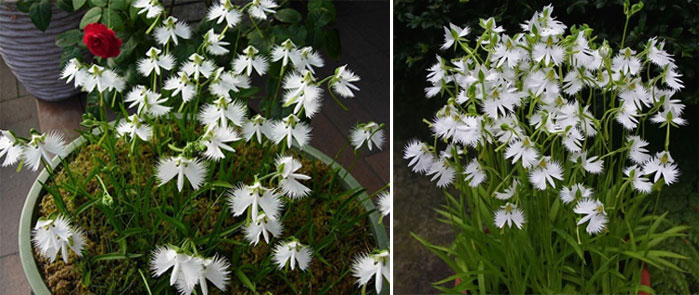
Habenaria Radiata
A particularly demanding flower that requires plenty of light. It thrives at temperatures between 20 and 30°C, requiring thorough watering in summer and allowing the soil to dry out in winter. The flowers are purple with white veins, and their shape resembles a bird in flight.
Bromeliads
This type of epiphyte includes over 60 plants that are distinguished by their undemanding nature and can grow on trees, sand, rocks, and even old wires. They are also often found in homes. The term "Bromelius" derives from the name of the scientist who discovered the plant, Bromelius.
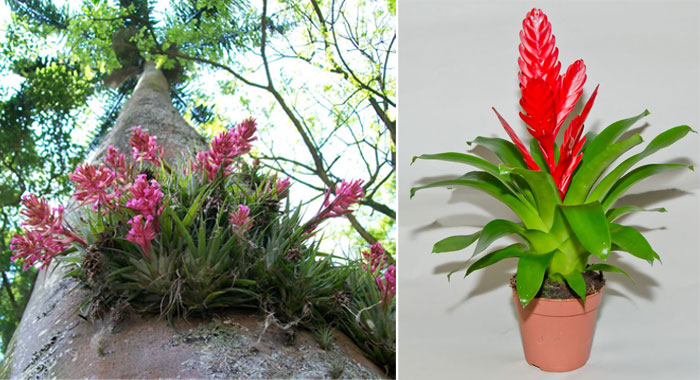
The leaves reach 60 cm in length and 6 cm in width. A dense rosette of inflorescences of varying colors forms at the top, with finely serrated petal edges that may be additionally covered with small scales.
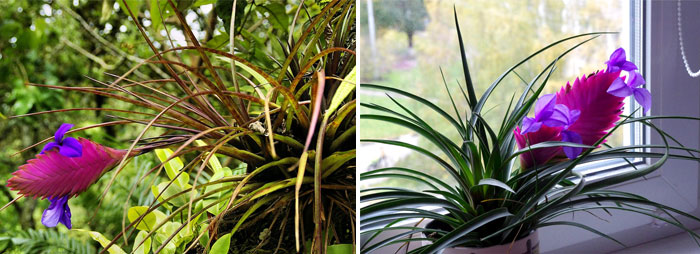
Tillandsia
The flower is popularly known as "Medusa's Head" due to the unique structure of its stem and leaves. The lower stem is covered with narrow green leaves up to 3 cm wide, which turn purple at the top. During flowering, a spike-shaped stalk appears, topped with numerous small flowers. The color and shape depend on the cultivar.
Read more in the article about tillandsias.
Ferns
In nature, ferns live in symbiosis with other plants, like mosses and lichens, but indoors they feel quite comfortable in solitary plantings.
Maidenhair or maidenhair
The slender stems grow up to 25 cm, and the inflorescences are predominantly purple. Indoors, it's typically used to create a living wall. It requires regular misting and supplemental light, but begins to wilt in full sun. It also doesn't last long in bouquets and fades very quickly.
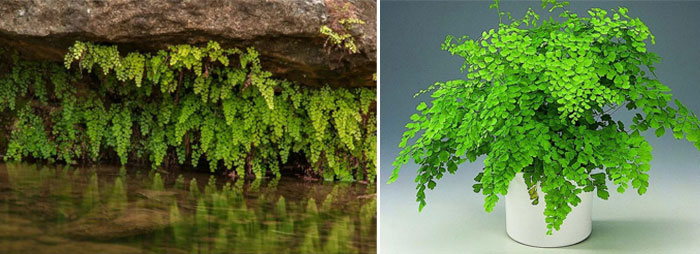
Read more in the article about maidenhair.
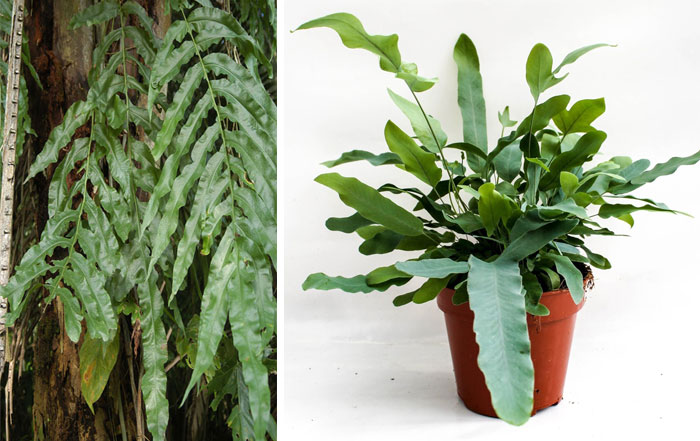
Phlebodium
Gardeners love this plant for the distinctive shape of its leaves on thin stems. They can be wavy, scalloped, or dissected. If moisture levels are low, the leaves fall off, and the plant itself does not tolerate low temperatures very well.
Lichens and mosses
Many trees in forests are covered with mosses and lichens of the epiphyte family. Mosses are most often found on oak bark, as it is riddled with numerous crevices where spores can thrive. Lichens, on the other hand, prefer conifers. For example, Usnea, or Leshy's Beard, curls from the branches like a small curtain.
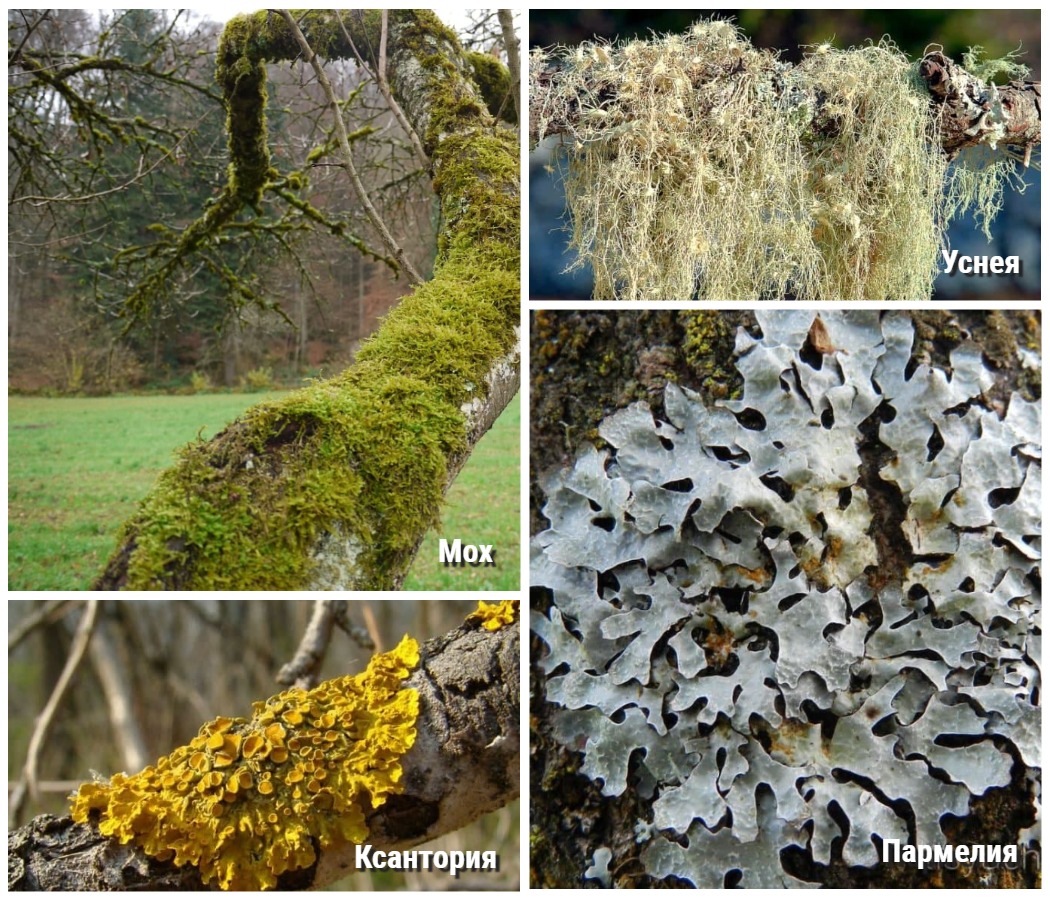
The most common lichen found in our forests is the xanthoria lichen, which grows on both living and fallen trees and is distinguished by its golden-yellow hue. Another lichen, the parmelia, is known for its medicinal properties. It was used as a wound-healing agent even during World War II.
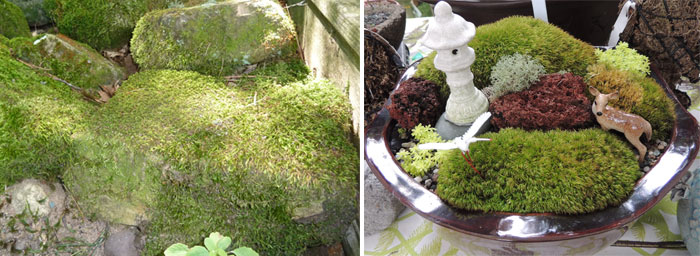
This type of epiphyte is widely used in landscape design for flowerbeds and rock gardens. It is much less common in indoor gardening.
Cactus epiphytes
Cacti are a separate group. Instead of the thick stems with large spines we're accustomed to, these plants have narrow stems and soft, sometimes even fuzzy, spines. They don't bloom very profusely, but recently, breeders have been working hard to develop new ornamental varieties of epiphytic cacti.
Today, the most common plant in home conditions is considered to be epiphyllumIt is distinguished by flat shoots with a wavy edge, on which flowers (vanilla, red, and pink) bloom in late spring. With proper care, it blooms twice a year.
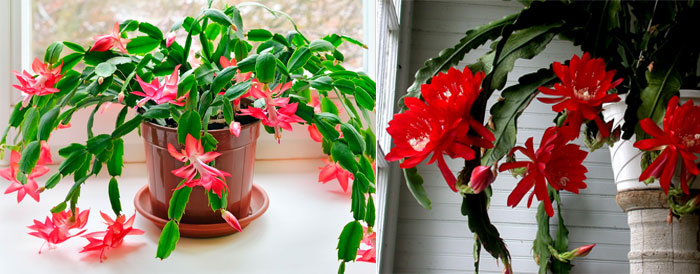
Another popular indoor epiphyte is DecembristThis is a favorite houseplant that delights with its blooms during the winter months of the year.
Anthuriums
Another type of epiphyte that has become popular in indoor gardening. It has well-developed roots, and some have vine-like shoots. With proper care, beautiful blooms continue year-round.
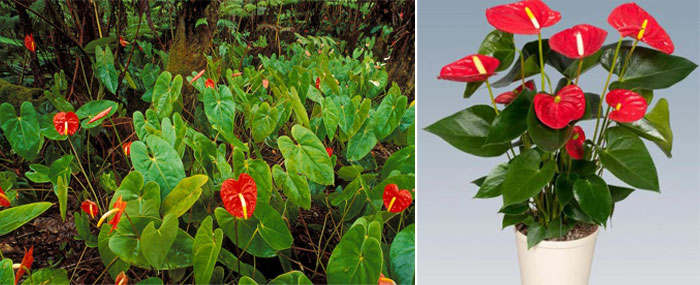
Read more in the article about anthurium.
Top.tomathouse.com recommends: keeping epiphytes at home
Growing healthy epiphytes at home is easy; you just need to follow a few growing rules, which are very similar regardless of type and structure. They prefer a well-lit area. If the room is dark, it's recommended to add a supplemental lamp to avoid disrupting photosynthesis.
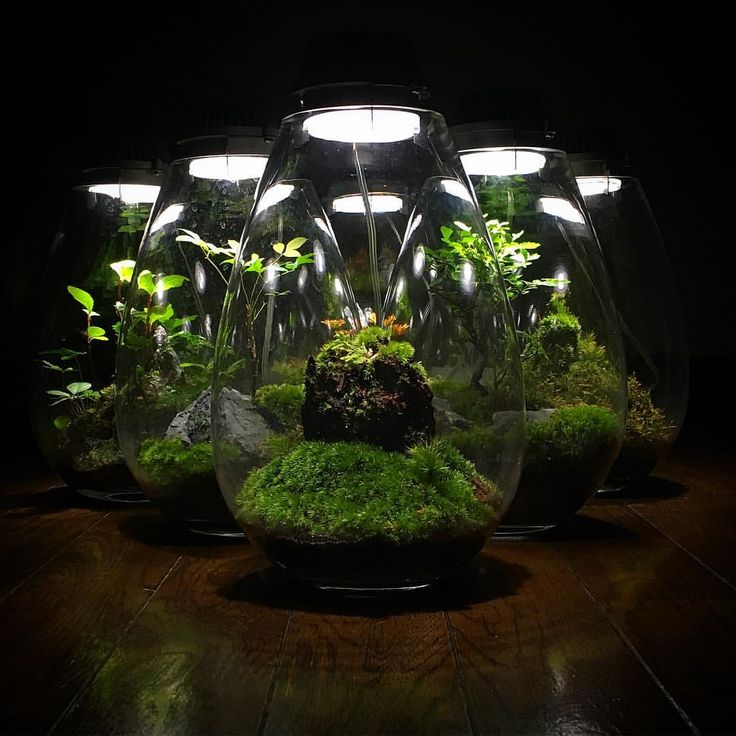
Another characteristic is the need for ventilation, as this species does not tolerate stagnant air. However, during the cold season, this must be done very carefully to avoid drafts. The optimal growing temperature is +20…+25°C, but during the dormant period, it can drop to +15°C.
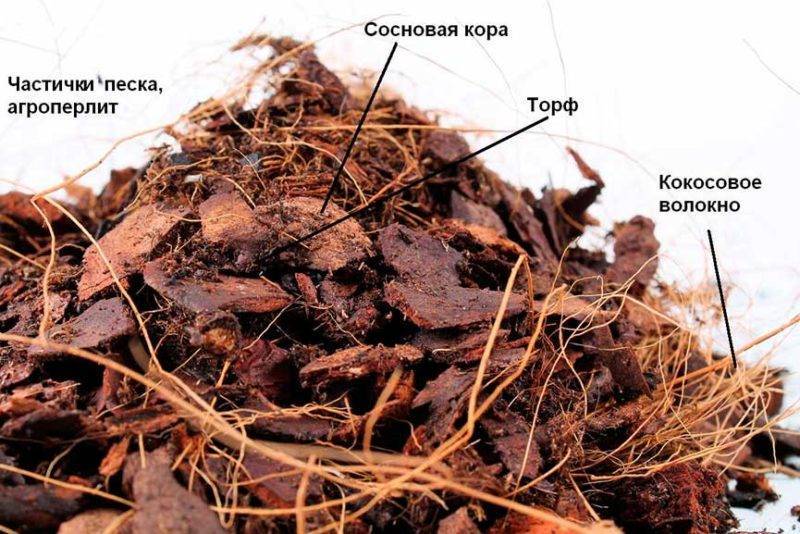
The flower substrate should be specialized and consist of bark, moss, roots, and peat. After planting in a permanent pot, it's best not to disturb the flowers unnecessarily. When planting, ensure that aerial roots remain above ground and that the substrate layer doesn't completely cover them.
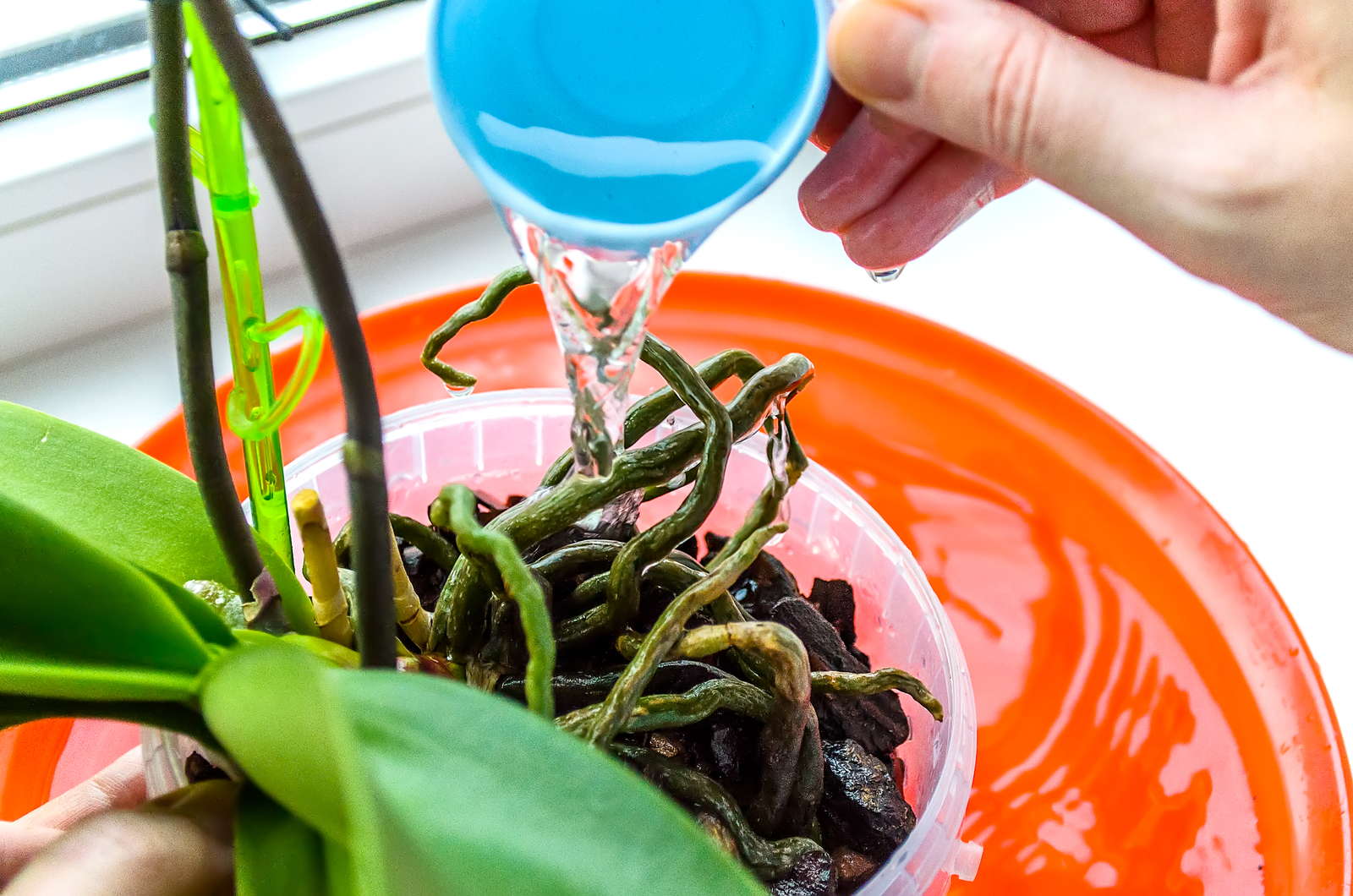
Water frequently during the flowering period and less frequently during dormancy. The soil should always be slightly moist. For this purpose, it's recommended to place the pot in a bowl of water. If your pot has holes in the bottom, the plant will automatically take up as much water as it needs.
Reproduction occurs by cuttings or separation of shoots, although some epiphytes, such as ferns, reproduce in natural conditions by micro- and megaspores.
7 Most Popular Epiphytes for the Home
- Orchids. These flowers don't tolerate direct sunlight and don't require much watering. They thrive in well-ventilated areas. The key is to avoid damaging the aerial roots, which provide the plants with nutrition.
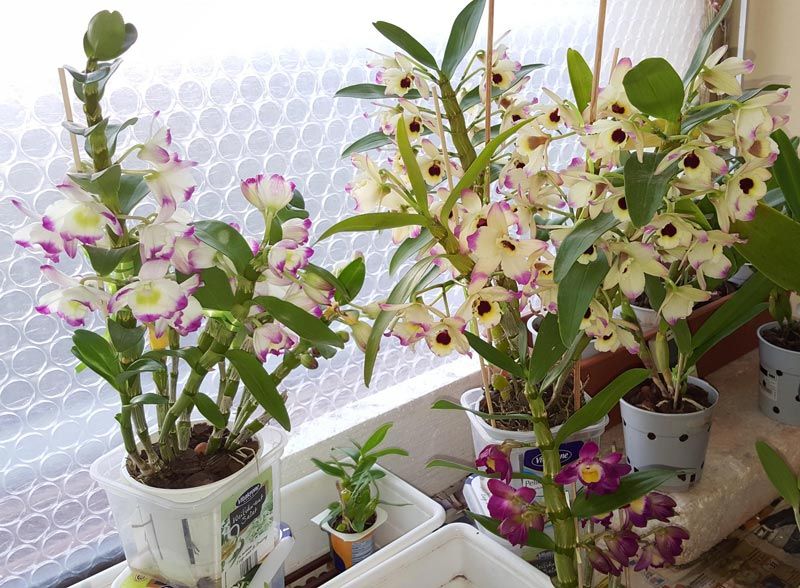
Read about orchids and their care on the portal Top.tomathouse.com.
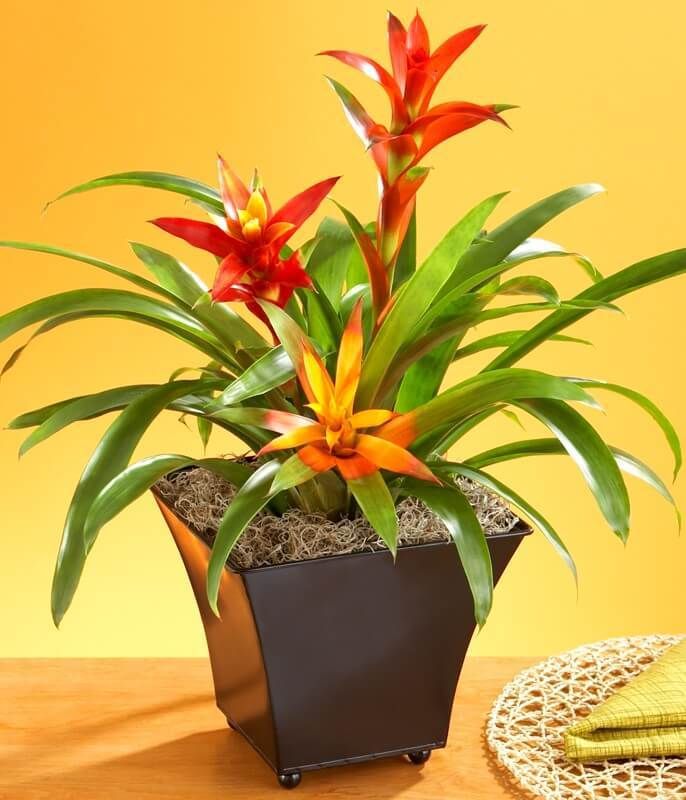
- GuzmaniaIt features a vibrant bract that can come in a variety of shades. It's easy to care for. It doesn't require abundant watering and doesn't transplant well due to its fragile roots.
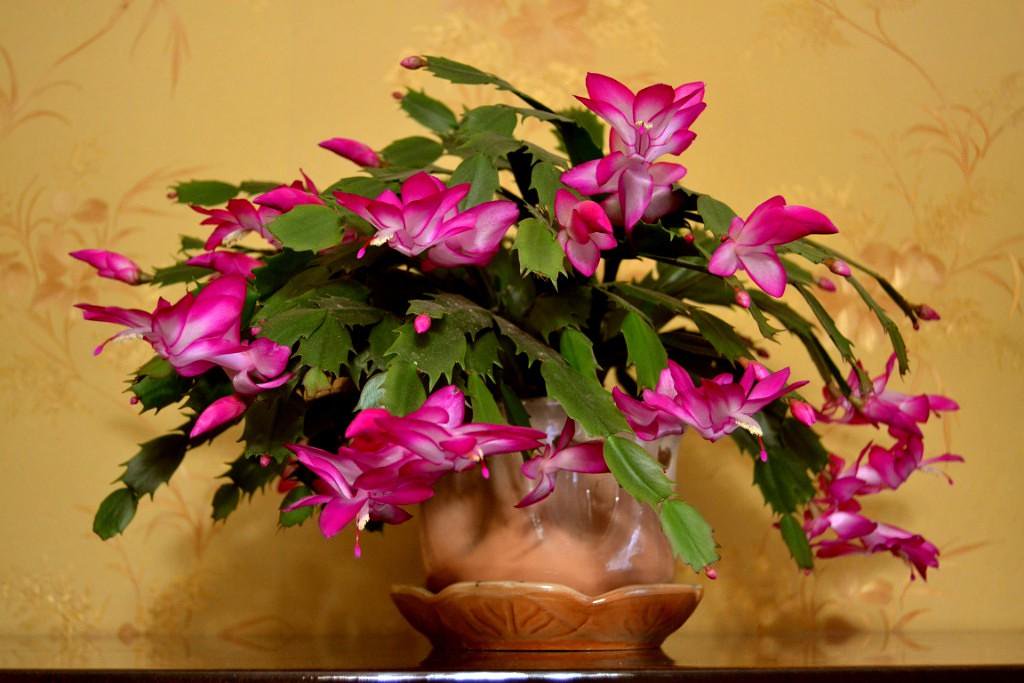
- SchlumbergeraIn December, the long, jointed shoots produce vibrantly beautiful flowers at the ends. This is where the flower gets its popular name, "Decembrist." After flowering, the shoots can be pruned. It transplants easily.
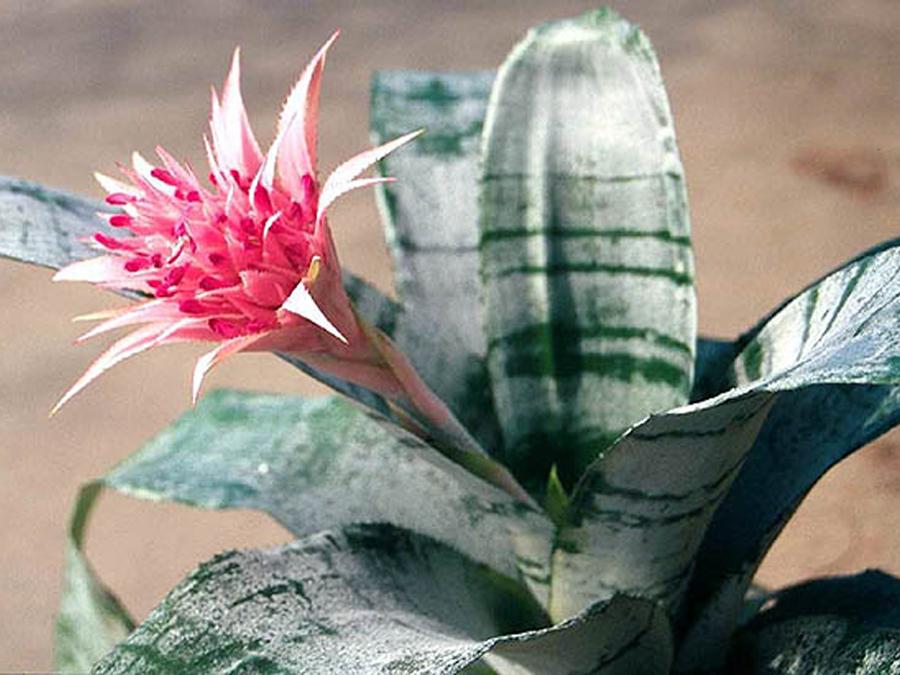
- AechmeaBroad leaves radiate from the center, revealing a bright, dense bract of red or pink color during flowering, with small flowers in its axils. It thrives in warm air and does not tolerate direct sunlight.
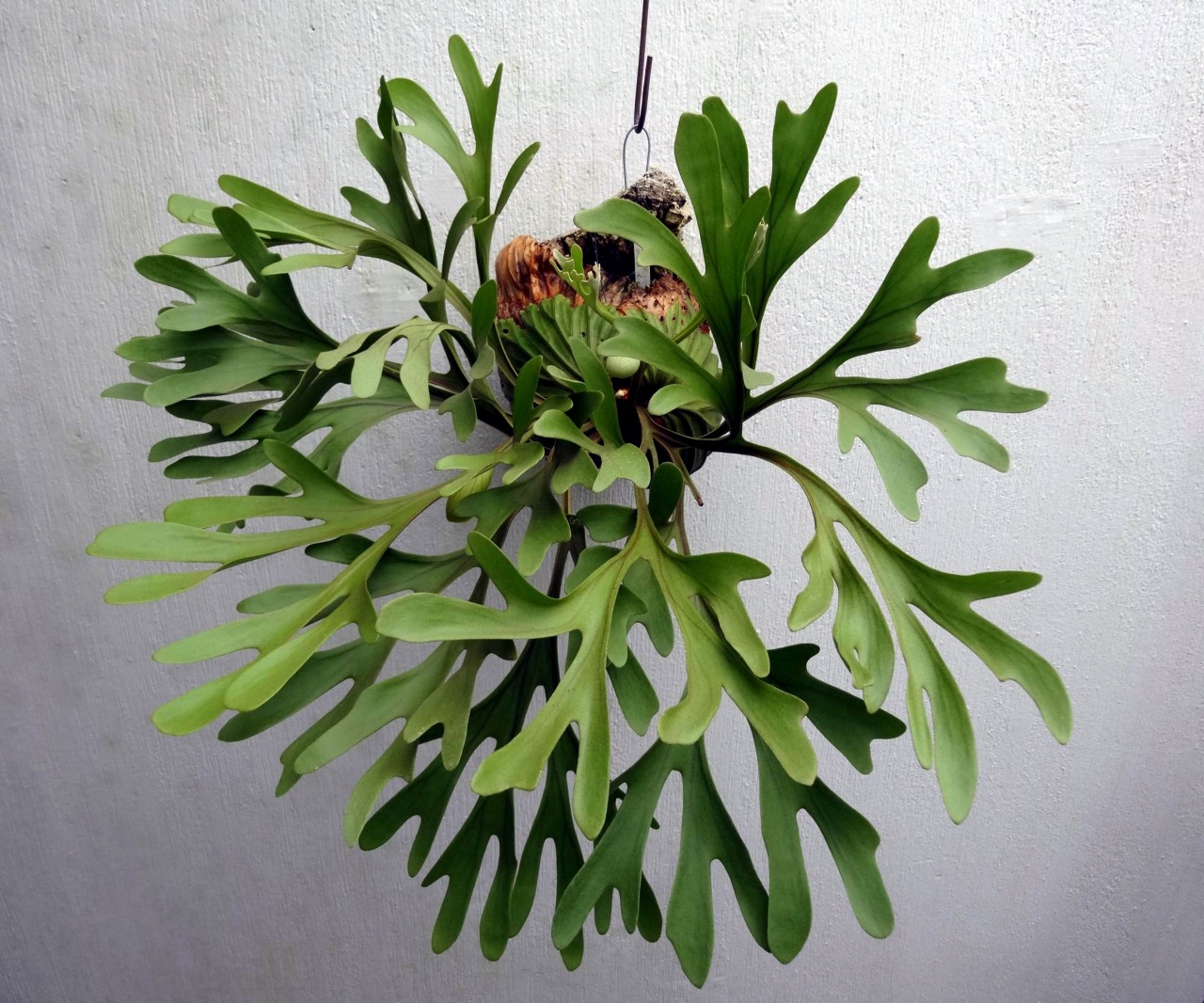
- PlatyceriumIt grows and develops very slowly, producing three leaves per year indoors. However, it is distinguished by its unusual leaf blade, which looks very much like deer antlers. It prefers bright sun. The shoots reach 40 cm in length. It does not tolerate having its leaves rubbed.
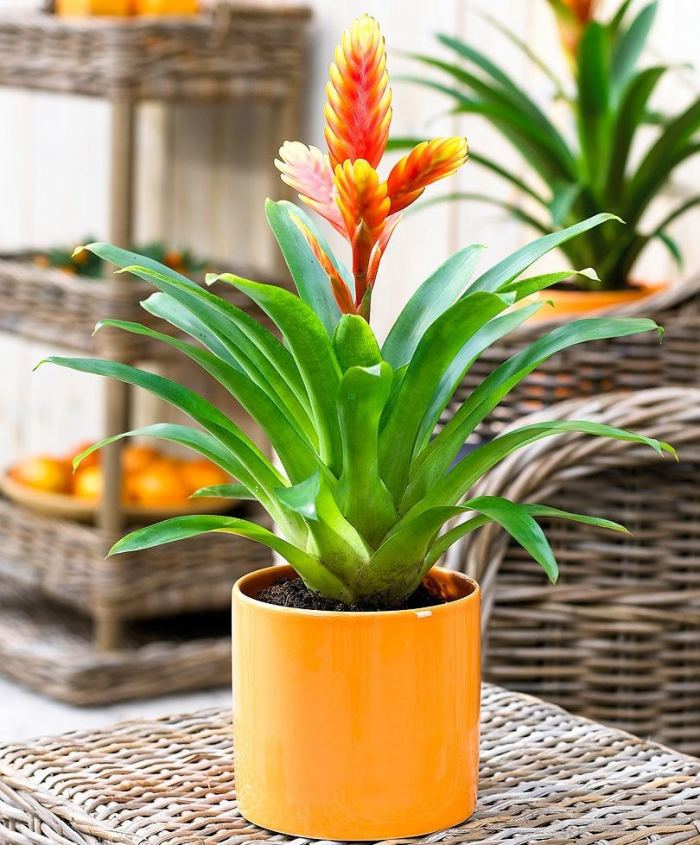
- Vriesea. Among gardeners, the keeled, royal, perforated, and beautiful Vriesea have become particularly popular. The leaves are long and relatively thin. The flower forms an upright or drooping stem in a variety of shades. It thrives in water and requires misting.
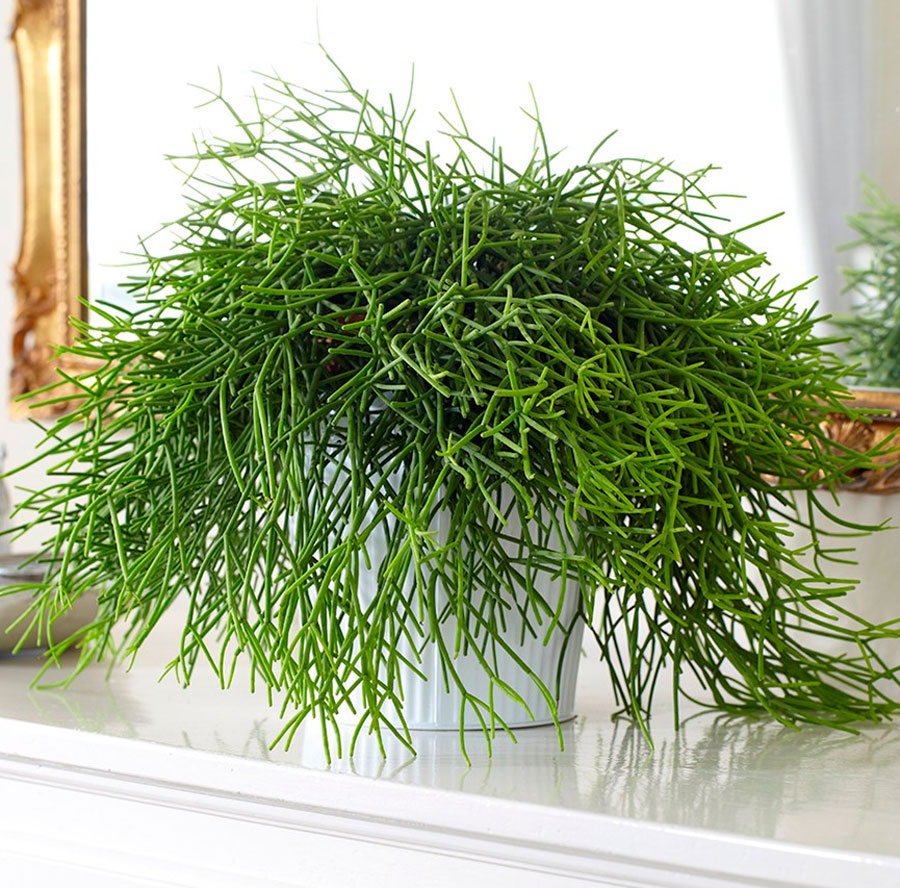
- RhipsalisIt is a cactus epiphyte. It grows well at temperatures between 15 and 20°C. It has no thorns, and its branches resemble numerous tubular joints. It blooms with small, single-color flowers.
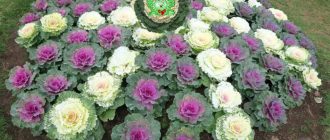
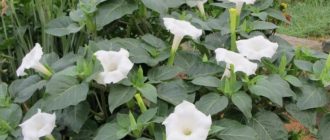
Neutralism is a type of relationship where one organism does not interact with another. For example, a squirrel and a moose. (0 0)
Here, we see pronounced tenancy. That is, one organism benefits from living in/on another, while the other experiences neither discomfort nor benefit. (+ 0)