Anthurium is a genus of epiphytic, liana, herbaceous and semi-epiphytic plants that belong to the Araceae family.
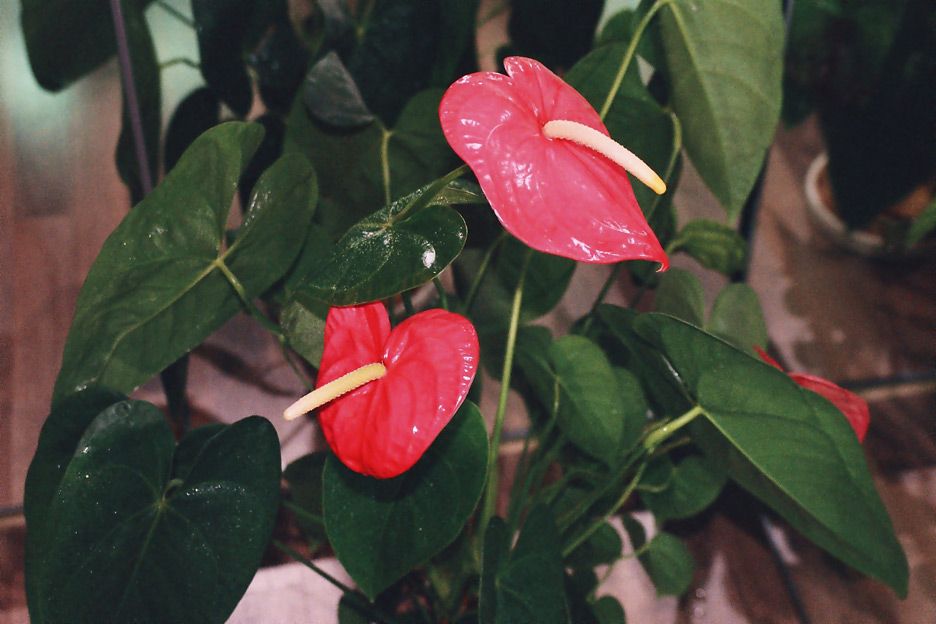
Homeland - tropical and subtropical zones of Central and South America.
Description of Anthurium
The name "anthurium" translates as "tail flower" because its spadix-shaped inflorescence resembles a tail. It's located on a brightly colored bract (spatula), which is often mistaken for a flower, but is actually a leaf that attracts insects for pollination. Another distinctive feature is the variety of scents that emerge at any time of day, from faint and fragrant to intense and foul, depending on the preferences of the pollinators (wasps prefer a pleasant scent, flies a foul one).
Anthurium has two other names: the flamingo flower and the symbol of male happiness. The first is due to the spadix with its spathe resembling this bird, the second is due to popular superstition.
Varieties of indoor anthurium
In indoor conditions, epiphytes are usually grown.
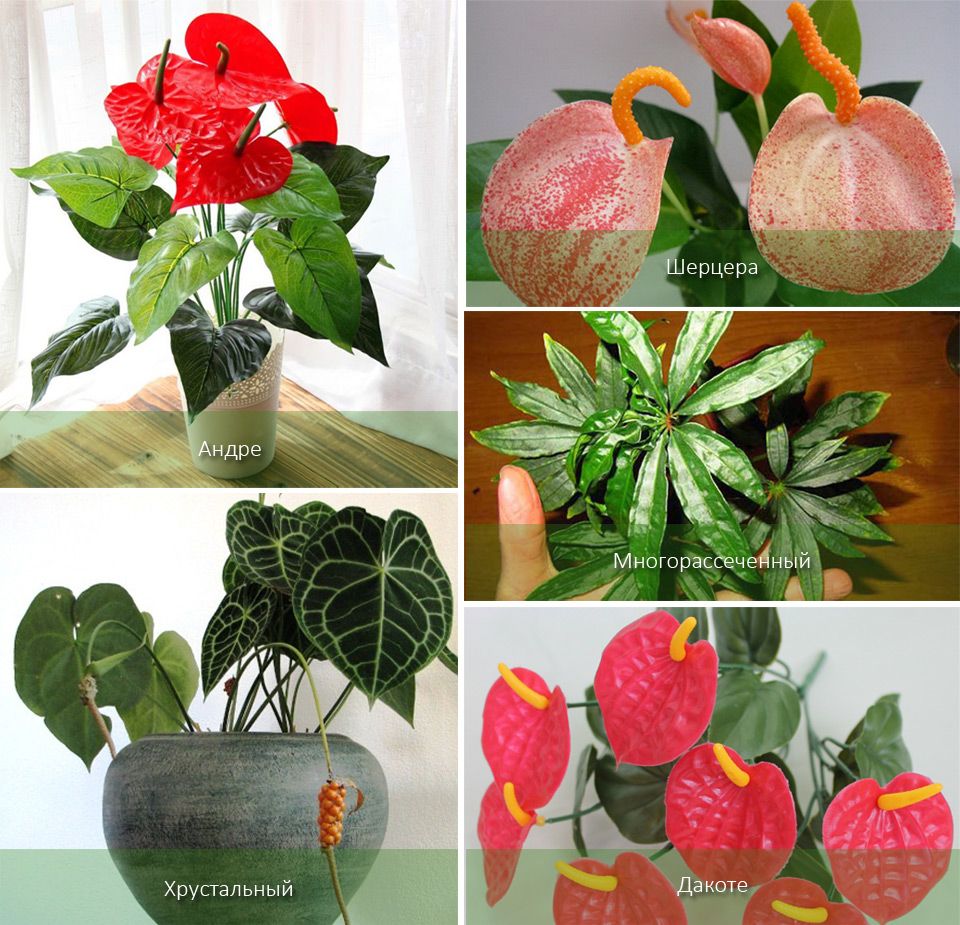
The most common anthuriums with colorful spathes:
| View | Description | Flowers | Cover |
| Andre | The first cultivated variety. It is distinguished by its year-round flowering. | Red, white, purple, pink, dark burgundy. | Bright, pointed, turns green after flowering. |
| Dakota | The most popular. Can reach 1 m. | Solar. | Purple. |
| Scherzer | The petioles are small. | Yellow, scarlet, snow-white. | Round, heart-shaped, orange, red, white shades with dots. |
Valued for the decorative quality of their leaves:
| View | Description | Leaves |
| Crystal | Decorative, with dull flowers and a pleasant scent. | Heart shapes with light, expressive vein patterns. |
| Multi-dissected | Low-growing liana. | Narrow, dark green, glossy, like long fingers. |
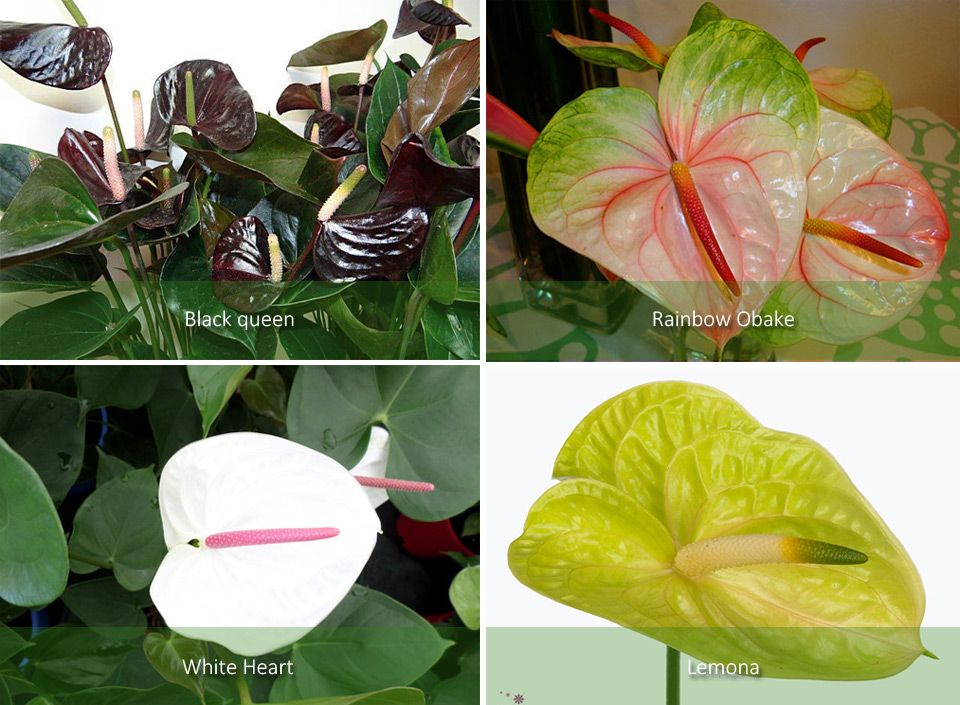
With a variety of bedspreads.
| View | Cover |
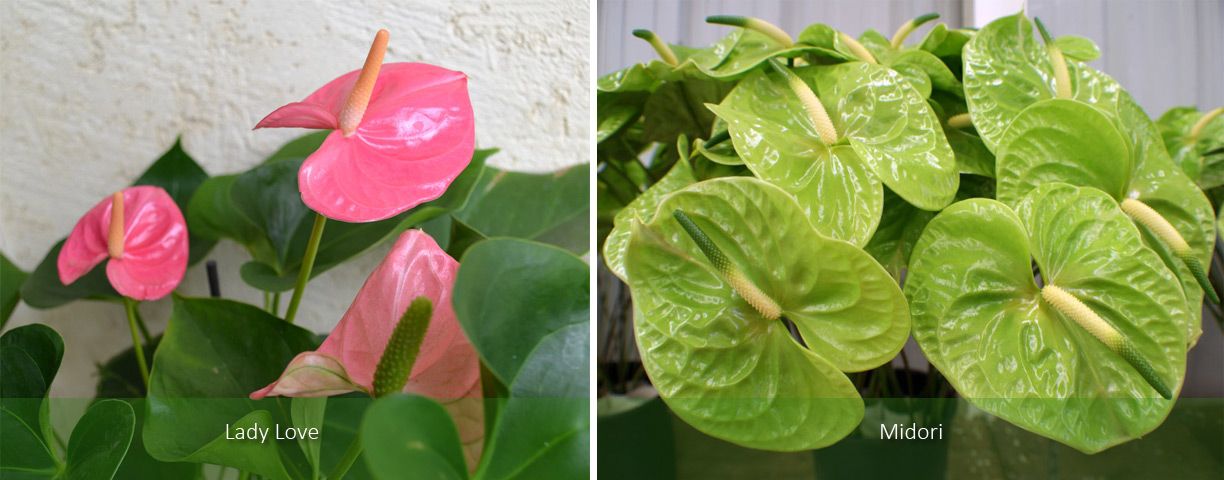
| Blush, Tennessee, Lady Love | Pink. |
| Dark Red Anthurium, Otazu Brown, Black queen | Dark red shades. |
| Midori | Green. |
| White, White Heart | White. |
| Picasso, Lemona | Yellow. |
| Obake, Mauna Loa Obake, Rainbow Obake | Two-color. |
Conditions for growing and caring for anthurium
To ensure that the plant feels comfortable, maintenance regimes are followed.
| Factor | Spring/summer | Autumn/Winter |
| Location | East or west facing window. Fresh air without drafts. | South-facing windows, insulated from cold air flows. |
| Lighting | Diffused bright light. | |
| Temperature | Optimal + 28 °C. | +16…+18 °C. |
| Humidity | Maintain high:
|
|
| Watering | As the top layer of soil dries out and the leaves droop slightly, moisten the entire pot and immediately drain the water from the tray. Use only settled, room-temperature soil. | |
| Top dressing | Fertilize flowering plants once every 1-2 weeks, depending on their condition. | They refuse or half the dose once a month. |
How and why to repot and rejuvenate anthurium
After purchasing a flower, it needs two weeks to adapt to indoor conditions. After that, regardless of the time of year, it needs to be repotted:
- The plant is removed from the old container without shaking off the soil and transferred to a larger pot, maintaining the same planting depth.
- The volume of the new shelter should be 2-3 cm larger in depth and width than the root system.
- Soil composition: leaf soil, peat, vermiculite or perlite, sand (1:1:1:0.5) or only sphagnum moss without additives.
- Drainage - pieces of bark, charcoal.
The flower is then repotted annually in the spring. As the plant grows, it is rejuvenated by separating the offspring from the mother plant and planting them in different pots.
If new shoots haven't formed for a long time, prune the entire trunk, almost to ground level. This type of pruning stimulates root formation and the emergence of new shoots.
Anthurium flowering and its absence
Anthuriums can bloom year-round. However, there are situations that can cause the flowers to dry out:
- the plant is getting old - cut it off along with the flower stalk;
- pollination by insects, berry setting - wait for the seeds to ripen or cut them off.
In the middle zone, due to less light and lower temperatures on the windowsill in winter, anthurium may slow its growth. In this case, two possible options are used:
- Create a dormant period - follow the maintenance rules for the winter period, the main thing is not to allow the temperature to drop below +15 °C.
- They support the active phase (flowering and growth) by placing them away from the window where it is warmer, illuminating them with phytolamps, and following watering and fertilizing schedules.
Sometimes flowering doesn't occur. There are several possible causes:
- Failure to comply with proper care conditions: insufficient light, low temperature, dry air, excess or insufficient watering, lack of fertilizers.
- Too large a container - the plant devotes energy to growing roots and leaves.
- Small pot - lack of nutritional factor.
- Fertilizing with the wrong fertilizers - phosphorus, potassium, microelements and less nitrogen compounds are needed.
- Frequent movement of the flower, stressful situations.
- Careless transplantation, the plant is damaged.
How to propagate anthurium
New plants can be obtained by cuttings, division of the bush, cuttings, and seeds.
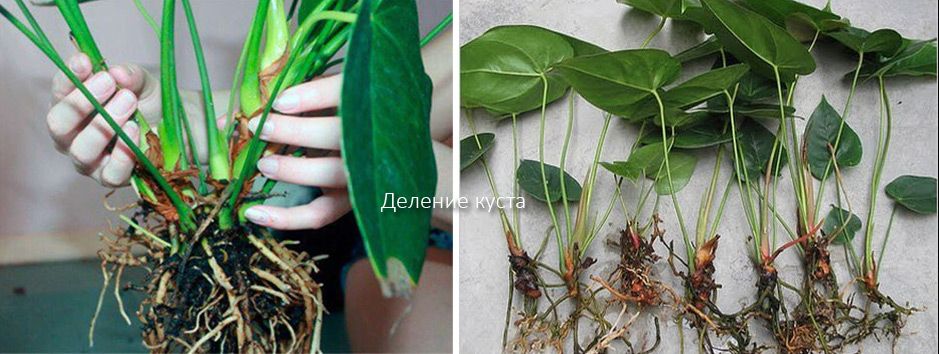
The first two methods are used in the spring during annual repotting. The roots are separated with a sharp knife, dusting the cut areas with crushed charcoal. The transplanted plants are watered carefully, being careful not to overwater.
Cuttings are carried out after pruning:
- The cuttings are placed in a container with perlite and sand.
- Cover with a glass cap.
- Maintain at +22…+24 °C, constantly moisten and ventilate.
Seed propagation is mainly used by breeders to develop new varieties.
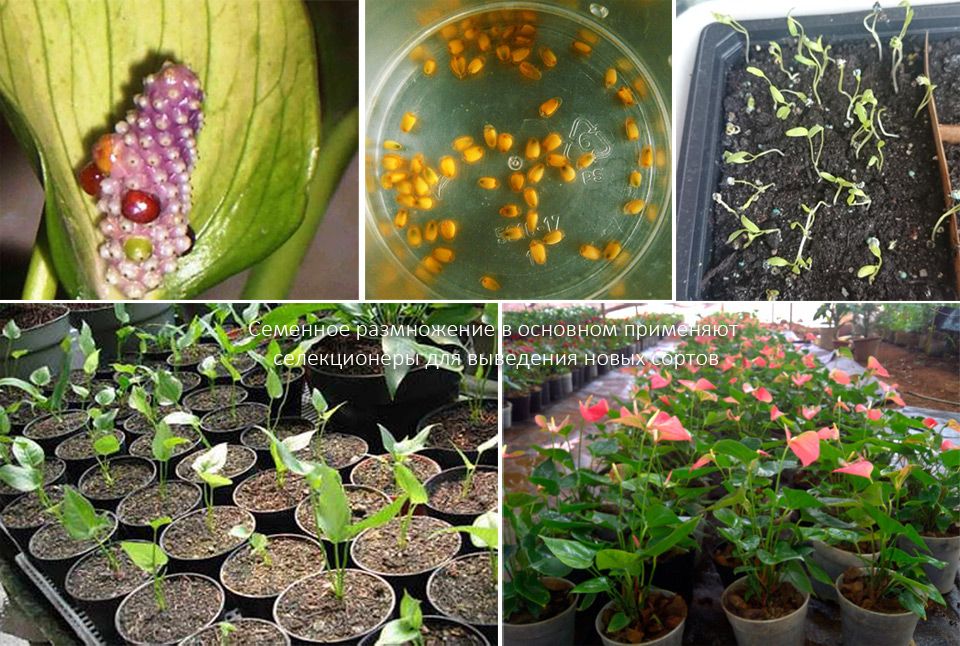
At home, this is a long and complicated method:
- They pollinate the flower themselves (using a brush, they transfer pollen from the stamens to the stigmas of the pistils).
- Wait for the berries to ripen (8 months).
- The seeds are removed from them and washed.
- Sow in containers with light substrate and a thin layer of perlite.
- Further care is provided as with cuttings. As the seedlings grow, they are transplanted into larger pots.
- A plant grown in this way may bloom weakly in the second year, and full flowering will occur only after 4-5 years.
Problems with growing anthurium, diseases and pests
If not cared for properly, the plant can become diseased and susceptible to pest attacks. This can usually be detected by leaf disease.
|
Symptoms Manifestations on leaves |
Problem | Elimination |
| Round brown, yellow spots, appearance of holes. | Anthracnose, septoria |
Damaged leaves are destroyed, the roots are disinfected, and the soil is replaced. The plant is placed in a location with reduced humidity, watering is reduced, and no spraying is used. In case of severe infestation, use Fitosporin, Fundazol, Silk (2-3 times every 2 weeks). |
|
The roots are rotten. Loss of shine, paleness, then blackening. |
Root rot | Trim off the affected parts. Treat with Fitosporin and Maxim. Repot in new soil and pot. |
| Twisting, shrinking, appearance of white coating. | Powdery mildew |
Place in a warmer place. Spray with preparations: Topaz, Acrobat. |
| Dark red spots below, light above, wilting. | Rust | Topaz and Ordan are used. |
| Yellowing, sticky coating, green insects visible. | Aphid | Cover the soil with plastic wrap, and wash the leaves with soapy water. Treat with onion infusion or Fitoverm. For more complex cases, use Actellic or Karbofos. |
| Inside there are black spots, blurred yellow-green streaks, drying out, falling off. | Thrips | Spray with Fitoverm (3-4 times every week). |
| The thickenings are white and golden. | Scale insect | They collect the insects. They use a garlic solution with soap; if that doesn't help, they wipe them with kerosene. |
| The appearance of yellow spots and webs. Drying and curling. | Spider mite | Use Fitoverm. |
| White plaque on sore spots. | Mealybug | Wash with a soap solution, then repeat several times after a week, and also spray with garlic infusion or Fitoverm. |
Top.tomathouse.com informs: Anthurium – a man's happiness
According to legend, the anthurium is a protective flower for young families. It is given as a wedding gift, reminding the man that he is the family's protector.
If anthurium begins to bloom, it signals the onset of a favorable period for the family. It's essential for highly emotional couples; it draws away negative energy and brings reconciliation into the home.
The plant also helps melancholic and nervous people. It is given to women who are looking to get married.
For families, a spathiphyllum is a good companion to the anthurium. This flower, known as a woman's happiness, and together with the anthurium, a man's happiness, they ensure harmony.