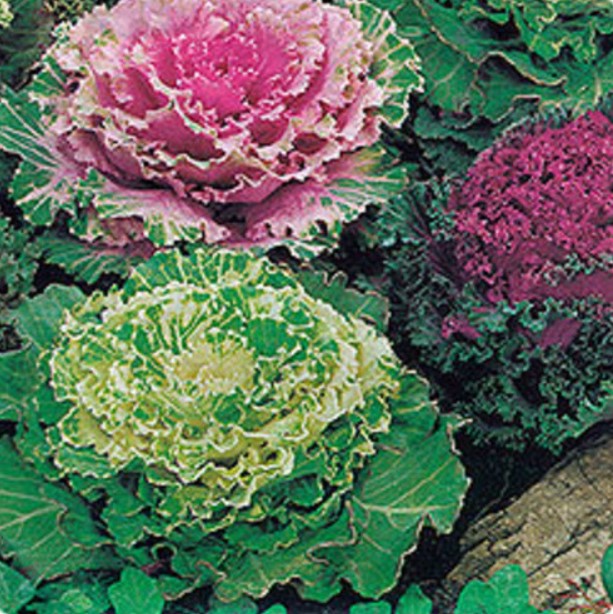
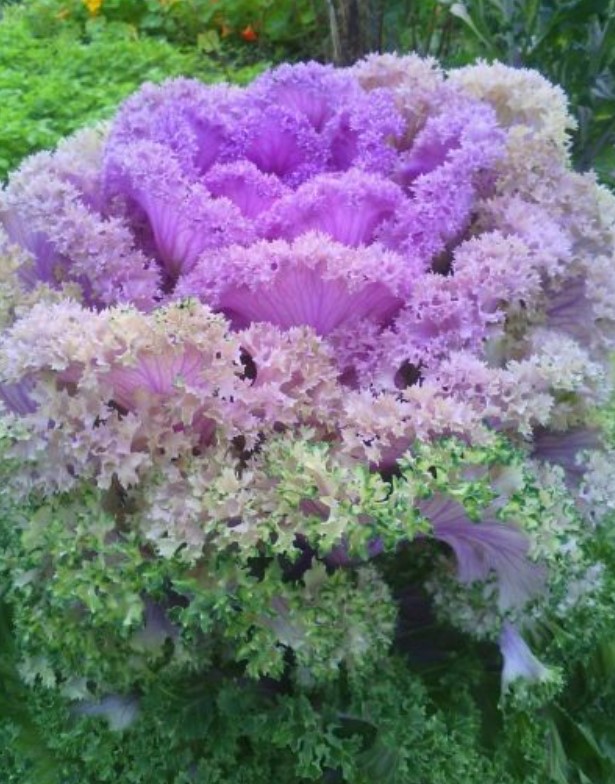
The main difference between ornamental kale and regular kale is its vibrant rosettes and leaves of unusual shades and shapes. Like the well-known crop grown in almost every garden, it belongs to the Cruciferae family. It also has another name: brassica.
Content
- 1 Description of ornamental cabbage
- 2 Historical background
- 3 Types and varieties of ornamental cabbage
- 4 Planting ornamental cabbage seeds
- 5 Growing ornamental cabbage seedlings
- 6 Planting ornamental cabbage in open ground
- 7 Caring for ornamental cabbage in open ground
- 8 Diseases and pests of ornamental cabbage: how to avoid them
- 9 Edibility of ornamental cabbage
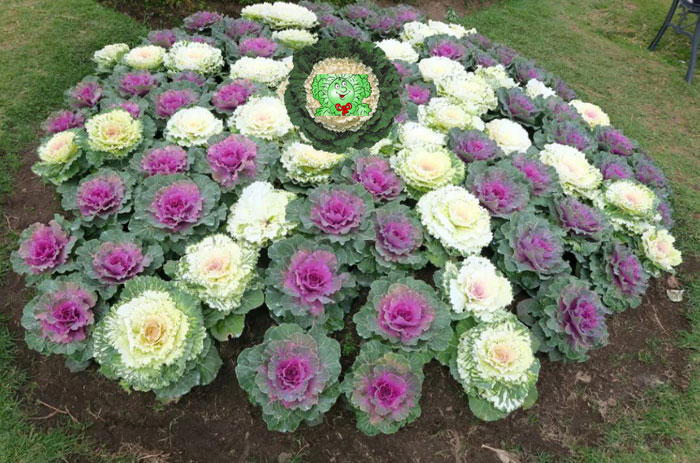
- 10 Using ornamental cabbage in landscape design
- 11 Reviews of growing ornamental cabbage
Description of ornamental cabbage
Ornamental kale is a biennial plant. During the first year after planting, leaves form, creating a dense head or rosette. Flowering and fruiting begin in the second season.
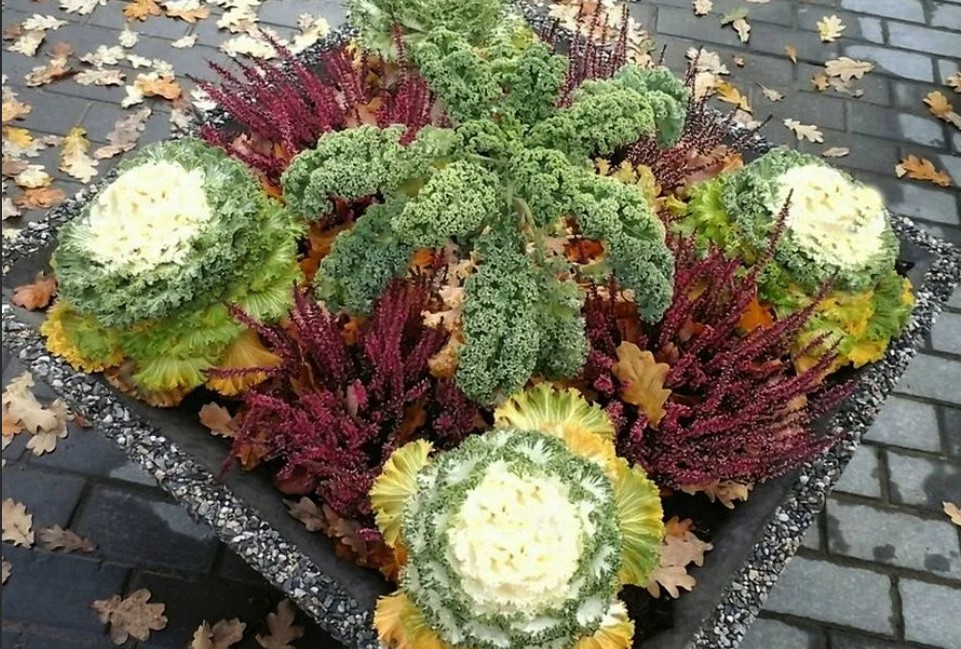
Cabbage leaves are:
- solid and flat;
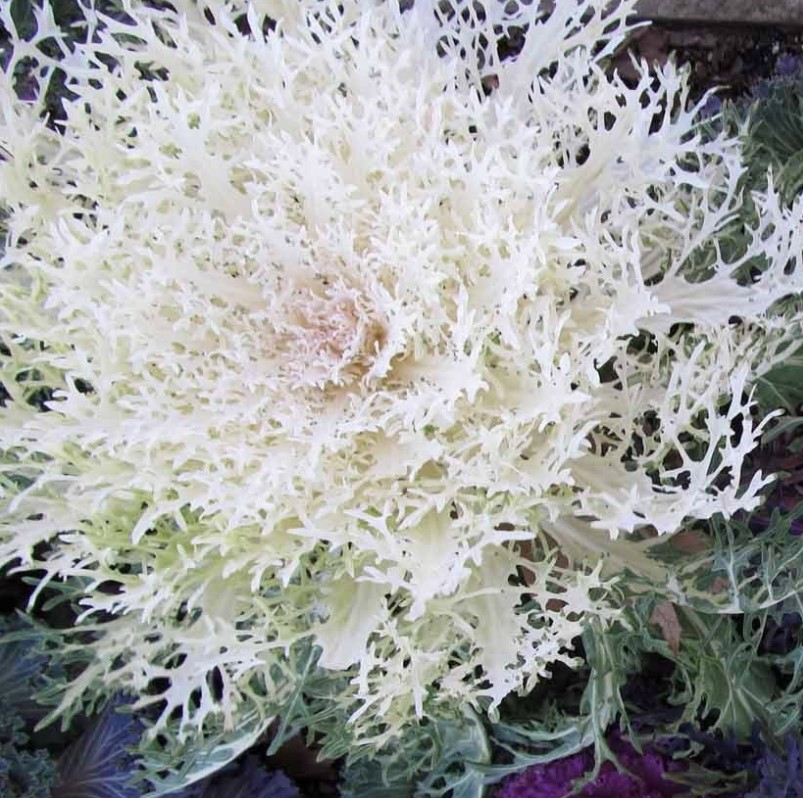
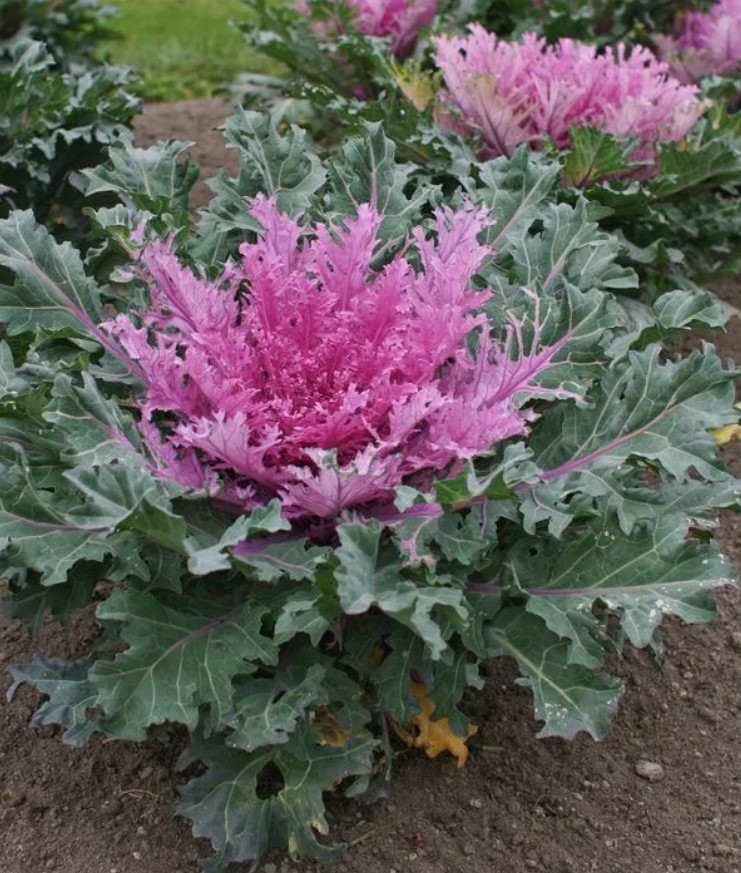
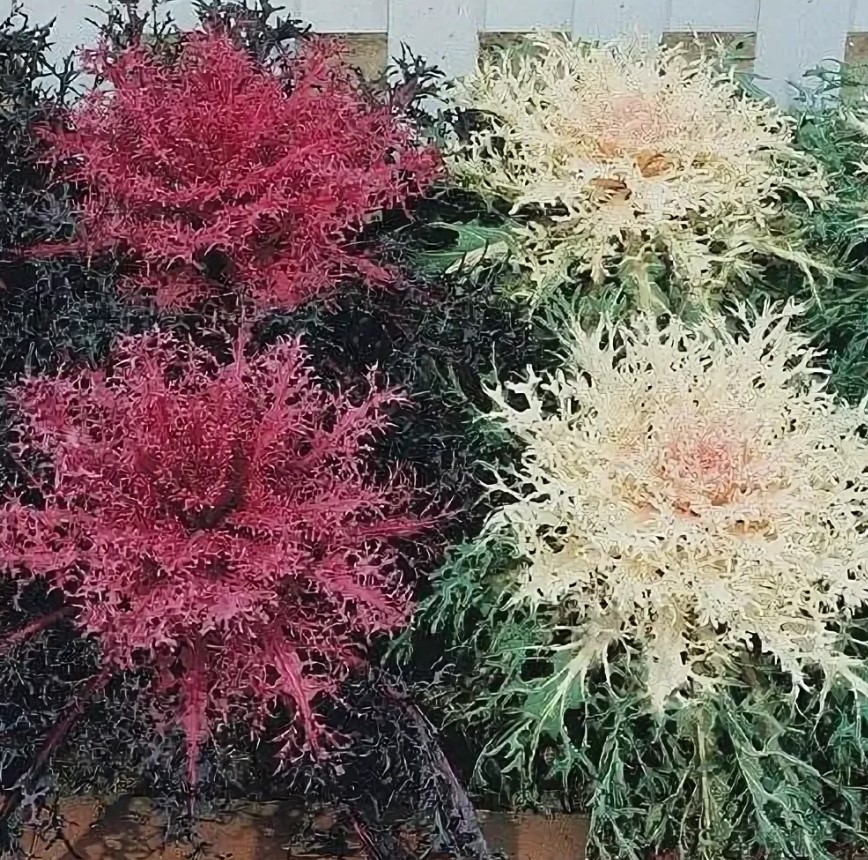
- pinnately dissected;
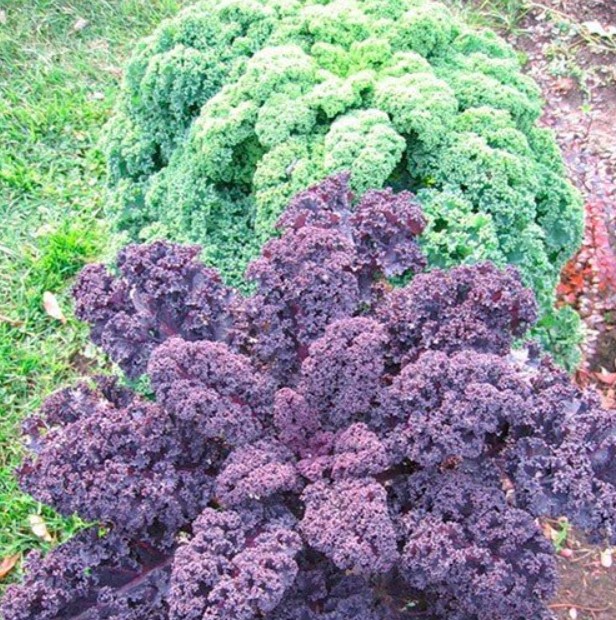
- corrugated;
- fringed around the perimeter;
- curly.
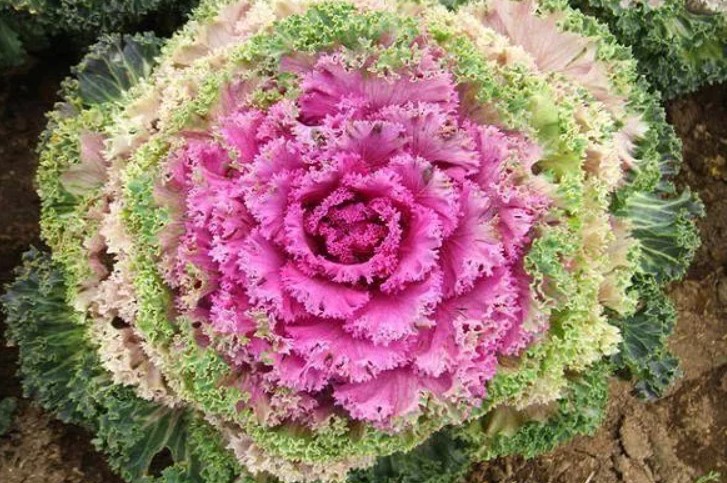
They can also have different colors:
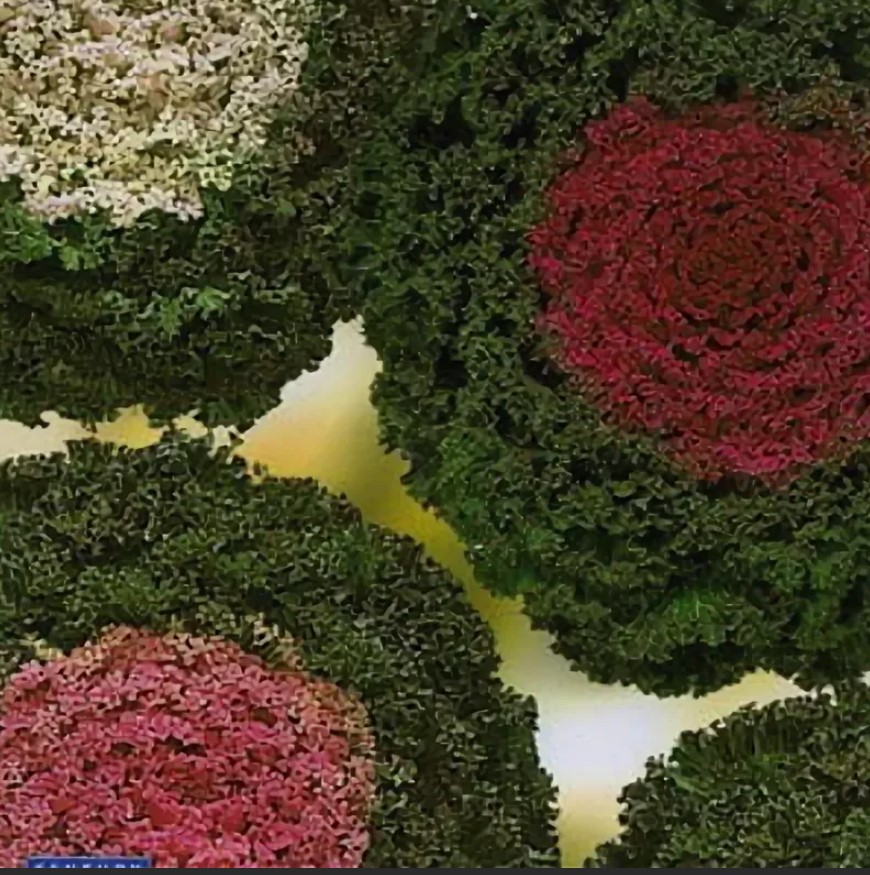
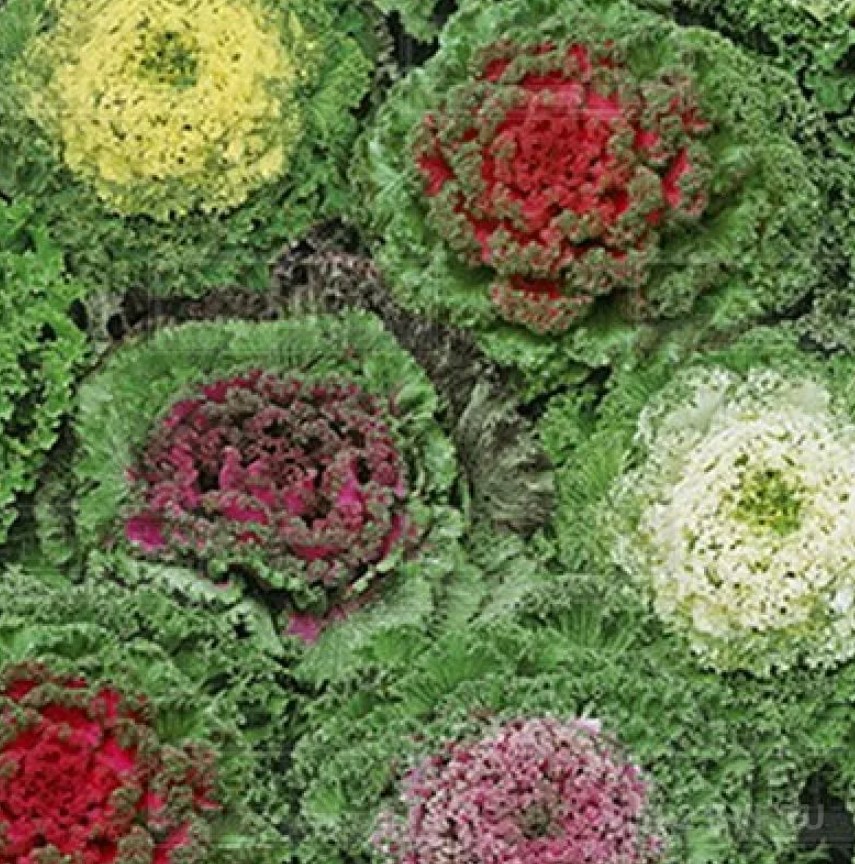
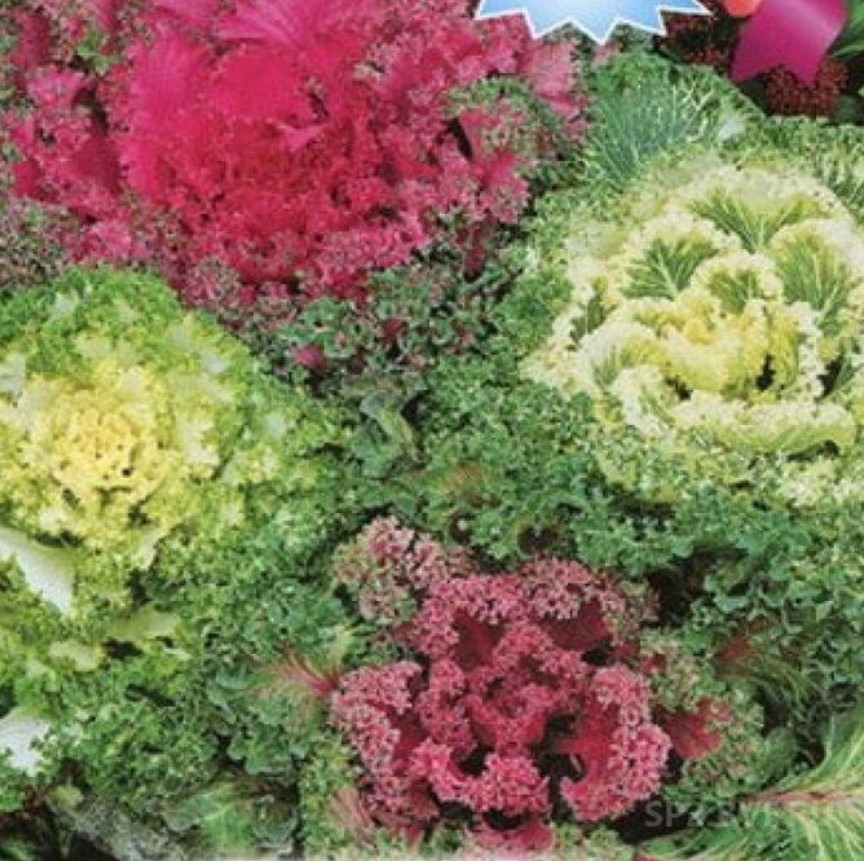
- green on the lower tiers and snow-white on the central ones;
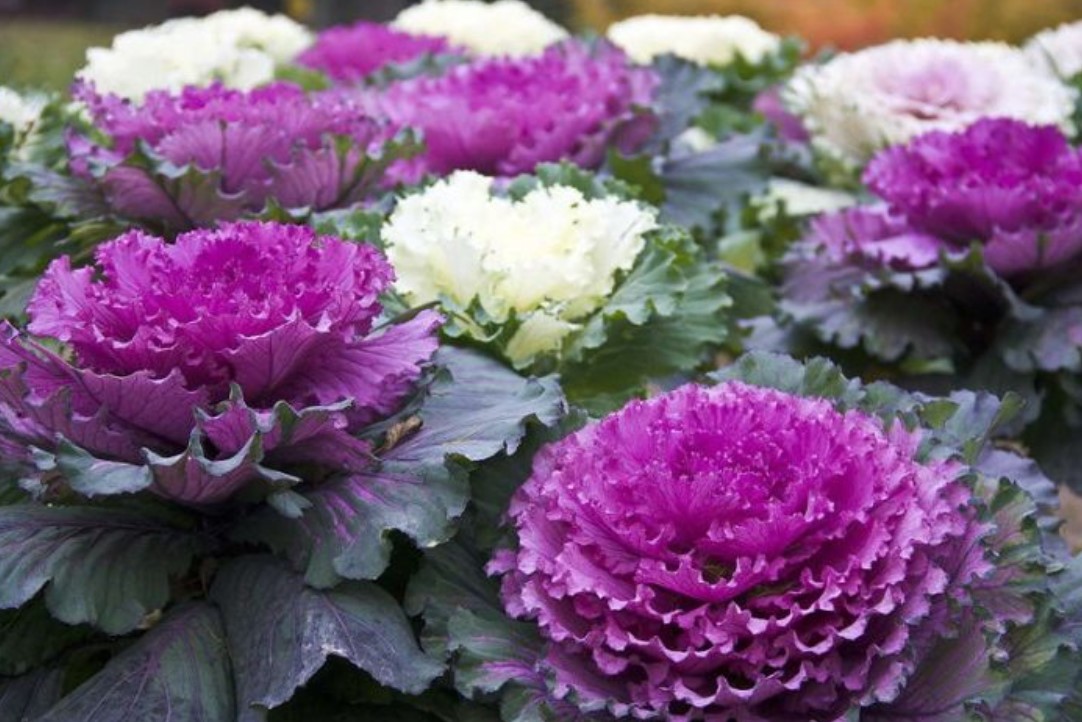
- green on the lower ones and purple-scarlet on the central ones;
- bright outer leaf edge and green color in the central area;
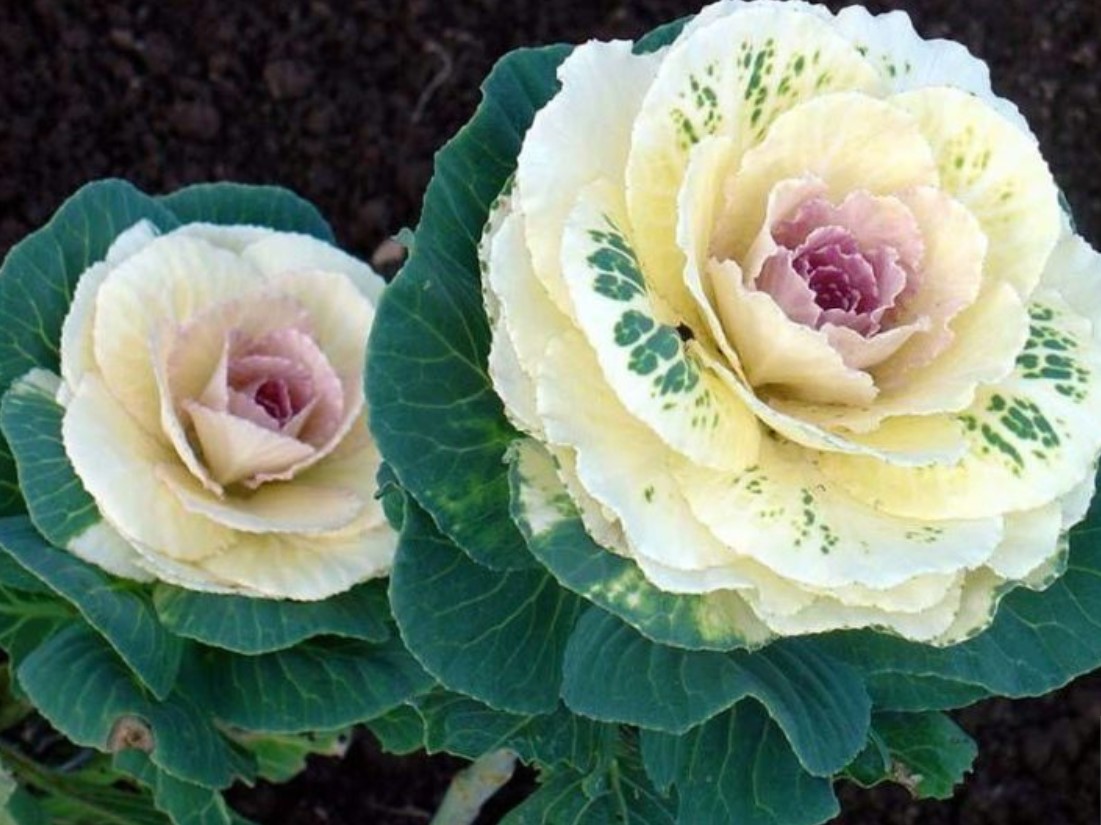
- purple, pinkish, snow-white colors in the center of the leaves and green edges of the leaves;
- multi-colored color with contrasting veins.
The leaves turn vibrant colors when temperatures drop below 10°C. Flowering can continue even in unprotected soil at temperatures as low as -12°C. If the brassica is brought into a heated room, flowering can last until midwinter.
Historical background
Its homeland is Ancient Greece, where it had a special place. It was believed that it began to grow when drops of sweat from the god Jupiter fell to the earth.
Japanese breeders made a significant contribution to improving the plant's ornamental qualities. By the mid-18th century, they had developed over 200 different varieties, which adorned the gardens of wealthy Japanese.
It was soon brought to Europe, but in Russia it only began to gain popularity relatively recently.
Types and varieties of ornamental cabbage
| View | Variety | /diameter (cm) | Description |
| Palm-shaped leaf
|
Kai and Gerda
|
80/30 | The leaves are two-toned—purple and green. This variety easily tolerates temperatures down to -15°C. |
| Red Tall
|
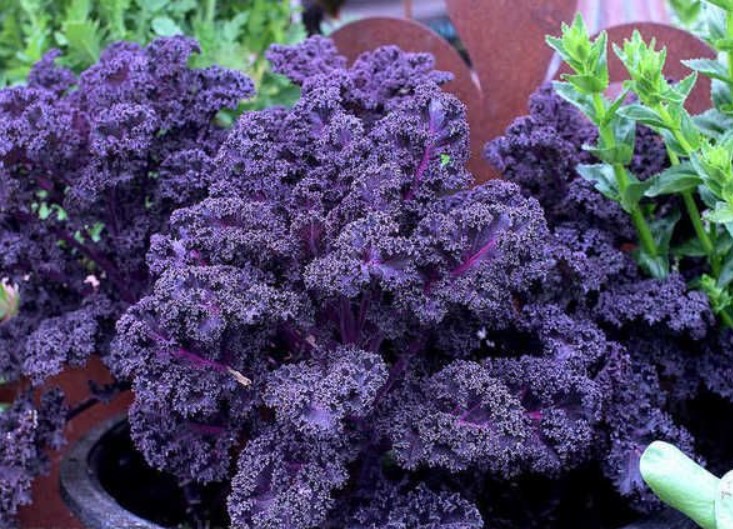
120/70 | The stems are tall and covered with evenly spaced, bright purple leaves. | |
| Robin
|
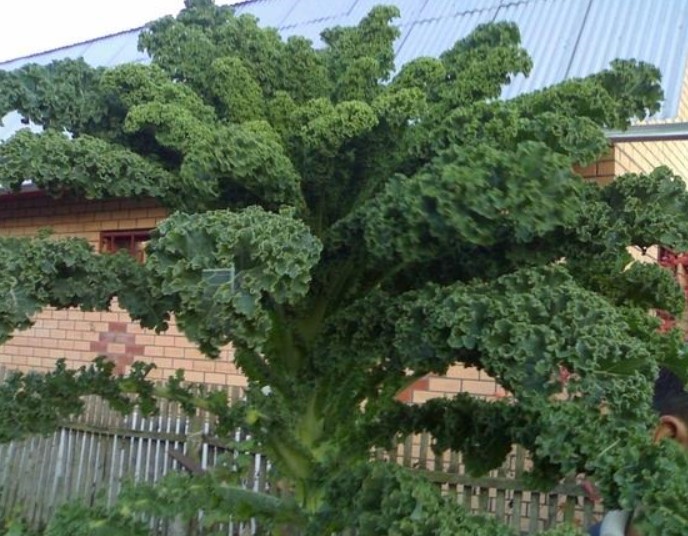
150/40-50/td> | A mid-season variety. The leaves are heavily corrugated, drooping, and arranged on elongated petioles, with a purple-red hue. Resistant to fusarium, clubroot, and bacterial diseases. | |
| Relay
|
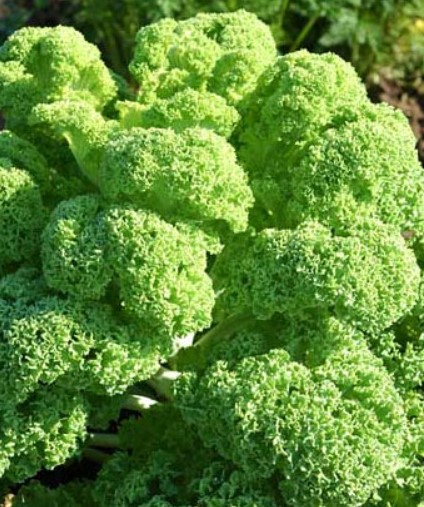
50/40 | Mid-season ripening. The leaves are heavily corrugated, on long petioles, drooping, and light green. | |
| Lark's tongue
|
130/100 | Similar to climbing plants. The leaves are jagged, corrugated, and up to 70 cm long. | |
| Rosette-headed cabbage | Nagoya white
|
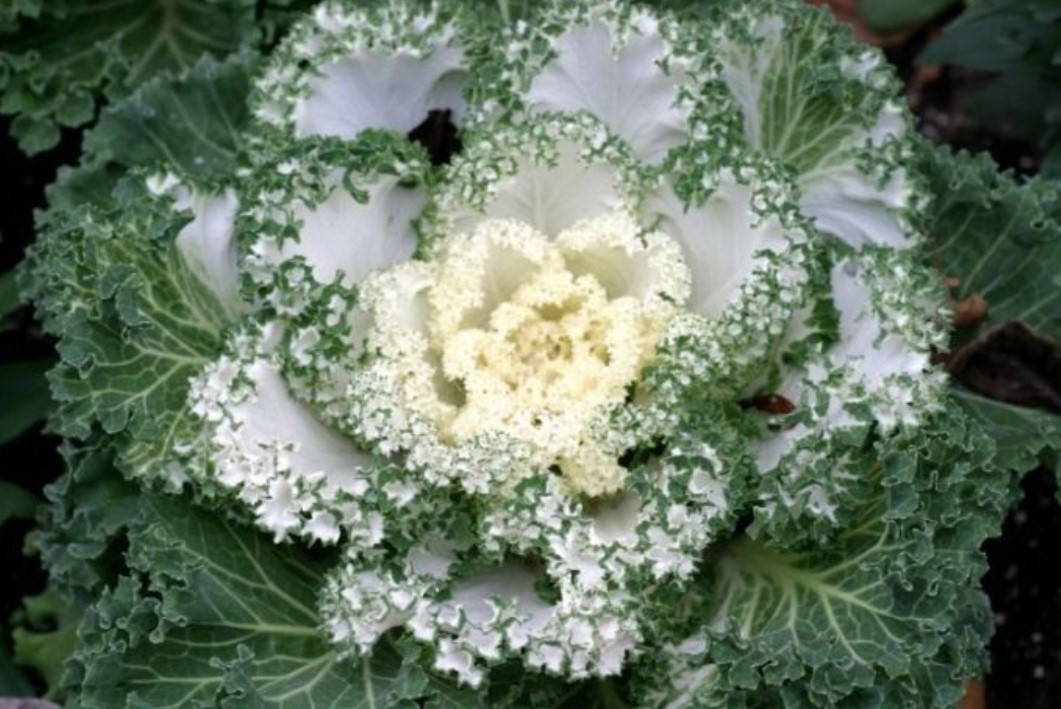
50/50. | It has a luxurious appearance—looking at it, it seems as if the plant is wrapped in lace. The center is snow-white. The leaves are green on the outside. |
| Victoria the Dove
|
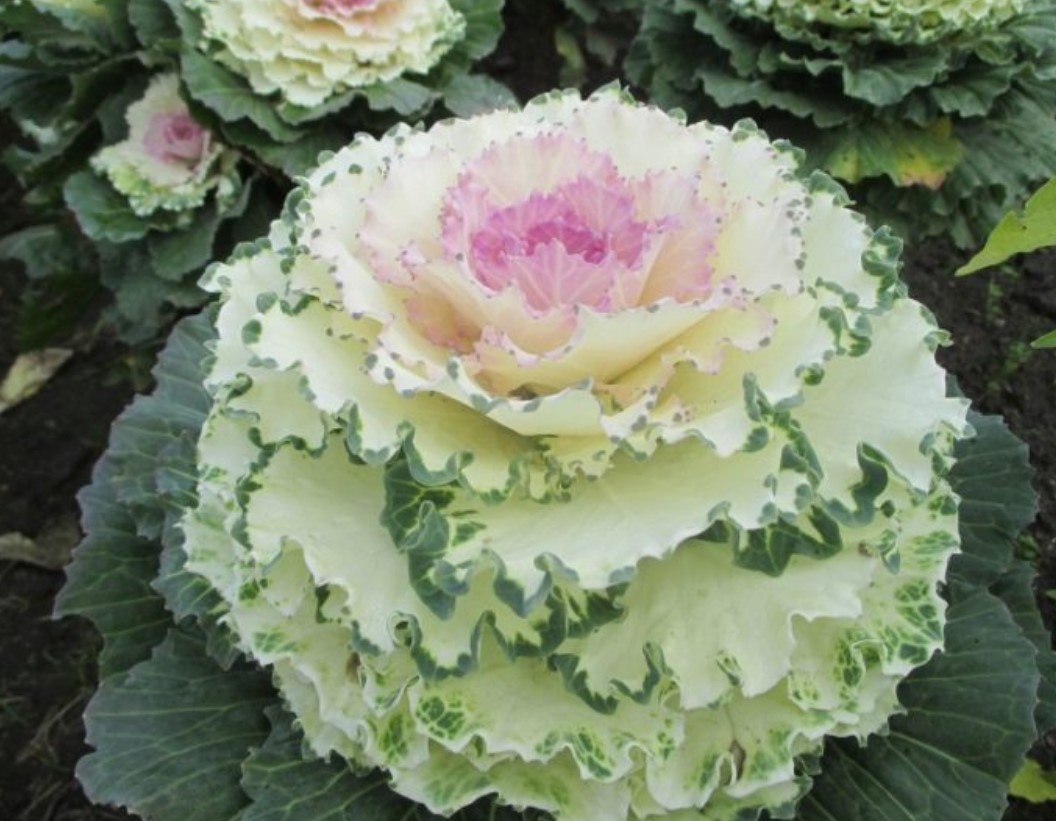
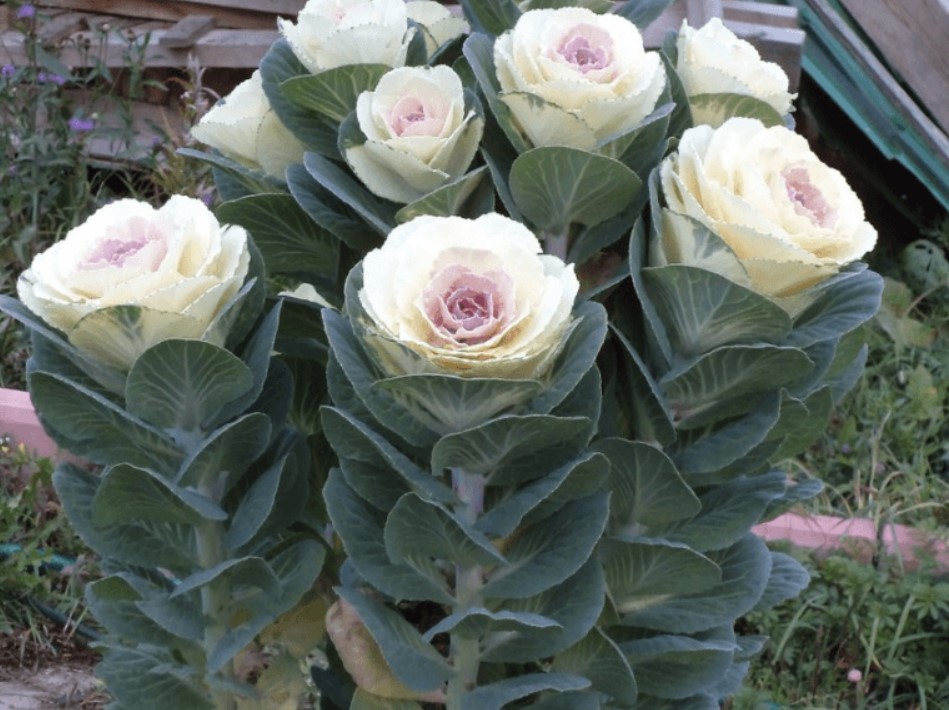
35/45 | The stem is enveloped in dense, wavy leaves. Their edges are green, gradually turning milky, and closer to the center, a faint pink. This variety was developed by Japanese breeders. | |
| Heron
|
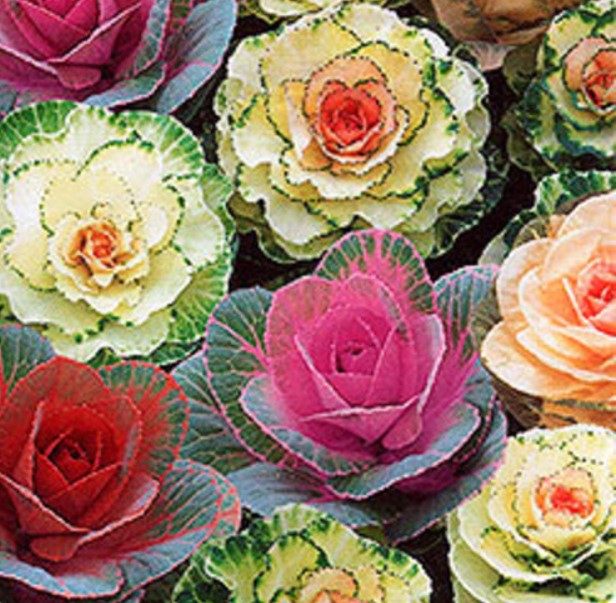
100/12 | Visually, it resembles a large rosebud. It can come in a variety of colors—snow white, pink, and red. Combinations of two shades are also common. This variety is often used in floristry for bouquet arrangements. | |
| Tokyo
|
20-30/30 | The leaves can be colored in a variety of shades, from soft pink to burgundy. With just one packet of seeds, you can grow ornamental kale in a variety of colors: yellow, red, glaucous, green, pink, red, and purple. The leaves are jagged and curled along the perimeter, with a bubbly and wavy surface. | |
| Cockatoo
|
35/30 | An annual variety available in a variety of colors. The heartwood can be dark pink, light pink, or pure white. The leaves are wavy and dark green. | |
| Princess
|
35/30 | The corrugated leaves form a dense rosette. They are bicolored—the outer leaves are green, while the center is snow-white, yellow, purple, pink, and red, contrasting with the green leaf margins. The same variety, but in different colors, is sold in a single package. | |
| Bright autumn
|
20/30 | This is one of the most vibrant and beautiful varieties. It has large, dense, rounded heads that form bright pink, purple, and crimson globes. The leaves have a glossy surface and a smooth texture. | |
| Autumn Potpourri
|
30-40/60-70 | Autumn Potpourri is a variety with a lush, rounded head. Its leaves come in a variety of shades, from green to reddish-purple, and even pure white. Sometimes they can be variegated or have unusual patterns and designs. | |
| Prince
|
30/60/td> | The ornamental kale variety Prince is known for its large, rich purple leaves. It is popular worldwide for its beauty and unique shape. | |
| Lace mosaic
|
60/40 | It stands out for its unique leaf shape. They have an irregular rosette shape and form large, lush clusters. They are covered with vibrant stripes that resemble a beautiful mosaic pattern. The leaf color can range from green to purple. | |
| Fringed-leaved
|
40/40 | Characterized by its enormous leaves with long, fringed edges, it comes in a variety of shades, including white, green, and purple. This variety is very popular for planting in landscaped gardens and lawns. | |
| Russian circle
|
35/70 | This traditional Russian variety is characterized by its rounded shape and silvery-white hue. The plant is often used to decorate flowerbeds and borders. | |
| Sunrise
|
45/20 | It has a beautiful pink tint to its leaves. This variety is well suited for growing on a windowsill or porch, as well as for planting in sunny spots in the garden. | |
| Red curly
|
130/60 | Distinguished by its vibrant red color and curly leaves, it makes a wonderful addition to flowerbeds and lawns. | |
| Peacock
|
35/35 | This variety gets its name from its vibrant, multicolored leaves, reminiscent of peacock feathers. It's perfect for planting in groups or as a single plant. |

Planting ornamental cabbage seeds
| Place | Soil preparation | Direct sowing |
| Greenhouse or hotbed (for seedlings) | Digging and loosening with the addition of 10 liters of humus and 2 tbsp. of wood ash per 1 sq. m. | The seeds are planted in rows with a distance of 10 cm between rows and 2-3 cm between plants. |
| In open ground | Dig holes 30 cm in diameter according to the instructions on the seed packaging. Add 2 handfuls of compost and 2 tablespoons of wood ash to each hole. Mix all ingredients into the soil to a depth of 30 cm. | Sow 3-5 seeds per hole. If too many sprouts appear, remove the excess or transplant them to another container. |
| Indoors (for seedlings) | Suitable soil can be purchased at the store or prepared at home by mixing equal parts of turf and compost. Add 1 cup of wood ash to 10 liters of this soil mixture. | There are two possible sowing patterns:
|
Regardless of the chosen planting method, the planting depth is 1 cm.
When young, brassica can be susceptible to rot and blackleg. Therefore, the soil and seedlings need to be disinfected. The soil can be doused with boiling water or a potassium permanganate solution. These same solutions can also be used to disinfect the seeds. However, the water temperature should be 50°C instead of 100°C, as is required for soil disinfection. The seeds should be soaked for 20 minutes, then dipped in clean, cold water.
Please note! Seeds in a colored coating require no pre-treatment. The manufacturer coats them with a special glaze containing fungicides and growth stimulants.
Growing ornamental cabbage seedlings
It takes 3-5 days between sowing and germination. They require plenty of light and cool temperatures. The containers can be moved to a veranda or balcony. If the weather is warm enough, the seedlings can be placed in a greenhouse or hotbed.
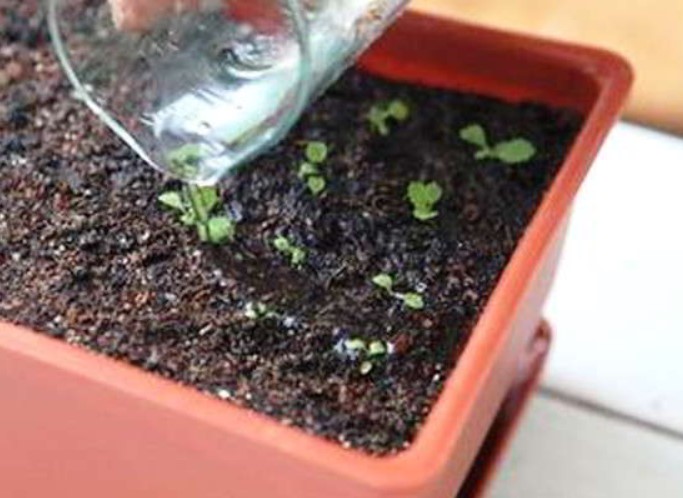
Maintain a temperature of +8…+10 ⁰C for 3-4 days. Then increase it to +18 ⁰C. If grown on a windowsill, supplemental lighting with a phytolamp will be necessary. If the temperature is too high and the light is insufficient, the stems will stretch out too much, fall over, and may develop blackleg disease if they come into contact with the ground.
Plants also require adequate moisture. Water immediately after the top layer of soil begins to dry out. To prevent infections, it is recommended to add potassium permanganate or Fitosporin to the water. After watering, the room containing the seedlings should be ventilated.
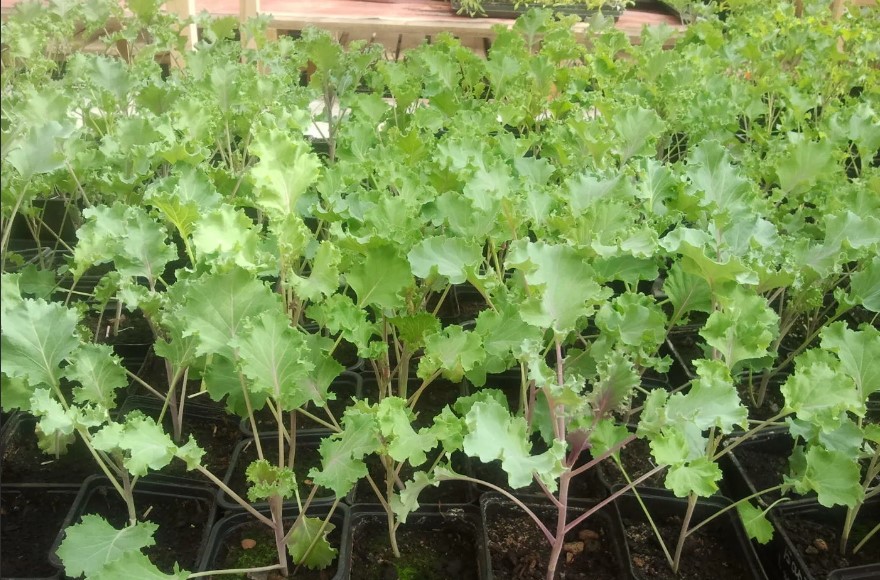
During the seedling period, which lasts 1 month, you need to apply fertilizer twice:
- After the first true leaf appears. If transplanting is planned, do so a week later.
- 1.5-2 weeks after the previous one, but no later than 2 weeks before the transplant.
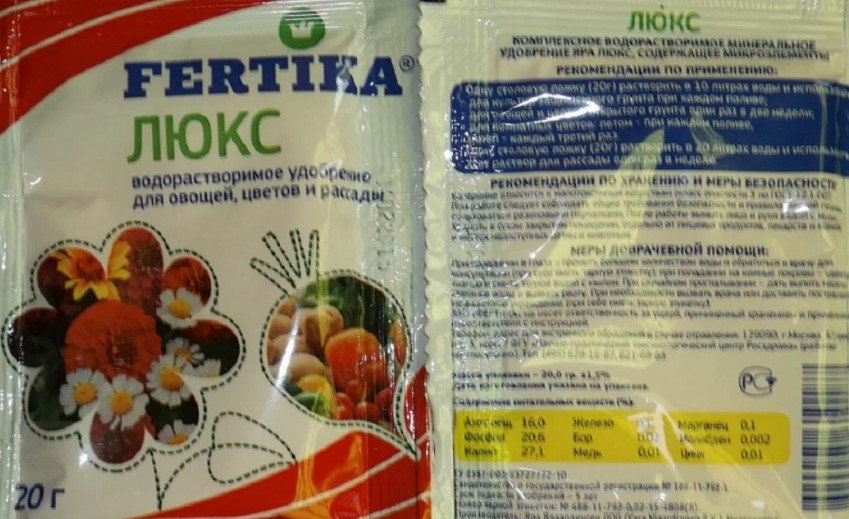
When growing indoors, you can use Fertika Lux at a rate of 1 tablespoon per 10 liters of water. When growing plants in a greenhouse or hotbed, it is recommended to use a solution of grass (1:5), bird droppings (1:20), and mullein (1:10).
A week before transplanting, begin hardening off the seedlings. On the first day, take them out onto the balcony or outside for a couple of hours, and on the last day, leave them outdoors for the entire day.
Planting ornamental cabbage in open ground
Avoid planting if there's a risk of recurrent frost. Although this plant can bloom in sub-zero temperatures, young specimens are very sensitive. Therefore, planting outdoors is usually done in late May.
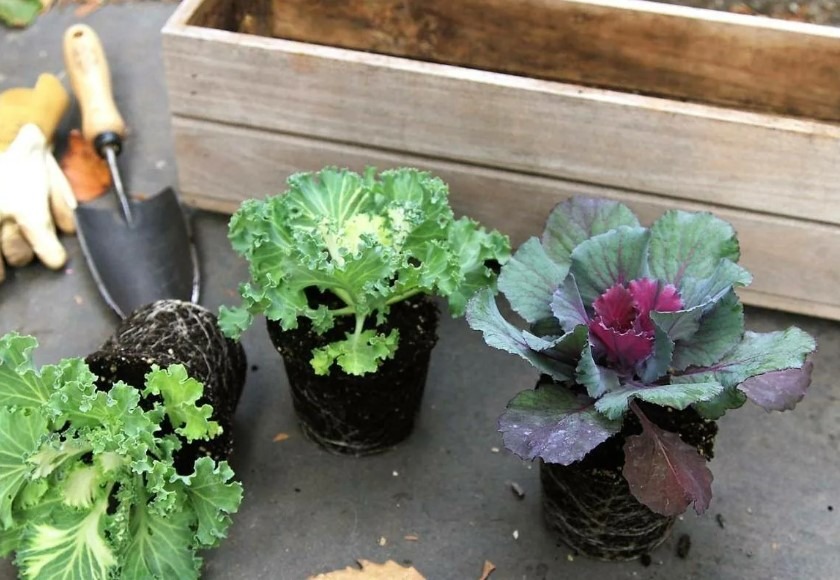
For planting, it's best to choose a sunny site with loamy or sandy loam soil. Ornamental kale will also grow in partial shade or on different soil types, but its appearance will be less impressive.
Add a handful of humus and wood ash to the planting holes. You can also add a commercially available complex fertilizer for cruciferous plants according to the package instructions. To protect young plants from pests and scorching sunlight, you can cover them with half a plastic bottle, a drop cloth, or plastic film, creating a mini greenhouse.
Helpful advice! Ornamental kale develops an interesting shape and vibrant color as autumn approaches. If planted alongside bulbous plants that don't require digging after flowering, the flowerbed will look attractive all season long.
Caring for ornamental cabbage in open ground
Ornamental kale requires timely watering as the top layer of soil dries out. One bucket of water is required per square meter. During dry periods, plants should be watered daily, morning or evening. When grown in containers, water in the morning and evening, and mist occasionally.
After watering, loosen the soil to improve the flow of oxygen, moisture, and nutrients to the roots. Loosen the soil once a week.
Hilling is also recommended. This will prevent the growing rosette from collapsing, as it becomes too heavy for the stem to support.
Weeding should be done in conjunction with watering and loosening the soil. Weeds and their roots will be easier to pull out from moist soil.
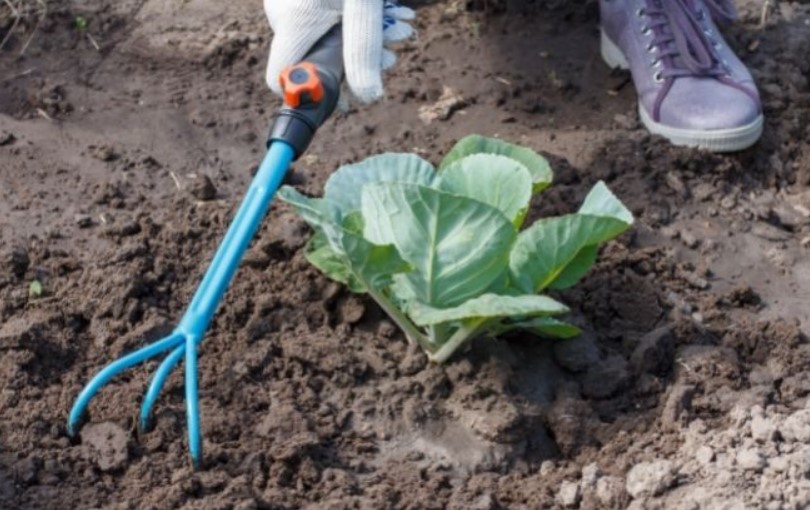
Mulching will protect plants from overheating, drying out, and excessive weed growth. Sawdust, straw, grass clippings, and other materials can be used for this purpose.
Fertilizer is applied three times during the growing season:
- Two weeks after planting, you can add a urea or mullein solution. Use nitrogen-containing fertilizers with caution. They stimulate foliage growth but reduce decorativeness.
- After 3-4 weeks, apply nitroammophoska or a solution of azophoska.
- After 3-4 weeks, the second feeding is repeated.
Please note! If the soil is poor, the amount of fertilizing should be increased to 4-5 times.
Diseases and pests of ornamental cabbage: how to avoid them
Diseases develop as a result of violation of agricultural technology requirements:
- Incorrect watering schedule. Avoid soggy soil and watering plants with cold water. This leads to the development of rot and powdery mildew.
- Excessive amounts of nitrogen-containing fertilizers. They increase the risk of infection.
- Excessive acidity can lead to clubroot. To reduce soil acidity, add lime or dolomite.
By following basic agricultural practices, you can significantly reduce the risk of disease. If diseases do occur, the treatment plan is as follows:
- At first, fungicides Fundazol, Quadris, Thiovit Jet will help to cope with the infection;
- If the damage is severe, the plants can no longer be saved; the affected rosettes will have to be removed and destroyed.
The following pests may appear:
- scoop;
- white butterfly;
- cruciferous flea beetle;
- aphid;
- slugs.
The following methods and means are used to combat them:
- insecticides;
- tobacco dust infusion;
- ash with the addition of tobacco dust;
- planting marigolds or other flowers with a strong scent nearby that insects cannot stand
- mulching with pine needles;
- manual collection of insects, installation of traps.
Getting rid of insects completely is quite difficult, but not impossible. If there are large numbers, it's recommended to use several control methods simultaneously.
Edibility of ornamental cabbage
Brassica can be used not only in landscape design but also as a forage plant. It is also perfectly suitable for consumption. Its leaves contain a wealth of nutrients, so they can replenish vitamin and mineral deficiencies during the winter.
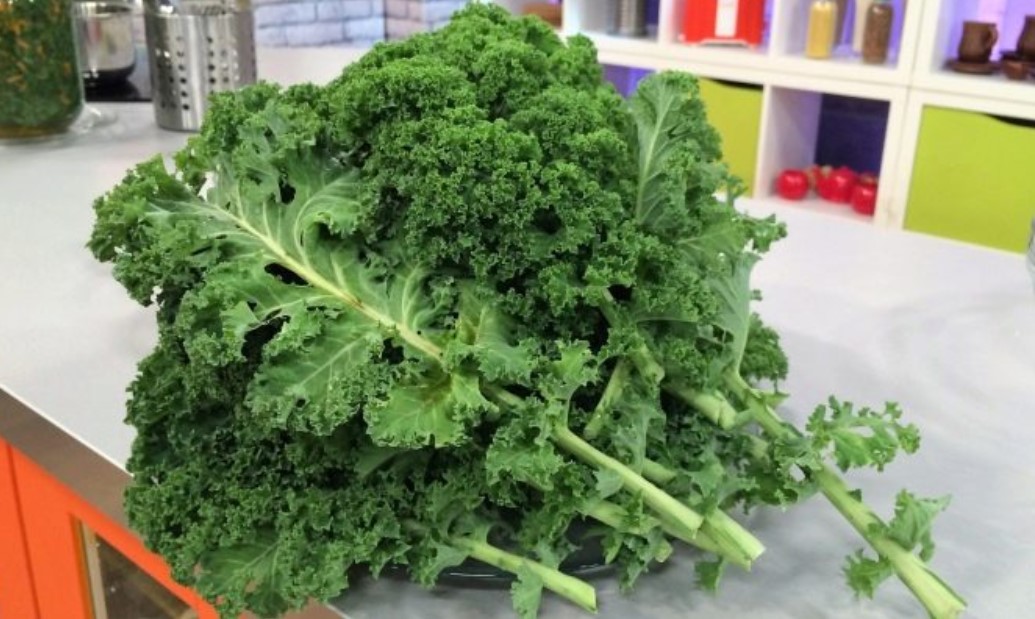
Please note! Cabbage leaves may have a bitter taste, but this disappears when harvested after the first frost.
Using ornamental cabbage in landscape design
When planted correctly, ornamental cabbage can become a true decoration for your landscape design.
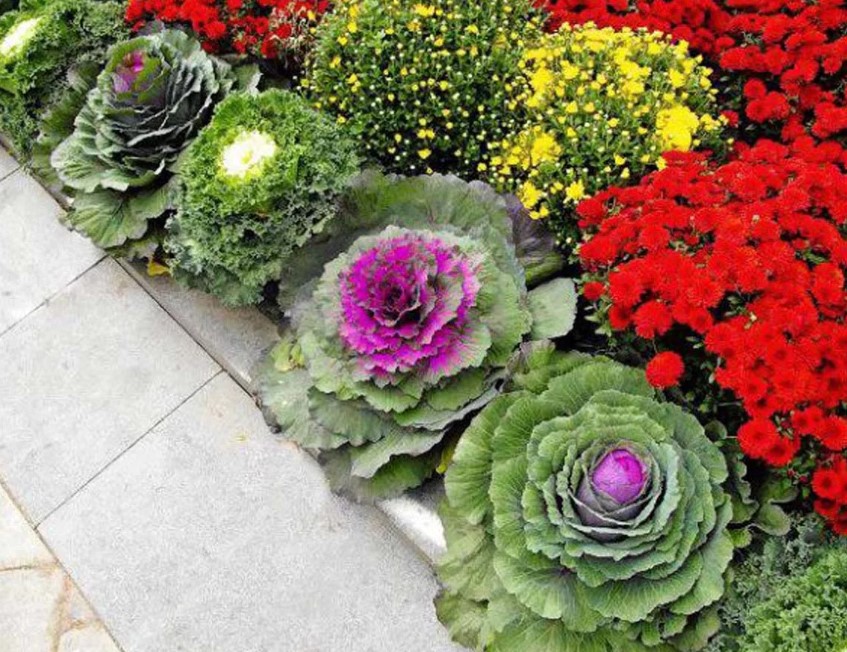
It can be used in various compositions:
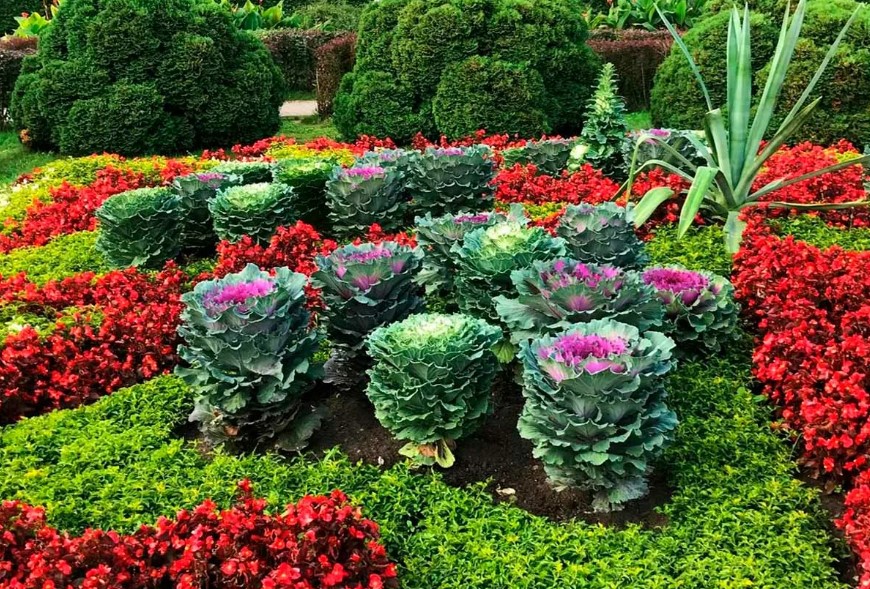
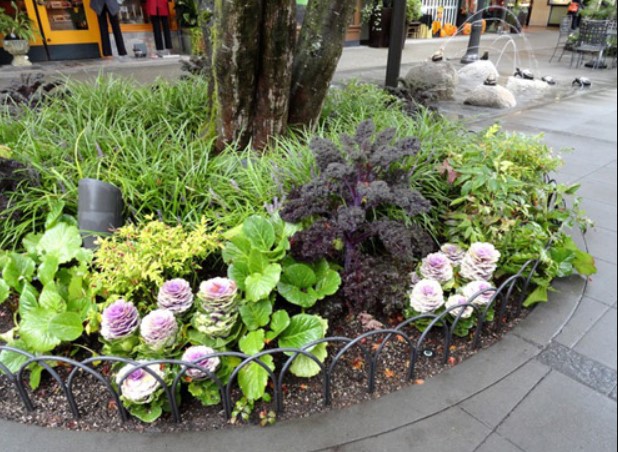
- together with other ornamental flowering plants – it will create a bright spot against the background of other flowers and tall bushes;
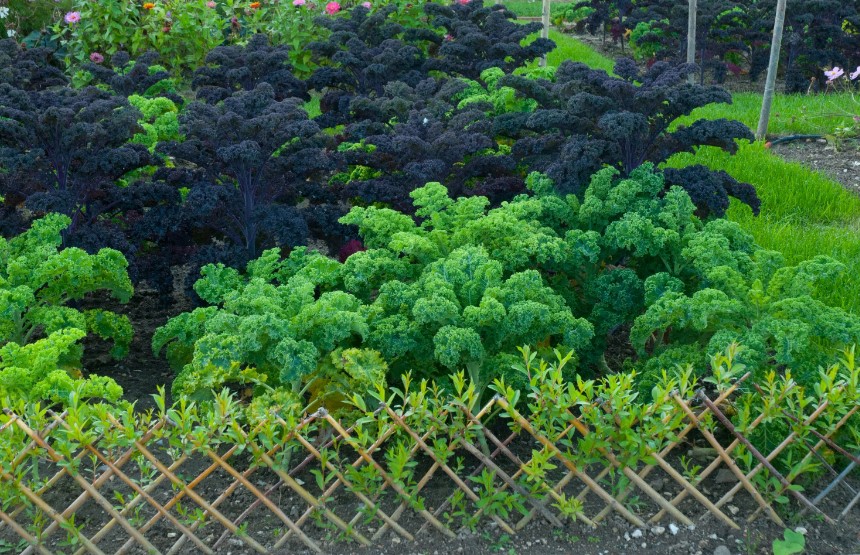
- as a hedge – for fencing paths and flower beds;
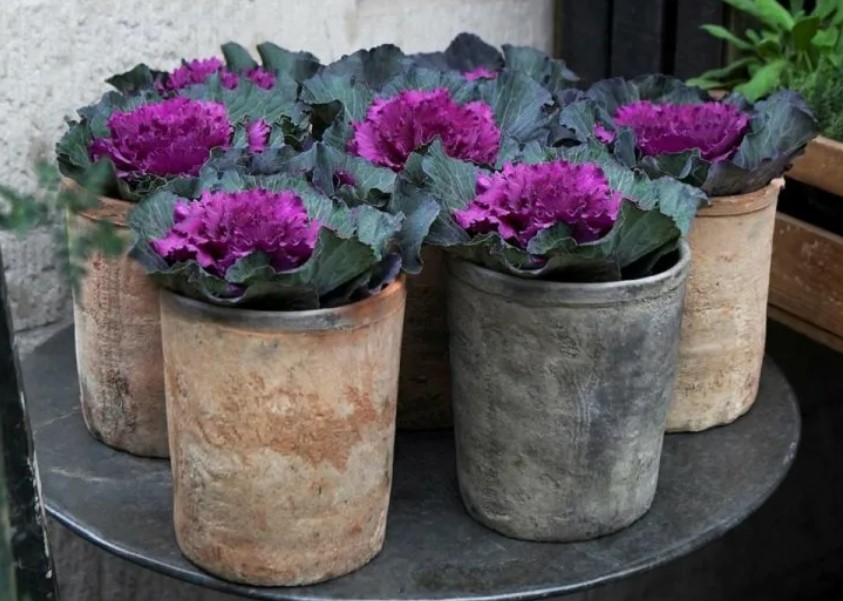
- in hanging pots and vases – they look good both in single and group plantings;>
- as a single plant - the area is completely planted with ornamental cabbage;
- as part of compositions of various varieties;
- In alpine gardens, both low-growing and tall varieties can be used.
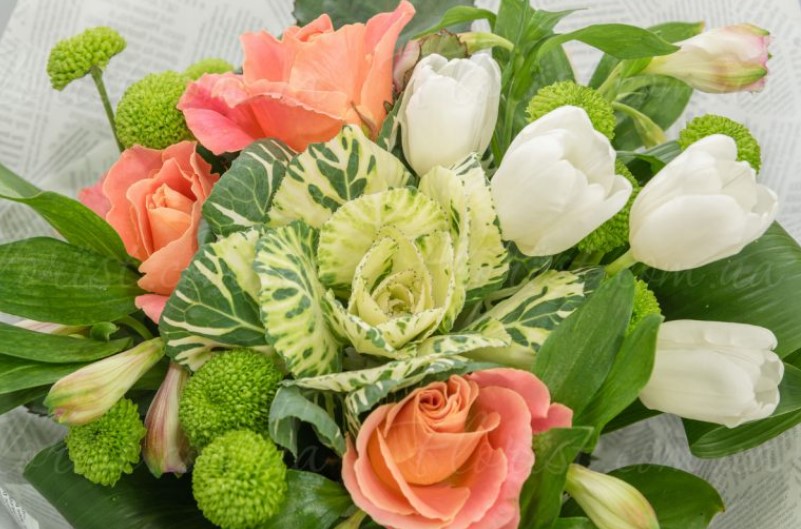
Cauliflower also looks great in bouquets. Cut it at the root and place it in a vase filled with water. To make the bouquet last longer, you can add a couple of drops of potassium permanganate solution, or 1 teaspoon of granulated sugar and a pinch of salt. Change the water twice a week. If you follow these simple rules, the bouquet can last up to a month.
Reviews of growing ornamental cabbage
Greetings to all!
I'll share my personal experience growing ornamental kale. This year, we planted it for the first time. At our dacha, we found a plot of land next to a young apple tree, along a path. Large, spreading plants would have been out of place there, and the empty space looked like an eyesore.
My mom and I found some ornamental kale seeds and planted them in the ground, hoping something would grow. It's a shame I didn't save the seed packet, but I know there are other, even more vibrant varieties.
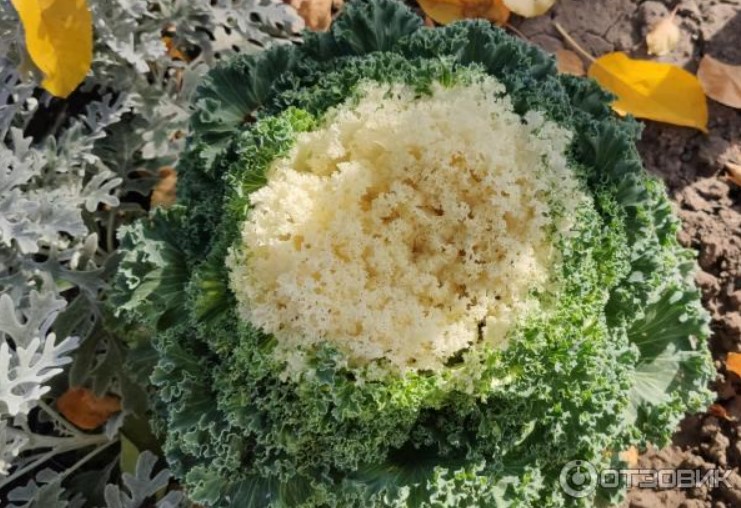
We grew this ornamental beauty. Since we planted it late in the summer, it turned out small, probably no more than thirty-five centimeters in diameter.In my opinion, cabbage gains its most beauty and splendor in autumn, just like its edible cousins.
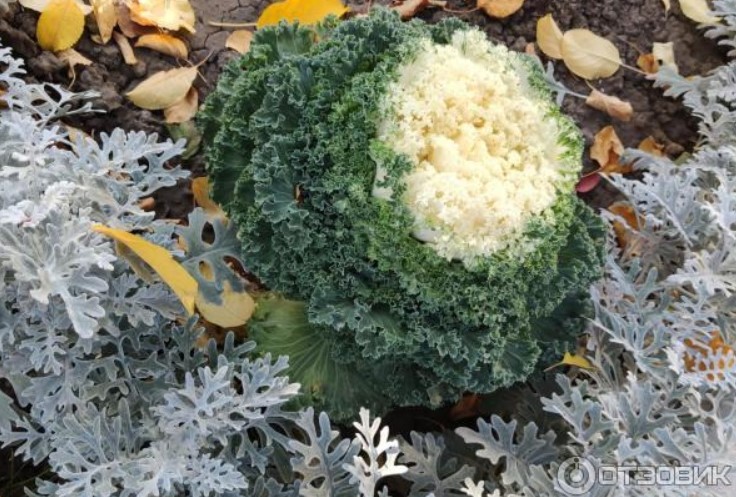
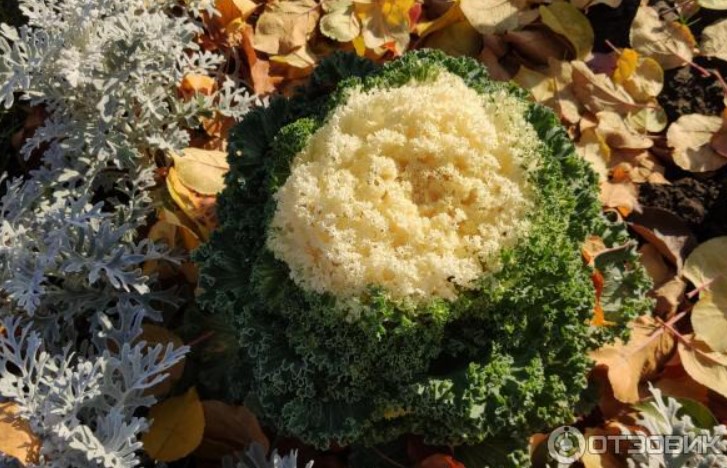
Against the background of autumn leaves it looks even more decorative.
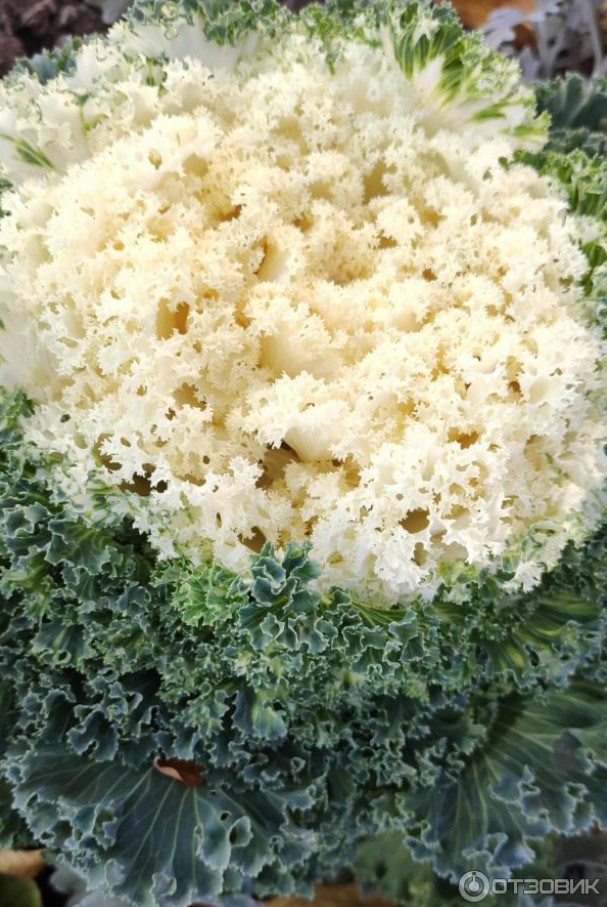
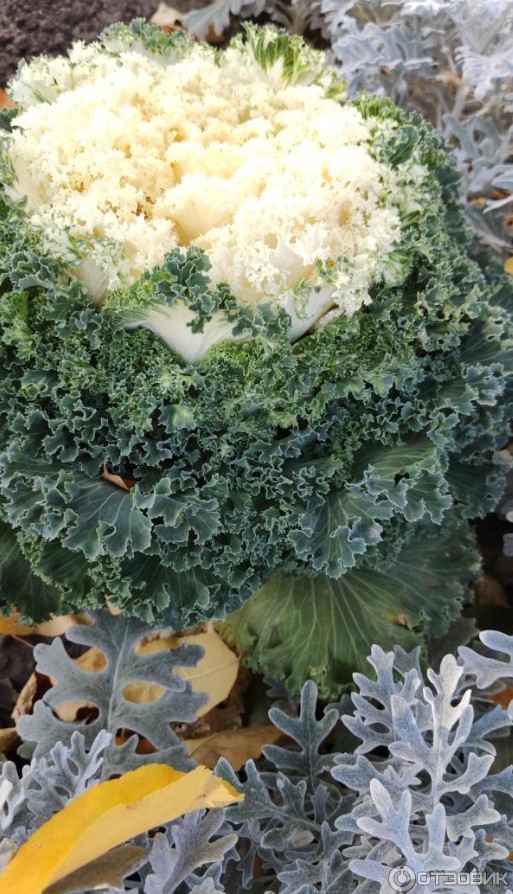
This variety's leaves are succulent, the greenery vibrant, and the edges curly. They look very decorative and, I think, will attract attention in any corner of the garden. Such wondrous, natural lacework has Mother Nature created.
The center of the plant, on the other hand, is white with a creamy tint. The leaves in the center are even denser, appearing like lush curls.
I took pictures from different sides so that you could see what a beauty she has grown into.
I took the following photos later, a week or two later. Due to the cold nights, the center of the cabbage had changed color and become more yellowish. The green leaves also took on a brighter, more saturated green hue. This happens with all varieties of ornamental cabbage; in the fall, it becomes more lush and beautiful.
Just look at how bright and cheerful it looks now. It's gorgeous, in my opinion.
Ornamental kale is completely odorless, making it a suitable choice for many. It's often sold in seed stores and garden centers and isn't in short supply. Seeds are moderately priced, not prohibitively so. Of course, it's important to remember that this plant is an annual. We have many perennials at our dacha, and we try to rotate the annuals annually to delight the garden with new colors and a unique garden design each year. Ornamental kale is ideal for filling empty spaces, especially since it transplants easily. The key is to dig it up with a lump of soil and water it thoroughly.
The plant is quite easy to grow; we watered it, of course, but not excessively. It's best not to overwater; watering should be done at the roots, and the soil needs to be loosened occasionally.
No harmful insects were noticed on the leaves. It's October, and we're still enjoying the beautiful corners of the dacha: the bright orange marigolds are blooming, the September lily has blossomed and looks like a purple-green ball, and we recently cut the last buds of our luxurious roses.
So, if you have a small corner of your garden that needs some spruce up, this plant can be a great addition. I think a group of these plants, preferably in different colors, could also create a beautiful meadow. You could even plant ornamental kale in a large pot and display it in the garden or near the house, where it will look its best. They say the plant is completely immune to the first frosts, so you can place the pot on a cool veranda in your home, and it will delight you until the New Year holidays.
Autumn is slowly taking over, and it's getting really cold soon. Even though this review isn't paid, I wanted to share with you this lush, vibrant beauty from my beloved dacha.It's windy outside... And it's raining...
It's terribly cold... and that's why it's so empty.
I look – there’s one sitting on a flowerbed
Cabbage in full bloom.
(Antonina Orlova)We'll miss you, visit often, and look forward to the new season! Wishing everyone good health and comfort!)
We first saw this kind of cabbage in my brother's garden in Crimea. He said it's easy to grow, just likes frequent watering.
Then, in Siberia, they began planting seeds in pots, and a month later in the ground, at the beginning of the summer season.At first, we planted it in car inner tubes, but the plant was large and didn’t look very good.
Now we plant it in the garden in “islands”.
The plant immediately catches the eye, looks beautiful, blooms all summer, stands until the very cold weather, and looks great in September-October in a white cap of sparkling frost or melting snow among the withered garden greenery, saving with its appearance the dull dacha landscape.
We arrive at the dacha before the bitter frosts set in, and we are always delighted to see this frost-resistant plant.
True, the frosts on the soil are doing their job, and the roots are already starting to wither, but the tops are still juicy.
Like any cabbage, this one can be eaten, although its leaves are tough and it tastes sour, so we don’t cook anything with it; white cabbage is enough.
This plant also has the same problems as cabbage: caterpillars can chew through the leaves, but if you treat it with a chemical (if you don’t plan to eat it) or ash (if you’re a big fan of cabbage rolls),
then there will be no one to eat your plant.
The photos were taken in mid-September and you can see that the cabbage has started to wilt at the bottom, but the top will still hold out for another month or two.
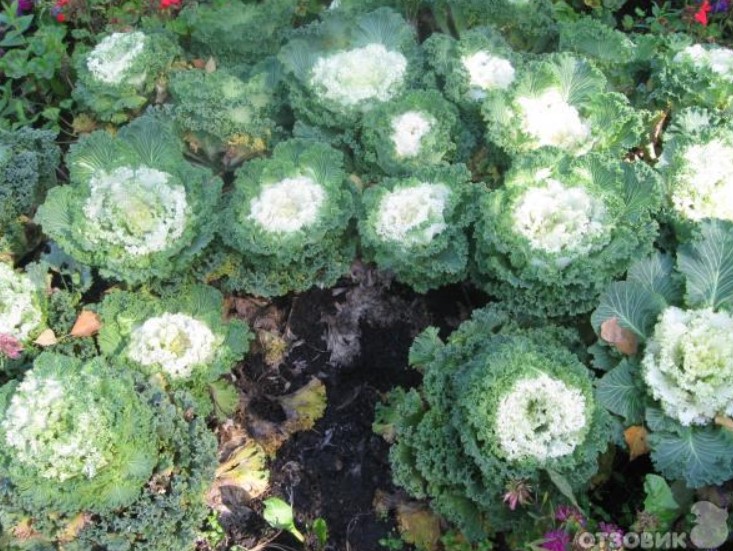
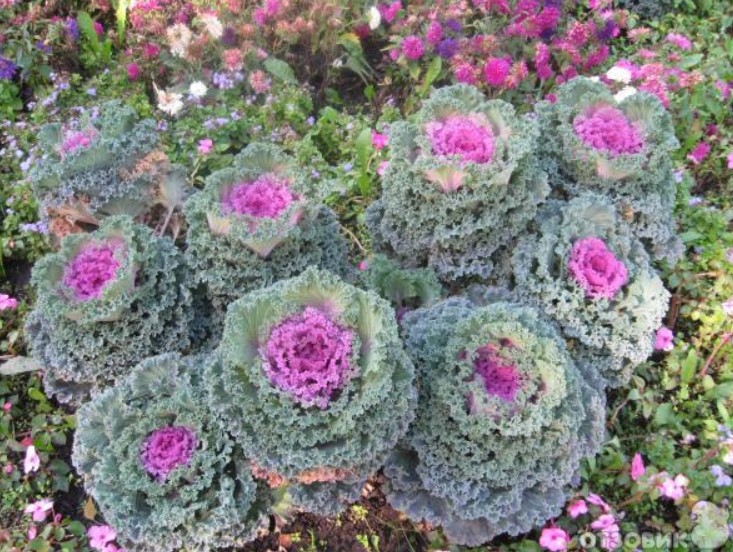
There aren't really any secrets—it's the same as for regular cabbage. I sow in the middle, this year at the end of April in a biofuel greenhouse (I heat up the manure in a trench a week beforehand) along with radishes, asters, and other cabbages. The seedlings never grow so strong at home. In mid- to late May, I plant them in my permanent flower beds. I plant them in small holes—firstly, it's easier to water, and while the cabbage is small, it's especially sensitive to watering; secondly, it's easier to hill up—you just fill the hole and that's it. I always mulch with semi-rotted manure—I don't mind this precious product, even in flower beds. But for aesthetics, you can easily sprinkle it with coconut or bark mulch (I've had to use up as many as 5 potato sacks this year for pretty eyes).
) I'll definitely mulch it, maybe at least the slugs won't like crawling on the bark so much. :wall
All summer long, ornamental kale is practically useless, with the exception of a few hybrids (like Coral Prince), but in the fall, it's simply the queen of the flowerbed. Only ornamental kale can hold onto the autumn dew so well into the early morning. The sight is simply mesmerizing. Sometimes, early in the morning, while the rest of the house is asleep, I grab a small bench, sit next to this autumn beauty, and we greet the sun together. It's silly, childish, but I love it.