Araceae include over 3,000 species of monocotyledonous plants. They come in a variety of shapes and sizes, largely dependent on the growing climate: the warmer the climate, the more evergreen aroids thrive, and consequently, the larger their size.
Content
Araceae family (Araceae)
Araceae can be found in virtually all tropical and subtropical forests worldwide. They are quite simple in appearance. Ground araceae lack stems, but have tubers and rhizomes. Leaves consist of a petiole and a blade, which can take various forms depending on the variety.
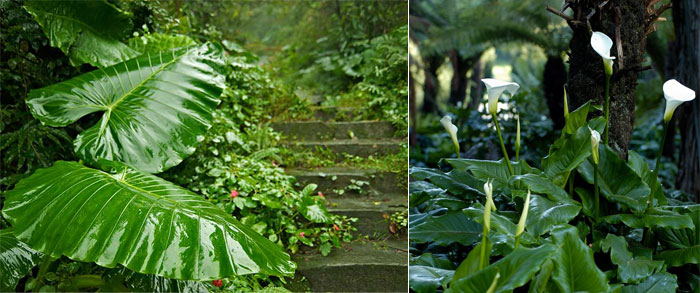
Some members of the family are vines that cling to trees with adventitious roots and climb upward toward the sun. The most distinctive feature of the Araceae family is their flower. It resembles a corn kernel, but instead of seeds, it has small, single-colored inflorescences arranged in a spiral. The coloration depends on the subfamily. Later, the fruit produces berries and seeds, but almost all of them are poisonous.
General information about araceae plants
- Araceae plants almost always have aerial roots that should not be damaged. When caring for them indoors, they should be wrapped in moss to prevent discomfort.
- Arum plants thrive in warm, humid climates, so they should be protected from freezing indoors. Drafts during ventilation can cause them to shed their leaves and even die.
- Plants require additional lighting in winter, but in summer it is strictly not recommended to expose them to the sun - exposure to its rays can have a detrimental effect on the leaves.
- Watering should be moderate. Avoid both stagnant moisture and dryness. Experienced gardeners test the moisture level by inserting a wooden chip into the soil.
- The soil should be specialized. The recommended composition is equal parts leaf mold, humus, and turf. Ideally, a little sand, perlite, and charcoal should be added.
- Plant propagation is carried out in spring by cuttings or division of rhizomes.
Important! Most aroid plants are poisonous, so they are not recommended for children's rooms. When repotting, it's best to wear gloves and keep pets away from the flowers, as they like to chew on the foliage.
Basic care for aroids at home
The taxonomy (“library”) of aroid plants includes a huge number of varieties, but all have characteristic care features.
| Parameter | Characteristic |
| Lighting | Ornamental foliage plants don't require bright light and thrive in shaded areas of the home, while flowering plants require bright light and don't tolerate direct sunlight well. |
| Air temperature | In summer — +22…+25 °C. In winter (rest period) — +16…+18 °C. |
| Air humidity | It is recommended to spray regularly, avoiding water droplets getting on the inflorescences. |
| Watering | This is done as the soil dries. Avoid stagnant moisture and excessive drying. |
| Top dressing | Fertilizing aroids is recommended from early spring to mid-autumn. Fertilizers stimulate flowering and vegetative growth. Fertilization should be done once every 15-20 days. |
| Transfer | This is done in early spring only if the pot has become too crowded. Otherwise, it's best not to repot, as the plants don't respond well to it. Gardeners recommend changing the soil without removing the plant, using 'Aurika Gardens' soil for aroids. |
| Reproduction | It is carried out by cuttings for vines and by dividing rhizomes for tuberous plants. |
| Pests | Pests prefer to avoid this family and rarely attack it, since the juices of most of its representatives are poisonous. |
| Soil | It's advisable to use a special soil for aroids. It should be light, breathable, and feature expanded clay drainage. It should be loose, acidic, and contain peat, leaf mold, and sand. |
Flowering Araceae Houseplants + 26 Varieties
It's worth noting that almost all araceae plants are flowering plants. However, some bloom only in botanical gardens or exclusively in the wild, while others thrive when grown indoors. Below are descriptions, photos of varieties and species, and care instructions.
Zantedeschia or Calla
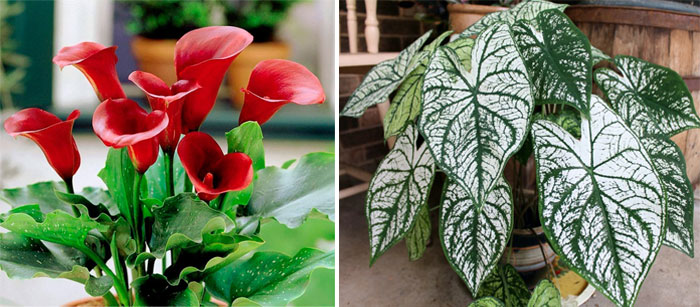
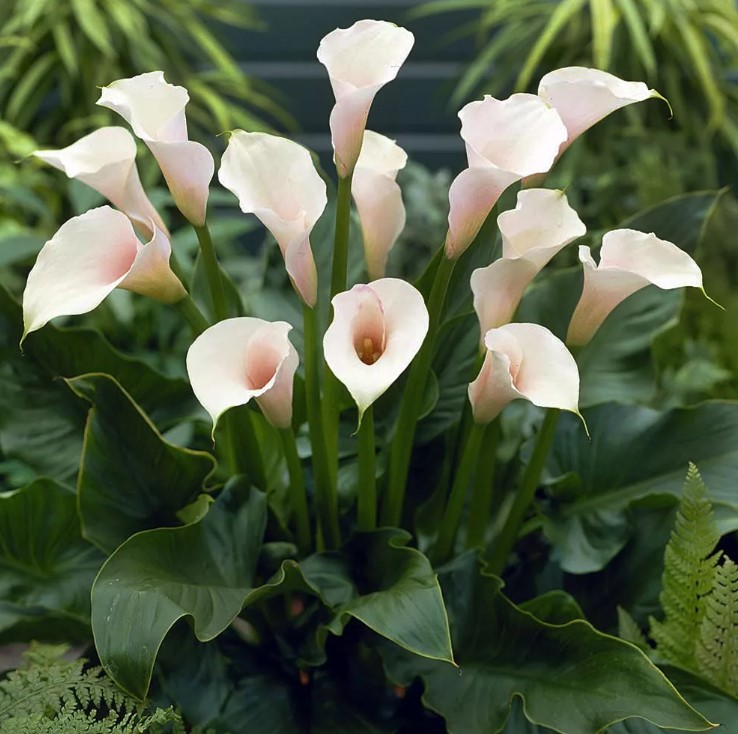
This is a genus of perennial wetland or coastal herbaceous plants in the Araceae family. An easy-to-grow plant, flowering occurs in early spring and can continue until late fall. It has green, slightly pointed leaves. The flower consists of a spathe and spadix, which are located at the end of a long, dense stalk.
Types and varieties
There are two groups of Zantedexia: rhizomatous and tuberous. The former are descended from the white Ethiopian calla (Calla aethiopica), the latter from a mixture of the pink Rehmannii and yellow Elliott's calla (Calla elliottiana).
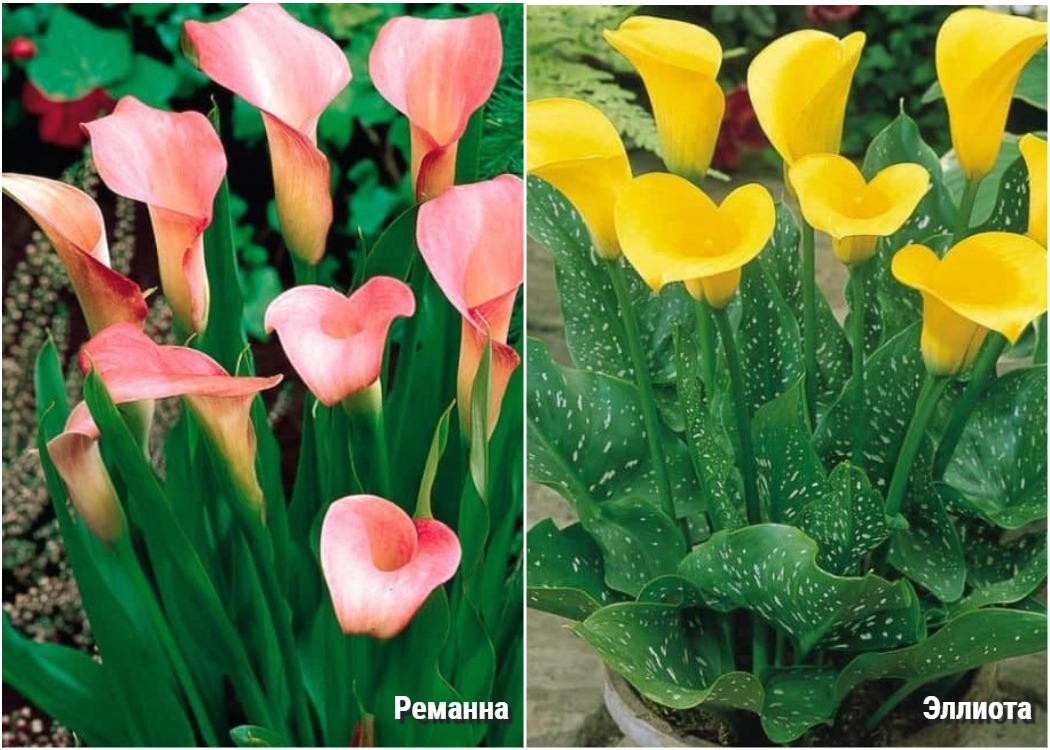
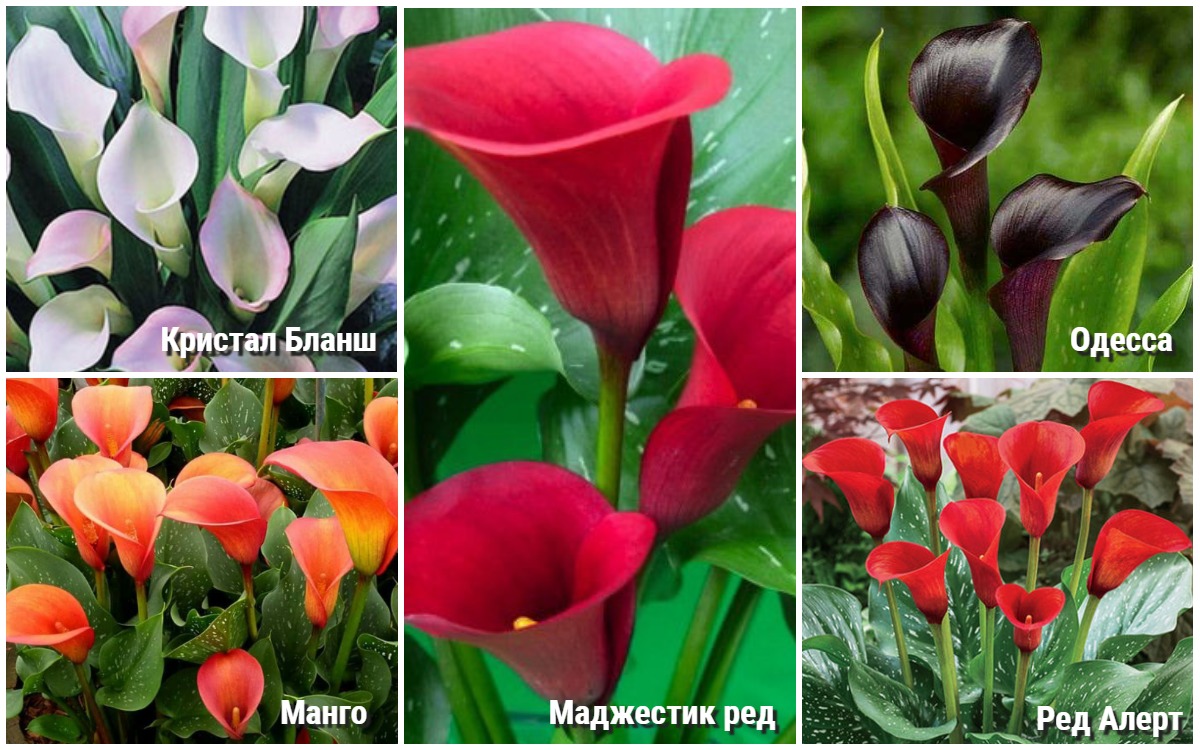
The most popular calla varieties are: Mango, Crystal Blush, Odessa, Red Alert, Majestic Red.
Care
If the plant produces a large number of offspring, it may not bloom, as the calla lily will be devoting all its energy to feeding them. Therefore, regular thinning is recommended.
The following two videos discuss the differences in caring for two varieties of Zantedeschia (Calla): rhizomatous and tuberous.
Read more in the article about kallah.
Anthurium
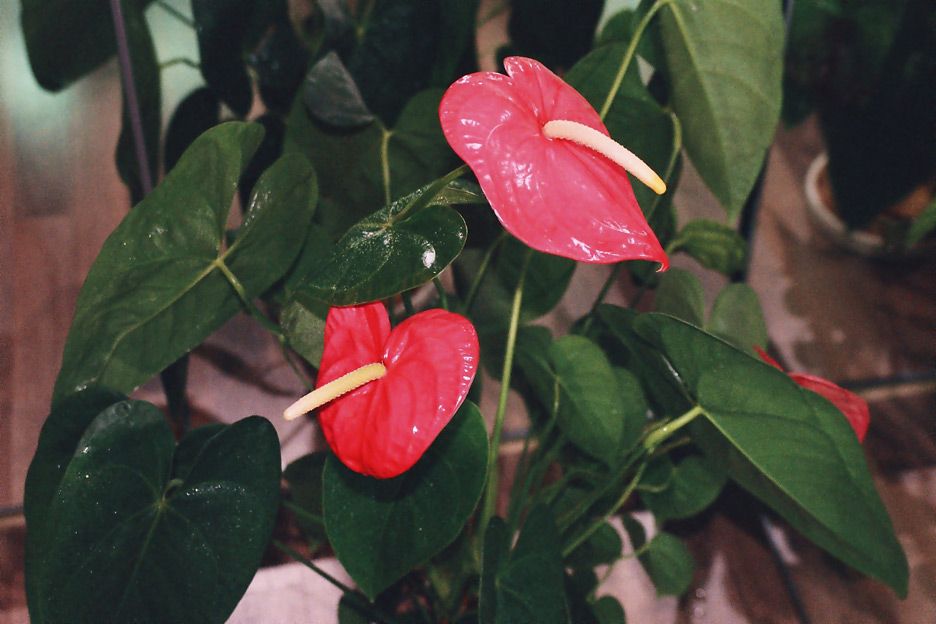
It has bright green leaves and flowers of varying colors, shaped like a slightly elongated heart. Today, a huge number of cultivars have been developed, differing in spathe color, spadix shape, and leaf hue and texture.
Types and varieties
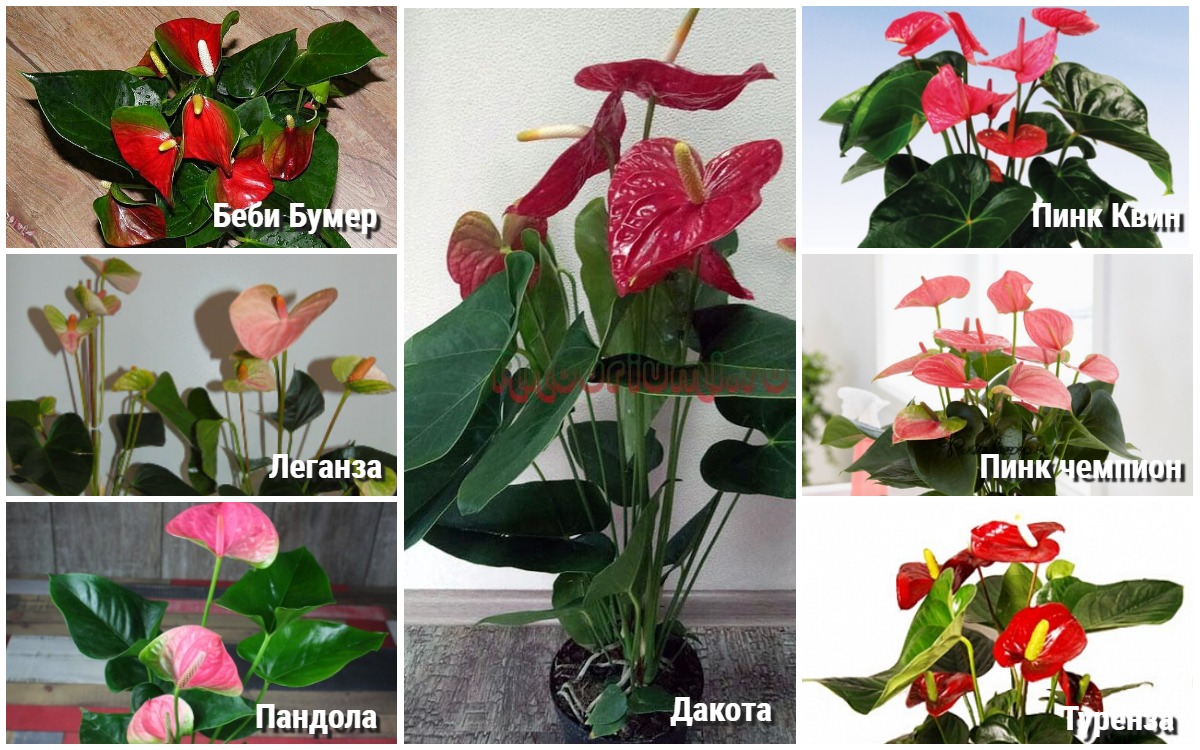
Popular species of anthurium Andre (andraeanum) and its varieties: Dakota's, Baby Boomer, Turenza, Pink Champion, Leganza, Pandola, Pink Queen.
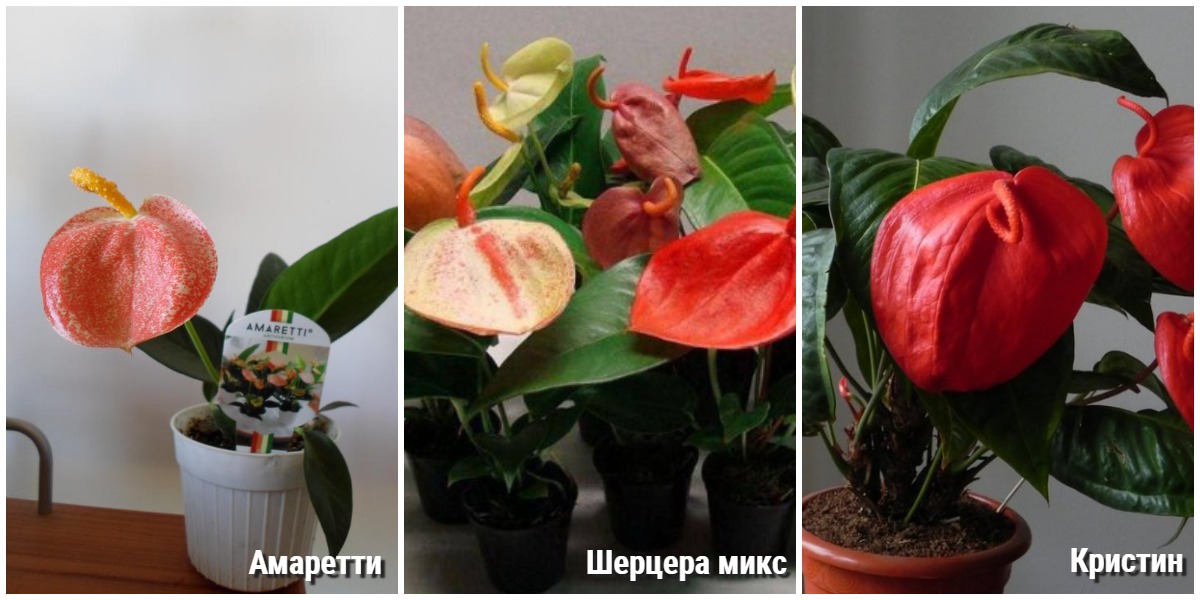
Also known is Anthurium Scherzerianum and its varieties Amaretti and Christine.
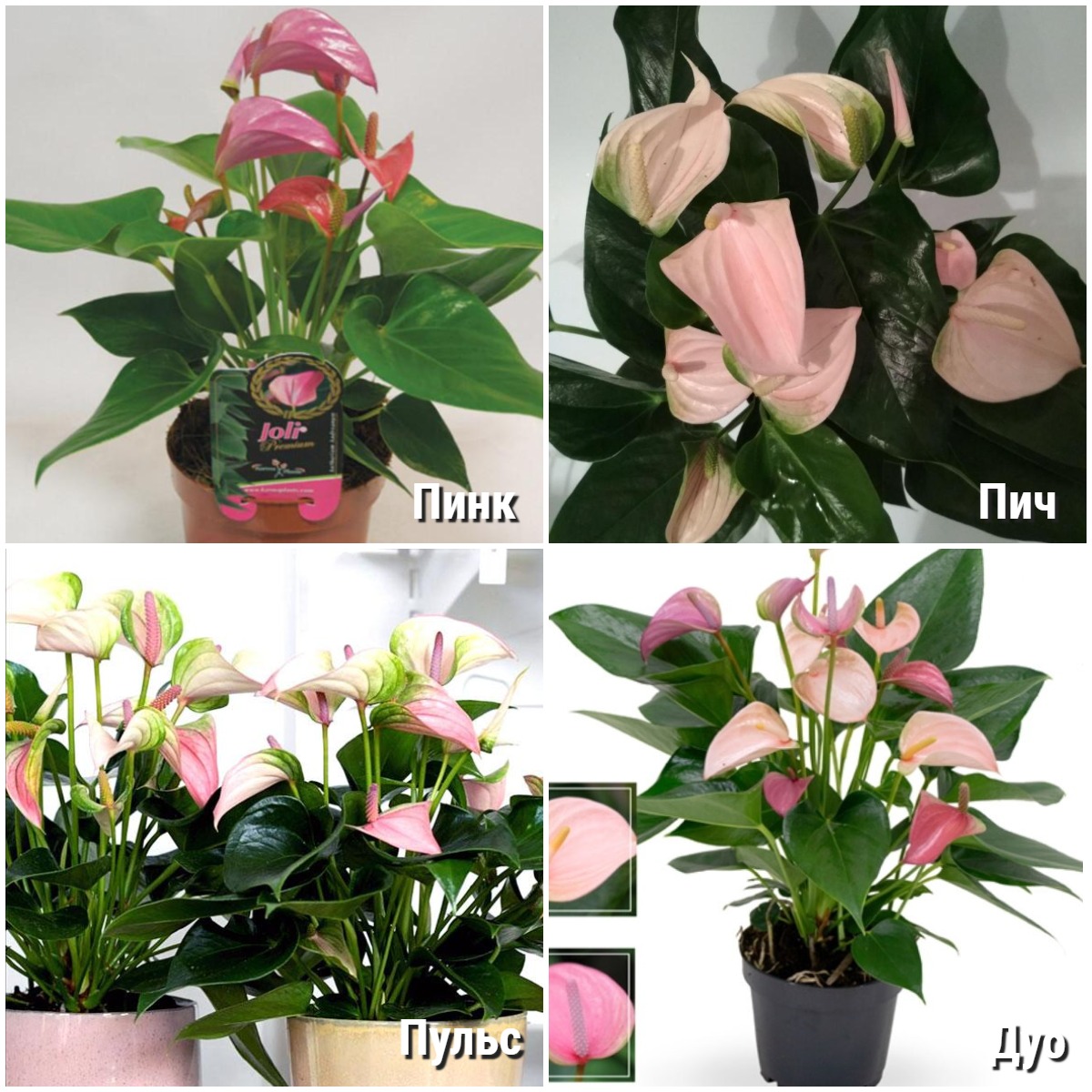
And the Joli series: Pink, Peach, Pulse, Duo.
Care
With proper care, it blooms year-round. In low light, the flowers are less vibrant and may take on a greenish tint. However, even on a windowsill with direct sunlight, it doesn't do well due to the risk of leaf burn.
Requires nutritious soil mixture and regular watering without stagnant moisture.
Read more in the article about anthuriums and their care.
Spathiphyllum
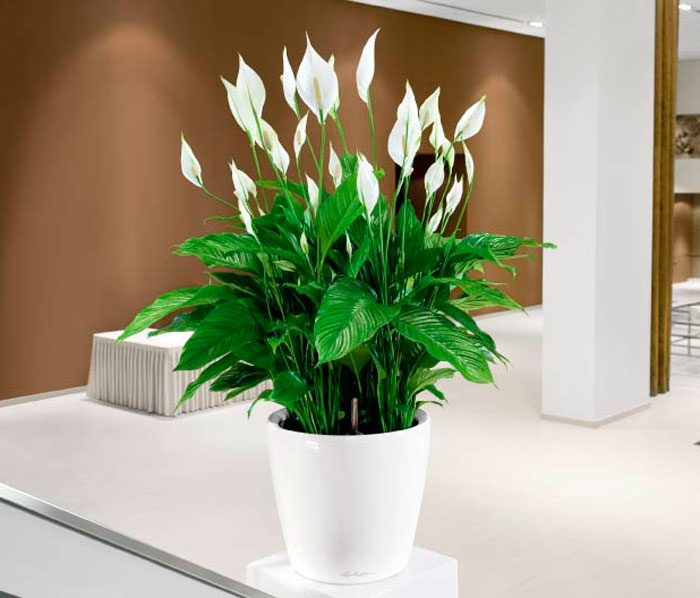
The plant has relatively narrow, long leaves and a flower with a small cover from which the spadix is completely visible.
Types and varieties
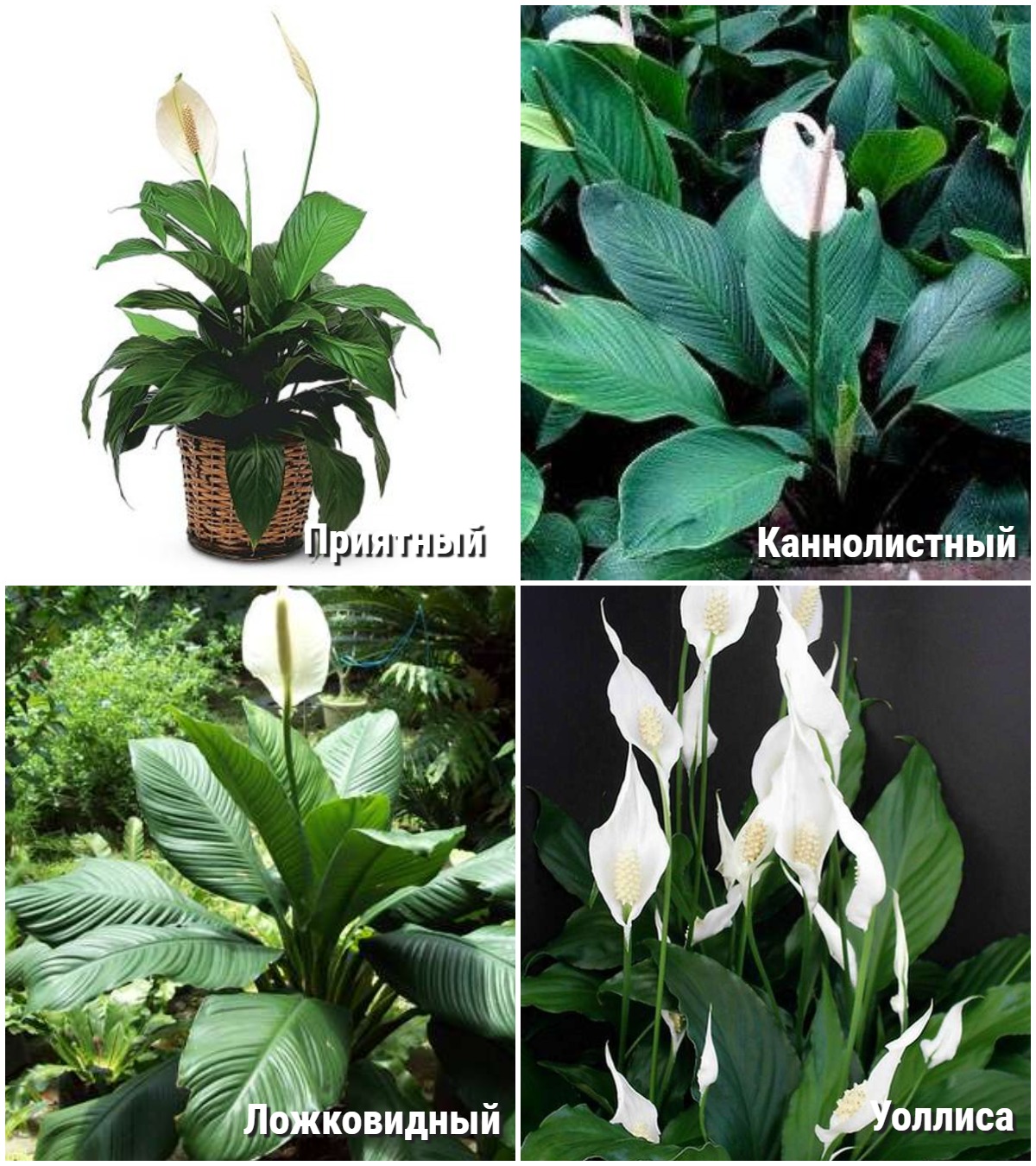
Species: Pleasant (blandum), Cannifolium, Spoon-shaped (cochlearispathum), Wallis (wallisii).
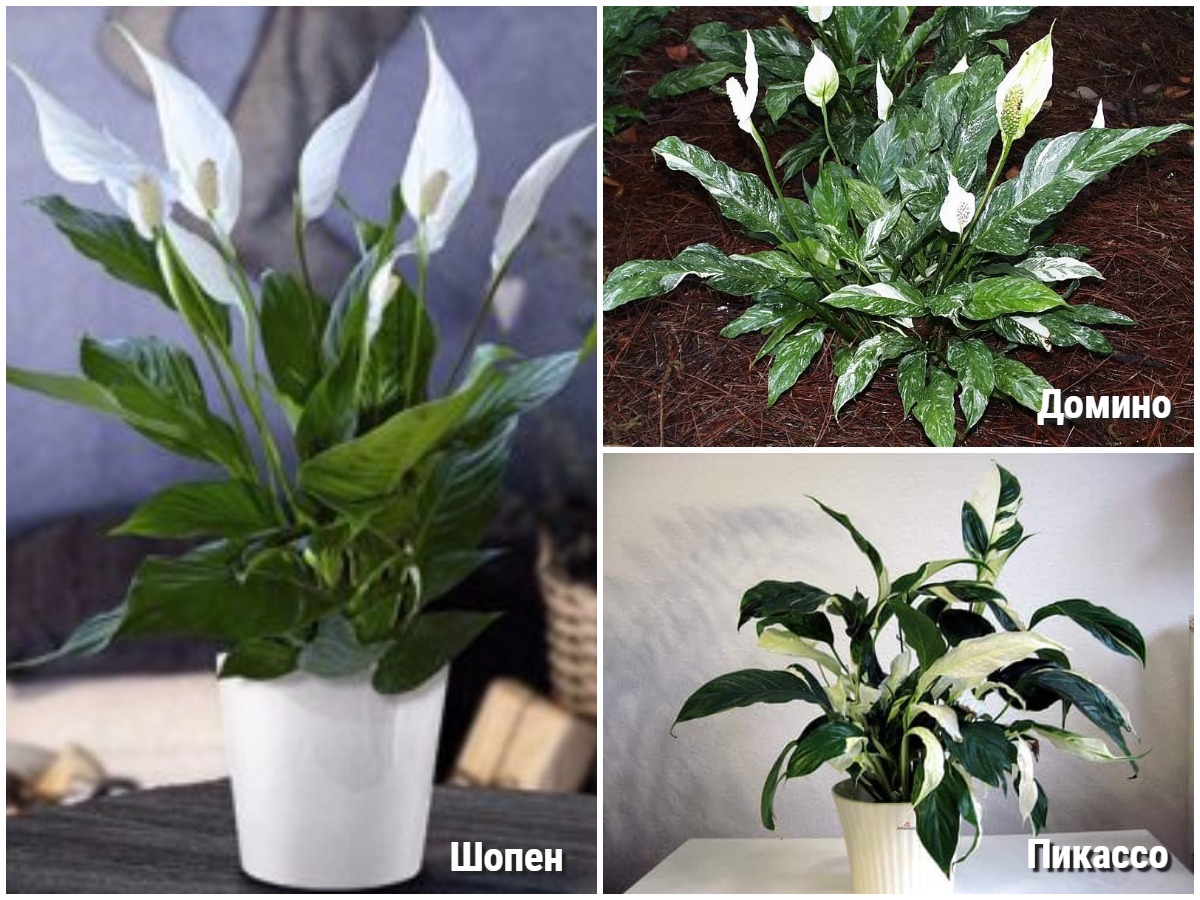
Well-known varieties: Domino, Picasso, Chopin.
Care
It doesn't require much care, other than regular watering. It grows in both sunny and shaded windowsills. If you don't remove side shoots, you may not see it bloom. Flowering typically begins in mid-spring. However, with proper care, it can bloom into winter.
Read more in the article about spathiphyllum.
Ornamental foliage aroid indoor plants + varieties
Ornamental foliage aroids are no less popular among indoor gardeners. But even these plants bloom in natural conditions. Let's consider their classification.
Aglaonema
Depending on the variety, it grows to 50-80 cm. The leaves are elongated, pointed at the tips. The coloring can vary, but most often the leaf blade is green with white or reddish-burgundy spots along the midrib or margins.
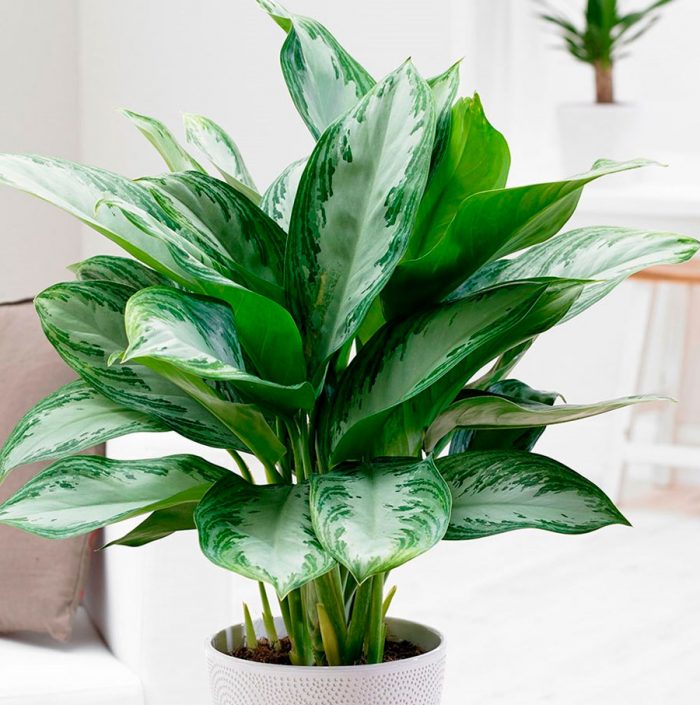
Types and varieties
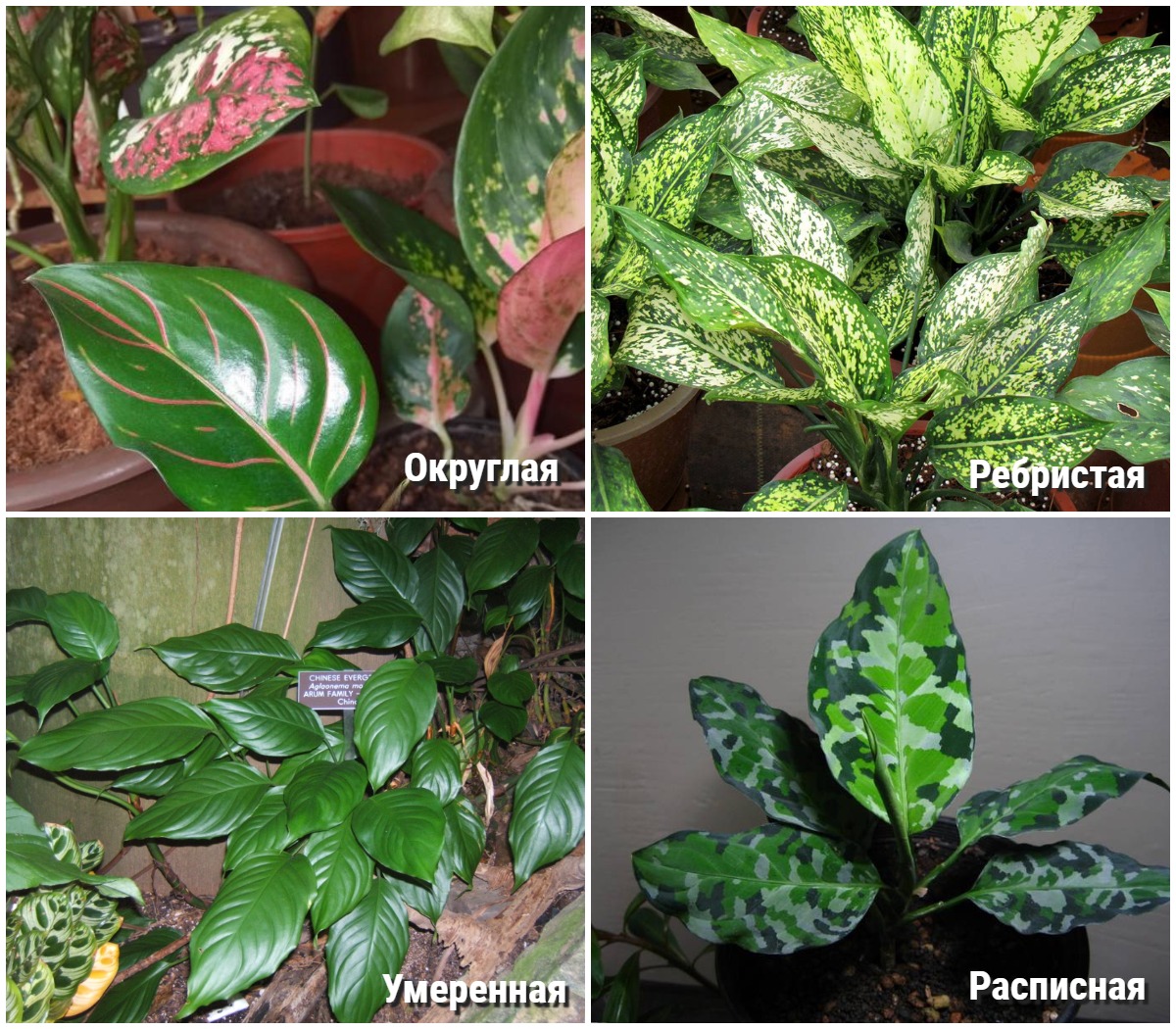
Types: Rounded (rotundum), Ribbed (costatum), Moderate (modestum), Painted (pictum).
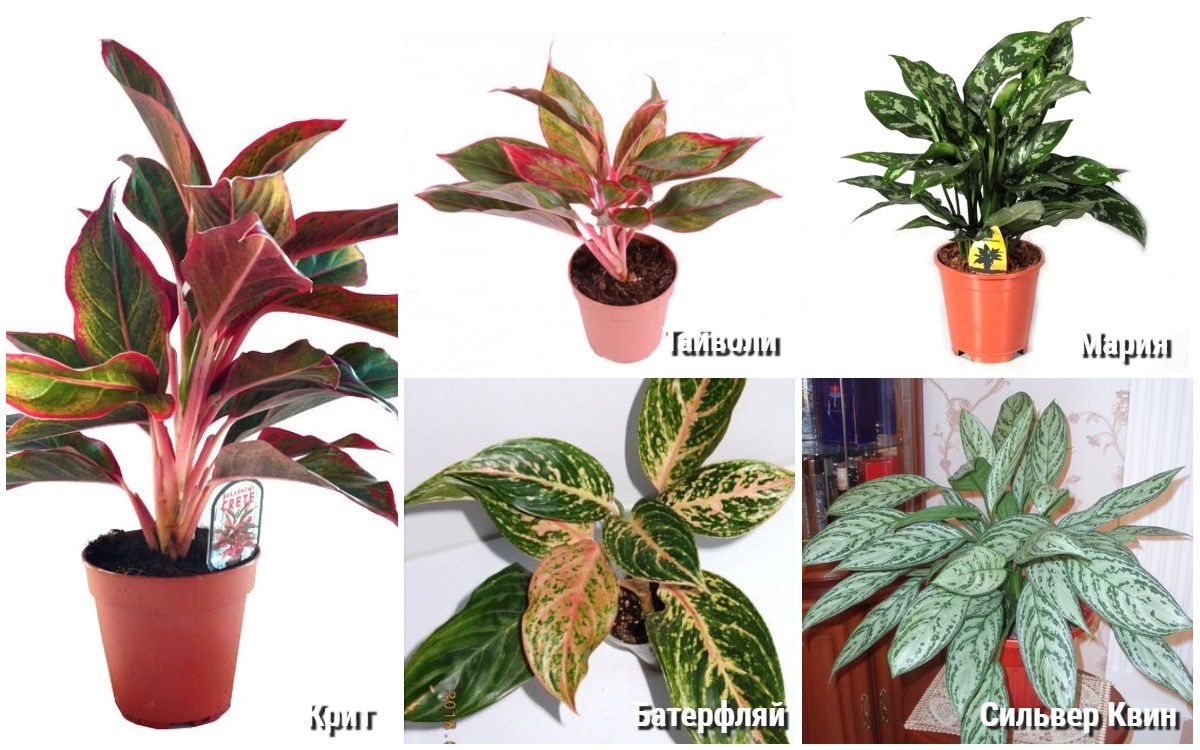
Popular varieties: Tivoli, Butterfly, Maria, Silver Queen, Crete.
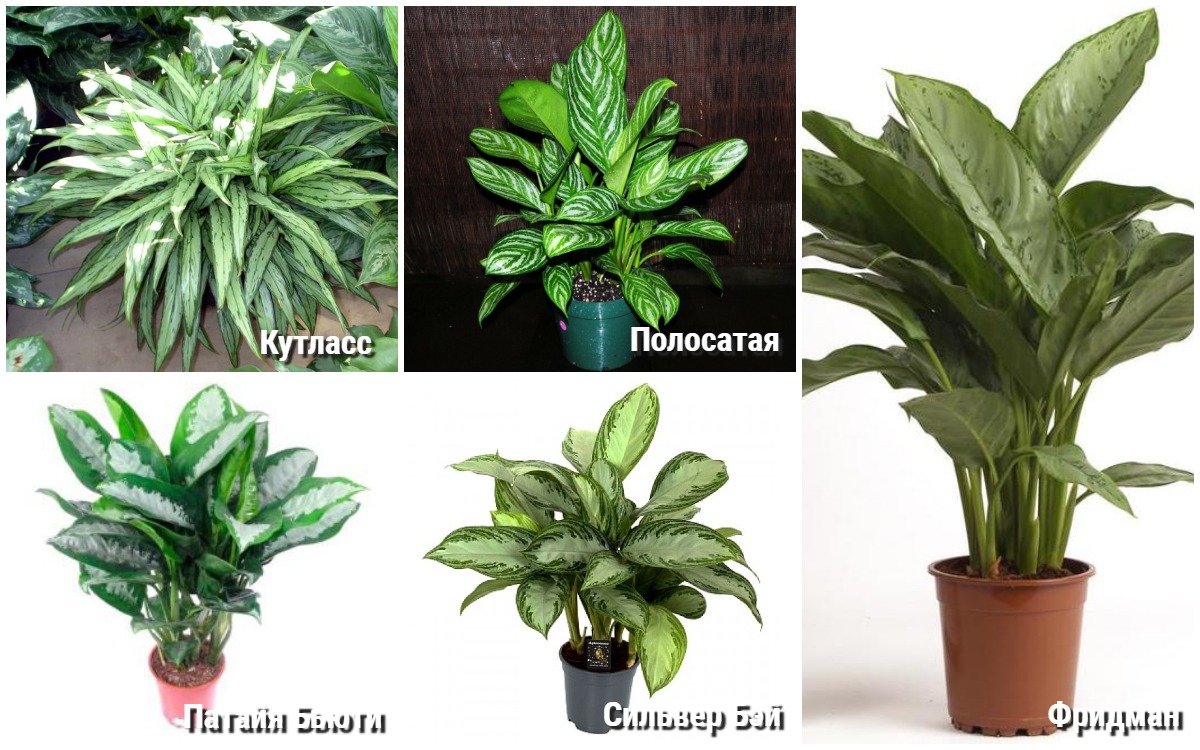
And also Cutlass, Silver Bay, Stripes, Pattaya Beauty, painted Freedman.
Care
They are low-maintenance and require ample watering. Some varieties flower and even produce poisonous berries. However, it is recommended to trim their shoots to encourage vegetative growth.
Read more about species, varieties and care in the article about aglaonema.
Alocasia
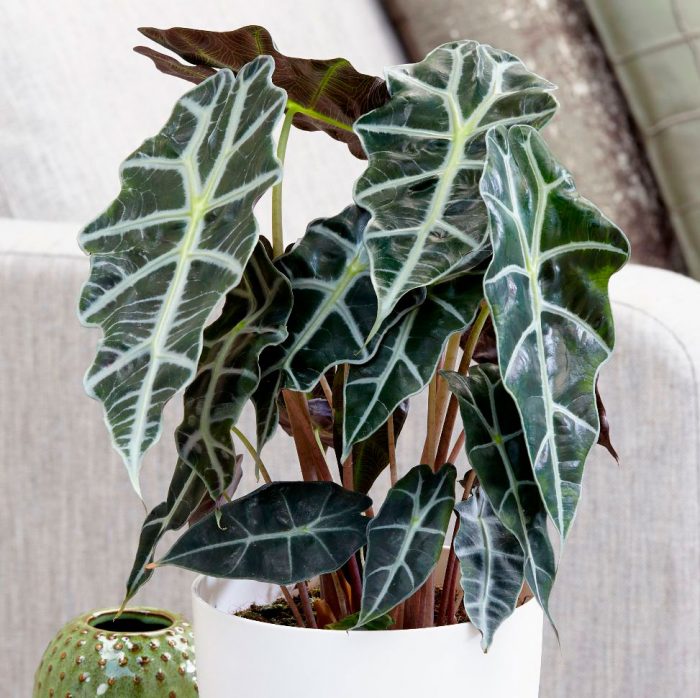
It is distinguished by its textured leaves with a prominent central vein, which is depressed on the surface but protrudes on the reverse side. It is quite large and has oddly shaped leaves with reddish or white speckles near the veins.
Types and varieties
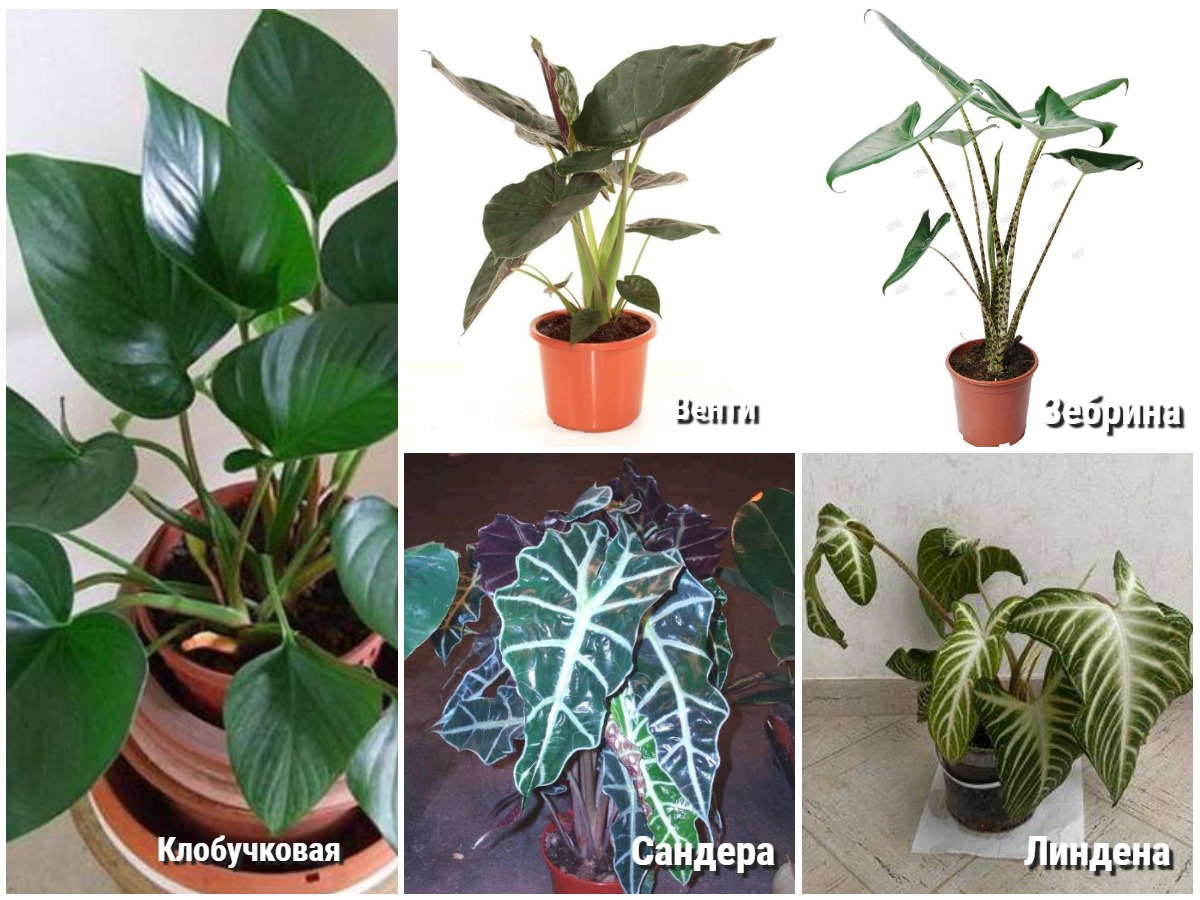
Well-known types of Alocasia: Cucullata, Wentii, Sanderiana, Zebrina, and Lindeni.
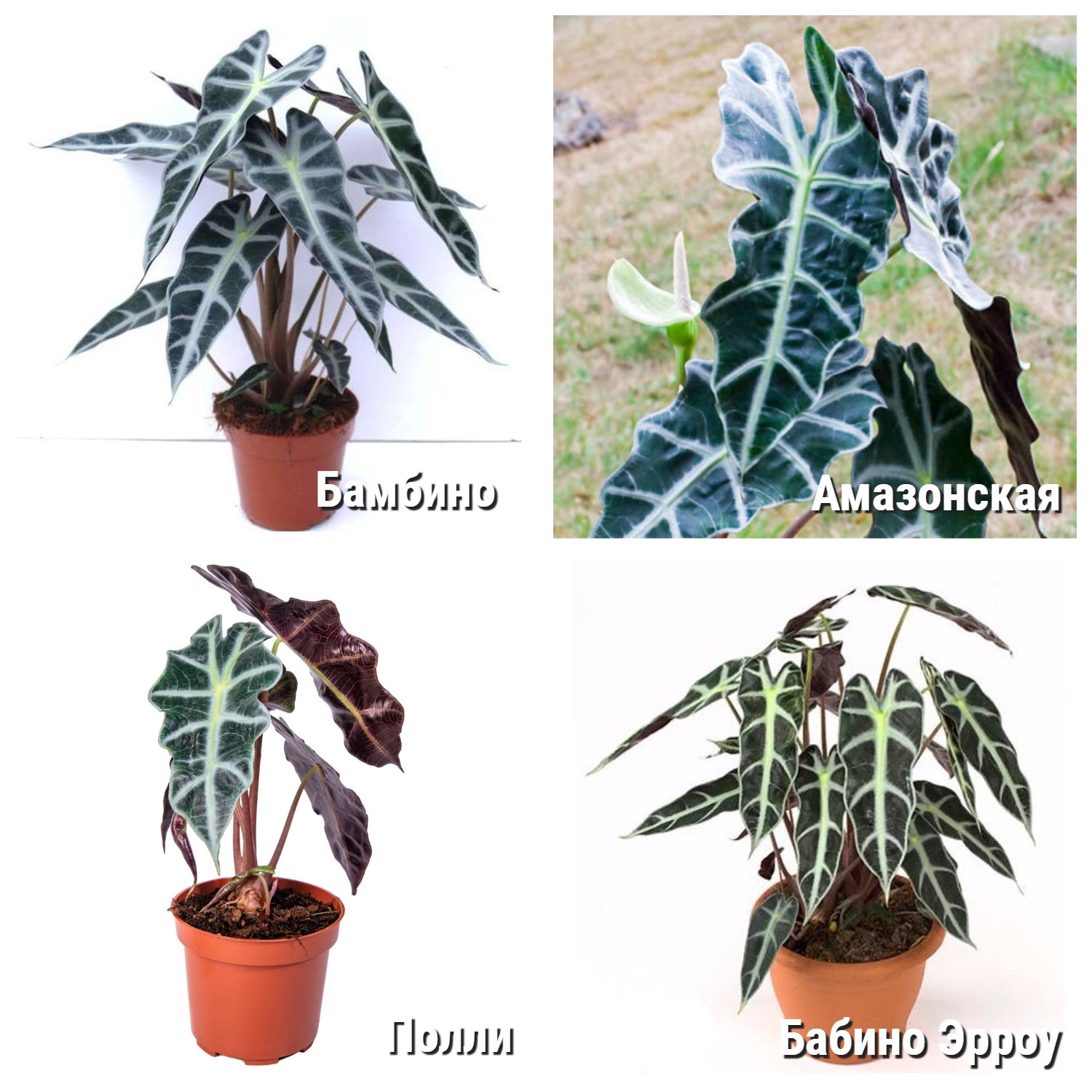
Several beautiful varieties: Sanderiana Bambino, a hybrid of Sanderiana amazonica and Polly, hybrid Polly Bambino Arrow.
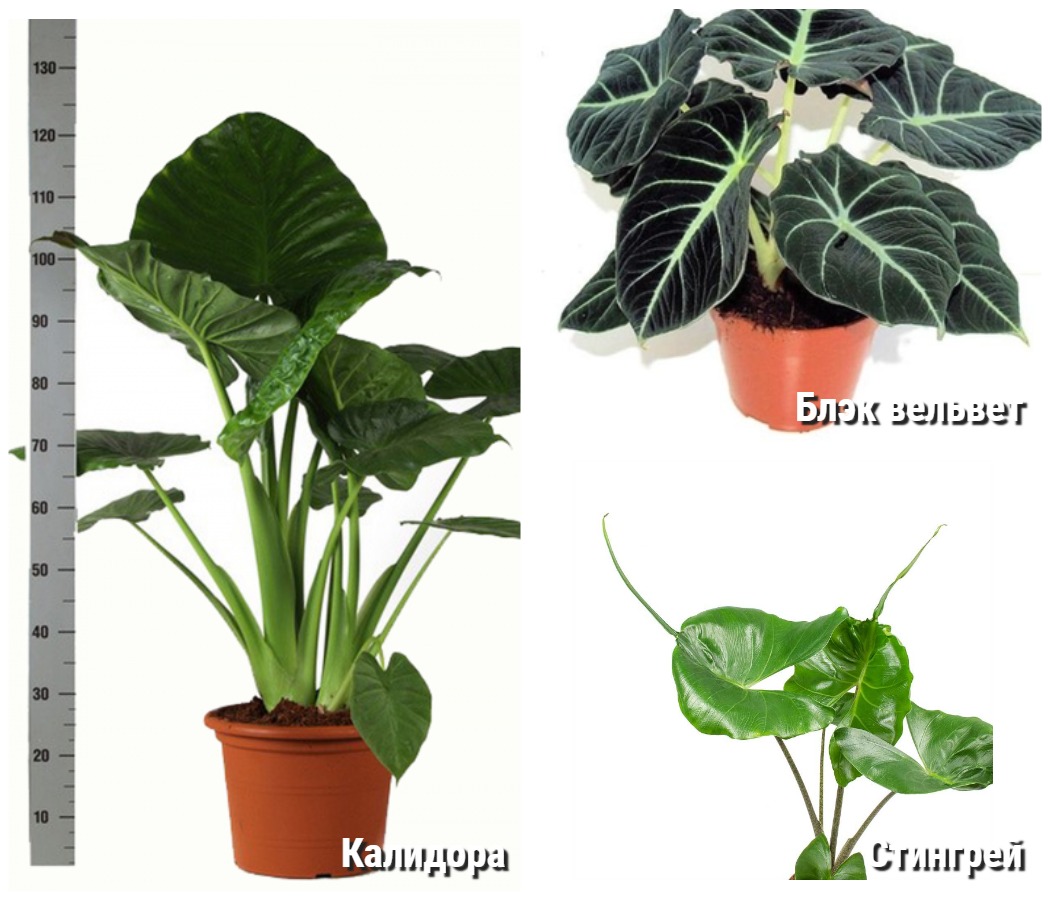
And also Black Velvet, Stingray, Calidora.
Care
Requires special care. Prefers slightly acidic, loose soil. Doesn't transplant well. Responds well to misting; needs moisture, but avoid allowing excess moisture to stagnate in the tray.
You can find more information in the article about Alocasia and its care.
Dieffenbachia
It grows very quickly and can reach 2 meters in height indoors. The leaves are oval, pointed, and green with white spots all over the surface.
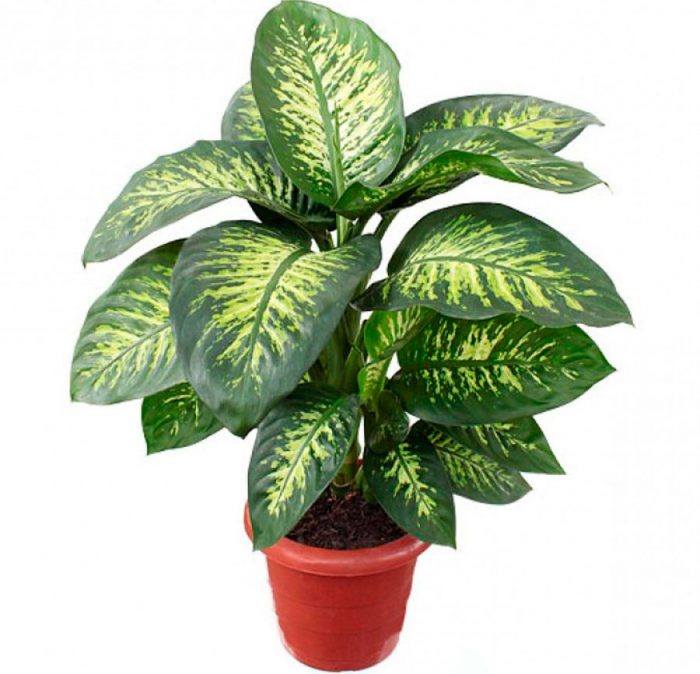
Types and varieties
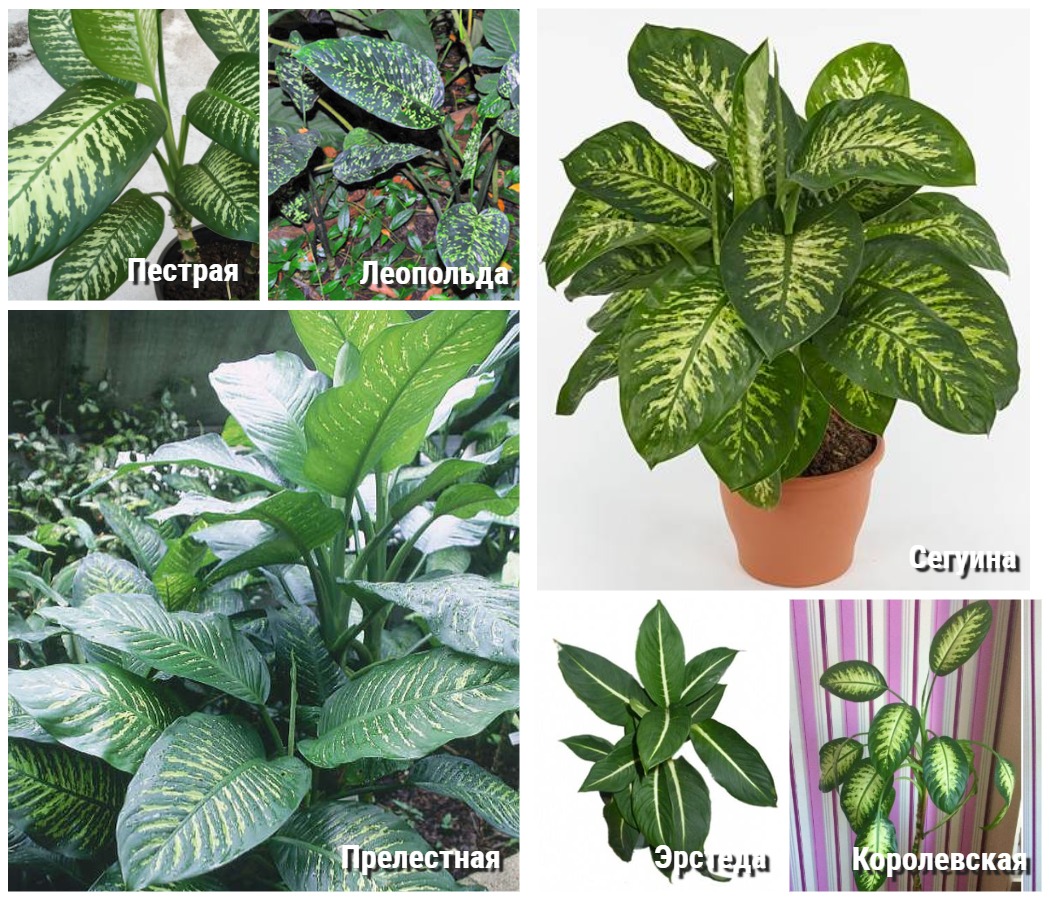
Types of dieffenbachia: Variegated (picta), Leopold (Leopoldii), Charming (amoena), Seguine (seguine), Oersted (erstedii), Royal or magnificent, also known as large-leaved (macrophylla).
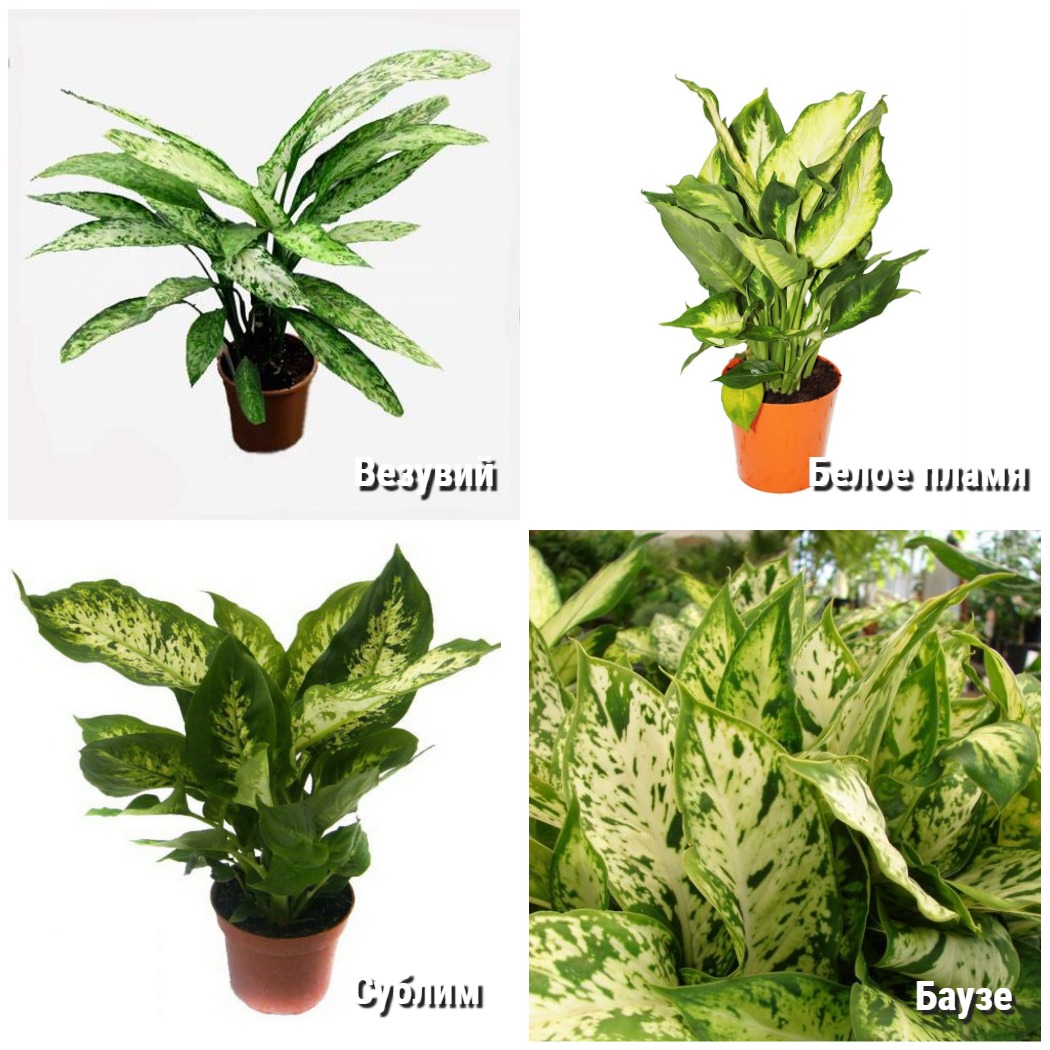
Well-known varieties: Vesuvius, White Flame, Sublime, Bauze hybrid (bausei).
Care
In good light, the leaves are abundant; in low light, the trunk becomes bare and the color fades. It propagates from the tip or side shoots and takes root easily.
Read more about dieffenbachia.
Zamioculcas or dollar tree
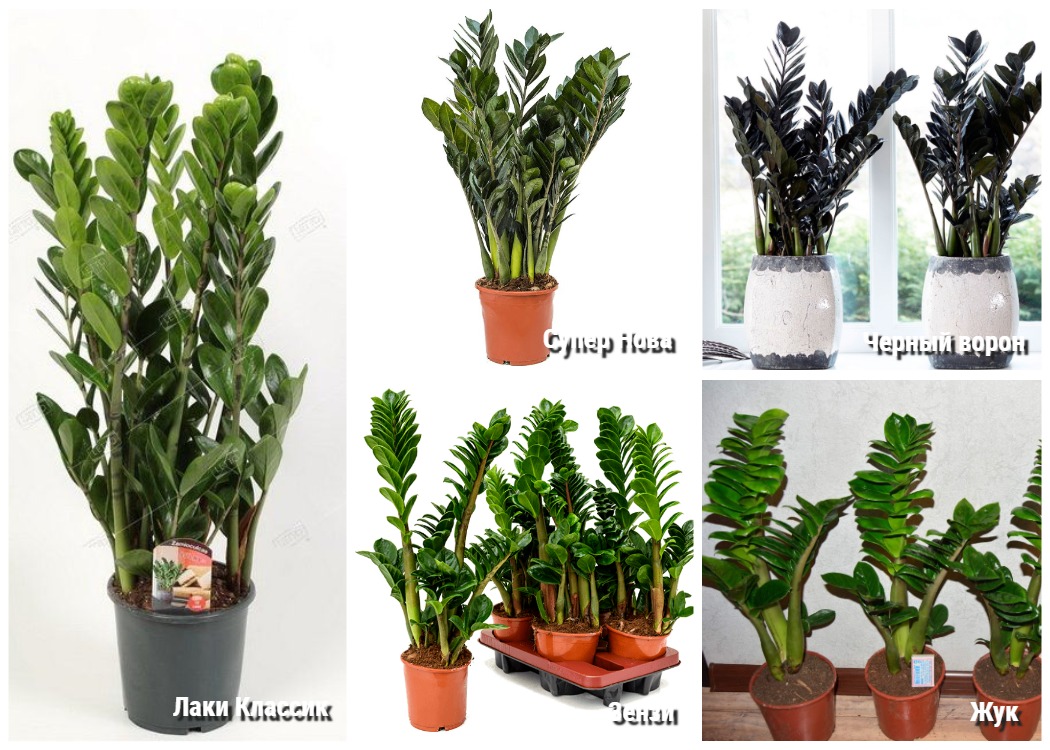
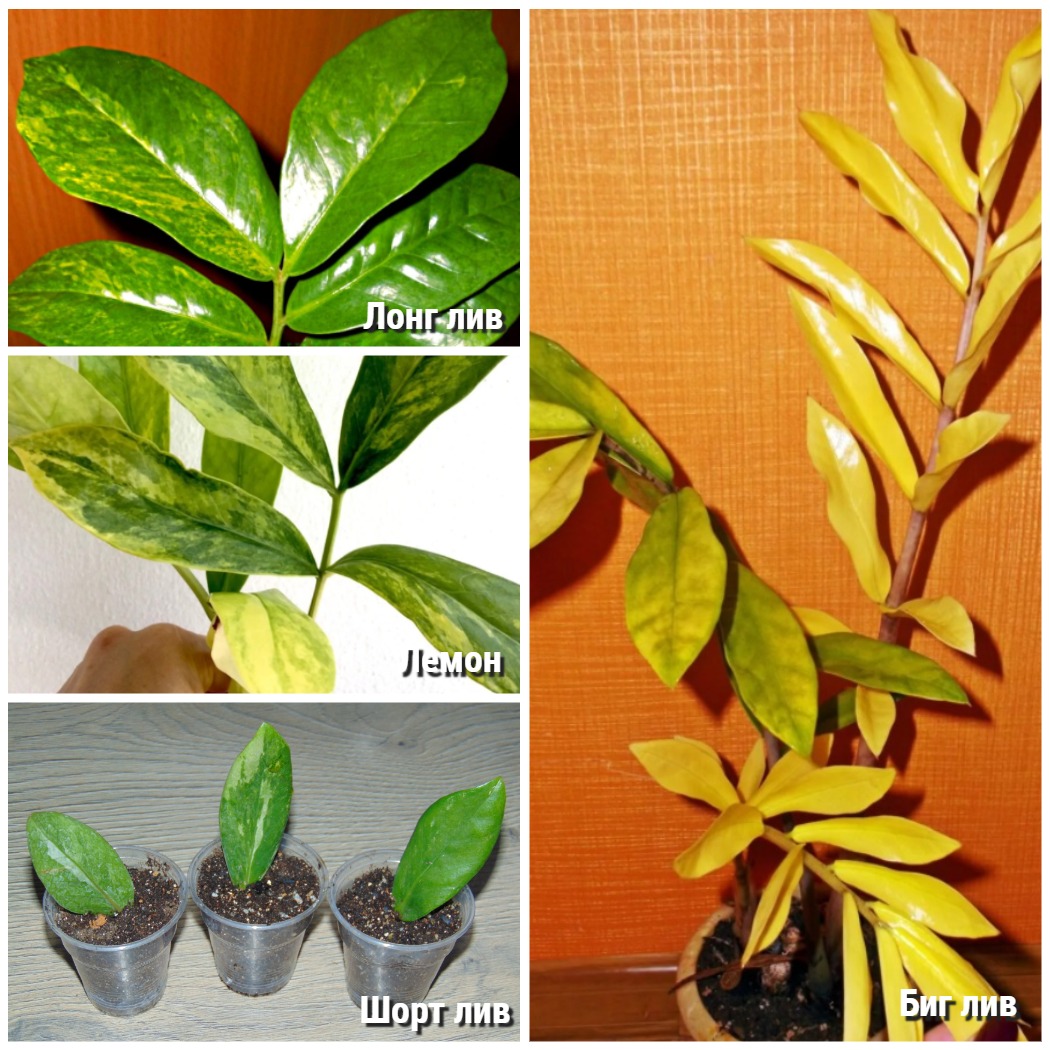
It is popularly known as the "dollar tree." It is distinguished from other species by its small, oval-shaped leaves, unusual for the family, with a glossy green surface. Depending on the variety, the surface may have light yellow spots. The height of the shoots also varies depending on the variety.
By the way, zamioculcas has a property of succulents: it accumulates water in parts of the plant.
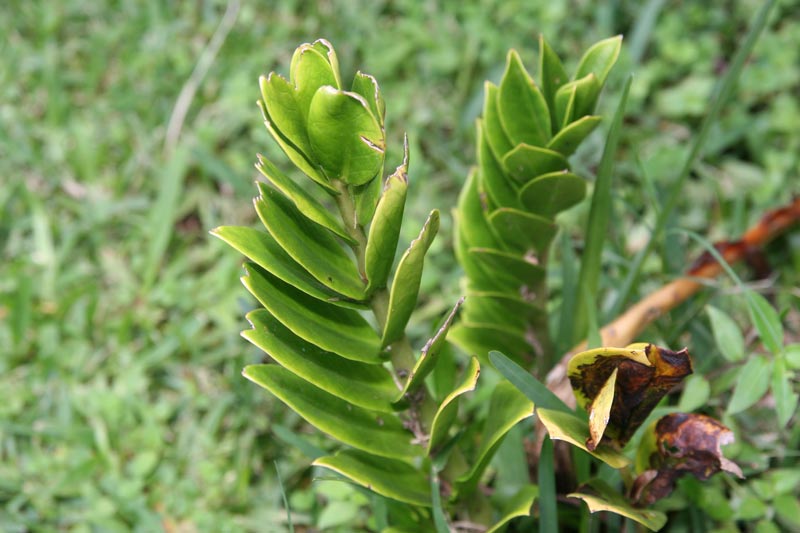
Types and varieties
Zamiifolia species and its varieties: Super Nova, Lucky Classic, dwarf Zenzi and Bug, Black Raven.
Variegate and its varieties: Short leaf, Long leaf, Lemon, Big leaf.
Care
It requires regular watering during the hot season, reducing it to 1-2 times per month in winter. If it lacks moisture, it may lose some leaves. It thrives at temperatures between 22 and 28°C.
More useful information about zamioculcas.
Monstera
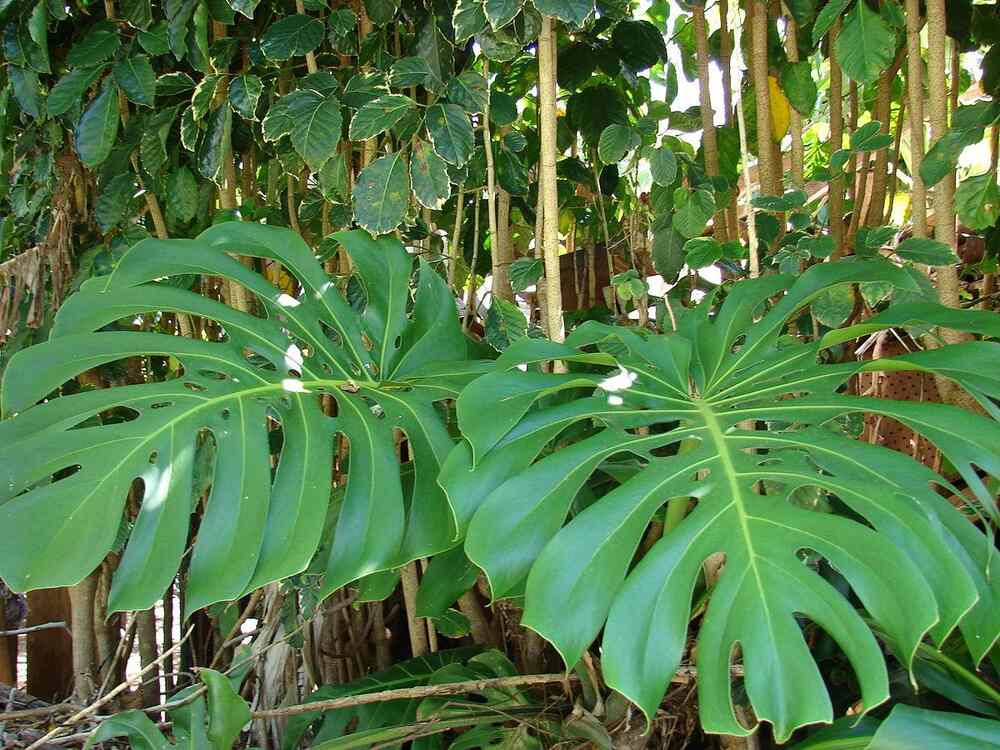
The plant can be tall or short, depending on the variety. Monsteras with carved leaves on long stalks are most common.
Types
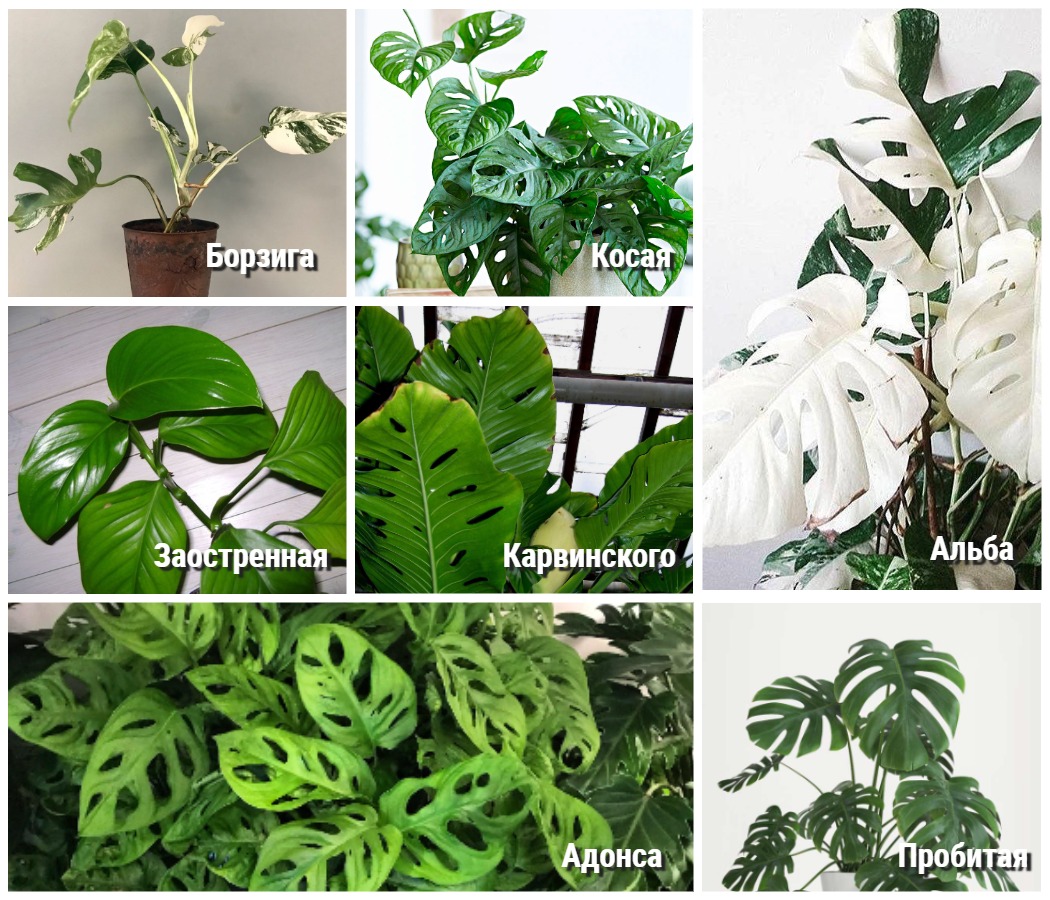
Well-known types of monstera: Adanson (adansonii), Alba or variegated (variegata), Borsig (deliciosa borsigiana), Karvinsky (karvinskyi), Oblique (obliqua), Pointed (acuminata), Punctured or holey (pertusa).
Care
Initially, it requires plenty of light and air. Later, the plant can be moved to a shaded area. It does not tolerate direct sunlight. Watering should be generous, but not excessive. Reduce watering in winter. Aerial roots require misting.
In the article Monstera You can learn more about the characteristics of this plant and how to care for it.
Caladium
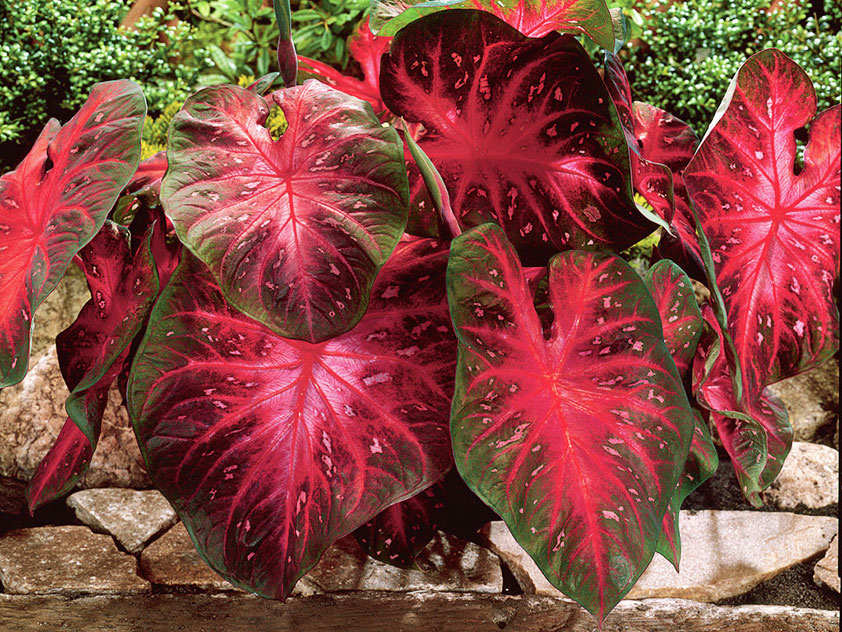
A tuberous plant with brightly coloured leaves that are green and have bright spots on the surface along the veins (reddish and creamy).
Types
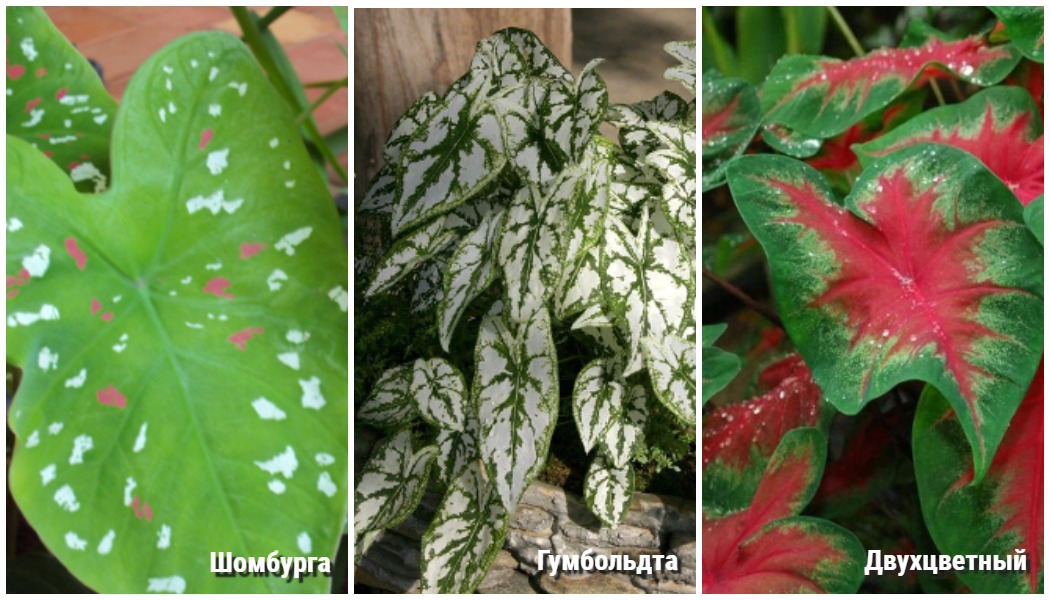
Beautiful types of caladium: Humboldt (humboldtii), Schomburg (schomburgkii), Bicolor.
Care
It enjoys abundant watering, but doesn't tolerate wet leaves. It goes dormant in winter, so it should be moved to a dark place. The leaves dry out, and a few spoonfuls of water to keep the soil barely moist is sufficient for watering during this time.
More interesting and useful information about caladium.
Colocasia
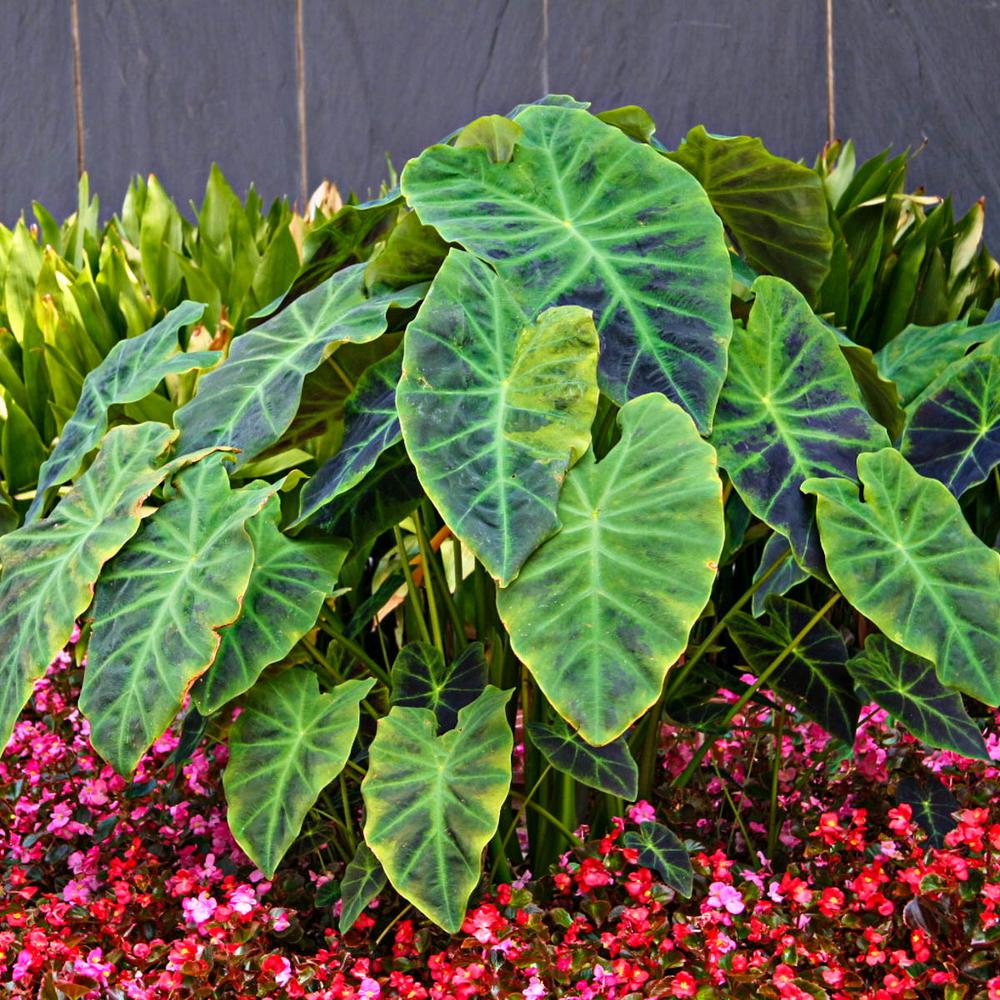
It is distinguished by its large leaves, which grow up to 80 cm in length. The main stem is absent. The root is tuberous.
Types
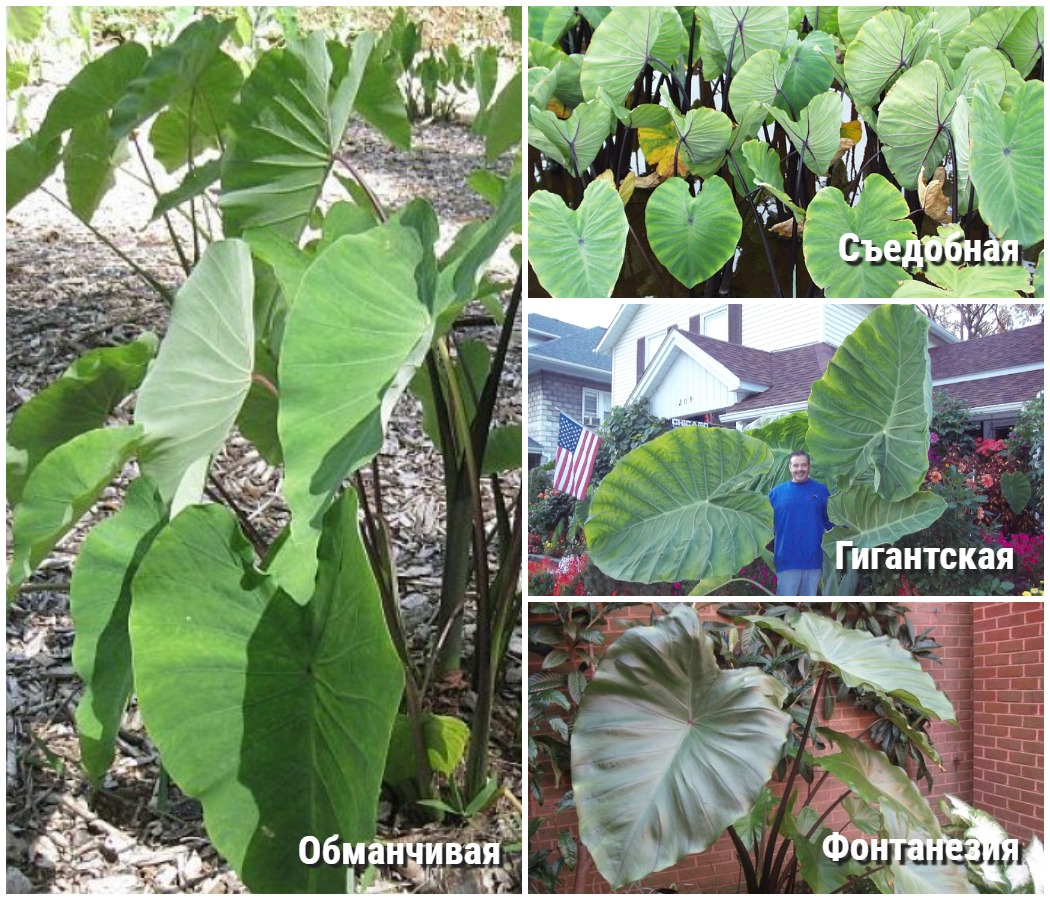
Giant (gigantea), Edible (esculenta), Deceptive (fallax), Fontanesia (Fontanesia).
Care
Propagated by dividing the tuber. Grows well in open ground. Requires ample space and ample watering. Prefers temperatures of 24 to 28°C. Winter temperatures down to 15°C are tolerated.
Raphidora (Rhaphidophora)
A genus of evergreen climbing plants in the Araceae family. It is classified as a vine. The stems of some varieties are covered with needle-like structures. The leaves are large, bright green, and become dissected over time.
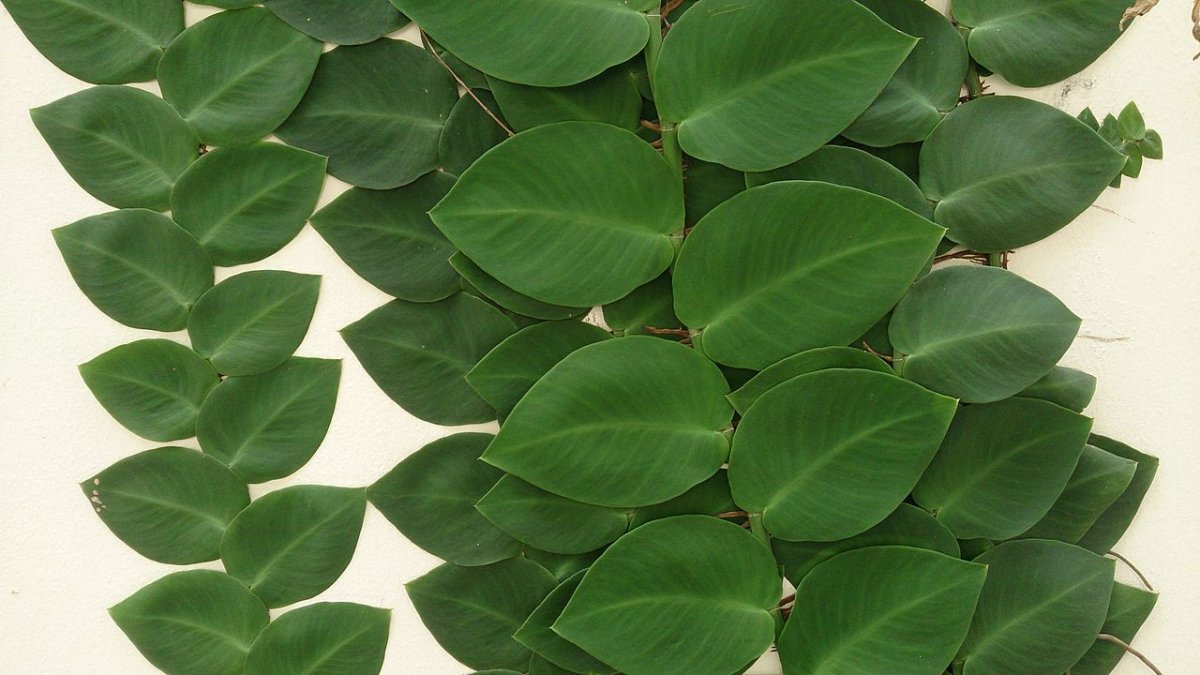
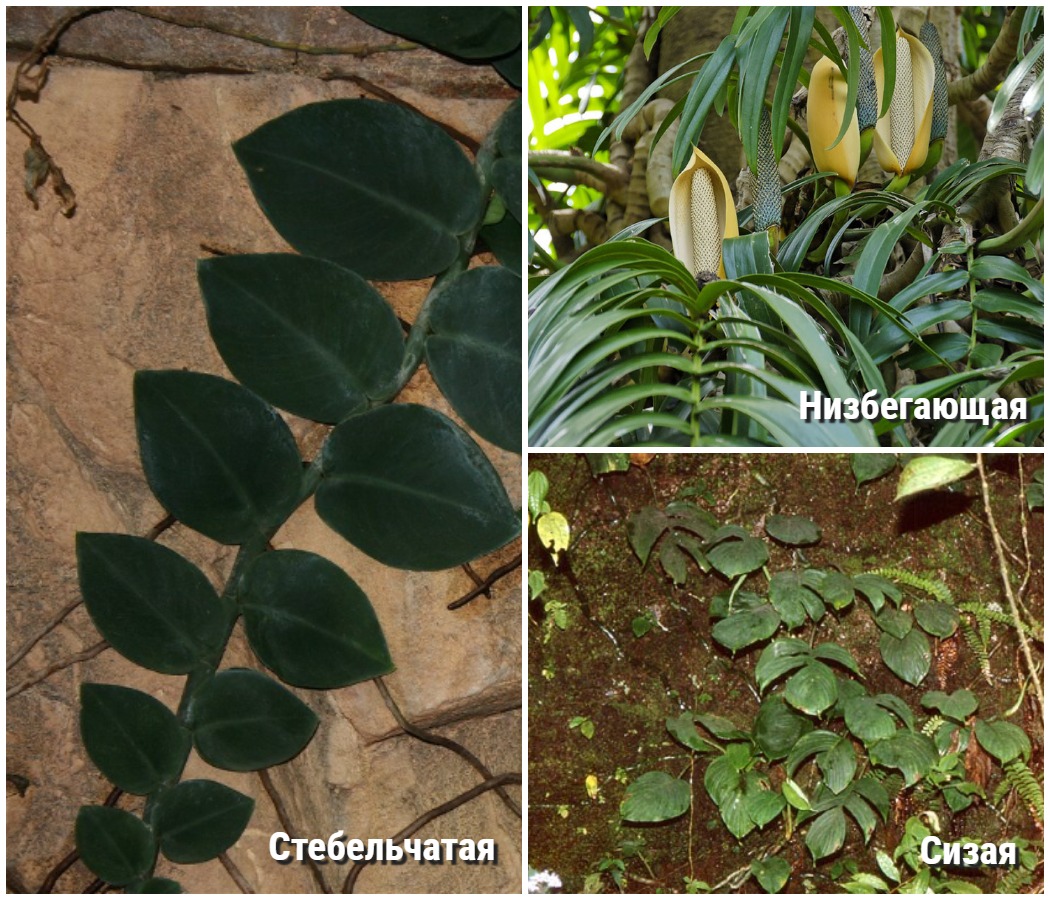
Types
Known species of Rafidora: Stem (celatocaulis), Descending (decursiva), Glaucous (glauca).
Care
Requires annual repotting when young. After that, repot for a larger one every 2-3 years. It responds well to pruning, which allows for crown formation. It requires ample watering with warm water. It thrives in filtered light.
Syngonium
An evergreen vine, the stems reach 2 meters in length. The leaves have a heart-shaped blade with a pointed tip. The veins stand out clearly against the green blade.
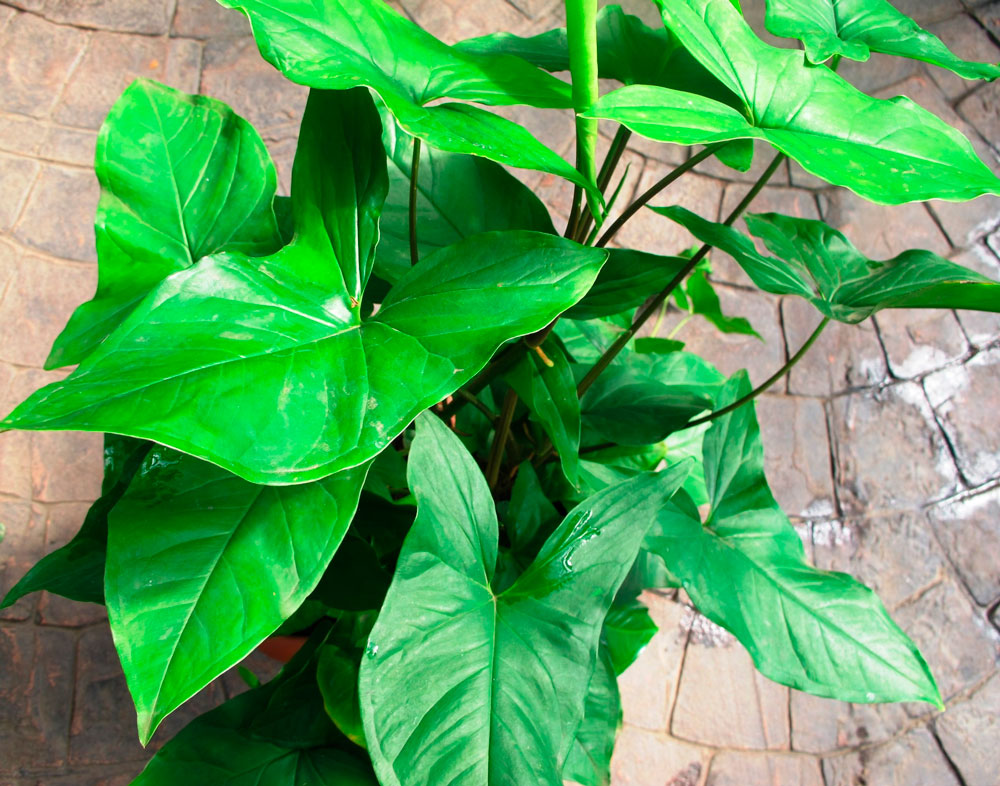
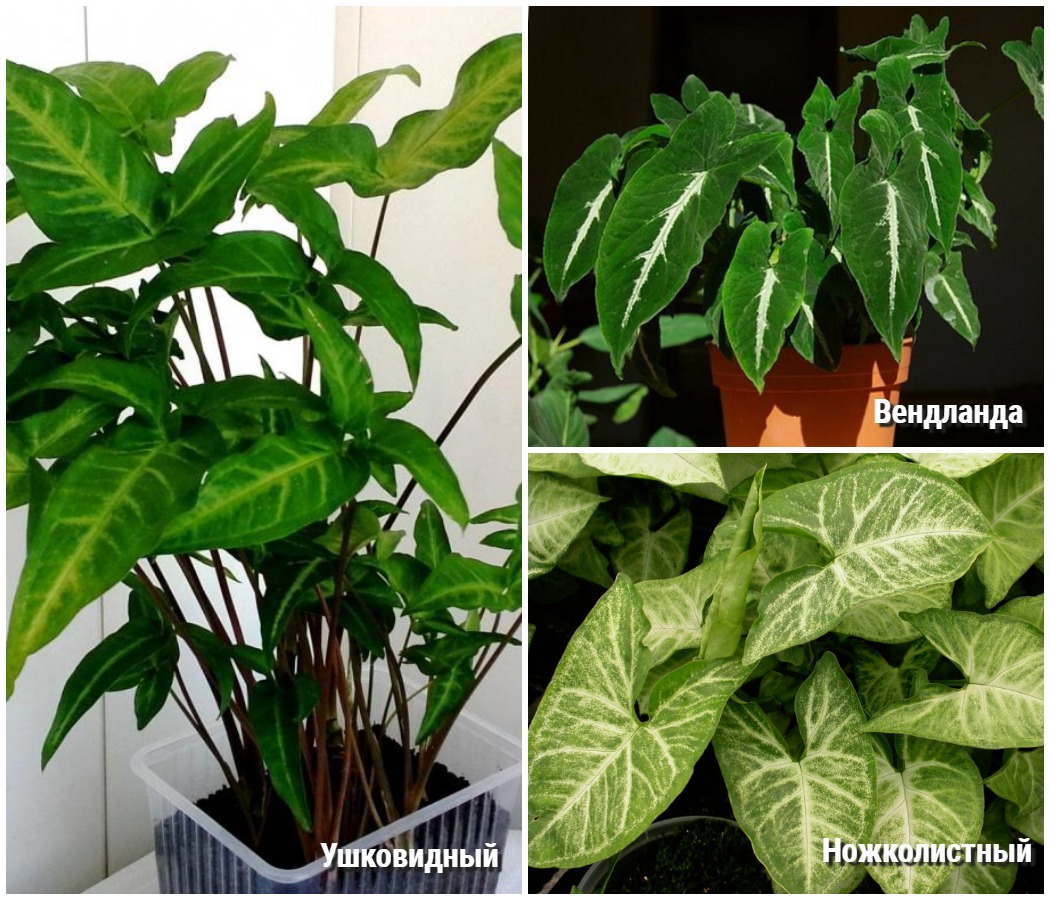
Types and varieties
Podophyllum, auritum, wendlandii.
Care
A very low-maintenance plant. Water when the top layer of soil dries out. It grows poorly in poorly lit areas and produces fewer leaves, leaving the trunk bare. Avoid standing water in the saucer. It transplants well and is propagated by apical cuttings.
Scindapsus and Epipremnum
Scindapsus is a vine with alternate, heart-shaped leaves, the color of which can be a solid green or complemented by white specks of varying sizes.
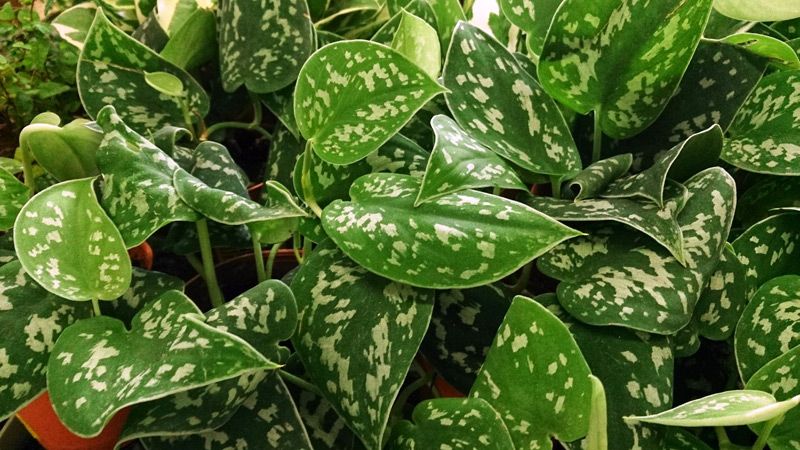
Epipremnum is also a herbaceous aroid vine. It can reach a height of up to 5 meters indoors. The leaf blades are heart-shaped and glossy. Occasionally, holes may appear in them, but this is considered normal.
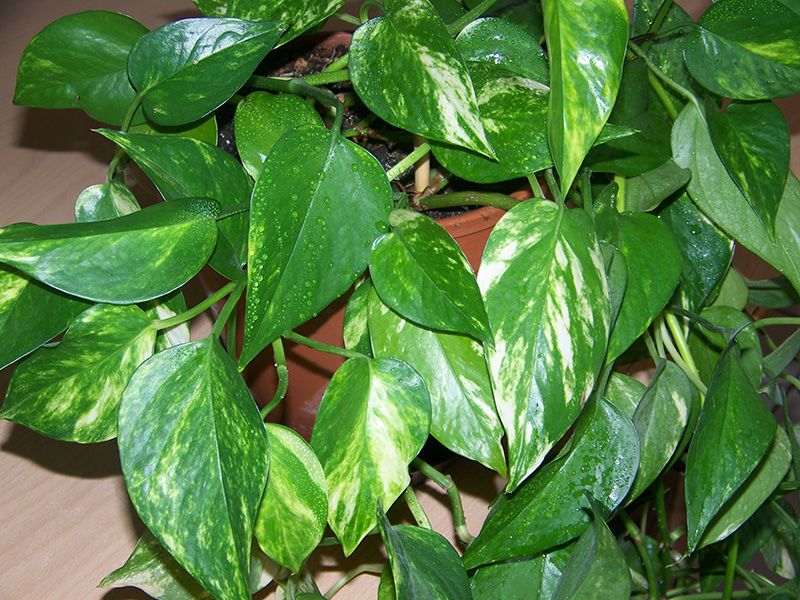
Please noteThese days, the names scindapsus and epipremnum are often used interchangeably, but this isn't entirely correct. In fact, they are different plants, almost indistinguishable in appearance. They differ in the number of seeds per inflorescence and in that scindapsus develops aerial roots only at the nodes, while epipremnum develops them along the entire length of the stem. Originally, only scindapsus existed. Later, the genus Epipremnum was established, and some varieties were transferred to it. The goldenrod is considered a species of "Epipremnum scindapsus."
Types and varieties
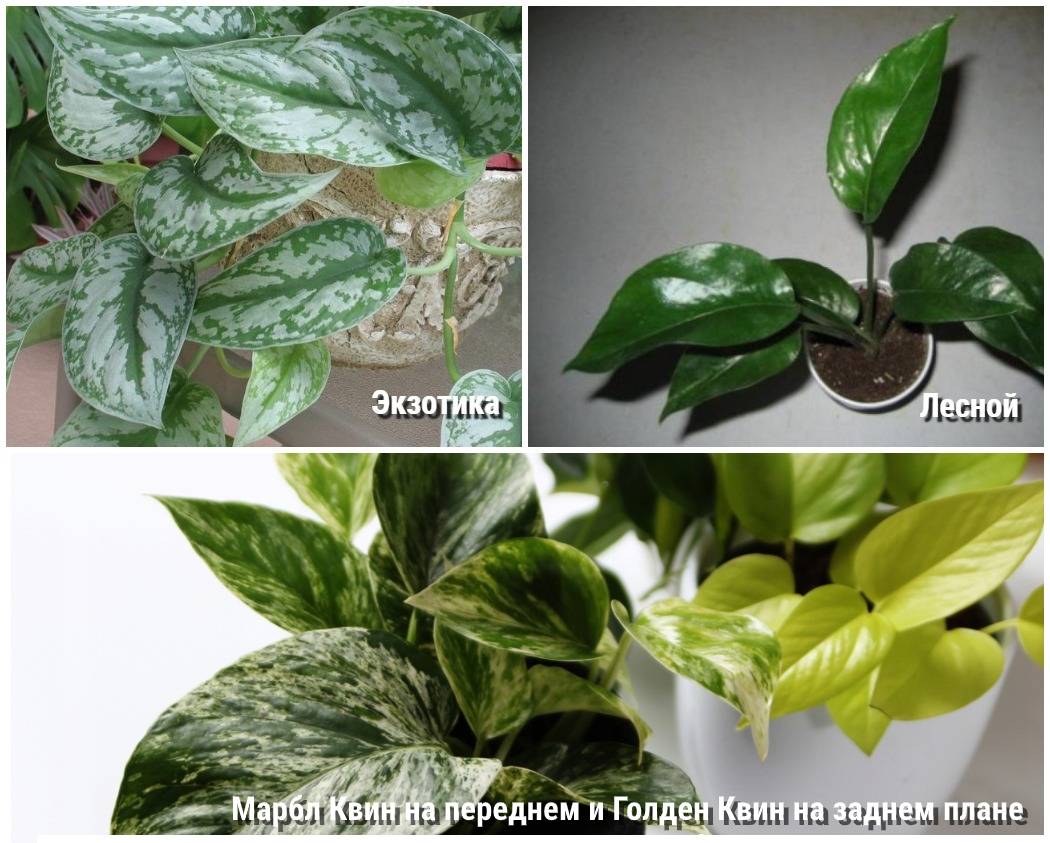
Under various names, both Scindapsus and Epipremnum (and sometimes Pothos), you can find in stores the Golden (aureum) species and its varieties: Marble Queen, Golden Queen, Painted (pictus) and its variety Exotica, Forest (silvaticum).
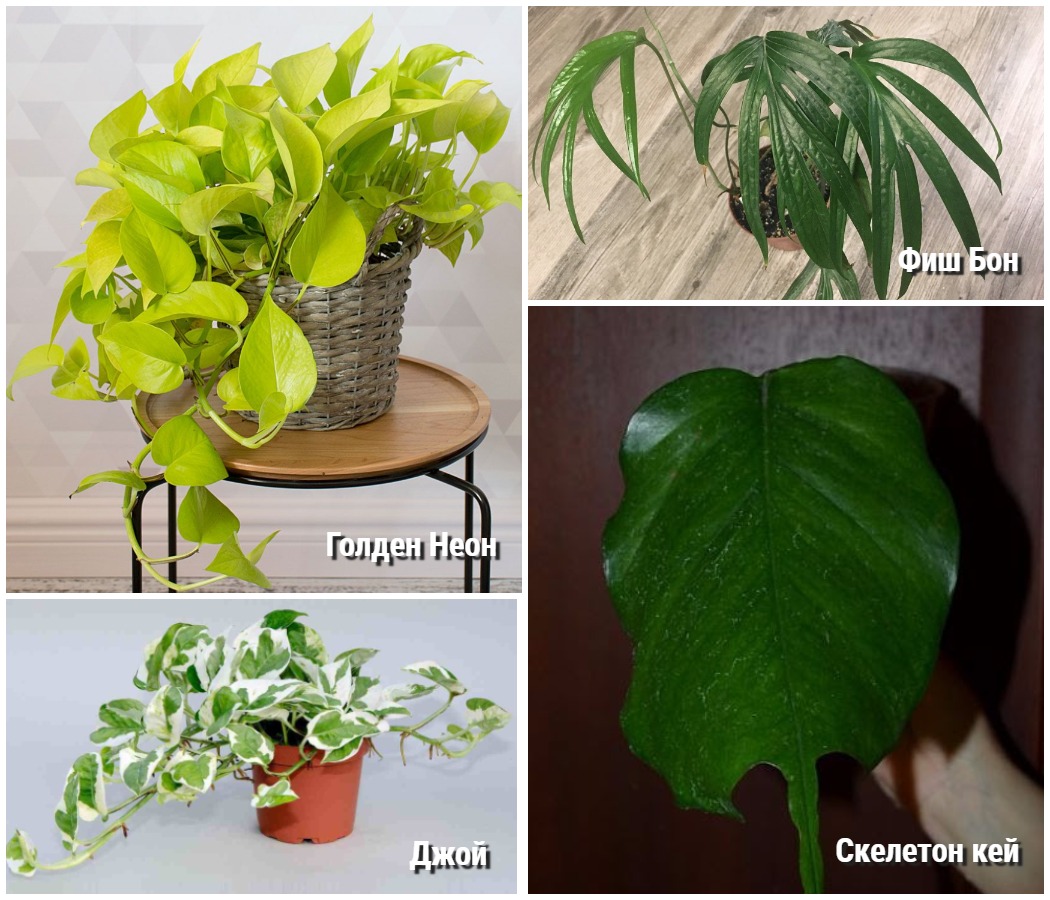
And also varieties Golden Neon, Fish Bone, N'Joy, Skeleton Key.
Care
Care for Epipremnum and Scindapsus is similar. They are both relatively low-maintenance. They do not tolerate drafts or temperature fluctuations well. They dislike direct sunlight and excessive heat. Partial shade is suitable for growing, but the brighter the light, the more pronounced the uneven leaf coloring. The optimal temperature is 22 to 24°C. Water as the soil dries; the water should be warm. They reproduce well and transplant easily.
Read more in the articles about scindapsus and its care and about epipremnum.
Philodendron
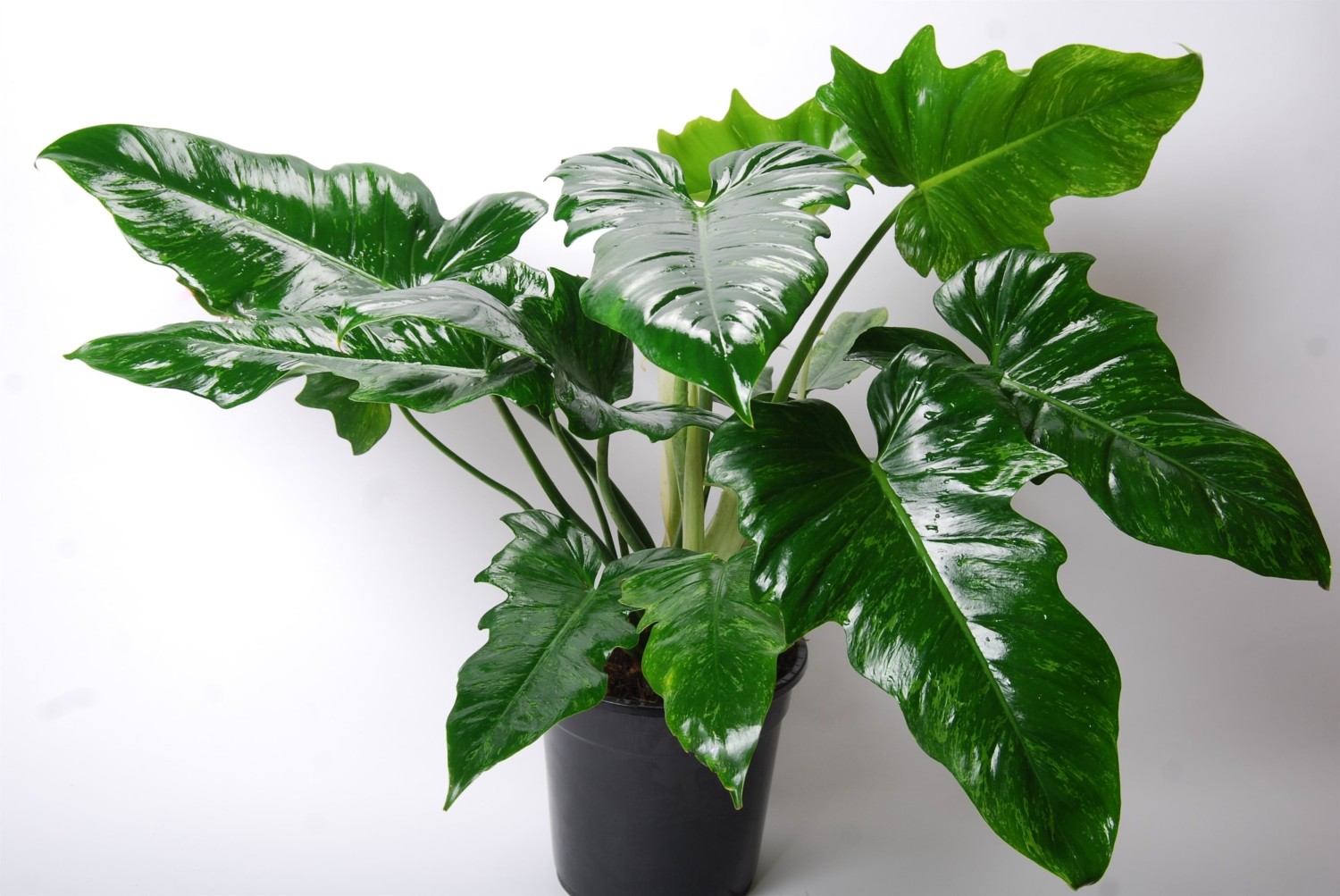
Philodendron differs from plants of other genera of the Araceae family in its diversity of life forms. Among them are epiphytes and semi-epiphytes. It is a vine with oddly shaped leaves, often with a carved leaf blade. The upper leaves have a more intense color than the lower ones.
Types and varieties
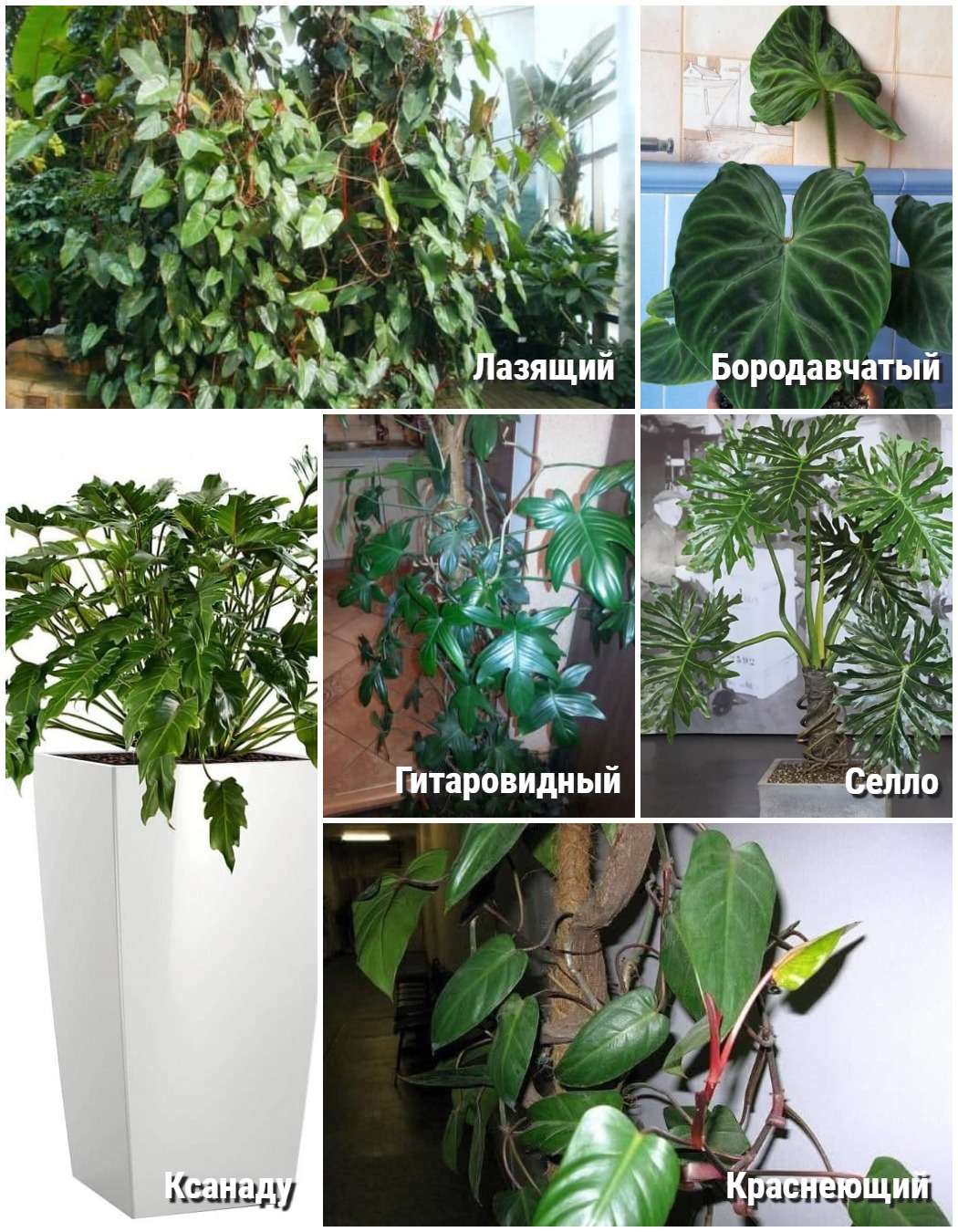
The following types of philodendron are popular: Climbing (scandens), Blushing (erubescens), Sello or double-pinnatifidum (bipinnatifidum), Xanadu (xanadu), Warty (verrucosum), Guitar-shaped (panduriforme).
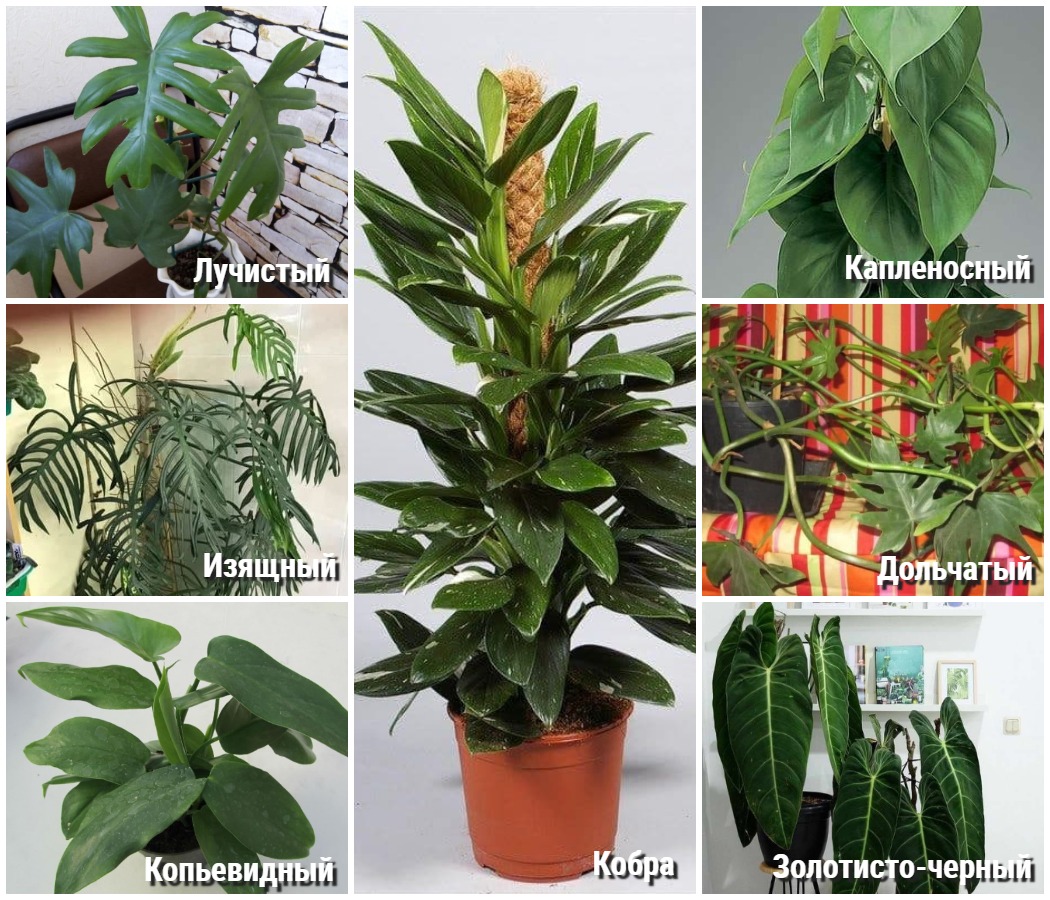
And also Radiant (radiatum), Elegant (elegans), Spear-shaped (hastatum), Drop-shaped (guttiferum) and its variety Cobra (Cobra), Lobular (laciniatum), Golden-black (melanochrysum).
Care
Some varieties don't require much light. But the brighter the leaves and the more intricate their coloring, the more light the vine requires. It doesn't like being moved outdoors or having drafts. It prefers temperatures of 22 to 28°C in summer and no lower than 16°C in winter. It enjoys abundant watering, but avoids stagnant moisture. It requires misting of the stem and support.
Read more in the article about philodendron.
Aquarium aroid plants
Many members of the Araceae family grow not only above ground but also in bodies of water. Therefore, some species are used to decorate aquariums and create a natural environment for their inhabitants.
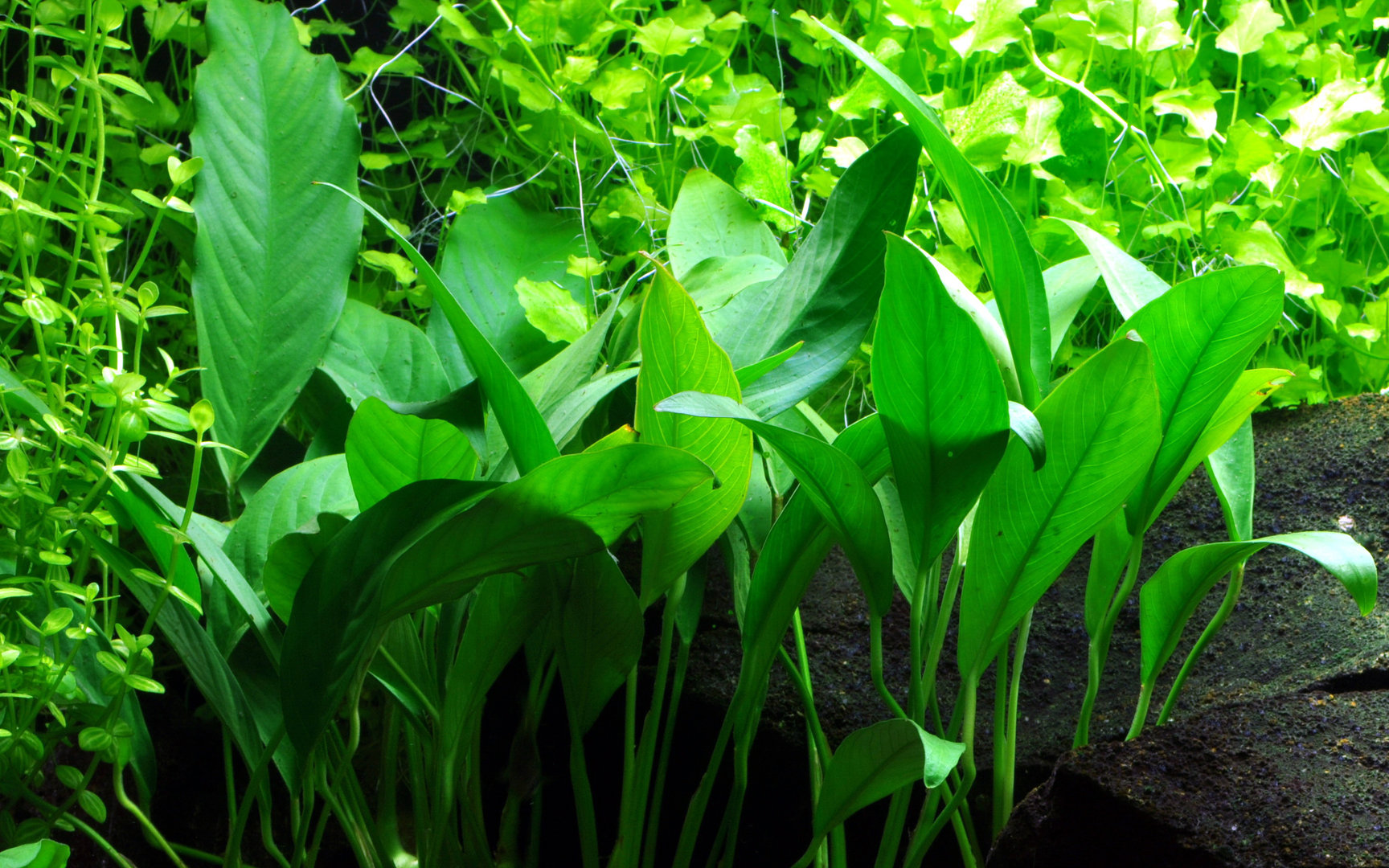
Anubias
A creeping plant with a thickened rhizome and small, smooth leaves of varying shapes. In the wild, the upper portion of the shoots protrudes above the water, so when fully submerged in an aquarium, Anubias grows slowly.
Types
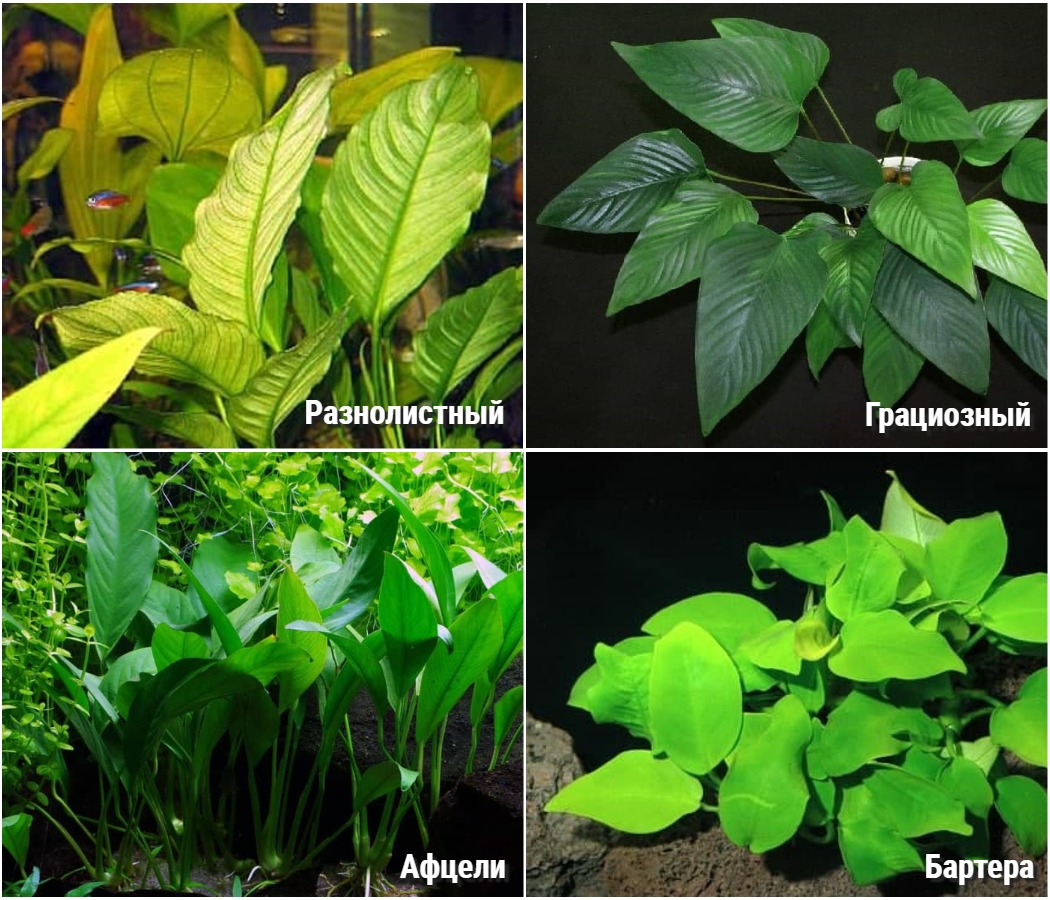
Barter (barteri), Graceful (gracilis), Heterophylla, Afzelii.
Care
It requires clean, warm water, with a temperature no lower than 26°C. It requires moderate lighting and highly nutritious soil. It propagates by root division, cuttings, and pricking out.
Wolffia
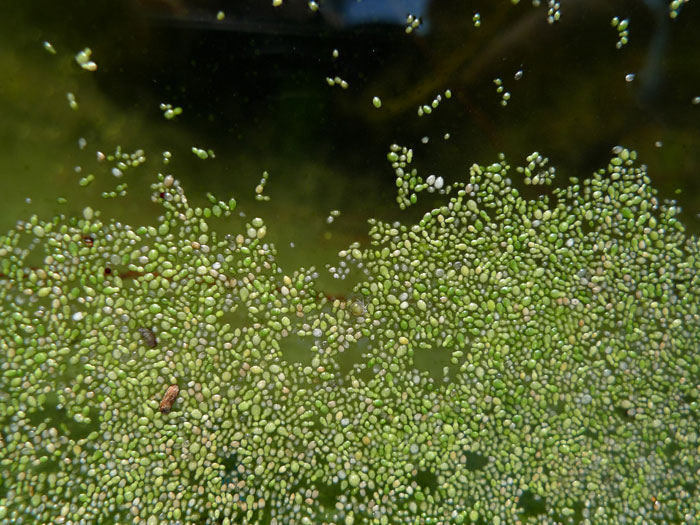
The smallest flowering plant on the planet. It resembles a small green circle floating on the surface of a pond. It is used as food for aquarium inhabitants, as it is known for its high content of beneficial elements. It serves no decorative purpose.
Types
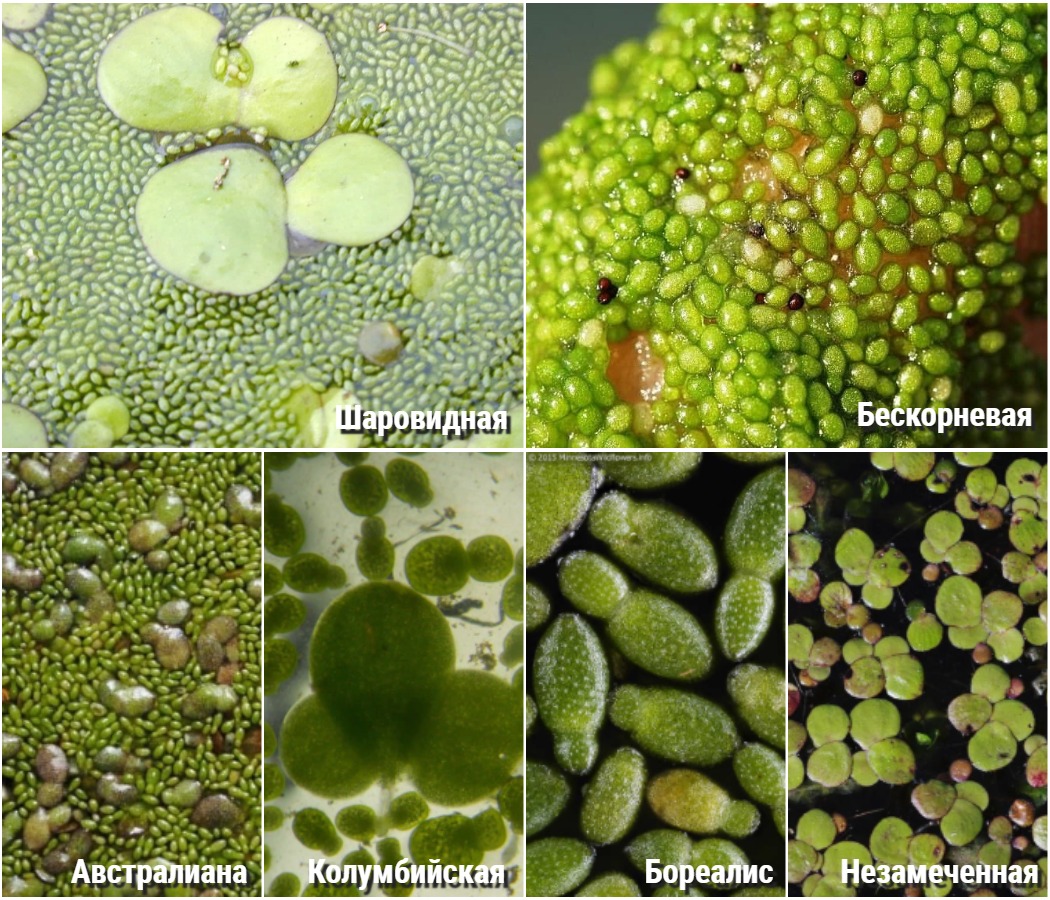
Globosa, Arrhiza, Australiana, Columbiana, Borealis, Neglecta.
Care
It grows well in slightly acidic water. If left completely still, roots can rot. It reproduces very quickly, so the number of plants should always be kept under control to prevent the aquarium from becoming a swamp. It's best to grow Wolffia in separate containers of water, adding more to the aquarium as needed.
Cryptocoryne
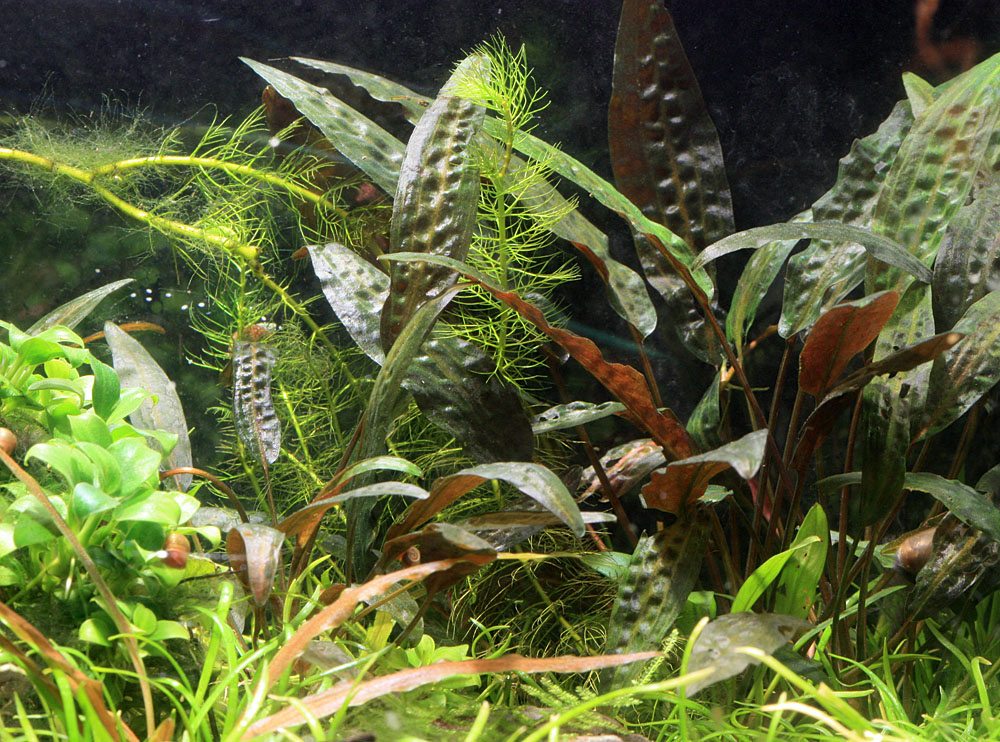
The plant is a bush with small leaves, ranging from 5 to 15 in number. The leaf blade is elongated, often covered with pimply growths.
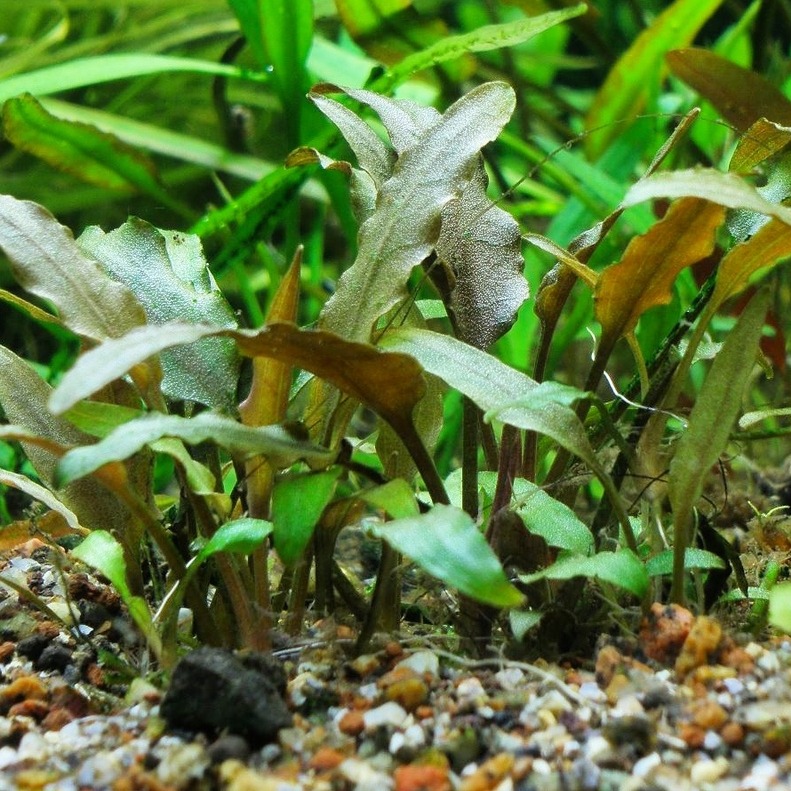
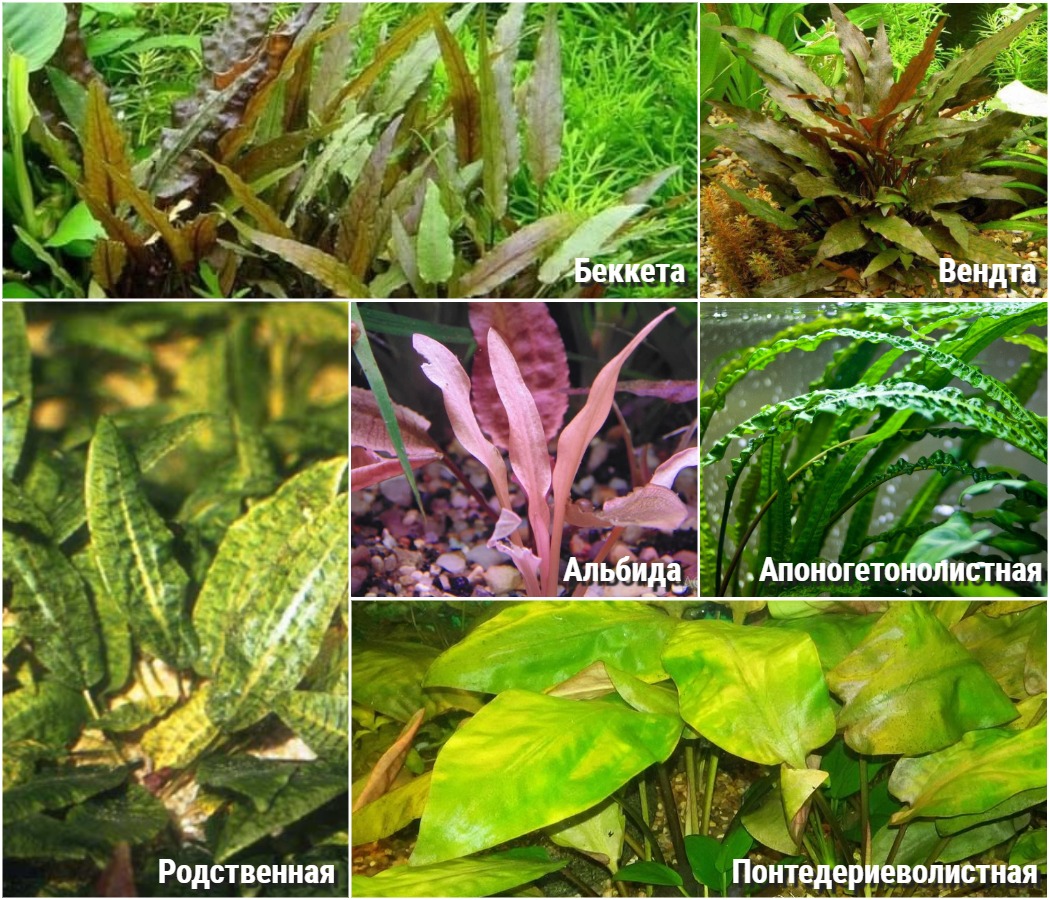
Types
Wendtii, Beckettii, Afinis, Pontederiifolia, Albida, Aponegetifolia.
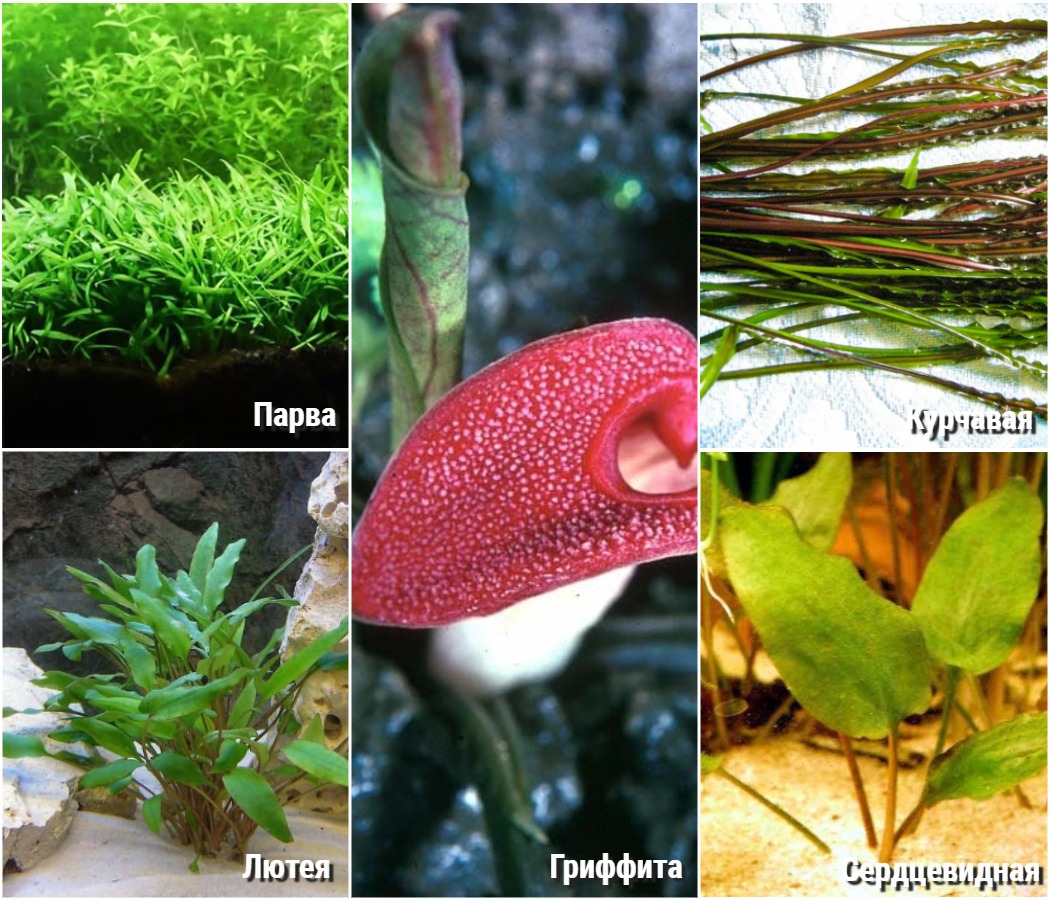
And also Parva, Lutea, Cordata, Crispatula, Griffithii.
Care
If not enough light is present, the leaves turn reddish. It prefers moderately acidic soil and requires regular watering. It doesn't like being repotted; it's best to do so no more than once a year.
Pistia
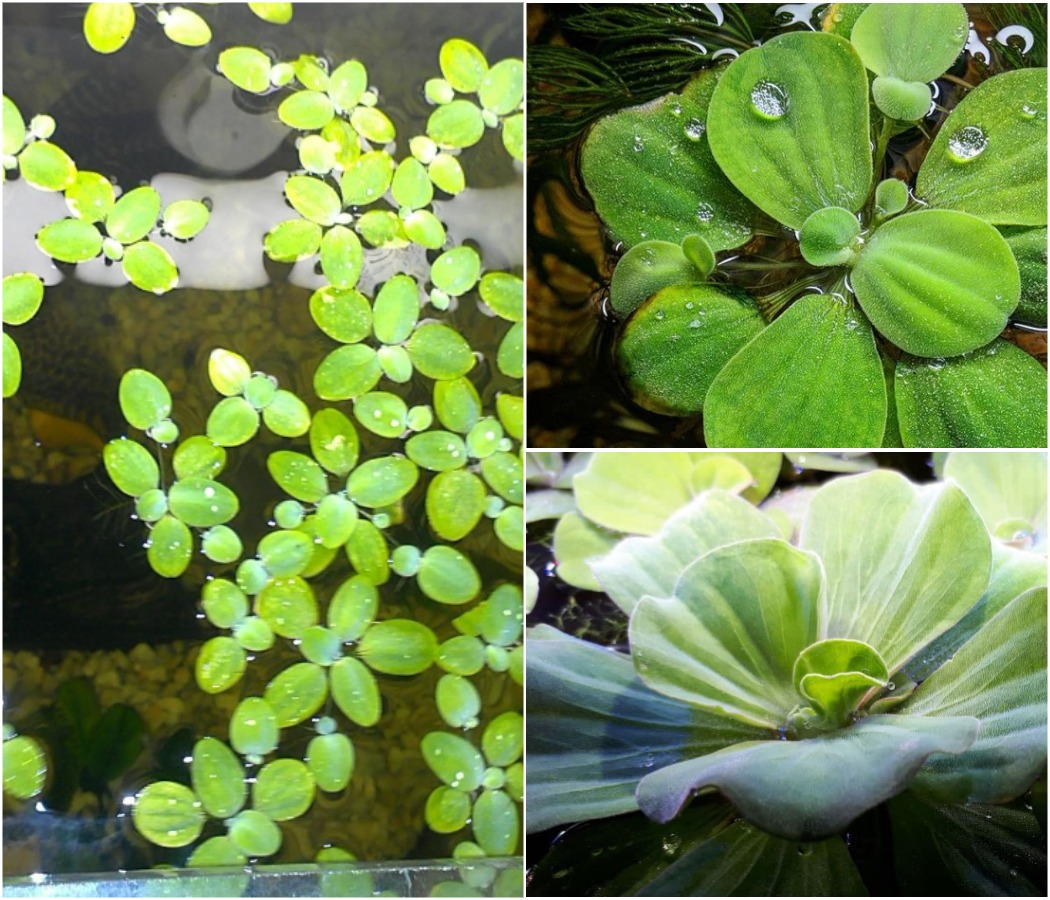
It resembles a floating head of lettuce. The leaves are light green, matte, with a wavy edge and a ribbed seal at the rosette. They never get wet. The water lily opens to receive light and closes like a bud in the evening. The denser the roots, the less beneficial organic matter the water in which the water lily grows contains. In an aquarium, it functions as a biological filter.
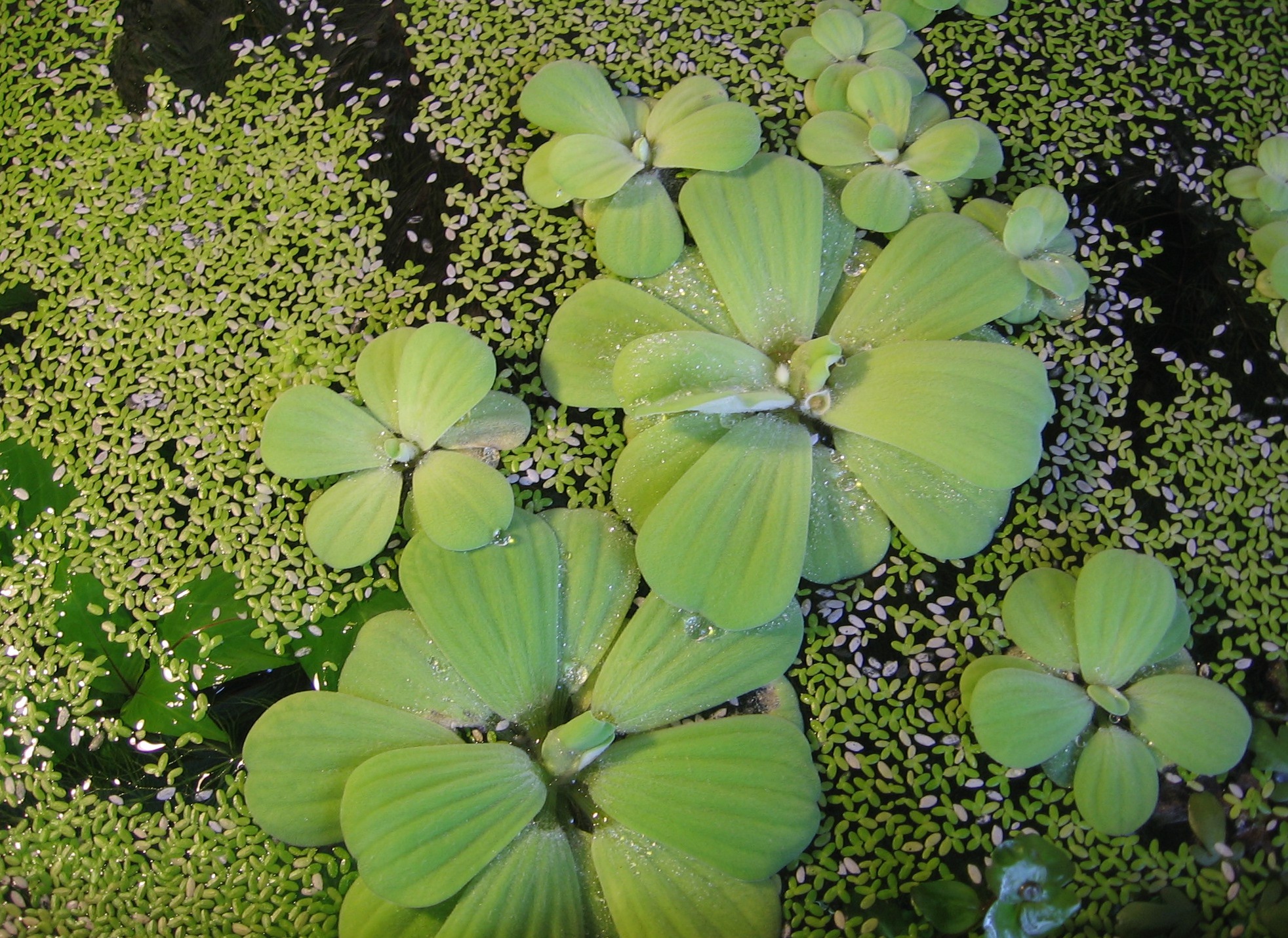
Types
The following water lilies are known: Ruffled, Blue (Aqua Velvet), Variegated (Angyo Splash).
Care
Easy to grow. It thrives in a variety of water temperatures, but the warmer the water, the brighter the light. It thrives only in aquariums with a covered lid, as it requires high humidity. It reproduces by side cuttings.
Aridarum
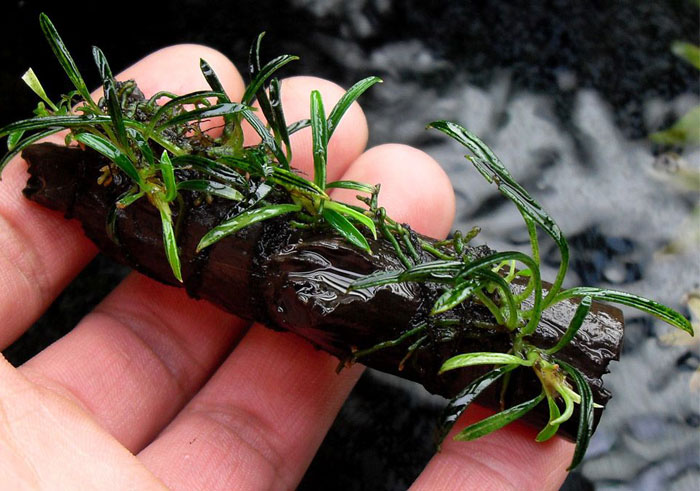
A genus of perennial evergreen herbaceous plants in the Araceae family. It has long, creeping stems and is endemic to the island of Borneo.
Types and varieties
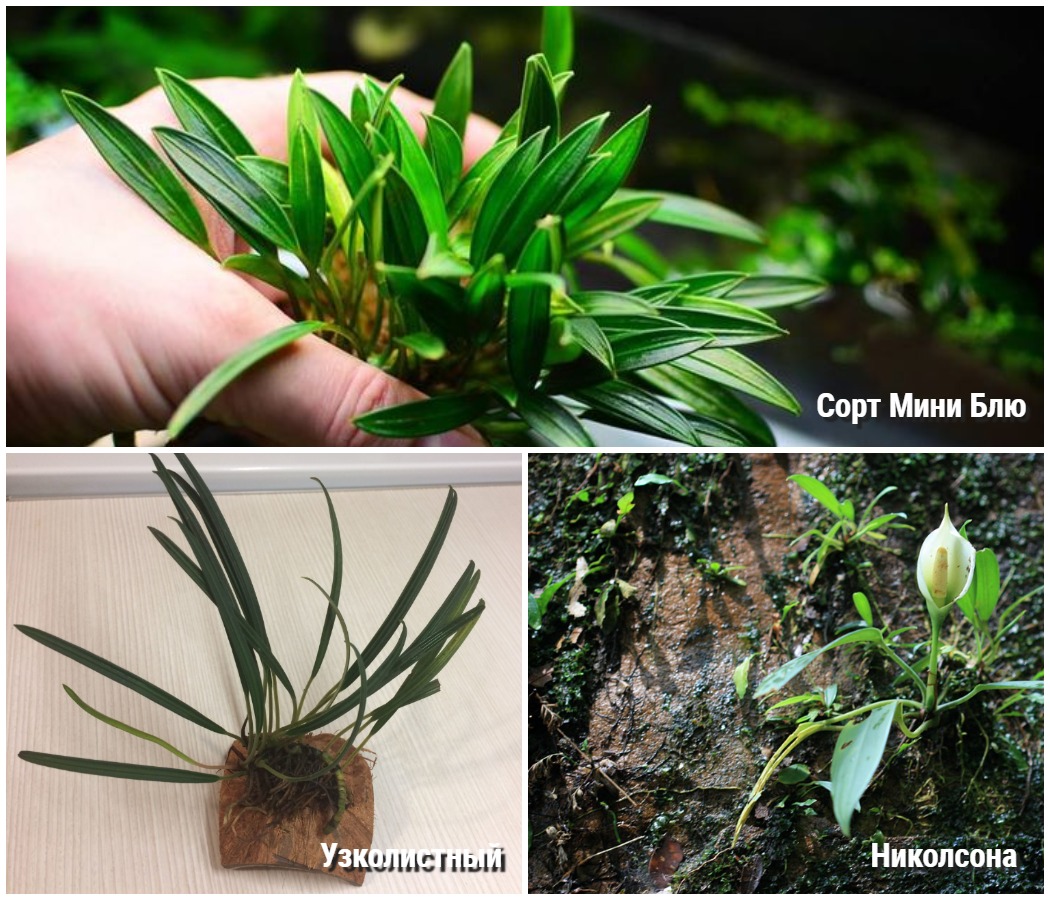
Well-known species (types): Narrow-leaved (Narrow-leaved), Nicolson (nicolsonii). The beautiful variety Mini Blue (Mini Blue).
Care
Planted by tying it to a snag or boulder with nylon thread. Prefers warm water and adequate light.