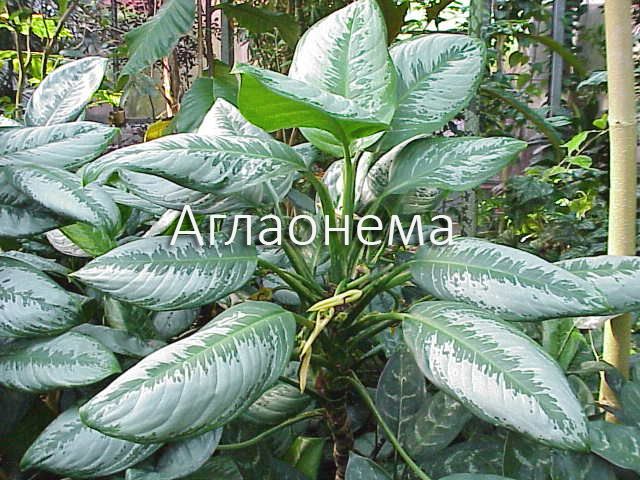
The ornamental houseplant Aglaonema belongs to the evergreen angiospermous shrubs of the Araceae family. It grows naturally in Southeast Asia, India, and the lowlands of China. Botanists have identified more than 23 varieties of this ornamental plant.
Content
- 1 Description
- 2 Varieties
- 2.1 Modest or moderate (Modestum)
- 2.2 Rotundum
- 2.3 Ribbed (Costatum)
- 2.4 Treubii
- 2.5 Painted (Pictum)
- 2.6 Stripes
- 2.7 Curly (Crispum)
- 2.8 Commutatum
- 2.9 False bract (Pseudobracteatum)
- 2.10 Crete
- 2.11 Maria Christina
- 2.12 Silver King
- 2.13 AnYaManee
- 2.14 Cutlass
- 2.15 Sapphire Suzanne
- 2.16 Super White
- 2.17 Siam Aurora
- 2.18 Shiny (Nitidum)
- 2.19 Marantifolium
- 3 Home care
- 4 Methods of propagation of aglaonema
- 5 Difficulties of growing
- 6 Benefits and harms, advice
Description
The flower has a strong, upright stem with green, smooth internodes. In some species, the stem branches, while in others, it is virtually invisible, becoming noticeable only in mature plants. Inflorescences form in the axillary cavities, with up to three flowers forming simultaneously. The inflorescence stalk bends under the weight of the fruit during flowering. The seed capsule is spherical or cylindrical, depending on the Aglaonema species. The spadix is long, reaching 60 mm in length, with a maximum thickness of 0.5 mm.
Varieties
Of the numerous species available in apartments and flower shops, you can find the most original ones, each with its own distinctive coloring and leaf shape. Each species is beautiful in its own way. Aglaonema can be used to create a unique collection.
Modest or moderate (Modestum)
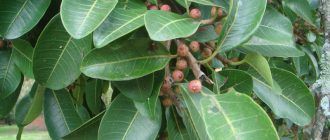
Native to the Philippines, it has a distinctive dark green color. Its thick, leathery leaves are 10 cm long, reaching 20 cm. The shrub is a variety of modestum. Growing up to half a meter, this medium-sized plant produces small red fruits (berries). It grows slowly, producing up to six shoots with prominent veins each year.
Rotundum
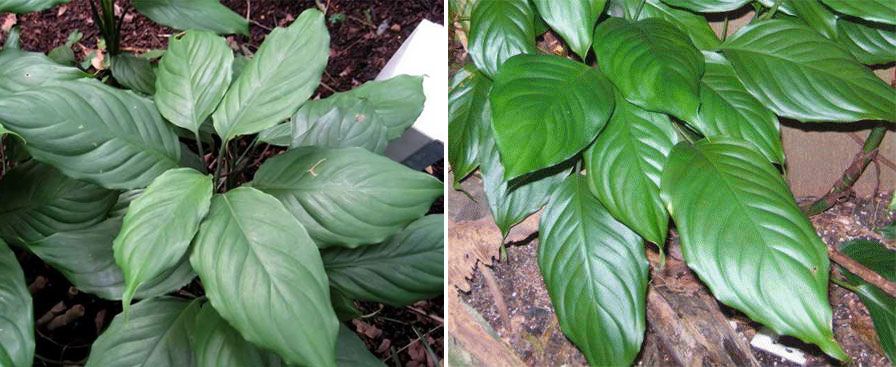
Distinguished from other varieties by its pointed, heart-shaped leaves, the rotundum variety has small, colored veins running parallel to the pattern, ranging in shade from light to bright crimson. The bush is compact and dense. The stem is virtually invisible, located underground. The inflorescences are small, and the spathe is small.
This is a very demanding flower variety to care for; it is important to adhere to the fertilizer composition and not change the watering regime.
Ribbed (Costatum)
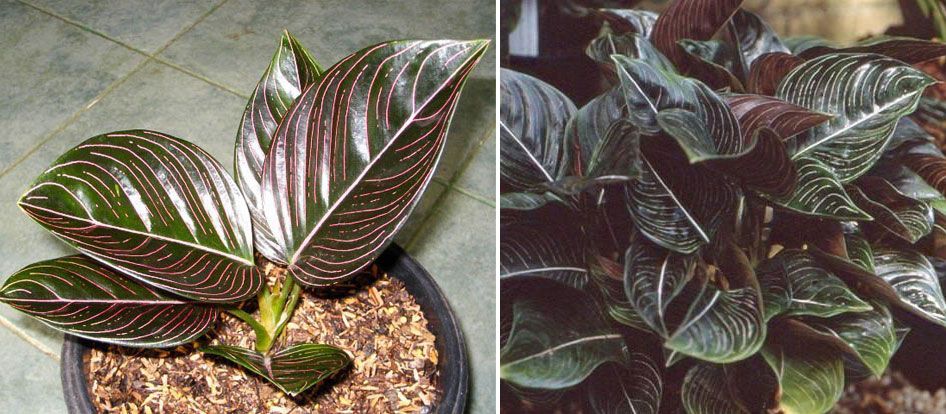
Native to southwestern Malaysia, the costatum species is considered the smallest. The stem has no aerial portion, and the petioles of the dense, dark green leaves are short. Decorative features include light spots of varying intensity or streaks on both sides of a bright vein, ranging from 13 to 20 cm in length and 5 to 8 cm in width. Bushes of the same species may vary slightly in the intensity of the variegation.
Treubii
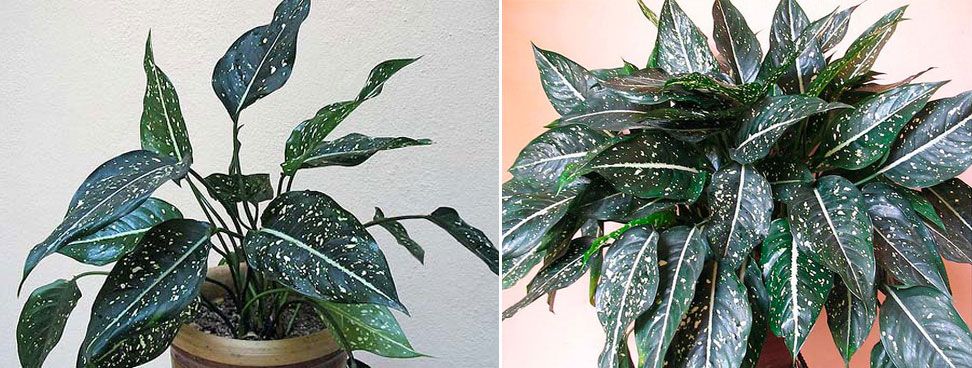
With a narrow, medium-length leaf, ranging from 7 to 12 cm. The most unpretentious variety, the coloring is variegated, with ash-colored spots resembling brushstrokes. The bush is medium-sized and dense. Commutatum has a branched trunk, with spots located near the veins.
Painted (Pictum)
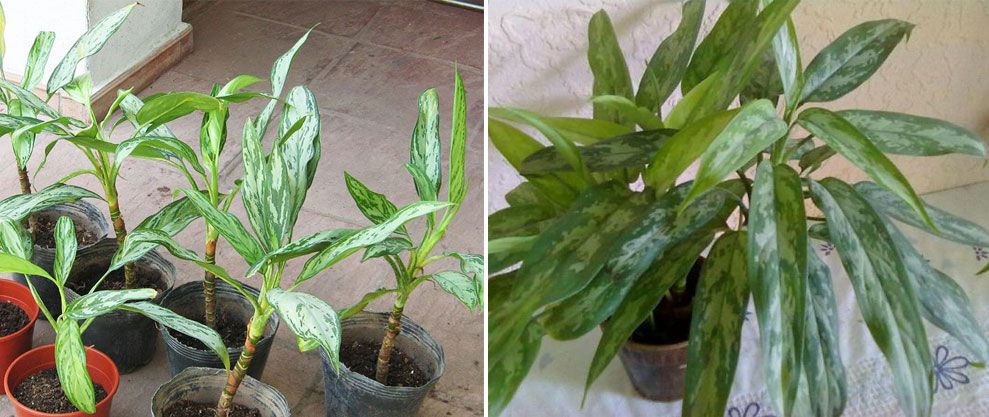
It has elliptical, slightly tapered leaves with a bluish tint, white to silvery spots of indistinct shape, a trunk with active branches at the base, and a dense crown. Tricolor varieties are also available. The trunk is knotty, with a decorative silvery hue, with a delicate sky-blue tint. The bush reaches 60 cm.
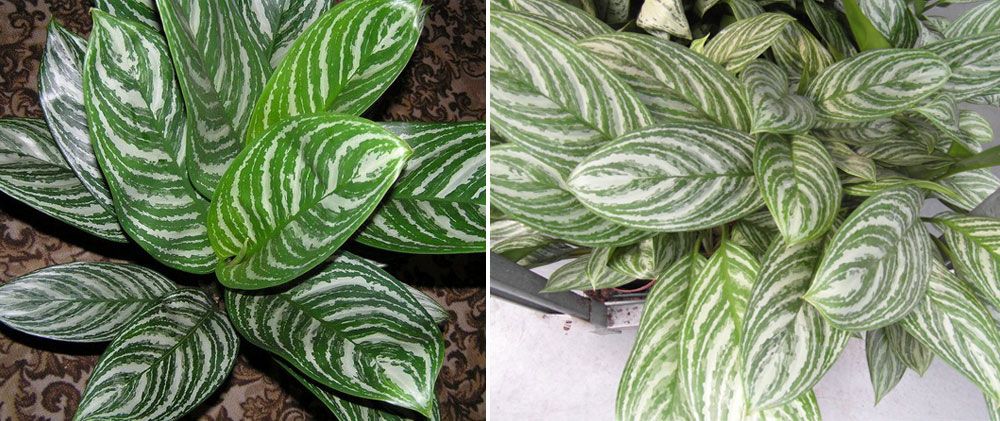
Stripes
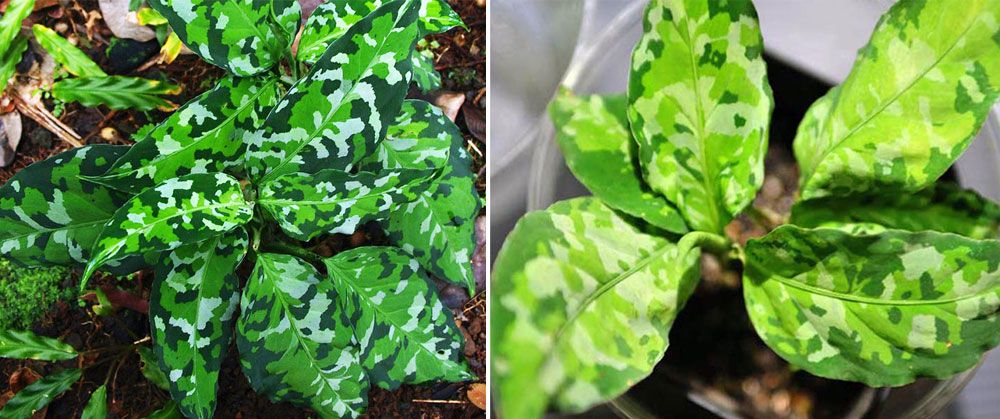
It features a feathery white leaf pattern, extending from the center to the edge. The bush grows up to 60 cm, medium in size and spreading.
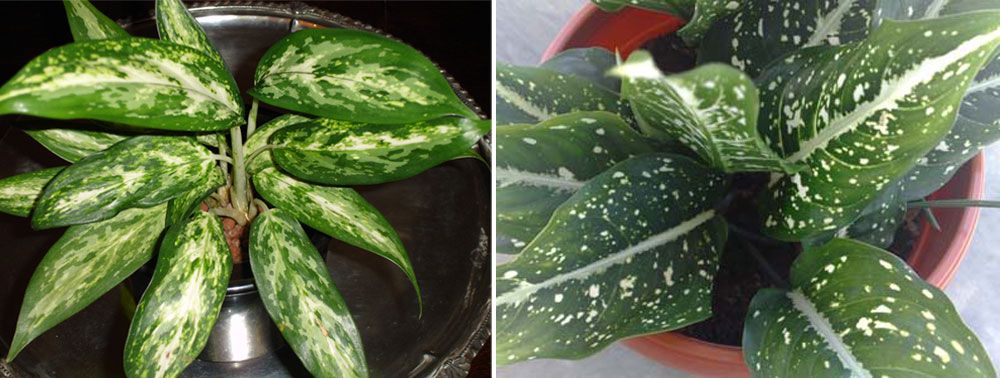
Curly (Crispum)
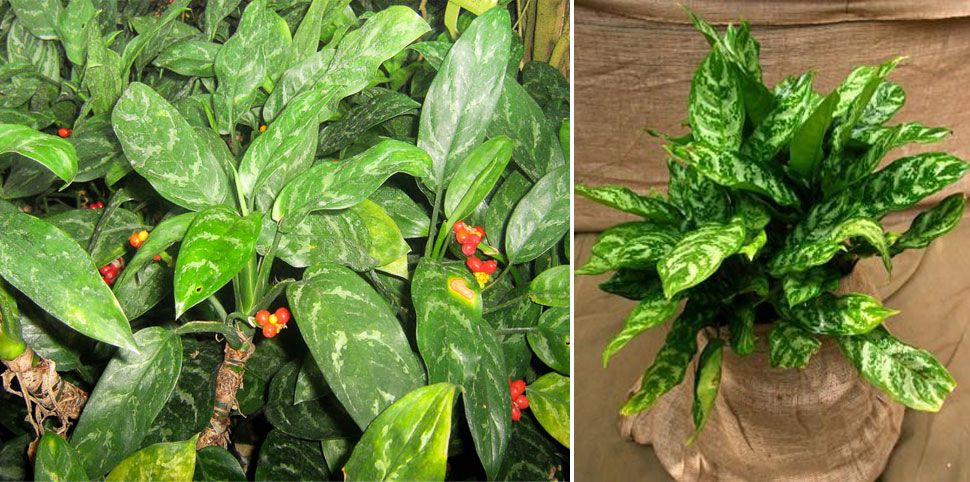
There are several varieties of roebelenii. This tall plant grows to a height of 100 cm, with a wide-spreading habit and a branched trunk. The shoots extend up to 30 cm and are up to 12 cm wide. The species is characterized by irregular white spots with a slight silvery sheen. The spathe is green, gradually turning yellow. The berries are yellow, later turning red.
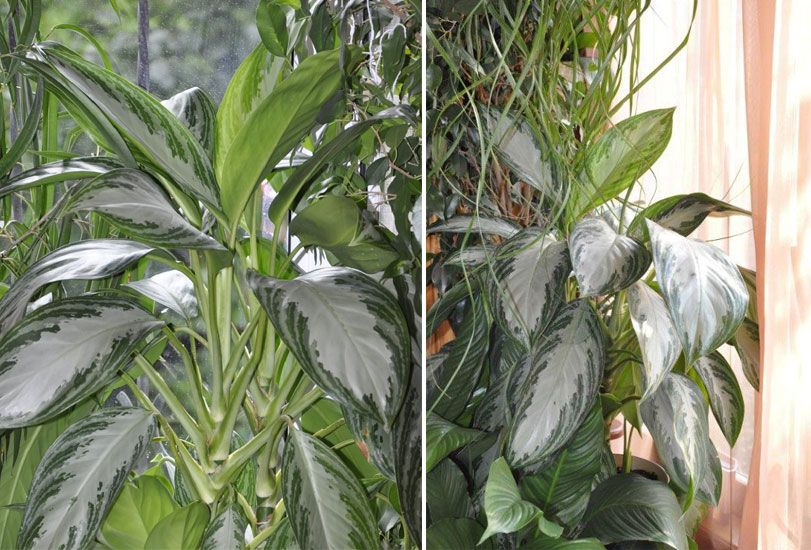
Commutatum
It has a fine pattern. The leaves are velvety, striped, and narrow. Each leaf has 3 or 4 stripes. The petioles are long, reaching 25 cm. The stems are erect and long. The spadix is up to 6 cm, and the red, round fruits add decorative appeal.
The immaculatum variety has a white top, while the virescens variety has no green on either side.
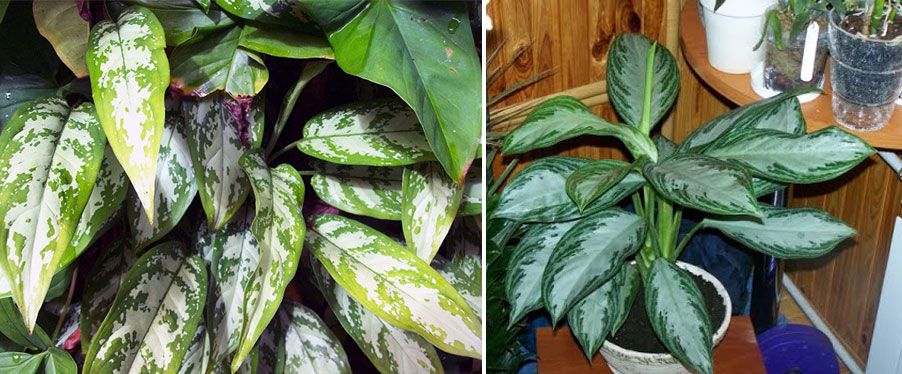
False bract (Pseudobracteatum)
Tall, with short petioles and a light, creamy hue. Undemanding, but sun-loving, it shies away from direct sunlight, making it difficult to find a suitable location. Its decorative appeal comes from the wavy borders of its leaves.
Crete
Characterized by a gray-green color with a vibrant reddish veining, it's called red aglaonema, and there are varieties with a pink border on the upper leaf margins, with salmon-colored undersides.
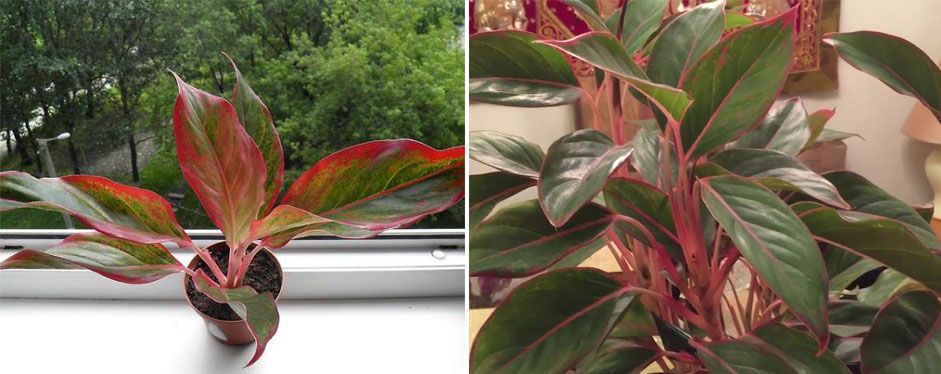
Maria Christina
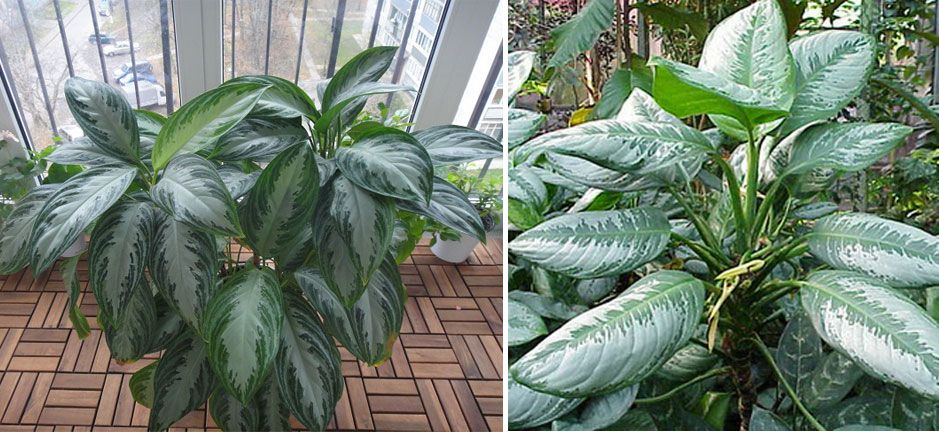
It has large, rounded, silvery leaves with green spots creating a blurred pattern, and the uneven edging creates a decorative effect. The leaves form a dense crown around the trunk. The edges of the foliage are slightly curved outward. The bush is compact and low-growing. The spathe is greenish in color, and the berries are initially yellow, later turning red.
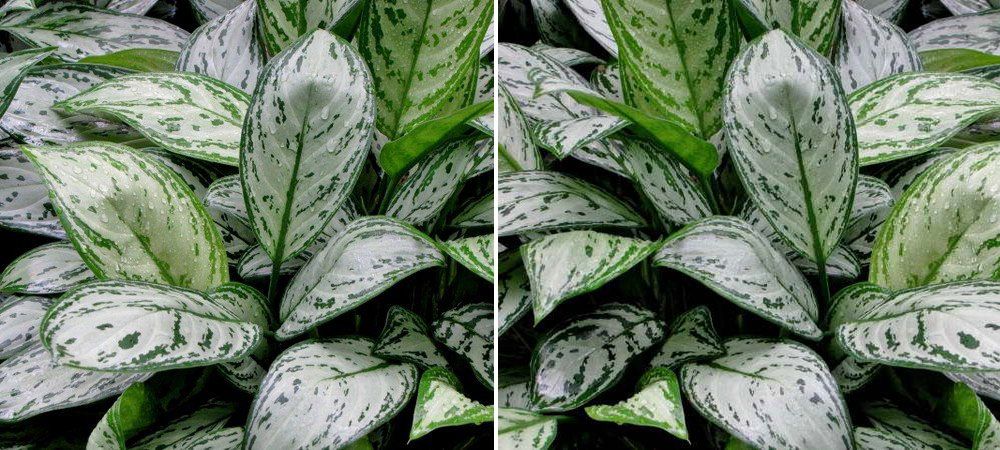
Silver King
Forms a compact, dense bush with vibrant coloring, silvery-green toward the center, with darker strokes along the edges. The leaves are elongated with a pointed tip, glossy, dense, and have subtle ridges. New shoots curl into tubes.
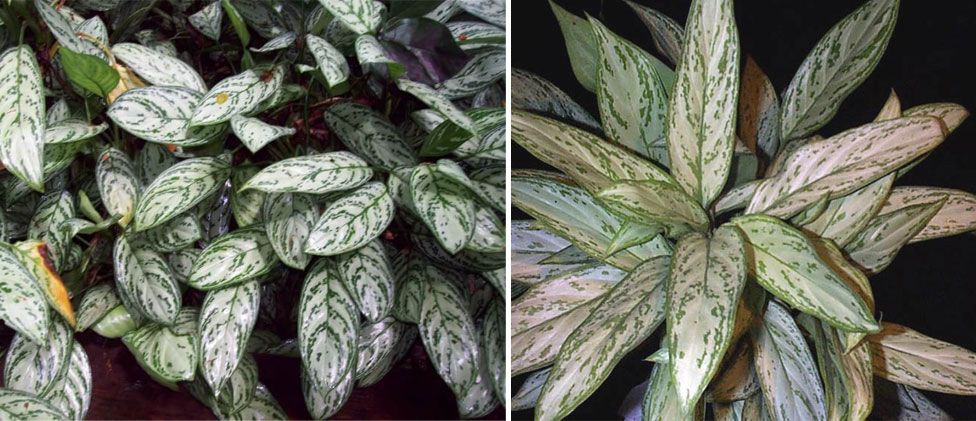
AnYaManee
One of the most common red varieties of aglaonema, it has large, heart-shaped leaves. Its decorative appeal is enhanced by the dark green, uneven borders of the reddish leaf and fine brushstrokes. The color ranges from reddish-pink to deep dark green. Young plants are paler than mature plants, with fewer brushstrokes and shades.
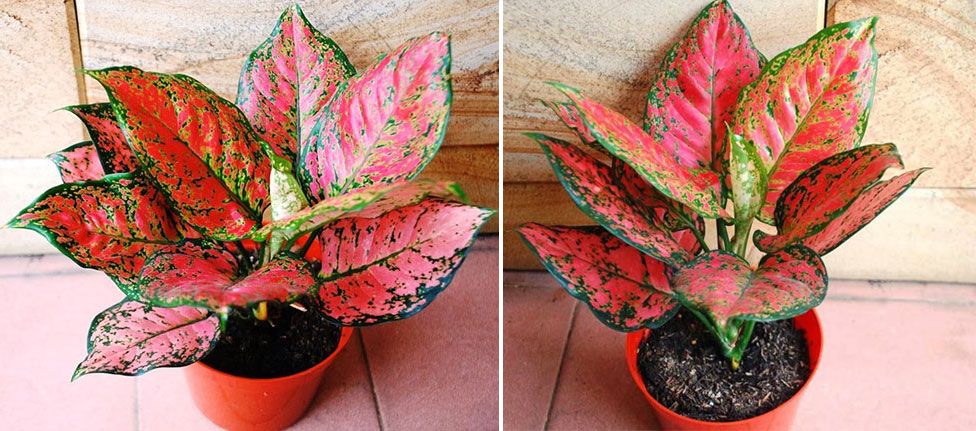
Cutlass
A tall variety of this flower. The leaves are long, elongated, silvery, light green with dark green veins and streaks. This hybrid was developed in India. The basal rosette is dense, and the stem is practically invisible.
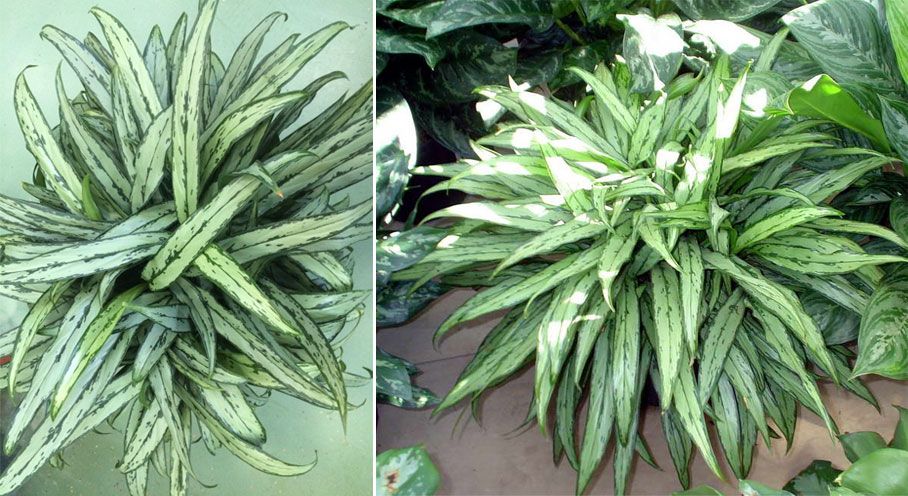
Sapphire Suzanne
Considered the most delicate variety due to the light salmon color of its petioles. They darken slightly toward maturity. The leaves are long, characteristic of aglaonema, unevenly colored with reddish-orange veins. They are smooth, dense, and uneven when held up to the light. The flower forms a large yellowish inflorescence, with a white, fairly dense spathe.
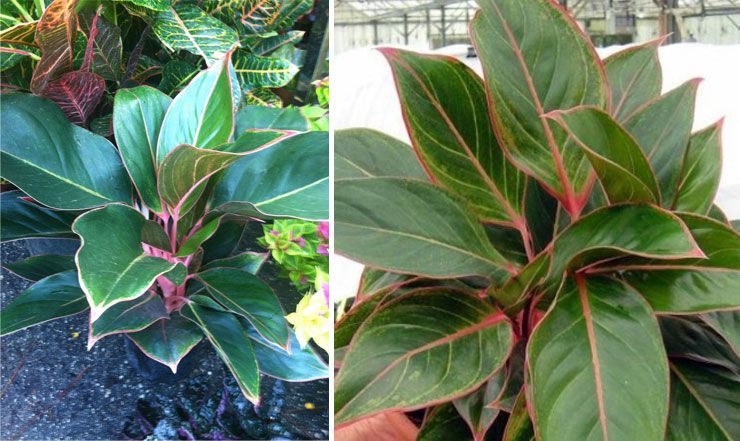
Super White
It has virtually no greenery, only a small, thin border along the leaf edges. Sometimes, a light greenish splash can be found in the center and where it connects to the petiole. Super White forms a dense, low-growing bush, up to 30 cm tall.
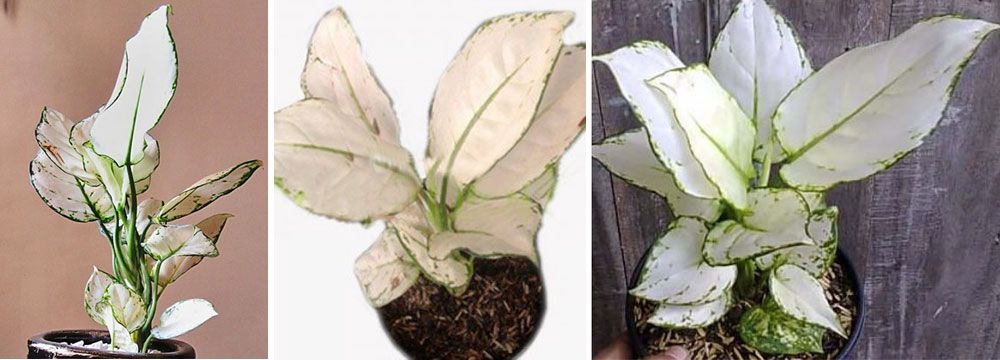
Siam Aurora
Recognizable by its pinkish petioles and red leaf margins. The stem is invisible, and the rosette is dense. The leaves are slightly arched, darkening toward the center. The markings are reddish.
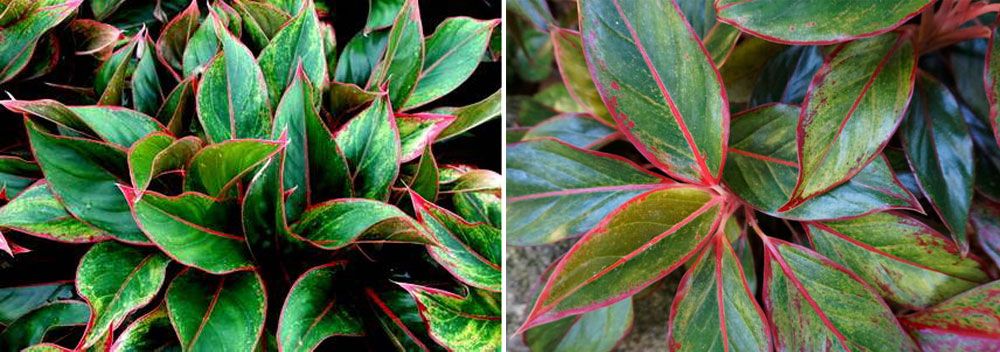
Shiny (Nitidum)
Medium-sized. The leaves are elongated, growing over 40 cm, and glossy. The coloring is variegated, and the petiole is elongated. The inflorescences are dense, with a thin, small, greenish spathe.
Marantifolium
It forms a dense, spreading bush with medium-length petioles and dark, green, elongated, glossy leaves. Sometimes it has a faint silvery pattern.
Home care
Growing aglaonema indoors isn't a big hassle for gardeners. The plant isn't particularly demanding. It's important to remember that it's native to southern latitudes, so it's best to follow the advice of experts.
Aglaonema responds well to pruning: it begins to bush out. Leaf growth is stimulated by cutting out the flower stalks.
Choosing a location
Aglaonema grows in shady forests and dislikes direct sunlight, as it can burn the leaves. It prefers filtered sunlight; place the pot on an east- or west-facing window; in a conservatory, keep it away from the direct sunlight.
The flower loves a lot of air, it needs oxygen, but it cannot stand drafts.
Temperature and humidity
During the summer, the active growth season, agloneoma requires temperatures between 20°C and 25°C. In winter, it thrives at temperatures no lower than 18°C.
This heat-loving plant requires subtropical humidity. In winter, it's especially important to humidify the room, mist the plant periodically, and shower. This will ensure the plant looks pleasing.
Soil
Aglaonema grows well in a ready-made soil mix for aroids, which can be purchased at the store. To prepare the mixture at home, mix equal parts peat, sand, and moss, mix thoroughly, and remove any large particles. The soil should be loose and nutritious, with a high organic content.
Watering
Water the soil moderately and regularly. Avoid allowing it to dry out. Water with settled, soft water at a temperature of 20°C. In spring and summer, aglaonema requires more moisture than in winter. Avoid stagnant water during cold weather, as this can lead to root rot.
Top dressing
The plant needs periodic feeding; nutrients are washed out of the soil over time.
Twice a month, during watering, apply a mineral complex fertilizer for flowers. It contains nitrogen, phosphorus, potassium, calcium, and microelements in the right proportions.
In summer, foliar feeding is done: the leaves are sprayed with a fertilizer solution, for this the prepared solution is diluted by half.
Transfer
After purchase, the plant is transplanted into a wide pot using the transshipment method. The root ball should be dried first to prevent it from crumbling. Drainage material (clay shards or expanded clay) is placed at the bottom of the pot to ensure adequate water drainage. It's important not to bury the flower rosette. Press down on the plant to prevent air from entering the roots. It's recommended to repot the plant every 3-4 years. It can be divided or placed in a new, spacious pot, 2-3 cm wider and taller than the previous one.
;
Methods of propagation of aglaonema
The plant is grown from seeds, cuttings, and parts of bushes. Propagation occurs in the spring, during the active growth period.
Cuttings
- choose a dense mature stem;
- cut it 3 cm above the soil surface and remove the leaf;
- divide the stem into 5 cm pieces;
- deepen into the soil to the middle;
- create greenhouse conditions: cover the cuttings with a glass container to prevent condensation from evaporating.
After two weeks, full-fledged roots will form and the plant can be transplanted into a pot.
;
Growing from seeds
The seeds are extracted from ripe berries, washed thoroughly, and placed in a 1:1 mixture of peat and sand. For germination, place the seeds in a warm place, moistening the soil regularly.
Seedlings appear within a week. A full-grown bush develops within 3 years.
Division
Side shoots with roots are cleared of old leaves, carefully broken off, and planted in soil. This is the easiest way to propagate the flower. To ensure good rooting, a transparent cover is placed over the seedling, creating greenhouse conditions.
Difficulties of growing
|
Flower condition |
Cause |
Elimination |
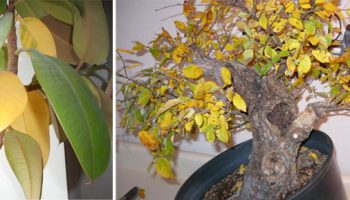
| Wrinkles have appeared on the leaves, and there is darkening at the ends. | The air is too dry. | Spray the plant, place the pot in a wide container of water. |
| The leaves turn brown at the edges and curl up. | It's too cold, the flower is standing in a draft. | Move the pot to another location. |
| White and yellow spots appeared. | Sunburn. | Place in the shade for a while, then spray. |
| Foliage growth has slowed down and the edges have turned brown. | Watering with cool or hard water. | Heat the water; if it is warm, add oxalic acid at a rate of 0.2 g per 10 liters of water. |
| Insect damage is visible, leaves have turned yellow. | Aphids, spider mites, mealybugs. | Treat with an acaricide. |
| Uneven spots appeared. | Fungal diseases. | Fungicides will help. |
Benefits and harms, advice
Aglaonema leaves have bactericidal properties, purifying the air of pathogenic flora. They effectively neutralize harmful organic components, including various phenols. They emit air ions, which enhance the body's defenses and have a beneficial effect on the immune system and nervous system.
It is recommended to place the flower at the bedside of patients infected with streptococci.
Besides its benefits, aglaonema also poses a danger: the plant's sap is poisonous, so you must wear gloves when trimming the leaves, and never rub mucous membranes while working.
The fruits contain high levels of toxins. They can be dangerous for children and animals.