Philodendron is an evergreen plant native to South America. This member of the Araceae family is widespread throughout the world. Philodendrons are now used as houseplants.
Content
Description of Philodendron
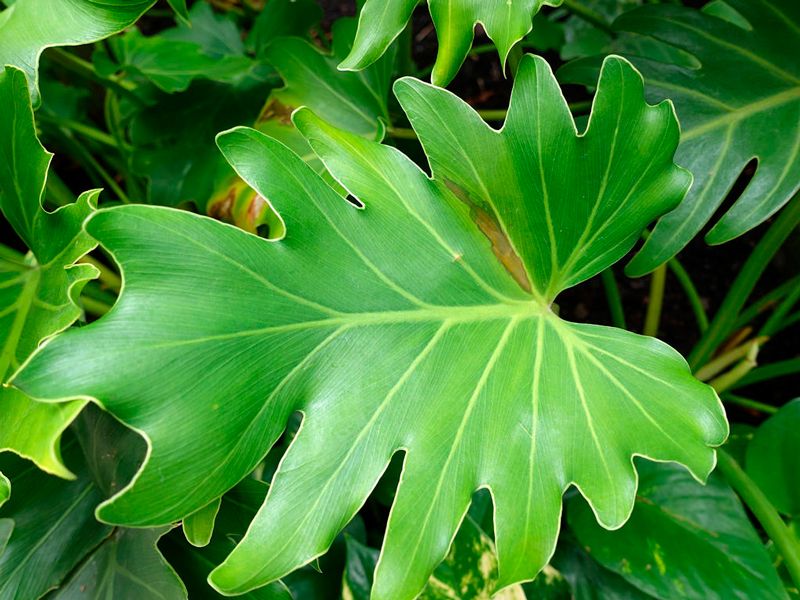
It has large green leaves that can be oval, heart-shaped, rounded, or arrow-shaped. The stem is thick and woody from the base. Depending on the species, it may have underground and aerial roots, which help epiphytes attach to other plants.
The philodendron's inflorescence resembles a medium-sized whitish spadix, topped with a pinkish hood (spatula). The fruits are small, poisonous berries containing seeds.
Popular types of philodendron for the home
The genus Philodendron includes approximately 900 species, but only a few are used as houseplants. All members have similar flower structure and coloration, but differ in leaf shape, stem size, and other characteristics.
| View | Description | Leaves |
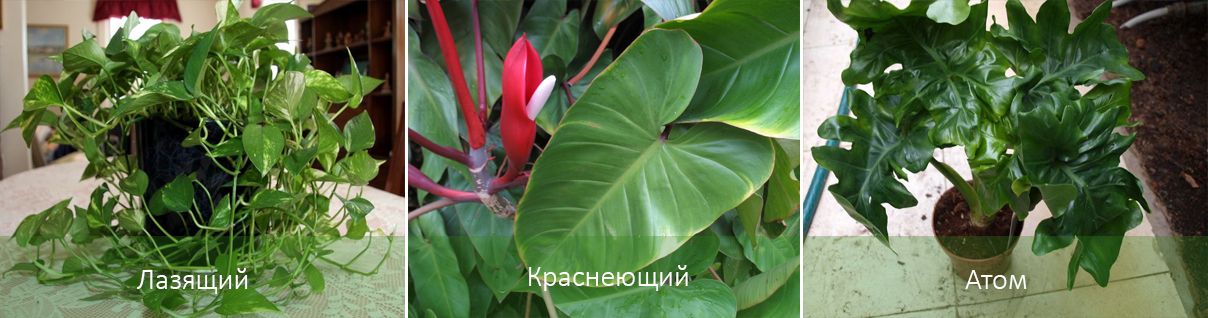
| Climbing | 200 cm. Semi-epiphyte, spends most of its life growing as a climbing vine. | 20-30 cm long, reddish, velvety. They have an elongated, heart-shaped form. |
| Blushing | 150-180 cm. The stem is a non-branching vine, woody from the base. | Elongated, pointed towards the end. 25 cm long, 10-18 cm wide. Long burgundy petioles. |
| Atom | Small, has a shrubby structure. | Up to 30 cm long, shiny, covered in wax. Dark green, slightly curled, with wavy edges. |
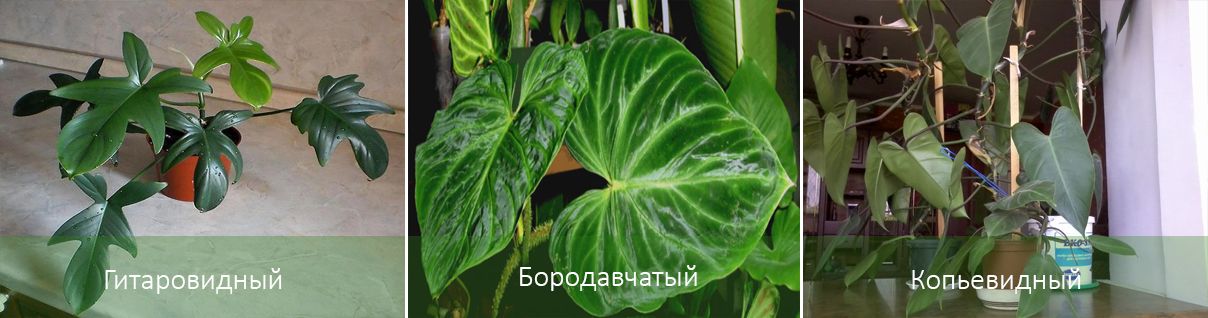
| Guitar-shaped | Liana 200 cm tall. | 20-35 cm. Heart-shaped, elongated towards the end. Mature leaves are guitar-shaped. |
| Warty | A medium-sized epiphyte that requires support. | Dark green with a bronze tint, heart-shaped. 20-25 cm long. Veiny. Petioles are covered with hairs. |
| Hastate | A long, elastic liana up to 500 cm in height. | 35-45 cm. Glossy, rich green with an acidic sheen. The edges become wavy over time. |
| Sello | A tree-like shrubby plant, 100-300 cm. | Up to 90 cm long, 60-70 cm wide. Large, slightly twisted cuts. |
| Xandu | Ground-dwelling, woody stem. Reaches large sizes. | Round, lobed, dark green, glossy. |
| Cobra | Compact semi-epiphyte. | 14-25 cm long. Elongated, decorative coloring. |
| Burgundy | A small woody branching stem. | 10-15 cm long, 8-14 cm wide. Dark green with a burgundy tint. Elongated towards the ends, elliptical in shape. |
| White Marble | Medium, shrubby or epiphytic structure. | Oval, slightly elongated with a pointed end. Petioles are burgundy, covered with white streaks. |
| Goldie | A compact, branching vine with a strong root system that requires support. | Light, with a white tint. Elongated, sinewy, matte. |
| Jungle Boogie | A woody semi-epiphyte with a fleshy, elastic stem. | Long, with large, numerous cuts, dark green, pointed tip. |
| Varshevich | A large evergreen semi-epiphyte with branching shoots. | Thin, light green, small in size. Pinnately dissected. |
| Magnificum | Medium-sized, dark green stem. Root system up to 10 cm long. | Dense, glossy, with wavy edges, elongated in shape. |
| Ivy-shaped | An ascending, dense stem with long, brownish roots. | 15-40 cm. Wide, heart-shaped, dark green, leathery. |
| Lobular | A long epiphytic liana, woody at the base. | 40-60 cm, lobed, shiny, covered with a waxy coating. |
| Radiant | An epiphytic or semi-epiphytic plant of small size. | 15-20 cm long, 10-15 cm wide. The shape changes with age from elliptical to more elongated. |
| Jellyfish | Burgundy stem, compact, easy to care for. | Light green and olive with amber tint. Glossy. |
| Mediopikta | Compact semi-epiphyte. | Variegated, emerald, elongated towards the end. |
| Elegant | A large, branched plant with a woody stem. | 45-50 cm long. Large, light green, with deep cuts. |
Philodendron care
To ensure that your philodendron grows healthy, it needs to be properly cared for.
| Factor | Spring-summer | Autumn-Winter |
| Location | Place in the eastern or western part of the room, where there is direct access to sunlight. | Avoid placing the pot near heating devices. Avoid drafts. |
| Watering | It loves moisture. The soil should not dry out, and the expanded clay should be kept moist. | If comfortable conditions persist, maintain regular watering. Avoid watering on cold days. |
| Humidity | 60-70%. Spray the plant once every 2-3 days; if the room is hot, increase the frequency to twice a day. You should also wipe the leaves with a damp cloth. | Avoid misting at low temperatures, otherwise the plant will rot. However, if the air is too dry, place a humidifier or a container of water near the pot. |
| Temperature | +22…+28 °С, requires regular ventilation, can also tolerate higher temperatures with appropriate humidity. | It should not fall below +15 °C, otherwise the plant dies. |
| Lighting | Needs bright light, but does not tolerate direct sunlight. | Increase daylight hours using phytolamps. |
Selecting a container and soil, transplanting rules
The container should be wide and deep, since the philodendron's root system is long and has multiple branches. It is also necessary to make drainage holes in it to allow excess moisture to escape.
You can use orchid substrate with added peat or make your own: mix equal parts charcoal, pine needles, sand, peat, perlite, and turf soil. For added nutrition, sprinkle with bone meal or horn shavings.
If the philodendron is young, it should be repotted once a year; for mature plants, once every 3-4 years is sufficient. As soon as roots begin to emerge from the drainage holes, it's time to prepare a new container of an appropriate size.
- Place drainage material (foam, expanded clay) at the bottom of the pot.
- Add soil mixture on top.
- Remove the plant from the old container without damaging the roots.
- Place the Philodendron in the center, without removing the support, if there is one.
- Add the rest of the substrate and water thoroughly so that the soil settles and is saturated with moisture.
- The root collar does not need to be deepened.
You can also use the transshipment method:
- Use a knife to remove soil from the edges of the pot.
- Lift the philodendron out of the container along with the root ball.
- Move the plant to a new prepared pot.
- Add soil and water thoroughly.
Formation, support
To create a beautiful crown, regularly trim dead leaves and branches. Do this in spring and summer, without damaging healthy parts of the plant.
Support is needed for epiphytic species that require vertical growth. This can be achieved using a moss stem, various stakes, trellises, or a damp vertical wall.
Watering, fertilizing
In the wild, philodendron thrives in seasonally changing rainfall patterns, alternating between periods of rain and drought. Indoor conditions don't accommodate such moisture, but watering should be adjusted according to the season.
In spring and summer, the plant should not be watered too often; it is enough to prevent the soil from drying out.
The substrate should always remain moist. In autumn and winter, reduce watering and do so only after half the soil has dried out.
It is necessary to ensure that the soil does not dry out, otherwise the philodendron will die.
Fertilize with nitrogen-, phosphorus-, or potassium-containing fertilizers once every two weeks in spring and summer, and once a month in fall and winter. Reduce the solution concentration by 20% of the recommended dosage. Organic fertilizers such as pine needles, tree bark, sawdust, and moss can also be used.
Propagation of Philodendron
Philodendron reproduces in two ways: by seed and vegetatively. However, seed propagation is rarely practiced indoors, as the plant rarely flowers and is not self-pollinating.
The second method is carried out in the spring-summer season.
- Cut the shoot with 2-3 internodes using a disinfected knife.
- Treat the cut area with charcoal.
- Prepare a container with mineral substrate.
- Make small holes in the soil and place the cuttings in them. The green part should remain above the surface.
- Create greenhouse conditions: regularly spray the soil, cover the container with film, maintain bright lighting, room temperature and ventilate once a day.
- After 20-25 days, transplant the plant into a standard container with prepared soil and drainage holes.
Mistakes in Philodendron Care
| Symptoms
Manifestations on leaves |
Cause | Methods of elimination |
| They turn yellow and dry out. | Lack of minerals, direct sunlight, dry air. | Increase the amount of watering and shade the philodendron. |
| Transparent spots appear. | Burn. | Place the plant in partial shade and cover. Spray regularly. |
| The roots are rotting. | Increased soil hardness, excess moisture, fungal infection. | In the first case, soften the soil with bark. In the second, normalize the watering regime. Physan will help against fungus. |
| They are fading. | The air is too cold or damp. | Adjust the air humidity to around 70%. Monitor the temperature. |
| Philodendron is not growing. They turn pale. |
Substrate depletion. | Increase the fertilizer or transplant the philodendron into new nutritious soil. |
| Yellow spots on the surface. | The light is too bright. | Shade or move the plant to the western part of the room. |
Diseases and pests of philodendron
| Symptom | Cause | Methods of elimination |
| The roots rot, and a black coating appears on them. The shoot and all the leaves dry out. | Bacterial rot. | Trim off all affected parts of the plant and treat the cut areas with Fitosporin. Then, change the soil and disinfect the pot. Tetracycline (1 g per liter) can also be used. |
| Black spots appear on the outer surface of the leaves. The stem is often covered with brown stripes. | Viral infection. | The infection is incurable. The plant must be removed to prevent it from spreading to other flowers. |
| The shoots die off and the leaves become covered in spots. | Scale insect. | Use Permethrin, Bi 58, Phosphamide, Methylmercaptophos or soap solution. |
| Small green insects on the surface of the leaves and stem. The philodendron is dying. | Aphid. | Lemon juice tincture, Intavir, Actofit. |
| The stem and leaves are covered with a thin, dense white web. | Spider mite. | Water regularly, apply Neoron, Omite, Fitoverm according to the instructions. |
| Wax deposits and white spots on leaves. | Mealybug. | Remove the affected parts of the flower, remove the insects, and treat with Aktara, Mospilan, Actellic, or Calypso. |
Top.tomathouse.com explains the benefits and harms of philodendron.
Philodendron sap is toxic and causes skin irritation. Therefore, gloves should always be worn when handling the plant. However, the plant also has beneficial properties: its broad leaves purify the air of toxins and help reduce harmful bacteria.