Juniper is often found in landscape designs for cottages and private homes. This is due to its high decorative qualities and its undemanding nature, as well as its ease of care. However, for the bush to thrive, certain rules must be followed. In this article, we'll explain how to plant juniper outdoors in the fall.
Content
- 1 When is it better to plant juniper: spring or autumn?
- 2 When to plant juniper in autumn: optimal timing
- 3 How to choose a high-quality juniper seedling and its preparation
- 4 Where to plant juniper in the garden: choosing a location
- 5 How to prepare a planting hole for autumn planting
- 6 Planting Juniper in the Fall: A Step-by-Step Guide
- 7 Caring for juniper after planting in autumn
- 8 Tips for gardeners on caring for junipers from Top.tomathouse.com
When is it better to plant juniper: spring or autumn?
Opinions differ on when it's best to plant junipers outdoors—spring or fall. Some believe early spring is preferable. However, this isn't the only option. You can purchase closed-root cuttings (hereinafter referred to as closed-root cuttings). These are suitable for planting at almost any time of year, including during the winter thaw.
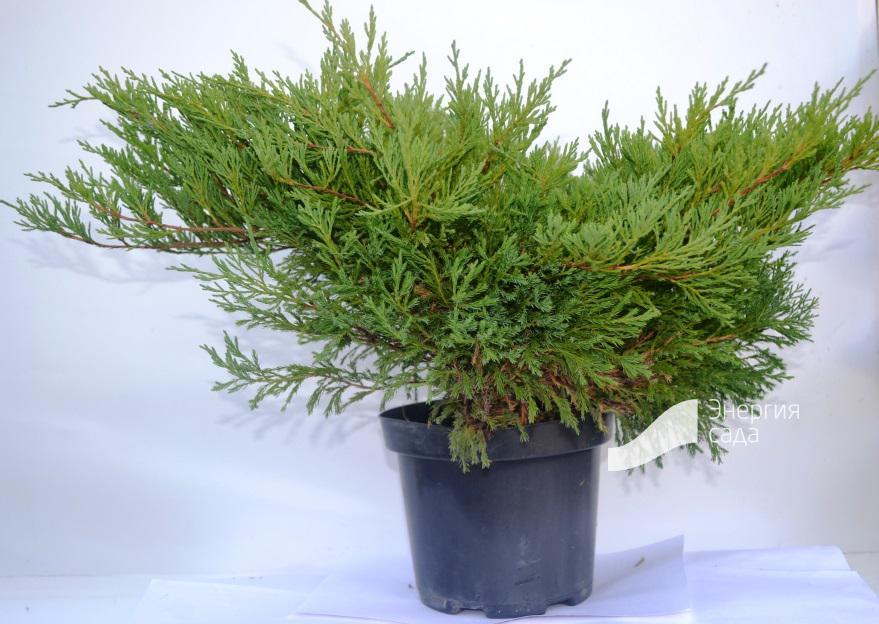
Many experienced gardeners believe that planting junipers such as Cossack, Horizontal, Rocky, Creeping, and other varieties in the fall is more successful. The seedlings will root better and survive the upcoming frosts.
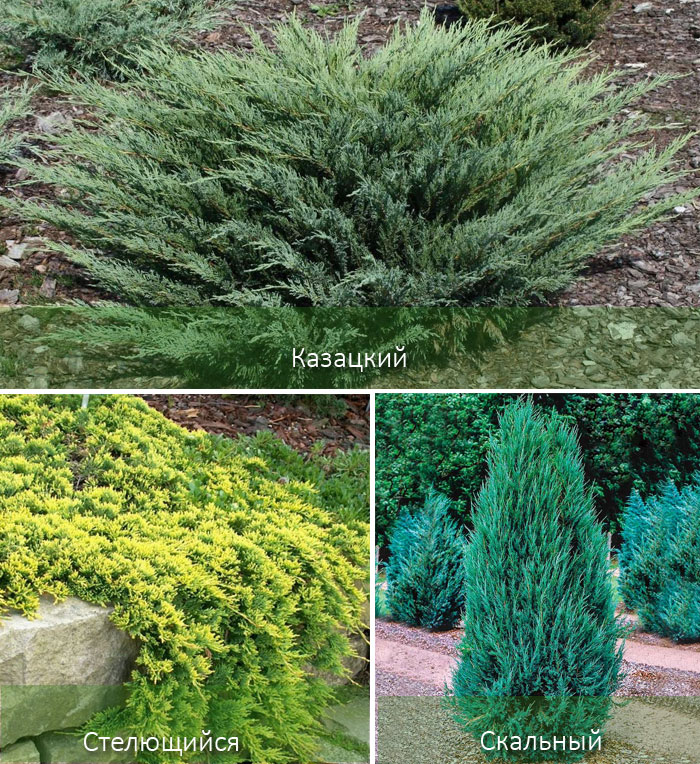
Read more about rock juniper varieties in the article Rocky Juniper: Planting and Care
Many beginning gardeners wonder whether it's possible to plant a tree in the fall in the Urals and Siberia. Of course, such planting is extremely risky in northern regions. However, if planting in the spring wasn't possible, it can be done in early fall. The tree will have time to root, unless planted too late, but it won't begin to grow, which is highly undesirable for overwintering.
When to plant juniper in autumn: optimal timing
When choosing planting dates, you should rely on the region and the recommendations of the Lunar calendar.
By region
Deadlines by region:
- central Russia, including the Moscow region - late September - early October;
- Siberia, Urals, North-West regions - September;
- Southern regions - October, if the weather is warm, then also the beginning of November.
According to the lunar calendar for 2023
| Month | Favorable days | Unfavorable, prohibited days |
| September | 3 (from 18:00)-5 (until 23:05), 8 (from 07:59)-10 (until 19:35), 13, 16-20 (until 17:06), 23, 24 | 1 (from 16:25)-3 (until 18:00), 14, 15, 25-26, 28 (from 12:58 p.m.), 29, 30 |
| October | 1-3 (until 08:02), 5 (from 15:32)-7, 10 (from 15:02)-13 (until 20:55), 15 (from 14:04)-17 (until 22:36), 20-22 (until 09:06), 24-26 | 14,15,28,29. |
| November | 2-4 (until 10:20), 6 (from 22:39)-12 (until 12:26), 16 (from 10:41)-18 (until 14:27), 20 (from 17:29)-22 (until 20:19), 25-26 (until 12:16), 29 (from 09:53)-30 | 12 (from 12:26 p.m.),13, 14 (until 12:26 p.m.), 18 (from 2:27 p.m.)-20 (until 5:29 p.m., 22 (from 8:19 p.m.)-24, 26 (from 12:16 p.m.),27, 28 (until 12:16 p.m.) |
Read the articles:
- Lunar calendar for the gardener for 2023.
- Lunar calendar for gardeners for September 2023.
- Lunar calendar for the gardener for October 2023.
- Lunar calendar for the gardener for November 2023.
How to choose a high-quality juniper seedling and its preparation
Selecting a good seedling is crucial, as it will directly impact the plant's survival, adaptation, and successful development in the coming season. Planting material should only be purchased from specialized stores and garden centers.
Saplings of this conifer are sold with a closed root system (CRS). That is, the root system is placed in a ball of soil, which is then placed in a pot or other container. These cuttings are also called container-type. This type of planting material is easy to work with.
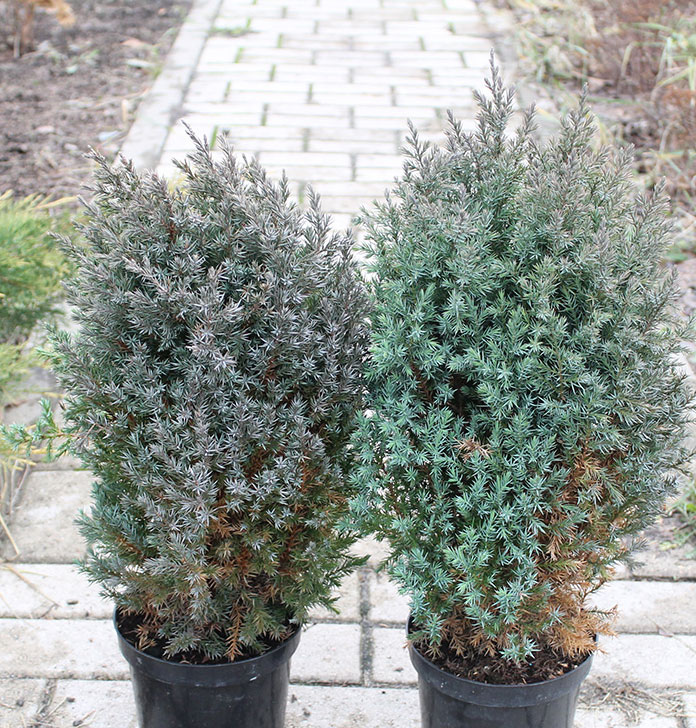
There are also seedlings with an open root system (ORS), meaning their roots are exposed. However, this option is extremely rare. Furthermore, an ORS will complicate the planting process.
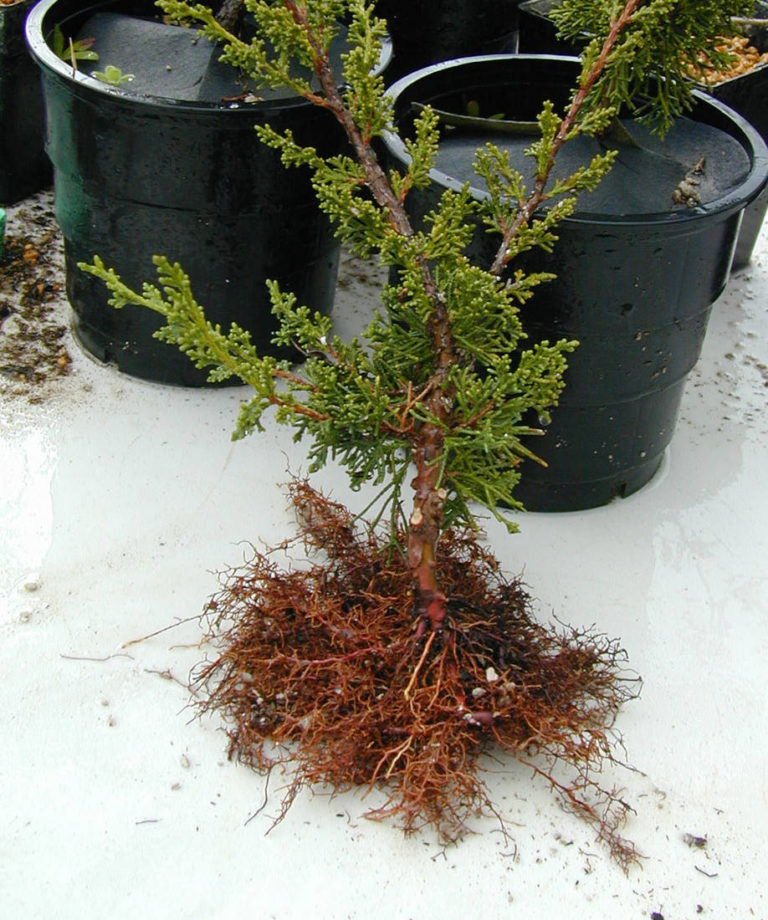
Rules for selecting seedlings:
- Give preference to specimens that are 3-4 years old.
- They do not show any signs of damage, diseases or pests.
- The needles are a healthy color (green or appropriate for the variety). Avoid buying seedlings with brown or dry needles. They also shouldn't be falling off. Checking the condition of the needles is easy: squeeze them in your palms for a few seconds and then release. If the needles immediately return to their original shape, the juniper is healthy.
Once a seedling has been purchased, it needs to be prepared for planting. About a day before transplanting, water it from its transport container with a root growth stimulant, such as a solution of Kornevin or Heteroauxin.
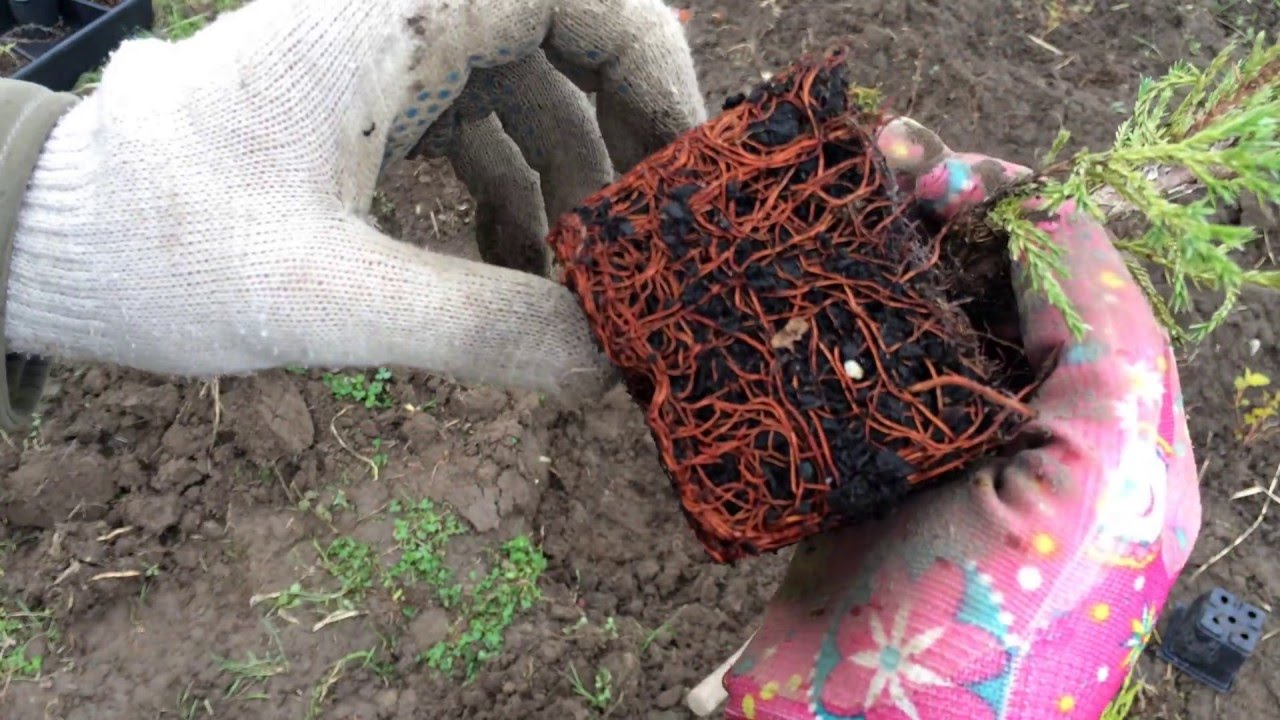
Important! After removing the seedling from the pot, it must be planted immediately in its permanent location. Do not allow the roots to be exposed to air for more than fifteen minutes, otherwise they will begin to dry out, which will negatively impact the plant's health.
Where to plant juniper in the garden: choosing a location
Juniper grows best in sunny areas. This will allow it to develop a lush and beautiful form. If planted in the shade, especially near fruit trees, the plant will be more susceptible to diseases and pests.
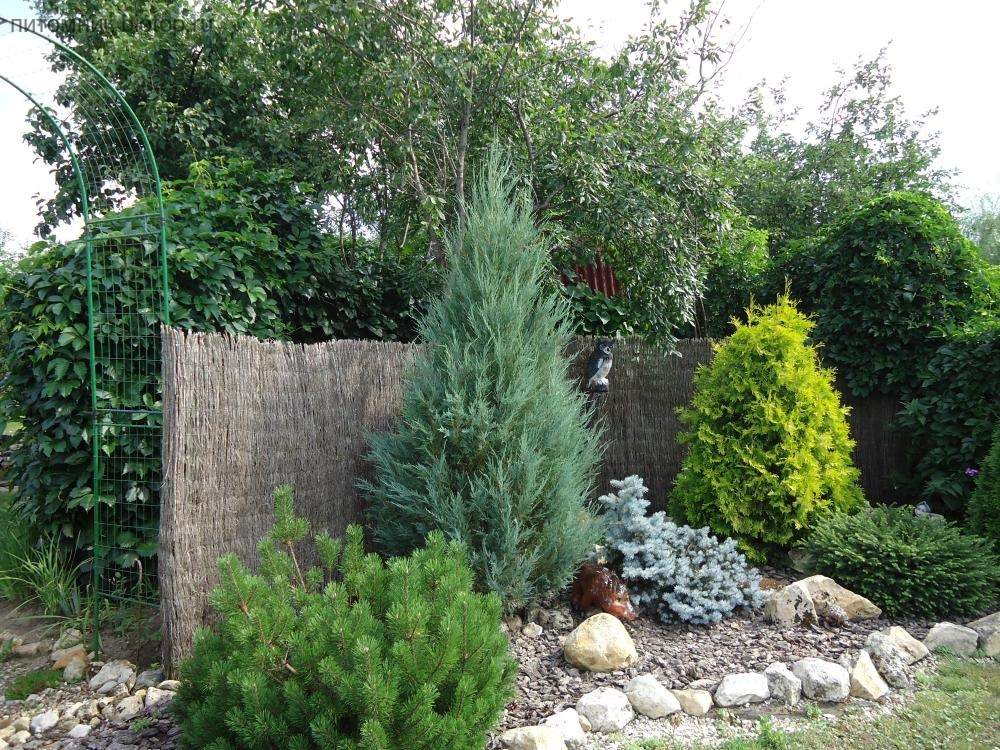
In landscape design, juniper is often planted with contrasting colors and shapes. This plant looks great next to thuja, biota, and dwarf pine. For a striking composition, you can plant 3-5 different plants.
Read the article to learn how to plant a thuja in autumn.Planting Thuja in Autumn: Timing, Rules, Step-by-Step InstructionsAnd also about other dwarf conifers: Dwarf conifers for your plot: a beautiful garden in autumn and winter.
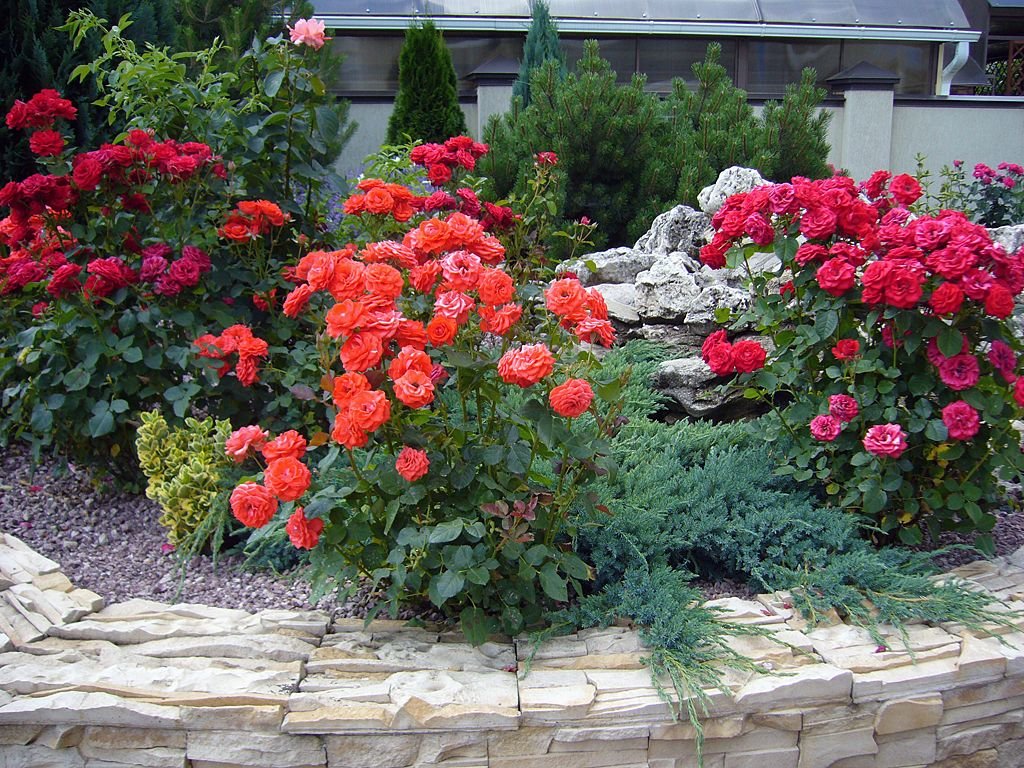
Near a private home, juniper harmonizes with rose bushes. They create a striking contrast against the emerald needles. If planted under windows, it will emit a pleasant aroma and repel flies and mosquitoes.
Juniper is not particularly demanding in terms of soil, but prefers soil with slightly increased acidity.
How to prepare a planting hole for autumn planting
When digging holes for several plants, you need to keep a distance:
- between small specimens - 50 cm;
- between tall bushes - 1.5-2 m.
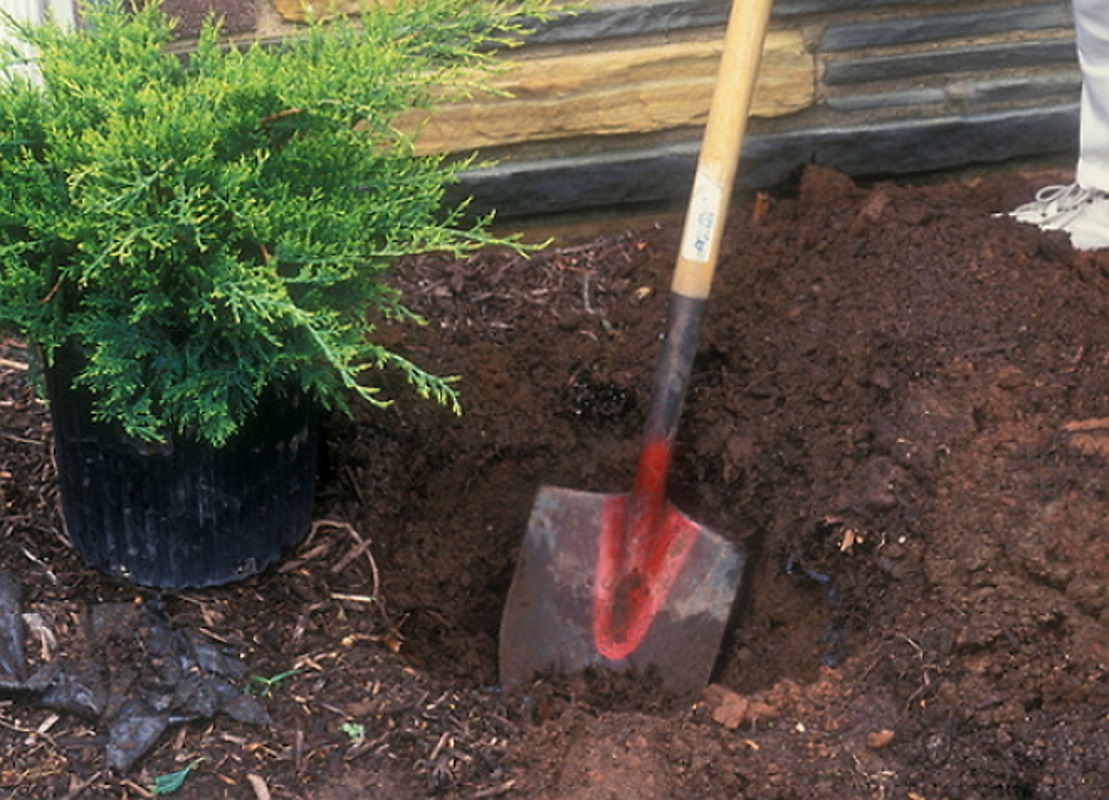
Step-by-step technology on how to properly dig a hole:
- Dig holes of such depth and width that they are 2 times larger than the volume of the root ball.
- Lay out a drainage layer of 10-15 cm.
- Prepare a soil mixture of coarse sand, peat, and turf in a ratio of 1:2:1 (standard recipe). Juniper's soil preferences may vary depending on the species. For example, Virginia juniper prefers a clay-based substrate (peat, sand, and clay turf in a ratio of 2:1:2).
- Fill the hole halfway with the prepared soil. Leave the remaining soil aside; you'll need it when you plant the juniper.
Important! The hole should be prepared in advance, approximately 2-3 weeks before the intended planting date. This will allow the soil to settle naturally.
Planting Juniper in the Fall: A Step-by-Step Guide
Description of how to plant juniper in the garden in open ground in the fall:
- Prepare all the necessary tools in advance. Place the seedling as close to the hole as possible to minimize its roots' exposure to oxygen during planting.
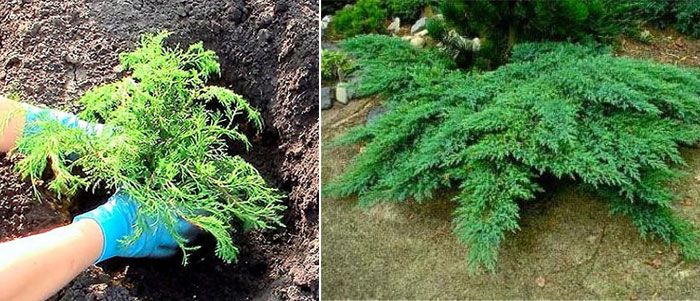
- Carefully remove the bush from the container, along with the root ball. To make this easier, turn the pot on its side and gently tap the sides with a trowel. Pull the seedling out by the very base of the trunk.
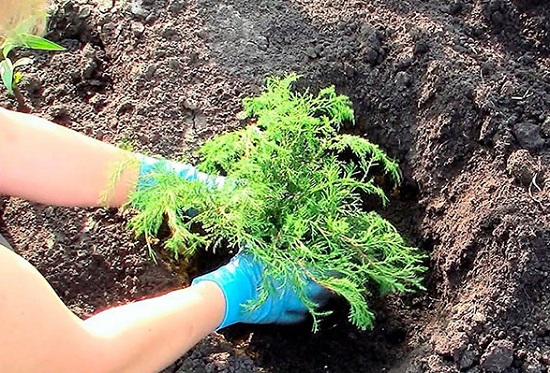
- Place the shoot immediately into the hole without disturbing the root ball.
- Cover with the remaining soil. The root collar of larger plants should be 5 cm above the ground; for young and smaller plants, it should be at ground level. Tamp the soil lightly.
- Create a tree trunk circle so that 10 cm high soil walls form around the trunk.
- Water the bush. Once the moisture has been absorbed, apply a 10 cm layer of mulch around the trunk.
Planting junipers doesn't require any special requirements. Everything follows a standard pattern.
Caring for juniper after planting in autumn
The plant tolerates long periods of water deprivation, but immediately after planting, the bush should be watered at the roots. This will help the cutting adapt better and prevent dehydration during difficult periods.
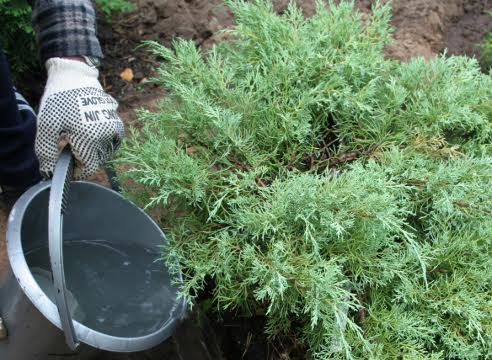
During the first year, water every month during the growing season. After that, rainfall alone will be sufficient.
Juniper branches should be pruned with extreme care, as any damage takes a long time to heal. The crown can be shaped into any desired shape. Broken, dried, and damaged branches should also be removed during pruning.
Before wintering, tie the crown with twine. This will prevent the branches from breaking under the weight of the snow.
Tips for gardeners on caring for junipers from Top.tomathouse.com
Some useful tips:
- branches damaged by frost or the scorching sun should be cut down to a healthy area without sparing them;
- Regular spraying of the needles will make them more elastic and give them an attractive shade;
- If the soil is dry or has a high sand content, add some clay.
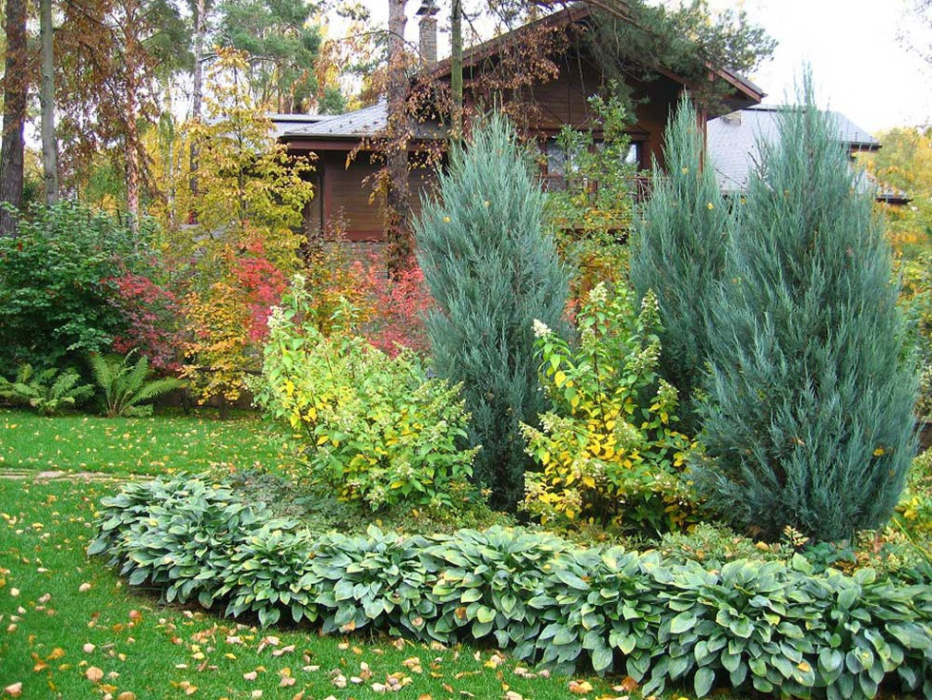
Growing juniper in your garden is easy, as it requires minimal care. It makes a wonderful addition to any landscape, and its cut branches, placed indoors, offer excellent protection against pathogens, thanks to their bactericidal properties.