Juniperus sabina (Juniper rock) is a member of the Cupressaceae family. It is native to North America, primarily growing on rocky mountain soils. This species is not among the most widely cultivated members of the juniper genus.
Content
Description of rock juniper
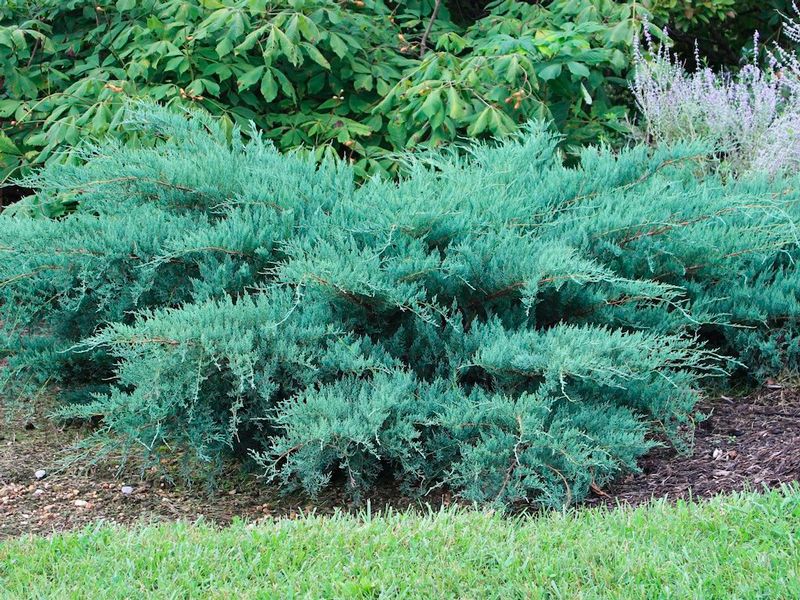
In its natural habitat, this shrub can grow up to 18 m in height, with a trunk girth of up to 2 m. The ornamental specimen is somewhat more modest in size, with its crown originating much lower. When young, the branches form a cone-shaped form, which will become round with age. The shoots are colored with shades of blue. The scale-like leaves are diamond-shaped, reaching 2 mm in length and 1 mm in width, and the needles grow up to 12 mm. The round, blue berries ripen by the end of the second year. The fruit is a reddish seed, up to 5 mm in diameter.
Popular varieties of rock juniper: Fisht and others
The culture, discovered in the first half of the 19th century, now has an impressive abundance of species (about 70), but only 20 are actively cultivated, which include plants of various sizes, color palettes, and diverse structures of the needles themselves.
Most junipers are fully suitable for cultivation in any of Russia's climatic zones.
| Variety | Description |
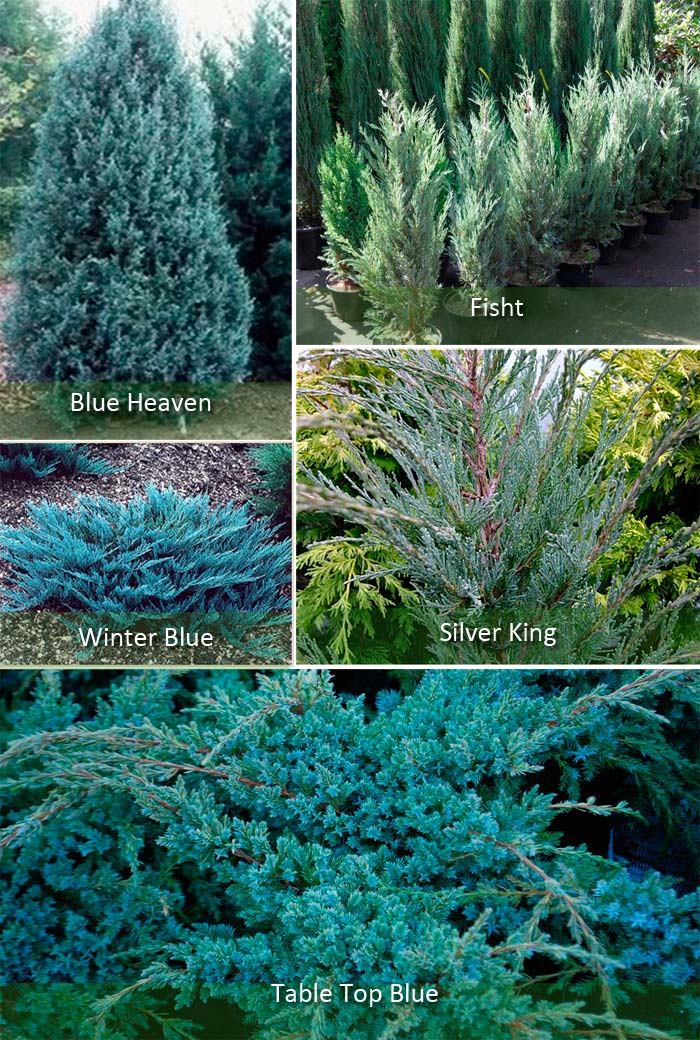
| Fisht (Fisht) | A pyramidal tree with a dense, blue-green crown. It sometimes grows over 10 meters tall. It is frost-hardy and undemanding of soil, but is susceptible to rust, so it is not recommended for planting near fruit trees. |
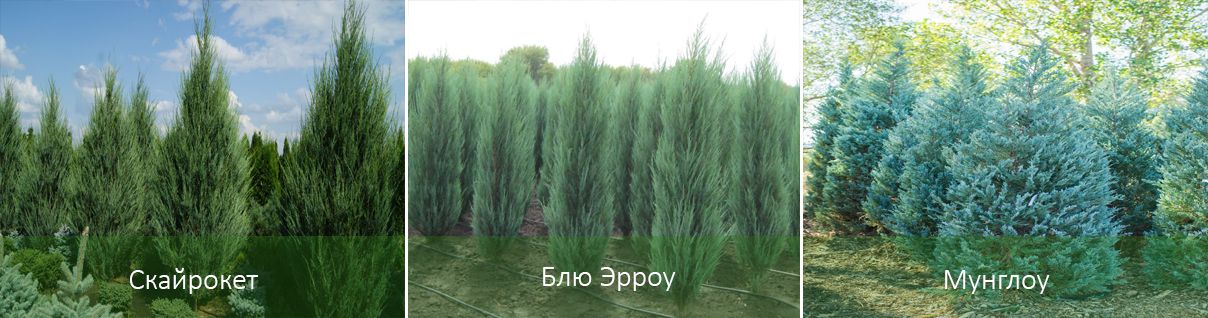
| Skyroket | Skyrocket—that's how the plant is translated from English—is remarkable for its growth, heat-loving nature, and densely packed shoots. This evergreen conifer is widespread in the south of the country, as harsh weather conditions significantly affect its appearance. Undemanding in terms of soil, the skyrocket can grow at a normal pace in sandy or rocky soil. Its owner will be delighted with its annual growth. |
| Blue Angel | Columnar in shape, similar to Skyrocket, but the color of the needles is more saturated, silvery with a blue tint. |
| Blue Arrow | This distinctive color has contributed to the widespread and popularization of this variety, especially in the temperate zone. Thanks to its densely packed branches, conical shape, and color, this juniper has earned the apt name "Blue Arrow," which fully reflects its advantages. Remarkably, the plant requires no artificial maintenance. |
| Blue Heaven | The plant's persistent blue color lasts all year round. This juniper, with its regular cone shape, grows up to 5 meters tall and 1.5-2 meters in diameter. It is primarily used in group plantings. It adapts quickly and is frost- and wind-resistant. |
| Blue Saber | It forms a narrow column, reaching 2.5 m in height and 80 cm in width at ten years of age. Its color is green, but with a steel-blue tint. Frost-hardy to -35°C. |
| Blue Trail | A tall pyramidal variety, reaching 8 m in height, spreading almost 2 m in diameter. The needles are green-blue with a steel tint. |
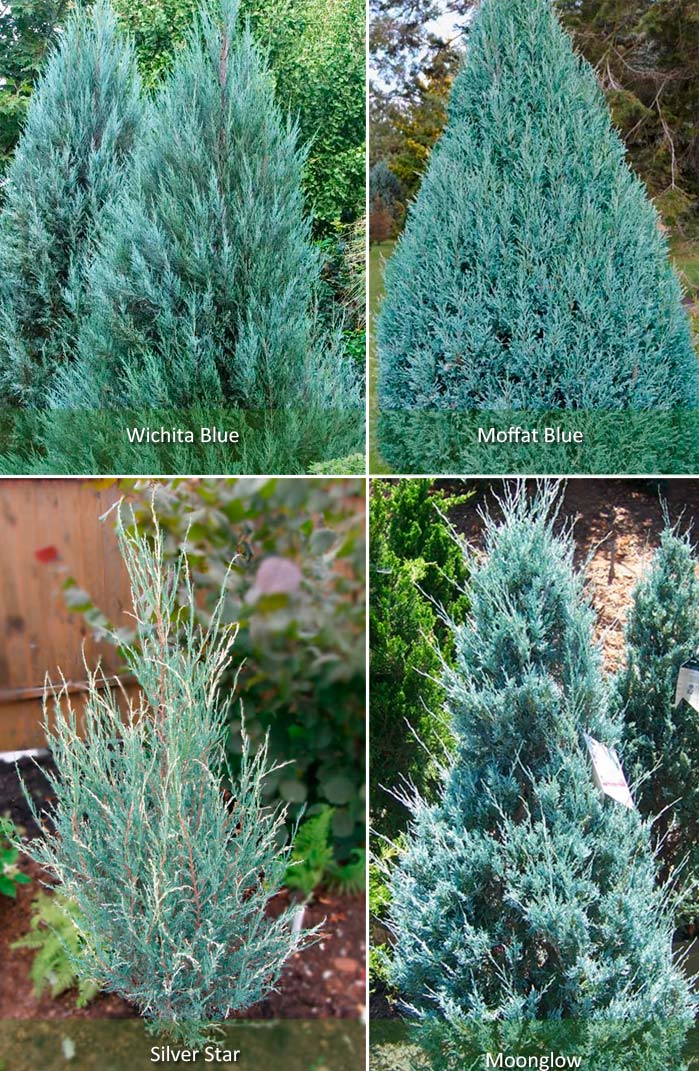
| Wichita Blue | It maintains a bluish-green color throughout the year. It resembles the Fisht variety in appearance, but is propagated only vegetatively. This juniper grows up to 6.5 m in height and 2.7 m in diameter. The slender stems extend upward, forming a tetrahedron in cross-section. |
| Cologreen | Green pyramidal shape reaching 6 m in height and 2 m in diameter. |
| Dew Drop | Gray-green conical. Dimensions 2.5 x 1 m. |
| Medora (Medora) | With bluish needles of a narrow columnar shape, but a very slow-growing variety. |
| Moffat Blue | Blue-green in color, wide pyramidal in shape. Maximum height 6 m, width 1.5 m. |
| Monam (Monam) | Light blue spreading variety 0.6x2.5 m. |
| Moonglow | It is considered pyramidal in shape. Its blue needles are very soft and acquire a bright blue hue in winter. Its main advantages include its low maintenance and soil type, and its ability to withstand drought and strong gusts of wind. |
| Silver King | A spreading form with scaly bluish needles (0.6 x 2 m). |
| Silver Star | It resembles the Skyrocket variety, but is less dense and grows more slowly. It has creamy-white needles due to the lack of chlorophyll. |
| Table Top Blue | Dense oval shape. Silvery-blue needles. 2 x 2.5 m. |
| Welchii (Velkshi) | A frost-hardy variety. Its pyramidal needles come in a variety of shades of green, blue, and silver. It grows up to 3 m tall and 1 m in diameter. |
| Wishita Blue | Fast-growing. At 3 years old, it's 1.5 m tall; at 0 years old, it's 2 x 0.8 m; later, it grows to 7 x 3 m. It loves full sun. It has a bluish coloration in both winter and summer. |
| Winter Blue | Silvery-blue needles, spreading over 1.5 m, do not exceed 40 cm in height. |
Planting juniper
Bare-root plants are recommended to be planted in the spring, as they require thawed soil. Closed-root plants can be planted any time of year.
When planting, choose an open, well-lit location, but away from groundwater (at least 10 meters). Dwarf varieties prefer poor soil; otherwise, they will lose their distinctive character. To ensure favorable growth for other varieties, choose rich, nutrient-rich soil.
The root ball should occupy half the volume of the hole dug. Dwarf varieties should be planted 0.5 meters apart, while larger specimens should be spaced even further apart. The size of the growing branches should also be taken into account.
First, fill the hole with drainage material, approximately 0.2 m thick. Expanded clay, crushed stone, or broken brick are suitable for this purpose. Then, place the plant in the hole and fill the empty spaces with a mixture of peat, turf, and sand in a 2:1:1 ratio. Afterwards, thoroughly water the young plant.
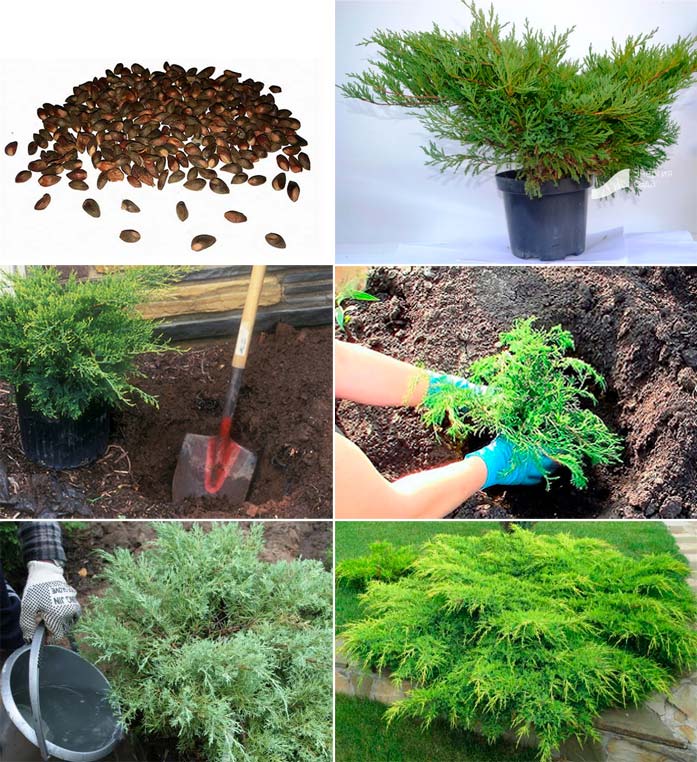
Cover with an 8 cm layer of mulch, including peat and sawdust. The root collar should not be below or above ground level when planting. To prevent root damage when removing the seedling from its container, soak the pot in water the day before.
Basic principles of juniper care
This shrub doesn't require meticulous care, adapting remarkably well to temperate climates. For the first 10 years, columnar juniper grows rather passively, but then enters a stage of active growth.
Watering
Juniper should be watered three times per season, but during dry periods, the plant requires additional watering. For young bushes, an alternative method is misting.
Top dressing
Fertilization is applied once, typically in late spring. Mature specimens require no additional feeding, while others can be fertilized with a solution of Kemira-Universal or Nitroammophoska.
Trimming
This procedure is required for juniper trees only for decorative purposes, namely to give the plant the desired shape. Dead branches should be removed in early spring, preferably before the sap begins to flow.
Wintering
Most juniper species tolerate winter cold well, but to avoid various types of damage, branches should be tightly tied to the trunk, and newly planted ones should be covered with non-woven material.
Transfer
Young specimens tolerate replanting much better, while mature ones struggle with relocation. To avoid damaging the juniper, be careful with the root ball, which contains the root.
Therefore, the most favorable time for repotting is the root renewal period, which occurs in April. If the procedure is performed at any other time, the juniper will need much more time to adapt and recuperate.
To ensure that the transplantation goes smoothly, it is necessary to follow a series of simple steps:
- Dig a hole of the appropriate size
- Equip the bottom with a drainage layer;
- Prepare the mass required for filling (the composition is identical to the planting mass);
- Dig around the juniper 0.5 m away;
- Extract the plant;
- Carefully move to a new location (it is recommended to use film);
- Plant according to the already known instructions.
Propagation of juniper
This can be done in several ways:
- By cuttings;
- Layers;
- By vaccination.
The first method involves preparing cuttings in the spring. Hardened upper shoots are ideal, and should be separated along with a small section of wood from the part from which the stem is taken. The cuttings are then placed in a greenhouse. Planting and caring for the seedlings should be done with extreme care and in accordance with the instructions.
Rooting occurs best only in a loose, permeable substrate made of equal parts coarse river sand and peat. It's important to note that juniper thrives in acidic soil rather than neutral or alkaline, so avoid adding ash or eggshells to the soil. Wooden boxes with drainage are the most suitable containers. Cuttings should be planted no deeper than 3 cm into the soil, maintaining an angle of 60º. They should be stored in a warm, dry greenhouse with high humidity and diffused light. Avoid direct sunlight on the shoots, so shade the greenhouse as needed. Young plants require regular watering and misting.
The time it takes for this to happen varies greatly from variety to variety and can last for 1.5 months or half a year.
The cutting is then grown in a nursery for several years. The roots of seedlings are thin and very fragile, so it's best not to rush replanting; it's better to give the plant additional time to establish roots, or to place the juniper in its new location with extreme caution.
Creeping juniper can be propagated by layering. The shoot is stripped of needles and placed on the soil surface just before the prepared tree-root circle. After one year, the rooting process is complete, after which the ties to the parent juniper must be cut and the tree replanted for further growth. This method is complex and is only suitable for experienced gardeners with professional skills. The essence of this method is that the selected valuable variety is grafted onto a common juniper by cutting the shoot and pressing it against the rootstock. The grafting area is then bound with transparent tape. This method is not very popular among gardeners due to the low survival rate of the scion.
Diseases and pests, treatment methods
The most common disease of juniper is fungal infections.
| Problem | Manifestation | Elimination measures |
| Rust | Bright orange growths on the surface |
For preventive purposes, you can use Tilt, Ridomil, Skor in April and in mid-autumn. |
| Drying of branches | Wilting of needles, yellowing of stems, growth of mushrooms on the surface of the trunk | |
| Tracheomycosis | Wilting of the bush due to rotting of the root system. |
|
| Moths, aphids, spider mites | Plant wilting, cobwebs on leaves. | Treat the bush and the soil under and around it with one of the following preparations:
|
Top.tomathouse.com recommends: using juniper in landscape design
This ornamental plant is widely used to decorate and enhance garden areas. It can be used as a stand-alone plant or as part of a larger arrangement (often paired with decorative stone). It can be planted along edging paths and adds variety to flower arrangements. The well-proportioned rock juniper lends a striking appearance.
It can be the focal point of the entire garden or a background plant. It thrives best in Scandinavian-style gardens. It is used to decorate alpine and Japanese gardens.