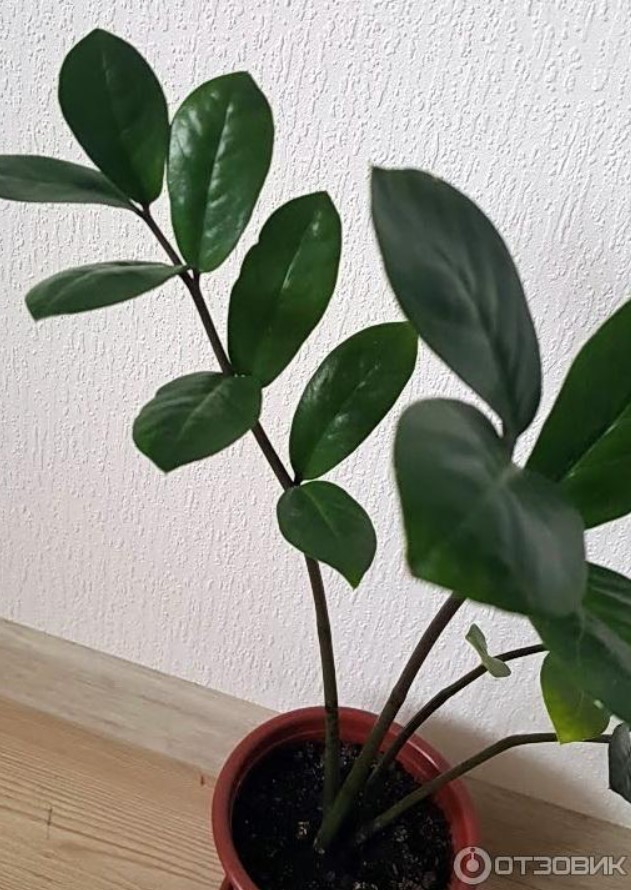
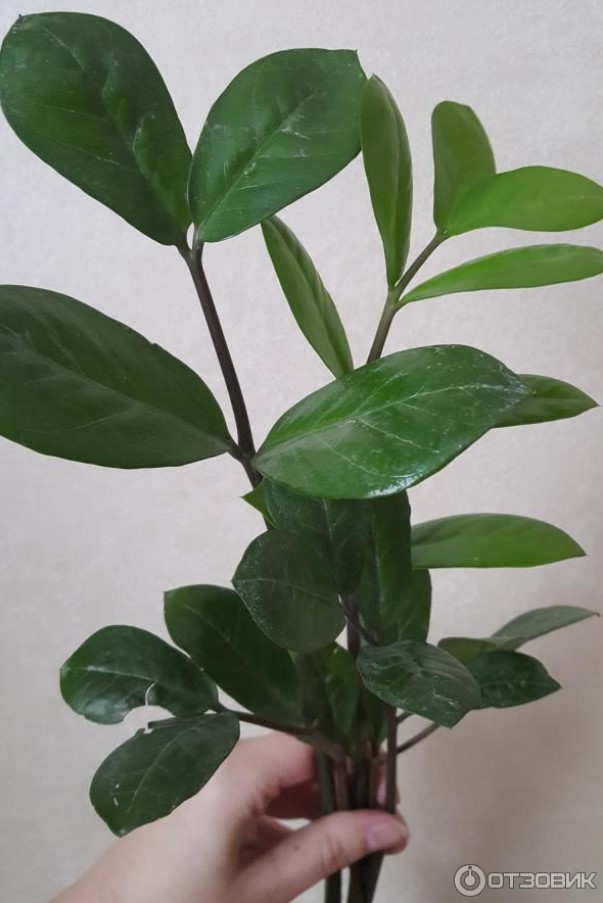
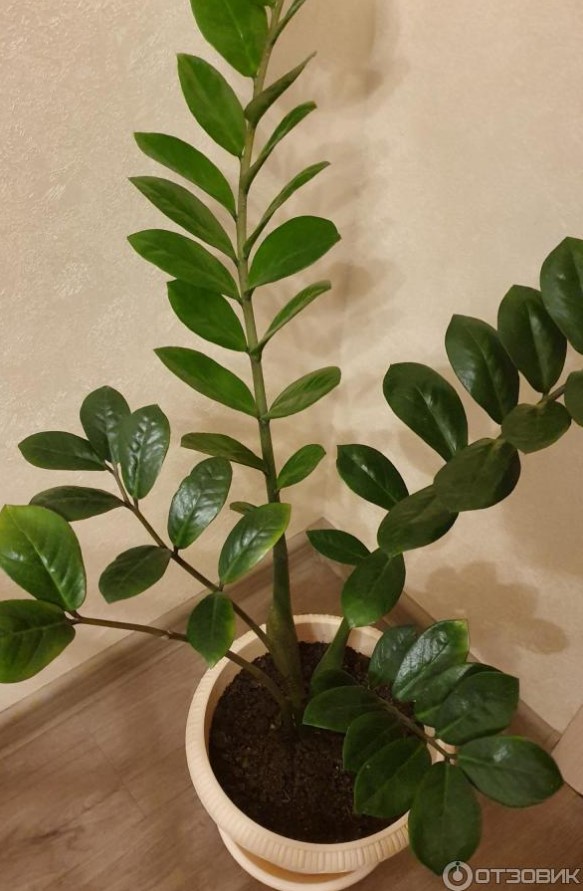
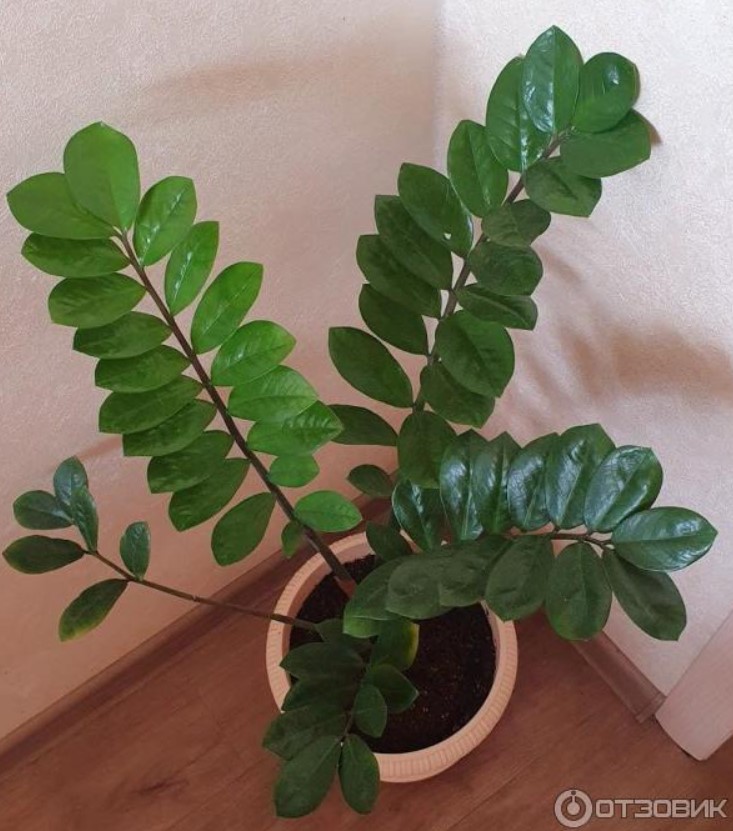
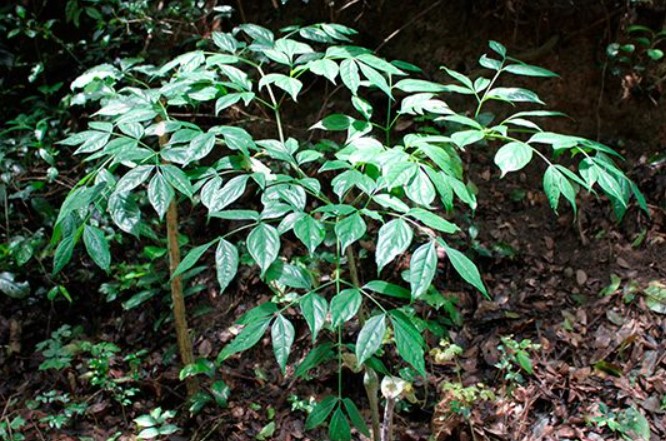
Zamioculcas zamiifolia is a poisonous ornamental evergreen plant of the Araceae family, native to the foothills of tropical Central Africa. Only one species, Zamioculcas microphylla, is cultivated indoors.
Content
- 1 Description
- 2 The main indoor varieties of zamioculcas
- 3 Features of planting and replanting zamioculcas, soil and pot requirements
- 4 Necessary conditions for cultivating Zamioculcas
- 5 Trimming
- 6 Reproduction of Zamioculcas
- 7 Difficulties in growing zamioculcas, diseases, pests, methods of elimination
- 8 Top.tomathouse.com explains: signs and superstitions
- 9 Gardener reviews of Zamioculcas
Description
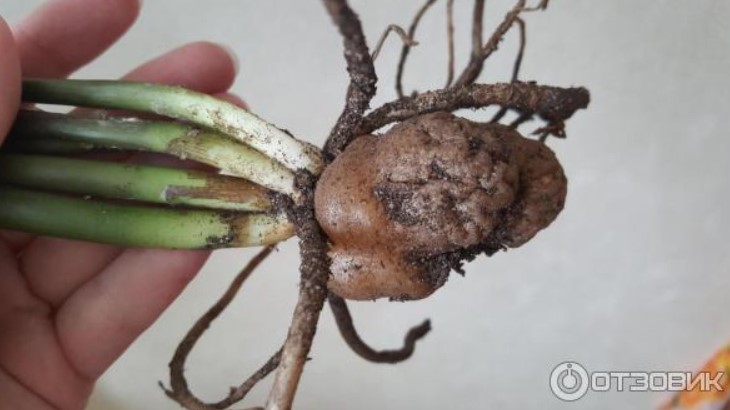
The flower has several branches—feathers—growing from the tuber and strewn with shiny, leathery leaves. The tubers store water for future use.
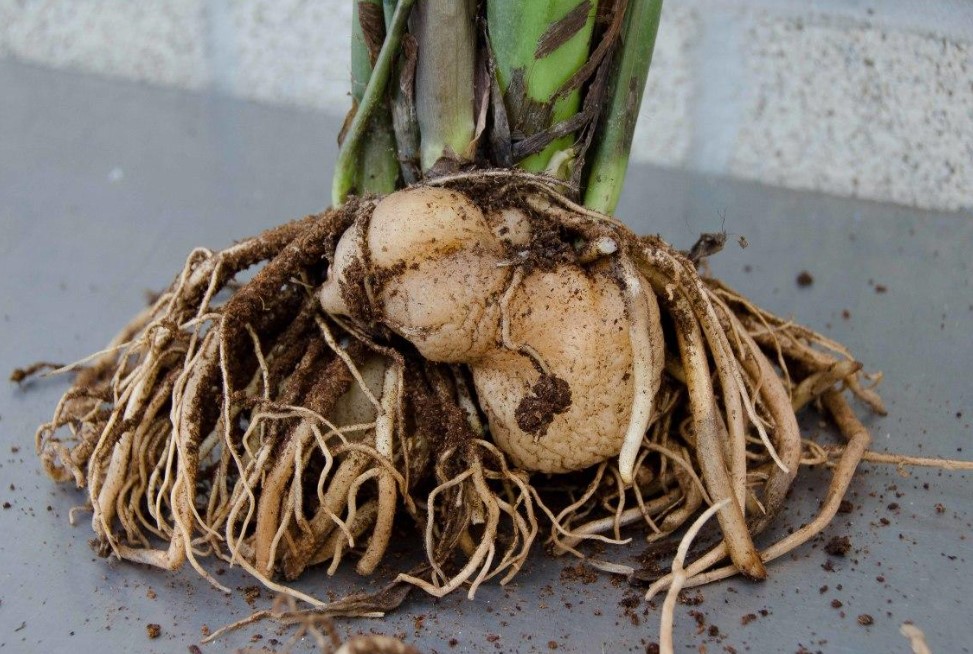
The bush itself is not tall, but with careful care it can grow up to 1 meter.
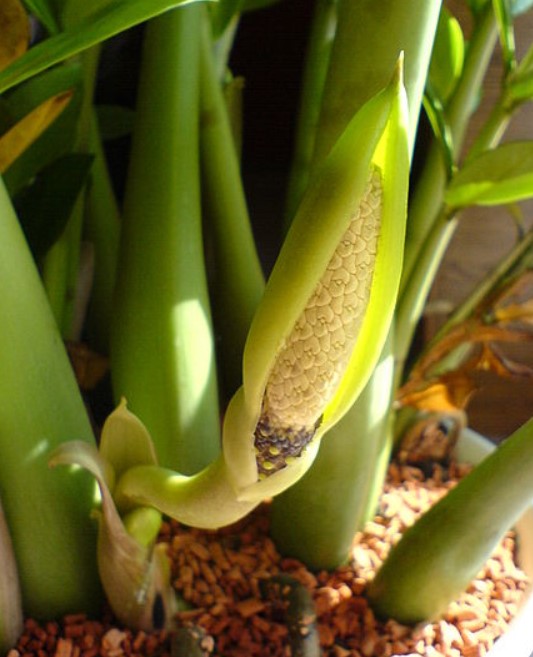
Zamioculcas blooms very rarely, usually only in mature plants, and is inconspicuous; the light cream-colored spadix is hidden among the green foliage.
The main indoor varieties of zamioculcas
This unusual plant was discovered only recently, at the end of the last century. Since then, it has become so beloved by plant breeders that they have begun developing new varieties.
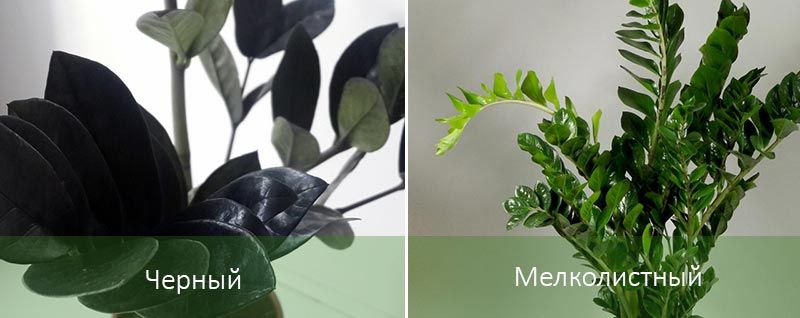
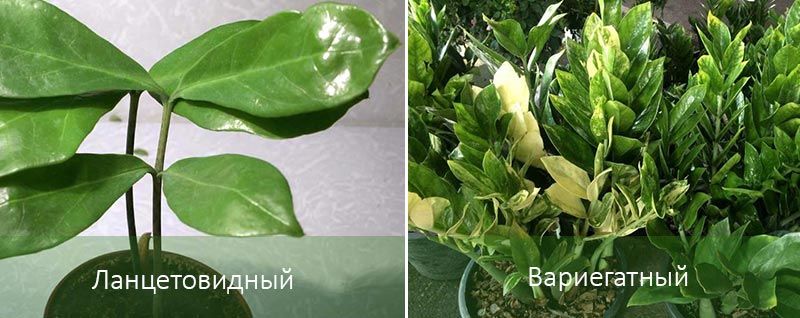
| View | Description |
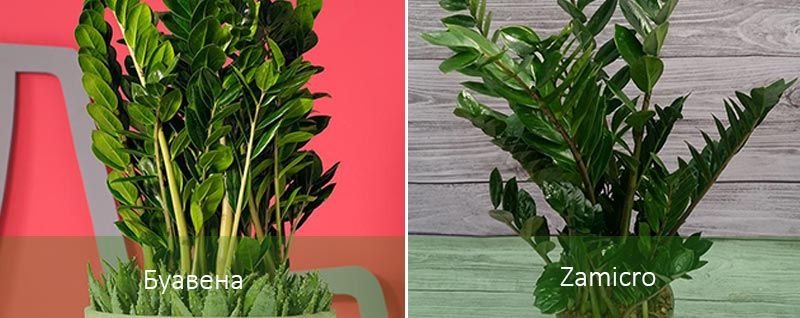
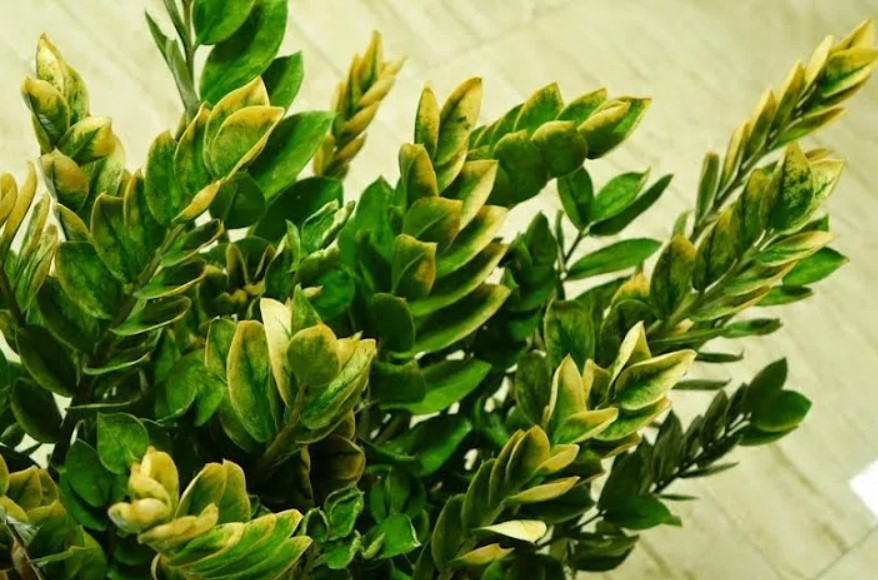
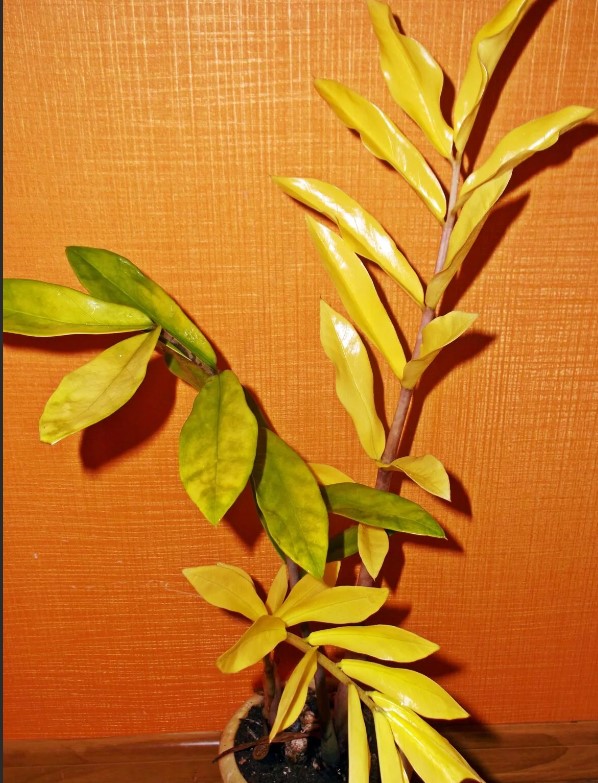
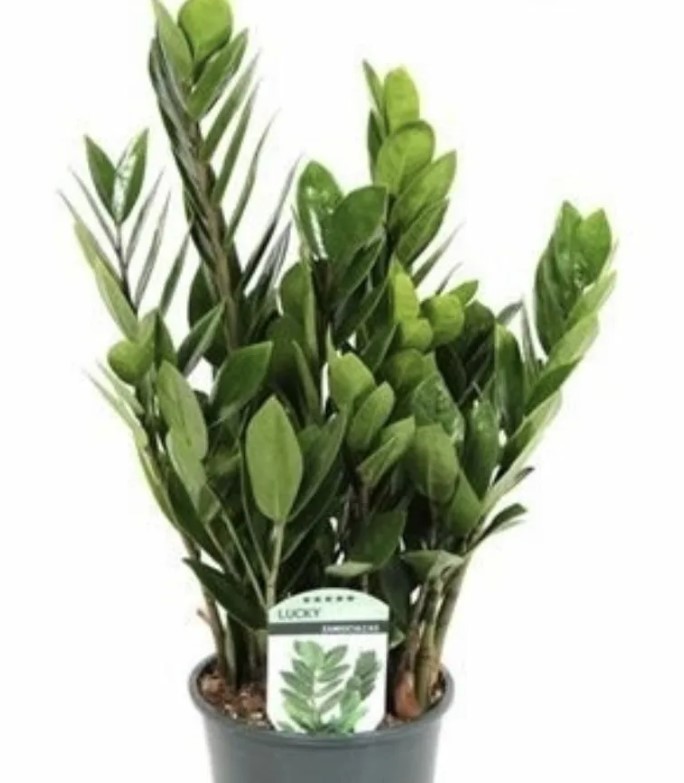
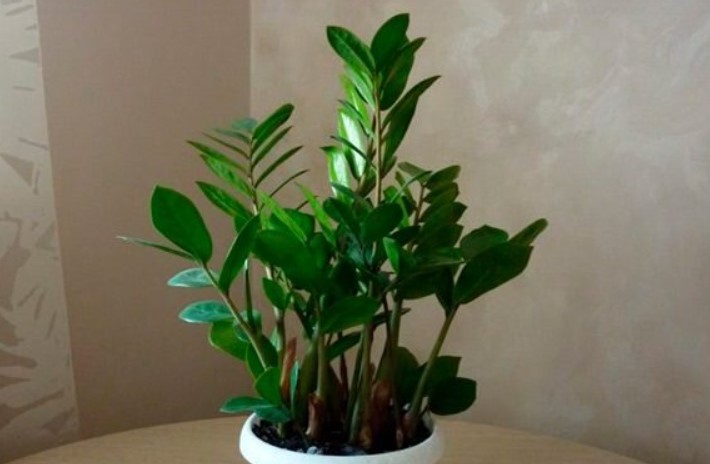
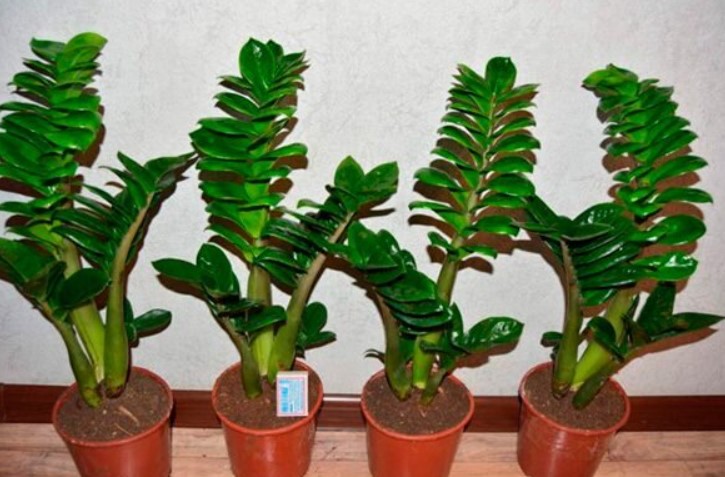
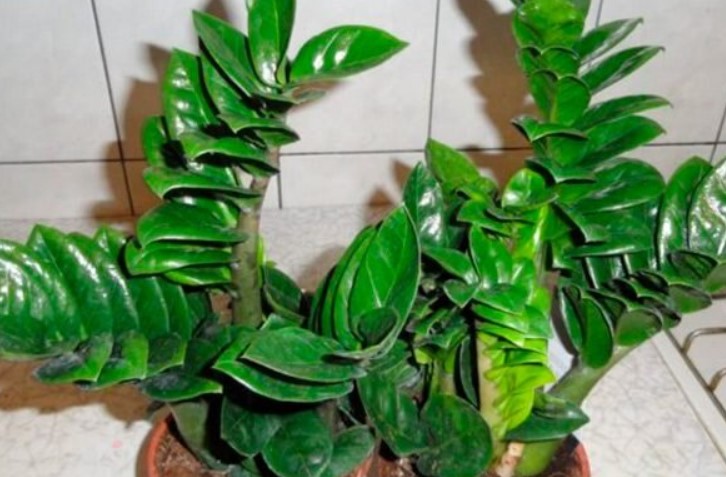
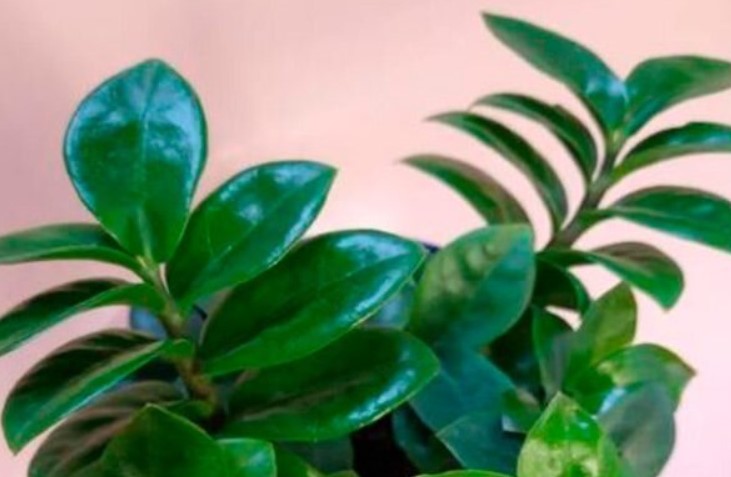
| Small-leaved or zamiifolia (Zamioculcas zamiifolia) | The first known form, propagated by Dutch breeders, originated in South Africa, where it was discovered in the mid-19th century. This species also grows well on the island of Madagascar. Its small, glossy leaves have earned it the euphonious name "dollar tree" (or "dollar tree"), and the common name "Loddiges." The plant grows slowly, forming a lush bush reaching 1 m or more in height. It is very easy to care for and is deservedly popular for decorating various spaces, including offices. Popular varieties:
|
| Lanceolate (Zamioculcas lanceolata) | It was discovered in Mozambique in the early 20th century. Its long branches are covered with elongated leaves. The bush itself grows up to 1.5 meters in height.
|
| Boivinii Decne | This plant also originates from South Africa. There, it's also known as the "Pearl of Zanzibar," and in Russia, it's called "Women's Happiness." Its leathery leaves have smooth, even edges. Despite its large tuber, it's very moisture-loving and drought-intolerant, preferring humid air and requiring constant misting.
|
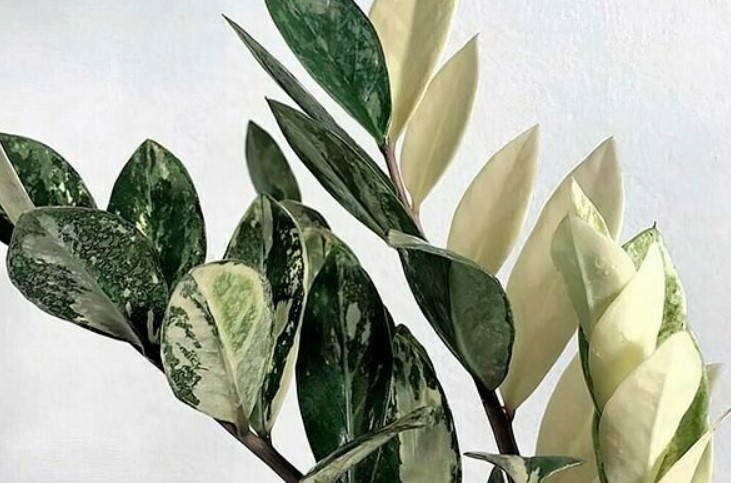
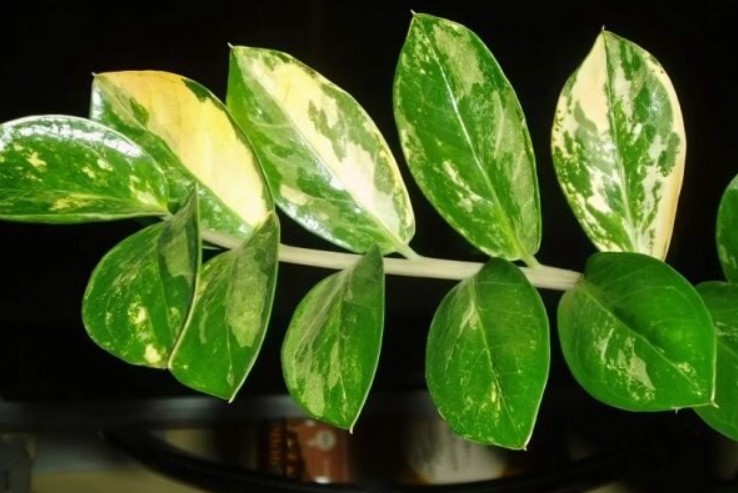
| Variegated or variegated (Zamioculcas variegate) | Native to Madagascar, this variety boasts leaves of varying coloration, with white or beige stripes arranged in a precise geometric pattern. Due to its exotic appearance, it is rarely found commercially.
|
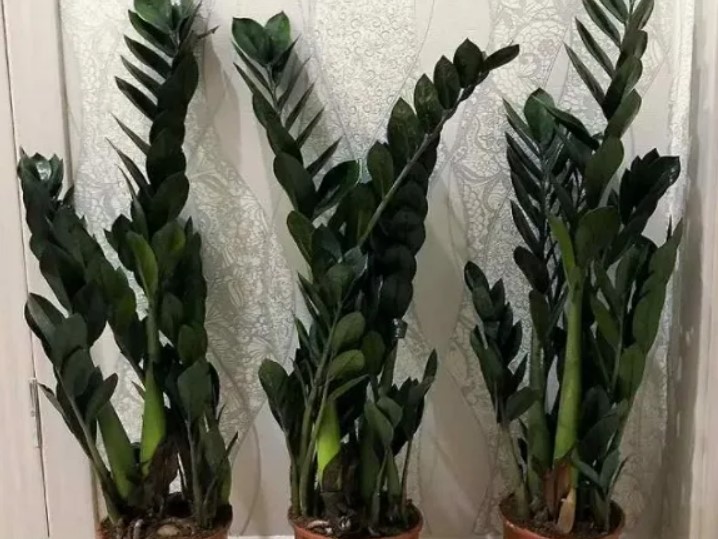
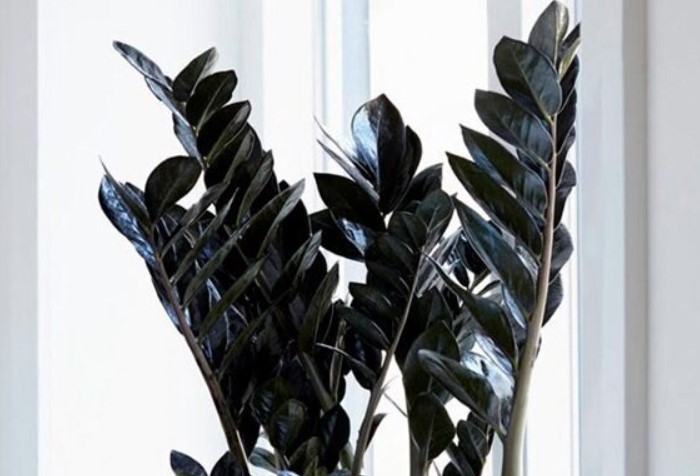
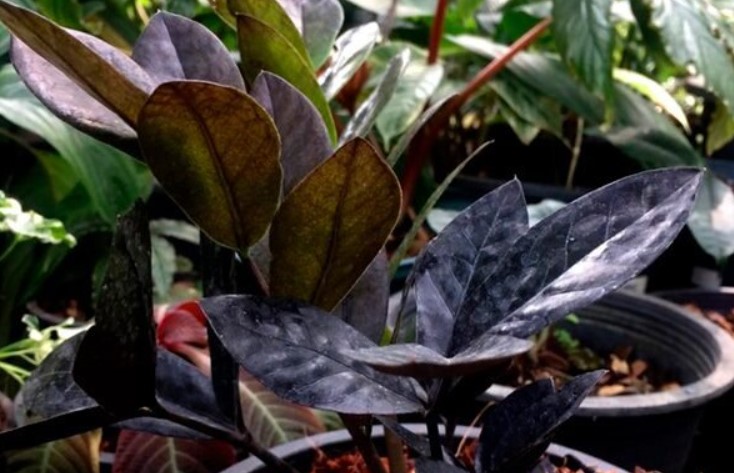
| Black (Zamioculcas Blak) | A young plant has a normal color, but with age it darkens; increased illumination does not affect the color of the leaves, they become true to their name.
|
| Compact appearance | Miniature varieties were developed for small apartments, but now they are the most popular and expensive:
|
Features of planting and replanting zamioculcas, soil and pot requirements
After repotting, the root system should develop in a container 2-3 cm larger than the original. It's best if the pot is made of clay, as it allows for air circulation. A plastic pot can become waterlogged, which can lead to root rot and the death of the plant.
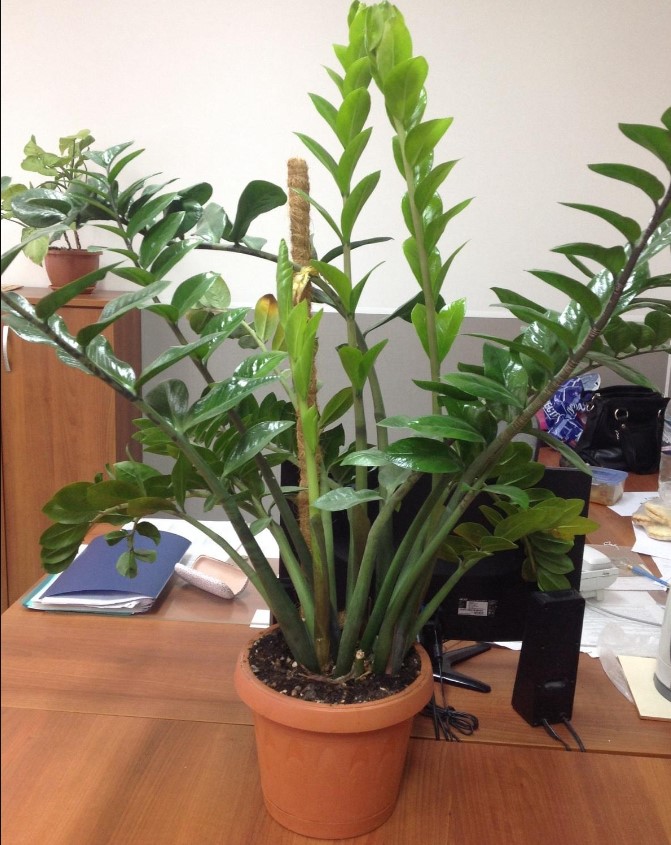
There must be holes in the bottom of the container, then you can use plastic or glass flower pots.
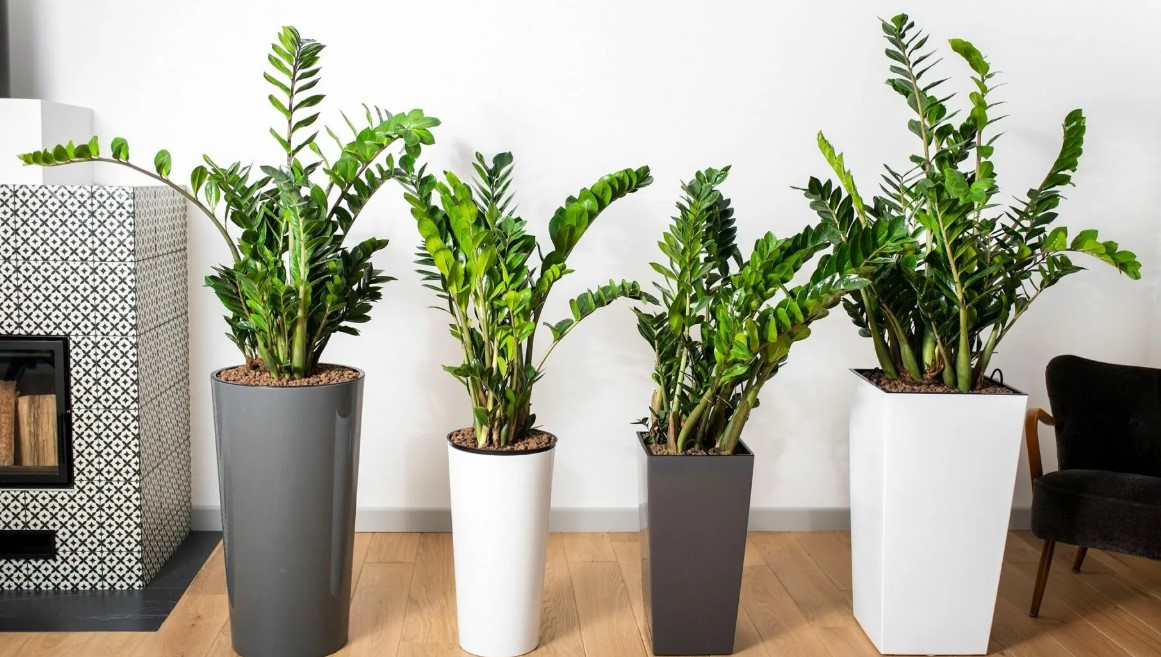
Zamioculcas will thrive in a low pot if the roots reach the sides of the container. Dwarf plants look great in tall, vase-shaped pots, while larger specimens thrive in low, wide pots.
A small, rooted seedling is planted in a small container and repotted annually as it develops. Mature bushes are transferred from one pot to another every five years.
Please note that the plant's sap is poisonous, so wear gloves when handling the flower. Keep it out of the reach of children and pets.
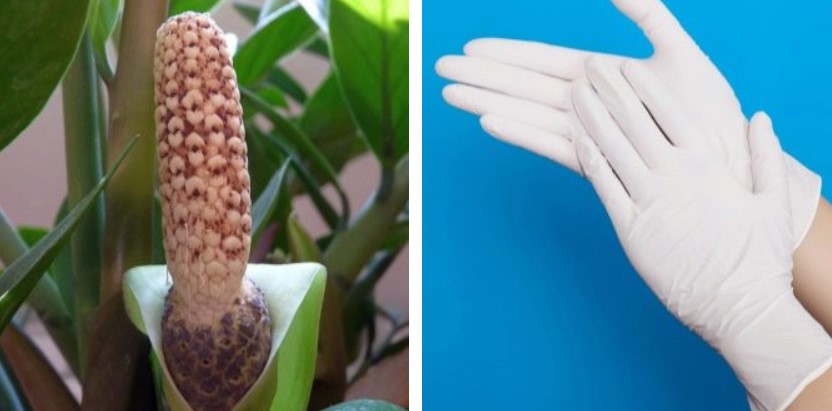
Repotting must be done with great care to avoid damaging the fragile roots. At the same time, do not replace the old soil. Carefully remove the plant from its original container onto a mat, add drainage to the new container, and then place the flower in place. Fresh soil is added around the tuber, raising it slightly above the ground.
The best time to repot is considered to be spring or fall. Newly purchased plants are repotted one month after purchase.
Necessary conditions for cultivating Zamioculcas
To effectively care for the flower at home, you should follow simple rules.
| Parameters | Spring/Summer | Autumn/Winter |
| Location/lighting | Brightly lit balcony or garden. | Brightly lit and warm rooms. |
| Temperature | +21…+29 °С | +15…+18 °С |
| Humidity/watering | 1-2 times every 2 weeks. | Once a month with warm, settled water. |
| Top dressing | Twice a month with fertilizer for cacti or succulents. | Exclude additional feeding. |
Trimming
If the bush is malformed, it requires pruning, which is done in the spring. The growing point is removed, followed by any irregular upward-growing side shoots. Gradually, the plant is shaped into a ball. This ensures that all branches receive sufficient light, sun, and nutrition, and the plant itself will be lush and even.
Reproduction of Zamioculcas
Reproduction methods:
- seed;
- cuttings;
- leaf rooting;
- part of a branch or stem;
- dividing the tuber.
Seeds
Finding seeds is almost impossible.
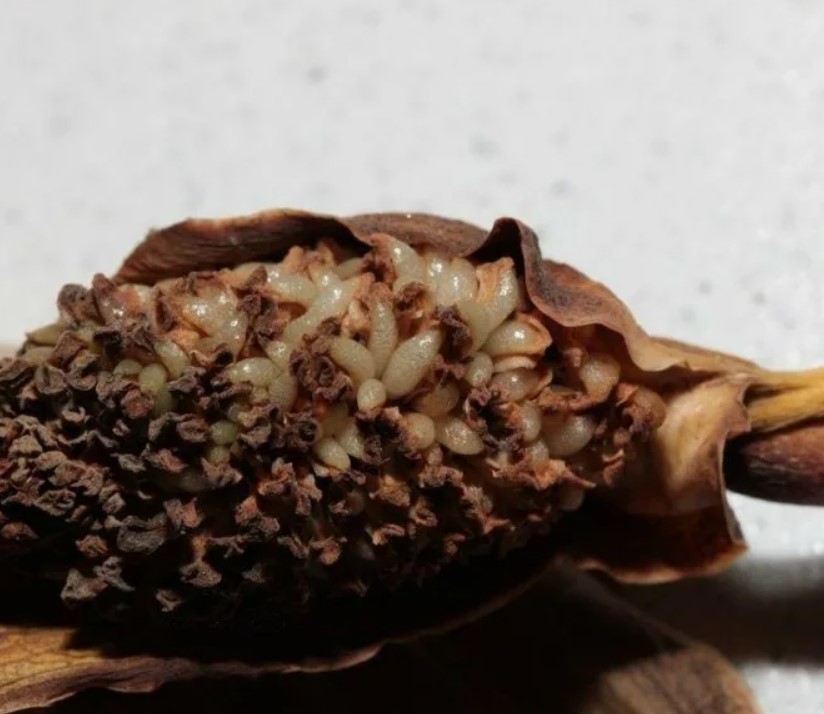
But if you're lucky and receive seeds from Africa, the growing scheme will look like this:
- Place seeds in moist soil (soil for cacti or succulents) at a distance of 2-3 cm, then sprinkle with soil on top.
- A film is stretched over the container and lifted for ventilation once a day.
- For 2-3 months, monitor the soil moisture, preventing over-watering and over-drying, and spray if necessary.
First, a tuber forms, from which a sprout emerges. When two true leaves appear, the plant is replanted in small containers.
Cuttings
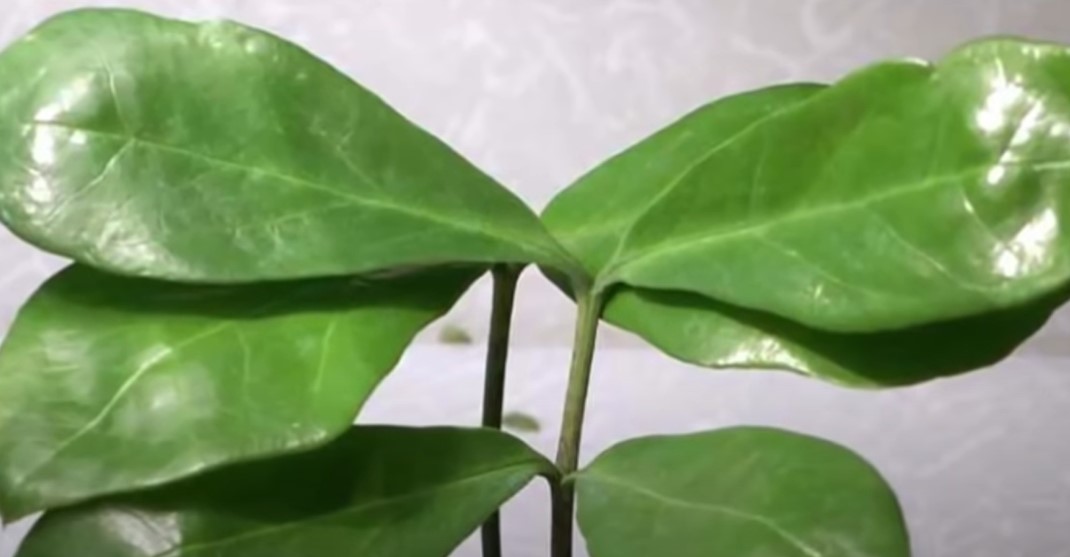
Cuttings are used for propagation in late spring or early summer. A leaf section with two opposite leaflets is taken from a 5- to 6-year-old mother plant.
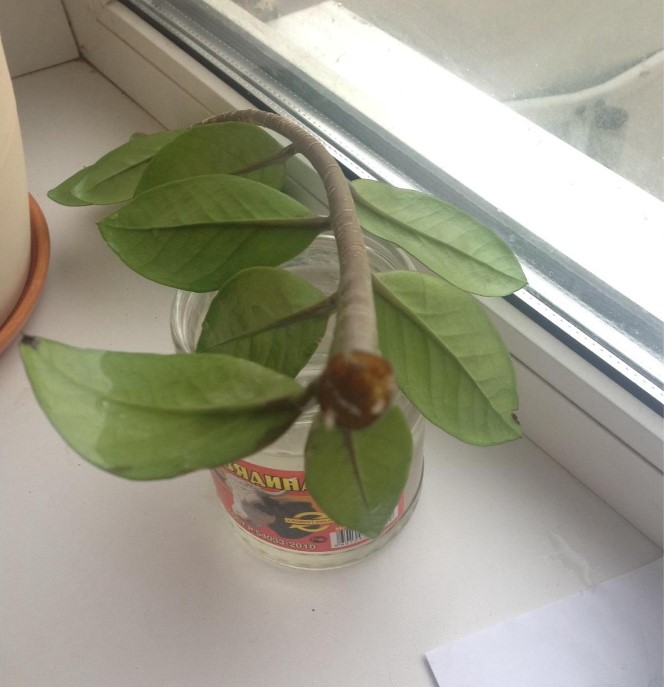
Cuttings from a young plant or a newly purchased one practically do not take root:
- A piece of the branch is cut off with a sharp, treated knife.
- Allow the cut to dry (become corky) for 2-3 hours.
- Fill a small container 1/3 full with drainage, then add potting soil for violets or succulents. Alternatively, root the plants in a cup of room-temperature water with crushed activated charcoal or potassium permanganate tablets added.
- After dusting the cut end of the cutting with a rooting stimulator, it is buried in the ground to a depth of 2-3 mm, carefully pressing it down with soil.
- For good rooting, the cutting requires warm soil, a temperature of +22…+25 °C and humidity of 70-75%.
- The seedlings are covered with plastic film. As the soil dries, it is lightly sprayed with a rooting stimulant solution.
- Watering is increased after 2 weeks, when the first roots begin to grow.
- After 7-8 weeks, when tubers appear, the plant is moved to a bright place and care begins as for an adult plant.
- New leaves will appear in 5-6 months.
Leaf
Leaf propagation is a very time-consuming method. No more than three plants can grow in a year.
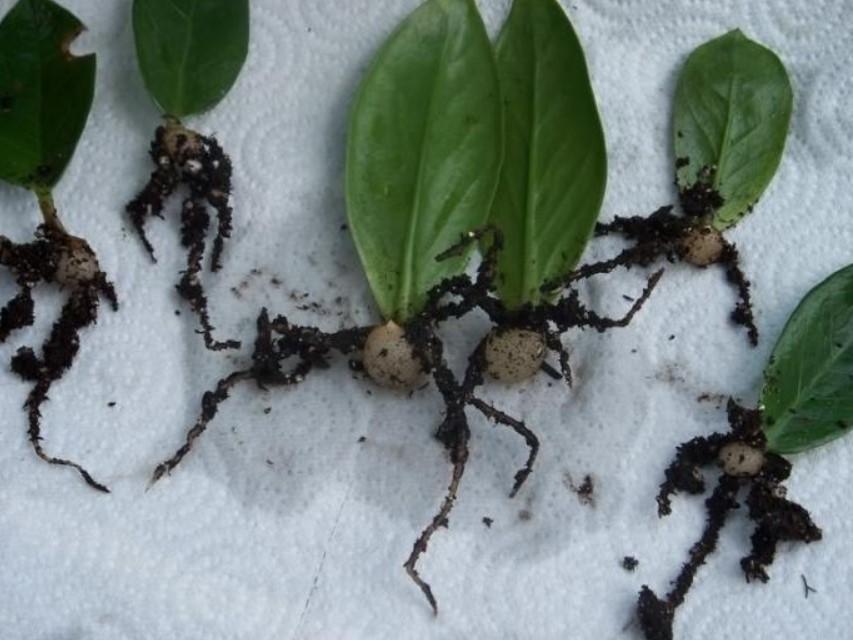
The larger the leaf you select, the faster the new plant will grow.
Step by step:
- The selected leaf is cut with a disinfected knife at a 45° angle. The cut is dried for 24 hours until it becomes corky.
- The lower third of the leaf is dusted with crushed activated carbon mixed with a rooting activator.
- When rooted in water, the leaves produce weak nodules. It is recommended to plant them in a 50:50 mixture of peat and sand, burying them 1/3 of the way down.
- Cover the leaves with film and keep them at a temperature of +22…+25 °C, with daily ventilation.
- Within 2-3 months, small tubers should form and the leaves should dry out.
- The first true leaf will appear in 5-6 months. At this point, the young plant should be replanted in small, well-drained pots. The diameter of the new pots should be 7-10 cm.
Tubers
This method is used for transplanting from mid-April to mid-September. Only mature houseplants with two growing points are suitable for this method. Otherwise, the bush is not at risk.
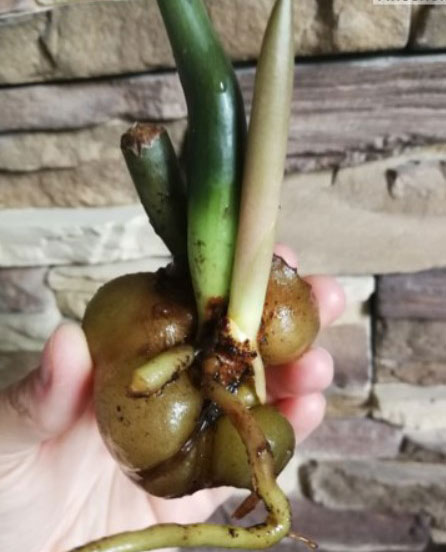 Step-by-step instructions:
- The tuber is dried for 2-3 days.
- A drainage layer is placed at the bottom of a container with a diameter of 10-12 cm to a height of 1/3, and on top of this a mixture consisting of equal amounts of leaf soil, fertile turf soil, peat and sand with the addition of 5% fine expanded clay and humus.
- The cut tubers with the growth point are deepened into the ground by 3-5 cm.
- They are cared for like an adult plant, but they are not fed, only sprayed.
- The first fertilization is possible only after 4-6 weeks.
- Only 2-3 leaves grow per year. After this, the plant is planted in soil and grown as an adult.
Difficulties in growing zamioculcas, diseases, pests, methods of elimination
Zamioculcas is an unpretentious plant, but even it can experience various problems.
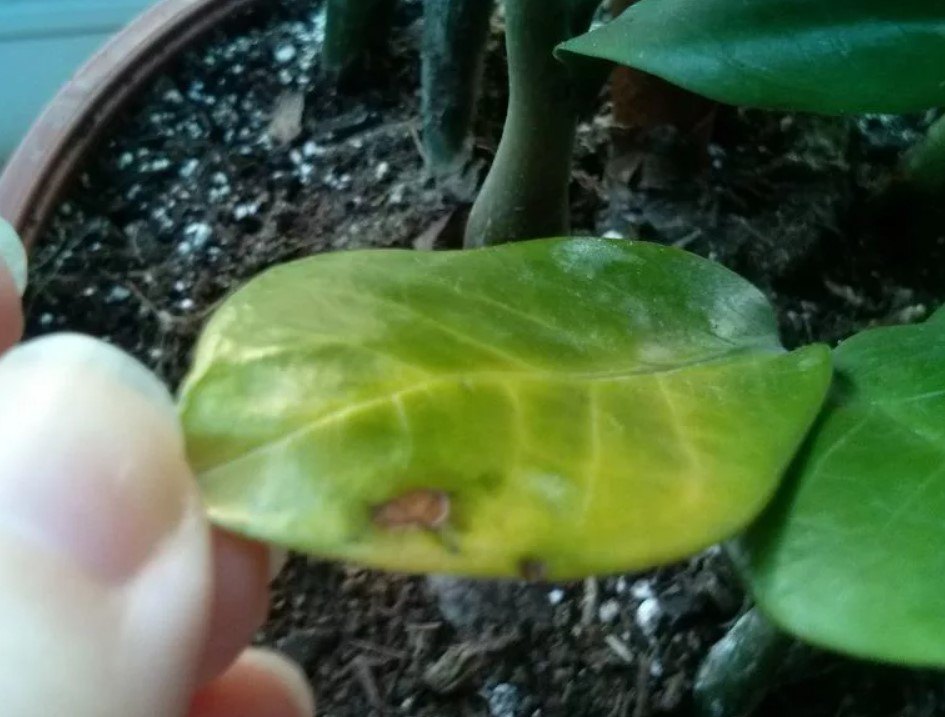
If not properly cared for, its appearance will deteriorate and then action should be taken.
| Leaf manifestations, other symptoms | Cause | Solution |
| The leaves become smaller, turn yellow, and dry tips form. | Poor lighting. | Place the plant in a well-lit area. |
| Falling of upper leaves. | Insufficient or excessive watering. | Adjust watering. |
| Blackening along with tubers. | At low temperatures and high humidity, rot develops. | Increase the temperature at which the plant is kept while simultaneously drying out the soil. |
| The appearance of dark spots. | Abundant watering at high humidity and low temperatures. | Place the plant in a warm place, reduce watering and even out the soil moisture. |
The money tree can be affected by pests:
| Cause | Signs of defeat | Preventive
measures |
Treatment methods |
| Damage by putrefactive fungus | Blackening of tubers and stems at the base. | Correct watering regime. |
At the onset of the disease, treatment with chemicals is carried out once every 2 weeks:
In case of serious damage, it should be replanted into new, pre-treated soil. |
| Aphid | The leaves become covered in sticky secretions, curl, and fall off. Clusters of pests are visible on the undersides. |
Systematic examination of the leaves from the back side. Periodically treat flowers with a soap solution. Treat the soil before use by baking it in the oven and pouring boiling water over it. |
Thoroughly treat each leaf with a soapy solution. Until the pests are completely eradicated, treat with one of the following chemicals:
|
| Spider mite | The flower is covered with thin threads. | Keep newly purchased plants separate from indoor plants for a month. | Chemical treatment: Zolon, Actofit, Fitoverm (10 ml per 1 liter of water). Irradiation with an ultraviolet lamp. |
| Scale insect | Brown growths have formed on the back of the leaves. | Set aside the affected bushes separately. Systematic inspection of plants. |
Treating pests with soap solution or chemicals. |
To combat pests, you can use folk remedies:
- 40 g of tobacco per 1 liter of water;
- 30 g of grated garlic or 20 g of onion per 1 liter of water;
- Boil 5-6 pods of red hot pepper for 1 hour in 1 liter of water.
Let it sit for 24 hours. Apply any solution 2-3 times, spaced several days apart. You can also crush 1/3 of a cockroach repellent pencil, dissolve it in 0.5 liters of warm water, and spray it on the soil and plant until the pests are completely eliminated.
Top.tomathouse.com explains: signs and superstitions
There are many money omens and superstitions associated with the zamioculcas, which is why the flower was nicknamed the dollar tree.
When watering the flower on Tuesday during the waxing moon, ask for increased prosperity. Money water, prepared by steeping coins for several days, is used for watering.
The plant is replanted only during the waxing moon to increase wealth, and according to feng shui, it is placed in the southeast of the house. To enhance its monetary energy, a red thread is tied around its trunk, and a rolled-up dollar bill is placed in the crown. The top of the pyramid is secured to the flower and ensured to remain stable.
Gardener reviews of Zamioculcas
I'll show you the evolution of my plant over the past six years. I'll also tell you how to grow a zamioculcas from a leaf. I'll also share my care mistakes and how I dealt with pests.
Hello everyone. I love houseplants, especially orchids and succulents, and the zamioculcas plant falls into the latter category. I've had this plant for almost seven years now, but for some reason I never gave it the care it deserved. It was the most neglected plant, so to speak, and it just grew on its own. It just so happened that I gave it a less-than-ideal spot, at the very end of the kitchen studio, on top of a tall cabinet. It didn't get enough natural light, and climbing up on a chair to water it was awkward, so I barely cared for it. I didn't forget to water it, of course, but I didn't give it showers or other treats, and I didn't even feed it with fertilizer. This went on for several years, until I really felt sorry for it, so I decided to move it lower, closer to the light, to bring it back to its senses. Now I'm on track; I've already managed to get rid of pests, replant it in different pots, and even started growing a bulb from a leaf. But I'll tell you about everything in more detail below.
First, I'll show you what my Zamioculcas looked like six years ago. This is about six months after I bought it, after it had been repotted into a pot.
Zamioculcas
I placed it in that condition on the plant stand, and there it remained for five long years. I watered it about once a week and rarely dusted the leaves. Probably once every two or three months. It never saw any spraying or showering. I wouldn't say it was ill, but it wasn't great either, as I didn't notice any significant growth. Yes, it was putting out new stems with leaves, but it also kept shedding the old ones, so when I decided to move it in the spring of 2021, it looked like this.
Zamioculcas
ZamioculcasBeing a good housewife, I began watering it more frequently and regularly wiping dust from the leaves. While the second step was beneficial, the first had a negative impact on the plant. It's not for nothing that it's classified as a succulent, and succulents are known to dislike overwatering. Therefore, I strongly recommend not watering the zamioculcas too frequently, but only as needed, when the soil has dried out a couple of centimeters deep. This can be easily checked by sticking your finger into the soil. Otherwise, it can lead to root rot and the death of the plant. In my case, it didn't come to grief, but due to the high humidity, very tiny white insects appeared in the soil. They are indeed so tiny that they're practically invisible to the naked eye, but if you blow on the soil, they start hopping around, giving themselves away. They lived exclusively in the soil; I didn't see them on the leaves, and they fed on the roots. Fortunately, I noticed them in time and began fighting them.
How I fought small white bugs in the soil of my zamioculcas
The first step when detecting any houseplant pests is to immediately remove other plants from the infected plant to avoid further contamination. In my case, the plant was alone, so this wasn't necessary.
I started searching online to find out what kind of creatures these could be and found one. I can't remember the exact name, but the description matched everything, and they appear in those iridescent colors. This was exactly my case. Various treatments were suggested, but I liked the most gentle one, as it seemed to me, using a solution of laundry soap. I just happened to have a bar of that authentic Soviet-era laundry soap lying around, so it came in handy.
I grated a small piece of it into warm water and tried to dissolve it as much as possible, then watered the plant thoroughly. If I'm not mistaken, I did this for a couple of days in a row, and it really did help, but only temporarily. Because a couple of weeks later, the bugs returned, and I decided to do something a little different.
This time, soapy water also came to the rescue, but I didn't treat the soil with it, but the plant's roots. First, I rinsed them thoroughly under running water, divided them into two parts (I had two tubers), and left them in the solution for an hour. Then I air-dried the roots for 24 hours and began repotting.
I didn't use the old pot or the contaminated soil. I bought everything new. I had planned to plant both tubers in the same pot, but after straightening and separating the roots, they wouldn't fit in the same pot, even though I bought a new pot slightly larger than the old one. Luckily, I had an extra pot left over from repotting my ficus, so I made good use of it, so now I have two zamioculcas. Sure, they looked a bit sad, but at least the pests didn't show up anymore.
Zamioculcas
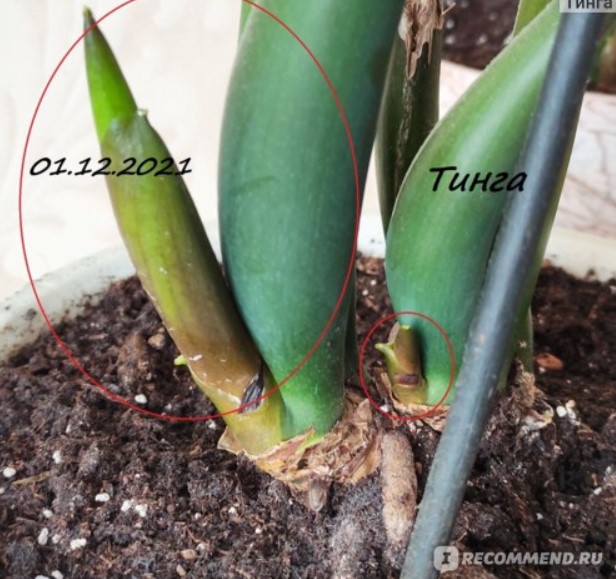
Things seem to be going well, the insects have disappeared, and the zamioculcas has even sprouted new branches.
Zamioculcas has sprouted a new branch.
But I started noticing that its leaves were turning yellow. At first, I thought it was a natural process, since the old branches were initially dying off, but then new ones started falling off, too, in large numbers.
Zamioculcas
Zamioculcas has shed its leavesTo be honest, my thoughts weren't the best; I thought the plant wouldn't survive, but gradually this process stopped, which only made me happy. It must have been the stress of the repotting. It also might have disliked the pot being too wide, as they thrive in tight spaces. But as the roots grew inside the pot, everything returned to normal. Afterward, it even actively started sending up new shoots.
Zamioculcas
Zamioculcas
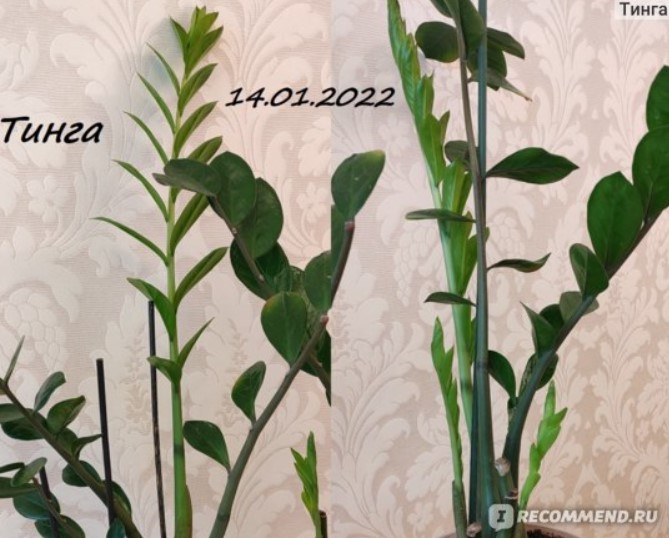
ZamioculcasAnd every day he began to get better and better.
Zamioculcas
ZamioculcasHow to Grow Zamioculcas from a Leaf
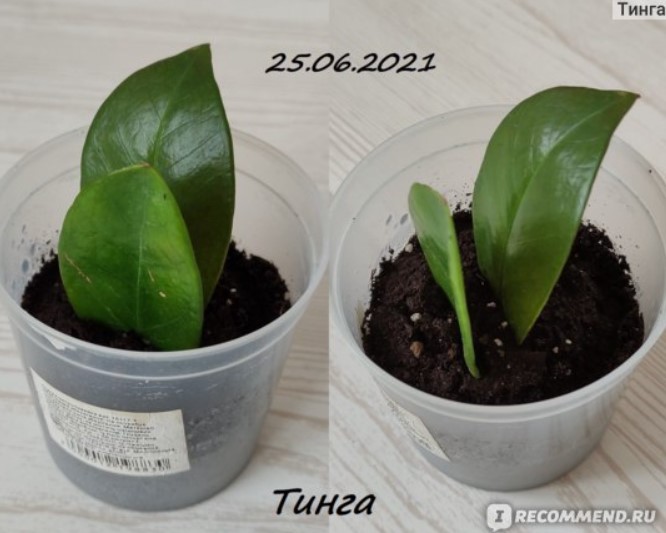
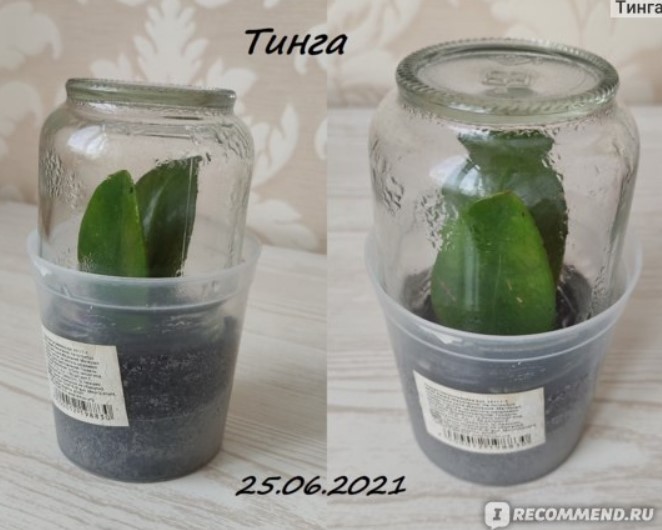
This summer, I decided to experiment and root a leaf. I simply poured some prepared succulent soil into a plastic cup, without even using drainage, and inserted two leaves.
Zamioculcas from a leaf
I sprayed the leaves with clean water from a spray bottle and covered them with a jar on top, creating a mini-greenhouse.
Zamioculcas from a leaf
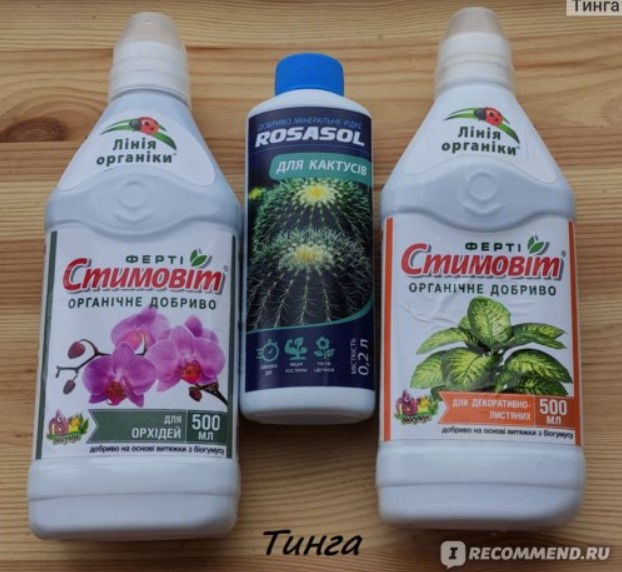
I'll say right away that this process wasn't quick. For a month, I misted the leaves with water every other day, after which I removed the jar and began watering the soil with diluted succulent fertilizer.
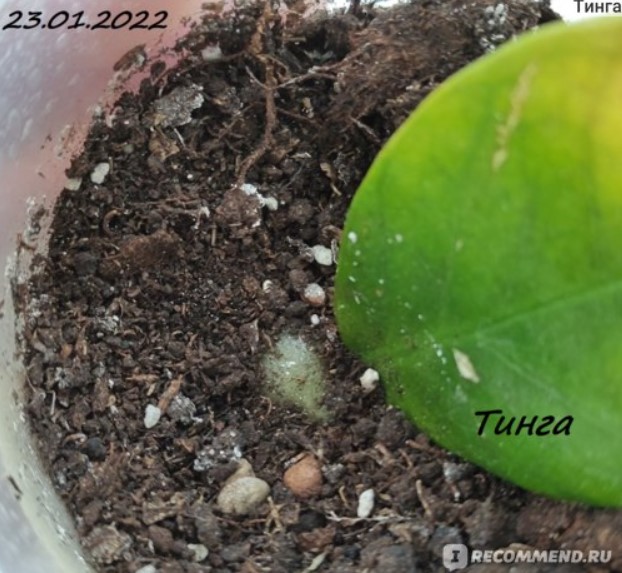
After a couple of months, one of the leaves rotted. The other one was still standing, I continued watering it, and seven months later I saw the results. It had produced a tuber. I was overjoyed.
Zamioculcas
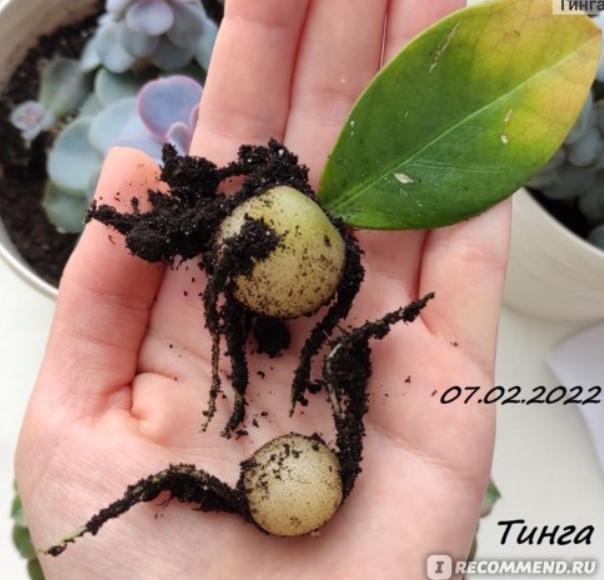
I waited for the waxing moon and decided to plant it with my other flowers. So I dug it out of the jar, and there was a surprise: two whole tubers. Apparently, that rotten leaf had also sprouted a root.
Zamioculcas has grown a tuber from a leaf.
Today I transplanted them into a larger pot. Now I'm sitting here wondering if I should have done it in vain, as it might have gotten stressed out by such a large pot. Has anyone else had this experience? Could you tell me if I should have replanted it with the others or if it would have been better to start in a smaller pot?
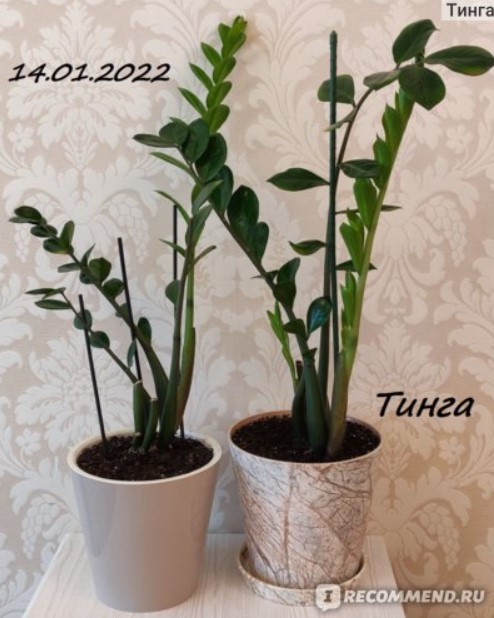
ZamioculcasSo, this is what my Zamioculcas looks like today. Of course, it's not perfect, and there's still room for improvement, but the main thing is that it's getting better and better every day.
Zamioculcas
ZamioculcasTherefore, I would like to give some recommendations regarding the care of this flower:
1. When choosing soil for your succulent, choose soil labeled "For succulents," but if possible, add a third of river sand. Also, don't forget to provide a good drainage layer.
2. Choose a pot that is not too wide, as zamioculcas likes it when the roots are cramped.
3. When watering, be sure to wait until the soil is completely dry to a depth of several centimeters. It's better to underwater a Zamioculcas than to overwater it, as its tuber tends to retain moisture. Overwatering is especially dangerous during the colder months.
4. You don't need to spray it additionally, but I recommend regularly dusting the leaves. This can be done with a cloth or in the shower.
5. During the warmer months, fertilizing is recommended. It's best to do this about once every two weeks during the waxing moon. Therefore, I fertilize my zamika on the first day of the waxing moon and on the last day before the full moon.
6. It is better to choose a bright location, since in the depths of the room it grows very slowly and reluctantly.
Conclusion
Even though this flower is slow growing, I still love it and will continue to try to bring it back to life after living in an unsuitable place for a long time and receiving poor care.
If you found this review interesting, I also suggest you check out other floral themes:
Echeveria (7 species)
Aeonium (2 species)
Pachyphytum (3 species)
Phalaenopsis orchid (more than 10 colors)
Tinga
recommends
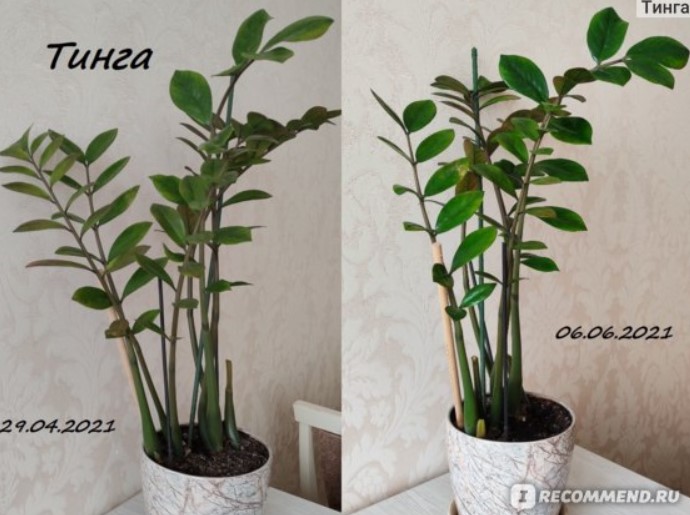
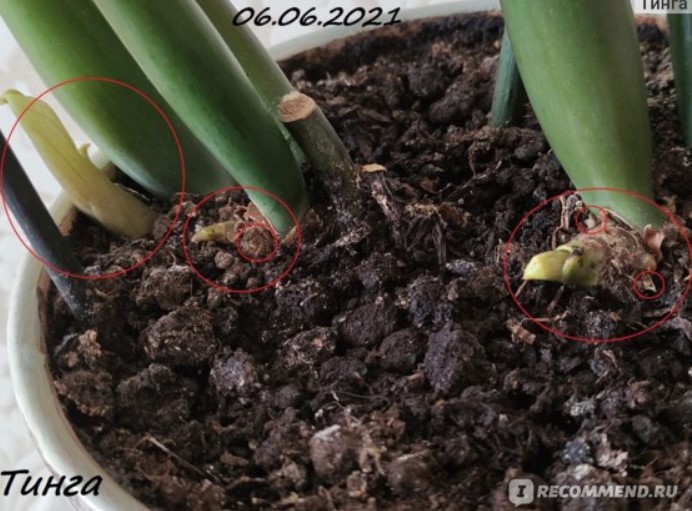
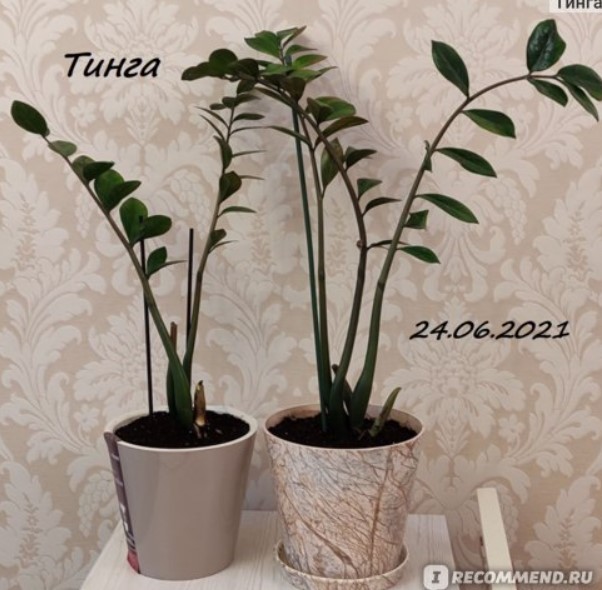
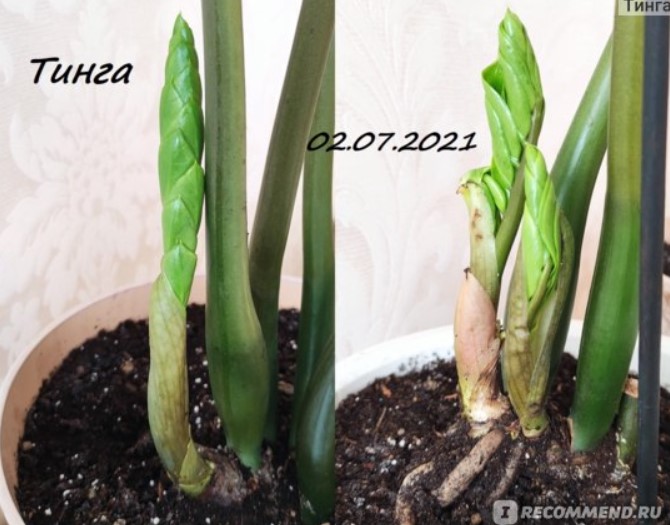
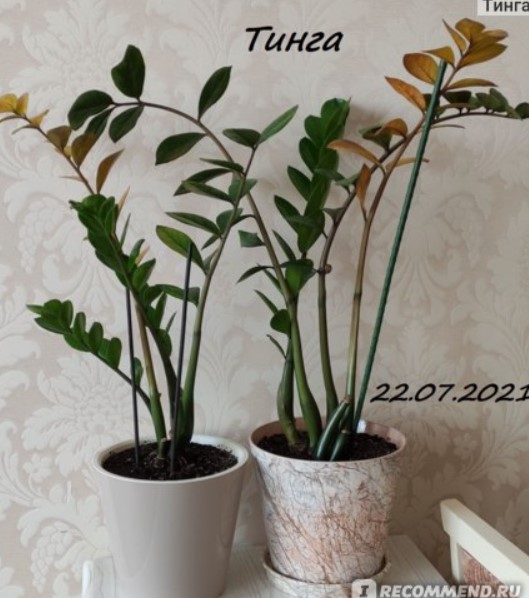
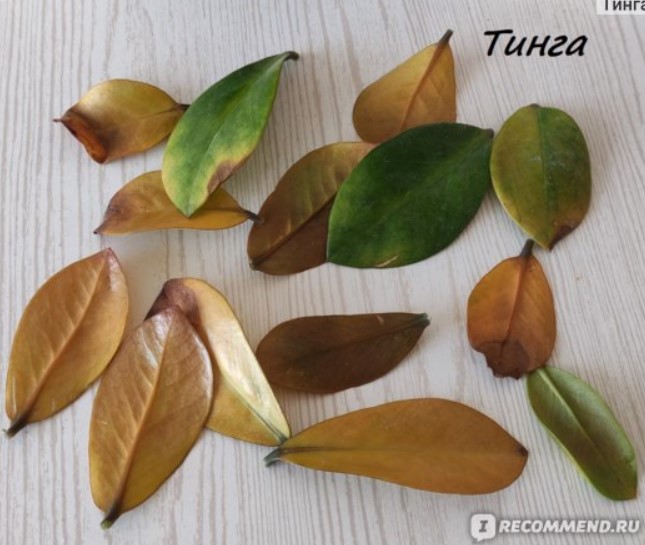
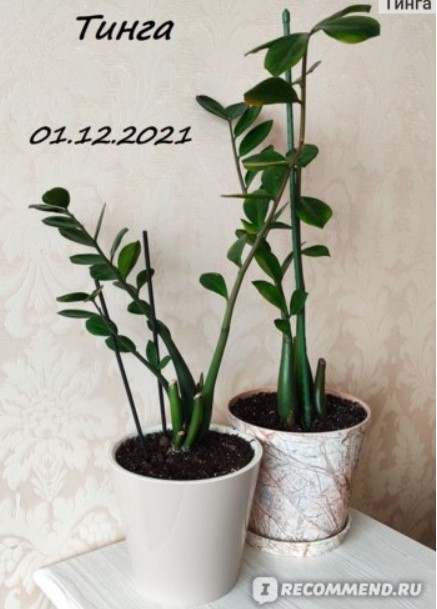
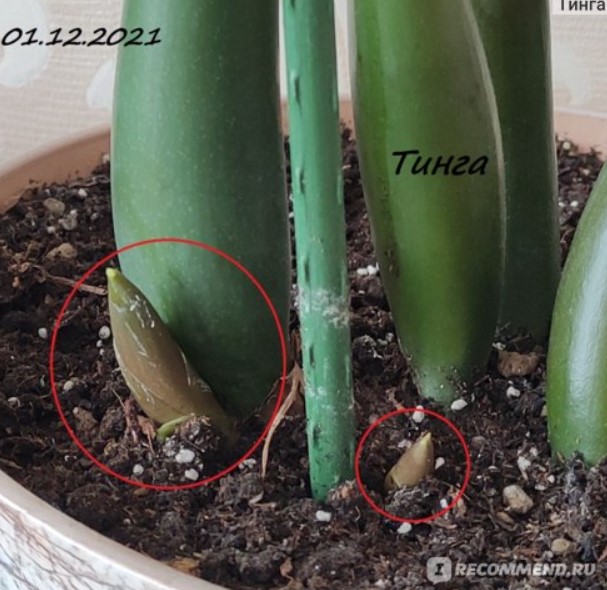
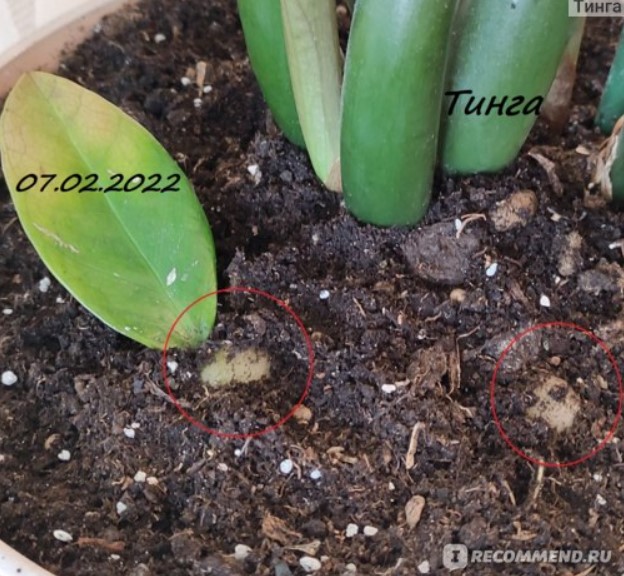
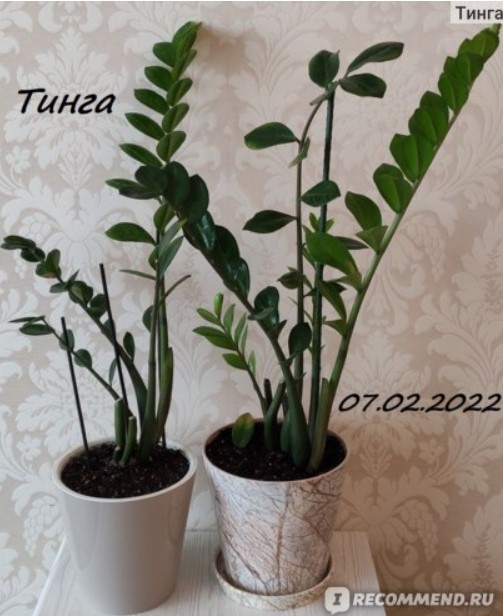
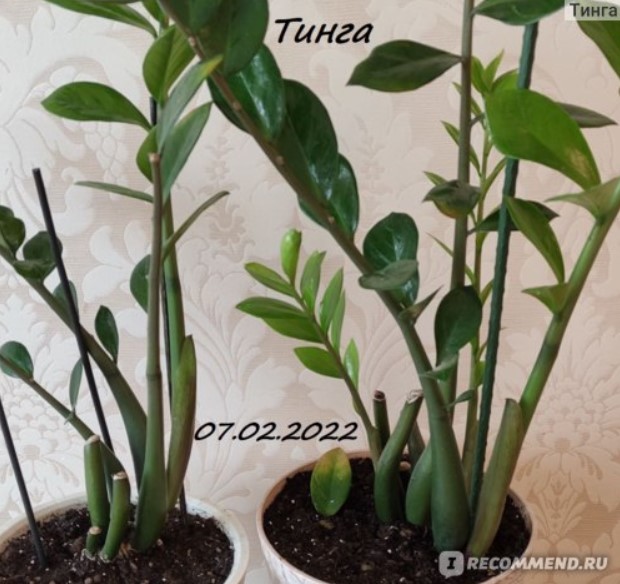
The beating heart of a zamioculcas in hydrogel soil. I'll tell you why I transplanted it from the ground into colorful balls and what happened! How does the most popular plant bloom?
Hi all!
I grow plants at home and love houseplants. My collection includes pomegranate, poisonous nightshade, six species of anthurium, a bunch of fuchsias, clerodendrum ugandense, cyclamen, and aeschynanthus magnificens, to name just a few. Zamioculcas, or dollar tree, is one of the most popular and widespread houseplants. It is highly prized for its beauty, ease of care, and ability to purify the air of harmful substances. Being a succulent, zamioculcas has the ability to accumulate water in its thick leaves, making it very resilient and long-lived.
One of the main advantages of the zamioculcas is its low maintenance. It can thrive even in low-light conditions, making it ideal for those with limited natural light, such as north-facing windows, or simply for those who can place it anywhere in the room. Mine migrated from the window to the center of the room, where it sits on my desk. It also adapts to periods of drought, so it doesn't require frequent watering. Two to three times a month is sufficient to maintain its health and beauty.
Zamioculcas has attractive green leaves that can set the mood in any room. Their fleshy texture and vibrant green color lend them a special charm. Furthermore, zamioculcas has the ability to purify the air of toxins and harmful substances, including formaldehyde and benzene. This makes it an excellent choice for homes or offices where chemicals are frequently used or where air pollution is a concern.
Bloom
A zamioculcas plant bloomed in front of my north-facing window. Its flower looked simply unreal, very reminiscent of an anthurium and a peace lily. It started out slightly white, then turned completely green.
Bloom
This bloom lasted for more than three months. The flower has no scent and looks very unique.
Then I decided to transplant the plant into hydrogel, since after flowering, the zamioculcas started to sprout. I washed the tuber and placed it in these balls. After about six months, the zamioculcas started to produce new shoots!
The tuber itself looks like a heart. Moreover, the plant has far fewer roots in the hydrogel, but none of them rot. Therefore, I believe it does much better in aquasoil. Another major advantage of zamioculcas is its ability to increase air humidity. Through a process known as transpiration, it releases moisture into the surrounding environment, which can be very beneficial in winter, when heating can make the air too dry. This is especially important for people with breathing problems or dry skin.
Zamioculcas is also notable for its ability to grow and spread. Over time, with proper care, the plant can become very large and impressive. Its leaves can reach considerable length, and the trunk can reach an impressive thickness. This makes Zamioculcas an excellent plant for those looking to create a striking addition to their home or office. Propagation by cuttings. It's also very easy to propagate. Simply cut a leaf and place it in soil, or, like me, in hydrogel. Over time, a tuber will begin to form near the cut, indicating that the plant has taken root.
Surprisingly, a cut zamioculcas can stand in water for years, the main thing is not to forget to add water.
However, despite all its benefits, zamioculcas does have some drawbacks. One of these is its toxicity to pets. The leaves and stems contain substances that can be harmful to cats, dogs, and other pets. Therefore, if you have pets, you should exercise caution and place the plant out of their reach.
In conclusion, the zamioculcas is an excellent choice for a houseplant. It's resilient, beautiful, and easy to care for. Its ability to purify air and increase humidity makes it especially valuable in today's living conditions. If you're looking for a plant that will add beauty and utility to your home or office, the zamioculcas is definitely worth considering.
Thanks for watching and all the best!
Advantages
If you try, you can see the bloom.
Minimum care requirements
Can be grown in hydrogel soil
Easy care
Very beautiful
Grows in the shade and northern windows
They create coziness
Stylish look
Interior decoration
Blooms like an alien
Flaws
Does not tolerate excess moisture
It's alive, but if you don't take care of it properly, you'll have some deficiencies.
Little Fox
recommends
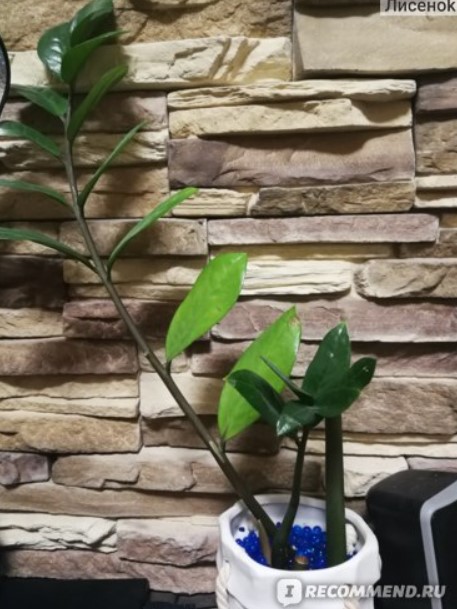
Review: Zamioculcas houseplant – A dollar tree! An easy-to-grow, large plant for the home and office. How does it propagate?
ADVANTAGES:
leaves, easy to care for
FLAWS:
growing slowly
Zamioculcas (or simply zamik), also known as the dollar tree, won't bring you wealth, of course, but why not? It's quite expensive, with mature plants costing 800 rubles and up. The price is high because zamioculcas grow very, very slowly. With patience, you can propagate them and become rich.
REPRODUCTION
Propagated by leaves, cuttings or by dividing the adult flower into tubers.
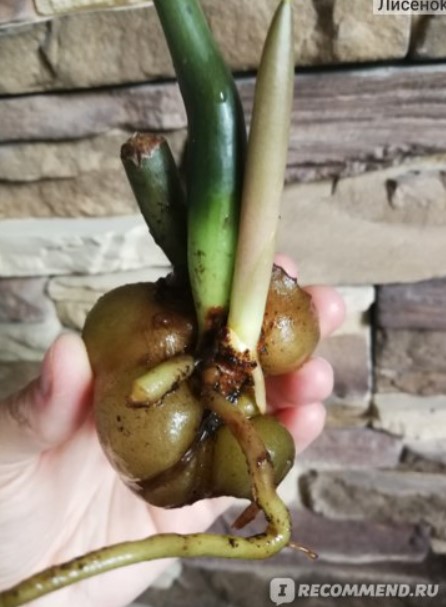
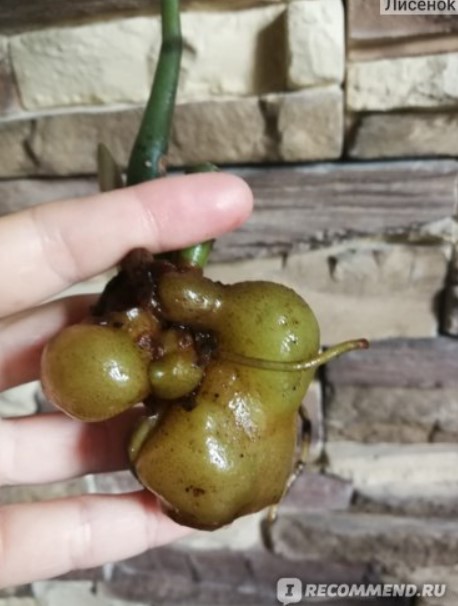
Leaves and cuttings will sit in the ground for 3-6 months until the first shoots appear.First, the zamik grows a root system - these are tubers similar to potatoes.
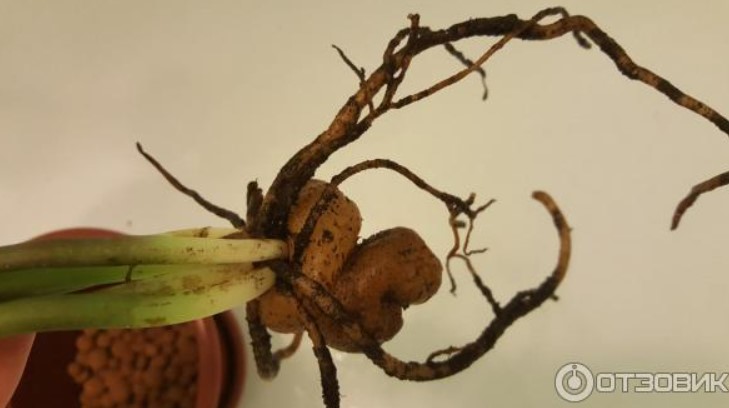
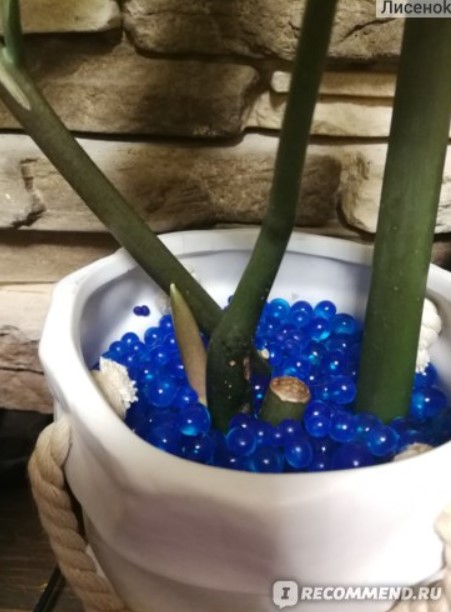
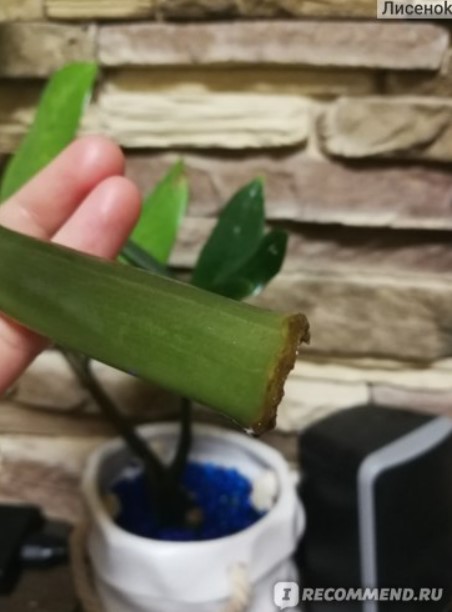
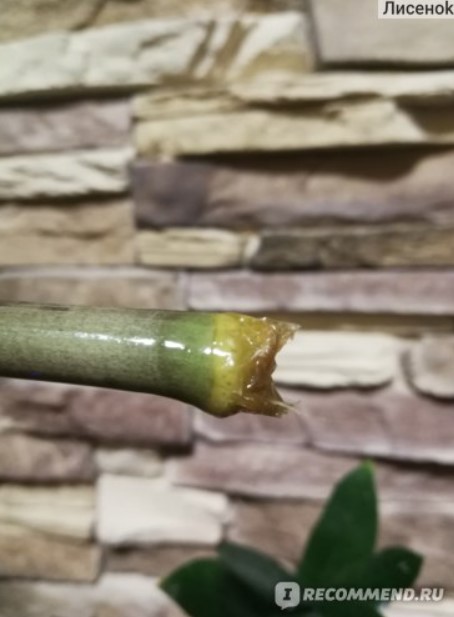
I specifically filmed the replanting process for those who don't know what's underground in a Zamioculcas :))
The main flower was divided into bunches
Zamioculcas prefers a tight pot. If planted in a large pot, it will vigorously grow tubers, and until it fills the entire pot, it won't waste energy on vibrant greenery.
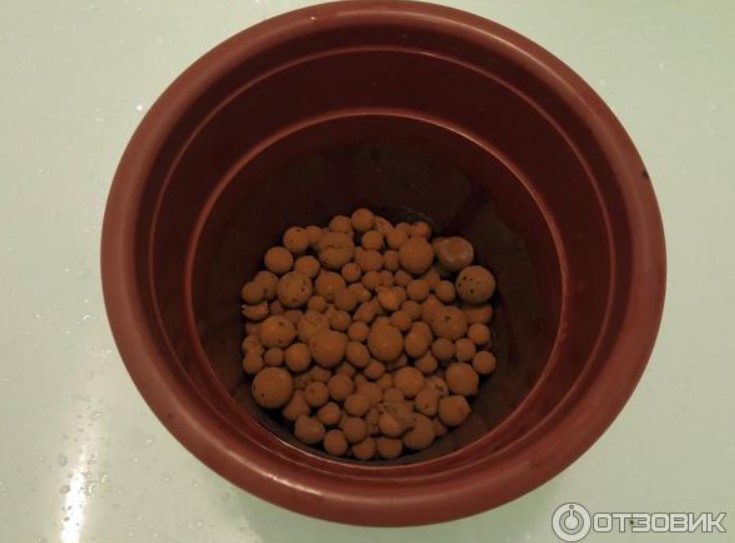
Place drainage at the bottom
It is better to plant several tubers/plants in a pot at once to achieve fullness.
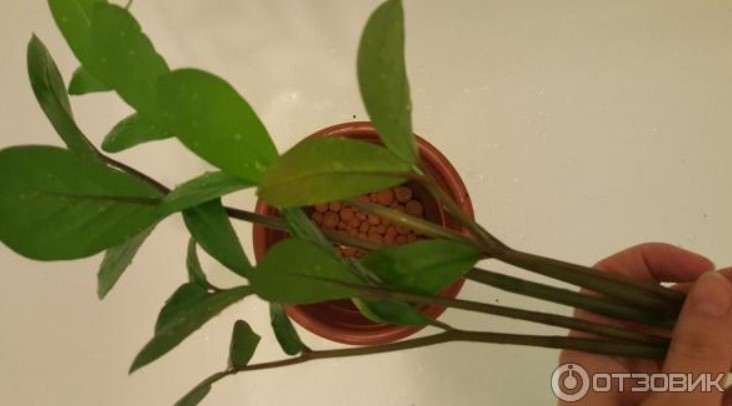
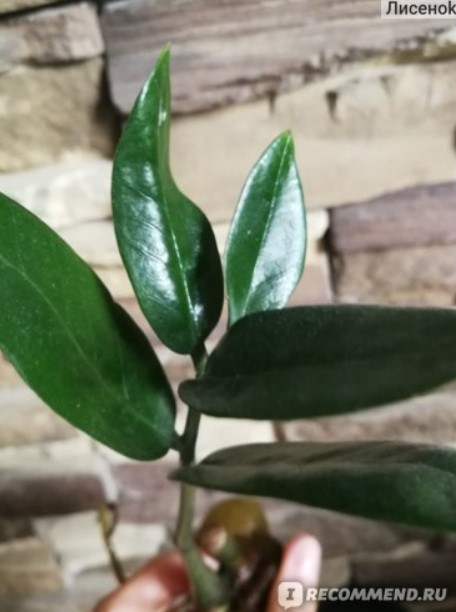
Although it grows slowly, it produces very beautiful, glossy, bright green foliage.
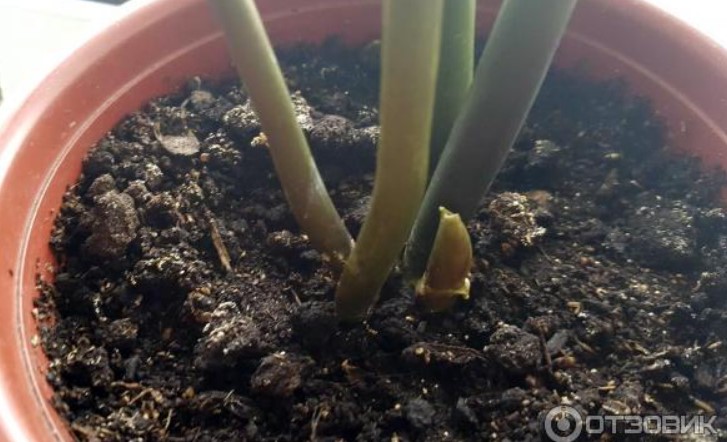
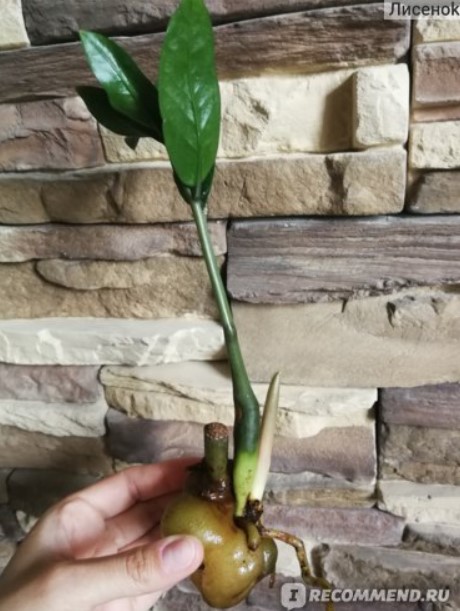
About 4 months have passed since the transplant and a new sprout has just begun to appear))
Editing my review after just 1 month!
It turns out that the shoots sit for a long time, but grow quickly and actively.
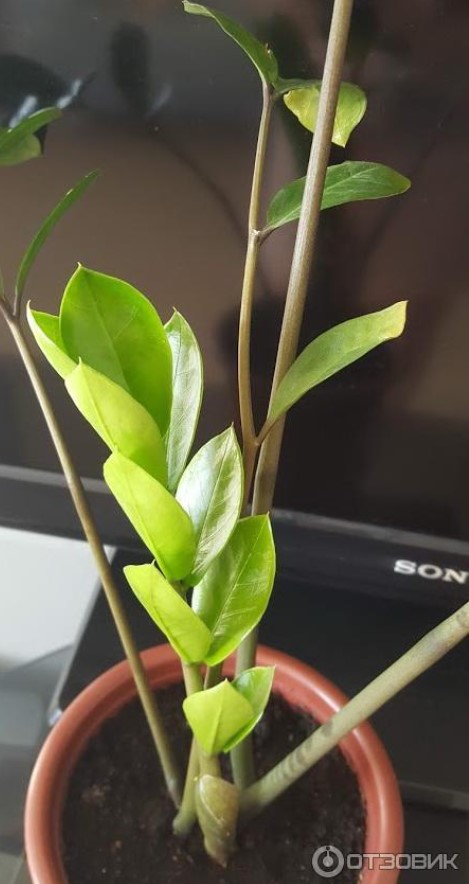
From the small mound in the photo above, a whole new branch with delicate green leaves grew within a month!
FLOWER CARE
An absolutely unpretentious plant. It tolerates drought and owners who forget to water it (due to its tubers, it tolerates dry soil and low humidity well).
You shouldn't overwater it, as the roots may rot.
Prefers diffused light. Avoid placing in direct sunlight or full shade.
It also grows well in office spaces with artificial light.It blooms extremely rarely at home at a respectable age.
Produces an inconspicuous flower, like a mini banana.Buying a zamioculcas plant is easy these days—it's quite popular and easy to care for. It's perfect for beginners.
P.S.
In 1.5 years after planting 1 tuber with 4 branches, 4 new branches grew, but the old 3 dried out.
But the new ones produce more and more leaves each time. There were 10, then 15, the next 20.
This is how Zamiakulkas, the money tree, has grown in 2 years.