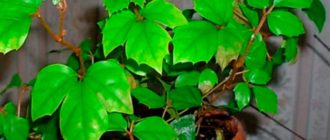
Scindapsus is a flower belonging to the Araceae family of vines. It is common in the tropics of Southeast Asia.
Content
Description
A massive climbing plant, in natural conditions it can climb trees, using aerial roots, to a height of up to fifteen meters and take over huge areas of land.
Scindapsus is also commonly known as Epipremnum, but there's a slight difference: the leaves of the former are slightly curved, like a comma, while those of the latter are symmetrical. Otherwise, they are very similar.
Types and varieties
There are many different varieties of this flower: Imperial White, Regina Red, Brown Aron, Pink Chocolate, Jade, Red Spot, Godzilla, and many others. However, the following varieties are most often used for indoor cultivation:
- golden;
- painted.
Golden
The most common variety, it's distinguished by its leaves being scattered with golden spots. In the light, it creates a shimmering effect of yellow, green, and gold, hence its nickname, "golden lotus," among enthusiasts. It's easy to grow, but more susceptible to disease than other varieties.
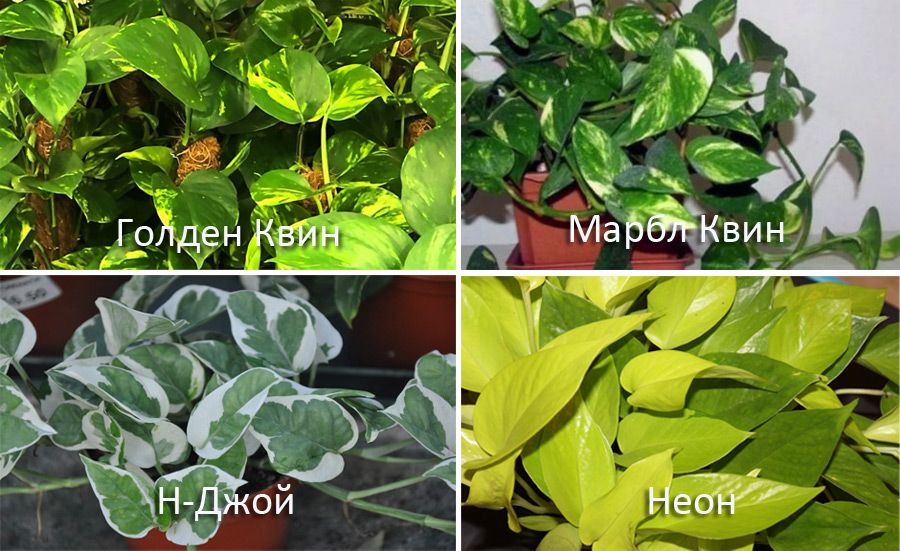
Has varieties:
- Marble Queen - variegated silvery-green, similar to marble;
- Golden Queen - green leaf with random yellow spots;
- Neon - bright lemon color;
- N-Joy is a new Dutch variety, smaller than the others, with thick stems and tough, dense leaves with large, twisted white spots usually closer to the edge.
Painted (Pictus)
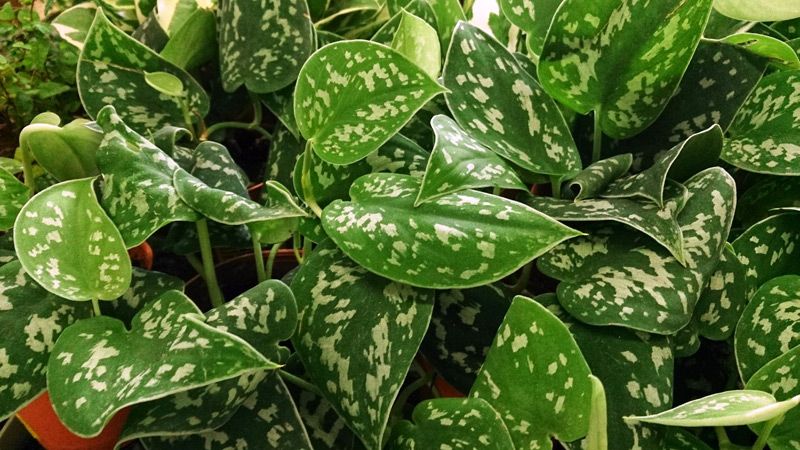
A variegated variety, the leaves are more oval, dark green, and flecked with white and silver. It is fairly resistant to diseases and pests. Small growths on the stem—aerial roots—grow brown over time, helping the plant become more tenacious and collect moisture from the surrounding atmosphere.
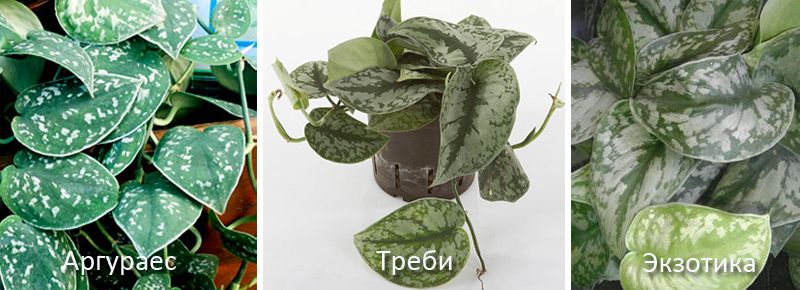
Varieties:
- Exotica - large-leaved, stands out for its curved leaves, convex veins and silvery chaotic dots and strokes;
- Trebi - unlike others, tolerates shaded areas better;
- Arguraes - with a white border along the edge of the leaf and scattered silver-colored spots.
Home care
This flower is easy to maintain and grows well in pots and planters. It's no wonder one of its nicknames is "fast-moving vine." However, growing it does require following a few rules.
Correct location
The choice of location depends on the type:
- Variegated - it is better to place it near a window with good diffused light;
- Other species should be kept away from the window, in moderate shade.
Container, soil, support
The liana should be planted in a small but wide pot with good drainage (expanded clay or small stones) and a drainage hole.
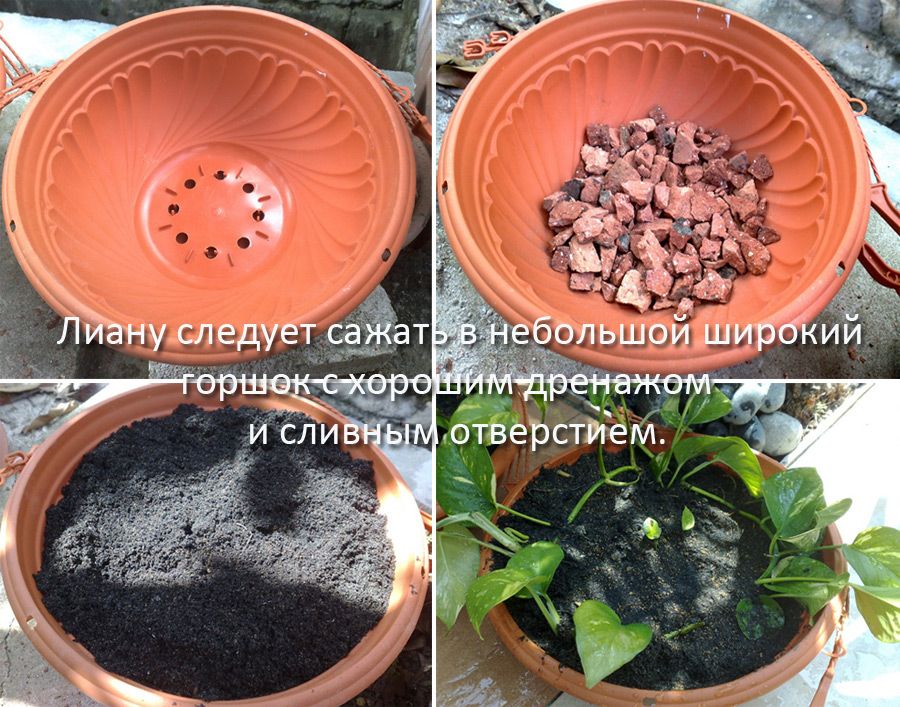
Preparing the soil doesn't require much effort. You can buy soil specifically designed for indoor climbing plants and flowers, or make your own.
There are two ways to obtain the required substrate:
- turf soil - one part, coarse sand - one part, leaf soil - three parts;
- peat, humus, turf soil - in equal parts, sand - half the share.
Before planting, the soil should be watered with a non-concentrated solution of potassium permanganate.
It is good to provide support for the vines.
Watering, humidity, temperature
The plant loves warmth, light watering and regular moisture.
Temperature:
- spring/summer - room temperature, but not higher than +25ºС;
- winter/autumn – temperature drop, but not below +15ºС.
Does not tolerate drafts and temperature changes.
Watering should be done with warm, settled water:
- spring/summer - every day, the substrate should remain moist but not wet;
- winter/autumn - once or twice every seven to eight days.
Soften the water well - 1-2 grams of citric acid (lemon juice) per liter.
High humidity (habitat - tropics) - spray regularly, wipe the leaves with a damp cloth.
Adviсe:
- Cover the substrate with the plant with moistened moss.
- Place the pot in a flowerpot with wet expanded clay.
- Place a humidifier nearby.
Transplantation, propagation
Transfer:
- young - annually in spring (March-April) in a large container;
- adult - in two to three years.
Reproduction:
- by cuttings - a cutting, cut at the point where the leaves are attached, about 10 cm (a little more is possible), is cleared of foliage, dipped for 2-3 seconds in a phytohormonal agent, planted in soil, then placed in a mini greenhouse (glass jar, plastic bag) and kept warm at least + 20ºС, periodically spraying;
- layering - the upper part of the shoot with the nodes of aerial roots (layering), without separating it from the mother plant, is placed in a container with a substrate; after rooting, the shoot is cut off from the adult flower, adding more soil to the pot with the young plant.
Top dressing
Fertilize the plant every two weeks during the spring and summer. Fertilize with mineral fertilizers for vines. No fertilizer is required during the winter.
Potential diseases and pests - table
Let's consider possible damages and ways to eliminate them:
| Defeat | Cause | Method of struggle |
| On the back of the leaf, small, prominent brown spots are visible. | Insects - scale insects, with a brown, rough shell. | Remove all insects with a cloth soaked in alcohol. Wash the plant in the shower with soapy water. Spray the foliage with Intavir. |
| Silvery streaks. | Thrips. | Treatment with insecticide "Actellic". |
| The leaves begin to curl and become sticky. | Small insects - aphids. | Shower with diluted soap. Spray with an insecticidal solution containing permethrin. |
| Webbing. | Spider mite. | Shower with soap. Spray several times with insecticide. |
| Stops growing. | Loss of nutrients in the soil, which inhibits growth capacity. | Transplanting into a larger pot with new soil. |
| Leaves lose elasticity, roots and stems rot. | Too much watering. | Repotting with fresh soil, trimming away rotted parts, treating cuts with activated charcoal powder. Maintaining a proper watering schedule. |
| Large brown spots. | Sunburn. | Remove the plant from direct sunlight. |
| Paleness, elongation. | Light starvation. | Choose a brighter location. |
| The tips of the leaves dry out. | Dry air. | Spray more often. Place a humidifier nearby. |
| The leaves are falling. | Drafts, lack of sun. | Find a more appropriate location. |
| The leaves are turning yellow. | Not enough fertilizer. | It is necessary to feed and apply fertilizers regularly, according to a schedule. |
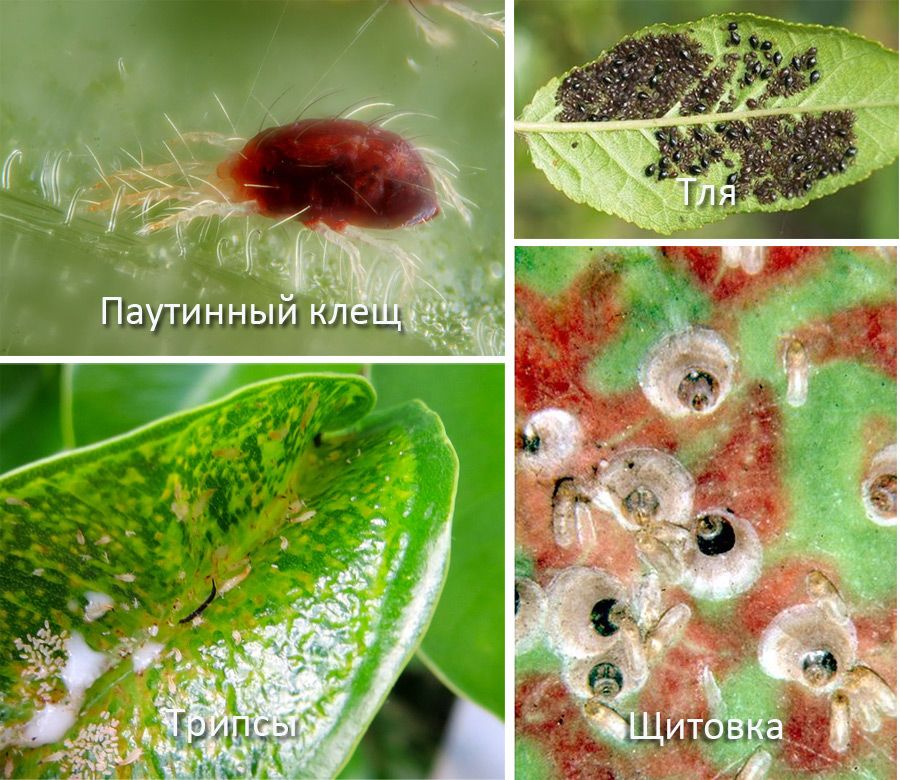
If you follow the care instructions and carefully inspect the newly purchased plant for insects, then problems with diseases and pests can be avoided.
Benefits, harms, signs
Although scindapsus doesn't bloom in apartments, it adds a beautiful touch to the interior. It's also useful for purifying indoor air.
However, this plant is poisonous, and poisoning from the leaves can cause diarrhea, so keep it away from children.
This plant has also gained popularity, being called "husband-killer" or "devil's ivy." The superstition is that scindapsus drives men out of the house, causing family quarrels. But all this is just empty talk and superstition that should be ignored.