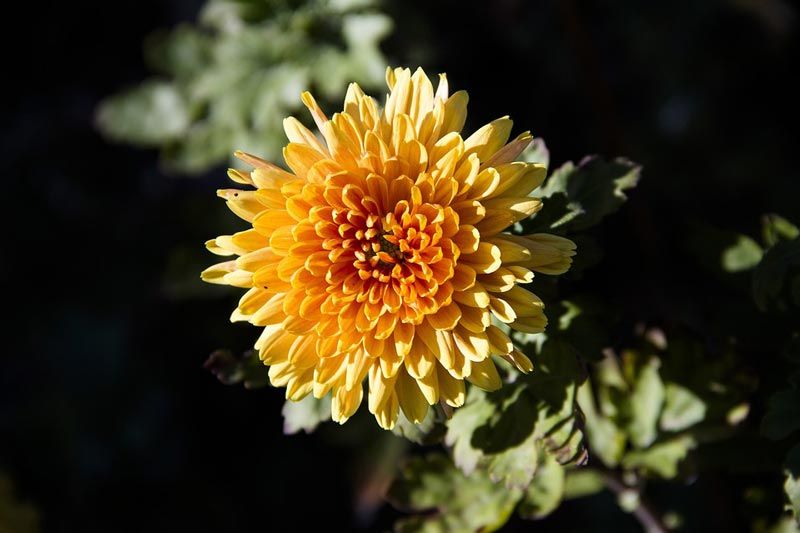
Chrysanthemum is an annual or perennial flowering plant in the Asteraceae family. More than 29 species are found in Asia, where the climate is northern and temperate. Its native lands are China, India, and Japan. It was cultivated in China as early as the 6th century BC. It arrived in Europe in the 17th century and in Russia by the mid-19th century. Translated from Greek, it means "flower of the sun."
Content
- 1 Description of indoor chrysanthemum
- 2 Classification of chrysanthemums
- 3 Popular varieties for growing at home
- 4 Adapting a flower to indoor conditions
- 5 Caring for indoor chrysanthemums
- 6 How to transplant a chrysanthemum
- 7 Formation of an attractive bush
- 8 How to stimulate chrysanthemum flowering
- 9 How to care for chrysanthemums after flowering
- 10 Propagation of chrysanthemum in a pot
- 11 Diseases and pests
- 12 Top.tomathouse.com recommends: Chrysanthemum, an immunity booster
Description of indoor chrysanthemum
Chrysanthemums are grown not only in flowerbeds but also indoors. Flowers grow on balconies and windowsills. Indoor chrysanthemums are typically miniature, ranging from 15 to 70 cm.
Its shoots are smooth, sometimes with hairs. The inflorescence is a basket of petals. The buds are 2.5-5 cm in diameter. They open in August and bloom until late autumn. The leaves are arranged alternately and vary in size and shape: serrated, notched, dissected, and light green. The rhizome is branched and grows parallel to the ground.
Potted bush chrysanthemums are popular among gardeners. There are varieties with single petals reminiscent of daisies, and the flowers are shaped like a ball. Cascading chrysanthemums are also available for hanging cultivation.
Korean, Indian, and Chinese varieties are common. Flower colors include white, orange, lilac, and pink. The center of the petals is a different color than the edges.
When buying a flower in a store, look for any spots, damage, or inclusions. Avoid buying such a flower, just like one that has already blossomed. Its leaves should be green, the roots strong, and the bush well-formed.
Classification of chrysanthemums
Plants are classified as follows:
- Sizes: large-flowered and small-flowered (less than 80 cm).
- By the shape of the inflorescences: double, blanket, non-double, two-row, pinnate, bristly, anemone-like.
- Flowering periods: early, mid-season, late flowering.
- Stem height: tall (45-60), medium (30-45 cm), low (15-30 cm).
- Flower shape: chamomile, spherical.
Popular varieties for growing at home
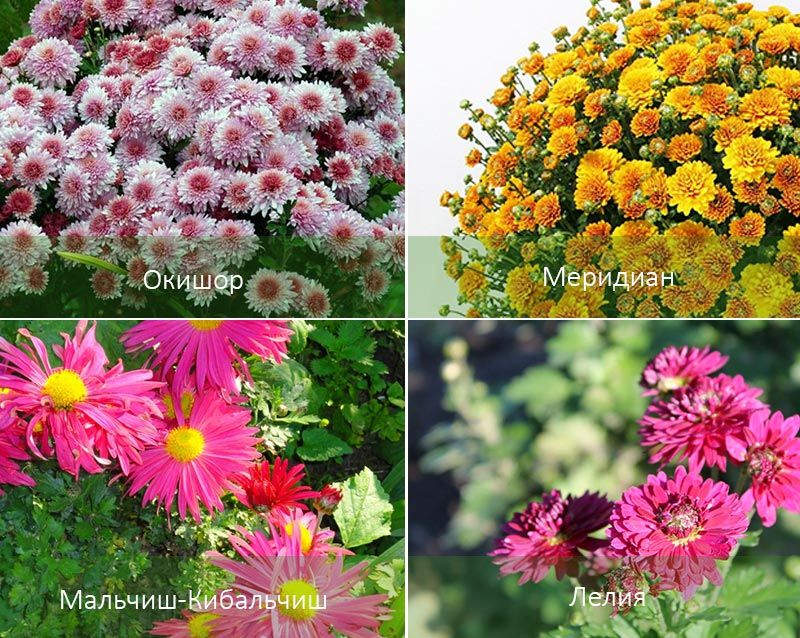
There are more than 40 varieties of indoor chrysanthemum, including Indian, Chinese (mulberry-leaved), and Korean.
| Variety | Peculiarities | Flowers |
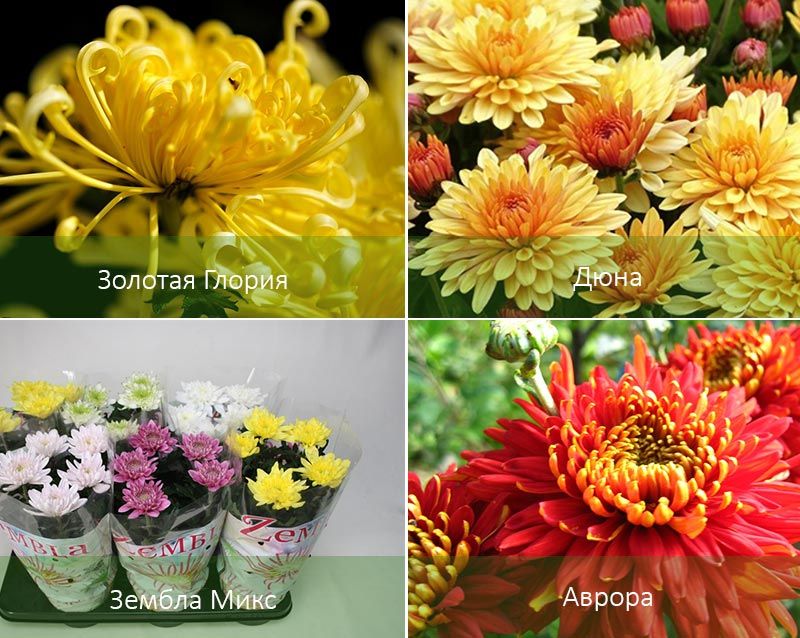
| Golden Gloria | Compact, blooms profusely. | Yellow. |
| Lelia | Medium height, up to 50 cm. | Terry, dark crimson. |
| Hazell | Bush up to 50 cm. | Spoon-shaped, orange petals. |
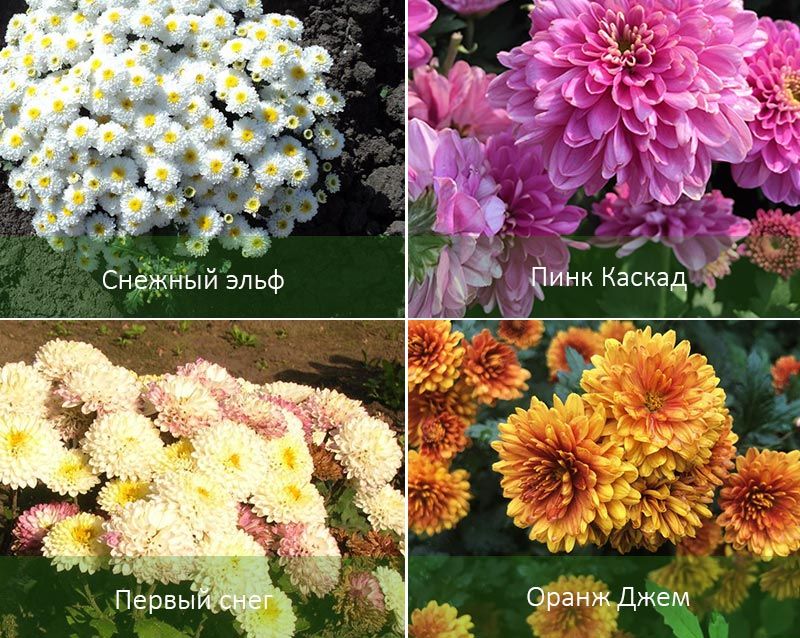
| Orange Jam | Spherical, Korean. | Bright orange. |
| Zembla mix | Large buds and tall shoots. | They bloom in autumn, some are green in the middle, and come in different colours. |
| Aurora | Tall, medium-sized inflorescences. | Orange. |
| Snow Elf | Tall stems. | Terry, white. |
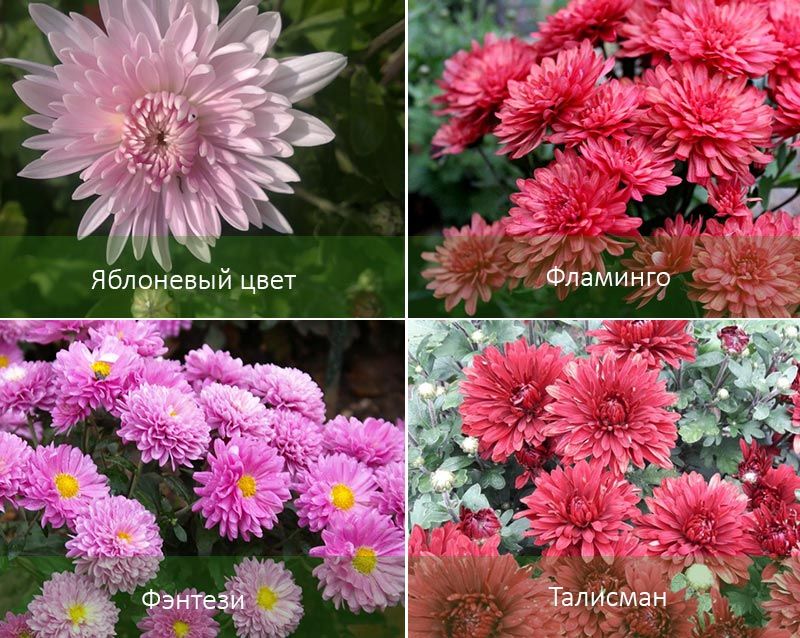
| Fantasy | Bush up to 20 cm. | Bright pink, double. |
| Pink Cascade | The shoots are drooping and are placed in hanging pots. | Pink. |
| Meridian | Low-growing, spherical, the leaves are not visible under the blossoming petals. | Semi-double, burgundy, yellow in the middle. |
| Apple blossom | The bush is lush, growing up to 0.5 meters. | Terry, pink. |
| Okishor | Height up to 50 cm, large inflorescences 6-8 cm in diameter. | Lilac. |
| Flamingo | Hemispherical, erect bush, inflorescences up to 7 cm in diameter. | Light pink with a pearly sheen. |
| Mascot | A lush, small bush up to 25 cm. | Raspberry. |
| Dune | Grows up to 50 cm. Changes color during flowering. | Bright, yellow-brown. |
| First snow | Up to 35 cm in height, the bush is voluminous. | White. |
| Malchish-Kibalchish | More than 50 cm high and about 60 cm wide. | Red, purple. |
Adapting a flower to indoor conditions
After leaving the store, the chrysanthemum is kept separately, as there is a risk of pest attack and contamination of other flowers. The pot is placed in a warm, bright spot, and is not watered or fertilized.
When the buds have finished blooming, they are cut off and replanted in a new container and disinfected soil, after first inspecting the roots and removing any rotten parts.
Caring for indoor chrysanthemums
To achieve flowering, you should provide appropriate care at home: light, temperature, watering, regular spraying, and feeding the plant.
| Factor | Summer | Spring/Autumn | Winter |
| Location, lighting | Eastern and western windowsills. Daylight hours from 7 to 10 hours. | Dark room. | |
| Temperature | +20…+23 °С. | +15…+18 °С. | +3…+8 °С. |
| Watering | In the evening, twice a week with warm, settled water after the soil has dried out. | Once a week. | |
| Humidity | High, you need to spray the leaves and humidify the air. | Not needed. | |
| Top dressing | From mid-August, apply potassium and phosphorus fertilizers. | In spring, with nitrogen, once every 12 days. In autumn, phosphorus with potassium. |
Not required. |
How to transplant a chrysanthemum
Young bushes are repotted annually, while mature plants are repotted every 2-3 years, usually in March. Choose a pot with drainage holes that is 2 cm wider and 1.5 liters deeper than the previous one. Ceramic or clay pots are best.
For the soil, mix garden soil, humus, peat, and coarse sand in a ratio of 3:1:1:1. Disinfect the soil (with boiling water and potassium permanganate or in the oven). You can buy ready-made soil disinfectant at a store for flowering plants. Place expanded clay or vermiculite at the bottom, or use broken brick. Transplant the entire bush or divide it into smaller ones.
Formation of an attractive bush
To give the bush a beautiful appearance and prolong flowering, it is pruned. The flower tips are pinched in early March, before the buds open. The second time is before the buds form, in mid-August. Yellow leaves and thin, twisted shoots are removed.
Large-flowered varieties are formed like a tree by shortening the main stem and trimming the lower branches.
How to stimulate chrysanthemum flowering
It is important to follow several rules to help the plant bloom faster:
- Water generously, preventing the soil from drying out.
- Make daylight hours 12 hours.
- During the formation of buds, the plant should be kept in a cool place at +13…+16 °C.
- While the buds are small, remove the small ones, leaving only the large ones.
- When all the buds open, provide good lighting.
- Transplant into a spacious container.
- Fertilize with nitrogen before flowering.
How to care for chrysanthemums after flowering
Shorten the plant's stems after flowering, leaving 10-15 cm. Trim off any dry or damaged stems. Place the plant in a room with a temperature of 3 to 8°C and water it once a month. Leave it in its original location if desired. Repot in early spring.
Propagation of chrysanthemum in a pot
It is recommended to propagate chrysanthemum by cuttings, dividing the bush, and rarely by seeds.
After reaching three years of age, the bush is dug up at the end of summer, taking care not to damage the roots. Old shoots are cut off. The offshoots are replanted.
Propagating chrysanthemums in autumn at home
A month before the procedure, after the resting period, in the spring, the pot is moved to a warmer location, with temperatures ranging from 10 to 12°C. When 4-6 leaves have formed, cuttings are taken. The soil is prepared from humus, garden soil, and sand (1:2:0.5), topped with 2-3 cm of sand. Cuttings are taken 8 cm long and dipped in Heteroauxin or Kornevin. They are planted 1.5 cm deep in the pot with soil. Cover with plastic wrap and place in a location with a temperature of 17 to 20°C. Water regularly. After 2 weeks, after rooting, the plants are potted. The cuttings can also be used for bouquets.
Autumn cuttings differ in that they use shoots growing from the mother rhizome. The plant will then bloom in April.
Step by step actions:
- Select a mother bush.
- Cut off the top part at the root.
- Wait until the basal shoots appear and grow to 8 cm.
- Dig up the bush and place it in a container with a nutrient mixture.
- Keep for 3 weeks at a temperature of +5…+7 °C (in a greenhouse, basement).
- Water moderately.
- When young shoots with 2-3 internodes are formed, they are dug up from the mother bush and planted in the soil.
Seeds
Propagation is rare. Buy them from a store, place them in soil, cover with sand, and cover with plastic wrap. Moisten the soil periodically. The first shoots appear after two weeks. When three leaves form, plant them separately.
Diseases and pests
The delicate flower is easily susceptible to diseases and pests.
| Manifestation on leaves | Cause | Elimination measures |
| Gray and fluffy coating. | Gray rot. | The following medications are used: Topsin-M, Fundazol. |
| Dried at the bottom with yellow and red spots. | Septoria. | Cut off and destroy infected leaves, treat with copper oxychloride. |
| Gray coating. | Powdery mildew. | Spray with Bordeaux mixture, Topaz, Strop. |
| Pale spots on top, orange below. | Rust. | Copper oxychloride and Abiga-Peak are used. |
| Yellow, wilted, shoots die off, roots are affected. | Verticillium wilt. | They are treated with Gliocladin, Trichodermin, and transplanted. |
| They wither, turn yellow, and fall off. | Fungus in the soil. | Cut off the affected parts and transplant into new soil with a pH of 6.5-7. |
| Small spots. | Mosaic. | The diseased ones are cut off and replanted. |
| Yellow-brown spots dry up and fall off. | Nematode. | Remove affected parts, replant, and treat with insecticides. |
| The buds curl up, become deformed, and do not open. | Aphid. | Treated with Actellic and Fitoverm. |
| Light spots on the underside, grey-brown on top. | Thrips. | Intavir, Decis are used for treatment. |
| Pale yellow with white spots. | Spider mite. | Treat with a weak soap solution, Fufan, Fitoverm. |
Top.tomathouse.com recommends: Chrysanthemum, an immunity booster
Chrysanthemums have many beneficial properties. They contain phytoncides, which purify the air of harmful substances and gases. Inhaling the flower's aroma calms people, thus helping relieve stress.
The flowers contain essential oil, which strengthens the immune system and stimulates the body's defenses. They also contain antioxidants and vitamins. Chrysanthemum tea is effective in treating colds and coughs. Chewing a few chrysanthemum petals can help improve sleep.
In Japan, the flower is a symbol of longevity and happiness; its image appears on the imperial seal. According to Eastern beliefs, carrying it brings success in love, and bathing in its petals will make a woman very attractive to men.