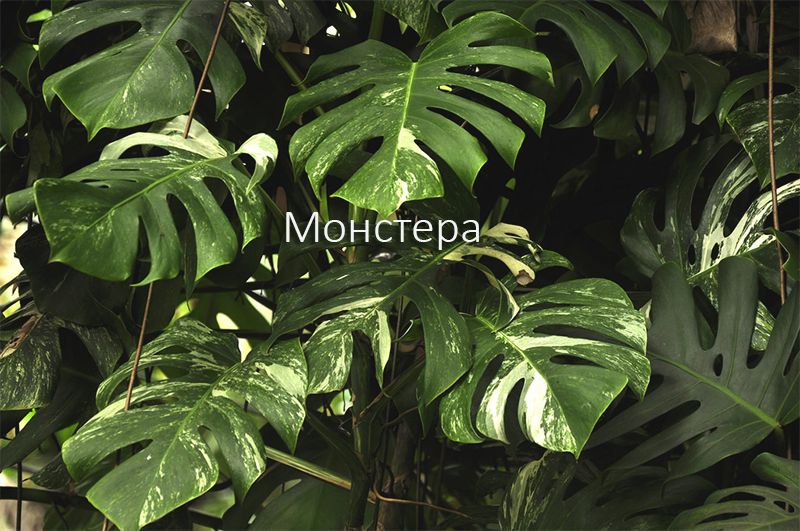
Monstera is an evergreen, exotic vine in the Araceae family. This epiphyte is native to the humid tropics of South America. The plant has large, lobed or entire leaves. A growing point is located at the apex of the shoot.
The adventitious roots are quite long, thick, and brittle. The flowers are inconspicuous, and the fruits are edible. The genus of plants includes about 50 species and numerous cultivars.
Types of Monstera for the Home – Table
Not all plant species are suitable for indoor cultivation, depending on the region. Two species are most commonly grown: oblique and charming. You can try growing the vines listed in the table at home:
|
Types |
Description |
| Delicatessen (Delicious, Alba, Delicioza) | Oval, leathery, carved leaves. Stems are thick and fleshy. |
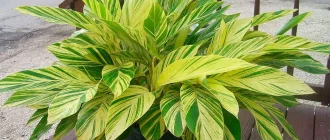
| Variegata | Variegated leaves with light streaks. Yellow and green colors predominate. |
| Oblique | Small dissected oval leaves with short petioles. |
| Adanson (Unequal-sided) | Strongly dissected ovate thin leaf blades with small holes. |
| Thin | Rarely encountered. Pinnately dissected, lacy leaves. Slow growing. |
| Borziga | An unpretentious small vine. A variety of Monstera Deliciosa. |
| Doubtful (Dubia) | A small liana with entire leaves. |
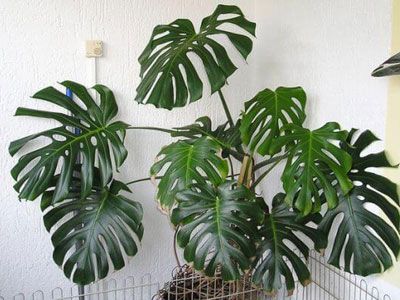
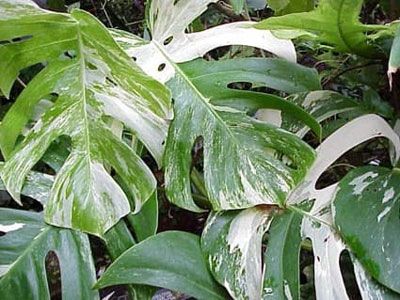
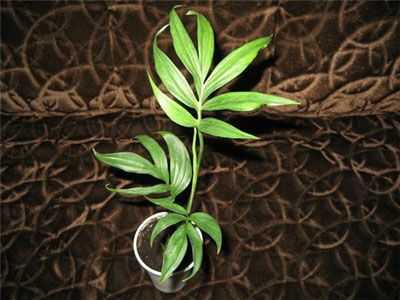
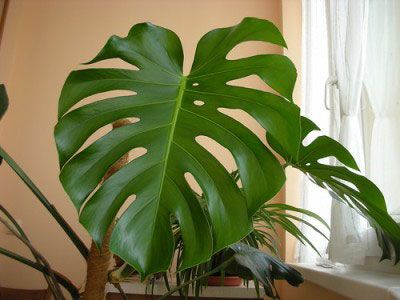
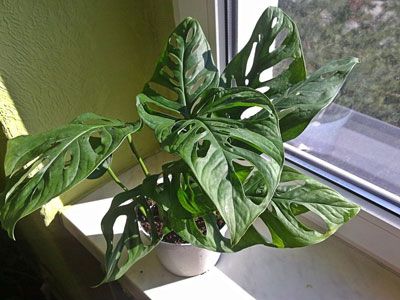
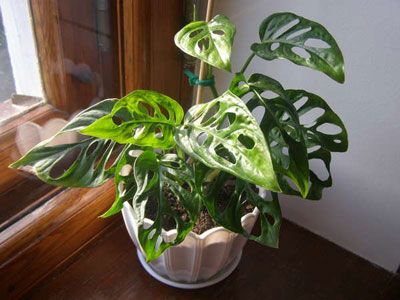
Their unpretentious nature has allowed these plants to decorate rooms, offices, and botanical gardens. For example, the variegated monstera is a symbol of luxury and wealth. It's important to remember that many vines grow to large sizes and require specific space: some species grow up to 3 meters in height.
Monstera care by season – table
The vine requires little care. It needs plenty of water during the warmer months, a rest period in winter, and timely pruning.
At low indoor temperatures, water sparingly. Fertilize approximately every 30 days during the growing season. If the plant is constantly in the shade, its crown will become stunted. At very low temperatures, the leaves may turn black, and if this is compounded by excessive watering, they become wilted. At excessively high temperatures, the leaves curl, a phenomenon more common in winter.
The table shows plant care by season:
|
Season |
Lighting | Humidity |
Temperature conditions |
| Spring/summer | Light shade or filtered light. To avoid sunburn, it requires partial shade on the sunny side. In poor lighting, the leaves become smaller and cuts do not form. |
Moderate. In hot weather, spraying is recommended. | From +20 to +25°C without sudden changes. No drafts.
|
| Autumn/Winter | Artificial lighting is required. | Moderate. Regular spraying in a warm room. | Not below +12°C. Keep away from heating devices. |
Getting a monstera to bloom at home is difficult, and sometimes impossible, since it prefers to bloom in natural conditions, but by following all the simple rules of care, it is possible to achieve this.
Planting, replanting, pruning, support
When planting, pay attention to the soil. It should be loose and neutral. There are several soil mixture options:
- take one part of humus, peat and sand and add 2 parts of turf;
- mix one part each of bark, leaf soil, peat, moss and ½ part coarse sand;
- Add coconut fiber or perlite to the purchased soil for Saintpaulias.
Young vines should be repotted annually, as they grow very quickly. The pot should be 2-3 cm larger than the old one. Ideally, the height and diameter should be approximately equal. If the pot is too small, the leaves may turn brown and become thin, like papyrus.
The soil, drainage material, and container must be sterilized beforehand. The drainage material should occupy approximately one-fifth of the container's volume.
The plant should be repotted carefully, along with the root ball. Dry, damaged roots should be trimmed. The vine is placed in the center of the new container, covered with soil, and lightly compacted.
Mature vines are repotted after two years. You'll need a pot large enough to support the vine's growth. The new container should be larger than the old one to ensure the root system feels comfortable.
Since the plant is quite large, it's best to repot it with a partner. Follow the repotting process step by step.
Repotting a very large monstera is difficult, so over time, only the old top layer of soil is replaced, adding humus. If you don't want to have to deal with these problems, you can get a miniature plant.
A young monstera definitely needs support, as it climbs. This will also make the vine look more attractive. Place it in a permanent location and mist it. For a mature plant, you can make your own support. Coconut fiber poles aren't a good option, as the vine has difficulty securing itself. To make a support, you can take a piece of plastic tubing longer than the plant and drill multiple slits in it. Then place it in a pot and fill it with sand up to the soil surface. Add moss mixed with peat on top. Wrap the support in damp moss, top it with mesh netting, and secure it with fishing line. This structure also requires regular misting. Other options are also possible.
The plant grows aerial roots, but they should not be removed. If the vine is climbing a moss tube, the roots will grow into it on their own.
When a mature plant stops growing vigorously, you can trim its top to rejuvenate it. The cut should be sprinkled with charcoal. This procedure promotes the growth of lateral shoots and the formation of a crown.
Watering, fertilization
Caring for this vine at home is not difficult. The plant doesn't require frequent watering, although it loves moisture. Monstera leaves are covered with a waxy coating and evaporate little moisture. Water after the soil has dried from above, preferably with warm water.
Young plants do not require additional feeding, but mature plants require organic and mineral fertilizers twice a month during the warm seasons.
Flower shops offer a wide selection of fertilizers, such as "Agricola 7," "Nitrophoska," "Lingogumate," and others. Read the instructions before use.
Reproduction
Monstera is propagated by seeds, cuttings and air layering:
- Seed propagation requires light and warmth. Place the seeds in potting soil or damp moss. They should germinate within a month. It's recommended to soak the planting material in a growth stimulator overnight.
- When propagating by cuttings, stem or side shoots are planted in a pot under glass. The cuttings should be short and have 1-2 leaves. Make a 90-degree cut at the top and a diagonal cut at the bottom. The plantings should be watered and misted as the top layer of soil dries. Once the plant takes root, it is placed in the pot.
- The cutting with an aerial root and a leaf is planted in a pot.
Pests, diseases, and potential problems – table
Diseases and pests rarely affect the vine, but sometimes they can cause its death. The plant's leaves may curl, fall off, turn yellow, or dry out.
|
Plant diseases |
External signs |
Methods of control |
| Chlorosis (transmitted by aphids and mites) | Yellowing of leaves, appearance of light spots. | Treatment with phytoferm. Fertilizing. Maintaining cleanliness. |
| Root rot | Yellowing and wilting of leaves. | Regulating the watering regime. Removing rotten roots and sprinkling the cuts with charcoal. |
| Spider mite | Yellow spots and spots appear on leaf blades. Leaves fall off. White webbing appears. | Treatment with phytoferm or derris. Regular showers with warm water. |
| Aphid | Twisting, deformation and drying of young leaves. | Treatment with insecticide against aphids and preparations containing permethrin. |
| Scale insect | The appearance of hard brown plaques on the back of the leaves, drying out of the tips. | Repeated treatment with a damp cloth, soap solution and insecticide. |
Benefits and harms
Monstera, Dieffenbachia, and other Araceae are associated with various superstitions and legends. Superstitious people associate their name with a monster or vampire. This explains why they shouldn't keep vines in the home.
In Latin America, the tropical palm was called the "killer palm" because animal and human remains were found pierced by its stems and roots. However, the vine actually grew through already dead bodies, and its destructive effects were disproved.
If you have pets in the house, such as cats or dogs, the flower may be a minor nuisance. The leaves have small needle-like structures. Contact with mucous membranes may cause a slight burning sensation, but this goes away on its own. Of course, in rare cases, a child or adult may be allergic to the vine, as they are to other plants.
It's not recommended to keep parrots in the same room with monstera plants. The plant's sap can cause swelling of the bird's mucous membranes and larynx.
Some people believe that all vines symbolize loneliness or are energy vampires. This is a misconception.
The indoor flower is not poisonous or dangerous and brings many benefits:
- has a beneficial effect on the indoor microclimate;
- absorbs electromagnetic waves and harmful formaldehydes;
- ionizes the air.
It is believed that the liana is able to influence a person’s intellectual abilities and strengthen the immune system.
Fashionistas are sporting tropical manicures with monstera leaves on their nails. The image is used in drawings and vectors of leaves from various plants.
The liana does not cause harm, but you cannot place it in the bedroom, since at night photosynthesis slows down and a lot of oxygen is absorbed.
Monstera palms are available in specialty stores or on OLX. Prices start at 500 rubles and up. This tropical palm makes any room cozy and creates a calm atmosphere. Provide it with good care and enjoy its lush greenery.