Adiantum (maidenhair fern, curly fern) is a genus of ferns that includes up to 200 different species, seventeen of which are grown for ornamental purposes.
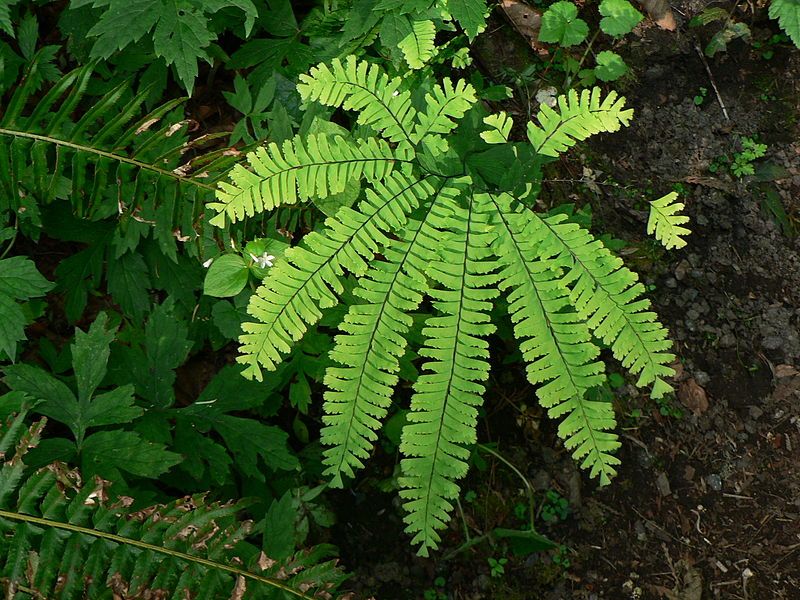
There are two distinct zones of natural origin: Asia and South America. In the wild, this fern prefers tropical climates, preferring shaded, moist, and rocky areas. In Russia, maidenhair fern is found in the wild in the Caucasus.
Description
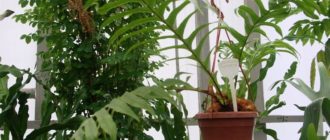
Despite all the diversity in this family, there are a number of common features. Adianthums are low shrubs with drooping, pinnate leaves (fronds). The stems are thin, usually dark, and wiry. Spore pockets (spori) are found on the undersides of the leaves, along the edges.
It does not bloom, but with proper care it retains soft green foliage all year round and grows very quickly, increasing in size 2-3 times per season.
Types
Maidenhair fern is loved for its remarkably delicate and graceful appearance. Attempts to grow it indoors were made as early as 200 years ago. However, due to the plant's demanding air quality, only wealthy city dwellers could grow this fern in greenhouses or conservatories.
Nowadays, it is much easier to create the conditions necessary for its life, so it is increasingly possible to see one or another type in apartments.
| View | Description |
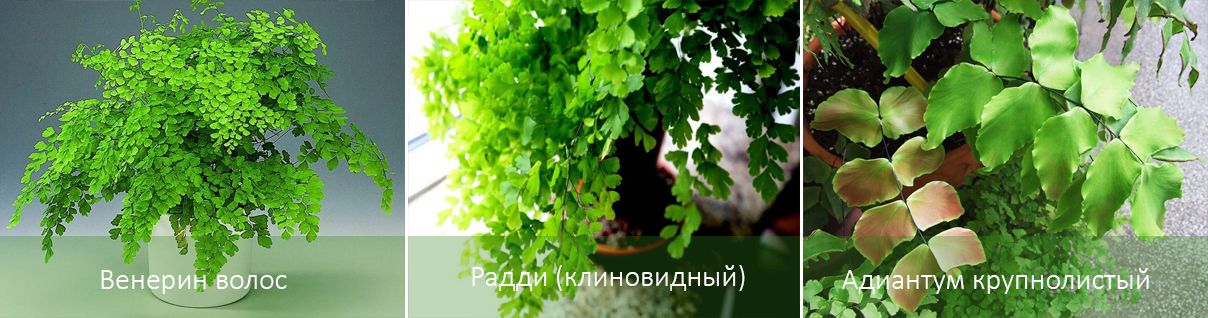
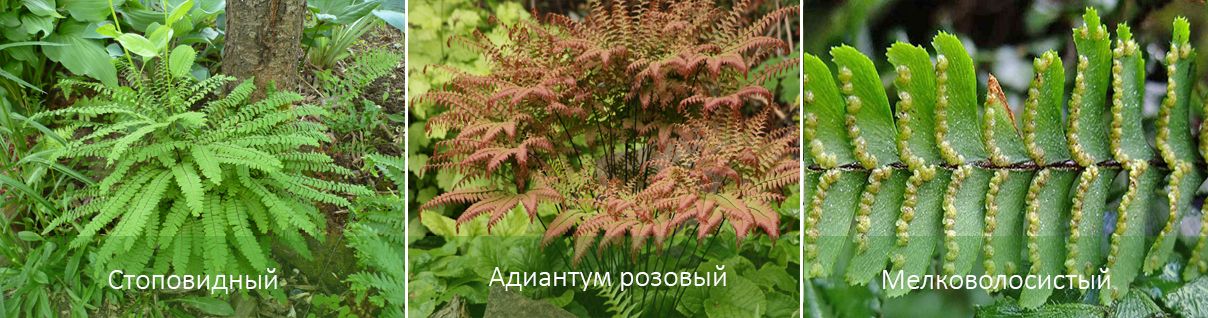
| Maidenhair | This species gets its name from its stunningly beautiful leaves, which form a lush, spreading bush, reminiscent of a girl's hairstyle. The fan-shaped, soft green leaves are arranged on slender, dark stems. This contrast gives the fern a very striking appearance. With proper care, it grows up to 60 cm. |
| Ruddy (wedge-shaped) | This family member is native to the subtropics. Its long leaves, up to 45 cm, are bright green and darken with age. There are several popular varieties: Grasillium, Festum, Fritz Lutz, and Fragrans. They differ in their growing requirements. Grasillium thrives in high humidity, so it can only be grown indoors. The other varieties are less demanding and are suitable for apartment living. |
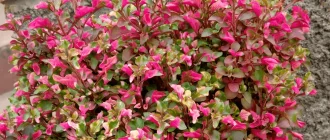
| Maidenhair fern | It is found in the wild in America, where it grows along roadsides. Large-leaved maidenhair fern is prized for its unusual leaf color: young shoots are a delicate pink, turning green only with age. This species has an unusual leaf shape: pointed, curved like a wedge. Sporules are located along the edges on both sides. |
| Plantigrade | This winter-hardy species can tolerate temperatures down to -35°C (-35°F) without shelter. It is grown outdoors in southern and central Russia. Adiantum pediculata has a flexible, dark stem about 60 cm long and fan-shaped, dissected leaves. The bush, as it grows, takes on a spherical shape. It is ideal for decorating courtyards and gardens. One of the most interesting varieties of this species is the imbricatum, a dwarf fern growing up to 15 cm tall, ideal for growing indoors. |
| Delicate or pink maidenhair fern | There are many varieties that differ greatly in appearance (size, color, leaf shape). They grow up to 90 cm in height. The Scutum Roseum variety has unusually colored leaves: various shades of pink, which gradually turn green over time. |
| Finely haired or finely pubescent | It grows in the forests of Africa, India, and Madagascar. The diamond-shaped leaves of this fern are located on petioles up to 35 cm long. They are covered with bristles and have a serrated edge. |
| Adiantus is beautiful (fine) | A large representative of the genus, it grows up to a meter. Dark green triangular leaves on purple, rough petioles. A very hardy species. It grows naturally on the Pacific islands. |
Home care
For the successful growth of maidenhair fern, it requires conditions as close to natural as possible.
| Summer | Off-season | Winter | |
| Location/Lighting | Prefers partial shade and a north-facing position. If planting on other sides, it should be placed 2-3 meters back into the room. | ||
| Room temperature | No more than +22° C | +15° C, remove from heating devices | |
| Watering | 2 times a week | Once a week | |
| Spraying | Daily | It is prohibited before the heating season starts, when the temperature drops, spraying is harmful | Daily |
| Fertilizer | Once a month, apply fertilizer for indoor deciduous plants. Reduce the dosage by half the recommended amount. | Doesn't need it | |
Important points in cultivation
This fern is very sensitive to air quality. Therefore, it's important to take this into account when choosing a location. Kitchens and areas where it might be exposed to fumigations are not suitable. Even the slightest amount of smoke is detrimental to the maidenhair fern.
It does not like dust, so the room where it is located requires frequent wet cleaning and regular ventilation.
Once you've chosen a spot for your maidenhair fern, it's not recommended to move the pot. Maidenhair ferns are very sensitive, and any movement will negatively impact their appearance.
Proper watering is also crucial. Dry soil will cause the leaves to die, while overwatering will cause root rot. The best watering method is to temporarily place the fern pot in a container of settled water and leave it there until the surface of the soil becomes shiny. Then, remove the pot and let it sit to allow excess water to drain.
Selecting a pot, soil, and replanting
Maidenhair ferns thrive in a confined space, so they only need repotting in their second or third year. This can be determined by the roots growing through the drainage holes. Mature plants no longer require repotting; changing the top layer of soil once a year is sufficient. Repotting is done in the spring.
Since maidenhair fern has a strong rhizome, choose a pot that's spacious but shallow (most species have shallow roots). A clay pot is best: this material allows more air to pass through, meaning the roots receive more oxygen.
Adiantum requires a substantial drainage layer, approximately a third of the pot's capacity. The soil should be acidic and peaty. A ready-made soil mix can be purchased at any flower shop. The most important rule is not to compact the soil when repotting; the fern prefers loose soil. Before planting, carefully inspect the roots and remove any damaged ones.
Reproduction
This plant is propagated by dividing the root system or by spores.
Division is carried out in the spring, always when sufficient growth points are present. The rhizome is divided with a knife, the cut is treated with charcoal dust, and the sections are then placed in prepared pots. Maidenhair ferns do not tolerate division well, so the transplanted sections take a long time to grow.
Important: Maidenhair fern should not be divided more than once every three years.
Propagation by spores will take much longer, but does not pose a risk to the existing plant.
For this method you need to do the following:
- prepare the soil (a mixture of peat, sand, and earth);
- scald the soil mixture, let it cool;
- Disinfect the collected spores with a solution of potassium permanganate;
- place the seed on the prepared soil, cover with glass, leave in a dark, warm place until germination;
- after germination, remove the glass and move to a lighted place, but not sunny;
- plant out when the seedlings get stronger.
This method of reproduction will take from several weeks to several months.
Mistakes in care, pests, diseases and methods of elimination
Maidenhair fern produces special substances that naturally repel insects. However, in modern cities, pests have adapted to these chemicals and sometimes attack the plant.
| External signs | Cause | Method of elimination |
| The leaves dry out and lose their shine. | Greenhouse whitefly. | It is destroyed by special preparations (sold in flower shops): Zeta, Rovikurt. |
| There are white balls on the leaves. | Mealybug. | Remove carefully with a brush, using denatured alcohol, without wetting the leaves. |
| Small oval-shaped growths. | Californian scale insect. | Remove with a cotton swab dipped in alcohol. For severe infestations, use a chemical (Actellic). |
| The leaves dry out and the edges turn brown. | Insufficient watering or smoke in the plant. | Increase watering. If it's impossible to protect the fern from accidental smoke in this location, it's best to move it to another location. |
| The leaves are falling. | The air is not humid enough. | Regular spraying. |
| The leaves are turning pale. | Inappropriate location, too much light. | Move the pot to the shade. |
| The leaves curl but do not dry out. | Low air temperature. | Move to a warmer place or ensure the desired temperature. |
| The leaves on the cuttings turn yellow and brown spots appear. | High air temperature. | Rearrange (if the problem is in the heating devices) or install a protective screen. |
| Leaves wilt when the soil is wet. | Root system rot. | Remove the plant from the pot, remove damaged parts of the rhizome, change the substrate. |
| Darkened foliage, brown lines. | Accumulation of salts in the soil. | Soil replacement. |
Top.tomathouse.com recommends: Maidenhair fern is a useful plant.
Maidenhair fern is not only a beautiful plant but also a beneficial one, boasting medicinal properties. In Europe, powders and infusions from its leaves have long been used to treat ailments of the throat, liver, and bladder, as well as coughs of various origins. The substances contained in its composition help reduce fever and kill bacteria. In China, maidenhair fern decoctions have been successfully used for the treatment of alcoholism for many years.
In some cultures, the leaves are used as food and as a garnish. They are also used to make sweet drinks.
In the Caucasus, infusions are used as a hair rinse. It is believed to give hair strength and shine. Feng Shui practitioners believe that maidenhair fern brings special energy to the home and is ideal for the bedroom. It promotes calm and deep sleep.