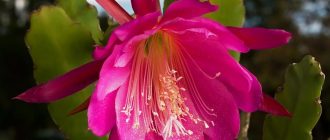
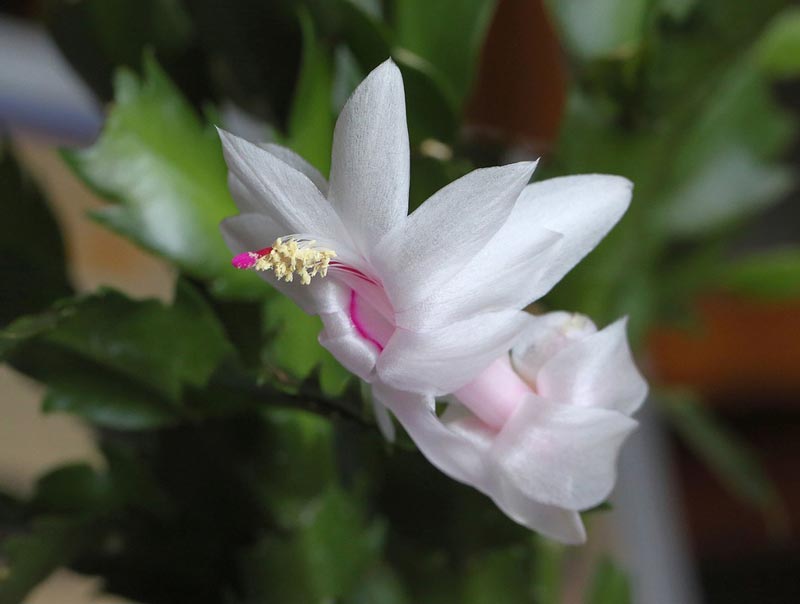
Zygocactus, also known as Christmas cactus or Schlumbergera, is a species of epiphytic cactus native to the forests of Brazil. It prefers a tropical climate with high humidity and consistent temperatures above 20°C. It grows on the trunks of thick trees and avoids direct sunlight; it thrives in shaded areas.
Content
How to care for a Decembrist at home
Zygocactus is an unpretentious plant, but if you neglect the conditions to which it is accustomed in its natural environment, it may die.
Location, lighting
Rules for keeping the Decembrist at home:
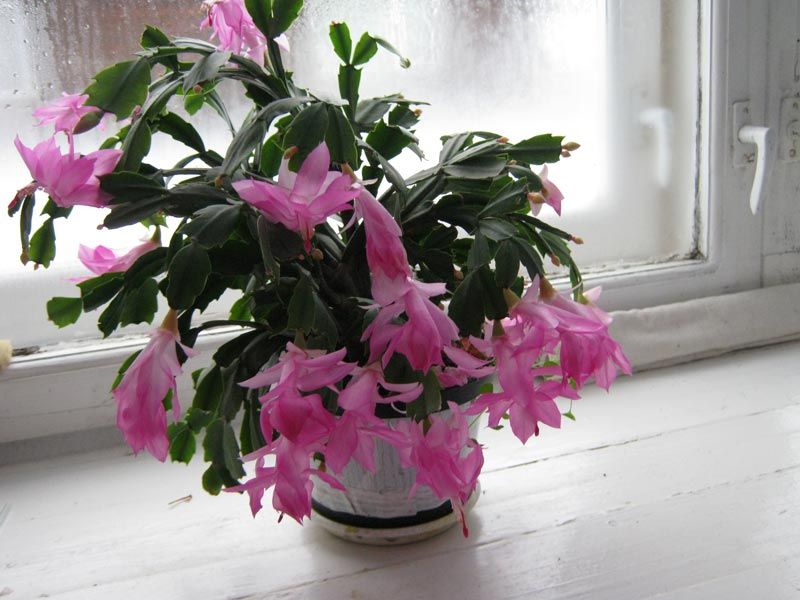
- Place the pot on a windowsill, avoiding the south side. Direct sunlight can cause burns or reddening of the shoots. Ideally, place the plant on the north or east side of the apartment. If this isn't possible, move the plant to the back of the room and use grow lights for additional lighting. In extreme cases, placing the plant on a south-facing window is possible, but only if you cover them with thick curtains or install blinds.
- In summer, the plant should be moved to a well-ventilated area; it requires oxygen. A balcony or loggia is suitable.
- It is not recommended to move it during flowering, as it is especially sensitive during this period.
How to choose soil
The plant should be repotted for winter. In its natural habitat, Schlumbergera grows on trees, so it's necessary to purchase special soil for cacti.
Temperature
For the cactus to bloom, it requires a typical temperature of 18 to 25°C. Before flowering, it's best to keep it at 15 to 16°C, and after the first buds appear, at 20 to 25°C.
Interestingly, in its natural environment, the Christmas cactus can survive temperatures as low as +40°C and as low as +2°C. Moreover, the plant easily adapts to temperature fluctuations.
Watering
During the dormant period, you only need to water the cactus when the soil is completely dry.
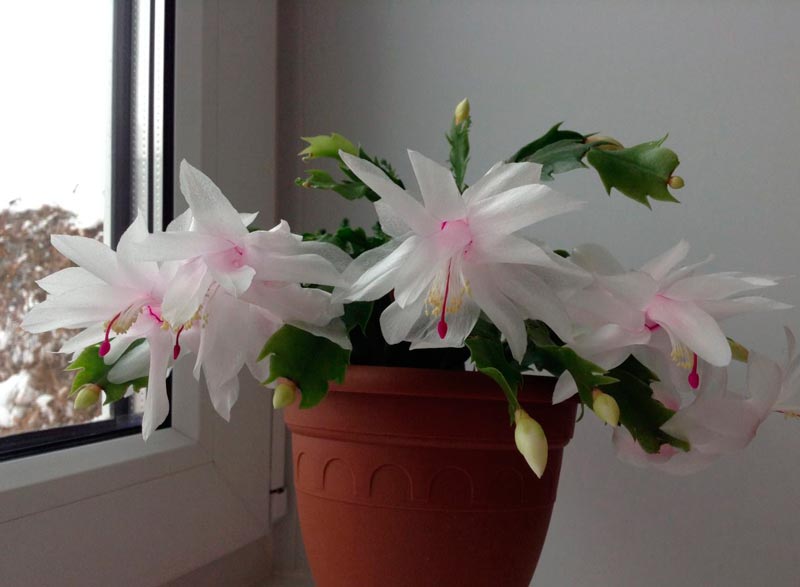
When the Decembrist is flowering, the soil should not be allowed to dry out; it should be kept constantly moist.
You should also clean the shoots of dust and spray them frequently with warm, soft water (using a fine spray bottle), as the plant prefers high humidity. This method is necessary if the temperature is above 26°C. At 25°C and below, spraying is not necessary, as the humidity is optimal.
Top dressing
Fertilize the plant 3-4 weeks after repotting during the active growth period (summer, spring). Use a complex cactus fertilizer every 2 weeks.
It's not recommended to use houseplant fertilizer; otherwise, the dosage should be reduced by 2-3 times. Excess nitrogen can cause cactus roots to rot.
Transfer
Schlumbergera is repotted after flowering, around the end of February, every five years if the plant is already mature. Young cacti are repotted annually.
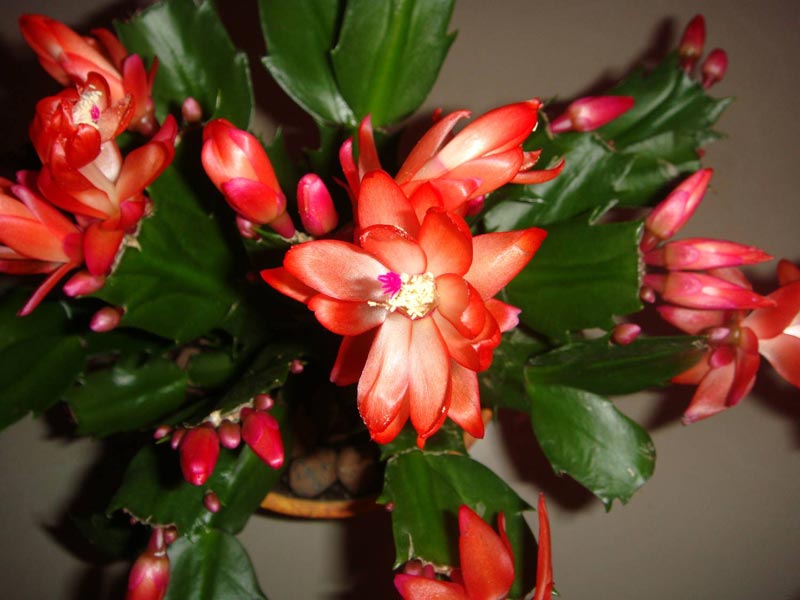
The pot needs to be wide and shallow, as the Christmas cactus' root system is shallow. Before repotting, add 1/3 of the drainage material to the bottom of the container.
The following proportions are used as soil:
- peat – 2;
- fertile soil – 1;
- coarse sand – 1.
Crushed activated carbon is added for disinfection.
Flowering and subsequent care
In order for the zygocactus to bloom, it needs special care at home:
- The flower is moved from a warm room to a cooler room, for example, to a balcony.
- Do not water abundantly for a month, allow the soil to dry out.
- At +10 °C outside, the Decembrist is transferred to a room where the temperature is +15…+19 °C.
- During this period it is watered intensively.
- At the end of October, the Schlumbergera cactus is moved to a location with more than 10 hours of sun per day. After 50 days, the cactus will bloom. Once buds appear, the plant is returned to its original location and not moved again. The optimal temperature for flowering is 17 to 19°C.
Post-flowering care
After all the buds have bloomed, the cactus is moved to a cool room (rest period). Water moderately.
To ensure the plant grows properly, pinch off shoots. Remove yellowed and dried shoots. Diseased shoots are removed by hand rather than trimmed with scissors.
The dormant period lasts until the end of March, then the plant is repotted and cared for as usual. Fertilize the cactus in early June.
Reproduction
The best time to propagate the flower is spring or summer. To do this, take a section of the stem consisting of 2-3 links:
- The cuttings are left for several days to dry out.
- Fill a shallow pot with drainage up to one-third, followed by a layer of peat and perlite in equal proportions.
- Then, the tip of the cutting is treated with Kornevin and planted in prepared soil. The plant is watered generously.
To help the cactus establish itself quickly, maintain a comfortable room temperature of 20–25°C and high humidity. Periodically mist the Decembrist and protect it from direct sunlight.
Diseases and pests
The Christmas cactus often suffers from fungal diseases and pests. To prevent damage, inspect the cactus's leaves and flowers several times a month.
| Disease or pest | Harm and features | Reasons | Treatment |
| Mealybug | White lumps between shoots. | Incorrect watering, the flower is not cut when dried leaves appear. | Treatment with insecticides Aktara, Confidor. |
| Spider mite | Rusty coating on leaves, barely noticeable web. | The appearance of the pest is caused by insufficient humidity. | Spray with Vertimek, Fitoverm and Actofit. Move to a room with high humidity or arrange for regular warm showers. |
| Late blight, phytum, fusarium | Diseased roots, wilted and pale inflorescences. | Infection with Erwinia group bacteria. | Treatment with Furacilin or Fitosporin. |