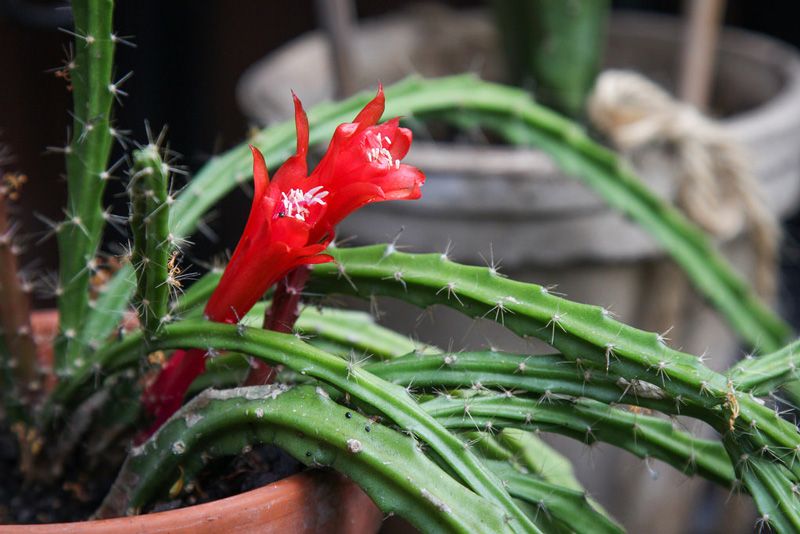
Aporocactus, or disocactus, is a trailing plant native to tropical America. In the wild, it is most common in the rocky areas of Mexico, at altitudes of 1.8-2.4 km above sea level. When grown indoors, it is often grafted onto other species. It belongs to the Cactaceae family.
Description of Aporocactus
Long, ribbed stems, up to 5 meters long, densely covered with spines of varying shades, easily cling to rocks, ledges, and other plants, including trees. The cactus can grow into full-blown thickets. It blooms, producing buds up to 10 cm long in a variety of colors, depending on the variety: red, pink, and orange. The fruits are small red berries.
Types of Aporocactus for home cultivation
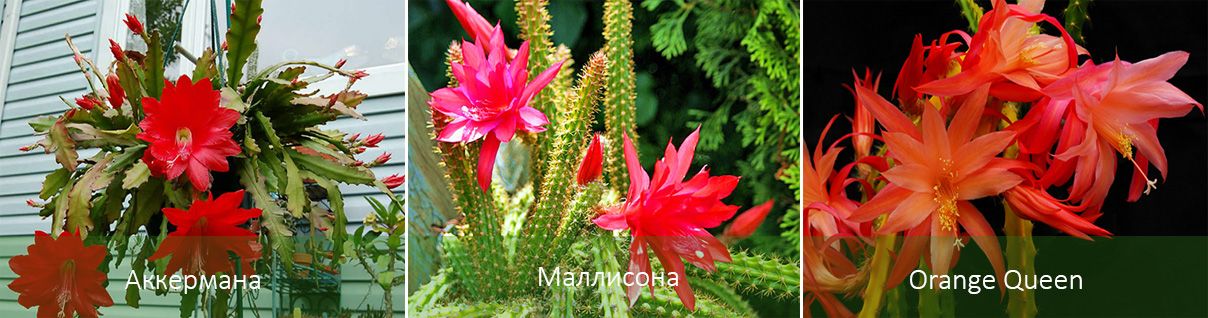
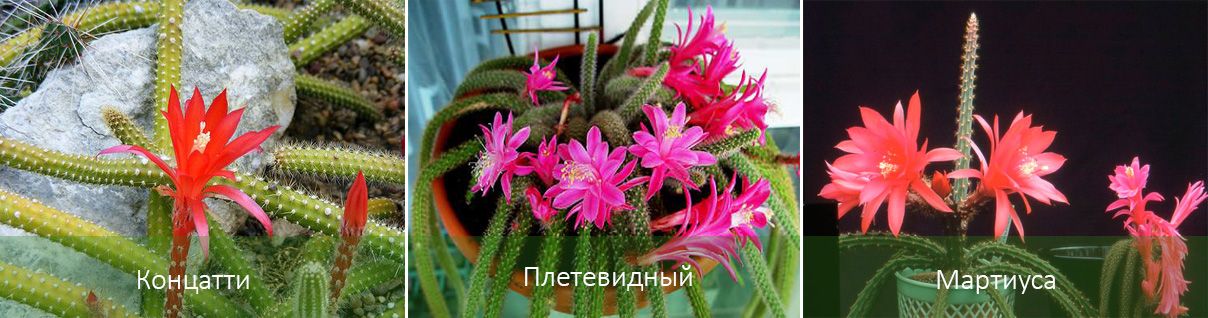
| View | Stems | Flowers |
| Ackerman | Flat, with ribbed edges, triangular. A central stripe. Branched, up to 40-50 cm long. | Large, 10 cm in diameter, scarlet in color. |
| Mallison | With zigzag ribs, thin radial spines. | Up to 8 cm, red-pink or purple. |
| Orange Queen | Triangular, with few spines. | Small, dull orange in color (up to 5 cm). |
| Conzatti | Thick, up to 2 cm in diameter, bright green. | Up to 10 cm long, fiery. |
| Wicker | Emerald, up to 100 cm, cascade down starting from 1 year of life. | Bright, raspberry-carmine, 7-9 cm. |
| Martius | Without pronounced ribbing, with closely spaced light-grey spines. | Dark pink, up to 9-10 cm. |
Caring for aporocactus at home
| Factor | Spring/summer | Autumn/Winter |
| Location/lighting | North window. | East or west facing window. Supplemental lighting is required. |
| Temperature | +22…+25 °C | +8…+18 °C |
| Humidity | Any, it is recommended to leave it under a warm shower once a month. | Any. |
| Watering | Constantly, the substrate must be moist. | As the top layer of soil dries out. During flowering, as in summer. |
| Top dressing | Add every week until the inflorescences die off, and once every 15 days for 2 months after. | Not required. From the end of winter - once every 7 days. |
Planting, transplanting and propagation
The substrate is humus, turf, and wood ash in a 2:2:1 ratio. Bake the soil in the oven at 220°C. Prepare a wide, flat pot with expanded clay drainage. When caring for the plant indoors, repot annually during the first four years of its development, and every three years thereafter.
Propagation is carried out by cuttings:
- Divide the stem into 6 cm pieces, dry, and treat the cuts with ash.
- Place several plants in a pot in calcined river sand and water generously. Cover with a plastic bag or glass dome until new branches appear.
- Gradually remove the bag. Initially, keep the pot open for 30 minutes a day, increasing the time by half an hour each day.
- Plant 3-5 shoots in standard soil.
Pests and diseases attacking Aporocactus
If the stems soften or turn black, the plant has root rot. Temporarily stop watering, trim off the affected shoots, and sprinkle the cuts with ash. Change the soil, bake the new medium in the oven, and disinfect the pot.
If infested with scale insects or spider mites, leave the plant under a warm shower. If this doesn't help, treat with Fitoverm.