One of the most famous genera of cacti is Echinocactus, or Echinopsis cactus. This plant with a powerful trunk is native to the tropical desert of Mexico and can also be found in the southwestern United States.
The precise translation of the name refers to its external features. The "hedgehog cactus" has a thick, spherical stem, reaching up to 3 meters in height. It is covered with large needles, giving it a resemblance to a hedgehog.
This cactus species is grown indoors. With proper care at home, it blooms beautifully, rivaling natural blooms. In hotter climates, echinocactus is used in landscaping.
Content
General description of Echinocactus
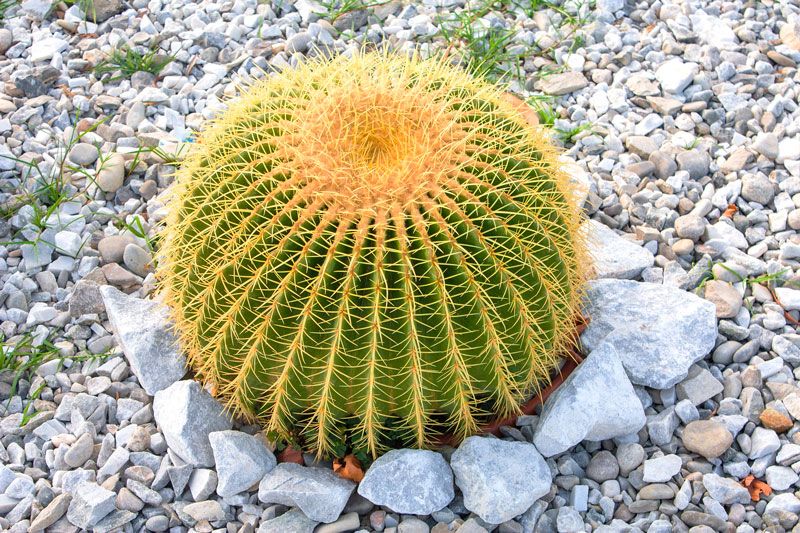
The Echinocactus cactus is a spherical succulent (family Cactaceae). In the wild, it reaches enormous sizes. Initially, the plant's stems are perfectly spherical, then elongate upward.
The resulting trees resemble a 3-meter-tall tree with a trunk up to 1.5 meters wide. Most people who have seen them in the Mojave Desert or in photos of them in their natural habitats don't realize they are the same plant that many people have at home.
Succulents thrive without watering. According to some studies, they effectively absorb electromagnetic radiation from electronic devices, protecting users from harmful effects.
Main characteristics:
- Young plants have a spherical shape with numerous protruding ribs (about 50 in some species) with spines. With age, they elongate upward.
- Areoles are large.
- Flowers are red, pink, and yellow, pubescent. They appear at the top (sometimes radially in several circles) and have narrow, drooping petals.
- The age of individual plants reaches 500 years.
- Maximum weight – 1 t.
Types of Echinocactus
| Name | Physical parameters | Flowering and greening conditions |
| Echinocactus grusonii
|
Up to 40 cm wide, with multicolored, sharp spines up to 30 mm long, up to 50 mm in the center. The crown is covered with white bristles. Typically, it has 35-45 ribs. It grows taller, maintaining its width, after about 13 years. | With normal care at home, it may bloom, but this happens extremely rarely. |
| Echinocactus platyacanthus
|
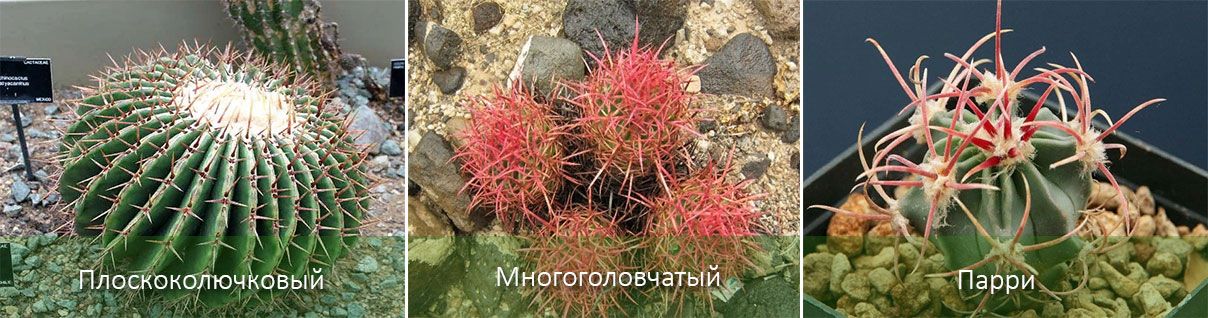
In nature, the plant grows up to 2 meters tall and is narrower in width. The radial gray spines are up to 45 mm in size. The 3-4 central spines are up to 45 mm. It bears corolla-shaped yellow flowers up to 40 mm long at the crown. | It is used for landscaping in southern regions and winter gardens. It also blooms quite often indoors. |
| Echinocactus horizonthalonius
|
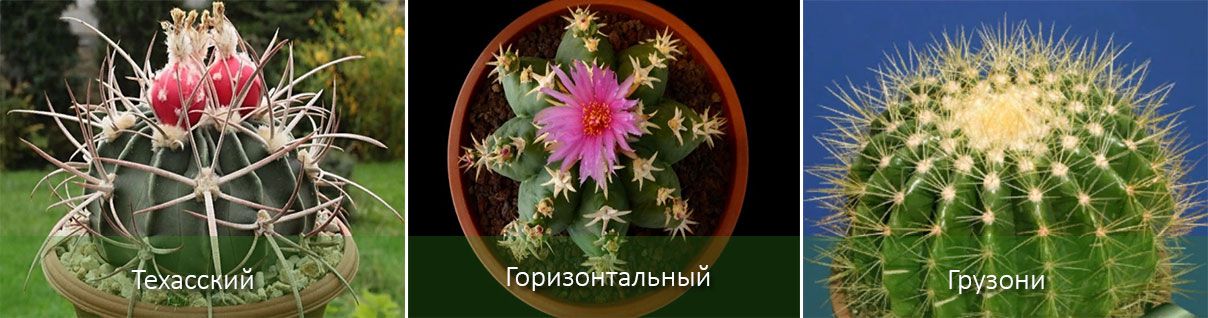
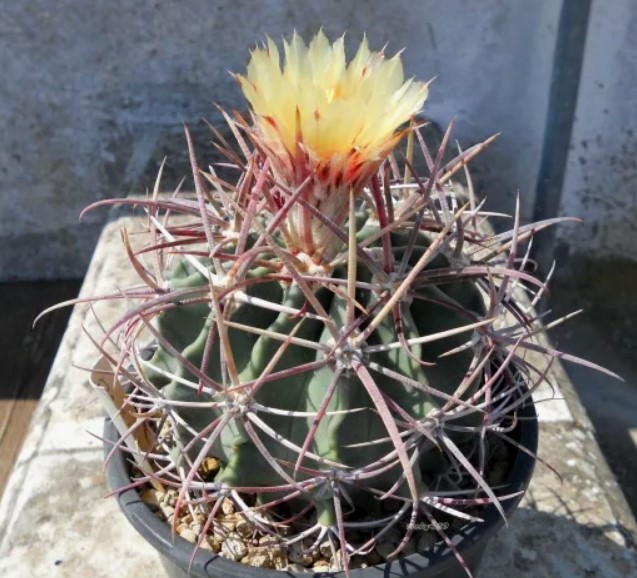
The diameter is up to 23 cm, with spirally twisted ribs. A young plant has up to 6 flat spines on each rib. The spines are scarlet when young, turning orange with age. Flowers are purple with a red tint, up to 40 mm in size, and appear on a fluffy crown. | It thrives in apartments and is used for decorative landscaping in small winter gardens. Its vibrant spines add interest to the planting. |
| Echinocactus polycephalus
|
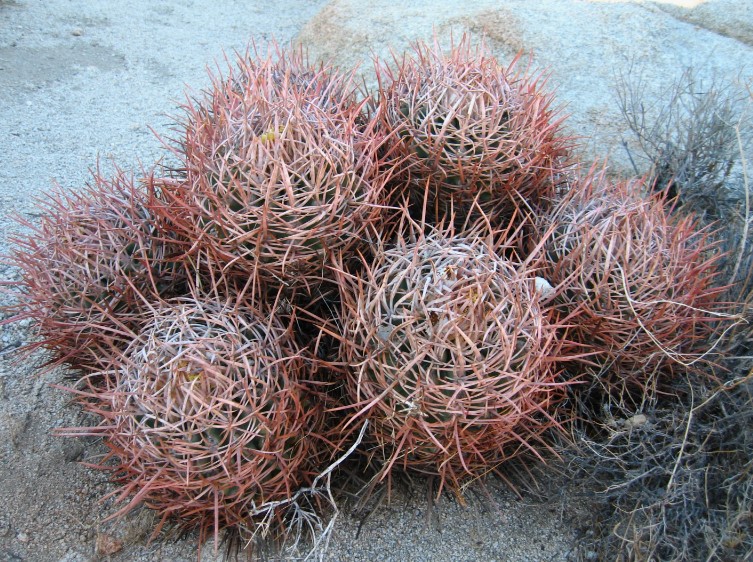
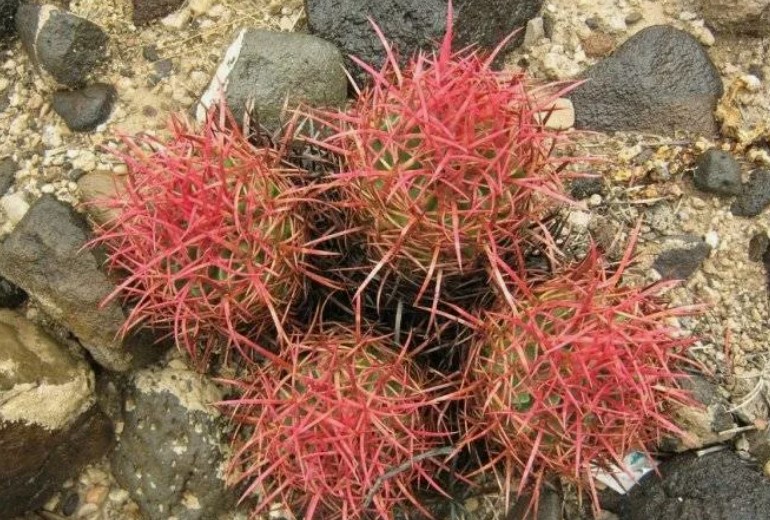
Up to 70 cm tall, it usually grows in clumps. The trunk has up to 20 ribs, with radial spines measuring 50 mm and central spines up to 60 mm. The spines are ochre-colored, appearing pink from the outside; sometimes, the spines are yellow. The cactus produces yellow flowers on a crown with a corolla up to 60 mm long. | It practically does not bloom in home conditions. |
| Echinocactus texas (Echinocactus texensis) 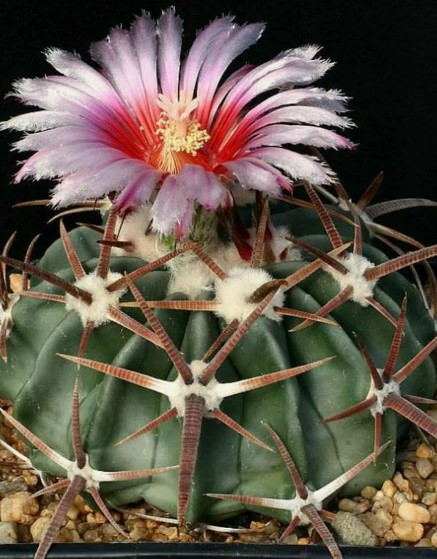 |
The spherical, slightly flattened trunk, up to 30 cm wide and up to 20 cm tall, has 13-24 rkber, and the crown is pubescent with white. The central spine reaches 60 mm, the radial spines are curved, up to 40 mm long. The flowers are soft pink, double, with a red border. | Used in decorative landscape plantings in winter gardens. The blooms are vibrant and very beautiful. |
| Echinocactus parryi
|
The trunk is grayish-blue, with a radius of up to 30 cm. It has up to 15 ribs. It has 6 to 11 radially arranged spines, 4 in the center. In young plants, the spines are pinkish-brown, later turning white. Root rot is common. | Cultivation is difficult, but with proper home care it forms beautiful landscape groups. Germination rates are low indoors. Native to Northern Mexico. |
| Echinocactus polycephalus
|
In the home, it reaches 70 cm in diameter. It has beautiful long needles of various colors: reddish-brown, red, or yellow, with up to 20 ribs. | Common in the Mojave Desert. Used as an ornamental houseplant. |
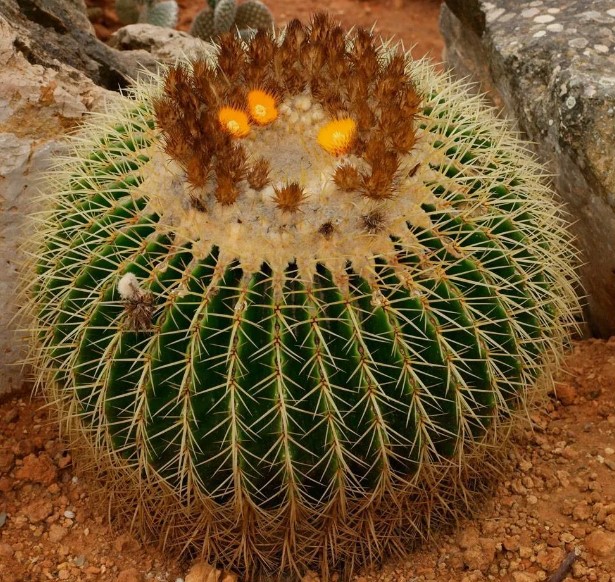
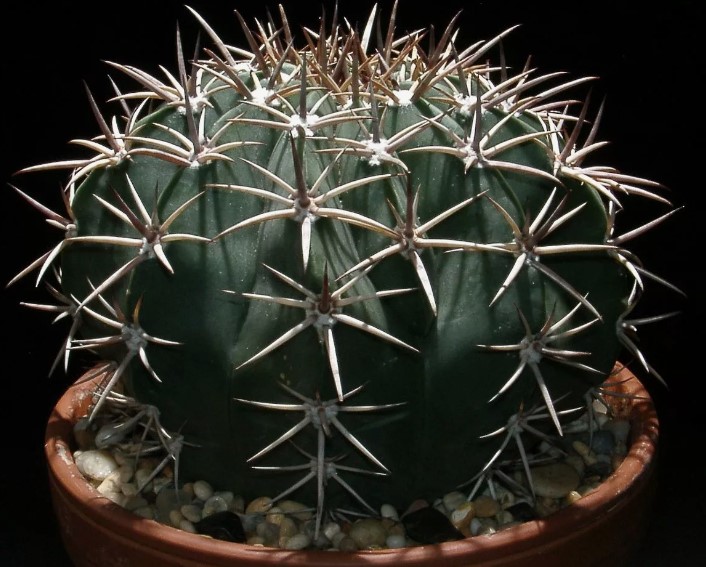
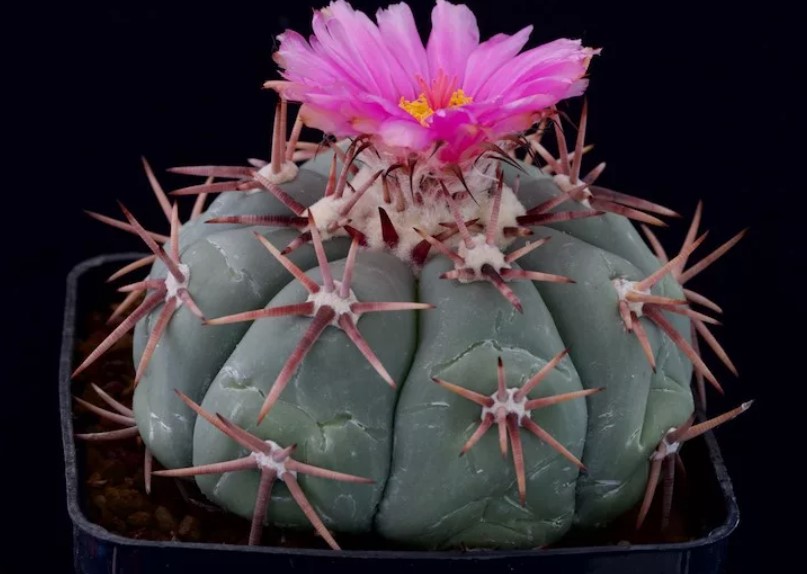
Please note that the popular broad-spined cactus (Ferocactus latispinus) is not related to the Echinocactus family. Other popular cactus varieties include: stapelia, thaumkraft, echinocereus.
Features of growing and caring for echinocactus
Echinocactus requires virtually no care and grows slowly.
All cacti love bright light and are not afraid of direct sunlight or temperature fluctuations. However, the latter can cause their death. In the spring, the plant is shaded, then moved into full sun.
Lighting
Cacti prefer bright, even light. They thrive in a well-lit, south-facing location. They tolerate heat well. The stems tend to stretch toward the light, so rotate the plant regularly.
Despite its unpretentiousness, if the owner wants to improve the appearance of their pet, it will be necessary to think about lighting.
Echinocactus grusoni red is particularly sensitive to light. With long daylight hours, its coloring becomes brighter and more saturated. This is characteristic of all Echinocactus species to varying degrees.
Temperature
When considering indoor care for the Echinocactus grusoni, it's important to note the need for temperature control. It will thrive both in a conservatory and on a south-facing window. Experts recommend maintaining the required temperature range. In spring, cacti can be moved to a balcony or other cooler area.
| Temperature conditions | Conditions of detention |
| +18…+23 °C | In spring/summer (if above +30 °C – a dormant period begins). |
| +10…+12 °C | In autumn/winter |
| +7…+8 °C | Permissible daily temperature fluctuations typical for a winter garden. |
| below +8 °C | The plant is dying. |
Watering, humidity
In summer, the plant needs to be watered no more than twice a month.
During cold weather, increase watering intervals by approximately 2 to 2.5 times. This requires non-chlorinated water at room temperature. The soil should be slightly moist, but not soggy. Watering should stop at 15°C.
Soil, fertilizer
For fertilization, use compositions for succulents; during the season, feed 1-2 times from April to October.
You can increase the frequency of fertilizing, applying fertilizer every three weeks. Echinocactus grusoni becomes more colorful in nutritious soil. To achieve this, replenish the soil using a substrate consisting of turf, leaf mold, pumice, sand, and charcoal. However, this is not enough; bright colors of the spines can be achieved by watering with water containing dyes.
Transfer
Cacti require repotting in the spring, once every 3-5 years, primarily to renew depleted soil.
For these purposes, a substrate for succulents is used, which can be prepared independently from equal amounts of leaf soil, turf soil, sand, fine pumice and charcoal.
Each time, they are repotted into a new, more stable container with a larger diameter pot. Mature, large plants rarely require any new soil.
Planting process:
- drainage material is placed on the bottom;
- remove old soil from the cactus roots to prevent acidification;
- The transplant is carried out without excessive deepening into the prepared soil.
Bloom
Echinocactus rarely bloom; buds appear only on some mature varieties over 20 years old. Flowers appear on the crown, usually in spring.
Reproduction
Echinocactus are propagated using shoots and seeds.
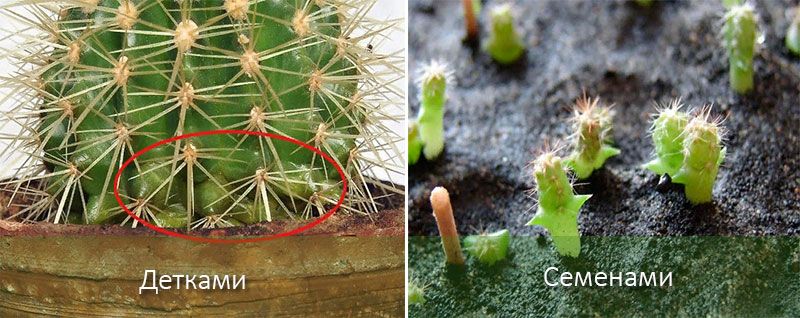
Children
Quite often, babies do not form at all, especially on Hudson River.
To provoke a cactus, it needs to be slightly damaged. A few shallow scratches are enough; if the damage is severe, the plant will become diseased and begin to rot.
Rooting of babies:
- separated at the age of six months or one year;
- for 2-3 days they are left in the air with the roots cleared of soil;
- transplant into watered sand or a peat mixture with sand, press down the soil and secure the baby with toothpicks;
- after 1-2 months, transplant into the main pot.
Seeds
When growing Echinocactus from seed, the material is planted in the soil in late winter (February). For this purpose, use a loose soil substrate, a mixture of leaf turf and sand in equal proportions.
The seeds are evenly spread over the soil surface of the container, lightly covered with soil, sprayed, and covered with plastic wrap. The greenhouse is placed near a window and the temperature is maintained at 26–30°C. The seeds germinate within two weeks. They are kept in the greenhouse for another month, then acclimated to indoor conditions.
Top.tomathouse.com warns: Echinocactus diseases and pests
The main diseases of cactus are associated with poor care.
This often manifests unexpectedly; signs of damage include dry, dark-spotted shoots. In this case, they are rooted immediately. If the cactus recovers, the new shoots are left in place.
Echinocactus is often attacked by spider mites, mealybugs, and scale insects. To combat this, rinse the plant thoroughly with lukewarm water, covering the soil with plastic wrap.
Other methods of pest control:
- brush cleaning;
- spraying with tobacco extract;
- If the plant is affected by root parasites or mites, water with Actellik solution 2 times a month (2-3 times in a row is enough).
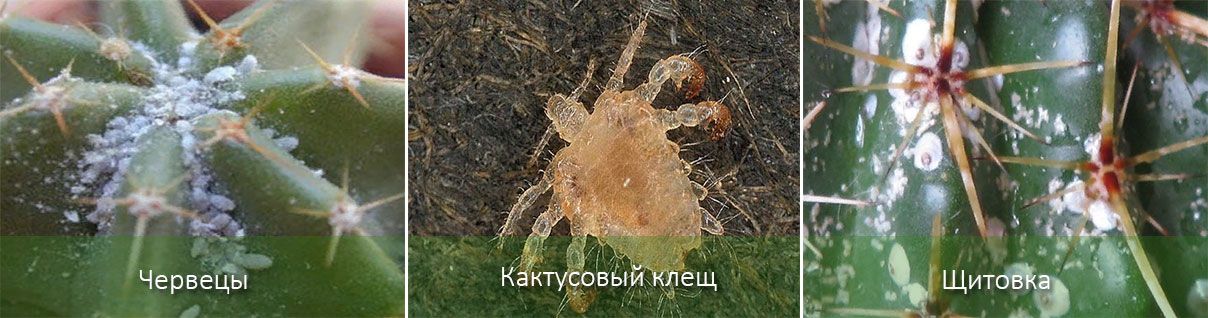
How to identify parasites:
- scale insects look like small insects covered with a waxy coating;
- mites are clearly visible as brown or red dots, under which you can see dead damage to the cactus trunk;
- Scale insects are silvery-gray in color and carry fungal diseases.
Diseased plants are always moved to quarantine.
Uses of Echinocactus
Echinocactus are used in landscape and interior gardening. Various cactus mixes of different ages look great. Indoors, they improve energy levels.
In Mexico, some species are used to make candied fruit (bisnaga) and desserts. The pulp, called asitrón, is also added to meat instead of vegetables.
Reviews about echinocactus
This prickly little plant with its bright needles is so cute and completely unpretentious. A plant for those who forget to water their flowers on time. And is it a real color?
What do you associate with a cactus? 🌵
I have a thing for the desert. Heat, sun, cracked earth, mountains... something like an American western.
Do you have a cactus at home? I don't. Someone once told me that you shouldn't keep a cactus at home. They say its needles bring discord. But you can keep one at work near your computer: it collects negative energy (feeds on it) and protects you from enemies with its needles.
I remember having a whole collection of cacti and succulents. About 50. In the early 2000s, there wasn't much to collect. Back then, besides Kinder Surprise toys and "Love is..." and "Turbo" gum wrappers, there wasn't much else. So, the windowsill in my apartment was filled with cacti. My parents never mentioned my strange hobby when, with indescribable delight in my eyes, I brought home yet another tiny cactus. Back then, they were sold for pennies by grandmothers at markets or bartered with friends as "little children."
I was 12 or 13 years old then. A year later, I gave away all the cacti. I didn't have any more. Until my 7-year-old son saw a beautiful cactus in the store and, with wild delight in his eyes, said, "Mommy, please buy me this cactus! I'll take care of it!" That's how we got the Echinocactus grusonii.
Gardeners have long cultivated cacti, with the Echinocactus being the most popular. This plant is undemanding in terms of growing conditions, has a rather striking appearance, and possesses medicinal properties. Caring for the Echinocactus Grusonii grown indoors is quite simple, but it's still important to know a few important rules.
September 2020
Price: 189 rubles.
Place of purchase: Magnit hypermarket.
Place of origin: southwestern United States and desert areas of Mexico.
Of course, this one is clearly not from there anymore. Although it's possible his 100 times great-grandfather was from there.
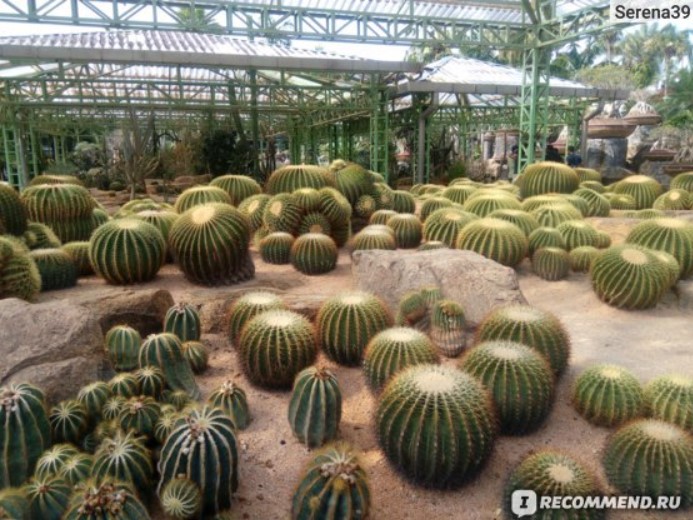
I first saw an echinocactus in person in Thailand, at Madam Nong Nooch's Tropical Garden. I'd seen it in flower shops before, but only in such large sizes abroad.
Of course, I won't be able to grow such a barrel at home, but who knows, maybe something will work out.
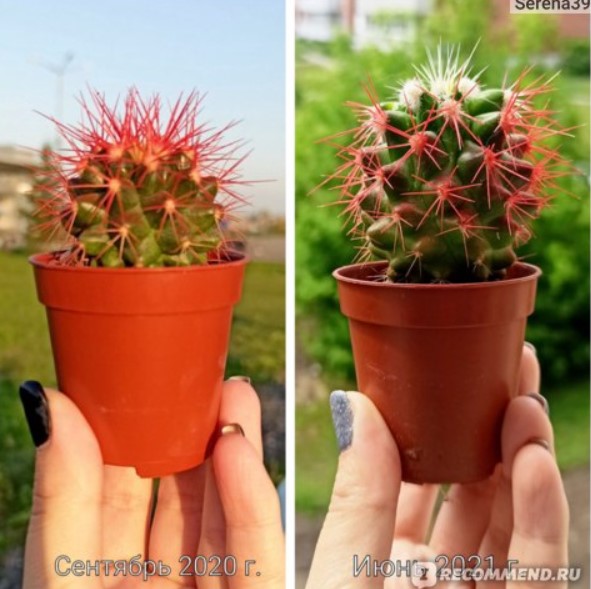
Our cactus is small. It fits comfortably in your hand, pot and all.
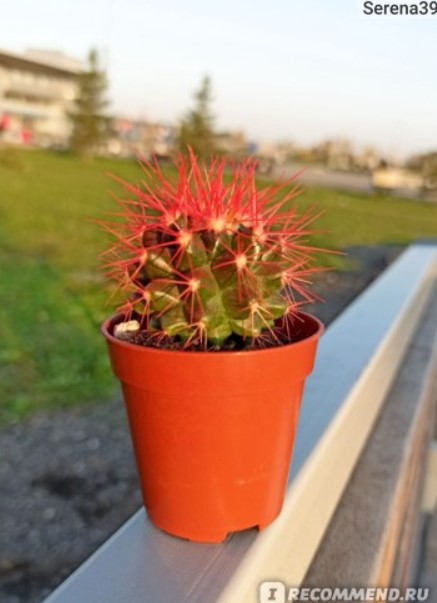
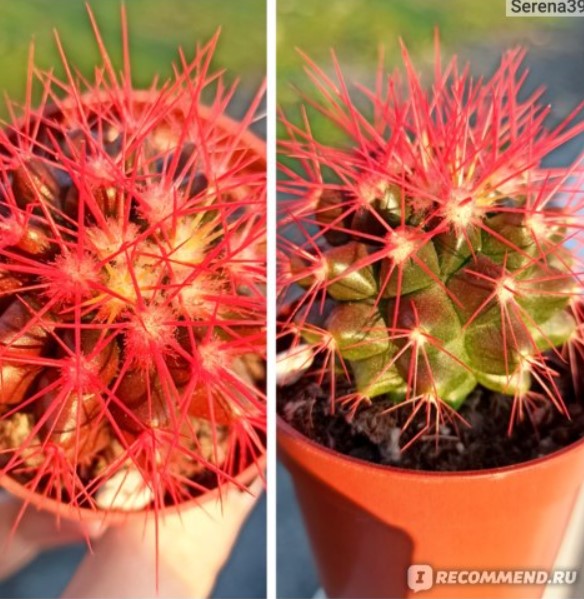
I was surprised by the presence of colored spines. We took the ones with red ones. There were also orange and purple ones.
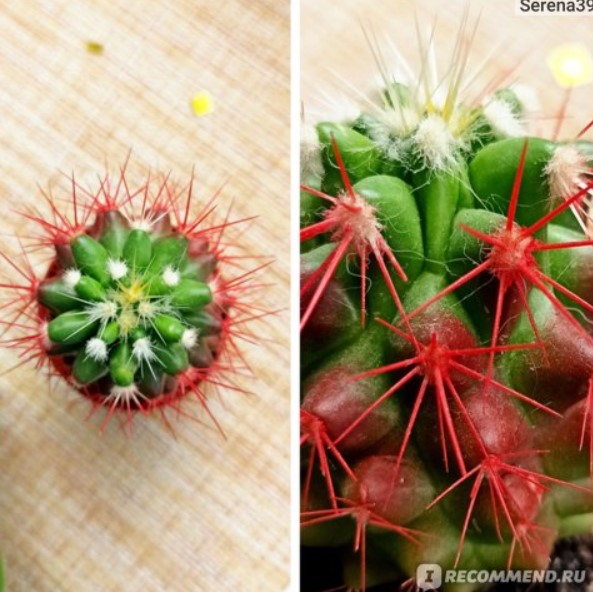
Upon closer inspection, it became clear that the spines were painted, as red paint was visible on the cactus itself, and new yellow spines were visible from the top.
And they are not just painted with a brush or from a spray can...
Echinocactus grusoni is often found for sale with neon pink, scarlet, bright yellow, and lilac spines. This isn't a recent development, but rather the result of using a solution of ordinary food coloring instead of water for irrigation. If the buyer stops this practice, the spines' color will quickly return to normal.
September 2020
Lighting.
Since this cactus is native to sunny Mexico, it requires a lot of light. If placed in a dimly lit spot, the cactus will lose its barrel-shaped appearance and simply grow terribly tall. I remember this from my childhood.
That's why we put it on the windowsill. It doesn't even suffer from direct sunlight.
Transfer.
The best time to repot is mid-spring. It's autumn now, and we're waiting for spring. I hope it survives until spring. 😅
He lived to see it, but I left him in the same pot. He seems quite comfortable in it.
Echinocactus grusoni recovers from repotting as if from a long illness. Therefore, its slow growth is a significant advantage. Young specimens need to be repotted every two years, while mature plants only need to be repotted once every three to four years. The best time to do this is mid-spring.
The plant doesn't need a large pot. Increasing its diameter by 1–2 cm each time is sufficient. Choose a shallow container, like a bowl or salad bowl, as the Echinocactus grusoni has a shallow root system. Ceramic is preferable as it allows for better air permeability.
Watering.
It doesn't require frequent watering. About once every two weeks. However, it's best to avoid allowing the soil to dry out. Water immediately as soon as the soil begins to pull away from the edges of the pot.
I water this cactus using bottom watering, placing the pot in a container of water. The cactus will absorb exactly what it needs, and all the nutrients won't be washed out of the soil, as would happen with overhead watering.
Honestly, I just forget to water it. This was especially helpful in the winter, when it could easily go 3-4 weeks without water.
Summer 2021
So, we bought this little cactus in September 2020. It survived the winter and spring just fine. It's such an easy-to-grow plant. It just keeps growing quietly in its pot.
The little plant has grown. It may not be much, but it's noticeable. Its white crown. And it seems to be stretching upward, even though it's been standing in a window with direct sunlight year-round. In winter, I put it under a special purple lamp at night, as the winter daylight hours in Siberia are very short at this time. Maybe it's time to repot it?
June 2021
Speaking of the white top, the cactus and prada spines are dyed. Oh, and I was hoping maybe it was just the species with the red spines, and the rest were dyed. But no problem. And with the white spines, it's so attractive.
June 2021
Still, it's growing slowly for me, judging by other reviews of this cactus. Others have seen it grow quite a bit in nine months. So, it's definitely time to repot. But not until next spring. It's in its active growth phase now, and I won't disturb our little one.If you're still considering buying this little one, go for it! It's completely unpretentious. I'm not much of a flower gardener—I always forget to water it, and everything dries out. But it's doing just fine. Sure, you might never get any flowers at all, but you have to admit, it looks so beautiful.
Serena39
recommends

Review: Echinocactus - Beautiful, bright needles
Pros: Bright needles
Disadvantages: Didn't find any
Good day, dear Otzovik users. Today I'd like to share my review of this type of cactus.
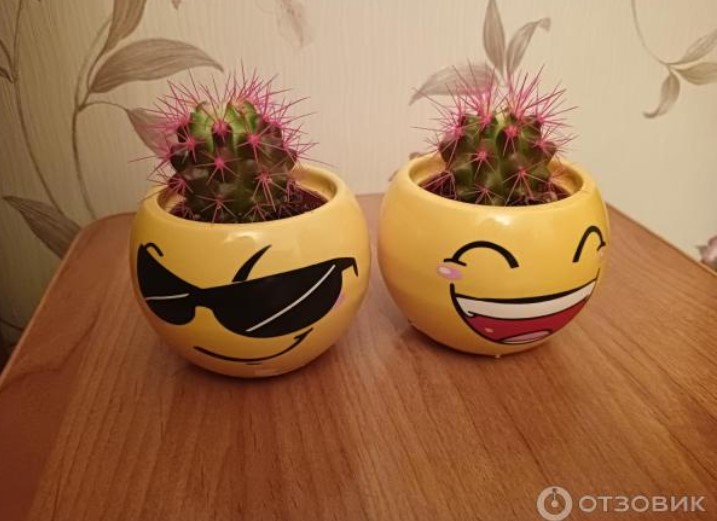
The cacti were bought at the Magnit store. I'm honestly not a plant lover, but I couldn't pass these cacti by. I especially loved the adorable pots that came with the cacti.
I water them about once every 10 days, although perhaps I should water them much less often, but I try not to let the soil dry out completely.
I'm very happy with this New Year's gift to myself)))
I highly recommend purchasing this!
These cacti will lift your spirits!! I guarantee it!!!
Usage time: 2 months
Price: 249 ₽
Year of manufacture/purchase 2023
Overall impression: Beautiful, bright needles
My rating
5
I recommend it to friends YES