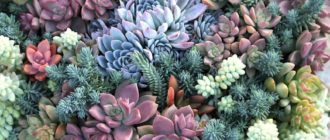
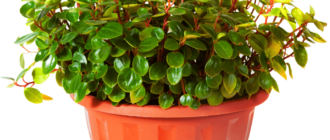
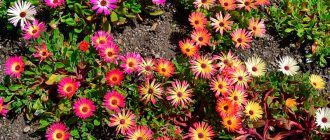
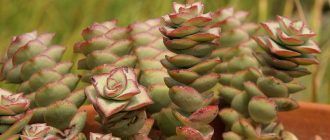
Kalanchoe grows in the arid climates of southern and tropical Africa, Southeast Asia, and tropical South America, and comprises over two hundred species. Due to its ability to accumulate moisture within its tissues, the plant is classified as a succulent and has long won the hearts of amateur gardeners due to its easy care at home.
Content
Types and varieties of Kalanchoe
Despite the diversity of existing varieties, four main types of Kalanchoe are cultivated in indoor floriculture:
| View | Description | Height (m) | Leaves |
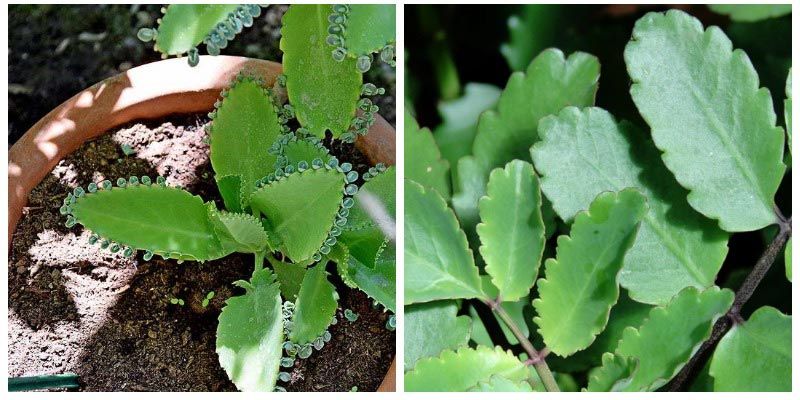
| Pinnate | Grown as an ornamental or medicinal variety, it propagates through offshoots that form on leaf blades. | Up to 1. | Oval-shaped, thickened with rounded teeth, the upper ones odd-pinnate. |
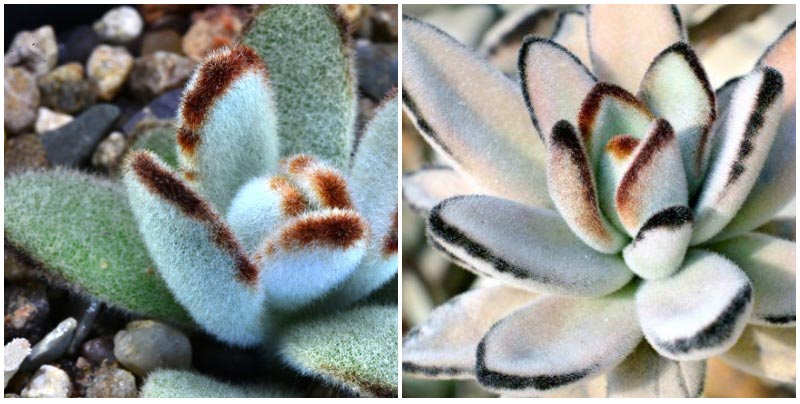
| Felt | So named for its resemblance to a chocolate soldier and cat ears. The inflorescences are panicle- or umbrella-shaped. The corolla is purple or red. | 0.3. | Covered with a viscous felt coating, they have a pointed ovoid shape and fit tightly to the erect stem. |
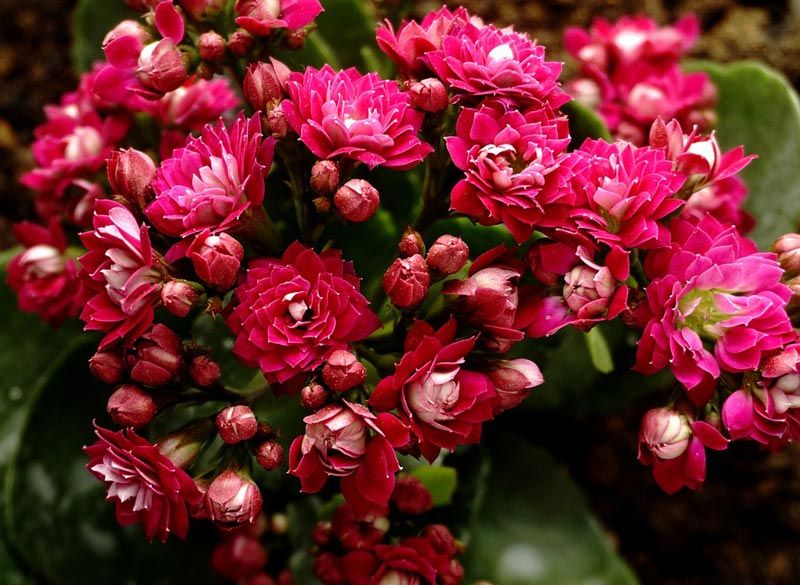
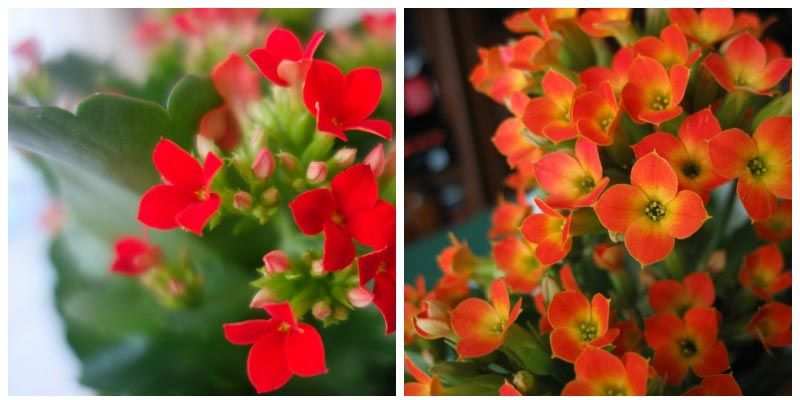
| Blossfeld | Breeders have developed several varieties with yellow, scarlet, pink, and orange flowers. The wild ancestor has red inflorescences. | In natural conditions up to 0.6, in room conditions – 0.3. | Glossy, egg-shaped, flowers are located on erect stems. |
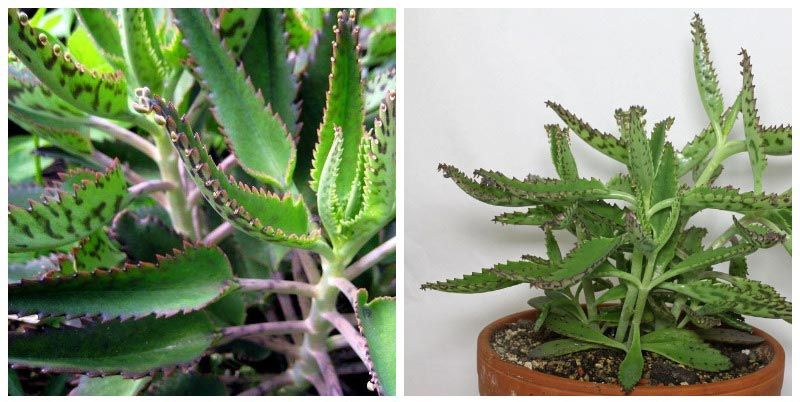
| Degremona | A perennial plant. Elongated pink-purple flowers are collected in a large inflorescence. It reproduces by rosettes located along the edges of the leaves. In most cases, the offspring (rosette) produces aerial roots and falls away from the mother plant; if the soil is favorable, it will root on its own. | In natural conditions up to 2, and at home – 50 cm. | Green or glaucous with purple or brown speckles. |
Caring for Kalanchoe at Home
Regardless of the variety chosen for home cultivation, Kalanchoe requires proper care, which includes the following basic principles:
- Since the plant loves light, the best spot in the house is the brightest window. However, direct sunlight is not recommended, so the pot should be shaded.
- At the beginning of spring, watering is carried out once a week in small portions; all flowering crops require fertilizing at least once a month.
- In summer, fresh air is needed, and after flowering, conditions are created for the growth of stems and leaves.
- The plant begins preparing for its dormant period in August, trimming spent flower stems and shaping the shoots to the desired shape. Gradually reduce the room temperature to 18°C, simultaneously cutting watering in half and reducing daylight hours to nine to ten hours.
Kalanchoe transplant
The key to successful Kalanchoe growth and development is proper repotting. The following factors are important.
Choosing a pot
Flowerpots - no matter the age of the flower, a pot made of glazed clay is chosen, since this material has a porous structure and allows the roots to breathe.
For young plants, take containers from 12 to 20 dm3, observing the rule: each subsequent one should be 2 cm larger than the previous one.
For mature plants, it's recommended to select a container that fits the existing pot flush against the new one. If you choose a larger container, the plant won't develop flower stems, but will instead grow both stems and flowers.
Hobby gardeners note that over time, a salt deposit forms on the outside of containers. Therefore, they need to decorate them with planters and other elements.
It's important to choose pots that are free of chips and damage and have a wide tray to ensure easy watering. Before repotting, wash the pot with laundry soap and rinse with hot water.
It is necessary to dry it completely to avoid root rot after transplantation.
Soil
Experts recommend purchasing a special soil for succulents, which is sold in flower shops. It has a neutral or slightly acidic structure. If such soil is unavailable, create your own mixture using turf, leaf mold, peat, and sand in a 4:2:1:1 ratio. Add two tablespoons of charcoal to the prepared mixture. Before placing the soil in the pot, add standard drainage material, such as pebbles, crushed rock, or expanded clay.
Transfer time
April and May. Repotting at other times is contraindicated, as these spring months are when active growth occurs. Young Kalanchoes are repotted annually. Mature plants should be repotted once every 2-3 years.
An indicator that it is time to transplant the plant into a new container is when roots emerge from the holes of the old pot and come to the surface.
Subsequence:
- disinfect the new container for transplantation using laundry soap and boiling water;
- place a 2 cm layer of drainage;
- fill the prepared soil mixture to two-thirds of the volume of the new flowerpot and moisten it;
- remove the Kalanchoe from the old pot by turning it over, then lightly tapping on the walls and carefully removing it;
- It is recommended to remove old soil with a stick;
- check the roots, remove damaged ones, sprinkle wounds with activated charcoal powder;
- Place the Kalanchoe in a new container, add soil and compact it, the root collar should be at the soil level;
- water the plant, the top layer of soil should be 1-3 cm from the edge of the pot;
- After watering, place the flower in the designated place.
Experts recommend repotting Kalanchoe immediately after purchase, as stores sell this species in a peat substrate, which is not suitable for long-term storage. Therefore, it's best to purchase the plant in April-May, when its biological cycle is at its peak. When repotting a mature plant, there's no need to remove soil from the roots. It's placed in a larger container along with the root ball.
A flowering plant should not be replanted under any circumstances.
Pruning Kalanchoe
To maintain a beautiful shape, Kalanchoe requires regular pruning and pinching. Trim elongated shoots after winter, shortening them by two-thirds or half their length, depending on the plant's condition. A second pruning can be performed after flowering. Young shoots are pinched in the summer.
Reproduction of Kalanchoe
The plant is most often propagated by leaves, cuttings, and daughter rosettes. Seed propagation is also possible, but less popular.
Leaves
Use freshly cut or fallen leaves, but don't let them dry out. Prepare fertile soil, cut off a healthy leaf, and bury the petiole area in it, covering it with a cap or plastic bottle. Moisten the soil, and periodically ventilate the mini-greenhouse. Within ten days, the leaf will take root and begin to form a new plant.
cuttings
They are obtained by pruning; the optimal cutting length is 8 cm. It is placed in a container of water, activated charcoal is added to prevent rot, and then roots are formed. The cutting is then planted in a mini-greenhouse and, after rooting, grown under normal conditions.
Sub-sockets
They form along the edges of the leaves, fall off, and root on their own. Some varieties produce offspring in axillary buds. In this case, it's best to wait until the offshoot forms and then transplant it.
Seeds
It's recommended to use them only to create a new species for your collection. Furthermore, seeds collected from a hybrid plant don't convey all of its properties, so it's best to use vegetative propagation.
Stimulating flowering
If a three-year-old plant fails to bloom, it's important to analyze the reasons for the delay in budding. These include:
- Incorrect watering can result in the soil becoming too dry or too wet. Watering should be regular and gentle to prevent root rot.
- Too much or too little light – on unshaded windows the leaves can get sunburned, and in a dark room they can stretch out and die.
- Excessive fertilizing – the more often you fertilize a plant, the more energy it will spend on processing nutrients rather than on forming flower buds.
- Disproportionate daylight hours – Kalanchoe needs less than ten hours “to sleep”.
If all these factors are absent and the plant still fails to bloom, methods are used to stimulate this process. These can be broadly categorized as:
- artificial – by spraying with Ovary and Bud preparations;
- natural - by reducing daylight hours: in the evening after 17.00 the plant is covered with a cardboard box, and in the morning no later than 7.00 it is removed.
Under this influence, the plant begins to actively form flower buds. After budding and flower fall, allow the Kalanchoe to rest in a cool room with seven hours of daylight.
Diseases and pests of Kalanchoe
Despite its unpretentiousness, Kalanchoe is susceptible to pests and diseases:
| Name | Signs | Treatment and care |
| Kalanchoe virus | New leaves become faded, and old ones become curved and rough. | It is not curable. |
| Gray mold | The herbaceous parts of the plant become water-soaked and covered with a grey coating. | Affected parts are removed, air humidity is reduced, and fungicides are sprayed. |
| Late blight | The leaves wither, dry out, fall off, and black rot spots appear on the lower part of the stem. | The diseased plant is isolated from healthy ones, humidity is reduced, diseased parts are removed and treated with special preparations. |
| Stem rot | First, black and watery spots appear, then the shoots die off. | The diseased plant is separated from others, treated with Rovral and Soprol, and the humidity in the room is reduced. |
| Ring spot | Light rings appear on the leaf blades. | It is not curable. |
In cases of severe fungal infection and stem rot, it's better to separate a healthy shoot from the dying plant and replant it rather than treat it. In addition to diseases, Kalanchoe can be infested by insects. They can migrate from other plant species, especially if the air in the room is too dry or the soil is too wet.
Pests of Kalanchoe
| Insects | Manifestations on leaves | Methods of getting rid of |
| Spider mites | First, yellow spots and a thin web appear, then they turn completely yellow, and new shoots become deformed. | In case of primary infestation, the leaves are washed with a soap solution; in case of widespread infestation, they are treated with acarids. |
| Aphid | The entire herbaceous part turns yellow and becomes deformed, covered with a sticky coating, and curls up. | They apply tobacco dust and insecticidal agents: Commander, Zubr, etc. |
| Mites | They bend downwards, become covered with a brown crust, and their tissue becomes warped and hardens. | In case of minor damage, wash the leaves with a soap solution; in case of severe damage, spray with Fitoverm, Vermitek, or Akarin. |
| Mealybugs | Covered with white waxy secretions. | The affected parts are removed and sprayed with mineral oil M-30 and insecticidal preparations. |
Top.tomathouse.com recommends: the medicinal properties of Kalanchoe
The plant's sap's medicinal properties are widely used in both traditional and traditional medicine: thanks to its anti-inflammatory properties, it is used in gynecological and dental practices, and for healing ulcers, burns, and frostbite. It is also indispensable for the treatment of tonsillitis and stomatitis.