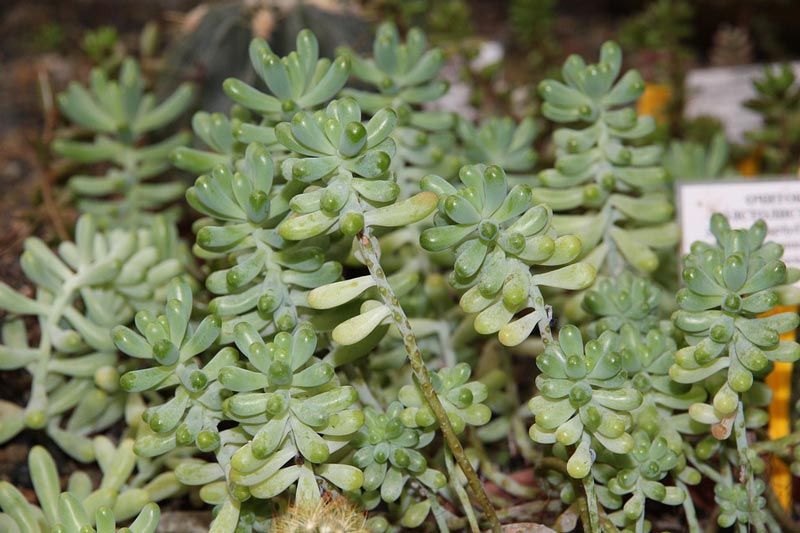
Sedum is a plant in the Crassulaceae family. It prefers dry areas. Native to Africa and South America, it grows on slopes and meadows in Europe, Russia, and the Caucasus. Sedum comes from the Latin "sedo," meaning "to subside." It is also known as "hare's cabbage," "fever grass," and "sedum."
Content
- 1 Description
- 2 Sedum: varieties and species with photos, caustic, prominent and others
- 3 Selecting a seedling
- 4 Location
- 5 Planting sedum in open ground step by step
- 6 Caring for sedum in open ground
- 7 Pests and diseases
- 8 Reproduction
- 9 Caring for sedum at home
- 10 Top.tomathouse.com recommends: using sedum in landscape design
- 11 Reviews on growing sedum indoors and outdoors
Description
Sedum is a perennial or biennial succulent. Its varieties are heat-loving, winter-hardy, and groundcover. Dense shoots branch out, forming shrubs and subshrubs; many species are trailing. The leaves are petioleless, fleshy, oval, and sometimes flat and swollen. They are arranged opposite each other.
Different varieties have different leaf colors—green, pink, gray, with reddish streaks. Bright sun, shade, wind, and soil composition also affect the sedum's color. The root system consists of tubers.
Umbrella-shaped inflorescences bloom in summer or fall. Their colors include scarlet, blue, pink, white, and yellow. The dense, recurved petals form a narrow tube, revealing the stamens. The flowers are pleasantly scented and attract bees and bumblebees. Many varieties are poisonous.
Thanks to its content of alkaloids, tannins, glycosides, flavonoids, organic acids, and vitamin C, the plant has medicinal properties. Its parts tone, cleanse the skin, and help with heart disease, while its leaves are used to make painkillers.
Sedum: varieties and species with photos, caustic, prominent and others
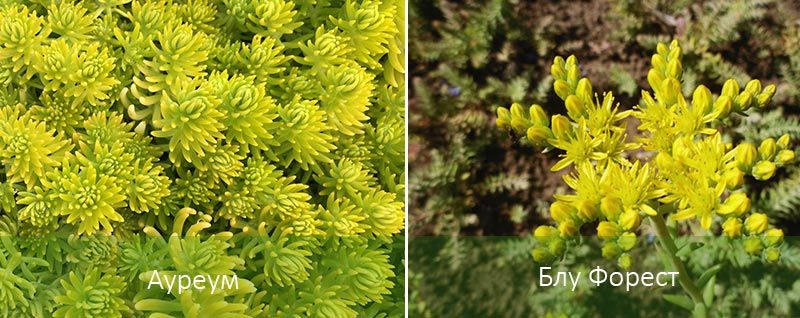
There are approximately 500 varieties and species of sedum. Only a few are grown as ornamentals.
| View | Description | Varieties |
| Ordinary (Hylotelephium telephium) 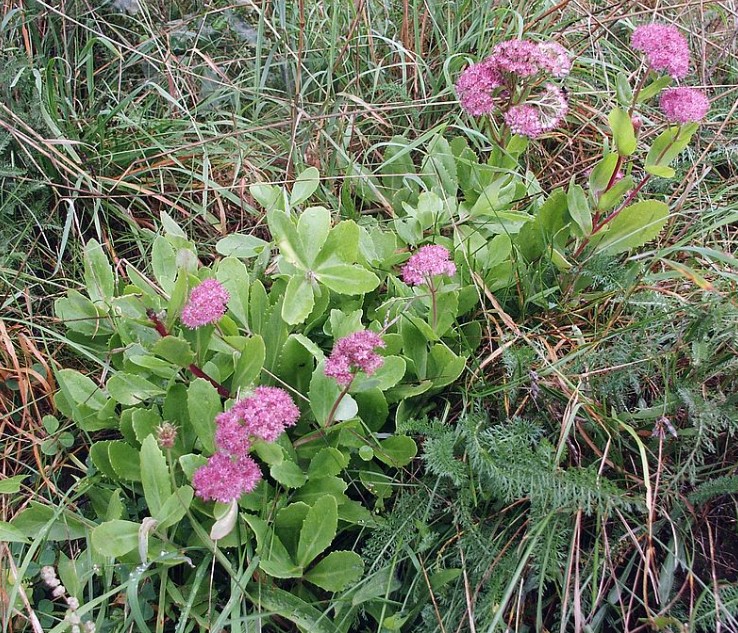 |
A perennial with an erect, thick stem. Flat, oval, ribbed leaf blades. Star-shaped petals bloom in July. |
|
| Caustic (Sedum acre) 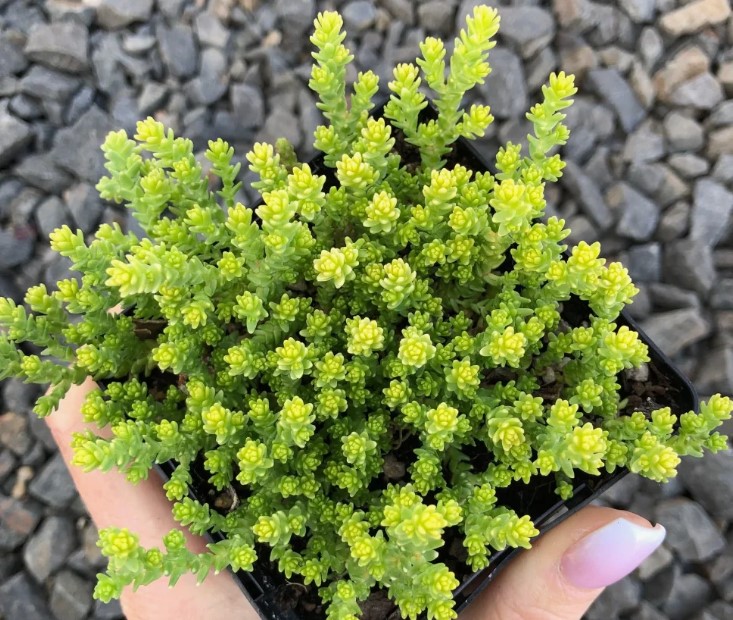 |
A miniature species up to 5 cm tall (poisonous) with dark green, thick leaves and golden, star-shaped petals. Drought-resistant and winter-hardy. Blooms from spring to late summer. |
|
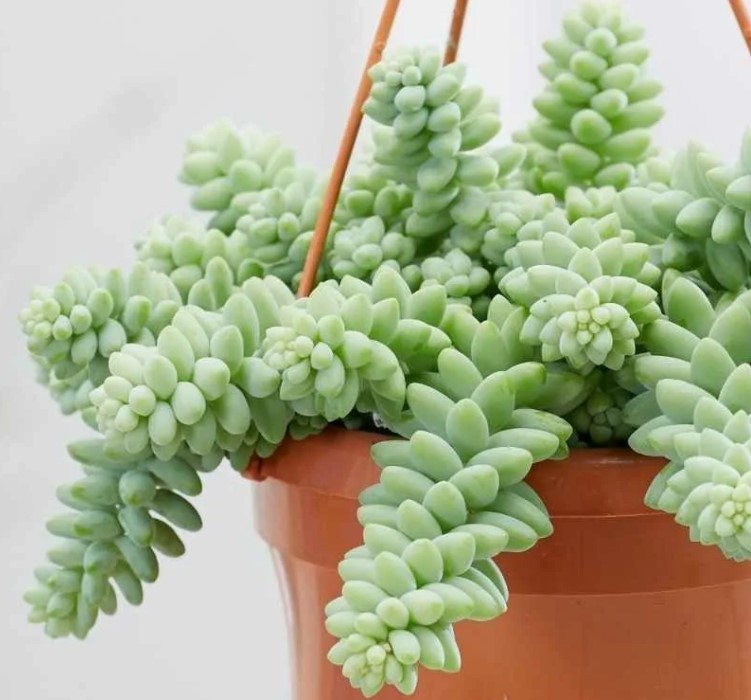
| Morgana (monkey tail Sedum morganianum)
|
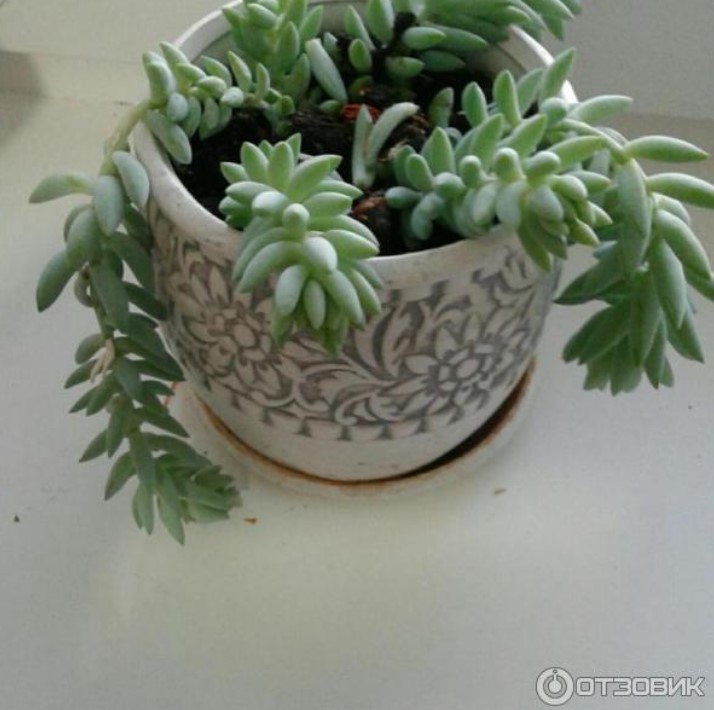
Dense, light-green, elongated foliage. Meter-long shoots twine beautifully in hanging pots. Red-pink flowers, resembling stars, appear in early spring. |
|
| Reflexed (reflexum) (Sedum reflexum) 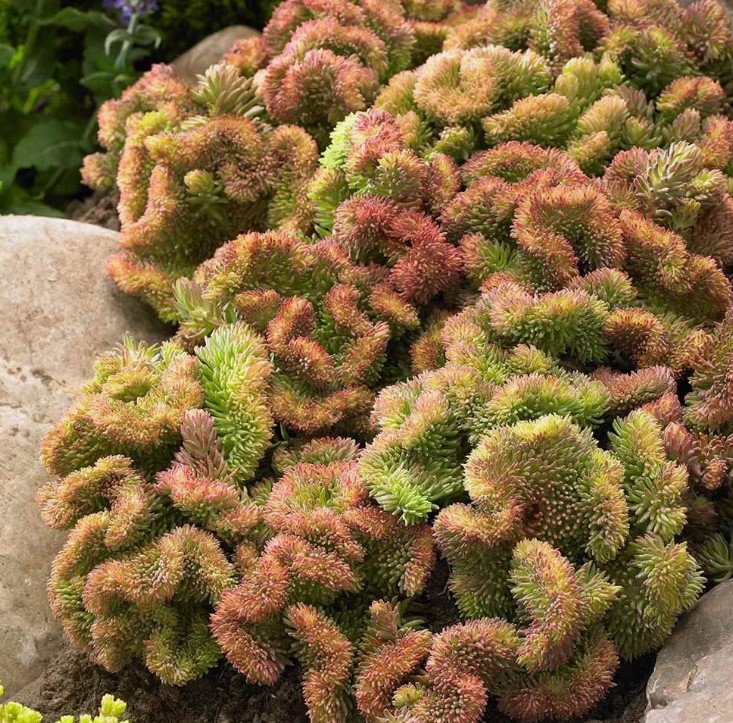 |
An evergreen edible perennial. The leaves are narrow and blue, growing densely on short stems. It blossoms yellow in July. |
|
| False (Sedum spurium) 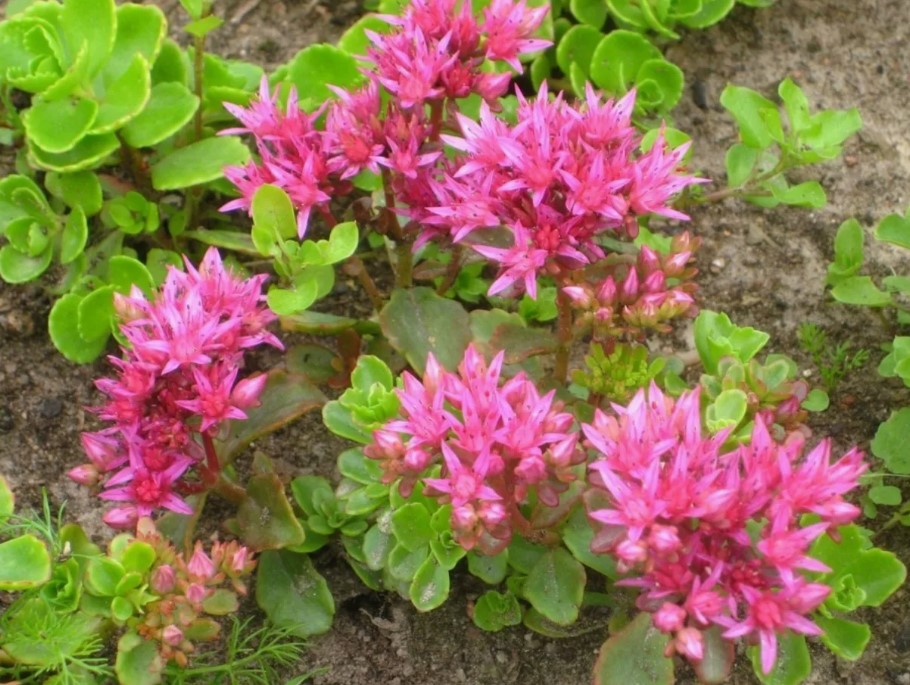 |
A low-growing, winter-hardy plant with creeping stems that grows like a carpet. The green, oval leaves turn purple or bronze after frost. Purple flowers bloom in July and August. |
|
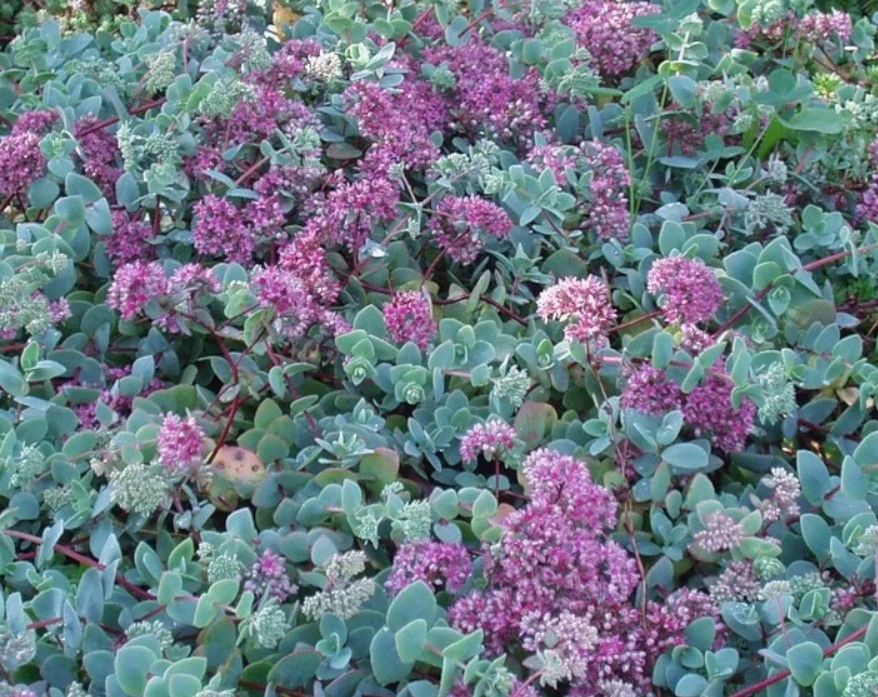
| Prominent (Sedum spectabile) 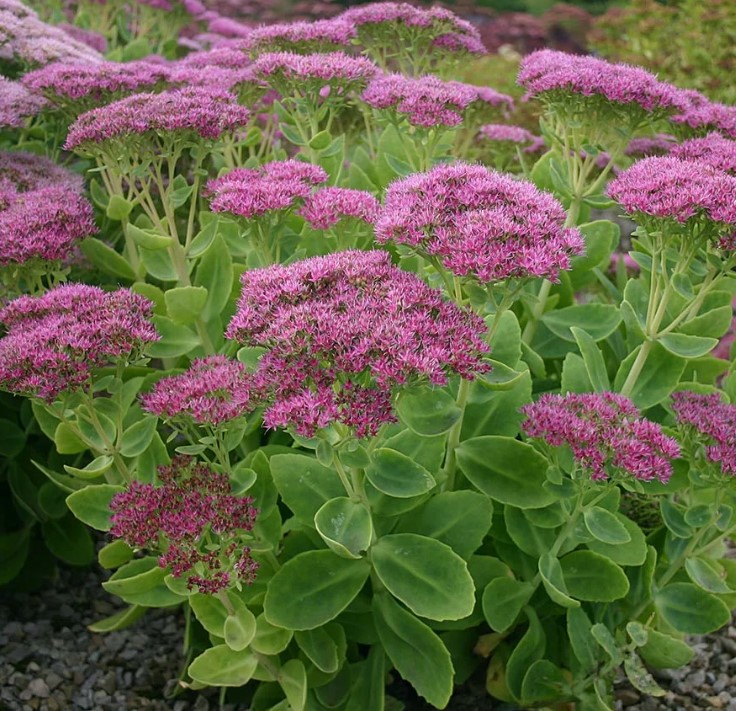 |
An upright plant with light green, gray, and blue leaves. It blooms in August–October in various shades of pink. |
|
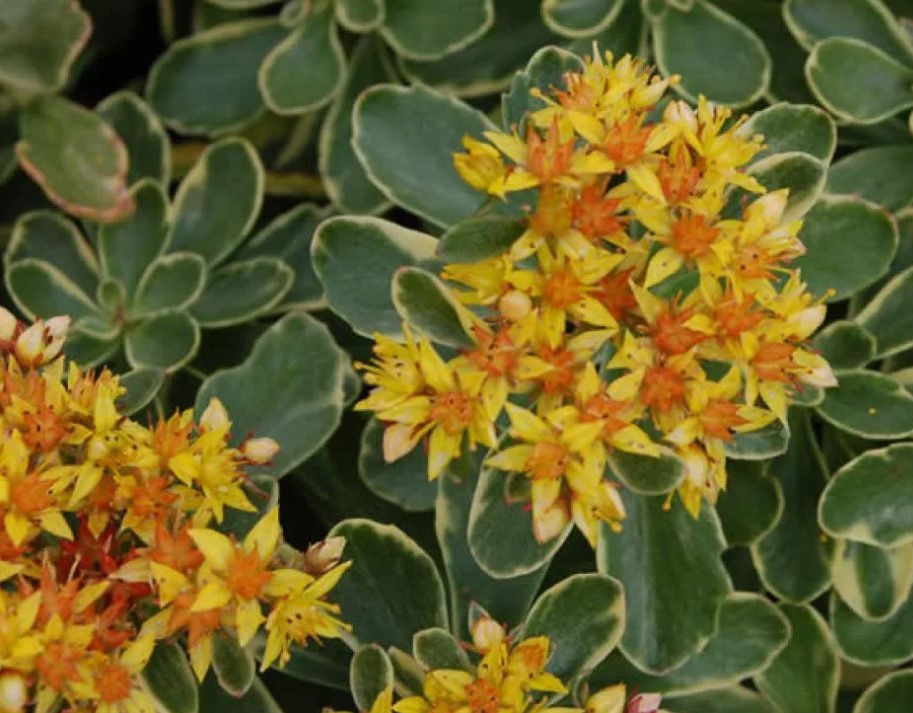
| Kamchatka
(Sedum kamtschaticum)
|
A winter-hardy perennial with dark, elongated leaves. It blooms from July to September with bright orange flowers. |
|
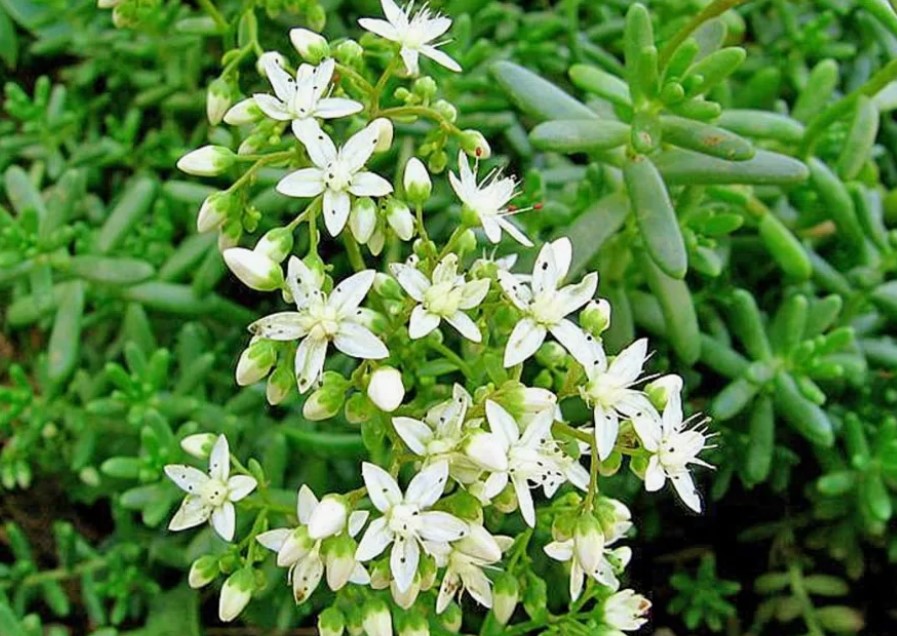
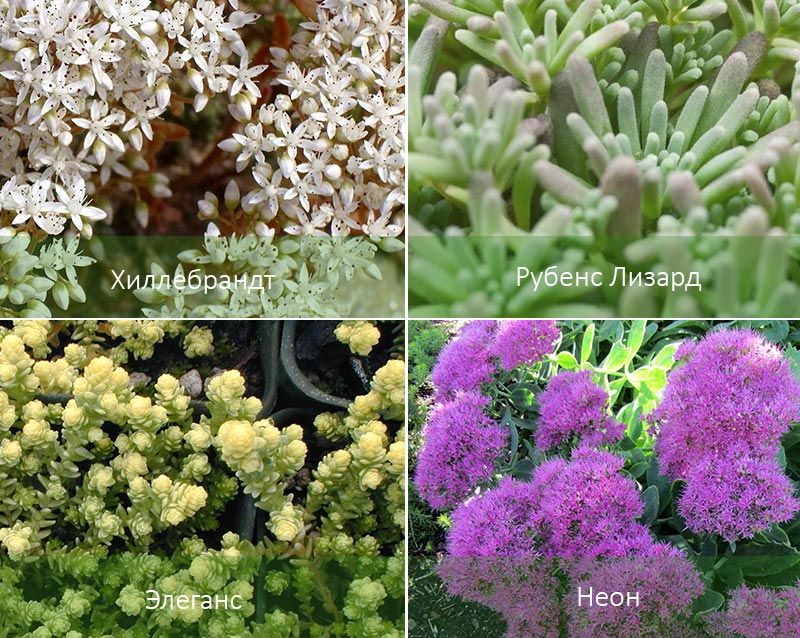
| White
(Sedum album)
|
Green stems and small leaves grow in a dense carpet. The paniculate inflorescence opens in August, producing fragrant, snow-white flowers. It is winter-hardy and prefers partial shade. |
|
| Siebold
(Sedum sieboldii)
|
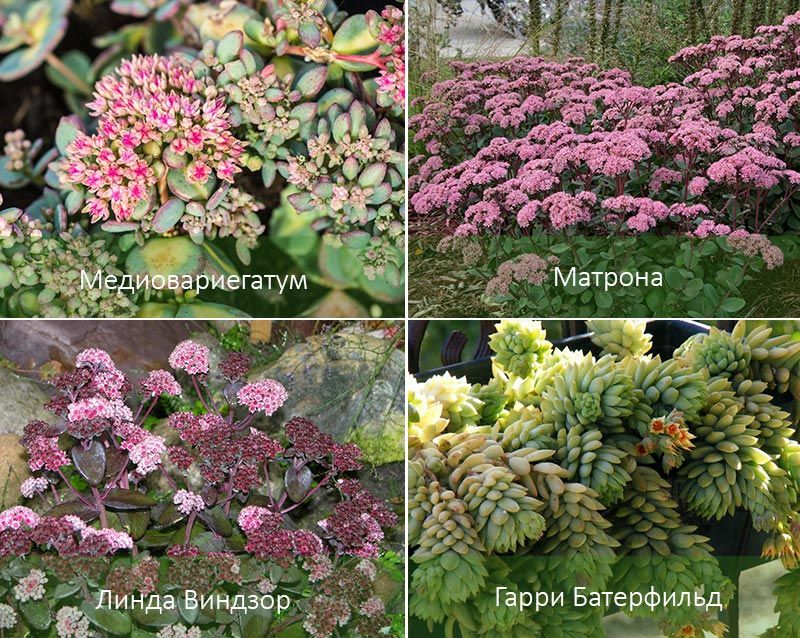
Creeping stems, leaves are gray-blue with a red edge, rounded, fan-shaped. It blooms in October with a light lilac color. | Mediovariegatum – leaves are blue-grey at the edge, with a wide cream stripe in the middle. |
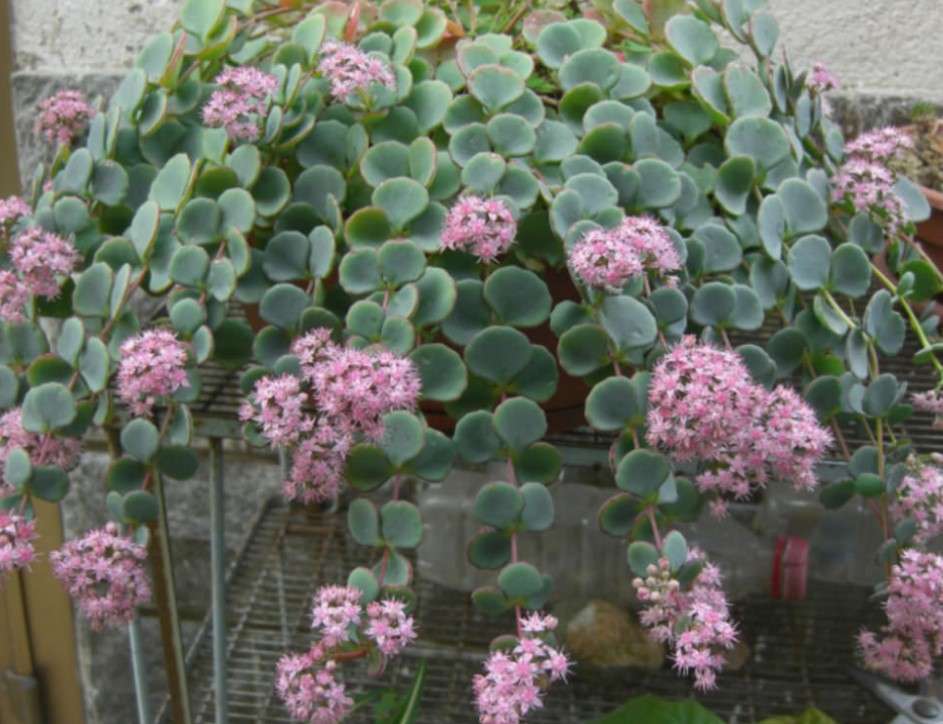
| Evers
(Sedum ewersii)
|
Rounded, broad leaves create a continuous glaucous-green carpet; light pink petals bloom in July and persist until frost. It grows in the mountains. |
|
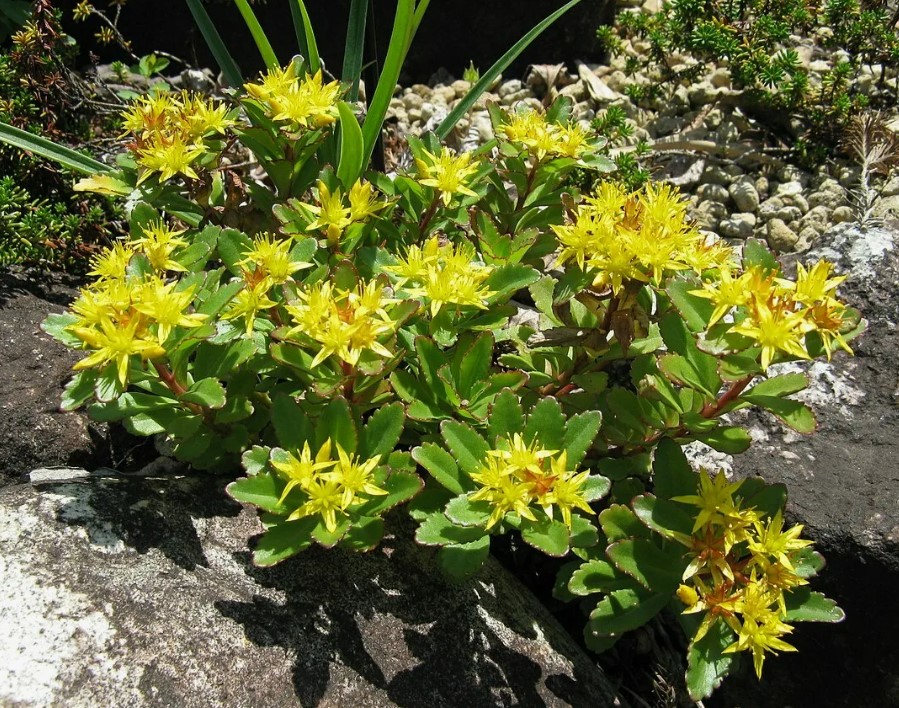
| Tenacious
(Sedum aizoon)
|
Diamond-shaped leaves with small teeth, blooms yellow-orange in June-August. | Euphorbia - dark red shoots with bronze-colored leaves and orange-colored flowers. |
| Purple (common hybrid) (Sedum telephium Purple Emperor) 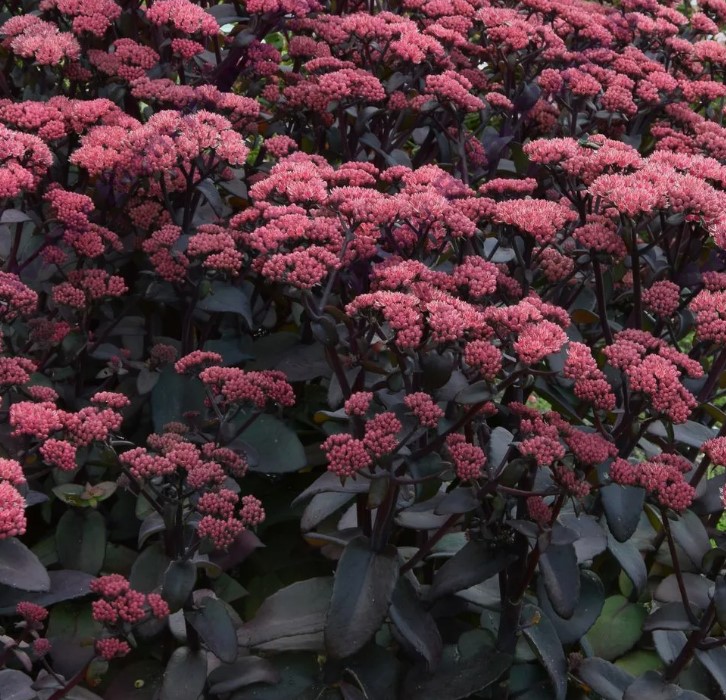 |
An upright stem with fleshy, smooth, waxy oval leaves and pink-hued petals. Flowering continues from July to September. |
|
Selecting a seedling
The seedlings must be healthy, with elastic stems and leaves, without signs of disease or traces of pests, taking into account the flower variety.
Low ones will create a blooming canvas, while high ones look beautiful in a group or individually.
Location
Sedum prefers a sunny, open location with soil that doesn't become waterlogged. Sunlight ensures the flower's decorative appearance. Avoid planting under deciduous trees, as this will prevent the young shoots from sprouting.
Planting sedum in open ground step by step
Sedum is grown in permeable soil, where it thrives. Before planting, the soil is dug over and compost or humus is added. Groundcovers require fertilized, light, loose soil. Some varieties thrive in loamy, sandy, and calcareous soils.
Plant in spring, ideally in May.
Step-by-step actions:
- For each specimen, dig a hole 20 cm deep and 50 cm wide.
- The bottom is covered with drainage (coarse river sand, pebbles).
- Top with soil, peat, humus 3:1.
- In the middle of the hole, make a depression, like the root of a seedling.
- Place the seedling.
- Sprinkle with soil and press down.
- They are watering.
- Several pebbles are placed around the hole to mark it.
The distance between seedlings is 10-15 cm, between rows – 20 cm.
Caring for sedum in open ground
Outdoor care is simple: fertilize and water periodically. Loosen the soil around the bush weekly and weed. Remove dead shoots and leaves. Monitor for diseases and pests.
Watering
During extremely dry summers, sedum should be watered generously. However, avoid overwatering the soil to prevent root rot, and avoid watering after rain.
Top dressing
Sedum is fed with succulent fertilizer. The first time is in April, before flowering, and the second time is in August, after flowering. Nitrogen-containing fertilizers are applied in the spring; however, they are not needed in the fall, as this will reduce the plant's sensitivity to low temperatures.
Instead of organic matter, use an infusion of mullein, diluted with water 1:10, but not fresh manure.
Trimming
Formative pruning creates a beautiful bush shape by removing damaged and weakened parts of the plant. Sharp and disinfected tools are used.
Perennial varieties are cut back low in late autumn, and the remaining stumps are covered. New shoots emerge in the spring.
Rejuvenation of planting
The plant is rejuvenated every 3-4 years. In spring or fall, old shoots are removed, young shoots are dug up, and divided. The sections are replanted, and the soil is amended with ash and sand.
Wintering
Sedum generally tolerates low temperatures well, but some varieties require winter protection. When the first frost arrives, cut the shoots back to 3-4 cm, cover them, and cover with soil.
Pests and diseases
Sedum is resistant to diseases and pests; they rarely affect the plant, mostly due to temperature and humidity imbalances. These can include:
- Fungal infection – dark spots appear. Affected parts are removed and treated with a fungicide.
- Thrips – black spots, sticky discharge, leaf drop. Treat with Fitoverm and Actellic.
- Aphids – leaves dry out and curl, and green insects are visible. Use products such as Iskra and Confidor.
- Weevil – eaten away "patterns" on the leaves. Treat with Karbofos.
Reproduction
It reproduces in simple ways:
- Seeds – collected from plants in the garden (use dried and cracked seeds) or purchased from a store. Freshly harvested seeds have a higher germination rate. Sow in spring (March-April) in a pre-moistened mixture of soil, compost, and sand (1:1:1). Lightly cover with soil. Create greenhouse conditions by covering with plastic film. Then place in a location with a temperature of +5°C. Regularly ventilate and moisten. After 14 days, transfer the container with seeds to a warmer location (+20°C). Seedlings should appear in 7-14 days. When two normal leaves have formed, transplant. Harden off the seedlings by placing them outdoors before planting them in the flowerbed. In regions with warm climates, sow the seeds directly into the ground after the last frost. The plant will bloom in 2-3 years.
- Cuttings are taken 15 cm long from the upper parts of the shoots. The lower leaves are removed and buried in a moist mixture of soil, compost, and sand. Water after two days. After roots have formed, in 2-3 weeks, replant.
- By division, take a mature, 4-5-year-old bush. Suitable varieties include Sedum spectabile and Sedum vulgare. Dig it up, clear the soil, and trim off any diseased or rotten stems and roots. Divide into several smaller bushes, making sure to include buds. Sprinkle the cuttings with activated charcoal, let them dry for two days, and plant.
Caring for sedum at home
Sedum is grown less frequently indoors; it requires bright sun and additional lighting in winter. Place the plant on a south-facing windowsill; no shade is needed. Choose a low, wide pot with drainage holes.
Buy a cactus soil mix or make your own: equal parts turf, leaf mold, and sand. Add a drainage layer to the bottom of the pot.
Water moderately, avoiding overwatering. Water once a week in summer and once every two weeks in winter. From spring to early fall, fertilize with succulent mixtures. Maintain a temperature of 25–28°C in summer and 8–12°C in winter. Sedum doesn't require misting; a warm shower is sufficient.
Top.tomathouse.com recommends: using sedum in landscape design
Sedum adds extraordinary beauty to borders, flower beds, rockeries, garden paths, and alpine gardens. Trailing and shrubby varieties create a unique composition with other flowers in landscape design. In autumn, most plants lose their appeal, but sedum continues to delight with its decorative appearance for a long time.
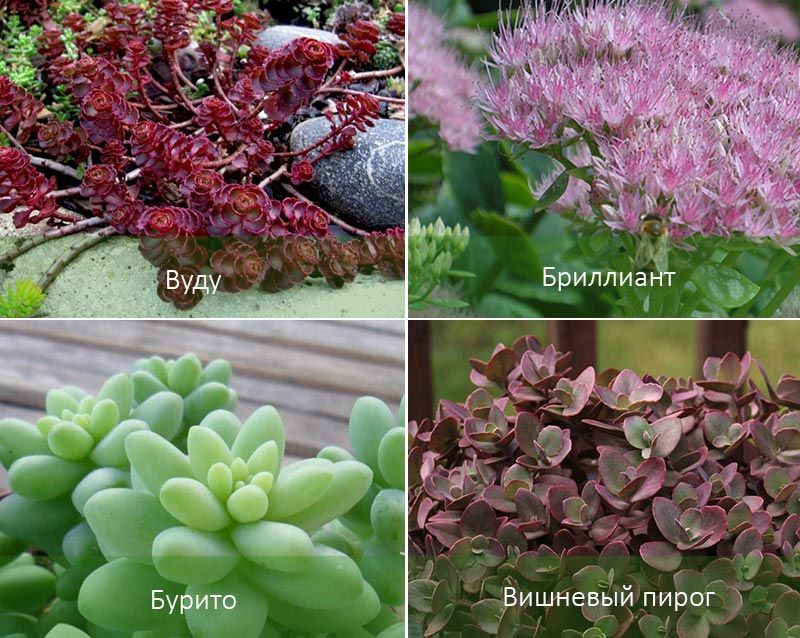
Gardeners decorate their plots by growing sedum in pots and containers. Some train the plant in a greenhouse, then move it outdoors or plant it in open ground.
Reviews on growing sedum indoors and outdoors
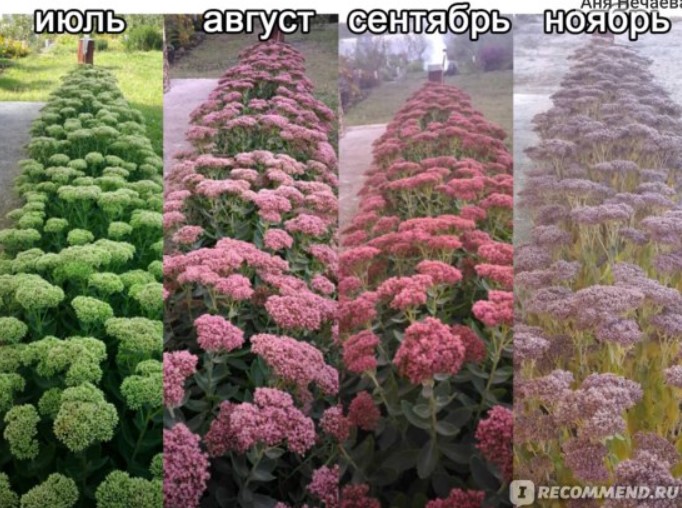
Unpretentious and beautiful, suitable for any garden and any size. Photos: summer, fall, winter, spring
Usually, beautiful garden plants are time-consuming and wasteful of various products like fertilizers, sprays, and so on. But not sedum! That's why I fell in love with it. It's self-sufficient—it grows on its own, blooms on its own, maintains its shape without support, and no one eats it. The only thing you have to do is cut the old plant down so a new one can grow in its place.
Sedum is a plump garden plant with fleshy leaves and dense umbels of small flowers.
On the good side:
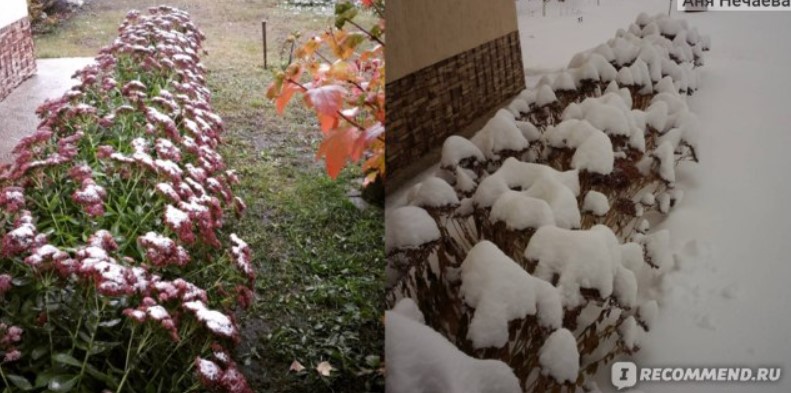
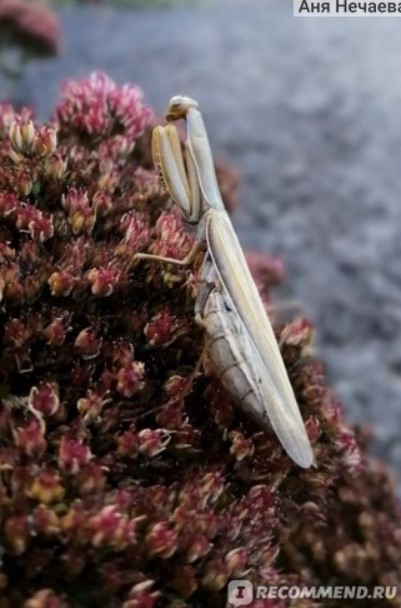
It's easy to grow. It needs watering, but not excessively, rarely. Sedum requires no other investment of time, effort, or money. It tolerates the first snow well, and generally looks quite nice under the snow in winter. Photos from October and December:
Perennial. Once planted, it will grow in the same spot every spring.
Versatile. Personally, I like plants with a dense structure; they have a life-affirming look. At the same time, it's unobtrusive and doesn't require any design skills or planning to pair it with anything. It looks great as a low hedge, and its lush bush can cover an unsightly corner (like a fence).
It grows quickly. Sedum begins to grow as soon as the weather warms up, and by summer it's a beautiful bush.
Lasts until late autumn. From mid-summer to late autumn, it blooms:
About the bad.Not bright enough. Sedum has small, pale flowers. If you're looking for a bright accent in your garden, this is definitely not the plant for you. Its flowers only turn reddish in late summer, and even then, the color is muted and unobtrusive.
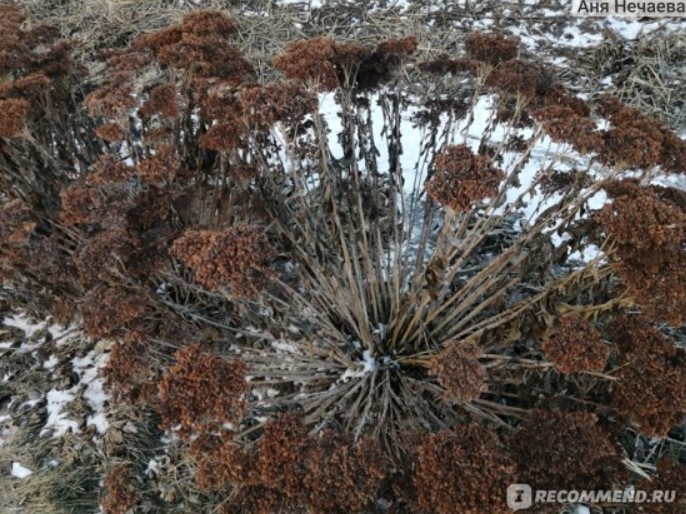
Requires pruning. After winter, the sedum looks like this:
Dry sticks sticking out of the ground. If they're not trimmed, a new bush will grow right between them, but it will look shabby and wild. These sticks need to be cut back to the ground, so the pruning area won't be visible behind the new bush.
For the lazy and those who have enough trouble tending to their perpetually ailing rosettes, sedum is a godsend. I have more and more of them at my dacha every year, while the number of flowers requiring care is decreasing.Advantages
Beautiful
Unpretentious
Long flowering
Flaws
Not very bright
Anya Nechaeva
recommends
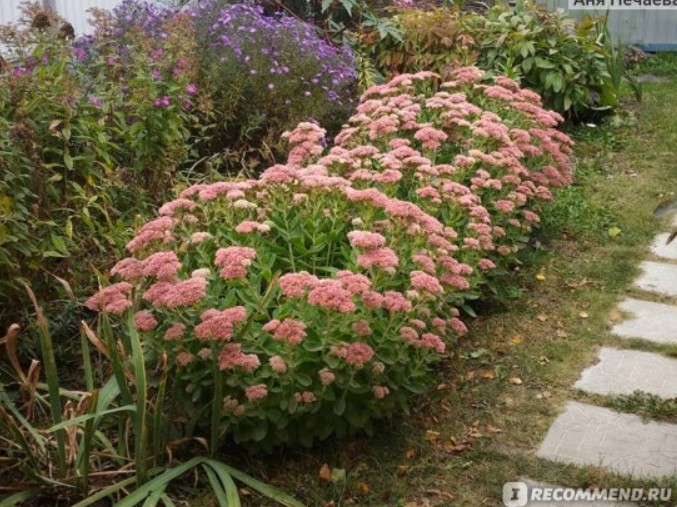
A great plant for the lazy
Sedum is one of my favorite plants in my garden.It consists of several fleshy stems with equally fleshy leaves. Within a couple of years, it becomes a small, spherical bush.
Sedum is especially beautiful in autumn, when the inflorescences formed over the summer open and the bush is covered in a pink cap of blossoms.
It tolerates transplanting well and is also drought- and overwater-tolerant.
This is simply a dream for lazy people who love unpretentious beauty at home.
Observer90
recommends
Review: Plants of the genus Sedum - Blooms until frost.
Advantages: unpretentious, does not require much moisture
Disadvantages: none
The flowerbed by the entrance, which I've been tending to for several years, wasn't exactly a joy this year. The dry summer took its toll—many of the flowers withered, some didn't even bloom.
The sedum, however, is a fine specimen; it doesn't require much moisture. It withstood both the scorching summer and the gusty winds that have battered us with remarkable regularity this year.
There are two types of sedum in my flowerbed.
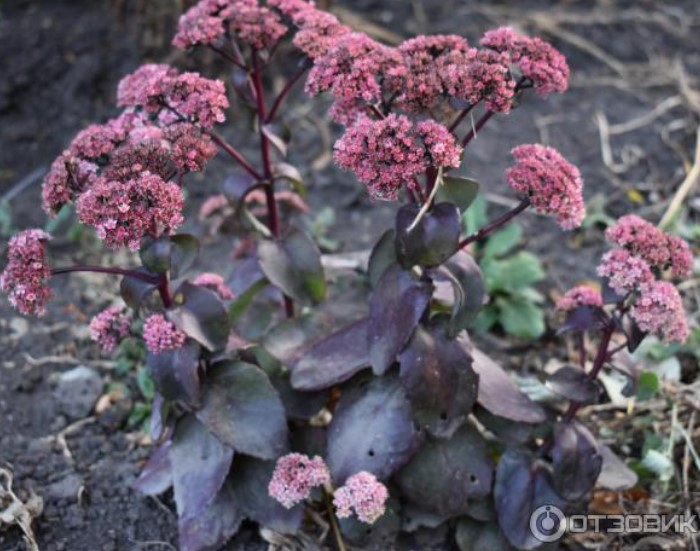
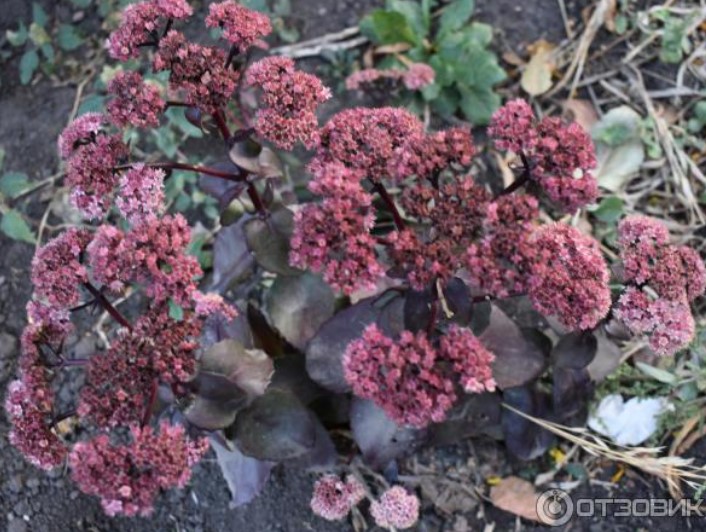
This is a sedum called Touchdown Tick (also known as Touchdown Take). While it's still a young boy, it doesn't inspire much admiration.
I planted two bushes in May. They had a hard time taking root, and I thought they'd die. But they survived. Since the plants are young, they're still a bit crooked. But I can already see that next year's results will be better. I really want to grow this beauty! The leaves are burgundy-brown, the flowers are pinkish-red.
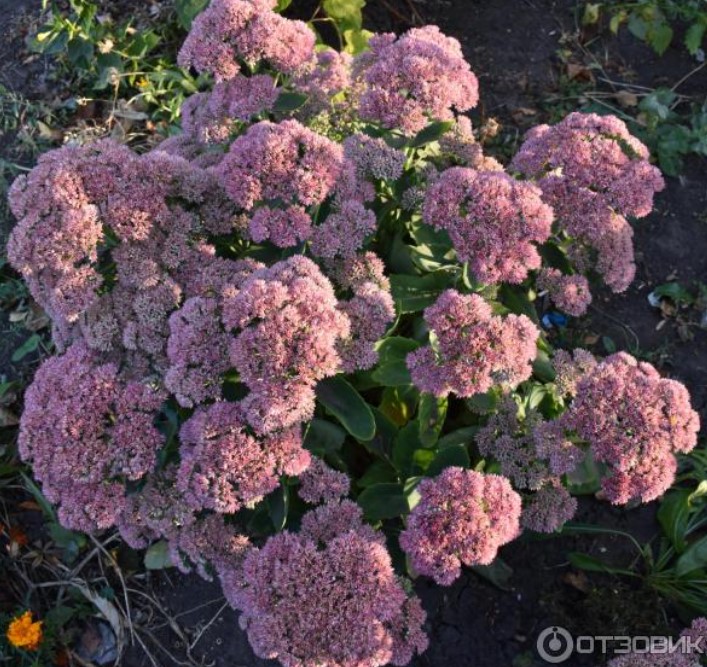
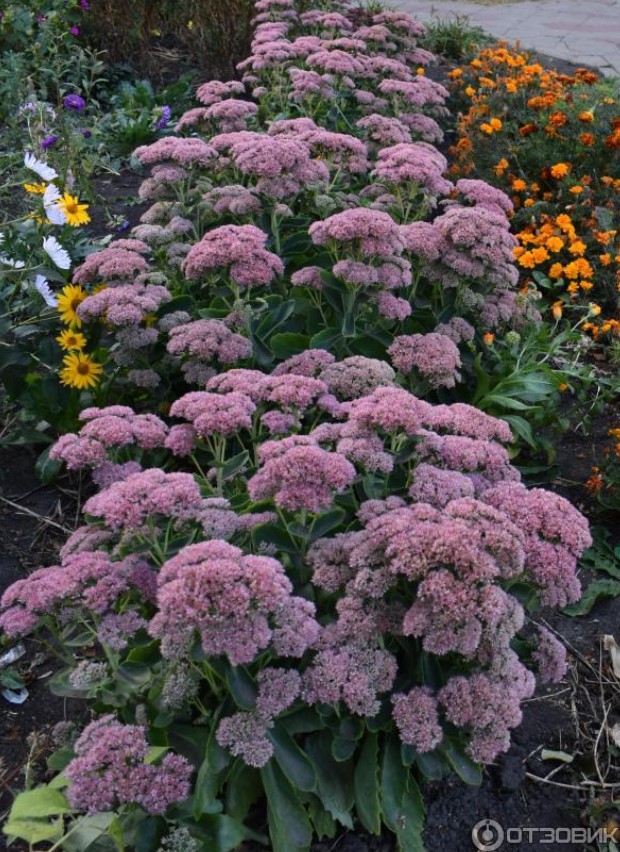
And this is my favorite. They call it sedum spectabile. Three years ago, it also had a hard time taking root in my flowerbed. The four bushes looked weak the first year and bloomed sparsely. But by the second year, they had grown stronger and become beautiful. And now, in the third year, I can't stop admiring them!
Sedum will bloom for a long time, right up until the hard frosts. Even after the flowerbed is prepared for winter and nothing remains, sedum continues to delight with its beautiful pink umbels. Even the first light frosts are unaffected.
Now that the two types of sedans have taken root in the flowerbed, I want to plant some more of these wonderful plants.
Usage period: three years
Year of manufacture/purchase 2020
General impression: Blooms until frost.
My rating
5
I recommend it to friends YES
Review: Plants of the genus Sedum - Touch-me-not plant
Advantages: none
Disadvantages: looseToday I'd like to share my thoughts on caring for the sedum houseplant. I'm not particularly impressed with it—it's just a succulent. But my husband absolutely adores it. So, to please our family, I agreed to let it live in my home. For some time, I've been trying to find a way to care for it and develop specific care guidelines. However, so far, my efforts have been futile. Passing by the first-floor windows of apartment buildings, I'd sometimes see a lush sedum growing there, in all its trailing glory. But I've been unable to grow it and get it to bush out.
It's like a touch-me-not—as soon as you touch it, it sheds its thorns. We tried watering it generously, but it didn't respond at all. Then we put it on dry rations, but that didn't help. So now it sits in splendid isolation, forgotten by everyone. High up on a shelf. We simply stare at it, still hoping that it will finally grace us with its lush growth.
Usage time: 2 years
Cost: 120 ₽
Year of manufacture/purchase 2016
General impression: Touch-me-not plant
My rating
3
I recommend to friends NO