Senecio (Senecio) belongs to the Asteraceae (Compositae) family. It is the largest plant in terms of number, with up to 3,000 species. It occurs as annual and perennial shrubs, herbaceous plants, and trees. It is found on various continents, in the tropics, the Mediterranean, Asia, and North and South America. Some species are succulents. It is also known as "Cleinia."
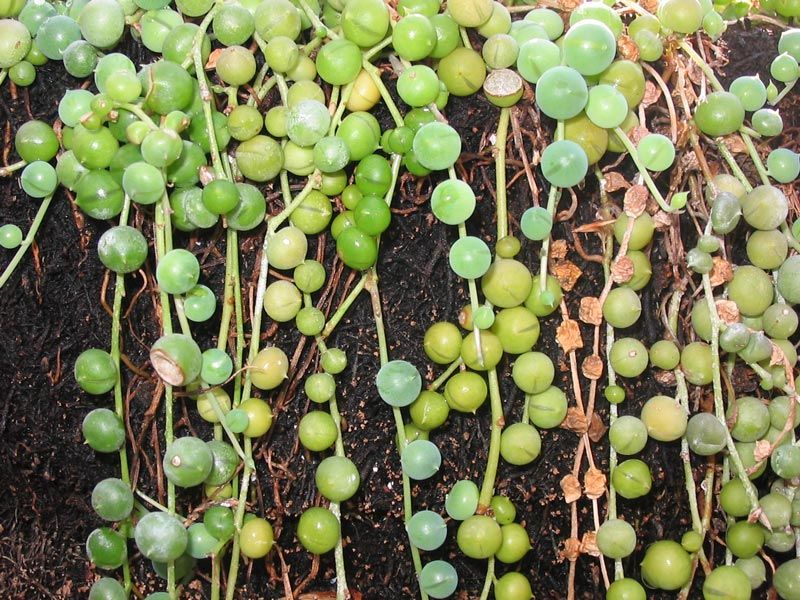
Description
Senecio has erect, drooping stems, pubescent or smooth. Leaf blades are elliptical, spherical, or oval. Lobed, pinnate, and entire varieties can be found. The inflorescences are common, appearing as heads, borne singly or in racemes. Their colors vary widely: yellow, orange, red, purple, violet, and blue. The plant is grown in flowerbeds and indoors.
Senecio rowleyani, Senecio grandigontoid and other species
| View | Description | Leaves | Flowers |
Kleina (Senecio kleinia)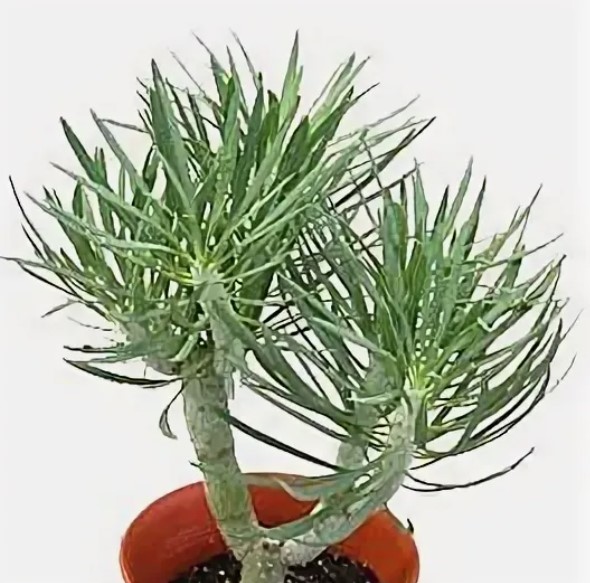 |
A tree-like succulent shrub growing up to three meters tall. The stem is brown, thick, and erect, up to 40 cm long, branching at the top. | Located on the crown, long, pointed, up to 15 cm long and up to 2 cm wide, colored gray, blue, green. | Thyroid, small, yellow. |
Large-tongued (Senecio macroglossus)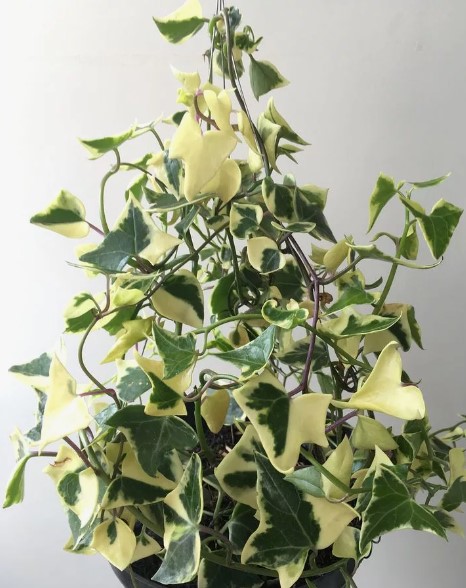 |
A perennial succulent. Stems are thick and weakly branched. Good for indoor growing. | Pointed, fleshy, covered in a shiny waxy coating, they can be green with red veins or variegated with a yellow and white pattern. | Pale yellow, daisy-like. |
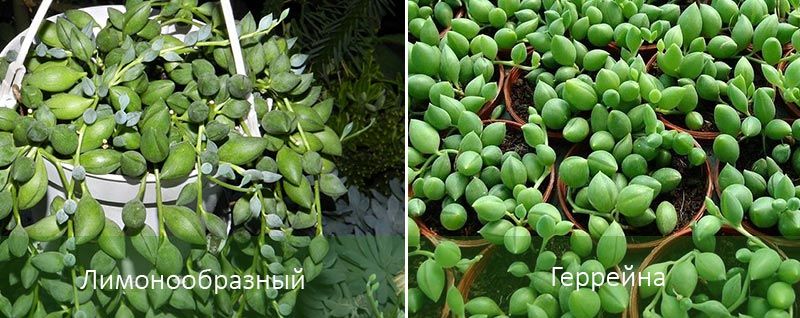
Lemon-shaped (Secio Citriformisne)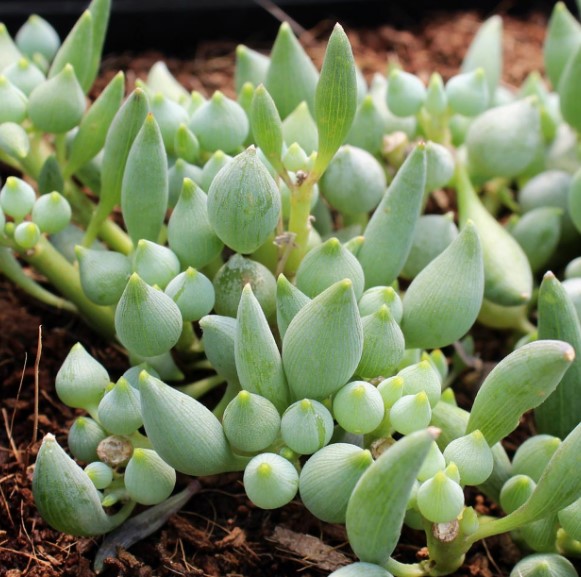 |
Low, upright, falls over time. | Oval-shaped, pointed, covered with a grey-green waxy coating, with transparent veins, reminiscent of lemon fruits. | Blooms yellow in late summer. |
Euphorbiaceae (Senecio anteuphorbium)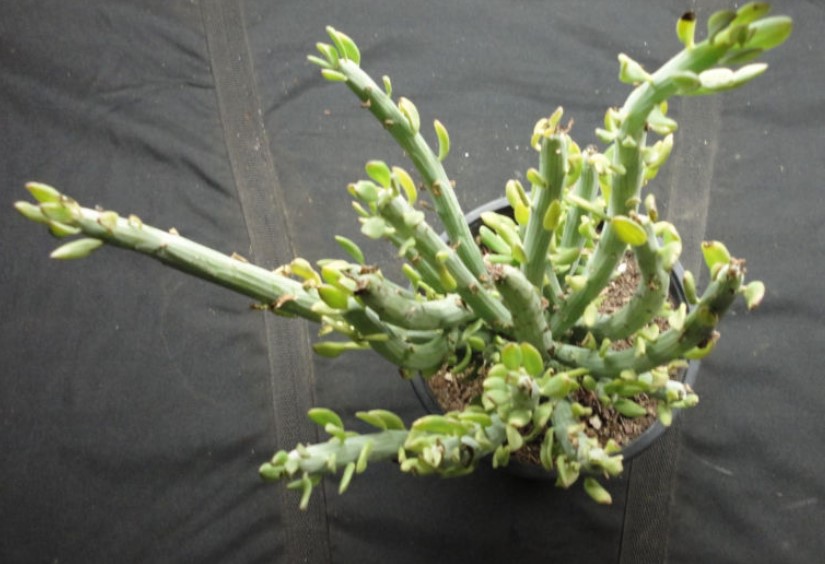 |
A perennial shrub with succulent, erect, rounded stems. | Small, 3.5 cm by 4 cm, oblong with a central vein, grey-green in colour. | White and yellow, small. |
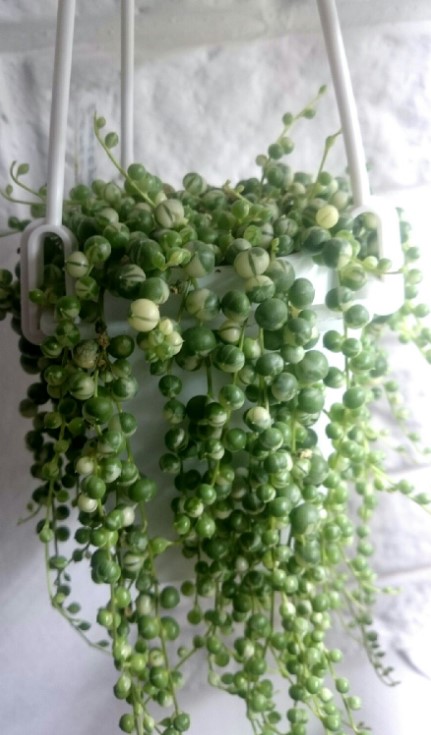
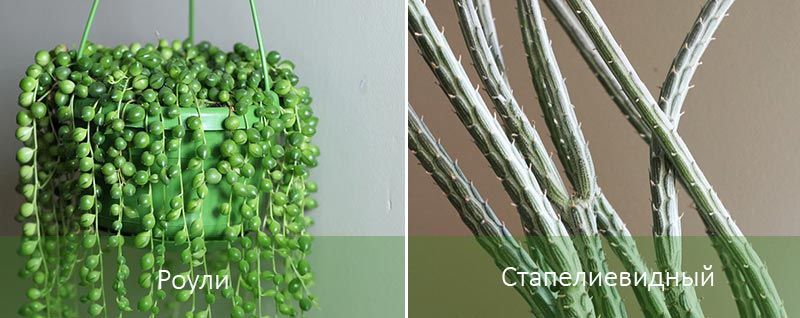
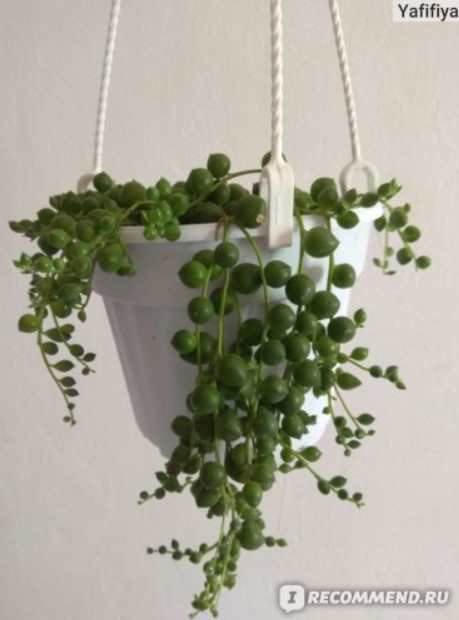
Rowley's String of Pearls (Senecio rowleyanus)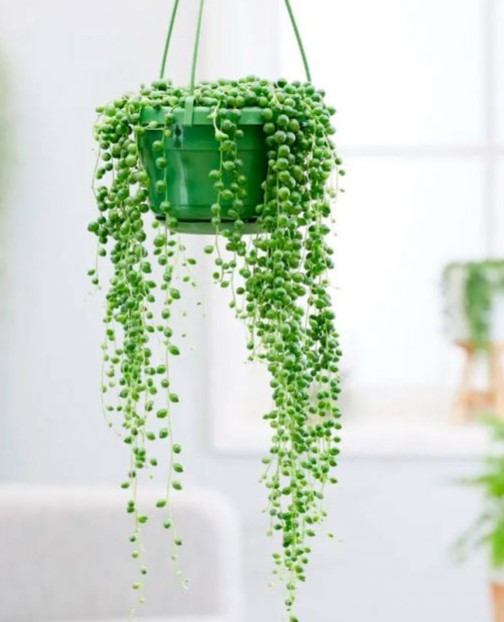 |
A most unique succulent, it prefers shaded areas and looks beautiful in hanging pots. | They resemble peas with a diameter of 6 mm, densely located on hanging, thin, flexible shoots. | Small, white, with a cinnamon scent. |
Herreina (nail-leaved) (Senecio herrianus)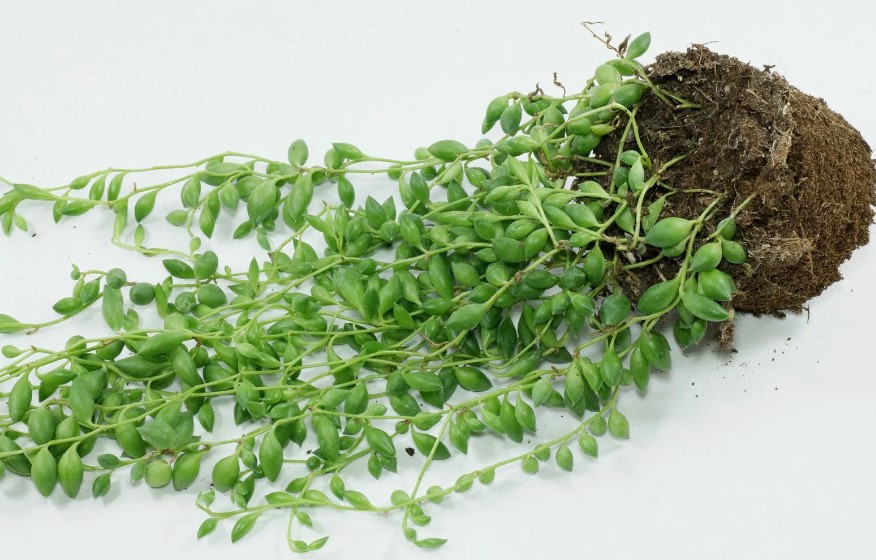 |
Similar to Rowley. Distinguished by its yellow, fleshy stems up to 60 cm long. They are sparsely branched, creeping, and rounded. | Large, elongated, bead-shaped, gray-green, up to 2 cm long, thick, with a spur at the top, covered with stripes. The stripes are spaced at equal distances from each other. | White, formed from small inflorescences-baskets, with a pleasant aroma, appear rarely. |
Creeping (Senecio serpens)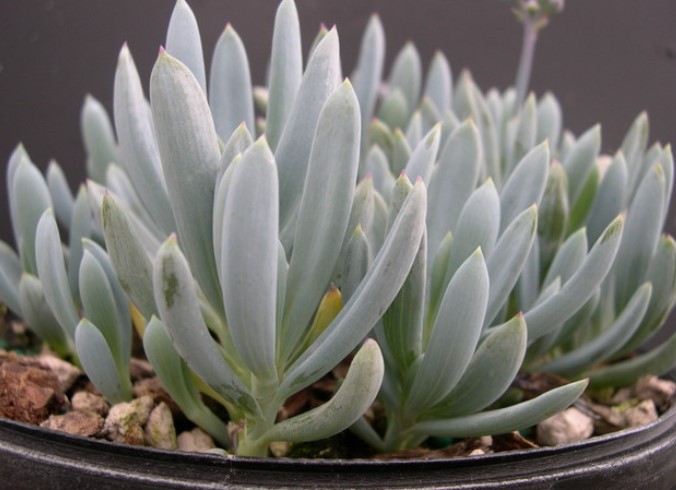 |
Low-growing succulent bushes with thick stems that root easily. Drought-resistant and undemanding. | Linear-lanceolate, thick, cylindrical, and pointed. Their shades range from bluish-gray to blue-green. | Small, white. |
Stapeliiformis (Senecio stapeliiformis)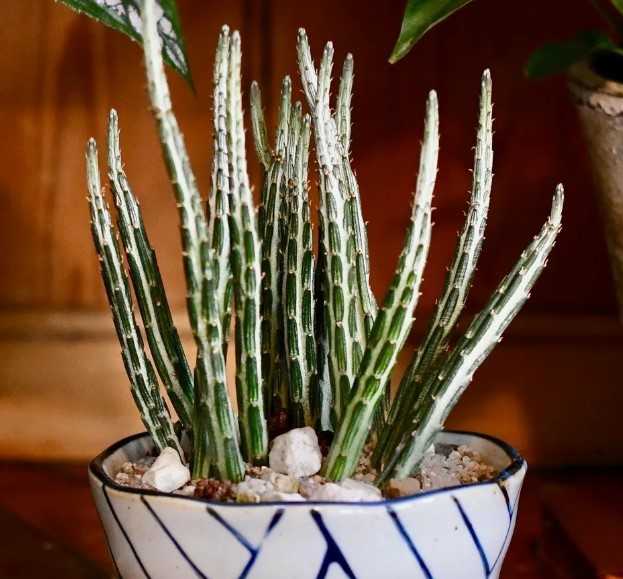 |
A herbaceous succulent with a trunk two centimeters thick and 20 cm high, branched at the base and covered with small thorns on top. | Scaly green-gray, almost invisible | Red, orange. |
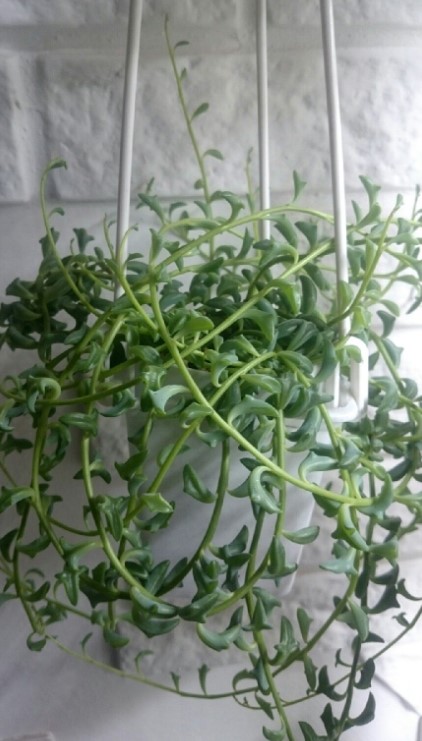
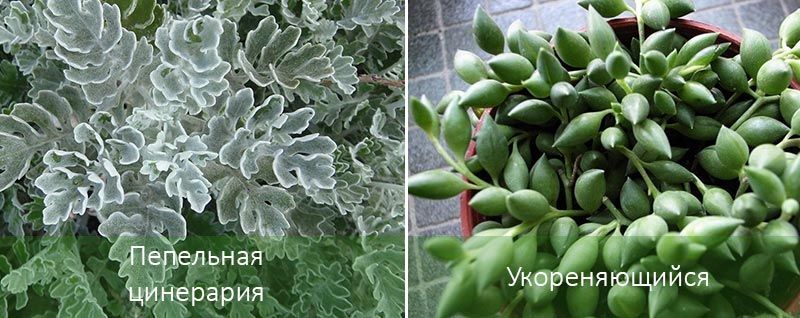
Rooting (Senecio radicans)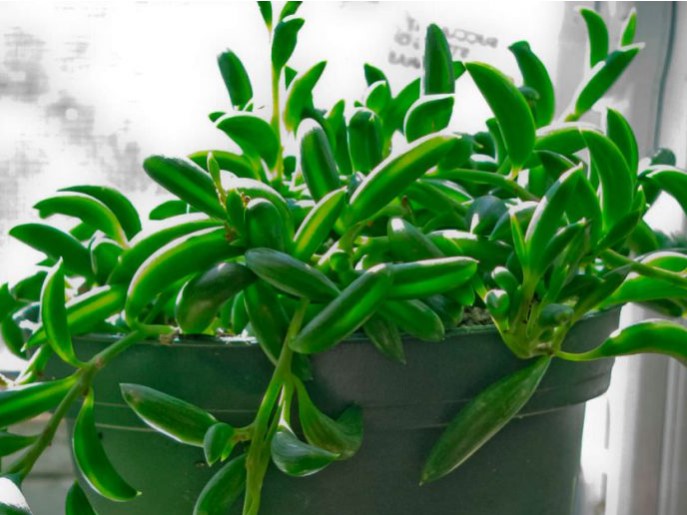 |
Rooting plant – a perennial with creeping, branched stems up to 50 cm long, it rooted quickly. It can be grown in pots, hanging baskets, and in the garden. It is classified as a succulent. | Glossy, arranged singly, alternating with each other, up to 3 cm long and 1 cm thick, pointed. They are grayish-green in color, with dark lines running along their length. | The flower stalk is long, and white petals bloom on it in late winter or early spring. |
Haworth's (Senecio Haworthii)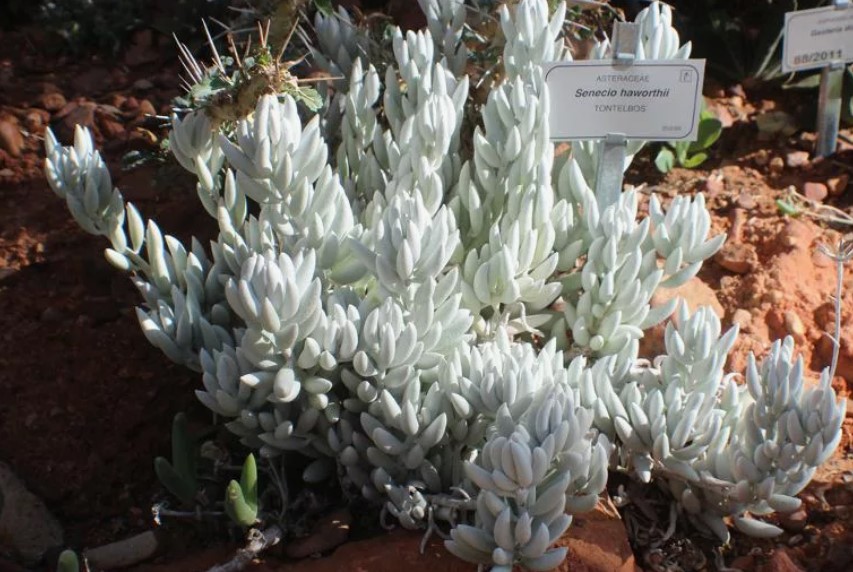 |
The stems are straight, single, slightly branched, and smooth. It does not like excess moisture. | Grayish-gray, covered with fluff, cylindrical, tapering at the end. They grow along the stem in a spiral. | Spherical, orange in color. |
Articulated (Senecio articulatus)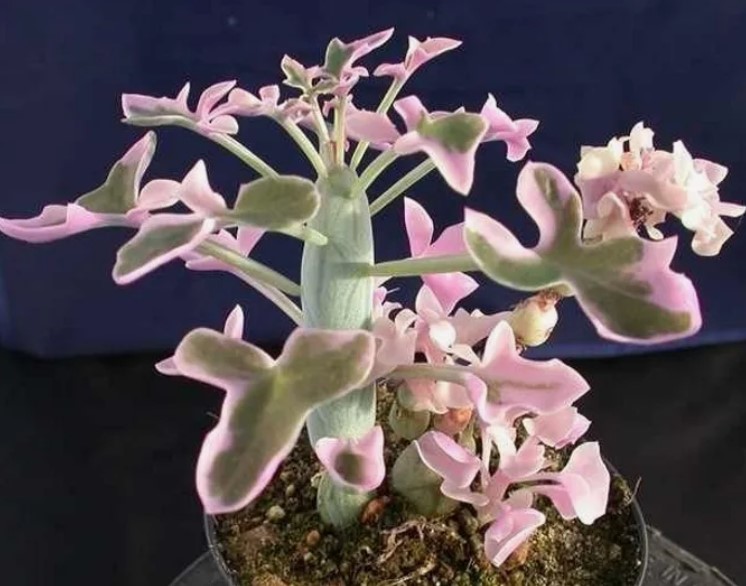 |
A succulent perennial shrub with numerous, fragile, grey-green stems. | Pale grey serrated. | White and yellow. |
| Common (golden) (Senecio Vulgaris) 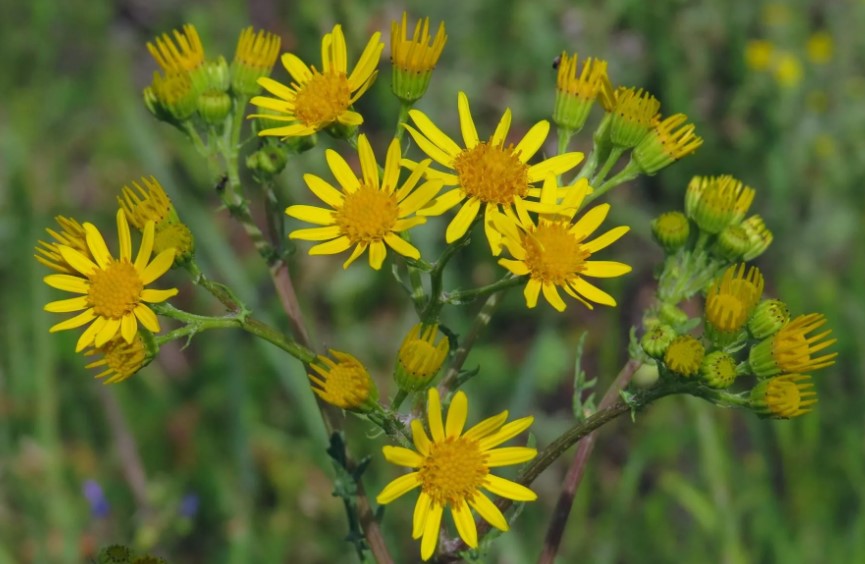 |
Annual. Erect, branched. Grows like a weed. | Oblong, spatulate, long, serrated. | Tubular, yellow. |
Flat-leaved (Senecio platyphylloides)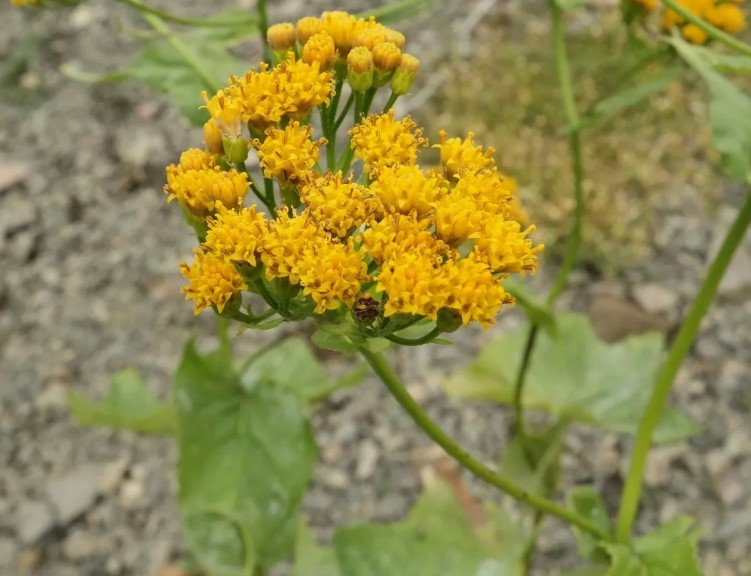 |
A medicinal herb with a straight, bare stem. | Large, heart-shaped at the base, dark green, with pubescence. | In the form of a tube with a yellow corolla. |
Ash cineraria (Senecio cineraria)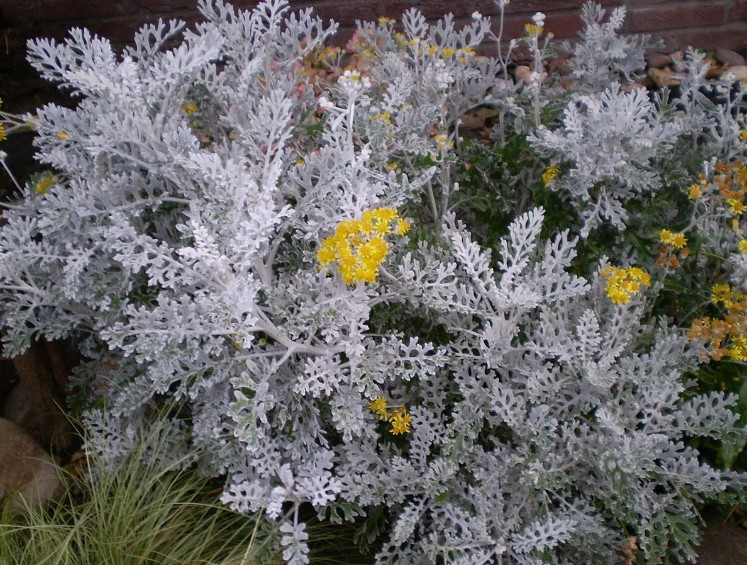 |
A shrub or subshrub up to 60 cm tall. Evergreen in warm climates. Grown as an annual in temperate and cool climates. Used as a pot plant. | Dissected, covered with an ash-colored coating, underneath they are emerald | Small petals of golden color. |
Bloody (Senecio Cruentus)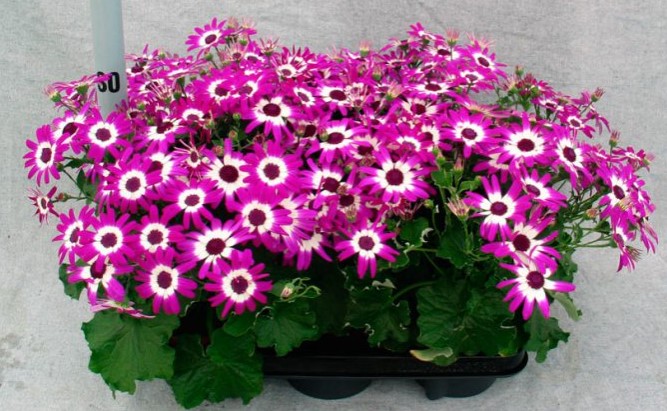 |
A potted plant with beautiful blooms, reminiscent of a violet, but larger. | Serrated, large, soft. Purple on the back, | Different shades: purple, blue, red. |
Caring for ragwort at home
It is not difficult to care for the flower at home.
| Parameters | Spring/Summer | Autumn/Winter |
| Location | Diffused light, western and eastern windowsills. Shade in bright sun. | Additional daylight hours with backlighting. |
| Temperature | During the growing season +20…26 °C. | +12…16 °С. |
| Humidity | It doesn't matter, it doesn't need spraying. | |
| Watering | Twice a week with soft rain water, avoiding stagnation. | Once every 3 weeks. |
| Top dressing | Twice a month with a composition for cacti. | Not needed. |
Planting and replanting, soil
Young plants require repotting every spring, while mature plants require repotting every 3-4 years by transshipment. Choose a pot slightly larger than the previous one.
Soil is purchased specifically for succulents or made from equal parts leaf mold, compost, peat, coarse sand, and perlite. Drainage is placed at the bottom. Pruning is avoided, only pinching is done.
Reproduction
The plant is propagated by cuttings, layering, and less often by seeds. This procedure is carried out in spring or early summer:
- Cuttings: Cut the stem to 7 cm, removing the lower leaves. Air-dry, prepare a small container with sand, plant the cuttings deep, and place in a warm, sunny spot. Water every two days. After rooting, replant after two weeks.
- Layering: Healthy, long stems are dug into prepared soil without pruning. After a week, when roots appear, they are pruned and replanted.
- Seeds are a rare method of propagation. Sprouted seeds are sown in a small container. A mixture of turf, leaf mold, and sand is prepared and moistened. Cover with plastic wrap. Plants are pricked out when the seedlings appear in the cotyledon stage.
Problems of growing
Senecio is rarely susceptible to diseases and pests. Beginner gardeners make mistakes that can lead to difficulties.
| Manifestation on leaves | Cause | Measure of elimination |
| They dry up, fall off, and turn brown. | Hot and dry air, lack of moisture. | Water more generously, humidify the room. |
| Brown, dry spots on top. | Direct sunburn. | Move the flower pot or shade it from the bright sun. |
| Yellow, brown spots. | Stagnant water, excess moisture, cold water. | Water with water at room temperature only after the soil has completely dried out. |
| Small, elongated, lose color. | Lack of light. | Move to a lighted place or illuminate artificially. |
| They turn yellow and the buds do not develop. | Aphid. | Treat with insecticides. |
| Brown, with a web visible on the underside. | Spider mite. | For prevention, maintain high humidity and treat with Actellic. |
| Cotton wool lumps are visible. | Mealybug. | Spray with soapy water or Karbofos. |
| White coating. | Powdery mildew. | Remove affected leaves and treat with Fundazol. |
| Spots with a light gray fluffy coating. | Gray rot. | Trim off any diseased parts. Treat with copper sulfate and avoid overwatering, insufficient light, or low temperatures. |
Top.tomathouse.com recommends: the medicinal properties and contraindications of ragwort
Most varieties of ragwort have medicinal properties. Thanks to the beneficial substances it contains, the plant acts as an anti-inflammatory, analgesic, and anticonvulsant. Some species also accelerate wound healing, act as an anthelmintic, suppress asthma attacks, and help with hypertension, cholecystitis, colitis, and stomach ulcers.
People with glaucoma, circulatory problems, liver disease, or kidney disease should avoid consuming ragwort. Pregnant and breastfeeding women are advised against ragwort, as it is poisonous.
The plant is harvested in the summer, using the roots, stems, leaves, and flowers. All parts are thoroughly dried. Store for two years in boxes or bags.
Reviews of Senecio
Green Beads in a Pot
Today I'll tell you about such a beautiful, unusual and interesting plant.
It's called Senecio Rowleyi (named after the botanist). Another name is Senecio (Latin) Rowleyi. The plant is rare in stores; I bought it at a garden center about six months ago.
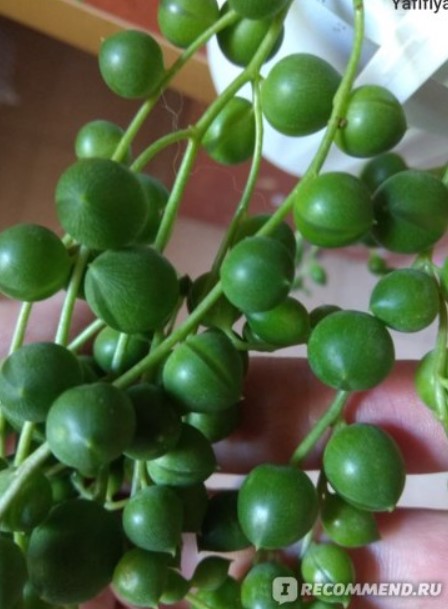
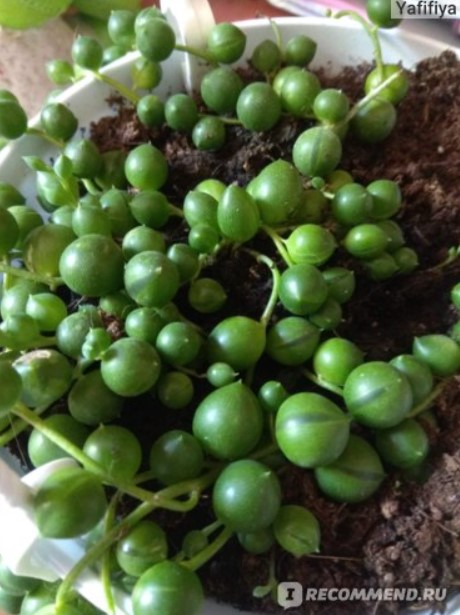
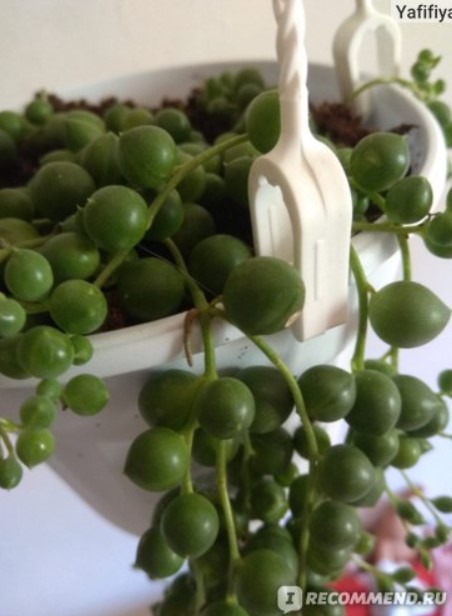
I didn't even know its name back then, but I was impressed by its modified, teardrop-shaped leaves. It really does look unusual. When I searched for information about it online, I found that there's also a variety with oblong "leaves" and a variegated one. Unfortunately, I've never seen either of them in person.
So, Senecio Rowleyana is poisonous. I don't recommend hanging it within reach of pets and children. Children might find its round, fleshy leaves appealing and tasty. Best not to risk it.
In the wild, Senecio rowleyana grows in the highlands of Africa, so to ensure it thrives indoors, it needs to be recreated in conditions similar to its natural environment. The mountain soil is poor and rocky, so we plant it in a cactus and succulent mix, adding plenty of small pebbles and sand. The African mountains are arid, so we avoid overwatering and water very sparingly, allowing the soil to dry out between waterings. Its leaves, incidentally, are adapted to dry conditions, storing moisture within.
The strange light stripe on each circle is needed to allow sunlight to penetrate and photosynthesis take place. The ragwort needs a very bright location, but not in direct sunlight, otherwise it will burn.
This thing also blooms, but it requires a temperature difference between day and night. It was blooming when I bought it, but I don't have a photo. The flowers are small, beige-pink, and smell like black pepper. They last a long time, but aren't particularly decorative.
I want the ragwort to grow more densely, so I trim and root the shoots in this pot. I simply cut a 6-7 cm long piece of stem with scissors, dry it for a couple of hours, and then stick it in the soil. Just be sure to remove the lower leaves, otherwise it will rot. It roots quickly. I've also seen that you can root it in water. And sometimes there's a rootlet on the shoot itself, like in the center of this photo.
Then you can simply press this branch (with a paper clip or invisible pin) to the ground and it will give more roots and start growing.
I recommend this plant for beginners because it's easy to water. Forget to water it—no big deal; the ragwort won't die, as its leaves hold enough moisture. The main thing is to find a place to buy it, and then it's a piece of cake.
Advantages
Beautiful
Bead-shaped leaves
Unusual
Unpretentious
Flaws
Poisonous
Yafifiya
recommends
Senecio, difficult or easy?
My friendship with ragworts began last winter, in February to be exact. A tiny, 10cm-tall rooted variegated Rowley's sage arrived from Chelyabinsk, hitchhiking with a shared delivery service. A good thing, shared delivery! The plants travel in a warm car, the cost is split between everyone, and it's mere pennies. I opened my coveted jar, wrapped in tissue paper, and saw five bead-like leaves in two rows... The seller wasn't much of a succulent grower, and the plant was nestled in peat and an oversized yogurt jar. I dug it out, washed it somehow, losing half the beads, and shed a tear at how pathetic it looked, and then let it be my friend... ragworts are truly a very rewarding plant, and I eventually figured out how to grow them, and very quickly! After all, you don't want a tiny branch, but a beautiful, bead-studded bush. And this goal is quite achievable in a year, starting with just one tiny cutting. And I'll tell you, it's much more effective to take a cutting than a rooted plant. The exception is picking it up yourself, and only if you rooted it correctly and in the right soil.
At this point I will finish the lyrics and begin to describe the process itself.
Cutting: A good cutting should be at least 7-10 cm long and have, in addition to the leaves themselves, a rudimentary aerial root—a kind of nub on the stem. Even a single one will be enough for very rapid rooting. If there's no such nub, rooting will take much longer.
Next, you need to not be stingy, but cut off a few leaves, exposing the branch, so that your cutting can be stuck into the ground and it does not flounder, on this exposed part there should be an aerial root (if there is none, then without it, it will take longer, of course, but it will grow).
Now, the most important thing: place the cutting in a dry place—it doesn't matter where, as long as it's dry. It should stay there until it takes on a slightly lilac hue. That's right, lilac! This will take about 7-10 days. If the cutting was sent by mail, it's already ready for rooting. Soak it in poison, cut off the leaves, and let it dry for a day or two (so the leaf cuts are dry).
Next comes the soil. It's very loose, with sand, perlite, and zeolite (read the article about soil). I use pieces of coal instead of drainage.
First, you need a very small plastic cup, ideally 50 ml, or in extreme cases, if the cutting is very small, 30 ml. It must have large drainage holes. Place charcoal or expanded clay on the bottom, then soil. Insert the leaf-free cutting with its aerial root vertically into it. Water thoroughly, really water! And be sure to place it under lamps; it should be warm (not scorching) and have plenty of light! Senecio loves it, and if you use plenty of it, the beads and leaves will grow densely, the internodes will be short, and it will grow very quickly!
Water thoroughly after it dries out. The cutting will look dead and turn purple for another 1-2 weeks, but that's okay; it roots very quickly. Yesterday, the soil was empty, and today, the entire cup is covered in roots! Everywhere I read, they recommend placing the cutting on soil and lightly covering it, but for me, that method worked terribly. The way I described it, rooting occurs 100%, even with overworked cuttings whose leaves have turned from balls to thin plates. I had this experience: my package got lost once, and a ragwort cutting was, as they say, "thrown out" for two months, completely flattened, but now it's a real beauty, with all its leaves puffed up! It's already grown tall and ready for repotting.
It’s just that when they lie on the ground they don’t always have enough moisture, and sometimes the roots simply have nothing to cling to.
Another observation: Rowleys, both green and variegated, root poorly or almost not at all in midsummer. I'm not sure what's wrong, perhaps it's the heat that's causing the stagnation. From late August to early June, however, there are no problems, but rooting occurs especially well in winter and fall.
Once the cutting has rooted, it will actively grow and begin to develop a stem with leaves. We wait until it has grown sufficiently and a hint of an aerial root appears on the stem, then cut it 1-2 cm below the root and repeat the drying and rooting process in the same pot. Side branches will begin to grow on the cut stem, ranging from 2 to 5-7. I try to plant three cuttings in a single pot, one after the other. Only after all three are growing well and branching do I transplant them into a pot 8-10 cm in diameter with the same soil. Senecio loves to drink, so I don't wait for the plant to lose its turgor (I sometimes forget, of course). I try to water it when the soil dries out. Senecio also loves feeding, mineral fertilizers in a weak concentration (I use Fertika 1 level teaspoon per 5 liters).
And the more light, the faster and better it grows.
I currently have seven different ragworts (the trailing ones, the beads, the dolphins, the bananas, the droplets—they all have hard-to-pronounce Latin names, of course) plus an ottona—it's not a ragwort, but the principle is the same. And they're all growing wonderfully, at varying stages of maturity. I plan to grow a couple more, if I can get my hands on them.
If you received a plant with rootstock in the mail, don't be fooled. The adaptation process requires the same steps as cuttings. And the adaptation process will take exactly the same amount of time! So, don't be afraid to take cuttings of ragworts.
I hope this post was at least somewhat helpful, and that my observations will help you grow your own beaded ragworts!
Be sure to share your observations in the comments. Rowing together gives the boat a boost!