Rhipsalidopsis is a forest cactus native to Brazil. They share a common origin: tropical climates, a preference for humid climates, and special care. They thrive in the shade of trees.
Content
Differences between Rhipsalidopsis and other cacti
Besides Rhipsalidopsis, the following are popular:
- Epiphyllum – with beautiful, unusual leaves, fragrant flowers that bloom at night.
- Rhipsalis has long, twisted shoots covered with fine hairs, which are covered with flowers during flowering.
- Schlumbergera - Decembrist or "Christmas cactus" blooms in early winter.
These plants are epiphytes; in their natural environment, they attach themselves to tall trees and grow into moss. Thin, aerial rings form at the joints of their stems, absorbing moisture from the air.
Schlumbergera and Rhipsalidopsis are two very similar flowers, and they are the most common. A close comparison makes it easy to tell them apart. The "Christmas Cactus" has jagged, pointed stems, tapering corollas, and no fragrance. The "Easter Cactus" has smooth, leaf-like, drooping stems, symmetrical petals, no thick skin or spines, and a pleasant fragrance. They also differ in their bloom times.
Description of indoor ripsalidopsis
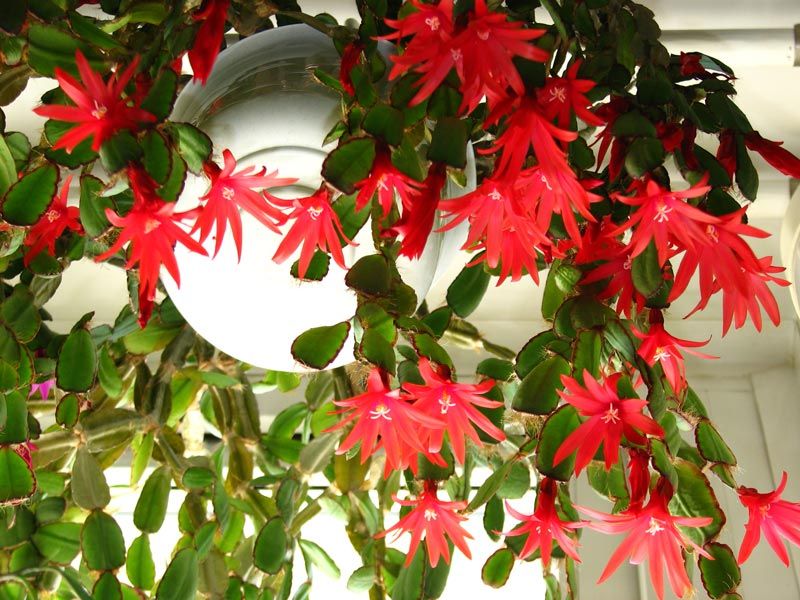
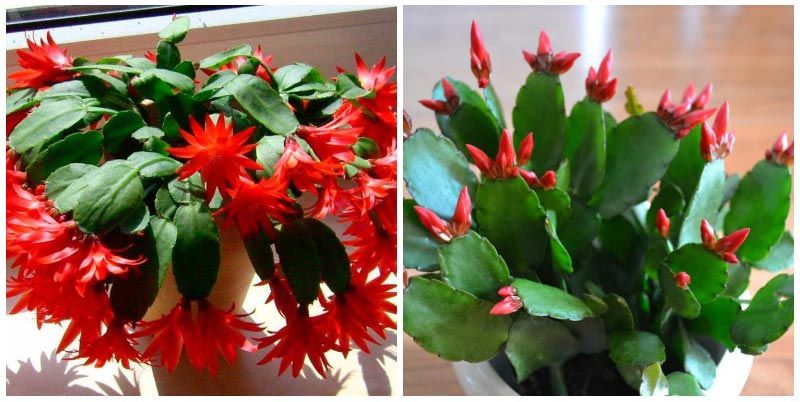
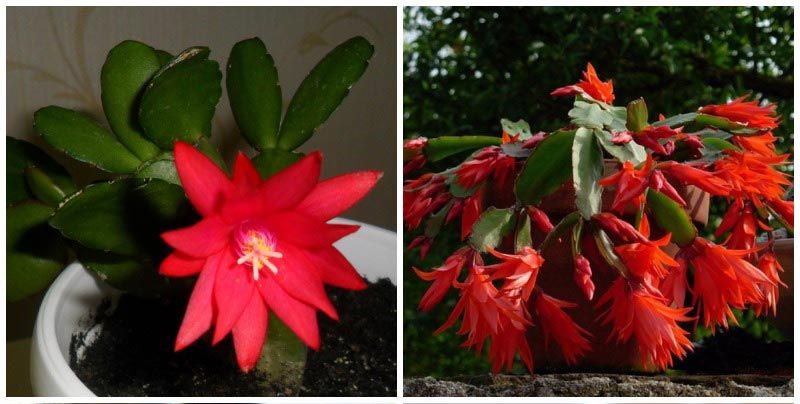
This indoor plant grows up to 30 cm, its branched stems formed by thickened, ribbed segments of a soft green color, with reddish hues appearing at the edges in sunlight. Flowers bloom at the tips of the segments, in shades of burgundy, red, pink, and white.
The buds open gradually, and you can enjoy the sight of the rhipsalidopsis for several days, delighting you with its beauty, just like in the photos of the best glossy magazines. After flowering, berries form. This houseplant is unpretentious, but requires special attention.
Main types of Rhipsalidopsis, signs, superstitions
There are several species of Rhipsalidopsis. The most common are Gartneri and Pink. The following have been developed through extensive selection:
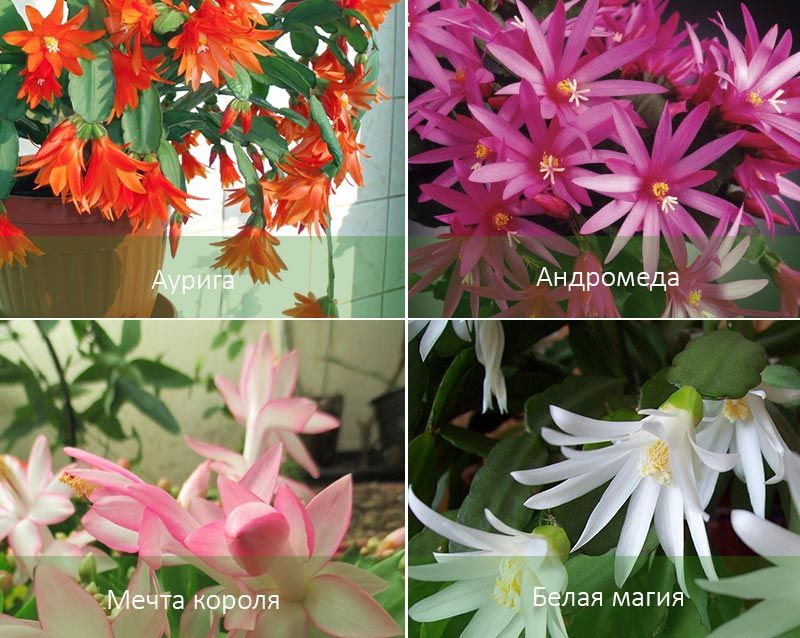
- Andromeda – an adult plant has a long flowering period, the shades are fiery, yellow in the middle, crimson at the edges, sometimes fuchsia.
- Auriga - the leaf shape is similar to Schlumbergera, it blooms with a beautiful orange color, with a reddish tint at the tips.
- King's Dream – looks great in a hanging pot, a variety bred from a wild cactus, with drooping stems, orange-pink flowers, unusual petal shapes and long stamens.
- White Magic – distinguished by its snow-white flowers, a low bush with dense, thick segments.
In the spring, flower shops sell Rhipsalidopsis under a new name: Hatiora. All species of the plant thrive in moisture and sun, but require special care.
Ripsalidopsis Gartner
Common in Brazilian forests, its stems are smooth and multi-segmented. With proper care, it reaches up to 25 cm in height, with twining, glossy, dark green stems edged in purple. The undulating segments are longer than those of other species, reaching 8 cm. It begins blooming in April. The large flowers last until May, where they are replaced by berries. The following varieties are distinguished by color: Elius, Sirius, and Nina.
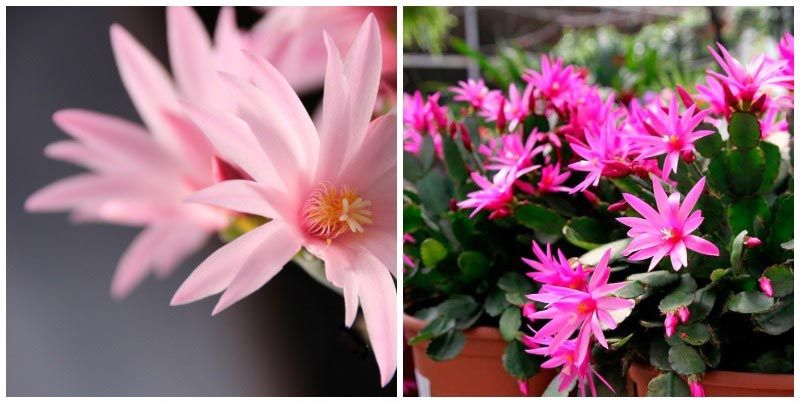
Rhipsalidopsis Pink
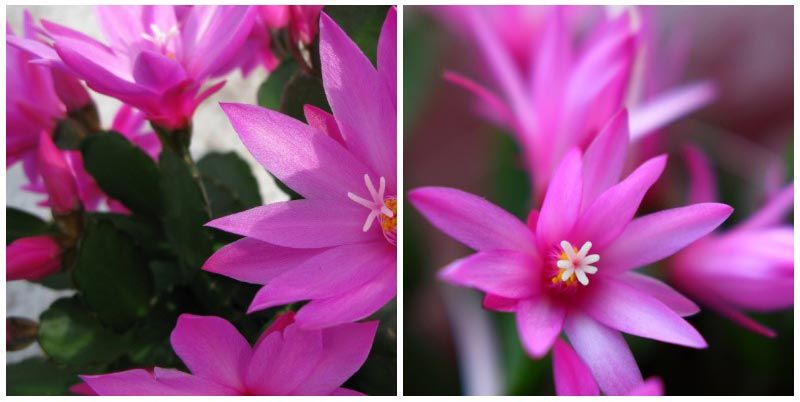
This dwarf shrub with green stems appears as small, flat, ribbed segments with serrated edges. Its color remains constant regardless of lighting. The flowers are 5 cm in diameter, pink in hue, bell-shaped, with pointed petals.
There used to be a superstition that Rhipsalidopsis brings bad luck, supposedly causing men to become idle, abuse alcohol, cheat on their wives, and leave home. The cactus was nicknamed "drunkard's dream" and "dancing skeleton," due to the structure of the stem segments of some species, which resemble small bottles.
The "Easter flower" creates positive energy in the home, protects the owner from negativity and negative emotions, and, with impeccable care, creates a cycle of energy.
According to superstition, if placed in the hallway, it keeps evil people out and wards off evil spells. The plant should only be given when it's in bloom, as this will bring prosperity to the home.
Home care
It's important to create the right temperature, humidity, and lighting for the plant. From the moment the buds appear until the flowers finally fall, the pot containing the plant should not be touched.
A special feature of indoor forest cacti is their growth and dormancy periods, which require different air temperatures and watering frequencies.
Illumination
The ideal placement is on east-facing windowsills. On west- and south-facing windowsills, the plant should be shaded to prevent sunburn.
The plant prefers bright light, but direct sunlight can damage it. When dormancy begins, move the plant to a north-facing location.
Temperature
Rhipsalidopsis prefers temperatures of +25°C; it doesn't like temperatures higher than that when it's dormant—the optimal temperature is +15…+17°C. In the summer, during extreme heat, it's best to move the cactus to a cooler room; it can survive without light for a while, but may die in extreme heat.
Humidity
During the growing season, be sure to spray the plant, avoiding the flowers. This is not necessary from fall to spring.
Care secret: place a fountain and a humidifier nearby.
Fill the pot tray with expanded clay and pebbles and water regularly. This ensures constant humidity, just like the indoor rhipsalidopsis prefers.
Watering
The plant requires abundant, consistent watering during growth. The water should be soft, rainwater or settled, free of magnesium and calcium salts. When the plant is dormant, the soil should dry out completely at low temperatures.
Top dressing
During the period of active growth, the plant requires fertilizing once every 2 weeks with special mixtures – nitrogen and humus-containing fertilizers, which can be purchased at a flower shop.
When the plant is dormant, fertilizer is not required. Organic mixtures are not recommended.
soil mixture
Leaf mold, peat, and river sand are ideal soil for Rhipsalidopsis. Crushed brick and expanded clay are used for drainage. You can buy a ready-made mix for succulents and cacti, or prepare your own: 5 parts clay-turf soil, 1 part each of charcoal and crushed brick.
To prevent disease, add crushed chalk and superphosphate, one teaspoon per three liters of the mixture. The soil should be disinfected: in the freezer for 2 hours or in the oven for 15 minutes.
Features of transplantation and pruning
Young cacti should be repotted every year, and adults every two years.
After all the buds have fallen, select a pot of a suitable size. When repotting, trim the narrow neck between segments to achieve symmetry, disinfecting the tools. Trim off any rotted or dead roots, and treat the soil and plant with fungicides. Add a 2-3 cm layer of drainage and soil to the bottom. Water the plant, remove it, clean it, place it in a new pot, add more soil, and gently compact it. Then water it and place it in a cool, dark place. Return it to its original location after a week. Replace the planting material immediately after purchase, and treat the pot with disinfectants.
Methods of reproduction
There are several ways to propagate the Easter flower. Separate 2-3 segments with a twisting motion, dry them for three days, and place them in moist soil without burying them. Once roots appear, plant them in the ground.
Pollen from one plant is transferred to another using a brush. After crossing, the fertilized flower produces a ripening berry. When the berry wrinkles, the seeds are plucked and collected. They are placed in the soil, and after sprouts appear, they are replanted in separate pots.
Optimal growing conditions
To ensure that ripsalidopsis blooms with beautiful, fragrant flowers, it requires care and proper growing practices throughout its lifespan.
| Periods | Months of the year | Necessary conditions |
| Peace | End of September – beginning of October. |
|
| Preparing for flowering | Mid-February – end of March. |
|
| Bloom | At the end of March, April and May. |
|
| Vegetation | Summer months, beginning of September. |
|
To maintain a symmetrical crown, rotate the plant's pot periodically in the fall. Keep the plant outdoors at a temperature no lower than 18°C (64°F) and cover it with plastic during rainy periods.
Diseases and pests
The flower is susceptible to fungal diseases, and Rhipsalidopsis is attacked by pests. Timely treatment and quarantine will prevent damage to this forest cactus.
| Disease/Pest | Description | Control measures |
| Late blight | The segments stop growing, become transparent, with brown spots. | Chemical treatments are used: Quadris, Previkur, Albit, and Oksik. In severe cases, the plant is discarded. |
| Fusarium | Water-soaked spots on the plant, loss of tone, black mesh, mold on the stem. | Water with Fitosporin, Fitolavin, and Vitaros. Destroy damaged parts. |
| Gray mold | Grayish-beige spots, gradually expanding. | Treat with Oxycom, Cuprozan, according to the instructions. |
| Root rot | The root bases are black, slippery, and spread throughout the stem. | It cannot be cured; the infected parts are removed, the healthy parts are watered with Trichodermin, Fitosporin and replanted. |
| Spider mite | Small dots on the stem, cobwebs below. | Treat with alcohol. |
| Scale insects | Specks on the stem, brown seals. | Insecticides and alcohol are used for treatment. |
| mealybug | Waxy coating on the root and stem. | Alcohol, calendula tincture, and chemical preparations are suitable for treatment. |
Ventilation, suitable soil, moderate watering, adding crushed chalk and ash to planting material, loosening the soil, disinfection, and quarantining new plants are essential preventative measures. Adding Zaslon and Barrier to the soil prevents root rot.
Possible mistakes in caring for Rhipsalidopsis
Owners of forest cacti sometimes make mistakes in watering, fertilizing, lighting, and the right temperature.
| Flower condition | Reasons |
| Black bases of stems, areas between segments. | Heavy substrate, cold room, hard, cold water, rot. |
| Fall of buds before blooming. | Drafts or moving the pot. |
| Rapid decline. | Low humidity, heat, application of organic fertilizers. |
| Brown spots on the plant. | Sunburn, exposed to direct sunlight for a long time. |
| Poor growth, few flowers. | A cramped flower pot, not enough fertilizer, and failure to maintain the temperature regime during the dormant period. |
| Thin stems, yellow edges. | Lack of light, poor habitat. |
Strict adherence to all rules for planting, fertilizing, and maintaining ripsalidopsis will promote long flowering.