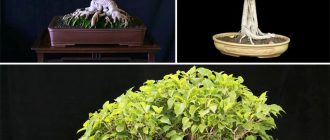
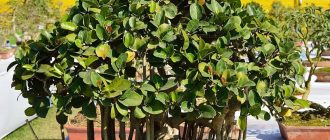
Portulacaria is a perennial evergreen plant belonging to the Purslane family. It is believed to have originated in South Africa, where this succulent grows naturally as a small tree or shrub.
Content
Description
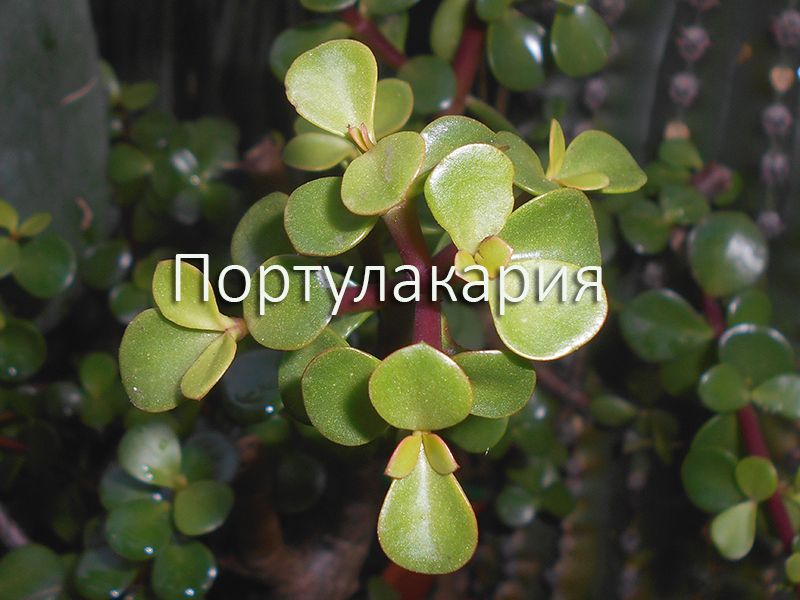
The roots are powerful, nourishing the plant even under unfavorable conditions. The shoots are fairly thick, light brown or gray in color, but darken with age. The leaves are round, dense, and green, 2-3 cm long and 1 to 2 cm wide.
Portulacaria accumulates moisture well in its leaves. It's easy to control and shape.
Types
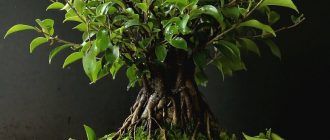
Succulents are not typically used for bonsai. An exception is the African portulacaria (Portulacaria afra), the only species suitable for indoor cultivation. In its native Africa, it reaches a height of up to 3 meters. It has a wrinkled, brown trunk and lush green leaves. Flowering is rarely seen in the wild.
For variety, the following varieties were bred from this species:
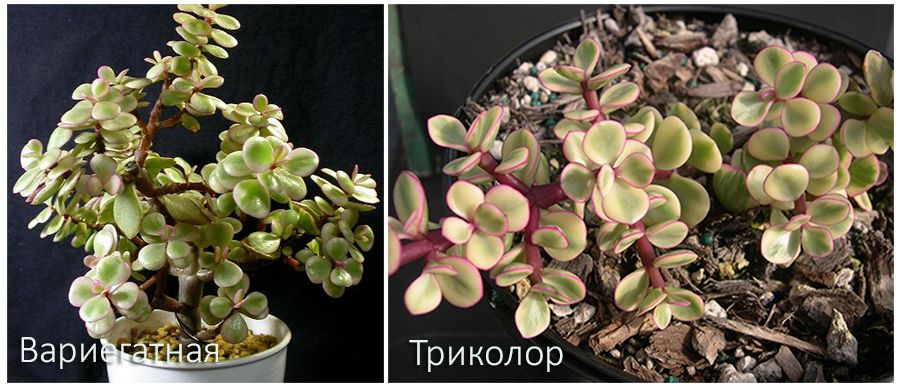
- The African Portulacaria variegata (Variegated) is shorter than the previous species, with rich green leaves with snow-white stripes along the edges. In low light, the variegation disappears. If the plant receives sufficient light, the African Portulacaria variegata is small, with a dark trunk and small leaves.
- Portulacaria africana, variegated cultivar (Tricolor), is a small plant with small leaves and variegation in the center. Under normal lighting conditions, it has a red stem and pink-tinged leaves. In low light, the variegation fades, leaving a pink stripe along the edge.
Home care guidelines: location, lighting, temperature, humidity, and watering – seasonal chart
This flower is quite undemanding and can retain water for a long time. It requires a cool winter environment and does not tolerate overwatering.
Home care instructions - seasonal chart
| Parameters | Requirements in summer and winter seasons |
| Location | The ideal location is a southeast- or southwest-facing window. In summer, it's best to move it outside. |
| Lighting | It loves light and sun. In winter, it should be moved to a sunny location to ensure adequate light. Like many succulents, it does not tolerate artificial lighting. As daylight hours lengthen, gradually adjust it to receive more light and sunlight. |
| Temperature conditions | Portulacaria prefers to overwinter in a cool place, but will also tolerate a warmer room. The optimal winter temperature is between 10°C and 16°C, no lower than 8°C and no higher than 22°C. During the growing season, the ideal temperature is between 22°C and 27°C. During hot weather, it's best to place the succulent outdoors or in a well-ventilated area. Ventilate the room where it grows even in winter, but protect it from drafts. |
| Humidity and watering | During the warmer months, the plant should be watered as soon as the top layer of soil dries. From November to February, watering should be done once a month, and from December to January, stop altogether. Portulacaria can survive for long periods without watering. Avoid allowing water to remain in the tray. Signs that the plant needs moisture are given by the leaves: they wrinkle, then straighten up again after watering. The plant does not suffer from the dryness of city apartments and does not require misting. |
Soil, replanting
Portulacaria doesn't need to be repotted often. A young tree should be repotted approximately once every two years, while a mature tree should be repotted once every four years. Repotting is only done when the roots have completely taken over the root ball or when it's clear they're lacking soil.
Stable containers (pots) that can support its weight are suitable. To ensure the succulent feels comfortable, the container should be lined with a wide drainage layer.
A soil mix for succulents or cacti is suitable for Portulacaria. A bonsai mix with sand can be used. The soil pH should range from 4.5 to 6.0.
To prevent the plant from growing, when replanting it, one third of the entire root mass should be cut off.
Top dressing
During the growing season, the plant requires good nutrition, at least once every ten days. Use a fertilizer that's not too high in nitrogen, or one formulated for cacti. If the room is cool in winter, don't fertilize; if it's warm, fertilize once every 3-4 weeks.
Pruning, shaping
This plant can be shaped into any desired form. It tolerates heavy pruning and easily recovers.
You can begin shaping your portulaca at any time. It's even more important to control the portulaca's growth by pruning or pinching young branches.
Any pruning should be done in the spring, and pinching of the tops should be done during the growing season. This is necessary because guiding and shaping the portulacaria with wire is undesirable, as this can damage the plant.
Reproduction
Portulacuria is very easy to propagate. Because its shoots root easily, you can create your own propagation material and experiment with creating various bonsai shapes. Cuttings can be made from pruned branches. It's important to leave 2-3 leaves on each cut. The shoots are cut at the base of the leaf, dried for 24 hours before planting, and the bottom leaf is removed.
First, the cuttings are planted without a cap in individual pots, previously filled with the soil used for adult plants, mixed with sand.
For good rooting, it is necessary to provide light and constantly slightly moist soil.
Diseases, pests, their elimination
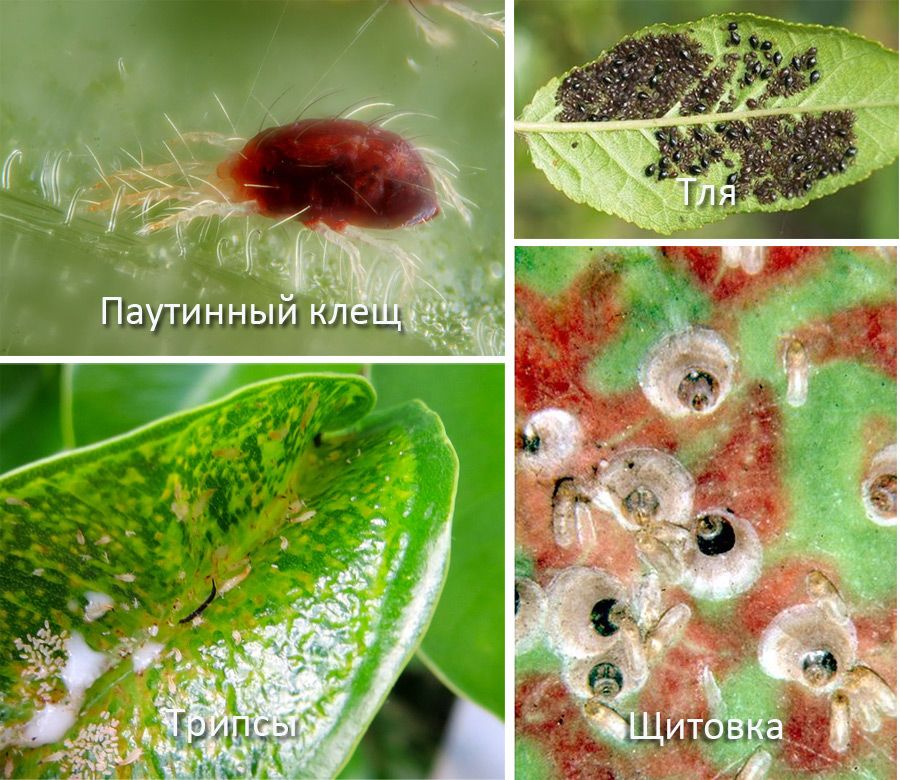
Portulacarias are resistant to diseases and pests. Excessive moisture and infrequent ventilation can cause powdery mildew to develop on the succulent. Insecticides are used to control pests such as mealybugs, aphids, and scale insects that appear on the plant.
Growing Problems - Table
| Problem | Cause |
| The flower begins to shed its leaves. | Insufficient or reduced lighting in winter. |
| Excessive elongation of branches. | Lack of light or excess humidity. |
| Yellow and withered leaves. | Overwatering. |
Portulacaria needs to be gradually transitioned to a new watering regimen as the seasons change. Maintain light soil moisture to prevent sudden changes in moisture and dryness. This succulent tolerates dry climates and doesn't require misting or humidification. Dirt can be removed from the foliage with a dry, soft brush.
Reviews of growing portulacaria
Bonsai that doesn't need shaping
Hello!
Today I want to tell you about the Portulacaria plant.
I was on holiday with my family this summer in Tunisia in Mahdia.
This hotel had very beautiful lawns and flowerpots.
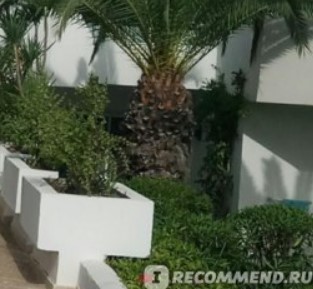
Some of the pots contained beautiful succulents. My husband really liked them. They were miniature trees with dark trunks and small, round green leaves. They branched beautifully—like bonsai.
Unfortunately, I didn't take any close-up photos of the portulacaria. But in this photo, it's growing in square white pots:
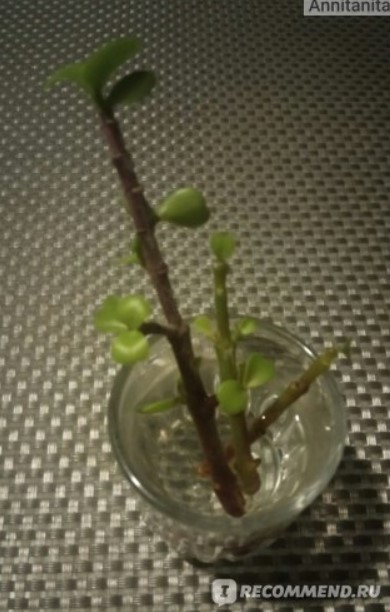
We wanted to have a similar plant at home in Russia. Naturally, we needed to take a cutting. But how could we do that? Especially since if everyone on vacation were to pinch off a piece, what would be left? So one day, we were walking along a road lined with these beautiful succulents and noticed that one plant's small stem was broken. Naturally, this stem would die and dry out. So we took it. We ended up with three small stems. At home, I put them in water.
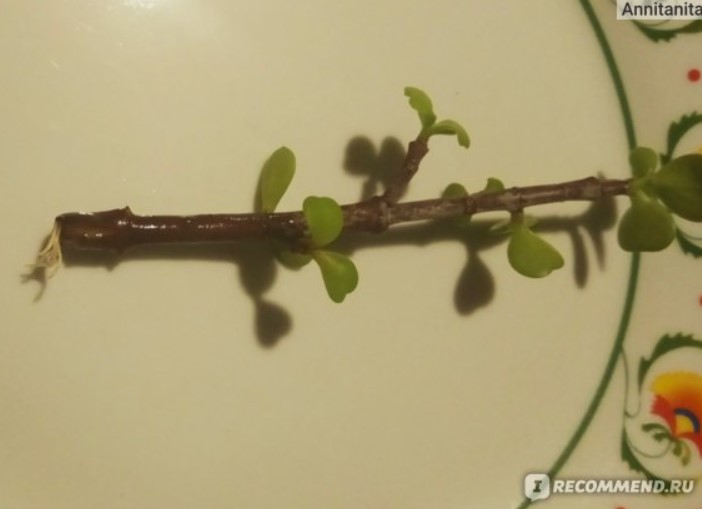
At first, the stems shed a few leaves. But after a month, I saw small white roots on the largest stem.
I was so happy! Before, I thought that if the leaves were falling off, the plant was dying. But succulents are generally very easy-to-care-for plants and should root easily.
Before writing this review, I looked at the name of this succulent.
It turned out to be a portulacaria.
Portulacaria is a perennial succulent plant that forms an attractive shrub or small tree. It's easy to prune and shape, which is why portulacaria is often shown in photographs as a bonsai. Gardeners love this undemanding plant for its undemanding nature and graceful form. It grows in the arid prairies of South Africa.
According to botanists, the genus Portulacaria contains only one species—Portulacaria africana, or afra. In nature, it grows as a tall shrub or succulent tree with a spreading crown. Its height can reach 3.5 meters. The leaves are teardrop-shaped and light green. The surface of the fleshy leaflets is uniform in color, covered with a shiny skin. The smooth, grayish stems become covered with wrinkled, dark brown bark with age.
In nature, there's only one Poltulacaria with green leaves, like mine. But gardeners have bred two more varieties with variegated leaves. They're also very beautiful succulents.
Portulacaria also blooms. This occurs between February and April, primarily in mature plants in the wild. However, in indoor settings, portulacaria rarely blooms.
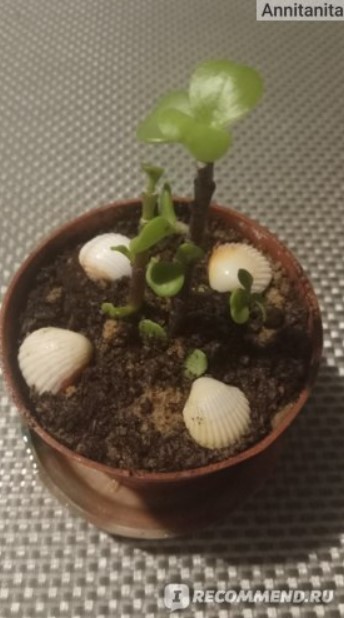
And so, a month later, when I saw small white roots on one of the cuttings, I planted the portulacaria in the ground.
This plant is just getting established. I'll definitely add more photos of the plant as it grows.
Transfer
Since the plant is from Africa, it most likely requires sandy-earthy soil.
I learned from the Internet that the soil for planting should contain the following components:
river sand;
garden soil;
leaf soil;
charcoal.
Show quote
I took some Fix Price all-purpose soil and mixed it with sand. I made a drainage hole in the bottom of the pot and planted the seedlings. Then I watered the soil. I poured out the water that ran into the tray.Care
Caring for succulents is very simple. These plants don't require frequent watering. Moisture accumulates in their fleshy leaves. A southern exposure is best, but other areas are also acceptable. The thick leaves will protect the plant from burning in the hot sun. Winter temperatures may be cooler, but at 10°C (50°F) or below, the purslane's leaves will begin to die. Succulents typically thrive on our Russian windowsills year-round. My aloe has been growing well for four years now.
Top dressing
Portulacaria, like many other plants, needs to be fertilized in the spring and summer. Succulents require low-nitrogen fertilizers. Add the fertilizer to the water before watering, otherwise the roots can burn.
Reproduction
1. Cuttings
It is recommended to take a cutting with a woody stem measuring 12-15 cm. Sprinkle the cut with crushed charcoal and allow it to air dry for 7-14 days. When the cut is covered with a thin film with whitish spots, the cutting can be planted in a moistened sand-peat mixture.
I placed the cuttings in water. As I mentioned above, roots formed on my cuttings within a month.
2. There is also a method of propagation by seeds.
Thank you for your attention!
Read about other plants in my home and garden here:
Advantages
Beautiful
Unpretentious
Flaws
No
Annitanita
recommends