Calamondin, or citrofortunella, is a hybrid houseplant of the Rutaceae family, which also includes lemons, oranges, and tangerines. It was created by crossing a tangerine and a kumquat. Its scientific name is citrofortunella, while its common name is the domestic mandarin or golden orange.
It was developed as an art form of bonsai for growing copies of real trees in an apartment.
Description and characteristics of calamondin
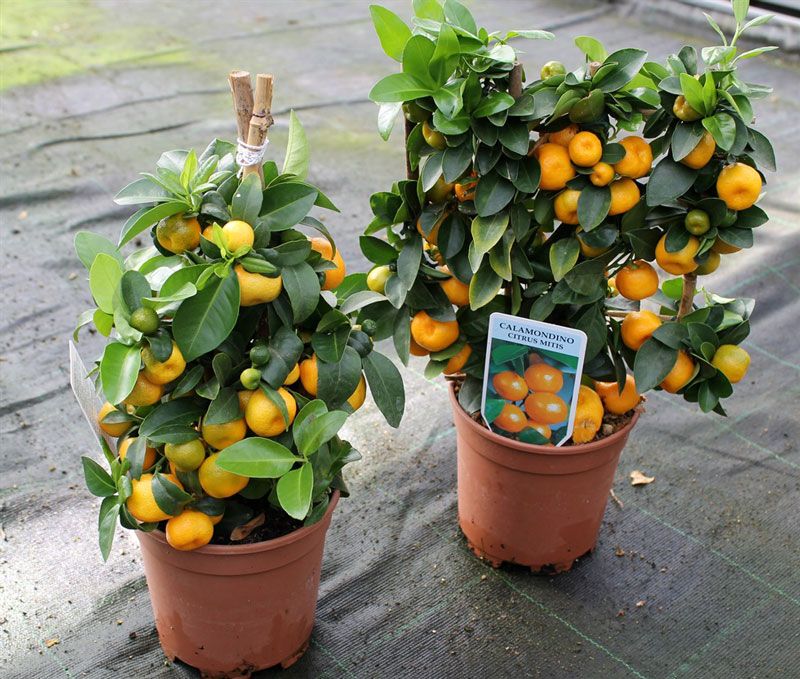
The tree reaches a height of 1 meter. The leaves are dense, dark green, and glossy on top. When broken or crushed, they emit a distinctive citrus scent. The trunk is light gray and moderately branched. The flowers are white with yellow stamens, and have a strong orange blossom scent.
The calamondin was bred for the tropical climate of Southeast Asia. When kept indoors, this citrus requires warmth and high humidity. It's easy to care for, grows well, and produces fruit even indoors. Ovaries the size of a pinhead form where the flowers once were. Over time, the fruits grow larger and reach a size slightly smaller than regular tangerines. A sign of ripeness is their orange color. They contain numerous small seeds.
Flowering begins in the 3rd to 4th year of life. Fruits form in good light, warmth, and humidity.
Varieties of calamondin
There isn't a wide variety of cultivars, as this plant itself is a hybrid. Variations can only affect the shape and color of the foliage and fruit.
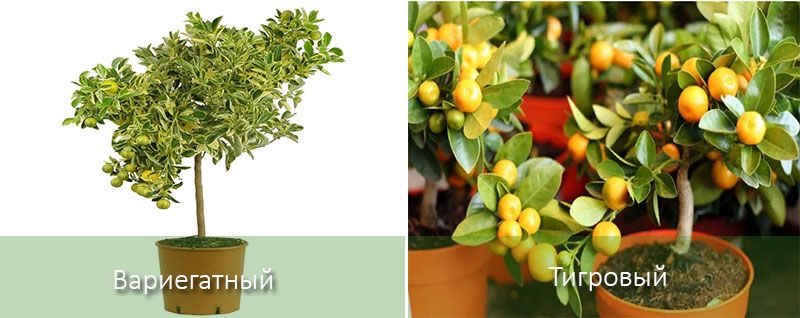
Most often, in addition to the usual ones, specimens with tiger-colored leaves and variegated ones, that is, bordered by a stripe of a lighter tone than the main one, are found on sale.
Adaptation of calamondin after purchase
At home, the plant should be placed in a bright place, sprayed daily, the soil should be well moistened, and care should be taken to ensure that it does not dry out, otherwise the leaves may begin to fall off.
Regular water isn't suitable for irrigation; it needs to be settled or filtered. Boiled and cooled water can be used.
Citrofortunella doesn't tolerate bright sunlight well. Its delicate, fine roots don't tolerate overheating, so it should be planted in a light-colored pot or wrapped in foil for a reflective effect. Sometimes, simply shading it with a simple tulle curtain is sufficient.
You can't do a sharp 180° turn Turn the plant toward the light. The pot's position should be adjusted slowly, moving it a few degrees clockwise each day. This approach will ensure uniform crown development.
The optimal temperature for citrofortunella is between 25°C in summer and 18°C in winter. A cool room during cold weather is natural for citrus plants and promotes better flowering as daylight hours increase in spring.
During the fall and winter, care consists of artificial lighting, the intensity and duration of which should be adjusted depending on the plant's condition. At the same time, the frequency of watering is reduced, but the frequency of misting is increased.
Fertilizing begins during the flowering period. Fertilizing once every 7-10 days from March to September will make indoor calamondin care even more effective. You can use special formulations or purchase ready-made compost for citrus plants. During the dormant period, apply fertilizer no more than once a month.
After two weeks of adaptation, a home-grown mandarin tree needs to be replanted, as suppliers often add hormone-containing preparations to the soil, which, in a city apartment, can harm the plant and even lead to its death.
Transplant, pot, soil
For repotting, use a slightly larger container. Determining the required volume is easy. The old pot should fit easily into the new one, with approximately 1-1.5 cm between the rims.
Carefully transfer the plant, along with the root ball, into a new container, being careful not to damage the delicate young roots. However, carefully inspect them and remove any rotted roots. The basal rosette should be planted at its original depth.
Add new soil to the sides and top. Repot rarely, as bonsai plants grow in small containers. Repotting once every three years is sufficient. The rest of the time, the plant should not be disturbed. Instead, periodically replace the soil as follows: remove the top layer and add fresh soil. Ingredients: sod, river sand, and humus (2:1:1).
Provide good drainage at the bottom of the container, reaching a depth of 3 cm. Fertilize for 1-2 months after repotting. The calamondin will absorb all the nutrients it needs from the soil.
It is not recommended to replant citrofortunella while it has flowers or ripe fruits; you cannot even move the plant to another location during this period.
Pruning calamondin
The tree requires regular crown shaping. Modern requirements call for a standard tree—a straight, knot-free trunk from the root zone to the first branches, approximately 25 cm in height.
Pruning should begin in February, reaching branches of the fourth level. In the summer, trim off any uneven shoots that have grown from the top.
Propagation of calamondin
With proper care, calamondin can be propagated at home in three ways:
- cuttings;
- graft;
- growing from seeds.
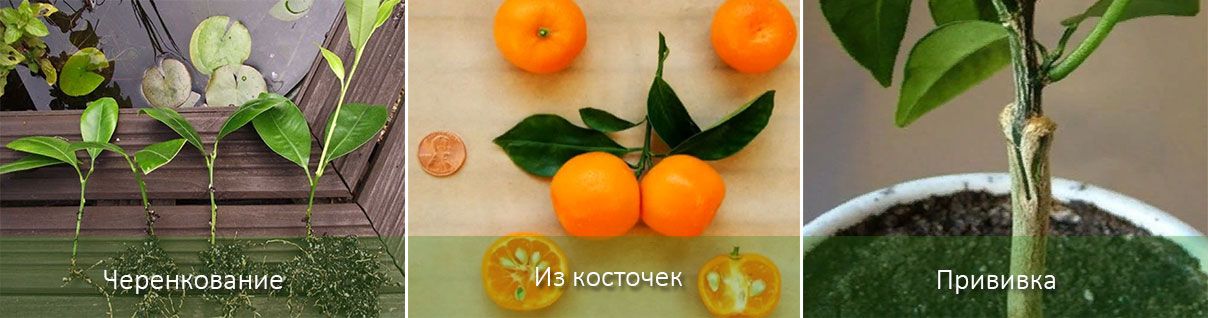
The last one is the simplest:
- The hybrid fruit contains many seeds. These are removed from the pulp and planted in prepared soil treated with a growth stimulant.
- The seeds are placed individually in small pots with a drainage layer of expanded clay. They are covered with plastic wrap or cellophane.
- Humidity plays a major role in the seed germination process, but the pots are periodically ventilated to prevent the soil from becoming covered with a green coating.
- After the shoots emerge, the film is removed. The branches remaining after pruning the calamondin are used as cuttings. For this purpose, select strong, well-grown shoots with healthy leaves. Before rooting, soak them in a solution of Kornevin or Zircon, which stimulates root formation.
- The seedlings are buried in the soil up to the first leaf. Cover them with a glass jar, plastic bottle, or plastic bag. Air the seedlings for about 30 minutes each day.
Young shoots of citrofortunella, if provided with care at home, will take root well and begin to grow in about a month.
Grafting requires extensive gardening experience and is more often used by professionals in specialized greenhouse conditions.
Diseases and pests of calamondin
| Name and reasons | External manifestation | Treatment methods |
| Anthracnose, or bitter rot, is a fungal disease of many fruit-bearing crops. It is transmitted by insects, irrigation water, drafts, and high soil moisture. It is dangerous due to its rapid spread. | Brown, then dark brown spots may appear on all above-ground parts of the plant, indicating damage. Eventually, the plant sheds its leaves and dies. | Remove damaged parts. Disinfect the area where the calamondin citrus is located. Spray with a copper sulfate solution (1 teaspoon per 1 liter of water) or Bordeaux mixture (1%). Also, as a preventative measure, twice a year, before and after flowering. |
| Sooty mold (black mold) is an infection that affects young or weakened seedlings. It lives in the soil and becomes active under favorable conditions of warmth and moisture. | Small, dark gray spots on leaves and fruits prevent the plant from breathing, clogging pores and inhibiting photosynthesis. As a result, the leaves fall off and the tree dies. | Mandatory quarantine of newly acquired plants. Use of strengthening preparations – immunostimulants. Remove damage by washing with a cotton swab soaked in a solution of laundry soap, wood ash, and baking soda. Severely damaged areas are destroyed, and dense areas are thinned out. Replace the soil. |
| Gummosis (also known as brown rot) is a specific disease common in citrus trees grown indoors. It occurs as a result of trunk damage, overcrowding, lack of drainage and overwatering, improper soil composition, and watering with very cold water. | The first thing to notice is a resin-like discharge—a sticky, light yellow liquid—on the trunk and branches. The bark dies, the leaves turn lighter, the ovaries fall off, and flowering ceases. | Since there are many possible causes of the disease, it's first necessary to determine its cause. Repotting is essential, including a complete soil change and root rinsing. Damaged areas should be trimmed with a blade or scalpel until completely healthy roots are reached. Treat the cuts with a disinfectant, such as lime. Spray the aboveground parts with copper sulfate. |
| Insects include aphids, scale insects, whiteflies, spider mites, and mealybugs. They are carried in the soil, introduced by drafts, and are caused by overwatering and overheating of the root system. | They are visible to the naked eye in the soil, on roots, stems, leaves, flowers, and fruits. Signs of infection include the appearance of white or yellow spots, curling, deformation, a sticky coating, or a dusty appearance. | Spraying with insecticides: Fitoverm, Iskra-Bio. Folk remedies include rinsing with a solution of potassium permanganate, alcohol, or furacilin. To make application easier and ensure the solution stays on the leaves longer, add a drop of dishwashing detergent and lather. |
Problems of growing calamondin
Growing citrofortunella will be successful if you pay attention to small but important details.
| Problem | Cause | Elimination |
| The leaves are falling |
|
|
Top.tomathouse.com recommends: the beneficial properties of calamondin
Calamondin fruits are edible; they are rich in vitamins, have a sour taste, and have a thin skin. The zest is used in baking, the pulp is added to homemade compotes, and candied fruit is made from peeled whole tangerines.
Even a novice gardener can grow calamondins at home. To ensure fruiting, the flowers are pollinated manually using a cotton swab or a soft, natural-bristled brush, such as a cosmetic or painting brush.
The dried peel of the fruit, rich in essential oils, is used as a natural fragrance for household purposes, and tinctures and decoctions are used for cosmetic procedures.
Finely chopped leaves in small quantities - no more than 1 - are added to impart the flavor of South Asian cuisine to meat, fish, and poultry.
Calamondin looks beautiful in the interior, can serve as a background for photos, and is an excellent gift.