The pear is a fruit tree that grows in virtually every corner of the planet. It's considered one of the oldest cultivated plants. Its fruits contain vitamins, microelements, fiber, and much more, essential for a healthy diet. Proper pear care will help you achieve a bountiful harvest and enjoy the fragrant fruit throughout the season. In this article, we'll explain how to properly care for pear trees and how to get a bountiful harvest.
Content
- 1 Peculiarities of pear tree care depending on the season
- 2 The need and rules for feeding pears
- 3 Fertilizers for pears
- 4 Fertilizing pears according to the seasons
- 5 Timing of pear pruning
- 6 Rules for pruning pears according to age
- 7 Pruning pears according to the seasons
- 8 Treating pears against infections and pests
- 9 Pear diseases and pests in a table with photos: prevention and control methods
- 10 Methods of pear propagation
- 11 Preparing pears for winter
- 12 Tips from experienced gardeners on caring for pear trees
Peculiarities of pear tree care depending on the season
Care for this fruit tree will vary depending on the time of year.
Rules for caring for a pear tree in spring
Pear tree care should be started in early spring.
It can include several basic rules:
- Remove winter coverings and treat any damage. If fruit trees were wrapped to protect against frost over the winter, it's time to remove them once temperatures reach stable above-zero temperatures. Afterward, it's important to inspect the pear tree trunks for rotted bark and animal bite marks. If minor damage is found, a clay mixture can be used to repair it. To do this, carefully clean the damaged area, apply the mixture, and cover with plastic wrap and cloth. If extensive damage to the trunk is discovered, graft a section of bark from the same tree, obtained during spring pruning.
- Prune. This work should be carried out before the sap begins to flow, on a dry, windless day. Using sharp pruning shears, remove weak shoots and trim side branches that interfere with the growth of the central branches. If necessary, shape the tree's crown. Remove old bark from the lower part of the trunk, as well as moss and lichen, which can slow its growth.
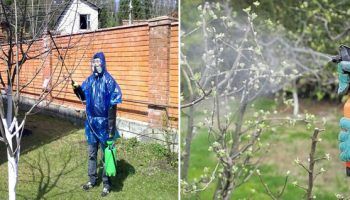
- Treat for infections and insects. To do this, preventative spraying with fungicides and insecticides is recommended.
- Spring grafting should be performed before the sap begins to flow. This procedure will improve yield and fruit flavor. Closely related plants are selected for grafting. Pear cuttings take well to serviceberry, apple, or quince. Only other pear varieties can be grafted onto pear trees.
- Feed the pear tree: before the sap starts to flow, add 5 liters of water, 250 g of urea (bird droppings, ammonium nitrate), or 0.5 liters of manure per 10 liters of water. In May (after flowering): phosphorus-potassium fertilizers.
Caring for a pear tree in summer
When caring for the plant, water it regularly. During dry periods, each plant requires approximately 35 liters of water.
Watering is carried out in the evening.
Fruit trees can become overly dense and may require pruning to ensure the pear tree receives sufficient sunlight.
How to care for a pear tree in autumn
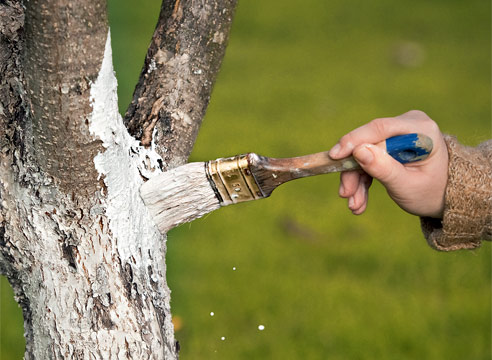
With the onset of autumn, sanitary pruning is necessary for preventative maintenance. This is when preparations for the coming winter begin. To do this, the trunk surface and the base of the skeletal branches are whitened with lime. The area around the trunk is also lightly dug, which is then thoroughly watered and generously mulched.
Find out everything about planting pear trees and choosing a variety.
The need and rules for feeding pears
To avoid damaging the garden, avoid over-fertilizing. Fertilizers should be applied according to the season, soil fertility, and age of the pear tree.
Basic rules for caring for a pear:
- Seedlings begin to be fed from the 2nd year.
- Mineral fertilizers are applied every year.
- Organic - once every 3 years.
Fertilizers for pears
Fertilizers for fruit trees are divided into organic and mineral.
Organic ones include:
- Humus. It is a good source of nitrogen.
- Wood ash. Contains magnesium, phosphorus, and potassium, increasing soil acidity.
- Bird droppings. They must be dried and diluted with water before use, otherwise, when fresh, they can damage the plant's root system.
- Bone meal. It is a source of phosphorus and also contains iron, iodine, cobalt, calcium, zinc, and magnesium.
- Urea is a good fertilizer and protects the tree from pests.
Mineral fertilizers are:
- Nitrogen. Helps increase green mass.
- Phosphorus fertilizers. These include superphosphate and double superphosphate. They help fruits ripen faster.
- Potassium fertilizers. If applied in spring and during flowering, pear yields will be higher.
- Magnesium. Helps increase tree height.
Fertilizing pears according to the seasons
Fertilizing pear trees begins in the second year. Fertilizers should be applied in the fall, spring, and sometimes in the summer.
How to fertilize a pear tree in spring
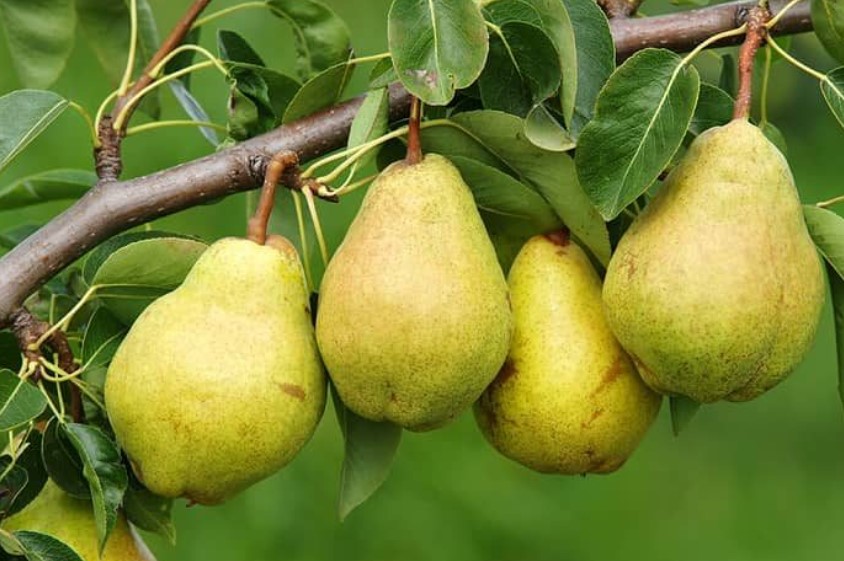
Fertilize a couple of weeks before flowering using a 5% solution of urea, ammonium nitrate, or bird droppings at a rate of 5 liters per square meter of the tree trunk circle. After flowering, to ensure a bountiful harvest, feed the pear tree with phosphorus and potassium fertilizers. Superphosphate or potassium sulfate are good options for this purpose. After applying the fertilizer, water the trees thoroughly.
How to fertilize a pear tree in summer
With the onset of summer, pear trees should be fertilized in case of dry weather. To do this, spray the tree's foliage with nitrogen-rich fertilizer. This helps the roots survive adverse weather. If signs of disease are detected on the foliage and branches, it wouldn't hurt to feed the pear tree with phosphorus and potassium fertilizers.
How to fertilize a pear tree in autumn
In the fall, it's time to begin preparing for the winter season. As soon as the tree tops are a third covered with yellow leaves, begin fertilizing the pear tree. Dig up the soil around the trunk and add 150 grams of wood ash per square meter. Nitrogen fertilizers are strictly contraindicated in the fall due to the high risk of tree death. Potassium and phosphorus fertilizers are recommended for pear trees during this period. For this, you can mix 10 liters of water, 1 tablespoon of potassium chloride, and 2 tablespoons of superphosphate.
You can spray trees with a salt or ash solution to protect them from pests that may be hiding in them for the winter.
The final feeding is carried out no later than the second half of September.
Timing of pear pruning
Pruning is preferably carried out in spring at temperatures above -7° C before the sap begins to flow.
In summer, pruning is also sometimes carried out, but only when the crown is very thick.
In autumn, only sanitary pruning is carried out.
Rules for pruning pears according to age
After planting the seedling in open ground, it should be pruned, leaving only the skeletal branches. The central stem is shortened by ¼, and the trunk is cleared of branches below the first tier of lateral branches. The following year, the central stem is shortened by 0.25 m, and the skeletal branches by 4-7 cm.
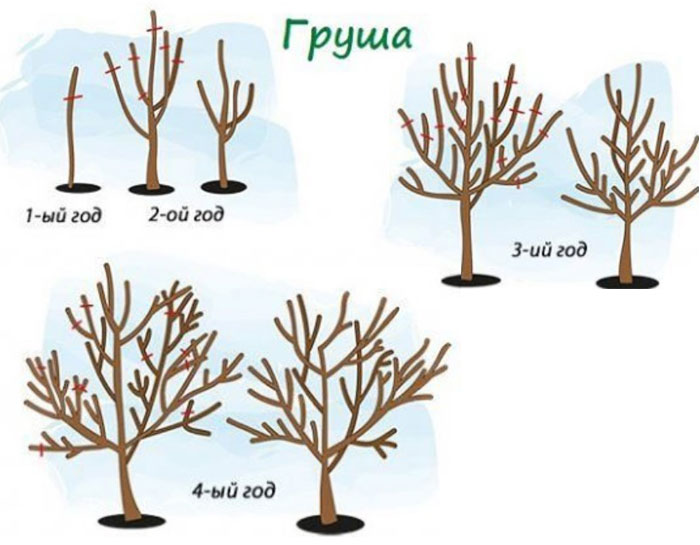
When pruning an old tree, it is necessary to cut off both shoots and branches so that the tree crown becomes younger and lighter.
Pruning pears according to the seasons
Pruning is done in any season except winter.
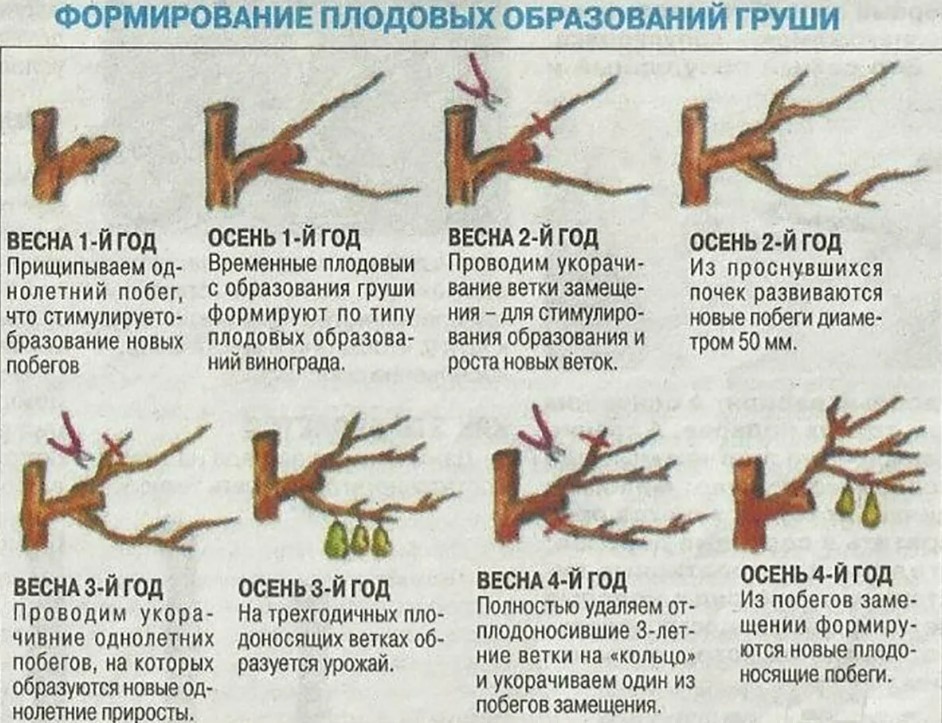
How to prune a pear tree in spring
Pruning all competing branches to the ring should begin in the second year of the tree's life. During tree formation, several fruiting branches are left. Only vertically growing shoots should be removed. All cuts must be treated. For this, you can use rannet or garden varnish.
How to prune a pear tree in summer
During the summer, pear trees are pruned using pinching. This is only done if the tree has numerous young shoots that need to be removed.
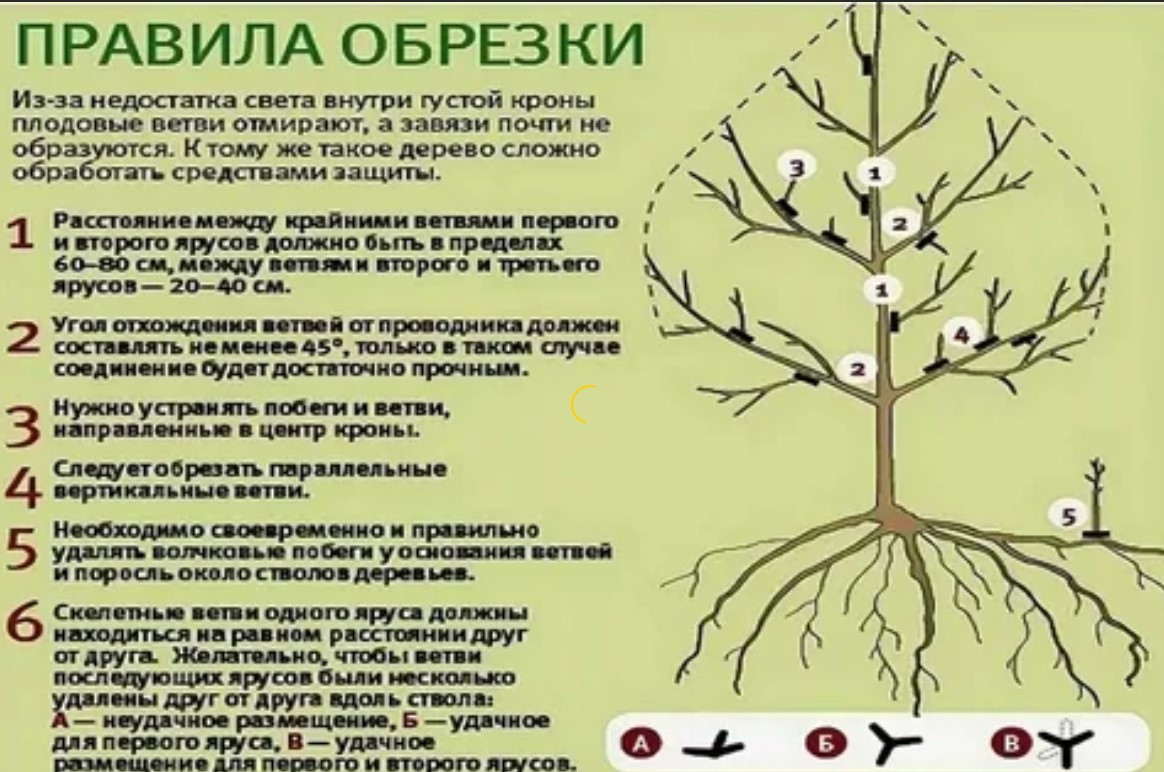
How to prune a pear tree in autumn
This is done from late August to mid-September. All dried, diseased branches should be removed. One-year-old shoots are cut back by 1/3, leaving a few buds from which new branches will grow. Starting in the second year, the tree can be shaped into a pramidal crown. This will make fruit picking easier and also increase the yield.
Treating pears against infections and pests
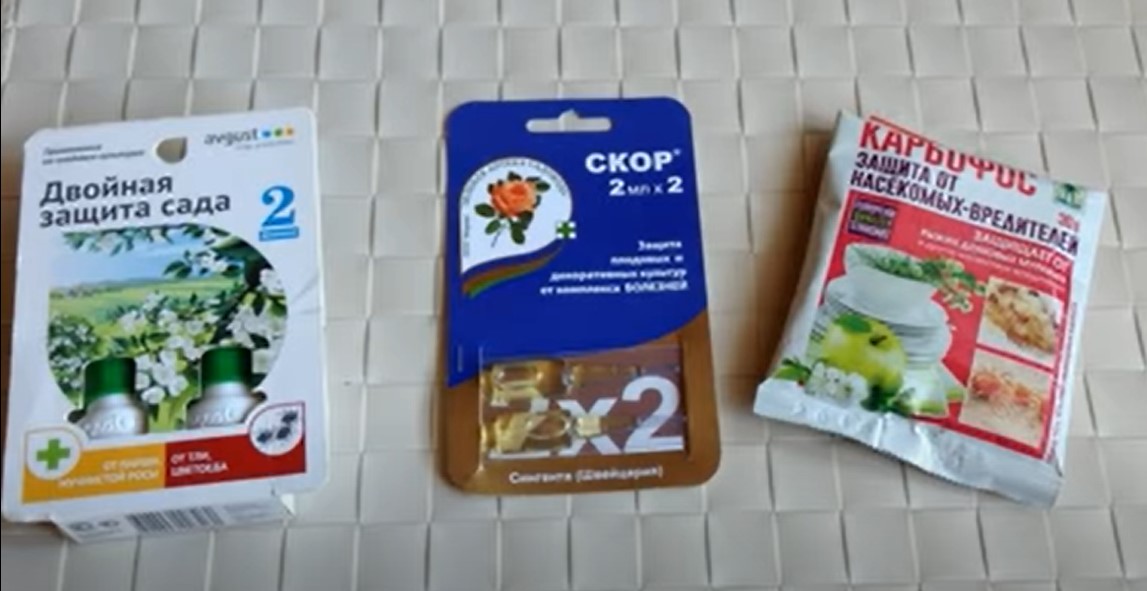
To prevent diseases and pests, preventative treatments are essential. These can easily be combined with fertilizers. Using a urea solution will kill all pathogens and also provide a good source of nitrogen for the pear tree. After bud break, biological treatments should be applied.
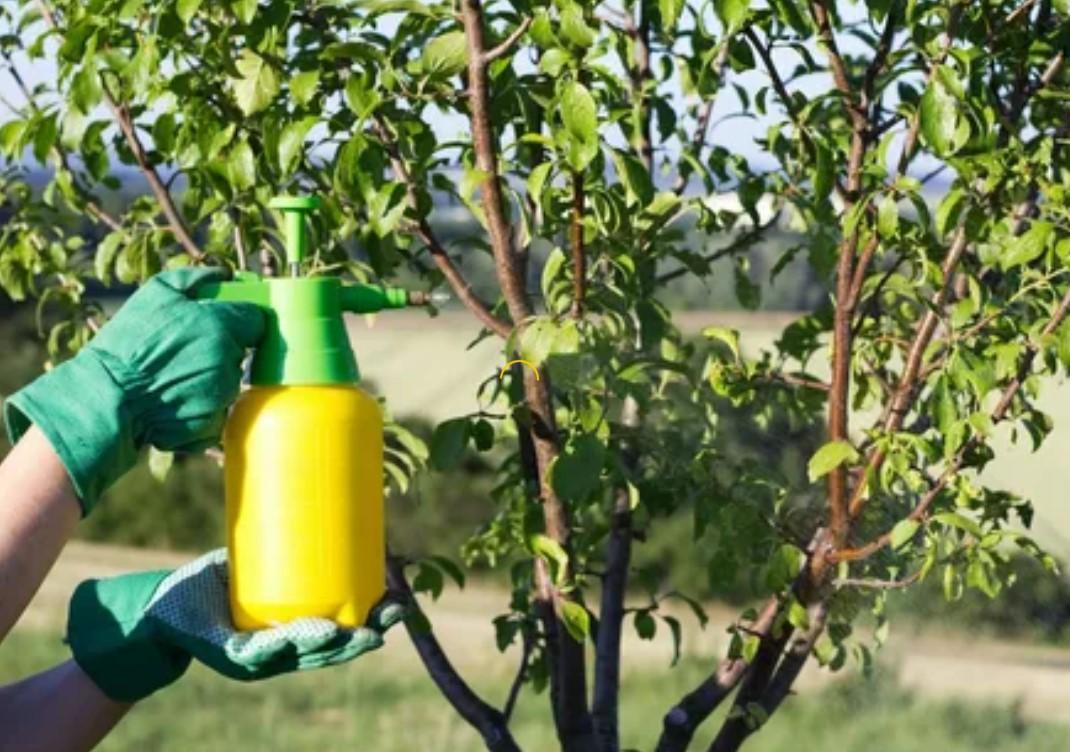
Before the first frost, preventative measures should also be taken. Spray the tree and soil surface with a 1% Bordeaux mixture or Nitrafen.
Pear diseases and pests in a table with photos: prevention and control methods
Now let's take a closer look at preventative measures and methods for combating a specific disease or pest.
Pear diseases
| Disease | Description | Prevention | Methods of control |
|
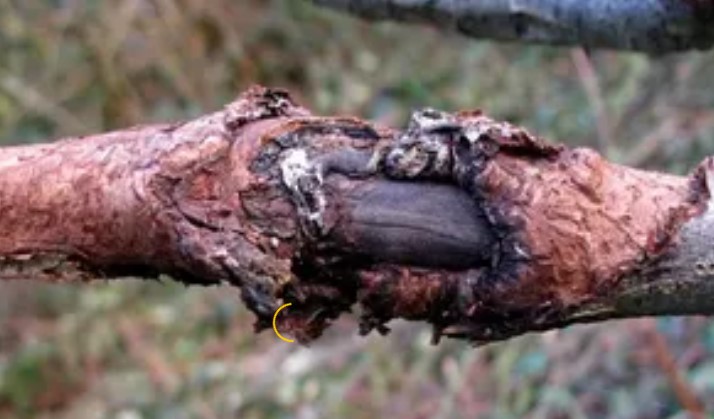
Black crayfish
|
Affects leaves, skeletal branches, bark, and fruit. Small lesions appear, then become larger. Brown spots become visible along the edges. On fruit and foliage, they turn red. The fruit dries out and mummifies. | Carrying out preventive spraying in spring and autumn. Burning fallen leaves in autumn. |
Clean the affected areas, removing a small portion of healthy tissue. A sharp knife is most effective for this. Disinfect the cut areas with a mixture of mullein and clay, or copper sulfate. |
|
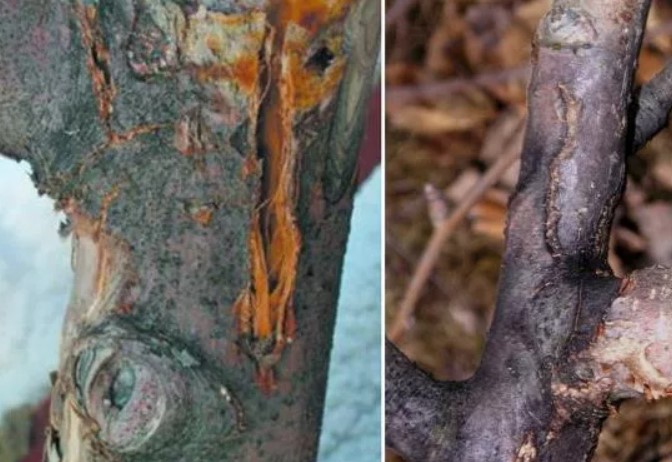
Cytosporosis (bark rot)
|
It poses a particular threat to older and weakened trees. When infected, the bark turns dark red and the tree dries out. | Whitewashing with lime. | Cut out the diseased areas with a knife. Treat the cut areas with garden pitch or copper sulfate. |
|
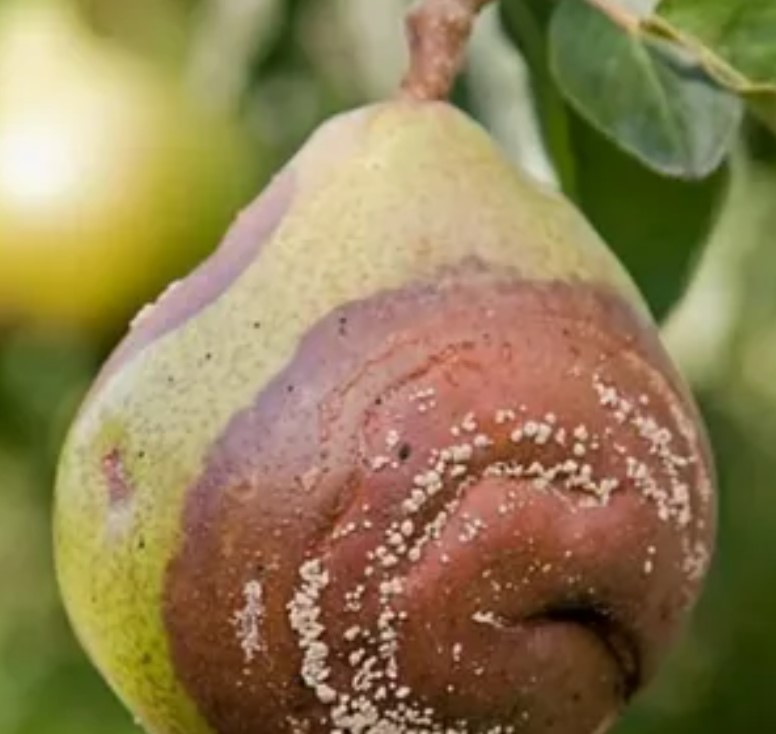
Fruit rot (moniliosis)
|
Brown spots appear on the fruit, which then cover the entire surface. The fruit does not fall, allowing the infection to spread rapidly. | Collect and burn all affected fruit (both from the branches and from the ground). This will prevent the spread of the disease. | Spraying with Bordeaux mixture or copper chloride. |
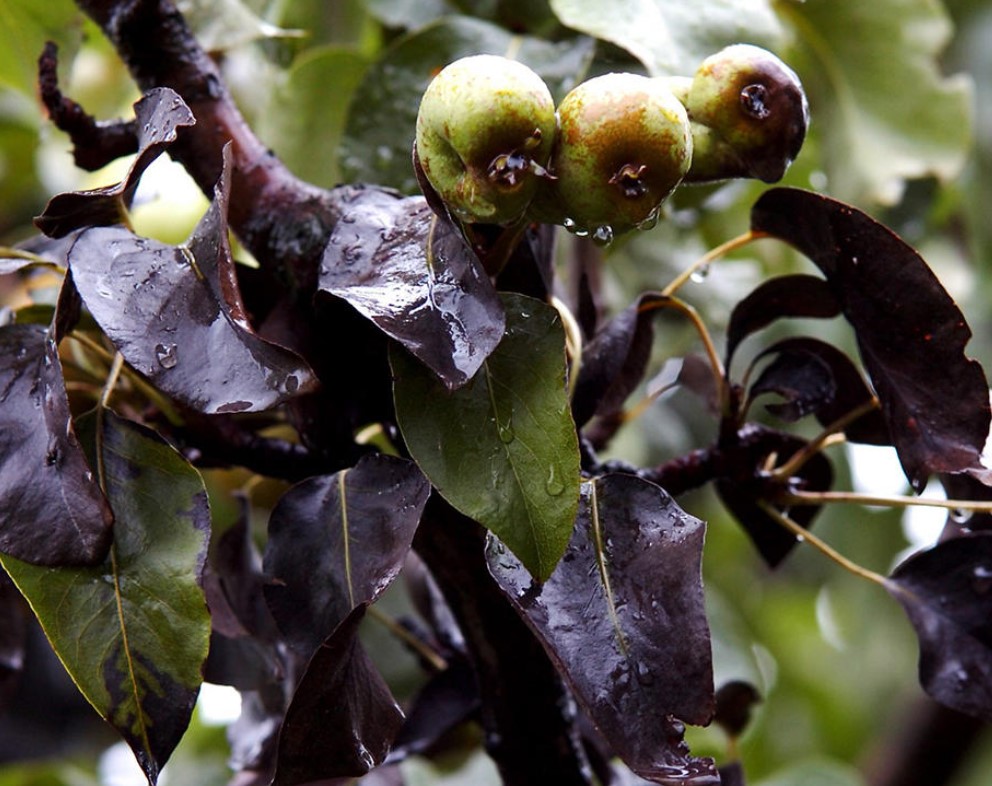
| Fire blight
|
The infection develops rapidly, spreading through the plant's sap. Tissue quickly dies, and the plant dies. | Destroy affected areas before the infection has a chance to spread further. Pruning tools should be disinfected with boric acid. | Treat the wood with an antibacterial agent immediately after the first signs of disease are detected. Repeat the procedure several times at 5-day intervals. |
|
Scab
|
The entire above-ground part of the fruit is affected. Small spots form, which then expand. Fruits become smaller, harden, and develop cracks. This also negatively impacts the overall yield. Dark spots appear on the fruit skin, merging to form a single velvety patch. | Remove and destroy leaves in the fall. Spray with a urea solution or Bordeaux mixture. | There are no effective treatments. |
|
Rust
|
Rusty spots appear on the leaf blades. The affected plant's immunity weakens and it begins to wither. | Spring and autumn treatment with Bordeaux mixture or colloidal sulfur. | Removal and burning of affected areas. |
|
Powdery mildew
|
This is a fungal infection that causes a white coating, which is made up of spores, to appear on shoots, leaves, and flowers. As a result, all parts of the plant become deformed, and the fruit buds fall off. | Regular preventive spraying. | Collect and burn affected parts. Spray with Fundazol or Sulfite before and after flowering. |
| Mosaic
|
Angular yellow and light green spots appear on leaves. Infection most often occurs during grafting. | Careful selection of seedlings in the nursery. If the disease does affect a plant, it must be destroyed immediately before the infection spreads further. | There are no effective treatments. The diseased plant must be destroyed. |
| Sooty mold
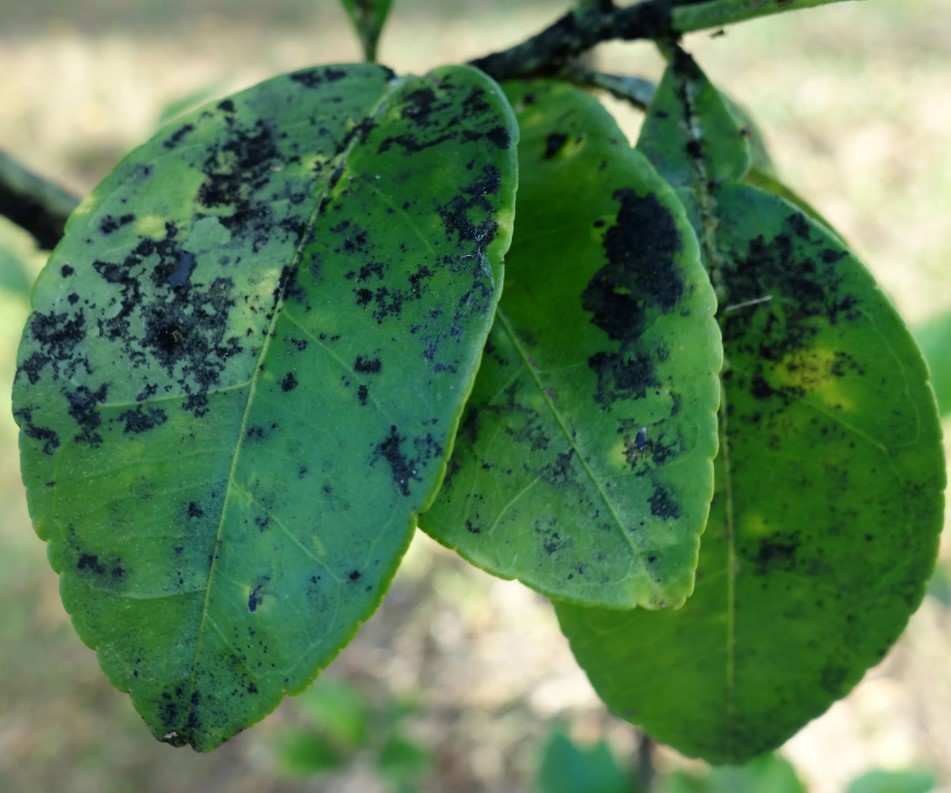
|
A dark-colored coating on the above-ground part of the plant. Develops as a result of aphid infestation or other insect pests. | Compliance with agrotechnical requirements, timely pest control. | Destroy the pests that caused the disease. Insecticides are usually used for this purpose. Then, spray with a copper-soap solution or Fitoverm. |
| Subcutaneous viral spotting
|
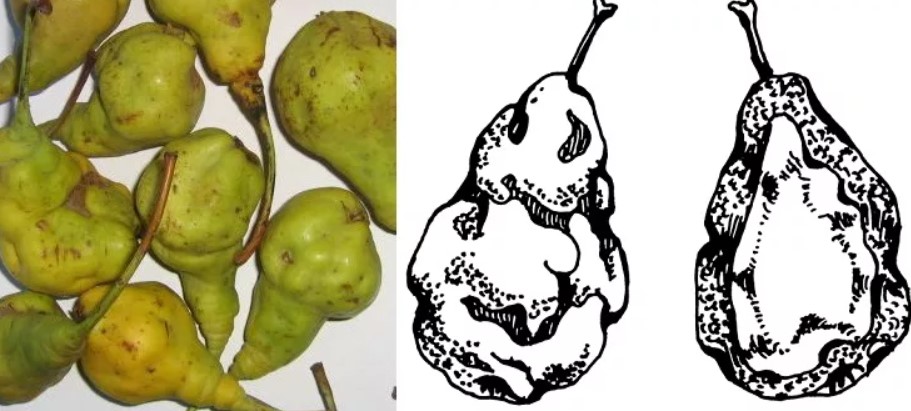
Hard formations appear in the fruit pulp. In these areas, tissue development is inhibited, dents appear, and the fruit becomes deformed. The quality and quantity of the harvest are reduced. The tree weakens, increasing the risk of winter damage. Leaf blades take on a mosaic-like appearance, and cracks appear in the bark. Infections are caused by unsterile instruments and pests. | Careful selection of seedlings, use of only sterile instruments, timely control of insects. | Destroy affected fruits. |
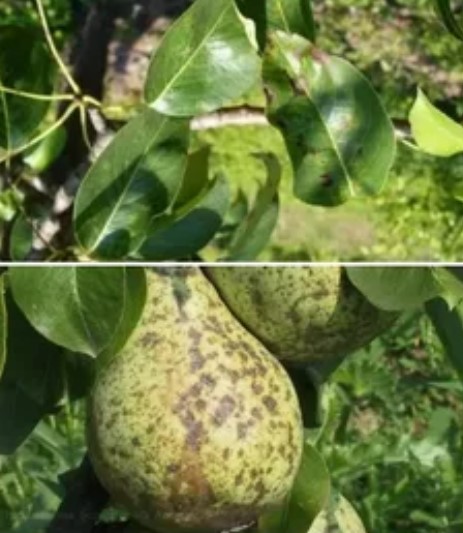
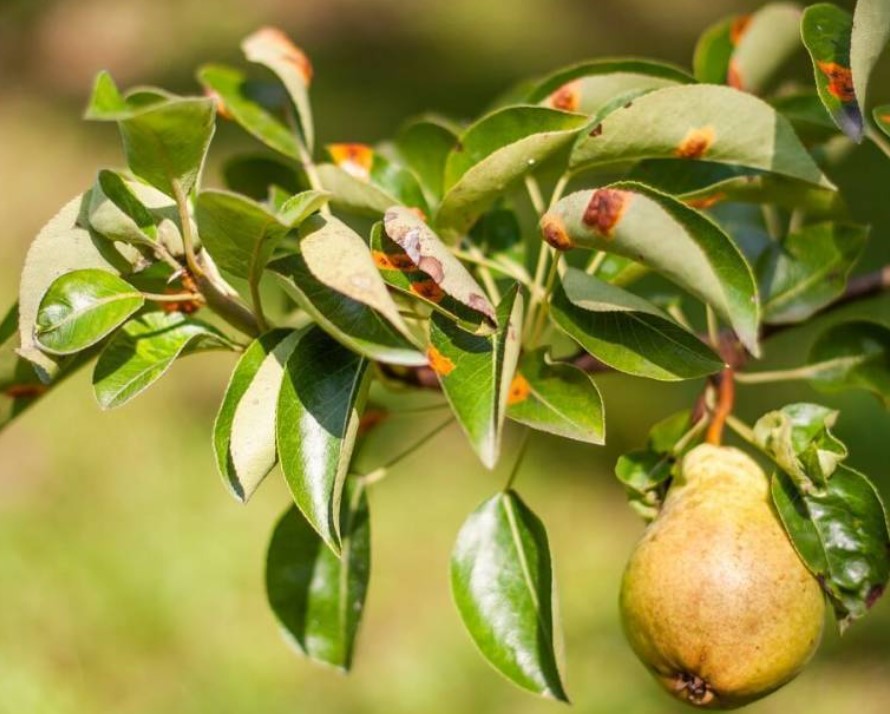
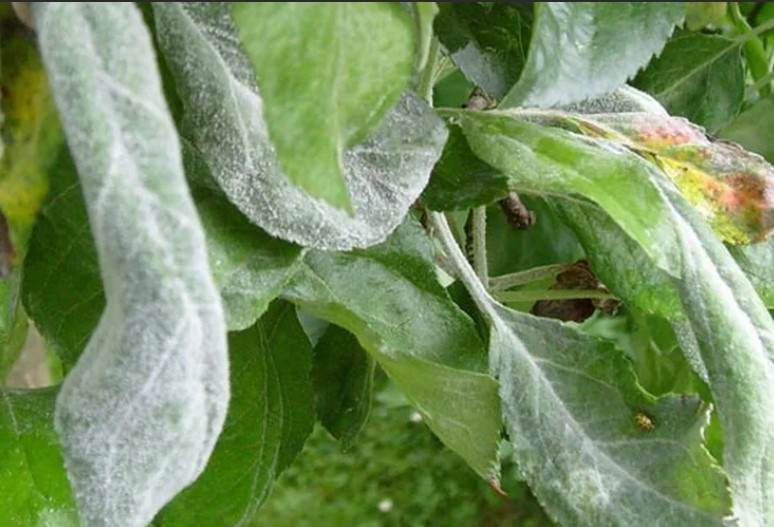
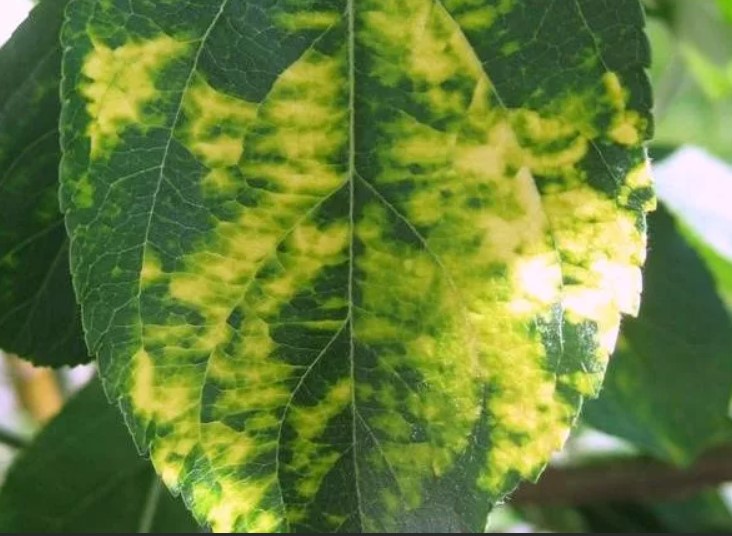
Pear pests
| Pest | Description | Prevention | Methods of control |
| Leaf roller
|
A small caterpillar that damages leaves, causing them to become smaller and curl up. | Spraying with Tsimbush solution. | Use of insecticides. |
| Bark leaf roller
|
The bark becomes damaged at a depth of 50 cm below the ground. Cracks appear on the surface, from which gum flows. If left untreated, the tree will dry out. | Compliance with agricultural technology. | Removal of affected areas of the bark, treatment with a highly concentrated solution of chlorophos. |
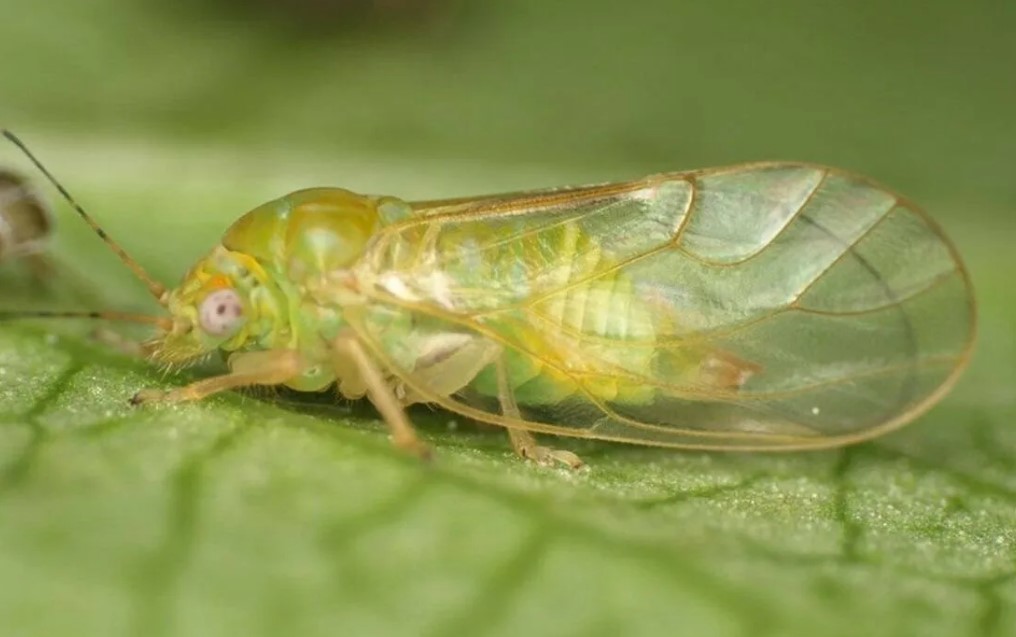
| Pear sucker
|
It feeds on sap and promotes the growth of sooty mold. Due to a lack of sap, leaves, buds, and flower buds shrivel and fall off, and the fruit becomes deformed. | Treatment with Agravertin and Iskra. If the infestation is not severe, folk remedies will do the trick. | |
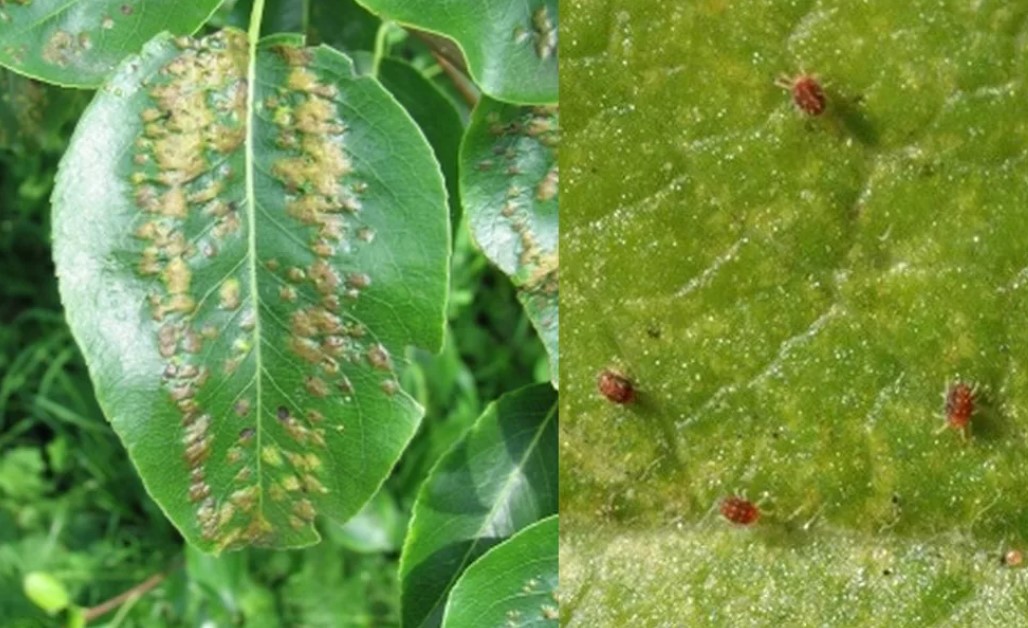
| Gall mite
|
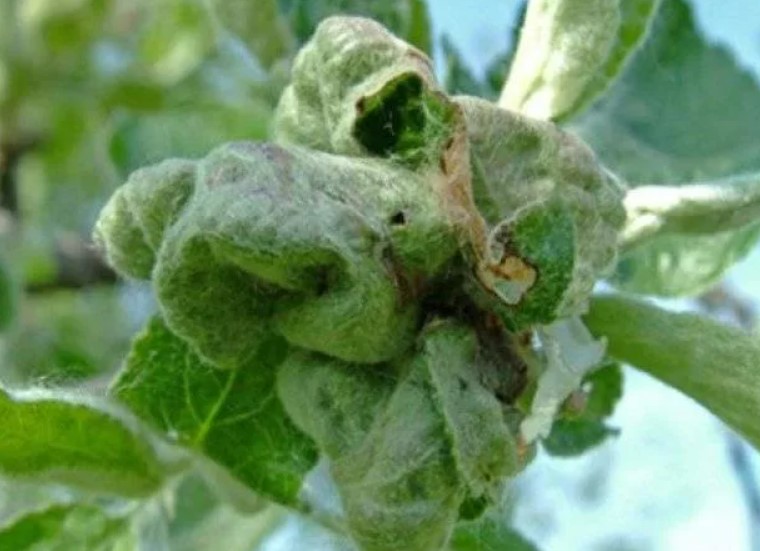
Sucks the juice from the buds. | Spraying with Fufanon or a solution of colloidal sulfur (10%) in early spring. | Apply Fufanon after flowering. Repeat spraying is possible, but no later than 4 weeks before harvest. Alternating treatments is recommended to prevent insects from developing immunity. |
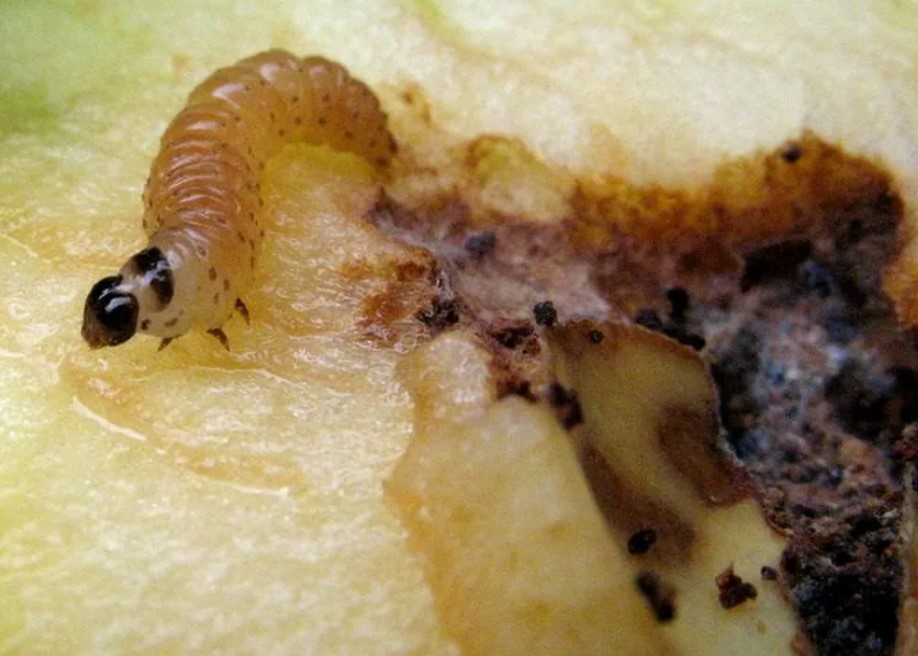
| Codling moth
|
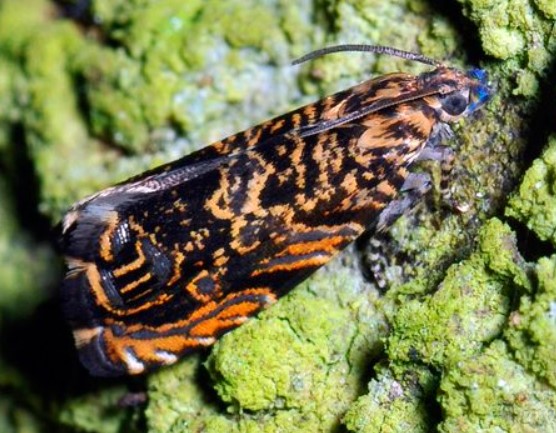
This is a butterfly that lays eggs on plants. These eggs hatch into caterpillars that feed on the fruit's pulp. | Treatment with Agravertin before and after flowering. | Treat with Agravertin, spray with Kinmix 20 days after flowering, and then spray with Iskra a week later. If caterpillars have settled in the stems, repeat treatment will be necessary after harvesting. In the fall, collect and burn all the leaves, and dig the soil up to the depth of a shovel. |
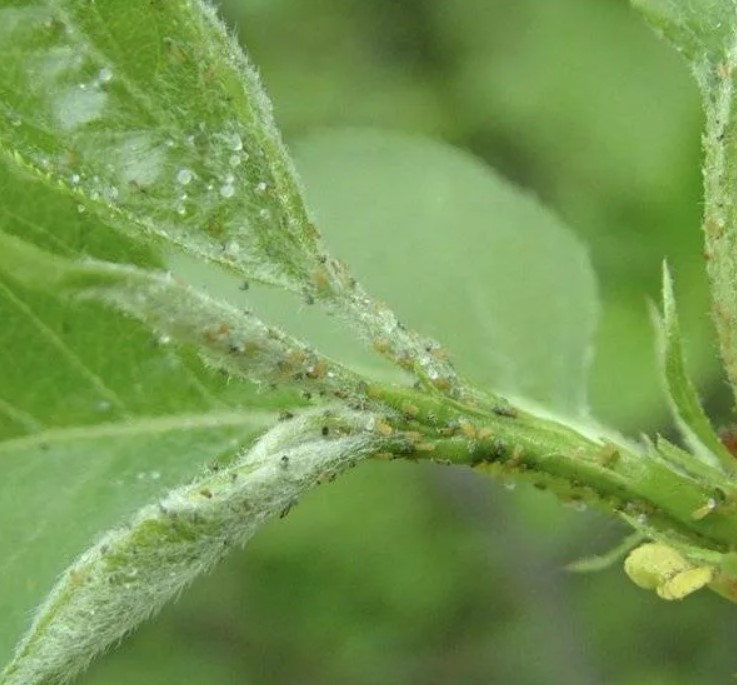
| Aphid
|
The leaf blades curl and dry out. | Compliance with agrotechnical requirements. | Treatment with insecticides. |
Methods of pear propagation
There are several ways to propagate pear trees. Let's look at each in more detail.
Propagation of pear by seeds
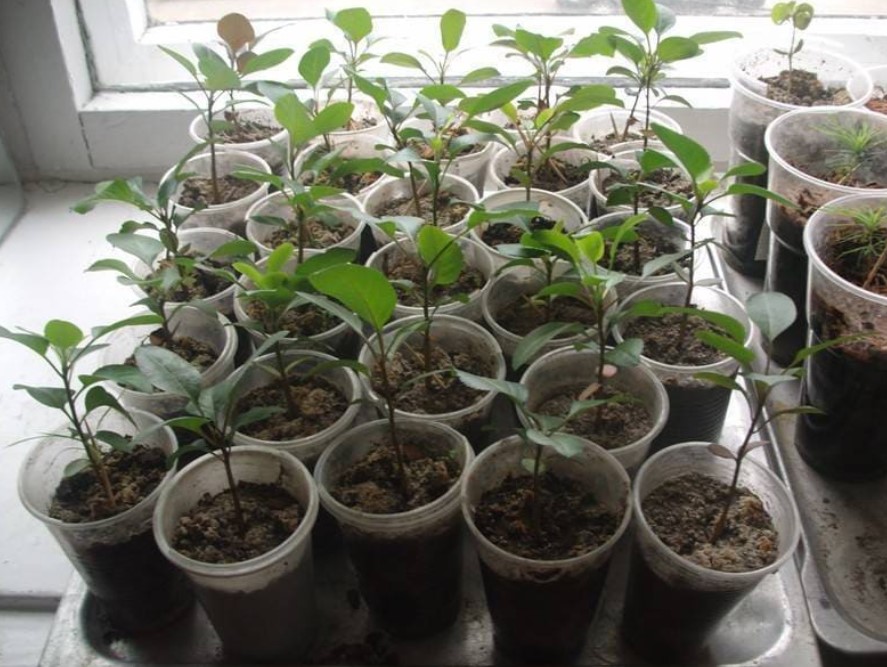
To propagate pear trees from seeds, place them in a small container with moist, fertile soil. Cover with plastic wrap, poke small holes in it for ventilation, and place the tree in a southeast-facing position. Place the seeds in a small container with moist, fertile soil. Once the first shoots with leaves appear, transplant them into separate containers. If necessary, repeat the process, moving them to larger containers. Strong young seedlings are transplanted to their permanent location.
Propagation of pear by cuttings
Pear propagation by cuttings can be done in the fall, winter, and summer. Depending on the region, cuttings are harvested in the summer, from the second half of June to mid-July. In the fall, cuttings are harvested after the leaves have fallen. For the parent stock, select young branches free of cracks and damage, growing horizontally from the trunk. The cuttings are cut at a 45° angle. They should be 15-20 cm long and about 7 cm thick. Two or three internodes, buds, and young leaves should be present.
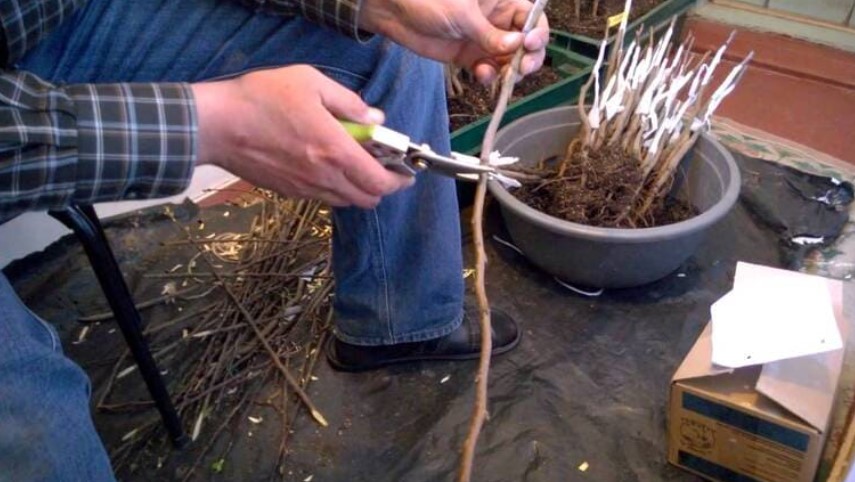
If cuttings are taken in the fall or winter, they should be stored in a cool place. A basement, cellar, refrigerator, or cool patio are suitable. Autumn cuttings are planted in a 20-30 cm high box. Add a 15 cm layer of sand and black soil mixture inside. Thoroughly moisten the soil and sprinkle a thin layer of sand on top. Place the cuttings in these containers, with the bottom cut end down, at a depth of 1-2 cm. Cover the plantings with plastic wrap and keep them in a bright, cool place until spring. In the spring, when the soil has warmed sufficiently, plant the cuttings outdoors.
Planting material cut in summer should be immediately placed in a temporary location in the soil and set up as a mini-greenhouse. For good rooting, provide diffused light, frequent spraying, and ventilation at least once a week. Periodically inspect the planting for diseased shoots or rotted leaves, which should be removed. After 1.5 months, the pear tree's first roots should form. Cuttings that have rooted over the summer are planted outdoors in the fall.
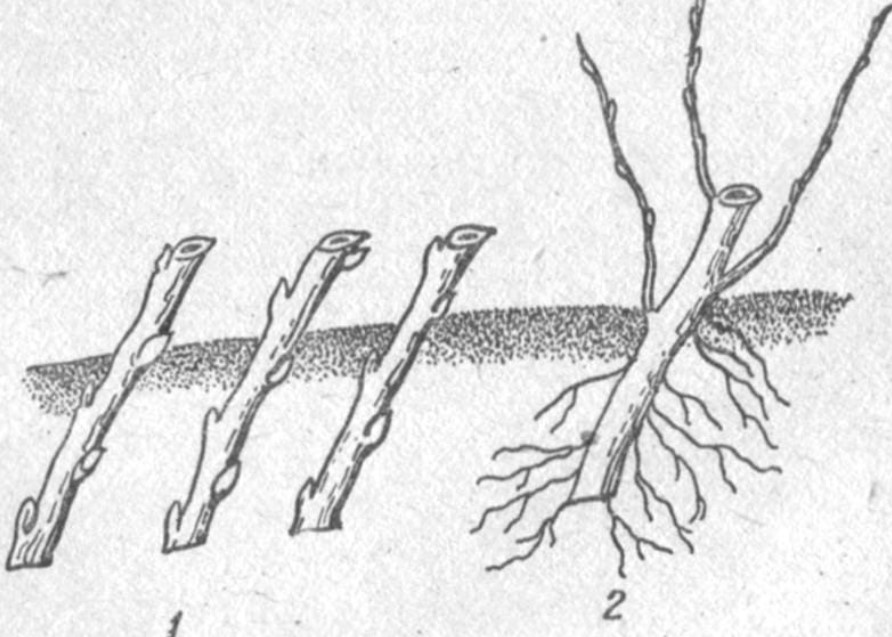
It is important to follow the rules for caring for the cuttings after planting them:
- Water regularly through the hole in the tree trunk circle.
- Mulch the soil and remove any weeds that appear.
- Apply nitrogen fertilizers in the first month of summer.
Propagation of pear by layering
Step by step actions:
- Take a wooden box, cover its walls with film to prevent moisture evaporation, and fill it with soil.
- Place the container under the chosen branch and bend the shoot toward it. Make several transverse cuts where it meets the soil. To speed up root growth, it's recommended to dust the cut areas with a growth stimulant. Alternatively, you can simply water the cutting with a Kornevin solution.
- Fix the branch in this position and cover it with soil.
- Cover the box with plastic film, roofing felt, or mulch. Keep the mail slightly damp at all times.
The cutting will be fully rooted by the end of the season. However, don't rush to transplant it to its permanent location. It should be left with the mother plant for the winter, as its root system is still too weak. In late fall, be sure to insulate it, for example, with spruce branches. When snow falls, cover it with a thick layer of snow.
The offshoot can be separated from the mother plant only after two seasons. Dig it up along with the root ball and replant. The offshoot begins to flower and bear fruit earlier than a regular seedling. Moreover, the young plant inherits all the varietal characteristics of the mother tree.
Propagation of pear by shoots
This propagation method uses two-year-old shoots growing on a sunny side. The procedure is carried out in early spring or late fall after the leaves have fallen. In the latter case, it is necessary to periodically thin out the shoots during the summer and loosen the area around the trunk to ensure a strong seedling.
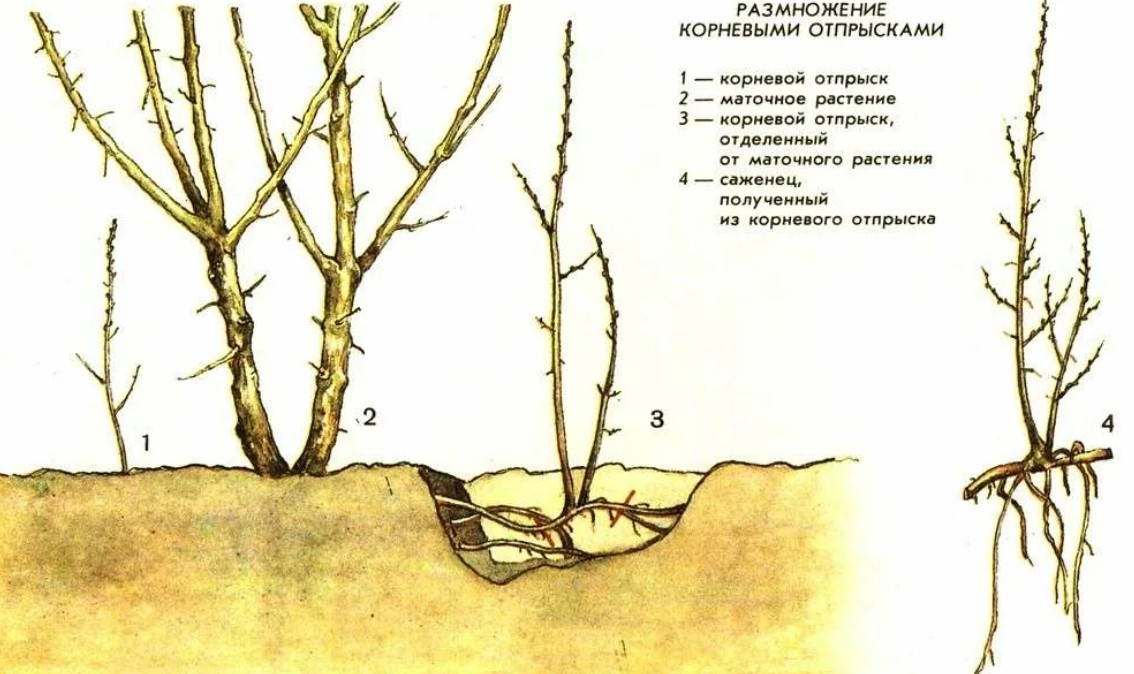
The root of such a shoot points toward the parent tree. It must be severed with a sharp, disinfected knife, pushing the tool deep into the soil. The separated seedling is replanted immediately.
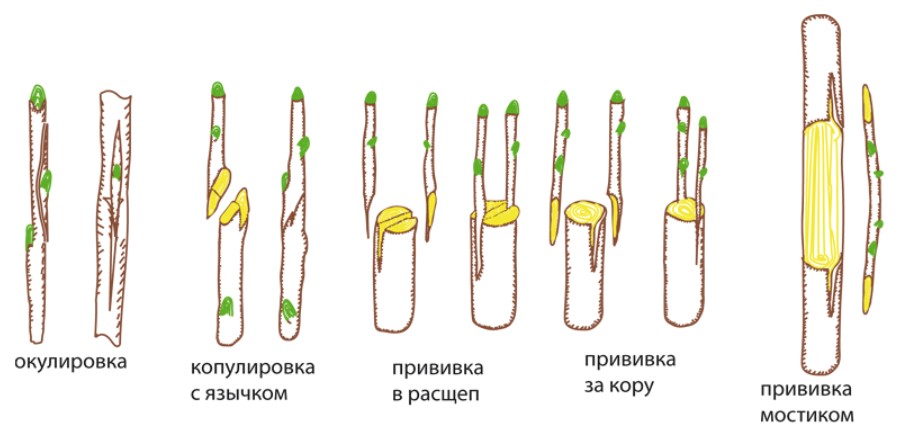
Propagation of pear by grafting
Select a rootstock and a scion from a cultivar with 3-4 buds. In the fall, place the cut end of the scion in a container filled with damp sand. Store it in a refrigerator for the winter at a temperature of 2 to 4°C. A couple of days before planting, transfer the scion to a damp cloth. This is best done in May, and budding is best done in early June.
Preparing pears for winter
In the fall, you need to prepare the pear for winter.
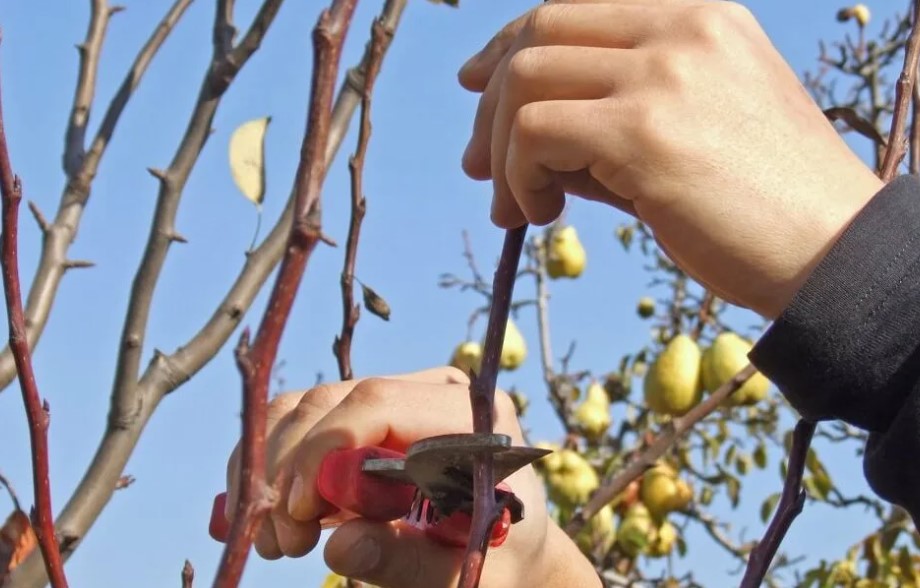
Before the cold weather sets in, it is necessary to take a number of actions:
- pinch the tips of young shoots;
- carry out sanitary pruning;
- whitewash the pear tree trunks down to the skeletal branches using a mixture of milk and clay;
- remove all remaining fruits from the tree;
- water each tree generously;
- cover the tree trunk circle with dry grass, straw, peat or compost.
Caring for pear trees is an important step in growing this crop. Regular pruning and fertilizing will help the tree thrive and produce a good harvest. It's also important to monitor the plant's health and control pests and diseases. With proper care, pears will become tasty and juicy, delighting their owners for many years to come.
Tips from experienced gardeners on caring for pear trees
Pears, like other fruit trees, need to be pruned. Cultivated gardeners (there is such a class) do this. There are some peculiarities.
1. If left unpruned, it grows very tall (higher than the apple tree), and then becomes unreachable for maintenance. Its natural shape is pyramidal. However, it is known that branches close to the horizon (a common feature of all fruit trees) are the most fruitful. Correction is necessary.
2. (My hypothesis is the law of symmetry). It is logical to assume that the height of a pear tree is related to the length of the main taproot. Therefore, by pruning the tree short, we restrain the growth of the taproots and stimulate the growth of lateral roots. This is very important for soils with close groundwater levels.
3. Pear trees, more often than apple trees, have branches with sharp branches, which can cause branches to become brittle under the weight of the fruit. This requires monitoring and adjustments, preferably at the early stage of growth.
Without pruning, the harvest is decent and more frequent, but harvesting is inconvenient, plus the trees live shorter, take up more space, and are subject to constant branch breakage, disease, etc.
But I understand that it’s always the same for us: if we don’t have to do something, we won’t do it.
The related threads are full of questions about fruit tree diseases. In most cases, cancerous, black, bare trunks are the result of poor tree management.
The interests of a gardener and an agricultural producer don't always align. For example, I deliberately let two pear trees grow upward. Besides the fruit, they also block my neighbors' view. Well, they yield less than half the amount, but sometimes I don't even have time to use and distribute it.
Mature pear trees can reach the height of a three-story building. The lower tiers die off. Everything at the top... But the worst thing is that these pears (usually with a leader left to fend for themselves) take up a lot of space in the garden, shading a large area. Therefore, I never let the leader go, but rather shape the crown into a spreading form. Later pruning (compared to stone fruit) helps prevent a large number of suckers, and if strong branches are pruned back to green leaf in June and regularly pruned, the inconvenience is minimized... (The same applies to apple trees). I think late pruning is acceptable in a hobby garden. Of course, disinfecting tools and thoroughly sealing the cuts is essential.
EKA quote
I had a problem with my pear tree yesterday—my husband tried a trimmer and mowed down a one-year-old pear tree called "Chelyabinskaya Zimnyaya" (Chelyabinskaya Winter)—planted a month ago and it's doing great. I'm so disappointed... All that's left is a twig about 15-18 centimeters above the ground. So, the question is: should I give it a chance or just dig it up and throw it away? (I can't bring myself to cry.)Definitely give it a chance! If it doesn't dry out, it'll survive. A few years ago, my two-year-old pear tree was horribly gnawed by rabbits. I thought it wouldn't survive, but no, now it's two meters tall and bearing an abundance of fruit.
Oh, Natasha, how wonderful, I'm really encouraged. I'll be waiting for the sprouts from the cut stem. Perhaps I should give it a more intensive feeding now? Urea? Something else? Give it a lot of nitrogen now, perhaps – to boost the green mass?
My Melba and Streifling apple trees suffered severe frost damage for two winters in a row, falling low to the ground (at snow level). So, following the advice of experienced growers, I treated them with urea.
I watered my pear tree with urea, sprayed it with Epin, talked to it, felt sorry for it...One week has passed - I see three swollen buds on the trunk - it will live!
July 31, 2017
Girls, it's been two years, and three strong trunks are growing from those three buds, all beautiful, with side branches. They're about a meter tall. All three are equally strong, and I can't decide which one is the odd one out. I'm debating whether to cut out two... or one... or just leave them alone... I'll leave them until next spring.I'm currently looking for information on the following: if a pear (or apple) tree has several trunks, one should be removed. How do I choose which one? One trunk has five lateral branches, all strong, while the other has nine, slightly smaller branches. They are evenly spaced.
I'm continuing to grow pears using serviceberry and chokeberry. Next spring, my first grafts will be 10 years old. There definitely won't be a grand celebration, or even a small one, to celebrate.
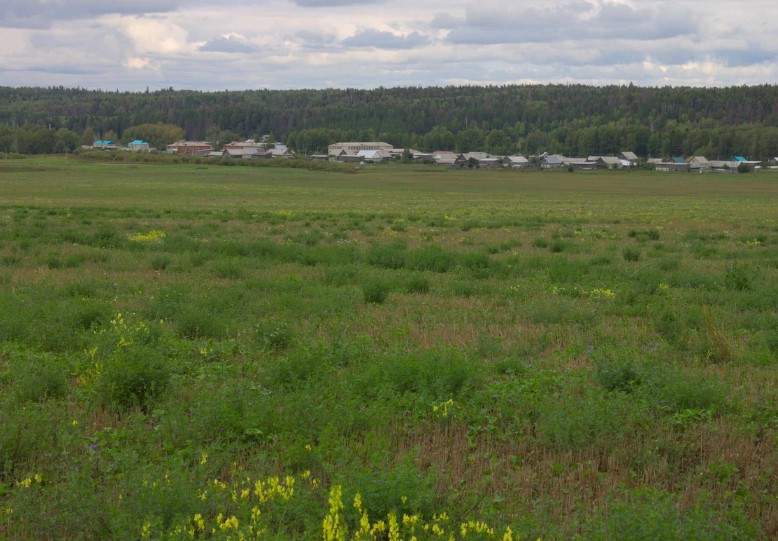
Several circumstances prompted me to grow pears on the shadberry patch. The location of the plot
The photo location is directly south. So, there's a slope to the south, a slope to the north, a similar slope to the east, and only a slight drop to the northwest. Basically, a classic "pit." Even apple trees don't survive more than 15 years in our pit. Frost builds up, and... :drv . The pear variety "Memory of Zhegalov" froze up to the snow level every year. And the main motivation: I really want pears, delicious and varied.Over the years, a strong opinion has emerged regarding growing pears on serviceberry trees. Specifically, if your pear tree bears abundant, delicious fruit annually, then you should grow pears on serviceberry trees solely out of curiosity and inquisitiveness.
Technology
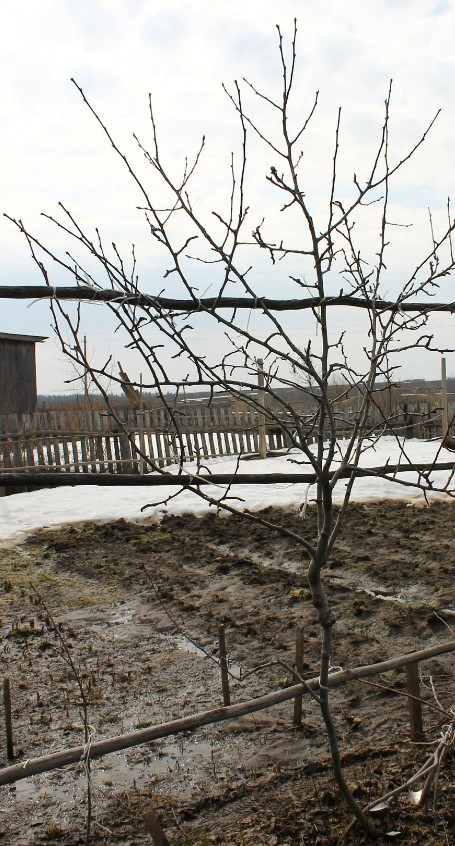
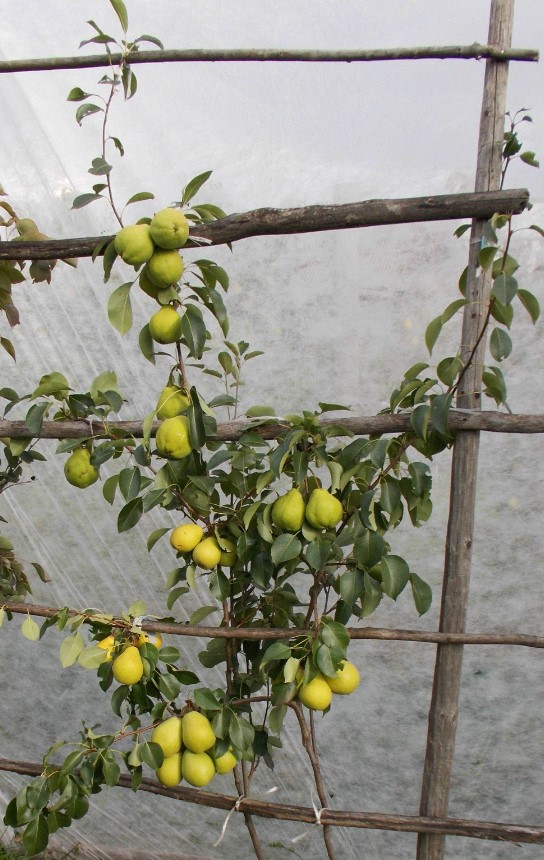
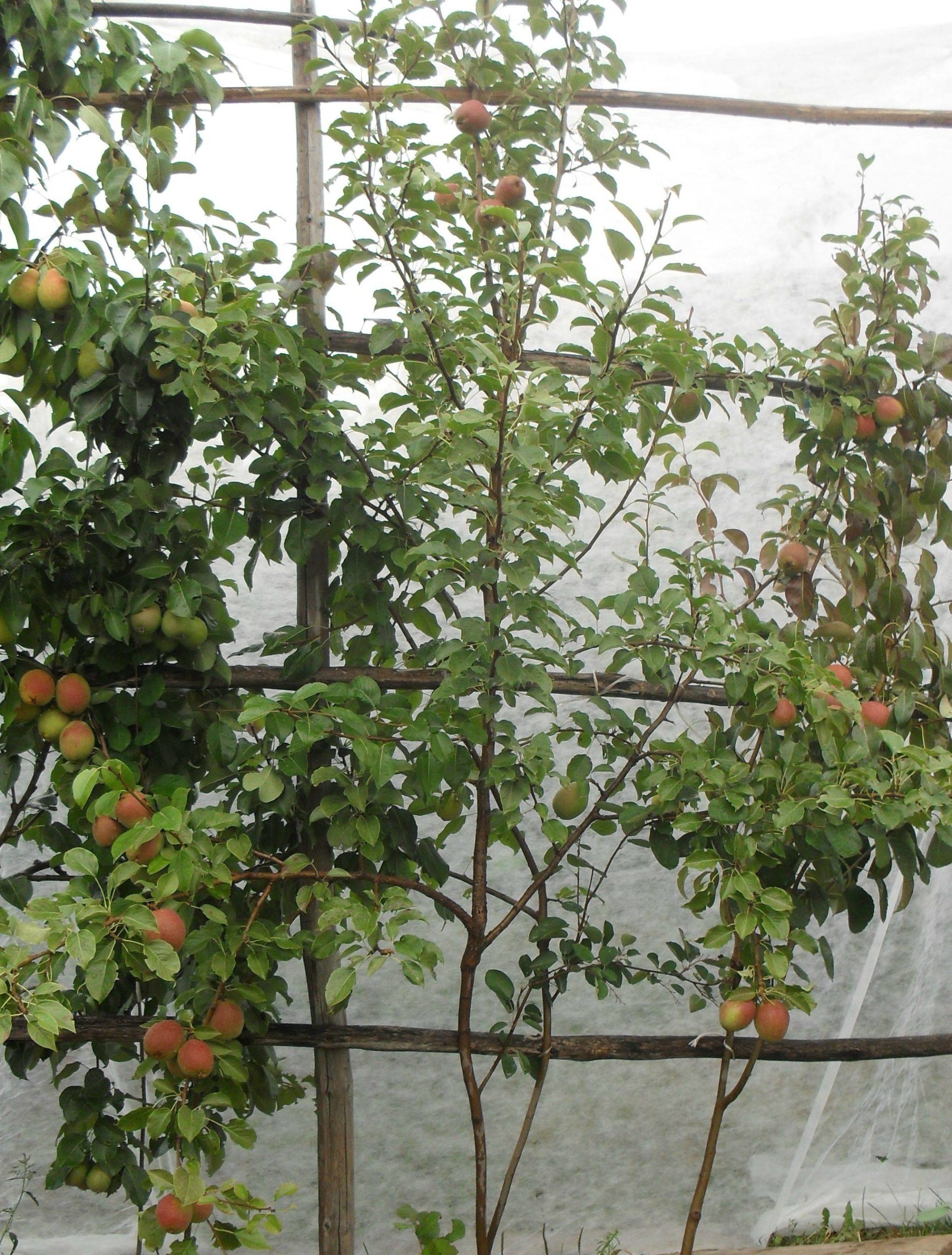
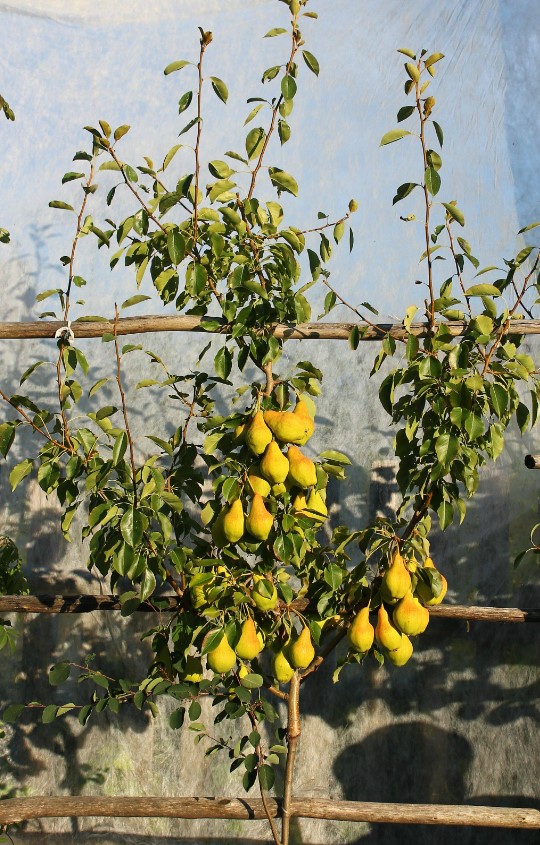
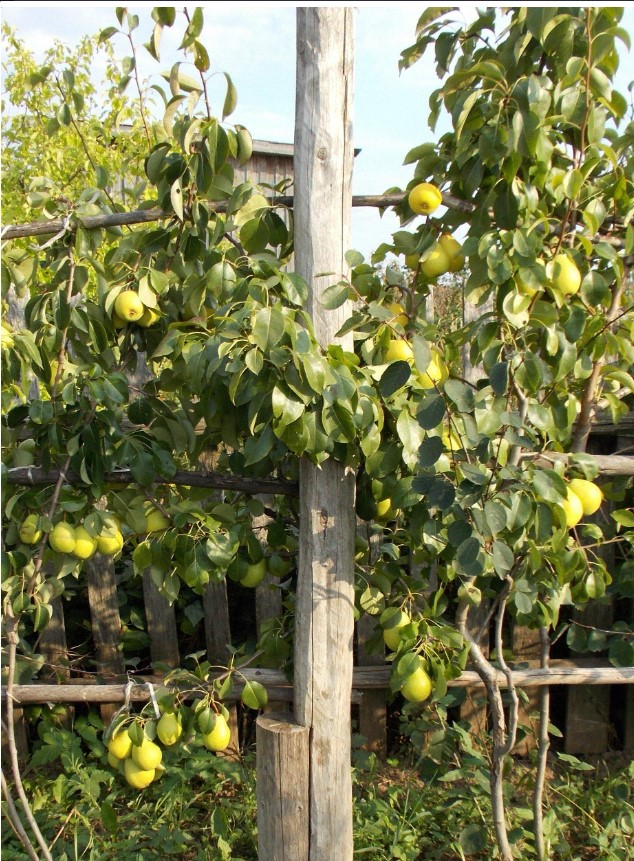
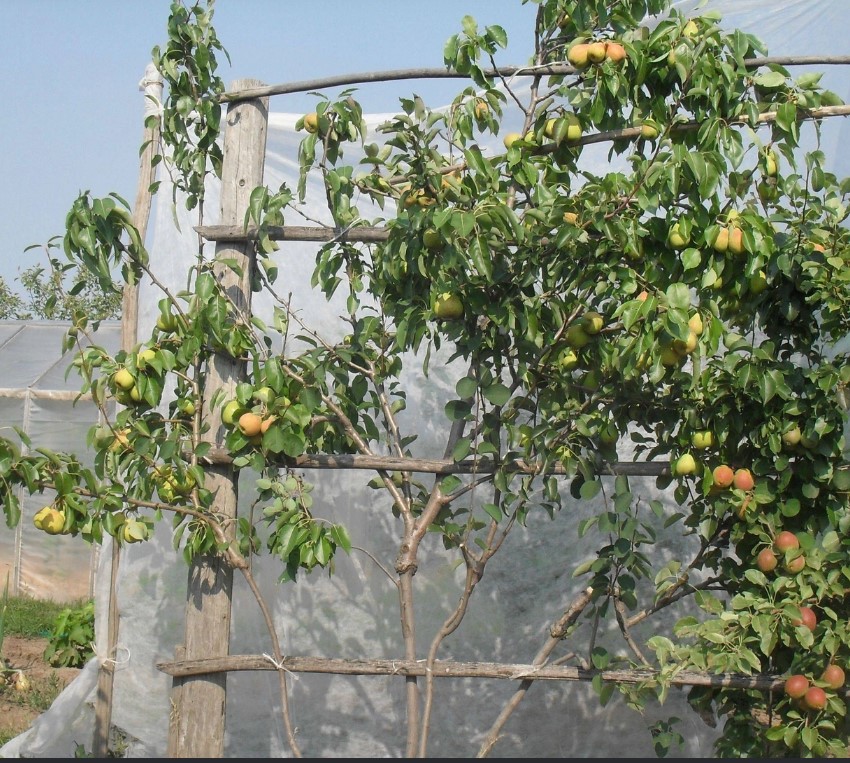
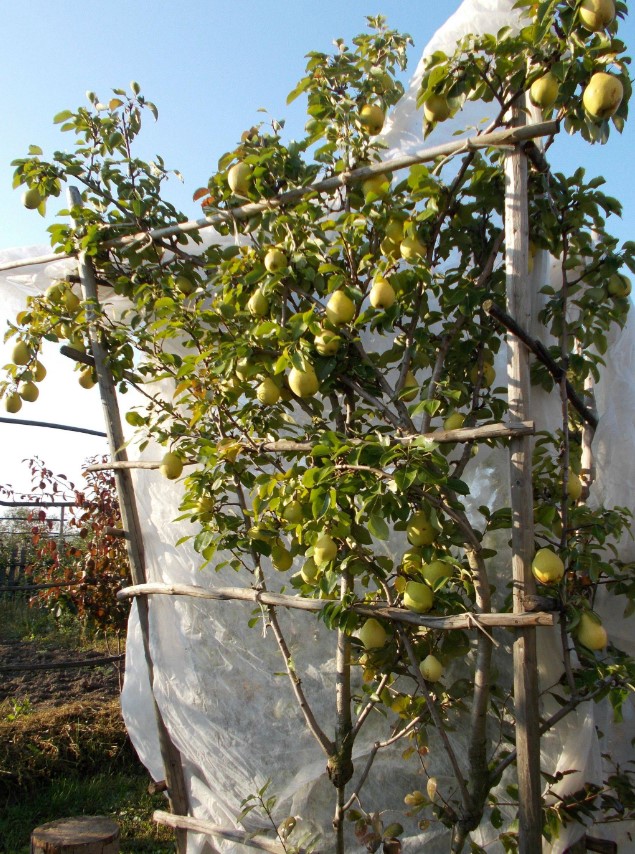
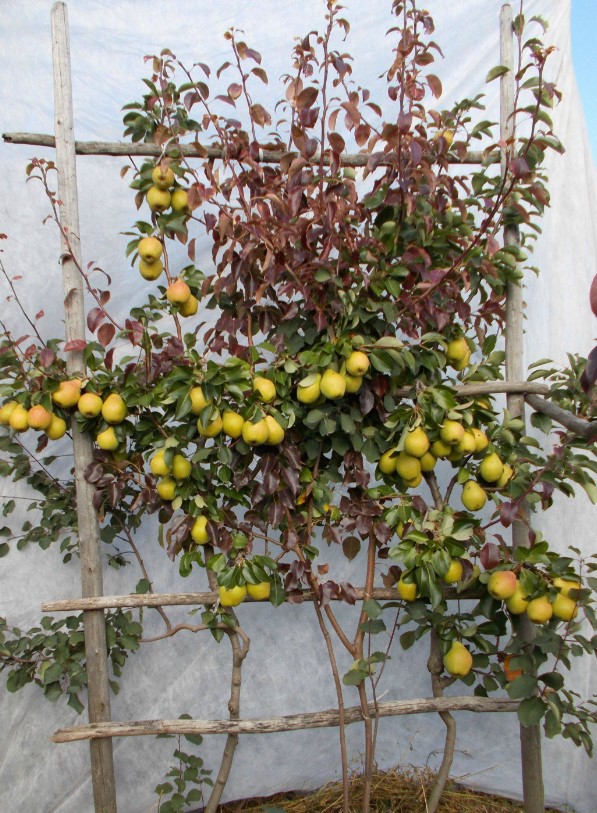
I didn't invent anything new; I used only known elements suitable for my conditions and my laziness. I prefer grafting onto serviceberry. The fruits are somewhat larger, and it's easier to control excess shoots. On chokeberry, the same variety ripens 3-5 days earlier. I don't think grafting a pear onto a growing bush is the best option. Even if the graft is made on the periphery and even if it's on the south side, it will receive less nutrition and light due to the mature neighbors. Therefore, I grow the pear on a trellis. I planted the first bushes 1.5 meters apart, now I'm doing it one meter apart. I place one or two grafts per bush at most. For the winter, I bend all the grafts toward the ground.
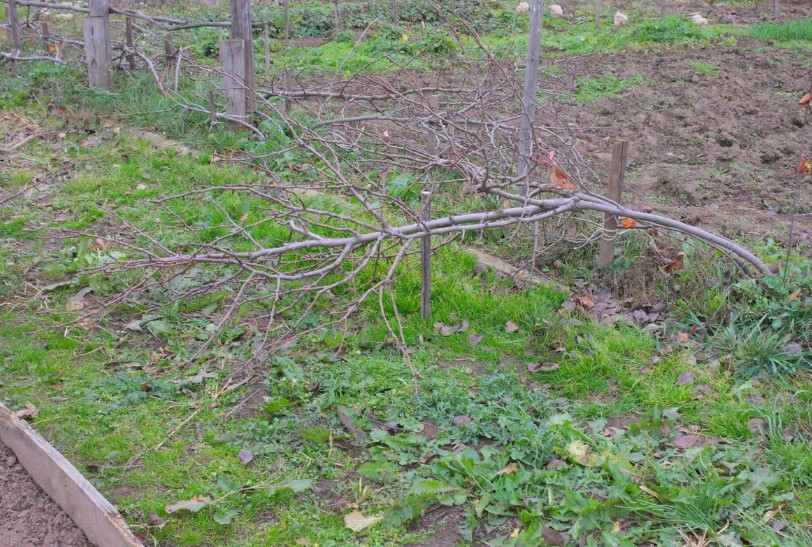
Over the years, mice have had to remove one young graft, and there have been about five bites. In March of the particularly snowy winter of 2011-2012, there were two meters of snow on this spot. All the grafts emerged from the winter without any breakage. In the spring, I tie the grafts to a trellis.
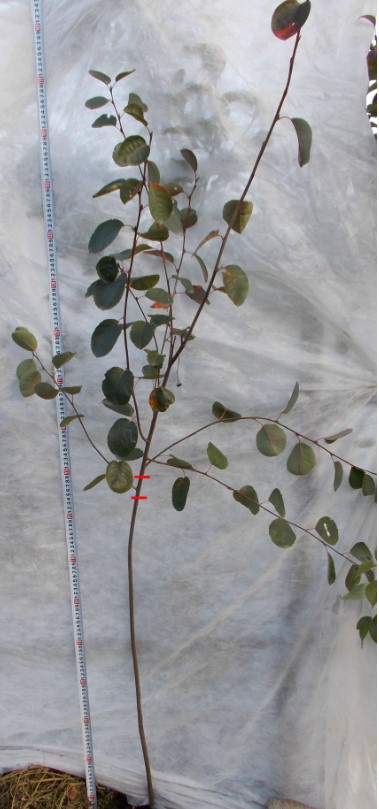
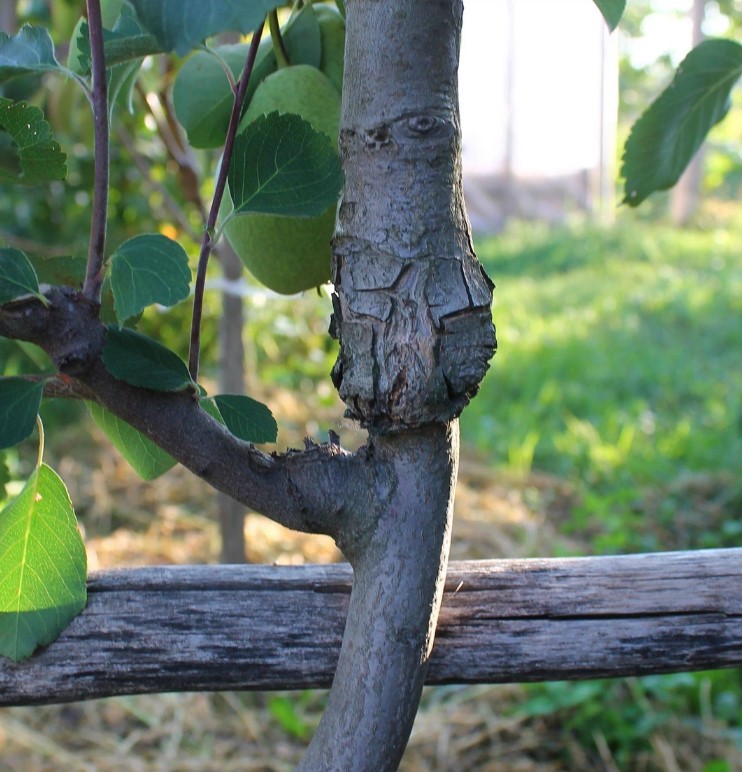
A strong rootstock is also important. I consider the rootstock in the photo to be ideal.
The thickness at the grafting site is 8-10 mm. The marks indicate potential grafting sites; either option would be suitable.Productivity.
Much depends on how successfully the skeleton is formed (if there are bones, the meat will grow)
The photo shows grafts of the Avgustovskaya Rosa and Chizhovskaya varieties. The first fruiting occurred in the third year.
The Krasuli graft also produces its first fruiting in the third year.
The grafting of Kuibyshevskaya Zolotistaya also produces its first fruiting in the third year.
Unfortunately, the pear tasted rather poor, and several of the fruits rotted right on the tree. The chances of this variety lasting in the garden are slim.
There is also a photo of Chizhovskaya (third fruiting)
The next photo shows two vaccinations of Prazdnichnaya (2008 and 2011)
And finally, a photo of the aksakals. In memory of Zhegalov (vaccinated in 2005, photo taken this year)
She's on the irga
Grafting site on irga
About taste.
Unfortunately, I have no way to compare the taste of pears grown on shadberry trees with similar varieties grown on pear trees. I'm quite willing to admit that it's a little worse. But in our climate, a sweet pear is already superb.I have abandoned or will abandon some varieties for various reasons. Kokinskaya—after four fruitings—never reached its full potential, and it also suffers from irregular fruiting. Some varieties exhibit incompatibility with the rootstock. The first fruiting is fine, but each subsequent fruiting only worsens. The size decreases, granulation increases, and the flesh becomes drier. For this reason, I will abandon Krasulya (I'll try growing it on a pear tree). Yakovleva's Memory also has irregular fruiting. I abandoned some varieties because they are inferior in taste and yield to other varieties that ripen simultaneously. These include Vidnaya and Severyanka Krasnoshchyokaya.
At the end of each year, based on fruiting results, the list of varieties retained for subsequent years is adjusted. The list is not permanent; some varieties change. Currently, it looks something like this:
1) Early ripening from Michurinsk - bore fruit in the first year, I will keep it only because of its early ripening, no more than one graft;
2) Lada – the downside of this variety is that it quickly loses its good flavor. One or two grafts
Image
3) Prazdnichnaya – one of the best summer varieties, very pleased;
4) Pamyati Anzinu – for some reason, this variety is rarely mentioned in various lists. In my conditions, I would place it near Prazdnichnaya.
Image
5) Chizhovskaya is a reliable variety, inferior in taste to Prazdnichnaya;
6) August dew - you need to learn to guess the line that separates good taste from herbaceous;
7) KhZCh – I received a wrong variety, but this is one of those cases where the victims say they have no complaints. Moreover, I'm even grateful that such a mistake occurred. It ripens in early September, stores well, and has excellent flavor. I tried to identify the variety myself, but couldn't find anything suitable among the known varieties. But then I spotted something similar in a photo from the last exhibition at MOIP. It turned out to be the Vitebskaya variety.
Image Image Image Image
Could it be her?
Pamyat Zhegalova is a clear monopoly among late-ripening pears. Moreover, it has a shelf life of 30-40 days. I suspect that varieties ripening after it won't reach their full potential in my conditions. I harvest during the last five days of September.
Perhaps a similar list would look somewhat different elsewhere, but I'd be very interested to see it. How is it that almost everyone grows/has grown it, but there's no top list? That's not right.
I consider the main result of my experiments to be the development of a line of varieties that allow pears to be consumed within three months. I'd be glad if my experience could be useful to anyone, especially those in risky pear-growing regions.
PS: Unfortunately or fortunately, my computer education only allows me to read messages, but I have to write