A good apple harvest requires special care, but prompt adherence to all rules cannot guarantee increased yield.
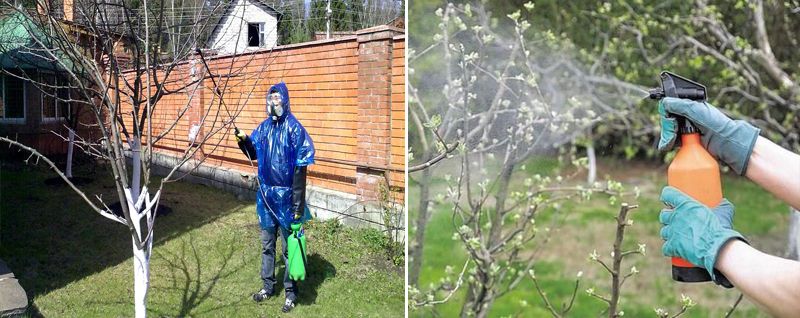
An important element is the spring preparation of fruit trees, as a preventative and eradicating spraying, which protects apple trees from possible diseases and harmful insects.
Stages and timing of spring treatment of apple trees from diseases and pests
Spraying apple trees is crucial, not only to preserving and increasing the future harvest but also to protecting them from various pests. Professional gardeners treat their orchards in four stages for several important reasons:
- insects that can harm fruit-bearing trees do not wake up at the same time;
- Fungal diseases also appear at different times of the season.
For these reasons, spraying is carried out in several stages, depending on the condition of the tree. Treatments are:
- bare branches;
- dormant buds;
- flowering trees;
- young ovaries, as soon as the flowers have fallen off.
For this purpose, use:
- Fungicides. These are special substances used to combat various plant diseases;
- Insecticides. These preparations are used to kill insects.
These substances can be either chemical or biological in origin. The former are more popular among amateur gardeners. Their active ingredient begins to act much faster than its biological counterpart. Despite their alarming chemical origin, this is often the only way to quickly combat a pest that is mercilessly destroying a tree. Chemical treatment of apple trees in the spring is completely harmless to humans. During the ripening period, the pesticides used in tree treatments completely break down into safe microelements and cannot be ingested by humans.
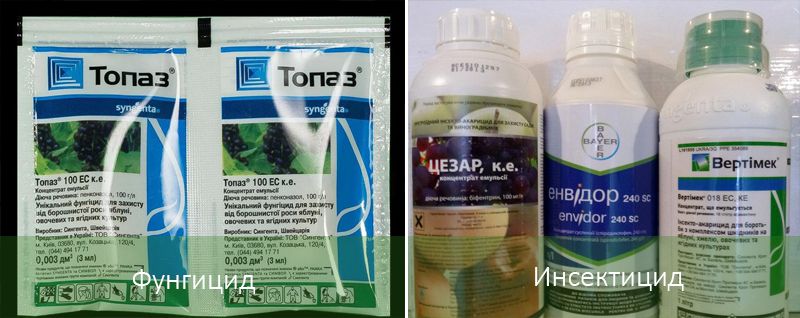
When using any substance, especially chemical ones, it's crucial to pay attention to dosage. Failure to follow the instructions and packaging recommendations can result in burns on young leaves and flowers, which can also lead to crop loss.
Biological and folk remedies can only be used when plant diseases are very minor. Their use is appropriate when the number of pests on plants is small or when the affected area is very small.
First stage of processing
Each gardener chooses the most convenient time for the first spraying of their apple orchard. Typically, it should begin in dry, warm weather, when the ambient temperature is above 5°C, there is no snow, but the buds on the branches have not yet swollen.
The first spraying of bare apple tree branches is necessary to protect the tree from fungal spores, which are actively carried by the wind. This initial treatment does not completely eliminate all spores, but it significantly slows their development.
Fungal growths are destroyed by the following drugs:
- A 3% mixture of lime and copper sulfate. When preparing it, it's important to follow all recommendations and instructions correctly. Otherwise, the mixture will be mixed incorrectly and will not cause any harm to fungal diseases;
- iron sulfate;
- chorus;
- Urea + copper sulfate.
The final mixture requires 5 liters of hot water, 350 g of urea, and 25 g of copper sulfate. Hot water is used because it significantly accelerates the dissolution of the ingredients. The finished solution should be strained and used as a garden spray. The copper in this solution protects plants from fungal diseases, and the urea fertilizes the garden and protects the trees. This treatment significantly delays the blossoming of the garden. It is important to take this into account—apple trees will bloom a week later than untreated orchards. This scenario helps prevent crop damage due to the first sudden frost.
Many gardeners rightly believe that spraying with copper sulfate can be quite dangerous to humans. Copper-containing products are considered hazardous, but treating trees early, especially before fruit set, will not cause harm. As the apple harvest ripens, the copper is completely washed away, making its use completely safe.
It's also worth noting that in early spring, there are no other effective substances other than copper and iron sulfate. During the cold season, using biological agents is completely pointless—spraying trees with biological products in early spring will yield no results, as they are ineffective at low temperatures.
Second stage of processing
Subsequent treatment of apple trees takes place at a later date, when the air temperature is around + 10…+15 °C.
About two weeks pass after the first treatment. Buds on the trees begin to swell rapidly, but this is also the time when harmful insects begin to become active. The second spray will not only combat fungal diseases but also stop insects from reaching the sweet blooms. That's why a mixture of fungicides (products that kill fungal diseases) and insecticides used to control harmful insects is used.
The most dangerous enemy of a blooming apple tree is the apple blossom beetle. It burrows into the center of an unblown blossom and lays eggs. The hatched larvae seal the flower petals with a special sticky substance, live inside, and feed on the plant's sweet juices. Getting rid of them is impossible until they emerge from their safe haven. Flowers infested by this pest will naturally bear no fruit; they appear dry and blackened.
Flower beetles can be destroyed using any insecticides and their mixtures with fungicides:
- Fufanon;
- Decisom;
- Spark;
- Intavir;
- Tanrek;
- 1% Bordeaux mixture (the solution must be 1%. A high concentration can burn young buds, which will have a very negative impact on the condition of the entire tree);
- Horus + Decis (Karbofos, Aktara).
Third treatment
This stage is also known as "Rosebud Treatment." This treatment is aimed at combating the voracious codling moth.
The problem is that this insect actively lays eggs near or on unopened buds. By penetrating the flower, the codling moth larvae actively destroy the future harvest, which is only noticeable in the fall, during harvest. To avoid losing apples, apply a mixture of fungicides and insecticides to the buds when they have already appeared but have not yet opened.
When spraying, don't skimp on the solution—apply it not only to the branches but also to the ground around the trunk, within a 1-meter radius. Pay attention to other fruit-bearing trees and bushes near the apple tree, too.
Insects can quickly migrate from these branches to the apple tree, which will also negatively impact the future harvest. It's important to consider that at relatively high temperatures, many biological products, such as Fitoverm and Fitoksibacillin, lose their effectiveness at temperatures above 10°C.
Fourth treatment
The final spraying stage is applied after flowering, when the young buds reach the size of a small pea. This requires a solution of 2 g of Actara (insecticide) and 2 g of Skor (fungicide) per 10 liters of water. This treatment is applied to the entire tree—the foliage, branches, and trunk circle.
Top.tomathouse.com warns: special considerations for treating mature (old) and young apple trees
Of course, a mature fruit-bearing tree must be sprayed according to all the rules, in four stages in the spring. Young seedlings, which have not yet borne fruit or bloomed, require much less treatment. These plants are not yet as prone to attracting harmful insects, which significantly simplifies the gardener's work. For such apple trees, only three stages will be sufficient, which include the following treatments:
- along bare branches;
- along the green cone;
- after flowering.
Tips for treating apple trees in spring
Before spraying apple trees directly and preparing the solution, you should know several key points:
- Copper sulfate reacts poorly with iron, so avoid using iron tools when preparing the solution. Plastic or wooden sticks are best for stirring, and the solution is best stored in a glass container.
- It's impossible to completely eradicate all pests. When using a "green cone" treatment, there's a chance that many pests dormant in the tree bark will remain alive and continue to cause damage to the apple orchard after awakening. Therefore, repeat treatments with lower concentrations should be carried out after the leaves have emerged.
- When mixing ferrous sulfate, it's important to remember that it tends to oxidize fairly quickly. Therefore, to preserve all its beneficial properties, a small amount of citric acid should be added to the solution.
- When spraying your apple orchard, don't forget about your own personal protection! It's important to avoid contact with the spray solution in your nose, eyes, and mouth. If contact occurs, rinse the affected area with running water and consult a doctor.