Adenium is a tree-like plant of the Apocynaceae family. It is native to tropical Africa and the Arabian Peninsula.
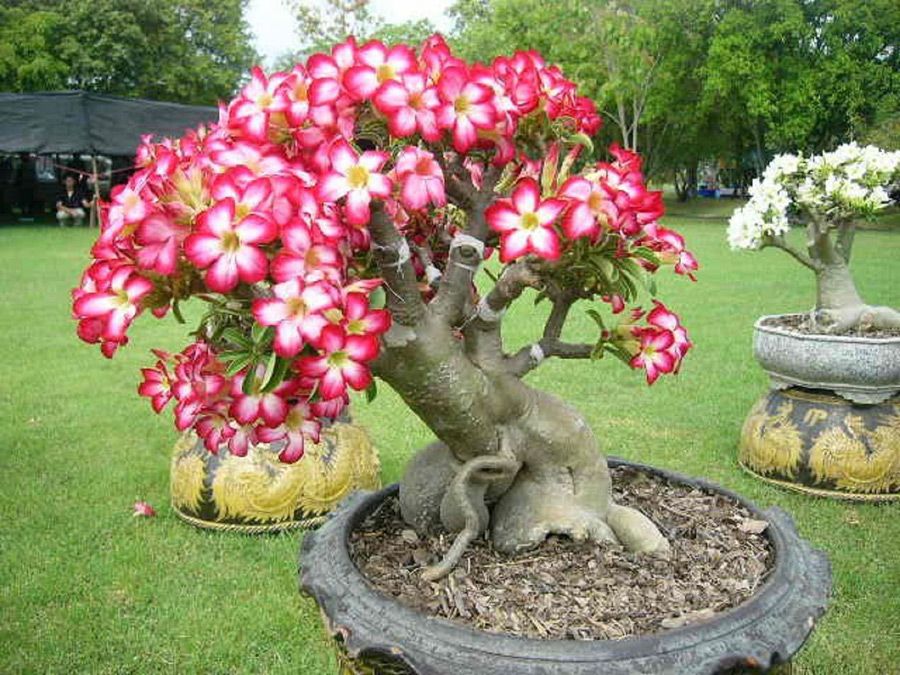
Its name translates as desert rose.
Content
Description of Adenium
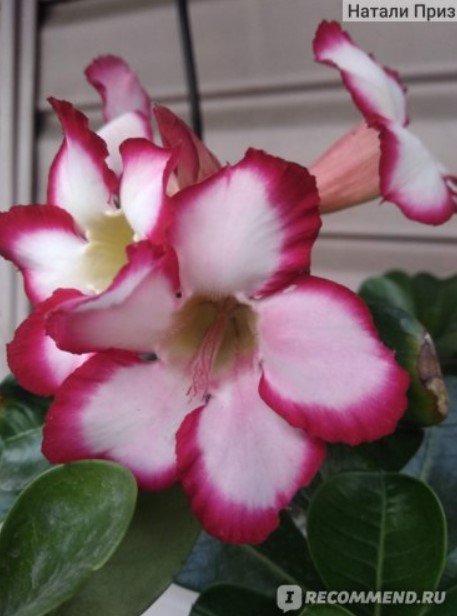
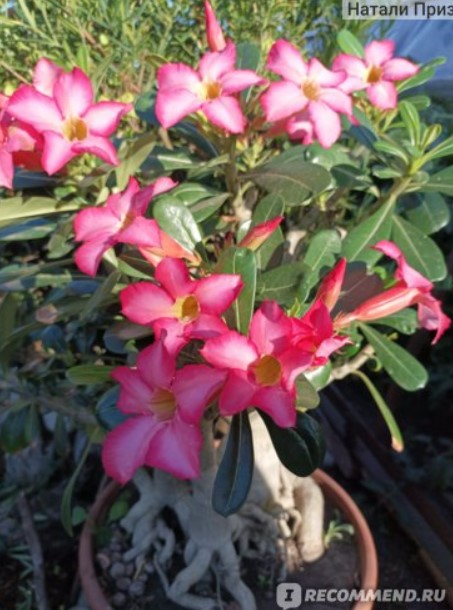
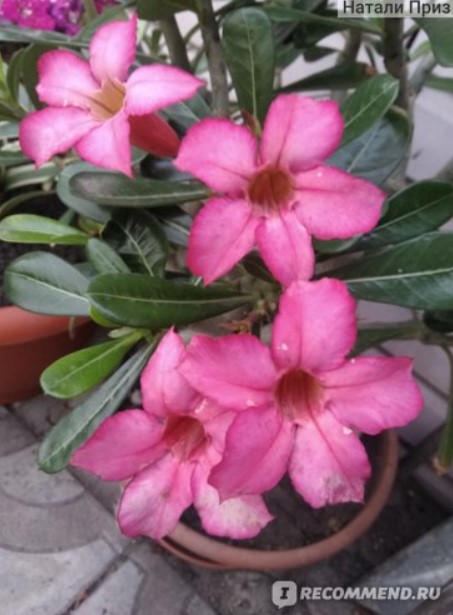
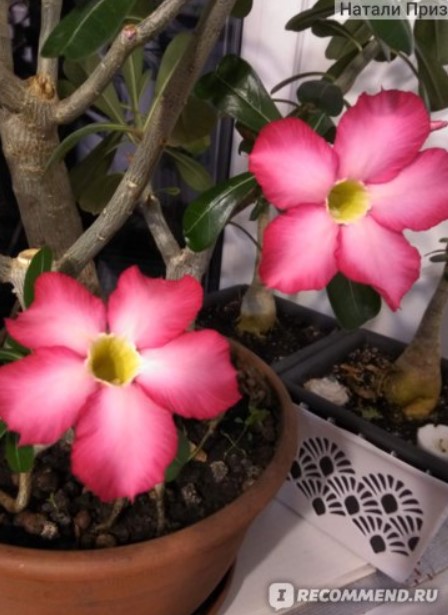
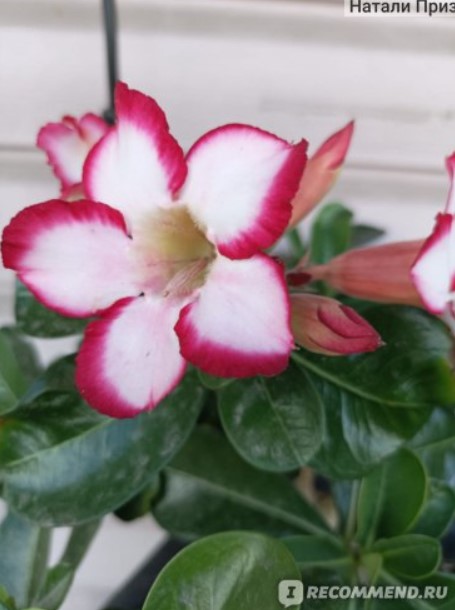
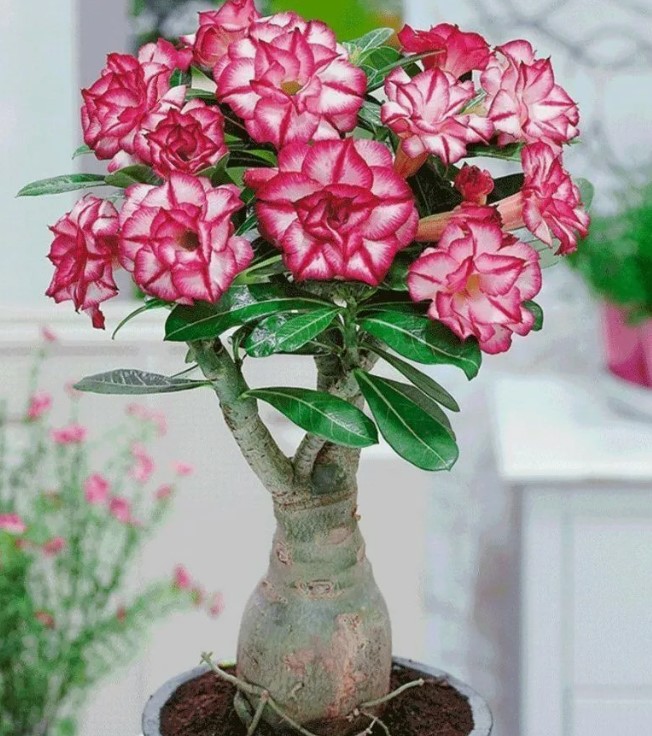
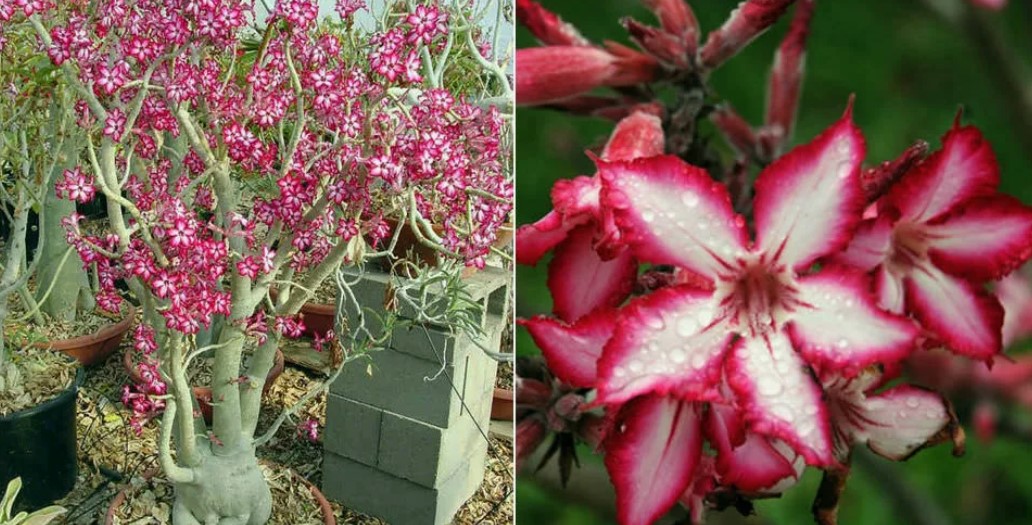
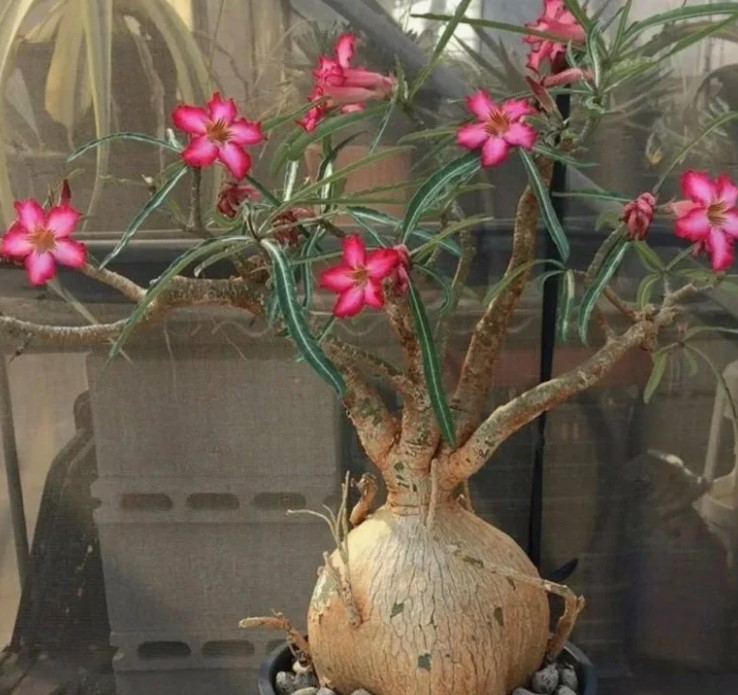
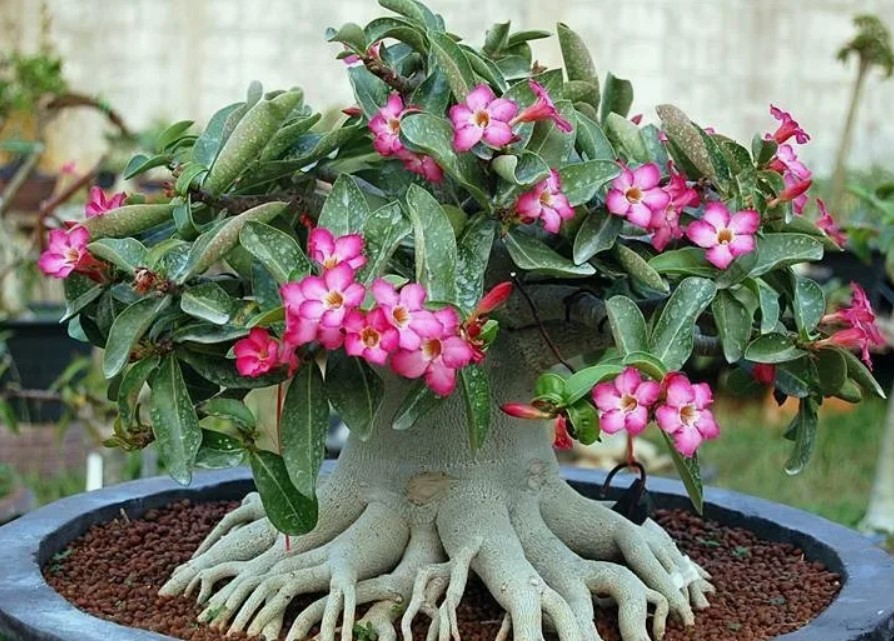
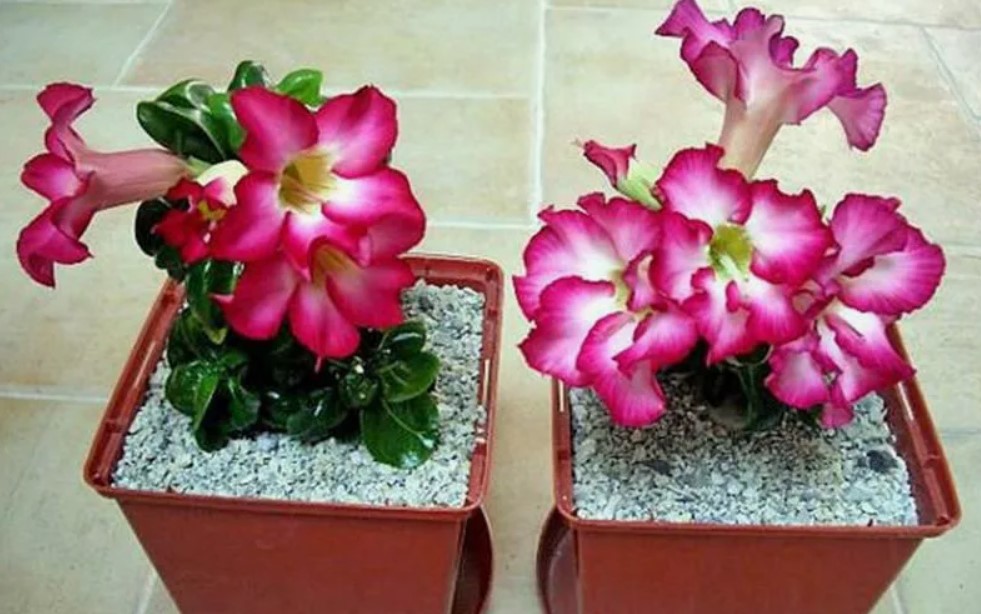
This small tree or shrub is a succulent that stores nutrients and moisture in its lower part (caudex). The branching stem is covered with inflorescences consisting of funnel-shaped flowers 5-7 cm in diameter. Depending on the variety, they come in pink, white, scarlet, red, bicolor, and tricolor colors, and can be single or double.
The leaves are elongated or rounded, green, white, or yellow. Their surfaces vary: glossy, matte, or slightly pubescent.
Flowering also depends on the species, occurring in spring, summer, and fall. Flowering occurs only in the second year of the plant's life, with some varieties blooming one to two years later or six months earlier.
The plant's juice is poisonous.
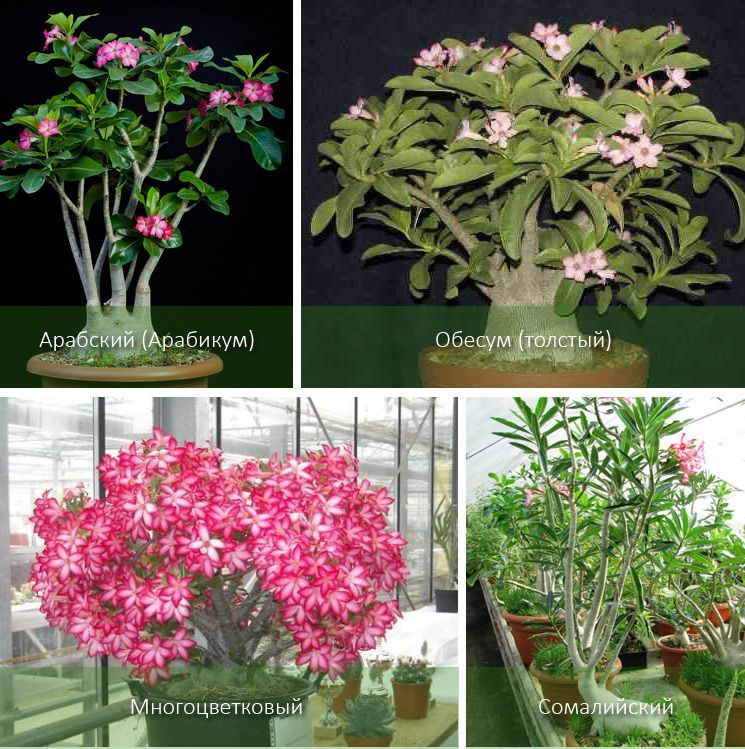
Types of Adeniums
Adeniums differ in growth, leaves, flowers and dormant periods.
| View | Peculiarity | Flowers, flowering period |
|
Arabic (Arabicum) (Adenium arabicum)
|
Low-growing, used as bonsai, an ornamental plant. | Hot pink. March – beginning of June. |
| Obesum (fat)
(Adenium Obesum)
|
It doesn't require much watering, making it a popular indoor plant. Its leaves are waxy and fleshy. |
Large pink or red with white. March – beginning of June. |
| Multi-flowered (Adenium multiflorum)
|
It blooms profusely. It grows slowly, and for half a year it bears neither leaves nor flowers. |
Pink, red, with a light center. At the 4th year of life. In autumn, after the leaves have fallen (2-4 months). |
| Somali (Adenium somalense)
|
The largest. It grows rapidly. Dormant period is November and December. Foliage appears after the peak of flowering in early summer. |
From pink to deep red. With good care - all year round. |
| Socotrans (Adenium Thai socotranum)
|
Slow growing. Growing season: April–August. |
Delicate pink or red tones. Rare flowering. |
| Boehmianum (Adenium boehmianum) 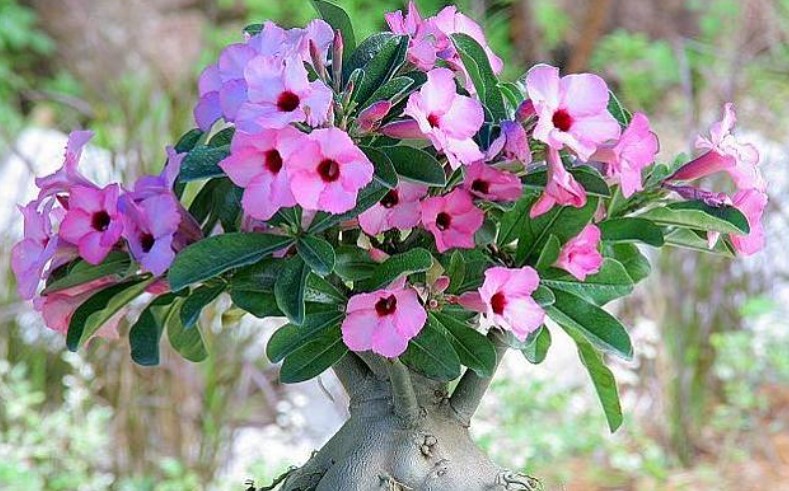 |
Highly poisonous. Large, green, downy leaves with a light border along the sides and center. |
From light pink to dark lilac. April - August (with good care). |
|
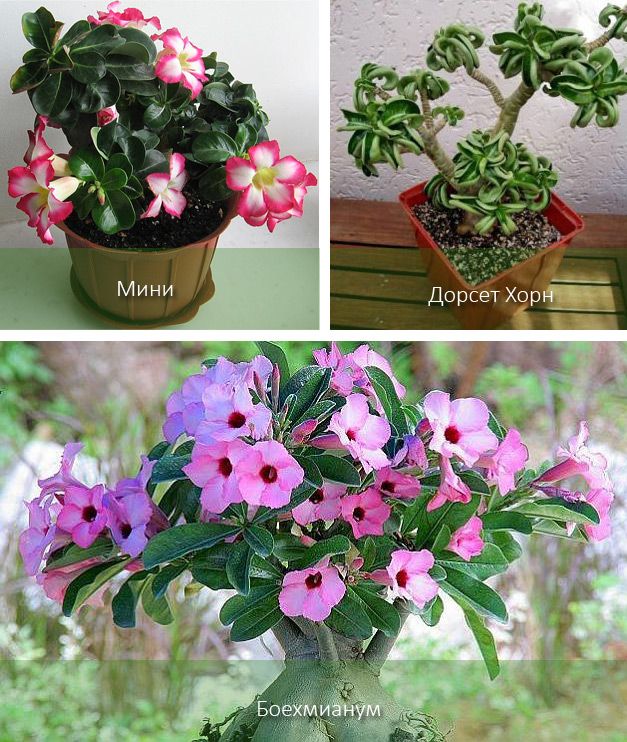
Mini
|
Dwarf, bonsai type. Slow growing. | Large, from white to bright red.
From 2-3 years old, all year round. |
| Dorset Horn (Adenium Dorset Horn)
|
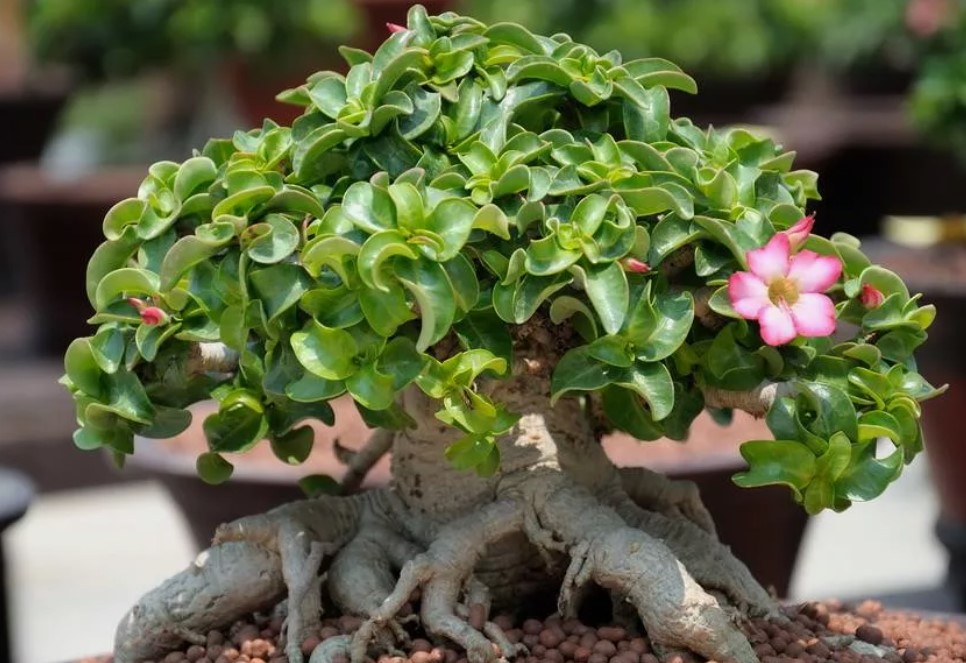
Dwarf. It gets its name from its distinctive leaves, which resemble the horns of the sheep of the same breed. This variety can only be grown by air rooting or cuttings. However, it's not always possible to preserve the curled leaves. It's excellent for bonsai. | Pink or red, with a lighter center. |
Caring for adenium indoors
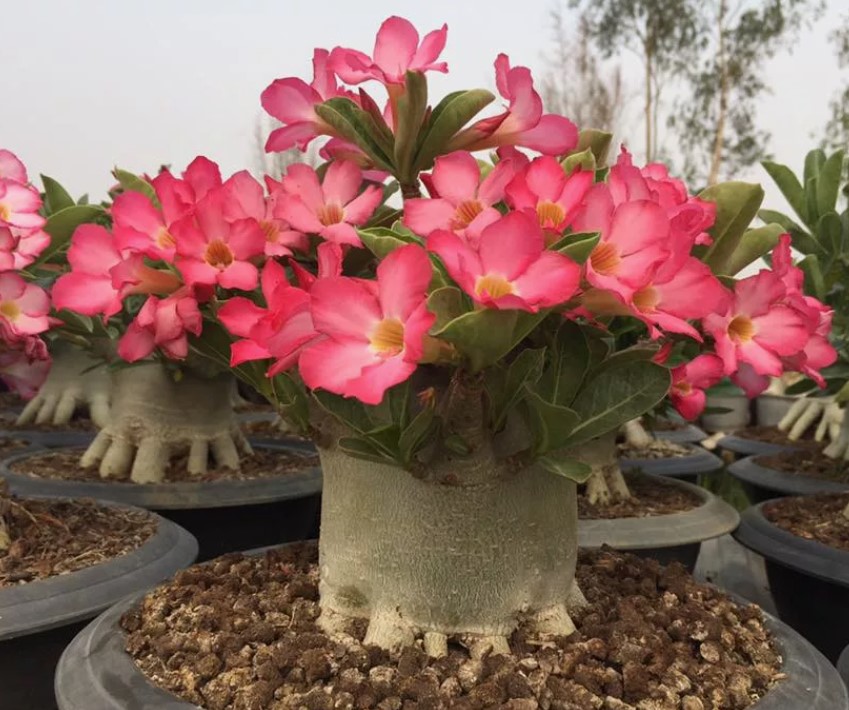
Adenium is an undemanding plant. However, some recommendations should be followed to avoid damaging it.
Location, temperature
Adenium prefers bright, warm locations. Place it on a south-facing window. It's important to ensure at least six hours of sun and temperatures between 23 and 28°C in spring and summer.
In the fall, the plant is moved to a cooler location (12…15°C). It rests (with the exception of some species, such as Samalian and Mini) during the fall and winter. Protect the plant from drafts and temperature fluctuations.
In warm summers they are placed outside, on the balcony.
Watering, humidity
Water adeniums moderately. Typically, once a week is sufficient on hot days. During other spring and summer months, water only when the soil dries out. When the plant sheds its leaves, stop watering. Resume when new shoots appear.
Spray lightly to prevent water from running down the trunk and leaves. Avoid allowing moisture to come into contact with the flowers.
Fertilizers
During the growing season, add special fertilizers for cacti to the water for irrigation once a month.
Transplantation, soil, pot
Adenium's root system quickly expands, so choose a shallow but wide container, preferably in a light shade. In dark pots, the plant's roots will overheat in the sun, which can kill it. It's essential to have sufficient drainage holes to prevent water stagnation.
Young plants are replanted every year, adults - every 2 years, but with an annual replacement of the top layer.
The soil should be loose and slightly acidic. Composition:
- coarse sand, leaf soil, turf soil (equal parts):
- charcoal (small amount).
The prepared soil must be disinfected (microwaved or treated with a fungicide). You can use ready-made cactus substrate.
Formation
Adeniums are pruned before the growing season begins. The plant is watered two days beforehand.
This procedure is not mandatory, but it's necessary if you have specific decorative preferences. Depending on whether you're shaping a tree or a bush, a different approach is required:
- tree - pruning slightly less than one third;
- bush - a little more than one third.
Young plants are only pinched.
Propagation of Adenium
Adenium is propagated in several ways:
- seed;
- by cuttings;
- layering.
Seeds
The favorable time for germination is mid-spring to early autumn:
- The seeds are soaked in warm water (a growth stimulant can be added), placed in a plastic bag wrapped in a damp cloth, and left for 2-4 hours. However, pre-soaking has now been proven to provide no significant benefit.
- Temperature: +28…+35 °C, humidity: 70-90%.
- The soil used is the same as when planting cuttings.
- Spread the seeds on the soil surface in a wide enough container, covering them lightly. The less they are covered, the better the germination rate.
- Cover with cling film and ventilate periodically.
- Maintain a temperature of +26…+32 °C, protect from direct sunlight and drafts.
- When the first leaves appear, acclimate them to full sun; at 4 leaves, transplant them into different containers. At 2-3 months, use 5-6 cm pots. In the first year, they are typically repotted 2-3 times.
Cuttings
Quite a simple method:
- The branches obtained from spring pruning (10-15 cm long, at least 1 cm in diameter) are treated with charcoal and dried. The lower leaves on the cuttings are removed, while the upper leaves are left to activate the plant's vital processes.
- Dip the cuttings into a solution of a root-forming stimulator (Ribav-Extra) and leave for several days.
- Take a medium-sized pot with soil: a mixture of perlite and vermiculite (2:1) or perlite and peat, or perhaps with sphagnum moss (3:1).
- Place the prepared cutting there to a depth of 5 cm. Keep the soil moist, avoiding waterlogging.
- Temperature: +25…+35°C. Light: Intense, but not direct sunlight. Rooting takes approximately 15 days to 10 months.
Air layering
The most effective method:
- In late spring or early summer, during intensive growth, select a shoot with a diameter of at least 2 cm.
- They make a shallow cut around it and wait for the juice to dry.
- Lubricate with a root stimulator.
- Place sphagnum moss on the cut, wrap it in dark film, and secure it with thread or wire.
- Moisten the moss as needed.
- After 3-4 weeks, when roots appear, the cutting is separated and transplanted into the soil.
A flower grown in this way does not have the same pronounced decorative qualities as the mother plant.
Mistakes in caring for adenium, diseases, pests
Adenium suffers most from overwatering, but there are a number of other reasons that affect the health of the flower.
| Signs | Cause | Elimination measures |
| Blackening of leaf tips. | Over-watering of the soil with poor air permeability. | Reduce watering, change the soil if necessary. |
| Darkening of the trunk (caudex), leaf fall. | Excessive watering when the temperature drops. | Reduce watering and move to a warm place. |
| Complete softening of the caudex. | Insufficient watering. | Monitor soil moisture. |
| Softening of the trunk at the surface. | Rotting. | They dig it up, remove the parts damaged by rot, and root the healthy part, replacing the surface layer of soil. |
| Shedding of leaves. | Rest period. | A natural process. |
| The appearance of brown spots on the leaves. | Sunburn. | Place in a bright place, but protected from direct sunlight. |
| Covering the roots with a whitish coating. | Root mealybug. | Spray 3 times every 10 days (Aktara, Regent). |
| The appearance of a white coating on the crown. | Mealybug. | Treat every week until eliminated (Aktara, Fitoverm). |
| Leaf blades become covered with yellow spots, gradually becoming discolored. Webbing appears. | Spider mite. | Spray at weekly intervals until elimination (Aktofit, Talstar). |
| Distortion of the foliage and flowers, their covering with spots. Gradual death of all parts. | Viral disease. | They are destroyed to prevent the disease from spreading to other plants. |
| The appearance of insects. | Aphid. | Treat with insecticides (Actellic, Aktara). |
Top.tomathouse.com warns: Adenium is a poisonous plant.
Care must be taken when caring for the flower.
Replanting and pruning the plant should only be done while wearing gloves.
Wash your hands thoroughly after handling it. It should not be kept in the home with small children or pets.
Reviews of adenium cultivation from gardeners
Review: Indoor flower "Adenium" - desert rose - Review of a miracle succulent.
Advantages: a beautiful, unpretentious and amazing plant that survives in any conditions
Disadvantages: absolutely none
Friends, I absolutely adore plants and all things green because they symbolize life and an incredible thirst for light. Even when it comes to trees and shrubs, I've tried growing birch, spruce, pine, bird cherry, and other trees since I was a child, not from cuttings, but directly from seed. I admit, I've had more than my share of failures, but sometimes I've succeeded, and all these trees have truly taken root, and are currently growing successfully and delighting the eye in our garden.But don't get too excited, as this review isn't about them, but about a rather exotic species of succulent. So, before you is the so-called "Adenium," or more simply, "Desert Rose." By the way, don't confuse this plant with the "Rose of Jericho," as it is sometimes called by the same name.
By the way, you won't believe it, but I bought the seeds of these wonderful, easy-to-grow plants on AliExpress last year. In fact, if you really want to, you can find seeds of real plants on AliExpress, and besides Adeniums, I even grow palms and other things. I also bought the "Zombie Plant" on AliExpress. I've written separate reviews about them all.
The Adenium is perfect for those who occasionally or frequently forget to water their plants and don't adhere to a specific schedule. Why don't these flowers wilt despite this neglect? Because the nature of this flower is such that it can survive without water for a very long time. In real-life conditions, such as deserts, the Adenium can easily survive without water for about three months, yet it is completely resistant to overwatering and sudden and prolonged temperature changes.
From personal experience, I can cite an example: last summer, all my Adeniums were kept on a south-facing window for three months: the sun there was absolutely dreadful, but they didn't care. They withstand such trials with surprising ease, unlike other houseplants.
Moreover, you don't have to worry if they accidentally fall out or get pulled out of the pot. For example, if your cat or children decide to play and accidentally drop a flower on the floor. While you might panic at first, don't jump to conclusions, because even in such unforeseen situations, an Adenium is guaranteed to survive. If you simply plant it back in the soil, or even if you don't plant it, it won't die immediately, but will continue to fight for life until all the moisture accumulated in the caudex is exhausted, which will take three to four months.
Meanwhile, many may be confused about how to overwinter in the harsh Russian winter. Believe me, adenium growers even live in Kamchatka, and the window temperature there rarely rises above 10-15 degrees Celsius, yet this plant thrives even in such conditions.
In short, feel free to order this wonder from Chinese online stores or buy it at local retailers. You definitely won't regret it, and you'll fall in love with this plant so much that you'll even start propagating it yourself at home. Every year, the Adenium will bloom profusely and will definitely produce seeds. Incidentally, the seeds from Chinese sellers are cheaper than those from local retailers.
There are many opinions on the specific soil these plants prefer, but based on personal experience, I can confidently say that Adeniums can grow in both ordinary black soil found in a yard and a more specialized ready-made soil mixture. In the future, purely as an experiment, I plan to grow them without soil at all, using a mixture of cardboard and polystyrene foam. It sounds crazy, but they say Adeniums grow even in such conditions. Humanity has accumulated quite a bit of that stuff. If the experiment is successful, why bother getting soil from somewhere else? Instead of throwing away the polystyrene foam, you can plant houseplants in it.
Thank you all for your attention and love nature :).
Usage time: 9 months
Cost: 17 ₽
Year of manufacture/purchase 2017
General impression Review of the miracle succulent.
My rating
5
I recommend it to friends YES
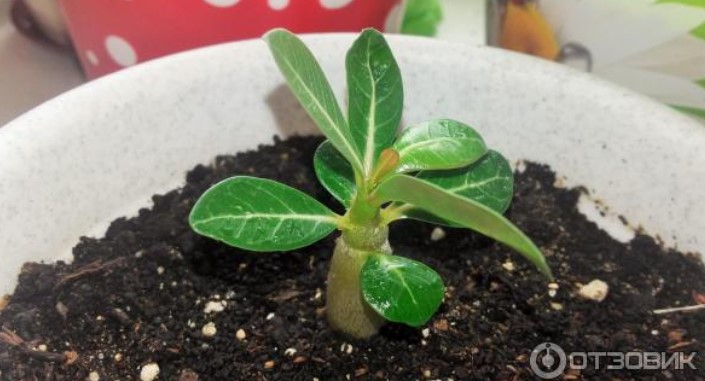
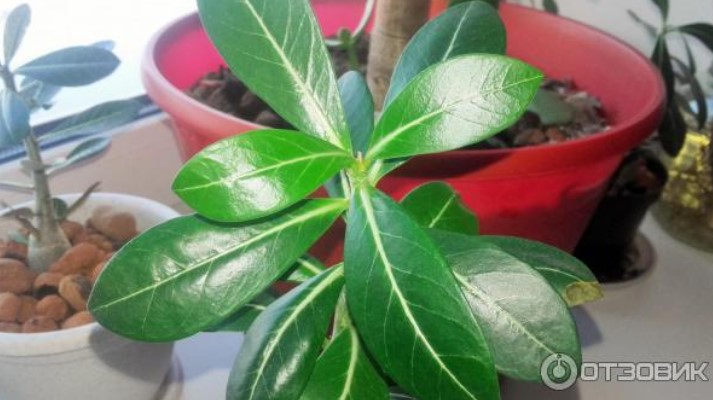
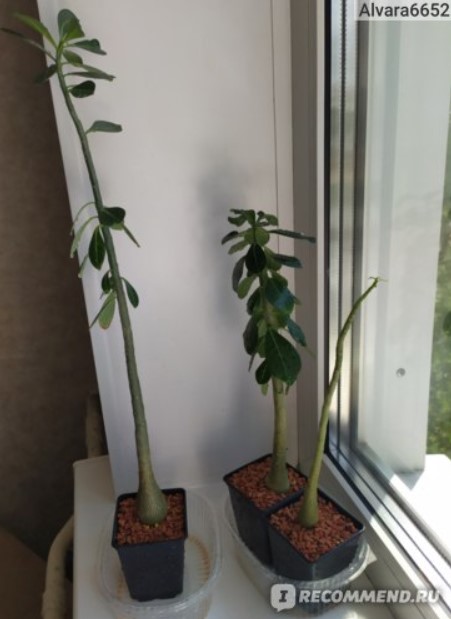
My most capricious "Desert Roses." Growing from seed
Hi all)))Some time ago, I discovered these fascinating plants called adeniums when I stumbled across a website selling their seeds. I wanted to grow some myself, so I placed an order for several varieties of adeniums.
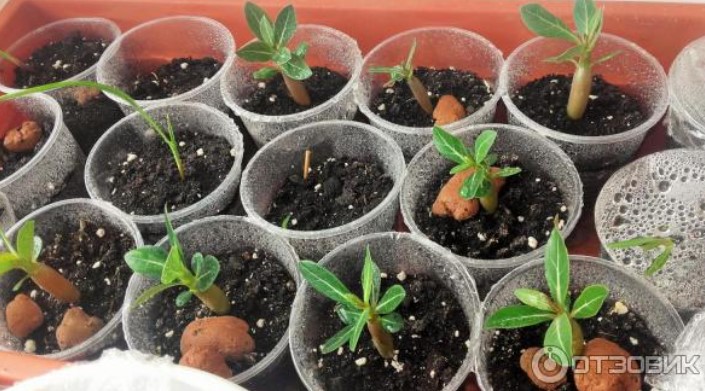
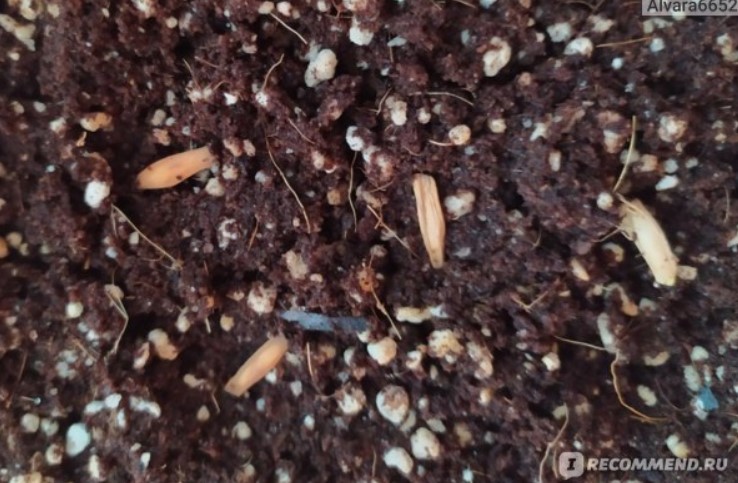
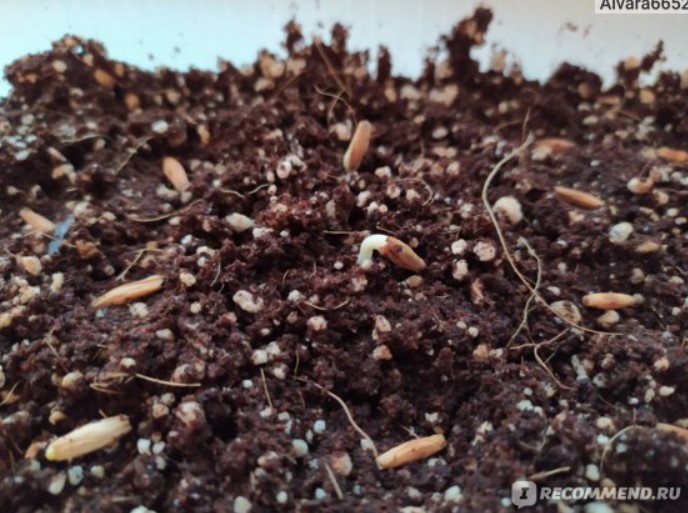
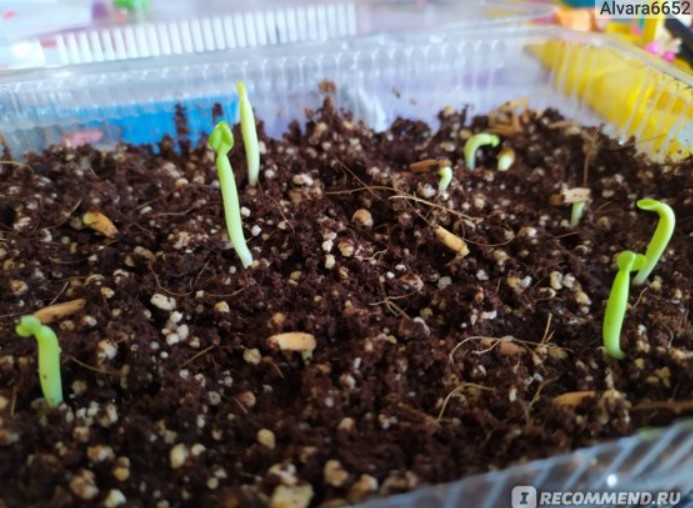
On December 1st, I sowed the seeds. To sow them, you need a sterile mixture of coco peat and perlite (50 percent each). The seeds are simply laid out on the moist mixture (do not bury them under any circumstances) and placed in a greenhouse. The greenhouse needs to be ventilated once a day.
The germination temperature is 30-35 degrees Celsius. This is crucial, otherwise the seeds simply won't germinate. That's why it's best to sow them during the cold season, when the central heating is warm. My greenhouse with the seeds was located on the radiator, and I measured the required temperature with a simple digital thermometer.
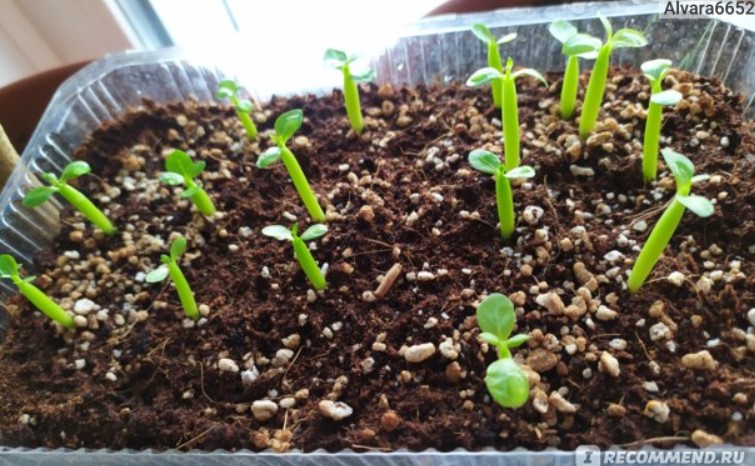
On December 4th, I already noticed the first shoots. The adenium is growing quickly and without any problems.
December 7
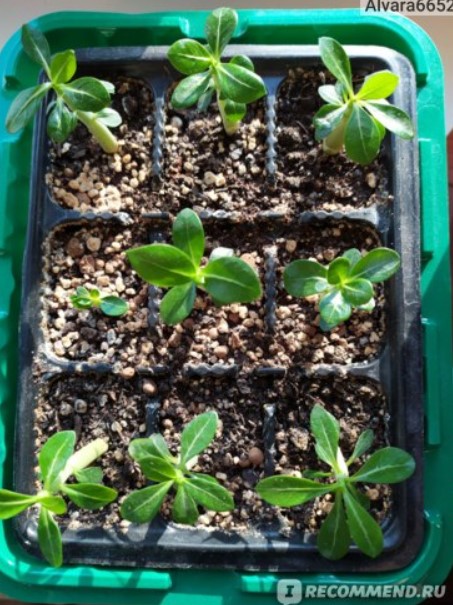
On December 9th, I moved the greenhouse with the seedlings to the windowsill, where they'll be exposed to light. It's generally recommended to place them under a grow light, but I didn't have one at the time.
December 27
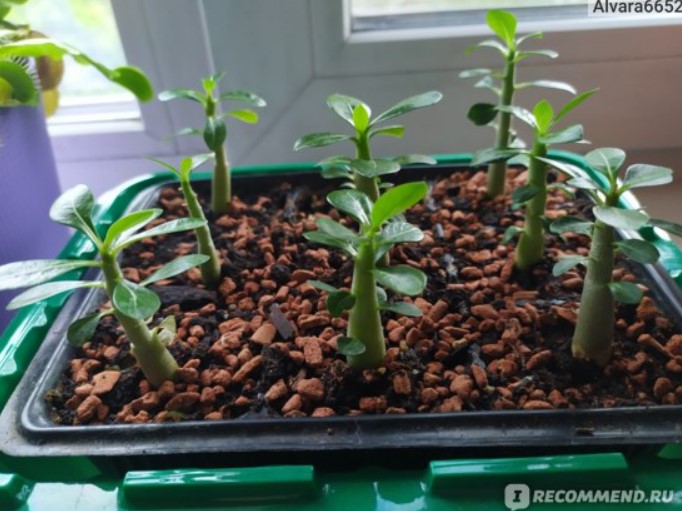
April 28th. The Adeshki have grown noticeably and become stronger.
June 10th.
Caring for adeniums has proven difficult for me personally. They're my most capricious flowers, and who knows why. Apparently, they're just not my type. I have about 30 orchids and carnivorous plants at home, and even those aren't that difficult to care for.
The only thing that's easy to care for is the almost 100% germination rate of the seeds. They require plenty of warmth and direct sunlight. The substrate must be allowed to dry completely between waterings. It's very easy to screw up with watering, especially in winter, and adeniums are unforgiving. Even the slightest overwatering and they start to rot. They also rot due to cold temperatures. I even read on one website that some hobbyists place their adeniums on a special heating mat for reptiles during the winter.You can use any fertilizer, but it’s best for cacti and succulents.
The pot needs to be tight, so the plant doesn't get overwatered. The soil needs to be light and loose. My adehis are currently growing in Seramis.
In the end, I gave almost all my plants to my mother-in-law; they grow well with her. I kept three for myself, which is more than enough for me.
Incidentally, it's best not to keep adeniums in families with small children—they're highly poisonous and are among the most dangerous houseplants. They should also be kept out of reach of pets.
I recommend growing adeniums to those who are prepared to dance with a tambourine in front of them—that is, those who have a warm, sunny windowsill and are willing to indulge this flower's every whim. Although I admit, growing adeniums from seed is very interesting and much cheaper than buying a ready-made plant.You can buy seeds anywhere; I've seen them on marketplaces like Ozon and VB. Even AliExpress sells genuine adenium seeds at very attractive prices. So, I recommend learning to grow adeniums with seeds from AliExpress, and then moving on to rare and varietal varieties.
Alvarа6652
does not recommend
Adenium - a scarlet flower from a fairy tale
The first time I saw this fabulously beautiful and unusual flower was abroad—in Turkey, in pots near expensive hotels. It certainly made a huge impression on me.
Bright, very unique. I really wanted to bring this beauty home. I read online that I could try propagating it by layering, and I took the plunge. After asking the owner of a hotel for permission, I cut a small branch from a mature plant, wrapped it in a damp cloth, and packed it on a plane.
I placed the cutting in water and on the windowsill. For a long time, there were no results, but after about two months, roots appeared. I was overjoyed! Hooray! I did it!!I bought hydrangea soil and planted my small cutting. It was already winter outside, and my adenium was slowly gaining strength on my windowsill. After a couple of months, I cut off the top of the cutting to shape its crown. A month later, I had three shoots and buds that were rapidly growing. When the first bud opened, and the pot was sitting on my work windowsill, the whole office came running. Someone even called it a cartoonish, fairytale scarlet flower.
It's now a fairly mature, independent plant, with a thick caudex (plant trunk). To create a more attractive appearance, I later raised the plant's roots a little higher above the ground.
Over time, I bought several seeds of other Adenium species online and grew them. Now I'm enjoying about seven different varieties.
The most important secret to growing adeniums is to water sparingly, so as not to rot the roots. A little at a time is better. It's better to underwater than overwater this plant. I move all the pots outside in the summer, even though I live in Siberia, but summers here are very comfortable for adeniums. The plant thrives in the summer sun and then blooms profusely all winter. After flowering, around February, trim all shoots and apply wax to the cut area to prevent unsightly pits from forming. After pruning, thoroughly wash your knife or blade and your hands, as the plant's sap is toxic and can cause swelling if it comes into contact with the mucous membranes of the throat. This characteristic of the plant should also be taken into account by those with small children.
Pruning will encourage the formation of beautiful new shoots and a lush crown. With proper care and sufficient light, by June you'll once again have a beautiful bush with a profusion of buds.
I recommend purchasing this beautiful flower at a flower shop or growing it from seeds for those who love exoticism, unusualness, and brightness!
Advantages
Takes up little space
Easy to root
Extraordinary flowers
Unpretentious
Very beautiful
A very unusual plant
Makes me happy every day
Flaws
Poisonous
Natalie Prize
recommends