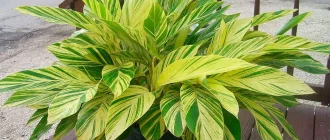
Ficus microcarpa (moklame or mokleim) is an evergreen tree-like shrub belonging to the Mulberry family. It is native to southeastern China, Japan, the Philippines, Taiwan, Indonesia, and northern Australia.
Content
Description of Ficus moklame
In the wild, the plant reaches 25 meters, but when grown indoors, it's no more than 1.5 meters. Its unusual features include a smooth, thick, gray, yet thin and delicate, trunk-root and a bright green or variegated crown. This epiphyte has numerous aerial rootlets.
Ficus microcarpa produces small, berry-like fruits, hence its name. These fruits, like the flowers, fail to develop indoors due to a lack of pollination. The leaves of this miniature tree are glossy and lanceolate, with short petioles.
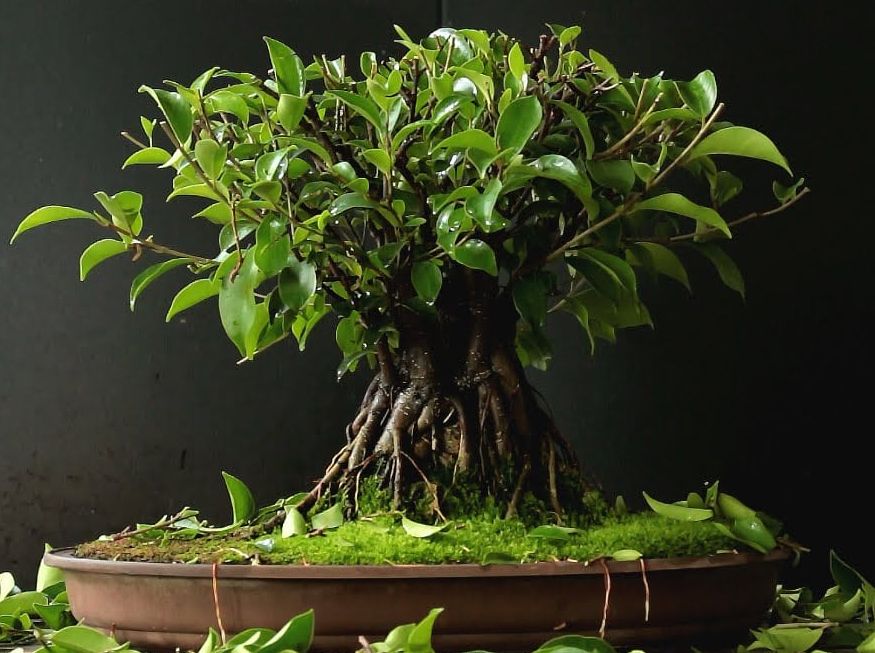
Used in ornamental floriculture as bonsai.
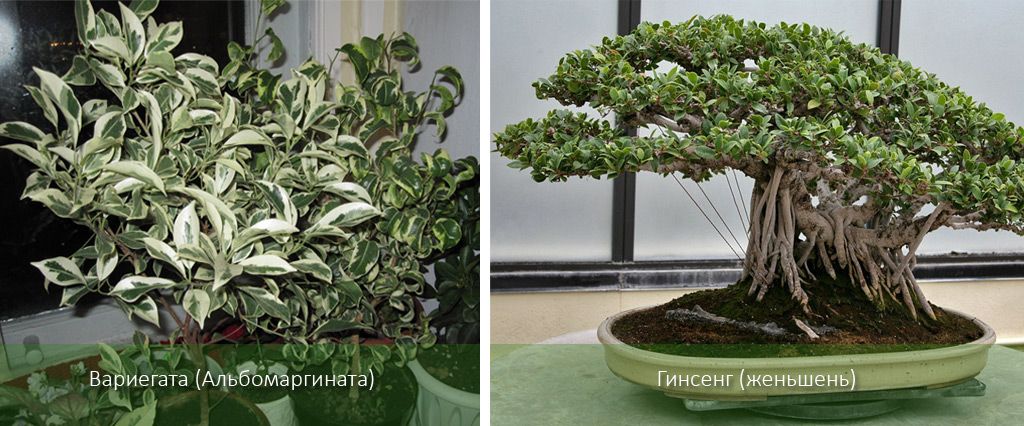
Two representatives of Ficus microcarpa
The difference between the species of this ficus is small, only in the color of the leaf blade:
- Variegata (Albomarginata) – variegated leaves, loves light. Unpretentious.
- Ginseng's main advantage lies in its distinctive thick roots, while its foliage is plain green. When shaping bonsai, the emphasis is on the root system, so crown pruning is performed.
Caring for Ficus microcarpa at home
Ficus microcarpa is unpretentious in care, but with proper shaping you can get bizarre bonsai shapes.
First steps
Proper care of the plant after it arrives at home determines its future well-being.
It's crucial to place the flower away from other plants and monitor its condition closely. If pests or disease are detected, appropriate measures must be taken.
Initially, the plant will shed its leaves; this is a natural acclimatization process. Regular watering and daily misting, along with a growth stimulant, are necessary. After 14 days, the ficus can be repotted.
Location, lighting
Immediately after purchase, determine the location of the flower.
The plant prefers dim lighting, high humidity and no drafts.
Ginseng is best placed on north, west, and southwest-facing windows, while Veriegata thrives on east and southeast-facing windows, as it prefers more light. Fluorescent lighting is used in winter.
The ficus tree should be located at least 2 m away from heating systems.
Temperature
The preferred temperature is +19…+24°C. In hot summer, ventilate the room, but avoid drafts. In winter, when the plant is dormant, the temperature can drop to +15°C. If the ficus container is on the floor, ensure that the roots do not freeze.
Watering, humidity
Proper watering is crucial, as it depends on the season, room temperature and humidity, pot size, and other factors. It's important to monitor the plant's condition and adjust care accordingly if any deviations occur.
The plant prefers moderate watering. If it lacks moisture, it will drop its leaves. You can monitor the soil. When it's dry, water it.
Comfortable humidity is 70%. If humidity is lower, the ficus should be misted periodically and given a warm shower once a month.
Transplantation, soil, pot
Young ficus trees require annual repotting, while older trees require it every two years. This is done in early spring.
The step-by-step process consists of the following steps:
- The pot is taken 4 cm larger than the previous one, but if the flower has not increased in size much, it is enough to replace the soil;
- Don't water the plant to avoid any old soil residue clinging to the roots. Carefully remove it from the pot, shaking off any excess soil. Trim the roots slightly.
- Take a prepared container with drainage and a substrate for ficus plants. The soil can be prepared in advance using equal parts of leaf turf, peat, and sand, with the addition of ash (0.5 parts).
- Place the tree in the center of the pot and sprinkle it with soil, compacting it by tapping on the container.
For older plants, the following soil composition is preferable:
- leaf soil and turf (2 parts each);
- sand and humus (1 part each)
- charcoal (0.5).
Top dressing
During the growing season (spring to fall), ficus requires fertilization every 14 days. Fertilization can be combined with spraying every 20 days. In this case, reduce the concentration of the fertilizer (see instructions). Special mixtures for deciduous trees or bonsai are used. Dormant season (late fall to winter) requires fertilization every 40 days.
Formation
To create a beautiful crown, the plant is pruned regularly. This is done in the spring and summer, when the flower is actively growing. New branches are allowed to grow 10 pairs of leaves, then trimmed back to three. The milky sap that has been released is carefully washed off and the plant is sprinkled with activated charcoal powder.
If you want to grow a bonsai, trim the top of the ficus tree when it reaches 15 cm to encourage lateral shoots. After that, pruning is up to the owner's discretion.
Reproduction
Ficus microcarpa is propagated in three ways.
Cuttings
The most popular method:
- Take the cuttings left over from pruning (cut at an oblique angle) and place them in warm water for a day.
- Move to a new container with warm water and added charcoal.
- When roots appear, plant them in a small glass with soil, covering it with a transparent container.
- New leaves are a signal to transplant the cutting into a larger pot, burying it 3-5 cm deeper. A greenhouse is also created. Regularly mist the seedling with water.
- Rooting takes a month.
Layering
When propagating ficus in this way, the characteristic features of the mother plant are not transmitted:
- A cut is made in the tree bark (10 cm), 50 cm from the top.
- After drying the cut, wrap it in moss and film.
- After roots have formed in this place, the top is separated from the main trunk and planted in another pot.
Seminal
This method allows you to grow a plant with an unusual type of root:
- Moistened and stratified seeds are placed in a wide, shallow container with a drainage layer and moist soil.
- Spread over the surface, sprinkling with sand.
- Cover with a transparent material (glass, film).
- Plantings are kept at a temperature of + 22…+25 °C.
- After 14-28 days, when the first pair of leaves appears, the seedlings are planted.
- Spray regularly.
- After 2 months, they are placed in separate pots.
Mistakes in caring for Ficus microcarpa, diseases, pests
If you don't follow the proper care guidelines for your Ficus microcarpa, it can become diseased or even die. Overwatering the plant can lead not only to root rot but also to pests such as spider mites. Insufficient humidity and excess heat can promote aphid infestation.
| Manifestation on leaves, etc. | Reasons | Elimination |
| Falling down. |
|
|
| The appearance of dark spots. | Root rot. | Reduce watering. Allow the soil in the pot to dry out. Add drainage holes. |
| Darkening, softening of roots. | Fusarium. | Move to a warmer place, water as the soil dries out. |
| The appearance of a whitish coating and cobwebs. | Spider mite. | Treat with a swab soaked in an alcohol or laundry soap solution or spray with insecticides (Actellic). |
| The appearance of dark spots, which upon closer inspection are insects. | Aphid. | Bathe in a solution of tobacco or soap. |
Top.tomathouse.com informs: Ficus microcarpa – benefits and harms
The ficus is considered a plant that creates a cozy home and stability in family life. It also purifies the air, enriching it with oxygen and absorbing harmful substances. However, the plant's sap is poisonous.
All manipulations with the flower should be carried out with gloves and it should not be kept in a house where children and animals live.