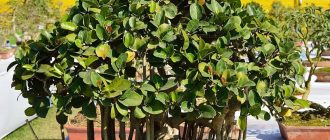
The sacred fig is an evergreen tree from the mulberry family, known by its Latin name, ficus religiosa, also known as pipal or bo. In the wild, its trunk grows to enormous proportions and can take decades to mature. A mature fig can reach 30 meters in height.
Legends about the name of the ficus
The plant's name, the sacred fig (from the Latin ficus religiosa), is not accidental: according to Buddhist belief, Siddhartha Guatauma, a prince from Northern India, set out in search of enlightenment. After wandering the mountains for a long time, he decided to rest and chose a beautiful spot beneath the leaves of a bo tree. Meditating beneath it, the prince received his vision and became the first Buddha. When European powers arrived in India, they saw thickets of bo trees around ancient Buddhist temples, hence the word "sacred" in this species' name.
Home care
At home, the trees grow small: from a few centimeters to 5-6 meters.
Location, lighting, temperature, humidity and watering
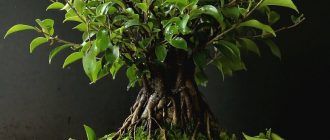
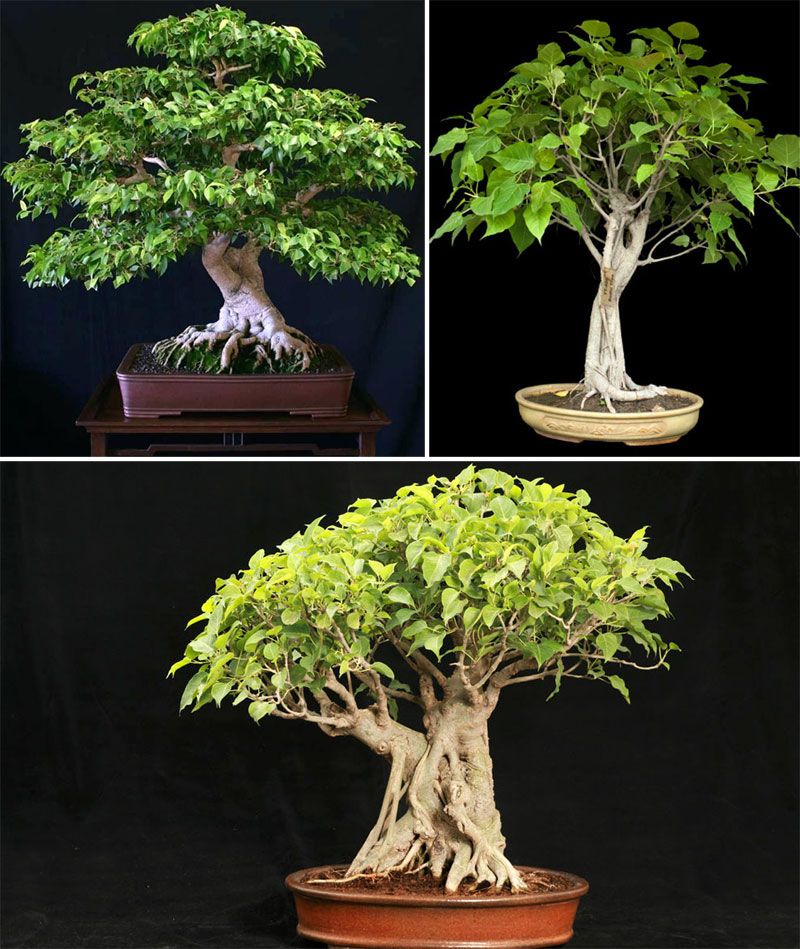
The Pipil is one of the most popular bonsai trees. The most important factor in growing the Bo tree is ample light.
In summer, it is recommended to place the pot with the plant in an open place, and in winter, in a well-lit room.
Optimum temperature: not less than +22°C in summer and +15°C in winter.
Water your ficus only when the soil is dry. In winter, it's best to reduce the frequency of watering and mist the leaves.
Selecting a container, soil, replanting, pruning
The plant will grow well in both plastic and clay pots. Repotting should be done regularly, especially when young (1-2 times a year). The sacred fig grows from seed in about six weeks.
The plant is undemanding to soil, but for proper growth, soil with turf and sand should be added to the purchased soil.
Top dressing
The tree doesn't require much fertilizing. To promote proper growth, it's recommended to add fertilizers containing nitrogen and potassium to the soil. This is best done in the fall and spring.
Reproduction
Reproduction is done in two ways:
- Seeds are more popular, as they almost always take root. The price of sacred fig seeds depends on the producer.
- Cuttings aren't always effective. Many seedlings don't take root in the soil.
Pruning is carried out regularly during the dry season to form a neat crown.
Pests and diseases
Symptoms of unhealthy growth include excessive leaf loss. This may be due to improper care. Once the plant reaches three years of age, a natural process of foliage renewal occurs.
Various pests can appear on the bark. The only possible solution is to purchase chemical pesticides to kill insects such as moths, scale insects, aphids, and mealybugs.