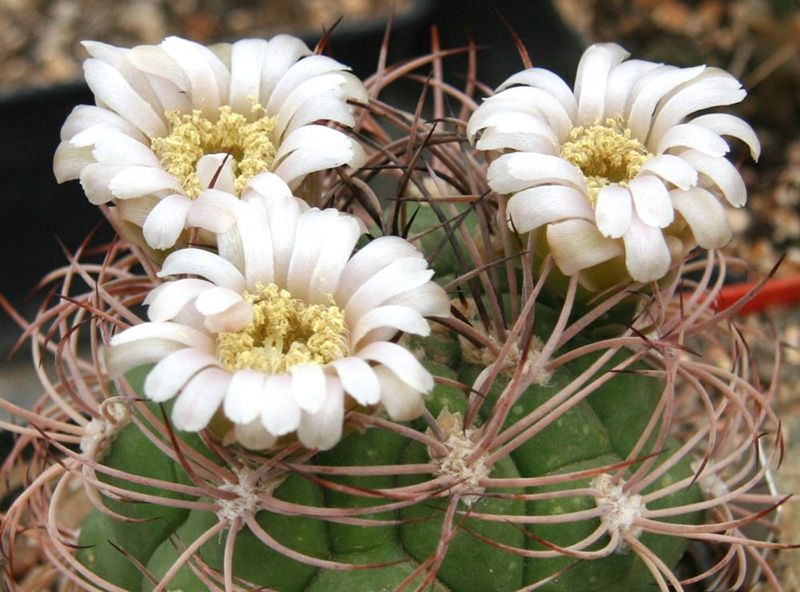
Gymnocalycium is a cactus native to South America. Its name comes from the Greek words gymnos and calycium, which translate as "naked cup." Interestingly, the shoot from which the plant's buds emerge is not covered with bristles or hairs, as in other cacti. An alternative Russian name is "golochashechnik."
Content
Description of Gymnocalycium
Gymnocalyciums are spherical cacti, flattened at the top. Each ball can reach up to 15 cm in diameter in a mature plant. The maximum height is 30 cm.
The cactus is prized for its large inflorescences. They come in a variety of colors: yellow, white, pink, red, and greenish-brown. The succulent itself also varies in color, ranging from grayish-green to brown with a hint of light green.
There are over 80 varieties of Gymnocalycium, each with a distinct appearance. Specimens grown indoors are even yellow or red. They can only grow when grafted onto another plant. The plant is distinguished by its ribbed stems covered with tubercles.
Popular types
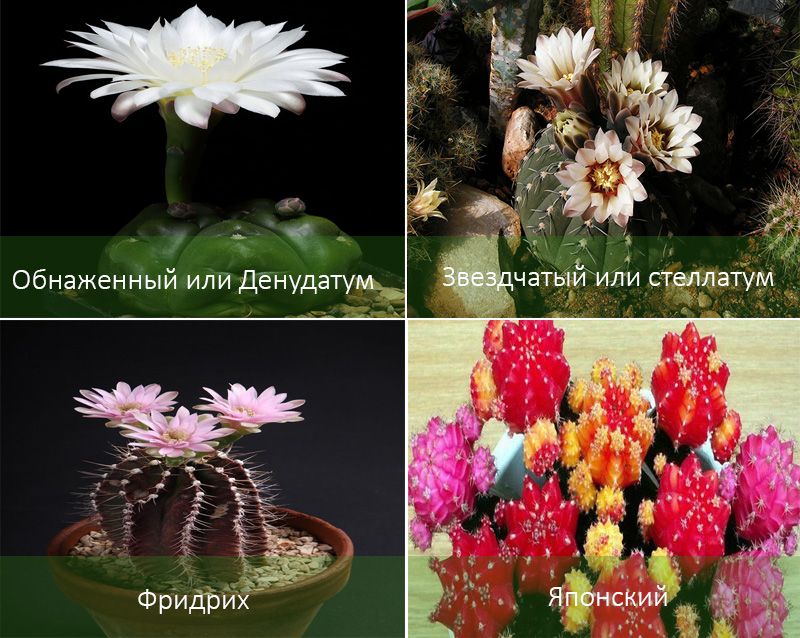
In the wild, Gymnocalycium species are not very diverse, but cultivators have developed many artificial indoor varieties.
| View | Description |
| Naked or Denudatum (Gymnocalycium denudatum) 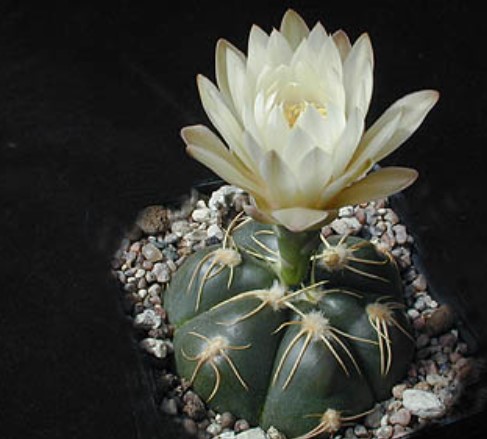 |
A round succulent up to 8 cm tall, covered with small spines. Its color is grayish-green and glossy. It has 5 to 8 ribs and pink flowers up to 6-7 cm in diameter. |
| Stellatum or Starry (Gymnocalycium stellatum)
|
A flattened sphere with numerous ribs. The cactus has vertical rows of downy areoles, from which grow three to five spines. They point in different directions, giving them a star-like appearance. |
| Mikhanovich (Gymnocalycium mihanovichii) 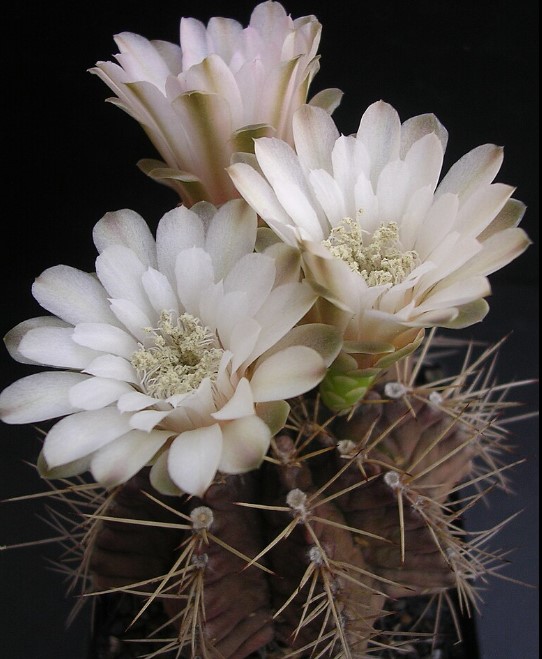 |
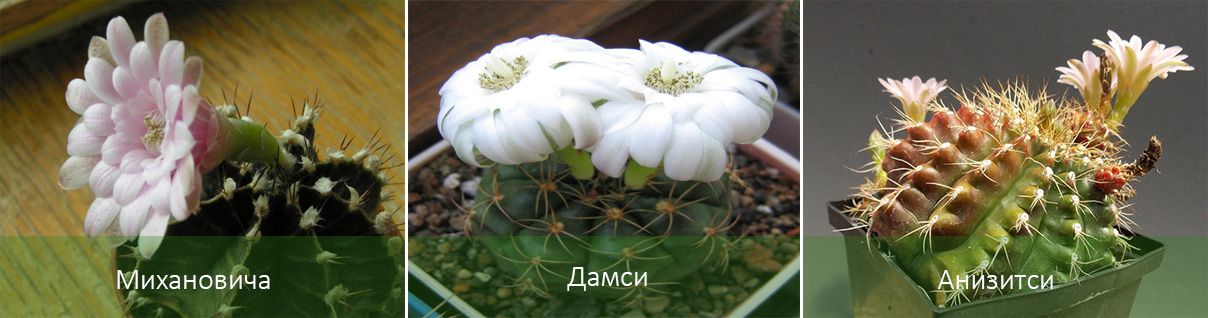
A spherical cactus with a gray-green or reddish stem. The inflorescence has up to a dozen sharp ribs covered with spines up to 2 cm long. The flowers are bright orange or scarlet, pink, or white. |
| Mikhanovich's variety of Friedrich
(Gymnocalycium mihanovichii var. friedrichiae)
|
Due to a lack of chlorophyll, the cactus has a reddish tint. |
| Japanese
|
A hybrid of the previous variety. It can only survive when grafted onto another plant. The advantage of this Japanese succulent is its vibrant color: from yellow to red, burgundy, and even black. |
| Damsi (Damsa)
(Gymnocalycium damsii)
|
In spring, several large white flowers appear on it. |
| Anisitsi
(Gymnocalycium anisitsii)
|
From April to September, it blooms with small white calyxes. As it grows, it can become very elongated. |
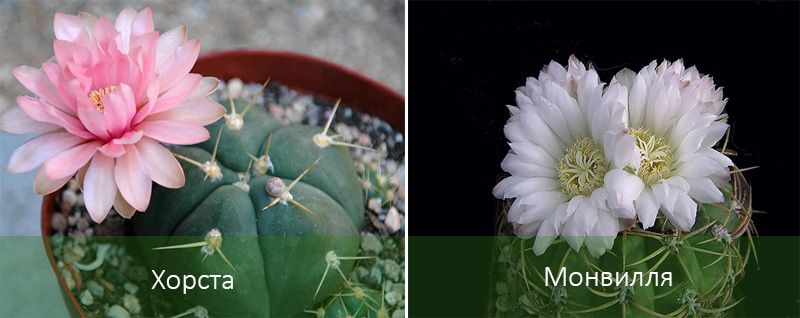
| Horst
(Gymnocalycium horstii)
|
It is distinguished by buds of lilac, cream or pink color, which when opened reach 10 cm in diameter. |
| Monville (Gymnocalycium monvillei) 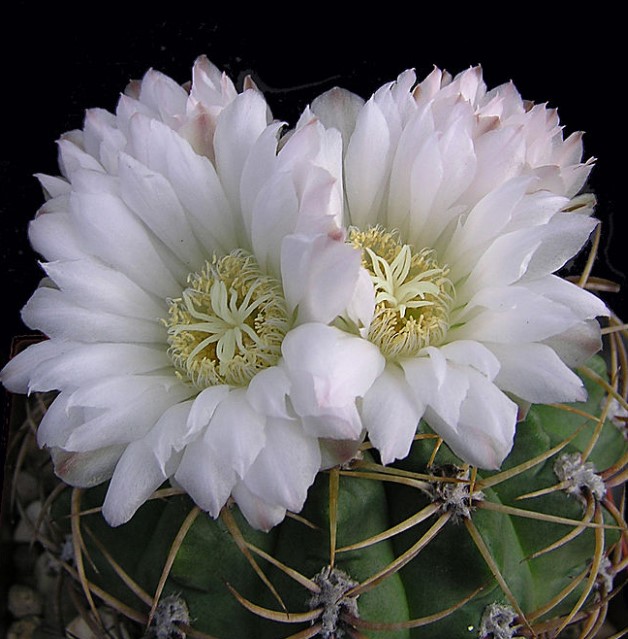 |
It has white or pinkish sepals up to 8 cm in size. |
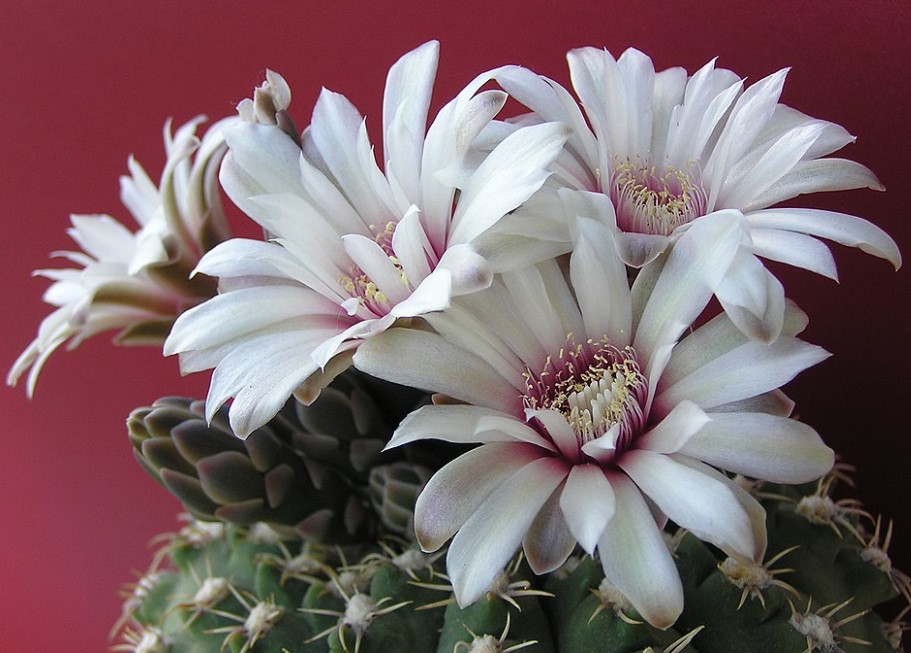
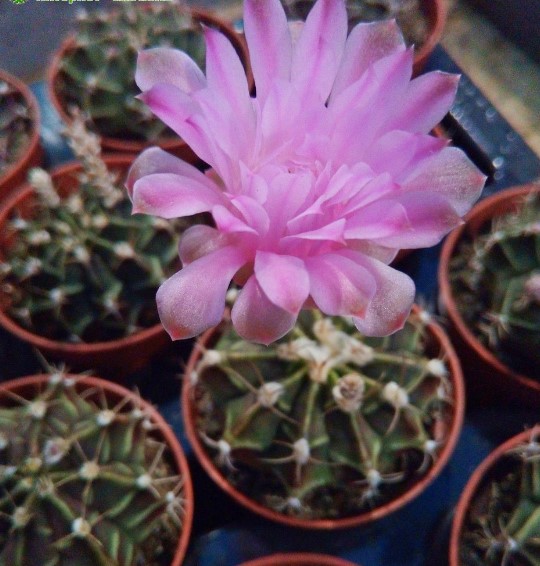
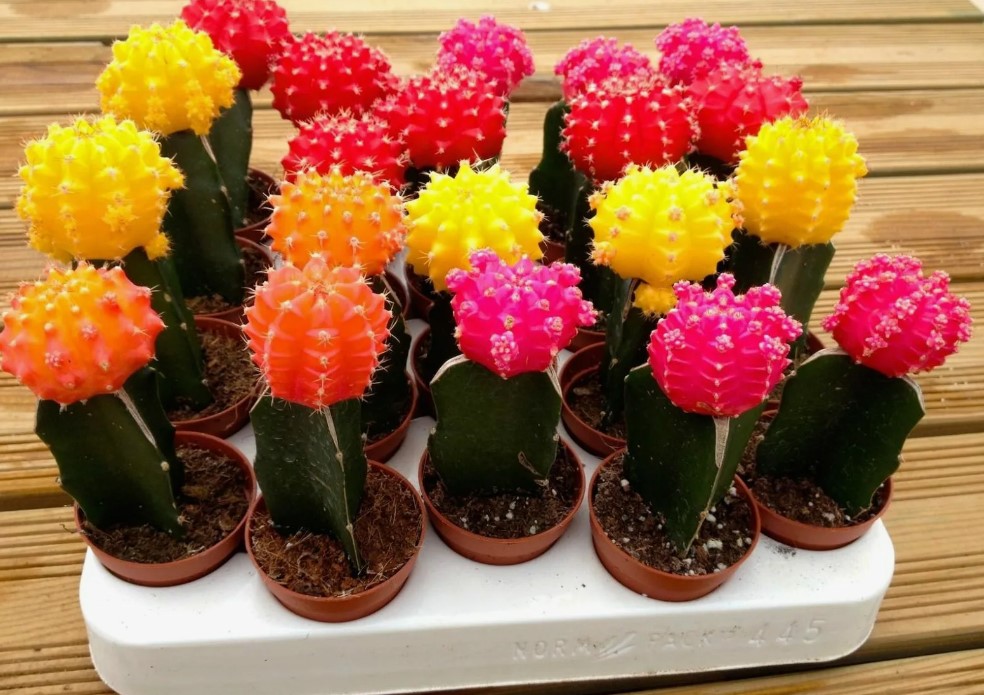
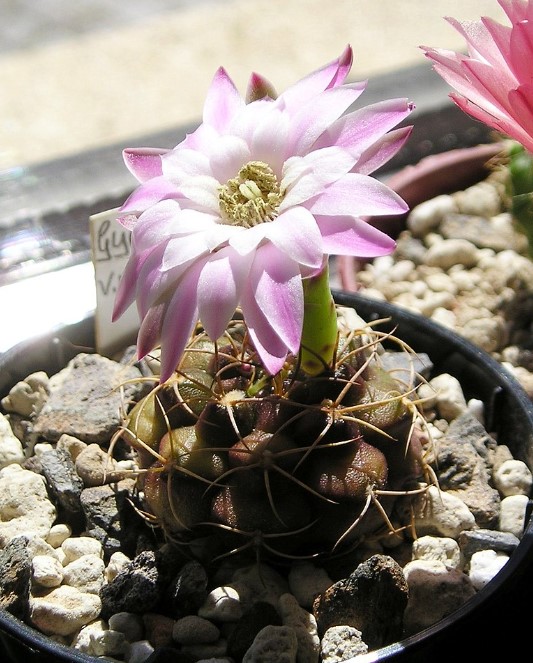
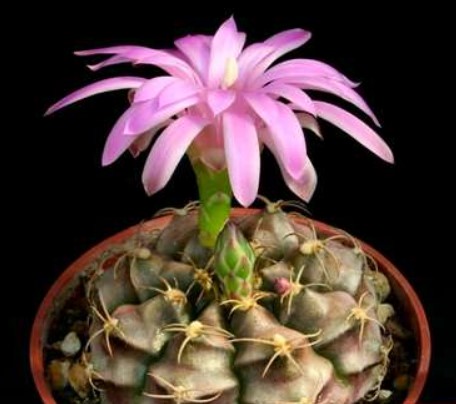
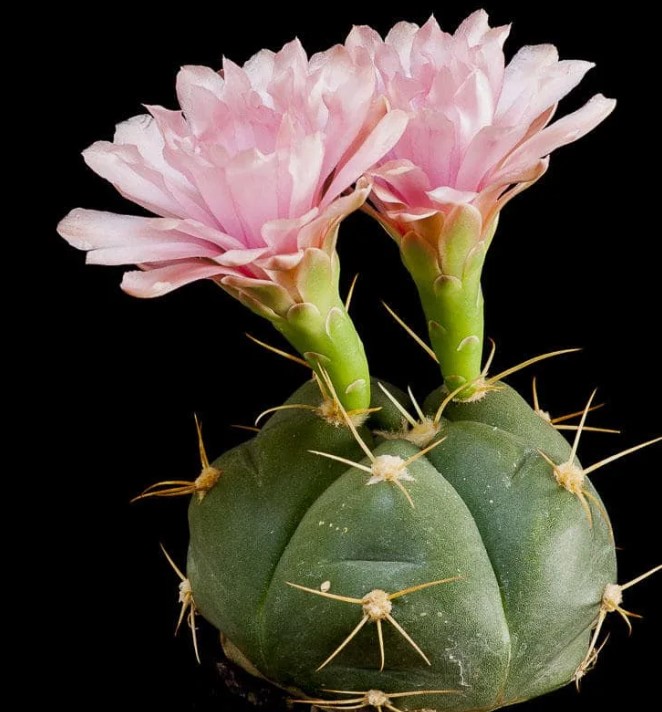
In flower shops, you can often find a pallet filled with numerous small cacti up to 5 cm in diameter. It contains a mixture of different types of Gymnocalycium. This arrangement is called a "mix."
Home care
It's important to consider the plant's origin. Since this succulent is native to South America, it requires moderate moisture and access to sunlight when caring for it indoors. Without enough sun, it will quickly lose its shape and become diseased. However, excessive UV exposure is also detrimental.
Location
It's best to keep the cactus on a south-facing window. To prevent sunburn, provide shade or use tulle to diffuse the light.
Gymnocalycium thrives in oxygen-rich environments. The room where it is kept should be regularly ventilated. In summer, it can be kept on the balcony.
Temperature
This heat-loving plant requires temperatures between +20°C and +25°C from spring to early fall. However, overheating should be avoided. Temperature conditions need to be adjusted as the season changes.
In the fall and winter in temperate climates, Gymnocalycium doesn't receive enough sunlight. To prevent the succulent from developing diseases due to insufficient photosynthesis, its growth must be curbed. This can be achieved by lowering the average daily temperature to 8–12°C. You can also move the cactus to a well-ventilated room with a temperature of 15–18°C.
Watering, humidity
To prevent succulents from getting sick, there's no need to spray them. Low humidity is ideal.
The plant needs to be watered year-round. In summer, water it as the top layer of soil in the container dries out. From mid-October until late spring, watering is reduced. It's best to water the soil with warm, slightly settled liquid.
Soil, fertilizer
Gymnocalycium requires a special potting mix. To prepare it, use one-quarter (100-200 g, depending on the pot size) of the following ingredients:
- peat;
- sand;
- humus;
- leaf soil.
To ensure proper soil drainage, it is recommended to add brick chips. Expanded clay can be used as a bottom layer. It is important that the soil be free of lime.
This succulent doesn't require frequent fertilizing. Adding cactus fertilizer to the soil every 2-3 weeks is sufficient. Fertilizing is only necessary in the spring and summer.
Transfer
Only young plants require regular repotting. Their containers should be changed every year. The new pot should be only slightly larger in diameter. Repotting is done in the spring. The soil mixture used is the one described above.
Bloom
The succulent begins blooming in its second or third year. If properly cared for, the first buds will appear as early as April. The inflorescences open and remain until early autumn. After this, they fade, and ovaries form in their place.
Reproduction
There are two ways to propagate cacti: by seeds or cuttings. Both are quite convenient and are done at the same time, in the spring. It's best to begin propagation immediately after the plant's winter dormancy ends.
If cuttings are chosen as the main method, it is necessary:
- Detach the shoot from the mother plant by twisting it or simply breaking it off.
- Let the sprout dry out (allow it to wilt slightly) for 3 days.
- Place the cutting upright in a pot with moist soil. Don't push it too deep into the soil to prevent it from falling over. You can use matches or toothpicks as supports.
- After 2 weeks, check the cutting for roots.
The growing time when using seeds is virtually the same. The propagation algorithm in this case is:
- Place the seeds in moist soil and cover with film.
- Open the film every day for 15-20 minutes to remove excess moisture. Otherwise, the sprouts may rot.
- Wait 2-3 weeks. After this period, sprouts will appear.
- Small succulents can be replanted when the thorns have formed.
Graft
Grafting is not necessary if standard Gymnocalycium varieties were purchased. However, hybrids lacking chlorophyll cannot survive without a host plant. These hybrids must be grafted onto other succulents. In rare cases, a part of a plant that dies due to root rot is used as a scion.
A healthy, growing shoot—a scion—is needed. The rootstock is trimmed evenly on the succulent to which the scion will be attached. The cuts should be aligned in angle and the arrangement of the vascular bundles.
The rootstock and scion are joined with a rubber band or weight for about a week. To ensure a successful process, it's important to cut the stems with a clean tool.
Diseases and pests
Improper care can lead to succulent diseases. Excessive moisture, sunburn, and drafts make the plant more vulnerable.
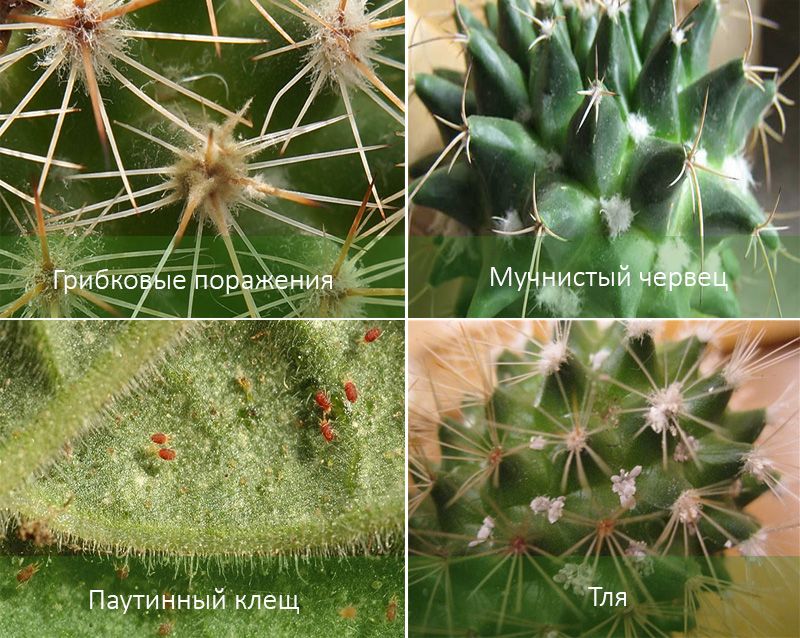
Fungal infections
Fungi are fairly easy to spot. The main signs of the disease are:
- the appearance of brown or dark spots;
- curvature of stems;
- rotting of individual parts of the plant;
- lethargic state.
The disease is triggered by excessive soil and air moisture, as well as high levels of nitrogen in fertilizers or potting mixes. To stop the progression of the disease, it is necessary to remove the affected areas.
The cut areas are treated with a special solution, or if that's not available, with ash. It's best to purchase a professional fungicide.
If the soil in the pot is noticeably too wet, the cactus should be repotted into a container with fresh soil. No watering is required for the next four days.
mealybug
Mealybugs leave white marks on plants. They can be eliminated using an alcohol-based solution or insecticides such as Inta-Vir, Actellic, and Vertimek.
If only a few pests are detected, simply soaking the surface of the succulent and the scale insects themselves in rubbing alcohol is sufficient. A serious infestation requires treatment with a professional solution.
Aphids and spider mites
Spider mites and aphids don't immediately kill a cactus, but they still have a serious negative impact. Signs of pest infestation include yellowing of individual areas of the cactus and drying out.
Since cacti do not tolerate excessive moisture, treating them with soapy water multiple times is not recommended. Professional insecticides and acaricides should be used instead. Actellic and Aktara are universal treatments against both types of pests. Treatments should be carried out every 7-10 days, 2-3 times in total.
Reviews of Gymnocalycium
My favorite cactus for 15 years - unpretentious, bright, generously blooming, and a lover of sunlight!
Once upon a time, at the dawn of my passion for houseplants, I acquired a small Gymnocalycium mihanovichii cactus. When I bought it, it was about 2 centimeters in diameter and looked weak. I gave it a new pot and special "cactus soil," but it grew poorly and certainly didn't bloom. And in this state, slowly growing to 5 cm in diameter, it spent 10 years. It stood in an east-facing window and only received morning sun; we had no other windows.
Then we moved to a new apartment. The west-facing windows were replaced with south-facing ones. And then things really took off! In just one summer, my cactus tripled in size and bloomed! Now it blooms practically year-round. It's as if it's been brought back into its natural habitat and couldn't be happier!
Here is my cactus in the first year after moving to the sunny side:
Green tones still predominate in the coloring; it has already produced 2 flowers.
But after 2 years of living on the sunny side, there are already 4 buds at once, it has increased in size, and the color has changed:
It's become a true centerpiece for the apartment, captivating everyone—it's pleasing to the eye and uplifting. Looking at it, I immediately wanted to get more cacti, because nothing inspires me more than the grateful reaction of your pet! This year, my favorite cactus even had two babies. I'm going to propagate it now!
♥ Appearance
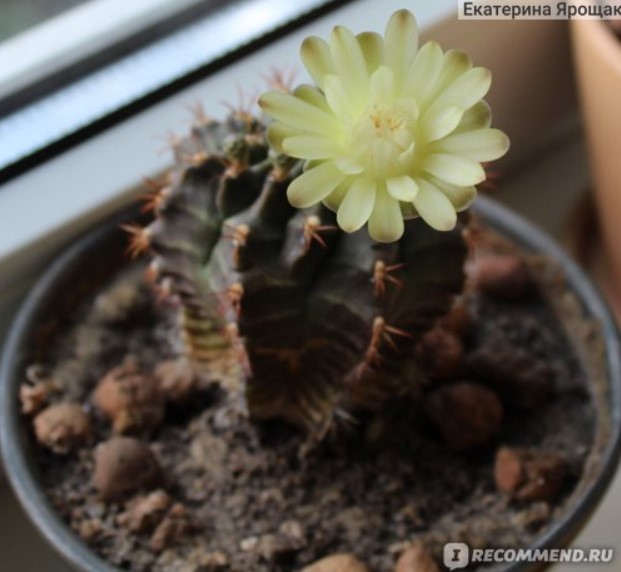
Gymnocalycium mihanovichii is the most common cactus in the genus Gymnocalycium, which in turn encompasses several varieties that differ from each other in several details—primarily, flower color. However, they all share a common ribbed, spherical shape. In its classic form, Gymnocalycium mihanovichii occurs in various shades of green, turning to russet-brown under more intense light. The spines are short, without hooks at the ends, do not snag on clothing, and the plant is easy to care for. Under the right conditions, this cactus blooms profusely year-round, with a short break of a few winter months, as I have personally experienced. It is a very rewarding plant! The flowers come in a variety of shades: white-pink, white-yellow, and white-green. Often, several flowers bloom simultaneously, making the plant look very bright and attractive. If desired, you can cross-pollinate the flowers with a cotton swab to obtain seeds.For about 15 years, I've been growing what is perhaps the most popular variety of Gymnocalycium mihanovichii—G. mihanovichii var. oliveti—with green-olive flowers. The flowers don't fully open, which is a characteristic of this variety.
Here's a close-up of my cactus flower—it's simply mesmerizing in its beauty! By the way, it's scentless.
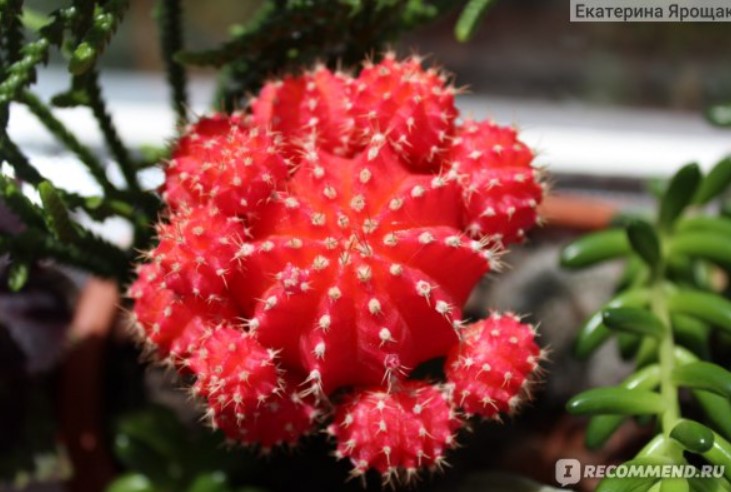
Now, a few words about achlorophyllous Gymnocalyciums on rootstocks. As I mentioned above, Gymnocalycium mihanovichii comes in a variety of colors. I added a colorful version to my classic Gymnocalycium mihanovichii f. rubra (red form) – a red, achlorophyllous Gymnocalycium mihanovichii. These color mutations were developed by the Japanese from classic varieties. Since they are achlorophyllous (meaning they don't produce chlorophyll, hence they're not green), they can only thrive on normal green rootstock. They're now sold in a wide variety of shades – red, yellow, orange, pink, burgundy, and variegated. These colorful cacti are just begging to be given as gifts! They're very pretty, and they look decorative even without flowers, although they can bloom, but I haven't yet had a chance to see that happen. The red cactus, for example, should bloom pink.Here is my red gymnocalycium, which is already 2 years old.
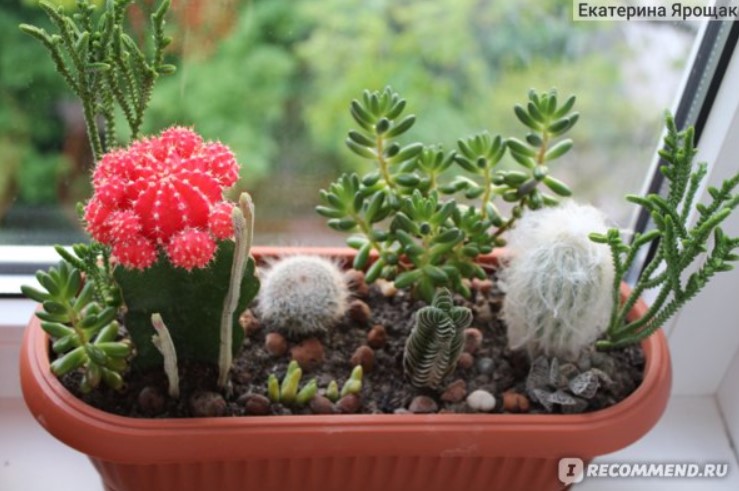
As you can see, it has a lot of little shoots. These cacti are usually sold with their little shoots already attached. Look how impressive it looks in my arrangement:
Colored grafts produce offspring much more readily than regular grafts, which can be removed and grafted independently. Removing and grafting offspring allows you to renew your plant, as colored grafts are generally considered short-lived—2-3 years, and the plant is lost. If you notice offspring on a colored plant starting to die off one by one, remove it immediately and try re-grafting it. This sometimes works. But it's better to be on the safe side by removing and grafting offspring. It's fairly easy, and there's plenty of information on the subject online.
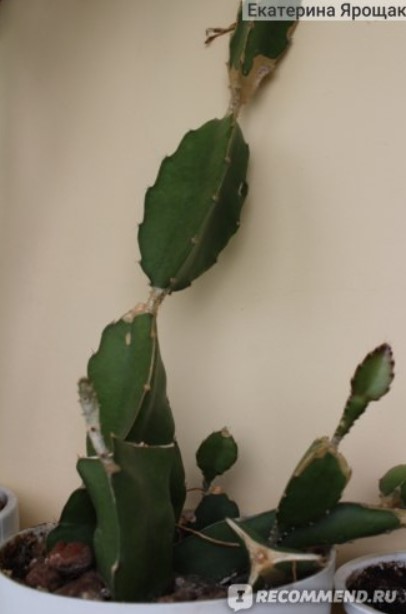
There's another subtlety: you always need to keep an eye on the base onto which your colorful Gymnocalycium is grafted. If you see the base sprouting a side shoot, remove it immediately, otherwise the base will consume its "parasite." This happened to me for the first time. A cute little side shoot appeared, looked pretty, then suddenly took off, and the red cactus shriveled and fell off. I had to buy the red Gymnocalycium a second time. But now I have a whole pot of the former base, now a full-fledged Hylocereus triangularis, in other words, a forest cactus. In the future, I plan to graft offspring onto it:
♥ Care
Now for the details. After moving, as soon as I noticed the cactus growing, I changed its soil to regular rich black soil, which is brought to all flowerbeds in the spring. Yes, this is completely against the rules, but the cactus liked it. I only use settled water for watering, not straight from the tap. I water once a week in winter, and more often in hot weather – as needed, when the soil dries out. The pot needs to be deep, since this cactus's roots go about twice as deep as the plant's height. This is why you need to choose a growing container. But I believe the most important factor for active growth and flowering is the sun! I know people who put phytolamps on their plants and dance around them with tambourines – their cacti bloom, of course, but not any better than mine! So, I've come to a clear conclusion: you can and should only have plants in your apartment that are suitable for your conditions, especially lighting! Otherwise, both the plant and you will suffer. Gymnocalycium mihanovichii definitely needs a lot of sun!♥ Conclusion
Overall, this is a wonderful, low-maintenance plant that's definitely worth growing! As I mentioned above, Gymnocalycium mihanovichii makes a great gift – it's easy to care for and a joy to behold.
Advantages
Compactness
Unusual color
Unpretentiousness
Attractive appearance
Flaws
Some forms cannot live independently
Ekaterina Yaroshchak
recommends
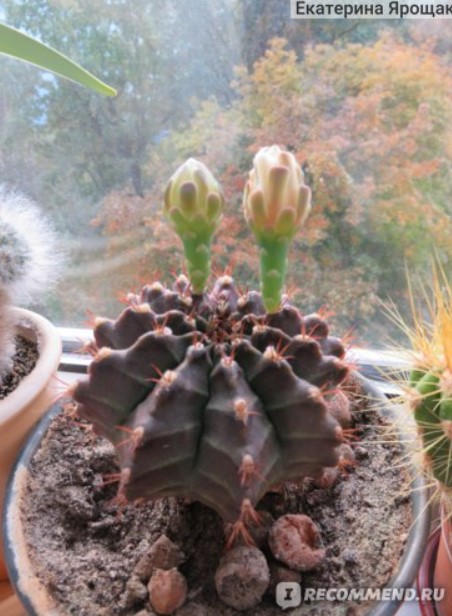
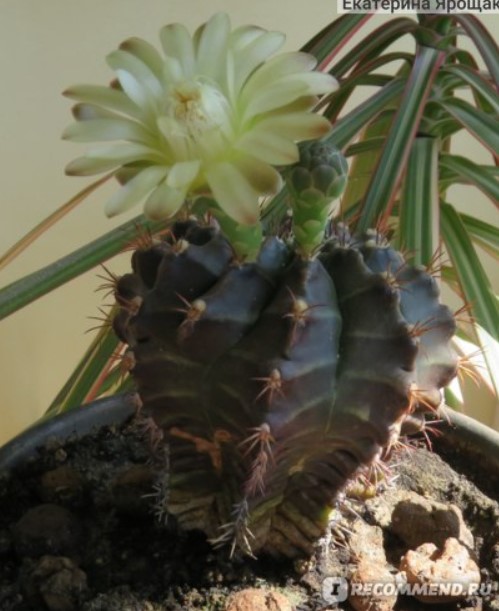
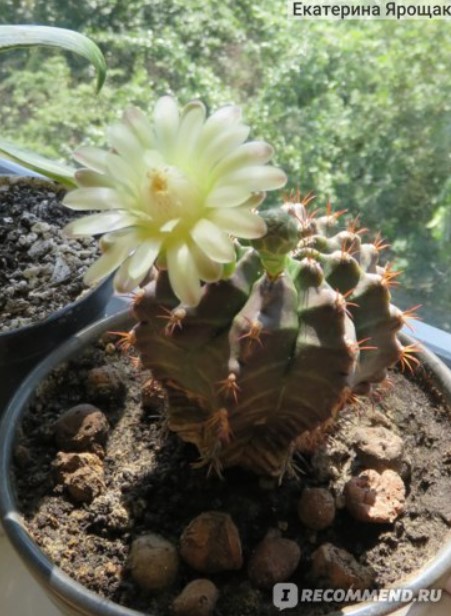
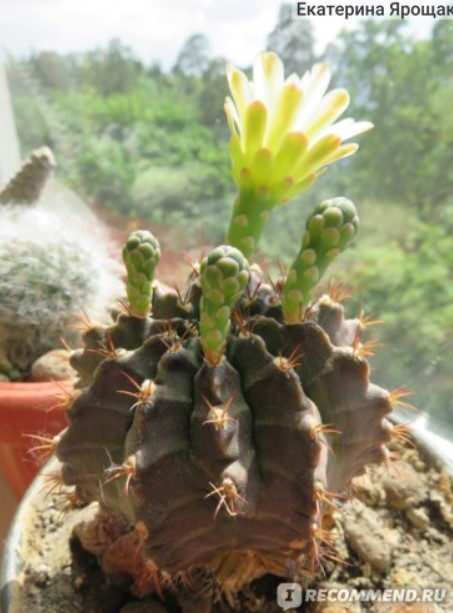
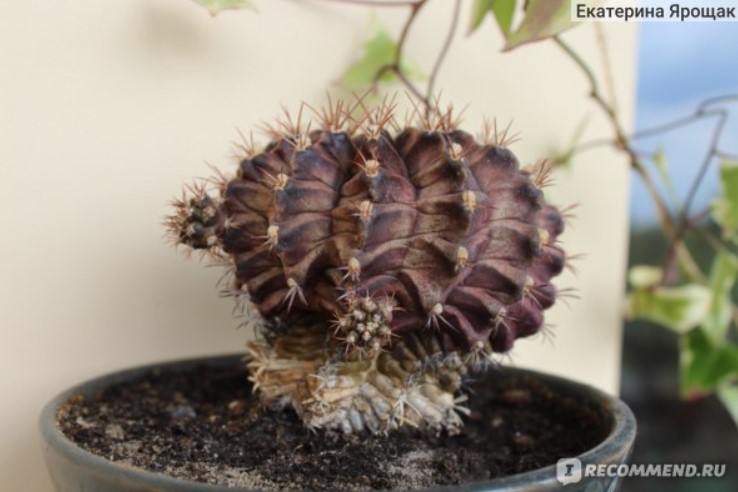
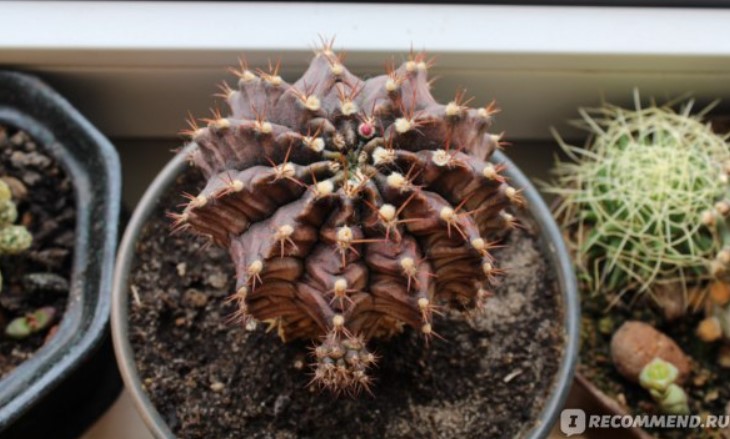
My little big joy
Hello!Until recently, I was categorically against having plants in my house. It's not that I don't like fresh flowers, but there were never any in my parents' house, and this indifference to flora haunted me for a long time.
About eight years ago, my boyfriend (now husband) gave me a violet. Naturally, due to my inexperience and stupidity, it quickly died, and I was so upset I cried, so I decided to never have flowers in my house again.
Over time, I was given a Zygocactus (which also died, not because of me, but because of my mother's great love of overwatering pots even when they didn't need it), and a miniature Christmas tree that lived for six months and then died. All of this brought only sadness and further strengthened my belief that houseplants weren't for me.
??Acquaintance??
One day, while strolling through a shopping mall, I saw a very strange cactus—one with a "pimple" (as I called it back then) on top—and I was absolutely dying to buy one. But the price was steep—about 200 hryvnias for a tiny cactus, and although my husband was determined to buy this miracle, I talked him out of it. The main problem wasn't the cost, but the fact that not a single poor plant would thrive near me, no matter how hard I tried and how hard I tried to preserve its tiny life.
It was the middle of winter 2017. And on February 14, when I came home after a night shift, I discovered this miracle.
By the way, my husband remembered that I wanted a yellow cactus, but he liked the red one.
This is how the firstborn appeared in my house.
From the sticker on the flowerpot I learned that its name was "Gymnocalycium." I laughed at the name for a long time (yes, yes, kindergarten), but I fell in love with this little one and tried with all my might to protect it from the fate of my other plants.
I repotted the cactus twice, the first time after purchasing it, the second time this spring (2019), and the cactus survived both times well.
And, as it turns out, the plant is incredibly easy-to-care-for and resilient. The pot has been sitting on my windowsill for two years now, though I try to keep it out of direct sunlight, so I place it in a second row, protecting it with other flowers. In the summer, I water it once or twice a week, as it's very hot in my house. In the winter, I try to keep watering to a minimum, relying primarily on the soil.
I always let the water settle for watering, and I water all my plants only with water at room temperature.
By the way, I used the most common and inexpensive soil for my Gymnocalycium, the kind you can find in stores. It turned out to be loose, which is the best thing for flowers, as no plant will grow if it's planted in soil that doesn't allow water to pass through, trapping it in the pot for too long (the roots will start to rot). I didn't provide any drainage, which I now realize was wrong, but I don't want to correct my mistake just yet—from what I've seen, my little plant doesn't need a change of location yet and is growing without any problems.
Another thing is that recently my Gymnocalycium has acquired children, and they urgently need to be replanted somewhere (or rather, planted), and I don’t have any other cacti that would be strong enough to support themselves and the Gymnocalycium - a small parasite.
The peculiarity of this cactus is that it is chlorophyll-free and cannot live without the green cactus to which it is attached.
The biggest insult is that these cacti only live for 3-5 years, and it’s terrible. I’ve already gotten used to this with my child, and I’m afraid to imagine how I’ll experience his loss.
Alas, my cactus never intended to bloom, and it’s unlikely it will unless I urgently remove the brats from it.My cactus isn't very large in diameter—about 2.5 cm—and about 3 cm tall. It's certainly grown a little since it arrived, but not enough to be noticeable.
My Gymnocalycium 1.5 years ago
As you can see from the old photo, the ribs of the green cactus are slightly cut and dried out, and since for a very long time I thought that the Gymnocalycium was the entire structure, including the green lower cactus and the top, I was sure that it would not live very long with me (knock on wood).The needles of my cactus are thin and appear soft, but are actually very sharp.
By the way, if it weren't for the needles, my cats would have eaten the Gymnocalycium long ago. They have a real soft spot for it (I don't understand why).
Of course, I recommend Gymnocalycium! It's a very unusual and interesting plant that doesn't require much attention and is very easy to care for.
Takaho_25
recommends
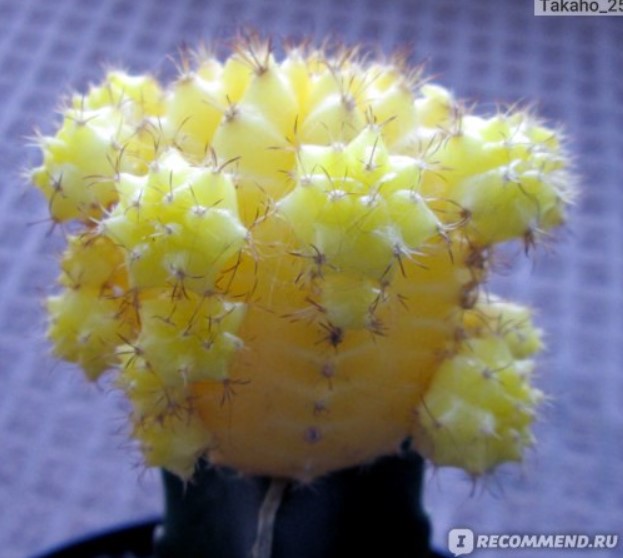
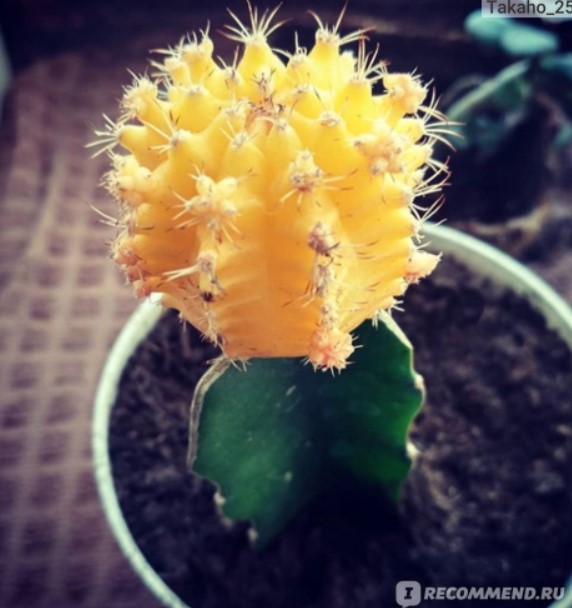
Review: Cactus "Gymnocalycium Mix" - An Interesting Plant
Advantages: Unpretentious, unusual, beautiful.
Disadvantages: Afraid of drafts
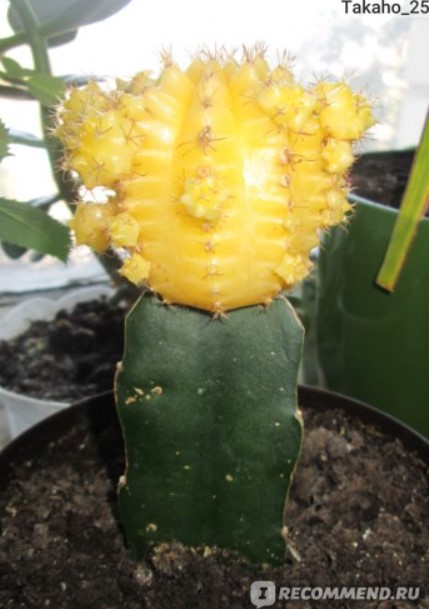
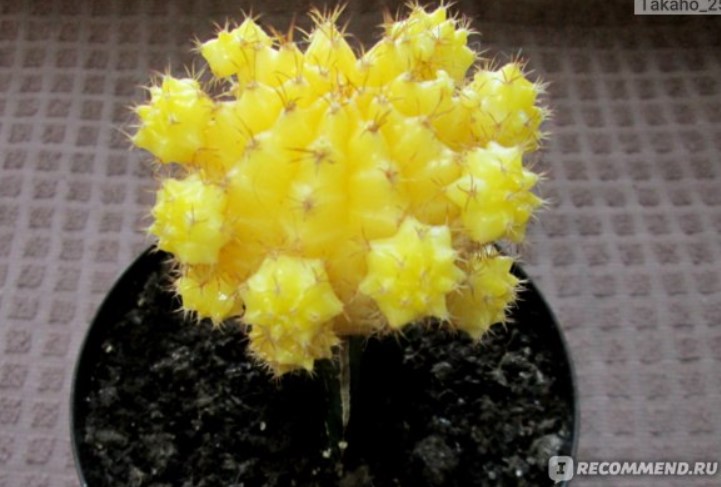
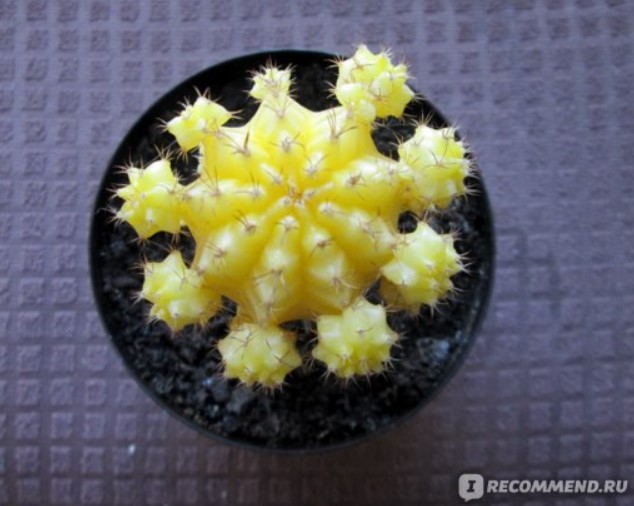
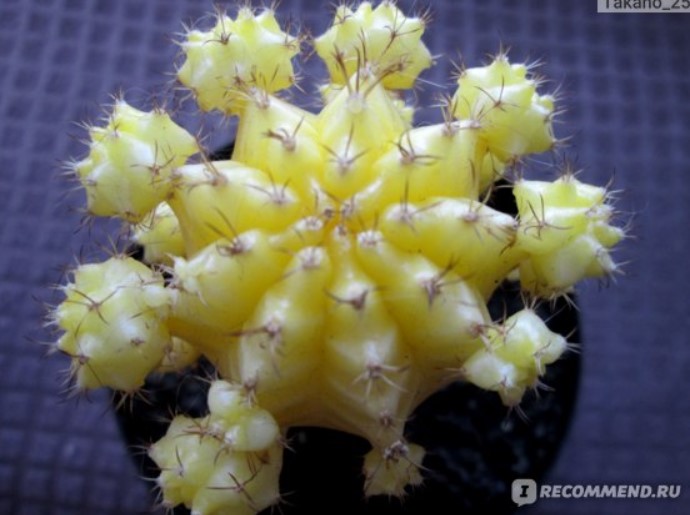
Interesting and unusual cactus of different colors: Yellow, Red, Pink, Green.
I only bought the yellow one. The plant is pleasing to the eye and decorates the interior.
The cactus needles are not sharp, they do not dig into the skin, they are soft.
The plant is very low-maintenance, like other cacti. Watering it once a month is sufficient, no more. However, don't forget about it either. The plant loves light and sun, so it should be placed near a south-facing window, and in winter, in the brightest spot in the apartment. Also, avoid placing the cactus in drafty areas, as this will cause the plant to turn pale and wilt completely.
I can recommend this cactus to beginning gardeners and those who don't like to bother with flowers but want to somehow decorate their windowsill!Cost: 86 rubles
Year of manufacture/purchase 2015
Overall impression: Interesting plant
My rating
5
I recommend it to friends YES
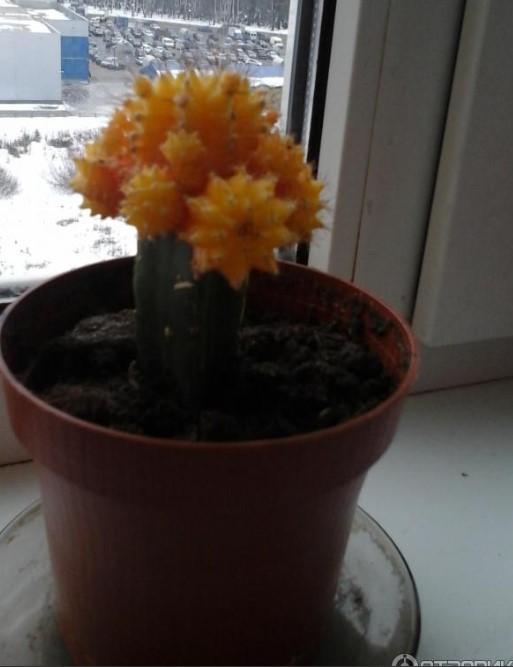
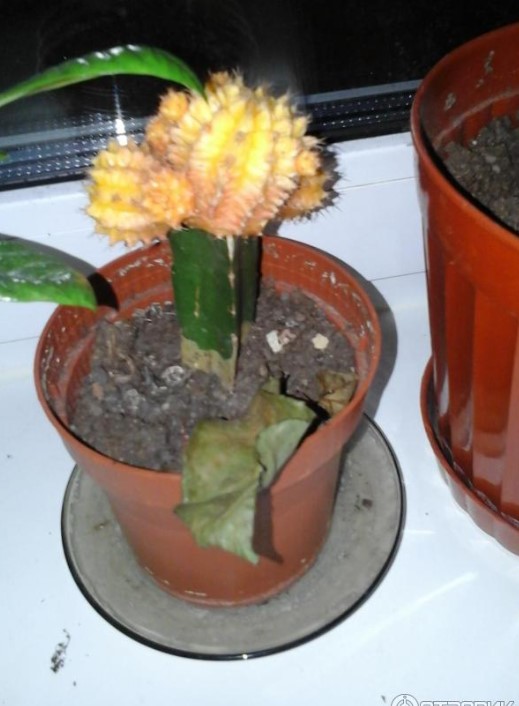
Review: Cactus "Gymnocalycium Mix" - An unpretentious plant, a bright addition to the desktop
Pros: Bright, unusual
Disadvantages: none
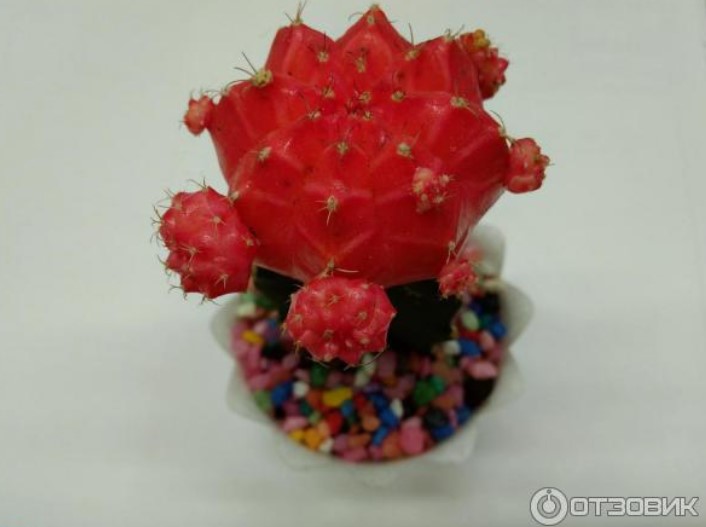
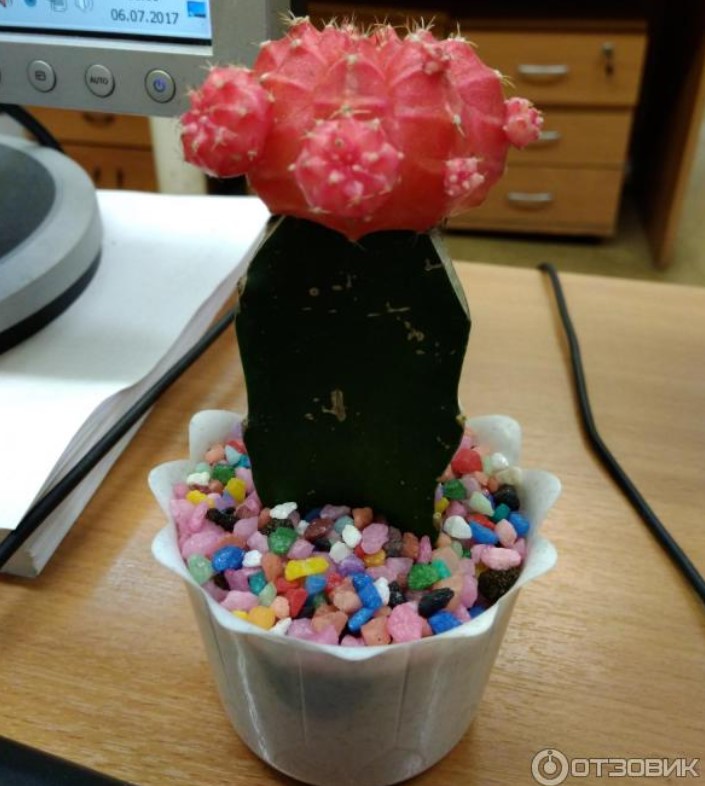
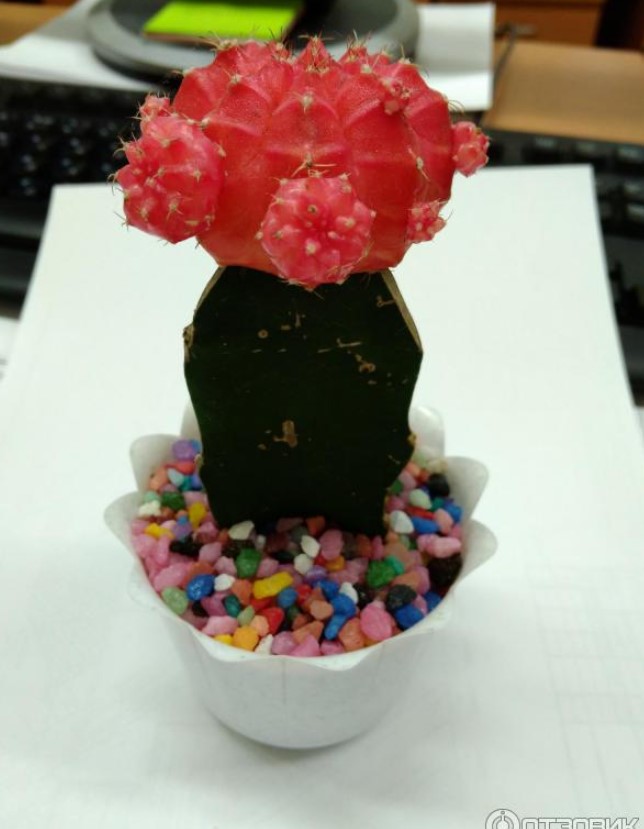
A cactus with the difficult name Gymnocalycium mihanovichii has been pleasing my eyes for a year now. It grows in a small pot in the ground, and I sprinkled the soil on top with colored soil for beauty.
As the seller told me, this isn't a single cactus, and the top "cap" isn't a flower, but two crossed cacti. The result is such a handsome little thing, it's completely unfussy, loves to stand near a monitor, in the light, and will love you in return for your care. It needs to be watered once or twice a week in the summer, and a little less frequently in the winter, as it dries, using warm, settled water. Remember, it's a cactus, so it can't drown. Its spines are soft and only appear on the cap. I recommend buying it for work. It always makes a delightful sight when I come home in the morning and sit down at my desk. I hope my review was helpful and you'll decide to buy this little thing.
Year of manufacture/purchase 2017
Overall impression: An unpretentious plant, a bright addition to the desktop
My rating
5
I recommend it to friends YES