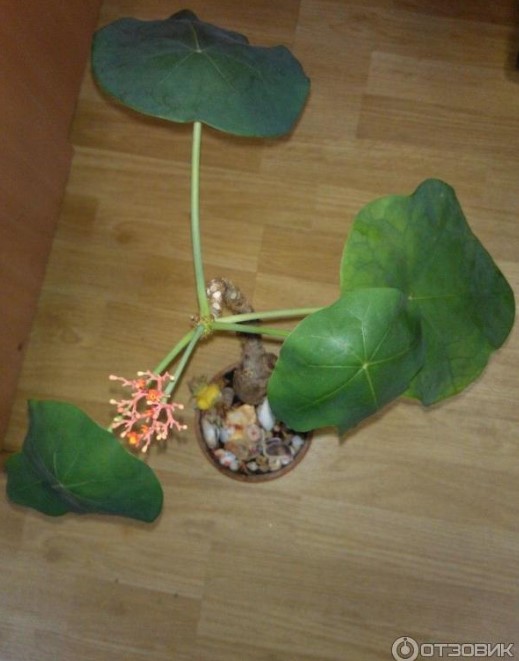
Jatropha is a herbaceous plant from the Euphorbiaceae family. There are over 170 species worldwide. It is native to the Americas, Africa, and India. In Russia, jatropha is found exclusively in greenhouses or in the collections of exotic plant enthusiasts.
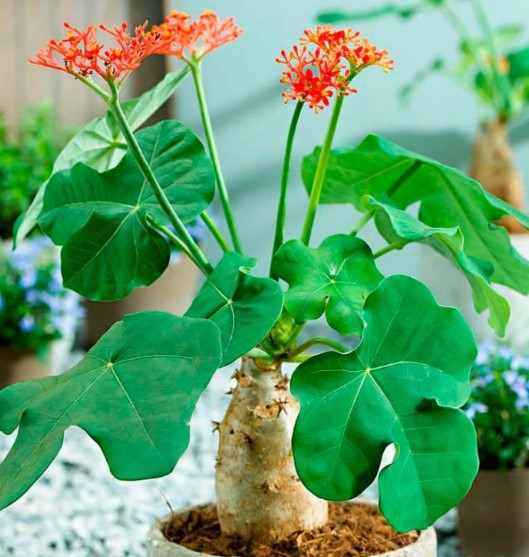
Description of Jatropha
The woody, bottle-shaped stem can reach 0.5 m in height when grown indoors. Flowering begins in spring and continues until autumn; in winter, before the onset of dormancy, the plant sheds its leaves.
Jatropha blooms with bisexual, vibrant burgundy, orange, or deep pink flowers. To ensure fruiting, pollination is necessary.
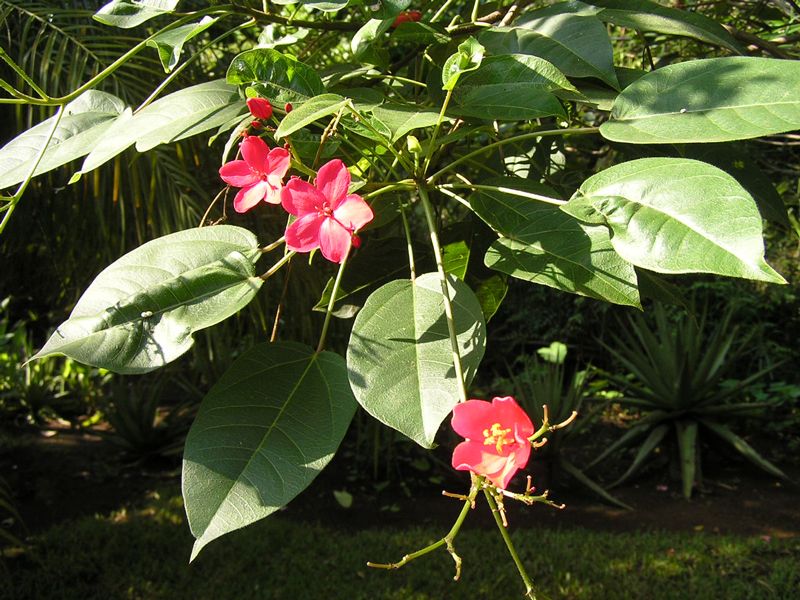
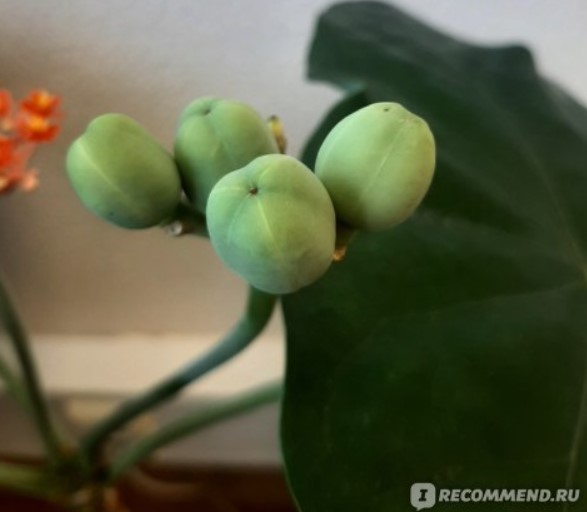
The fruits are triangular, oval-shaped seeds up to 2.5 cm long.
Jatropha varieties in the table
Many parts of the jatropha plant are poisonous, so no more than five species of this exotic plant are commonly grown in home and greenhouse gardens. Specifically:
| View | Description |
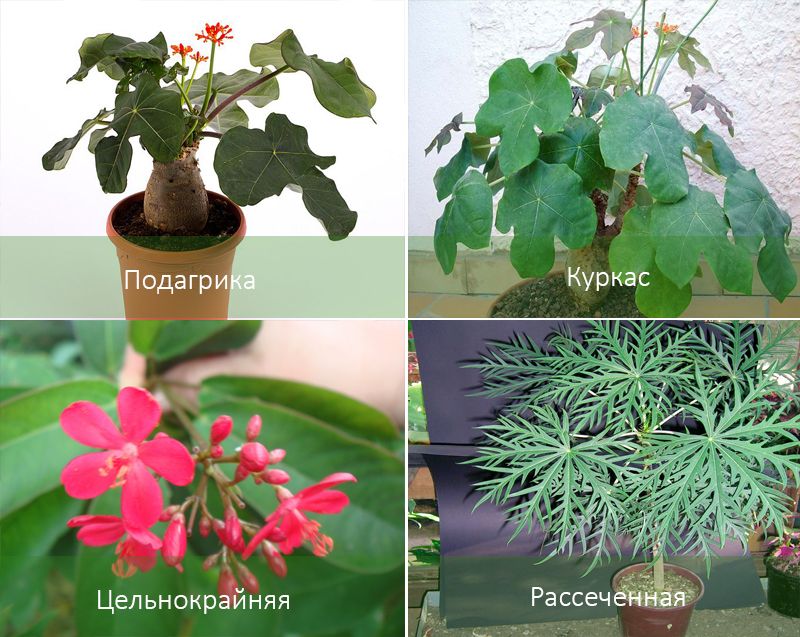
Gout (gouty) (Jatropha podagrica)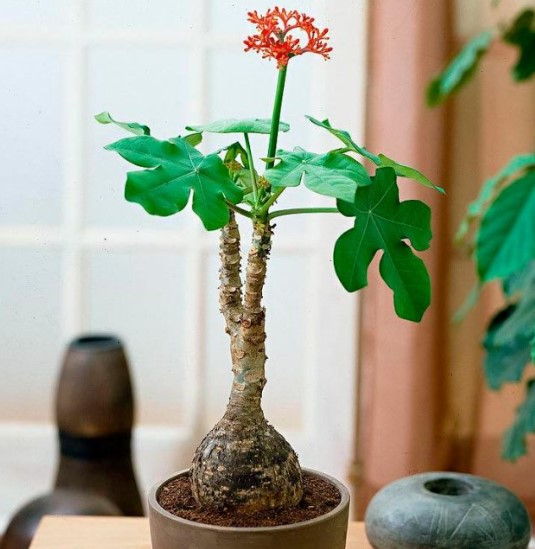 |
The trunk is shaped like a Greek amphora and grows to a height of 70 cm thanks to a peduncle. Small, coral-colored flowers are gathered in umbels. Over time, the leaves change color from pale green to a dark matte shade. |
Curcas (Jatropha curcas)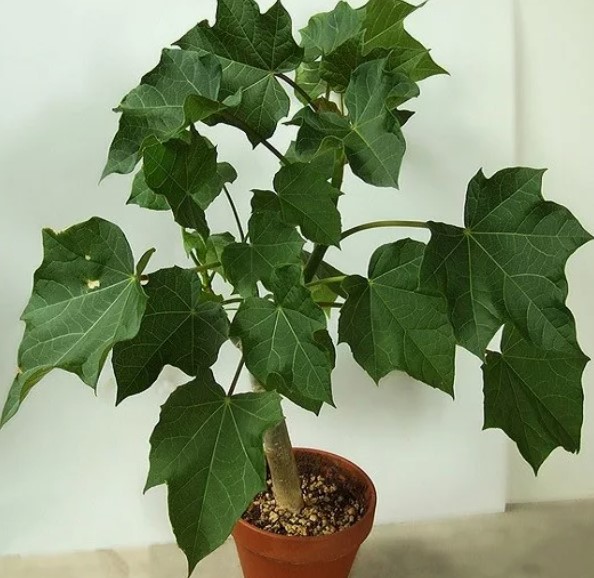 |
It's quite rare and grows over 6 meters tall. Because of its large fruits, it's also known as the Barbados nut. The yellow flowers are gathered in unusual inflorescences. |
Jatropha integerrima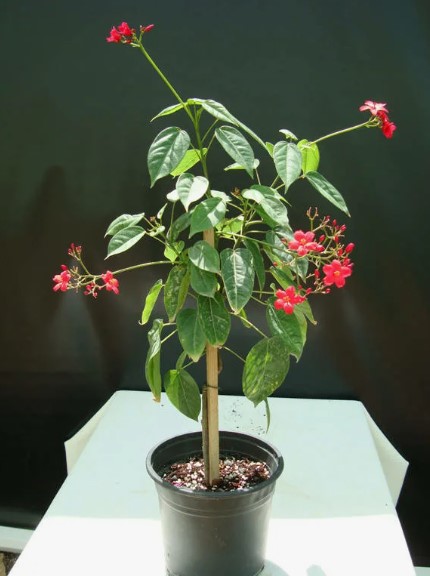 |
Jatropha grows as a shrub or a small tree, up to 4 meters tall. There are endless options for crown shaping, as the plant tolerates pinching well. The inflorescences are racemose, and with careful care, jatropha can bloom year-round. |
Jatropha multifida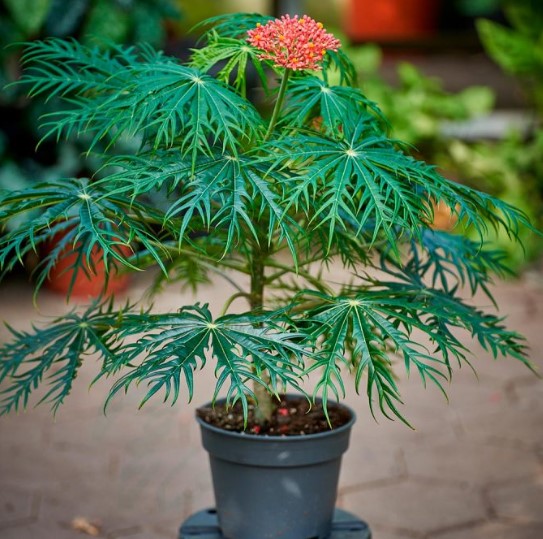 |
When grown indoors, it resembles a small tropical palm. The leaves are divided into several lobes and are dark green, almost purple in color. |
Growing indoor jatropha
The plant is undemanding, but requires attention. Indoor care should be divided by season, with a dormant period observed.
| Indicator | Spring/summer | Autumn/Winter |
| Lighting | It is worth creating shade from direct sunlight. | Does not require additional lighting. |
| Temperature | From +19 °C to +25 °C. | From + 13 °C to +15 °C. |
| Watering | In small portions, without overflowing. | Stop after the leaves fall. |
| Top dressing | Once a month with fertilizer for succulents or cacti. | They do not produce during the dormant period. |
Home care for Jatropha goutiflora
This species requires more attention. It doesn't tolerate drafts or temperature fluctuations well, and placing it on a balcony in the summer is not recommended. Proper watering is the key. Since the plant has a stem that stores water, it can survive for long periods without watering. If the plant is constantly and excessively watered, the roots will rot, eventually killing it. Fertilizing this species should also be done with extreme caution.
In winter, the gouty jatropha completely sheds its leaves, watering and fertilizing are stopped, and care is resumed in the spring.
An important requirement is the quality of the water for irrigation: it should be settled and at room temperature. No additional moisture is required.
Jatropha transplant
When repotting a plant, it's important to consider the pot size and the new soil. Suitable soil is suitable for succulents or cacti. Alternatively, you can mix the following ingredients yourself in a 2:1:1:1 ratio:
- leaf soil;
- peat;
- turf;
- sand.
Expanded clay, brick chips, and perlite are used as drainage.
Jatropha is repotted in early spring, as soon as new leaves begin to emerge, every three years. Care should be taken not to disturb the integrity of the root ball. The repotting process is completed by mulching the aquarium substrate with small pebbles or crushed stone.
Reproduction of Jatropha
The plant is propagated in two ways:
- Cuttings are taken and placed in a growth stimulator. They are planted in soil, and the temperature is maintained at 30°C during the rooting period. They are left for four weeks, then planted in permanent containers.
- Seeds – artificial pollination is carried out beforehand. After ripening, the plant scatters its seeds, so the fruits are tied in gauze bags. Sow the seeds on the surface of the soil, cover the container with glass, and store it in a warm place. The first shoots will appear in two weeks.
Diseases and pests of jatropha
| Reasons | Manifestations | Elimination measures |
| Spider mite | Leaves fall and turn yellow outside the leaf-fall season. | Treatment with insecticides (Fitoverm, Fufanon, Akarin). |
| Thrips | Flowers become deformed and fall off. | Rinse with warm water and treat with insecticides. |
| Root rot | The entire root system or its individual parts rot. | Reduce watering intensity. |
Reviews of growing jatropha
An amazing and unusual plant for home and office
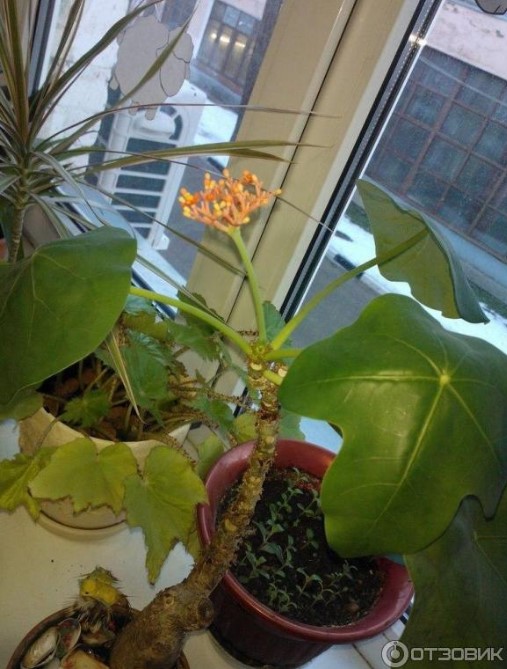
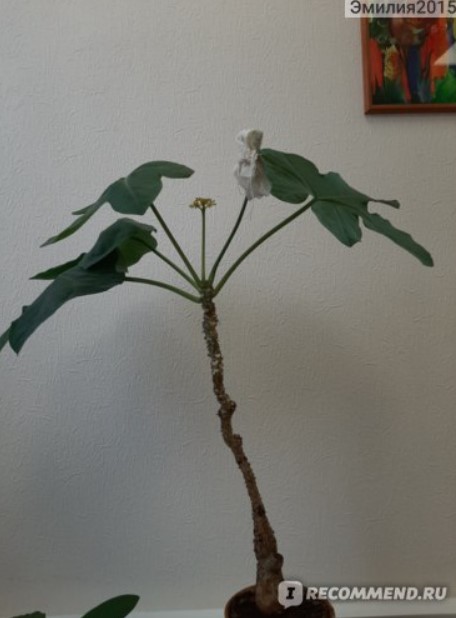
A scary, elongated, dry stem with a single leaf at the end, like a fig leaf, was placed in a pot of dry, sandy soil in the entryway of a five-story building. Apparently, no one had really watered the plant, and the last leaf quickly fell off, but something unusual was growing from the top, so the next morning this strange plant went with me to work.
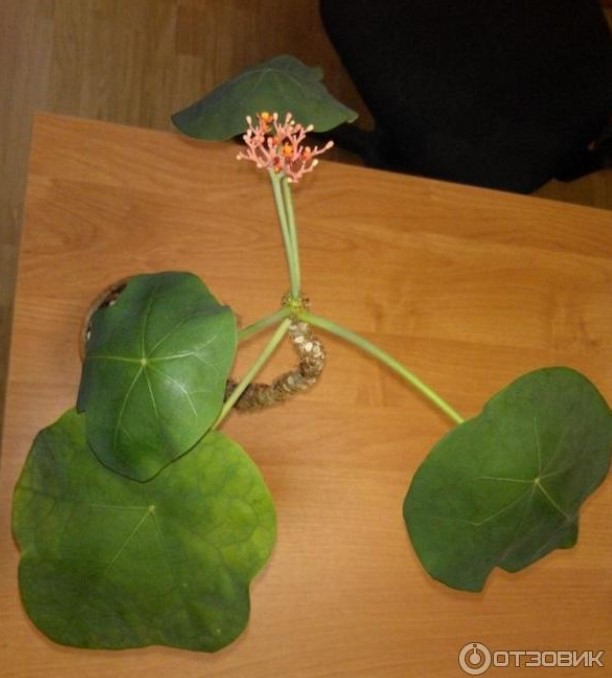
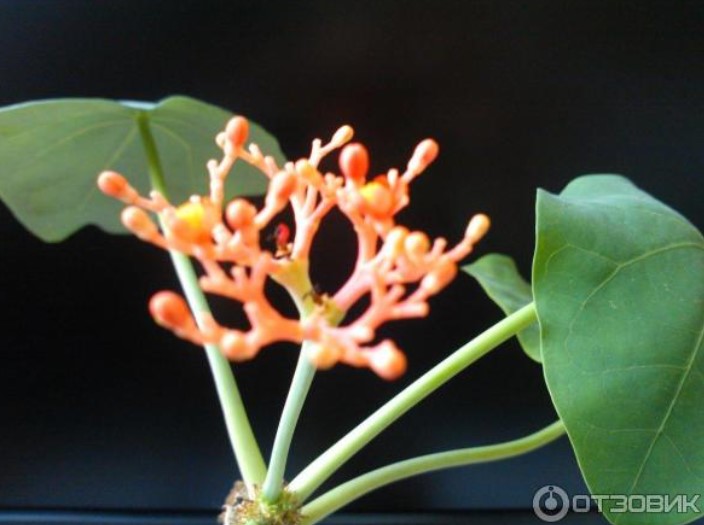
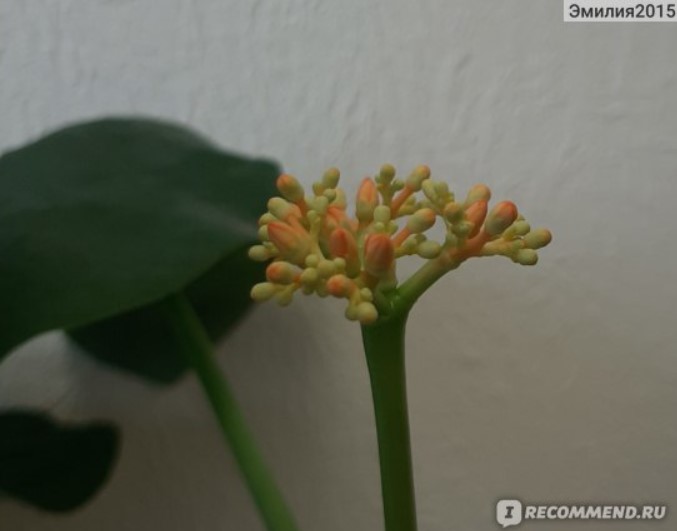
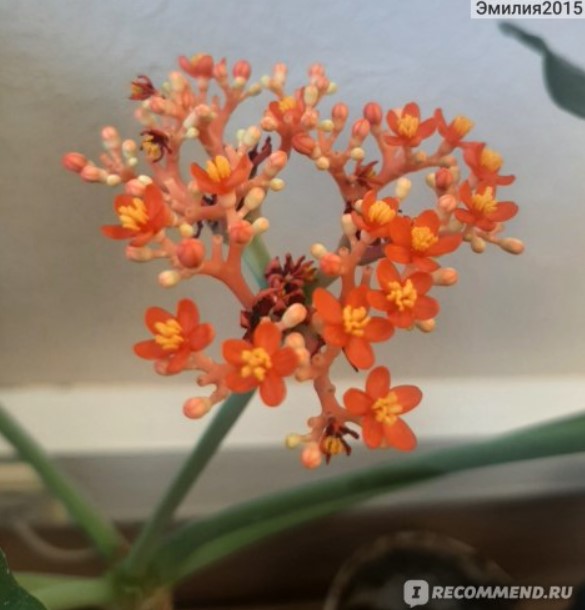
A veritable coral appeared at the end of the crooked stem, completely leafless. The Jatropha goutifera flower truly does resemble coral. Everyone who came to work was amazed by the unusual inflorescence and its even more unusual location. The flower blooms for a long time, up to a month, and immediately large leaves, truly fig-like, grow at the top.
Jatropha is a succulent and requires appropriate soil. It's not particularly picky about soil. Although it's a succulent, it prefers water. Water! Not overwatering.
The leaves periodically fall and new ones immediately grow, so there's a permanent tuft at the top. Jatropha blooms constantly, one inflorescence replacing another.
The trunk should be bottle-shaped, which is where moisture accumulates. My jatropha suffered under its previous owners; apparently, it was broken off or pruned, which is detrimental to the plant, but somehow it survived, sprouting from a side bud.
Jatropha goutica
Jatropha gouty
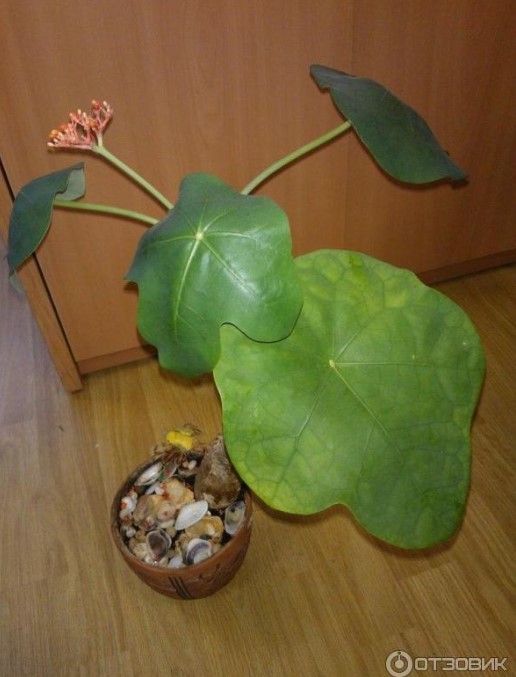
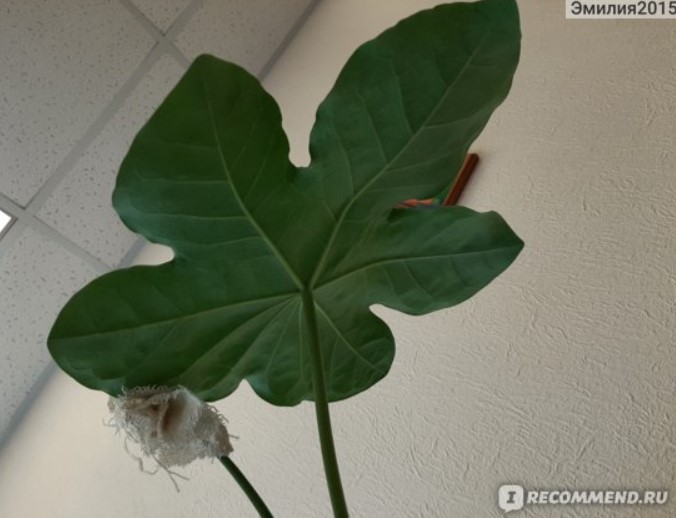
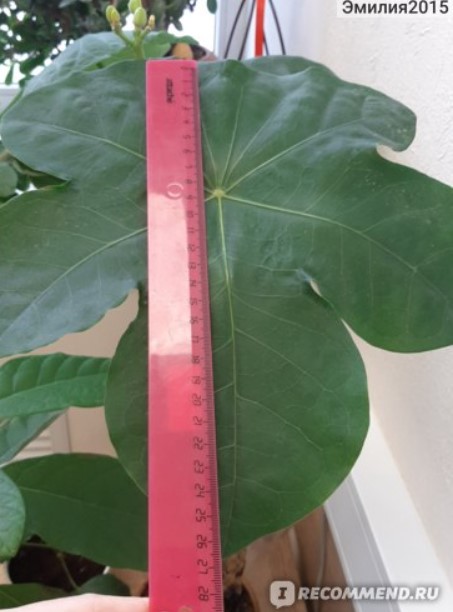
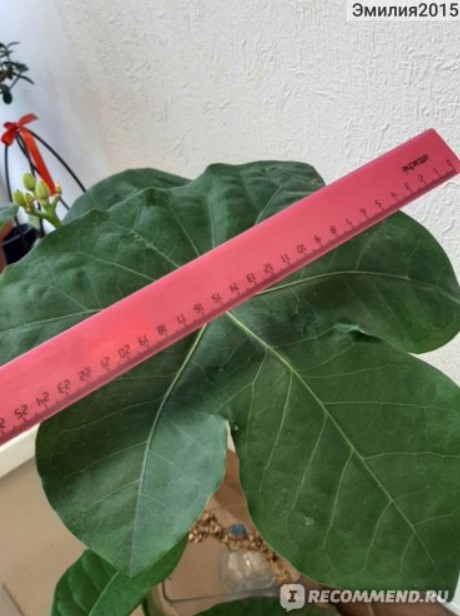
The leaves are very large
Jatropha gouty leaves
It doesn't require any special conditions. I've had it grow just as well in the hallway at work, where there's a frosted hardboard window and then a window with a radiator underneath and a small window to the side. However, it's best to avoid strong drafts, and a steady drop in temperature doesn't bother jatropha; it will thrive even at 15°C.
Interestingly, the jatropha inflorescence contains both male and female flowers, which can be cross-pollinated with a brush to produce seeds. These seeds subsequently germinate quickly and well.
The only thing is that the seed pods need to be kept under a tied gauze or nylon while they are ripening on the flower, so that they don’t fly apart when they ripen (the pod bursts).
Jatropha gouty seeds
Almost ripe jatropha seeds
Jatropha gouty is popular among gardeners and collectors.Overall, I'm happy with this plant. See it and buy it!
Advantages
It blooms all the time
Unusual appearance
Easy to care for
Emilia2015
recommends
Review: Indoor plant "Jatropha gouty" - an original specimen or a terrible beauty
Advantages: original appearance, frequent and long-lasting blooms, rare plant.
Disadvantages: poisonous
This ugly beauty was put out in the entrance by the former residents of one of the apartments.
At first, I simply watered this miracle plant, but when frost set in and cold air began to blow in from the constantly open window, the jatropha became depressed and began shedding its leaves. It was also sad to watch the growing number of cigarette butts in the pot.
Without thinking twice, I took the jatropha to work.
Our window is large and bright.
In warmth and love, the flower began to very slowly revive; after a year, the jatropha had already grown 6 leaves and produced its first inflorescence.
The jatropha has dropped a few leaves again, but that's normal for winter. As of today (early February), two new leaves have already emerged.
The inflorescence resembles a small coral, with many small flowers with yellow centers on a single stalk. The flowers bloom one after another, and the blooming period lasts 4-5 weeks. Jatropha can produce 2-3 inflorescences per bloom.
It's also quite possible for the plant to produce seeds, which it uses to propagate. In 2014, the jatropha delighted us with two blooms. Unfortunately, it hasn't yet produced seeds.
Dried flowers do not fall off immediately and also look quite original.
Jatropha leaves are green, dense, fleshy, and smooth, with jagged edges. They can be polished if desired, but in my experience, dust doesn't stick to them. Rubbing the leaves with your fingers produces an unpleasant odor. Be sure to wash your hands afterward!
Jatropha doesn't require any special care, but it does tolerate overwatering. This can lead to root and stem rot. The plant also dislikes drafts but tolerates direct sunlight.
Jatropha grows in prepared soil for succulents.
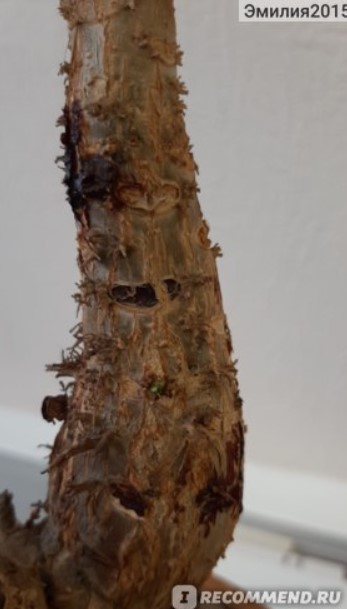
The trunk of our jatropha is certainly a bit scary, but nothing can be done about it.I saw some very original specimens in photographs on the Internet.
This beauty is certainly an acquired taste, but it turns out to be an easy-to-grow and rewarding plant. We're eagerly awaiting the seeds.
Caution! Jatropha is poisonous!!!
Usage time: 1 year and 3 months
Year of manufacture/purchase 2013
The overall impression is that it is an original specimen or a terrible beauty.
My rating
4
I recommend it to friends YES