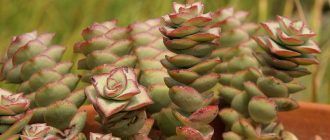
Dracaena is a succulent plant in the Asparagus family. Its diverse species include both woody and shrubby varieties. Most plants are houseplants, as this genus is easy to care for indoors.
Content
Description
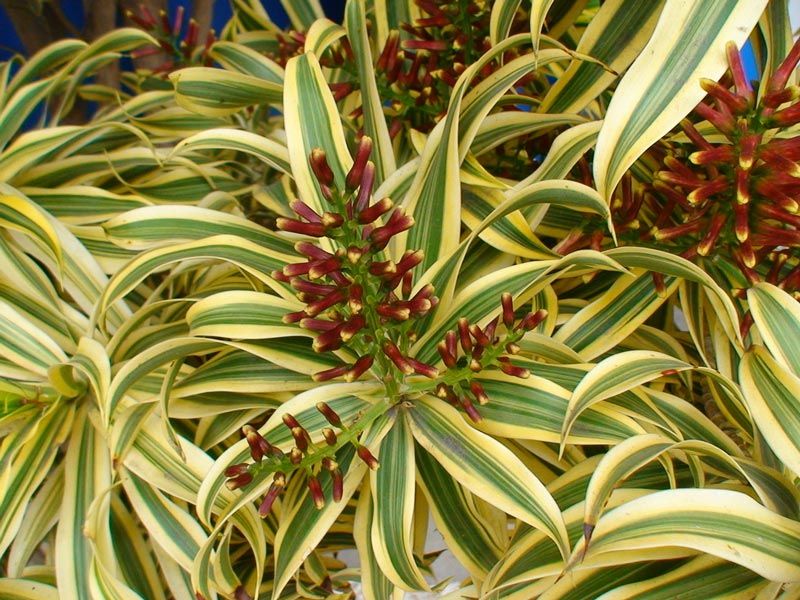
The "dragon tree" is a bare-stemmed plant with a dense green crown. The trunk is woody, and the foliage is clustered, long, pointed, and dense, with parallel veins. As it grows, the foliage turns yellow and falls off at the base of the crown, while the upper part remains green.
Flowering outside the natural environment is rare; the small, pale green flowers have an unpleasant odor. After pollination, a single drupe-like seed is formed.
Types
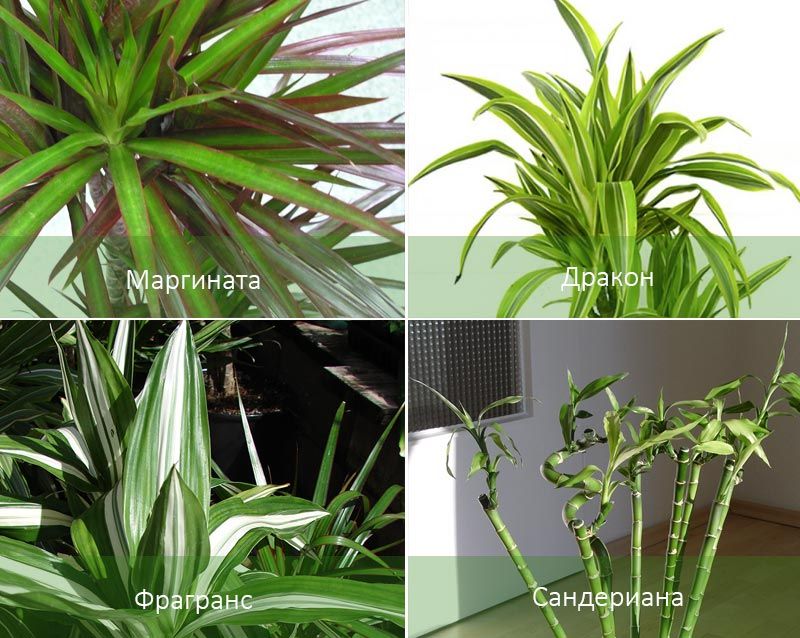
The genus Dracaena includes numerous species, most of which grow in the tropics of Africa and Asia. The following varieties are popular as indoor plants:
| View | Signs | Peculiarities |
| Marginata | Height up to five meters; long narrow leaf with a sharp end; sometimes with red parallel stripes (bicolor). | Unpretentious, no special care requirements. |
| Fragrance (fragrant) |
Large, rich green with a pale transverse stripe. | Frost-resistant, flowers have a pleasant aroma of fresh hay. |
| Sanderiana | The branched trunk resembles a curved bamboo tree, reaching up to a meter in height. It is light olive in color. | A warm room and a tight pot are required. |
| Dragon | Up to one and a half meters; large, long, sharp leaves that turn pink in excess light. | Sensitive to light. |
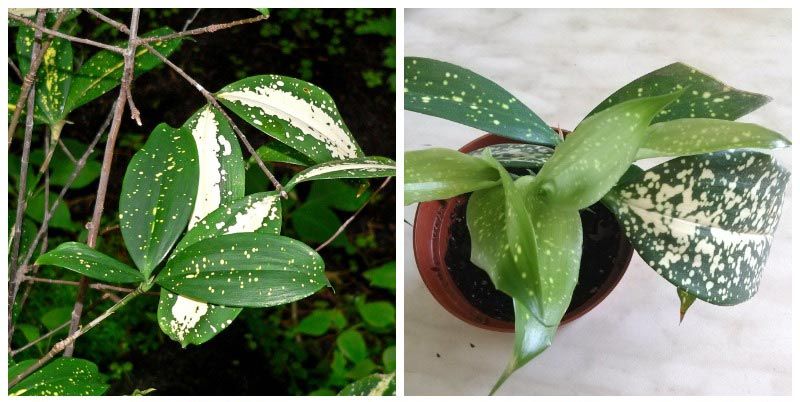
| Godsef | Ovoid, with a bright spotted pattern. | Resistant to temperature changes. |
| Massangeana | A bright, rich variety with large leaves and a trunk up to six meters. | Tolerates abundant light better than others. |
| Deremskaya | A variety of colors and shades, reaching one and a half meters. | Slow growing. |
How to care for dracaena at home
The different species of dracaena differ only slightly, but they all share one thing in common: a love of warmth. Care requirements are similar to those of other succulents. All dracaena plants are adaptable and undemanding, enjoying good health and disease resistance.
Temperature
The preferred temperature range is between 20 and 30°C. A drop to 10°C can kill the plant, while high temperatures (above 30°C) will cause the leaves to lose their elasticity and wilt.
Lighting
The plant's natural habitat in the jungle is the lower layer. This means that dracaena doesn't require a lot of light.
Direct rays are harmful, so windowsills and balconies are not the best place for it.
The exception is variegated varieties, whose pattern will fade and disappear completely without sun. A good solution for them is placing them on east-facing windowsills. South-facing windows are not recommended for all varieties.
Priming
Dracaena requires light soil that provides sufficient oxygen to the roots. A specially prepared soil for this plant, available in stores, is suitable.
If you cannot buy it, it is recommended to prepare a mixture of three equal parts of turf, humus and sand.
It's also important to remember about drainage. The optimal width is one-tenth of the pot's width. Small stones, expanded clay, and pottery fragments are suitable for this purpose.
Watering and humidity
Dracaena loves water, but avoid overwatering, which can lead to root rot. Watering should be regular and seasonal.
In summer, you should water at least three times a week, in winter - no more than once, but if the flowerpot is located near a radiator or other heat source, winter watering should not differ from summer watering.
The soil should always be slightly moist, meaning it shouldn't be allowed to stagnate, but it shouldn't be allowed to dry out either. It's recommended to loosen the soil to improve oxygen access to the root system.
A white coating on the soil is a sign of poor water quality. Allow the soil to settle for about twelve hours before watering, and then remove the coating.
Dust settles on the leaves, so you need to wipe them with a damp cloth or spray them with warm water, avoiding it getting into the joints with the trunk, as they can rot.
Top dressing
The best time to fertilize is during warm spring and summer. Suitable fertilizers for palms and dracaenas include Dracaena, Ideal, and others. Apply no more than twice a month; the dosage is indicated on the packaging.
Methods of reproduction
The plant should be propagated in the spring. The dragon tree can be propagated in two ways: by cuttings and by seed.
The methods of transplantation are varied and diverse:
- A cut is made in the trunk near the top, into which peat is placed and wrapped. Once new roots have formed, the trunk is cut back slightly below the roots and the new shoot is repotted.
- Another method involves cutting off ten centimeters of the top and immediately transferring it to a pot. In both cases, the cut area is treated with a solution of activated charcoal and sealed with warm wax.
- A strong, healthy young stem is cut from the plant and cut into five-centimeter sections, which are then inserted into the soil. The pot is placed in a dark, warm place and covered with plastic wrap. After germination, the shoots are sprayed.
- Seed method: soak the seeds in zirconium for 24 hours, plant them in a pot with palm soil, and water. Then, to create a greenhouse, seal the pot with plastic wrap, removing it after the first germination. Keep the seeds away from direct sunlight.
Diseases and pests
Dracaena is unpretentious and disease-resistant, but improper care or contaminated soil can harm even the most robust plants.
The main causes of diseases are: improper irrigation, excess light, parasites.
| Symptom | Cause | Solution |
| Brown spots and dry ends. | Dry air, hard water or lack of it, drafts. | Change location – further from the window or radiator; filter or let it settle. |
| Yellowing. | Lower leaves are a seasonal change. Upper ones - incorrect watering. |
Pruning of damaged parts, systematic irrigation. |
| Top rot. | Infection, hypothermia, excess moisture, heavy soil. | Destruction of the diseased plant. |
| Loss of color and elasticity of the crown. | Frostbite. | Spraying with warm water, changing location. |
| Infectious diseases. | Alternaria, spotting, phyllostictosis. | Irrigate with a fungicide solution several times a week. |
| Brown plaques. | Scale insect infestation. | Treatment with a sponge soaked in soapy or alcohol solution. |
| Light silver spots or streaks. | Thrips. | Wipe with soapy water, if that doesn’t help, use insecticides. |
| Drying and falling of the crown with fine webbing. | Spider mite. | Warm shower with soap, then treatment with Fitoverm. Frequent moisturizing. |
Replanting a dracaena at home
The soil for replanting should be prepared in advance; palm soil is best. Young shoots should be repotted at least once a year, and older ones should be repotted as they grow.
Don't forget about drainage and a hole in the pot, otherwise the roots will start to rot.
Before repotting, soak the pot in boiling water for ten minutes, then add drainage material, a layer of sand, and soil. Place the plant in the center of the pot, firmly secure it, and add soil. Then, moisten and move it to a warm, dark place.
Trimming
You'll need sharp, sterile garden shears. Only trim plants that are over thirty centimeters tall.
The recommended period is spring and fall. Shoots should be cut at least 5-7 cm from the leaves. Treat the cut areas with activated charcoal and seal with paraffin or wax. After this treatment, the plant needs adequate moisture and light.
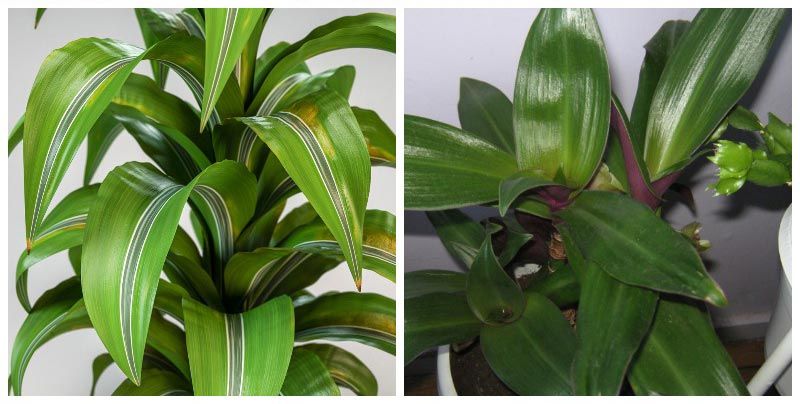
Signs about dracaena
The name "dracaena" means "female dragon." Since ancient times, the plant has been shrouded in a number of legends and superstitions, some of which persist to this day:
- According to Indian legend, dracaena brings love and peace to the home, so it is recommended for newlyweds.
- Psychologists have noted that the dragon tree reduces depression levels, which is why this flower can often be seen in their offices.
- Mystics and healers note the ability of dracaena to repel negative energy from the home.
- Fortune tellers who specialize in love magic recommend that single people use the dracaena as a guide when searching for a soulmate: if it grows vigorously, the person is on the right path. If the plant loses its leaves after a suitable partner arrives, the relationship is doomed.
- The blooming of the dragon tree is a sign of imminent profit.
- The release of red resin on the stem is a bad sign, foreshadowing the death of a loved one.
Top.tomathouse.com recommends: where to place dracaena
The most favorable room is the bedroom, as it is believed that the plant can influence sleep and ward off nightmares. Dracaena makes a wonderful decoration for any room.
For every interior, you can choose a special variety that will not only match the style of the room, but also highlight it.
Some experts claim that dracaena reduces the harm that electromagnetic radiation has on human vision, so it should be placed in every office space.