Pedilanthus is a plant in the Euphorbia family. It is native to southern and central America, and can occasionally be found in northern America.
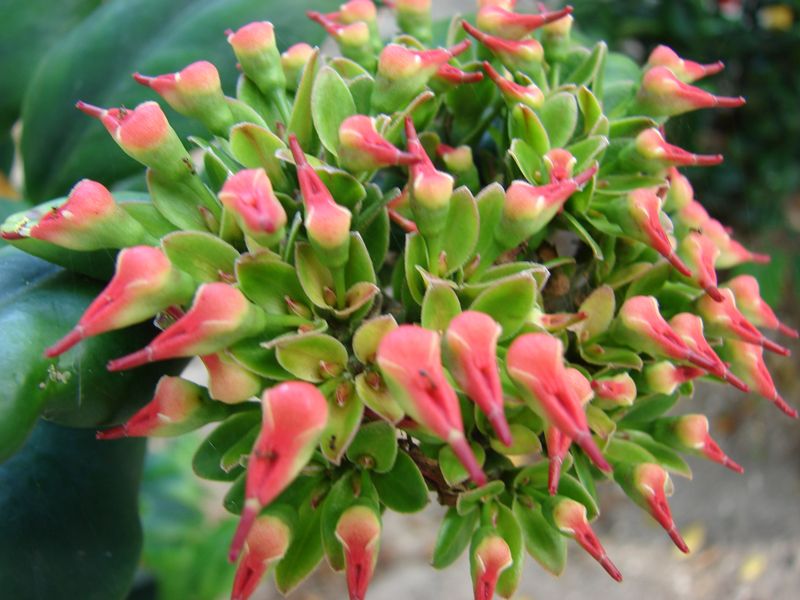
The name comes from a combination of the Greek words for "shoe" and "flower".
Content
Description of Pedilanthus
The plant gets its name from the appearance of its inflorescences, which resemble a woman's pump with a pointed toe. The pumps are miniature in size, and there are up to 50 of them on a Pedilanthus.
The flower stems are fleshy and cylindrical. The oval foliage is dark olive or grayish. Pedilanthus grows up to 3 m in height.
Types of Pedilanthus for the home
There are 15 species of this plant in nature, and only 4 of them are suitable for growing indoors:
| View | Description |
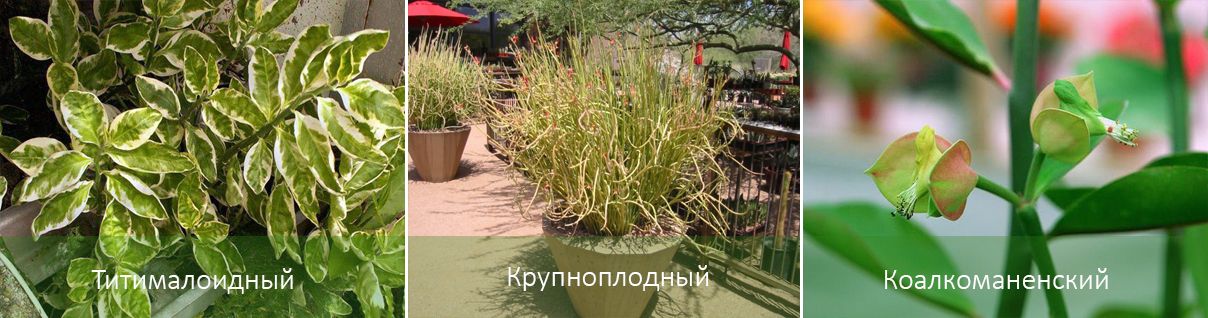
| Tithymaloid (Pedilanthus tithymaloides) 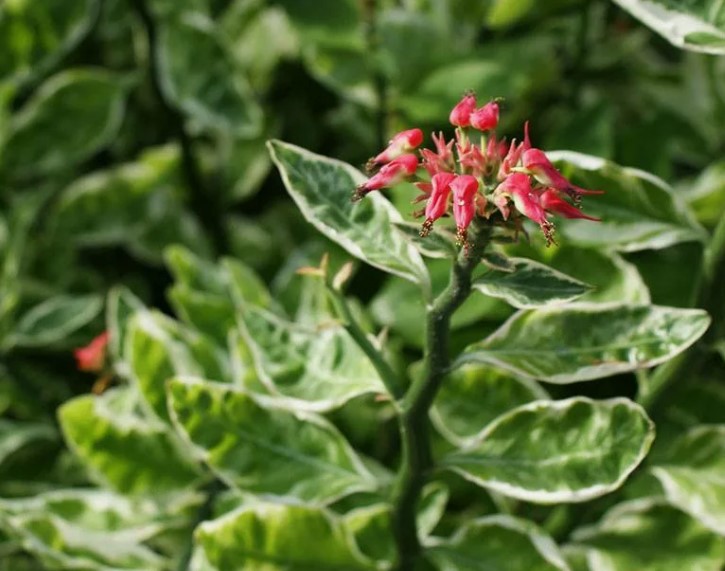 |
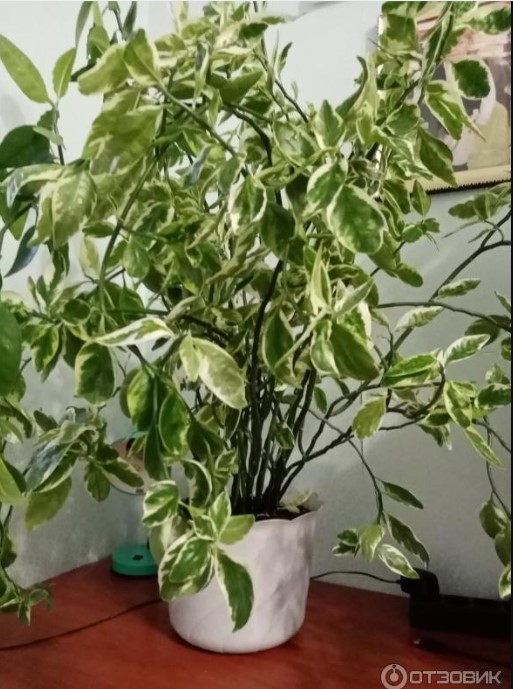
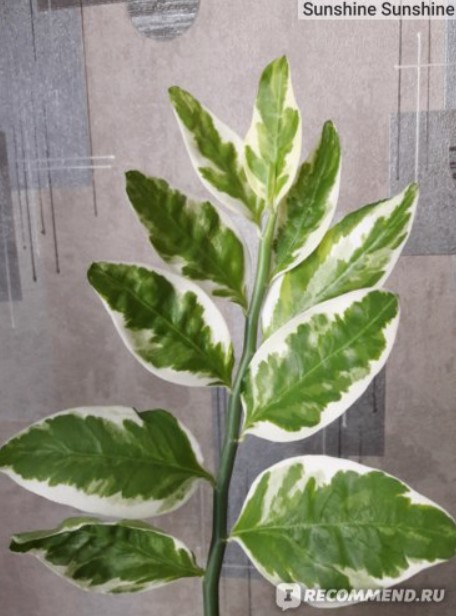
A shrub with a thick, smooth stem. Variegated green foliage with white edges. As winter approaches, it forms small inflorescences with red or pink bracts. |
Large-fruited (Pedilanthus macrocarpus)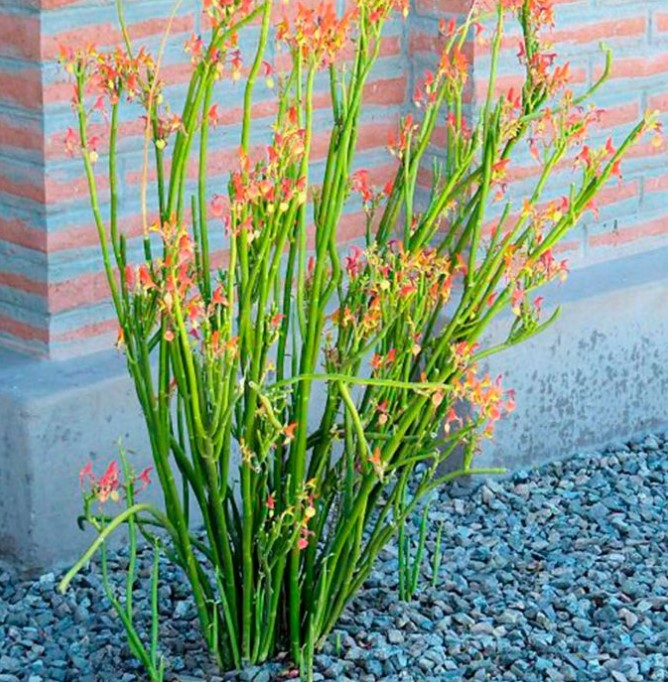 |
A leafless succulent with a round, gray-green stem. Red, umbrella-shaped flowers appear in the fall. The bracts are bright red. |
Finka (Pedilanthus finkii)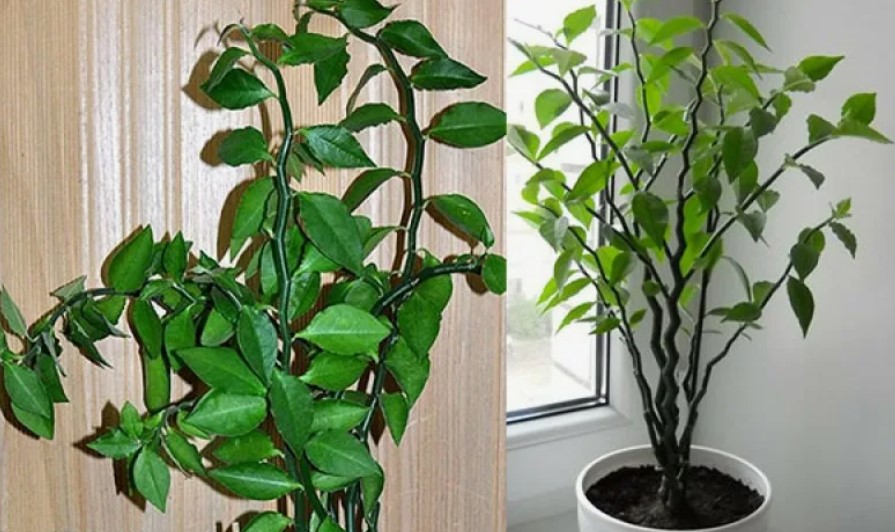 |
A tree-like plant with fleshy, stepped shoots. The foliage is bright green and smooth. |
Coalcomanensis (Pedilanthus coalcomanensis)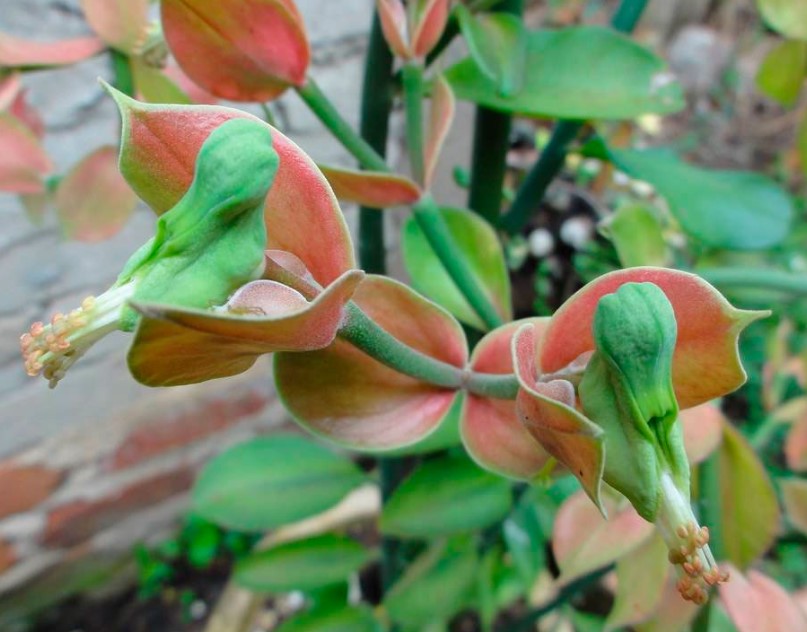 |
A miniature tree, drought-tolerant. The foliage is variegated. The flowers are large, light pink or peach. |
| Spur-leaved (Pedilanthus calcaratus)
|
The bush reaches 3 meters in height. The foliage is dark green, glossy, broadly oval, and approximately 6 cm in diameter. |
Pedilanthus nana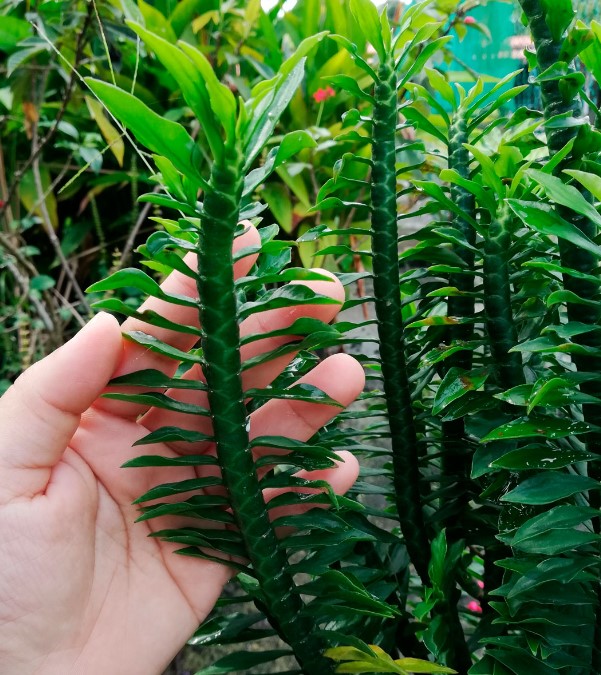 |
It has thick stems adorned with oval-pointed foliage along its entire length. It requires high humidity. |
Caring for Pedilanthus at Home
When caring for pedilanthus at home, you should take into account a number of nuances:
| Factor | Adviсe |
| Location | An east or west-facing window, or on a stand approximately 1-1.5 m from a south-facing window. The plant should be aired daily, but not placed in a draft. In summer, it can be moved outdoors. |
| Lighting | Bright but diffused light is required; the flower does not tolerate direct sunlight. In winter, additional lighting is required. |
| Temperature | During active growth, the temperature should be +24 to +27°C; in winter, +15 to +17°C. The lower the temperature during the cold season, the more leaves the plant will shed. If the temperature fluctuates significantly, the pedilanthus may become diseased or even die. |
| Humidity | There's no specific humidity level, but it's best to avoid placing the plant in a dry room. If you keep it away from heating appliances during the winter, you can skip misting. In the summer, moisten it daily, but not too much, and wipe the foliage. |
| Watering | In summer – 3-5 times a week, in winter – once every 7 days. Only soft water is used. |
Transfer
The optimal time for replanting is spring, but if the roots are showing through the drainage layer, it should be done immediately.
When replanting a flower, you need to follow these rules:
- Selecting a Pot. Succulent rhizomes grow quite slowly, so pedilanthus doesn't need a large container. The pot should be slightly larger than the previous one.
- Soil. The plant prefers a light substrate that provides oxygen and promotes water drainage. You can use soil specifically designed for succulents. If you prefer to prepare your own substrate, mix leaf mold, turf soil, and sand in equal proportions.
- Drainage. Fill ¼ of the pot with brick chips or pebbles. A drainage system will prevent rhizome rot from overwatering.
- The actual replanting process. Inspect the root system. If any rotten areas appear, remove them. If there is no damage, replant by transshipment, without shaking off the old soil.
The plant does not require annual repotting; it is sufficient to do it once every 2-3 years, when the roots no longer fit into the old pot.
Reproduction
Pedilanthus reproduces in several ways:
- Seeds. They are germinated in a homemade greenhouse, slightly buried in a mixture of sand and peat. Germination takes about 15 days. When the seedlings have developed about 3-4 true leaves, they are transferred to individual pots.
- Cuttings. This method is more effective because growth occurs faster. First, cut cuttings at least 10 cm long, then dry them on a table for several days. Remove all leaves from the bottom. Root the cuttings in water or moistened sand. If the first leaves appear, the plant has rooted. Repot it in a separate pot.
Difficulties in caring for Pedilanthus
When growing pedilanthus, a number of difficulties may arise:
| Symptom | Cause | Elimination |
| Stretching shoots. | Lack of light. | The shoots are carefully trimmed and the flower is moved to a more illuminated place. |
| Shedding leaves. | Deficiency or lack of moisture, sudden temperature changes. | In winter, stop watering completely and move the plant to an insulated balcony to reduce the temperature. In summer, repot it and protect it from drafts. |
| Drooping leaves. | Insufficient amount of moisture. | Do not allow the soil to dry out. |
| Lack of flowering. | Poor lighting, improper wintering. | Reduce the temperature and watering frequency, and stop fertilizing. Move the plant to a location with better lighting. |
| Change in foliage color. | High nitrogen content in the soil. | The mineral fertilizer is replaced and the pedilanthus is transplanted into new soil. |
Diseases, pests
What diseases and pests can threaten the plant and how to combat them are discussed in the table:
| Disease/pest | Manifestations | Struggle |
| Root rot | The roots and stems turn black, and dark brown spots appear on the foliage. The plant's growth slows. | At an early stage, the pedilanthus is repotted into a new pot, and all affected areas are trimmed off. Water and spray with Maxim and Gamair solutions. Apply these solutions at least three times. If the rot has affected a large portion of the plant, it is destroyed. |
| Spider mite | The underside of the foliage is covered with tiny white dots and interwoven with webbing. The foliage then quickly turns yellow and dries up. | The pot is disinfected, and the leaves are wiped with soapy water. Acaricides such as Sanmite and Actellic are used. Garlic and onion solutions are also used as home remedies. |
| Aphid | The leaves curl and become deformed. | Affected leaves and shoots are pruned. The plant is treated with insecticides: Aktara, Iskra, Akarin. |
| Whitefly | The leaves turn yellow and curl at the edges. When touched, whitish insects fly out. | The flower is vacuumed early in the morning. The leaves are wiped with a soap-alcohol solution. Then, they are sprayed with Fury, Decis, and Actellic. |
Pedilanthus – a harbinger of change: signs and superstitions, benefits and harms
Growing pedilanthus at home has certain benefits and harms.
Benefit:
- fills the air with oxygen;
- acts as an antiseptic, as it contains essential oils;
- absorbs toxins, thereby reducing their accumulation in the room;
- used to create psychotropic and antimicrobial agents (juice).
Harm:
- The juice of the pedilanthus is poisonous and if it comes into contact with exposed skin, it can cause itching, burning and even inflammation;
- Consuming the plant's leaves causes poisoning, which can lead to the death of pets.
Signs and superstitions about pedilanthus
- unexpected shedding of leaves - someone in the house will soon get sick;
- lack of flowering – there is no harmony in the family;
- the foliage is hanging down - problems in the professional sphere;
- the stem is bare - separation from a loved one.
There are many signs, but everyone decides for themselves whether to believe in them or not.
Pedilanthus Reviews
Beautiful and easy to grow. Growing fast! Great for beginners, but it has its quirks... The only plant in the house I don't like.
Good day to everyone who dropped by!
A year ago, I became interested in houseplants and actively started building a small collection. I also have a pedilanthus. It was brought to me as rooted cuttings sometime last fall. I didn't show much interest, but quickly planted them together in the first pot of soil I found.
The pedilanthus quickly took root and started growing. Several branches appeared. It's growing very quickly. It's not changing at all right now because the pot is clearly too small, with a couple of roots sticking out from the bottom. I'm in no rush to repot it because I just... don't like pedilanthus. Why? Let's move on to general information, and then to care.
So, what is it about Pedilanthus tithymaloides that makes it so repulsive?It's poisonous. More precisely, its sap is poisonous. I have a small child. Although he doesn't touch the pedilanthus, much less tear off the leaves, you never know what kids might come up with. I'm all for safe plants. Especially since this one has huge leaves and thick stems, which contain the dangerous substance.
If the plant's juice gets on open skin wounds, it can cause unpleasant itching and burning, and in the worst case, the area may become inflamed.
Swallowing a pedilanthus leaf is a surefire way to cause poisoning. Nausea, vomiting, and diarrhea will occur within minutes of ingestion. Therefore, it's not recommended to place pedilanthus in children's rooms, and keep children away from this plant.
It's also best to keep pets out of reach of pedilanthus. While dogs and cats can detect its toxic "vibe," it's best to keep parrots and other feathered pets away from this plant—they'll die if they eat it.
That's not the only reason I'm put off by the pedilanthus. Even though I don't believe in superstitions, I still don't buy plants that have a bad reputation.
Plants with variegated or colored leaves should be kept with caution by unmarried women. There's a risk of losing a strong support system—variegated pedilanthus is known for its "husband-killing" qualities.
Pedilanthus
CareA completely unpretentious plant.
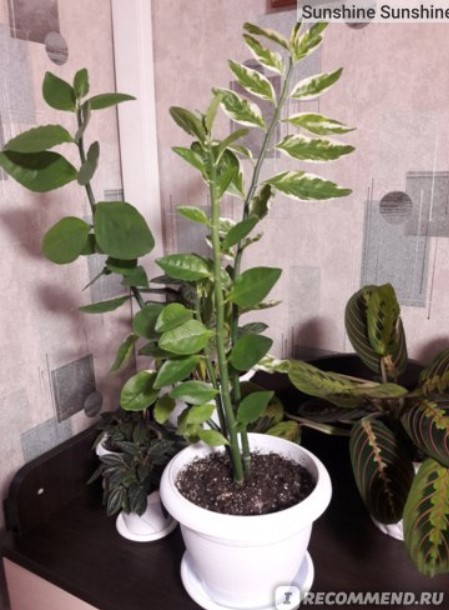
Loves light, but not direct sunlight; my pedilanthus isn't partially variegated, most likely due to a lack of light. When the branches were growing, only one of them received adequate light;
The temperature is normal room temperature; it feels fine on a south-facing balcony at 40°C, and it's still fresh at 15°C. However, during a strong wind, when the window was slightly open and the night temperature dropped to 11°C, the branches and leaves drooped a little. I moved it indoors, and everything returned to normal.
watering once a week; if left without water for a long time, the tops become wilted, but quickly recover after watering;
grows quickly and fills the entire substrate with roots;
It is not demanding to the soil, I used universal soil + perlite, drainage is essential.
To sum it up, I will name the main advantages and disadvantages:+ beautiful appearance;
+ large size, leaves;
+ grows quickly;
+ unpretentious;
+ hardy, suitable for beginner gardeners;
- poisonous - the main disadvantage;
- a husband killer, if you believe in omens;
Conclusion:
My feelings about the pedilanthus are 50/50. On the one hand, I like it, but on the other, I'm not so sure. It's hard to call it a positive plant. I'd say that's true of the chlorophytum, for example. It's cheerful and positive (just my associations). But the pedilanthus is kind of scary. Probably because it's poisonous.
Nausea, vomiting and diarrhea will occur within a few minutes after such a “tasting”
Basically, this isn't my plant. I bought it a new pot, but I have absolutely no desire to repot it.
I would still recommend it, as it's beautiful and unpretentious. I'd give it a 4.
If you want the same for yourself, take its features into account.
____
I finally repotted it. I'll add more photos when it adapts and starts growing. Right now it's on the balcony, where the temperature stays around 20 degrees Celsius unless the window is open.
6.04.20
I moved the pedilanthus into the room, to the northeast window. It's growing before my eyes. I've even come to like it. Smile. The beginnings of leaves and branches are appearing.
Pedilanthus tithymaloides
April 21, 2020
The Pedilanthus continues to grow. Many new branches have appeared (approximately 7). The plant is increasing in size. It will be interesting to see what it will look like when the new branches are larger.
Pedilanthus grows quickly
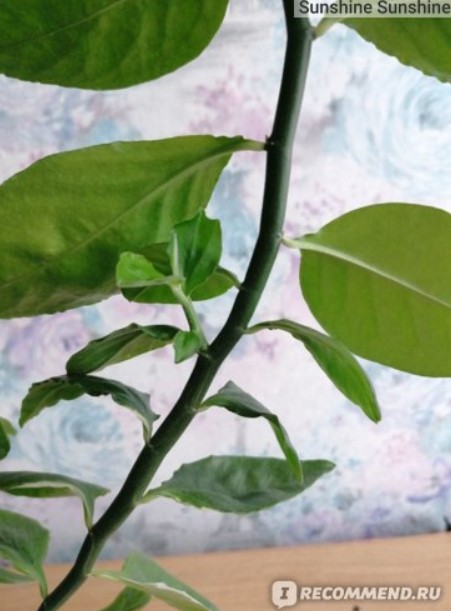
One branch remains green.
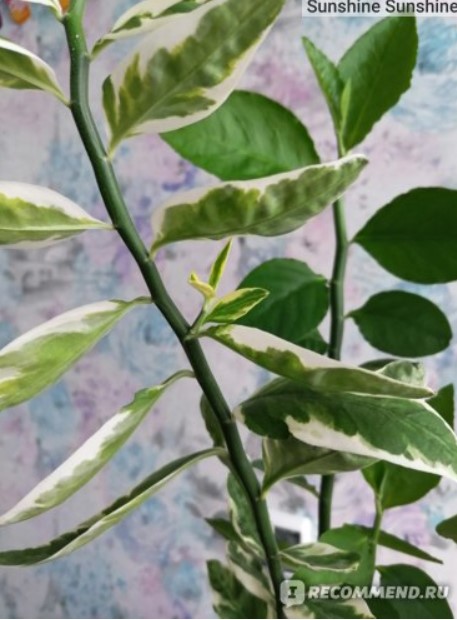
And on the other, all the leaves are variegated. And with a yellowish tint.
New branches of pedilanthus
May 4, 2020I moved it away from the kitten onto a shelf opposite the window. Apparently, the pediluntus needs more light, which might be why one branch is stretching.
Pedilanthus grows quickly
Thank you for your attention.
Sunshine Sunshine
recommends
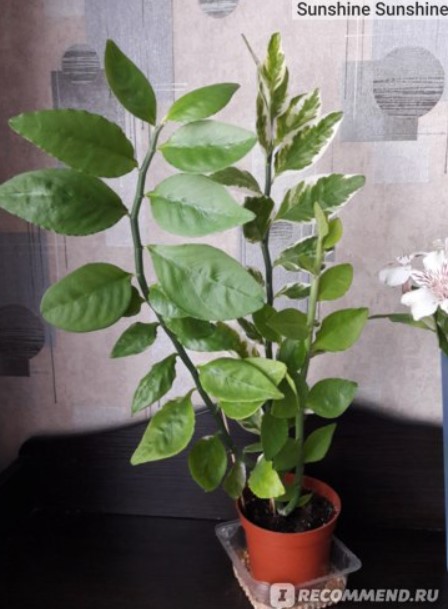
Review: Indoor flower Pedilanthus - A beautiful flower
Advantages: Unpretentious
Disadvantages: Poisonous
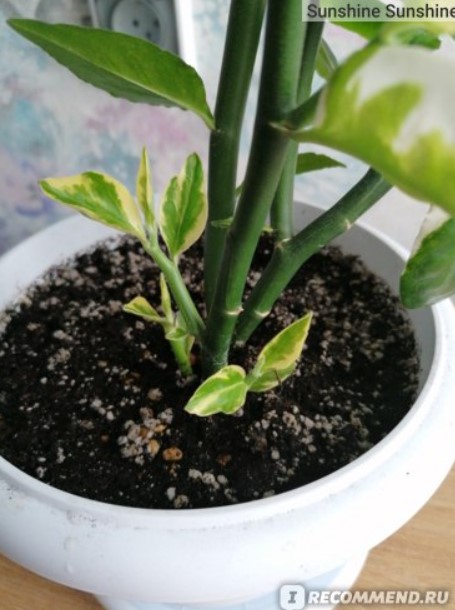
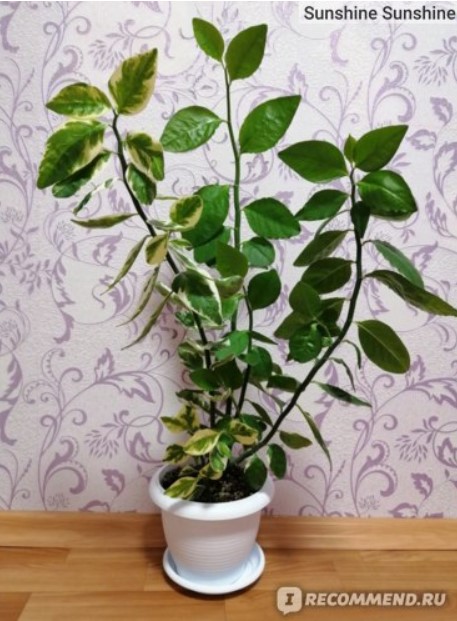
Pedilanthus tithymaloides came to my house as a shoot about 6 years ago. And now it's about
1.5 meters. It looks very beautiful in an interior. It's not particularly demanding, but it doesn't like hot, dry air or direct sunlight. No guest can resist this flower. Its leaf coloring resembles that of the Ficus benjamina. The flower is poisonous (milkweed), so care must be taken when repotting it. There are many superstitions associated with this flower. For example, it is said that receiving a flower as a gift will bring changes to your home related to renovations. At work (in the office), the flower will bring career advancement. Although these are all superstitions. Let's keep an eye on colleagues who have a Pedilanthus in their office window.
Year of manufacture/purchase 2016
Overall impression: Beautiful flower
My rating
5
I recommend it to friends YES