Synadenium is a flower in the Euphorbiaceae (Spurge) family. It is native to South Africa. It is also known as "milkweed" or "love tree." It is distinguished by its lush crown and unusual inflorescences.
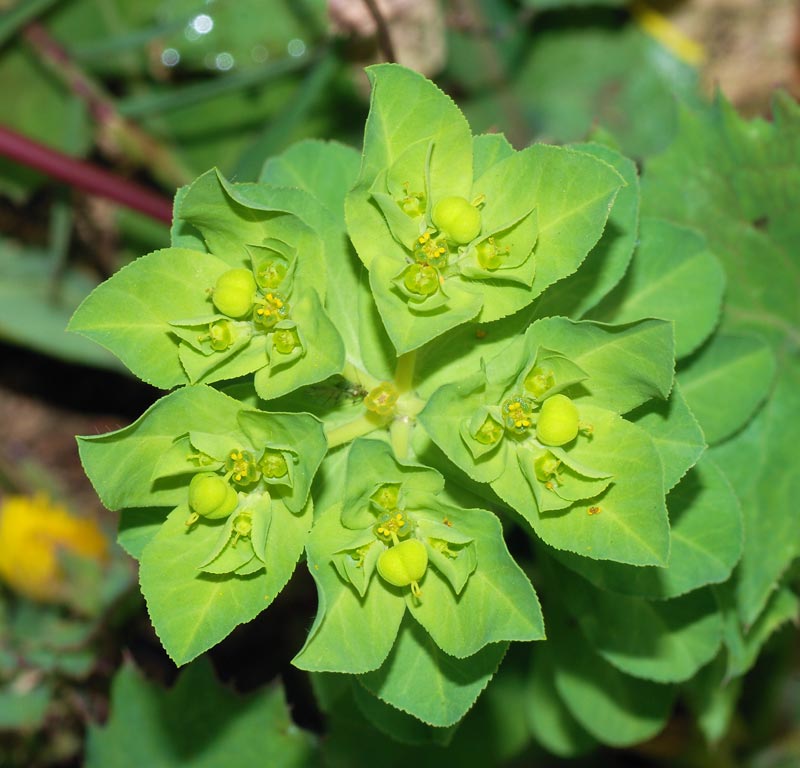
Description and popular types of synadenium
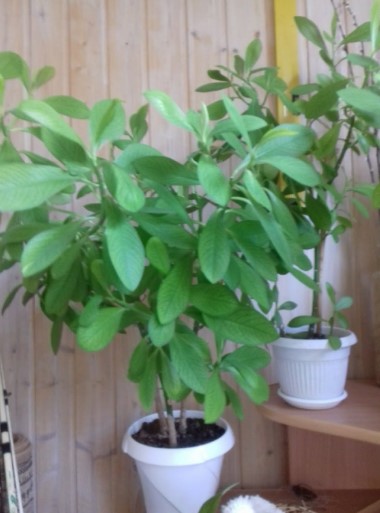
Synadenium has a thick, massive stem covered with small glandular hairs. The root system is extensive and deep. The leaf blades are delicate and multicolored, pink in young plants and with blurred red spots in mature plants. Small flowers are gathered in corymbose inflorescences. The red flowers resemble bells.
In the wild, synadenium blooms in winter. Flowering occurs very rarely indoors.
There are about 20 species of the plant, two of which are grown indoors:
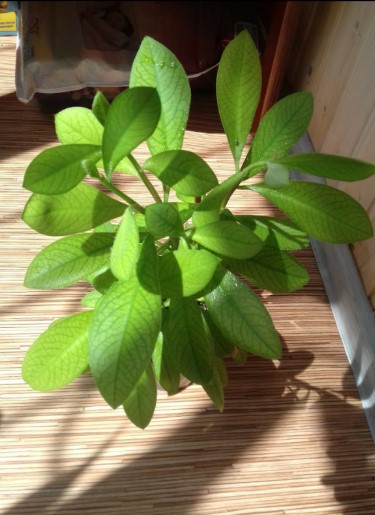
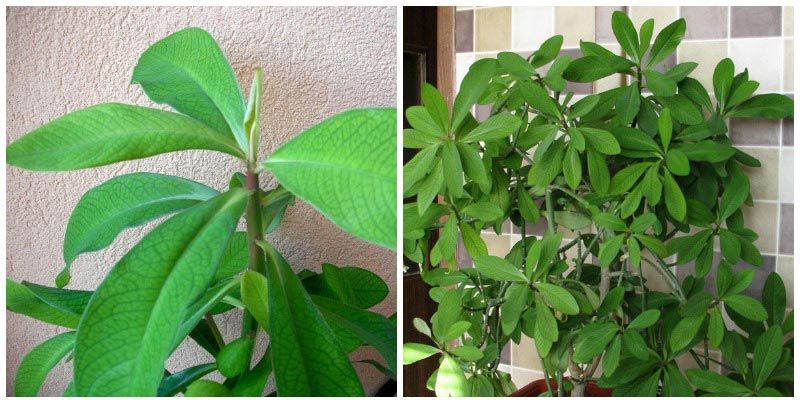
- Granta grows to 3.5 meters in the wild. It has erect green stems that woody over time, turning pale gray. The oval leaves are arranged alternately on short petioles. The leaf blades are glossy, stiff, and dark green with beautiful veins. Umbelliform inflorescences emerge from their axils, blossoming red. After flowering, fruits form.
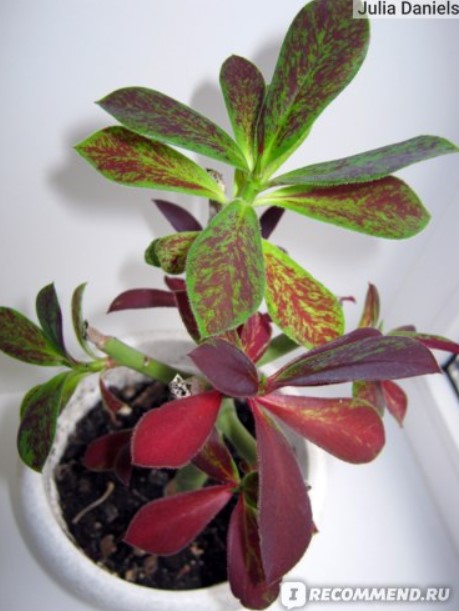
- Rubra – large, oval, dense leaves vary in color. When young, they are pink, but with age they become dark green with red streaks.
Caring for Synadenium
Synadenium is a decorative flower that is unpretentious and disease-resistant, and easy to care for at home.
| Parameters | Spring/Summer |
Autumn/Winter |
| Lighting / Location | Bright, diffused light, eastern and western window sills. | Use artificial lighting. |
| Temperature | +23…+26 °С. | +10…+12 °С. |
| Watering | Moderately, as the soil dries out, once a week, with soft, settled water, avoiding stagnation in the tray. | Rarely 1-2 times a month. |
| Humidity | No high temperature required, just a warm shower. | Do not place near batteries. |
| Top dressing | Liquid fertilizers for cacti or Ammophos, Ammonium sulfate. | Do not use. |
Crown formation
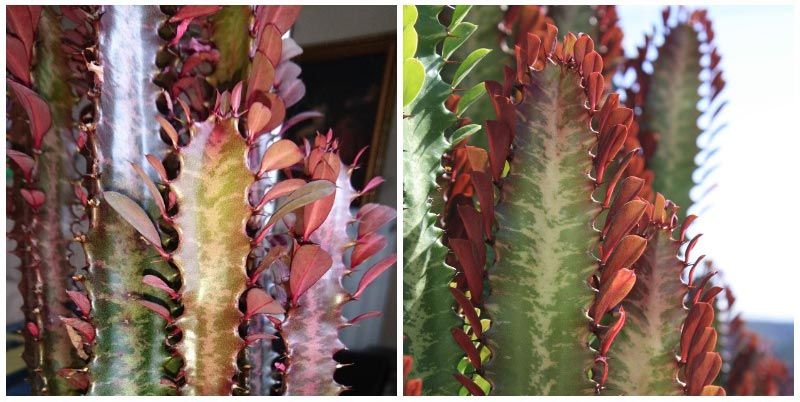
To renew the plant and give it a decorative appearance, annual pruning is performed. This is done in the spring, at the beginning of the growing season, with a sharp knife or pruning shears. Elongated and bare shoots are removed, and the cuts are treated with charcoal or activated charcoal. Upper growth points are pinched to encourage more branching.
Transplantation, soil, pot
Synadeniums are repotted every two years. Choose a deep, wide pot. The soil should be light and neutral. Prepare a mixture of equal parts humus, sand, turf, and peat, or purchase a ready-made mixture for cacti and succulents. Place drainage at the bottom. Fill the container with half the soil. Remove the plant, shake off the old soil, place it in a new pot, and cover with the remaining soil. Wear protective gloves when handling the plant, as its sap is poisonous.
Reproduction
Synadenium is propagated by cuttings and seeds.
Cuttings – the upper parts of the shoot with 4-5 healthy leaves are cut to 12 cm. The cuts are sprinkled with charcoal or placed in warm water (to stop the sap flow). Then, the cuttings are dried for two days in the shade. When a white film forms on the cut surface, they are planted in a prepared container. The substrate is prepared from equal parts peat, sand, and birch charcoal. Moisten the material and place it in the soil with the cut end down. Place the container in a warm, sunny spot. The plant takes root within a month, and new leaves appear.
Seeds: Fill a container with peat and sand and moisten. Place the seeds no deeper than 10 mm. Cover with plastic wrap and place in a room with a temperature of 18°C. Seedlings should appear in two weeks. When they reach a centimeter, transplant them into potting soil. When they reach three centimeters, transplant them into soil suitable for mature plants.
Problems with growing synadenium, diseases, pests, methods of elimination
Synadenium is rarely susceptible to diseases and pests, but problems arise with improper care.
|
Manifestation on leaves |
Cause |
Method of elimination |
| Dropping | Temperature fluctuations, lack or excess of moisture, watering with cold water. Root rot. |
Adjust temperature and watering. Cut off damaged roots, treat with fungicide, and replant the plant. |
| Lowering | Not enough moisture. | Water more often. |
| Stretching shoots | Lack of light. | Cut and move to a lighted place. |
| Dry ends | Watering with hard water. | Use only soft water. |
| Chlorosis | Lack of nutrients. | Feed the flower. |
| Gray, lethargic | Spider mite. | Treat with acricide (Karbofos, Actellik). |
| Brown-red spots. Stickiness, bud drop. | Scale insect. | Isolate, spray with soapy water or Mospilan. Aktara. |
| White lumps on the plant. | Mealybug. | Treat with laundry soap, or in severe cases, Actellic. Spray and wipe the leaves as a preventative measure. |
The benefits and harms of synadenium
Euphorbia contains a milky sap in its leaves and stems. This can be harmful, dangerous, and poisonous to humans.
If it gets on the skin, it causes severe burns; if it gets inside, it causes poisoning.
Synadenium has beneficial properties; a tincture is made from its roots. It helps with stomach and liver ailments, bladder inflammation, and headaches. According to popular belief, keeping the plant in the bedroom is not recommended.
Reviews of synadenium from gardeners
This plant amazes me with its resilience! A good choice for a beginner. Pruning, watering, lighting, propagation. PHOTO
So, I'll say right off the bat that I'm not an experienced gardener... I've had my own houseplants and have been caring for them for just a couple of years. So this review will be, so to speak, from a "newbie" in this field. Overall, I enjoyed growing houseplants, approached the task with my characteristic responsibility and punctuality, and read about each of my plants... maybe that's why none of them have died yet. Laughing out loud
Synadenium Rubra
Synadenium was one of my first plants. Back then, I didn't know its full name—Synadenium Rubra. Incidentally, I only learned it when I was about to write this review. Previously, I simply called it synadenium. My mother gave it to me, already in a fairly large pot; I never repotted it. Unfortunately, I don't have any photos from that time.I put it on a south-facing window (the other windows in the house were too dark). After a while, it started losing its leaves. Sad I couldn't figure out why. I thought it just hadn't gotten used to the new location yet. I started actively researching what could be causing this, tried to take action, but nothing helped. Eventually, it finally dropped some leaves. It looked unsightly, with a bare trunk and a few leaves sticking out in no particular direction. But I wanted it to start bushing out and sending out side shoots. Then I learned that you can pinch it back or even trim it.
At first, I did it cautiously and carefully. I cut off tiny new leaves and shoots. Now I can't remember if it was just one or several... I used a sharp knife, pre-treated with alcohol. I immediately sprinkled the cut with crushed charcoal. Incidentally, after removing them, a white, sticky sap began to ooze out abundantly from the cut area.
Species of this genus (Synadenium) can be harmful to animals because they produce a toxic milky sap. Avoid contact with mucous membranes, eyes, and wounds, as it is highly irritating.
What was the result? Very good. The plant didn't get any worse after this treatment. After a while, it started sending up new shoots in random places. Mostly at the tops. But I really wanted it to do this at the bottom, on the bare trunk. A small shoot appeared there once, but it was so weak and slow-growing that it still hasn't grown.
This plant has endured a fair amount of abuse over the years it's lived on that same south-facing window. I've never repotted it, though I should have. It's constantly exposed to direct sunlight in the summer (other plants get sunburned, their leaves change color, etc., but this one doesn't care). It's quite possible I overwatered it initially. And yet, there was no root rot, mold, or pests.
Watering:
In summer, water about once a week, allowing the soil to dry out between waterings. Synadenium stores moisture in its succulent stems, so overwatering is harmful. In fall and spring, water about once every 15 days. In winter, reduce watering to once or twice a month.
One day, I got tired of my synadenium looking so bare overall. There were some strangely protruding branches, a few leaves, and new shoots growing in the wrong places. By that time, I'd already pruned it several times, but only the young leaves at the tips. Finally, I decided to give it a thorough pruning. The branches I was about to trim were already thick... I used a sharp knife again, but even that couldn't cut them. They felt wooden inside. I had to literally saw them off, holding the synadenium tightly... sticky sap was already running down my hands. I couldn't even imagine what would happen to the plant after that. In the end, of course, I sprinkled the cuts with crushed charcoal. It was precisely because of this pruning that I didn't repot it this season. I decided to trim it back and, if it continued to grow, I'd repot it.
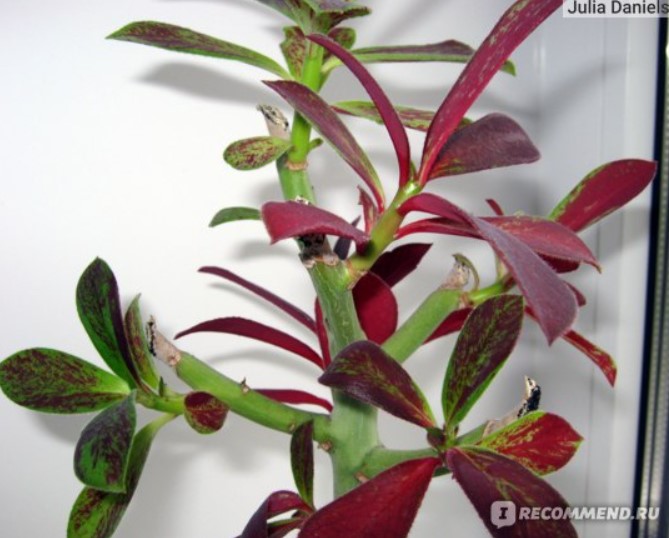
Synadenium Rubra, pruning
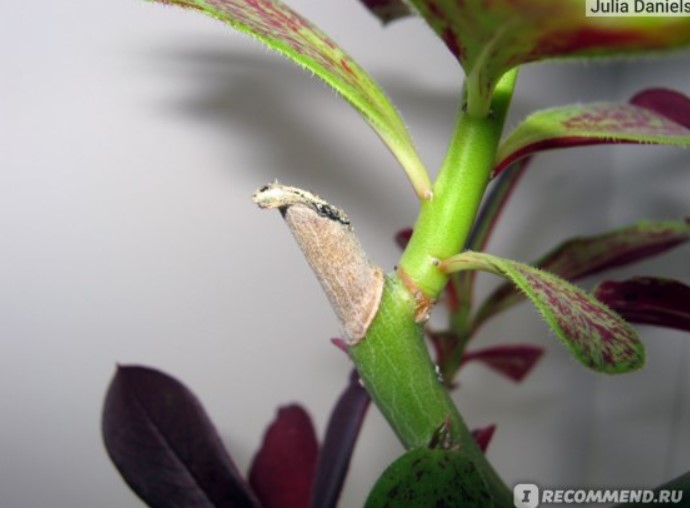
At first, nothing happened after this nightmare. I noticed that the edges of the branches started to shrink from the cut, as if drying out (they eventually looked like the ones in the photo above). But then, little by little, new shoots began to appear here and there. My joy knew no bounds. Now they've turned into leaves like these.
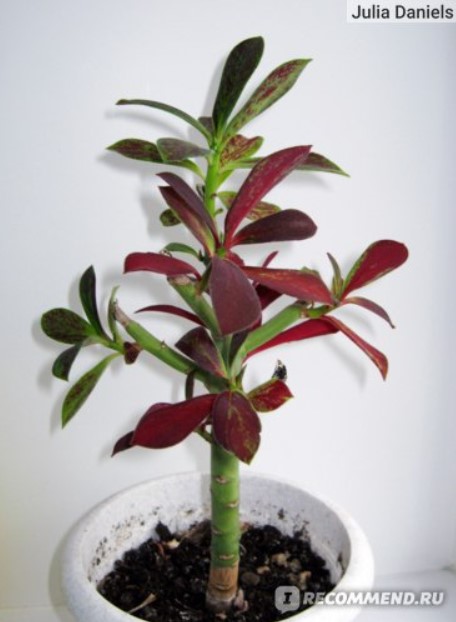
Synadenium Rubra
Overall, the synadenium grows very quickly. In about 4-6 months (I don't remember exactly), it transformed from a bare trunk with pruned branches into a small tree. And now I know for sure that if I don't like something about its appearance, I can adjust it. And of course, it's best to start doing this as early as possible, pruning young shoots.
Synadenium Rubra
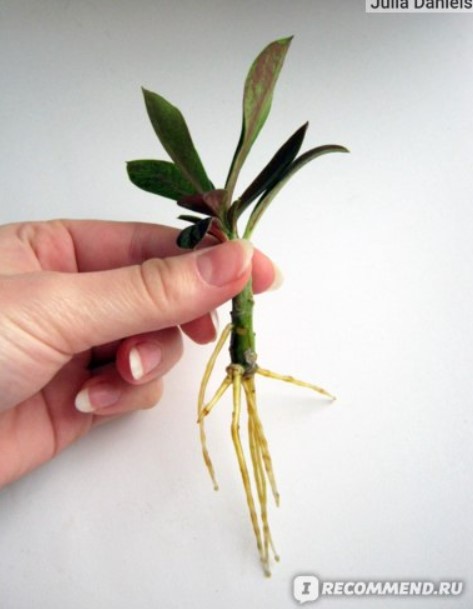
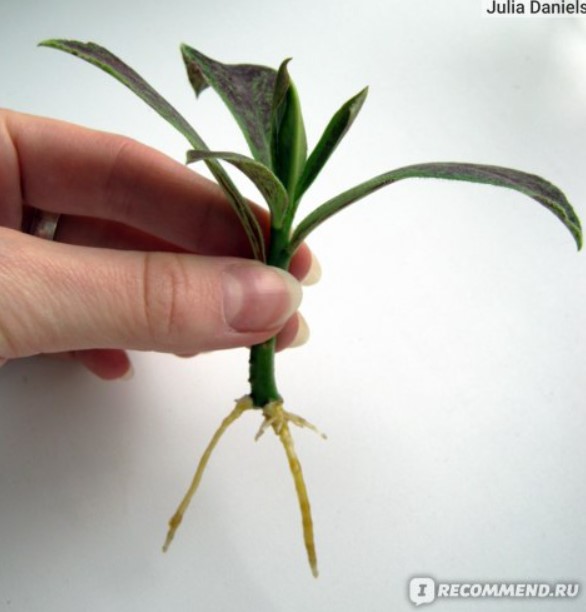
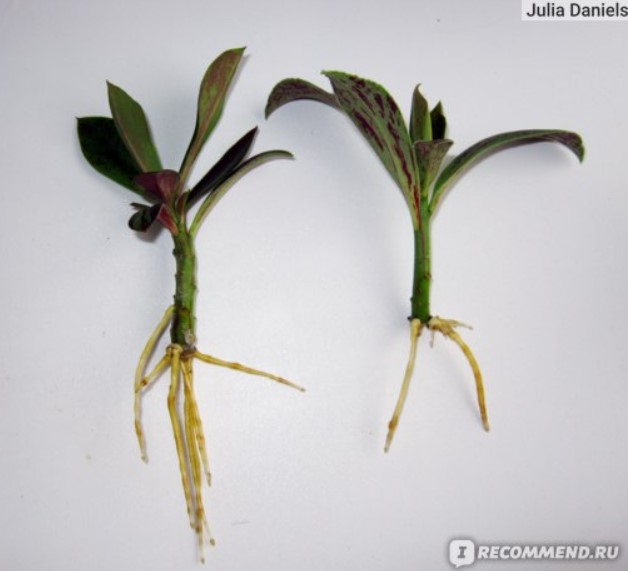
_____________________________________________________________________________________________And another incident that surprised me. While pruning, I decided to leave a couple of the larger branches in water to see if they would root. They sat there for a long time, but no roots appeared. The leaves were already starting to wilt, and I realized I had done something wrong, as I had read that synadenium can root in water. So I put them in a cool, dark place, just to dry out, even though I thought they would just wilt and that was it. And for a long time, I forgot about them, thinking nothing would ever grow from them. They sat there for about six months! I was about to throw them away, but then I noticed that although they were slightly wilted, they looked quite healthy and green. Well, I need to give them another chance. I put them in water... and lo and behold! Within a few days, roots began to appear.
Synadenium rubra, offshoot
Synadenium rubra, offshoot
I was absolutely delighted. The leaves themselves became juicy and acquired a fresh green hue. The roots grew very quickly. And all this happened not in the spring, but in early fall!
Synadenium Rubra, propagation
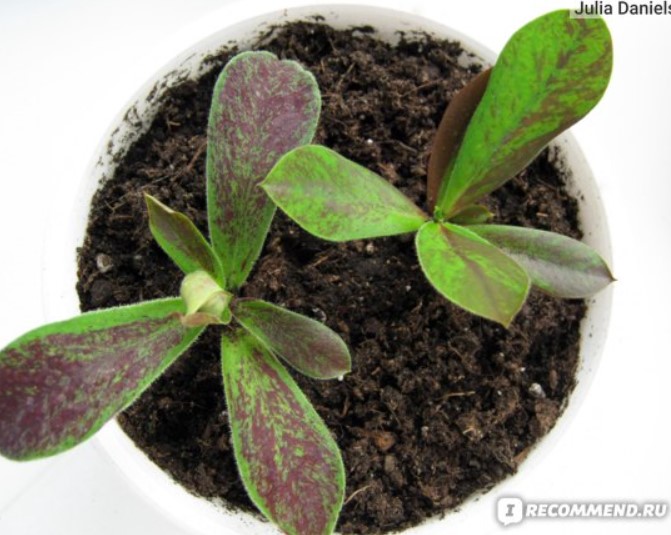
So, I planted them in general-purpose potting soil (mixed with cactus soil). I hope the cuttings will take root and continue to grow.
Synadenium Rubra, propagation
_____________________________________________________________________________________________RESULT
Synadenium Rubra
has an interesting leaf color, unlike Synadenium Grantii
quite hardy
can stand in direct sunlight
growing quickly
requires pruning to create a more attractive appearance
has poisonous juice
sometimes sheds leaves
does not require frequent watering
takes root in water (apparently, the cuttings need to be dried first)
_____________________________________________________________________________________________Advantages
It grows quickly
Tolerates drought
Interesting leaf color
Unpretentious
Tolerates direct sunlight
Flaws
May shed leaves if not properly cared for.
Requires pruning
Poisonous juice
Julia Daniels
recommends
Review: Indoor plant "Sinadenium" - An unpretentious indoor plant
Advantages: Unpretentious plant
Disadvantages: Poisonous juice
Synadenium grantii is an easy-to-grow houseplant, perfect for beginner gardeners. I also call it an "indoor weed" because it spreads so easily. Its requirements are modest, and it will quickly establish itself in your home. It belongs to the Euphorbia family. It needs to be pinched or pruned to create a miniature bush. When the stem is cut, it releases a white liquid that is considered toxic. Ingestion can cause poisoning, and in rare cases, allergic skin reactions can occur. Don't be alarmed. It's best to wear gloves when pruning, although I do it without them. Just don't eat it, and it'll be fine, and try to keep it away from pets. This succulent plant can store moisture for a long time. It prefers filtered light; in low light, it will stretch and lose its appearance. The optimal temperature is 22-26 degrees Celsius. Being a succulent, it doesn't require frequent watering and doesn't like excess moisture. In summer, water after the top layer has dried out, and in winter, allow the soil to dry out a little further. It doesn't require misting, and wiping the leaves with a cloth is not recommended, as this can disturb the fine hairs that cover the leaf blade. What it does appreciate is an occasional shower, which will wash away any dust.
Usage time: 2 years
Year of manufacture/purchase 2017
General impression: An unpretentious houseplant
My rating
4
I recommend it to friends YES