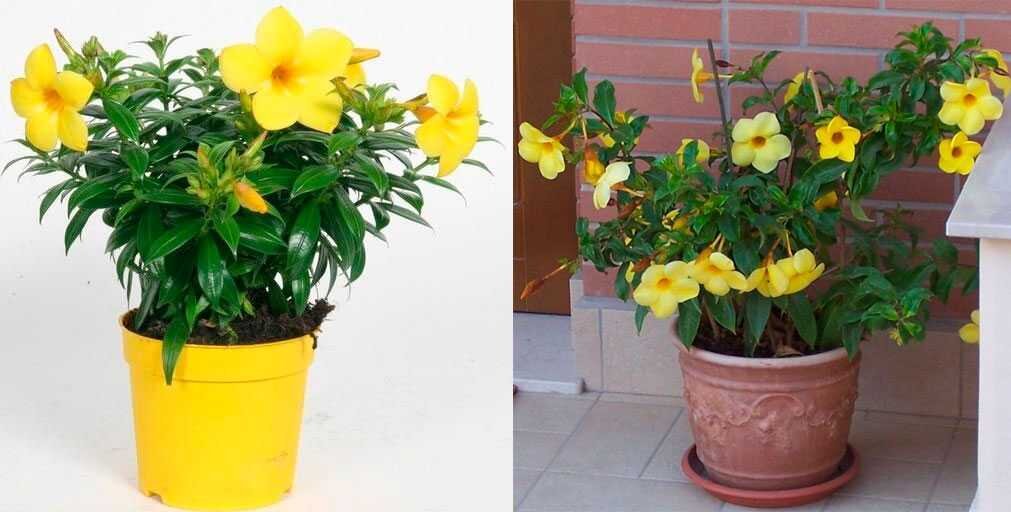
Allamanda, with its beautiful golden flowers, often called "Golden Trumpet," attracts attention with its wonderful decorative qualities. Its dense green leaves and magnificent flowers make it a favorite choice for home or greenhouse interiors. It can add a special tropical charm and coziness to any space.
Although allamanda doesn't tolerate low temperatures or frost, it thrives indoors. Its leaves and flowers are a delight to behold year-round, adding vibrant color and energy to any home.
Allamanda is also known for its medicinal properties. Some species of this plant are used in folk medicine to treat various ailments. Its leaves and flowers contain substances that may have a positive effect on human health.
Content
Brief characteristics of Allamanda in the table
| Characteristic | Description |
|---|---|
| Family, genus | Apocynaceae, Allamanda |
| View | It is an evergreen shrub or vine with large, erect stems that exude a milky sap when damaged. The leaves are arranged alternately and are oval or elliptical. The flowers are large and vibrant, with sepals opening into a funnel-shaped opening, and petals forming five petals. Flower color can be yellow, orange, pink, or red. |
| Spreading | It grows in the tropics of America, mainly in South American countries such as Brazil, Colombia and Venezuela. |
| Use in landscape design | It is often used for vertical gardening, decorating gardens, parks and arboreums thanks to its bright and large flowers. |
| Economic use | Some species have medicinal value and are used in traditional medicine to treat a variety of ailments, including heart disease, arthritis, and even some types of cancer. |
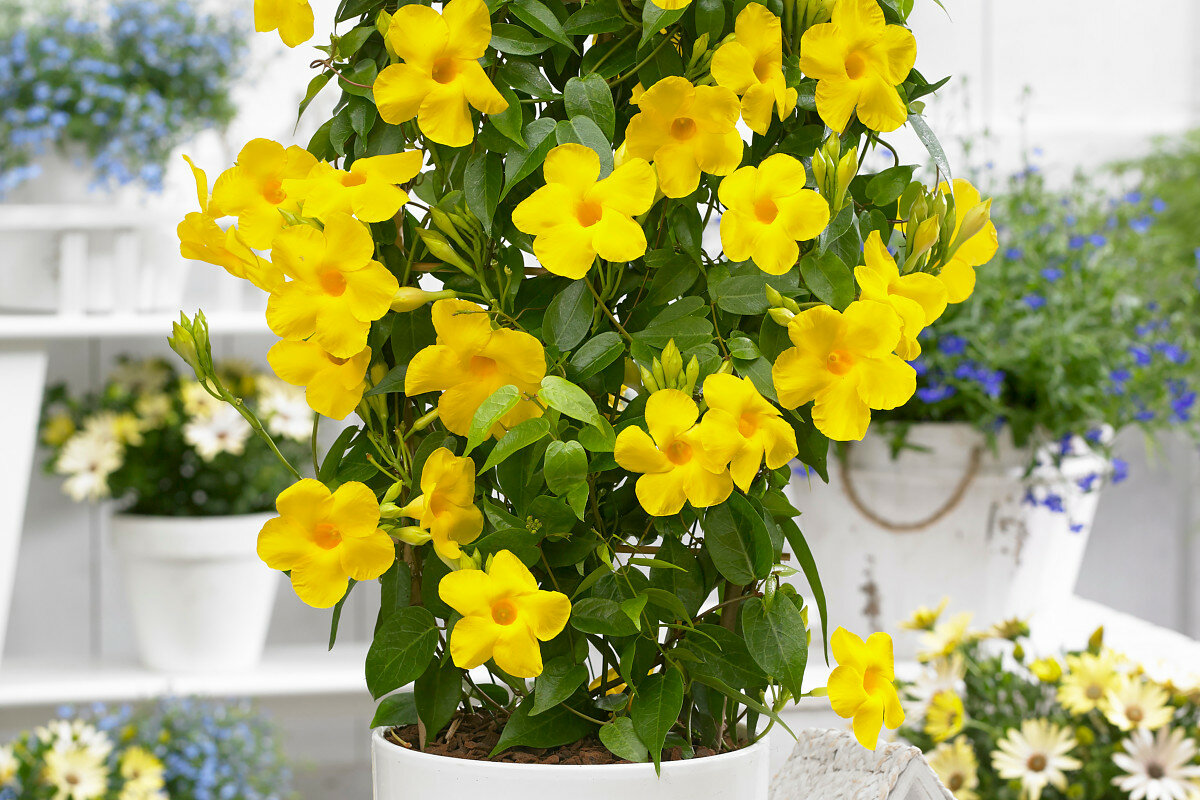
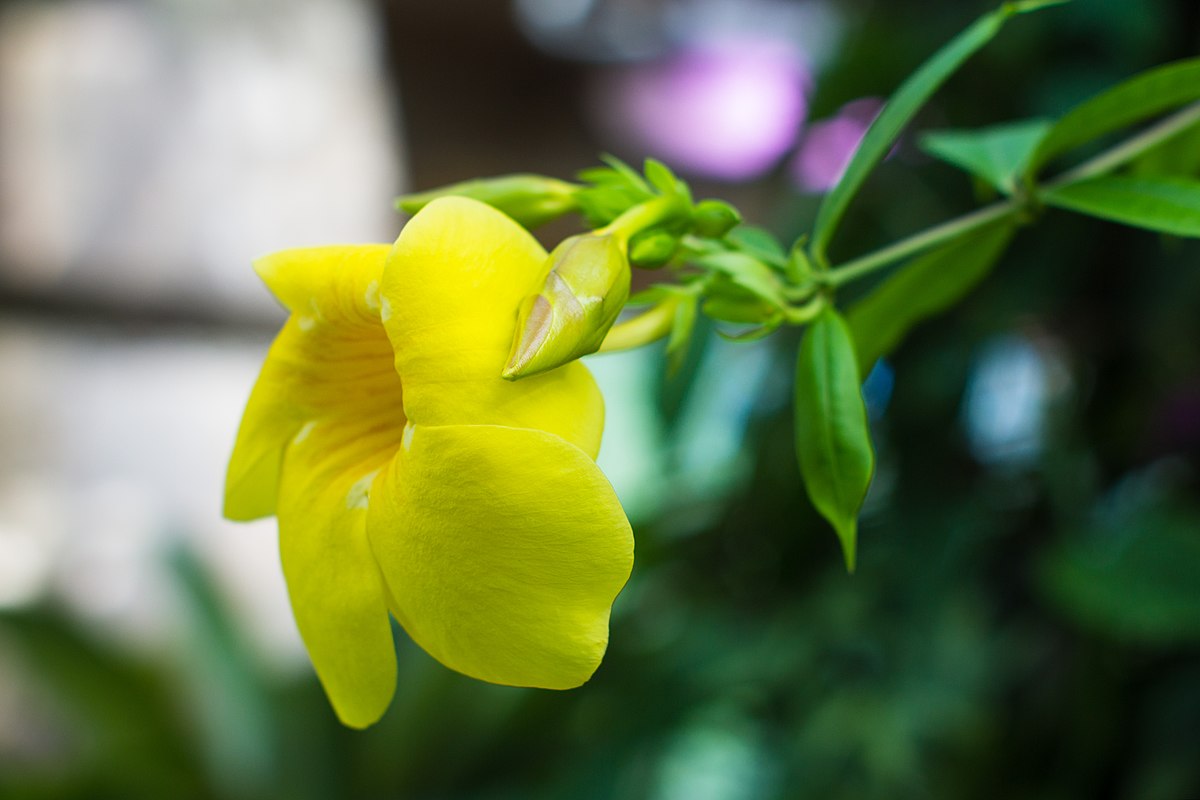
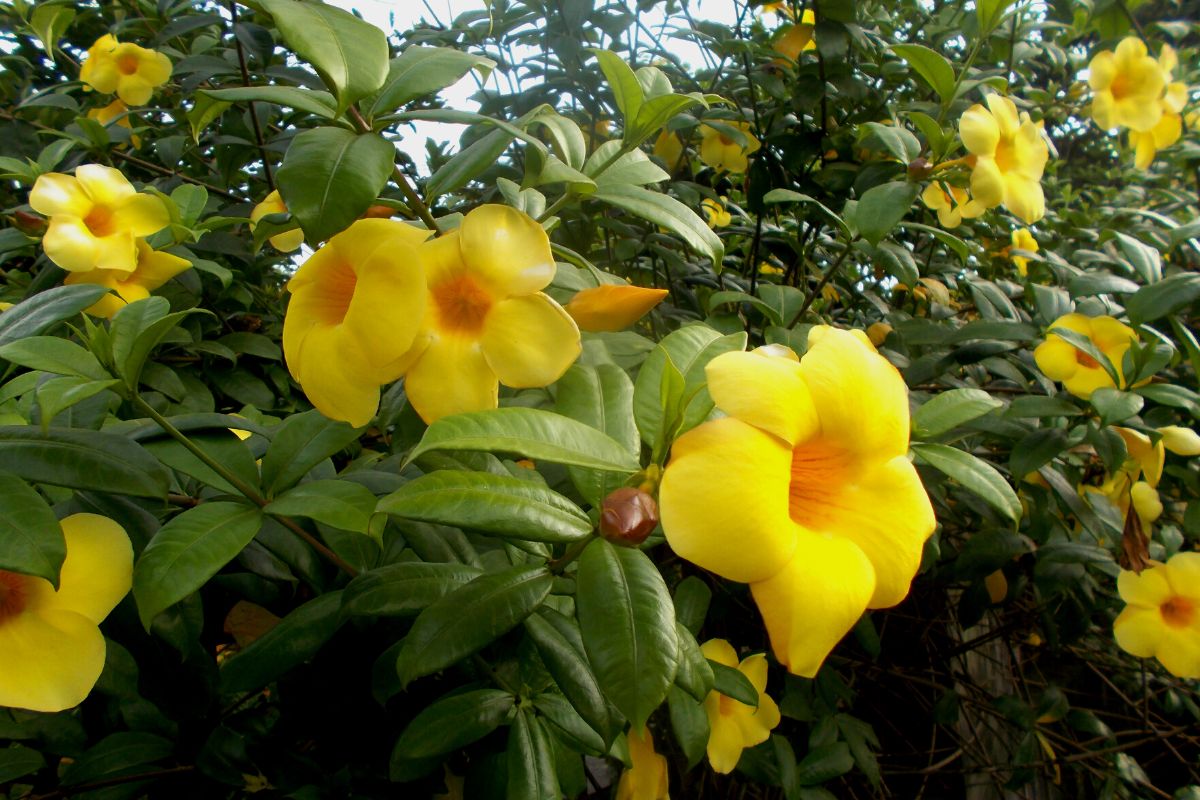
Allamanda photo gallery
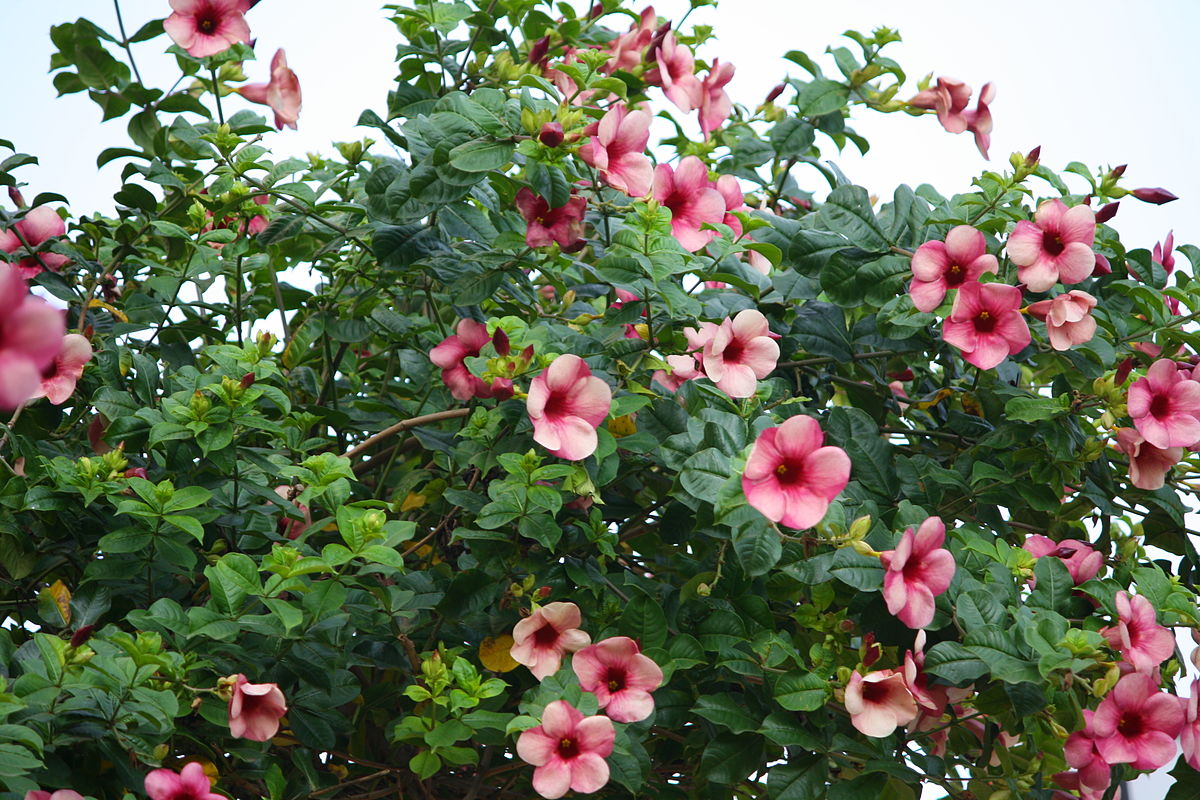
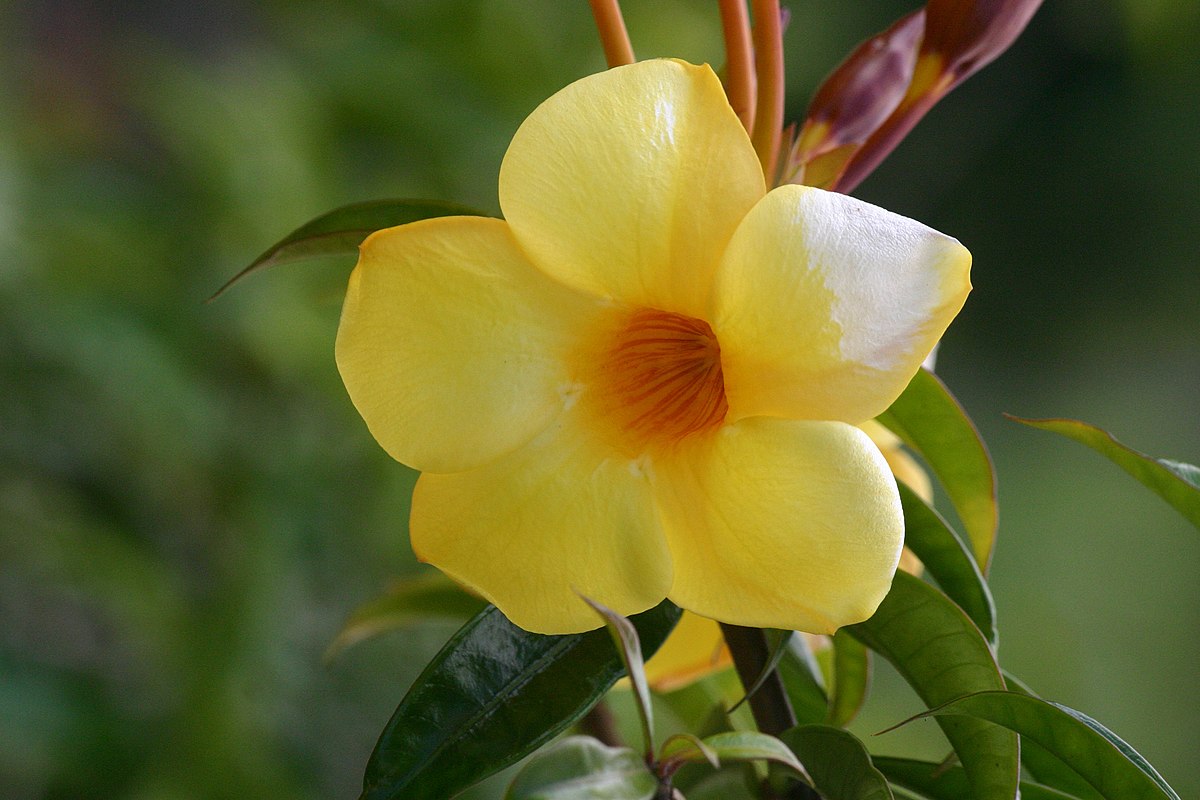
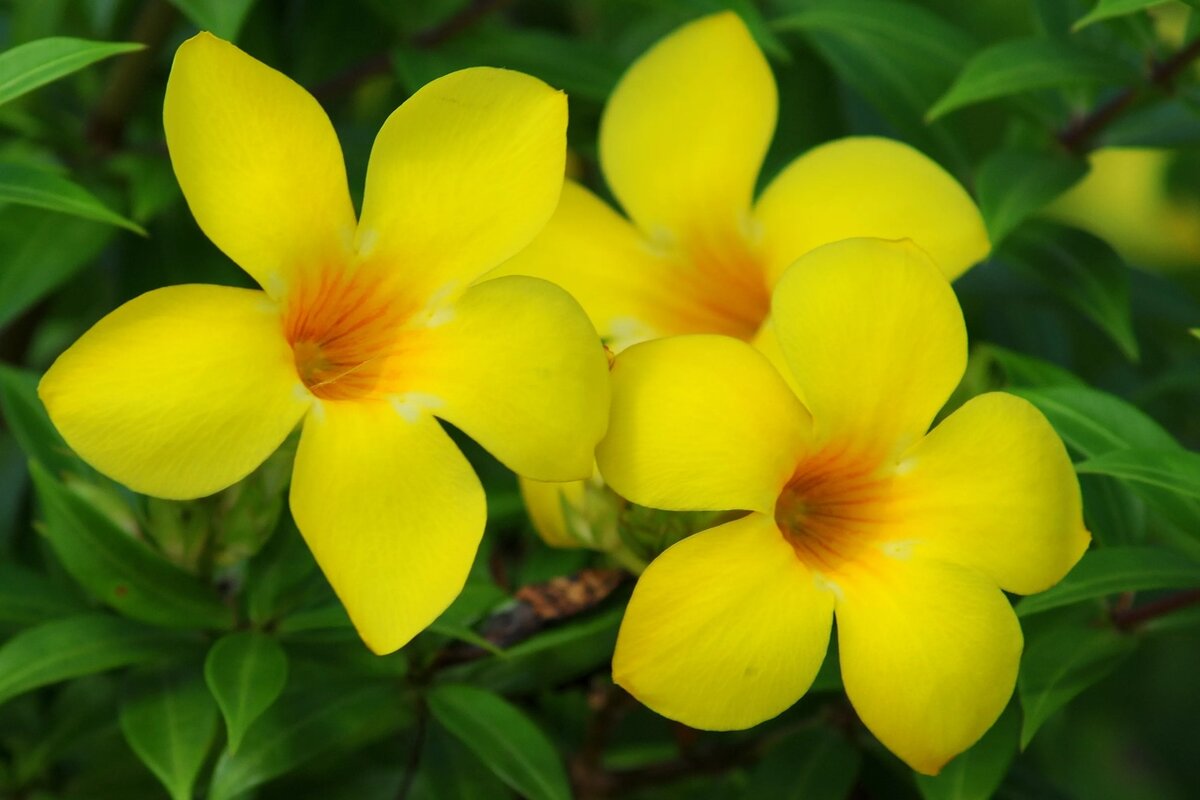
Description of allamanda
The allamanda plant, scientifically known as Allamanda, belongs to the Apocynaceae family. This genus comprises approximately 15 diverse species, including evergreen shrubs and vines. They are native to tropical America, where they are found in a variety of ecosystems, from rainforests to savannas. 🌿
Growing allamanda indoors requires skill and attention. The plant is quite demanding in terms of growing conditions, including temperature, lighting, and humidity. It thrives in bright light but protected from direct sunlight. 💡 Regular pruning is an important aspect of allamanda care. This helps maintain a compact shape and encourages flowering. Also, if the plant is grown in a pot, it needs a sturdy support to support the stems. 🌱
Furthermore, repotting the plant annually into a new pot with nutritious soil promotes its health and growth. This allows the soil to be refreshed and prevents the roots from becoming oversaturated. Repotting is best done in spring or early summer. 🌺
Table for growing and caring for allamanda
| Growing parameter | Description |
|---|---|
| Illumination | Allamanda requires bright light for good growth and flowering. 🌞 Place the plant in a sunny window or provide supplemental lighting. |
| Temperature | The plant loves warmth, but feels best at temperatures between 20 and 25 degrees 🌡️. It is important to avoid sudden temperature changes and cold drafts. |
| Soil | Allamanda thrives in light, fertile, and well-drained soil. The ideal composition is a mixture of peat, sand, humus, and turf. |
| Watering | During the active growth period (spring-summer), water the plant generously, keeping the soil constantly moist. Reduce watering in the fall and limit it in the winter, avoiding overwatering. |
| Air humidity | Allamanda prefers high humidity. Regular misting and additional sources of humidity in the room are recommended. |
| Top dressing | During the growing and flowering period, allamanda is regularly fertilized with fertilizer for flowering plants. Fertilizing is done every 2-3 weeks. |
| Bloom | Flowering occurs between May and September with proper care. A lack of flowers may be due to insufficient light or unsuitable growing conditions. |
| Rest period | Allamanda is dormant from October to February. During this time, it's recommended to reduce watering and stop fertilizing the plant. |
| Transfer | Repotting is done annually in the spring for young plants, and every 2-3 years for mature plants. Repotting should be done in fresh, nutritious soil. |
| Features of cultivation | The bush requires support for support. It's important to regularly prune weak and damaged branches to stimulate growth and maintain the bush's shape. You can also shorten shoots to improve branching 🌿. |
| Reproduction | Allamanda can be propagated by cuttings or seeds. Cuttings should be rooted in moist sand at a temperature of about 25 degrees Celsius. |
| Diseases and pests | The plant is susceptible to attack by pests such as whiteflies, spider mites, aphids, and nematodes. Root and stem rot are also possible. |
Types of Allamanda
Allamandas come in a variety of species and hybrids, impressive in their diversity. Among them, several are the most common and popular among gardeners. 🌸
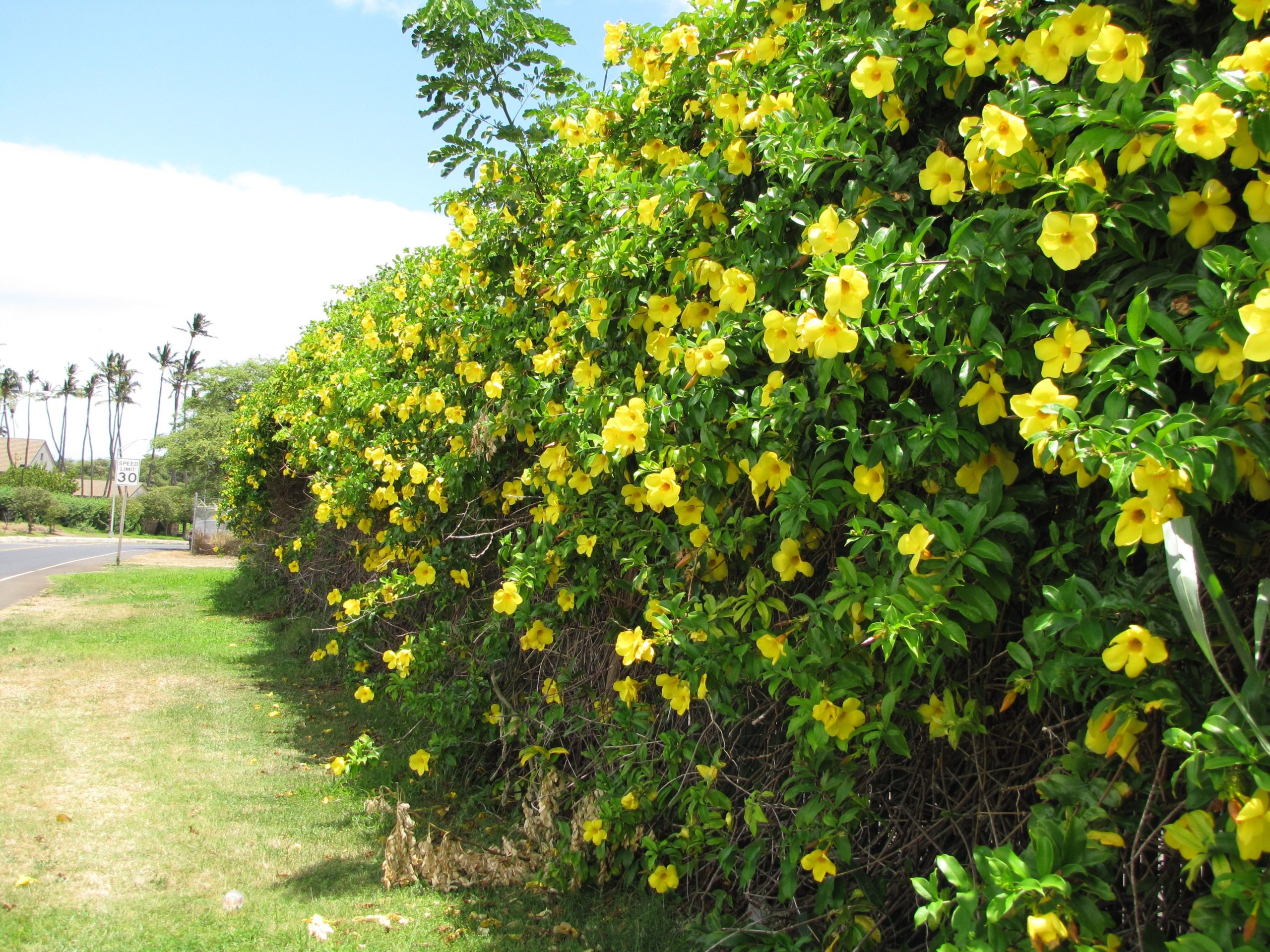
Allamanda cathartica
A climbing plant that is very popular among gardeners due to its magnificent vine-like form. Its stems can reach an impressive length of up to 600 cm. 🌿 The leaf blades of this plant are large, elongated-ovate, and oppositely arranged. They are almost completely bare, with pubescence only on the underside of the blades along the veins. The leaves are about 14 cm long and approximately 4 cm wide. 🍃 The flowers of Allamanda cathartica are magnificent – they are large, funnel-shaped, pale yellow with a golden sheen, and have a diameter of about 60 mm. Their white base is especially beautiful. 🌼 There are many interesting varieties of this species in cultivation.
Allamanda terry
It impresses with its rose-like inflorescences. Its petals are twisted, with a distinct double texture and wavy edges, creating a beautiful and delicate appearance. The plant typically reaches a height of up to 50 cm, making it compact and suitable for a variety of growing conditions. 🌹
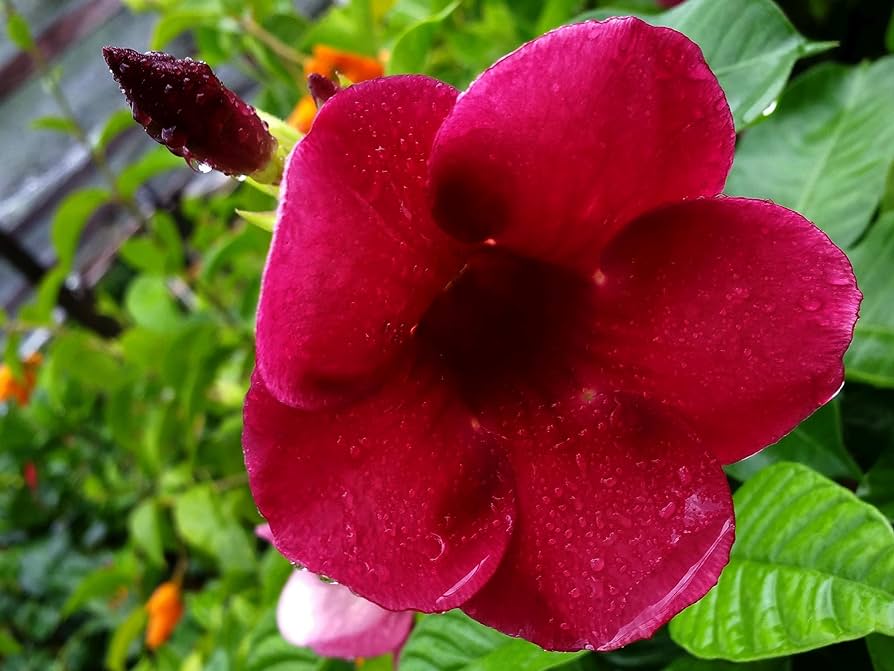
Allamanda nobilis
It attracts attention with its light red stems and beautiful leaves. The leaf blades are lanceolate, tapering at the tip and pubescent on the underside. They grow in clusters of 2 or 3 from the stem nodes. The flowers of this species are pleasantly scented and reach up to 12 centimeters in diameter. They are yellow in color, with pale spots at the throat, adding to their elegance. 🌼
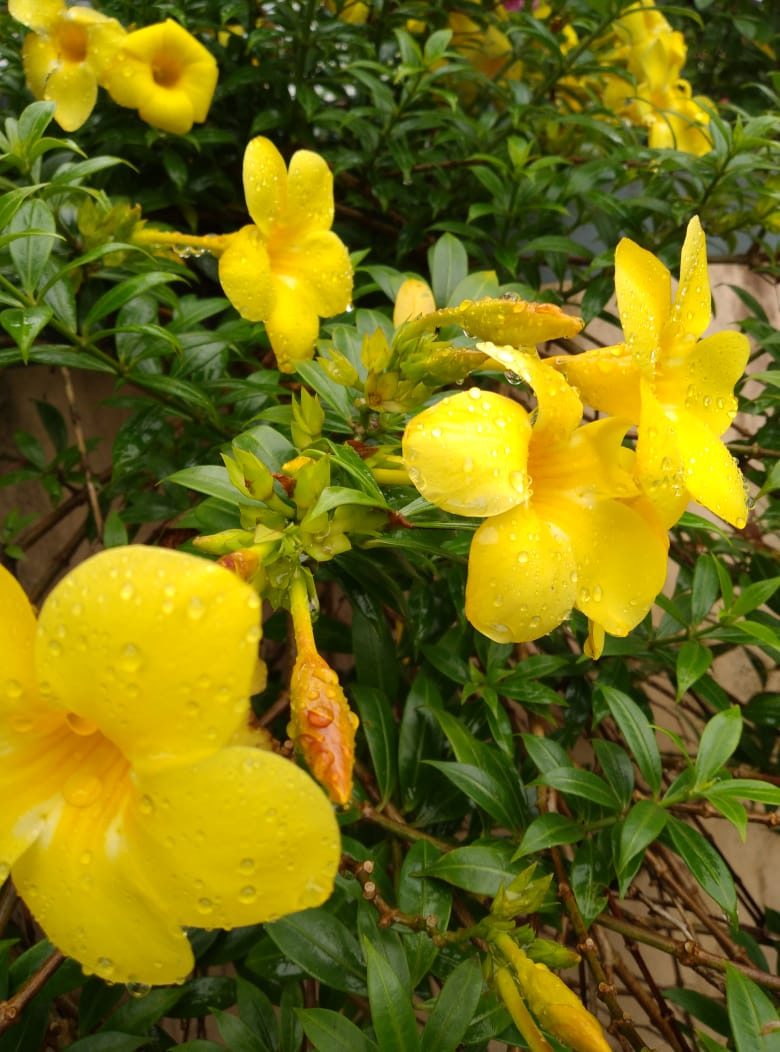
Allamanda hendersonii
A species distinguished by its rapid growth. Its leaf blades are relatively thick and leathery to the touch, gathered in clusters of 3-4. The flowers of this species are orange-yellow and reach about 12 centimeters in diameter. Five pale spots can be seen on the petals, adding a touch of charm. 🌼
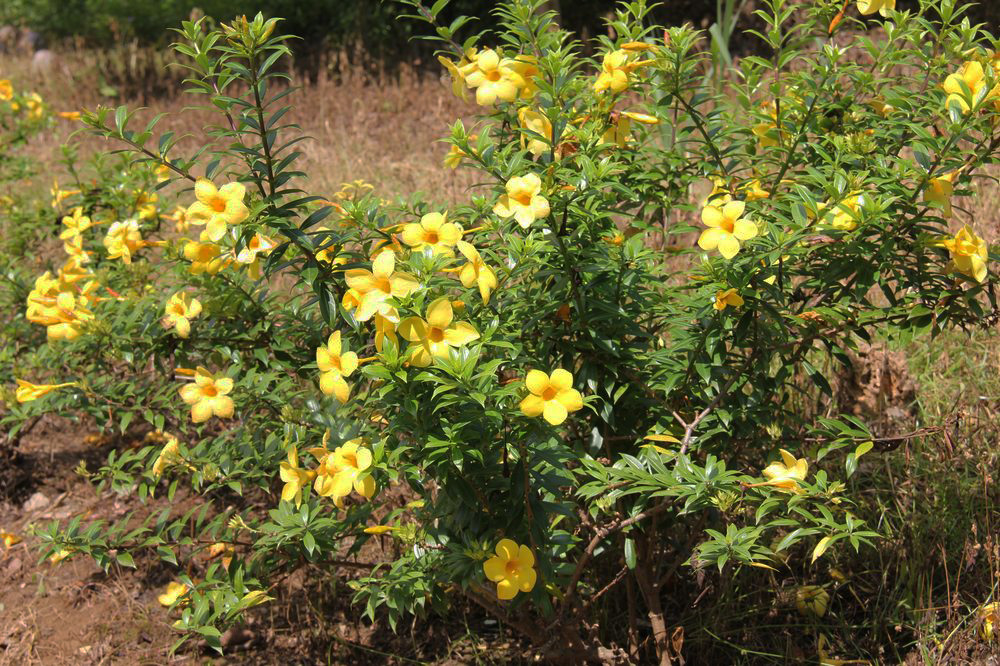
Allamanda grandiflora
A slow-growing species, often used as a hanging plant. Its leaf blades are lanceolate-ovate and small. The bush blooms profusely, and its lemon-yellow flowers reach about 10 centimeters in diameter. 🌿🌼
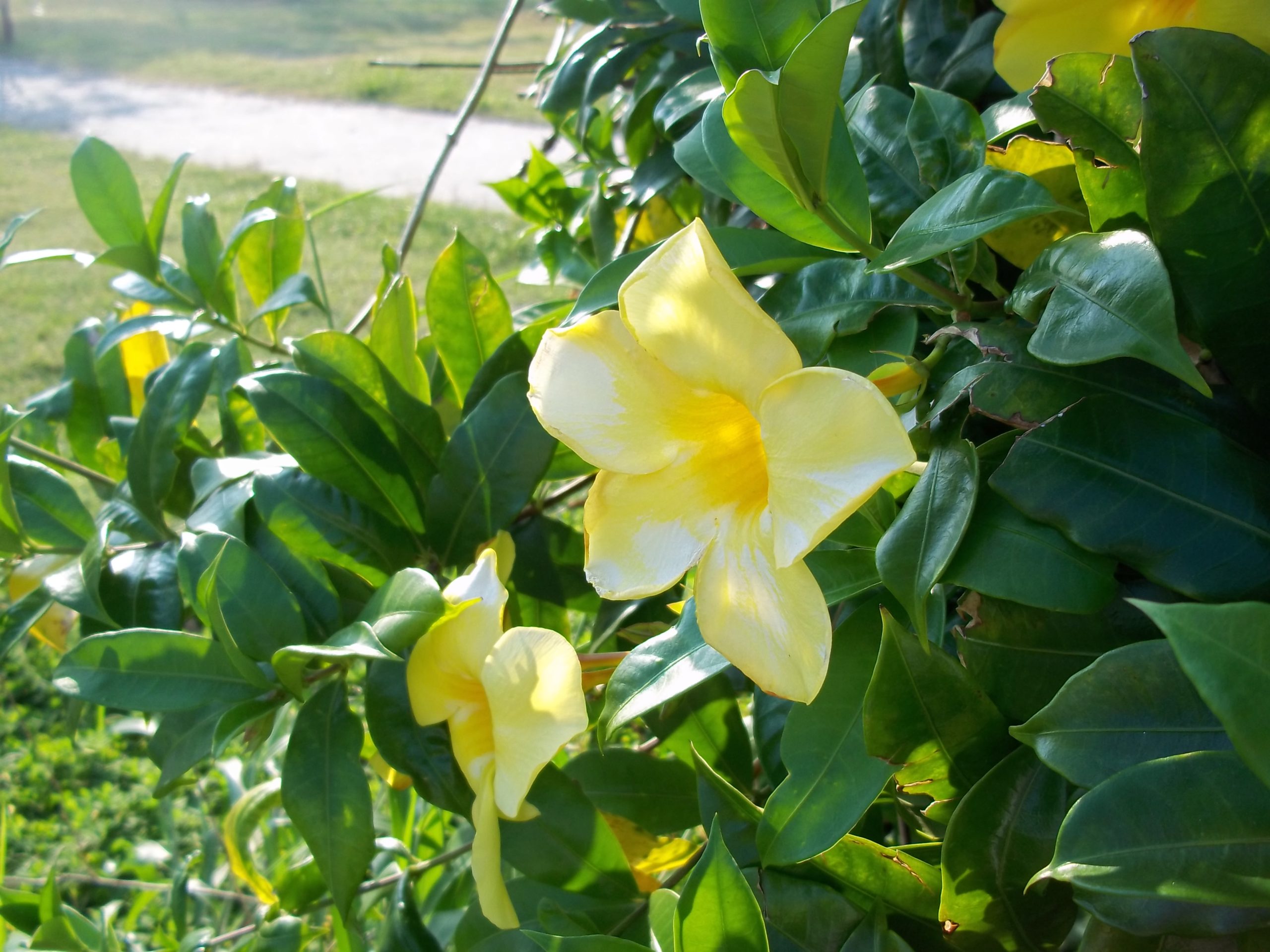
Allamanda Schottii
This fast-growing plant has pubescent shoots and warty twigs. Its broad leaves are clustered in 3 or 4 bunches. The flowers are characterized by yellow-brown stripes. 🌱🌼
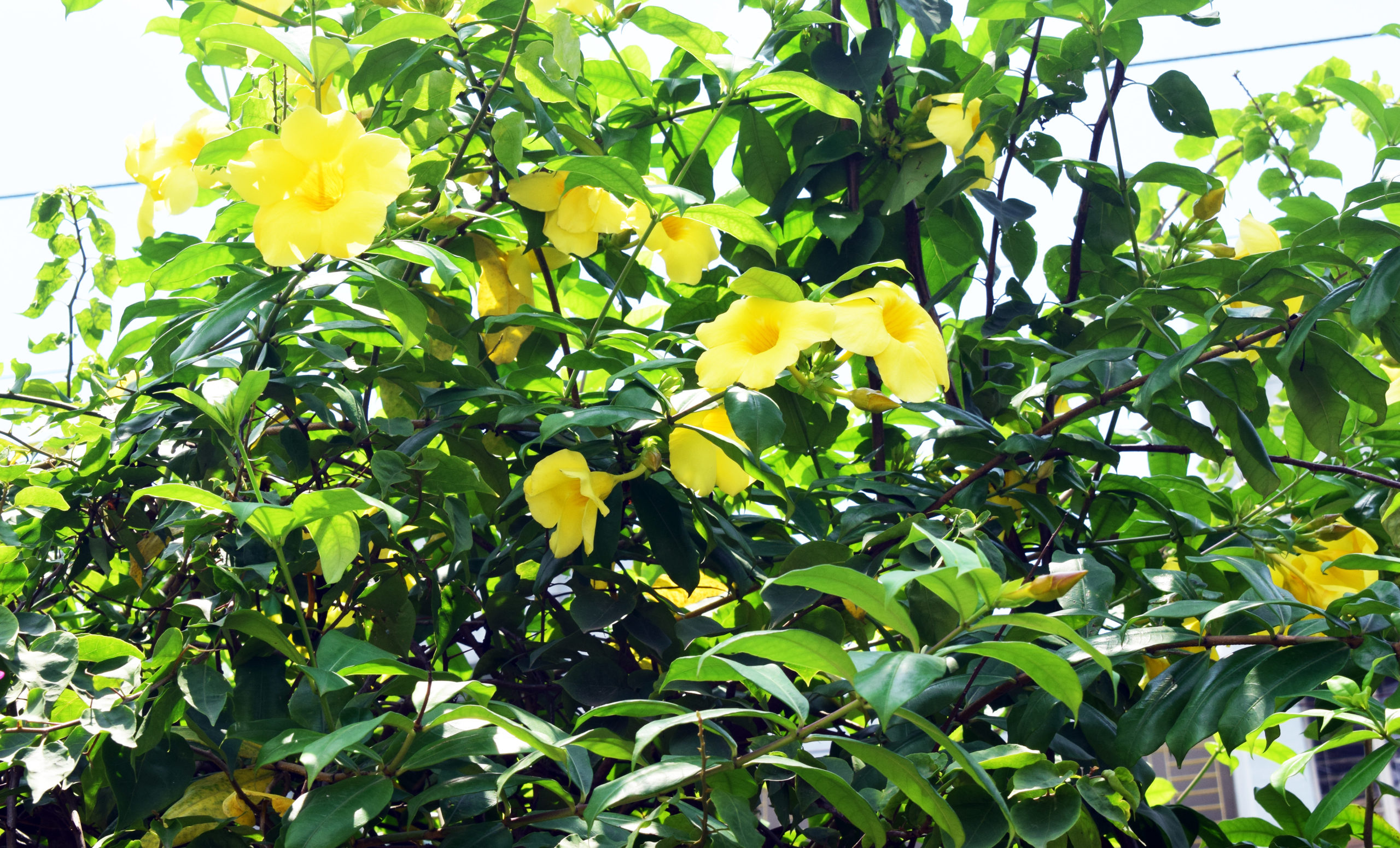
Allamanda neriifolia
A shrub with drooping stems reaching approximately 100 cm in height. Its short-petioled leaves are elliptical or pointed-lanceolate in shape and up to 12 cm long. The upper side of the leaves is dark green, while the underside is lighter. During flowering, yellow flowers form on long peduncles, with a swollen corolla tube at the base. The flowers are approximately 40 mm in diameter. 🌿🌼
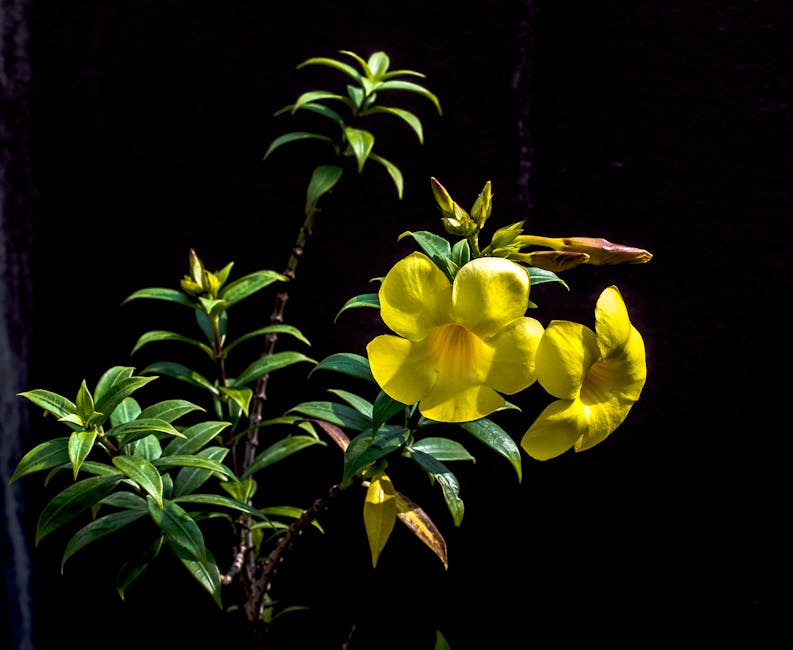
Allamanda violacea
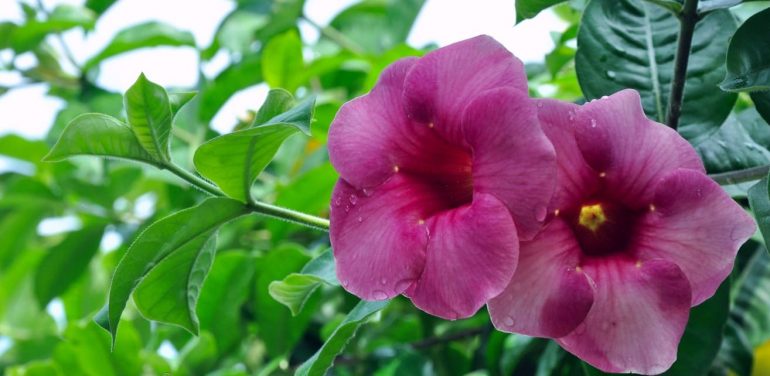
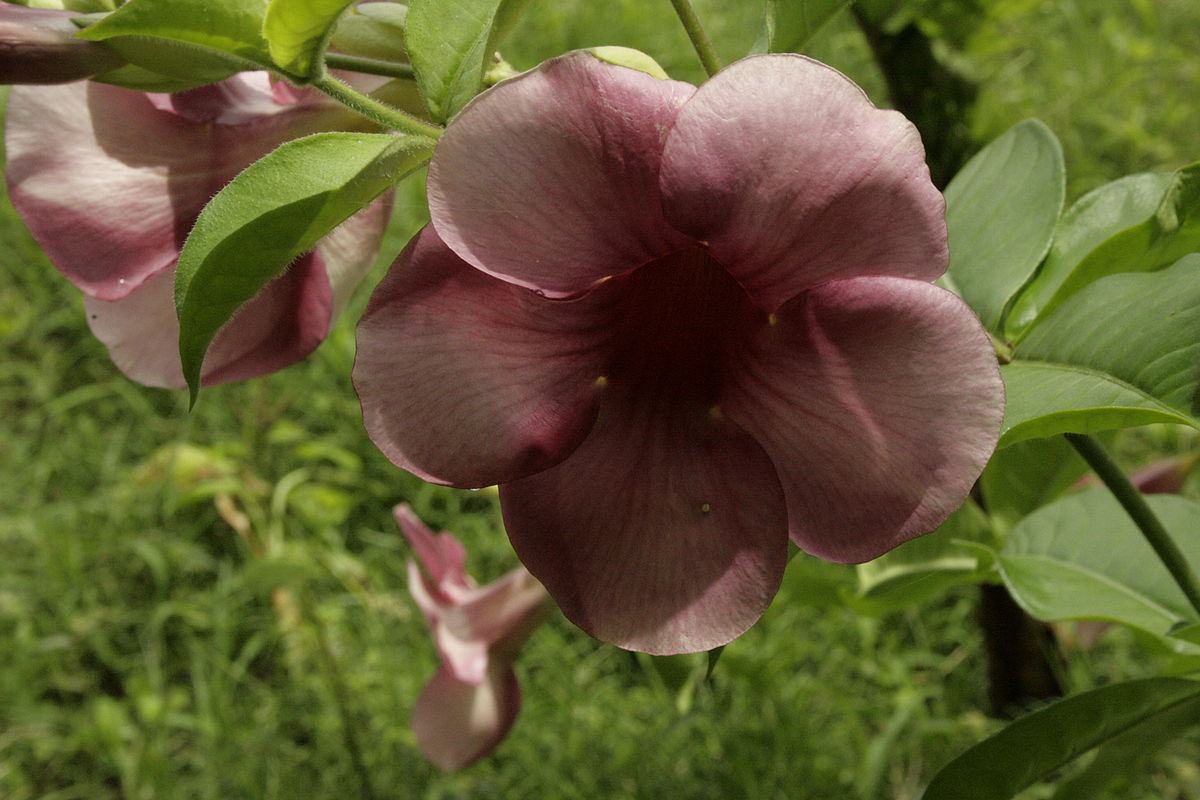
A slow-growing climbing vine. Its pubescent, elliptical leaf blades reach about 15 centimeters in length and are gathered in clusters of four. Pale purple flowers form at the top of the stems, also gathered in clusters of two or three. 🌿🌸
Caring for Allamanda at Home
Growing allamanda indoors requires some effort and attention, as this plant isn't as easy to care for as many other ornamental plants. Before you begin growing it, it's important to familiarize yourself with the basic care guidelines. 🌿💧
Location
Before purchasing an allamanda, it's important to carefully consider its location and lighting. 😊 This plant requires plenty of light, so a sunny window sill is ideal. 🌞 It's important to place it close to a window, otherwise it may begin to wilt. Remember that allamandas don't like drafts, so be careful with ventilation. 🪟
Temperature
During the fall and summer, indoor temperatures are usually suitable for allamandas, and they thrive. 🍂🌞 However, during the winter months, it's worth lowering the temperature to 15-18 degrees Celsius to create more suitable conditions for the plant during the off-season. ❄️🌡️
Priming
To ensure the active growth and development of your allamanda, it's important to select the right soil. It should be loose, nutritious, and absorb moisture and oxygen well. 🌱💧 You can buy ready-made soil at the store, but you can also prepare it yourself by mixing leaf mold, wood soil, humus, and peat soil with sand in specific proportions: 🏞️🌿
- Leaf soil: 2 parts
- Wood earth: 1 part
- Humus soil: 2 parts
- Peat soil: 1 part
- Sand: 0.5 parts
Watering, humidity
During the growing season, allamanda requires ample watering. The soil should be kept moist at all times, but not stagnant. 🌧️ It's important to avoid overwatering to prevent root rot.
As autumn approaches, watering should be gradually reduced, and by winter, it should be reduced to a minimum. 🍂 At this time, the plant enters a dormant state and requires less moisture.
Allamanda also requires high humidity, at least 60%. 💦 To maintain optimal humidity, you can mist the plant regularly. On hot days, this can be done several times a day. Periodic "shower" treatments for the plant are also beneficial.
During the winter, spraying can be done less frequently, about several times a week. 🌬️ However, it's important to ensure the soil doesn't dry out completely, especially if the heating is on in the room, which can lead to dry air.
Top dressing
It's recommended to fertilize Allamanda once a month in spring and summer. 🌱 A general-purpose fertilizer for flowering houseplants is suitable for this purpose. 🌸 It's important to follow the fertilizer package directions and not overdo the application to avoid nutrient overload. 🍀
Transfer
Allamanda repotting is usually done in the spring, when the plant begins to actively grow. 🌱 Young plants are best repotted annually to provide space for their roots. Mature plants require repotting less frequently—every 3-4 years.
When repotting, use a new pot that's slightly larger than the previous one. Be sure to place a drainage layer of gravel or expanded clay at the bottom of the pot to prevent waterlogging.
Carefully remove the plant from the old pot, being careful not to damage the roots. Place the plant in the new pot and fill the remaining space with fresh soil. Then press the soil firmly around the roots.
Afterwards, water the plant generously and leave it in a bright spot. Be sure to wash your hands after handling it, as the plant's sap can irritate your skin. 🧼
How to make an allemande bloom
To encourage allamanda to bloom indoors, you need to provide it with comfortable conditions similar to its natural environment. This includes maintaining warmth and high humidity. A greenhouse or hothouse is ideal, of course. However, allamandas can also grow indoors. It just requires some extra effort. For example, you can use humidifiers or mist the plant to maintain high humidity levels.
It's also important to provide the plant with enough light, as allamanda thrives in bright light. Place it in a bright spot with plenty of sunlight. However, be careful of direct sunlight to avoid burning the plant's foliage.
Additionally, regular fertilization with flowering plant fertilizer will help stimulate flowering. You can also prune the plant to encourage growth and bud formation.
Propagation of Allamanda
There are two main methods: seeds and cuttings. The former is suitable for those who want to monitor all stages of growth. Cuttings, on the other hand, allow you to obtain a mature plant more quickly and preserve the genetic characteristics of the parent plant.
Seeds
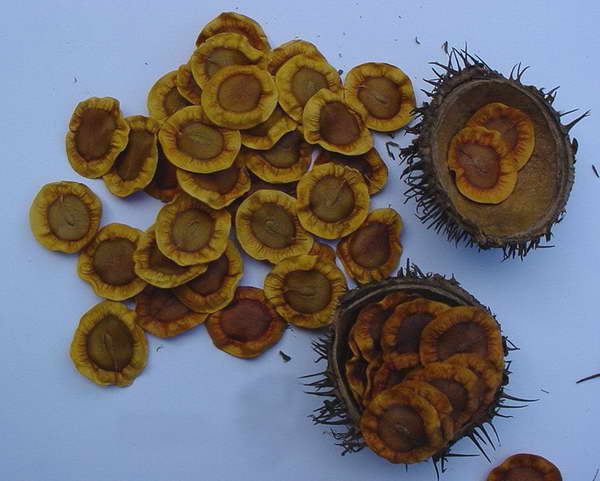
Propagation by seed begins in late winter or early spring, but no later than mid-March. The seeds are soaked in potassium permanganate, then washed and dried. For sowing, use a pre-moistened mixture of sand and peat in equal proportions. Space the seeds approximately 3–4 cm apart. Cover the seedlings with plastic wrap and place them in a warm location with a temperature of 23–24°C (73–75°F). Regular ventilation and moistening of the substrate is essential. The first shoots will appear in 3–6 weeks. After the young plants develop their third leaf, they can be transplanted individually.
cuttings
Vegetative propagation of allamanda is an effective way to obtain new plants. One popular method is cuttings. For this, you'll need healthy stems, which can be obtained in the spring. Stems that are almost woody are especially suitable. 🌱
Cut the stems at an angle to obtain cuttings approximately 10 centimeters long. Place the cuttings in moistened sand or light, prepared soil. To stimulate root formation, you can treat the underside of the cuttings with a rooting agent. This will help speed up the rooting process. 💧
To create optimal conditions, the cuttings should be regularly misted with water. It's also important to maintain a warm location for rooting—around 23-24 degrees Celsius. Once rooting is complete, the cuttings can be transplanted into individual pots. This should be done within a month or a month and a half of starting the cutting process. 🌿
Potential problems when growing allamanda (table)
| Problem | Cause | Solution |
|---|---|---|
| Stem rot | Soil moisture retention, dense planting | Remove damaged areas immediately and treat the plant with a fungicide. |
| Yellowing and curvature of leaves | Insufficient lighting, lack of nutrients | Move the plant to a brighter location and apply a complex fertilizer. |
| Yellowing and falling of leaves | Exposure to cold air, excess moisture | Limit watering and avoid drafts, provide the plant with warmth and dry air. |
| Insects | Pest attack: whiteflies, spider mites, nematodes, aphids | Use insecticides and periodically inspect the plant thoroughly. |