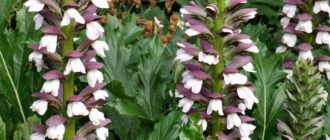
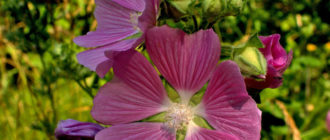
The quince is a delicate and charming plant that captivates with its beauty and remarkable adaptability to a variety of growing conditions. It was discovered by botanist Augustin Pyramus de Candolle in 1805.
Centranthus has been grown in gardens since the mid-16th century. There are a huge number of varieties of this plant, which fit perfectly into any landscape design. In this article, we will discuss how to properly grow centranthus, the conditions it requires for growth and development, and the different species and varieties of this plant.
Content
Description of Centranthus
Centranthus is a genus of herbaceous plants comprising eight annual, biennial, and perennial species. Perennials are commonly grown in flower beds for their colorful blooms.
Centranthus was previously classified in the Valerianaceae family. However, according to the new classification, it now belongs to the Caprifoliaceae family.
The name "centranthus" comes from Greek. It consists of two roots: "kentron" meaning "spur" and "anthus" meaning "flower." This name refers to the plant's structure, which has a spur.
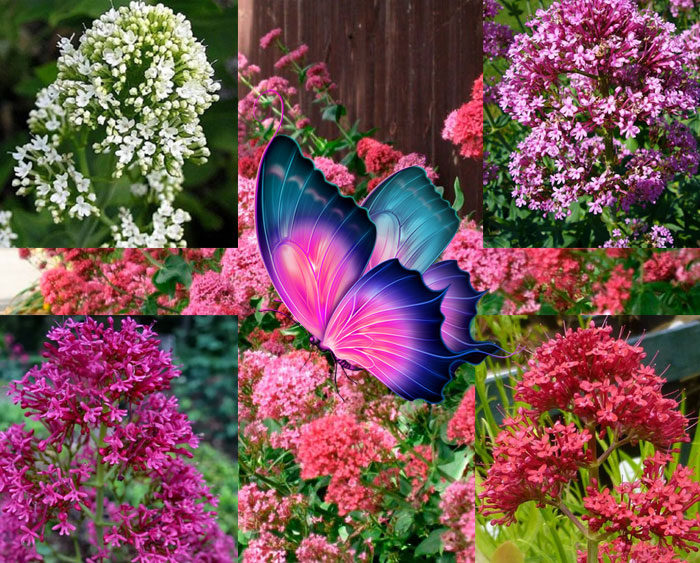
The quince plant is renowned for its abundant blooms, hardiness, and ease of care. It can be planted virtually anywhere. Its flowers come in a variety of colors—white, red, and pink. Blooming continues from the last month of spring until autumn.
In its natural habitat, the celandine grows even in rocky areas. It is found in regions from Southern Europe to Asia Minor.
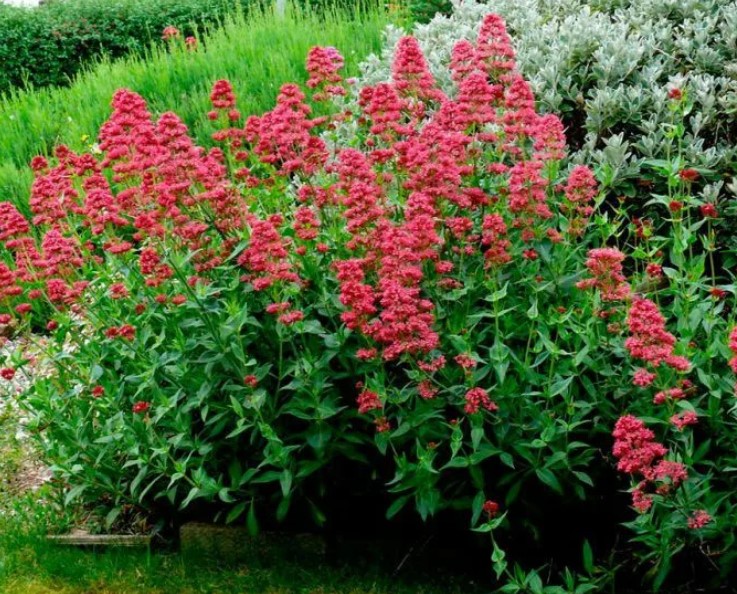
Centranthus is a rounded, well-branched, upright or loose shrub. It grows to 60-80 cm in height and 50 cm in circumference.
Shoots and root system
The roots are superficial and fairly short. However, they are highly branched and strong. In appearance, it resembles a subshrub rather than a herbaceous plant.
Leaves
Petioles and pubescence are absent on the leaf blades. The leaves are arranged oppositely, latent or oval in shape, and serrated along the perimeter.
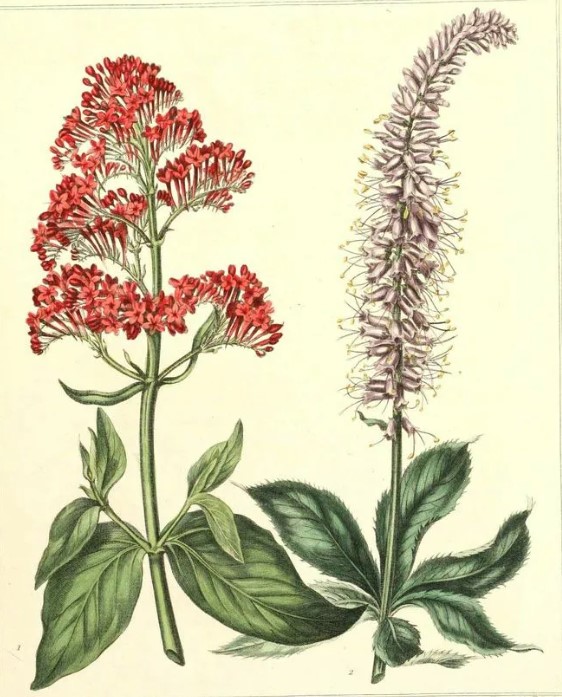
Flowers
The flowers exude a pungent yet pleasant aroma. They are gathered in corymbose inflorescences and can be white, red, or pinkish in color.
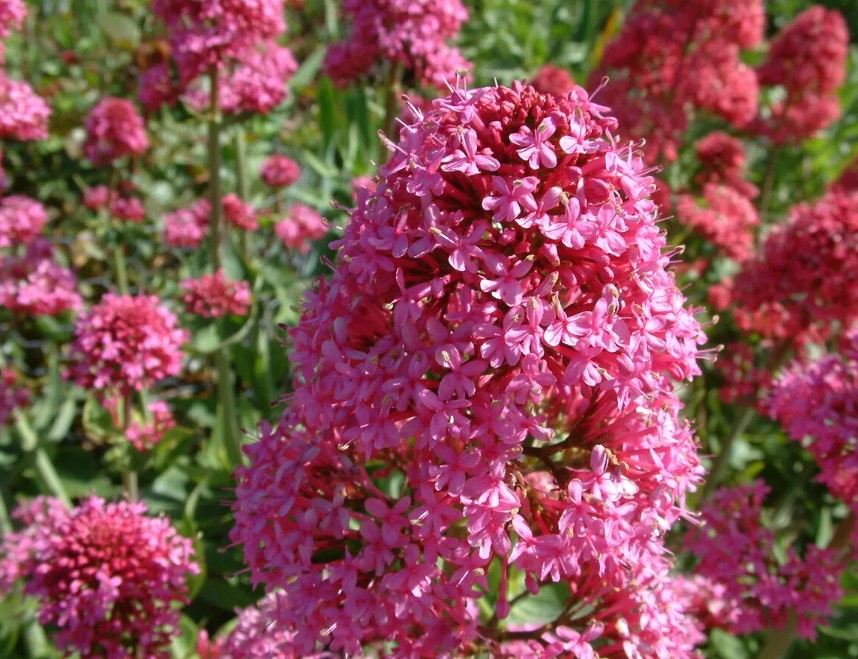
Flowering occurs twice. The first flowers appear in late May-July. A second bloom occurs in August-September. After this, fruits—nutlets containing seeds—form in the place of the flowers. Once ripe, these nuts fall out and are dispersed by the wind, so the plant reproduces well by self-seeding.
4 species and 8 varieties of Centranthus
Let's take a closer look at them.
Centranthus ruber (red)
This species is the most frequently cultivated. Breeders have developed several varieties with snow-white and pink flowers. They are often planted around ponds and in shady areas of the garden. If planted in well-drained soil, the red centranthus will bloom until autumn. It also thrives in clay and rocky soil.
It grows up to 70 cm. It's perfect for decorating walls and shaded areas that are usually left bare, as not all plants thrive in low sun conditions. Let's look at the most popular Centranthus ruber varieties.
Pretty Betsy
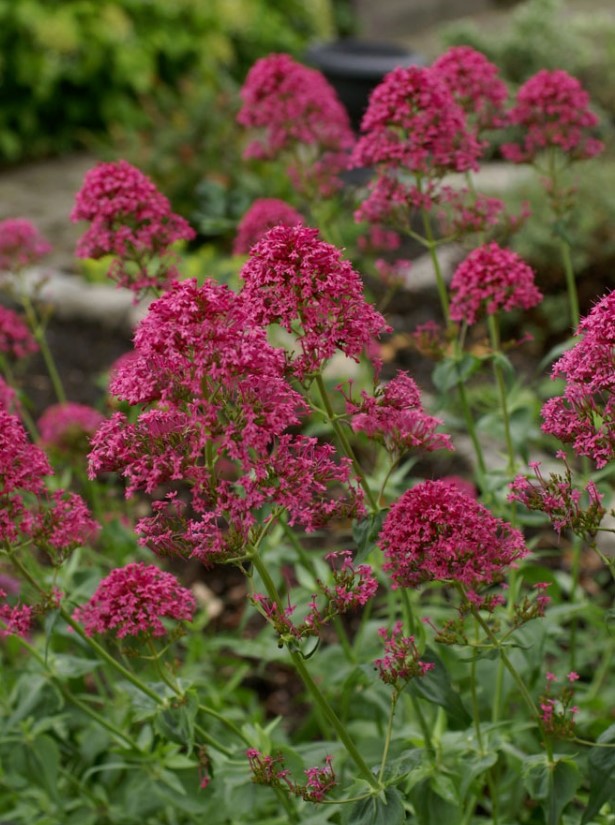
It can grow in partial shade, but prefers sunny areas. The first bloom lasts about a month. After pruning, it may begin again. It reaches a height of 70-100 cm. A single bush can produce up to 10 flower stalks with pink flowers.
Raspberry Evening
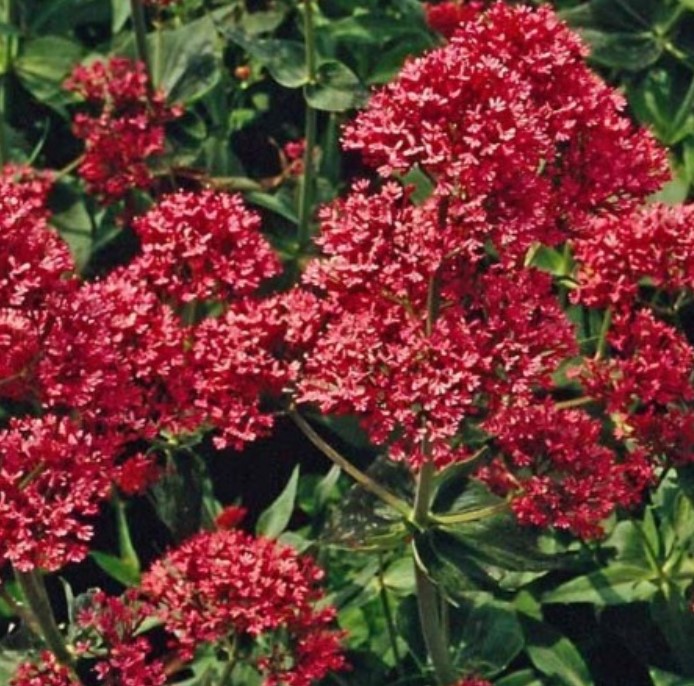
A perennial herbaceous plant. It is resistant to low temperatures. It blooms long and profusely. It doesn't need to be planted exclusively in sunny areas. It can be planted on dry slopes, in rock gardens, on rocky retaining walls, along stone steps, in various areas, and along paths.
The inflorescences are raspberry-red and numerous. They look beautiful against the backdrop of other perennials.
Raspberry ringing
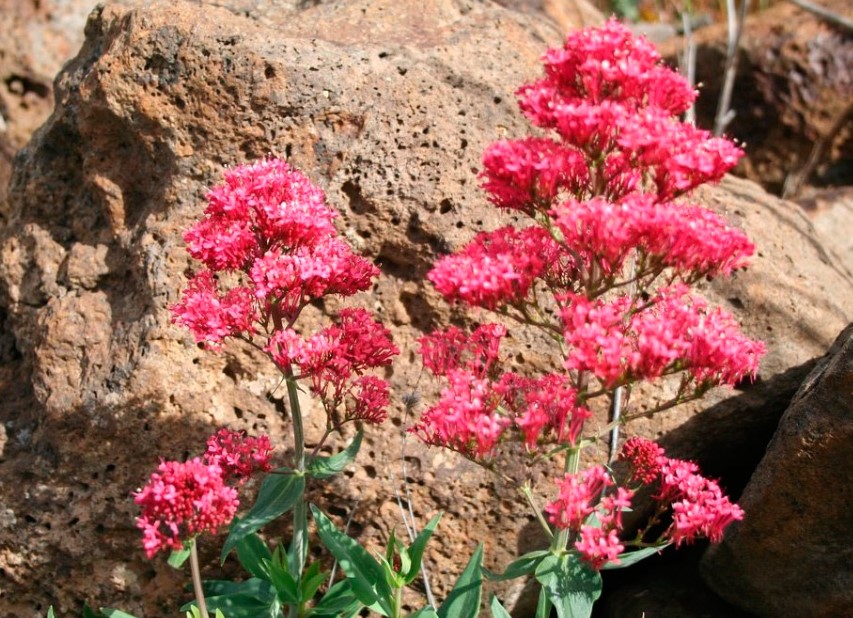
This variety is relatively new, but has already become popular among gardeners. It features large pyramidal inflorescences composed of large crimson flowers, which can reach 1 cm in diameter. The bush is branched and covered with glaucous foliage. It grows up to 80 cm.
Coccineus
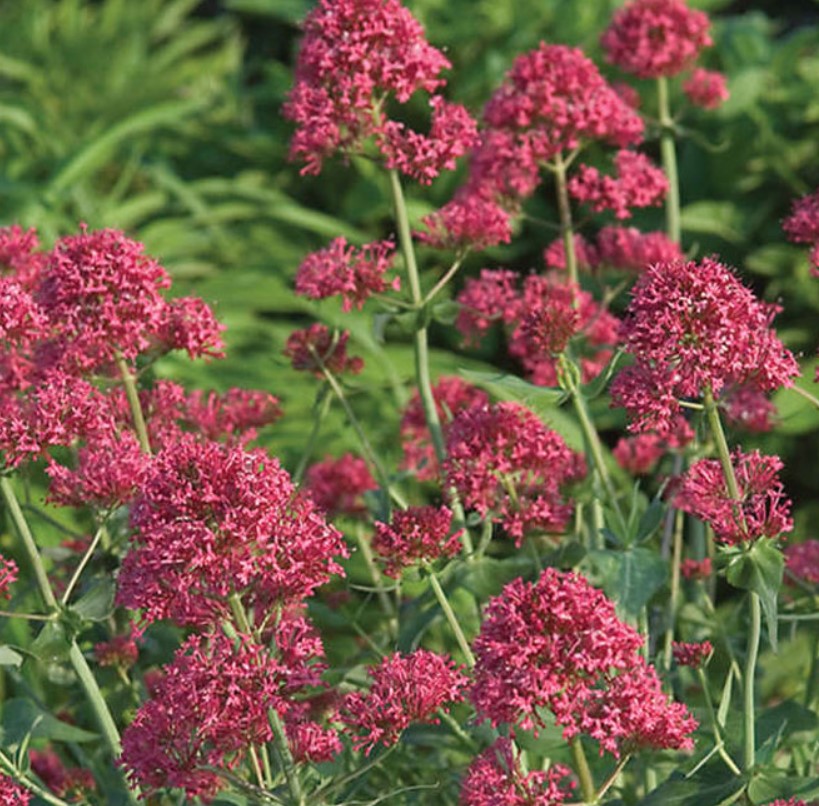
A large herbaceous plant, reaching a height of 60-80 cm. Up to a dozen flower stalks form in a single rosette. The flowers are small (no more than 10 mm) and a bright crimson hue. They are gathered in large inflorescences, reaching 70-80 mm in circumference. This variety is easy to care for and maintain.
Albus
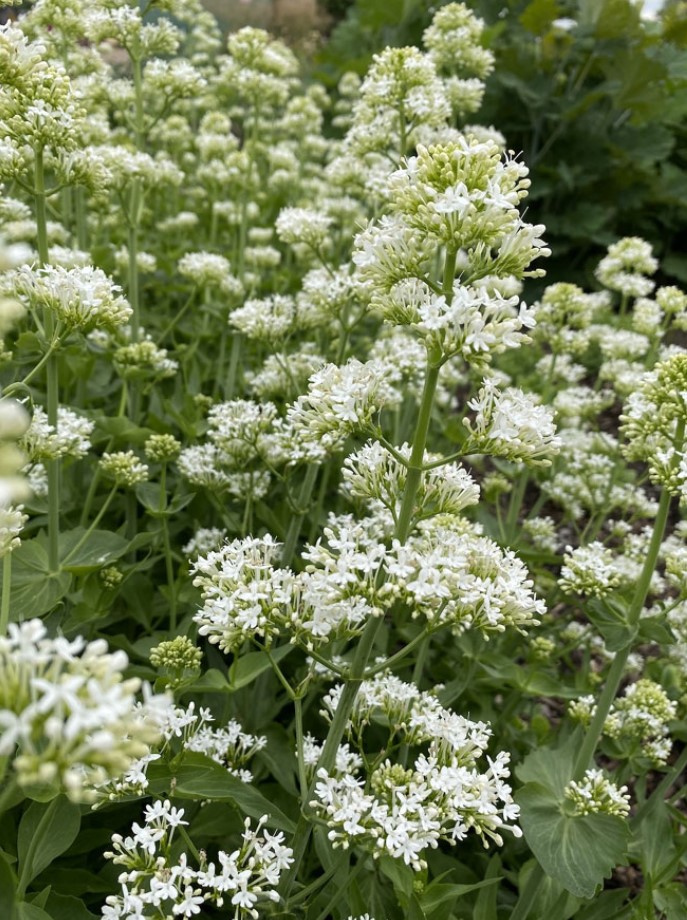
Numerous, snow-white flowers are gathered in large, loose, rounded inflorescences. Flowering continues from June to August. The leaves are glaucous-green. It grows 60-90 cm tall. It prefers sunny sites with warm temperatures. Well-drained soil is essential. This variety can withstand temperatures down to -23°C.
Rosenrot
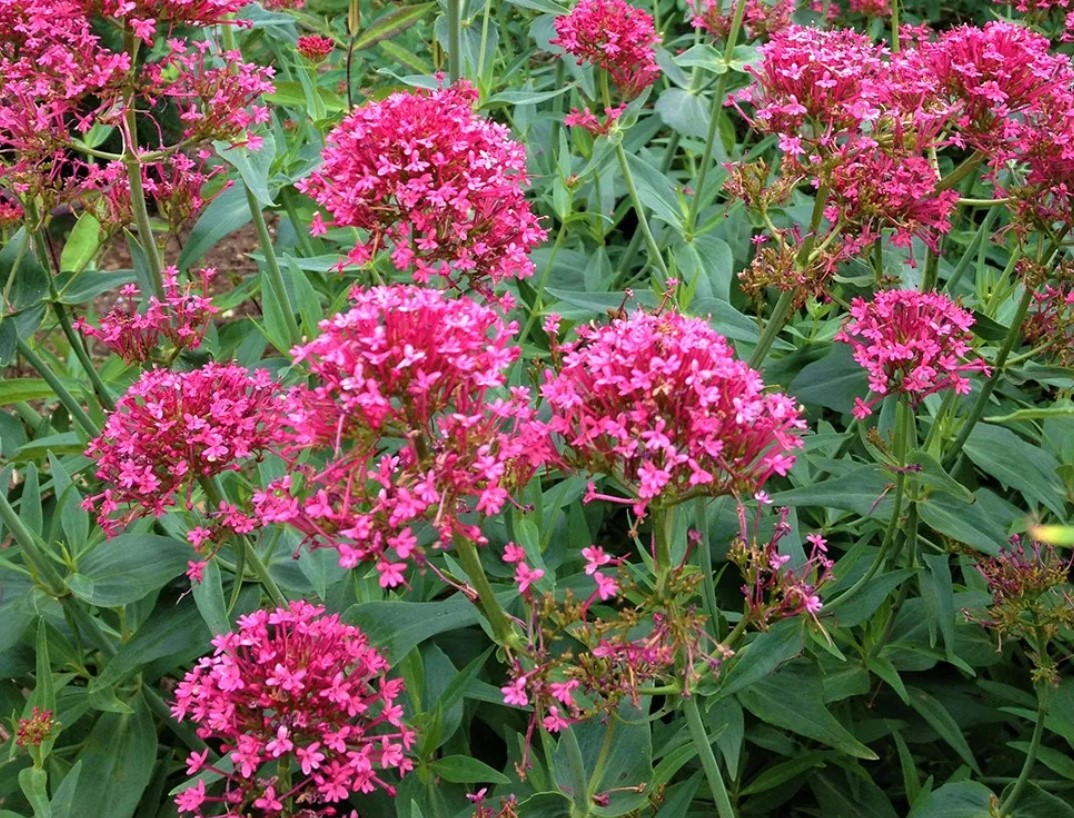
Up to 80 cm in height. The leaves are smooth and glaucous-green. It blooms with small (up to 10 mm) fragrant raspberry-pink flowers. They prefer the warmest locations.
Kempenhof
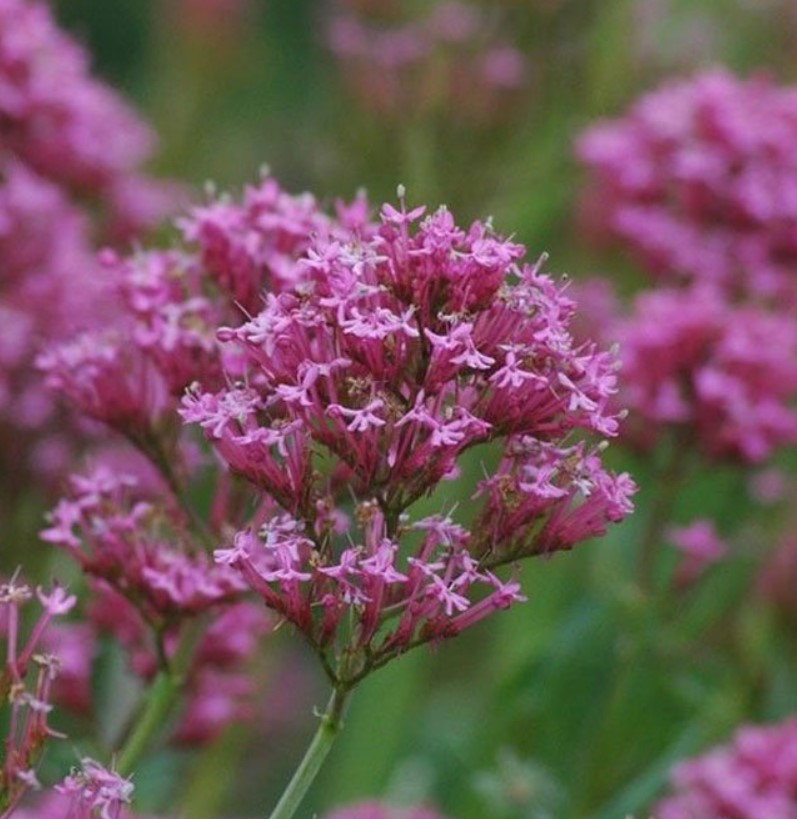
Flowering continues from midsummer to September. The flowers are pink and reach a height of up to 80 cm.
Snowcloud
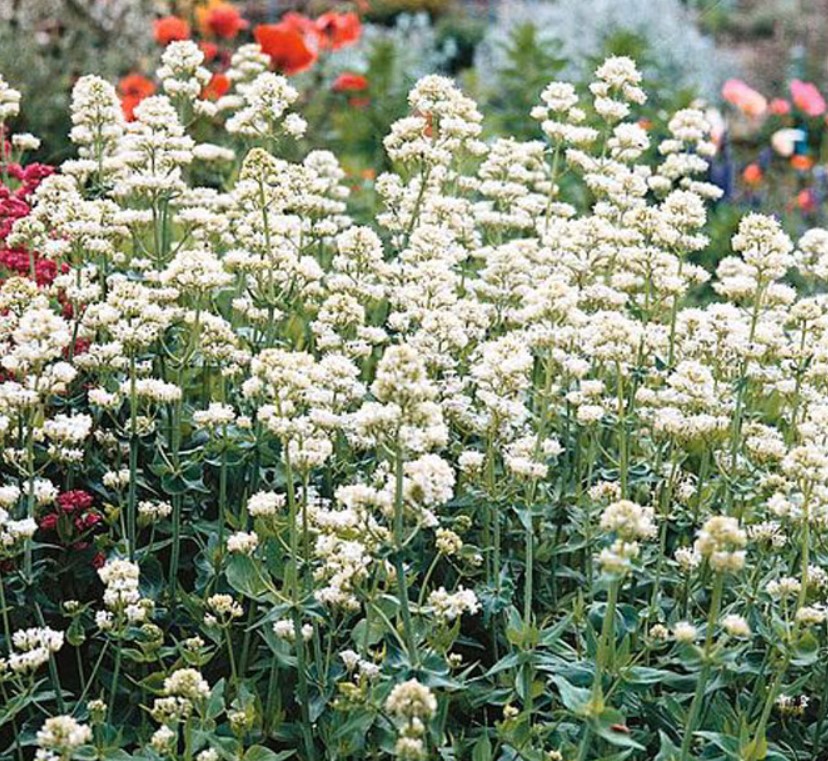
It is distinguished by its long flowering period. Its snow-white flowers bloom from May to October. The bushes are tall, up to 100 cm. This variety is hardy and easy to grow.
Centranthus angustifolius
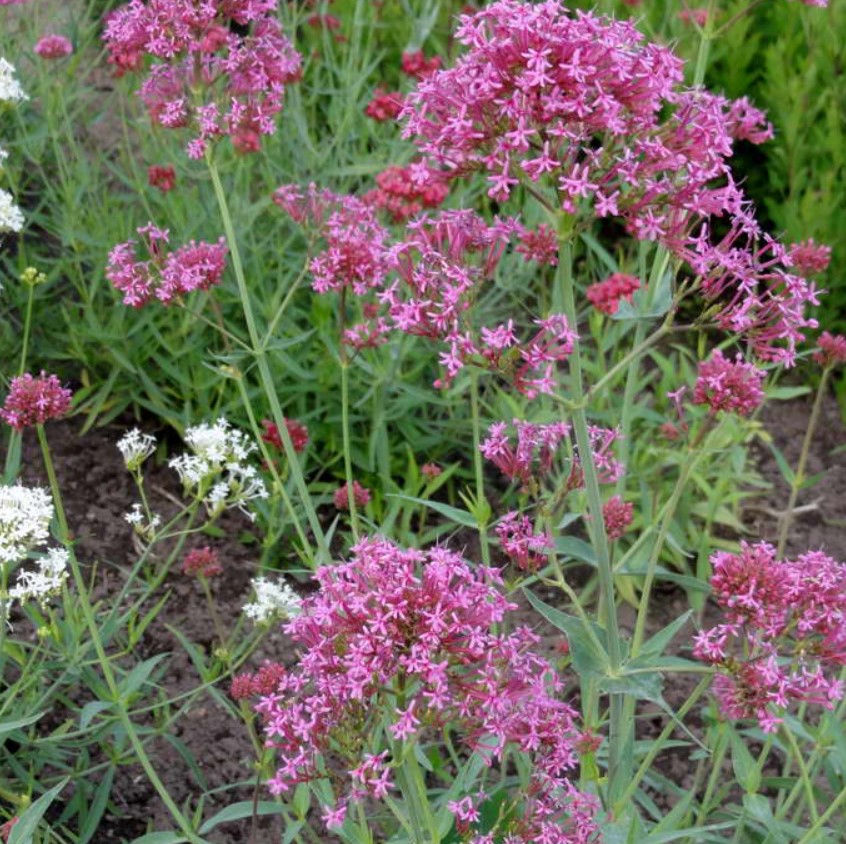
This is the second most popular species. It resembles the Centranthus ruber, but has narrower and more elongated leaf blades.
Centranthus calcitrapa
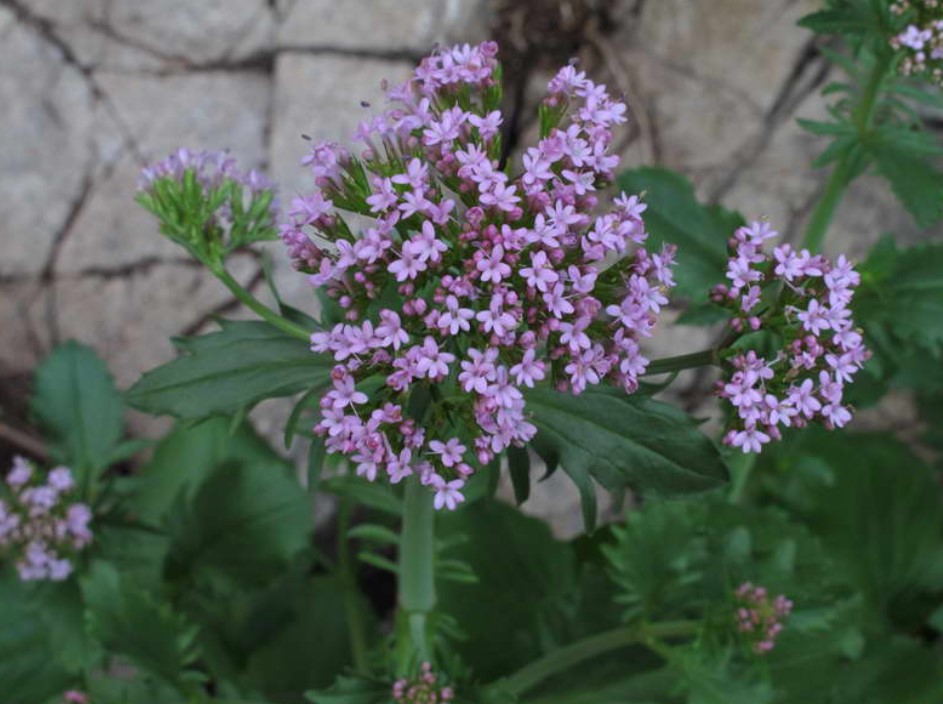
A low-growing species, it reaches only 10-30 cm in height. The inflorescences are pinkish-ash. It blooms early, in April, and continues to bloom until June.
Centranthus longiflorus
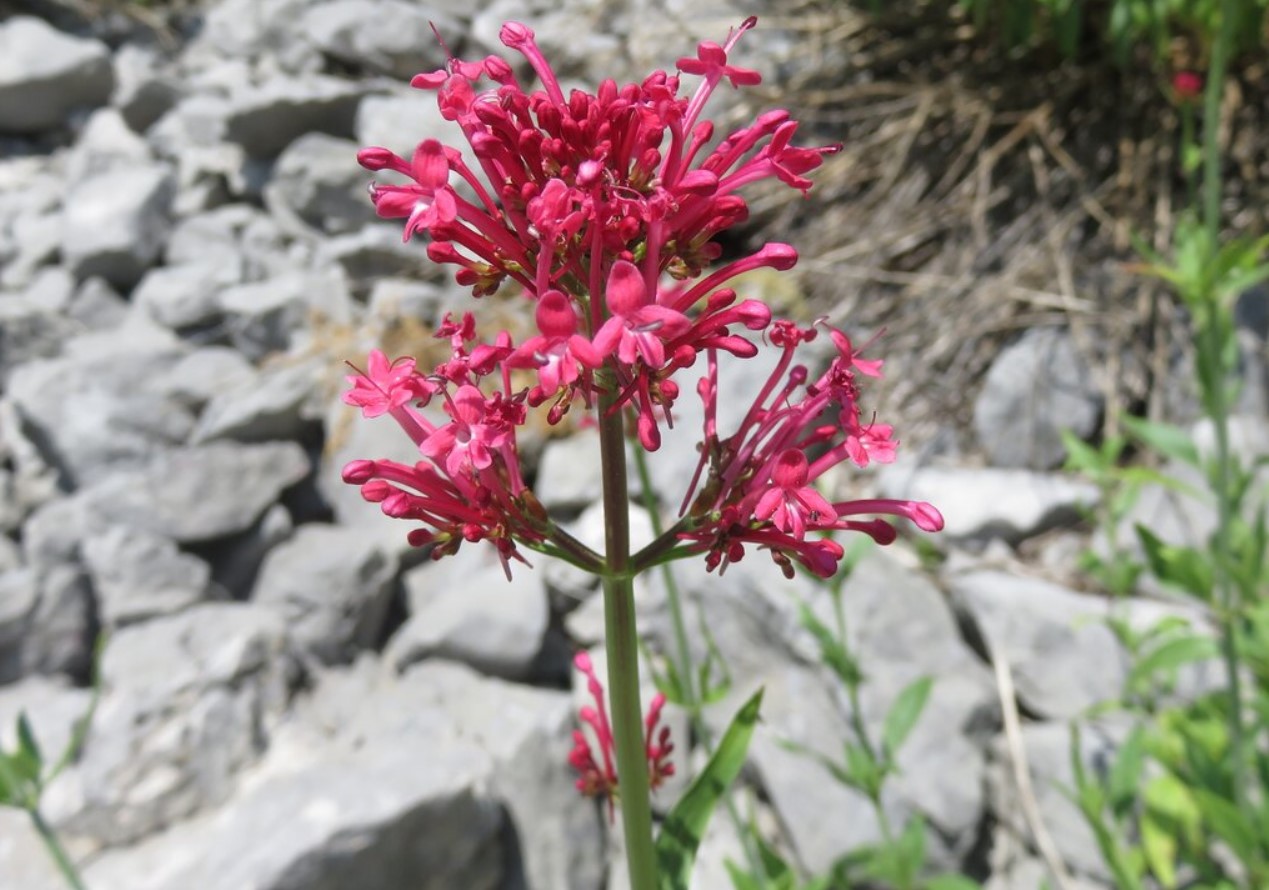
Tall bushes are covered with numerous lanceolate, obtuse-tipped leaves. The leaf blades have a glaucous tint and are shortly pubescent. The flower stalks reach up to 20 cm in length. The corolla tube is very long, with petals opening 15 mm wide. The inflorescences are a dark purple hue.
Growing from seeds
Centranthus is grown using seedlings or by sowing seeds directly outside.
Sowing in the ground
In temperate climates, centranthus is sown in May, after the risk of frost has passed. In warmer regions, seeds can also be planted in the fall, from September to November. The main thing is to avoid periods of drought and sudden drops in temperature.
Important! When preparing the site, there's no need to dig it up or add compost or any other fertilizers. Proper drainage is sufficient.
This planting method is considered the simplest. The seeds germinate well (the plant even reproduces by self-seeding). However, it should be noted that flowering with this planting method will only occur in the third year.
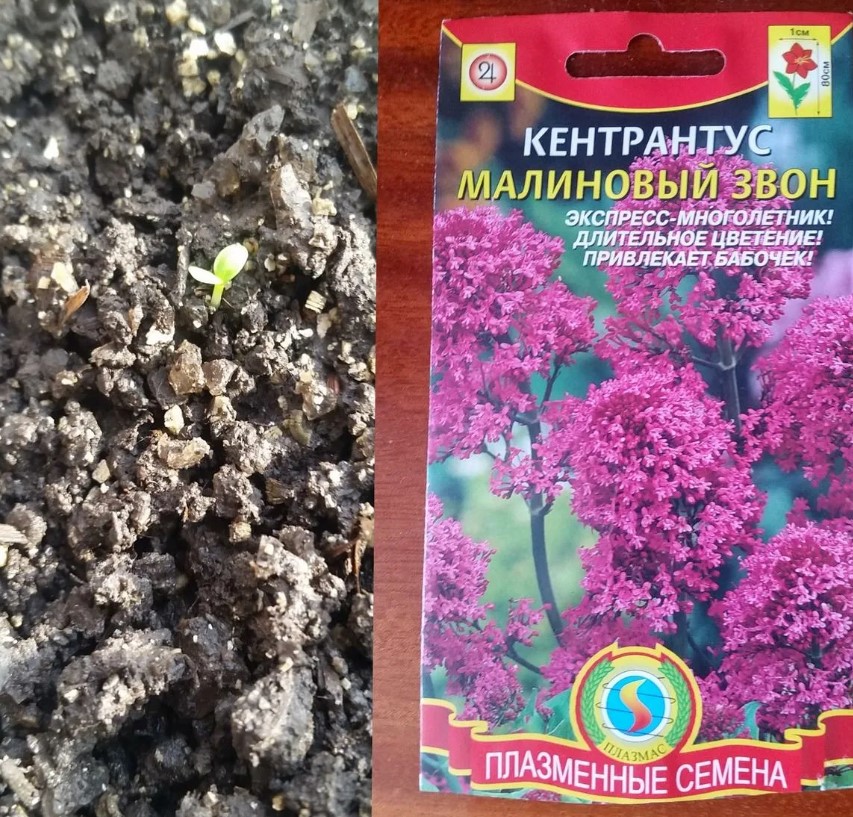
To speed up germination, there's no need to plant them deep in the soil. Simply prepare the area, scatter the seeds, and rake them in. If sowing in the fall, mulch them with fallen leaves. In the spring, thin the seedlings if necessary. Replant the dug-up seedlings elsewhere.
Sowing for seedlings
Seeds for seedlings are sown from March to June. Seeds can be collected from your own plot or purchased at a store.
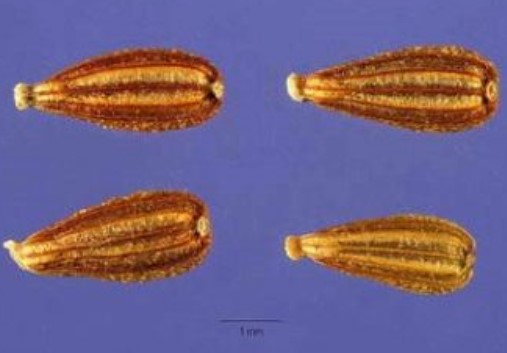
Step-by-step sowing of seedlings:
- Prepare planting boxes and fill them with compost.
- Sow seeds in them and lightly sprinkle with soil.
- Lightly compact the soil and water from a watering can with small holes.
- Place in a bright location at a temperature of 18 to 20°C. Remember to protect young seedlings from direct sunlight. The first shoots will appear in 3-4 weeks.
- When the seedlings grow to 5 cm, they need to be transplanted into separate containers.
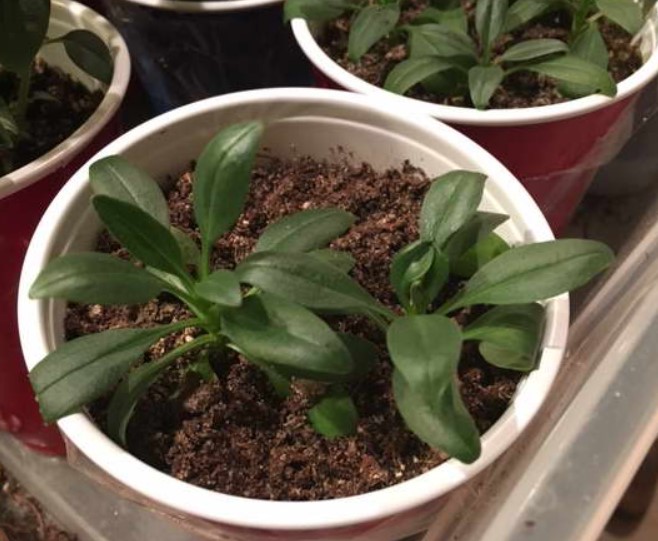
When the outside temperature stabilizes, the seedlings can be planted in a permanent location in the garden.
Planting centranthus
To ensure that seedlings take root well, you should follow some rules.
Deadlines
In temperate climates, seedlings are planted in late May or early June, when the soil has warmed sufficiently and the risk of frost has passed. In the south, this can be done a few weeks earlier.
Location and soil
Although centranthus thrives in partial shade, it's best to choose sunny, draft-free spots if possible. For example, the bushes can be planted in a strip along a fence.
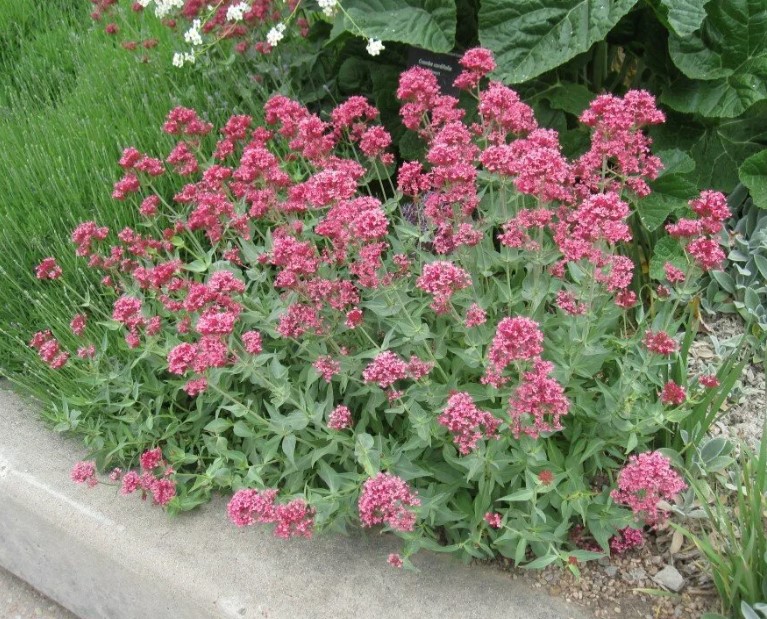
It's not advisable to choose sites on a low-lying area or with a close groundwater table. This will leave the root system in constant dampness, leading to root rot.
The plant thrives in both nutritious and well-drained soils and rocky ground. With proper care, it will bloom just as well in these locations.
Landing
Step-by-step landing:
- Soak the seedling in water for a quarter of an hour.
- Dig a planting hole, the diameter of which will be 2 times larger than the root ball.
- Thoroughly loosen the soil, clear it of weeds and large stones.
- Place a layer of gravel and sand into the hole to ensure drainage.
- Place the seedling in the hole so that the root ball is in the middle.
- Fill the hole with the previously removed soil mixed with sand.
- Lightly compact the soil.
- In the future, water once a week so that the root system adapts faster.
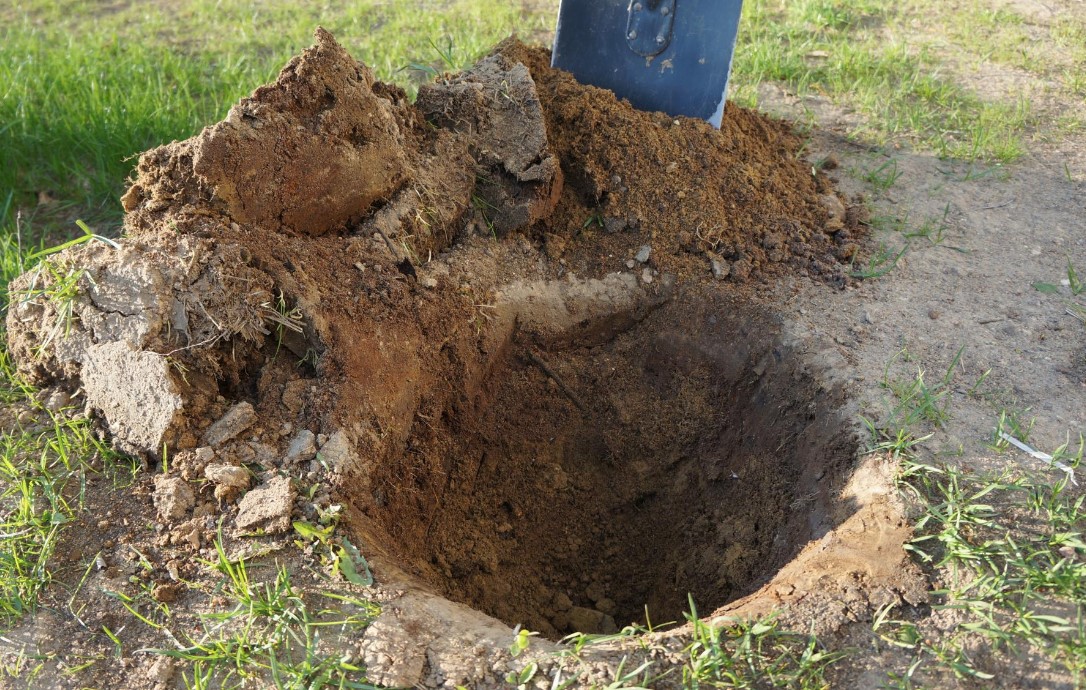
It is recommended to plant 7-9 seedlings per 1 m2 at a distance of 30-60 cm.
Caring for centranthus in open ground
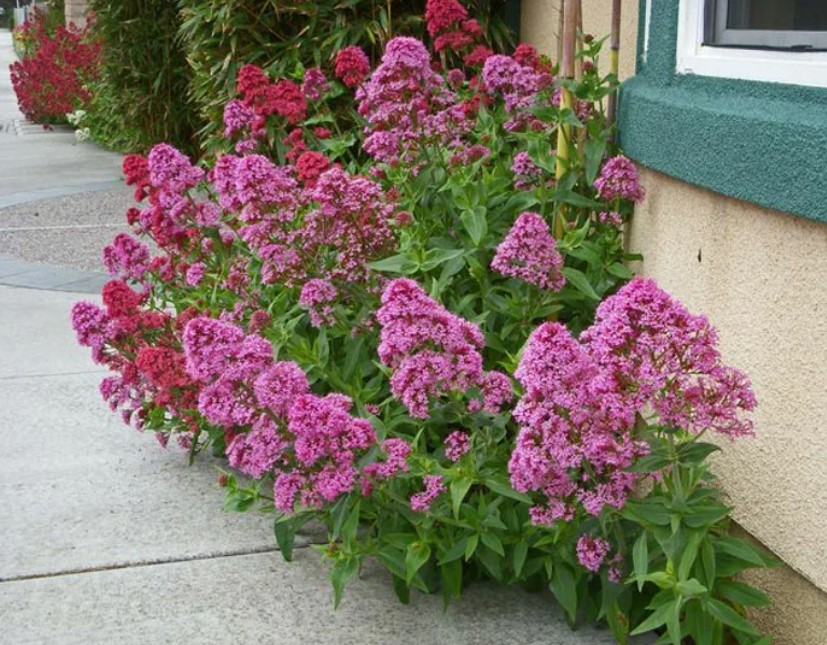
The centranthus plant doesn't cause much trouble. It's a fairly undemanding plant, both in terms of environmental conditions and care.
Watering
The plant doesn't tolerate excessive moisture, so it should be watered only during dry periods. During the rest of the year, natural rainfall is sufficient. Overwatering the bush will cause spots to appear on the leaves. Affected areas should be trimmed off immediately.
Top dressing
Fertilizers are applied 3 times per season:
- in early spring – to activate growth, complex mineral mixtures with a high nitrogen content are added;
- during budding;
- at the beginning of flowering.
The second and third times, the bushes are fed with potassium-phosphorus fertilizers to maintain vitality. Nitrogen application should be stopped or reduced to a minimum.
Flowering and pruning
To encourage reblooming, remove spent blooms. If you plan to propagate the plant by self-seeding, wait until the seeds ripen and disperse with the wind. Just keep in mind that they can sprout in the most unexpected places.
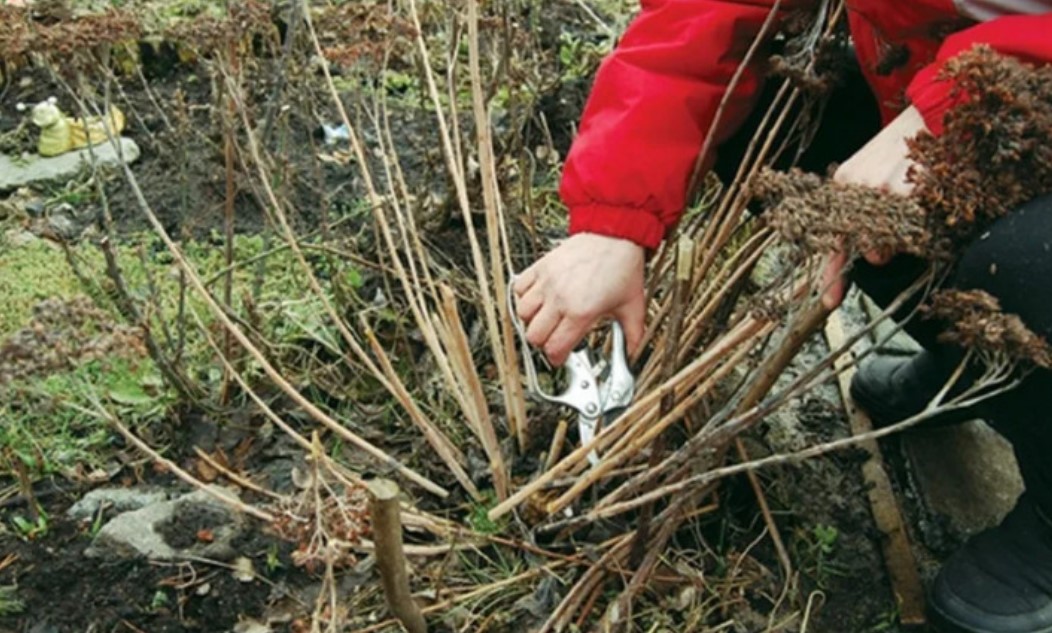
Pruning is recommended after flowering has finished. This will allow the bushes to develop more vibrant foliage. After the first flowering, cut the shoots back by half. Prune again in late June, August, and September to encourage new blooms. In late winter and early spring, prune the entire bush to 10-20 cm from the ground. This will encourage better branching.
Transfer
It's carried out every 2-3 years in spring or fall. The bushes are divided and replanted in new locations.
Wintering
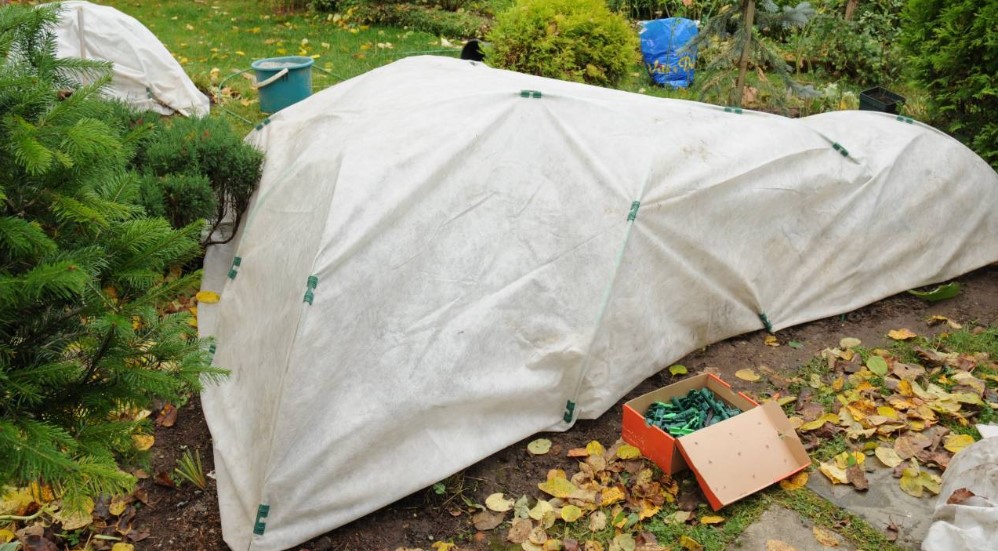
If winters in your region are snowy and not too harsh, mulching the bushes with peat or fallen leaves is sufficient. If winters are characterized by little snowfall and very low temperatures, you'll need to install a frame shelter and cover the plants with rags, agrofibre, plastic film, or covering material.
Diseases and pests of centranthus
The plant is resistant to diseases and pests. Aphids may occasionally appear on the bushes in the spring, but treatment is not necessary. They are destroyed by natural enemies—ladybugs and birds.
Reproduction of Centranthus
Centranthus can be propagated not only by seeds, but also by cuttings and division of the bush.
Cuttings
Planting material is prepared from July to August. To propagate by cuttings, take large, healthy branches and plant them in a pot filled with nutritious soil. Plant the cuttings approximately 10 cm deep. Once roots appear, they can be planted in the garden.
Dividing the bush
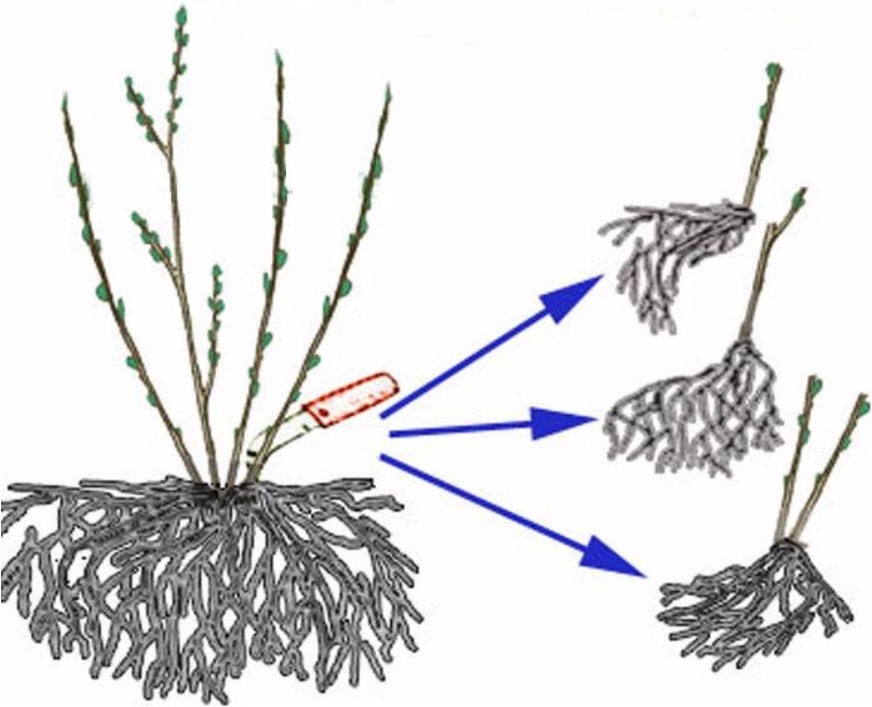
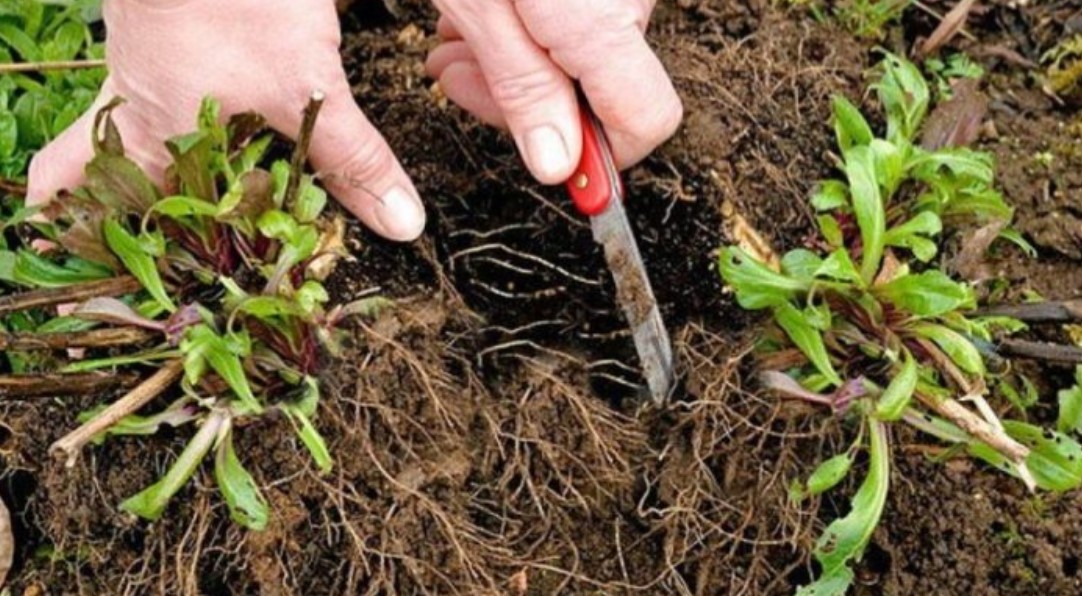
Division is done in July-August. The mother plant is removed from the ground and divided into several parts. The divisions are immediately planted in their permanent location.
Use of Centranthus in the landscape
Centranthus thrives in flowerbeds. It can be planted with other perennials with different flowering periods.
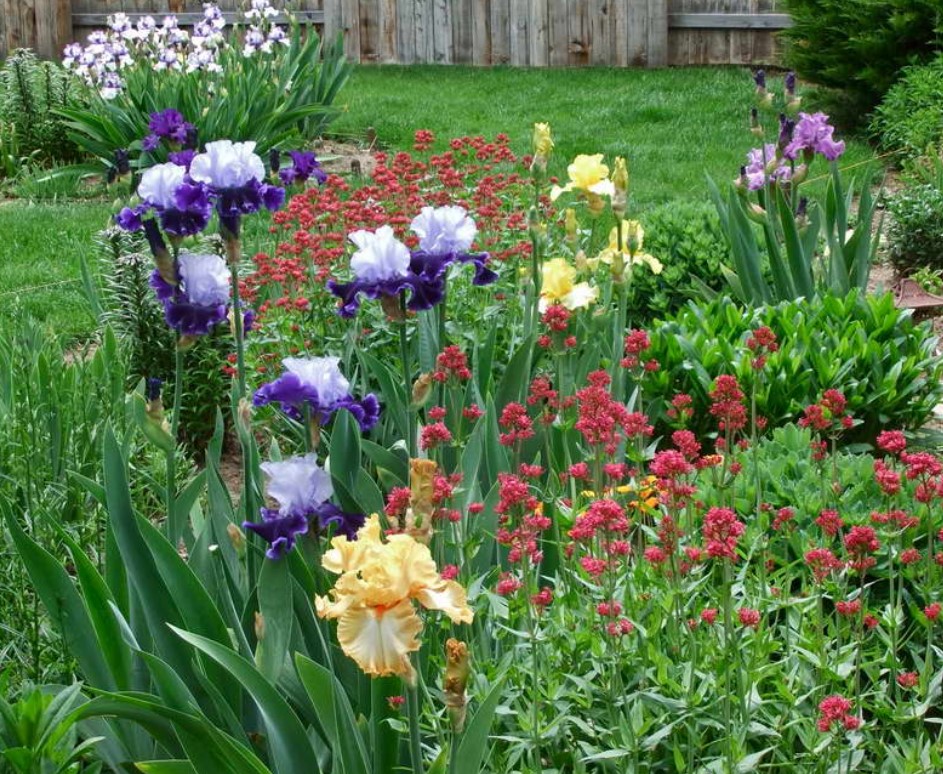
It's recommended to set aside space for group planting. This plant is ideal for creating flowering areas in flower beds, rock gardens, and wall decoration.
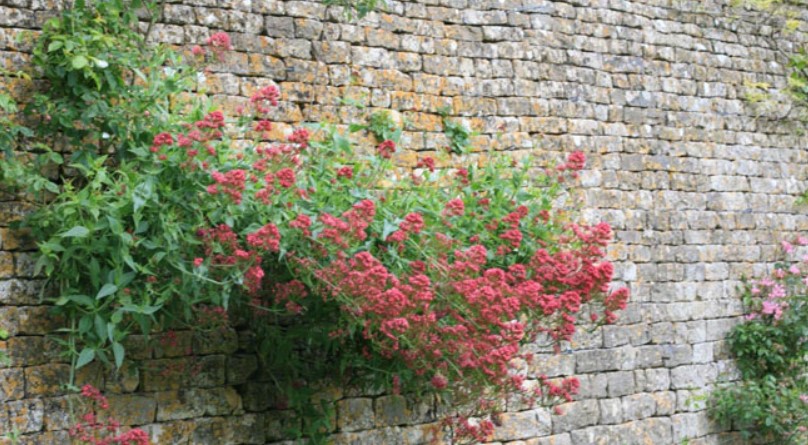
Centranthus can be used to decorate garden paths, planting bushes along the edges. They are often planted on dry slopes, in rockeries, alpine gardens, and near gazebos.
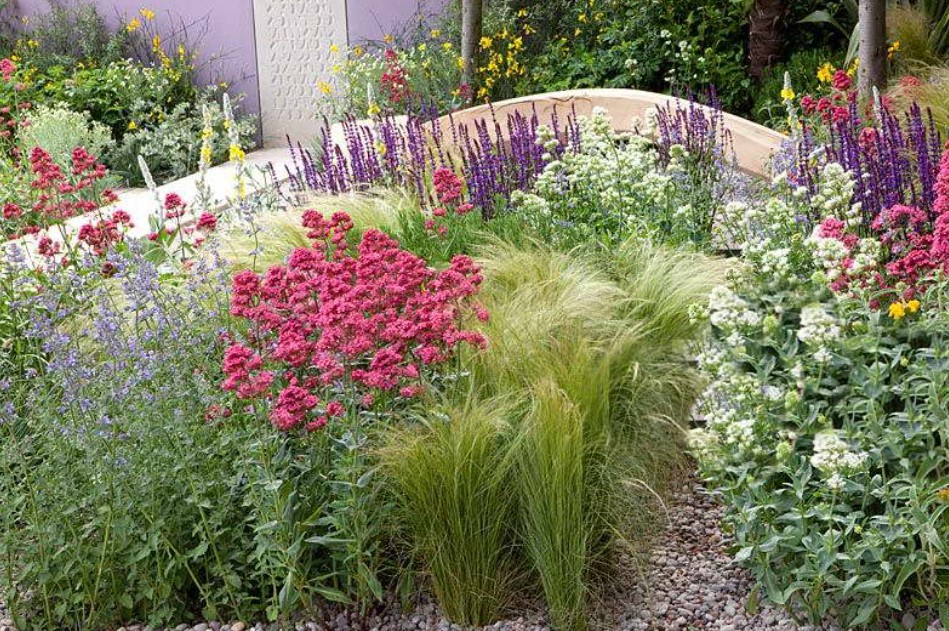
In a mixed border, garden valerian pairs beautifully with shrubby sage, adonis, and other perennials. It also looks unique with bearded irises. This combination will add vibrant color to the garden in spring.
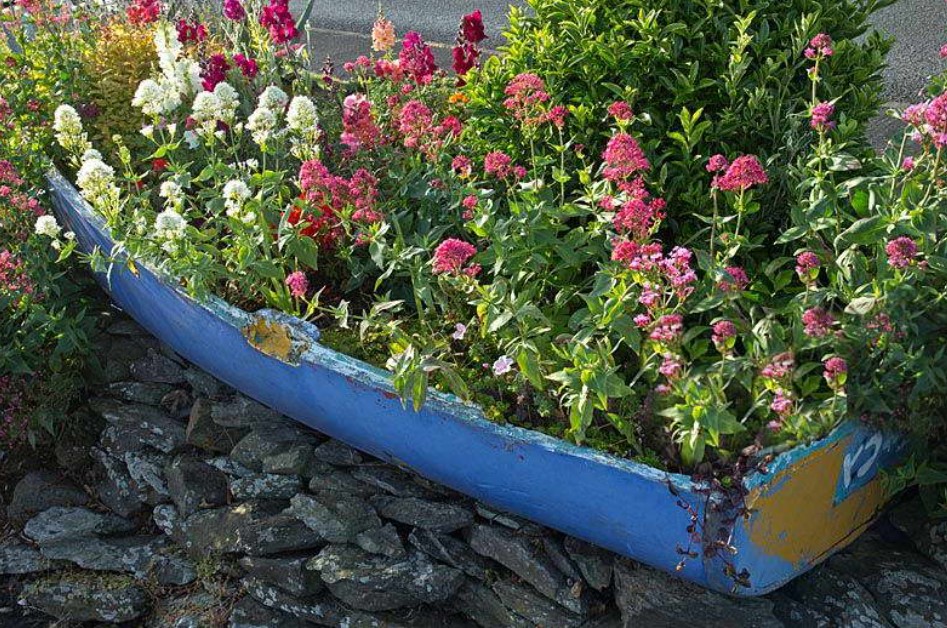
Mixed plantings of centranthus varieties with different flower colors look beautiful. This combination immediately catches the eye.
Reviews of centranthus from gardeners
I liked KentrantusOne day on one of the websites (I think you guessed which one) I saw a photo of a beautiful plant - centranthus.
It looked like a bush, but it is a herbaceous plant.
Of course, I really wanted to buy it for myself!!! I wrote its name down in my wishlist, went online, read up on the information, and decided—no big deal!
And then I came across this name on the seed website, opened it and it was exactly it
I ordered it, the seeds arrived, and naturally, like all of us, I looked through the packets every winter day (I like to do this, especially before bed, because then beautiful dreams come).
The plant is perennial, so I stratified it before sowing. Then everything was as usual.
I planted the seedlings in the front garden, and my centranthus got stronger and bloomed in August. Although the internet said it blooms twice: June-July and August-September (I'll see how it goes next year).
Kentranthus belongs to the subfamily Valerianaceae.I really liked this plant. They say the seeds are falling and next year there will be a "forest"—we'll tame it!
Another photo
He bent down because the spot I gave him was a bit unfortunate - next to the peonies, and the poor thing doesn't get enough sun, so he bent over the peony and you might think that its leaves are large
There are several types of Centranthus, I also liked the Valerianoides, whose inflorescence shape resembles the panicle hydrangea.
Thank you for stopping by and especially for reading my writing to the end.
Good luck to everyone
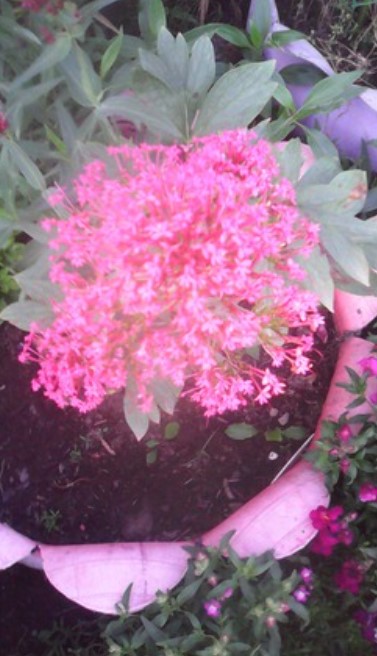
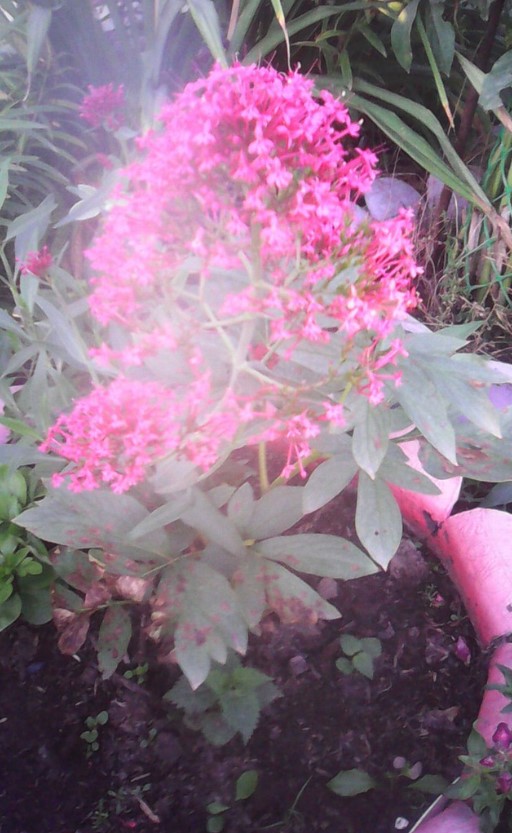
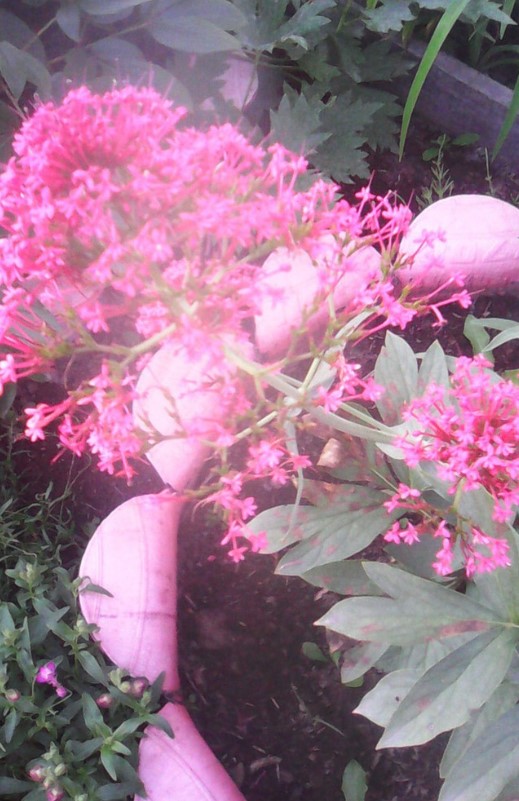
The centranthus survived one winter, and only one plant survived from the seed. I didn't notice any particular scent. It's 60-80 cm tall, with small flowers, similar to Persian lilacs. I really like it; it's an unusual plant for our flower beds, with its silvery foliage. The bush is slender and doesn't fall apart. Some say it doesn't live long, but we'll see.
I had one growing and maybe still growing. White and pale pink, no red. A lovely plant, very long-blooming, perfect for a backdrop. About 70 centimeters tall. Doesn't like being repotted; its roots are like those of aquilegia. I haven't noticed any particular fragrance. It overwinters well; it survived last winter, too, but I don't think it's long-lived; most of the bushes have already fallen over.
Five years ago, I also sowed centranthus. When sown early, it bloomed in the first year and survived the winter. The following year, the bush grew larger, blooming profusely and for a very long time (photo in EDSR). I trimmed off the faded flower stalks, and then new ones appeared. Centranthus is a perennial plant. By the third winter, the old bushes died (they are sensitive to waterlogging). Mine self-sows; all that remains is to transplant the young plants to the right location at the right time. The roots are like carrots. It prefers full sun and dry, calcareous soil (you can add some gravel).
Its seeds have a "parachute" (like dandelions) and fly away wherever they want :)) I've had self-seeded ones grow just like their parents. I haven't tried cuttings. It's also a very worthy plant.