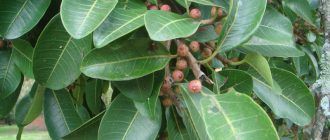
Poinsettia is a shrub of the Euphorbia genus in the Euphorbiaceae family, originally from the tropical regions of Mexico and Central America. In Europe, it is grown in greenhouses and homes, often becoming part of a garden plot in southern regions or the entrance to a winter garden. Caring for poinsettias indoors requires creating conditions that mimic natural conditions.
Content
- 1 Description of poinsettia
- 2 Types of poinsettia for home cultivation
- 3 Rules for selecting poinsettias for indoor cultivation
- 4 Poinsettia Care at Home – Seasonal Chart
- 5 Repotting: pot, soil, step-by-step instructions
- 6 Mistakes in caring for poinsettia and their elimination
- 7 Diseases, pests
- 8 Top.tomathouse.com recommends: Poinsettia – the Queen of Christmas
- 9 Reviews of poinsettia, advice on saving it
Description of poinsettia
Main characteristics:
- Height in nature is 3-4 m, at home – from 30 cm to 1 m.
- The flowering time is in winter (in Russia), namely from December to February, so it is often used in New Year's compositions.
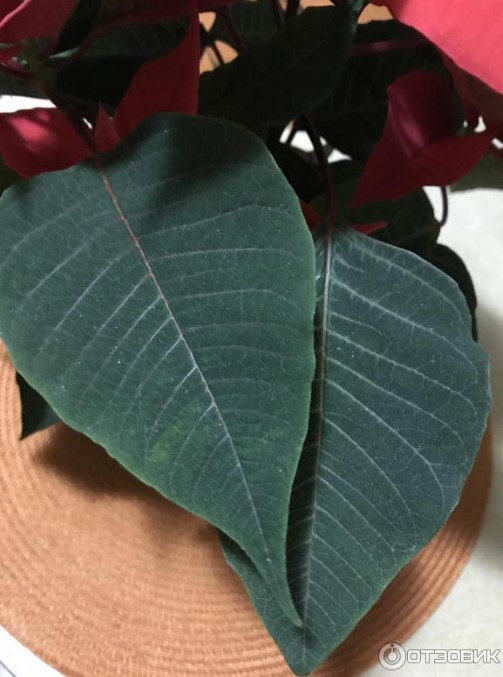
- The lower leaves are emerald green, reaching 15 cm. They are elliptical and petiolate. A small flower crowns the stem.
- The flowers are small with bracts, collected in an elegant rosette.
- Does not shed leaves in winter.
- The bracts are leaves up to 15 cm long, having a bright color, different from the rest of the green crown.
In Russia, the plant is also known as Euphorbia pulcherrima. Another name is the Star of Bethlehem. A number of Christmas legends are associated with this shrub. The modern botanical name comes from the surname of the US Ambassador to Mexico, Joel Roberts Poinsett. He was the first to send the plant to America, where it immediately caught the attention of breeders.
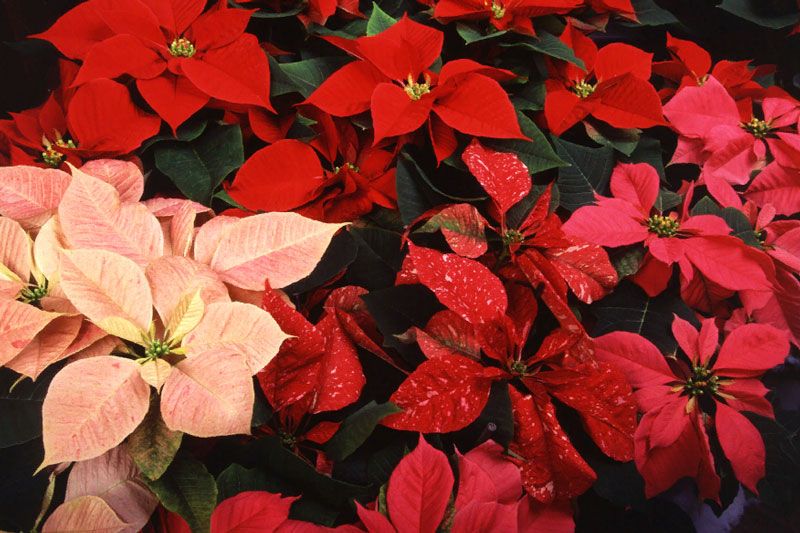
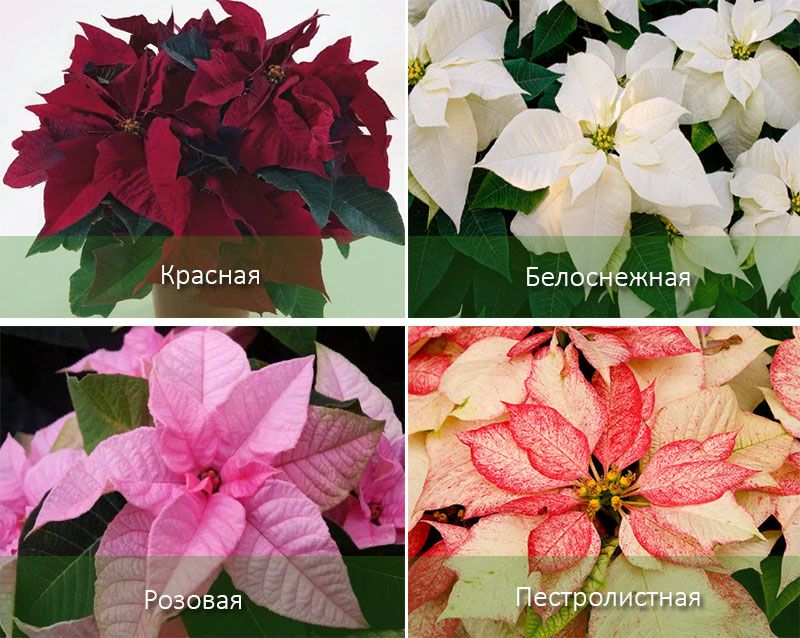
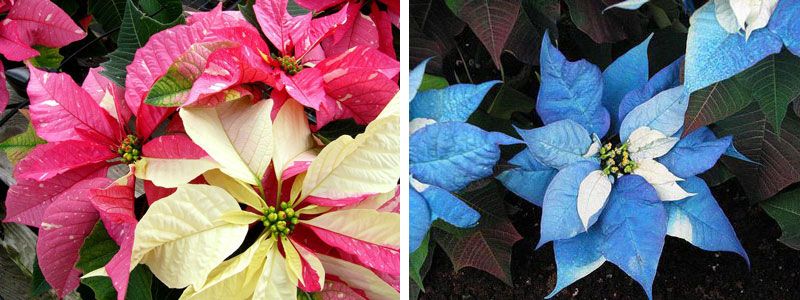
Photos of poinsettia are often used on Christmas cards. Varieties have been developed with yellow, milky, brick-red, and soft pink bracts.
The poinsettia's primary role in indoor cultivation is ornamental. The plant loves sun and thrives indoors. Its moisture requirements are limited, but they naturally increase in summer.
You can care for poinsettias without any special skills by following basic recommendations.
Types of poinsettia for home cultivation
Many varieties of this plant have been bred for interior decoration, but the most popular is the red poinsettia. Marketed as a Christmas plant, it's familiar from the Christmas decorations of European stores.
|
Varieties |
Name | Color of bracts |
| Red varieties | Cortez Fire | Bright red. The first has a fiery hue, the second has a shimmer. |
| Red Diamond | ||
| Sonora | ||
| Galaxy | Purple. Jester Red has darker veins. | |
| Godlfinger | ||
| Jester Red | ||
| Olympia | Scarlet, the first one is fiery. | |
| Peterstar | ||
| Sonora Fire | ||
| White | Freedom White | Delicate. |
| Regina | With herbaceous inclusions. | |
| Silverstar White | Mini shrub, snowy, for flower pots. | |
| Whitestar | Bright. | |
| Pink | Carousel Pink | Delicate, with double leaves with herbal inclusions. |
| Cortez Pink | With an orange tint. | |
| Da Vinci | With white coating. | |
| Freedom Pink | Delicate color. | |
| Jester Pink | With a grassy edge. | |
| Marblestar | Delicate color with white edging. | |
| Coins | With a white pattern. | |
| Silverstar Marble | Pale pink with a thin white border. | |
| Pink Elle | Bright. | |
| Sonora White | Ivory with herbaceous inclusions. | |
| Variegated | Jingle Bells Sonora | Burgundy-purple with white inclusions. |
| Sonora White Glitter | Variegated white. | |
| Strawberryend Cream | Creamy purple with white edging and double edge. |
In southern regions, the shrub is planted outdoors in combination with variegated codiaeum (Iacalifah). This combination creates a very striking effect.
Rules for selecting poinsettias for indoor cultivation
Need to:
- choose a strong plant;
- check that the flower pot is filled with moist soil;
- Find a bush with unblown buds; it will delight you with long-lasting flowering.
After purchase, the plant needs to acclimate. Choose a well-lit location free from drafts.
Poinsettia Care at Home – Seasonal Chart
| Seasonal care | Lighting | Watering and humidity | Optimal temperature |
| Spring – Summer | Bright, on an east and west-facing window. Partial shade in summer. | Moisten and spray with melted or rain water +30 °C (if not available, you can use a softener).Frequency: every 2-3 days. 40-60%. |
+20…+25°C. |
| Autumn – Winter | A well-lit place without drafts. | Minimum. | +17…+20°C - when the flowers have blossomed.
+15…+16°C – rest period, protect from drafts, sheds leaves. |
| Season | Top dressing (*) | |
| Off-season (spring, autumn) | Light solution of mineral fertilizers. | — |
| Winter | Mullein solution | |
| Summer | Potassium. | |
(*) Fertilization begins in March, with an interval of 2-3 weeks.
Repotting: pot, soil, step-by-step instructions
Even simple poinsettia care at home requires a fair amount of attention, especially following certain rules. A mature plant requires repotting no more than once every 3-5 years. A young plant should be repotted once a year.
The optimal time is May, when the dormant period ends and a new growing season begins. Transplantation is the best method.
Soil composition (ratio 1:1:2: see instructions accordingly):
- sand;
- forest soil with leaf humus;
- peat substrate;
- any granular fertilizer.
The clay at the planting site in open ground must be replaced.
Transplantation step by step:
- pour boiling water over the pot;
- lay the soil to a height of 3 cm from gravel, expanded clay or pebbles;
- fill in the prepared soil;
- carefully pull the bush out of the pot;
- transfer to a new container and add prepared soil;
- water and place on a windowsill, not exposed to direct sunlight, for two weeks.
After acclimatization, move the plant to its usual location.
Trimming
Poinsettias are pruned as needed once they reach a significant size, usually between March and April, after flowering.
How to prune to get strong, healthy shoots:
- remove everything except stems 10 cm long;
- After 2 weeks, the emerging shoots are cut again, leaving 4-5 to form a bush.
Flowering and rest
Poinsettias typically bloom before Christmas. Flowering continues until February, but can be prolonged if the plant is kept at cooler temperatures.
Rules of care during this time:
- place it on a light windowsill and make sure there is no temperature change in the room;
- After the leaves fall, the bush is pruned.
For re-flowering:
- at 18:00, i.e. after sunset, the flower is hidden under a cardboard box;
- in the morning they open and look after it as usual;
- This “course” continues for 10 weeks until the bracts begin to turn red;
- At the beginning of flowering, fertilizing is stopped.
After the poinsettia has shed its leaves, it is moved to a room with a temperature of +16°C For rest. The shrub can be kept dormant for up to 8 weeks. Annual pruning is not necessary, but it will grow more slowly.
Reproduction
Poinsettia is propagated:
- seeds;
- cuttings.
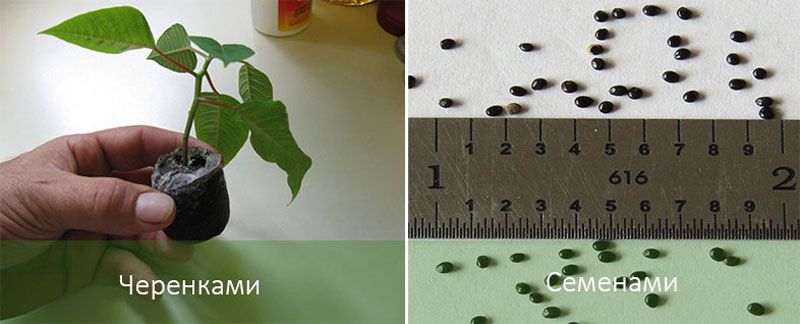
At home, cuttings are mainly used; this method allows you to get healthy plants that bloom in the second year.
Step by step actions:
- cut young shoots 7 cm long, with 4-5 leaves;
- dip the cutting into Kornevin solution, but you can do without stimulants;
- plant in prepared soil, sticking the shoots in at an angle of 30-40°;
- cover with cling film, making holes for ventilation, and place in a warm place;
- rooting takes about 2-3 weeks;
- after the first shoots appear, the film is removed and the top leaf is pinched;
- The flower is transplanted using the transshipment method of 3-5 cutting shoots in one container, then separately into a flowerpot.
In nature, the shrub can reproduce by seeds, but such plants bloom only after several years.
At home, the seeds are treated with growth stimulants, which results in a healthy and rapidly growing bush.
Mistakes in caring for poinsettia and their elimination
| Change of leaves, etc. | Reason and action |
| They fall off, the plant loses its tone. | Reaction to excess and lack of moisture, as well as improper watering conditions. Ensure proper soil moisture. The water should be warm. |
| They fall off completely. | Sudden temperature changes can cause the plant to become "draughty." Move the shrub to a bright, draft-free location. |
| They are turning yellow, leaves may fall. | Lack of light; if a bush on a windowsill behaves this way, it is provided with artificial lighting. |
| The ends are drying out. | Low humidity, the plant is hot. Change the growing conditions and spray. |
| Unblown flowers fall off. | A natural process. |
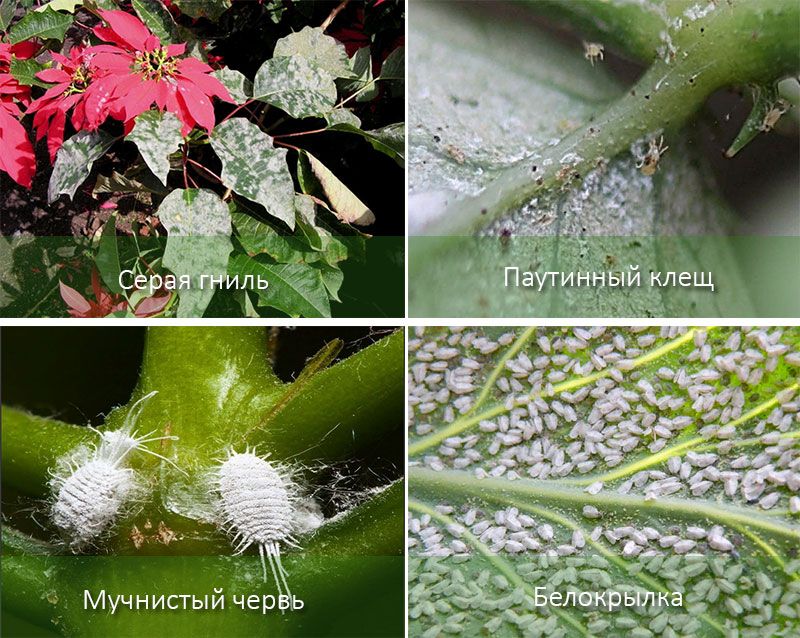
Diseases, pests
| Disease or pest | External signs | Treatment | Prevention |
| Mealybug | Cottony coating. | The flower is cleaned. Then it is sprayed and watered with horsetail infusion. | Control humidity and spray with onion infusion. |
| Spider mite | Cobwebs and twisted leaves. | Treat with a soapy solution containing alcohol, and soak the shrub in a shower at 40–45°C. Spray with acaricides three times every six days. | They carry out quartz treatment and spray with onion infusion. |
| Whitefly | Insects on leaves that are noticeably curled. | They are treated with a vacuum cleaner, onion water or acaricides for 2-4 weeks. | Ventilate and spray regularly, avoid contact with infected plants (flower bouquets). |
| Thrips | Beige spots and scratches on leaves. | Remove the leaves, give the plant a “bath” under a hot shower, and spray. | Maintain natural conditions. Plants are planted. Ventilation is provided. |
| Gray mold | White spots with a gray tint on the leaves. | Water with fungicides (1% solution) for 2-3 weeks. Replace the soil and repot the plant, sterilize the pot, and trim it completely. | They are ventilated and looked after, sprayed with fungicides once a week. |
| Fusarium | Water-soaked areas on the leaves, the plant turns black, dries up and dies. | Repot. If the infestation is severe, select only cuttings with clean cuts. Water with solutions containing Maxim, Previkur, and other products for 6 weeks. | Proper care: moisten the leaves, water, do not place in a draft, spray. |
Disease and pests will be prevented from affecting your beloved plant if you regularly spray the bush with acaricides and fungicides. These can be replaced with natural remedies, such as onion or garlic infusion.
Top.tomathouse.com recommends: Poinsettia – the Queen of Christmas
Poinsettia is a true New Year's beauty, as if reminiscent of summer in severe frosts.
Its happy owners do everything necessary to ensure their beloved flower blooms by December. Several signs are associated with the flower's behavior during Christmas and other important dates:
- If the bush turns yellow without any apparent reason, the family has been cursed;
- Punsettia in the newlyweds’ bedroom is a guarantee of a quick birth;
- a woman who has this flower at home is always beautiful and sexy;
- Poinsettia has a magical effect on men; its owner does not think about anyone except his chosen one.
This exquisite flower is one of the most coveted Christmas gifts, filled with hidden meaning and heartfelt wishes. Growing and caring for it at home is effortless, yet brings immense joy when it blooms.
Reviews of poinsettia, advice on saving it
Review: Indoor flower "Poinsettia" - Beauty and nothing else.
Pros: Beautiful and durable
Disadvantages: There are no disadvantages
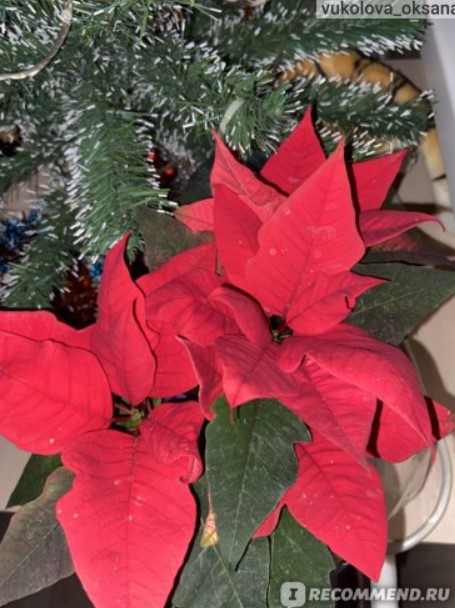
I was recently given a beautiful flower called a poinsettia. This flower is also called the "Christmas star."
This houseplant is a Christmas talisman. It begins to bloom on New Year's Eve and is a symbol of prosperity.
This flower is a must-have for New Year and Christmas. It will bring happiness and prosperity to the household.
It blooms until spring. Eventually, all the green leaves will turn as red as the top ones.
This shrub grows in the tropical forests of Central America and belongs to the evergreen family of spurges.
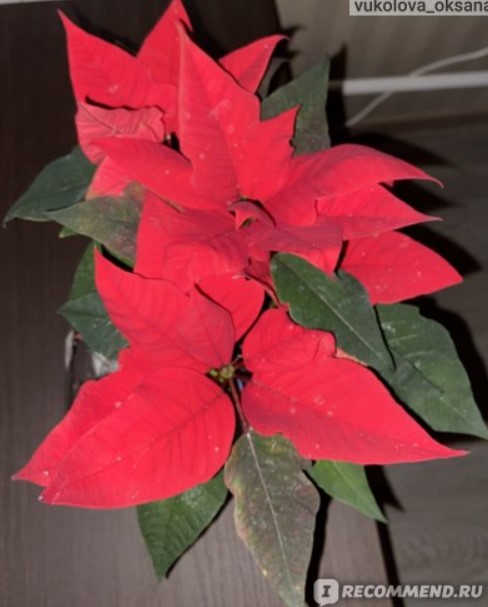
The flower's leaves are pointed.
There's a legend about this flower: When Jesus was born, poor children placed bare branches of the plant near the baby's crib, and the next day they blossomed into red flowers (stars). That's why the flower is called the "Star of Bethlehem." And now it decorates the altar during the holidays.
This is a very good gift for New Year and Christmas.
It doesn't cost much, only 300 rubles, but it will decorate the room for a long time.
I advise everyone to buy such a flower for the New Year and you will be happy all year long.
Usage time: Week
Cost: 300 ₽
Year of manufacture/purchase 2019
The overall impression is one of beauty and nothing more.
My rating
5
I recommend it to friends YES
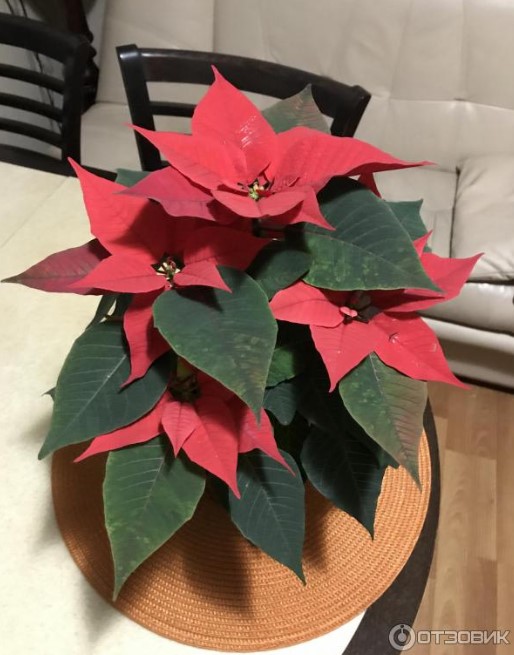
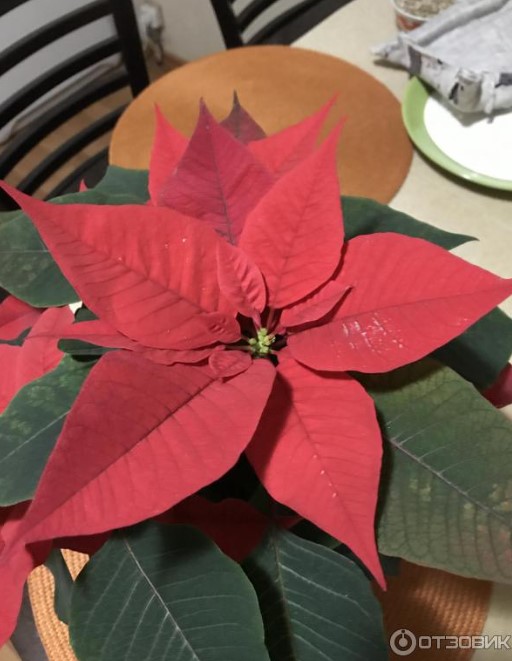
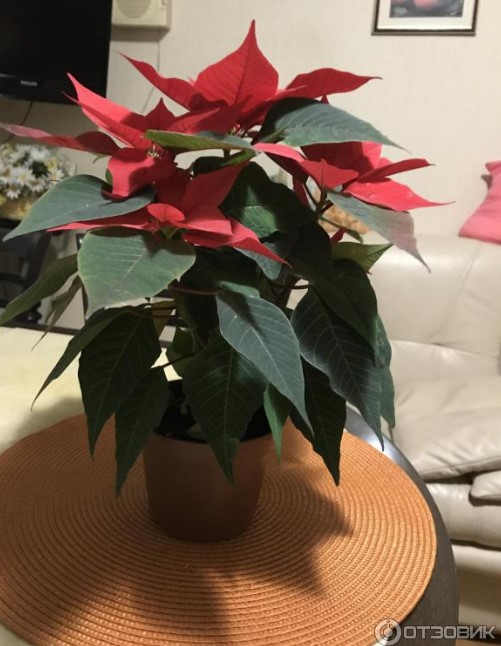
The winter holidays are over. What's next for the "Christmas star?"
Good afternoonMy boyfriend gave me this flower for New Year's. I didn't know what kind of flower it was or how to care for it. My main question about it was whether it would survive the holidays.
Here on the first day.
Poinsettia
I removed the cellophane so that the flower could breathe.
Poinsettia
Then I started to study information about him.At first, I didn't understand why the leaves were red. I thought they were dyed that way.
Poinsettia (euphorbia pulcherrima) is the correct name. Or "Christmas Star," as it's commonly called.
Yes, it's a milkweed. Before, I associated milkweeds with plants with powerful stems.
Description of Pounsettia:
Height in nature is 3-4 m, at home – from 30 cm to 1 m.
The flowering time is in winter (in Russia), namely from December to February, so it is often used in New Year's compositions.
The lower leaves are emerald green, reaching 15 cm. They are elliptical and petiolate. A small flower crowns the stem.
The flowers are small with bracts, collected in an elegant rosette.
Does not shed leaves in winter.
The bracts are leaves up to 15 cm long, having a bright color, different from the rest of the green crown.
Poinsettia
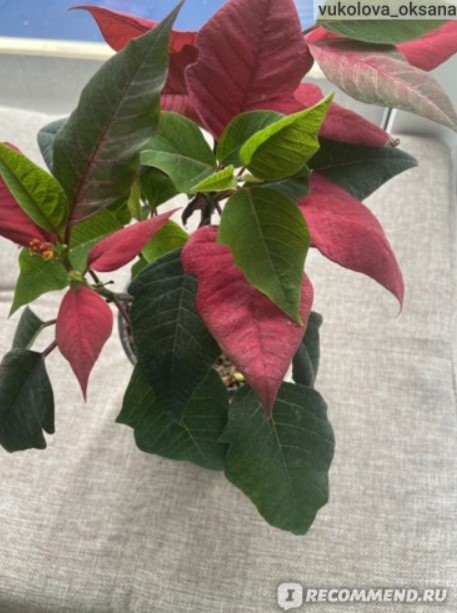
But that's not true. These are its true leaves. More precisely, they are bracts.
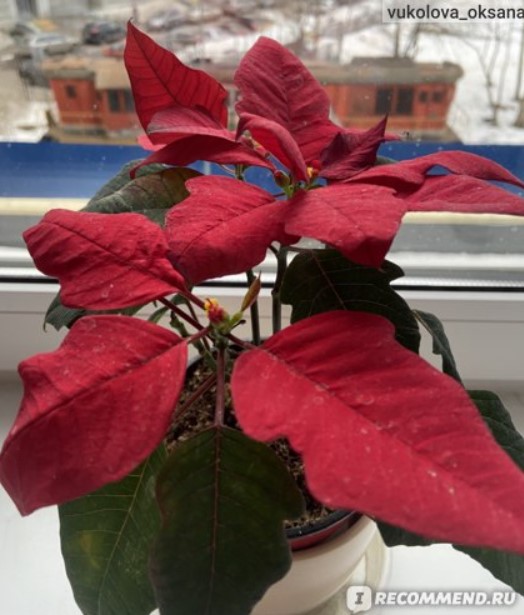
And even small yellow flowers appeared.
Poinsettia
The flower feels fine.
Poinsettia
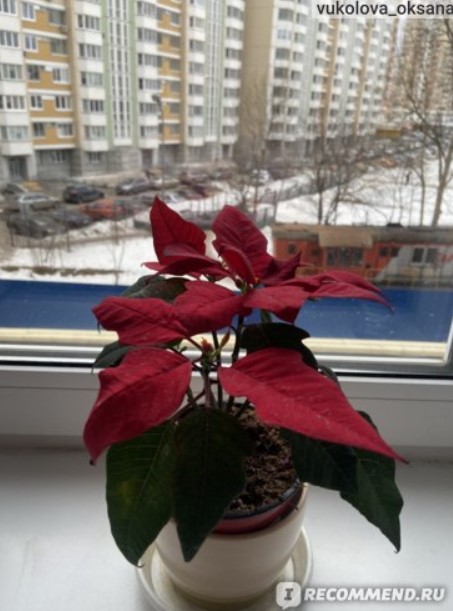
And here it is, standing on the windowsill, bright and beautiful.Poinsettia is native to the tropics, but it does not like heat and bright sunlight, preferring in natural conditions to hide under the canopy of taller trees with tightly intertwined crowns.
I water and spray it.
During active growth, poinsettias should be watered generously every 2–3 days. Allow the soil to dry completely to a depth of 1–1.5 cm. Pay attention to the outside weather, indoor temperature, and humidity—both overwatering and over-watering are equally harmful to the plant.
Poinsettia
White spots appeared on the leaves from spraying. Then I became more mindful of watering. Now I water and spray the poinsettia with boiled water that has been steeping in a bottle.
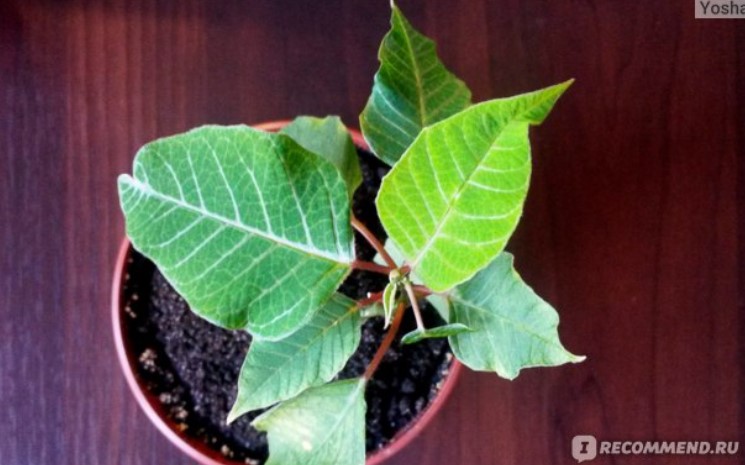
Some of the leaves withered and fell off over time.But on top of the red leaves, young green leaves began to appear.
Poinsettia
In the spring I transplanted the poinsettia into a ceramic pot.
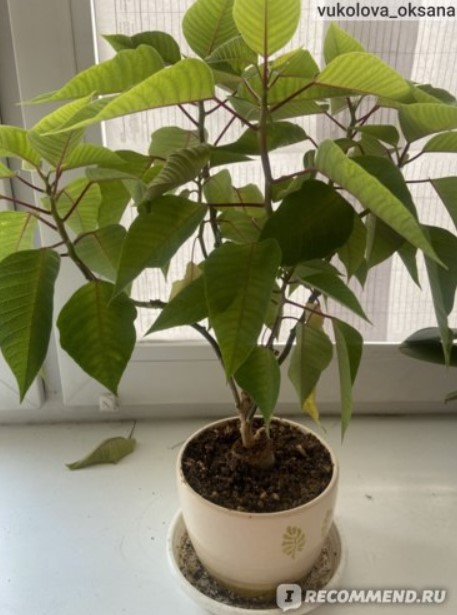
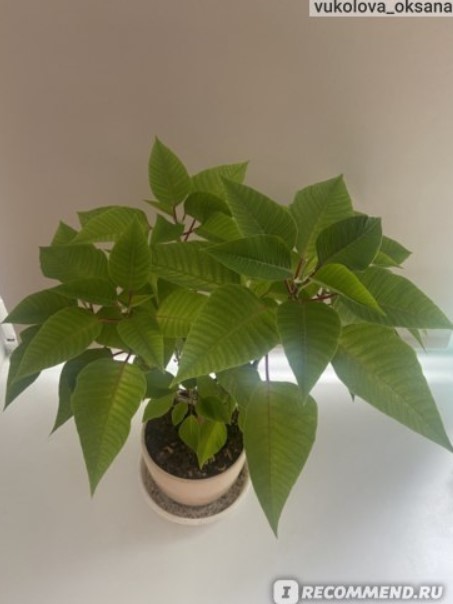
By summer, there were no more red leaves left. The poinsettia had turned completely green and grown. Only the leaf stalks remained red.I was away from this apartment for about a week last summer. When I arrived, all the poinsettia's leaves had lost their turgor and were drooping. I thought it was the end. But I still watered it generously and sprayed it. And a miracle happened: the poinsettia came back to life.
Sometimes when I leave, when I arrive I see this.
Poinsettia
That's four days without watering. This condition is easy to fix. Just water and spray. And the poinsettia comes back to life.The poinsettia can be prepared for another bloom in the winter. But I won't do that yet. I'm not an experienced gardener yet. I like this bush even with its green foliage.
Thank you for your attention!
Advantages
Charges with positive energy
Unpretentious
Easy care
Flaws
To get new blooms you need to do a lot of things.
Short-lived decorative effect
vukolova_oksana
recommends
Rooting Poinsettias: In Soil vs. in Water
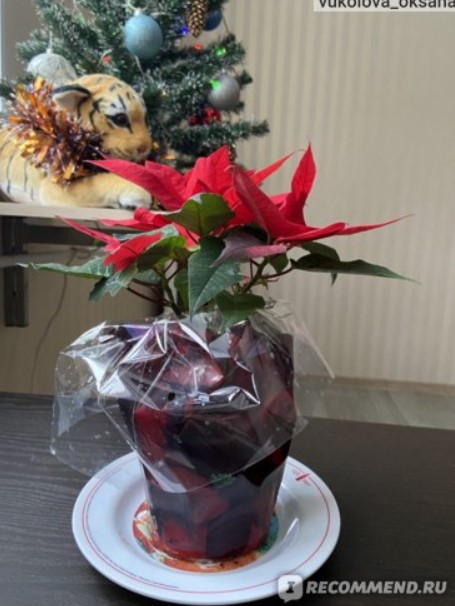
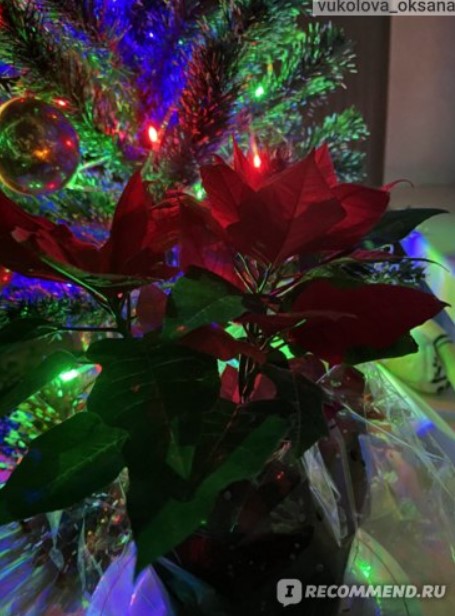
In the run-up to the New Year, I was browsing online for inspiration and a few ideas for decorating my home for the holiday. I often saw pictures of Christmas trees, candles, brightly wrapped gifts, and… red poinsettias. That's what I've been missing! From that moment on, I was eager to have one in my home.I was even ready to buy it. But I was lucky, so to speak: I was given a couple of cuttings. When I got home, I started scouring the internet for ways to root poinsettias. The overwhelming majority of websites said to root poinsettia cuttings in soil. And only here on Irek did someone write about rooting them in water. Incidentally, I've never rooted any plant by simply planting the cuttings in soil; I propagate roses and root their cuttings exclusively in water. I decided to do it this way: I kept all the poinsettia cuttings in water for one day (this is necessary to allow the white milky sap to flow out, which can prevent successful rooting by clogging the vessels), then I dipped two cuttings in Kornevin and placed them in peat tablets to root, and left the rest (also dipped in turn in the white powder of Kornevin) in water.
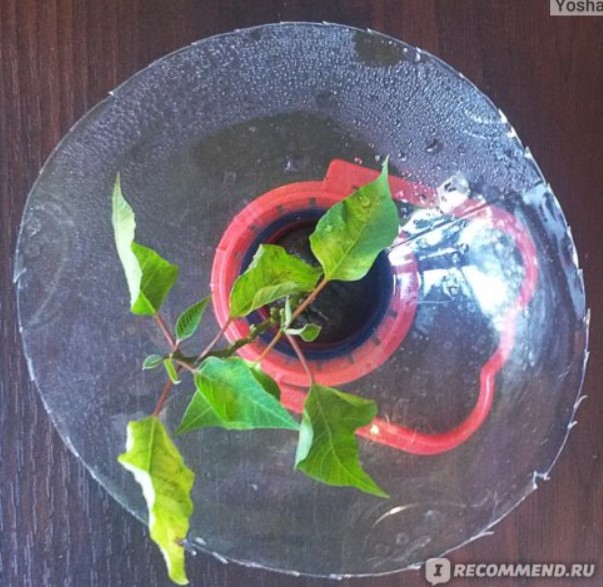
I placed the peat tablets in wide 5-liter bottle necks, first wrapping them in a bag to maintain high humidity, and placed them on the windowsill close to the radiator, since poinsettias need warmth to root.
It looked something like this:
I regularly moistened the peat tablets with a spray bottle and cut off the drying lower leaves.
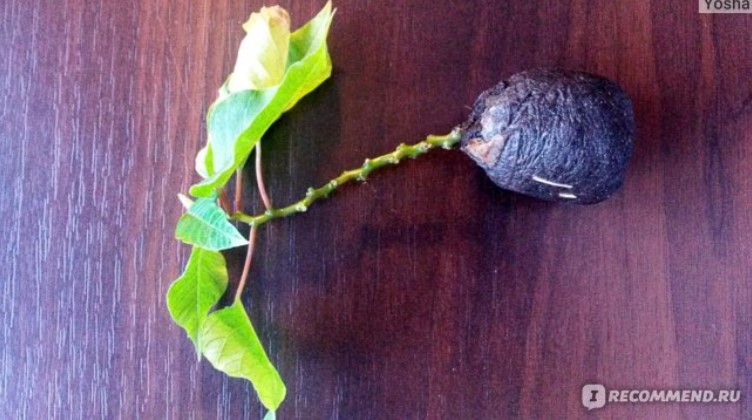
According to online rumors, the poinsettia should have sprouted roots in about a month. That's roughly what happened. A little over a month later, when I pulled one of the peat tablets containing the cutting out from under the bag, I discovered strong white roots.
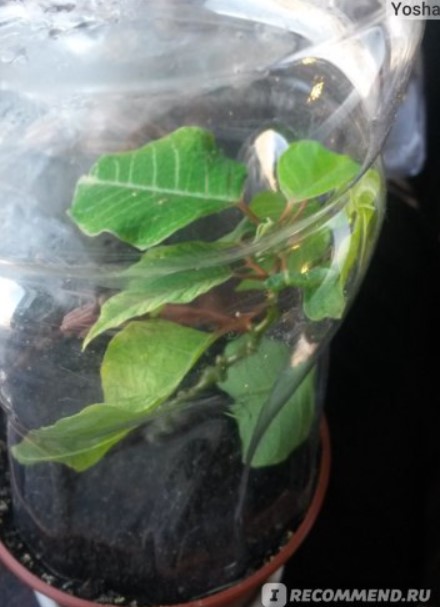
"It's time to plant it in a pot," I thought. I started cutting the paper around the peat tablet and broke off almost all the roots. So be careful with peat tablets, friends. I think next time it's better to just cut the paper into several pieces rather than try to untangle the roots. Nevertheless, I planted the cutting in the ground. I read that poinsettias prefer slightly acidic soil. So, I chose a ready-made "Lemon" potting mix for the cutting, which has a moderate acidity. (P.S. Check the soil packets for this information; they should always indicate the pH level.) I planted the cutting and covered it with a bottle, as it had already become accustomed to the humid environment under the bag and was now curling its leaves when exposed to the air without cover.
This is how it looked:
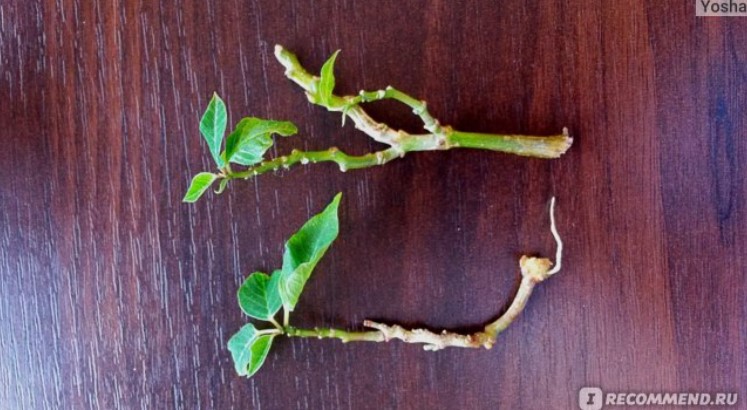
The cuttings that remained in water performed a little worse, with only one of them producing a thin white root:
The stem under the bottle began to produce new beautiful dark green leaves with a bright pattern of veins.
The cutting sat covered with a bottle for a while. It took some effort to wean it off the high humidity. The problem is, when you remove the bottle, the leaves not only dry out, but curl up, and the flower droops and wilts. To gradually retrain the poinsettia cutting to normal room humidity, remove the bottle and hold it for a while under a plastic bag with a cut-off top. A regular file (multifora) can be used for this purpose. Cut off the top and wrap it around the pot containing the cutting. Then, gradually widening the gap, acclimate it to normal humidity. Once the cutting has adjusted, remove the bag. I removed the bag from my poinsettia, and it's now growing leaves. It shouldn't bloom in the summer, so at this stage, my only task is watering and monitoring.
Closer to autumn, I will update the review and share with you the latest results.
Thank you all for your attention)
Advantages
Very decorative
Flaws
Poisonous juice
Yosha
recommends