Indoor spurge (euphorbia) is a flower that belongs to one of the most widespread families in the plant world, the Euphorbiaceae.

This tropical plant is found in Asia, Africa, and South America. The Euphorbiaceae family contains approximately 2,000 species.
Content
- 1 Peculiarities
- 2 Types of indoor milkweed
- 3 Top.tomathouse.com explains: Is milkweed a cactus?
- 4 Euphorbia - the nuances of cultivation
- 5 Home care
- 6 Why is a poisonous flower dangerous?
- 7 Top.tomathouse.com explains: Is it possible to keep milkweed at home?
- 8 Application in medicine
- 9 Reviews of indoor milkweed
Peculiarities
Its main property is the presence of a white, milky juice. The ancient Roman physician and botanist Euphorbus, court physician to the Numidian king, studied the plant for many years and developed treatment recipes. It is to him that the milkweed owes its second name.
Euphorbia has many beneficial properties:
- used in garden design;
- serves as a decoration for home interiors;
- used in cosmetology – cell juice is used to whiten freckles and remove excess pigmentation;
- used in folk medicine – a natural aphrodisiac, has many medicinal properties.
Types of indoor milkweed
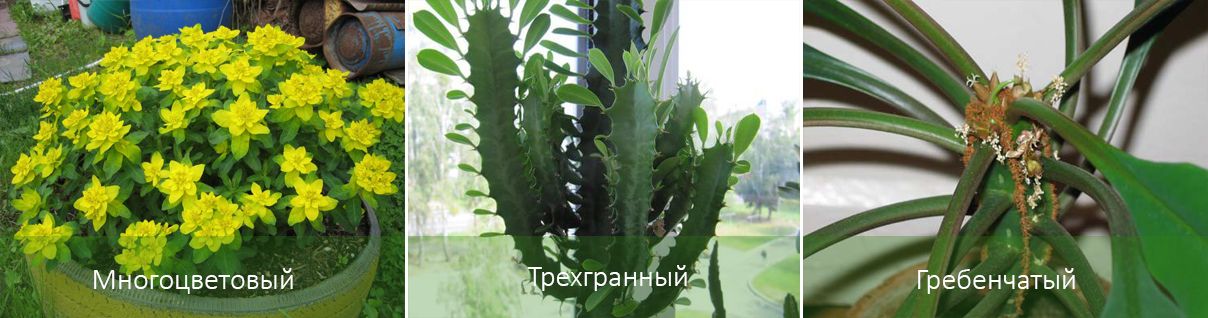
All types of milkweed are poisonous. When ingested, the sap causes burns to the skin and mucous membranes, as well as poisoning. The plant species are not all alike. They differ in the shape of their leaves, stems, and inflorescences. garden forms, for example, multi-flowered. Let's consider indoor ones:
| Name | Description |
| Akalitha (foxtail)
|
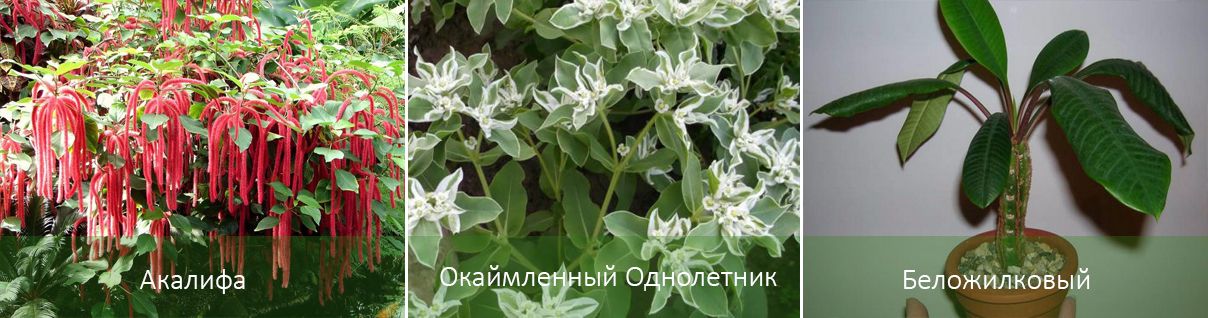
An evergreen, low-growing shrub. The leaves are elliptical. Bright red flowers are collected in spike-like inflorescences. |
| White-veined
(Euphórbia lophogona)
|
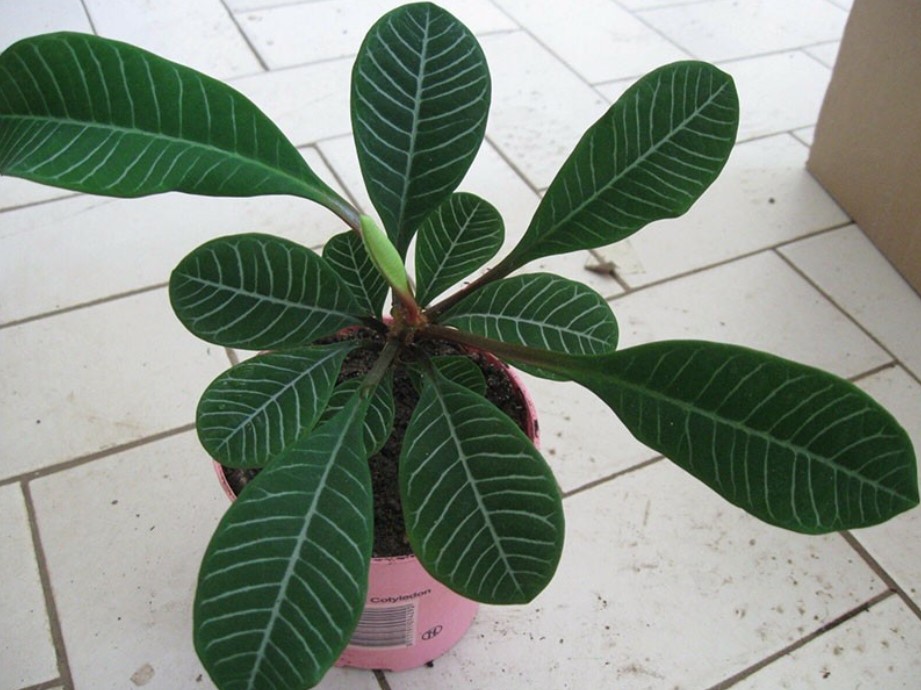
A popular houseplant with a strong, ribbed trunk, it has five ribs that gradually thicken toward the top. It can reach a height of two meters. The malachite-colored leaves feature prominent white veins (hence its name); they are attached to the trunk by thin petioles and are over 25 cm long. This species does not produce beautiful flowers; after flowering, a dense capsule containing seeds remains. |
| Trihedral (Euphórbia trígona) 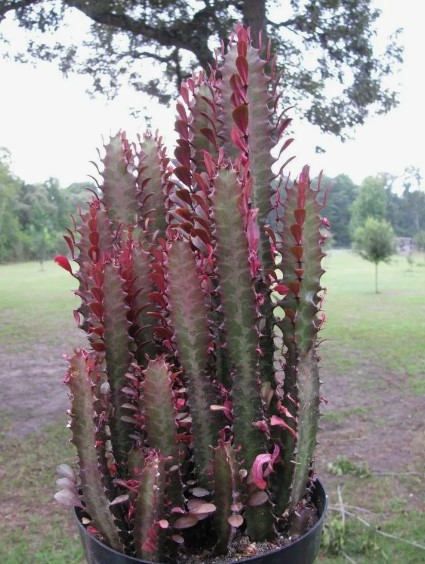 |
A perennial. With proper care, it can grow up to 3 m indoors. Its wide, fleshy, triangular trunk is covered in thorns. The ends of the stems are strewn with bright green leaves, which eventually fall off. It blooms rarely and reproduces by self-seeding. |
| Comb
(Euphorbia lophogona)
|
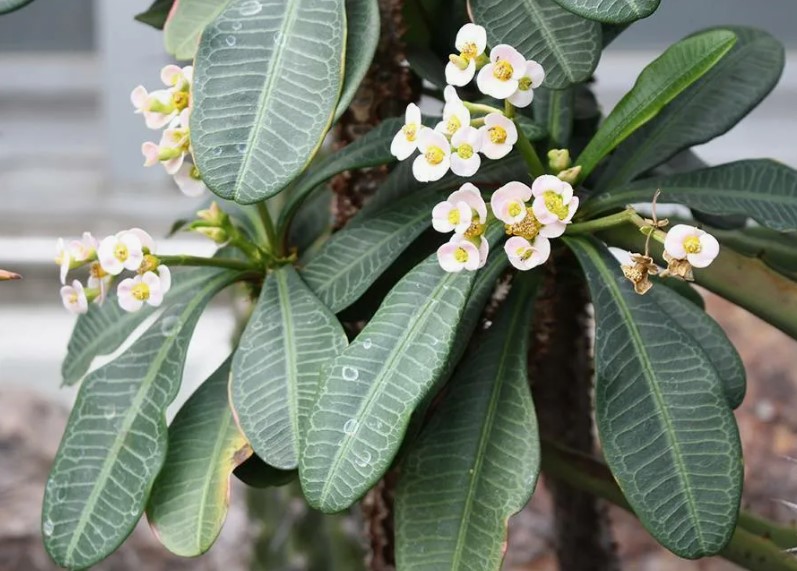
An evergreen shrub-like plant. Ovate leaves cluster at the top of a ribbed trunk. It produces white and pink flowers. |
| Brilliant (mile)
|
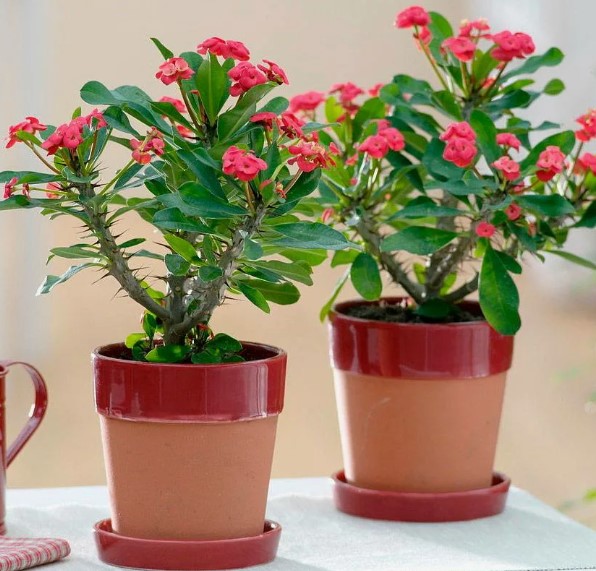
A perennial thorny shrub. Its aggressive needles enlarge as they mature. The plant is adorned with small flowers in white, pink, yellow, and cream. It is also known as "crown of thorns." Flowering begins in early spring and continues until the late autumn frosts. |
| Poinsettia
|
An evergreen plant up to a meter tall. The leaves are large, elliptical, with smooth, wavy, and serrated edges. Brightly colored bracts form at the tips of the shoots, adding to the decorative appeal. |


Top.tomathouse.com explains: Is milkweed a cactus?
Approximately 500 species of Euphorbia are succulents. Some resemble cacti in appearance, but they are classified in the spurge family. The name refers to a common characteristic: when cut, the above-ground parts exude a sap. This white, viscous liquid resembles milk. This houseplant is not a cactus.
Euphorbia - the nuances of cultivation
This poisonous plant occupies a special niche in indoor gardening. Growing milkweed has certain nuances:
- Use rubber gloves when handling the plant.
- Proper placement: Avoid placing the flower near food. It's best to keep it away from rooms where small children or pets play.
If these rules are followed, milkweed will not cause harm. Basic requirements for indoor plant care:
- good lighting;
- coolness in the winter months;
- moderate watering.
Following all recommendations will ensure successful growth and an attractive appearance of your milkweed. Growing this ornamental plant is accessible to novice gardeners.
Home care
Euphorbia is quite easy to grow indoors. Growing this ornamental plant is accessible to beginners.
Illumination
Euphorbia isn't demanding when it comes to light. It doesn't wilt in the shade, but its growth slows. With adequate light, the plant thrives significantly.
During the summer, most spurges thrive in light shade. In winter, the plant requires a bright spot with some direct sunlight.
Lack of light leads to disruption of nutrient metabolism, slow growth, and death.
Temperature
The plant loves warmth. Room temperature is considered optimal for milkweed. Some species can tolerate temperatures as low as 5°C, but heat-loving varieties are mostly grown indoors. If possible, during warmer months, the plant should be moved outdoors to a balcony or loggia. When the temperature there drops below 10°C, the succulent should be returned indoors.
Watering
Overwatering the soil will lead to death. Watering guidelines for milkweed:
- Spring-summer period – held once a week.
- Heat – additional weekly spraying of leaves with water at room temperature.
- In winter, water once a month. If the room temperature drops to 12°C, stop watering completely: wet soil will kill the plant.
- During the winter leaf fall period, water carefully.
If the soil has become very dry, resume watering gradually. Add a small amount of room-temperature water to the plant's pot. Double the amount over 2-3 days. Once the soil has thoroughly soaked, water as usual.
Humidity
The plant tolerates dry air well. Moderate humidity is considered preferable for milkweed. In winter, place the plant away from heating. In hot weather, mist the leaves with warm water.
Excessive humidity at low temperatures causes leaves to drop. This also leads to root rot, which ultimately kills the plant. Moderate humidity is a significant factor for growth.
soil mixture
High-quality development requires a specific substrate. Euphorbia thrives in permeable, loose soil. Ready-made soil for succulents and cacti is available at specialty stores. To prepare your own soil mix, use:
- leaf soil - 2 parts;
- humus – 3 parts;
- sand - the same amount.
Drainage is placed at the bottom of the flower pot - expanded clay, broken bricks, charcoal, foam balls, pebbles.
Fertilizer
Euphorbia is fed during the growing season, which occurs in the spring and summer. Fertilize once a month, after thoroughly watering.
Fertilizers containing potassium are useful for improving milkweed growth. No organic matter is added to the plant. Euphorbia is dormant during the fall and winter; fertilizer is not applied.
Features of transplantation
The first step is preparing loose, nutritious soil. Repotting is done in the spring. The new pot should be wider in diameter than the previous one. The optimal time for repotting is:
- for young specimens – once every 12 months;
- for rooted flowers - once every two years.
Trimming
Carry out after flowering has finished, always wearing gloves:
- cut off dried stems;
- shorten the elongated trunk.
The goal of pruning is to create a dense, lush crown. The following season, the plant will bloom abundantly. Numerous young shoots are activated, giving the flower a more decorative appearance.
Methods of reproduction
Growing milkweed is not difficult. There are three methods of propagation:
- sowing seeds;
- cuttings;
- division.
The most accessible method is propagation by seeds, which ripen in capsules. These are then poured into a pot. The collected seeds are placed in moist soil and covered with plastic. During germination, the soil is kept constantly moist. Young shoots require no additional care.
Propagation by cuttings is carried out in the fall. A 10 cm shoot from the leaf axil is used.
Shoots for cuttings are cut at an acute angle and dipped in hot water for 10 minutes. After the sap flow has stopped, the cuts are sprinkled with crushed charcoal. Leave for 48 hours to dry. The cuttings are planted in moist, prepared soil. Cover with plastic, which is removed after rooting.
Large bushes are propagated by division. While dormant, the plant is removed from the pot, and the rhizome is divided into sections. The resulting sections are planted in separate containers. This method is not recommended due to its complexity.
Pests and diseases
Improper plant care can cause critical conditions. A common disease of milkweed is rot. The main cause is exposure to drafts.
Euphorbia is susceptible to gray mold. It appears as white spots on the above-ground parts of the plant. The leaves become covered with a gray coating. The main cause of the disease is excess moisture. To prevent gray mold, regularly remove organic debris, ventilate the area, and avoid unnecessary damage to the plant.
When moisture is deficient, the succulent's leaves turn yellow and fall off. This poisonous plant is susceptible to pest attacks. Spider mites, aphids, root bugs, and mealybugs pose a threat. Scale insects are the main pest causing leaf yellowing.
Folk remedies for pest control include soap solution, tobacco dust, ash, medicinal herbs, and fragrant flowers (lavender, nasturtium, calendula, and gypsophila). Advanced pests require the use of chemicals. The following are available in specialty stores:
- Fufanon, actellic – kills ticks;
- Akarin, Intavir – destroys aphids;
- Arrivo - has a detrimental effect on mealybugs.
Why is a poisonous flower dangerous?
All varieties of the plant secrete a milky sap. This is dangerous for children, people with allergies, and pets. Potential harm:
- Skin burns cause redness, swelling, and allergic reactions. Rinse the affected area with cold water and take antihistamines such as Loratadine, Ebastine, Zodak Express, or Cetirizine.
- Contact with eyes may result in loss of vision. Consult a doctor.
- Ingestion causes dizziness, nausea, vomiting, low temperature, and convulsions. Fainting is possible. Thoroughly rinse the stomach, take absorbents and activated charcoal, and drink plenty of fluids. In cases of severe poisoning, call a doctor.
Careful handling of the flower during care allows you to avoid possible dangers.
Top.tomathouse.com explains: Is it possible to keep milkweed at home?
Euphorbia is imbued with life-giving power. It promotes family well-being and serves as a source of positive emotions. During flowering, its positive properties are augmented by the ability to bring good luck and happiness to the home. Euphorbia is considered a love spell, capable of warding off the evil eye and curses.
According to popular belief, needle-like plants should not be kept indoors. Feng shui experts believe this flower is suitable for living spaces other than the bedroom. The best place for euphorbia is in the hallway. During the developmental period, the plant is moved to the living room.
Application in medicine
Indoor spurge has many beneficial properties. The plant has found use in both traditional and folk medicine. Benefits of spurge:
- has a tonic effect;
- stimulates the functioning of vital organ systems;
- has anti-inflammatory and analgesic properties;
- effectively cleanses blood vessels;
- has an antitumor effect.
Euphorbia is used in gastrointestinal tract treatment. A positive effect has been observed in cases of bowel disorders. Cellular juice is used to remove papillomas, calluses, and eczema (a doctor's consultation is required).
Poultices made from the secreted liquid are used to treat burns and boils. Euphorbia helps heal wounds and cramps.
Contraindications:
- pregnancy;
- lactation period;
- childhood;
- severe heart disease;
- allergy.
The plant has found wide application in alternative medicine. Decoctions and infusions are prepared from the above-ground parts. The root extract is a powerful emetic and is used for gastrointestinal infections. The milk is applied to areas of skin affected by warts, scabies, and ringworm.
Fast-growing milkweeds are very popular among indoor gardeners. Proper care of succulents allows you to decorate living spaces and create landscape designs in gardens. Euphorbias fit perfectly into office interiors.
Reviews of indoor milkweed
Beautiful, but very dangerous!
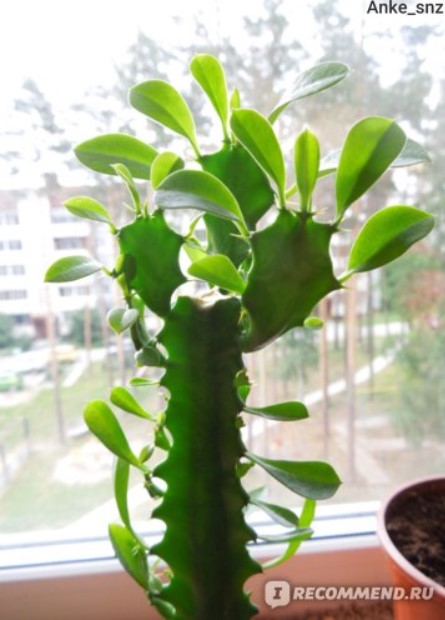
Good day!)Euphorbia is a very beautiful plant with many varieties. I grow the White-veined (White-veined) and Triangular varieties.
This houseplant is very easy to grow. It loves light, but doesn't tolerate direct midday sun, as it can cause leaf burns. Euphorbia doesn't like being moved. Its small root system means it doesn't require large pots.It blooms with unsightly stem-mounted flowers.
It propagates very easily—by self-seeding into neighboring pots. The seeds shoot out in different directions as they ripen. If you don't want to end up with seeds all over the room, remove the flowers, especially since they're not very aesthetically pleasing.
It grows very quickly, like a weed, but the crown needs to be shaped, otherwise it will stretch upward. I pinch off the top and burn it with a hot knife to prevent sap from seeping.
This is a Euphorbia triangularis. The pinched tip (it was growing with a single stem pointing upward) is clearly visible. Lateral shoots immediately began to appear, and there are many of them.
The milky sap that leaks when damaged is extremely dangerous!!! It causes burns and severe irritation when in contact with skin. It can cause severe allergic reactions.
A couple of years ago, I was in the hospital with a woman who was in the hospital with me. She was replanting a milkweed plant, broke a stem, and then scratched her eye… I don't remember the exact diagnosis, but she lost 50% of the vision in that eye.
Be careful!!!
Anke_snz
recommends
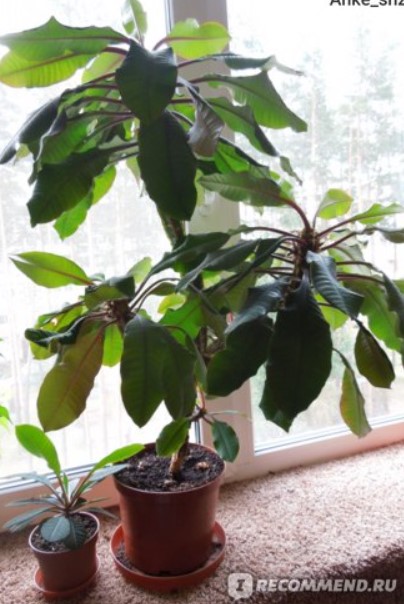
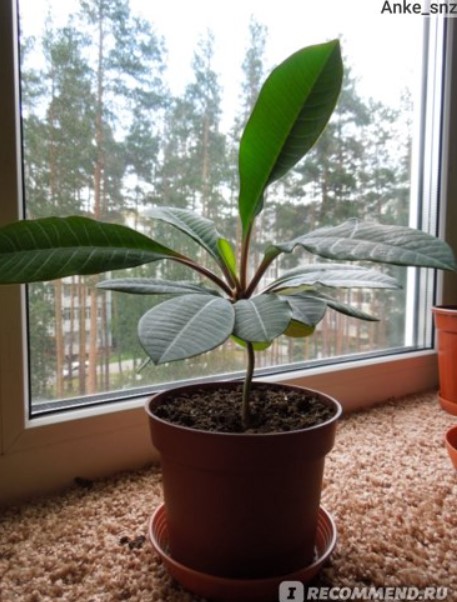
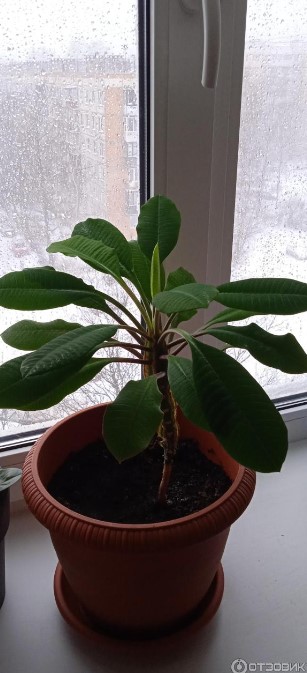
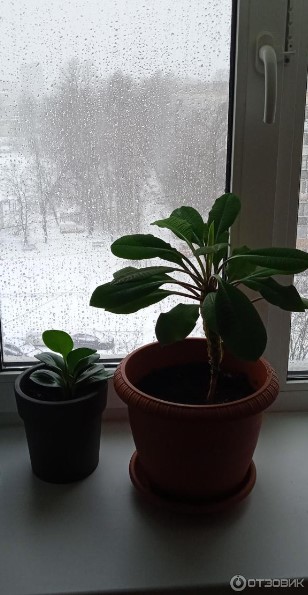
Review: Indoor plant Euphorbia cristatus - Tropics in my house.
Pros: Beautiful. Long-lasting. Easy to maintain. Purifies the air and the home's aura. Easy to propagate.
Disadvantages: Do not keep in a home with small children or pets. Euphorbia sap is poisonous. This review does not contribute to profit sharing.
Good day to all.Milkweed, or more scientifically, euphorbia. There are so many varieties that it's impossible to list them all. And they originate from various places: Africa, Madagascar, the Socotra Archipelago, and many other places. Almost all milkweeds were brought to Rus' from the tropics. This particular species seems to have originated from Madagascar, but that's not certain. It could have come from the Caribbean (the Antilles).
This plant is very interesting and unique. There's a lot of scientific and non-scientific information about it. The milky white sap of the spurge and its leaves are used medicinally. However, in the home, extreme caution should be exercised when handling spurge, and children and animals should be kept away from it.
The white sap of milkweed is poisonous. It can burn the skin. It should never be chewed or eaten. However, the plant is very beautiful and is believed to be very effective at cleansing the energy of a space. It is very powerful and resilient. I once read an article about how natives used this plant to make a psychoactive drink.
It propagates easily. It's undemanding, but prefers moderate warmth and proper watering. It has beautiful, lush green leaves. It also prefers plenty of space to grow; it doesn't do well in cramped conditions.
It's so strong that it can even choke out neighboring plants, so I especially don't recommend keeping delicate plants near it. Roses and violets are best kept away. It loves its home and its personal space and guards it.
Thank you for your attention to the review, all the best.
Time of use: Several years
Year of manufacture/purchase 2019
The general impression is that I have the tropics in my house.
My rating
5
I recommend it to friends YES