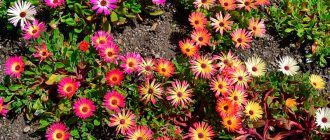
Aptenia is an evergreen succulent plant in the Aizoaceae family. It is native to Africa and southern America. The plant is often called mesembryanthemum, meaning "flower that opens at midday."
Appearance and features of Aptenia
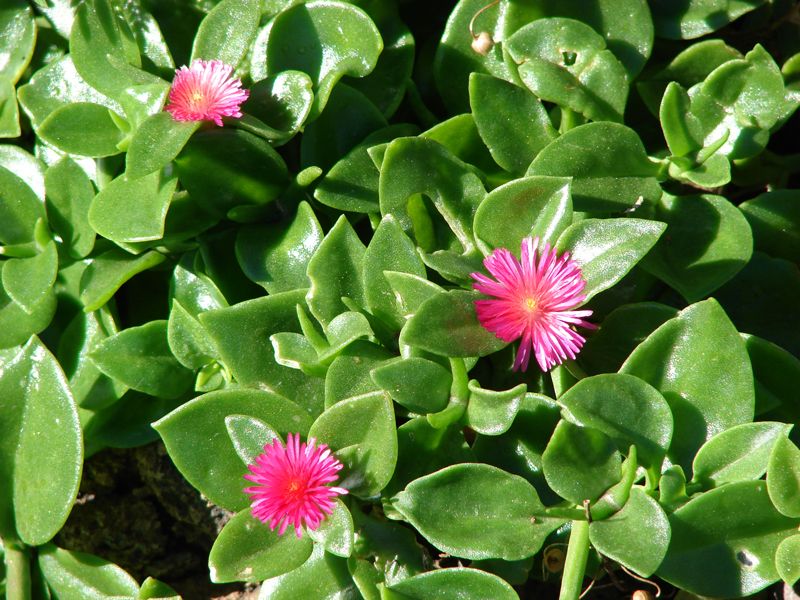
It is classified as a creeping variety, with fleshy shoots. The foliage is succulent and oval in shape. The flowers are small and richly purple; as they grow, they are replaced by fruits in the form of multi-chambered capsules. Each capsule contains a single dark seed with a rough shell.
The succulent received its name precisely because of the structure of its fruits, since aptenia is translated from Greek as “wingless”.
Popular types of Aptenia
Only the following types of Aptenia are suitable for growing indoors:
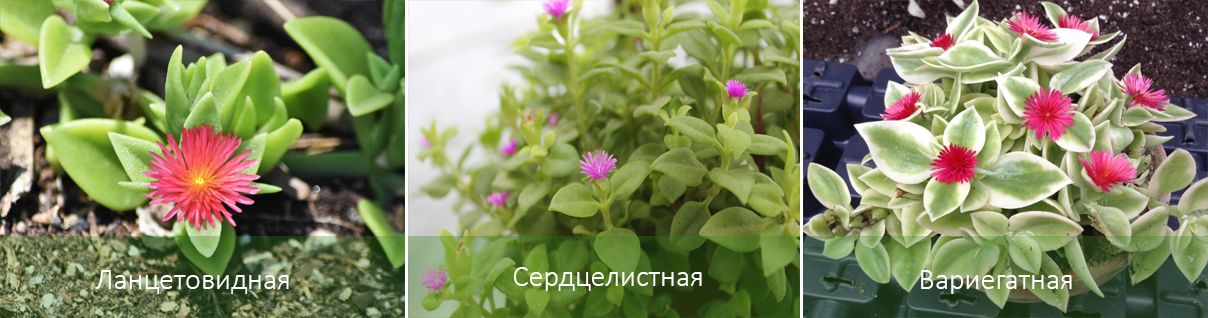
- Lanceolate. The foliage is lanceolate, rough to the touch, and dark green. The shoots reach 70-80 cm in length. The flowers are purple or red and multi-petaled. Bright light is required for the plant to fully bloom.
- Heart-leaved. The foliage is fleshy and arranged oppositely on the stems. The flowers are small, and come in red, lilac, and crimson.
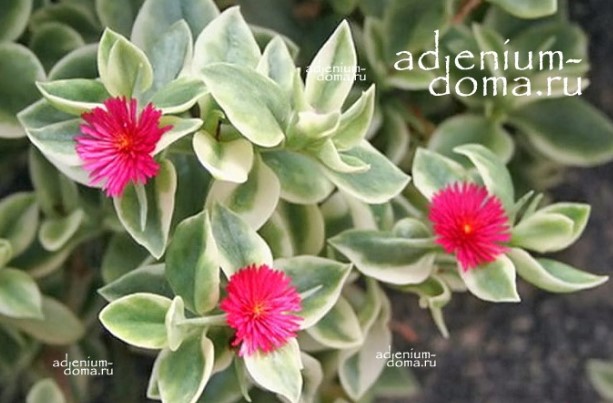
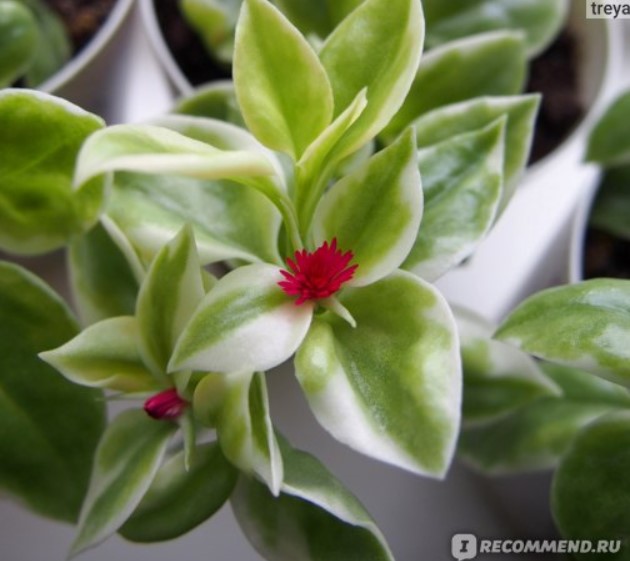
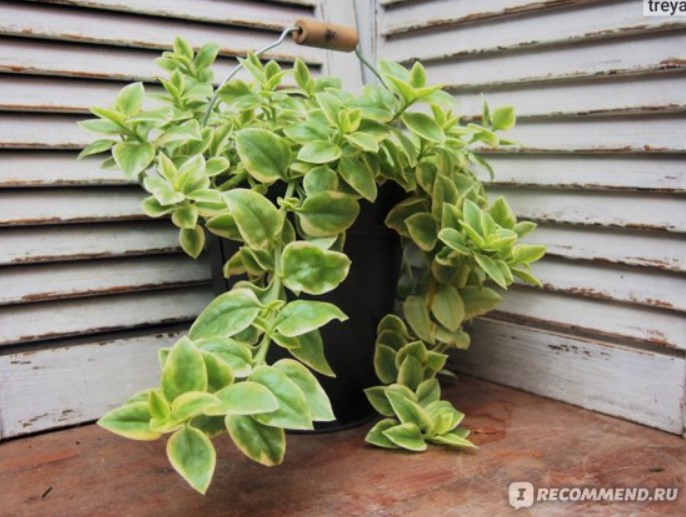
- Variegated. It has shortened shoots and small flowers. The leaves are light green with dark, randomly arranged speckles. This species is highly prized by gardeners and is considered a biological chimera. Compared to other varieties, it requires much more care.
Planting, soil
Aptenia is suitable for both outdoor and indoor cultivation, using regular pots or hanging baskets. In winter, the plant can be brought indoors for warmer weather.
Mesembryanthemums are planted in a substrate made of equal parts turf and fine sand. Commercial soil suitable for succulents can also be used.
Caring for Aptenia at Home
When caring for a flower at home, you should pay attention to the season of the year:
| Parameter | Spring – summer | Autumn – Winter |
| Lighting | Bright, aptenia is transferred to fresh air, where it feels good under direct sunlight. | Bright, requires additional lighting at night. |
| Temperature | +22…+25 °C. | +8…+10 °C. |
| Humidity | Place in a room with dry air. | Place in a room away from heating devices, humidity – 50%. |
| Watering | Moderate, only after the top layer of soil has dried out. | Once a month. The main thing is to prevent the foliage from wilting. |
| Top dressing | Once every 4 weeks. Use a complex fertilizer made for succulents. | They stop. |
Trimming
The plant tolerates formative pruning without problems. It's recommended to do this in the fall, so that the aptenia will bloom on time.
If the plant has become somewhat bare over the winter, prune it no later than February. The remaining shoots can be used for future propagation.
Features of transplantation
The root system of aptenia grows quickly, so each spring season the flower is moved to a larger container.
A drainage layer consisting of small pebbles and expanded clay must be placed at the bottom of the pot.
Then, carefully remove the plant from the old pot and place it in the center of the new one, adding the previously selected soil mixture. The first watering after repotting should be done only after 3-5 days. Water carefully to avoid causing root rot.
Methods of reproduction
Aptenia is propagated by cuttings and seeds. Seeds are placed in a common container in sandy soil at a depth of about 1 cm. Leave 3-4 cm between seedlings.
After sowing, moisten the soil with a spray bottle, then cover the container with a transparent lid. The seeds are kept at a temperature of 21 to 25°C and aired daily. Seedlings will emerge within 14 days, after which they are provided with bright light and an air temperature of around 21°C. After a month, the plants are transplanted and transplanted into separate containers.
For cuttings, use apical or leaf shoots. Rooting is done in succulent soil mixed with sand. The rooting process is accelerated by soaking the cuttings in a heteroauxin solution for 24 hours.
Pests, diseases, and difficulties in caring for Aptenia
The plant is considered disease and pest resistant, with the exception of root or trunk rot caused by frequent watering. Spider mites and mealybugs may occasionally appear. However, certain difficulties arise when caring for aptenia:
| Manifestation | Reasons | Elimination |
| Fall of leaves. | High winter temperatures, over- or under-watering. | Move the aptenia to a cool location. Water only after the top layer of soil has dried out, but do not allow it to go without water for long periods. |
| Lack of flowering. | Poor lighting, warm wintering, late pruning. | Place in the brightest room of the house. Pruning is done before active growth begins. |
| Root system rot. | Overwatering, poor drainage. | Repot into a new container and ensure good drainage. Adjust the frequency of watering. |
If you follow all the rules for caring for Aptenia, the flower will become a decoration of any room.
Reviews and tips for growing Aptenia
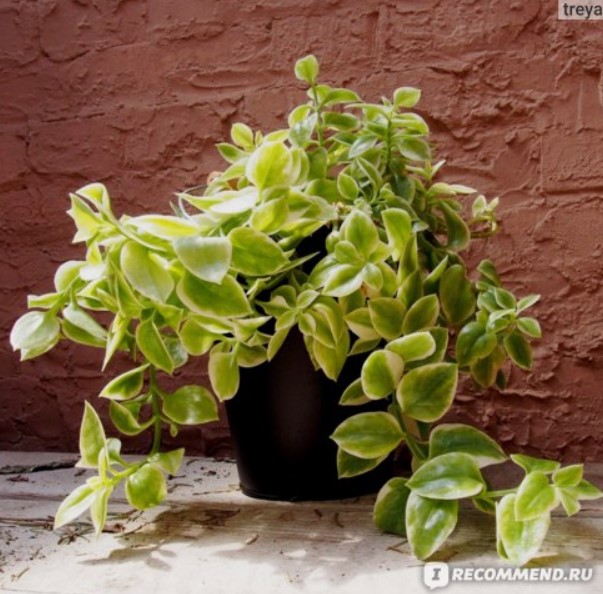
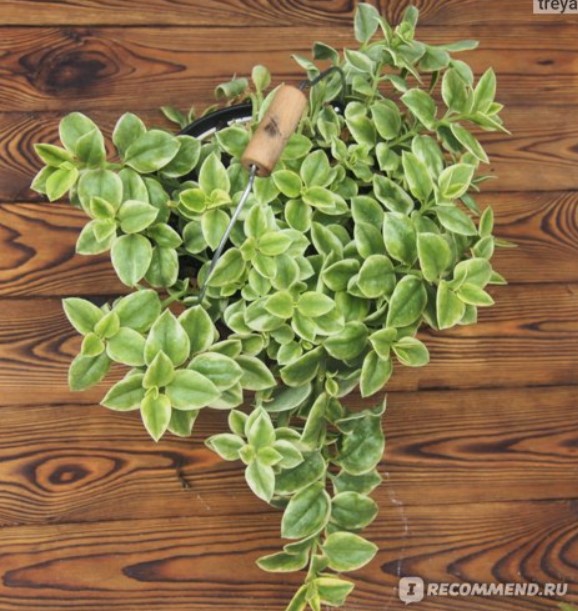
And I have a variegated one! A beautiful, trailing, trouble-free plant for the home, office, and balcony.
For about two months, I had an Aptenia growing in my garden as a stranger. I picked up a trampled branch from the street and stuck it in a pot, and it just grew. But I didn't know who it was. I spent a long time scouring the internet until I figured out its name and what it liked.Thanks to the Kuban climate, my aptenia is more of a trailing garden plant than a houseplant. It goes outdoors in May and returns home at the end of October. It's an unpretentious, resilient, and difficult-to-kill plant with a beautiful crown of branches hanging from its pot.
What does the variegated Aptenia cordifolia like?
1. Diffused sun. Lots and lots. Direct sun at 30-40°C (96-104°F) is scorching hot, so here in Kuban, it's best to plant in partial shade, somewhere sunny after 3:00 PM.
2. Water infrequently, as the soil dries out.
3. Mineral fertilizers. I use "Zdraven" from Fixprice in small doses and regular ash. Rarely.
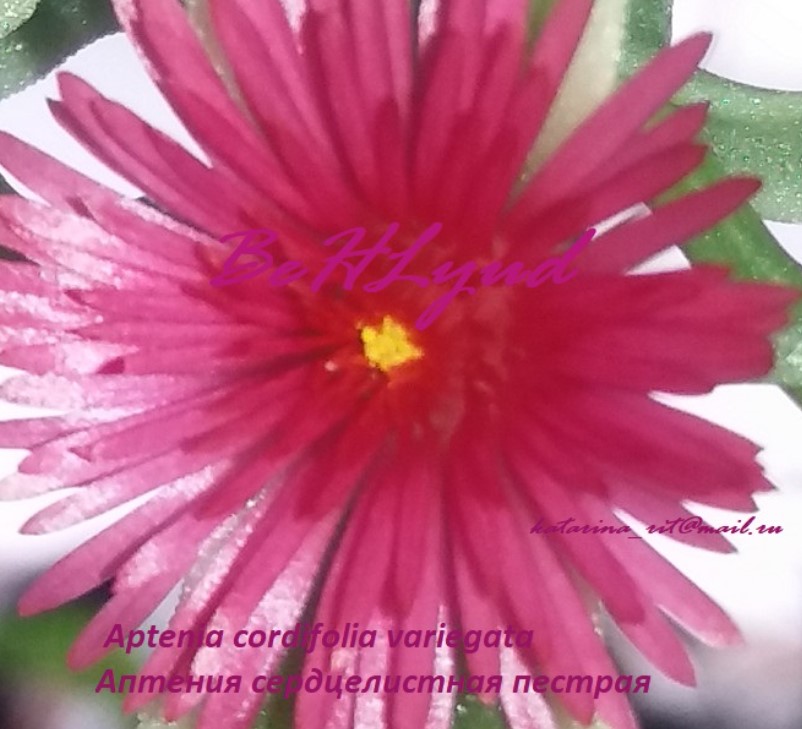
4. A temperature drop of 10-15 degrees, after which it blooms with modest star-shaped flowers. I saw lilac ones here in my feed. Mine are dark pink.
5. Pruning twice a year. I prune aptenia in the spring and fall, before returning it indoors.
What he doesn't like
It doesn't like to be over-loved: overwatered, over-fertilized, especially with nitrogen fertilizers, grown in too warm a location, in too large a pot, or in too fertile soil. In all these cases, it sheds its leaves closer to the root—they simply dry out. And the beautiful flower turns into a tangle of bare stems with leafy tips.
She is an ascetic, this Aptenia.
How it grows and reproduces
From May to October, the shoots grow by 10-12 cm. Many new stems emerge from the root. If you trim or pinch off the tips of the branches, it will produce side shoots, resulting in a lush plant.
Propagation is by cuttings and leaves. Cuttings are faster, leaves are slower. There's no need to put it under a jar or bag—it'll take root just fine. The main thing is not to overwater during the rooting period, otherwise it will rot.
Safe for children and animals. It's not edible, but if you put it in your mouth, chew it, and swallow it, there won't be any negative effects.
The minimum temperature Aptenia can tolerate is +8-10°C. Right now, at the end of November, it's standing on my veranda, where it's exactly +8°C. It's vibrant. It can easily handle +40°C in summer, as long as you don't expose it to the midday sun.
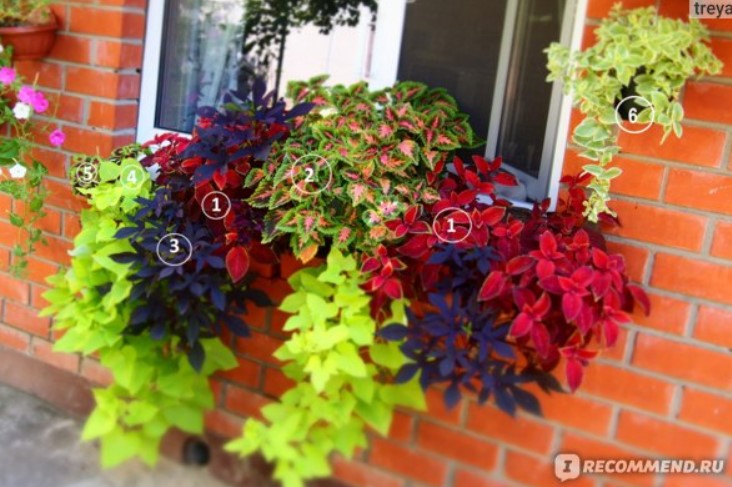
Verdict: A wonderful plant for southern regions. It's perfect both as a balcony decoration and as a windowsill pet. Number 6 in the last photo is this one, 1.5 years old, in mid-July.
I also grow coleus, begonias, sweet potatoes and build hanging gardens from moss balls.
Advantages
Very unpretentious
Flaws
Growing slowly
Treya
recommends
Aptenia. Who has it? How do you care for it?
Who has or had an Aptenia flower??
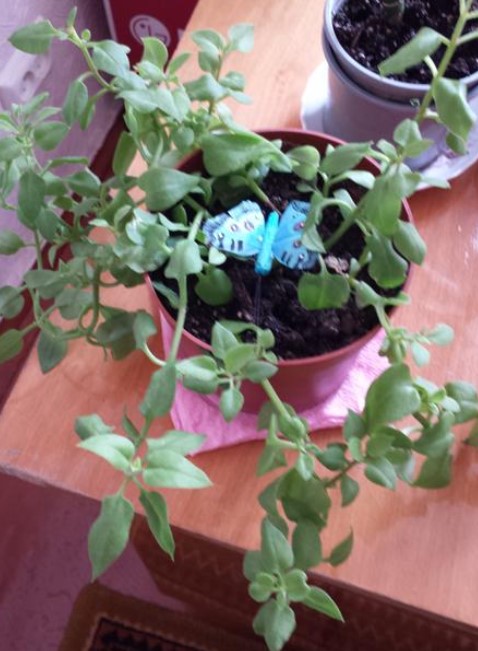
I take care of it like this: I water it about twice a week with tap water. It sits in a bottle for about 1-2 days, without overwatering it. Then I pour a little into the tray so the plant can get as much water as it needs. I spray it every other day with a spray bottle. I've had it for about 3 weeks, and I really want it to live. They say it's not picky and can survive even in the most difficult conditions. Question: should I buy some kind of fertilizer for it or should I avoid it for now? When should I repot it? How do you care for it? How long does it last for you? I'll attach a photo of mine.
Katarina, March 1, 2018
I have had an aptenia for many years now and I fell in love with this flower at first sight.
I was captivated by the flowers, and the plant itself is very pleasant and grateful.
It was growing in a pot, but after reading online that all the flower beds in Turkey are planted, I started planting it in open ground, where it blooms and grows beautifully.
During the winter, flowers also appear, but I arrange a dormant period for all plants during the cold season.
First of all, this is a reduction in watering.
I mow the potted aptenia like a lawn, cutting it short to the height I like.
But the most important thing is that after it disappeared on the street, the next year it sprouted on its own, and I realized that I can collect seeds from which it sprouts easily.
It is very good for renewing with cuttings, it grows easily.
There's also a variegated one. The flower is more burgundy and larger, but I prefer the smaller one.
~I never spray, but if there is not enough light and sun, it loses its decorative properties.
It is not at all picky about soil and can tolerate any type, with careful watering during the dormant period.
It is necessary to reduce watering as much as possible and trim it.
It grows in poor soils, so fertilize only during the growing season, with a minimal amount of fertilizer, so that the flowers do not bloom into the leaves.Higher mind
Aptenia is a succulent, so it's natural for it to store moisture in its leaves. However, your watering regimen ("...I water about twice a week with tap water, let it sit in the bottle for about 1-2 days, don't overwater, then pour a little into the tray to allow the plant to absorb the required amount of water, and mist every other day with a spray bottle...") is debilitating the plant—it's already lost its leaf turgor, and the dullness of the leaves is also due to overwatering.
Starting in the fall, I had to switch to less and less frequent watering, so that by November I was watering every 10 to 14 days. If the heating was on until it was too hot in the room, I'd water more often; if it was moderately warm, I'd water less often.
Even on hot summer days, once a week is enough - generously.
It is highly undesirable to pour water into the tray and also spray it.
It looks like the pot doesn't have any rooting agents—perlite or vermiculite and sand (you can add some on top). But I'd repot it after checking the root condition. Then, use the ingredients mentioned above (+ cactus and succulent soil + leaf mold +...) to create a loose mixture.
At the bottom there are drain holes and drainage.
I don’t recommend fertilizing until the plant is completely healthy (firm, bright green leaves are an indicator).
Hello! Has anyone grown Aptenia CORDIFOLIA 'VARIEGATA' (Aptenia)? I got 0% germination from 6 seeds, even though I know for sure it's a hardy plant; I brought a seedling from Turkey. The website says it's incredibly simple, but alas.
Now I'm wondering whether it's worth ordering and trying again.
Tatyana Knyazeva
Alina, the delivery was recent, so they shouldn't lose germination. When something doesn't work for me, but I really want it, I order several packets again, just to be sure, especially since your prices are reasonable. So, something didn't work for the seeds, or maybe I should wait and see if they germinate?!