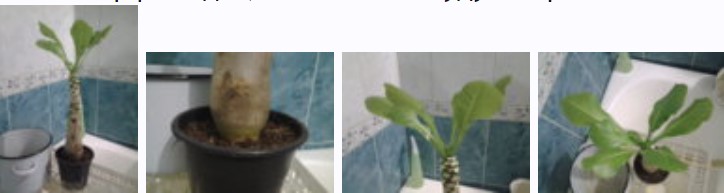
Brighamia is a member of the Campanulaceae family and is native to Hawaii. The plant is over 1,000,000 years old, but has only recently been cultivated indoors.
Description of the Brigham
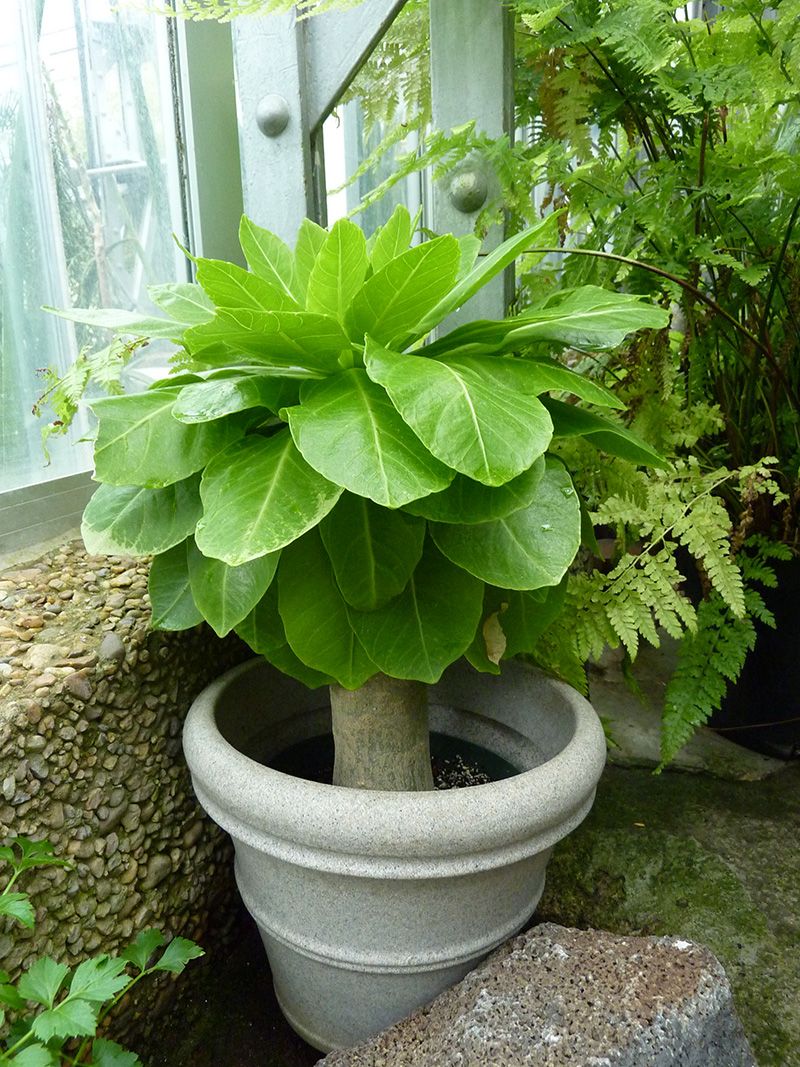
Brighamia, or Hawaiian palm, is a stem succulent. The stem is thick at the roots, tapering toward the top. The bark is light green, turning gray over time. The leaves and trunk are smooth.
Houseplants rarely exceed 1 m in height. Greenery grows only at the top, so the trees visually resemble palm trees.
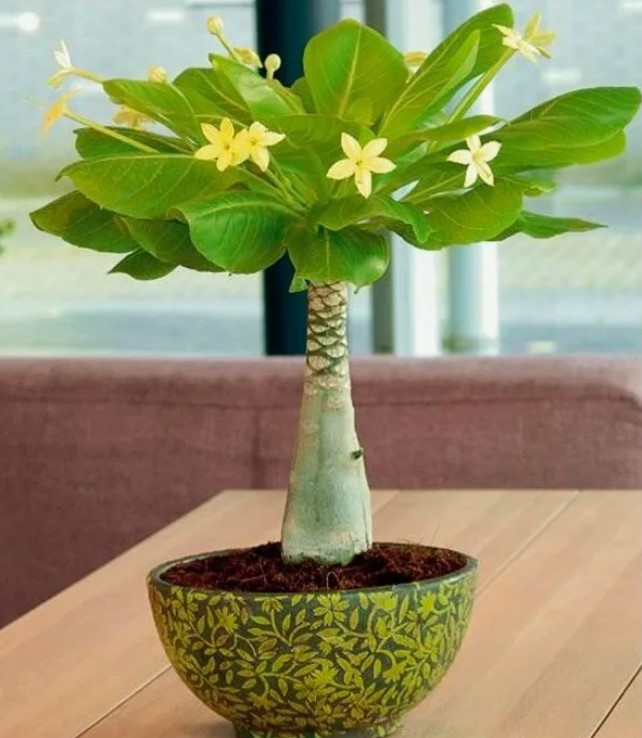
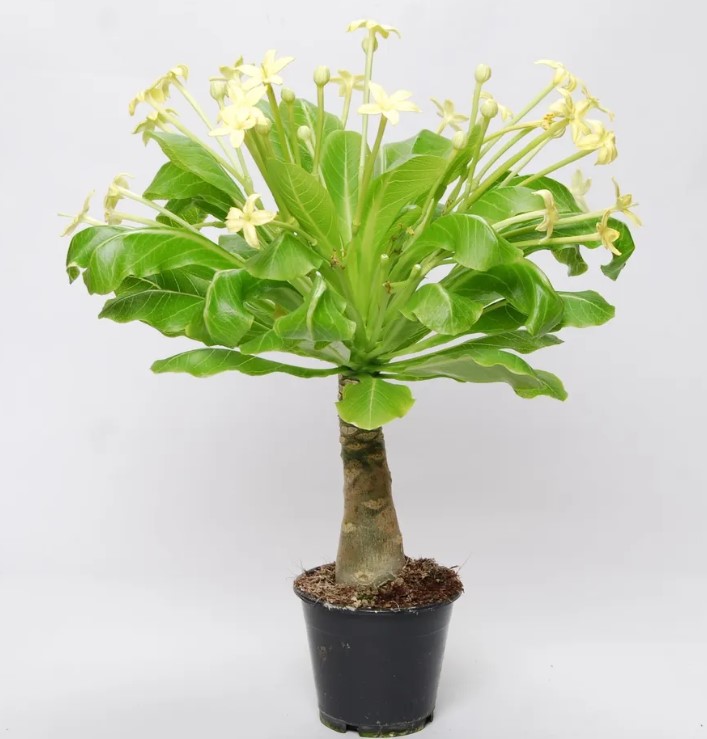
The leaves are light green, ovate or rounded. Brighamia blooms in early autumn every 2-4 years in good light. The bell-shaped flowers come in white, yellow, or beige. In their place, fruits appear—elongated capsules containing several seeds.
Types of Brighamia
Popular varieties:
| Name | Trunk | Leaves | Flowers |
|
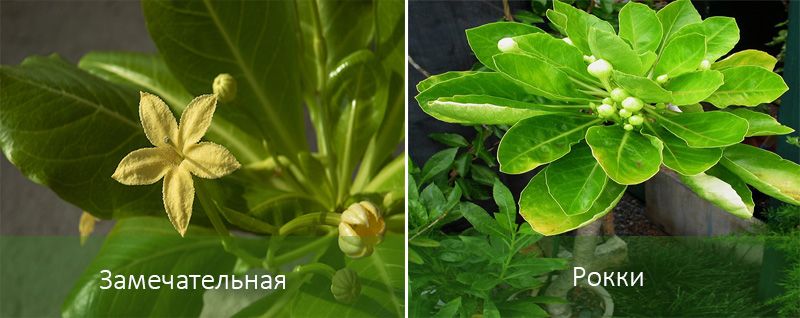
Wonderful (Magnificent) (Brighamia insignis)
|
Caudex is absent. | Bright or dark green, spoon-shaped, gathered in a rosette, wider at the top than at the base. | Yellow, beige. |
| Rocky (Brighamia rocki)
|
The expansion at the base is present, unlike in Brighamia remarkable. | Green, reminiscent of cabbage. | Snow-white. |
Caring for Brighamia at Home
Breeders have adapted the brigamia to apartment living. Here's how to care for it at home, seasonally:
| Factor | Spring/summer | Autumn/Winter |
| Location/lighting | South-facing window. It's recommended to place the plant on a loggia, terrace, or outside. Protect it from rain and wind. Mature plants love direct sunlight, young ones need shade. |
Remove from cold windowsill.
Additional illumination with fluorescent, LED, and phytolamps. |
| Temperature | +25…+27 °C. | Not below +15 °C. |
| Humidity | Daily spraying, preferably from a spray bottle. | |
| Watering | Once a week. | Once a month. |
| Top dressing | Fertilizer for cacti and succulents, every 4-5 weeks. | |
Transplantation and soil
The soil should be well-drained to prevent root rot. A slightly or neutrally acidic soil can be purchased at the store and mixed with sand in equal parts.
Repot mature plants in the spring every 2-3 years. Repot young plants once every 12 months. Use a wide but shallow pot, as the root system is shallow. Place expanded clay drainage material on the bottom.
Reproduction
Brighamia is bred:
- seeds;
- shoots.
The second method involves cutting the bark at the top of the stem; a branch will soon grow in this spot. Plant it in the ground. Propagation by seed is preferable, which explains the plant's rarity.
Diseases and pests, difficulties in caring for brighamia
Spider mites, aphids, and whiteflies can infest the tree. If infested, treat the tree with insecticides (Aktara, Confidor, Actellic, etc.).
When caring for the plant, difficulties arise:
- it sheds buds when moved during flowering;
- does not bloom, dries up if daylight hours are not extended to 12 hours in autumn;
- turns yellow and loses leaves due to excessive watering, poor lighting, lack of protection from drafts, rain, and wind.
The listed problems are eliminated by adjusting the content.
Reviews of Brigamia from gardeners
And this is my Brighamia, I bought it at the All-Russian Exhibition Centre in the Floriculture pavilion.
She's still small, but I hope I can grow her big.
I think it's easier to buy a ready-made plant, especially since it's not that expensive.
Brighamia is great because it grows very quickly. The leaves are noticeably larger every day. Therefore, under favorable conditions, a large specimen can be quickly grown. If the growing point is accidentally or intentionally damaged, the Brighamia will quickly sprout new shoots, giving it a slightly different, yet equally impressive, appearance (in my opinion).
Personally, I know of only 3 places in Moscow where it can be found in 1-2 copies, and even then not always. There was a period when it disappeared.
The plant is obviously imported, from Holland or somewhere else.
I bought another Brighamia in the fall, so I had two Brighamias of the same size over the winter. One almost died. The top of the trunk started to rot, so I had to cut it off. The second one dropped all its leaves, but now it seems to be doing well, new ones have grown, but I can't call the plant strong, I don't know what's wrong.
She was not standing on the windowsill, but opposite the window, on the refrigerator, next to the TV, where it was light, warm, and humid. On the other side of the TV there was another one, and she was fine.
If they had stood on the window, they definitely wouldn’t have survived; they don’t like the cold.
I blame it on the fact that I washed it in the shower once, maybe it didn't like it. It was winter, but the house was warm. Overall, it's a capricious plant.
But I read on another forum that it can start to rot on its own - I don’t understand how that can happen.
However, one of my brigamia died, the one that was cut off, it’s a pity.
The second one seems okay, it's growing, but the leaves are a bit small, and the main thing that's disappointing is that the stem at the top is really skinny. I repotted it recently, I'll see how it grows.Mine didn’t survive the winter, it died… it’s a shame.
And now I’m looking and thinking, should I buy more?
I've already lost three Brighamia plants. They grow well in spring, summer, and fall, with lots of new leaves, but in winter they're really bad, dying by the end of winter, losing their leaves, becoming soft, and rotting. I can't figure out what's going on.
It seems I don’t fill it up and I don’t put it in the cold.
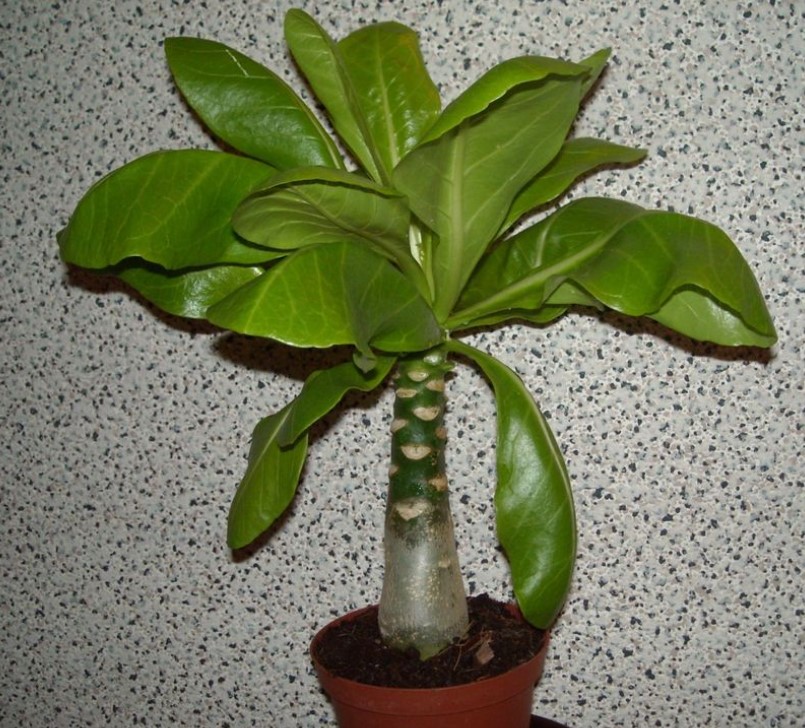

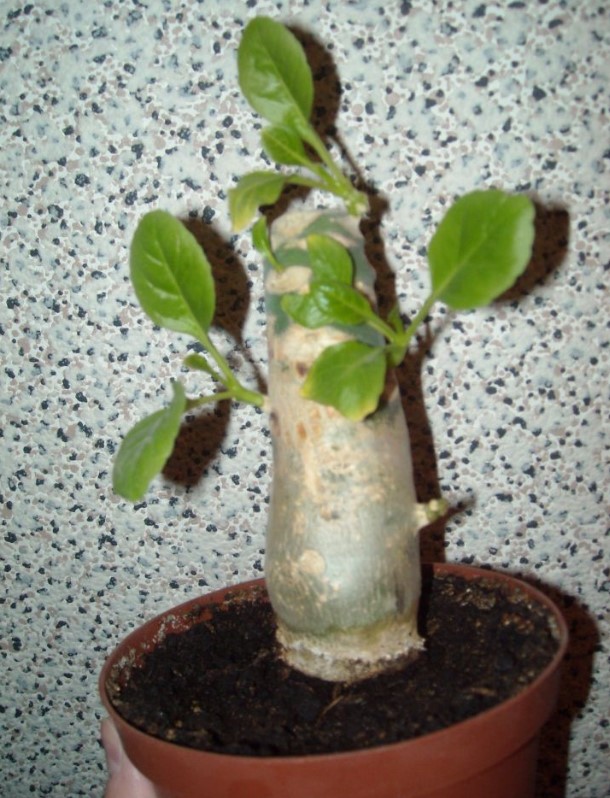
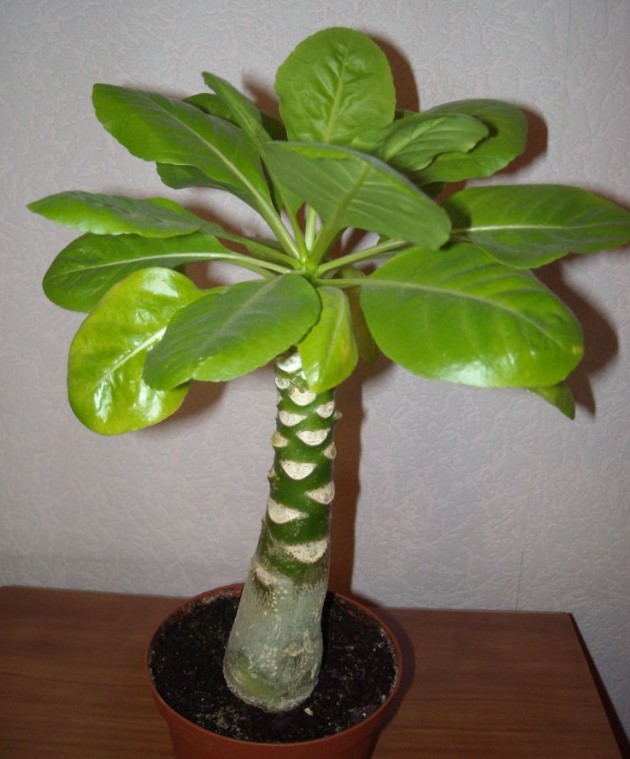
I've been afraid of mites for as long as she's been with me. I took her out in the winter and put her on a shelf with adeniums, and she even infected the adeniums. But at least she's gotten fluffy herself.
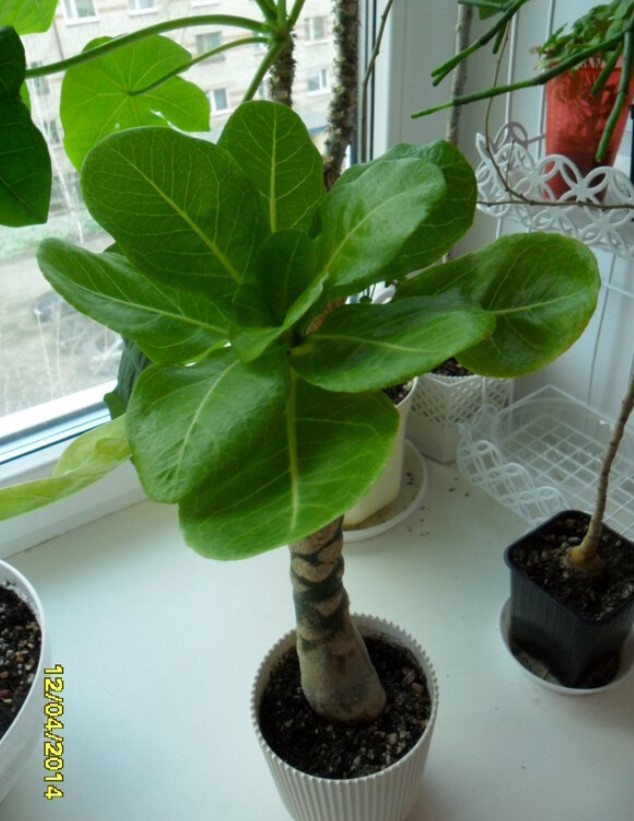
Does anyone still have living Brighamia? How long does it take for them to adapt to a new home after being taken to the store?
Mine is in "transport" peat, but I'm not repotting it. I want to give it time to adapt, and I won't water it while it's in the peat. I've just set up a "sauna" for it with steam:
The leaves started falling back in the store, but new ones are already sprouting. I chose the one with the driest soil and the thickest, firmest trunk, not by its leaves.
Less than two days later, the leaf turned yellow. So, to hell with the peat, it'll adapt later. I shook it out of the pot and discovered two rotten roots (I should chop off the hands of those who overwater plants in stores :stop::(:confused: and it's a shame there's no angry smiley face on the website).
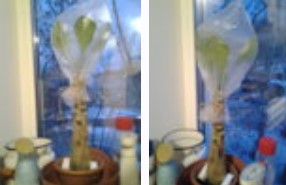
I repotted the plant in dry succulent soil, mixed with charcoal, cinnamon, and phytosporin. I placed a piece of foam under the base of the trunk to prevent rot, and foam "crutches" on the outside to keep it from falling over. I sprayed the tops with Fitoverm (I could tell the spider mites were very fond of them even in the store), put a bag over the plant's head, and quarantined it.
They say it is a very capricious and difficult plant - it rots even with very little watering.
After replanting the brigamia, I dried out all the large leaves, leaving only the 4 central leaves.
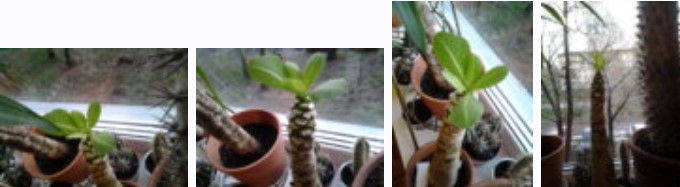
The first watering, sparingly from a tray, took place on April 7, and today signs of growth appeared: 4 leaves have grown noticeably and 2 new ones have appeared:
All the remaining Brigamia from the same batch at OBI were finally filled and marked down. So I bought them just in time and replanted them just in time. Now I'm afraid I won't be able to fill them myself.
The polystyrene foam is holding the trunk. I remove it periodically, but I'm afraid to take it down completely yet—it's not well-rooted yet. It was already tumbling out of its pot when it was living in quarantine in the kitchen. Charcoal supports aren't suitable here—if they damage the trunk, it could rot.