Primrose (Primula) is a genus of perennial herbaceous flowering plants in the Primulaceae family. It is native to temperate climates in Europe, Asia, North America, and China, and prefers moist soil near water.
The name translates from Latin as "first," or "primrose." This is no coincidence, as it is one of the first to bloom and is considered a harbinger of spring.
Description of primrose
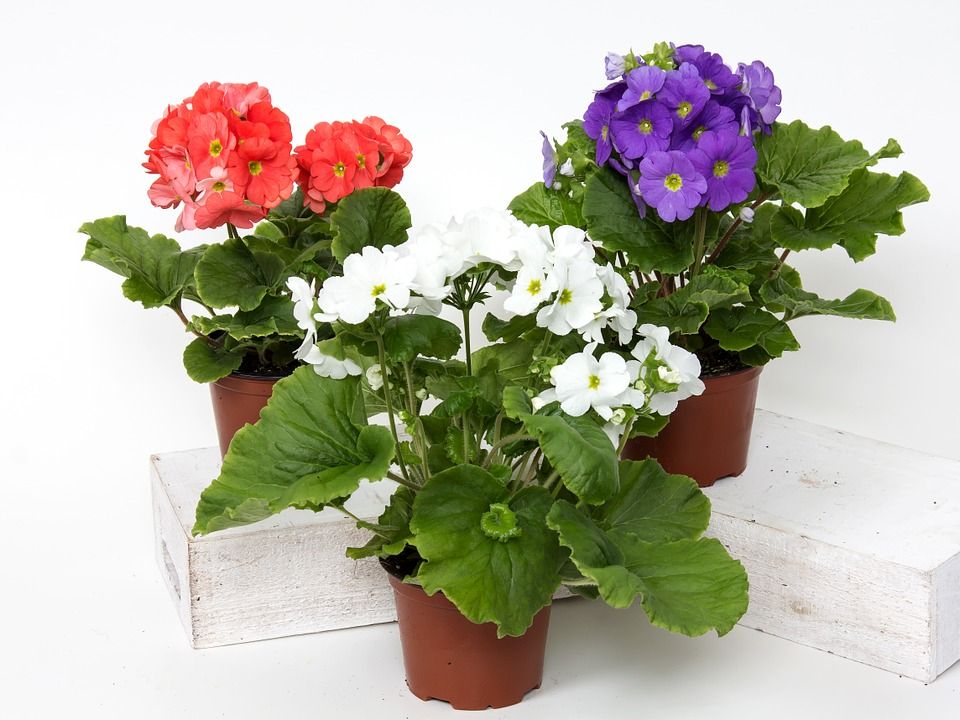
It grows from 10 to 25 cm. The leaves are dark green, rounded, wrinkled, and hairy, gathered in a basal rosette. The flowers are regular, five-petaled, and come in various shades, and are borne on a small peduncle. Depending on the species, they are solitary or clustered.
Types of primrose for home cultivation
Primrose varieties are divided into garden and indoor varieties. Although the former can be grown indoors.
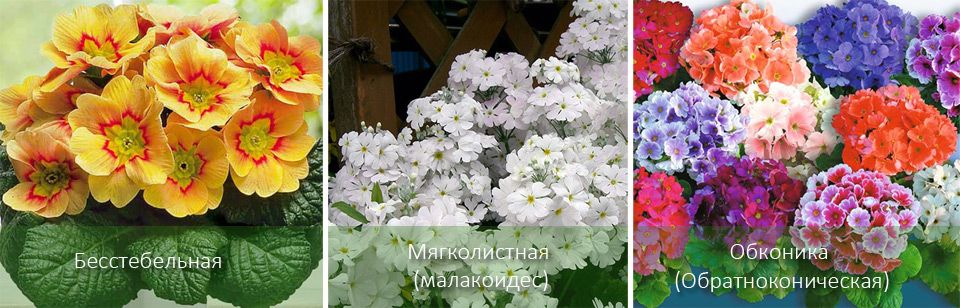
The following varieties are popular for keeping on a windowsill:
| Variety | Description | Leaves |
Flowers Inflorescence The period of their blooming |
| Obconica (Inverse conical) | Height - 20 cm. May cause allergies when touching parts of the plant. |
Elliptical with a serrated, sinuous edge. |
Lavender, blue, red, salmon, purple, pink (7 cm). Pleasantly scented. Umbrella. All year round (with good care). |
|
Soft-leaved (malacoides) |
Grows up to 30 cm. | Elongated, light green, jagged edges, heart-shaped base. |
White, purple, blue, scarlet, pink, two-color double (4 cm). Paniculate. February-March, lasts 3-5 months. |
| Stemless | Does not exceed 20 cm. | Long emerald leaves with a bright vein down the middle. The surface is wrinkled. |
Pale yellow, but other shades are possible, single (2-4 cm). April - July. |
Caring for indoor primrose at home
If you care for the plant properly, you can get it to bloom all year round.
| Parameter | Conditions | |
| During flowering | After flowering | |
| Location/lighting | West or northwest window. | Cool location. Does not tolerate direct sun; shade. |
| Keep in a cool room, but without drafts. | ||
| Temperature | +12…+15 °C. At higher temperatures, the buds fall off. | +15…+18 °C. |
| Watering | Moisten slightly. | When the top layer dries. |
| Use soft water at room temperature. Avoid overwatering. Apply water from below or along the edges, avoiding contact with the foliage. | ||
| Humidity | 60-70%. Do not spray, place in a tray with wet expanded clay, moisten the area around the flower. | |
| Top dressing | 1 time every 2 weeks with complex mineral fertilizers for flowering plants (0.5 dose). | No need. |
| Soil | Peat, leaf, turf, sand in equal proportions. | |
Transfer
Primrose is replanted every year in the fall (October) to stimulate flowering.
Mature plant - in 2-3 years.
- Choose a wide, shallow pot, no more than 1.5 cm larger than the previous one.
- Drainage (pebbles, broken ceramics) must be placed on the bottom.
- The process is carried out carefully using the transshipment method to avoid damaging the root system.
- The socket is not deepened, it is left on the surface.
Reproduction
New plants are obtained by seed and by dividing the bush.
Seeds
Sowing of planting material is carried out in July:
- Take a wide, shallow container and fill it with peat and sand in equal quantities.
- They are distributed on the surface without deepening and lightly sprinkled with substrate.
- Cover with glass or film.
- Maintain a temperature of +16…+18 °C. Moisten periodically.
- After the seedlings have emerged and are sufficiently rooted (1.5 months), they are planted.
Dividing the bush
When replanting a primrose that is more than 3 years old in the fall, the following manipulations are carried out:
- Clean the roots by carefully shaking off the soil.
- Young shoots with a growth point are separated from the root system.
- The mother plant is planted in a prepared pot, and the babies are placed in wet sand and covered with film.
- When rosettes appear, they are planted in separate containers.
Diseases and pests of primrose
If care is improper, such as improper lighting, sudden temperature changes, or too much or too little moisture, your beautiful houseplant can become ill. It's important to notice and take action promptly.
| External manifestations on leaves and other parts of the plant | Cause | Methods of elimination |
| Yellowing. |
|
|
| Flower fall. |
|
Comply with the conditions of detention. |
| Gray coating. Softening, becoming moist. |
|
|
|
Cobwebs. Paleness, yellowing and drying out. |
Spider mite. |
|
| The appearance of stickiness. Curling, yellowing. | Aphid. |
|
Top.tomathouse.com recommends: Primrose helps with vitamin deficiency
Primrose is valued not only for its beauty but also for its medicinal properties. Its leaves contain large amounts of ascorbic acid and carotene. The roots contain glycosides, saponins, and essential oils. It can replenish vitamin deficiencies in the spring. The leaves are used in salads, soups, and main courses. They are also used to treat wounds and cuts.
Other properties of primrose:
- pain reliever (rheumatism, migraine, headaches);
- diuretic (bladder, kidneys);
- expectorant (bronchitis, laryngitis, pneumonia, whooping cough);
- sedative (insomnia, neurosis).
An infusion of primrose leaves and flowers is a drink of vigor and health.