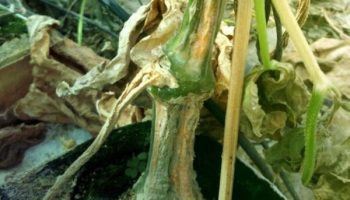
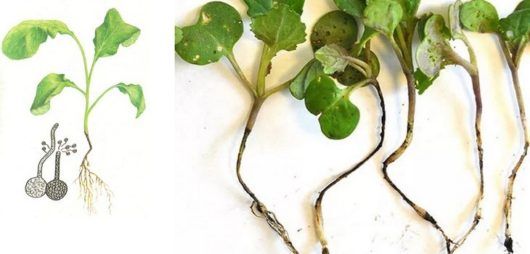
Seedlings of almost all vegetable crops are susceptible to blackening of the stem. This disease is called root collar rot and often leads to the death of the seedling.
Causes of occurrence
As the name suggests, rot causes the stem of a seedling to turn black. This can be caused by a number of factors:
- Soil contamination or insufficient disinfection.
- Exposing plantings to drafts and temperature changes.
- Frequent abundant watering.
- Overheating and high humidity.
- Dense planting.
- Insufficient oxygen supply.
If the conditions for caring for and planting seeds were not met, there is a high probability of mold developing in the top layer of soil, which affects healthy plant tissue and leads to the destruction of the stem.
Prevention of the occurrence of the disease
Proper seed preparation and planting will help prevent seedlings from turning black.
When purchasing seeds, pay attention to the variety's resistance to this disease. If they have been factory-treated, the manufacturer will indicate this on the packaging. If the seeds were purchased privately or received from good neighbors, be sure to soak them in a disinfectant solution for half an hour before planting, such as a weak solution of potassium permanganate or Fitosporin.
The soil also needs to be treated before use. Small amounts of soil can be baked in the oven. Larger amounts can be treated with a concentrated solution of potassium permanganate, a special preparation, or simply boiling water. Planting should be done no earlier than two days later to avoid damaging the seeds. After planting, the soil can be sprinkled with disinfected coarse sand. An effective solution for preventing rot is sowing seeds in peat pellets.
Methods of combating rot
If seedlings are nevertheless affected by this nasty fungus, the blackened seedlings should be immediately removed from the soil, and the remaining seedlings should be sprayed with a solution of Fitosporin. The soil should also be watered with this solution. If Fitosporin is unavailable, a solution of potassium permanganate can be used. The soil should then be sprinkled with a mixture of ash and copper sulfate.
If the seedlings are heavily infested, they should be destroyed along with the soil. Healthy plants should be replanted in disinfected soil, treated with a fungicide solution, and placed in a warm location, protected from direct sunlight. After a week, if the disease has no longer manifested itself, the seedlings can be moved to a location with cooler temperatures.
Folk remedies
Opponents of commercial pest control products suggest traditional methods for preventing rot. Instead of treating the soil with specialized solutions, place the soil in a heat-resistant container, scald it with boiling water, cover with a lid or foil, and bake in a hot oven for half an hour. Lightly dust the soil surface with charcoal powder or ash. After planting, water the soil with a baking soda solution (one teaspoon per 200 ml of water).