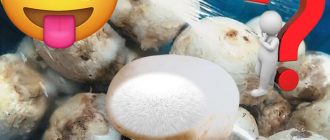
Today, most mushrooms from the genus Lactarius are called milk mushrooms.
They are indispensable for pickling, which reveals their unique flavor and aroma. This article will tell you where to find them, how to distinguish them, and how to prepare them.
And also, how not to confuse edible with inedible.
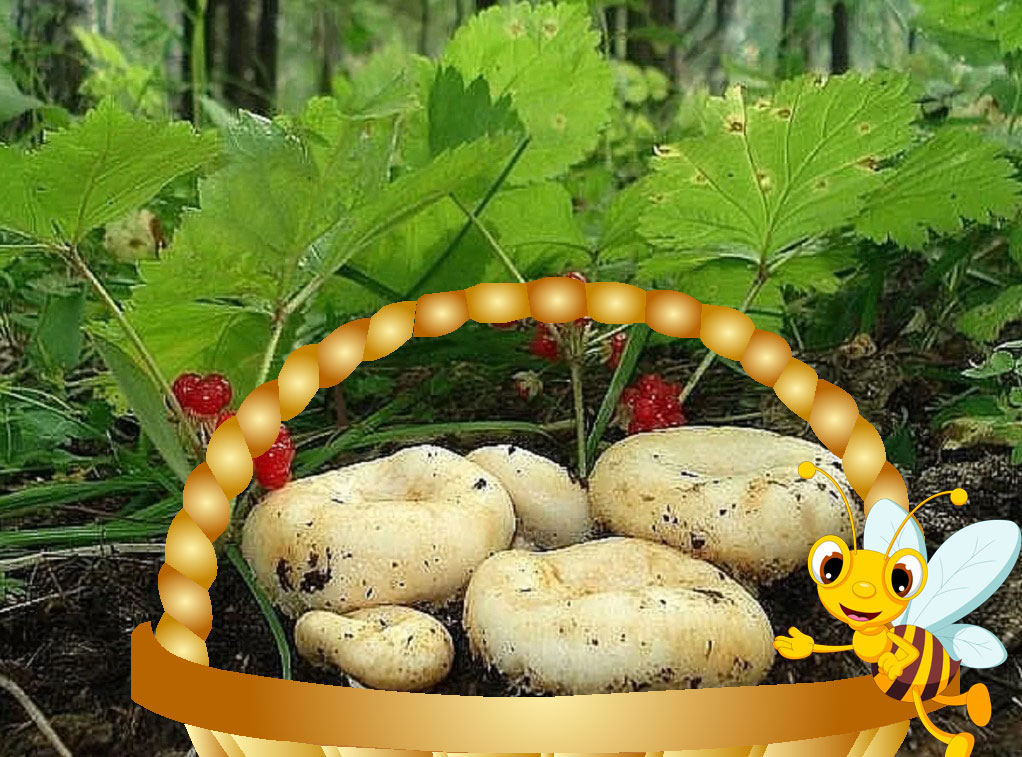
Content
- 1 The history of the milk mushroom
- 2 What do milk mushrooms look like?
- 3 In which forests do milk mushrooms grow, including in the Moscow region?
- 4 Milk mushroom picking season
- 5 Types of milk mushrooms
- 5.1 12 edible types of milk mushrooms with photos and descriptions in tables
- 5.1.1 Marsh milk cap (Lactarius sphagneti)
- 5.1.2 Photo gallery of the marsh milk cap
- 5.1.3 Milk mushroom (Lactarius deliciosus)
- 5.1.4 Photo gallery of the delicious milk mushroom
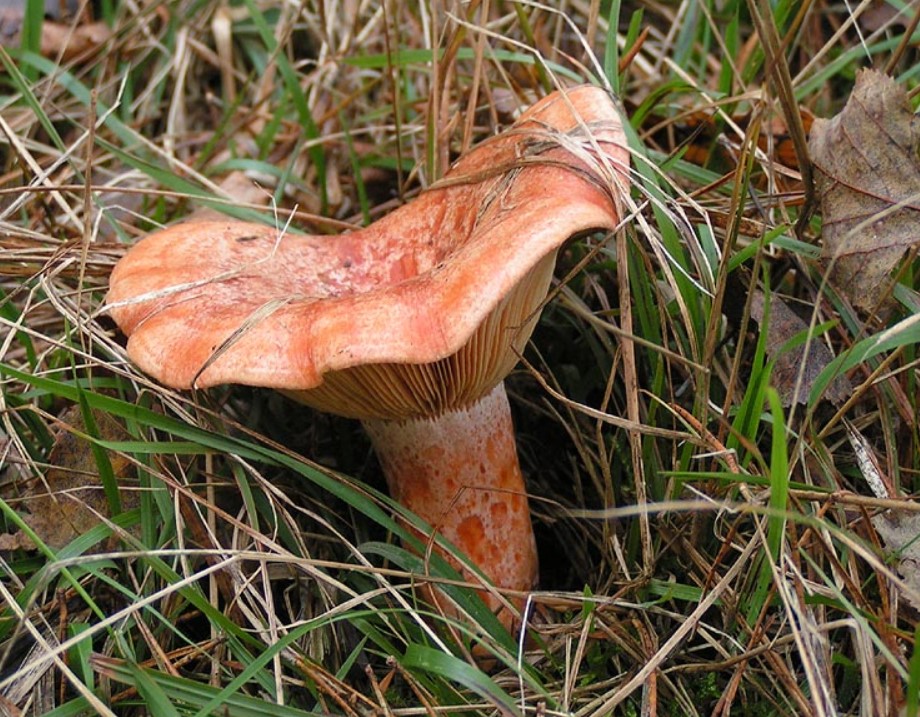
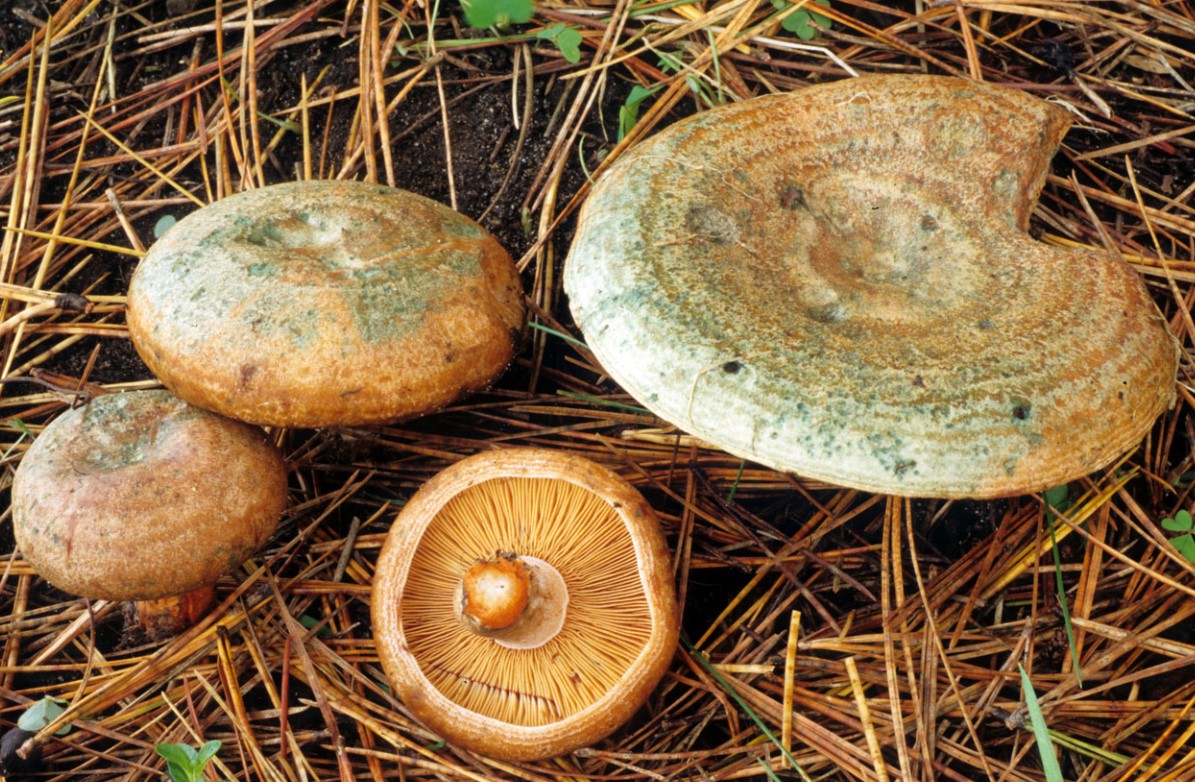
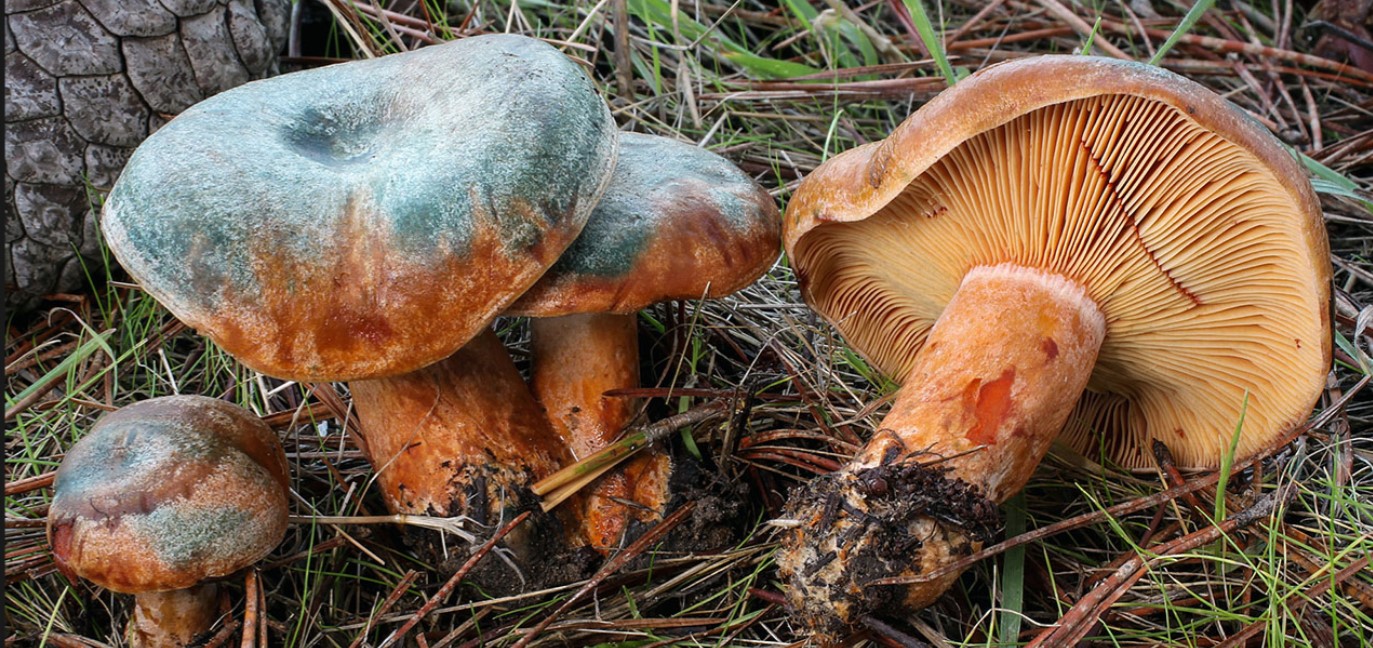
- 5.1.5 Red-brown milk cap, milkweed (Lactarius volemus)
- 5.1.6 Photo gallery of red-brown milk mushrooms
- 5.1.7 Milk mushroom (Lactarius resimus)
- 5.1.8 Photo gallery of real milk mushrooms
- 5.1.9 Blue milky (Lactarius indigo)
- 5.1.10 Photo gallery of the blue milkweed
- 5.1.11 Lactarius circellatus
- 5.1.12 Photo gallery of the zonalis latiformis
- 5.1.13 Red milkcap (Lactarius rufulus)
- 5.1.14 Photo gallery of the reddish milkweed
- 5.1.15 Alpine saffron milk cap, salmon saffron milk cap (Lactarius salmonicolor)
- 5.1.16 Photo gallery of salmon milk cap
- 5.1.17 Lactarius aurantiacus
- 5.1.18 Photo gallery of the non-caustic milkcap
- 5.1.19 Common milkweed (Lactarius trivialis)
- 5.1.20 Photo gallery of the common milkcap
- 5.1.21 Red saffron milk cap (Lactarius sanguífluus)
- 5.1.22 Photo gallery of the red saffron milk cap
- 5.1.23 Japanese saffron milk cap (Lactarius japonicus)
- 5.1.24 Photo gallery of the Japanese saffron milk cap
- 5.2 23 conditionally edible species of milk mushrooms with photos and descriptions in tables
- 5.2.1 White milkweed (Lactarius musteus)
- 5.2.2 Photo gallery of the white milkweed
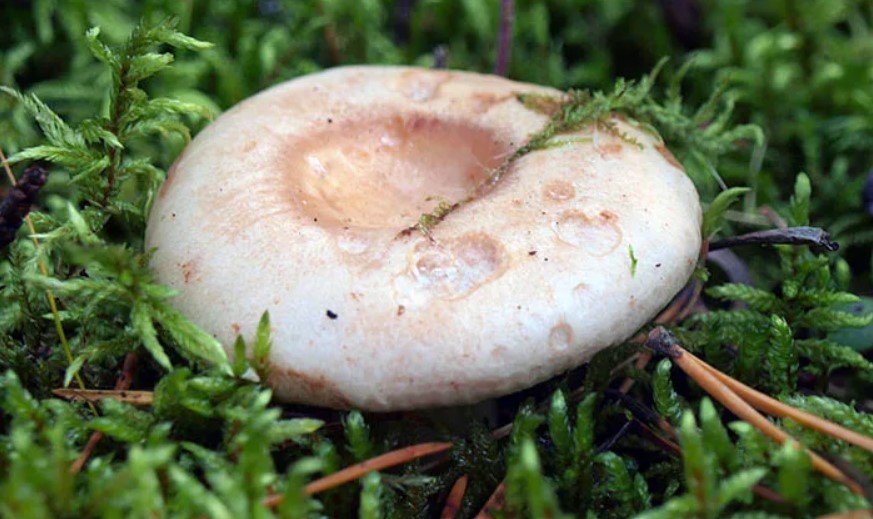
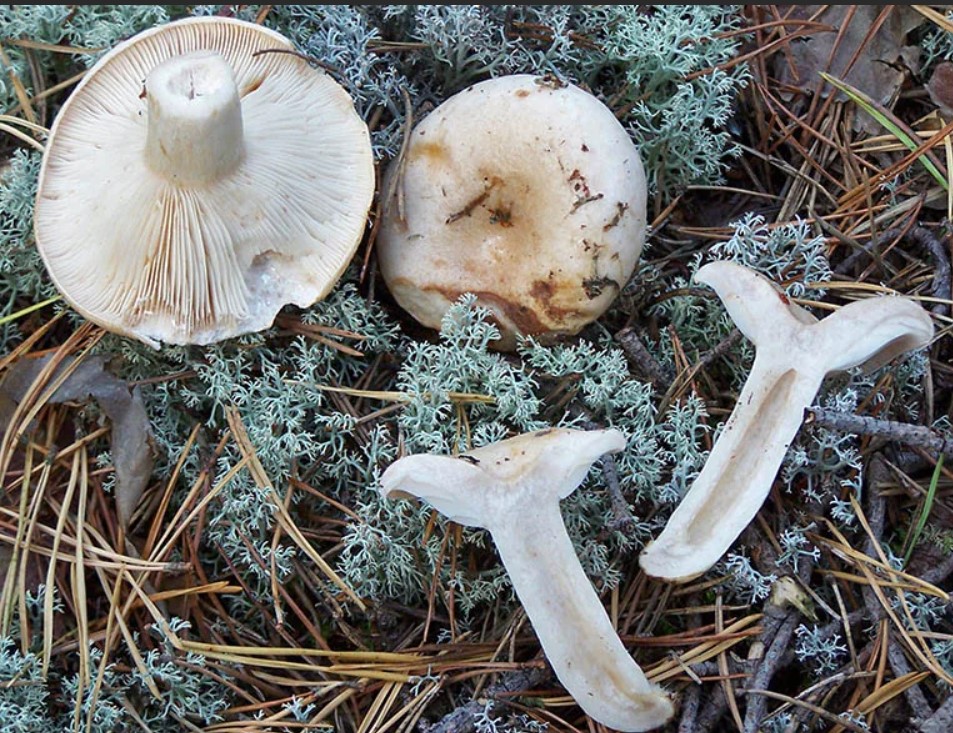
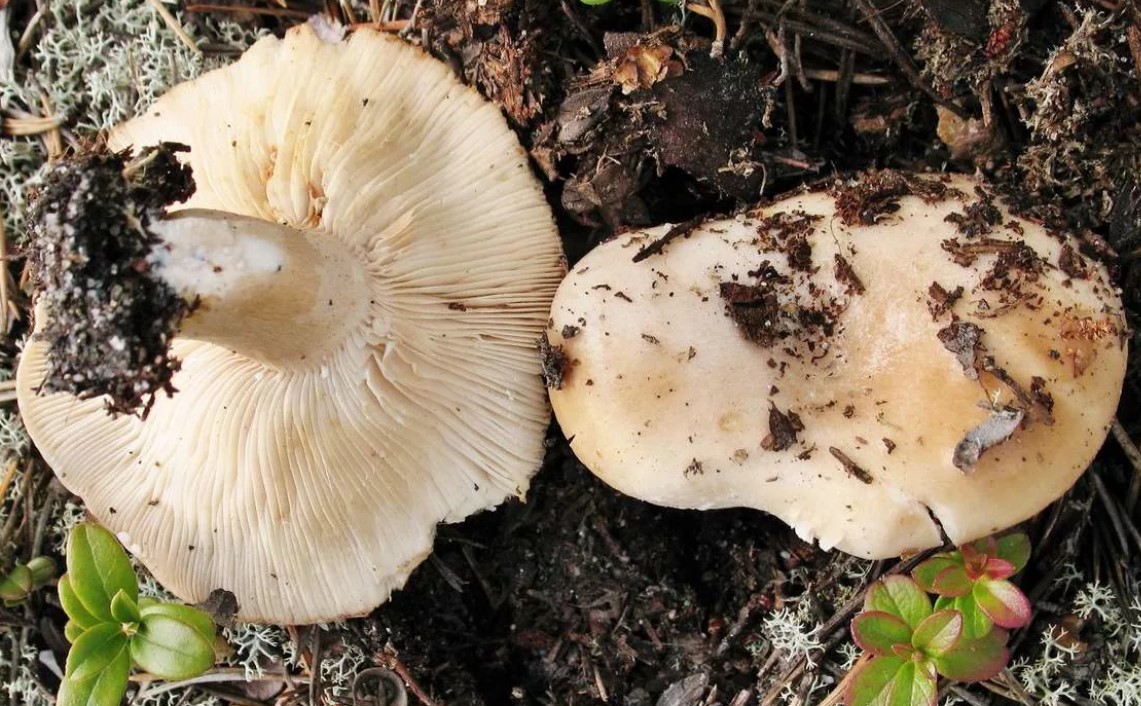
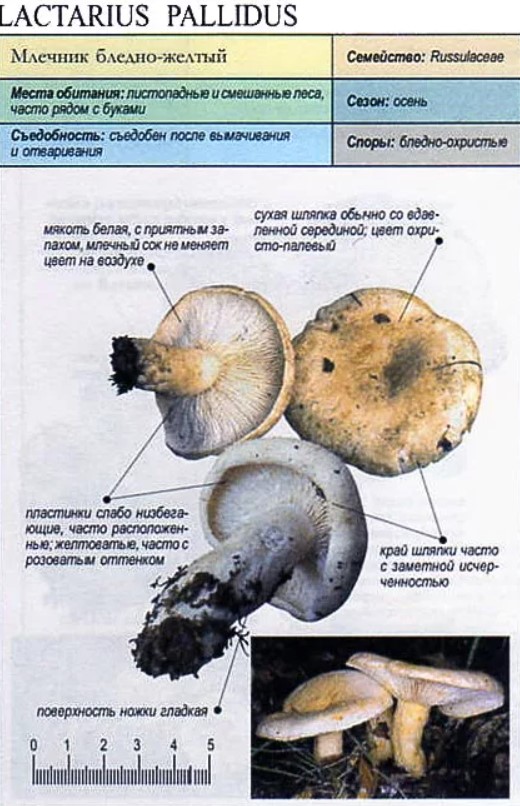
- 5.2.3 Lactarius pallidus (Pale Milkcap)
- 5.2.4 Photo gallery of the pale milkcap
- 5.2.5 Lactarius vietus
- 5.2.6 Photo gallery of the milky cap
- 5.2.7 Brown milkweed (Lactarius lignyotus)
- 5.2.8 Photo gallery of brown milkweed
- 5.2.9 Lactarius serifluus
- 5.2.10 Photo gallery of watery milky milkweed
- 5.2.11 Stinging milkweed (Lactarius pyrógalus)
- 5.2.12 Photo gallery of the stinging milky milkcap
- 5.2.13 Yellow milkcap (Lactarius luteolus)
- 5.2.14 Photo of the yellow milkweed
- 5.2.15 Zonal milkcap, oak milk cap (Lactarius zonarius)
- 5.2.16 Photo gallery of zonal milkweed
- 5.2.17 Milkcap (Lactarius flexuosus)
- 5.2.18 Photo gallery of serushka
- 5.2.19 Lilac milkweed (Lactarius lilacinus)
- 5.2.20 Photo gallery of the lilac milkweed
- 5.2.21
- 5.2.22 White milkweed (Lactarius pubescens)
- 5.2.23 Photo gallery of the white milk cap
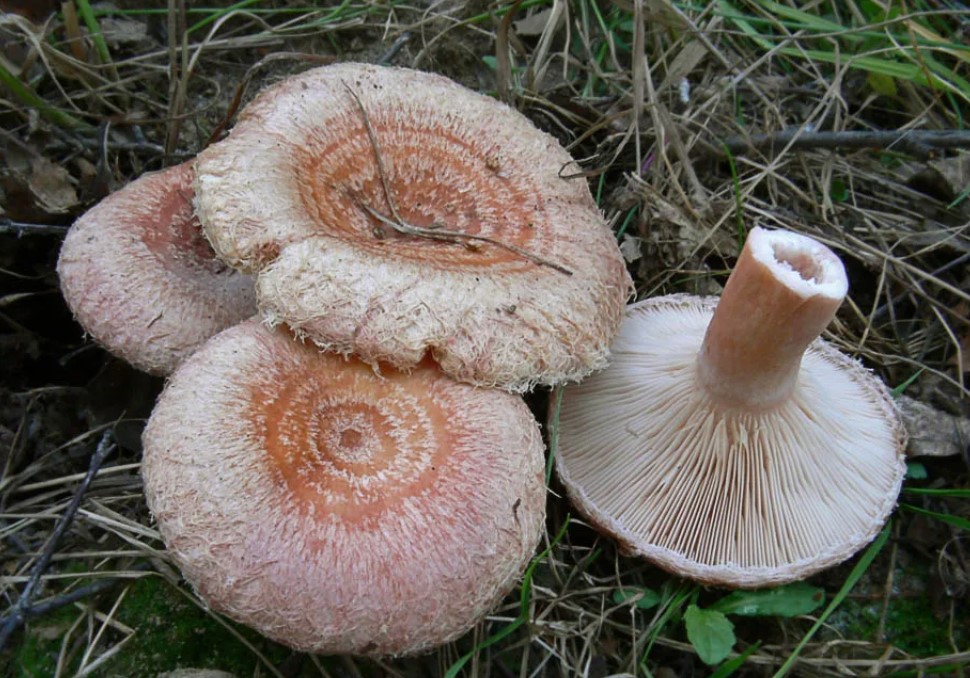
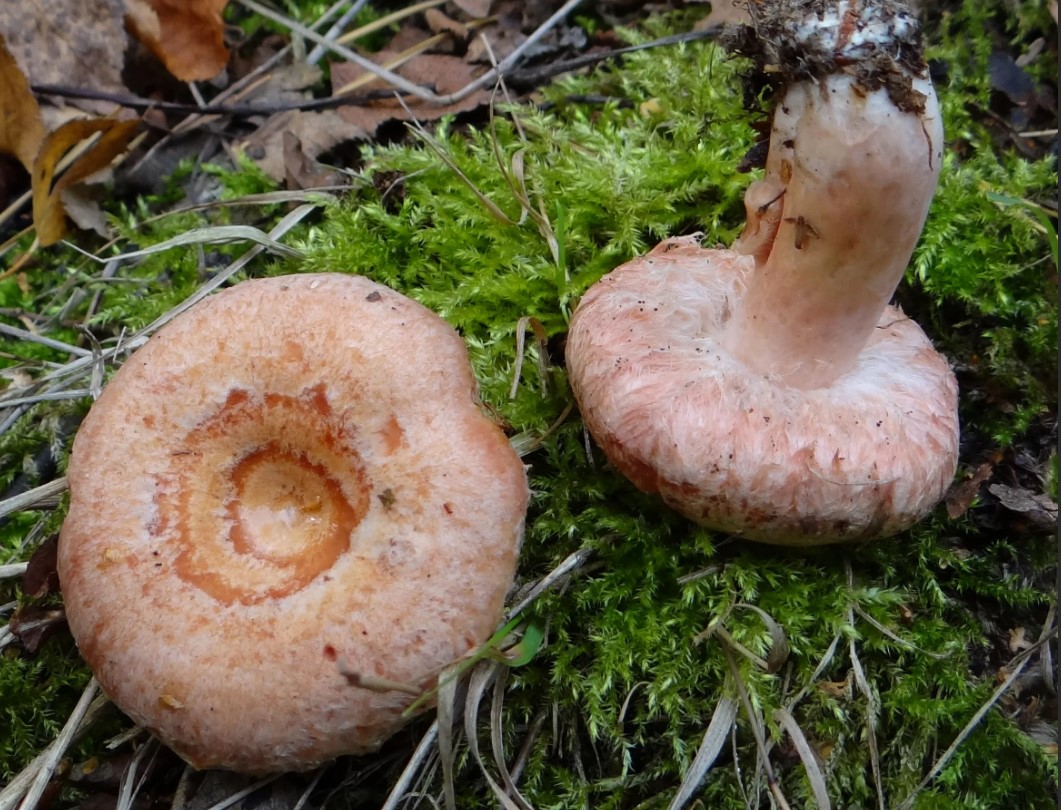
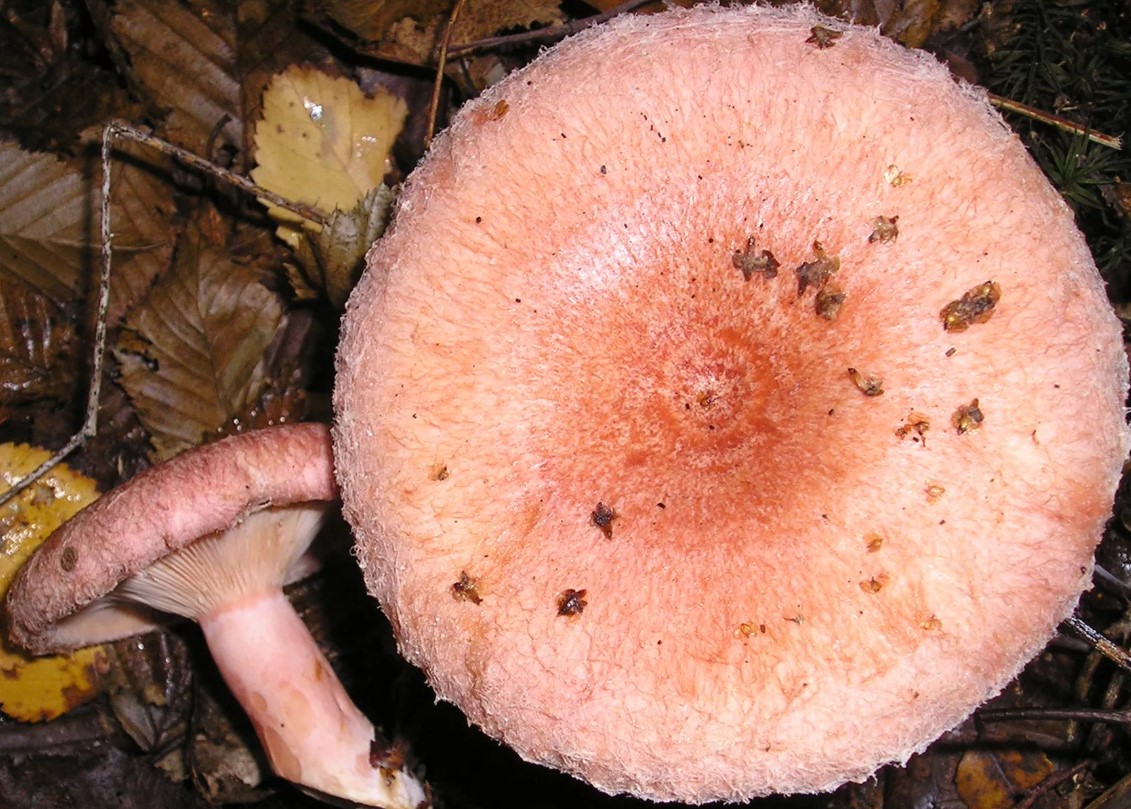
- 5.2.24 Pink volnushka (Lactarius torminósus)
- 5.2.25 Photo gallery of pink volnushka
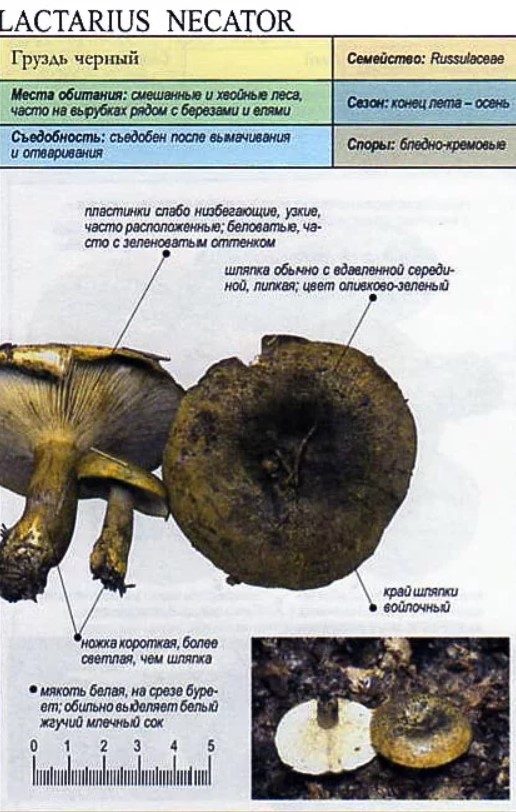
- 5.2.26 Black milk mushroom (Lactarius necator)
- 5.2.27 Photo gallery of black milk mushrooms
- 5.2.28 Lactarius glyciosmus (fragrant milk cap)
- 5.2.29 Photo gallery of aromatic milk mushrooms
- 5.2.30 Watery-zone milkweed (Lactarius aquizonatus)
- 5.2.31 Photo gallery of watery-zonal milk mushroom
- 5.2.32 Felt milk cap, fiddlehead milk cap (Lactarius vellereus)
- 5.2.33 Photo gallery of the violin
- 5.2.34 Bitter milk cap, bitter milk cap, red milk cap (Lactarius rufus)
- 5.2.35 Photo gallery of bitter milk mushrooms
- 5.2.36 Oak saffron milk cap, oak milk cap (Lactarius insulsus)
- 5.2.37 Photo gallery of oak camelina
- 5.2.38 Sticky milk cap, sticky milk cap (Lactarius blennius)
- 5.2.39 Photo gallery of sticky milk mushrooms
- 5.2.40 Deceptive milk mushroom (Lactarius deceptivus)
- 5.2.41 Photo gallery of the deceptive milk mushroom
- 5.2.42 Parchment milk cap (Lactarius pergamenus)
- 5.2.43 Photo gallery of the parchment milk cap
- 5.2.44 Blue breast (Lactarius repraesentaneus)
- 5.2.45 Photo gallery of the blue milk mushroom
- 5.2.46 Lactarius tabidus, the stunted milk cap, the tender milk cap (Lactarius tabidus)
- 5.2.47 Photo gallery of stunted milkweed
- 5.3 12 inedible types of milk mushrooms with photos and descriptions in tables
- 5.3.1 Alpine milkweed (Lactarius alpínus)
- 5.3.2 Photo gallery of the Alpine milkweed
- 5.3.3 Acute milkweed (Lactarius acerrimus)
- 5.3.4 Photo gallery of the Lactarius acutes
- 5.3.5 Alder milkcap (Lactarius alnicola)
- 5.3.6 Photo gallery of alder milkweed
- 5.3.7 Liver milkweed (Lactarius hepaticus)
- 5.3.8 Photo gallery of hepatic milkweed
- 5.3.9 Lactarius aspideus
- 5.3.10 Photo gallery of the thyroid milkweed
- 5.3.11 Bertillon's Milkweed (Lactarius bertillonii)
- 5.3.12 Photo gallery of the milkman Bertillon
- 5.3.13 Lactarius fulvissimus (brown-yellow milk cap)
- 5.3.14 Photo gallery of the brown-yellow milk cap
- 5.3.15 Lactarius helvus, amber milk cap (Lactarius helvus)
- 5.3.16 Photo gallery of the gray-pink milk cap
- 5.3.17 Golden-yellow milk cap (Lactarius chrysorrheus)
- 5.3.18 Photo gallery of golden-yellow milk mushrooms
- 5.3.19 Dark, obscure milkcap (Lactarius obscuratus)
- 5.3.20 Photo gallery of dark milky
- 5.3.21 Orange milkweed (Lactarius pornínsis)
- 5.3.22 Photo gallery of orange milkweed
- 5.3.23 Wine-spotted milkcap (Lactarius vinaceorufescens)
- 5.3.24 Photo gallery of wine-spotted milkweed
- 5.4 20 Controversial Types of Milk Mushrooms with Photos and Descriptions in Tables
- 5.4.1 Fringed milk cap (Lactarius citriolens)
- 5.4.2 Photo gallery of the fringed milk cap
- 5.4.3 Yellow breast (Lactarius scrobiculatus)
- 5.4.4 Photo gallery of yellow milk mushrooms
- 5.4.5 Lactarius azonites
- 5.4.6 Photo gallery of zoneless milkweed
- 5.4.7 Brown milkweed (Lactarius fuliginosus)
- 5.4.8 Photo gallery of brown milkweed
- 5.4.9 Lactarius hygrophoroídes
- 5.4.10 Photo gallery of the Hygrophorus lactarius
- 5.4.11 Oak milkcap, neutral (Lactarius quietus)
- 5.4.12 Photo gallery of oak milkweed
- 5.4.13 Camphor milkweed (Lactarius camphoratus)
- 5.4.14 Photo gallery of camphor milkweed
- 5.4.15 Lilac Milkweed, Lilac Milkweed (Lactarius violascens)
- 5.4.16 Photo gallery of the purple milkweed
- 5.4.17 Lactarius acris
- 5.4.18 Photo gallery of the acute milkcap
- 5.4.19 Aspen milk cap (Lactarius controversus)
- 5.4.20 Photo gallery of aspen milk mushrooms
- 5.4.21 Peppery milk mushroom (Lactarius piperatus)
- 5.4.22 Photo gallery of peppery milk mushrooms
- 5.4.23 Lactarius thejogalus, Lactarius tábidus
- 5.4.24 Photo gallery of the sulphur-milky milkcap, the stunted milkcap
- 5.4.25 Sweet milk mushroom, red milk mushroom (Lactarius subdulcis)
- 5.4.26 Photo gallery of sweet milk mushrooms
- 5.4.27 Spiny milkweed (Lactarius spinosulus)
- 5.4.28 Photo gallery of the spiny milkweed
- 5.4.29 Blue breast (Lactifluus glaucescens)
- 5.4.30 Photo gallery of bluish milk mushroom
- 5.4.31 The grey lilac milk cap, the wet milk cap (Lactarius uvidus)
- 5.4.32 Photo gallery of wet milkweed
- 5.4.33 Resin-black breast (Lactarius picinus)
- 5.4.34 Photo gallery of the resinous black milk cap
- 5.4.35 Milk cap (Lactarius mammosus)
- 5.4.36 Photo gallery of milk mushrooms
- 5.4.37 Red pine mushroom (Lactarius semisanguifluus)
- 5.4.38 Photo gallery of the red saffron milk cap
- 5.4.39 Spruce saffron milk cap (Lactarius deterrimus)
- 5.4.40 Photo gallery of spruce saffron milk cap
- 5.1 12 edible types of milk mushrooms with photos and descriptions in tables
- 6 Composition and caloric content of milk mushrooms
- 7 Benefits of milk mushrooms
- 8 Potential harm of milk mushrooms + contraindications
- 9 How to properly pick milk mushrooms
- 10 How to properly store milk mushrooms
- 11 How to grow milk mushrooms in your garden
- 12 Cooking Milk Mushrooms: All the Secrets from Top.tomathouse.com
- 13 Methods of pickling milk mushrooms
- 14 Using milk mushrooms in cosmetology + 4 recipes for skin and hair
The history of the milk mushroom
Milk mushrooms got their Proto-Slavic name, which translates as "heap." There are several interpretations: the mushrooms grow very densely, "clumped together." Another theory is that they prefer to grow on a pile or mound.
They belong to the genus Lactarius. Some believe the name comes from the fact that when cut, the mushrooms secrete a white juice.
Milk mushrooms were first classified as a separate species in 1797, thanks to the botanist and microbiologist H.G. Person. Subsequently, milk mushrooms were studied at various times by Samuel Gray, Elias Fries, L. Koehle, R. Eim, W. Neuhoff, and others. To this day, the classification of mushrooms continues to expand thanks to the in-depth study of less accessible tropical species.
What do milk mushrooms look like?
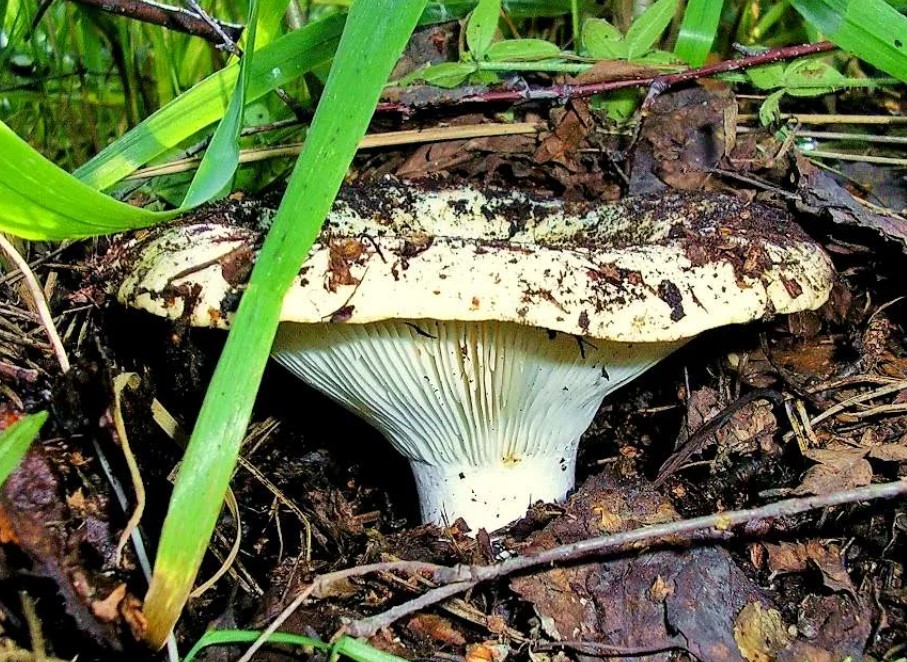
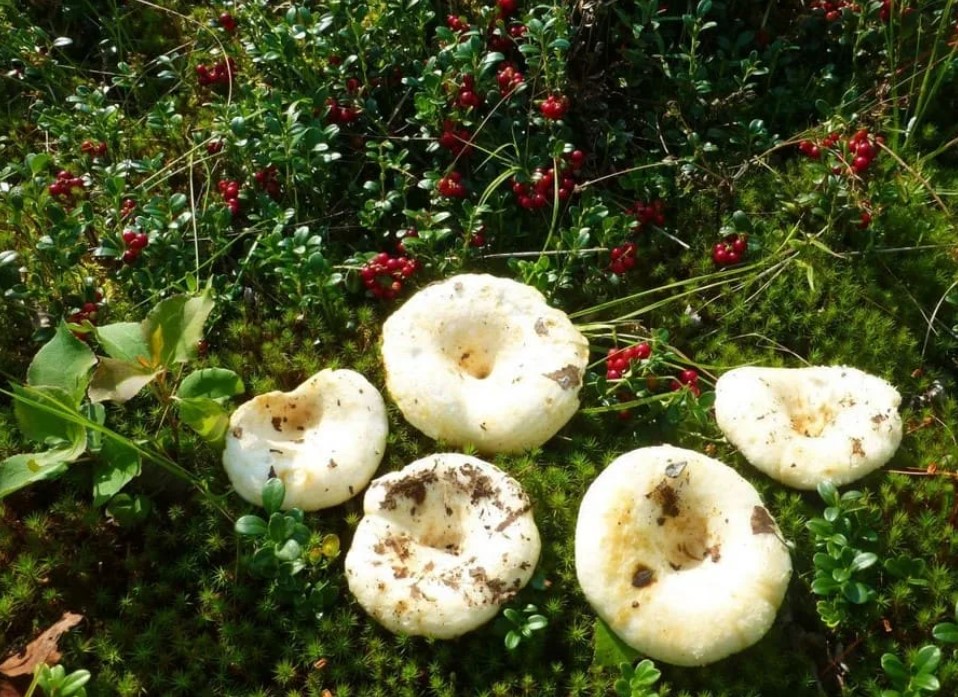
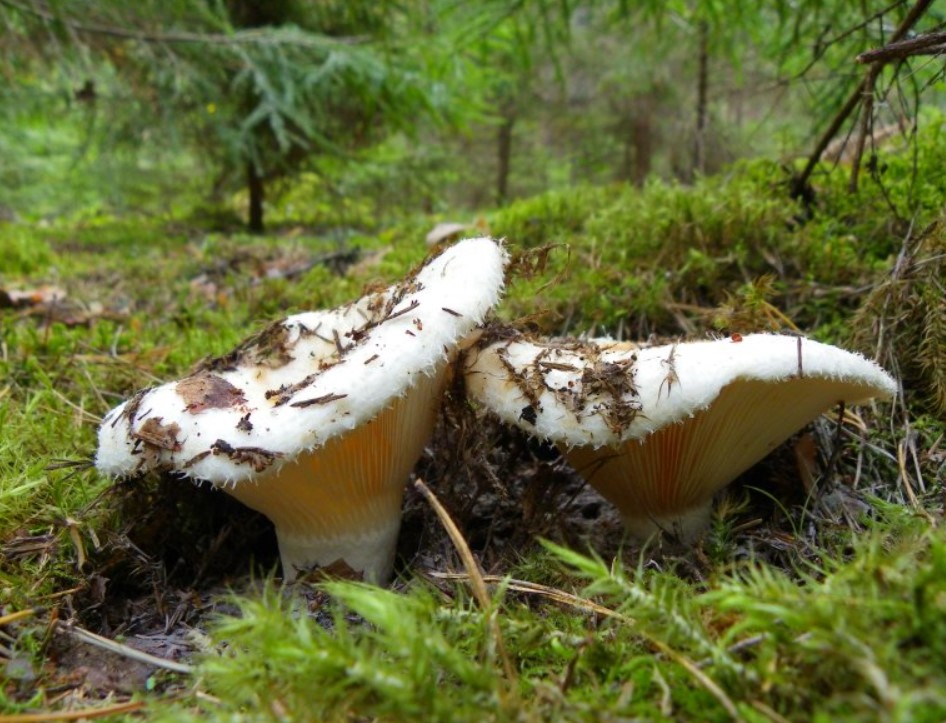
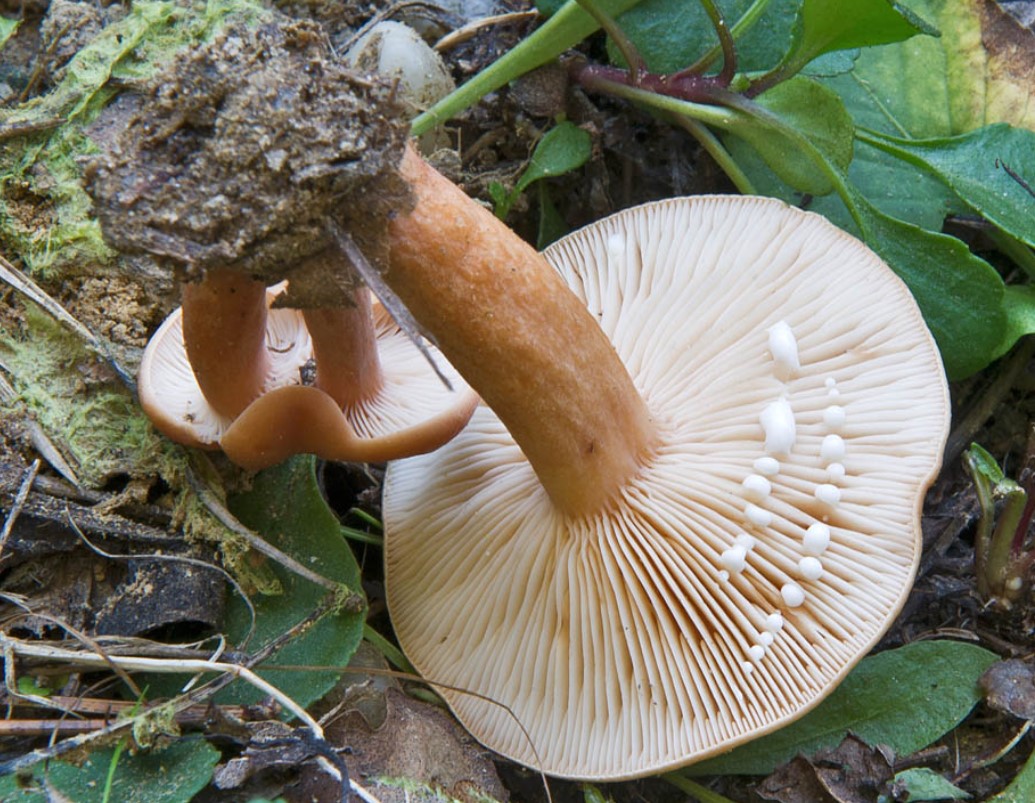
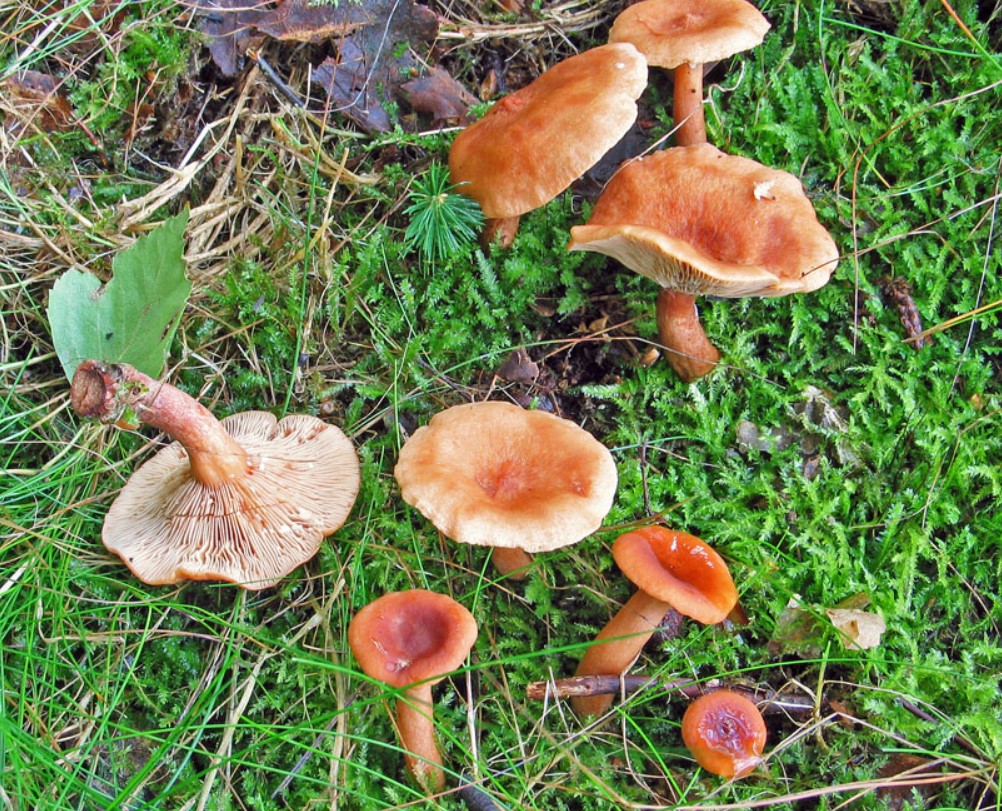
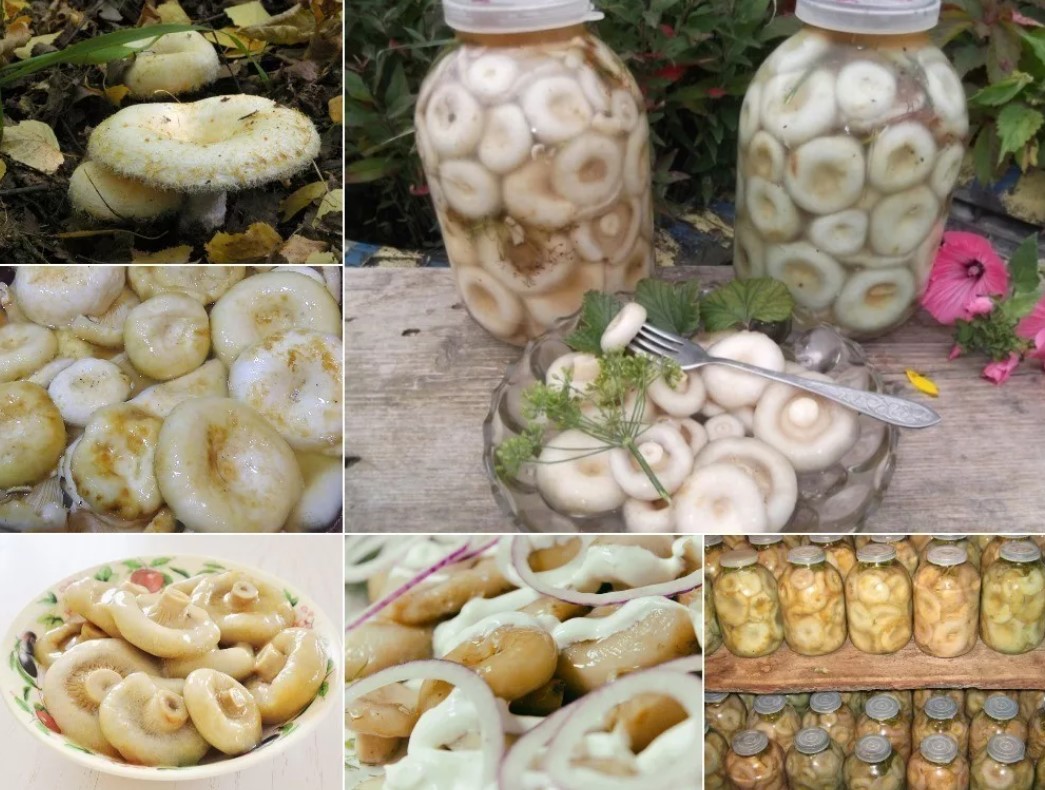
Let's take a look at the appearance of the mushroom chest, look at the photo.
Fruiting body
The fruiting body of the milk mushroom consists of a cap and a stem; the mushrooms do not have a veil.
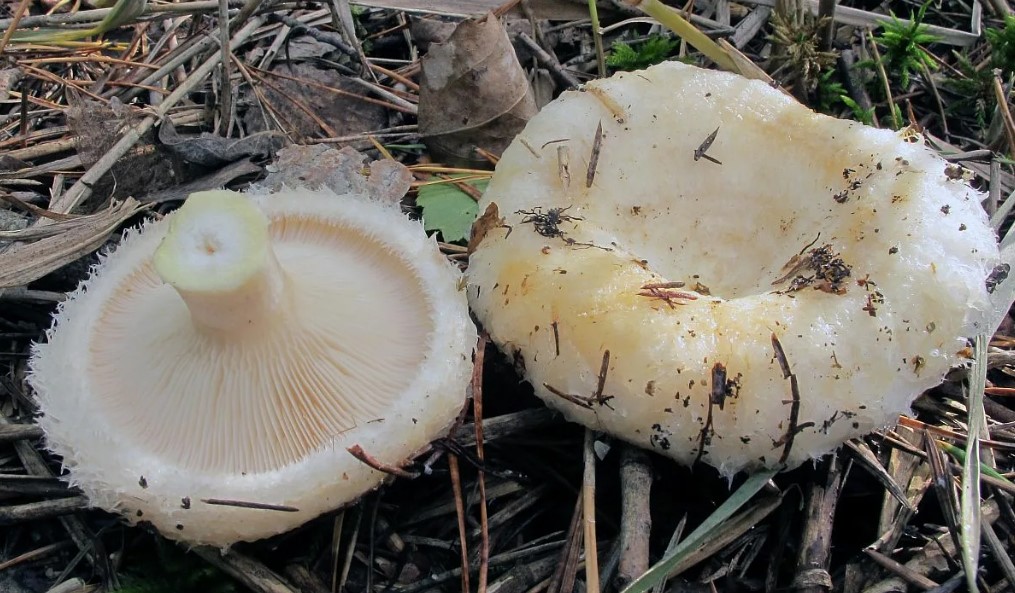
hat
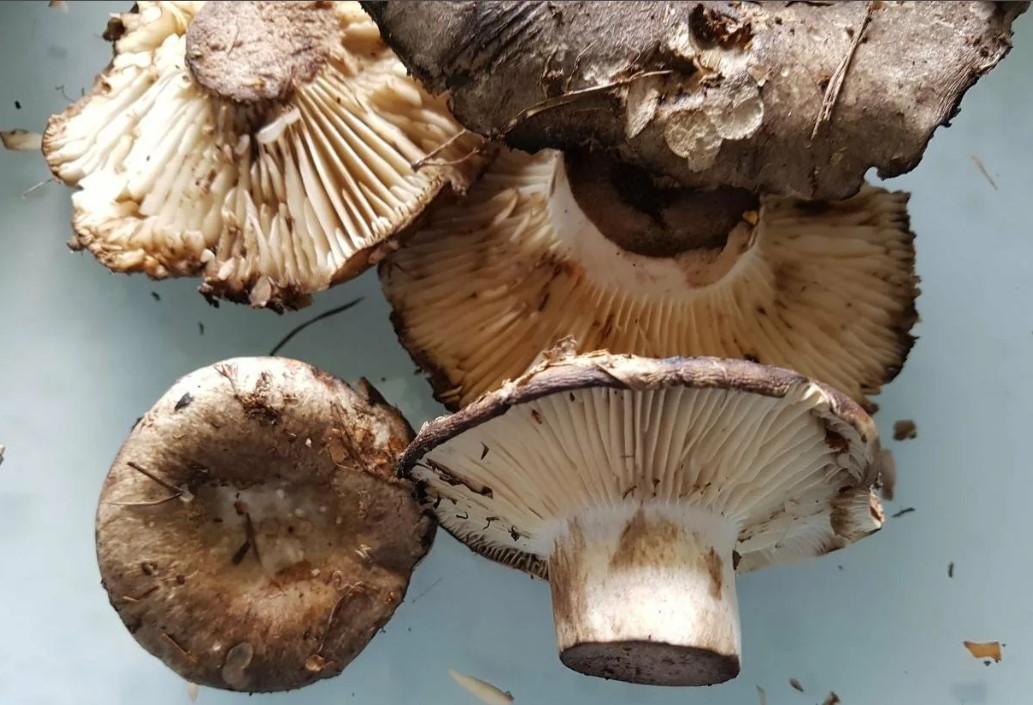
The cap diameter varies from 4 to 30 cm in some species. Initially, the cap is semicircular, but as it grows, it straightens out and becomes flat or funnel-shaped. A distinct tubercle is often present at the center. The characteristics of the cap margin and its color depend directly on the species. Typically, the color changes as the mushroom grows.
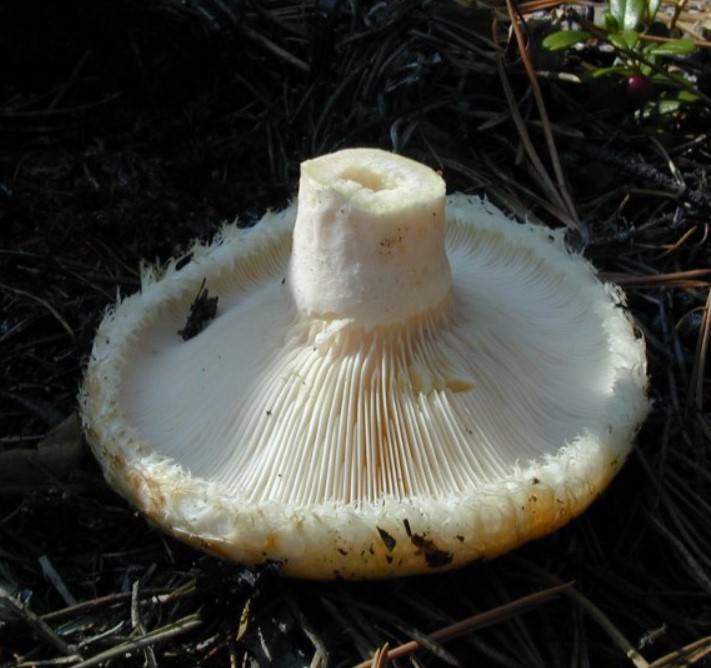
Leg
The stem of milk mushrooms can be thin or very stocky. In some species, it tapers or widens toward the base. The color often matches the cap. The average height is 5-8 cm, and the diameter is 1-2 cm. Spots and indentations may appear on the surface.
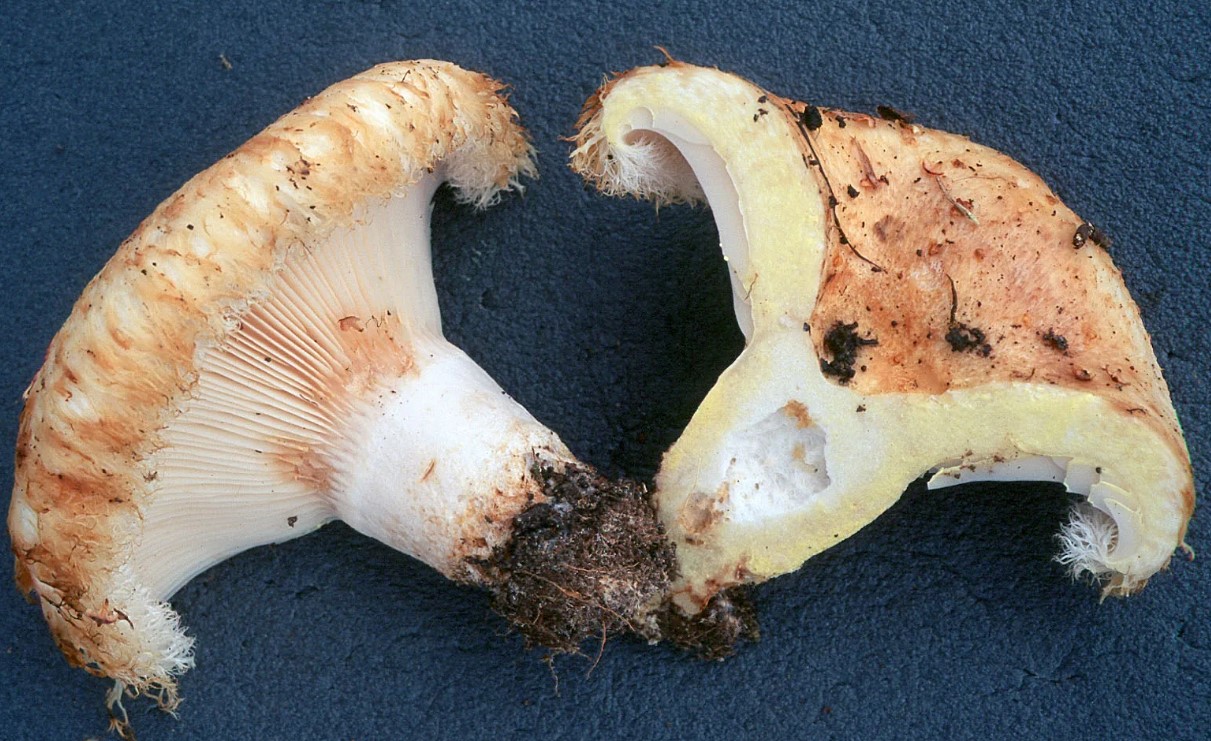
Pulp
Milk mushroom flesh has a pungent flavor, so it's always soaked before cooking. Its color can be white, grayish, or cream. Some varieties even change color when broken.
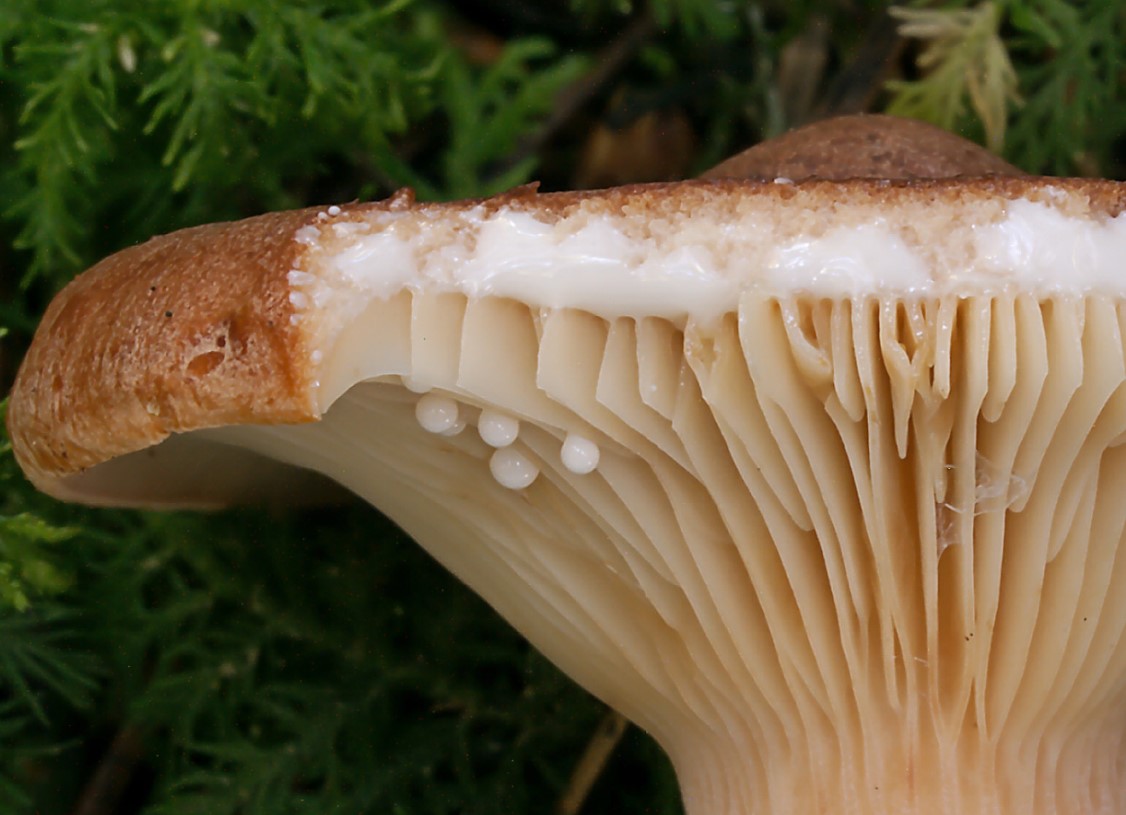
Milky juice
Milky juice is released from milk mushrooms when cut or damaged. It can be white, translucent, or reddish-orange. When exposed to air, it crystallizes and can change color.
In which forests do milk mushrooms grow, including in the Moscow region?
Milk mushrooms are found in almost all forests, but different species prefer different trees. Some mushrooms grow only under pine trees, others won't survive without birch, and still others require oak and hazel.
The following forests can be identified on the map of mushroom-growing areas in the Moscow region forests:
| Direction | Kursk | Leningradskoe | Savelovskoye | Kiev | Kazan |
| Settlements and stations | Stolbovaya, Sharapova hunting, Lviv, Stolbovaya, Kolkhoznaya, Grivno | Radishchevo, Povarovo, Golvkino, Firsanovskaya, Povarovo, Frolovskoye, Golovkino | Tourist, Iksha, Morozki | Beksovo, near Ivanovka, Mogutovo, Savelovka, Afanasovka, Alabino station, Rassudovo, Zosimova Pustyn. | Ramensky District |
Milk mushroom picking season
The timing of milk mushroom harvesting depends directly on the region and the characteristics of the species. Some mushrooms ripen as early as mid-July, while others don't begin to yield until August. Generally, the "quiet hunting" period ends in September or October.
Types of milk mushrooms
There are many varieties of milk mushrooms, many of which are considered conditionally edible or even inedible. Therefore, every mushroom picker should know what truly delicious edible milk mushrooms look like. Below, we've described the 70 most common species of these mushrooms.
12 edible types of milk mushrooms with photos and descriptions in tables
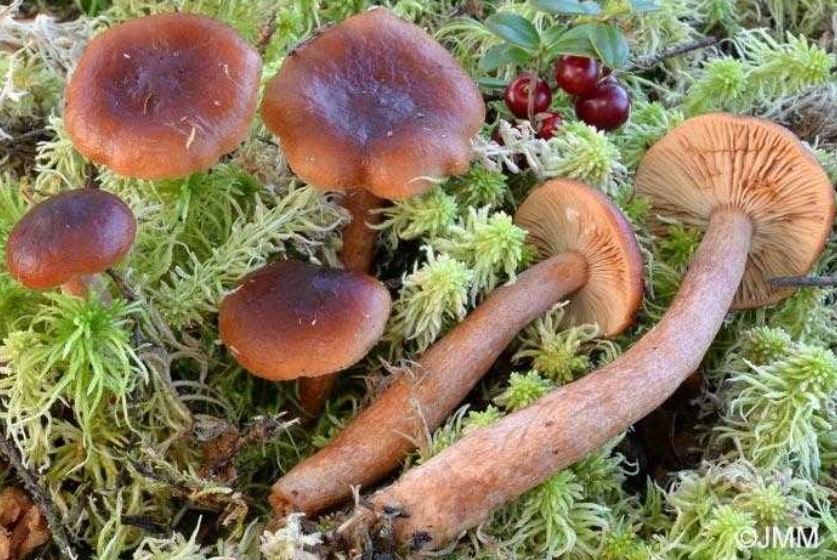
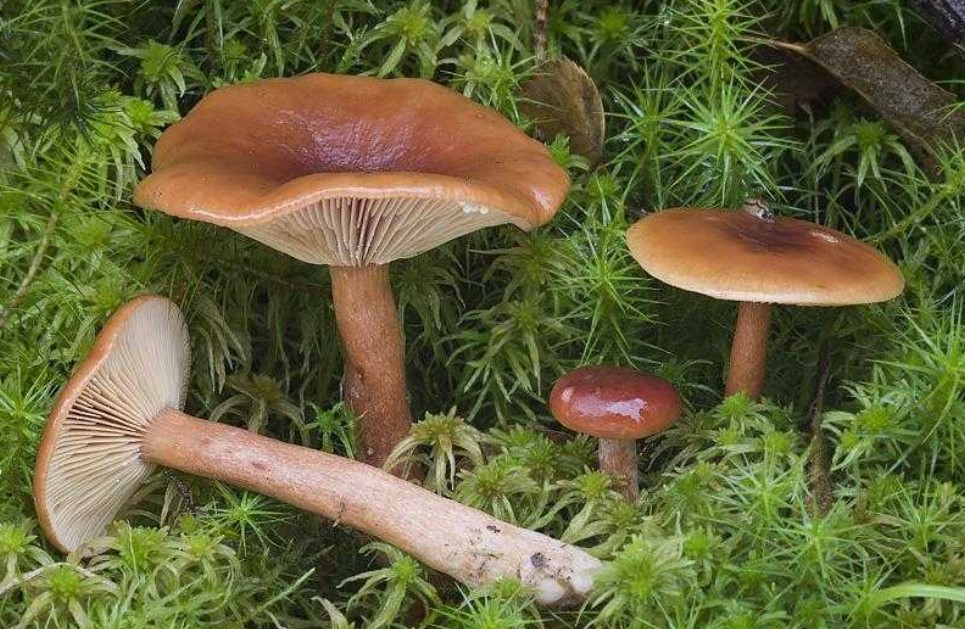
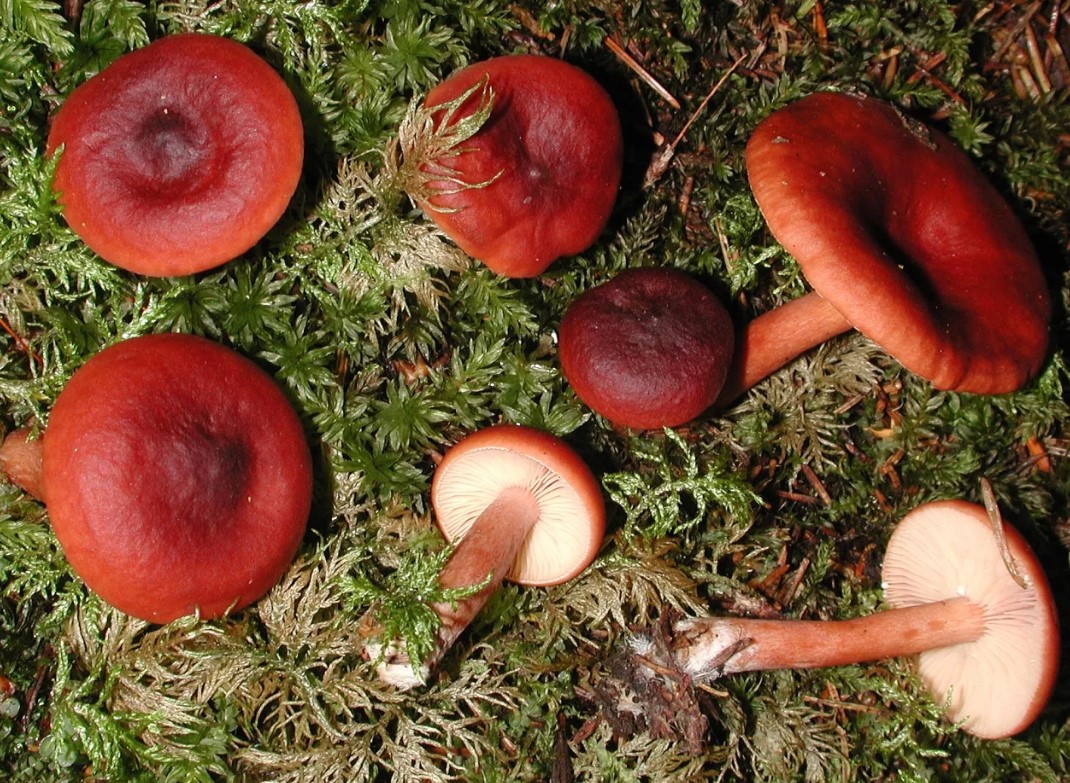
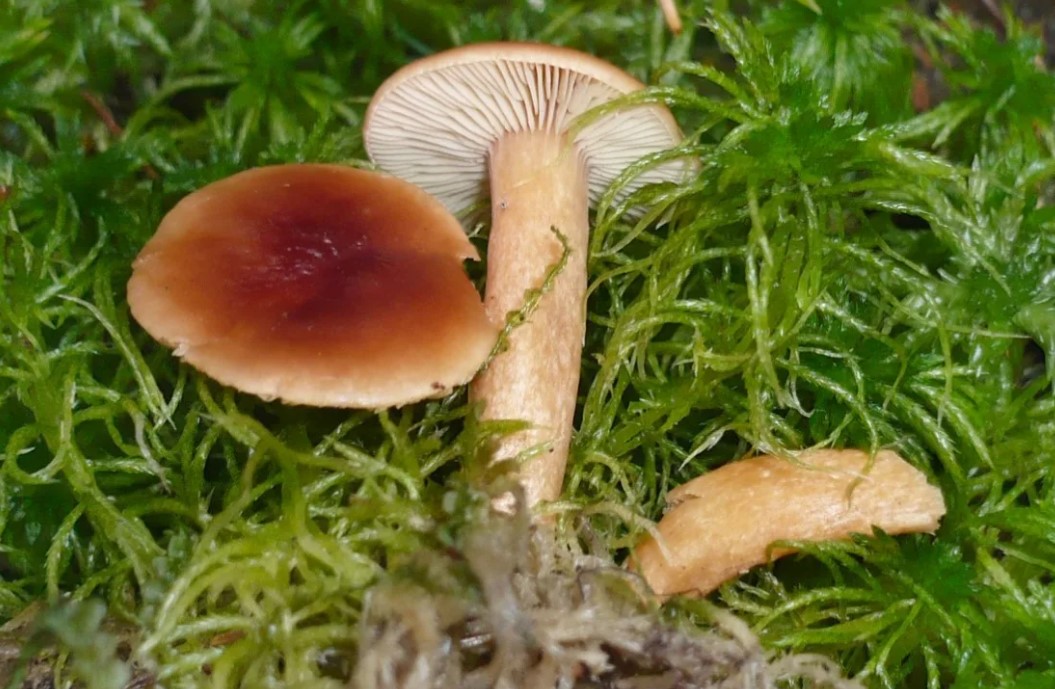
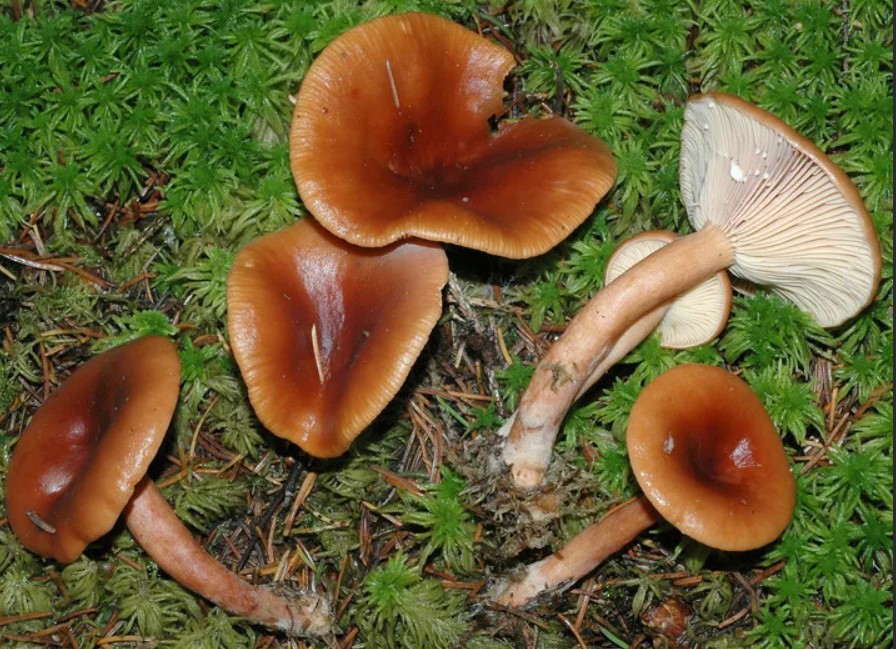
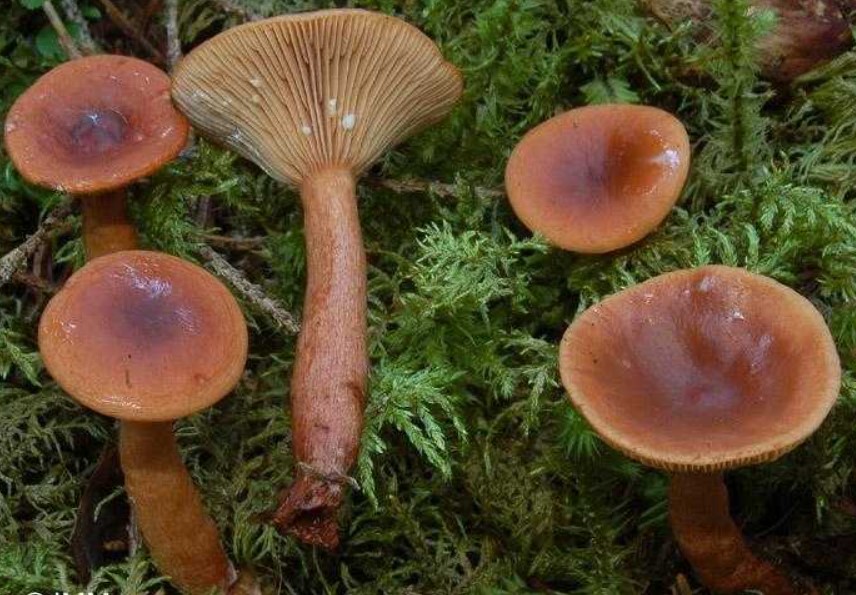
Marsh milk cap (Lactarius sphagneti)
| View | Description | Edibility | Collection deadlines | Where to look |
| Marsh milk cap (Lactarius sphagneti) | The cap is up to 5 cm in diameter and flat or concave in shape. The color is reddish-brown or brick-red, fading in sunlight. The stem is slightly lighter than the cap. The milky sap is initially white, turning grayish when exposed to air. | Edible. | August-September. | Loves lowlands, grows in mixed and coniferous forests. |
Photo gallery of the marsh milk cap
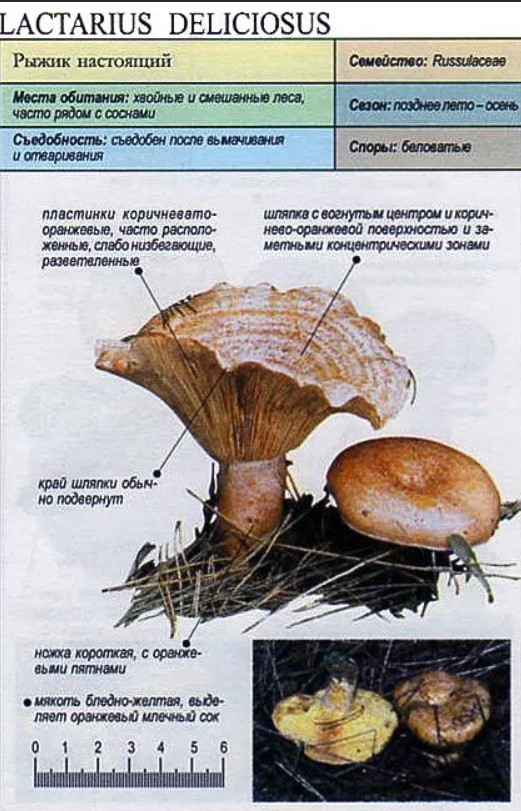
Milk mushroom (Lactarius deliciosus)
| View | Description | Edibility | Collection deadlines | Where to look |
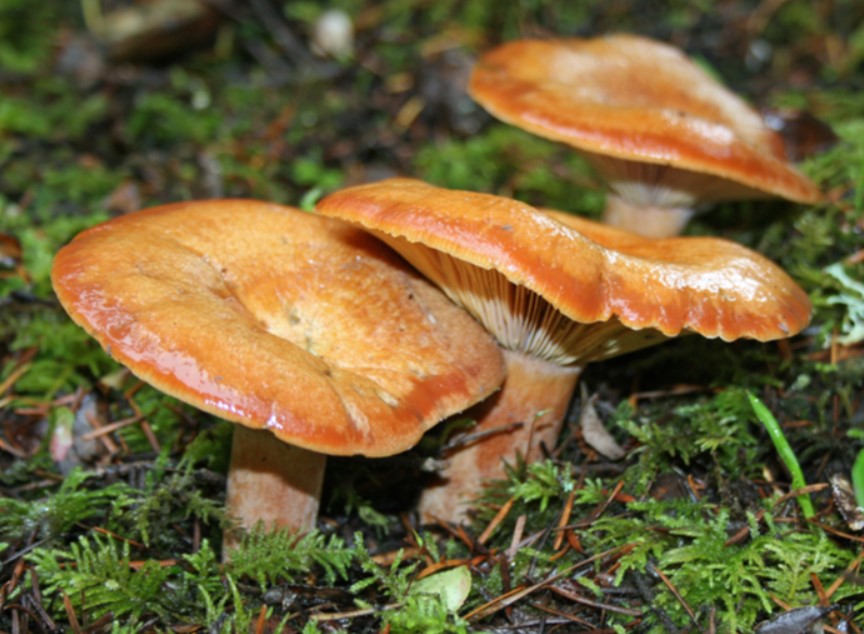
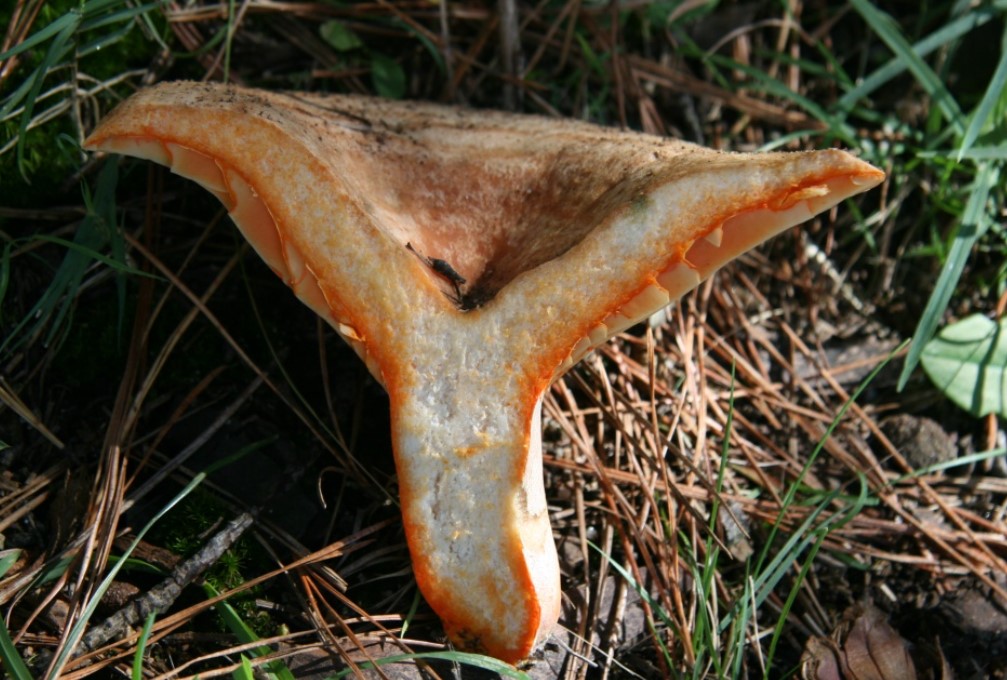
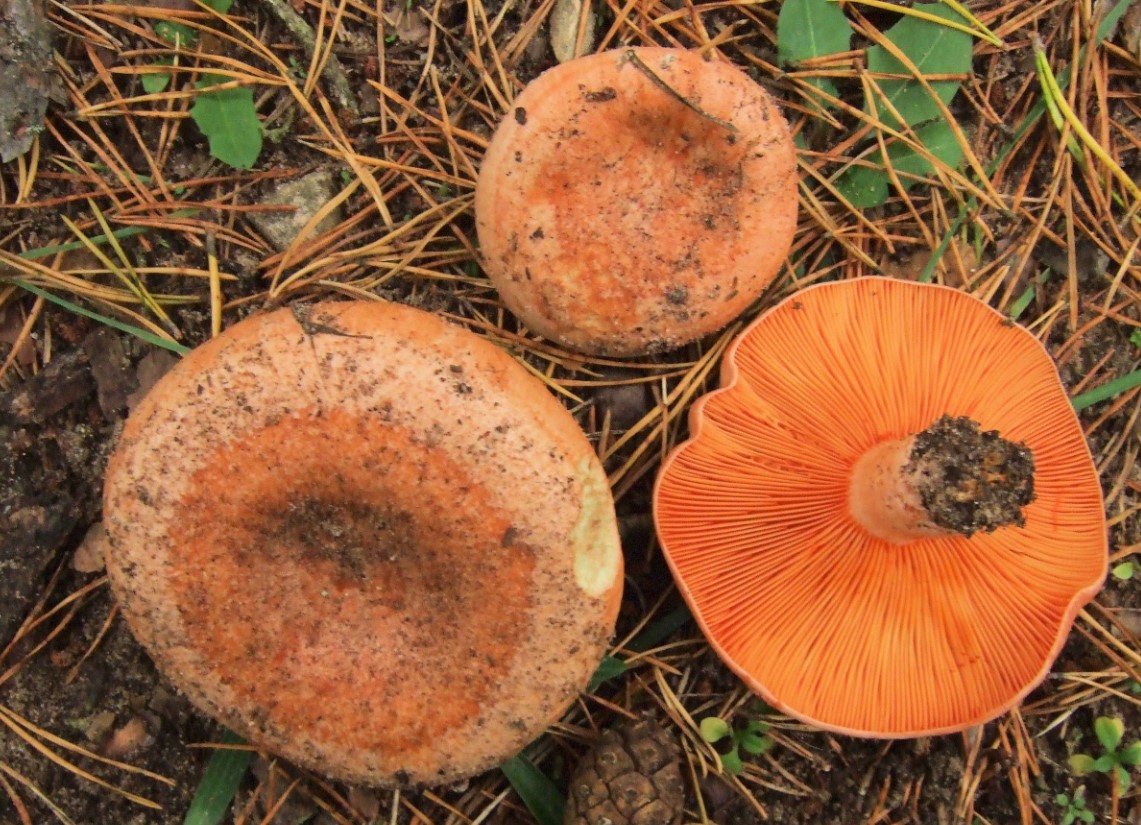
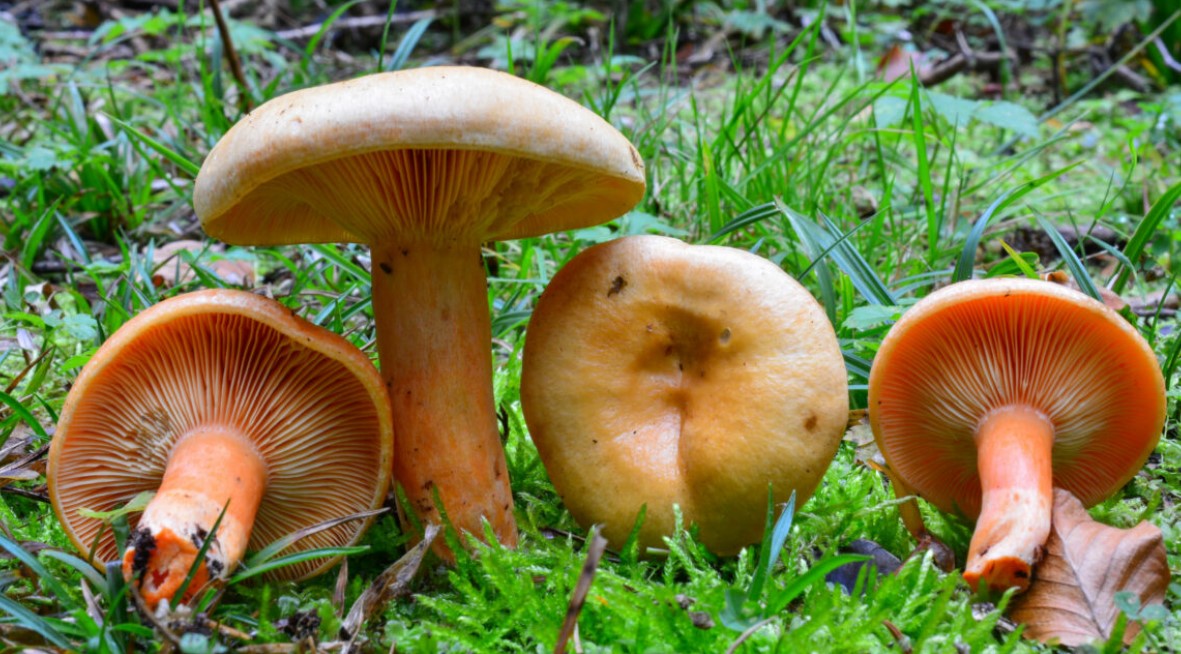
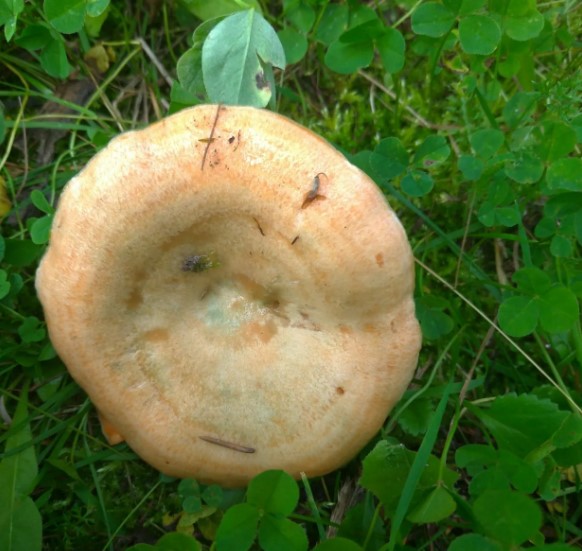
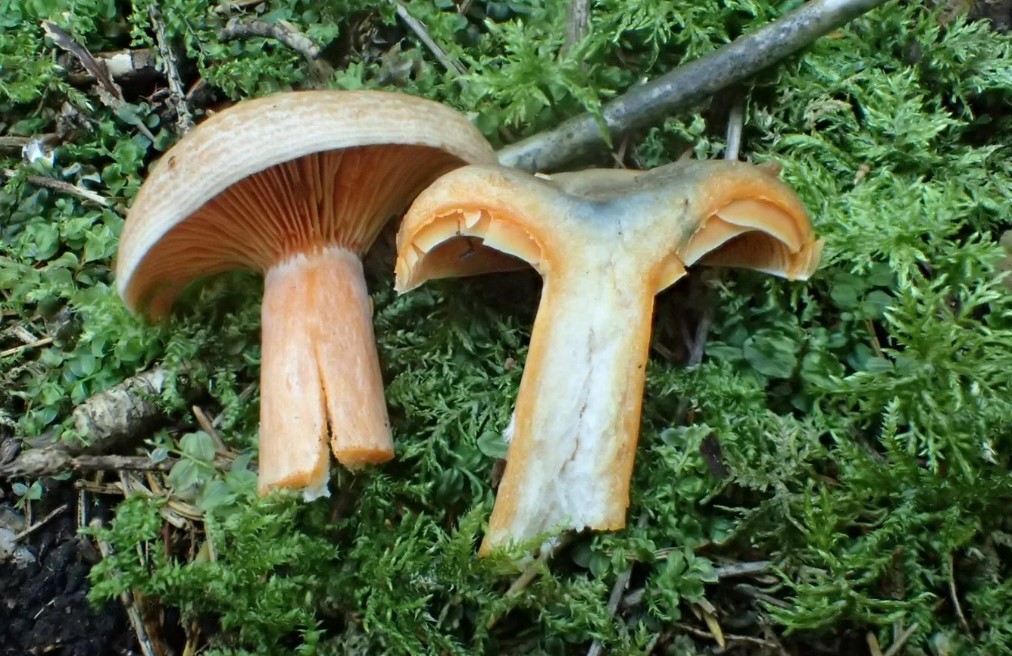
| Lactarius deliciosus (Lactarius deliciosus) | The cap diameter is 4-18 cm, the shape of a mature mushroom is funnel-shaped, and the color is dark orange or ochre. The surface is marked with concentric zones. The stem is up to 7 cm tall and may be slightly lighter in color than the cap. | Edible. | End of July - beginning of September. | Pine and spruce forests. |
Photo gallery of the delicious milk mushroom
Red-brown milk cap, milkweed (Lactarius volemus)
| View | Description | Edibility | Collection deadlines | Where to look |
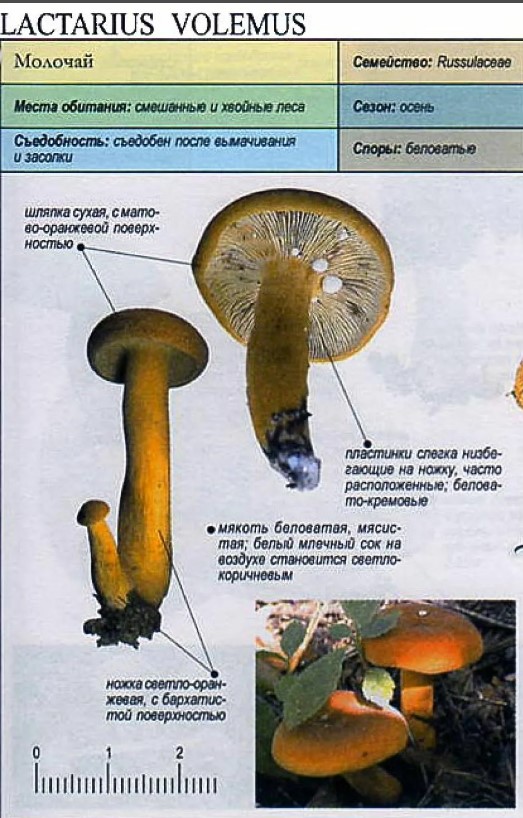
| Red-brown milk cap (Lactarius vólemus) | The cap diameter is 5-16 cm, with a sunken core in mature mushrooms. The color is reddish-brown, brownish, rusty, or ochre. The surface changes from velvety to dry as it grows. The stipe is thick, up to 8 cm tall. The milky sap turns brown when exposed to air. | Edible. | July-October. | It grows in all types of forests, preferring oak, hazel and spruce. |
Photo gallery of red-brown milk mushrooms
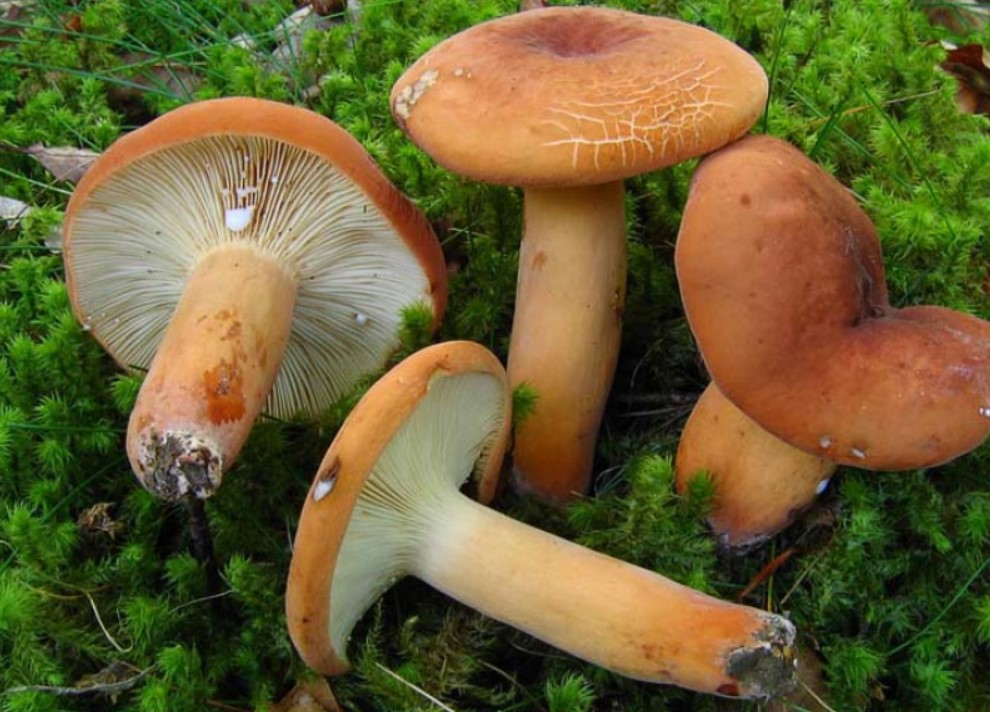
Milk mushroom (Lactarius resimus)
| View | Description | Edibility | Collection deadlines | Where to look |
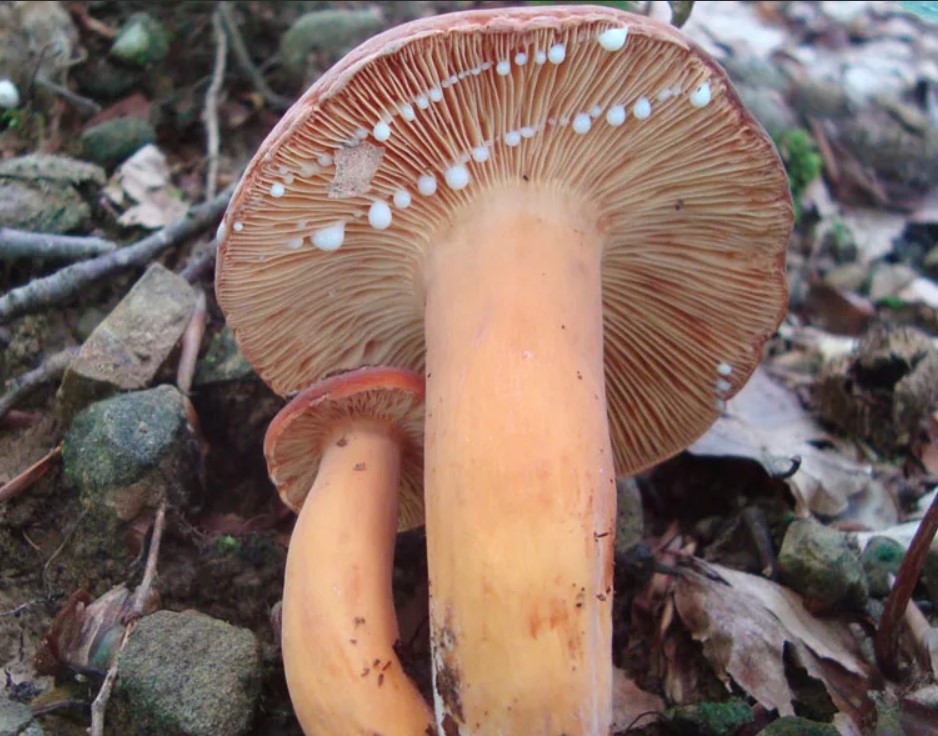
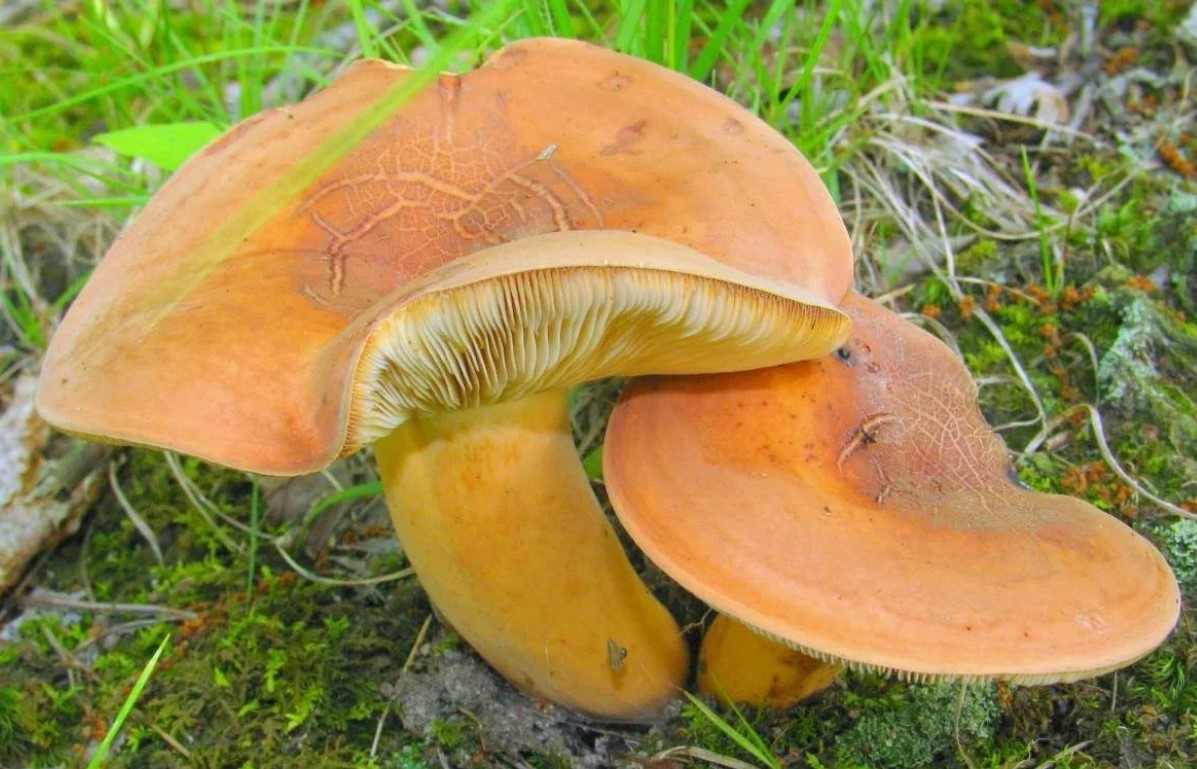
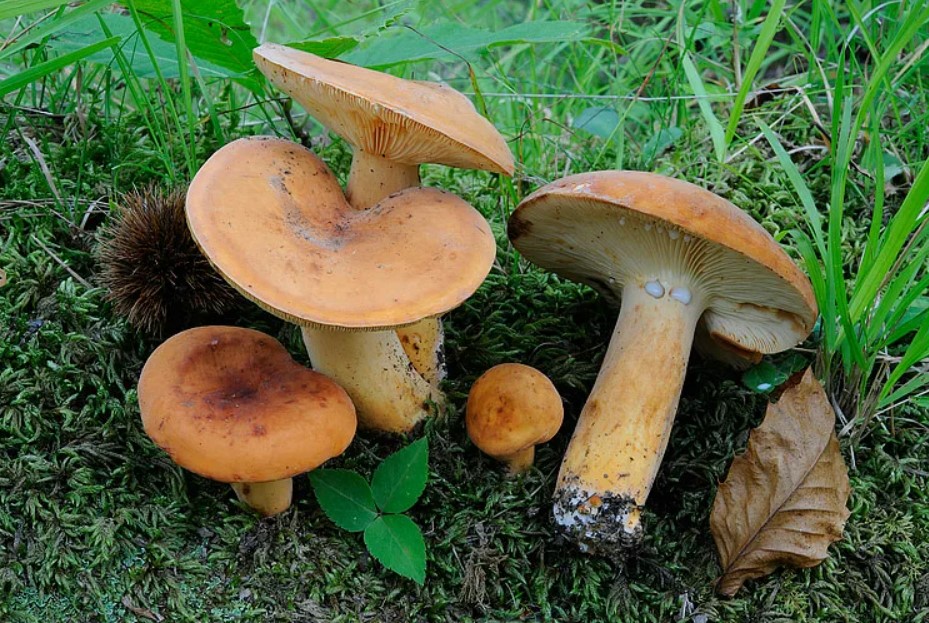
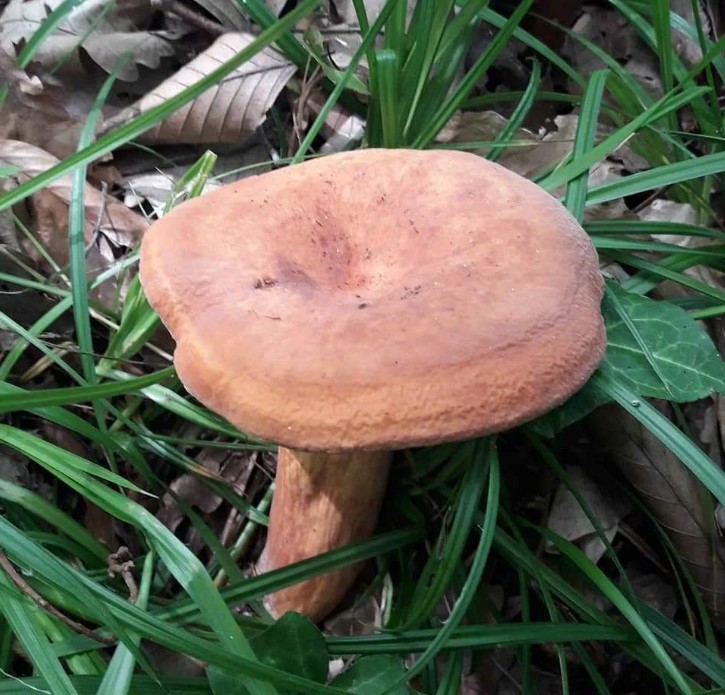
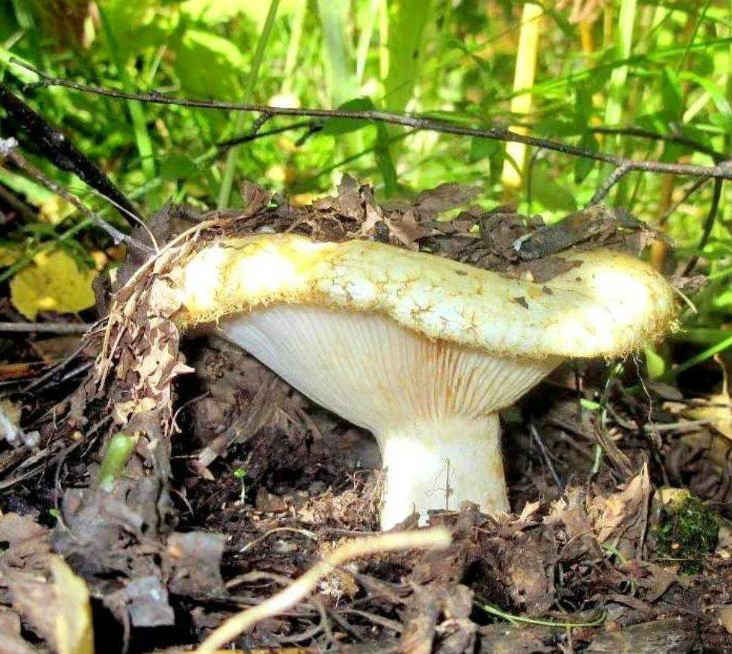
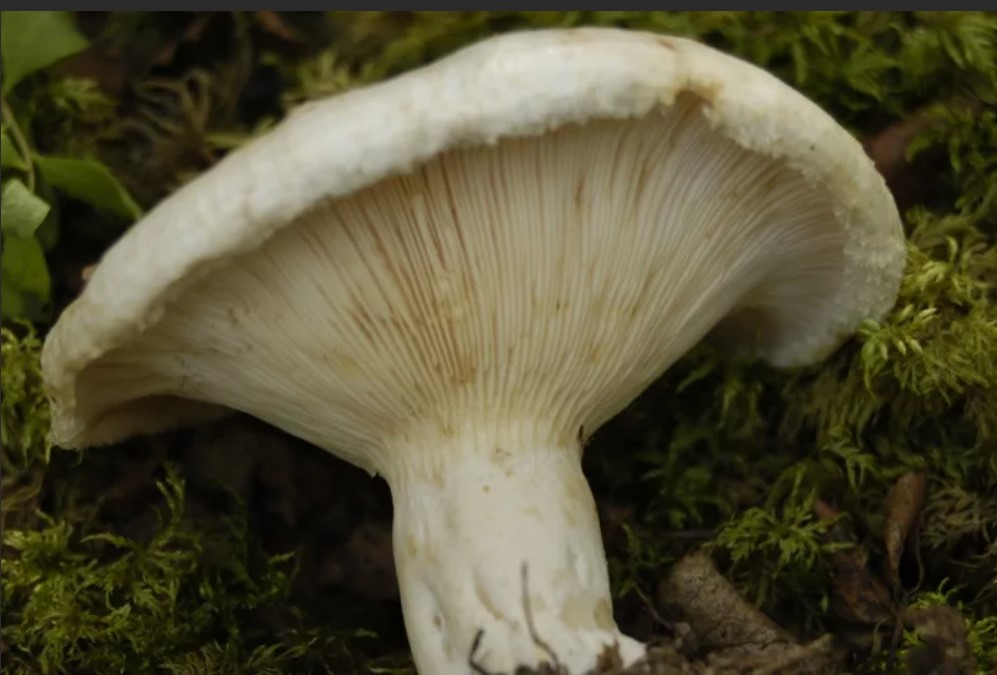
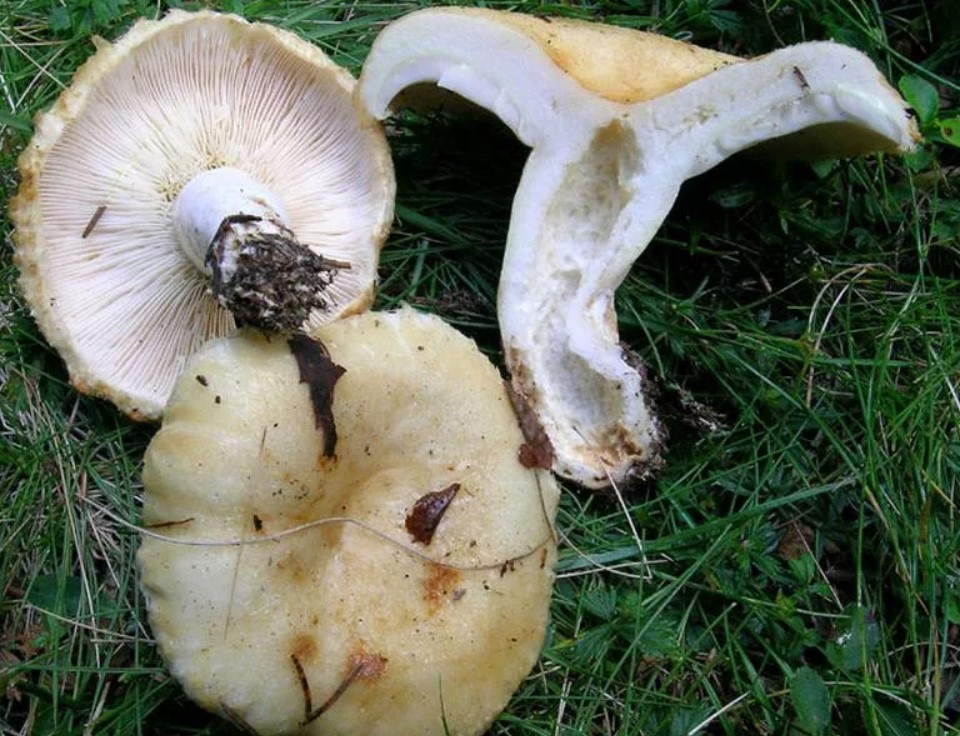
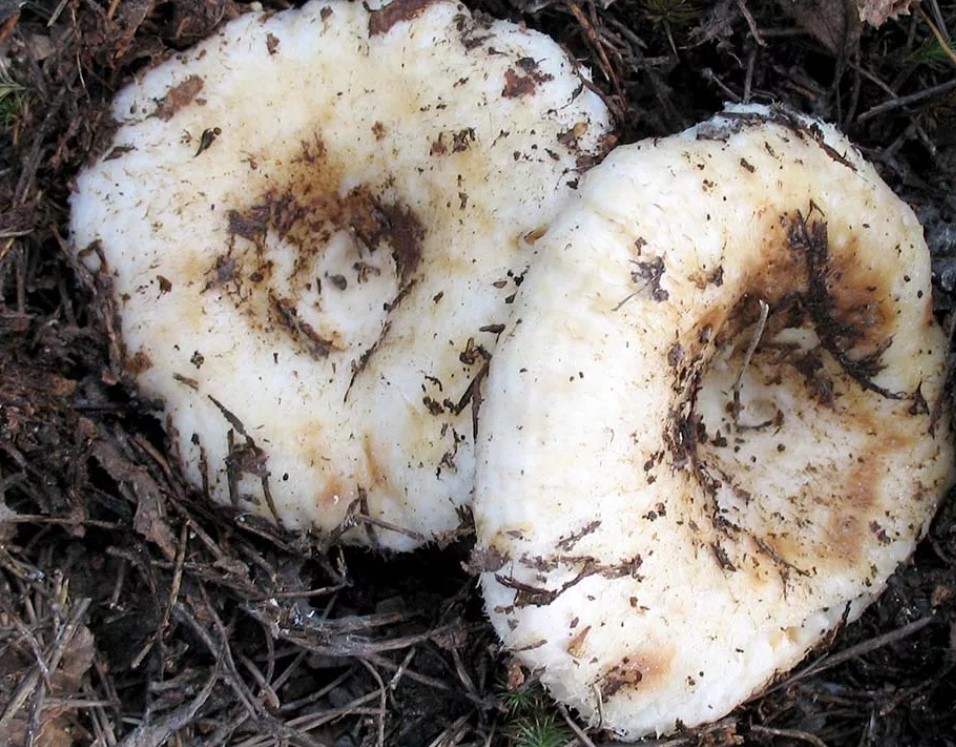
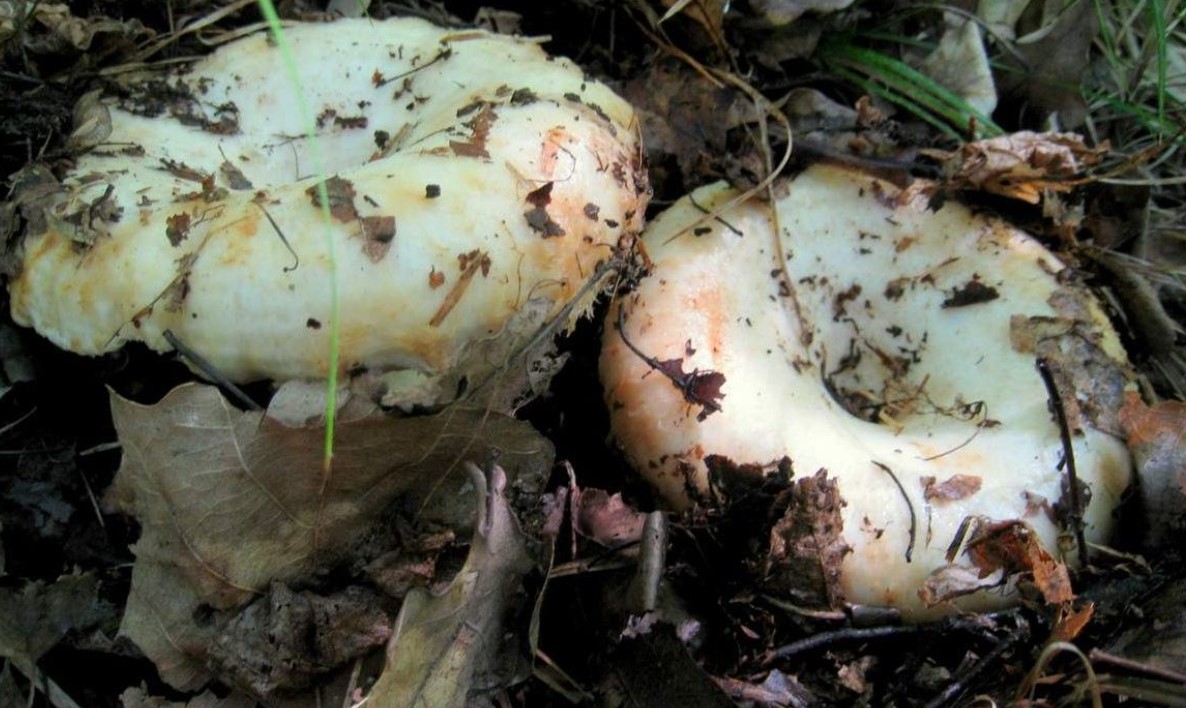
| Milk mushroom (Lactarius resimus) | The cap is up to 20 cm in diameter, with inward-curving margins. The mature mushroom is funnel-shaped. The milky sap turns yellow when exposed to air. The stem is up to 7 cm long, white, and may have yellow spots on the surface. | Edible. In Russia it is considered a category 1 edible mushroom. |
August-September. | Mixed and deciduous forests, likes birches, lindens, and pines. |
Photo gallery of real milk mushrooms
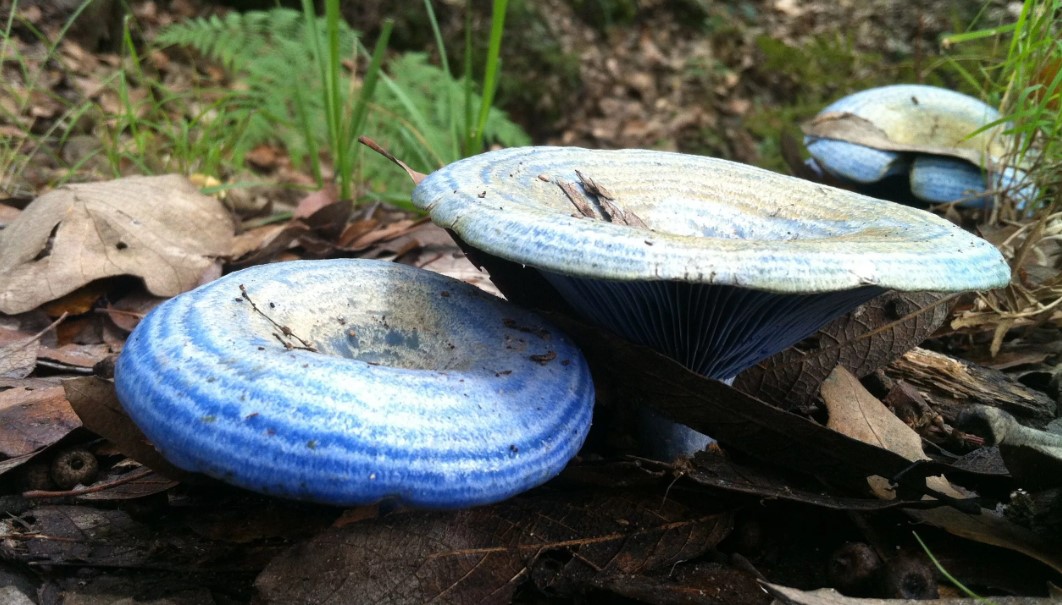
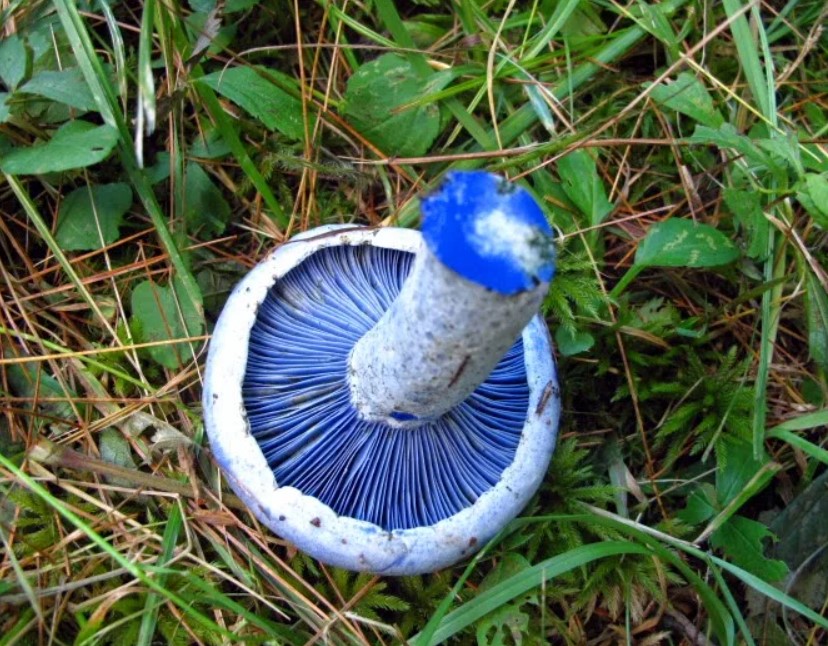
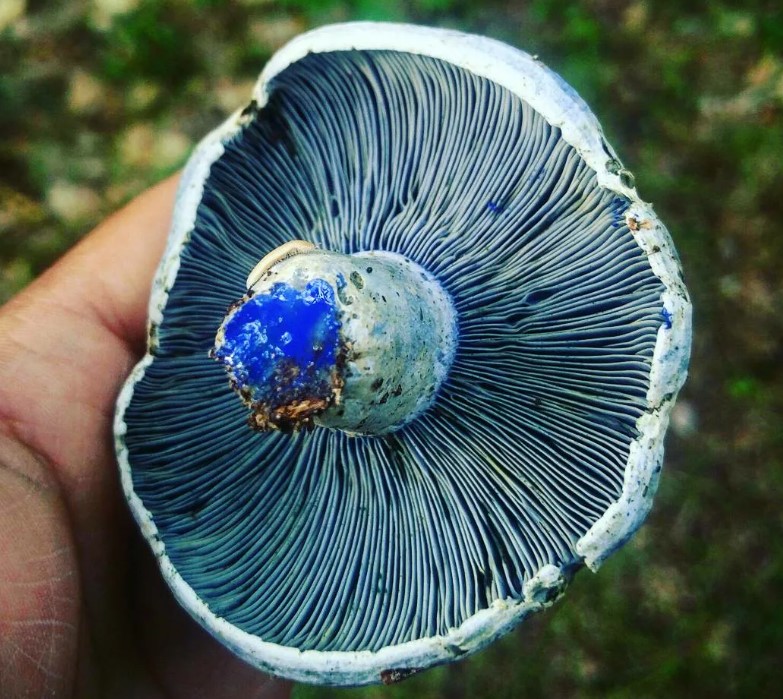
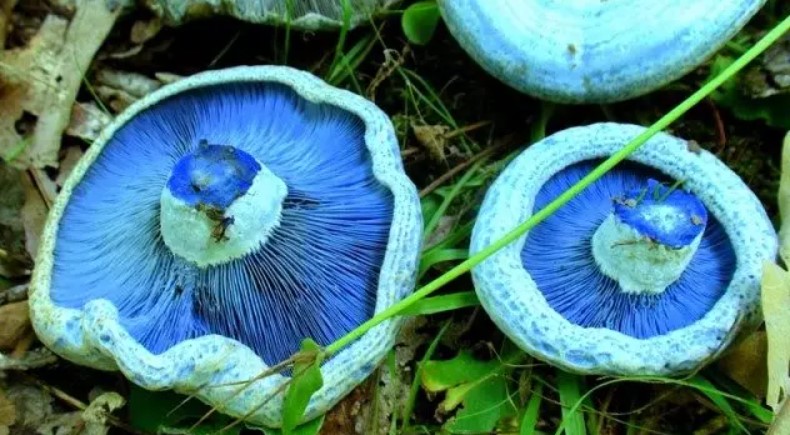
Blue milky (Lactarius indigo)
| View | Description | Edibility | Collection deadlines | Where to look |
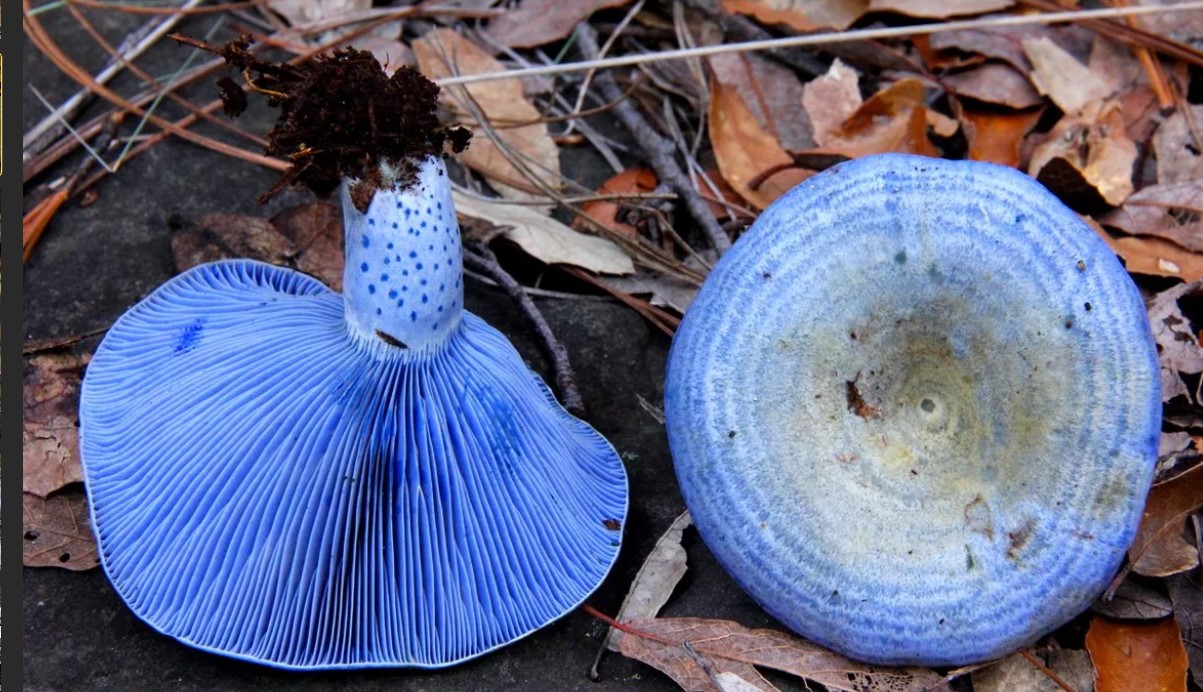
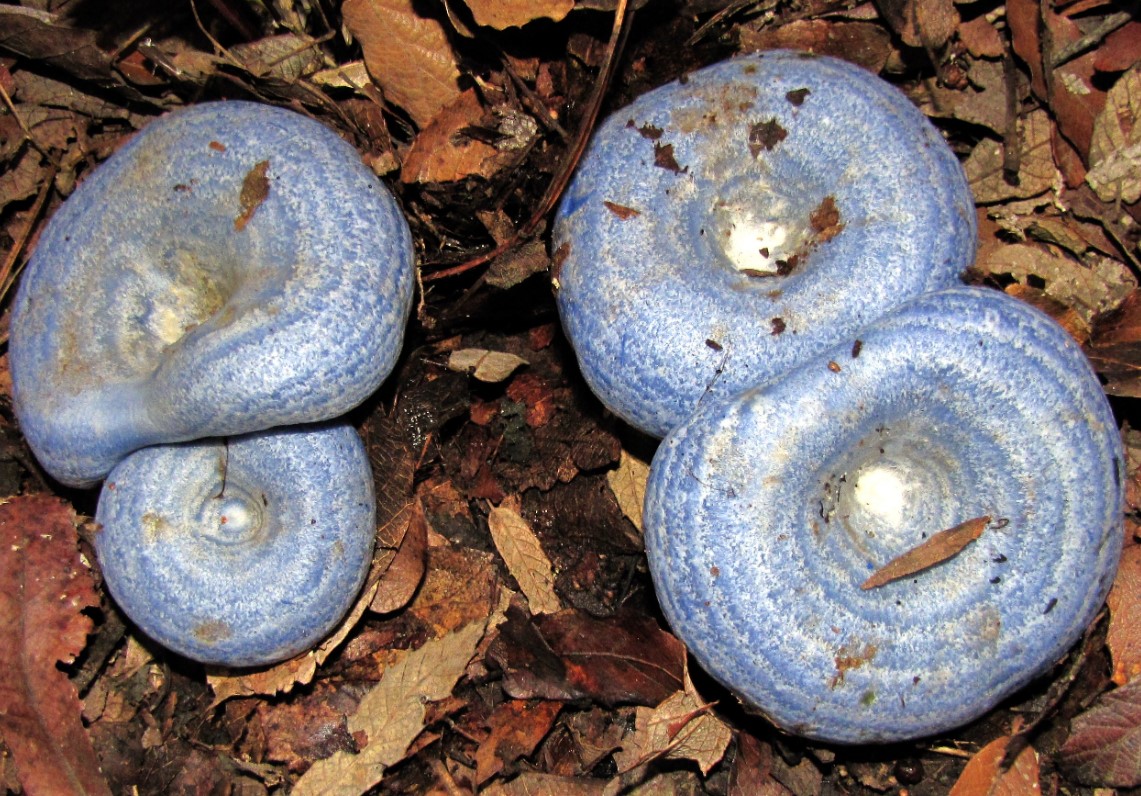
| Blue milky (Lactarius indigo) | The cap is 5 to 15 cm in diameter, blue in color, and the flesh turns green when damaged. The stem is up to 6 cm high. | Edible. | July-September. | Asia, North and Central America. Grows in both coniferous and broadleaf forests. |
Photo gallery of the blue milkweed
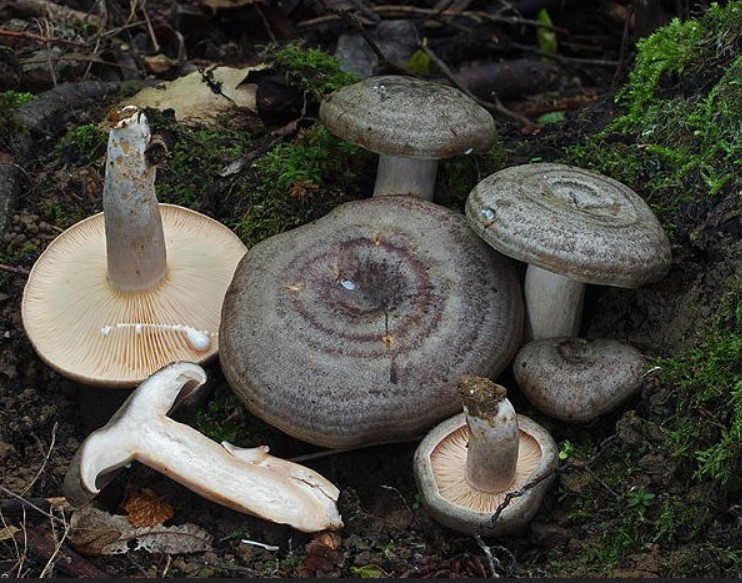
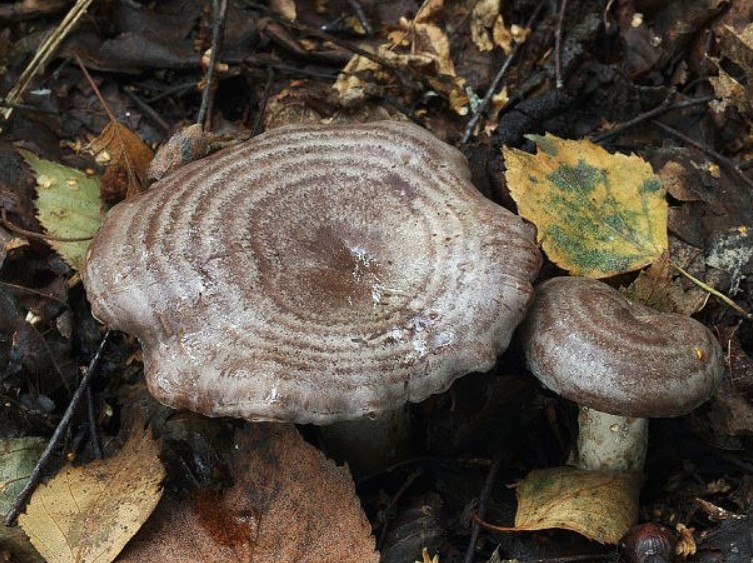
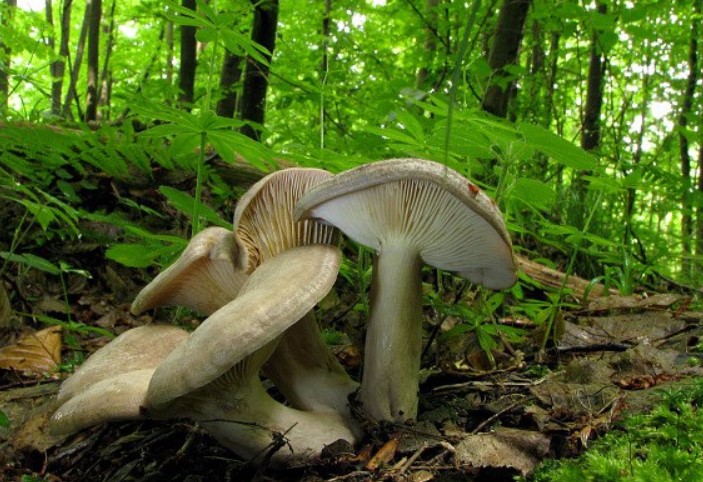
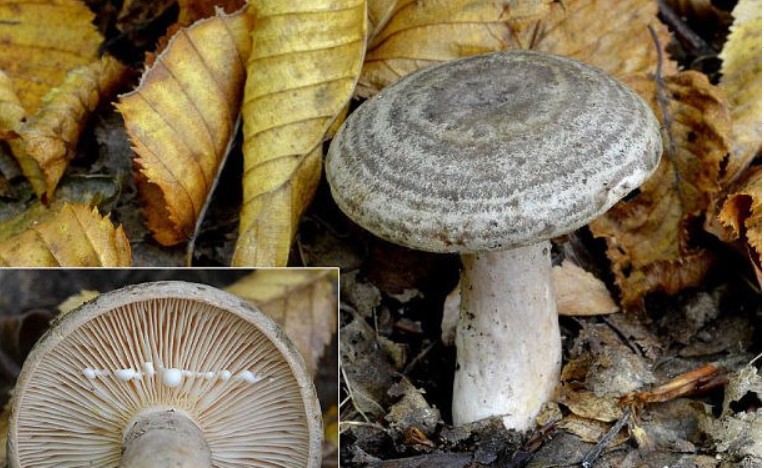
Lactarius circellatus
| View | Description | Edibility | Collection deadlines | Where to look |
| Lactarius circellatus | The cap is 3 to 10 cm in diameter, has wavy edges, a sticky surface, and is brownish-gray in color. An olive tint may be present. The stem is up to 8 cm long. The milky sap remains colorless. | Edible after soaking and salting. | July-September. | In our country it grows only in the Far East and prefers deciduous forests. |
Photo gallery of the zonalis latiformis
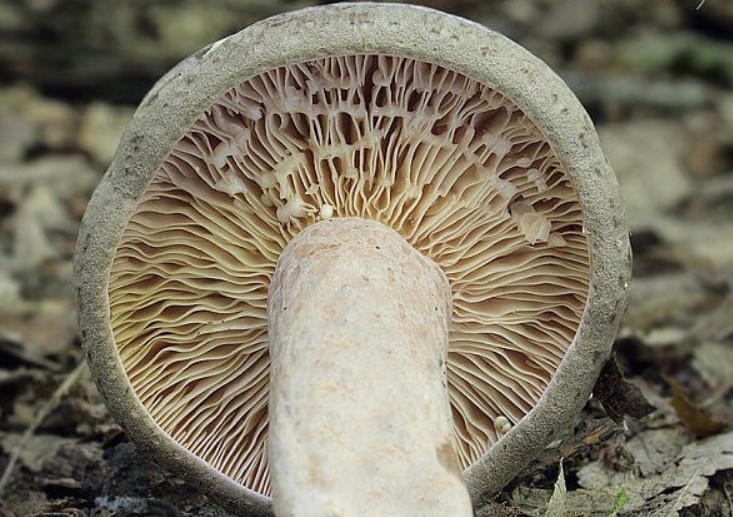
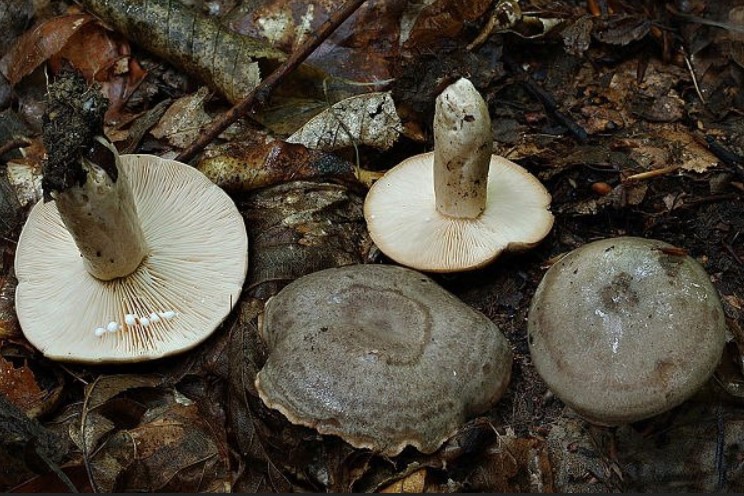
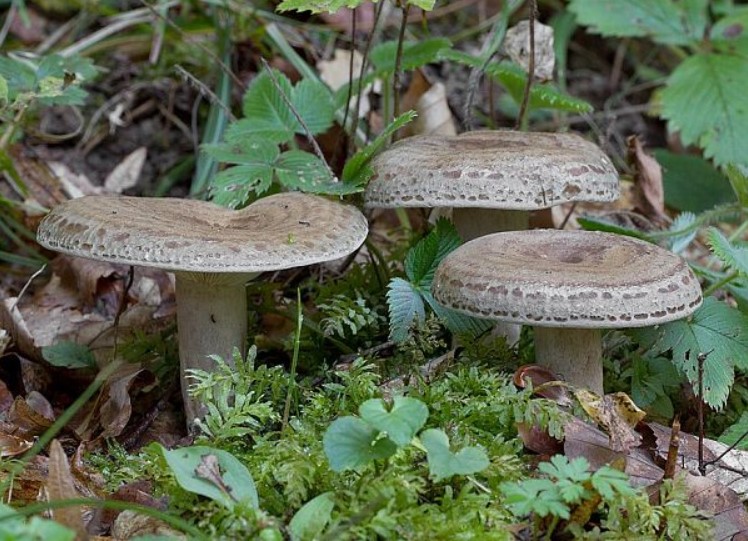
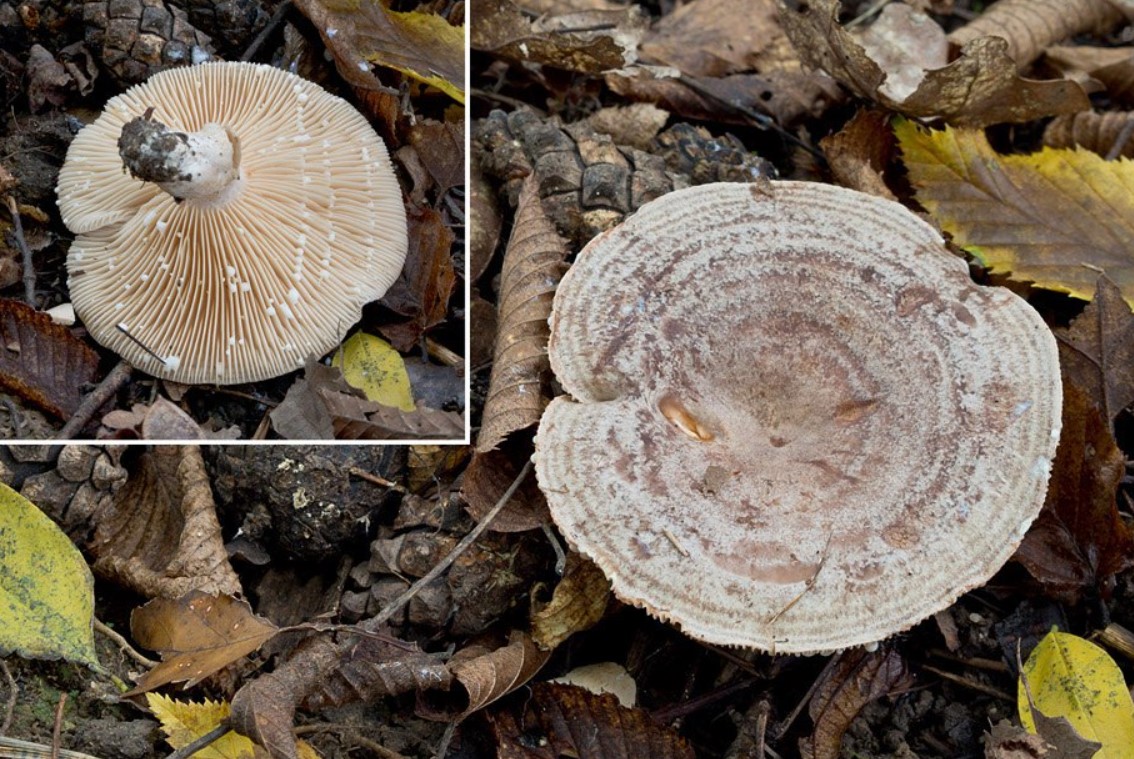
Red milkcap (Lactarius rufulus)
| View | Description | Edibility | Collection deadlines | Where to look |
| Red milkcap (Lactarius rufulus) | The cap is up to 10 cm in diameter and brownish-red in color. The stem is up to 12 cm tall. The flesh has a distinctive maple syrup aroma. | Edible. It resembles maple syrup in smell and taste. |
July-September. | Grows in groups near oak trees in fallen leaves. |
Photo gallery of the reddish milkweed
Alpine saffron milk cap, salmon saffron milk cap (Lactarius salmonicolor)
| View | Description | Edibility | Collection deadlines | Where to look |
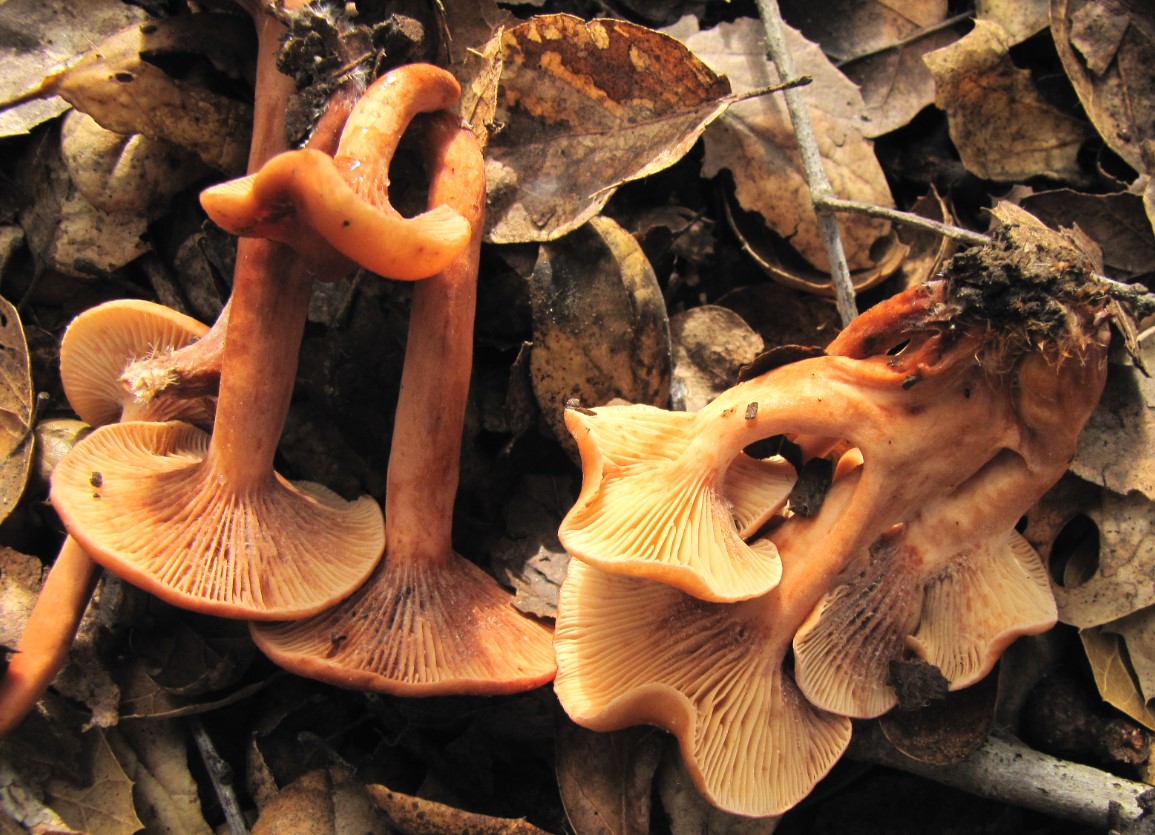
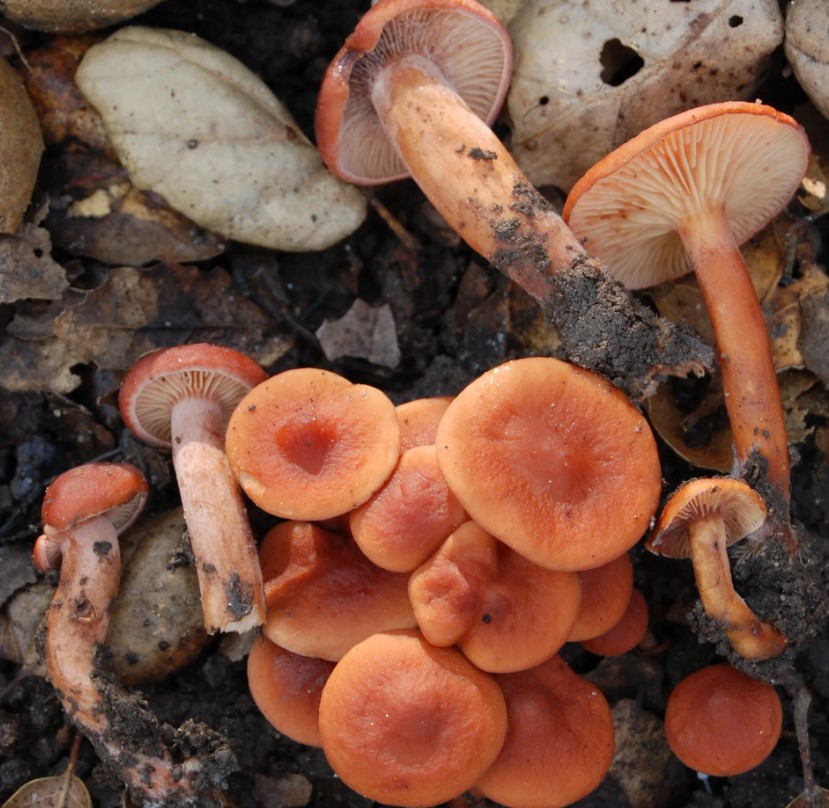
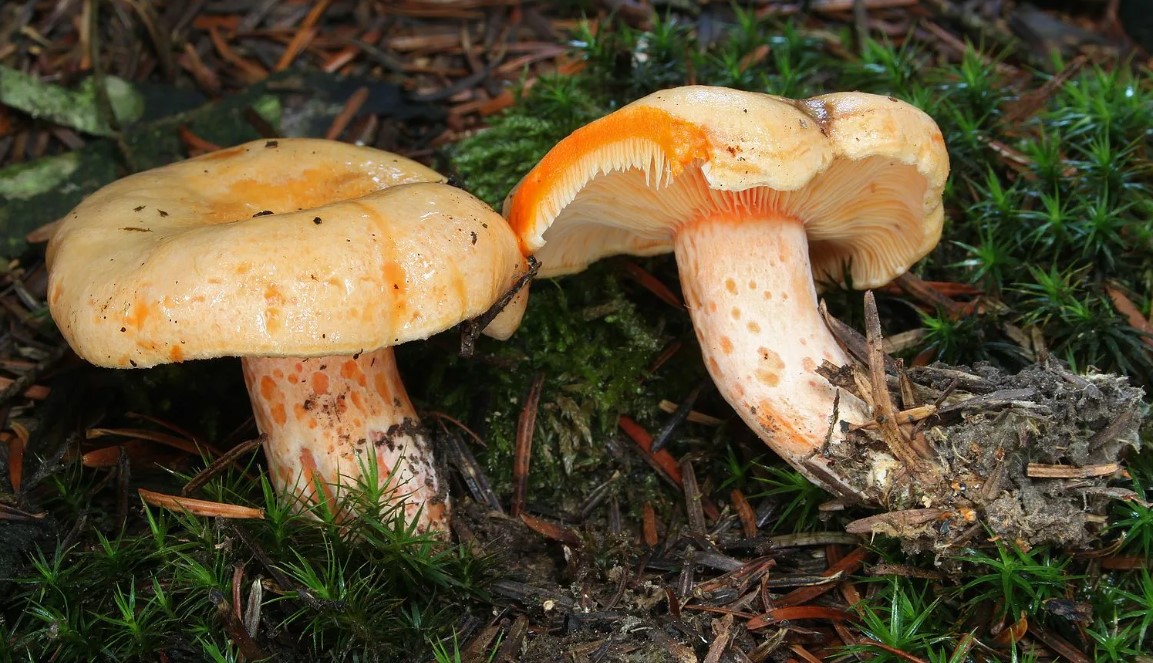
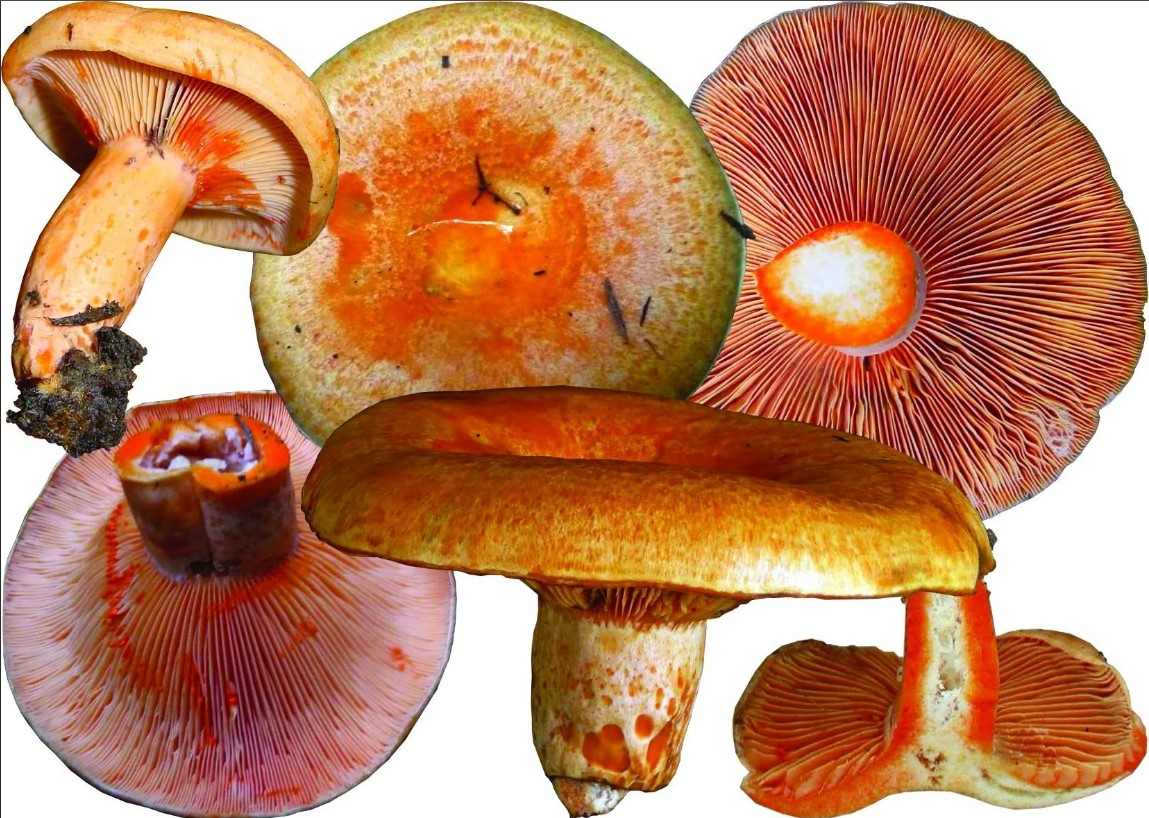
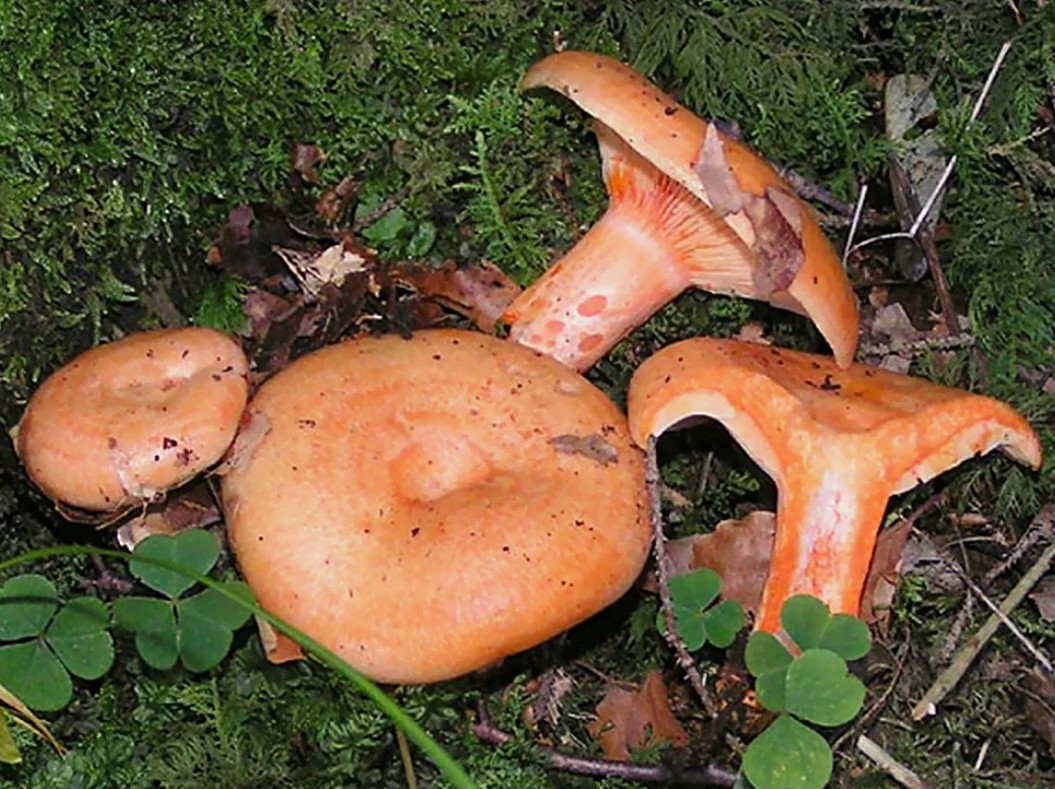
| Salmon milk cap (Lactarius salmonicolor) | The cap is vibrantly colored. It's orange-carrot-colored, becoming lighter toward the edges. The cap may have olive-colored spots. The flesh turns red when broken. | Edible. | August-October. | Grows near fir trees. |
Photo gallery of salmon milk cap
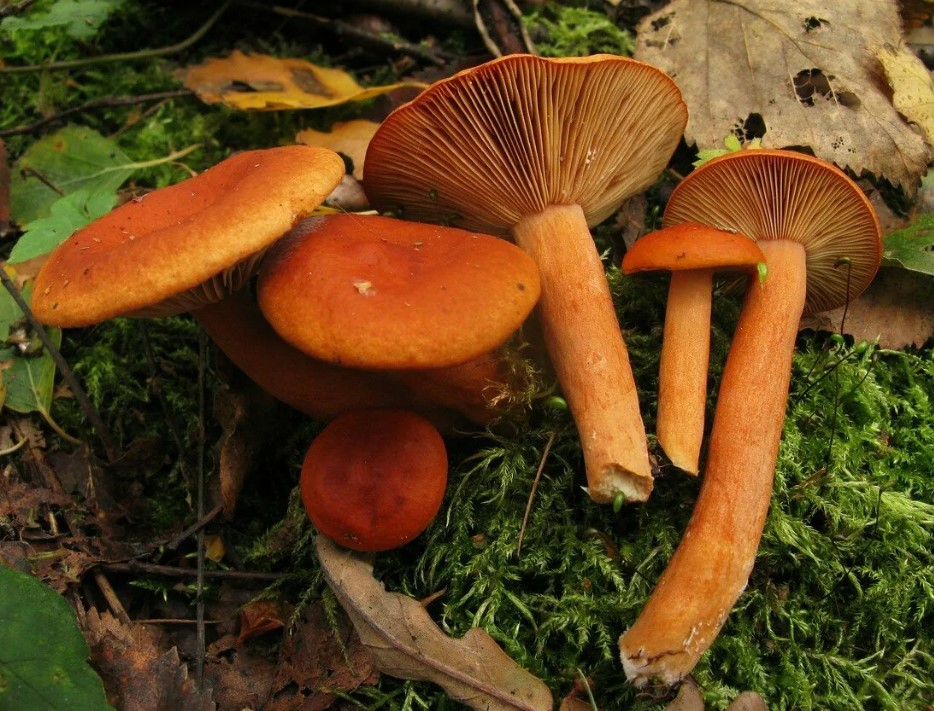
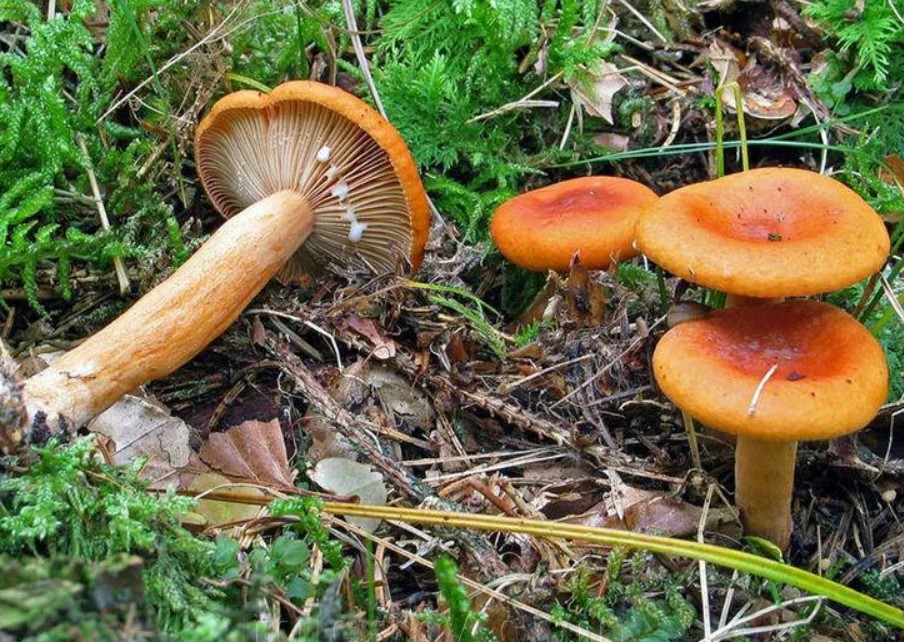
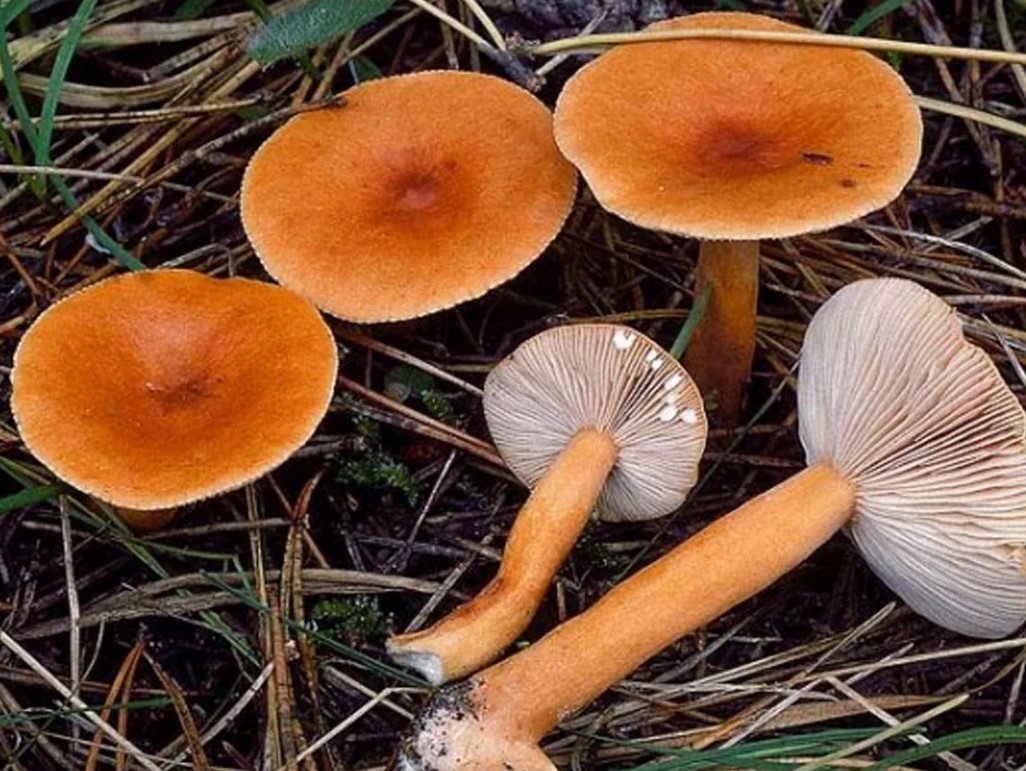
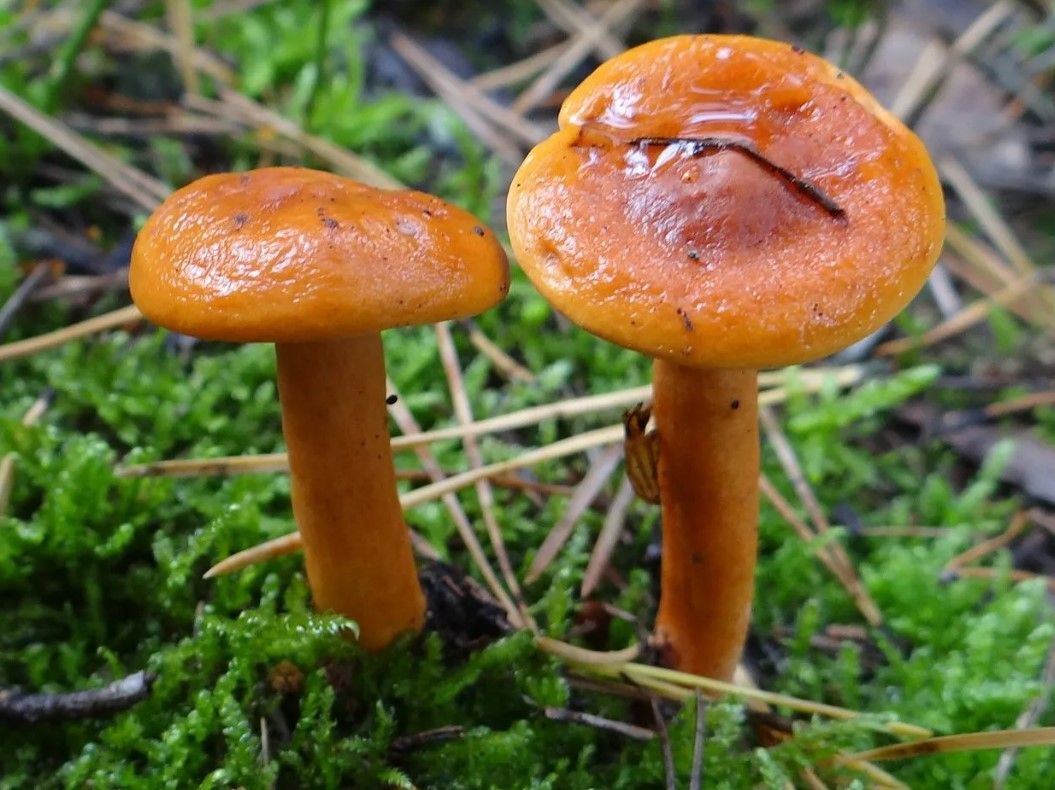
Lactarius aurantiacus
| View | Description | Edibility | Collection deadlines | Where to look |
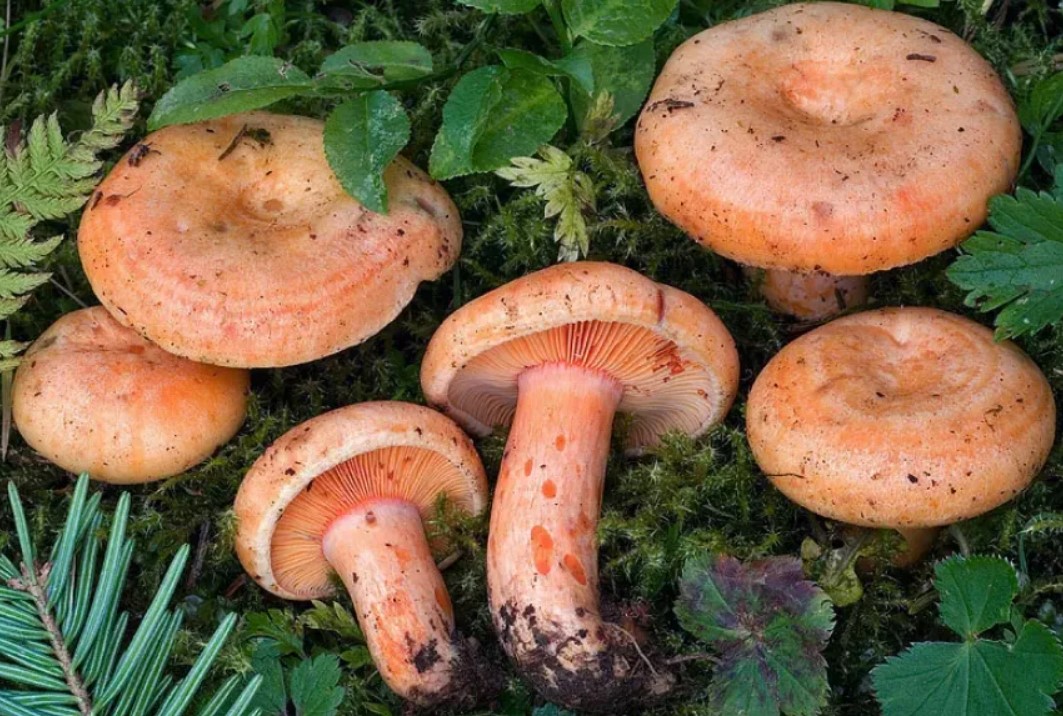
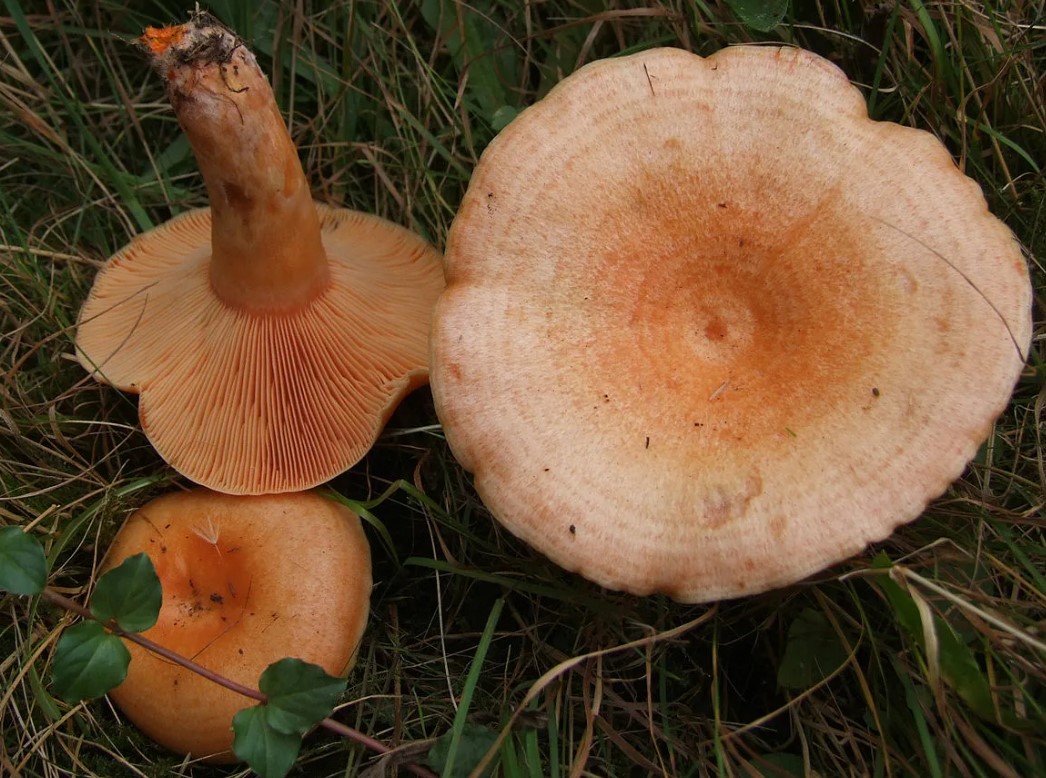
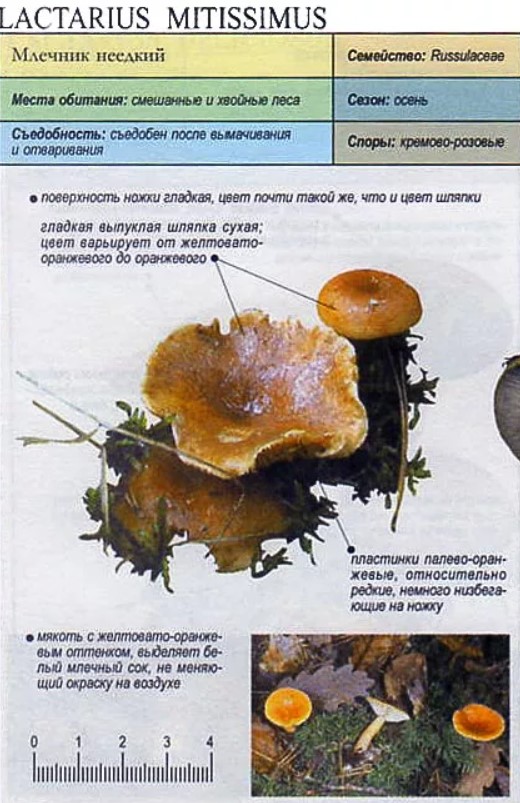
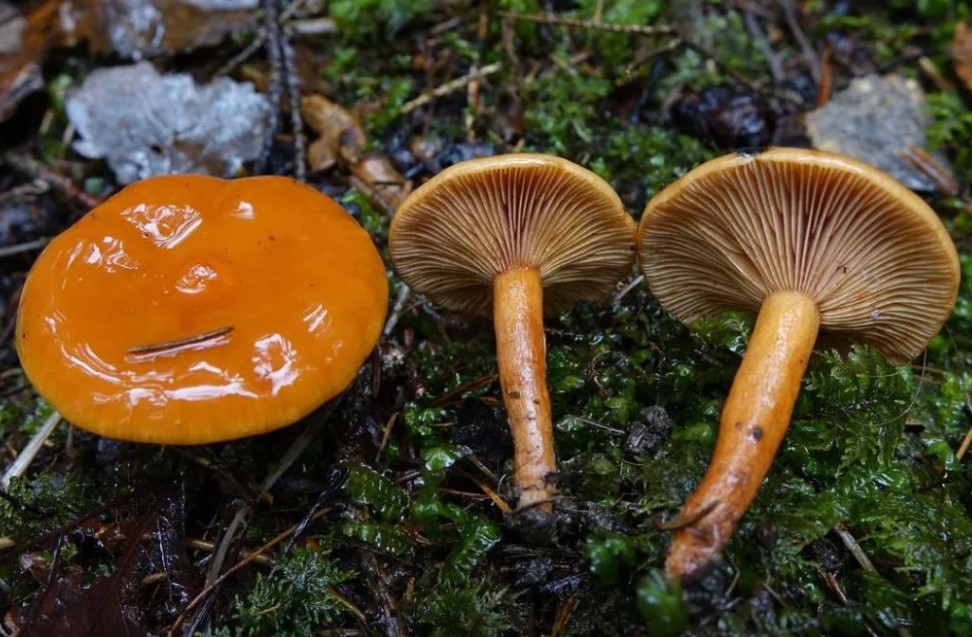
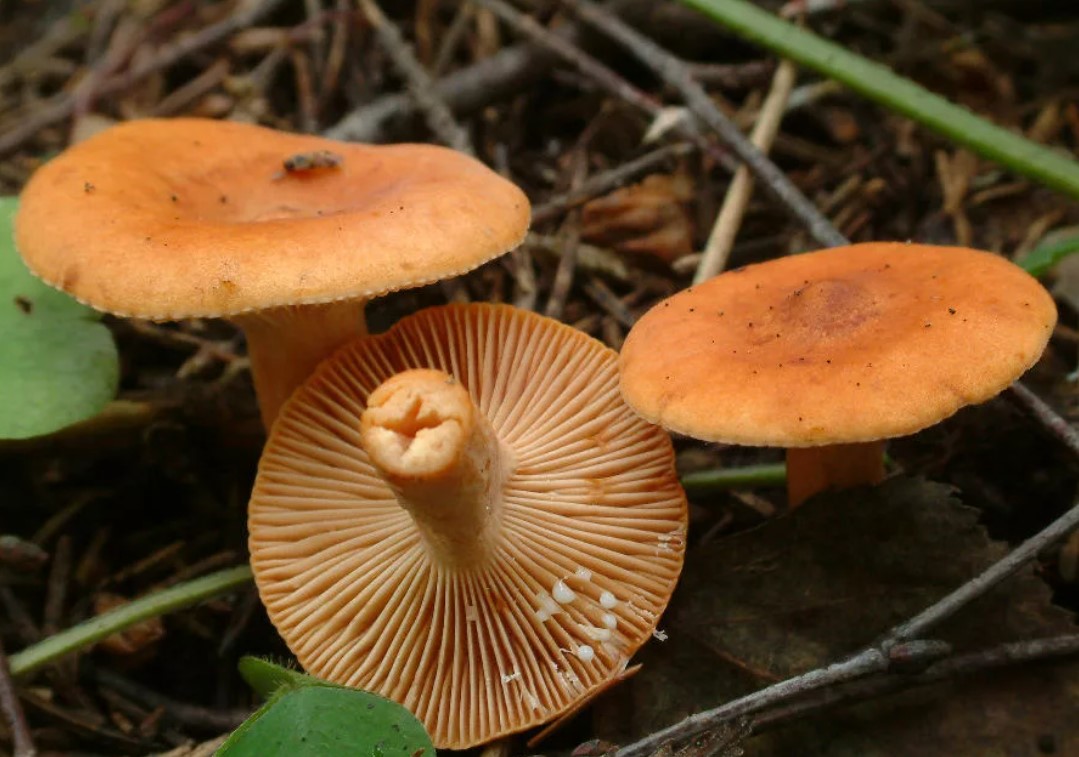
| Lactarius aurantiacus | The cap is orange, becoming concave as it grows. The center is slightly darker than the rim, and there are no distinct concentric zones on the surface. The flesh is thin and fragile. The milky sap is white. The stem is up to 5 cm tall, slightly lighter in color than the cap. | Edible. | Mul-October. | Found in both coniferous and deciduous forests, it hides in the moss under spruce trees. |
Photo gallery of the non-caustic milkcap
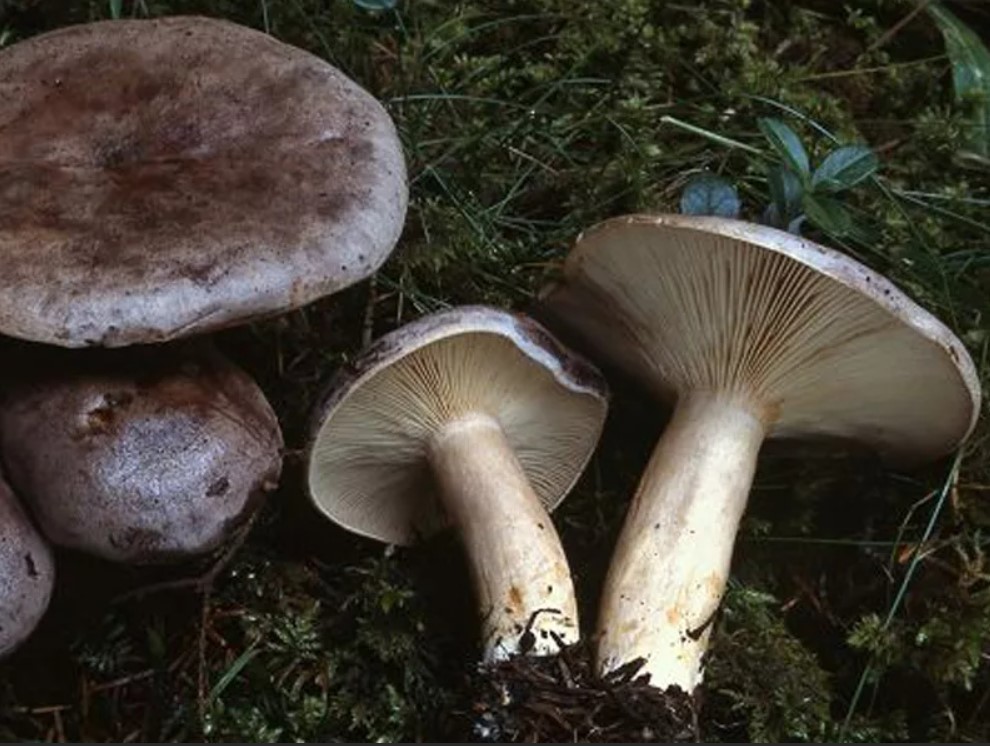
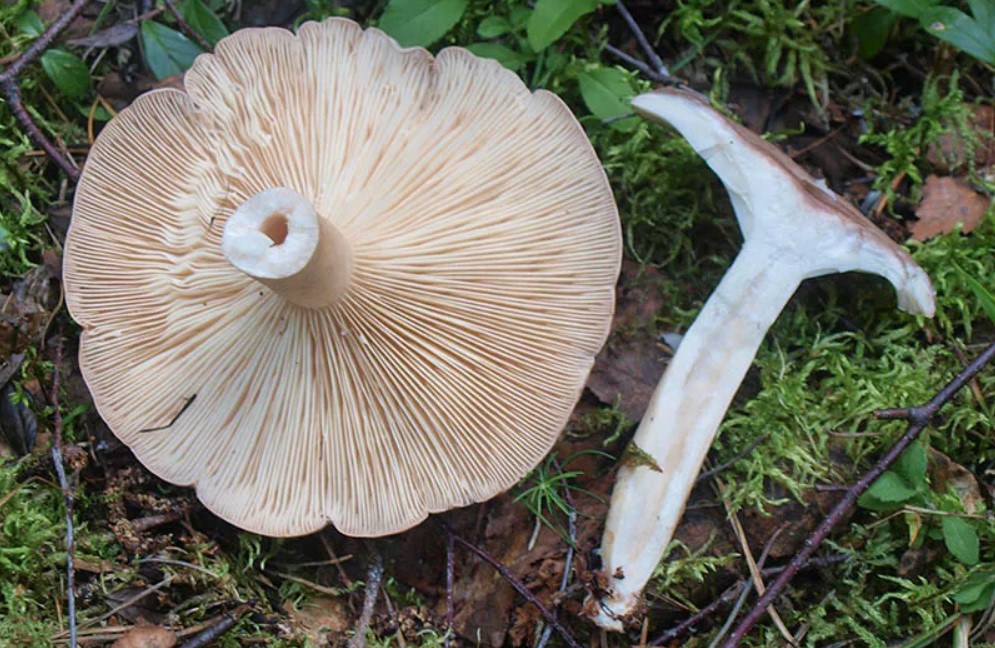
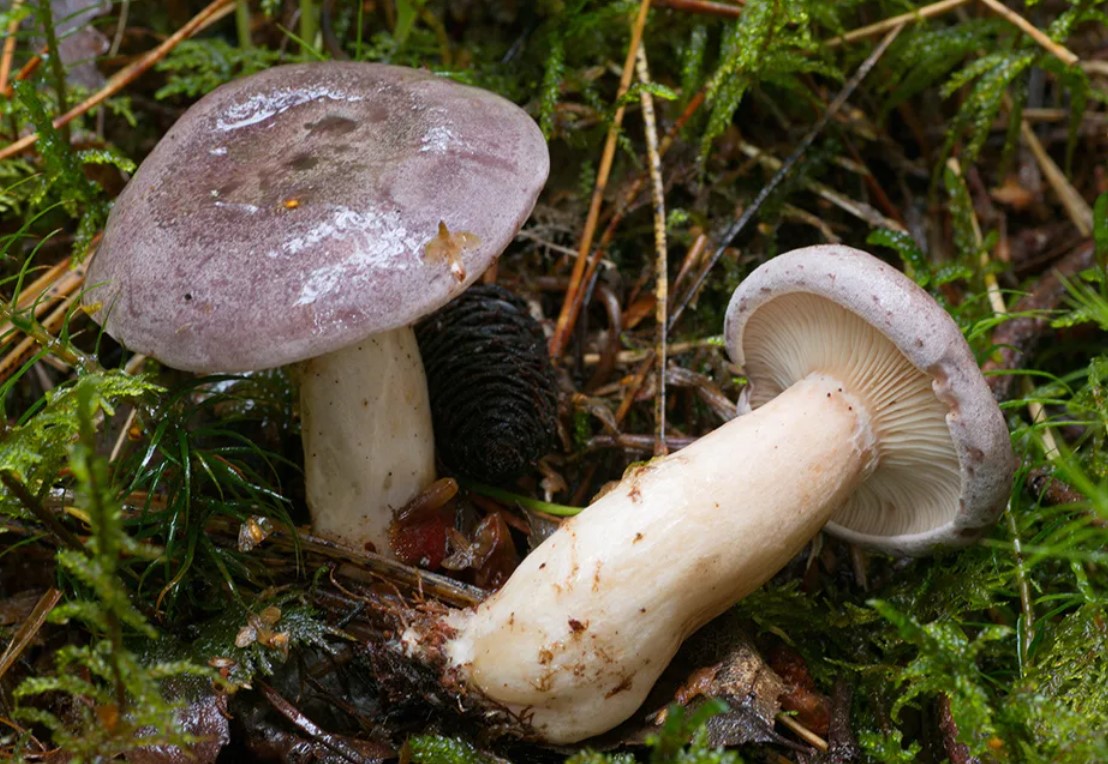
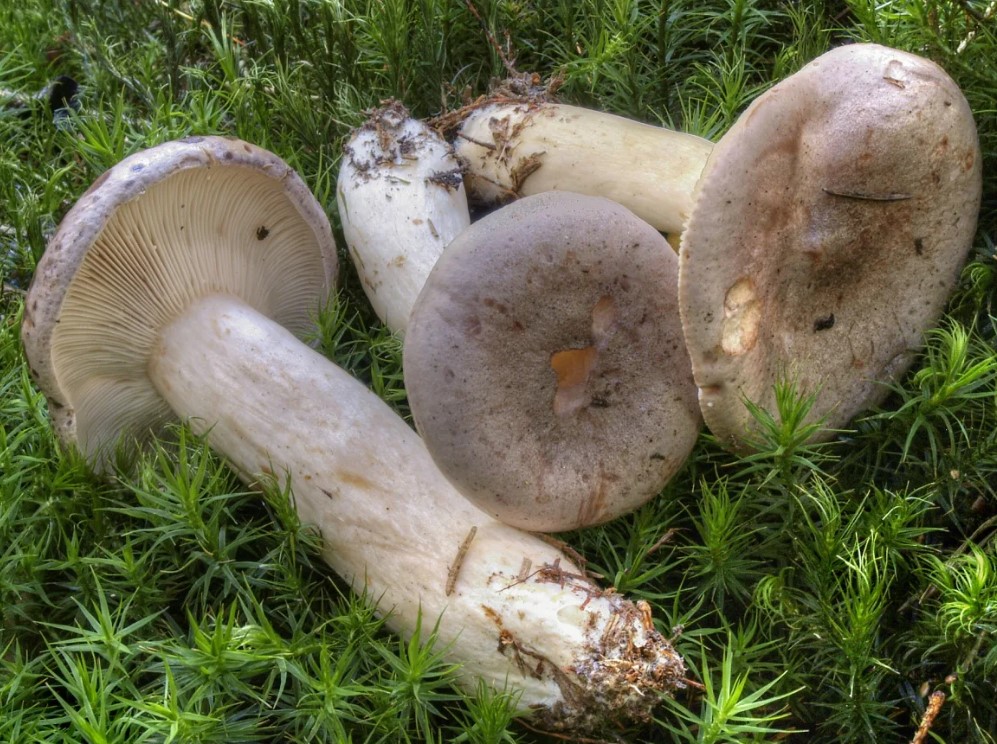
Common milkweed (Lactarius trivialis)
| View | Description | Edibility | Collection deadlines | Where to look |
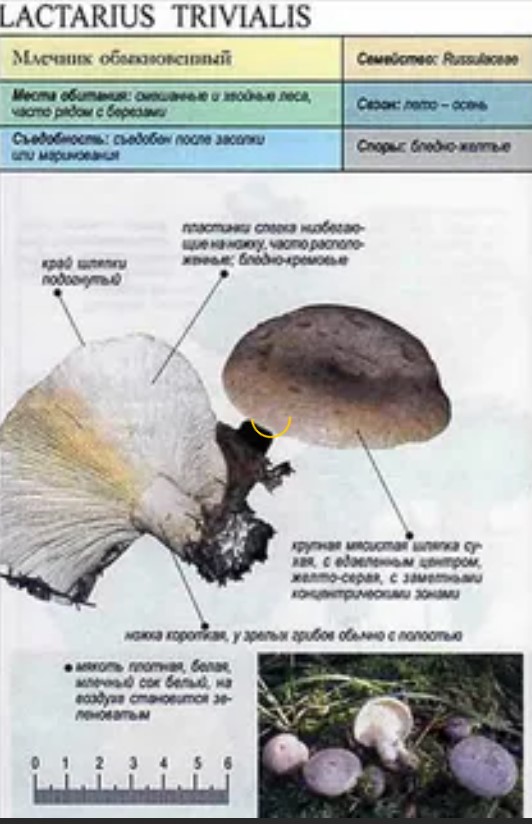
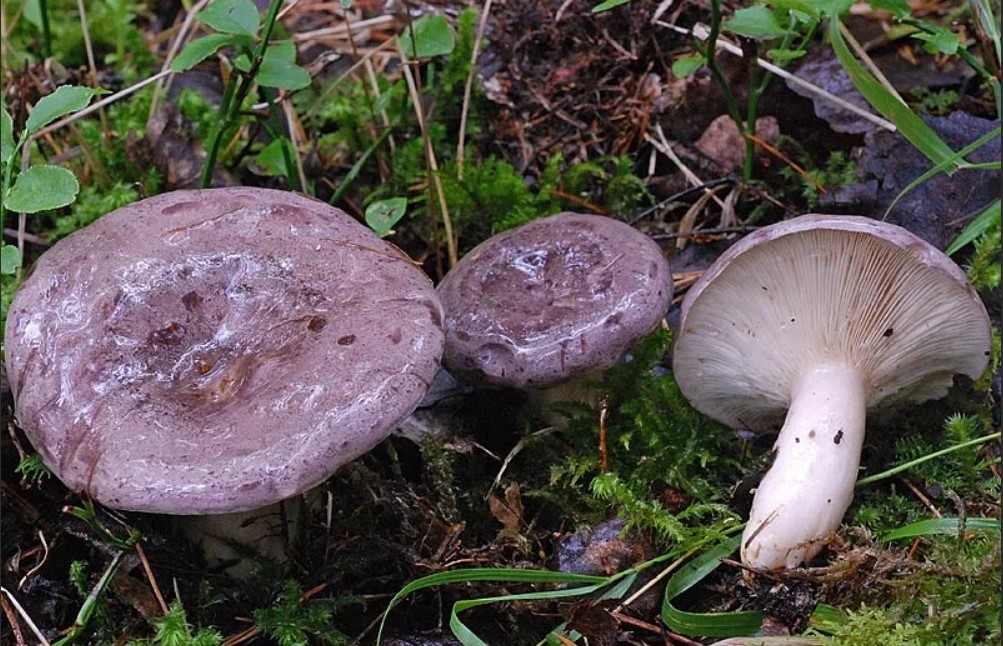
| Common milkweed (Lactarius trivialis) | The cap is 7-15 cm in diameter, changing from wheel-shaped to funnel-shaped. The color is initially brown, later becoming glaucous or pinkish. Concentric circles are few. The milky sap is white, turning green upon exposure to air. The stem is 5 to 15 cm tall. | Edible. | July-September. | All forests where spruce, birch or pine trees grow. |
Photo gallery of the common milkcap
Red saffron milk cap (Lactarius sanguífluus)
| View | Description | Edibility | Collection deadlines | Where to look |
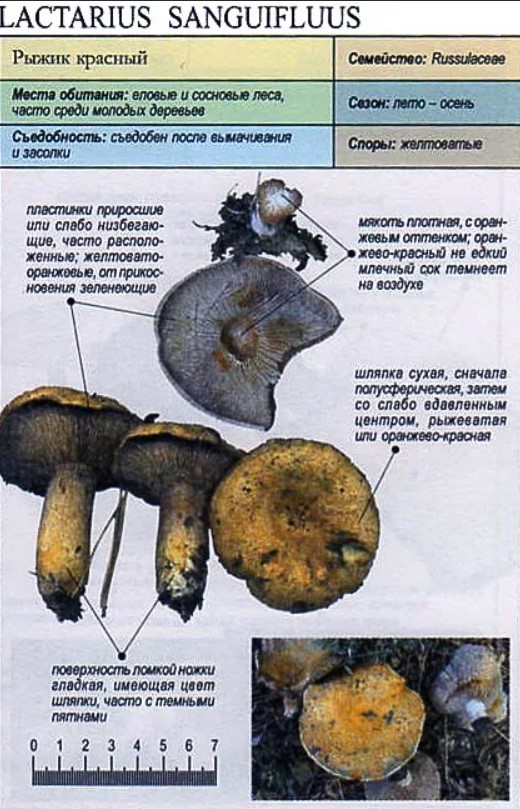
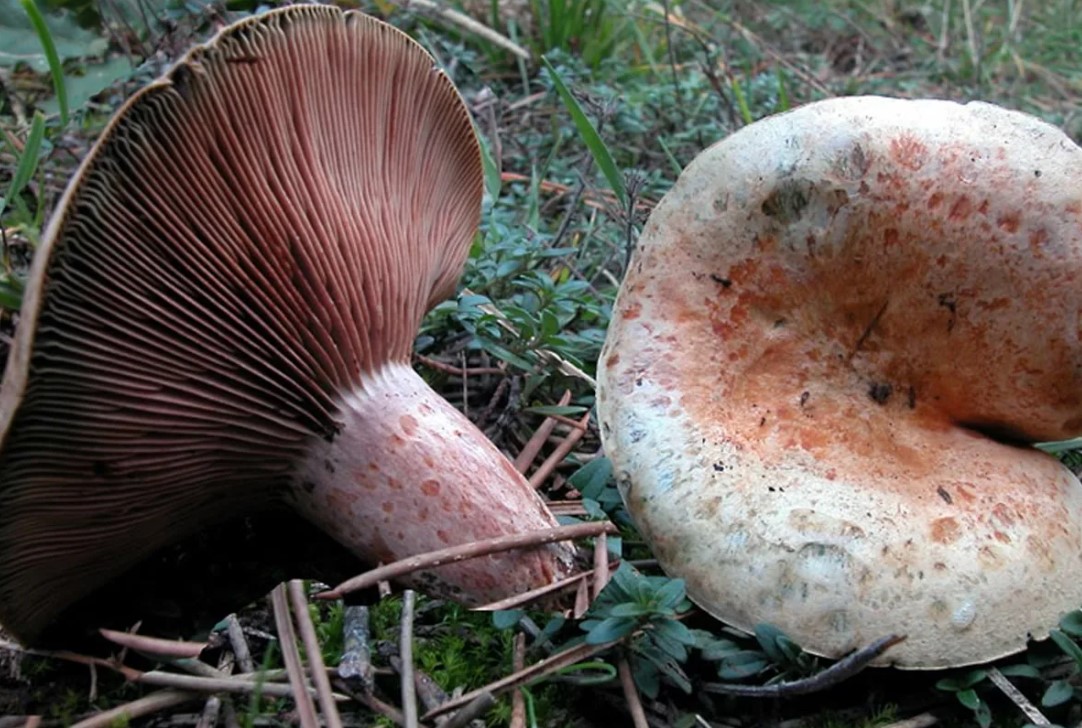
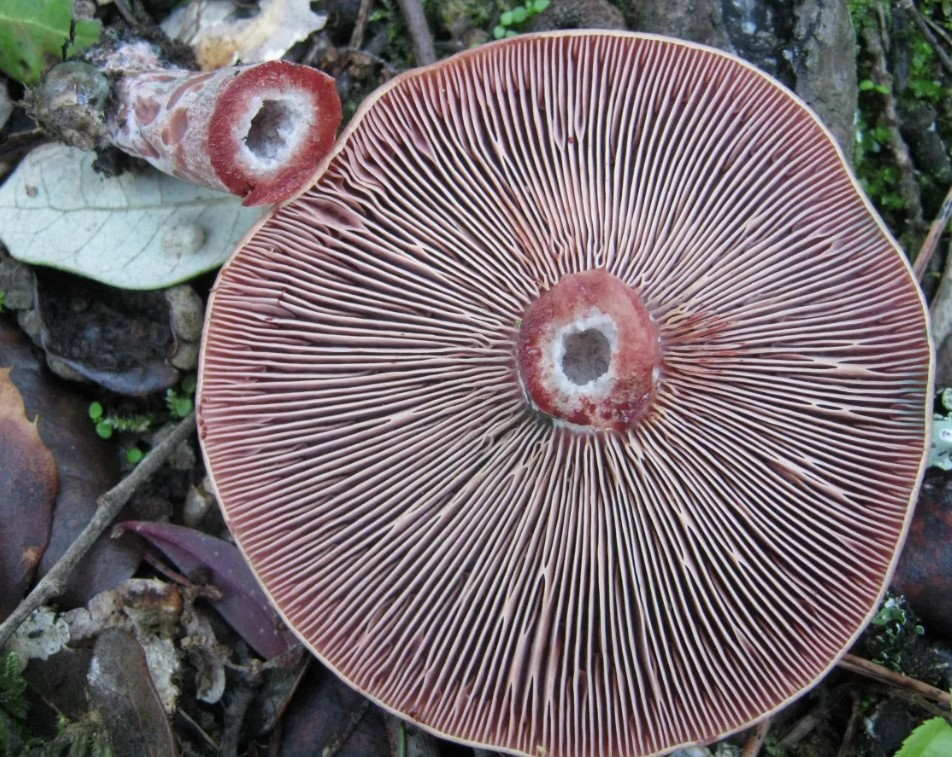
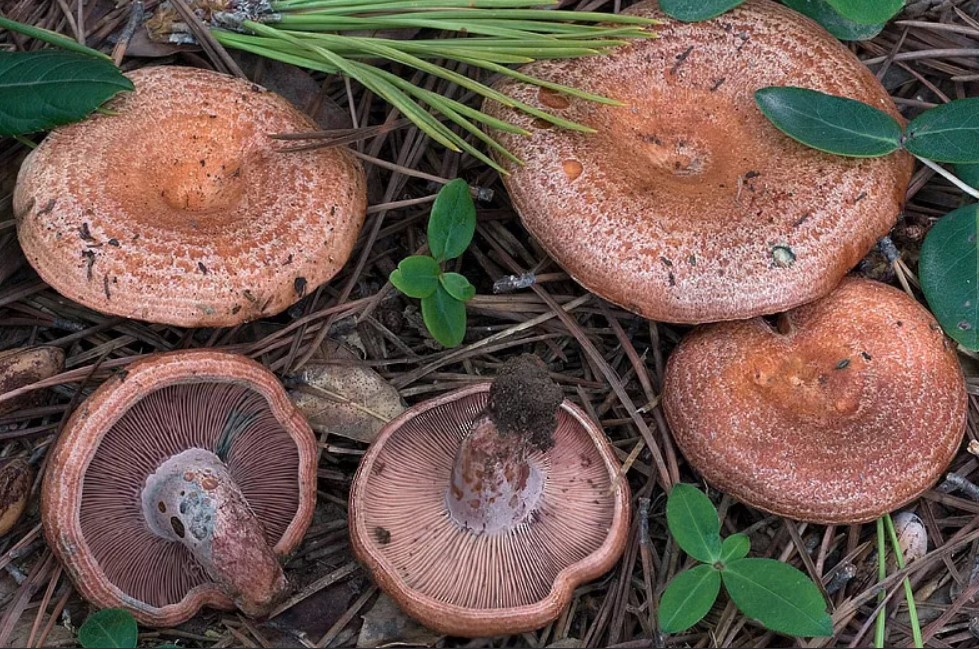
| Red saffron milk cap (Lactarius sanguífluus) | The cap is 5 to 15 cm in diameter, dense, and fleshy. The skin is orange and non-sticky. The stem is up to 6 cm tall and tapers at the base. The flesh turns red where cut. | Edible. | Summer-autumn. | Coniferous forests. More common in mountainous areas. |
Photo gallery of the red saffron milk cap
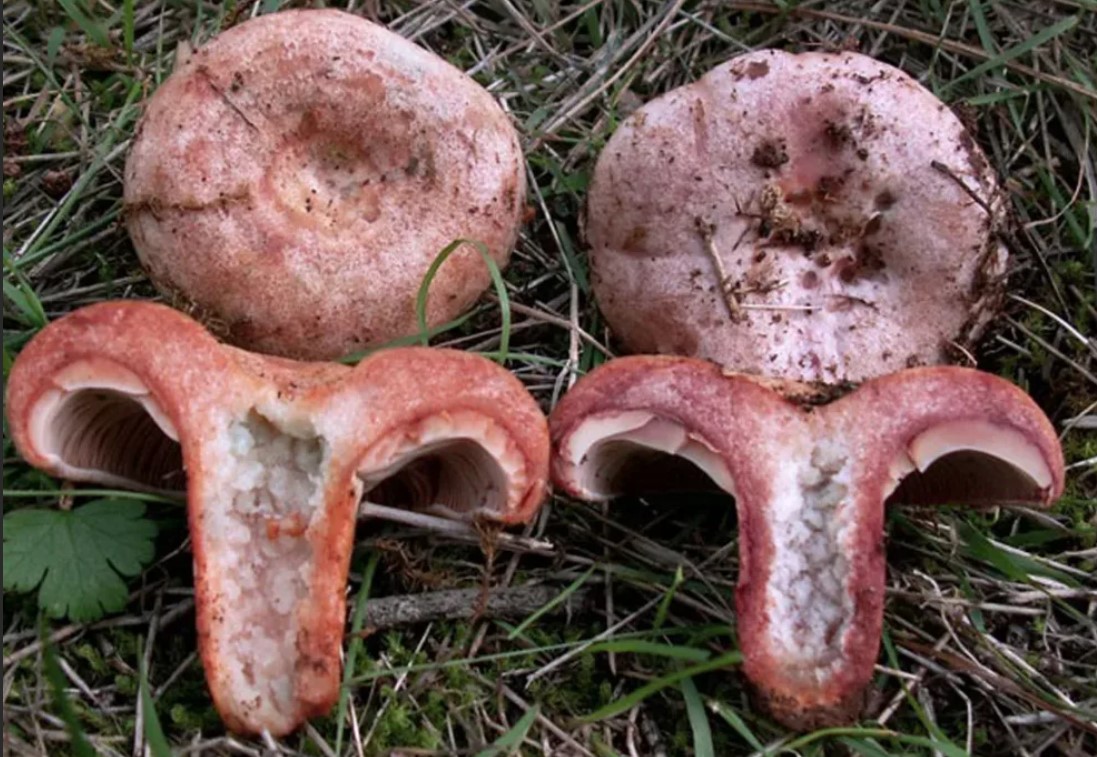
Japanese saffron milk cap (Lactarius japonicus)
| View | Description | Edibility | Collection deadlines | Where to look |
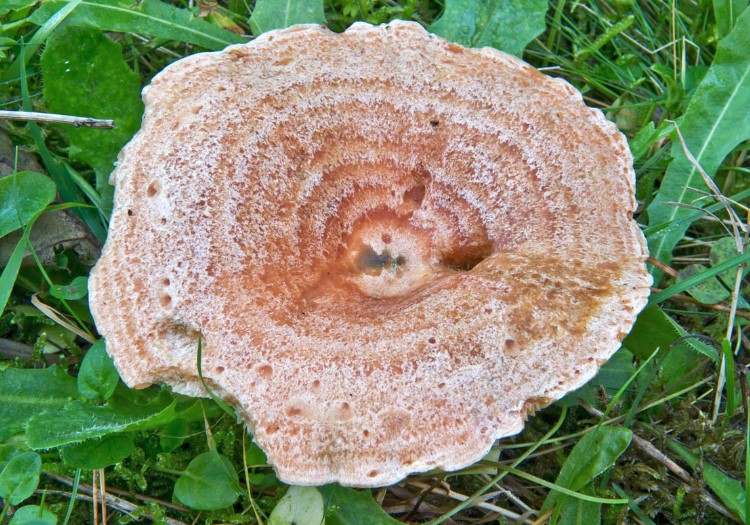
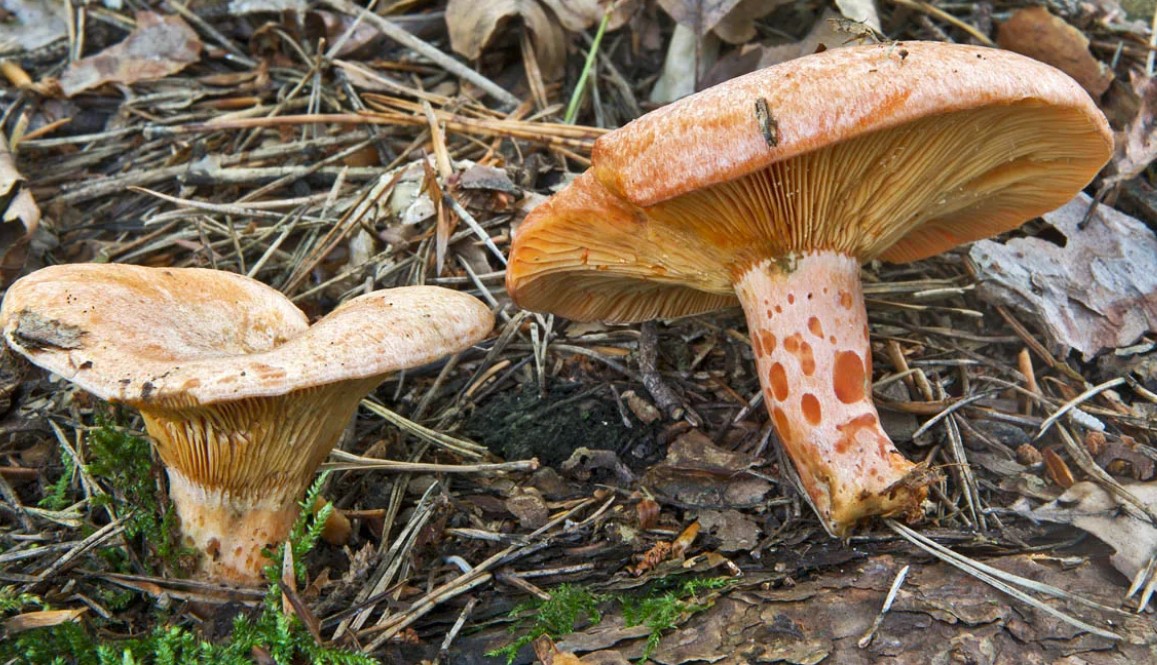
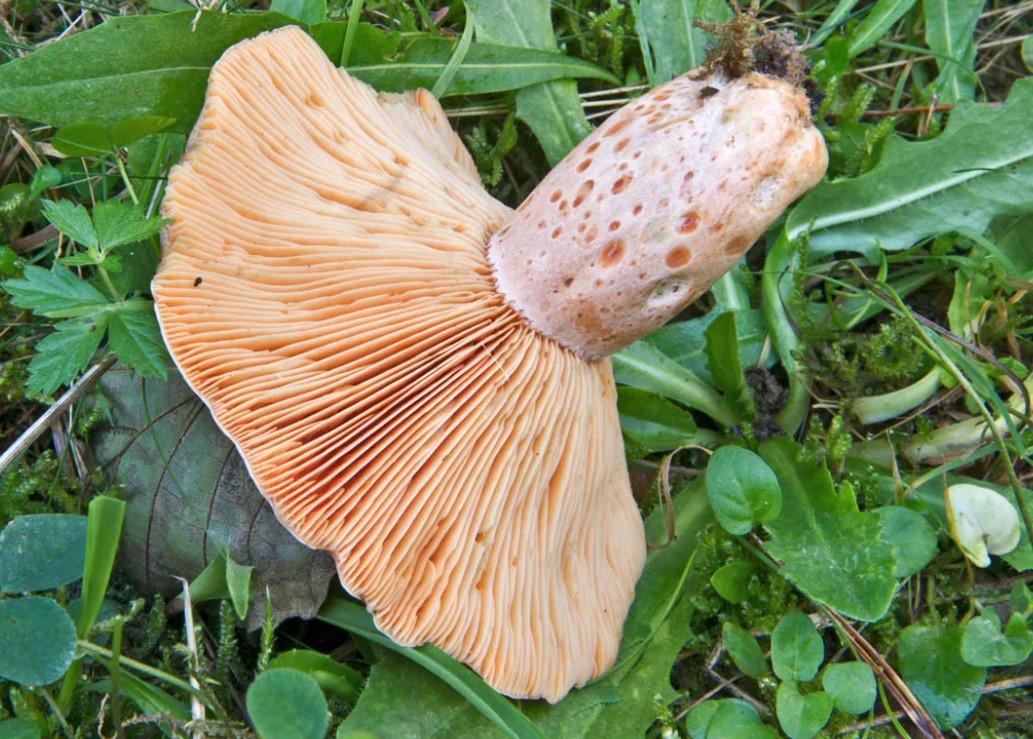
| Japanese saffron milk cap (Lactarius japonicus) | The cap is up to 8 cm in diameter, flat, with a depressed center and an inward-curving margin. The color is pinkish or reddish with distinct concentric terracotta zones. The stem is up to 7 cm high, brittle, with a white line at the top. |
Edible. | September-October. | Japan, Primorsky Krai. It prefers coniferous forests, nesting under fir trees, but can also be found in mixed forests. |
Photo gallery of the Japanese saffron milk cap
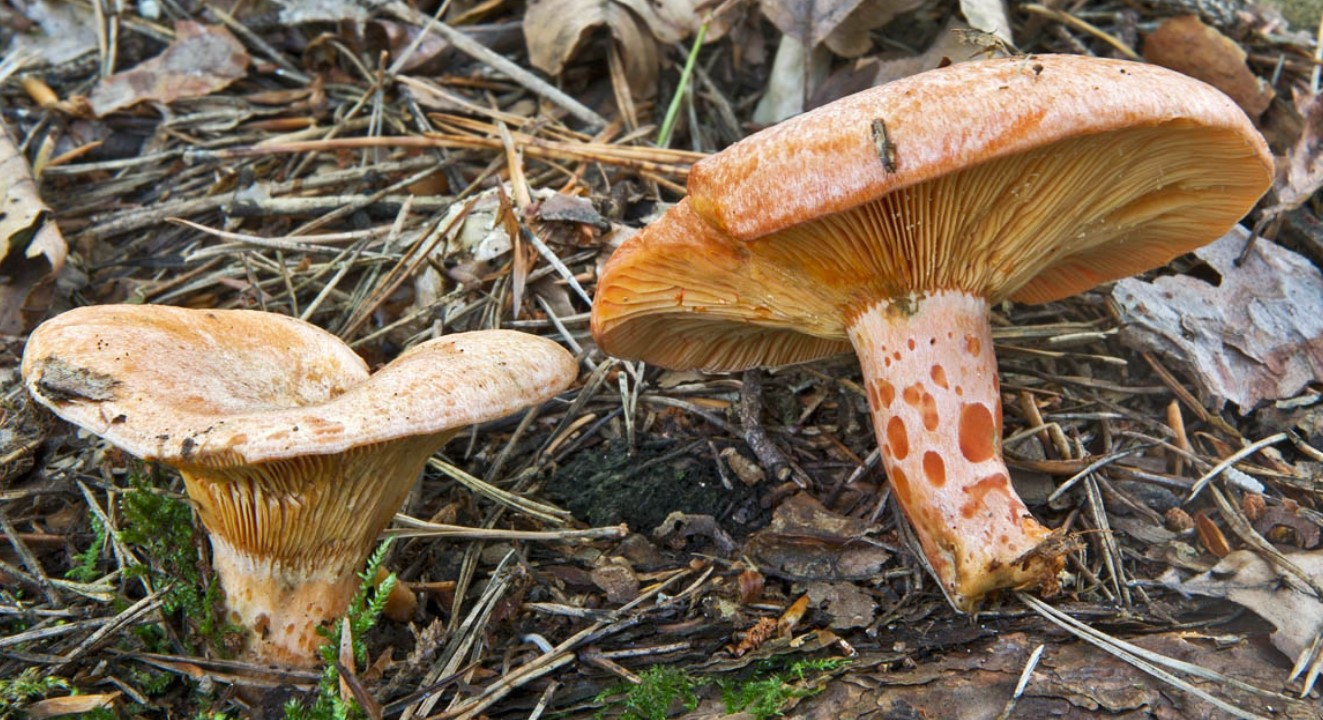
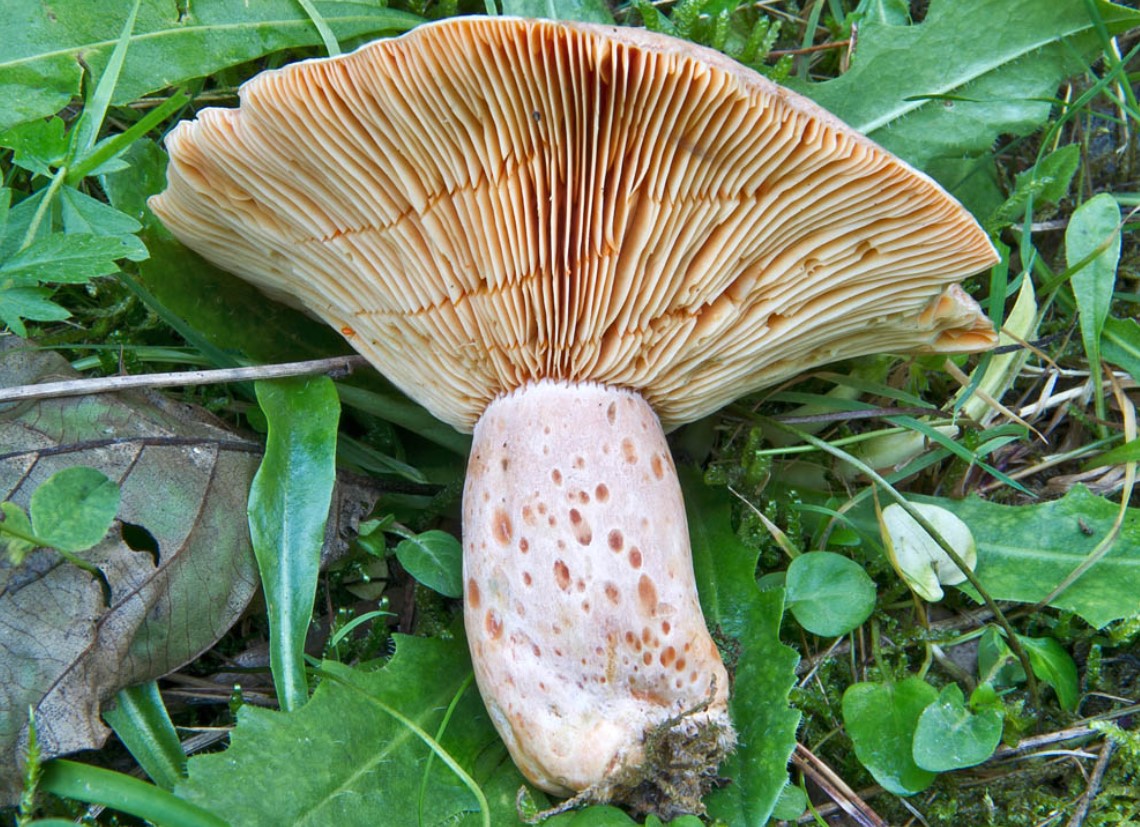
23 conditionally edible species of milk mushrooms with photos and descriptions in tables
Conditionally edible milk mushrooms, or milk caps, are eaten after lengthy preparation, soaking in a brine solution for several days and then boiling. Typically, these mushrooms are eaten only salted.
White milkweed (Lactarius musteus)
| View | Description | Edibility | Collection deadlines | Where to look |
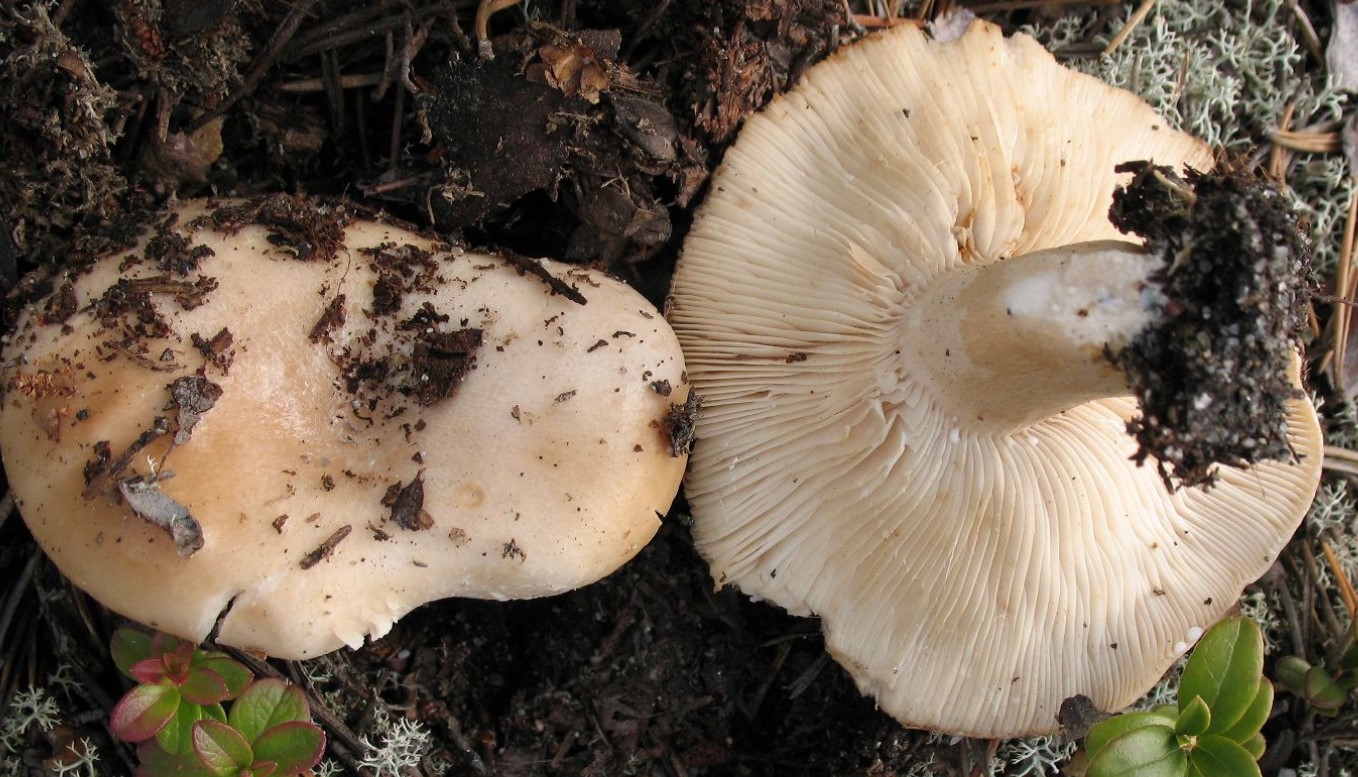
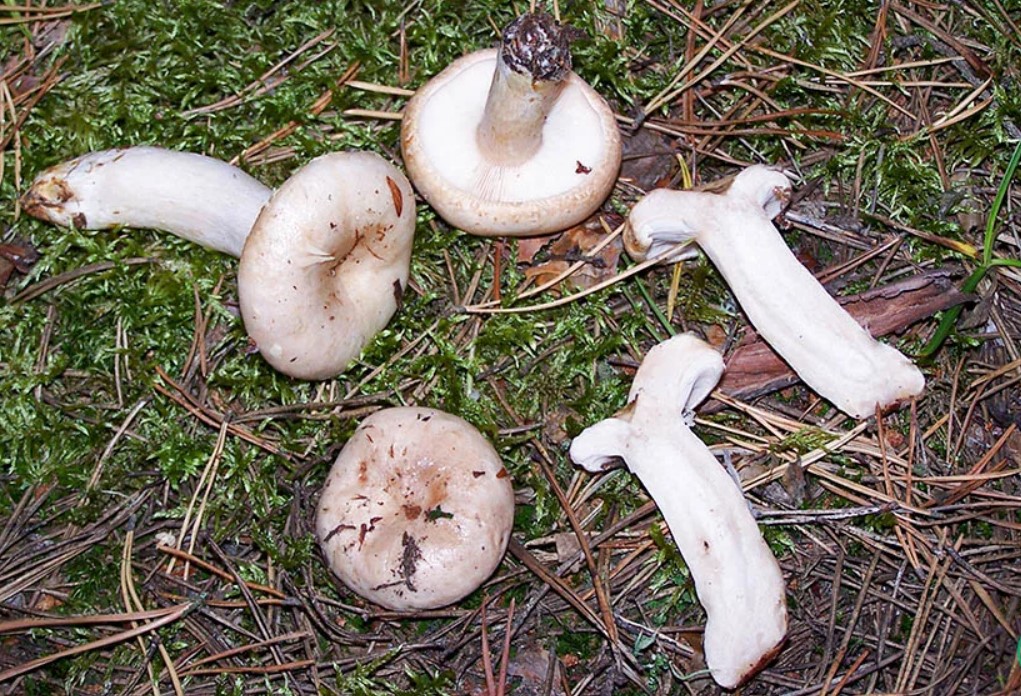
| White milkweed (Lactarius musteus) | The cap diameter is up to 10 cm, the surface is yellowish, the core is brown. The stem is up to 7 cm high. The milky juice is white. | Conditionally edible. | August-October. | Sandy soils in mixed and pine forests. |
Photo gallery of the white milkweed
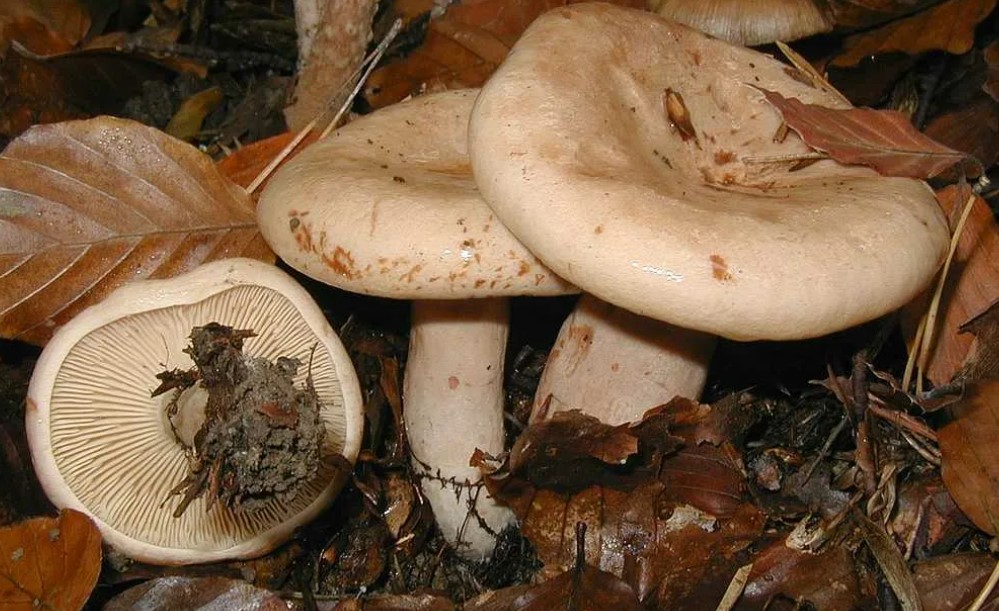
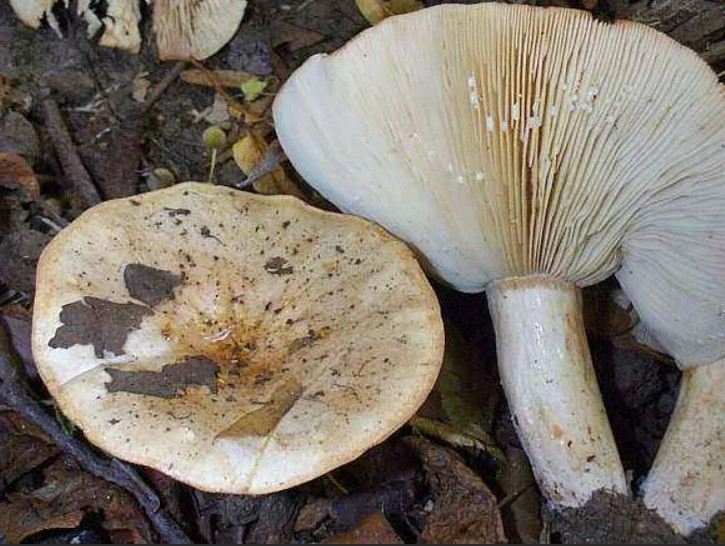
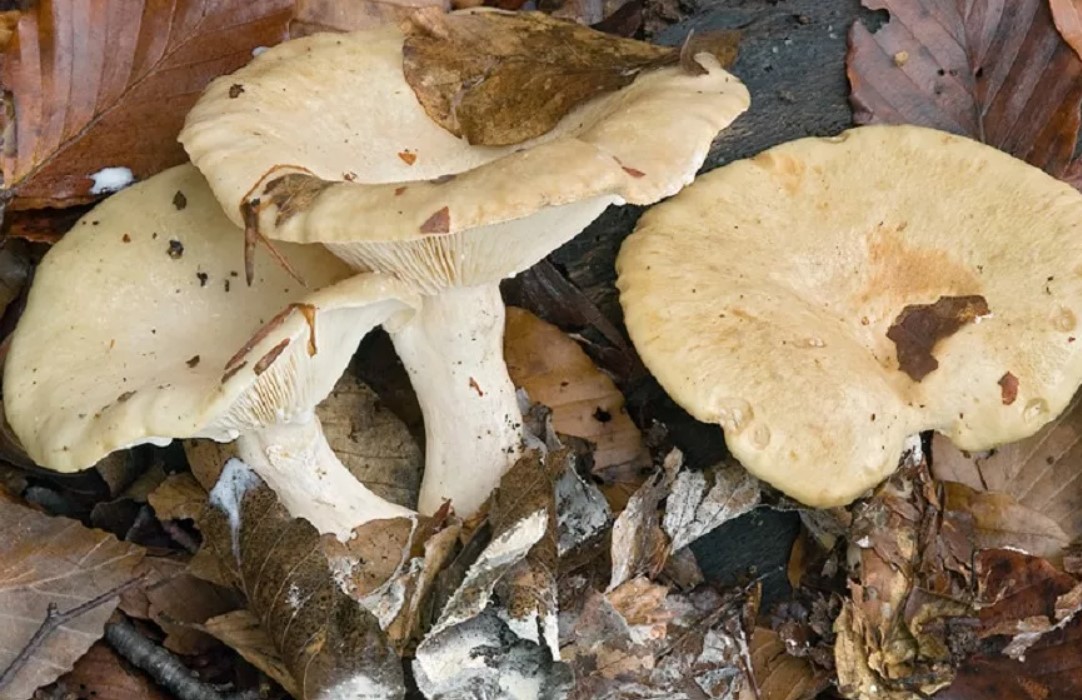
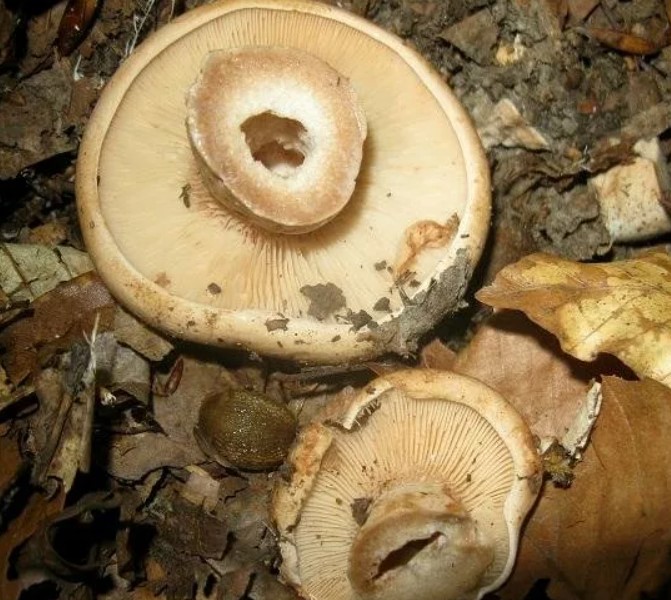
Lactarius pallidus (Pale Milkcap)
| View | Description | Edibility | Collection deadlines | Where to look |
| Pale milkcap (Lactarius pallidus) | The cap diameter is 12 cm; mature mushrooms are funnel-shaped, with a depressed center and smooth, slimy skin. The color is light ochre. The stem is up to 9 cm tall. | Conditionally edible. | July-August. | Oak groves, mixed forests. |
Photo gallery of the pale milkcap
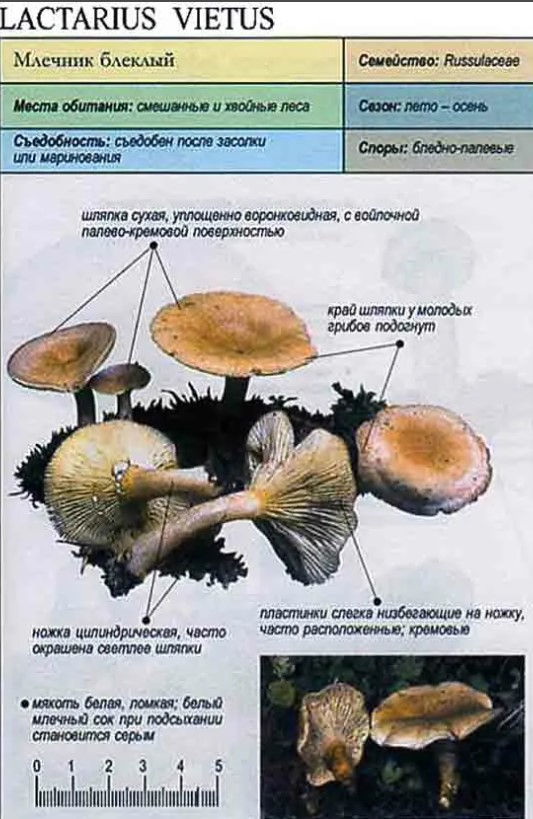
Lactarius vietus
| View | Description | Edibility | Collection deadlines | Where to look |
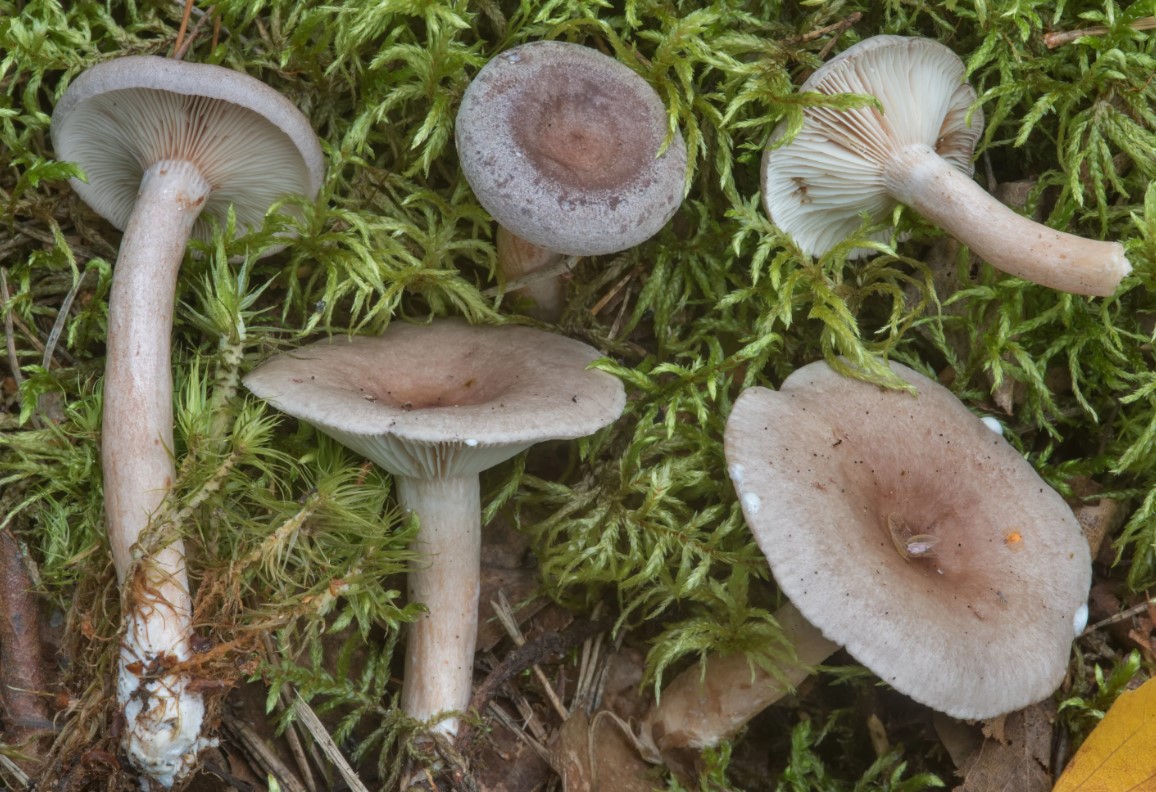
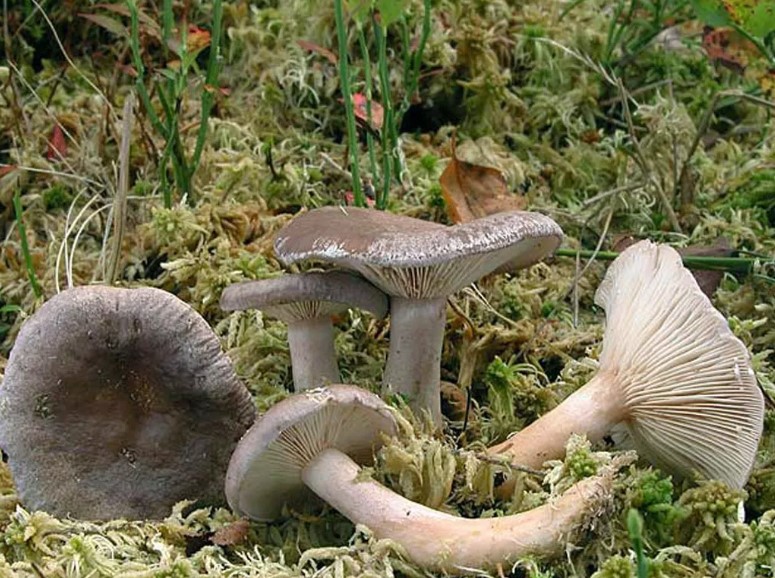
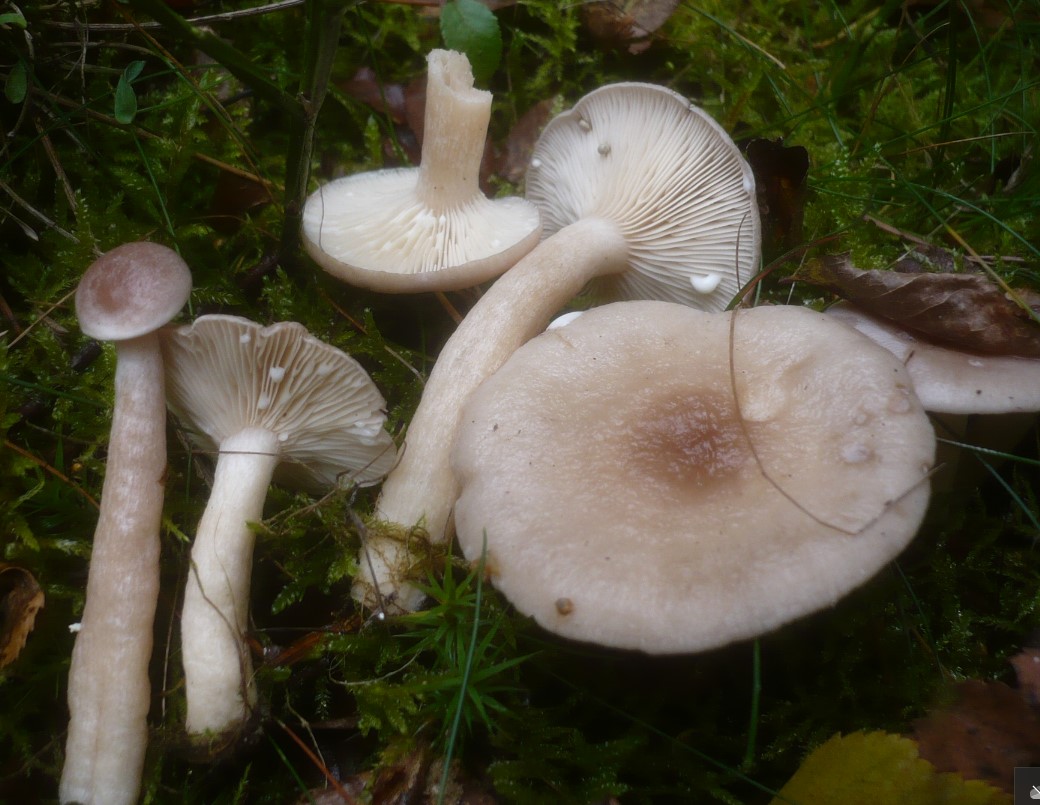
| Lactarius vietus | The cap diameter ranges from 3 to 8 cm, and is brownish or wine-brown. Concentric zones are absent. The stem grows up to 8 cm and is slightly lighter in color than the cap. It produces a plentiful milky sap, which turns gray when exposed to air. | Conditionally edible. It is necessary to soak in a salt solution for 2-3 days, then boil for 15 minutes. |
August-September. | Mixed and deciduous forests grow in large groups near birches and pines. |
Photo gallery of the milky cap
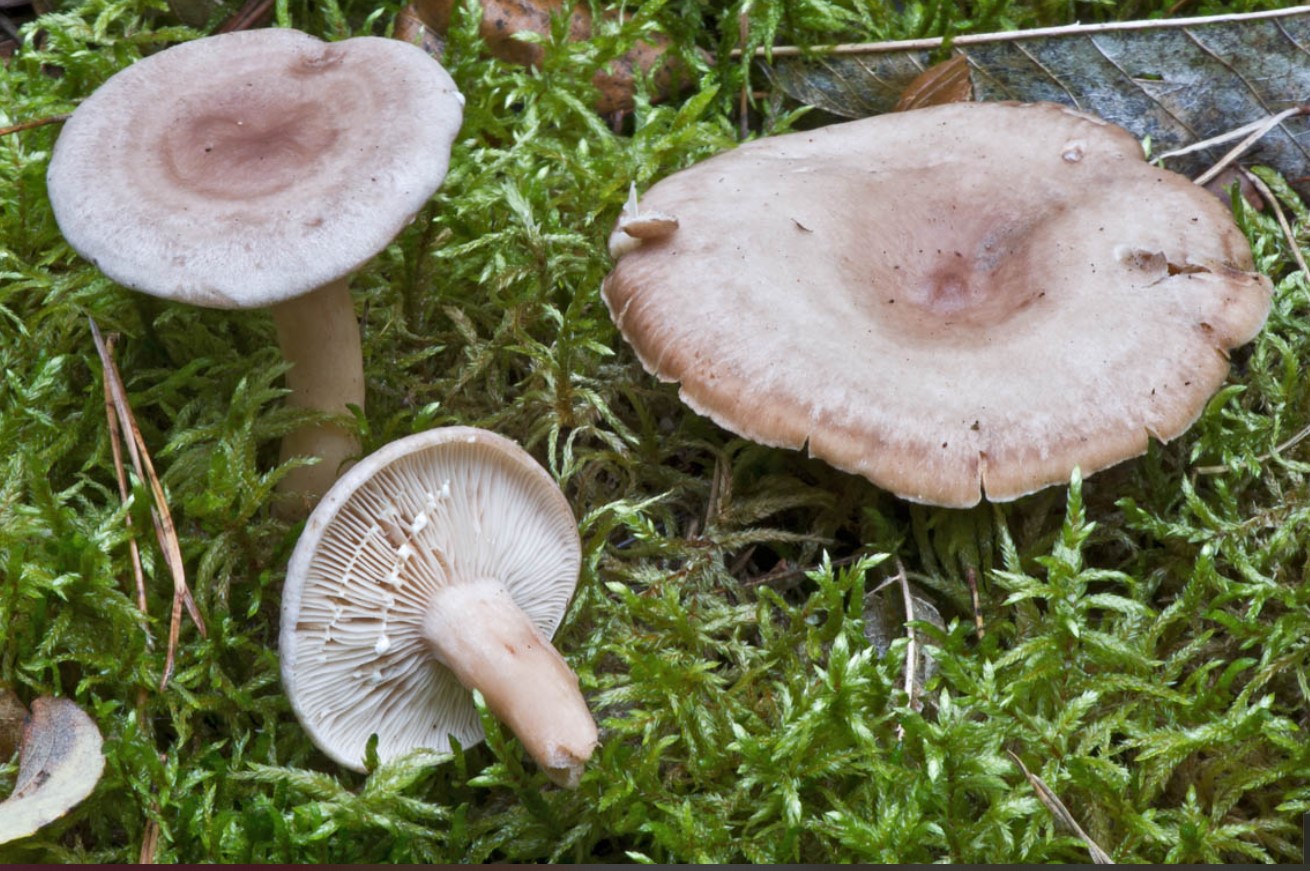
Brown milkweed (Lactarius lignyotus)
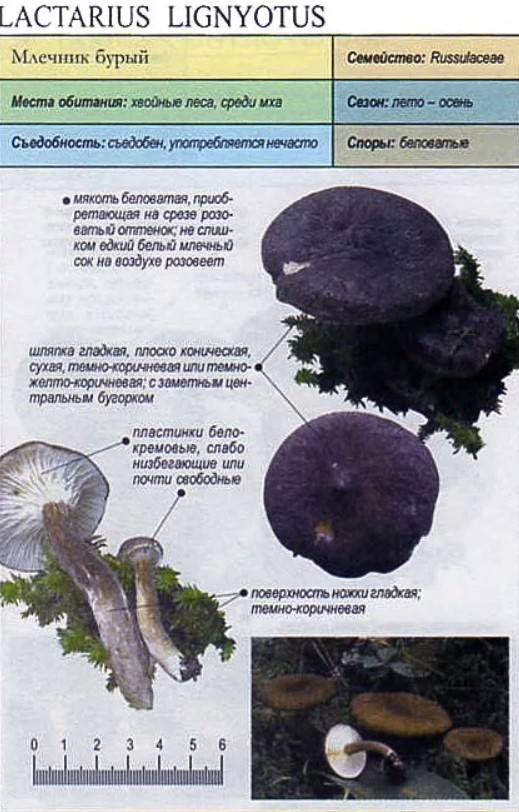
| View | Description | Edibility | Collection deadlines | Where to look |
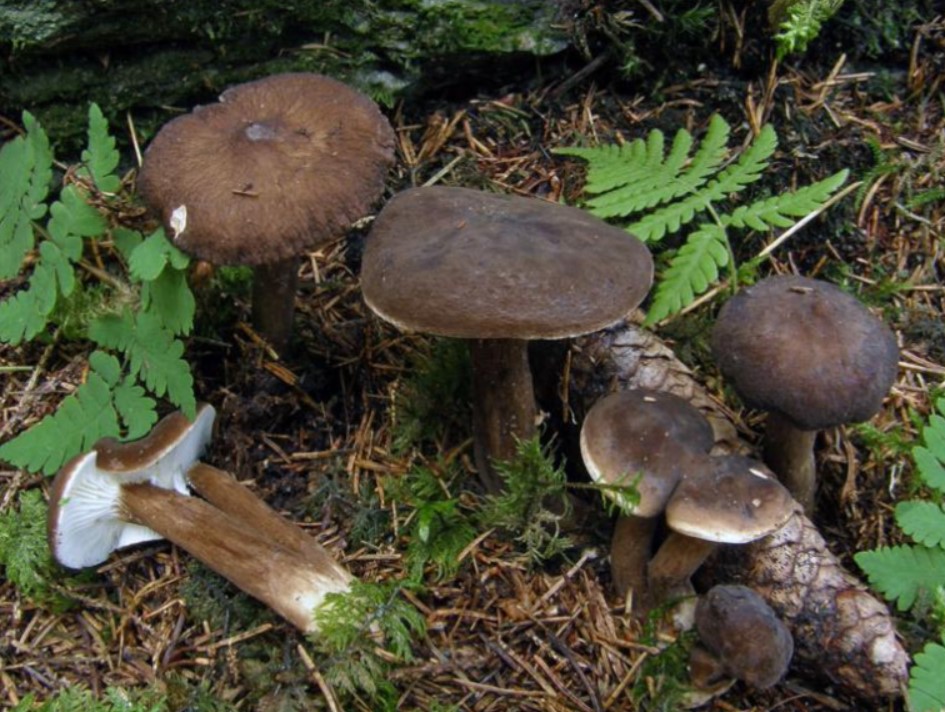
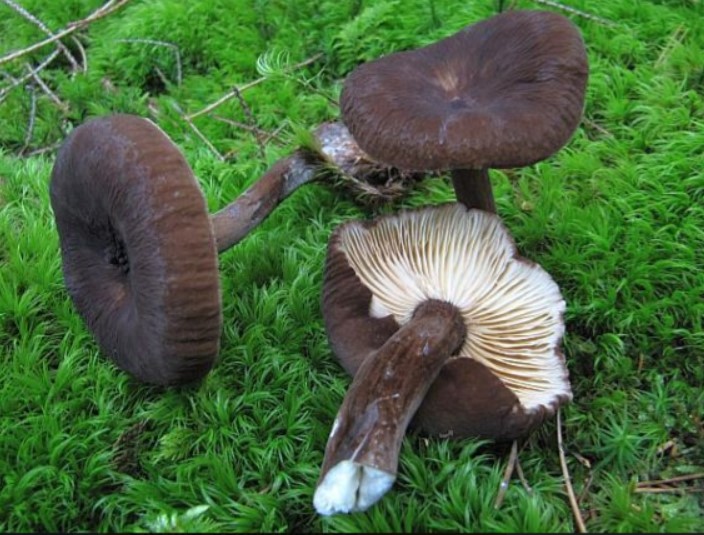
| Brown milkweed (Lactarius lignyotus) | The cap is 3 to 7 cm in diameter, with pubescent edges and a funnel-shaped form. The skin is dark brown or chestnut-colored, with a velvety texture. The stem is up to 8 cm tall, tapering at the base and may be curved. | Conditionally edible. | August-September. | It grows under spruce trees in coniferous forests on acidic soil. |
Photo gallery of brown milkweed
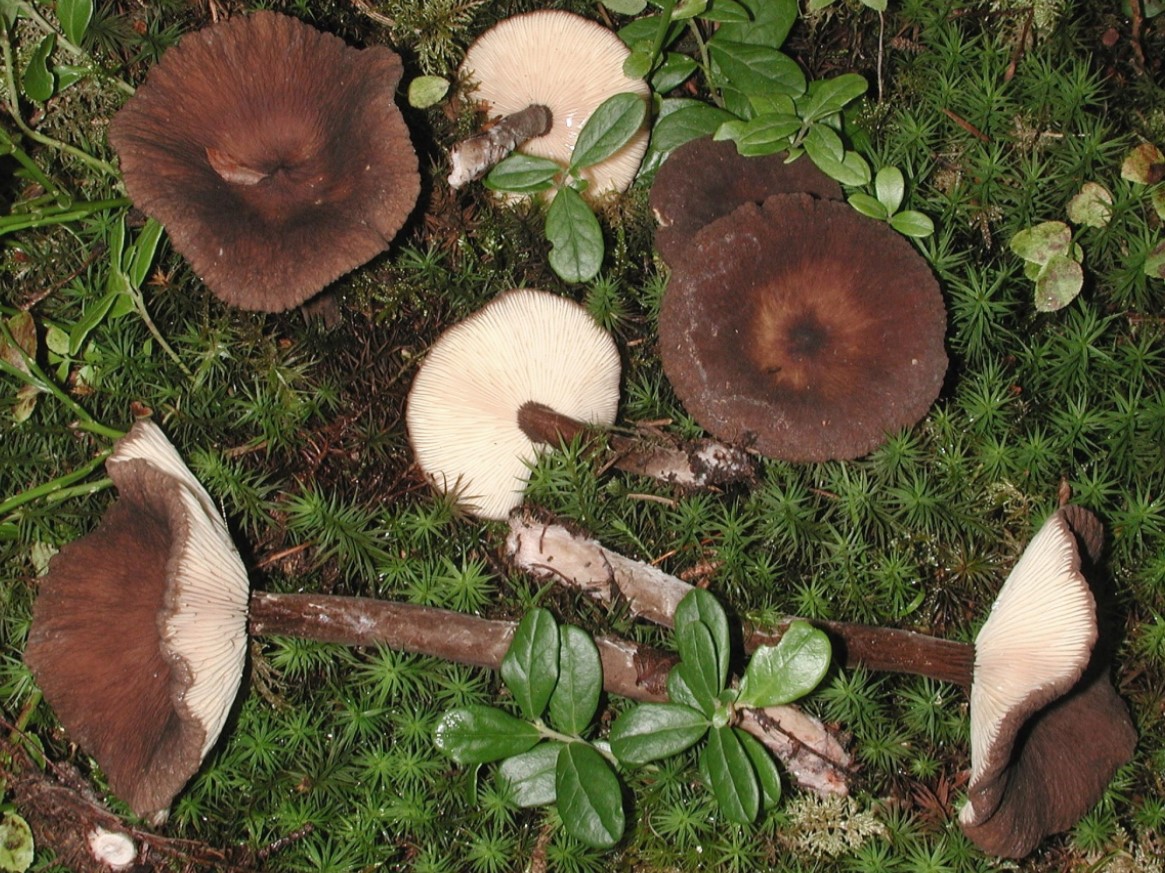
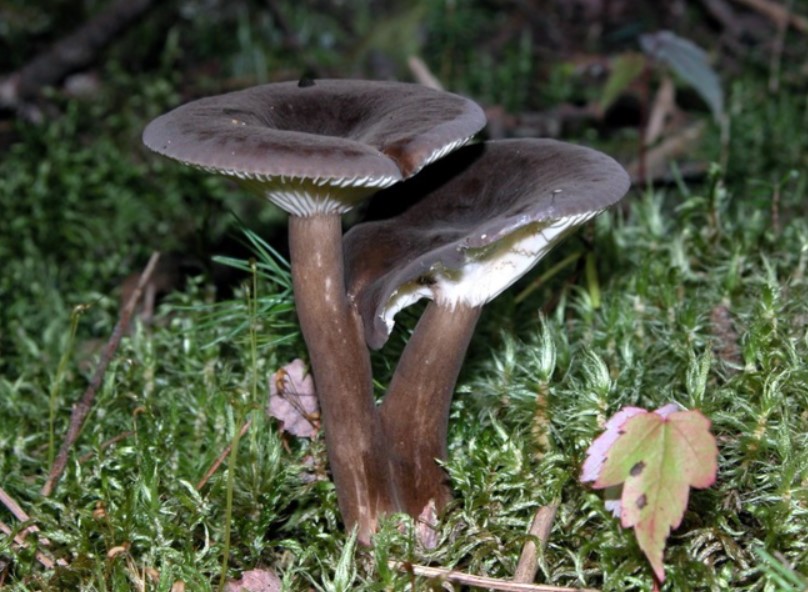
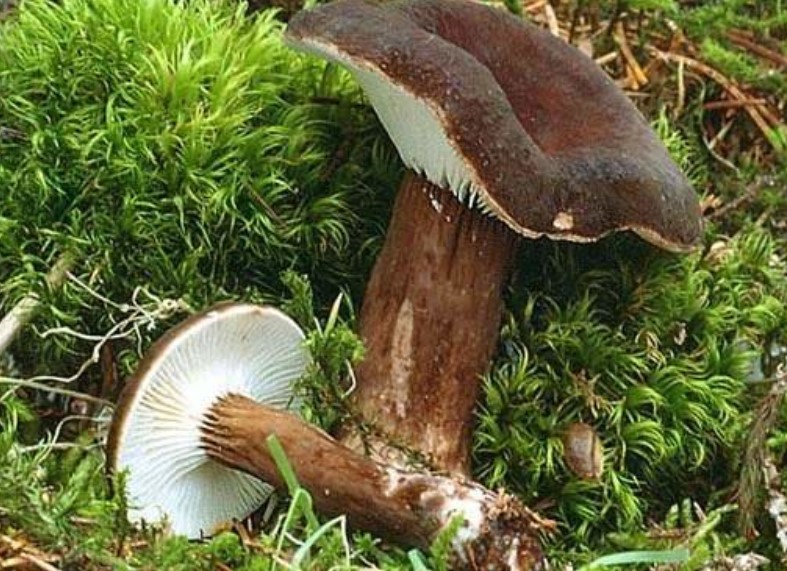
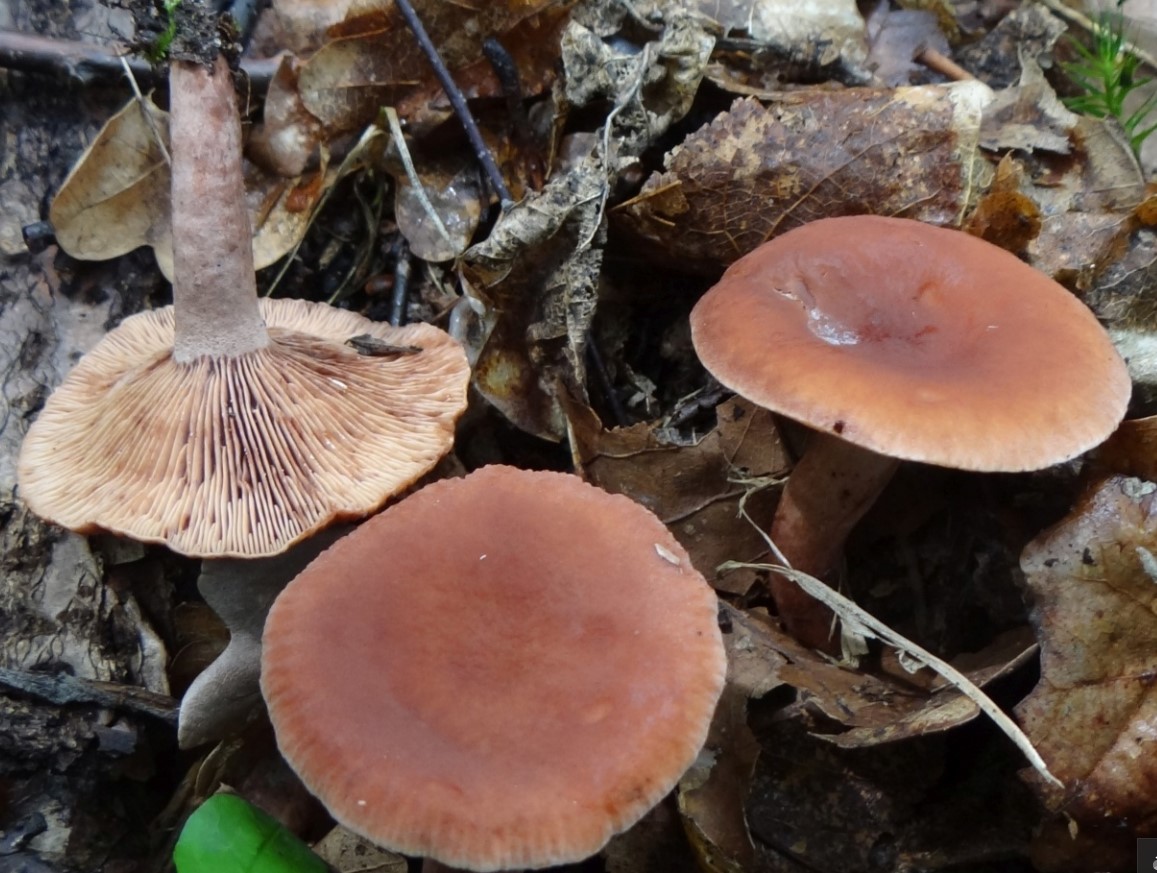
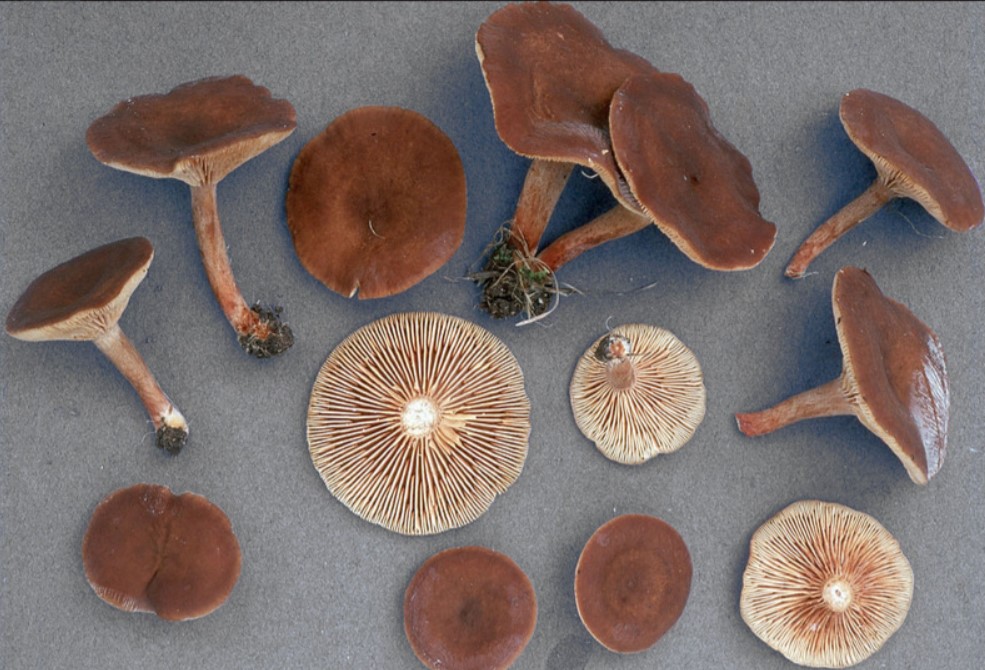
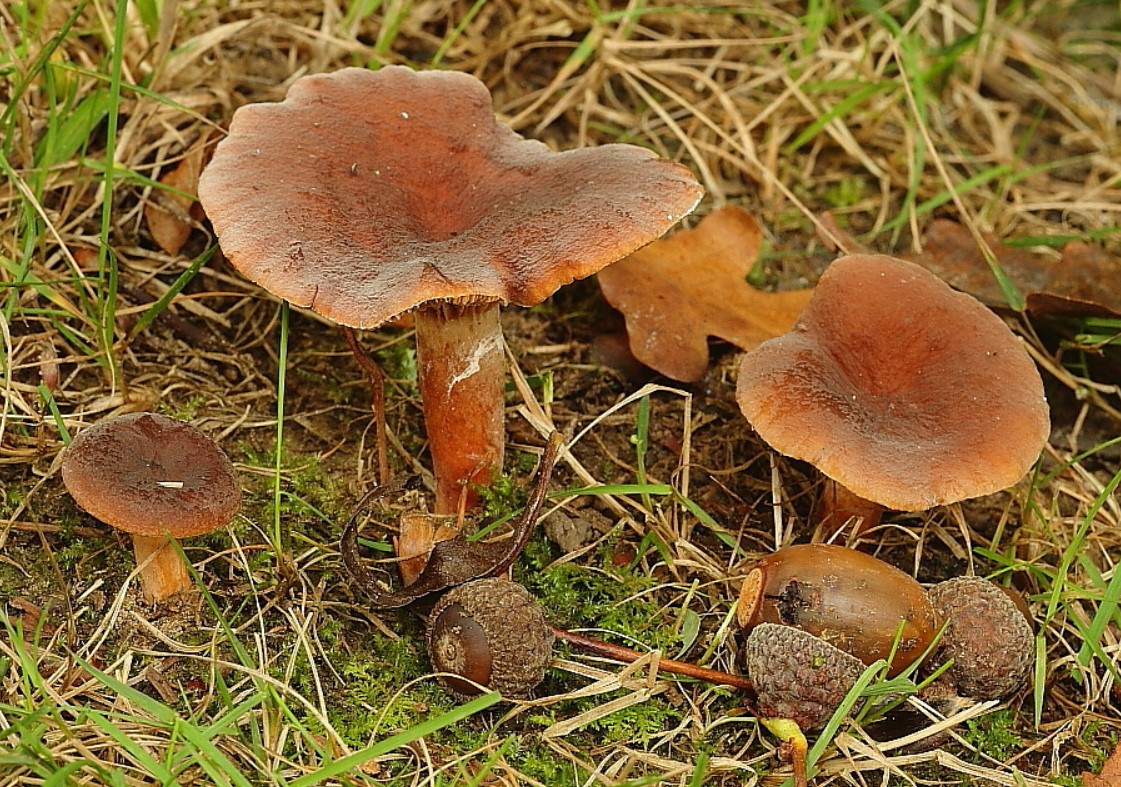
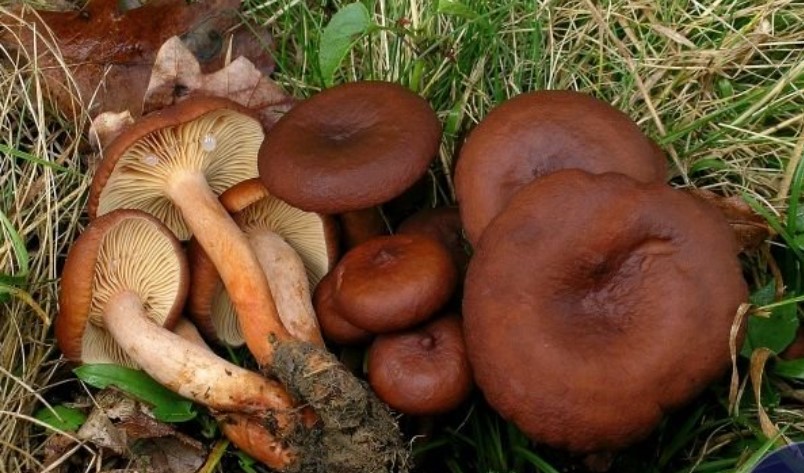
Lactarius serifluus
| View | Description | Edibility | Collection deadlines | Where to look |
| Lactarius serifluus | The cap is funnel-shaped, with a smooth, even, and dry surface. The color is brownish-red, with lighter edges. The stem is thick, no more than 6 cm tall. The flesh is brownish-red. | Conditionally edible. Not valued due to its bitter taste. |
August-September. | Broadleaf and mixed forests. |
Photo gallery of watery milky milkweed
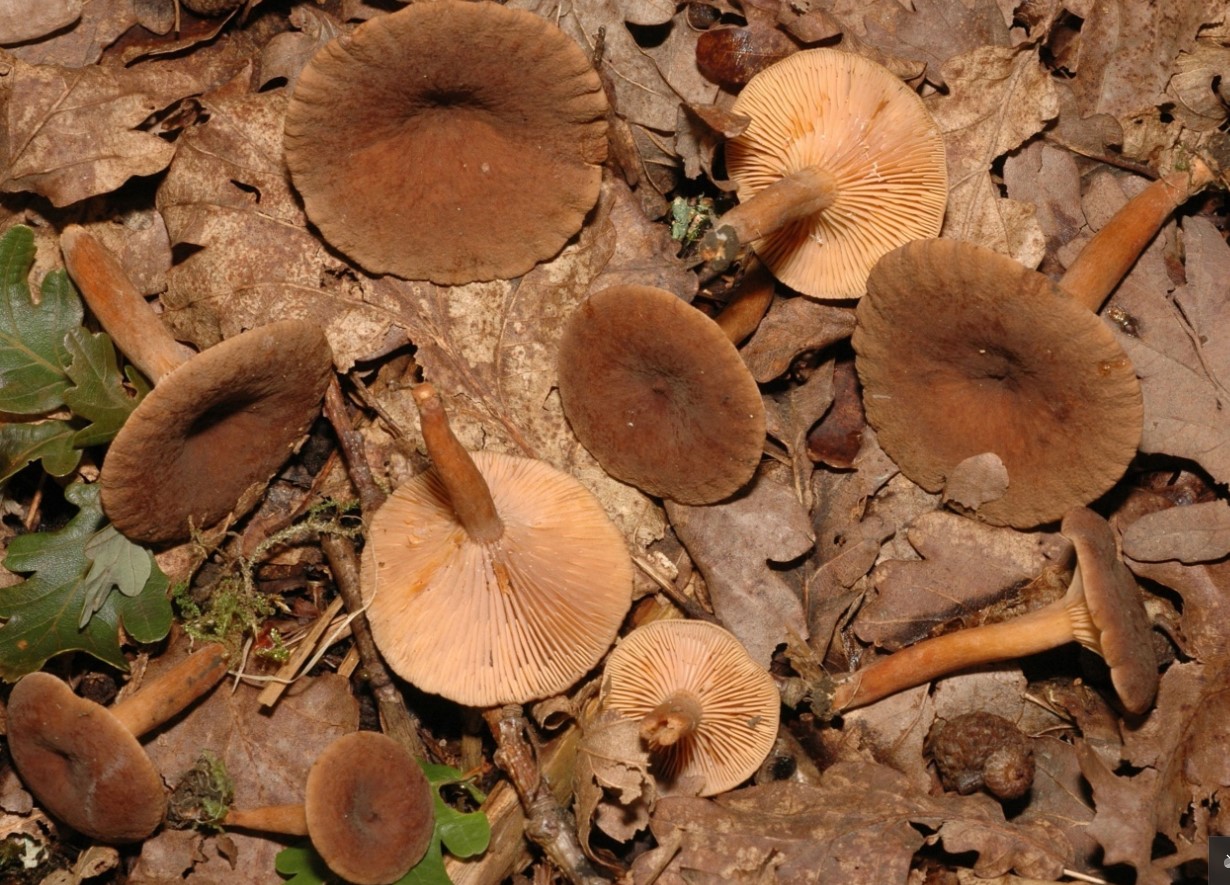
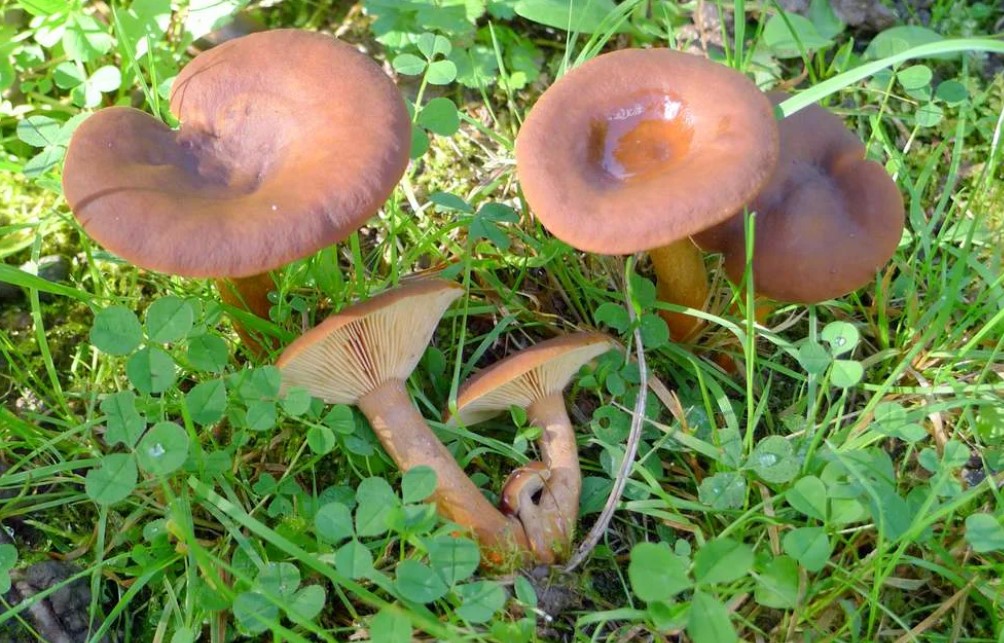
Stinging milkweed (Lactarius pyrógalus)
| View | Description | Edibility | Collection deadlines | Where to look |
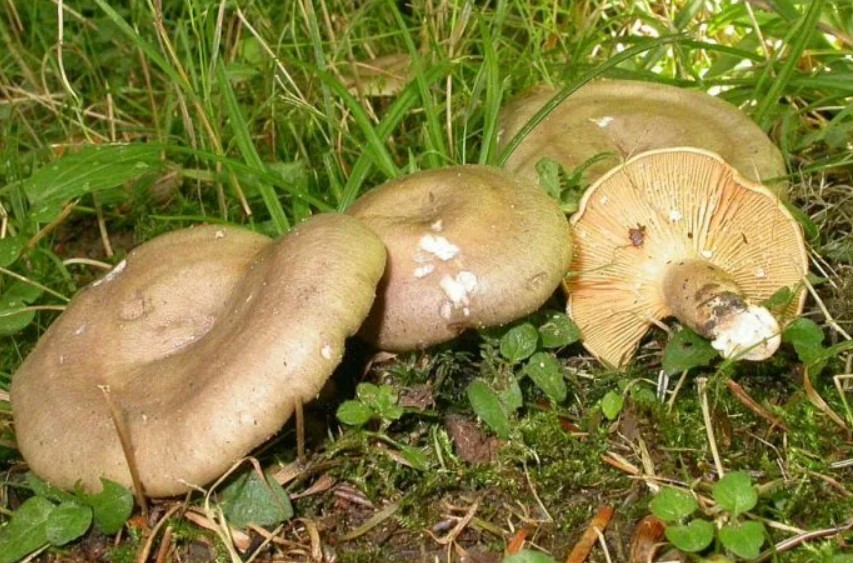
| Lactarius pyrógalus | The cap is up to 6 cm in diameter, rounded in shape, with folded edges that become wavy as the mushroom matures. The color is grayish-flesh-colored, with concentric zones on the surface. The stem is up to 5 cm tall. The milky sap is abundant and its color remains constant. | Conditionally edible.
The mushroom is eaten only salted. |
August-September. | Broadleaf and mixed forests, grows near hazel. |
Photo gallery of the stinging milky milkcap
Yellow milkcap (Lactarius luteolus)
| View | Description | Edibility | Collection deadlines | Where to look |
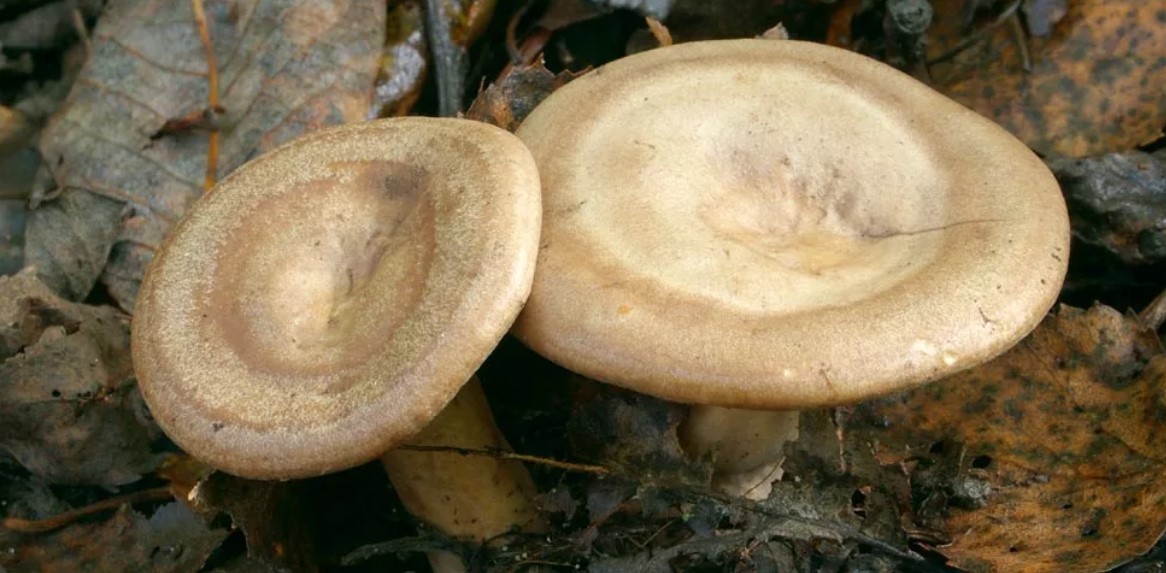
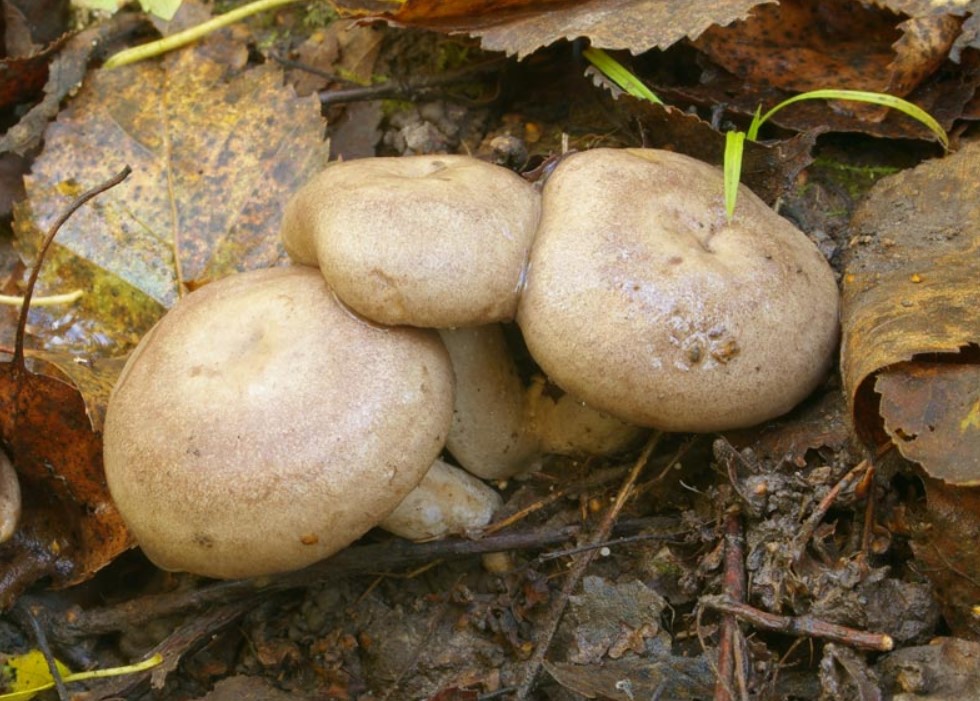
| Yellow milkcap (Lactarius luteolus) | The diameter ranges from 2.5 to 8 cm, the color is yellowish, turning brown as the mushroom grows. The stem is light-colored, turning brown after cutting. | Conditionally edible. | August-September. | Mixed and deciduous forests. |
Photo of the yellow milkweed
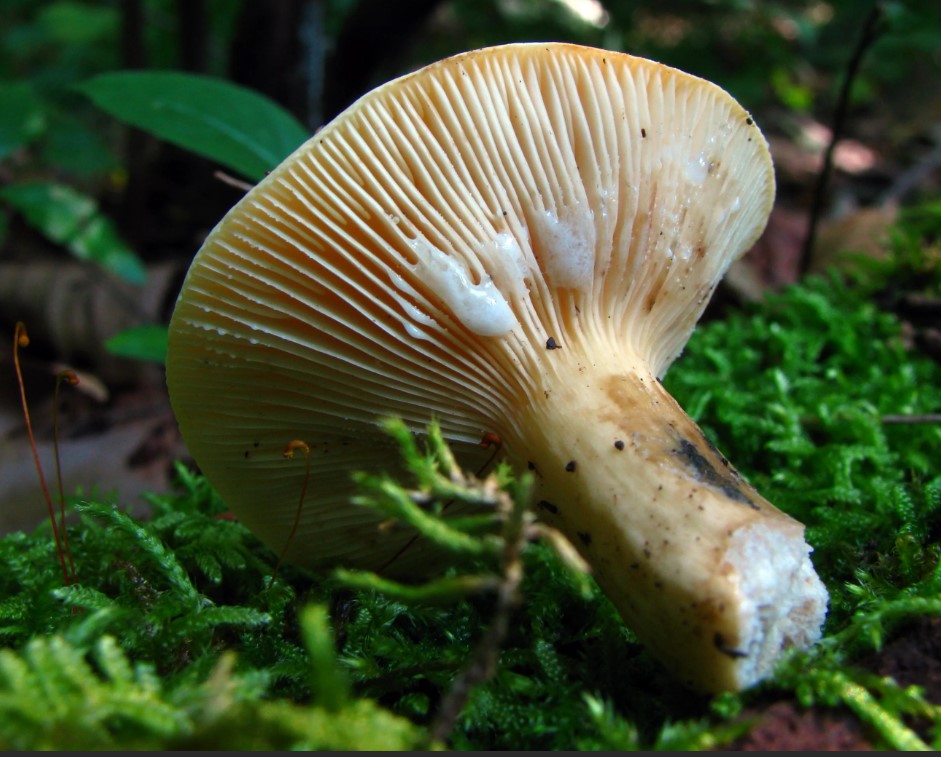
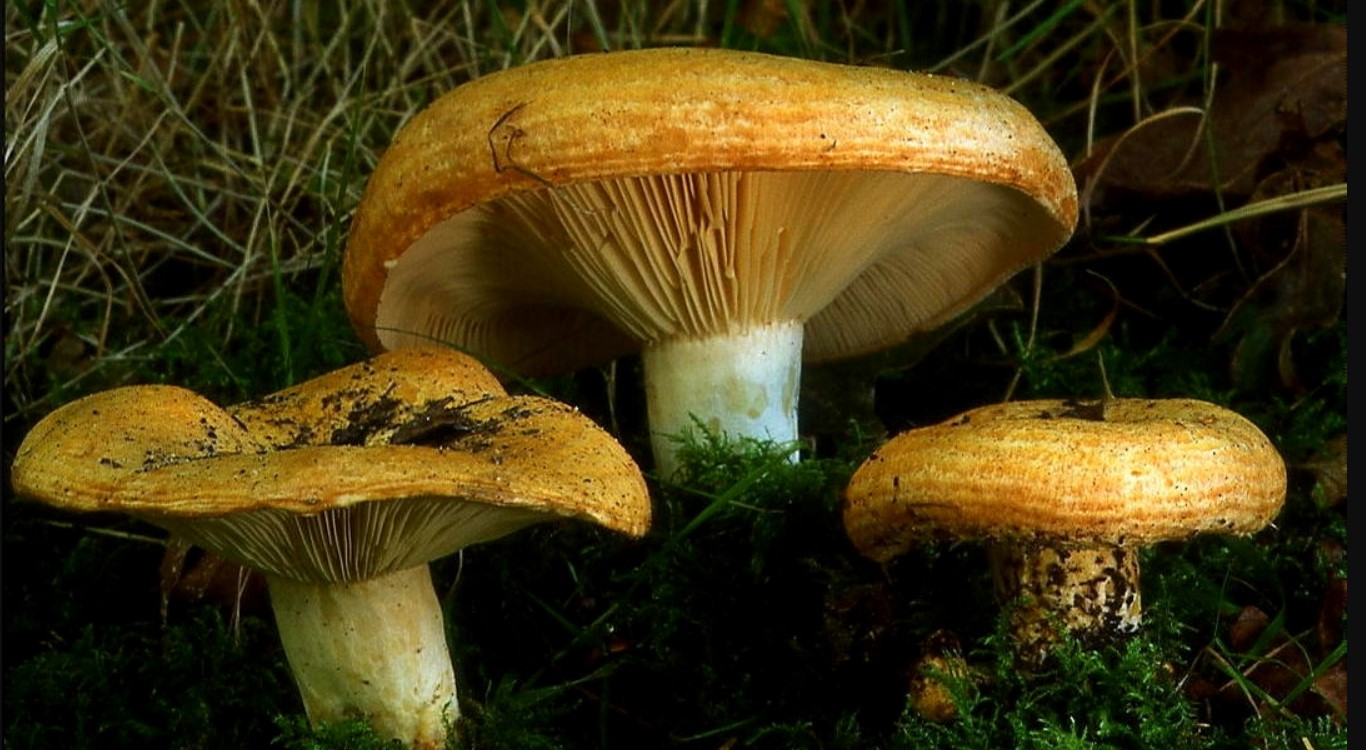
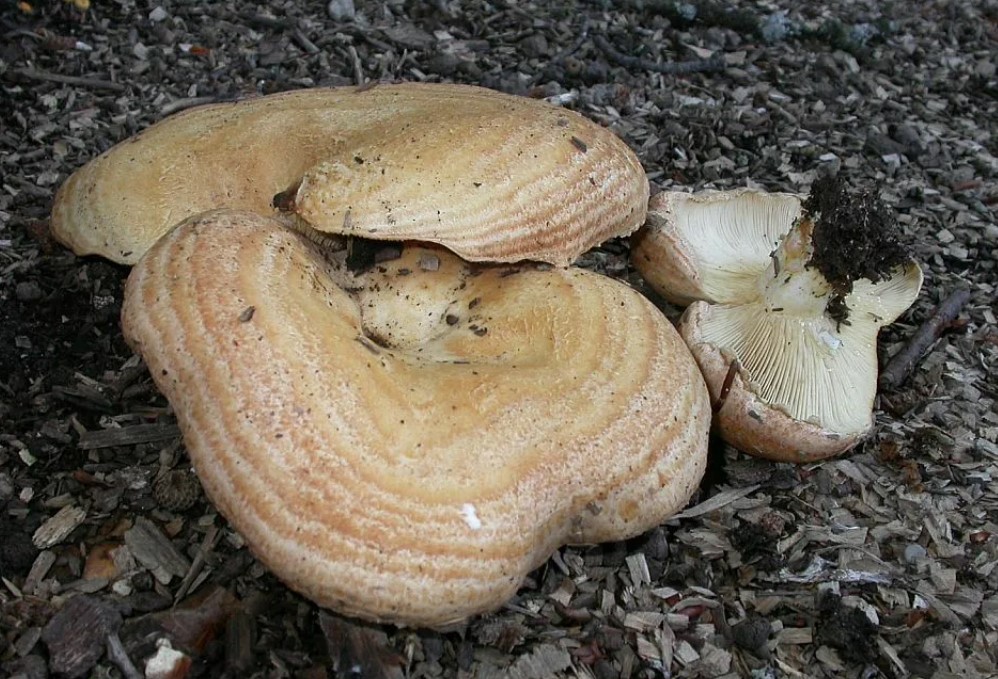
Zonal milkcap, oak milk cap (Lactarius zonarius)
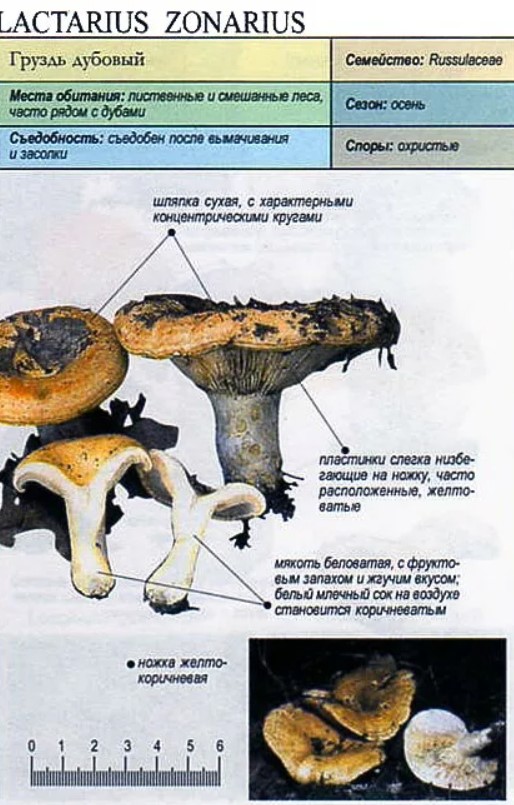
| View | Description | Edibility | Collection deadlines | Where to look |
| Zonal milkcap (Lactarius zonarius) | The cap is up to 10 cm in diameter, yellow-orange in color, and has a dry skin. The surface is marked by concentric zones. The flesh has a fruity aroma and a pungent flavor. | Conditionally edible. | Autumn. | Deciduous and mixed forests, likes oak. |
Photo gallery of zonal milkweed
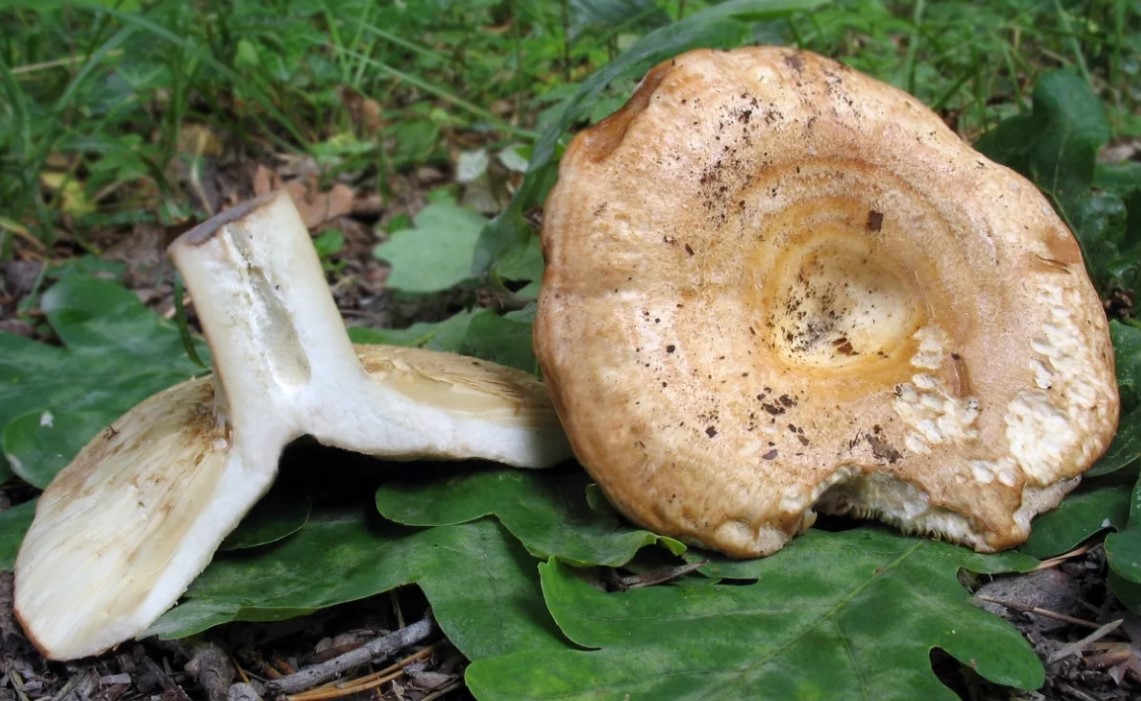
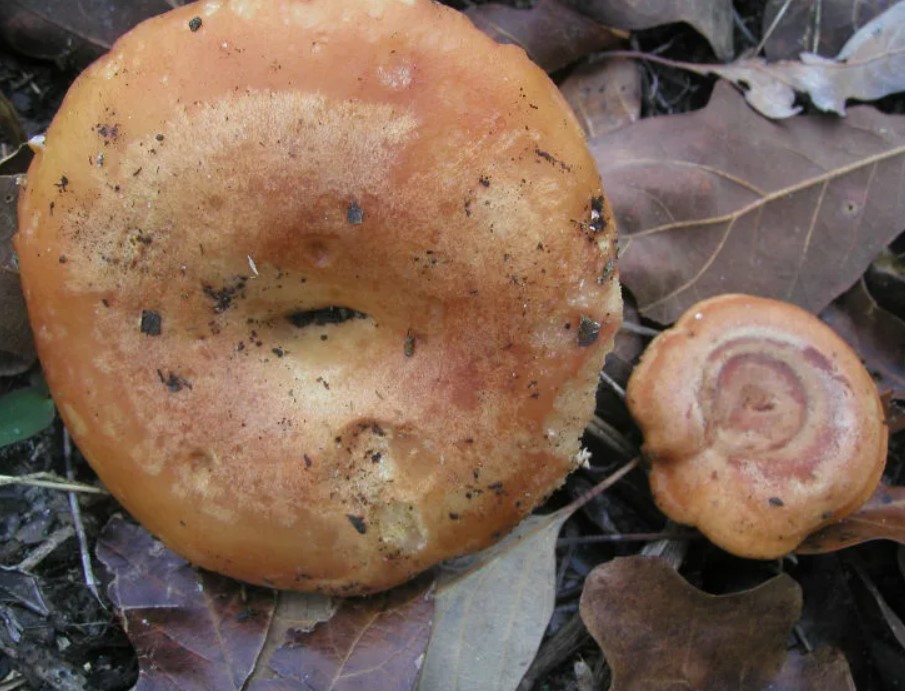
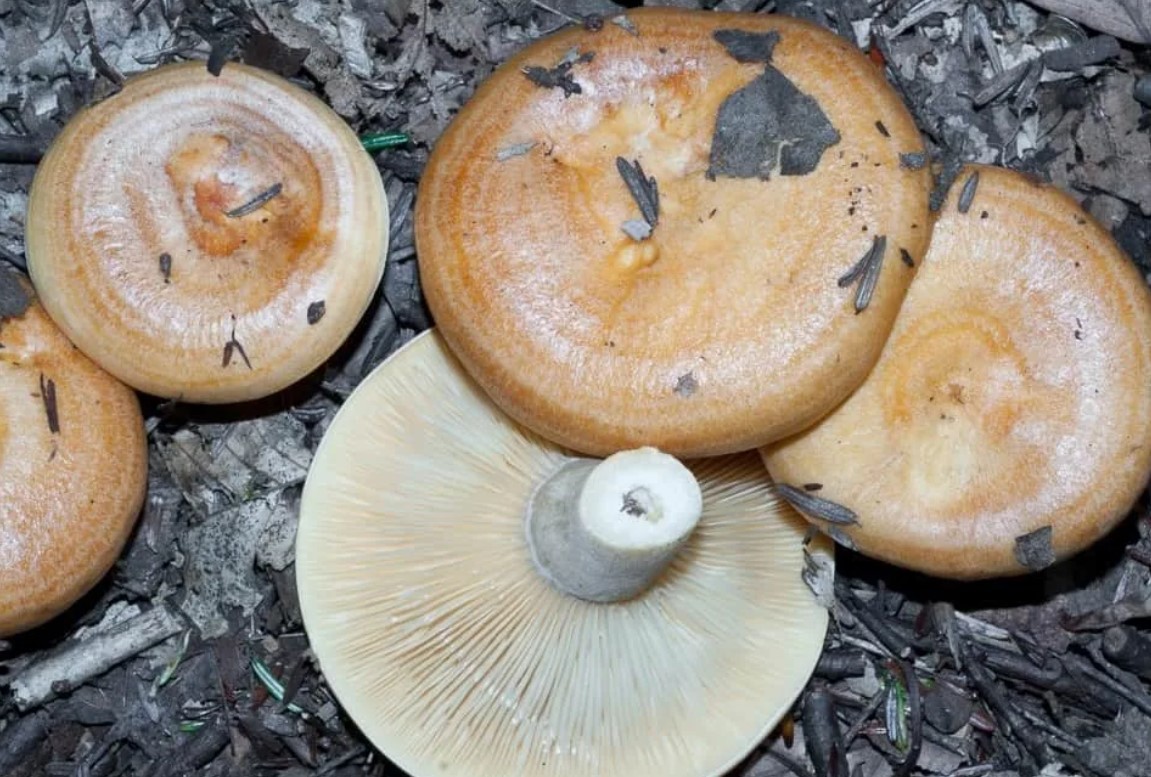
Milkcap (Lactarius flexuosus)
| View | Description | Edibility | Collection deadlines | Where to look |
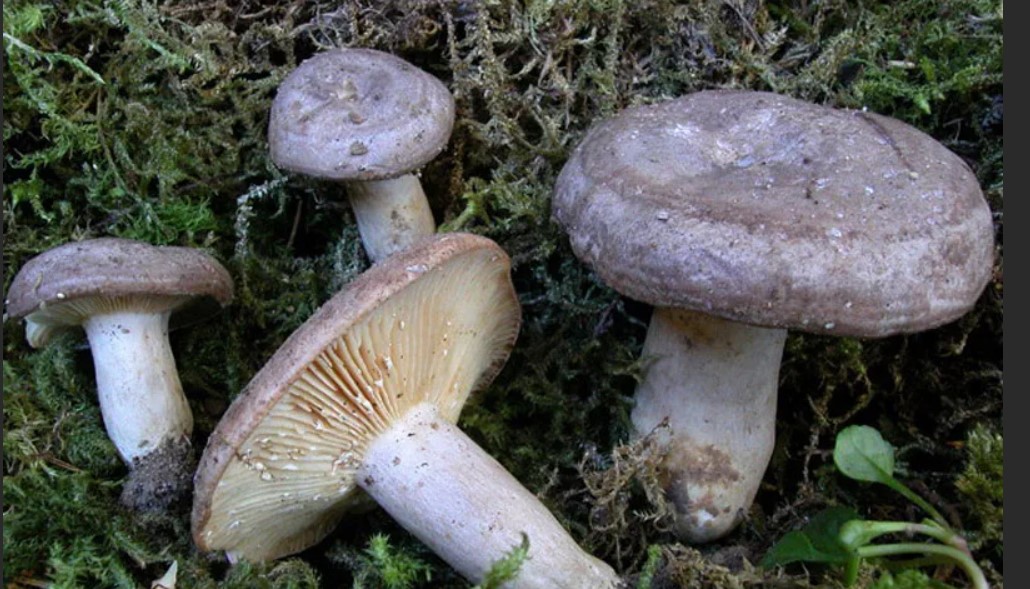
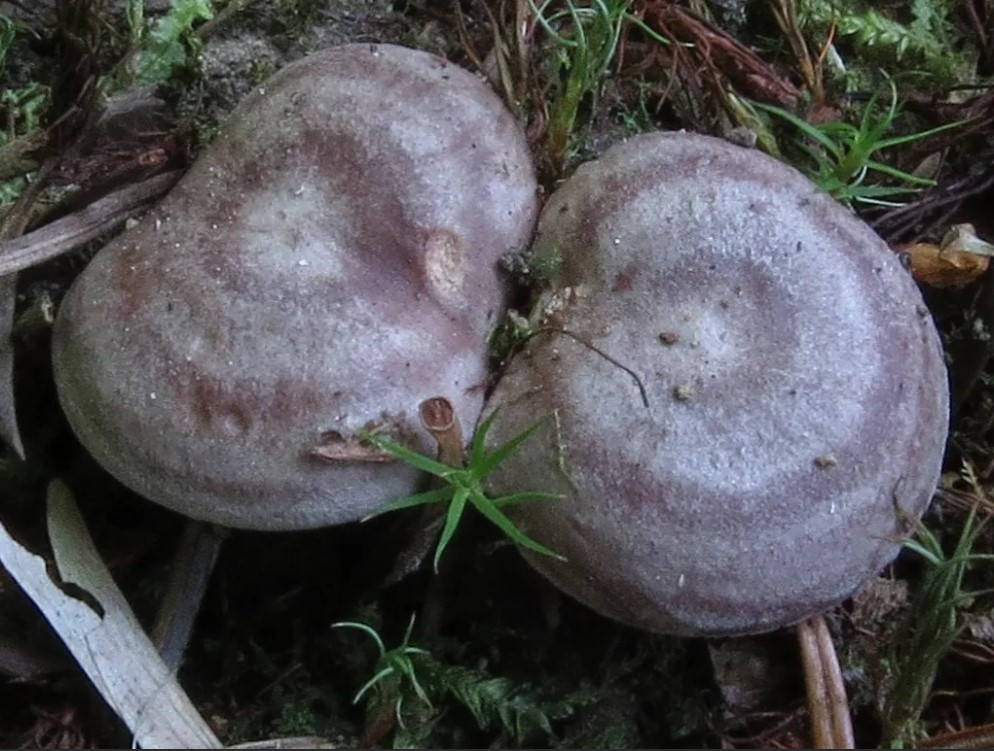
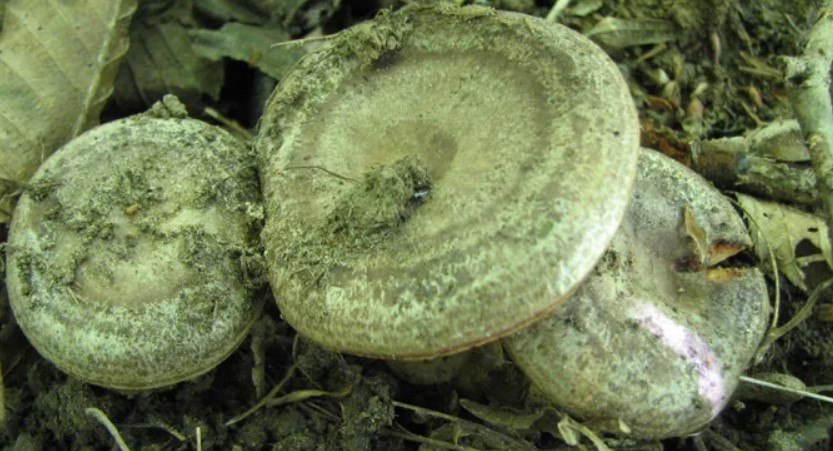
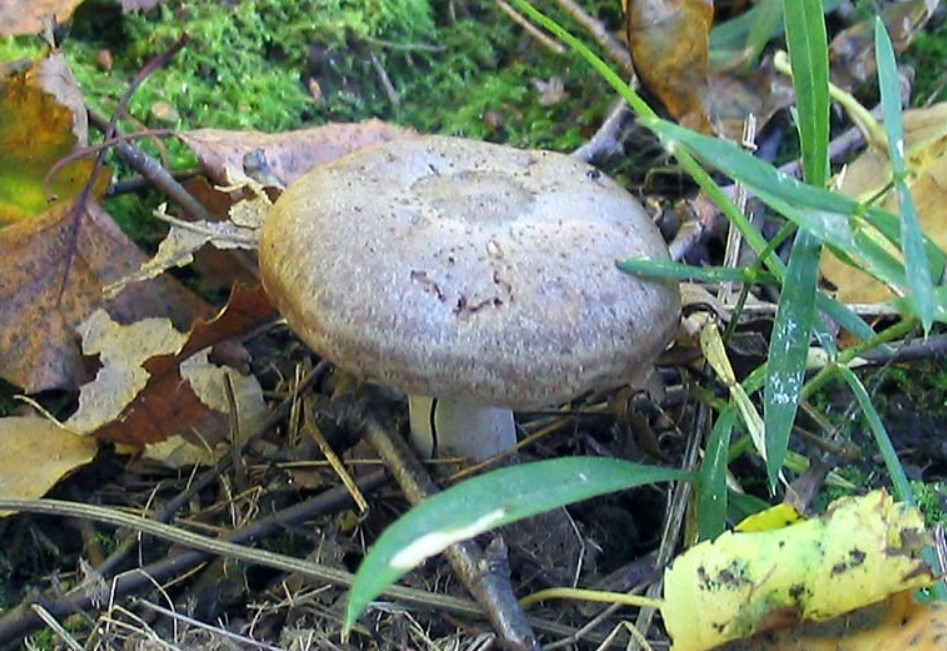
| Lactarius flexuosus | The cap is 5-10 cm in diameter, pinkish or brown in color, uneven, and pitted. The stem is up to 9 cm tall and lighter in color than the cap. The milky sap is caustic and does not change color when exposed to air. | Conditionally edible. | July-October. | Mixed forests, edges along roads, prefers aspen and birch. |
Photo gallery of serushka
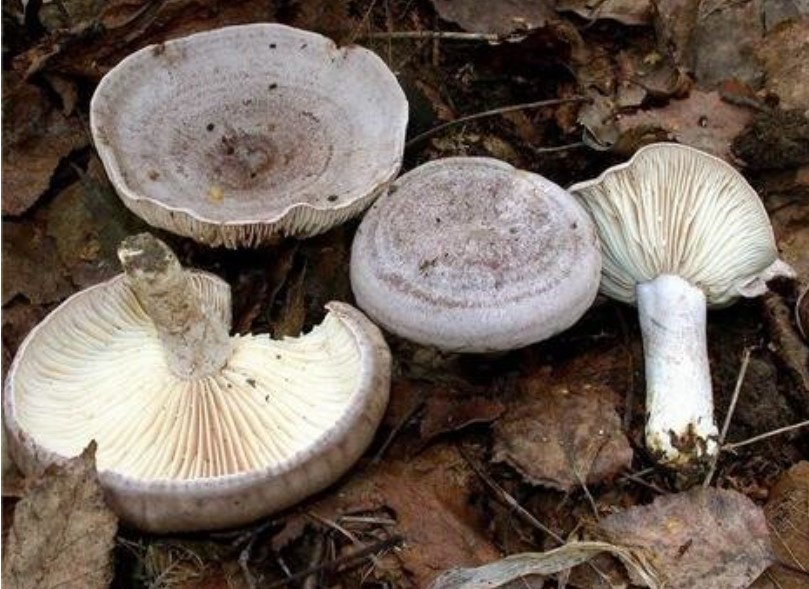
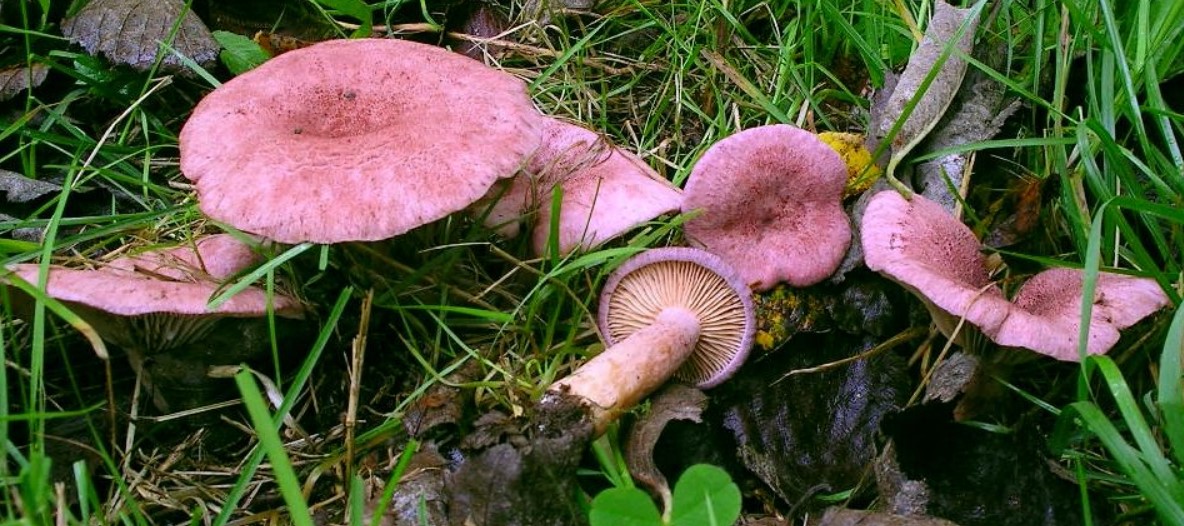
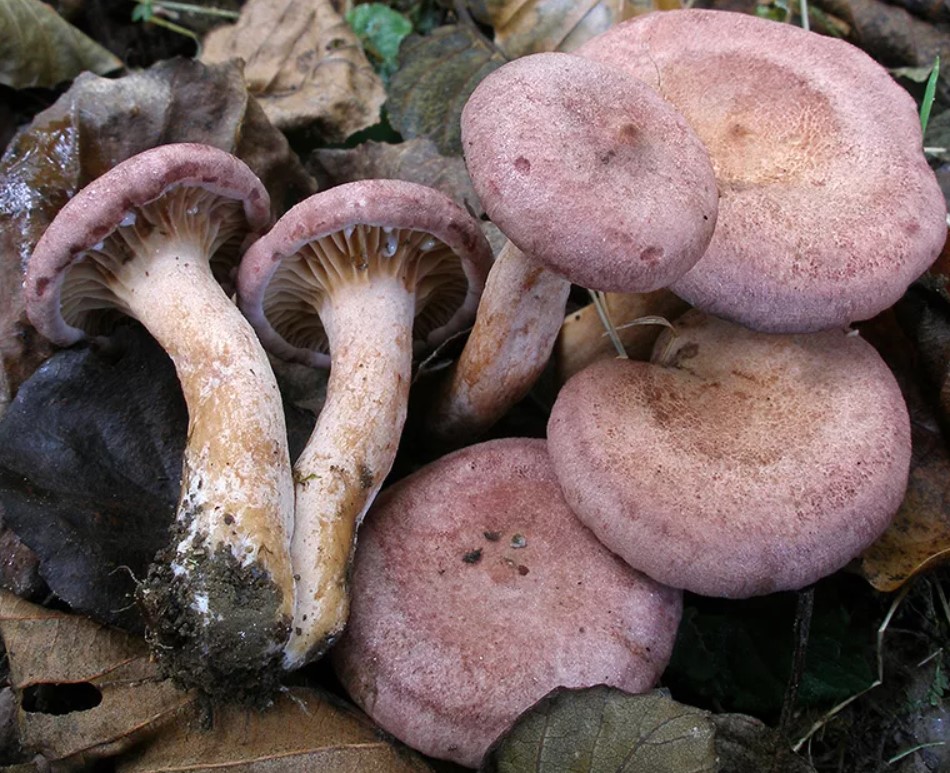
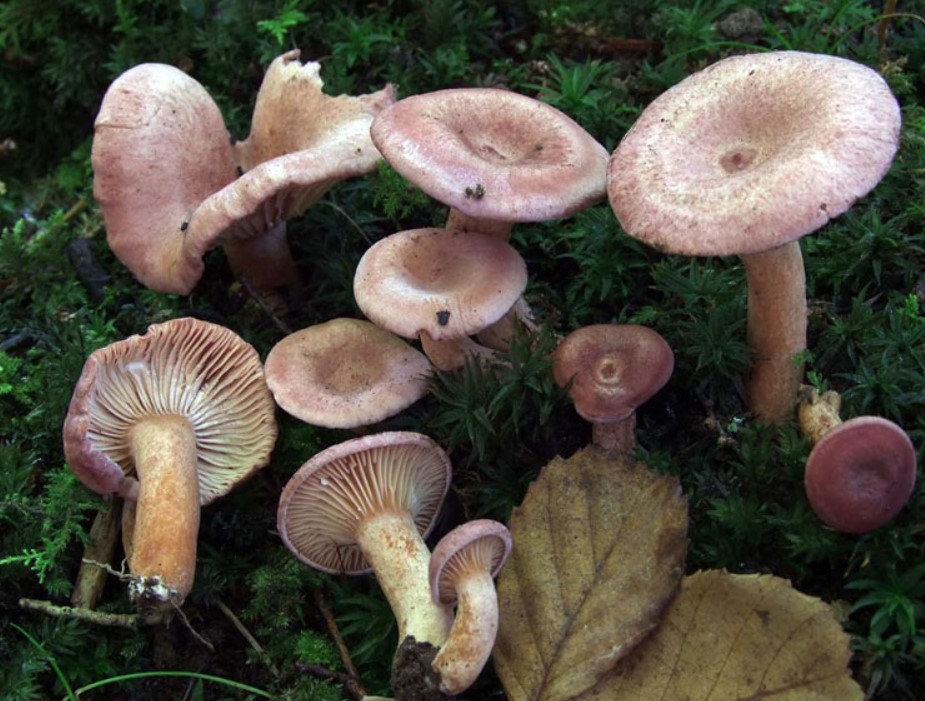
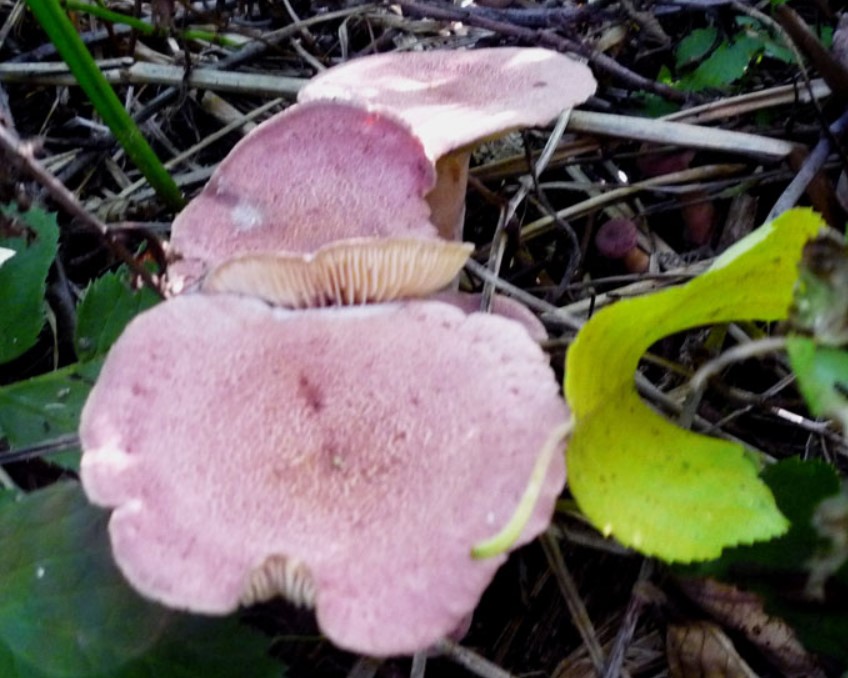
Lilac milkweed (Lactarius lilacinus)
| View | Description | Edibility | Collection deadlines | Where to look |
| Lilac milkweed (Lactarius lilacinus) | The cap diameter ranges from 3 to 8 cm, and the color is a soft lilac. The edges of the cap are pubescent, and the milky juice is white and bitter. | Conditionally edible. | September-October. | Mixed forests. |
Photo gallery of the lilac milkweed
White milkweed (Lactarius pubescens)
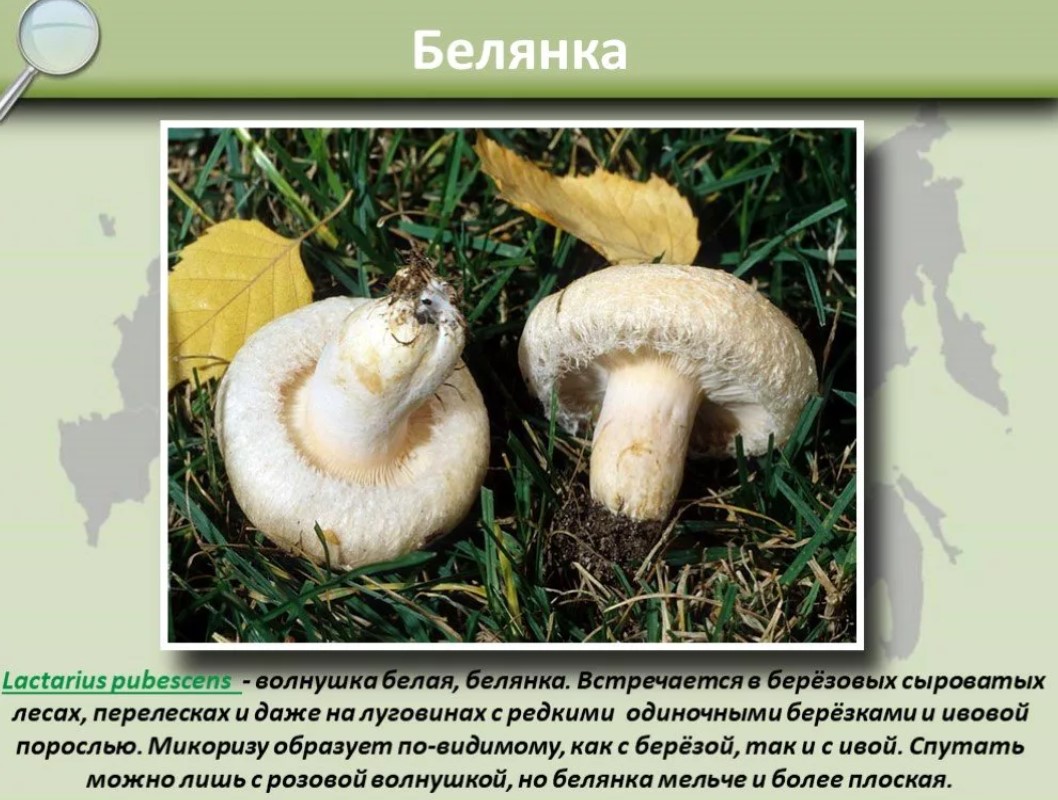
| View | Description | Edibility | Collection deadlines | Where to look |
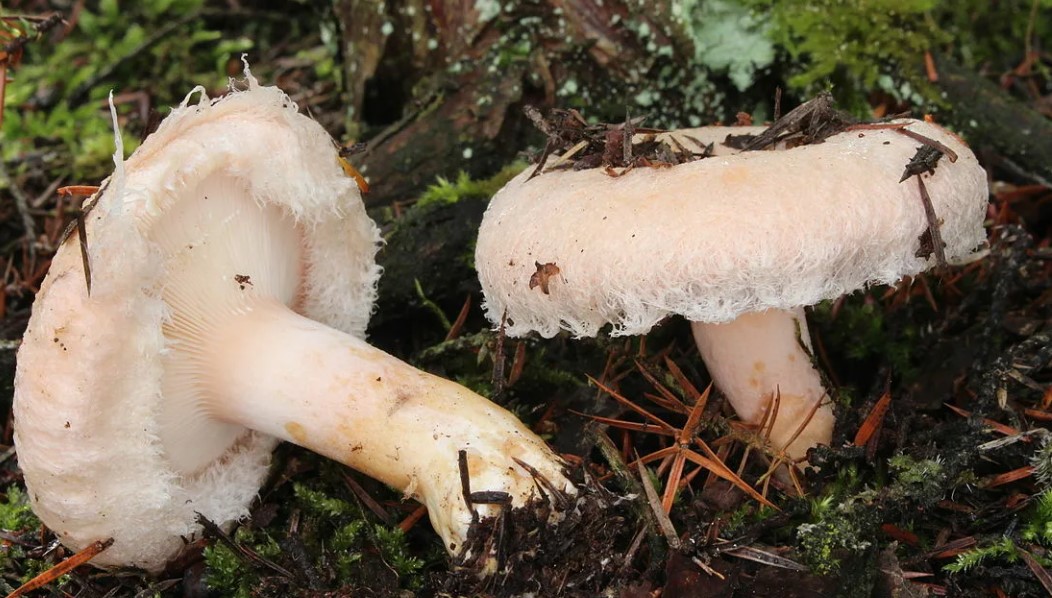
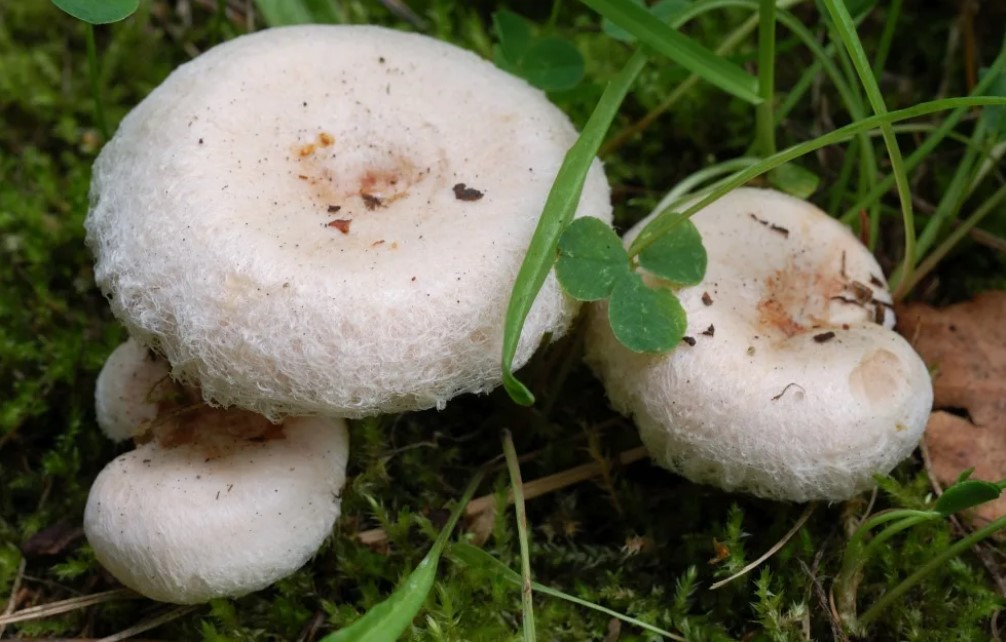
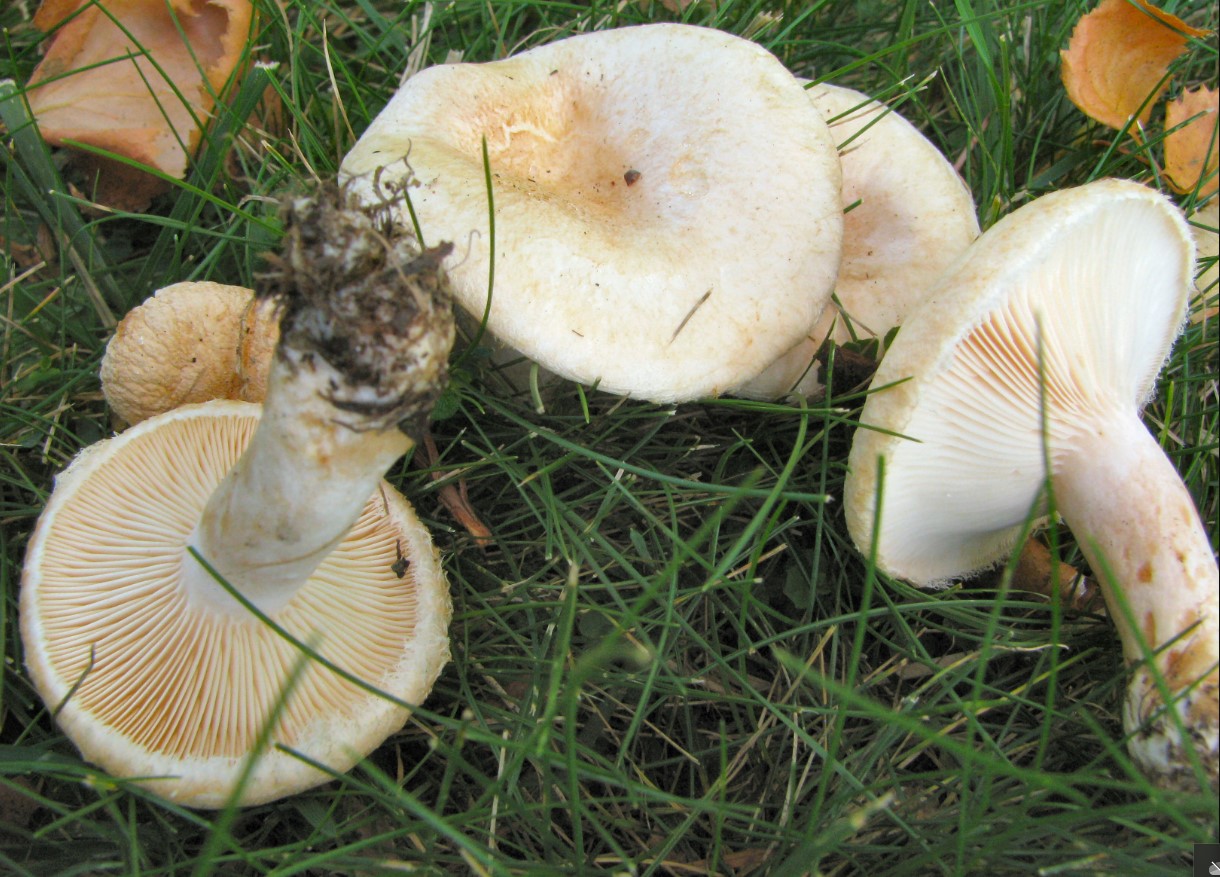
| White volnushka (Lactarius pubescens) | The cap ranges from 4 to 12 cm in diameter, with rolled-up edges and a funnel-shaped shape as it matures. The color is white-pink, with a darker center. Concentric zones on the surface are barely visible. The milky sap is white and pungent, with a sweet aroma. The stem height is up to 8 cm. | Conditionally edible. | August-September. | Deciduous forests, grows near birch trees. |
Photo gallery of the white milk cap
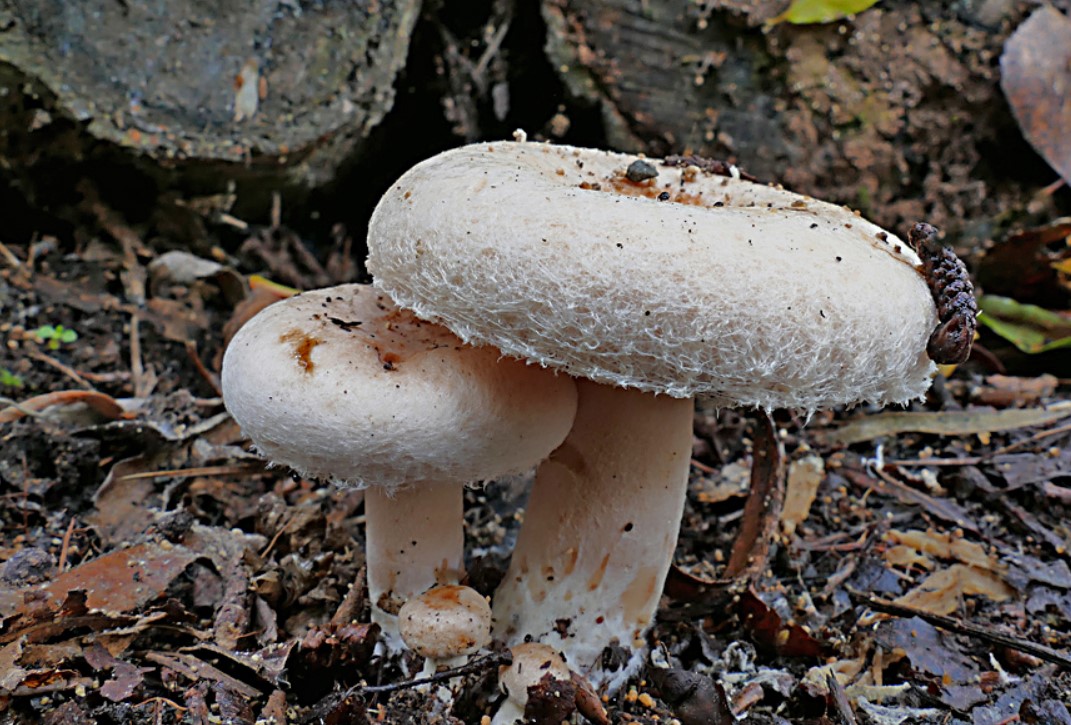
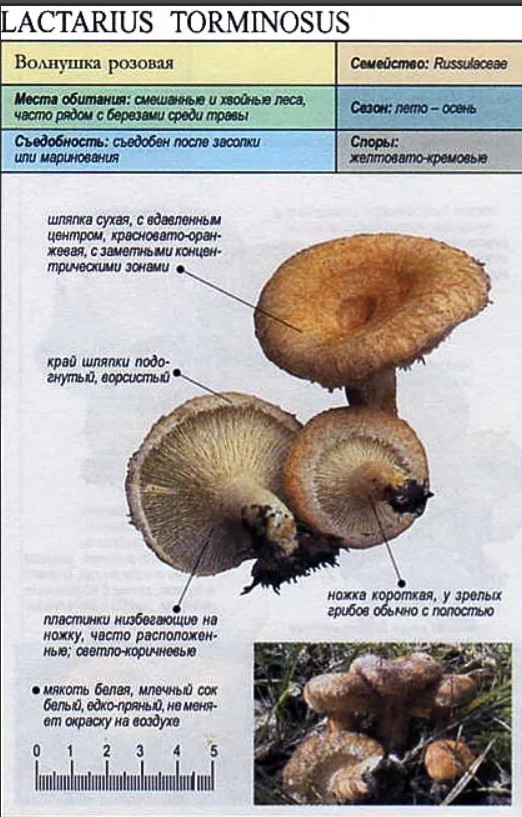
Pink volnushka (Lactarius torminósus)
| View | Description | Edibility | Collection deadlines | Where to look |
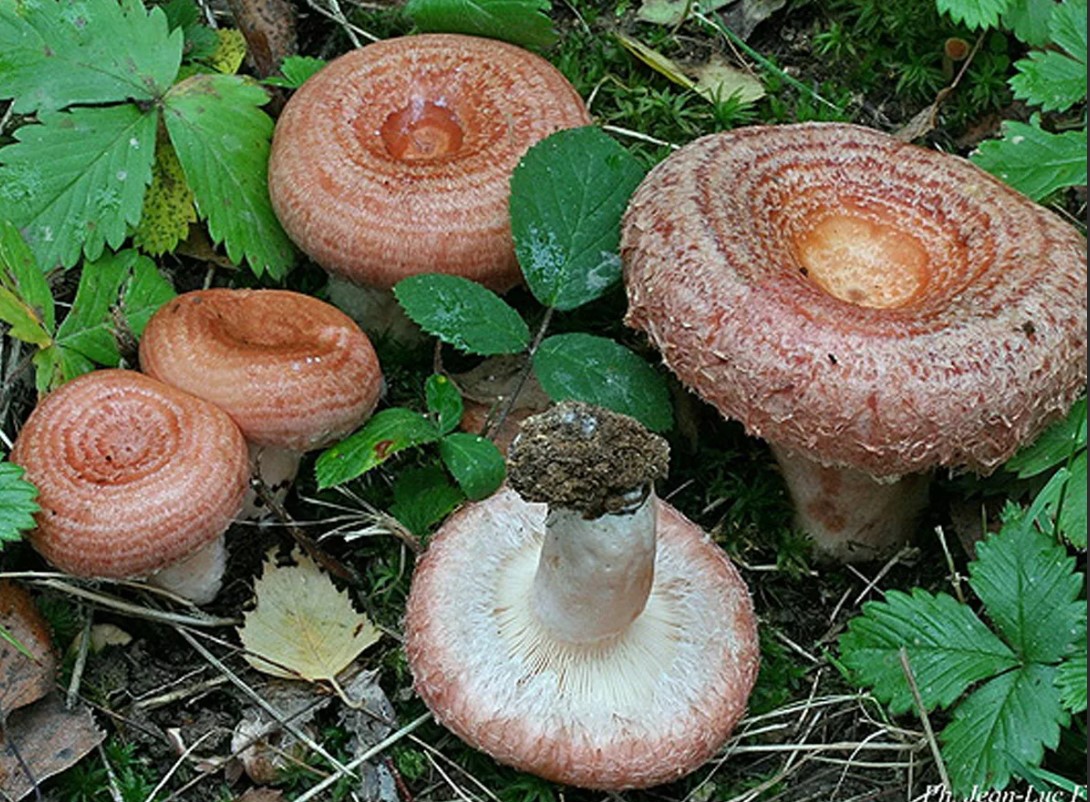
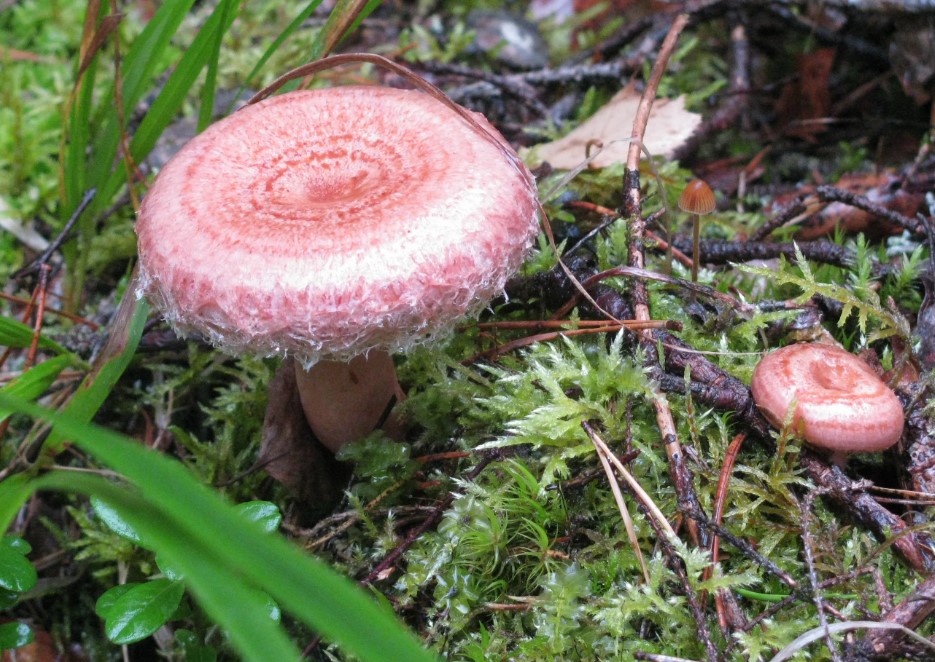
| Pink volnushka (Lactarius torminósus) | The cap diameter ranges from 5 to 15 cm, with a convex to depressed shape. The edges are rolled and slightly pubescent. The color is pinkish-red. The milky sap is white and pungent. The stem is up to 6 cm tall. | Conditionally edible. | July-October. | Grows in dense grass near birch trees in mixed and deciduous forests. |
Photo gallery of pink volnushka
Black milk mushroom (Lactarius necator)
| View | Description | Edibility | Collection deadlines | Where to look |
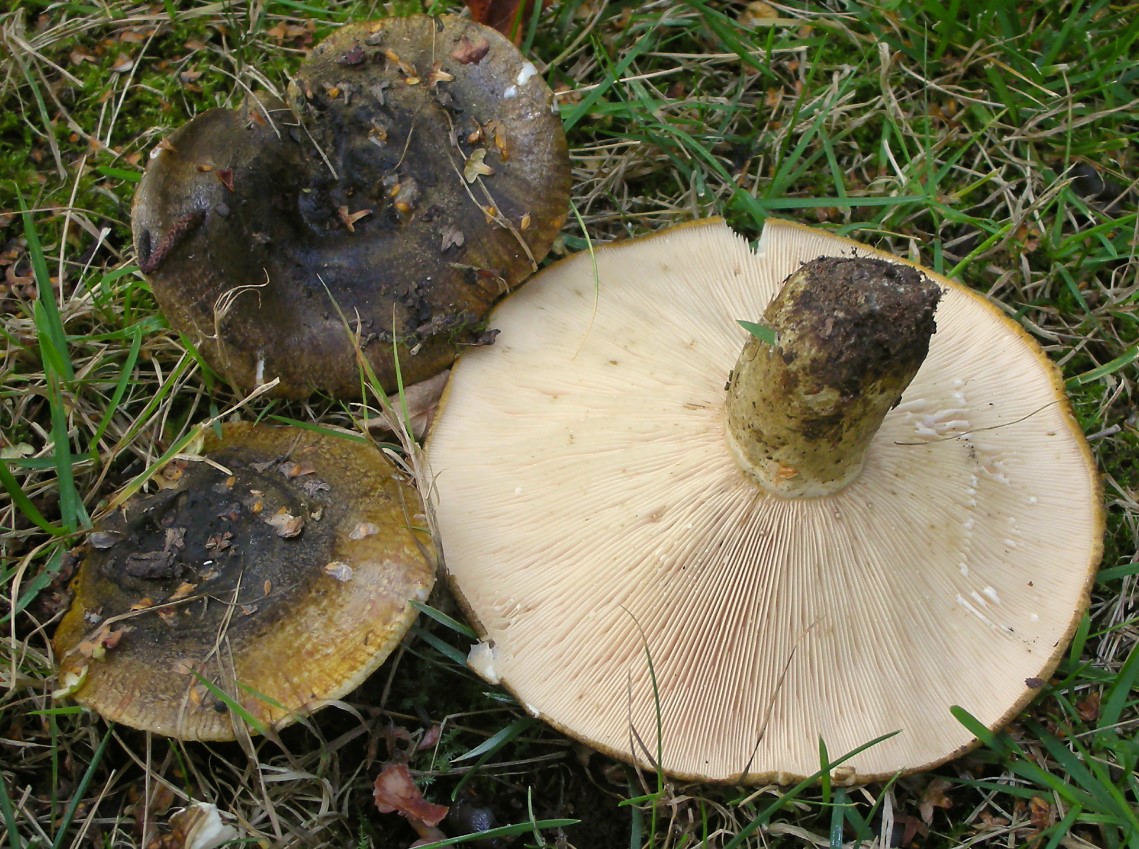
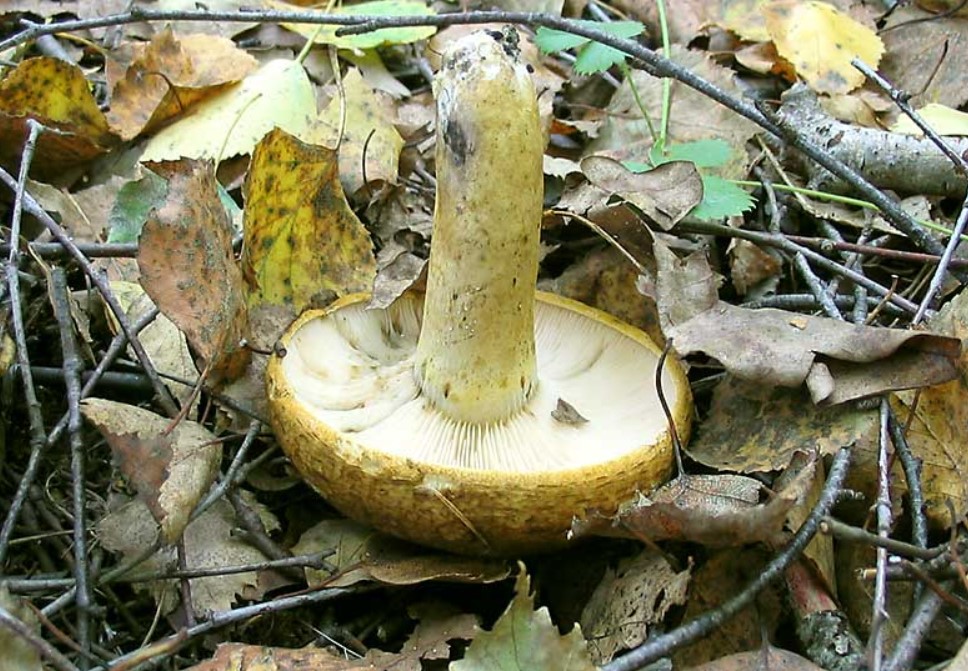
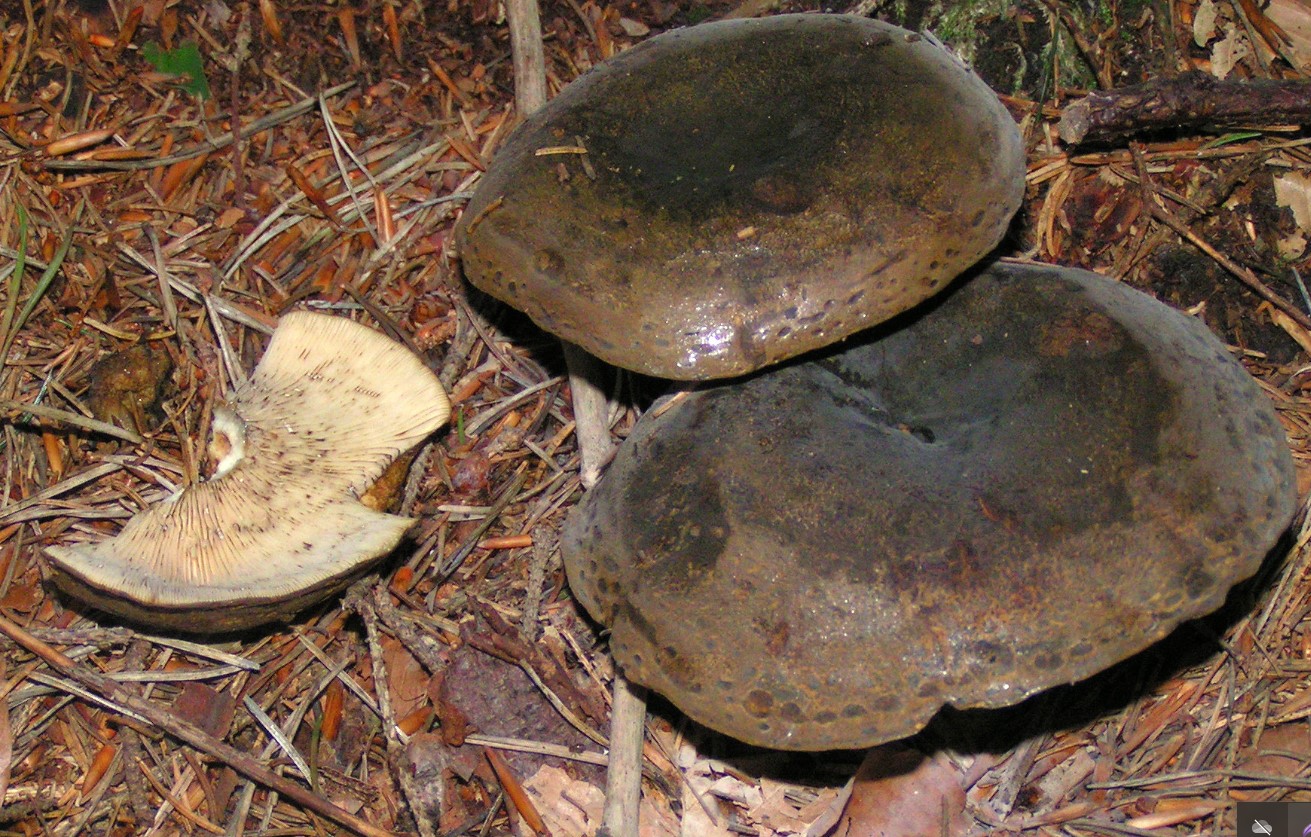
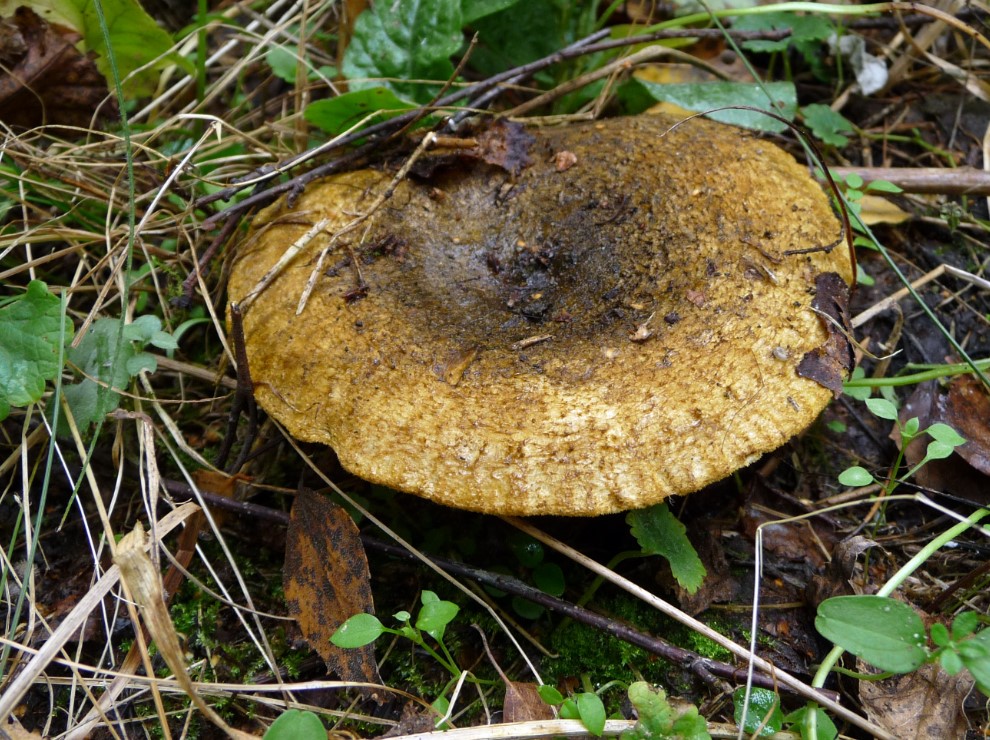
| Black milk mushroom (Lactarius necator) | The cap diameter ranges from 7 to 20 cm, with recurved margins. It is dark olive or dark brown in color and may have concentric zones. The flesh turns gray after cutting. The milky juice is tart and abundant. The stem is up to 8 cm tall. | Conditionally edible. | July – beginning of October. | Mixed forests, grows next to birches in large groups, loves moss and leaf substrate. |
Photo gallery of black milk mushrooms
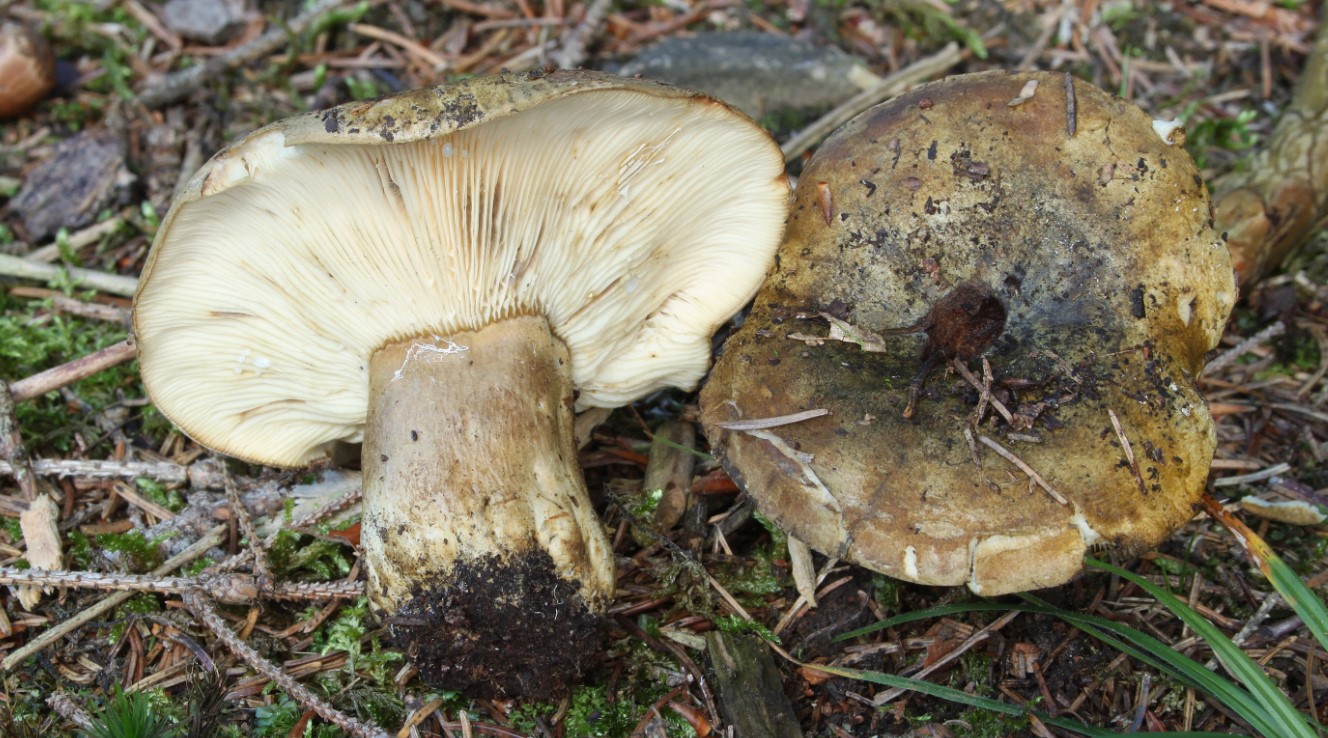
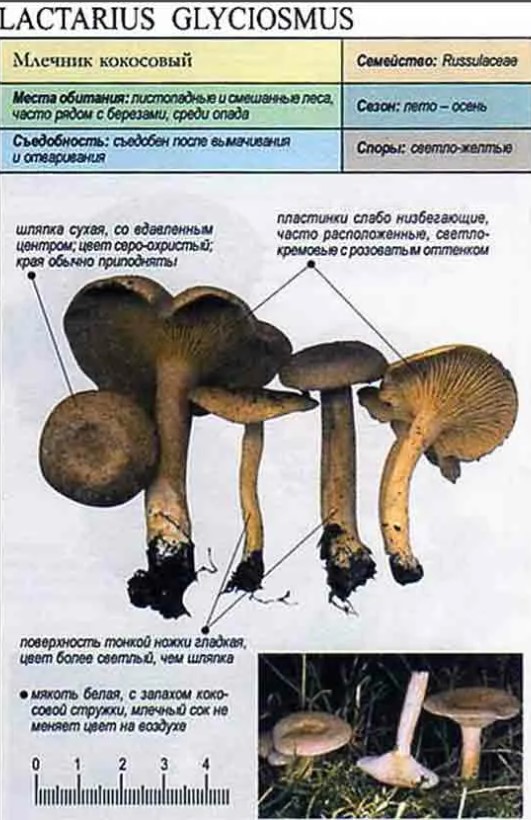
Lactarius glyciosmus (fragrant milk cap)
| View | Description | Edibility | Collection deadlines | Where to look |
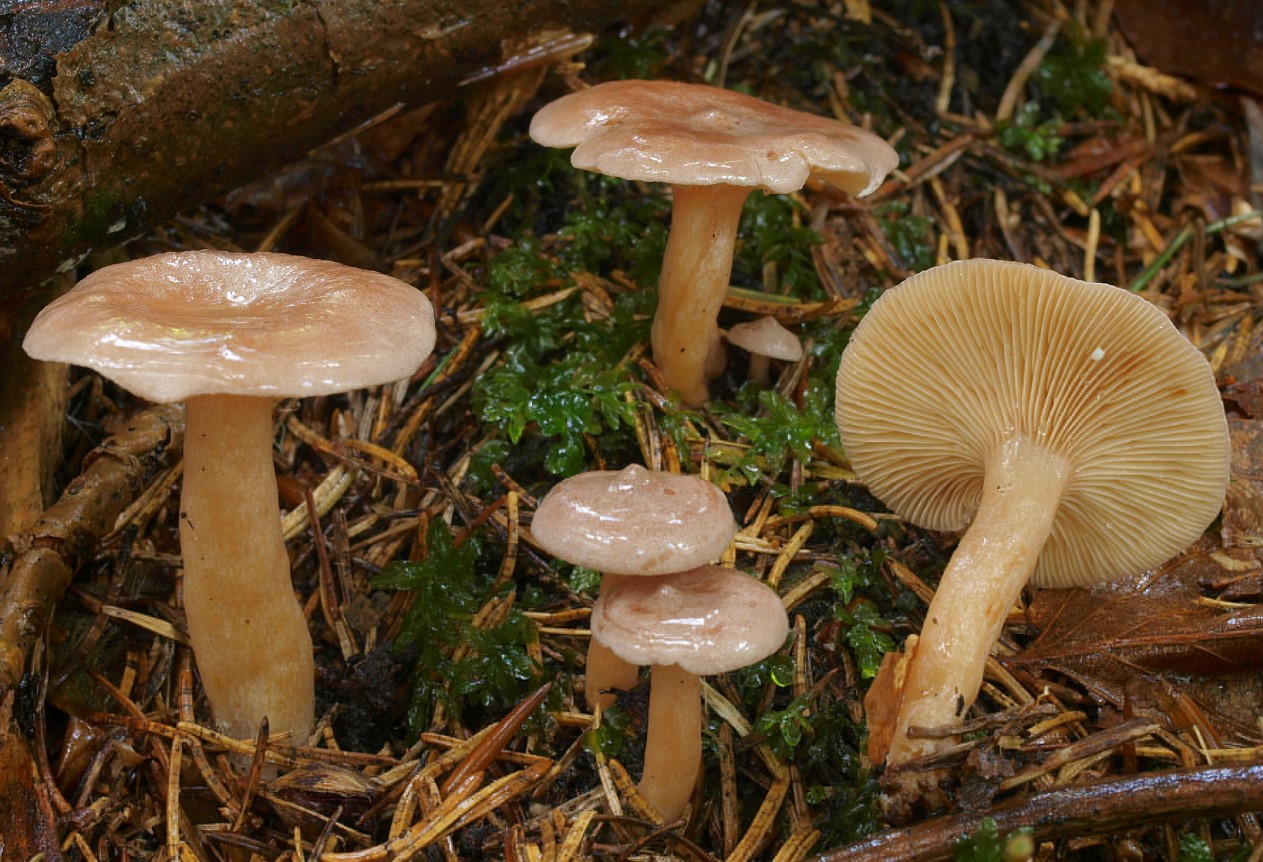
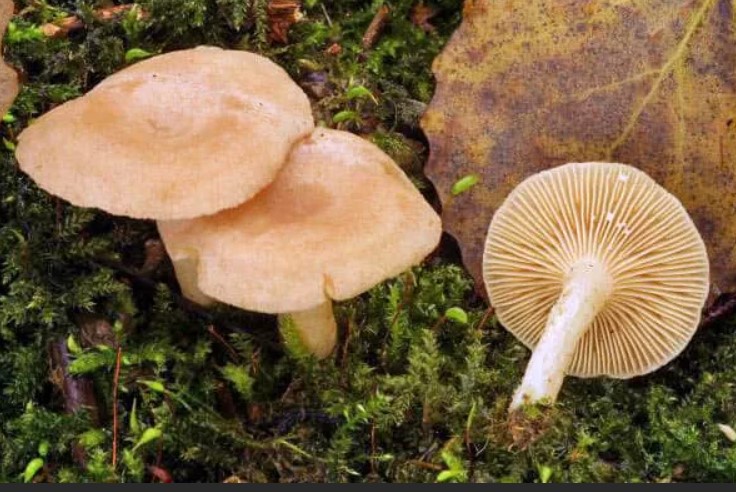
| Milk mushroom (Lactarius glyciosmus) | The cap is 3-6 cm in diameter, convex when young, then spreading, with a slightly depressed core. The skin is dry and slightly pubescent. The color can be lilac, ochre with shades of gray, or pinkish-brown. The stem is only 1 cm tall, lighter than the cap. The milky sap is white. | Conditionally edible. It has a coconut aroma. It is used salted or as a seasoning for dishes. |
August-October. | Mixed and deciduous forests grow under birch trees. |
Photo gallery of aromatic milk mushrooms
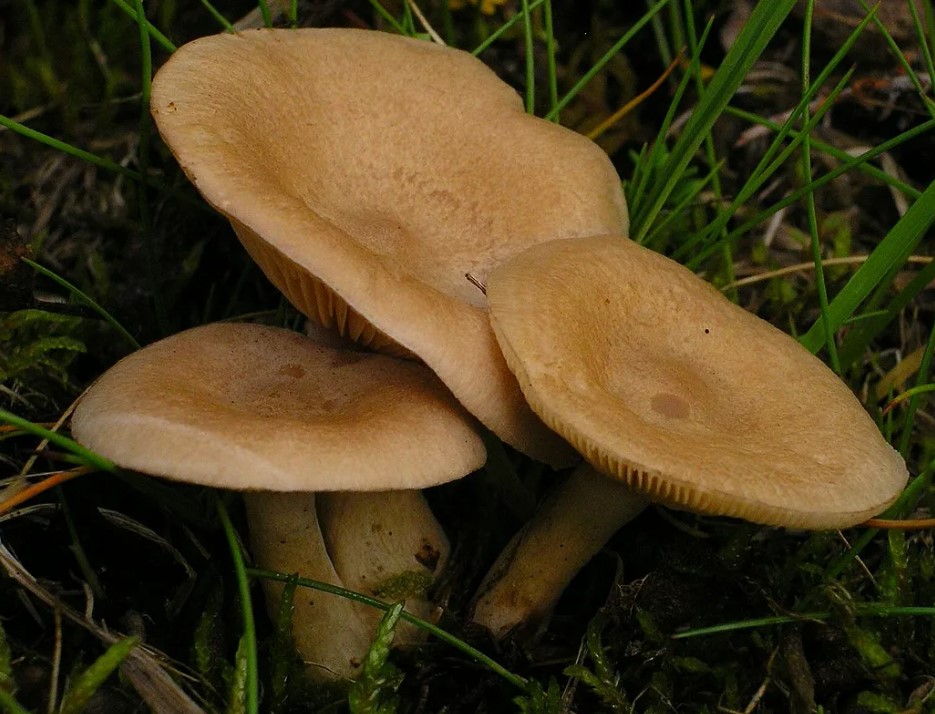
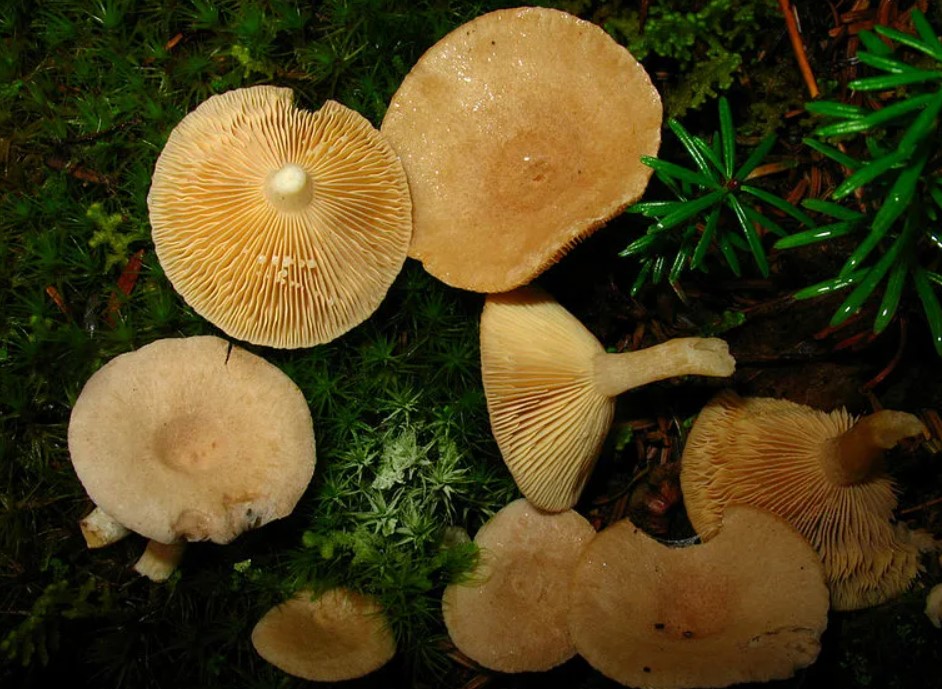
Watery-zone milkweed (Lactarius aquizonatus)
| View | Description | Edibility | Collection deadlines | Where to look |
| Watery-zone milkweed (Lactarius aquizonatus) | The cap is funnel-shaped, up to 20 cm in diameter, white, with shaggy edges that curl downward. When cut, a milky sap flows, initially white, then turning yellow. | Conditionally edible. | July-September. | Prefers deciduous forests, often hiding under fallen leaves and rotting before it has time to grow. |
Photo gallery of watery-zonal milk mushroom
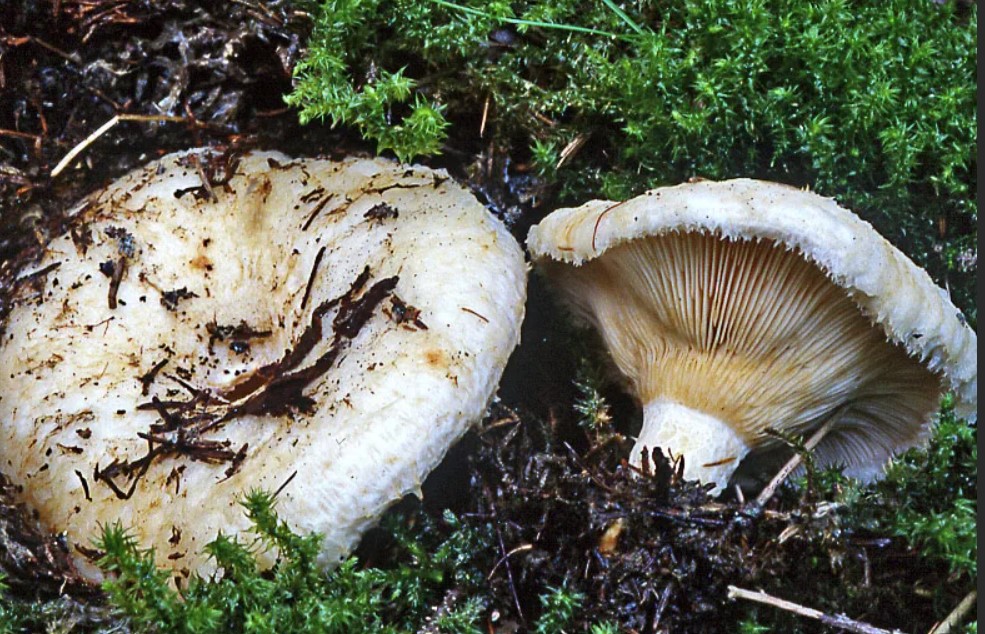
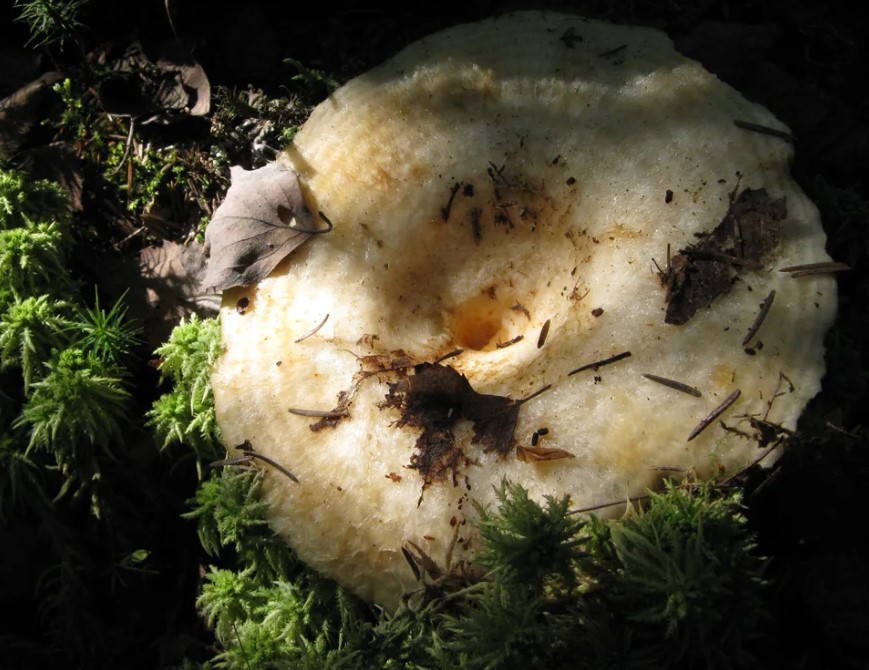
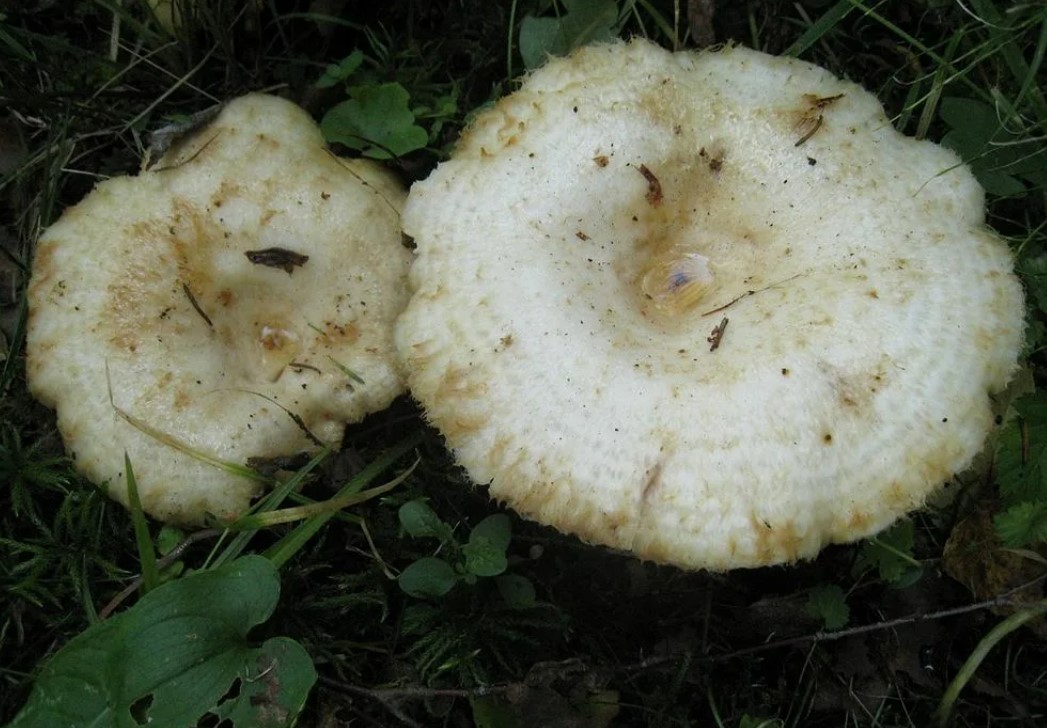
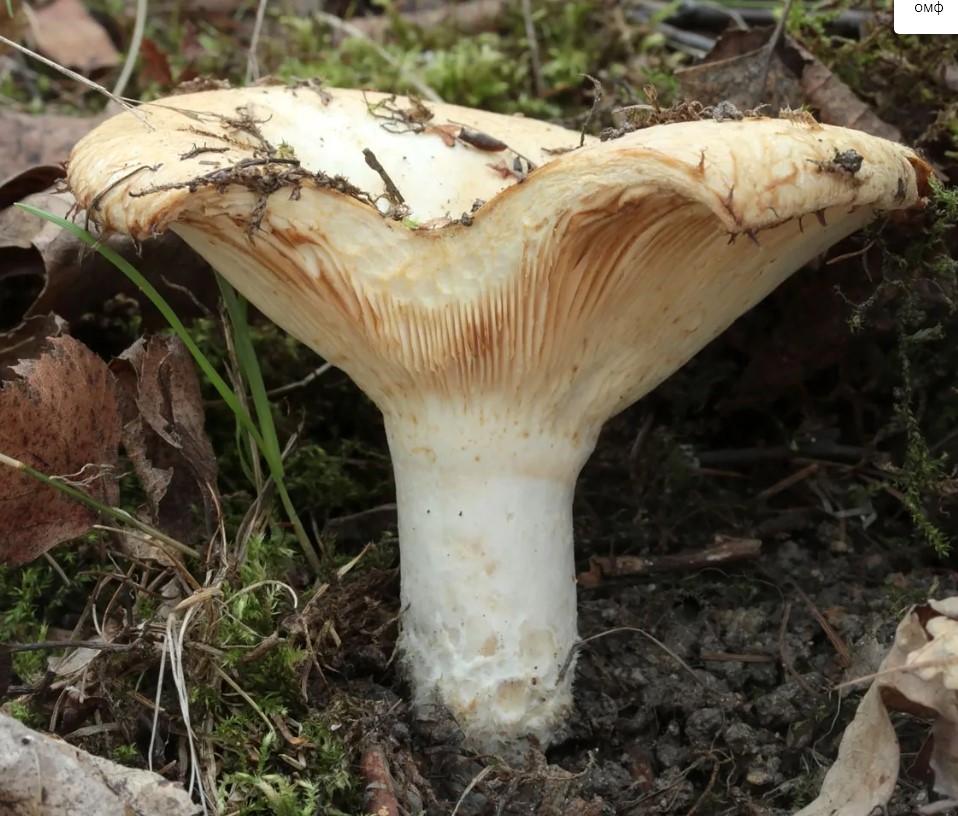
Felt milk cap, fiddlehead milk cap (Lactarius vellereus)
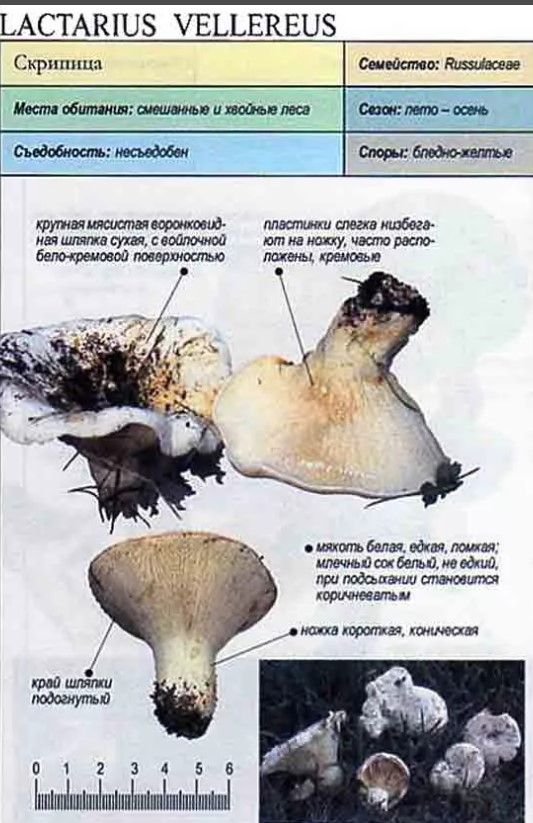
| View | Description | Edibility | Collection deadlines | Where to look |
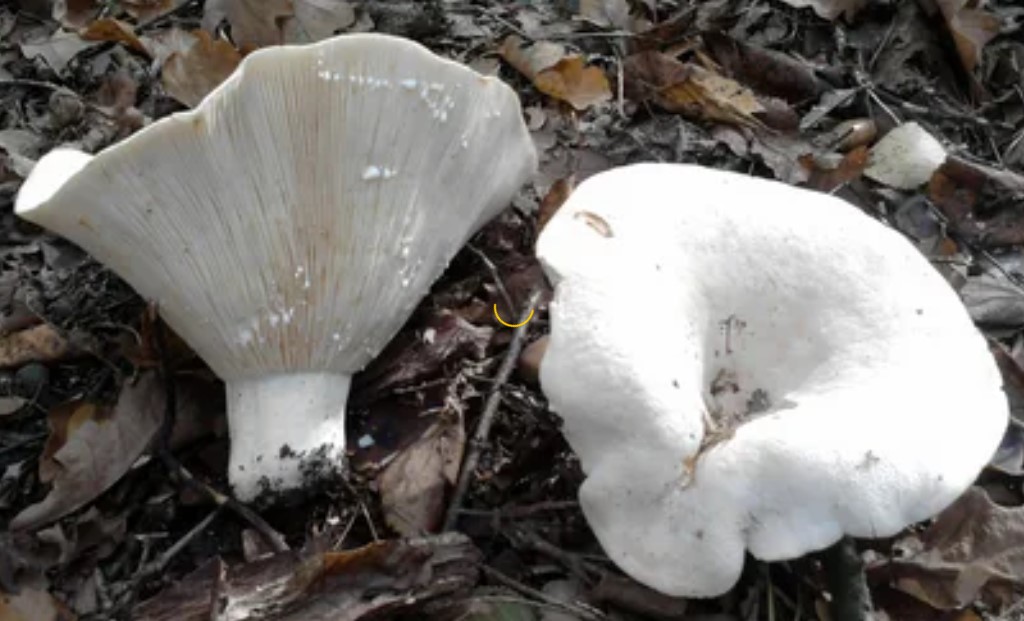
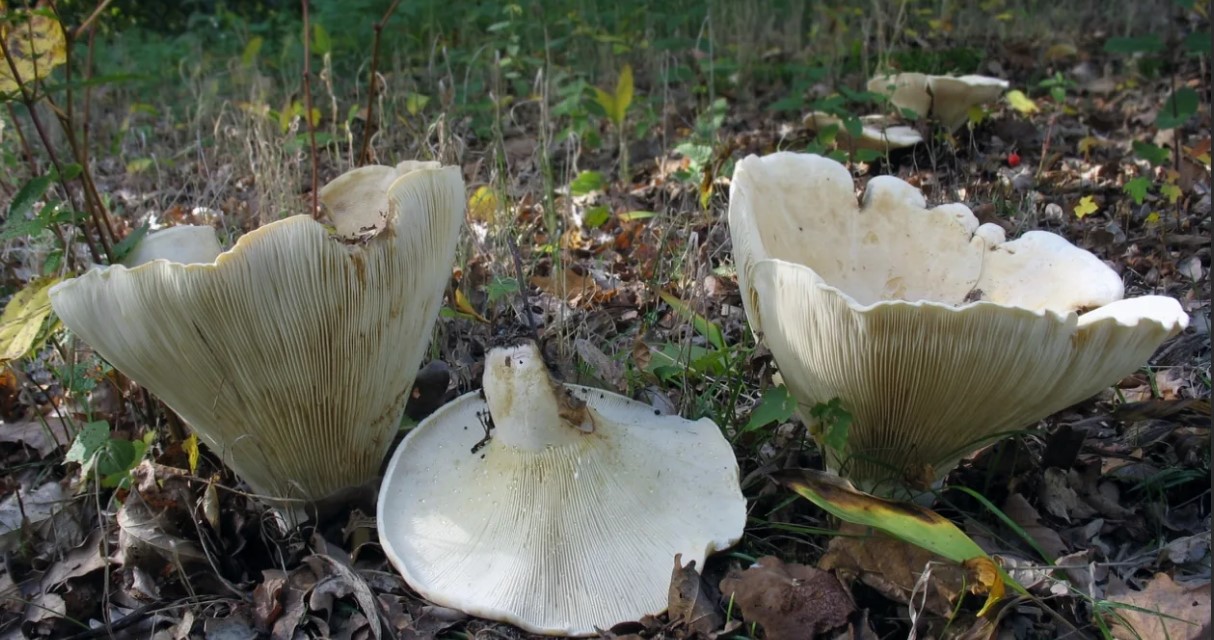
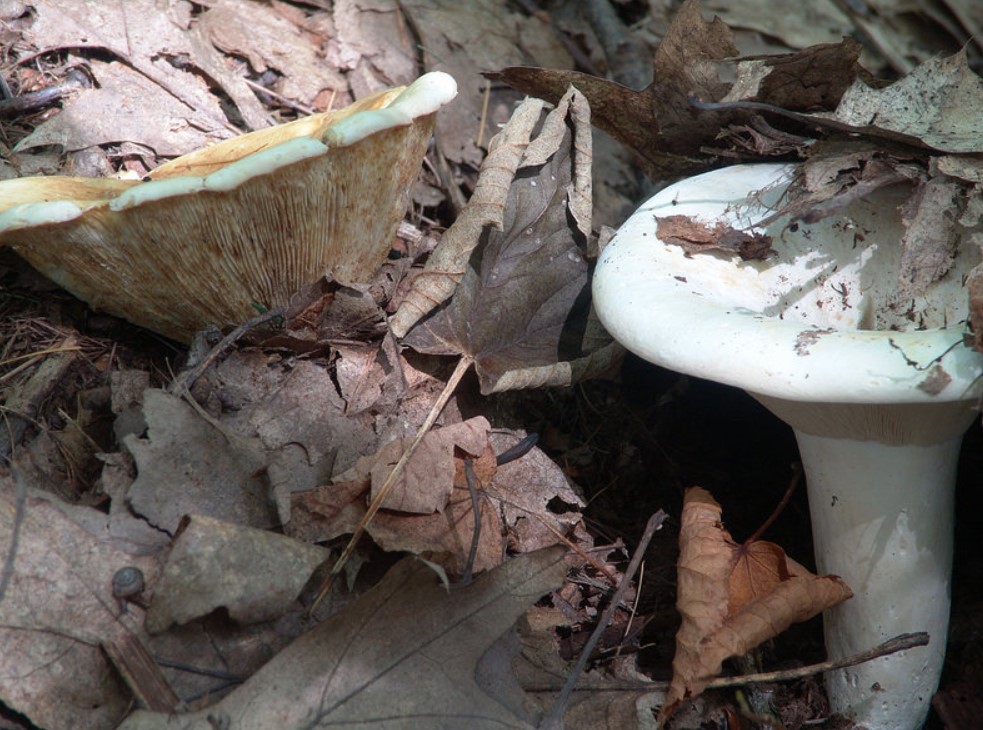
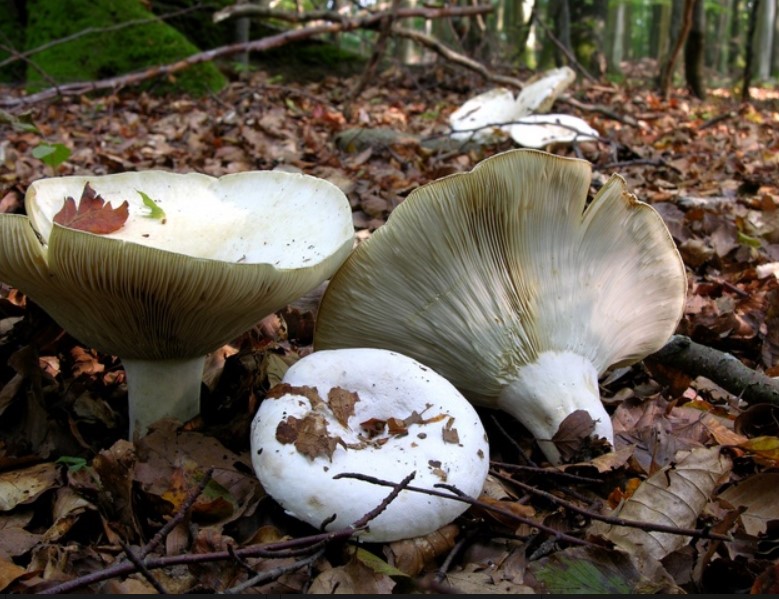
| Tomentose breast (Lactarius vellereus) | The cap diameter ranges from 8 to 26 cm. The shape changes from convex to funnel-shaped, and the edges become wavy with age. The color is white, with a possible reddish tint, and the surface is fuzzy, with ochre spots appearing on it. | Conditionally edible. It needs to be soaked for a long time. |
July-September. | Deciduous and coniferous forests, prefers to grow near birch trees. |
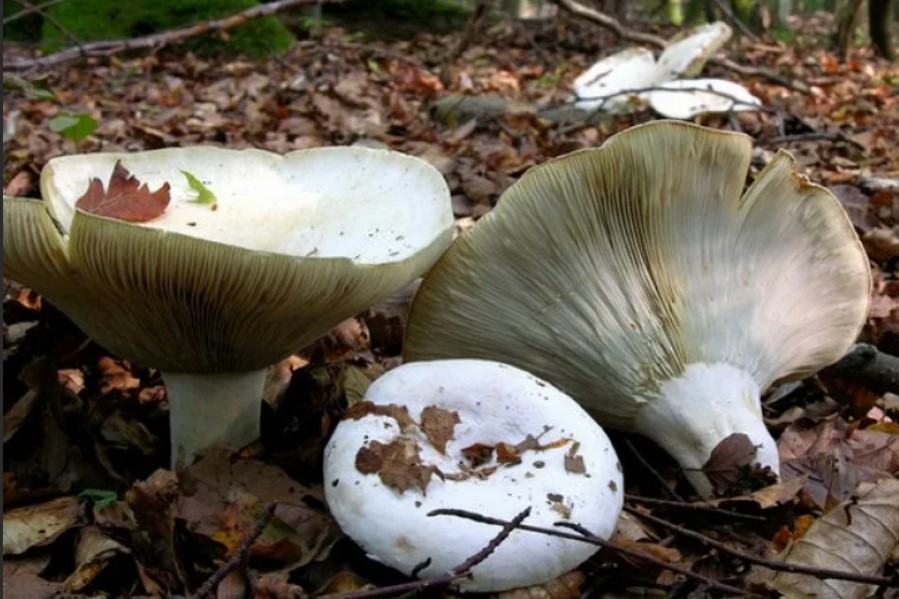
Photo gallery of the violin
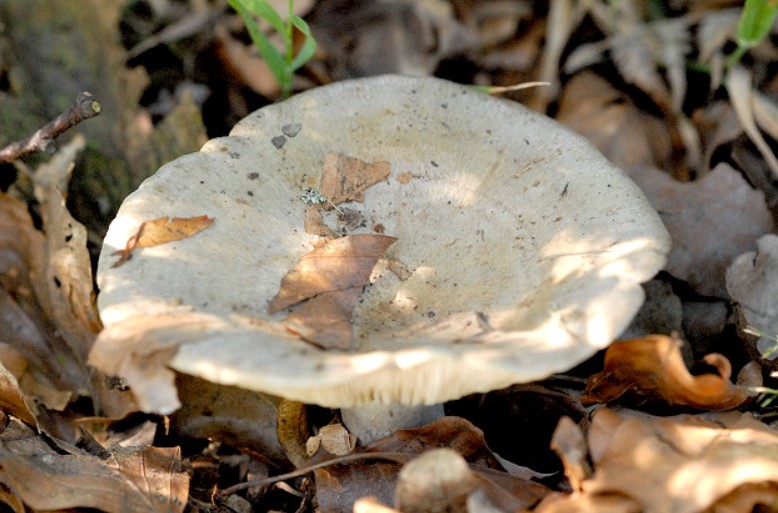
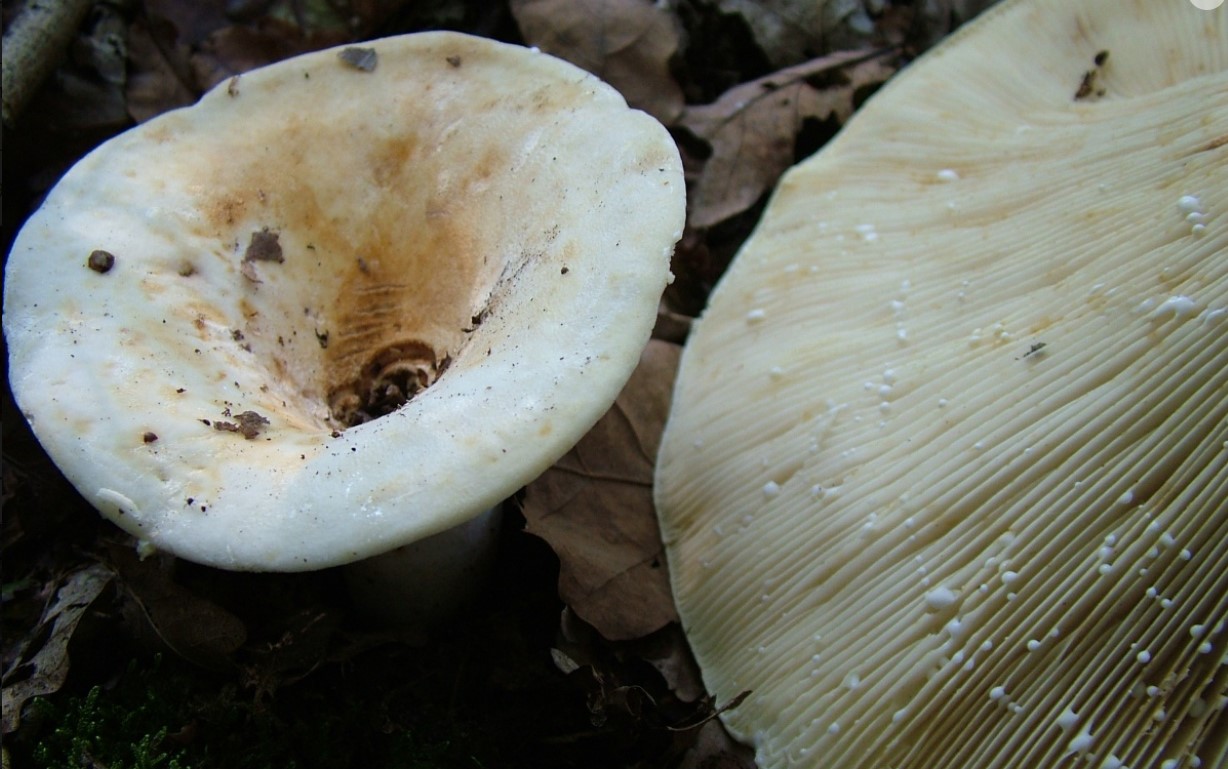
Bitter milk cap, bitter milk cap, red milk cap (Lactarius rufus)
| View | Description | Edibility | Collection deadlines | Where to look |
| Bitter milk mushroom (Lactarius rufus) | The cap is up to 10 cm in diameter, with a cone-shaped tubercle in the center. The edges are curved inward. The color is brownish-red. The stem is up to 7 cm tall, brownish, and pubescent. A reddish tint develops at the base with age. | Conditionally edible. | August-September. | Coniferous and mixed forests, loves pine and birch. |
Photo gallery of bitter milk mushrooms
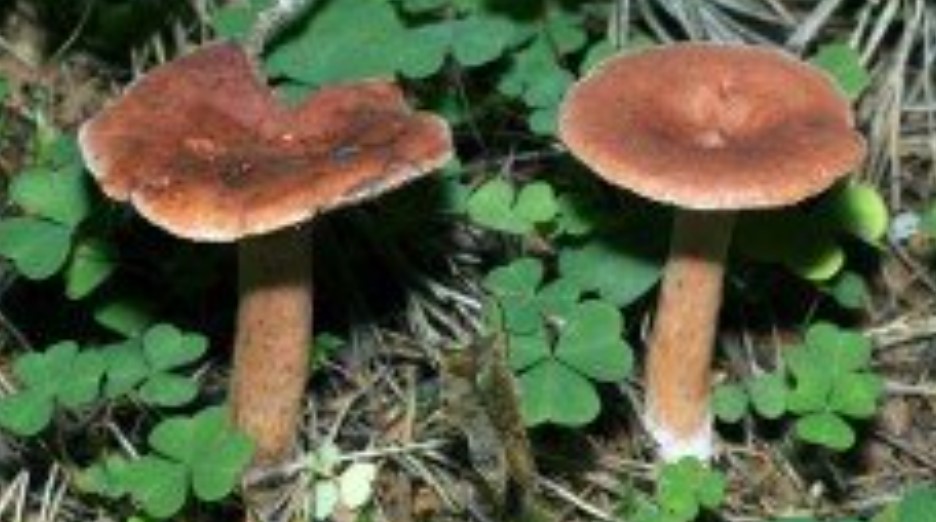
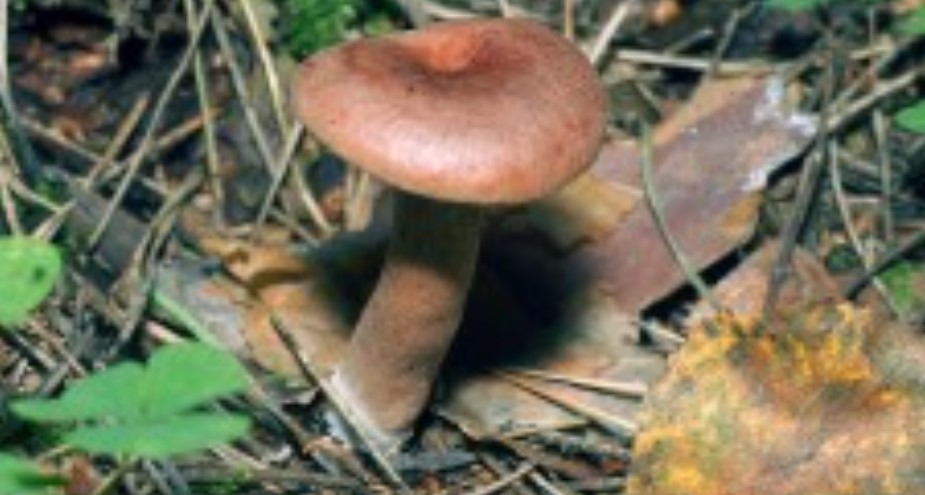
Oak saffron milk cap, oak milk cap (Lactarius insulsus)
| View | Description | Edibility | Collection deadlines | Where to look |
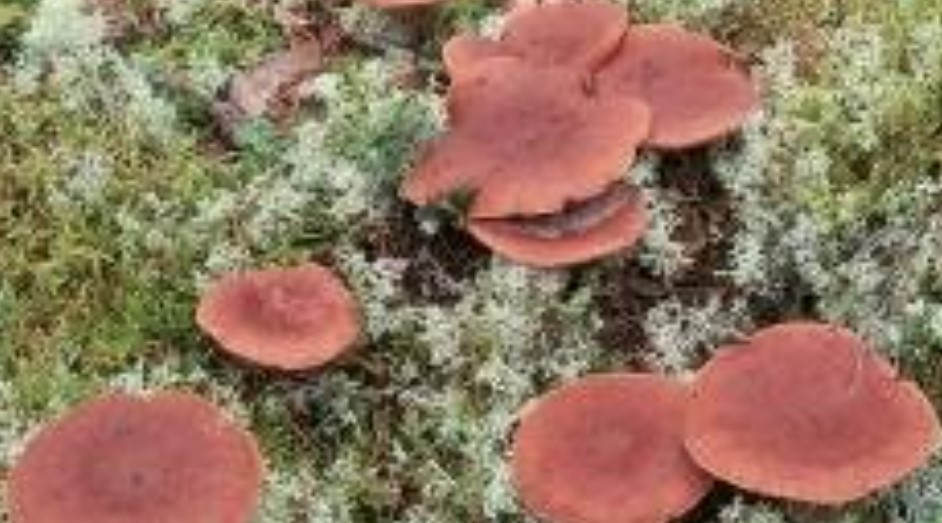
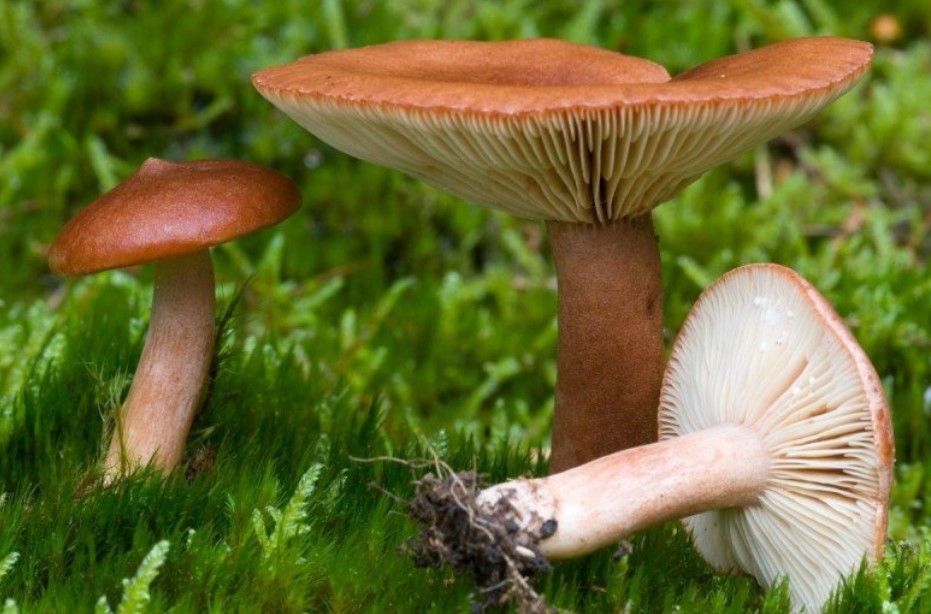
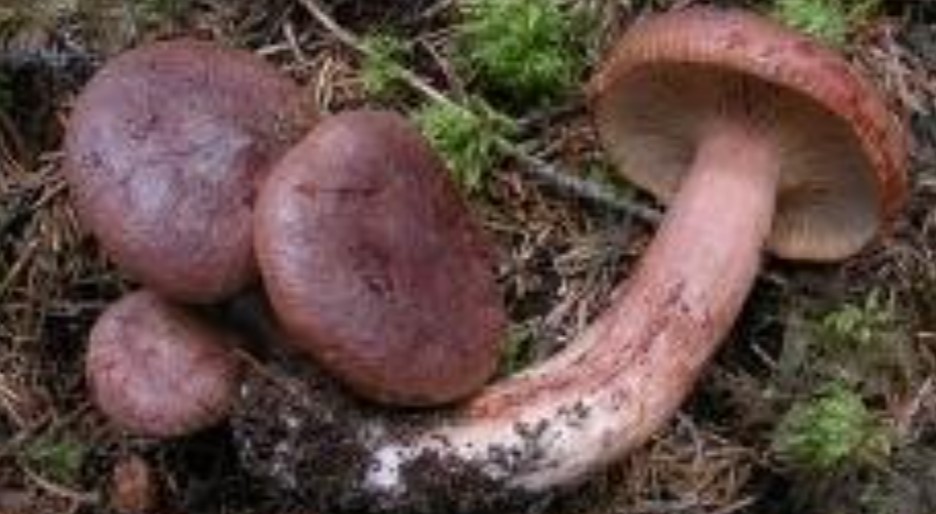
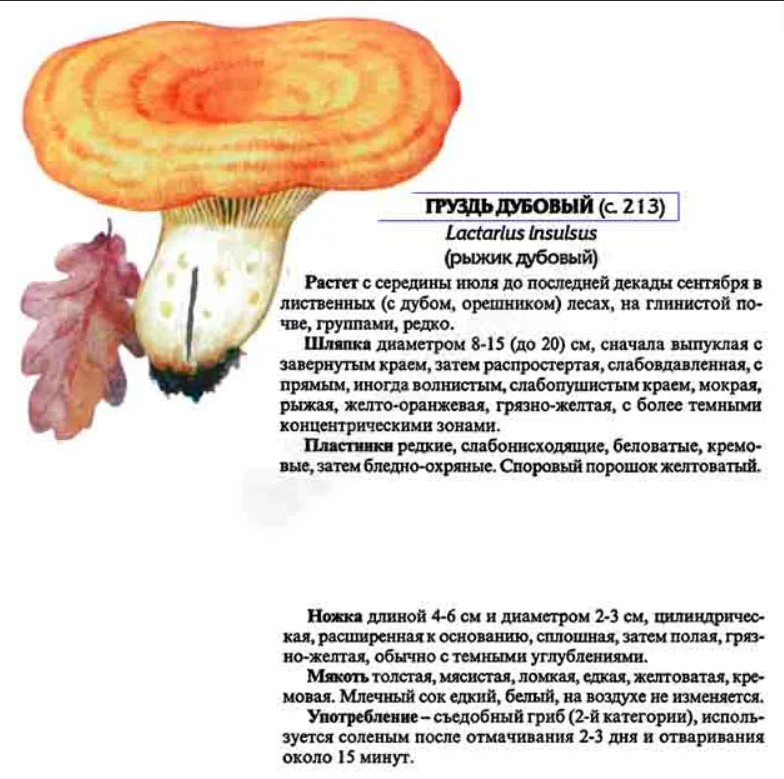
| Oak milk cap (Lactarius insulsus) | The cap diameter ranges from 5 to 12 cm; the shape can be irregular, with wavy edges. The color is reddish or brown. The stem is up to 7 cm tall. The milky sap is watery and small in quantity. | Conditionally edible. | July-September. | Broadleaf forests, settles near oaks, hazels, beeches. |
Photo gallery of oak camelina
Sticky milk cap, sticky milk cap (Lactarius blennius)
| View | Description | Edibility | Collection deadlines | Where to look |
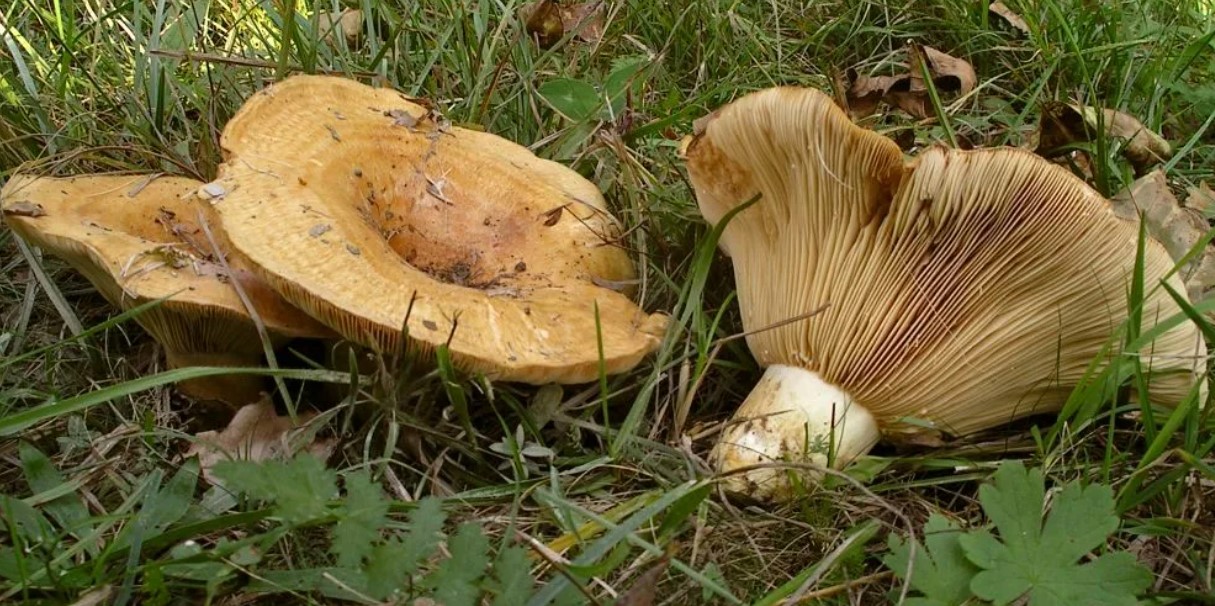
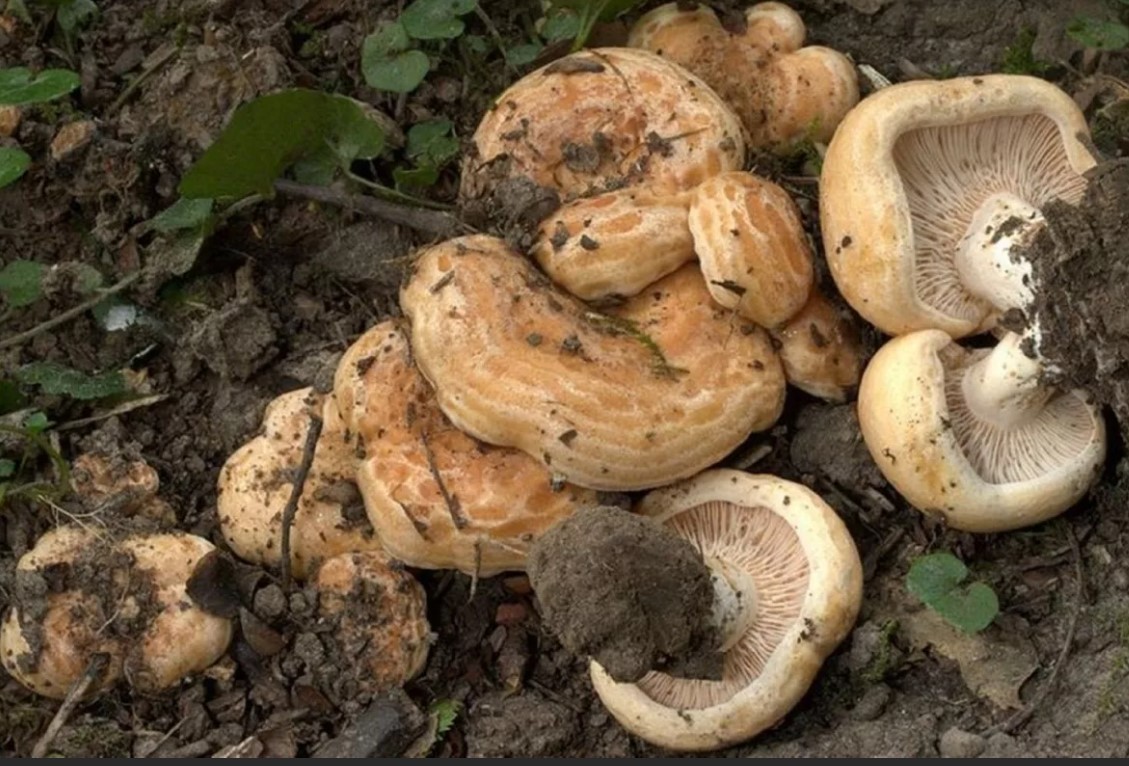
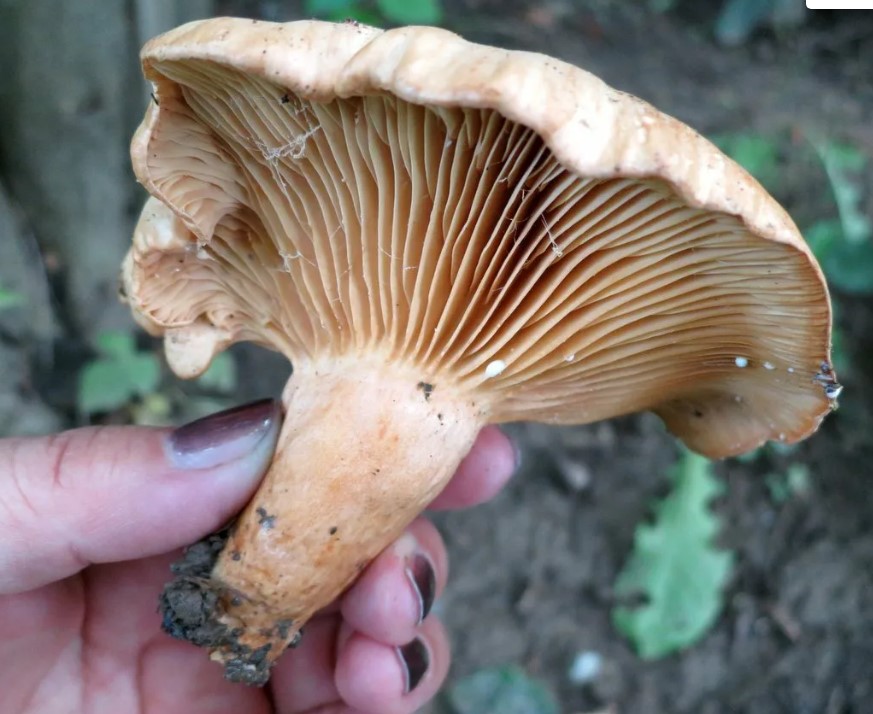
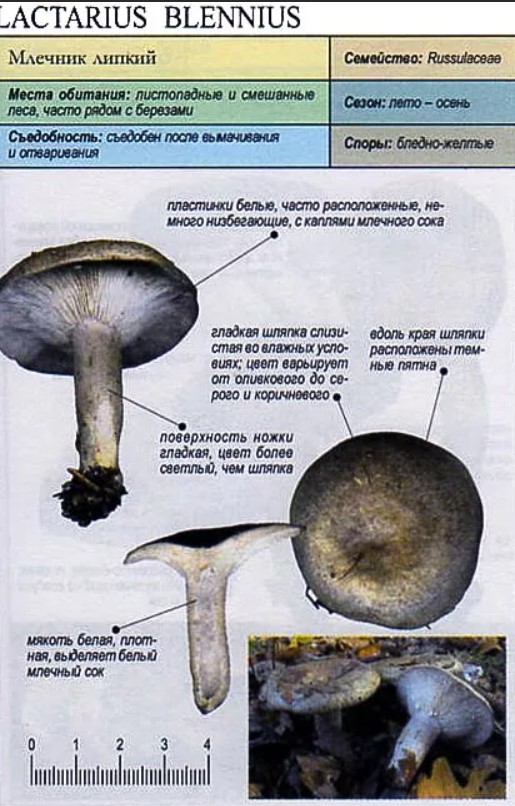
| Sticky milk mushroom (Lactarius blennius) | The cap of a mature mushroom is slightly depressed in the center, with curved edges. It is up to 10 cm in diameter, gray-green in color, and covered with concentric zones. The stem is smooth, up to 6 cm in height, and thick. The milky sap takes on an olive hue when cut. | Conditionally edible. | July-September. | Distributed in Asia and Europe, it prefers to grow in small groups near birch and beech trees. |
Photo gallery of sticky milk mushrooms
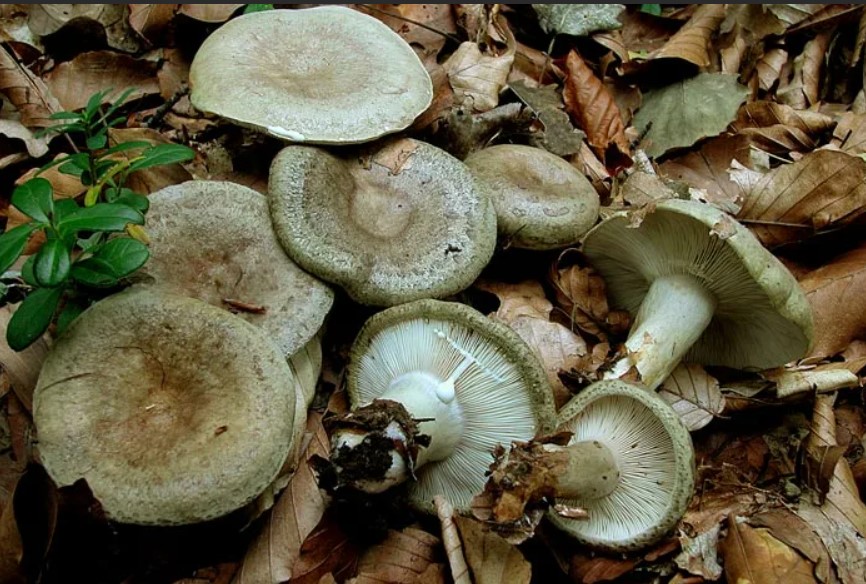
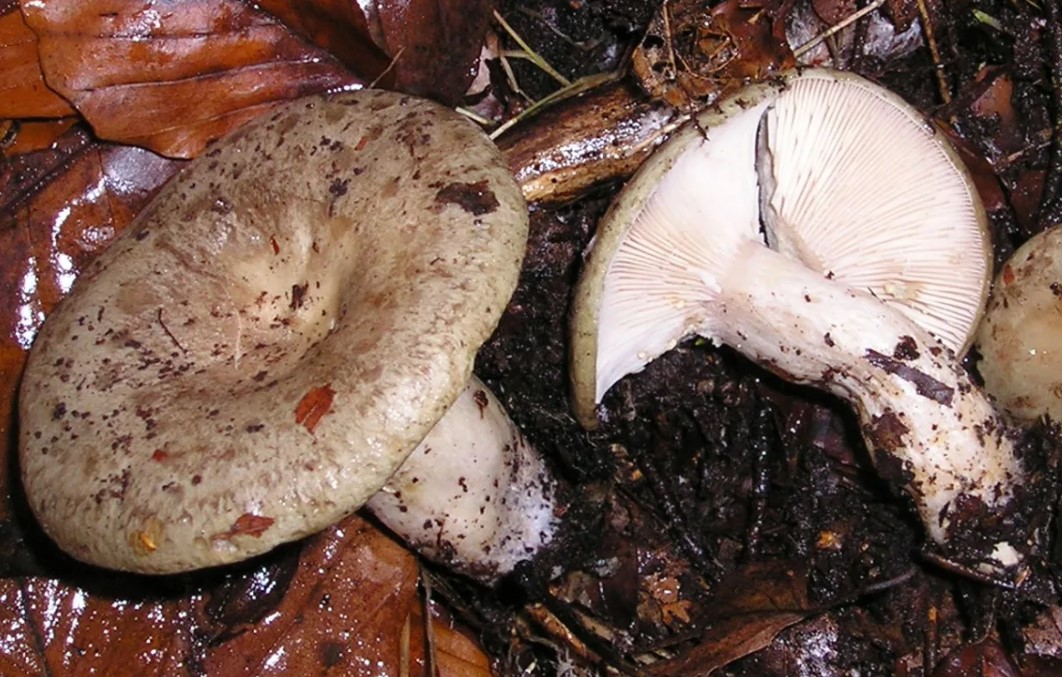
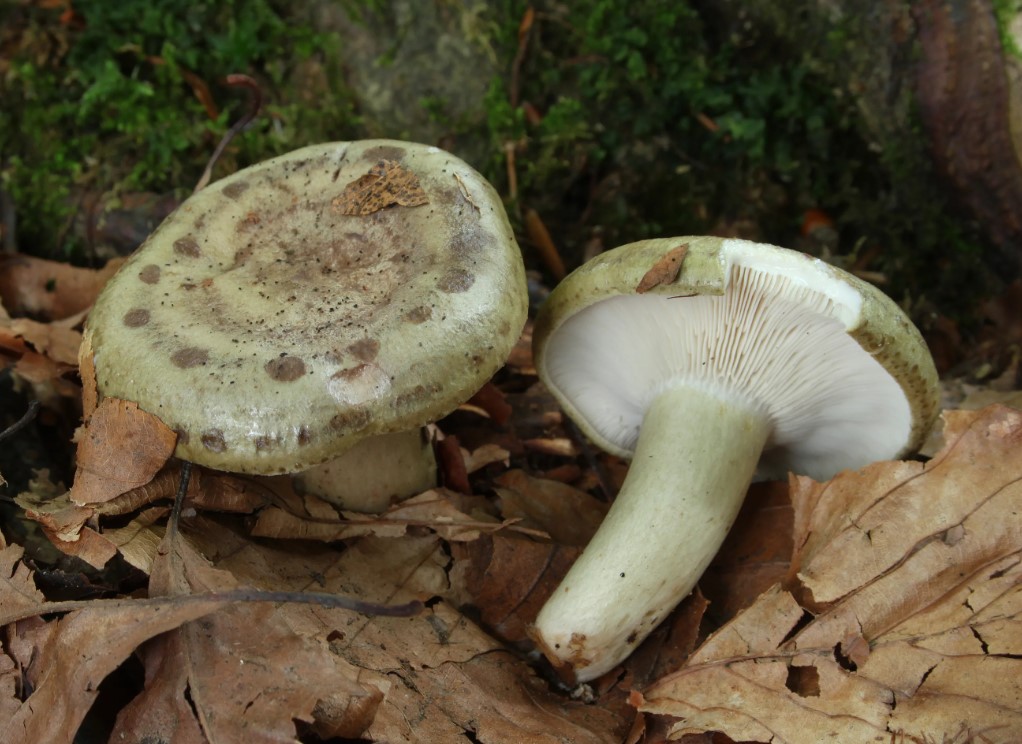
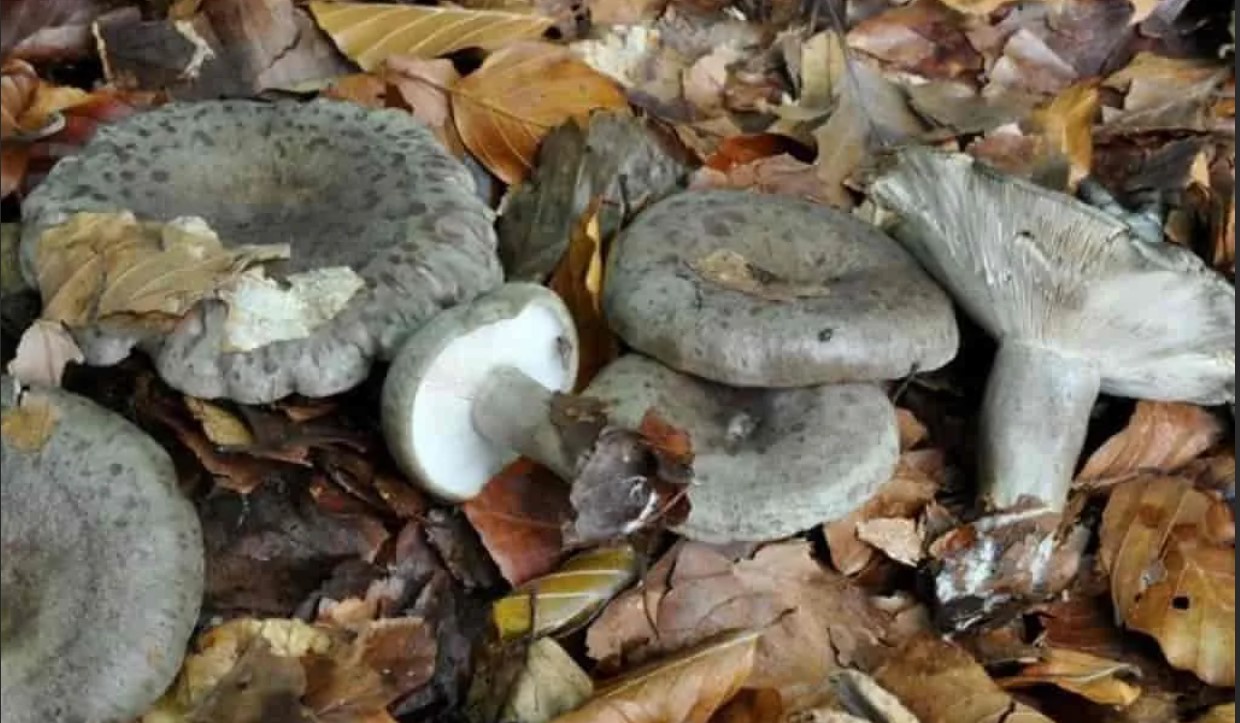
Deceptive milk mushroom (Lactarius deceptivus)
| View | Description | Edibility | Collection deadlines | Where to look |
| Deceptive milk mushroom (Lactarius deceptivus) | The cap is up to 25 cm in diameter, with a dry surface. The edges are rolled. With age, the color changes from white to brownish, with concentric zones. | Conditionally edible. | June-October. | Found in coniferous and deciduous forests under oak trees. |
Photo gallery of the deceptive milk mushroom
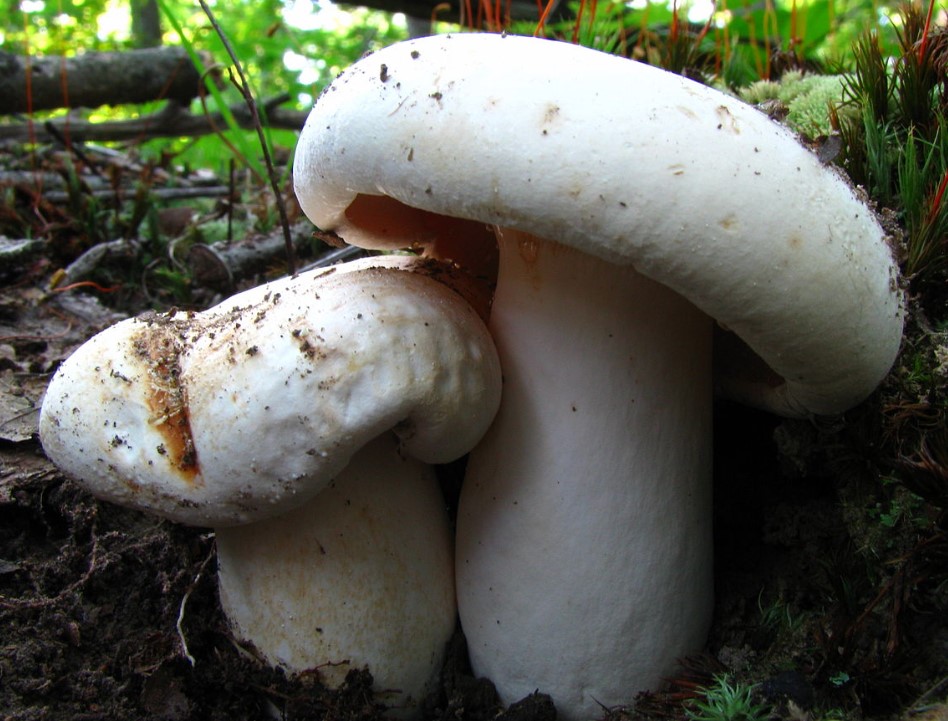
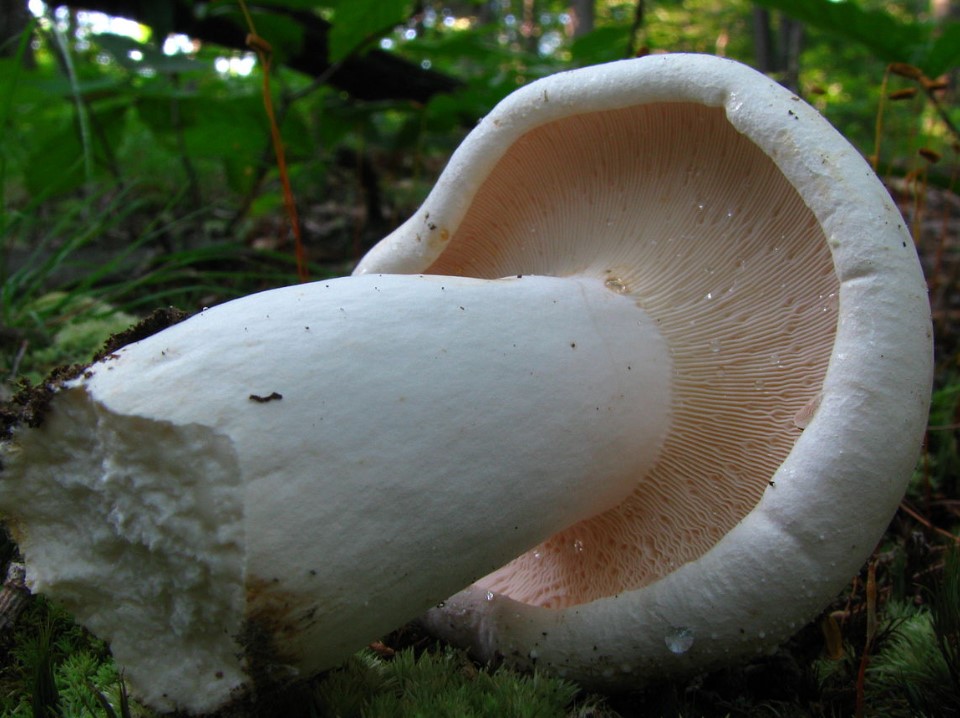
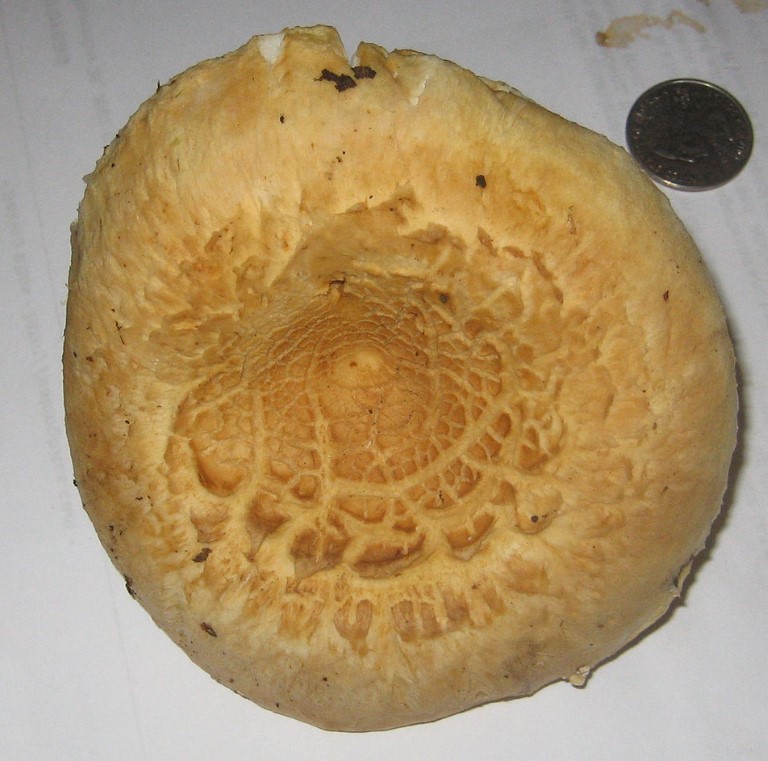
| View | Description | Edibility | Collection deadlines | Where to look |
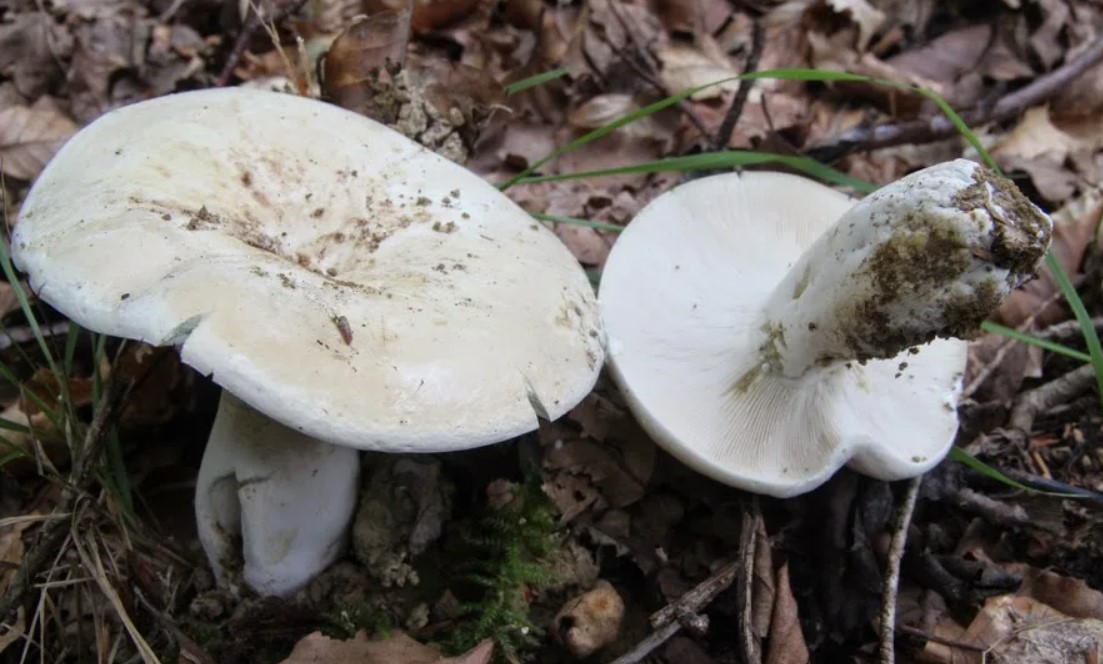
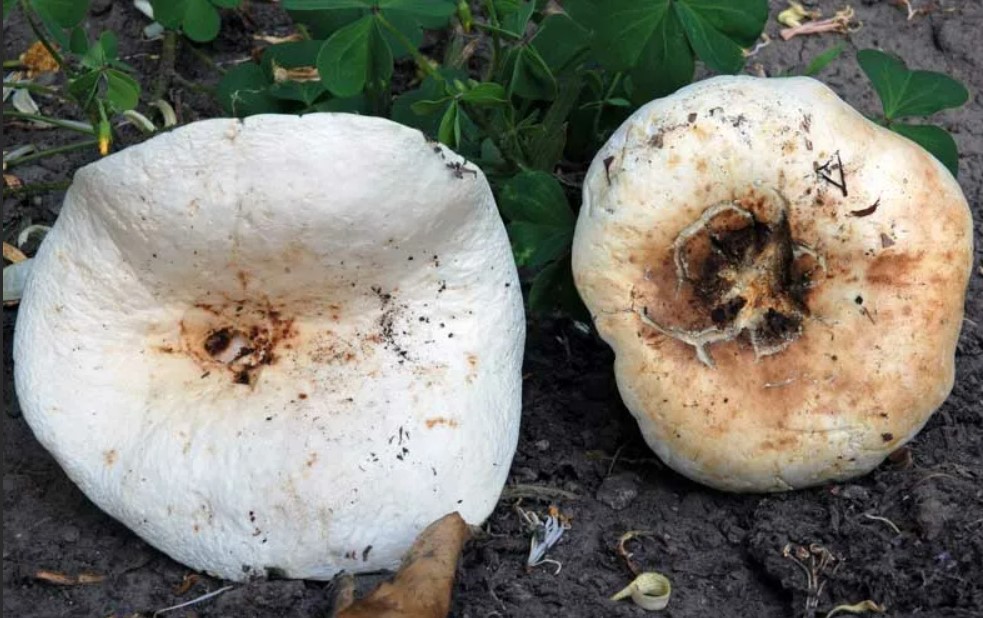
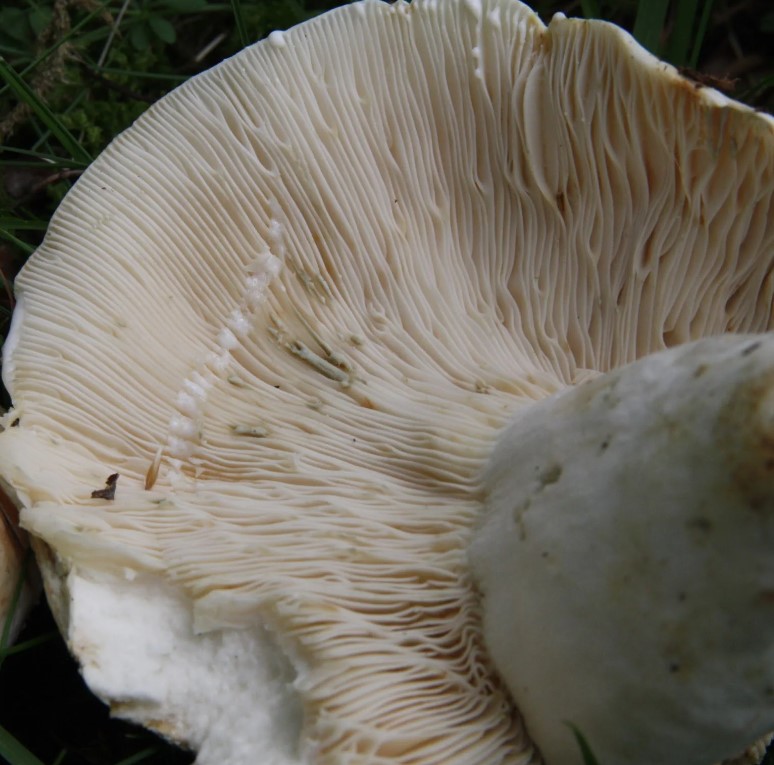
| Parchment milk cap (Lactarius pergamenus) | The cap is up to 10 cm in diameter, white in color, and the milky sap is white; the color does not change when exposed to air. The stem is long and tapers at the base. | Conditionally edible. | August-September. | Mixed forests, grows massively. |
Photo gallery of the parchment milk cap
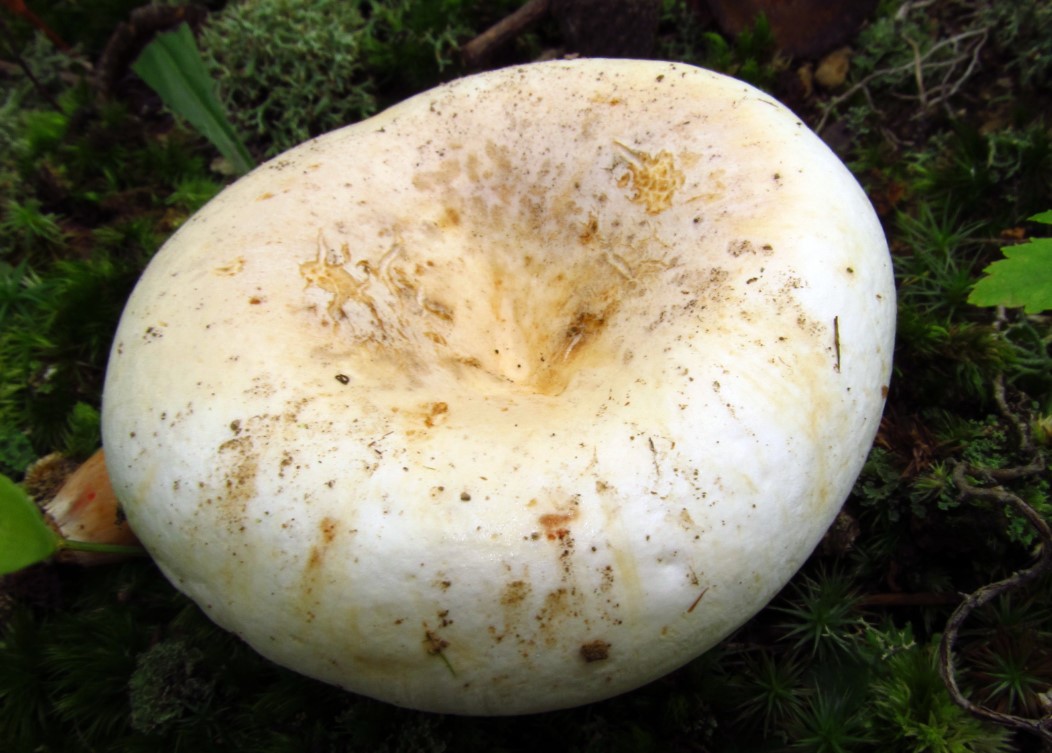
Blue breast (Lactarius repraesentaneus)
| View | Description | Edibility | Collection deadlines | Where to look |
| Blue breast (Lactarius repraesentaneus) | The cap is yellowish, with terry edges. The milky sap is white, turning blue when cut. The stem is thick. | Conditionally edible. | July-August. | Prefers to grow under birch and pine trees. |
Photo gallery of the blue milk mushroom
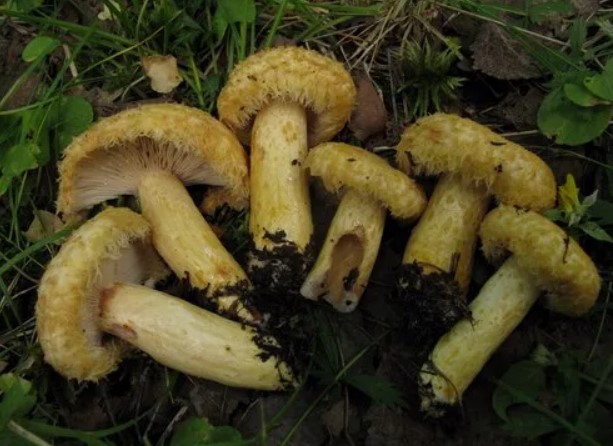
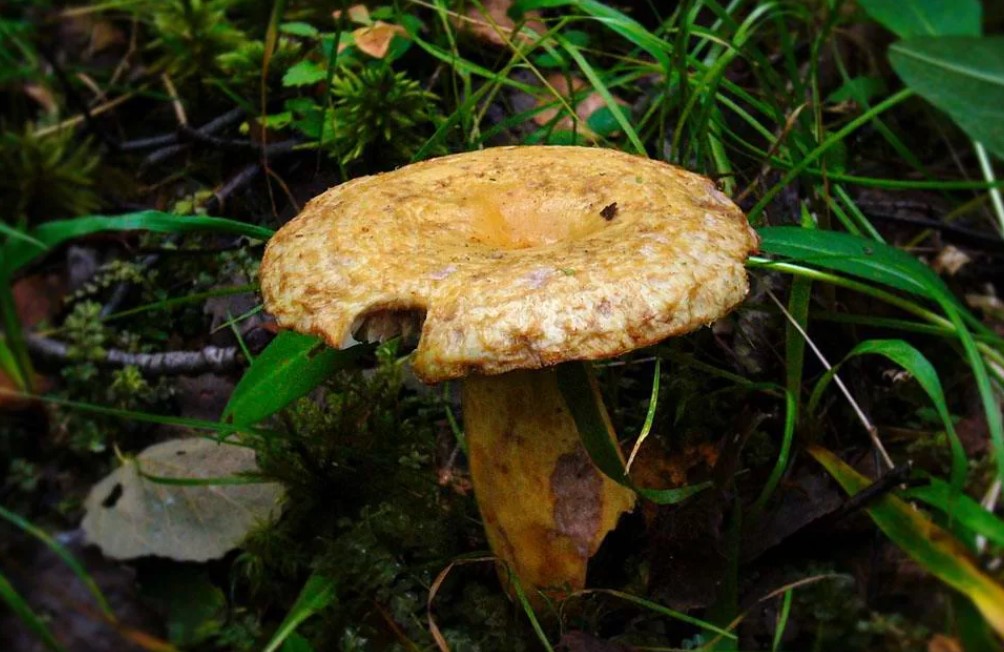
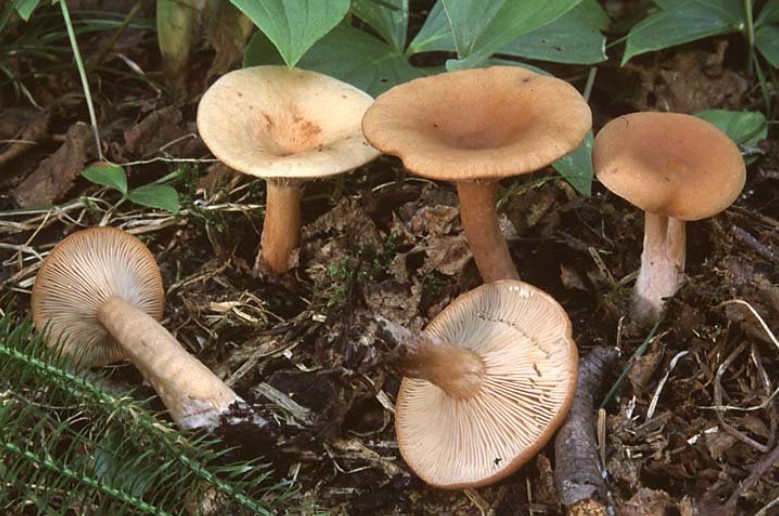
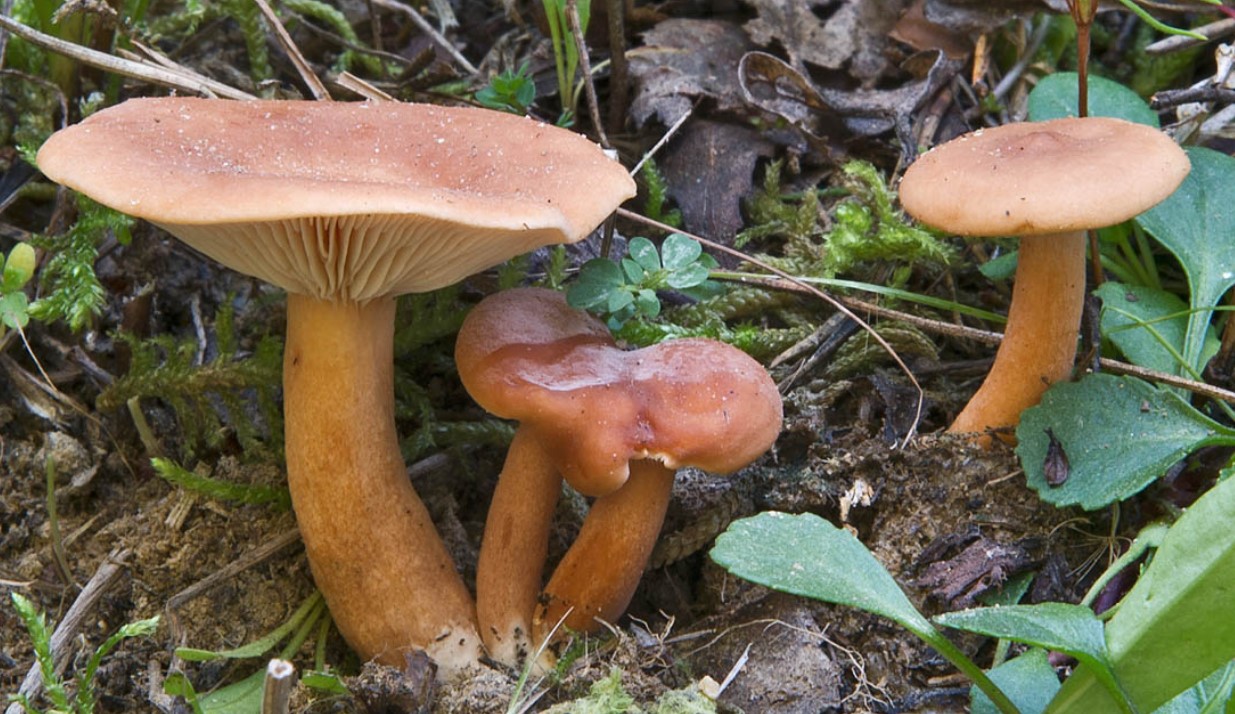
Lactarius tabidus, the stunted milk cap, the tender milk cap (Lactarius tabidus)
| View | Description | Edibility | Collection deadlines | Where to look |
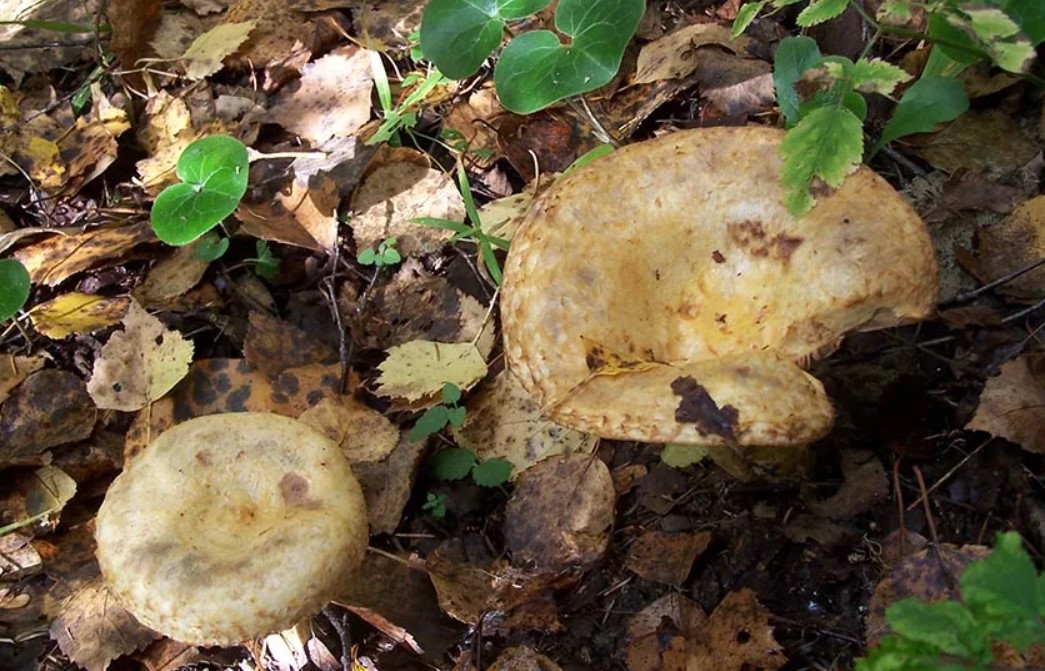
| The stunted, tender milk mushroom (Lactarius tabidus) | The cap is 3-5 cm in diameter and reddish or brick-red in color. It is prostrate, with a tubercle in the center. It secretes a small amount of milky juice, which gradually turns from white to yellowish. | Conditionally edible. | July-September. | Mixed and deciduous forests, prefers to grow on moss. |
Photo gallery of stunted milkweed
12 inedible types of milk mushrooms with photos and descriptions in tables
Alpine milkweed (Lactarius alpínus)
| View | Description | Edibility | Collection deadlines | Where to look |
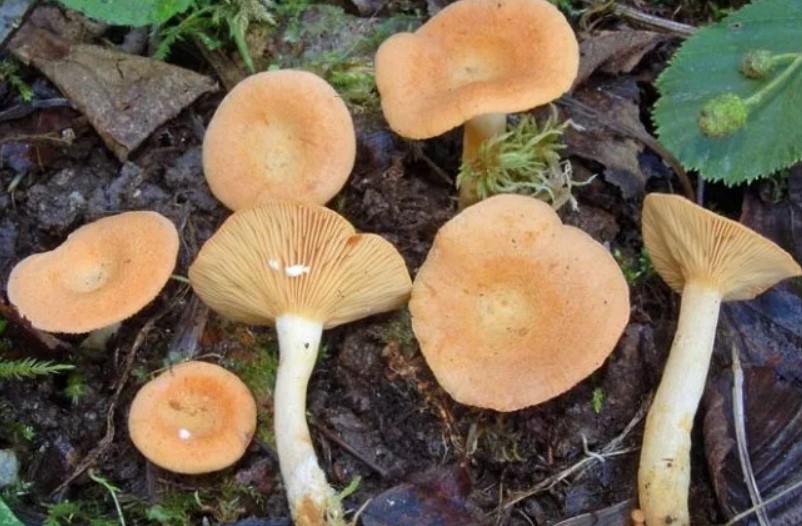
| Alpine milkweed (Lactarius alpínus) | The cap diameter ranges from 3 to 6 cm, changing shape as it grows from rounded to depressed. The color is ochre. The stem is up to 4 cm tall. The flesh remains unchanged after cutting and has a spicy taste. | Inedible, non-toxic. | August. | The habitat extends to Eurasia and North America, preferring sphagnum-deciduous forests. |
Photo gallery of the Alpine milkweed
Acute milkweed (Lactarius acerrimus)
| View | Description | Edibility | Collection deadlines | Where to look |
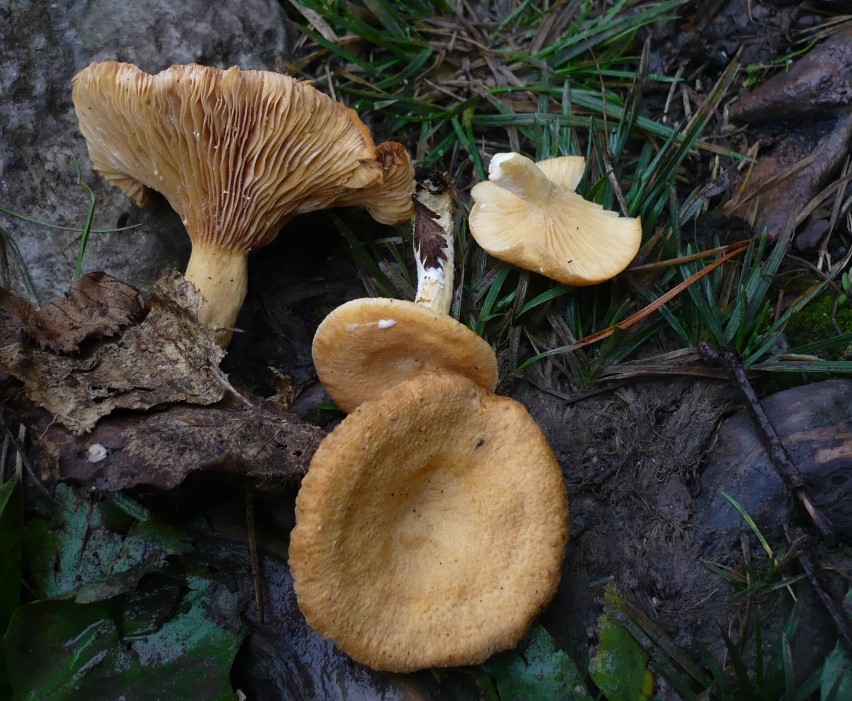
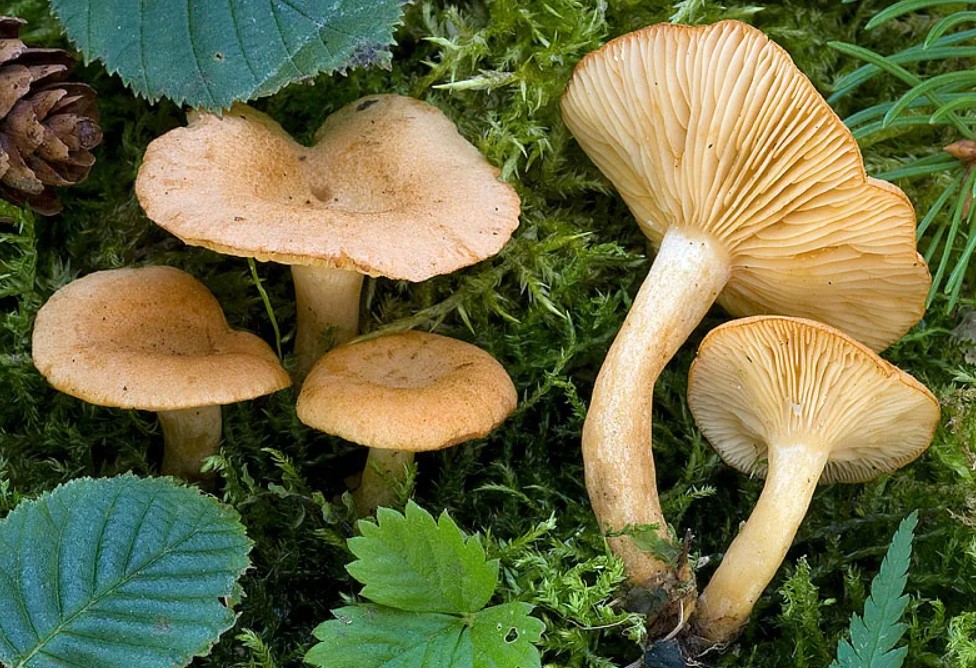
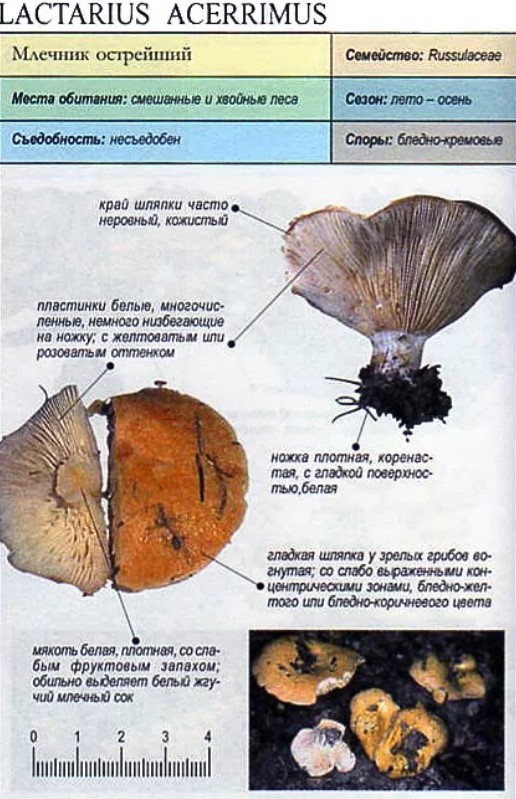
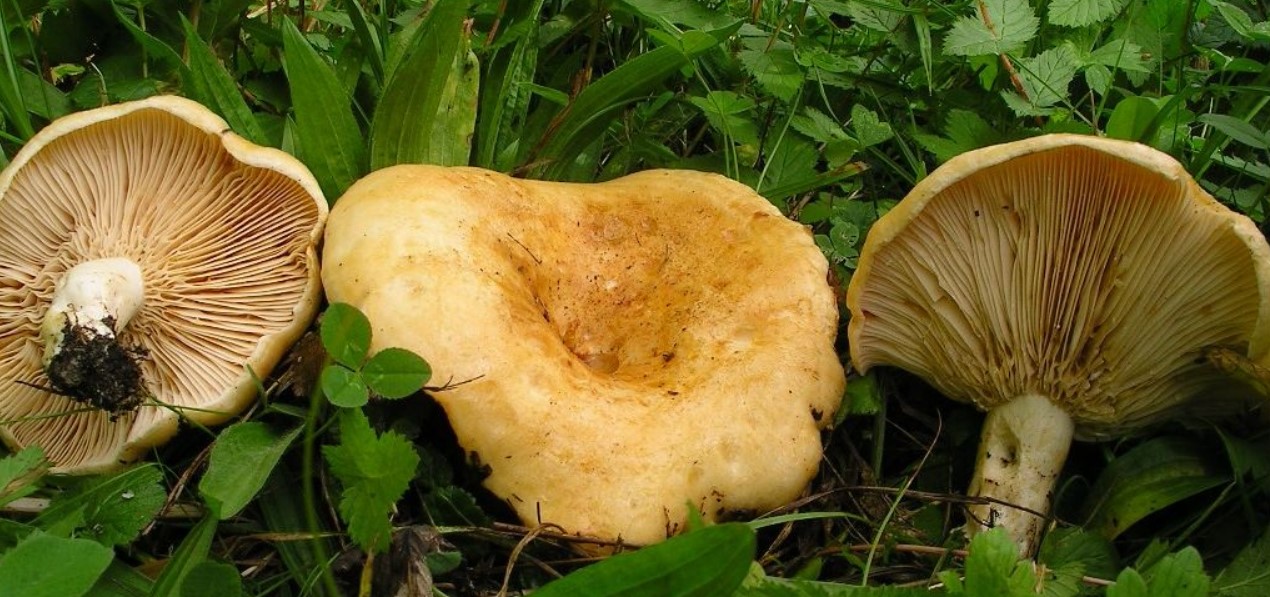
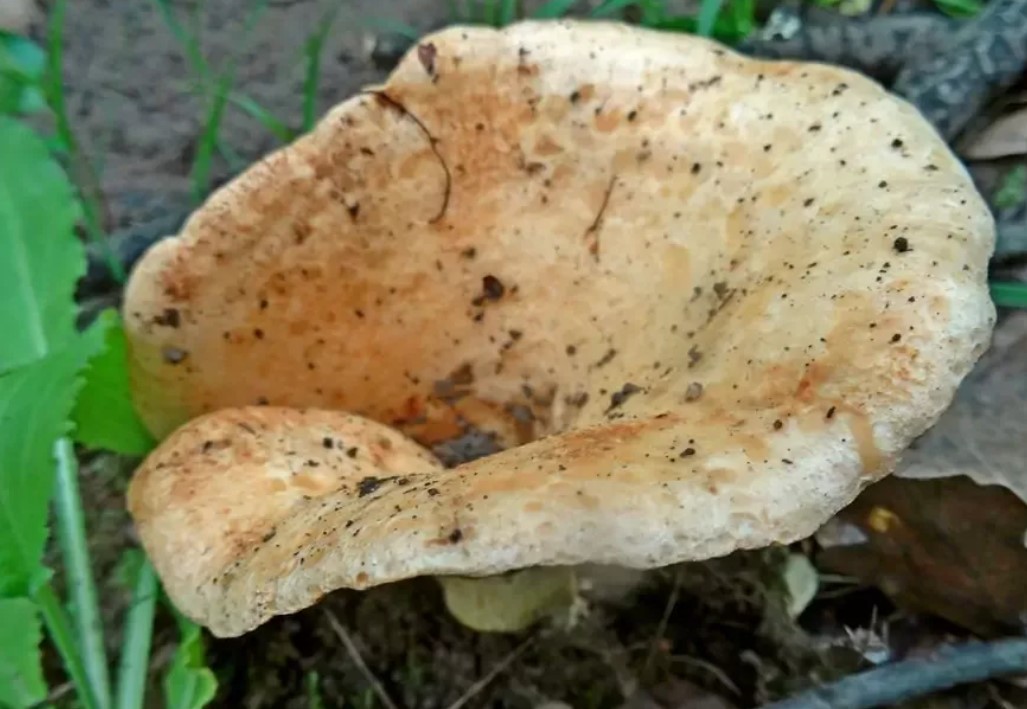
| Acute milkweed (Lactarius acerrimus) | The cap is smooth, pale yellow or pale brown. The flesh is firm, with a fruity aroma. The stem is white and stocky. | Inedible. | Summer-autumn. | Broadleaf forests, prefers oaks. |
Photo gallery of the Lactarius acutes
Alder milkcap (Lactarius alnicola)
| View | Description | Edibility | Collection deadlines | Where to look |
| Alder milkcap (Lactarius alnicola) | The cap is thin, vanilla-colored, with yellowish concentric zones on the surface, up to 20 cm in diameter. The stem is thin and light. | Inedible. | July-October. | It grows next to alder, which is where the mushroom gets its name. |
Photo gallery of alder milkweed
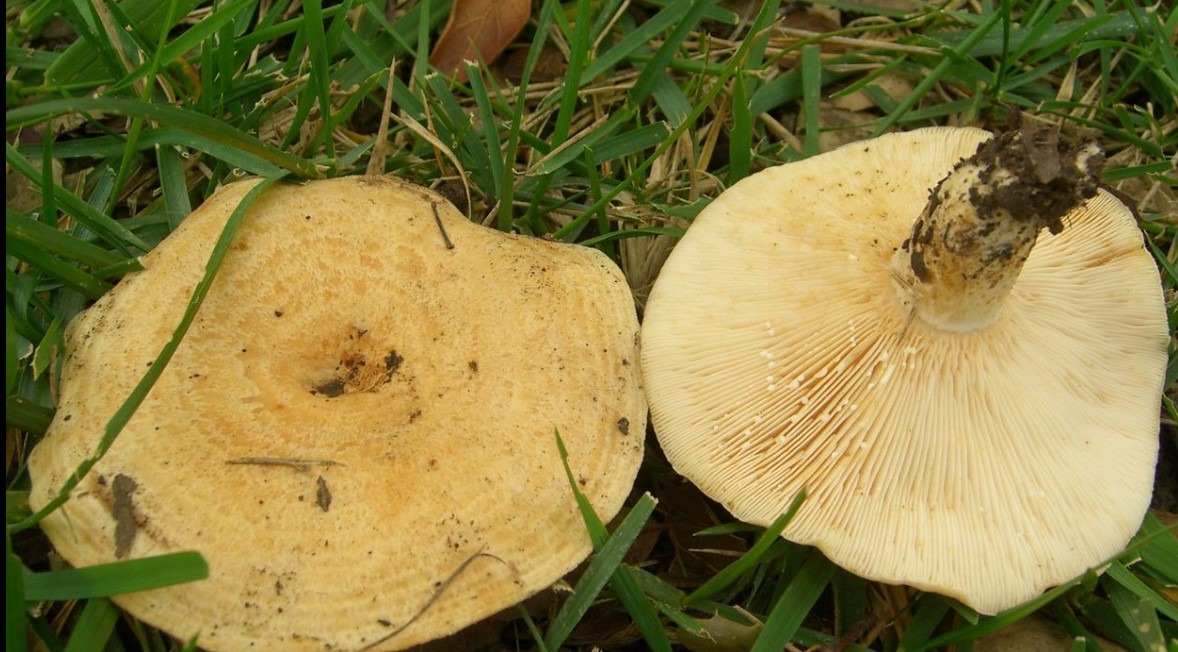
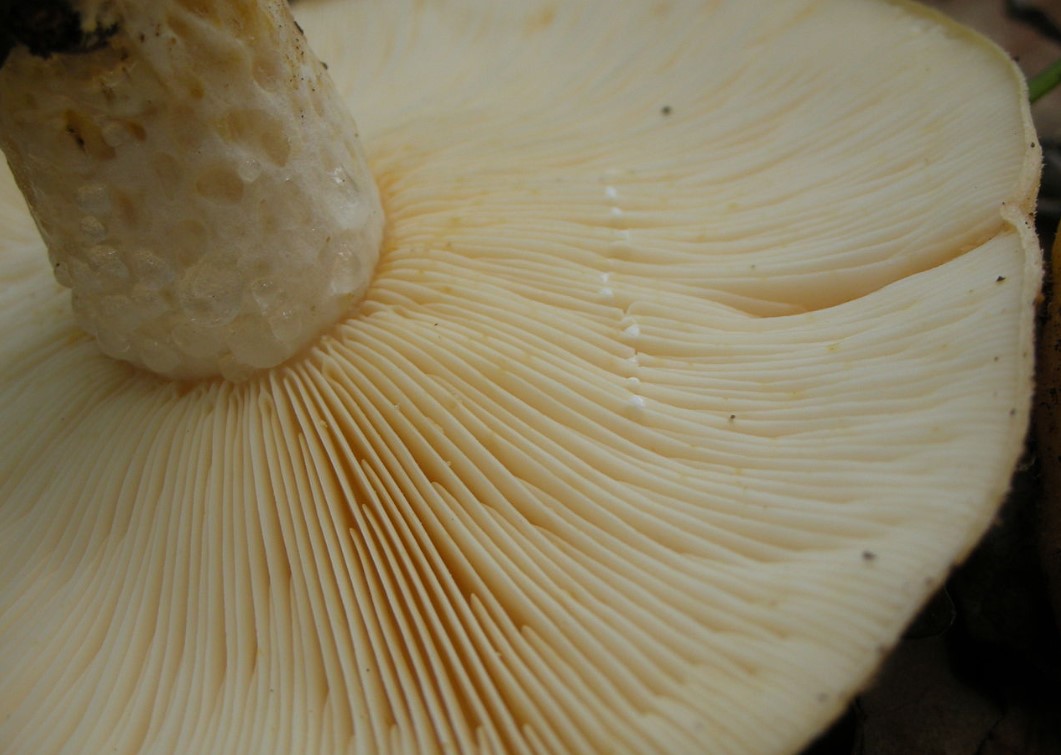
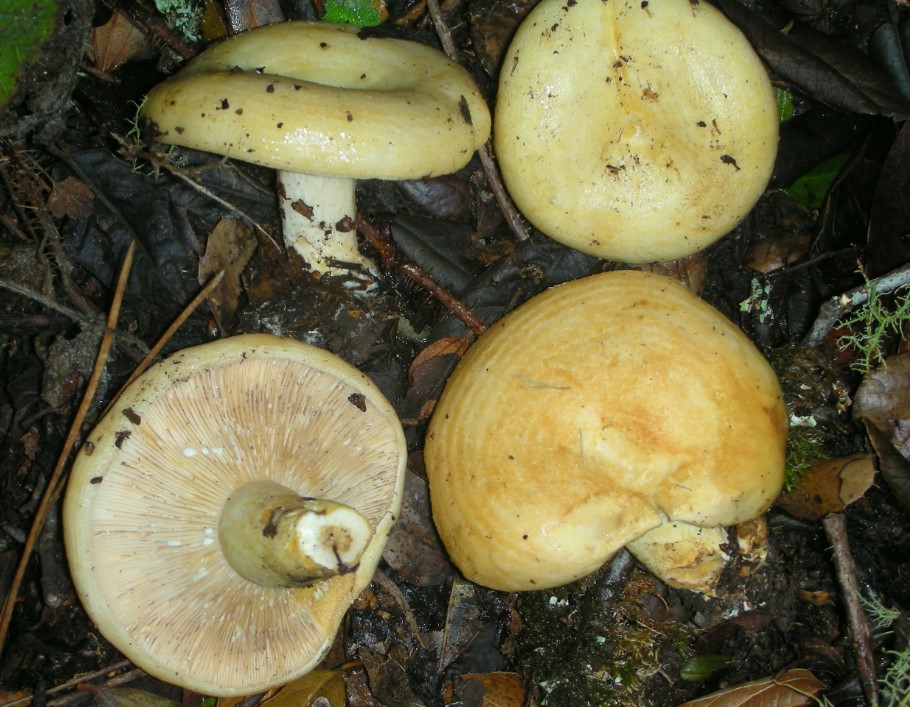
Liver milkweed (Lactarius hepaticus)
| View | Description | Edibility | Collection deadlines | Where to look |
| Liver milkweed (Lactarius hepaticus) | The cap is 3 to 7 cm in diameter, smooth, and brownish in color. The stem is up to 6 cm tall, and the milky sap changes from white to yellow when the flesh is broken. | Inedible due to its pungent taste. | August-September. | Pine forests. |
Photo gallery of hepatic milkweed
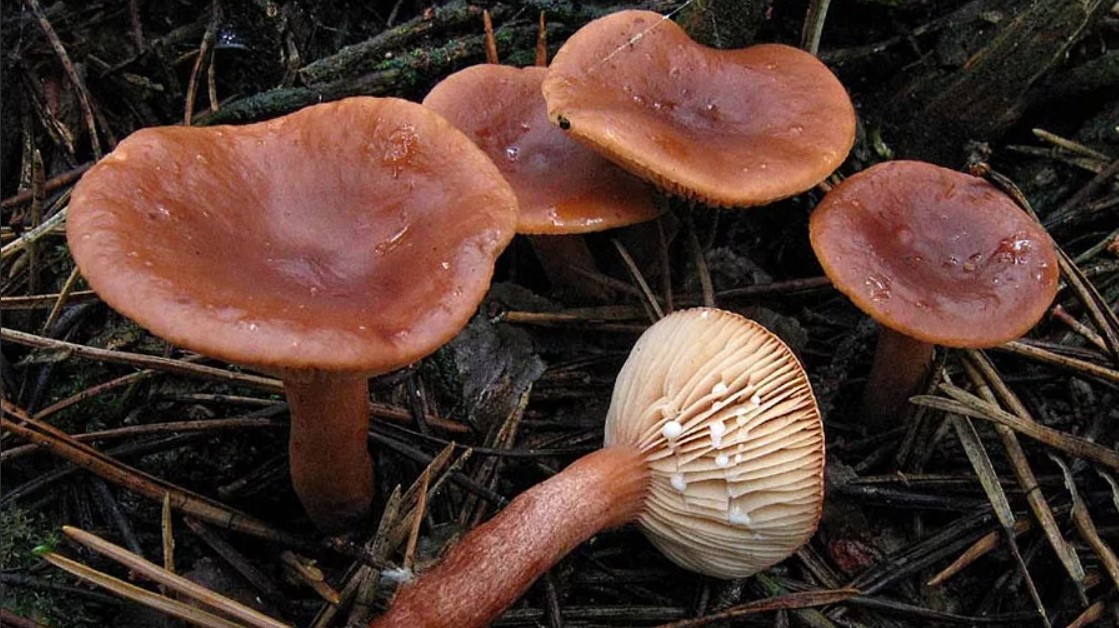
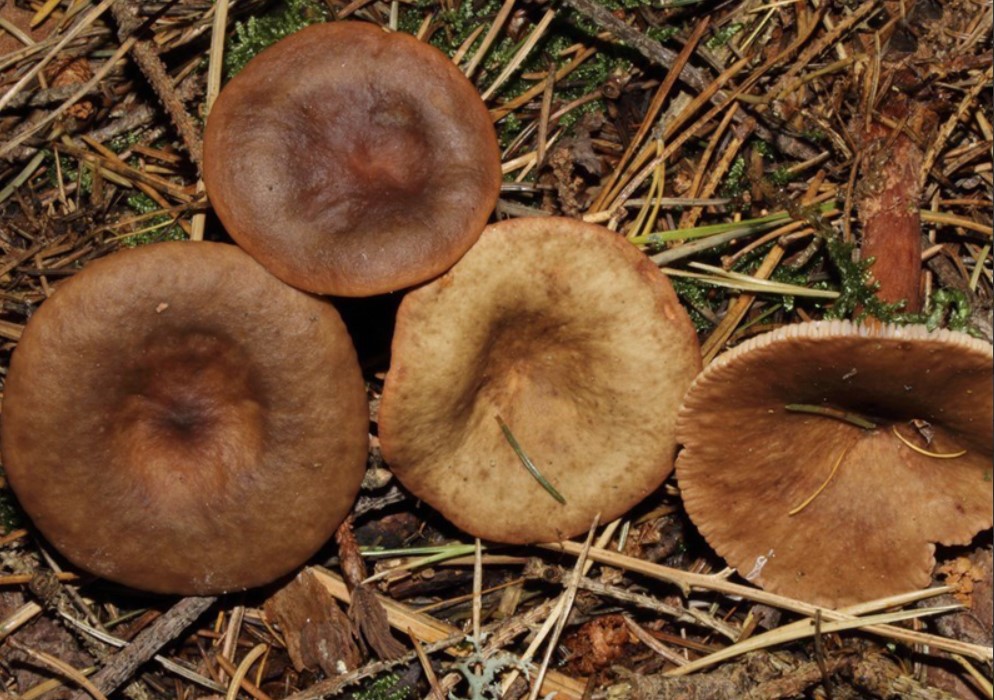
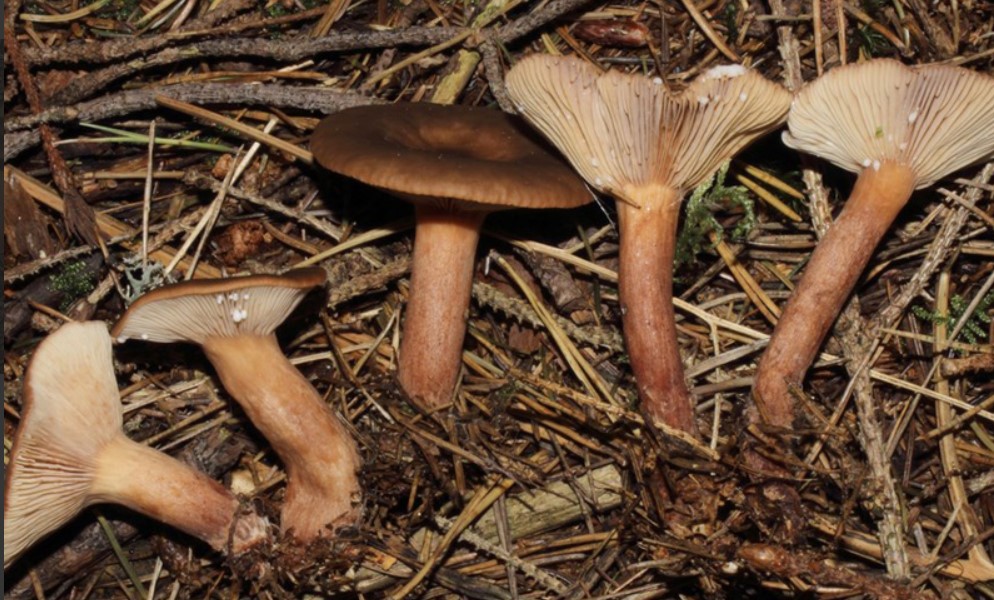
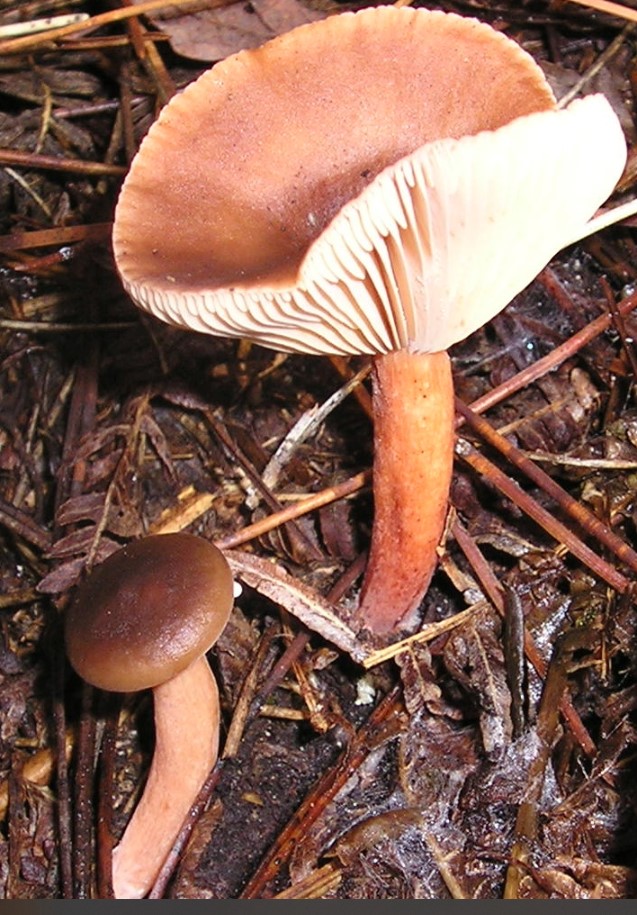
Lactarius aspideus
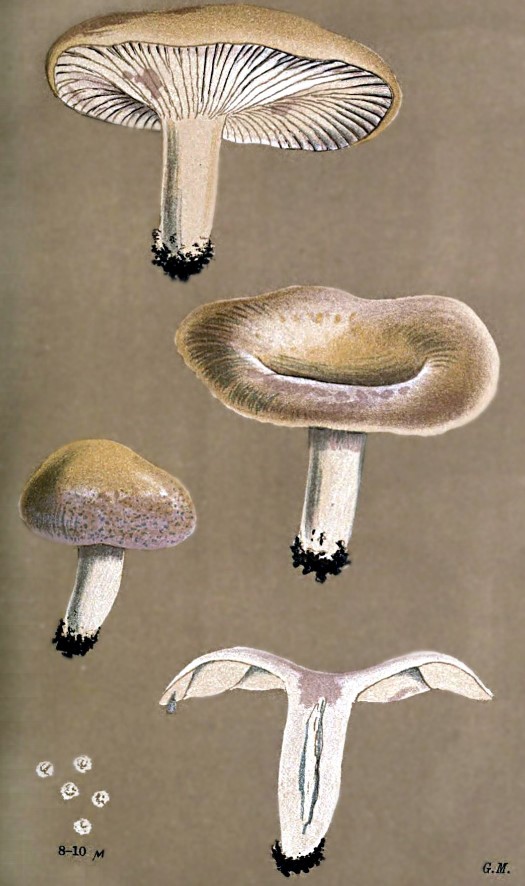
| View | Description | Edibility | Collection deadlines | Where to look |
| Thyroid milkcap (Lactarius aspídeus) | The cap is a regular, rounded shape; when young, it is convex, then flattens out, with the edges curling inward. The color is yellowish-purple, with faded spots appearing on its surface as it matures. The milky sap takes on a reddish tint when exposed to air. The stem is up to 5 cm tall. | It is considered inedible because its edibility has not been studied. | July-September. | Prefers damp areas of the forest, loves willow, and is rarely encountered. |
Photo gallery of the thyroid milkweed
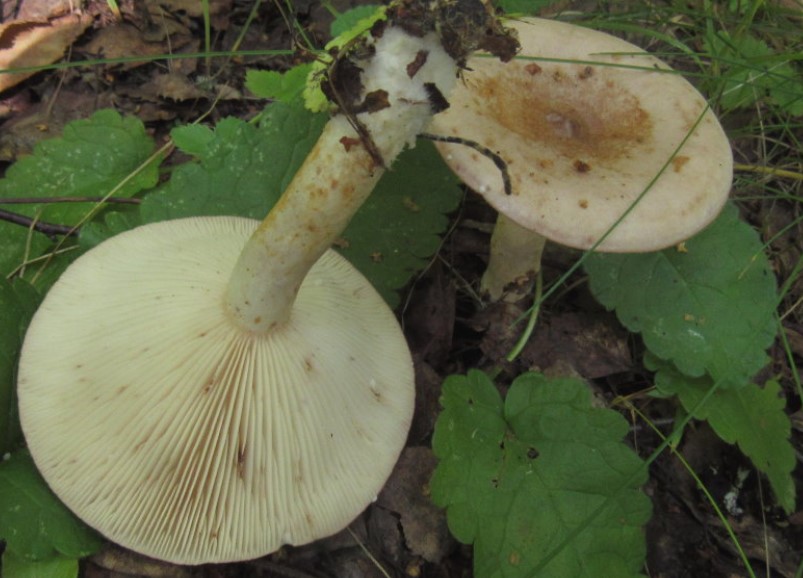
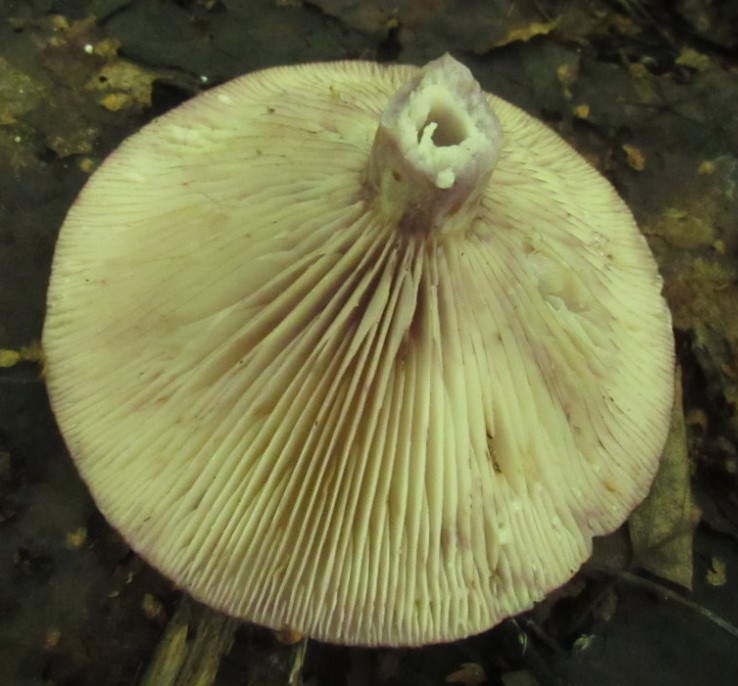
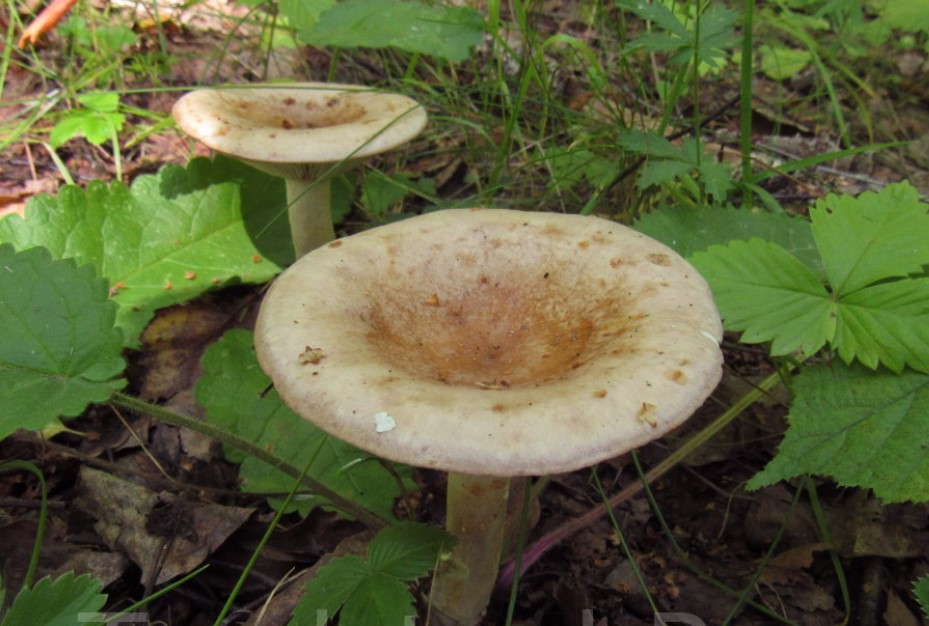
Bertillon's Milkweed (Lactarius bertillonii)
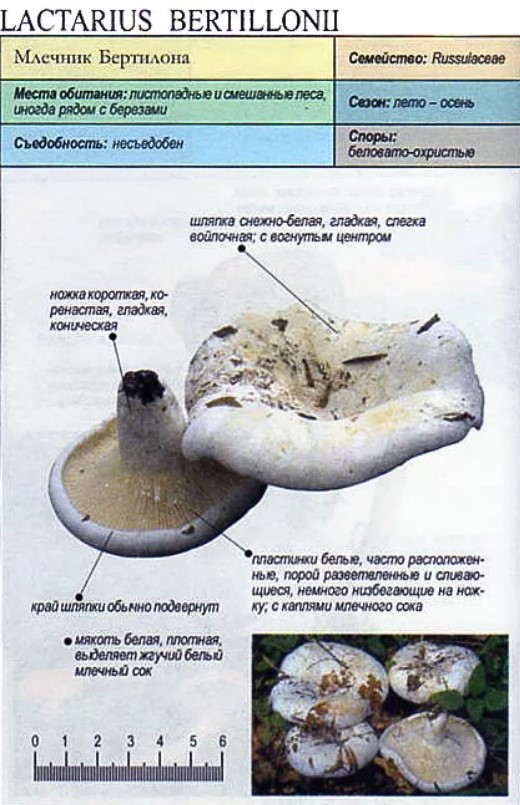
| View | Description | Edibility | Collection deadlines | Where to look |
| Bertillon's Milkweed (Lactarius bertillonii) | The cap has a concave center, white color, a felt-like surface, and folded edges. The flesh is firm and exudes a milky juice when cut. | Inedible. | Summer-autumn. | Can grow next to birch trees, prefers deciduous or mixed forests. |
Photo gallery of the milkman Bertillon
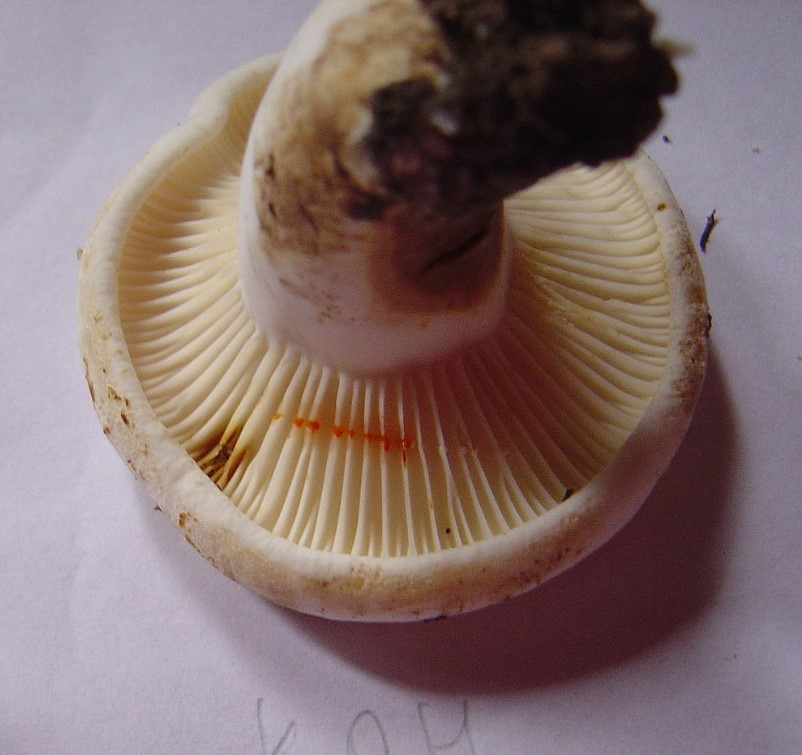
Lactarius fulvissimus (brown-yellow milk cap)
| View | Description | Edibility | Collection deadlines | Where to look |
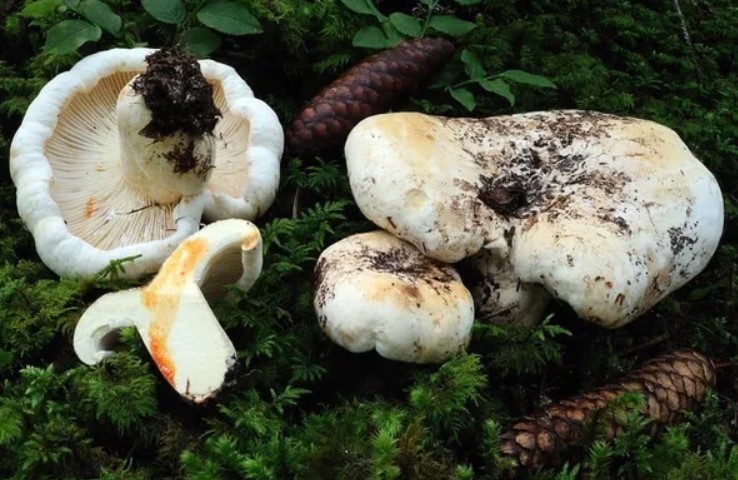
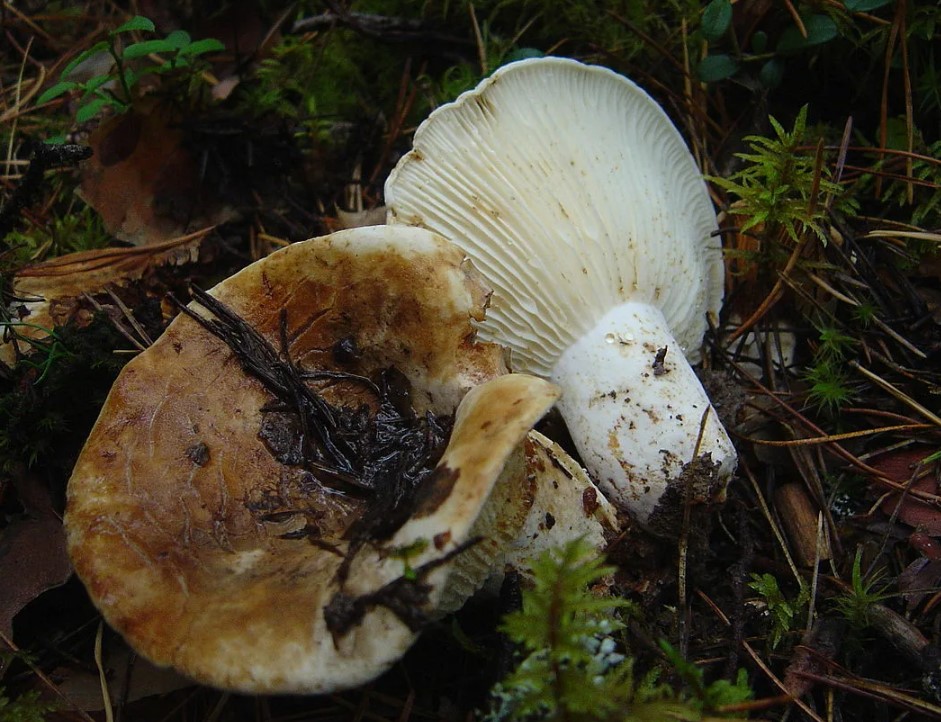
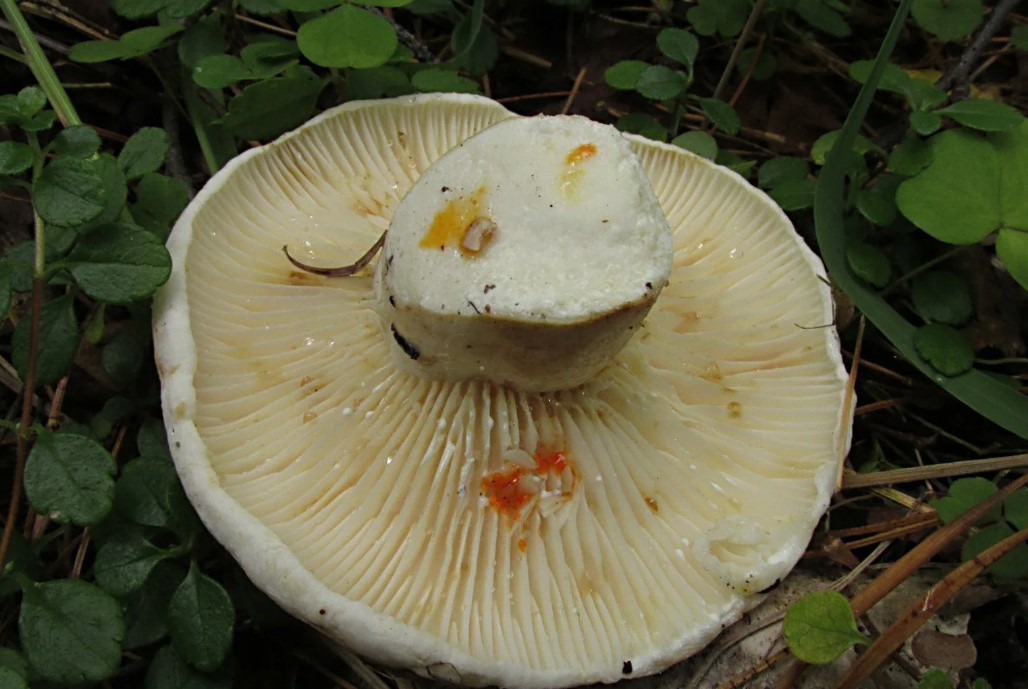
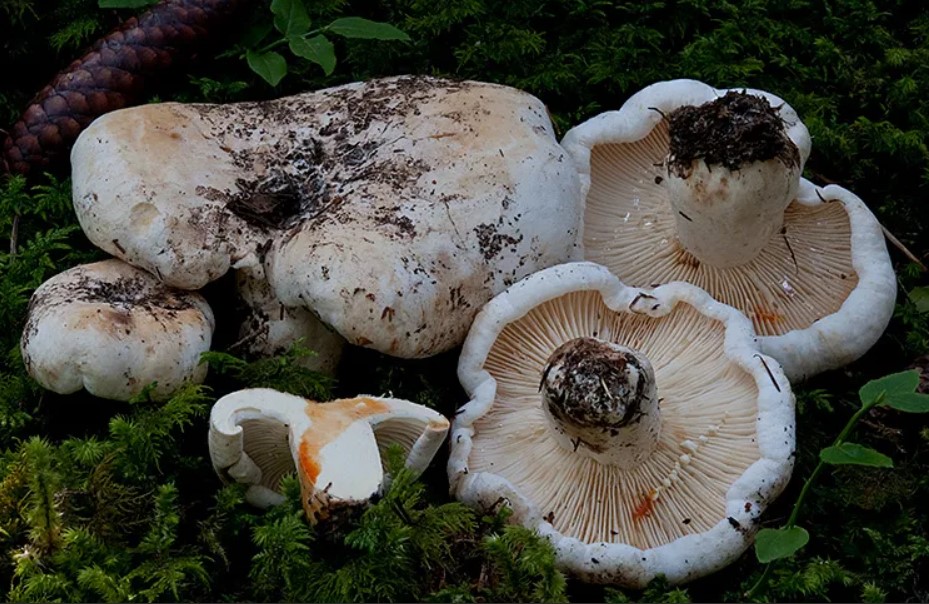
| Lactarius fulvissimus (brown-yellow milk cap) | The cap diameter ranges from 4 to 8.5 cm, is concave in adulthood, and is reddish-brown or dark orange-brown in color. The stem is up to 7.5 cm tall, and the milky sap, when cut, turns yellowish as it dries. | Inedible. | July-October. | Mixed and deciduous forests, loves hazel, oak, linden, beech, poplar. |
Photo gallery of the brown-yellow milk cap
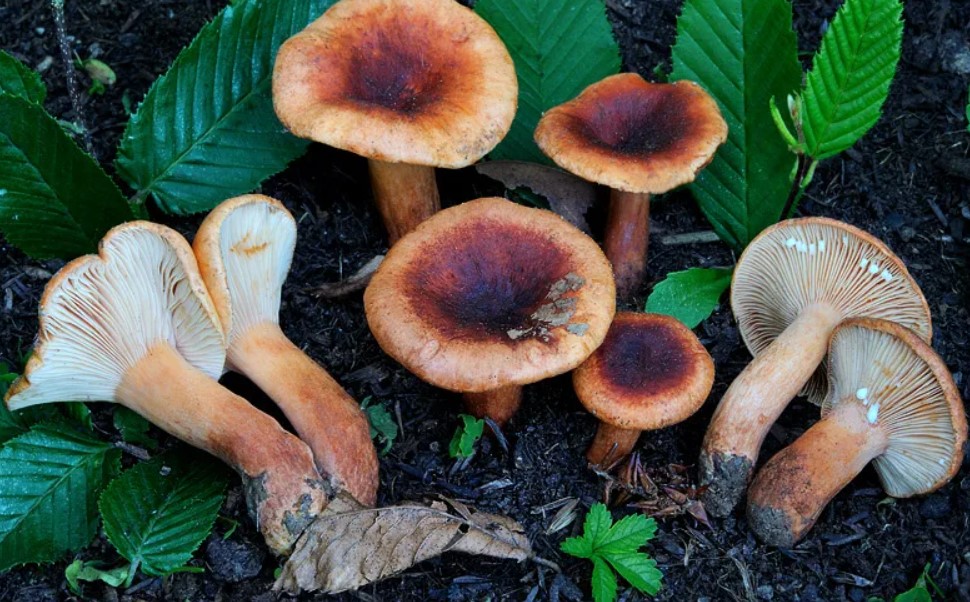
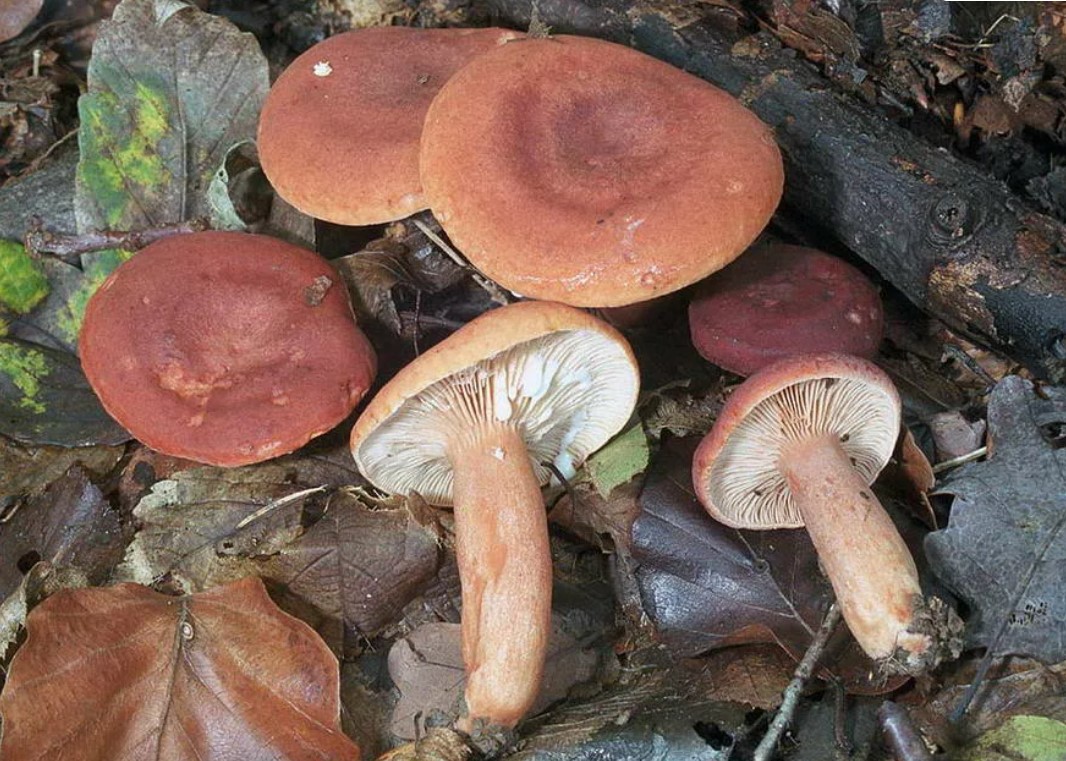
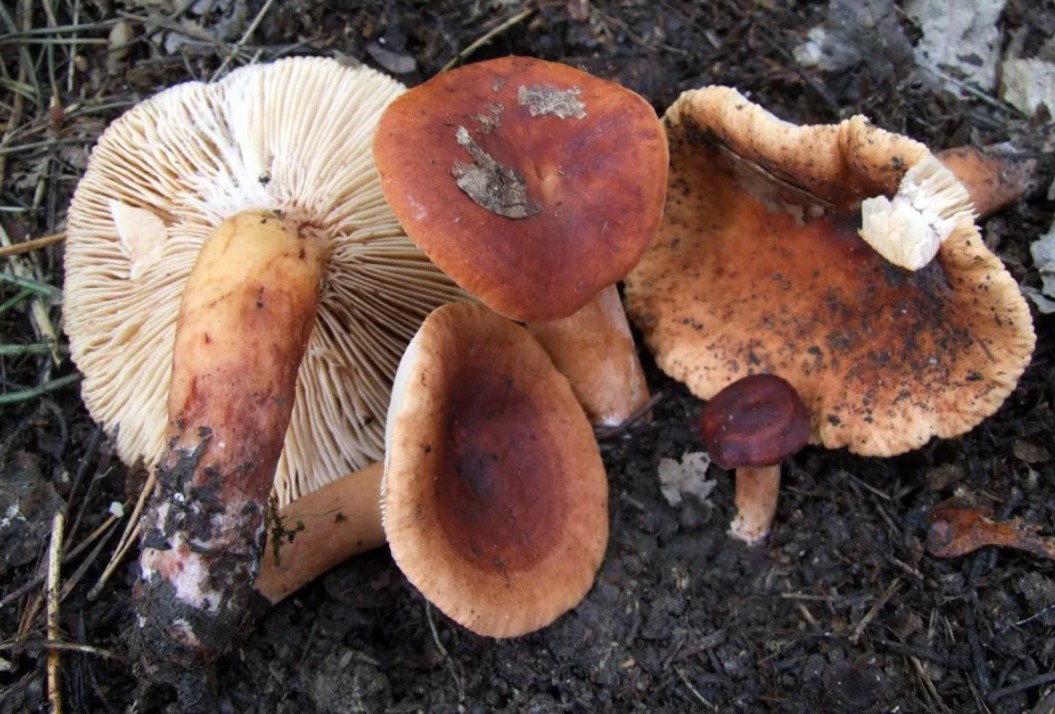
Lactarius helvus, amber milk cap (Lactarius helvus)
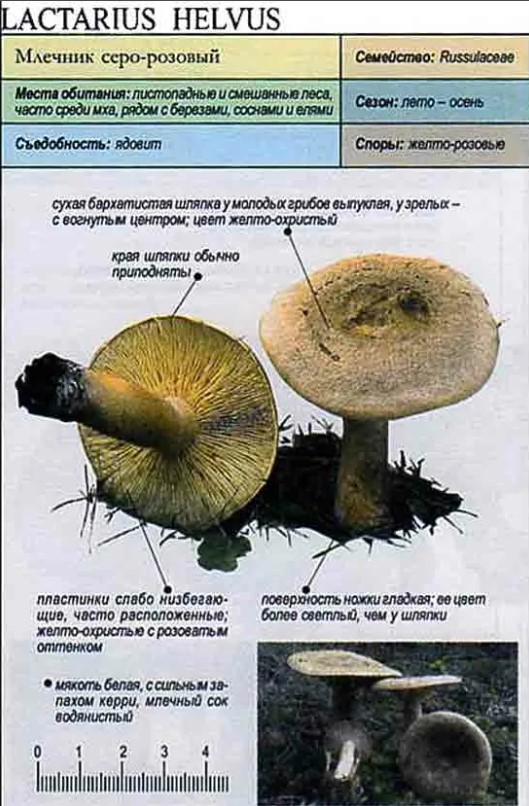
| View | Description | Edibility | Collection deadlines | Where to look |
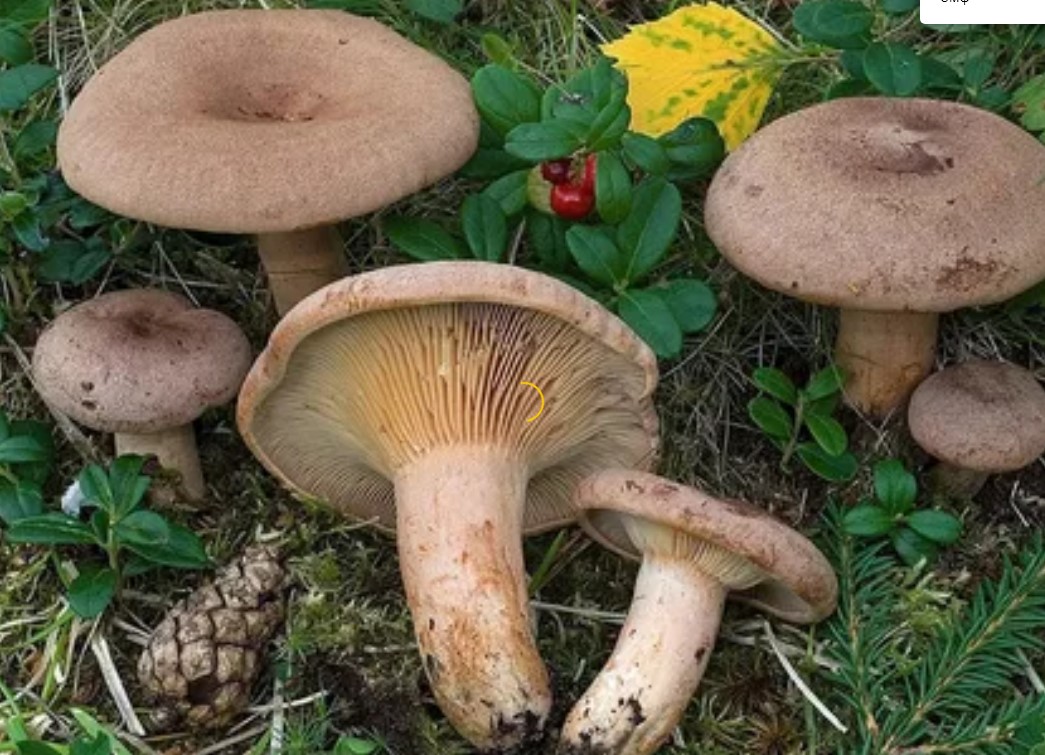
| Lactarius helvus (gray-pink milk cap) | A large mushroom with a cap up to 15 cm in diameter, rounded in shape, with a visible tubercle or depression in the center. The color is dull grayish-pinkish-brown, with no centric rings on the surface. The milky sap is watery or may be absent altogether. The stem is long, smooth, and grayish-pink. | Inedible. Slightly poisonous. |
August-mid October. | Swampy forests, grows under pine and birch trees. |
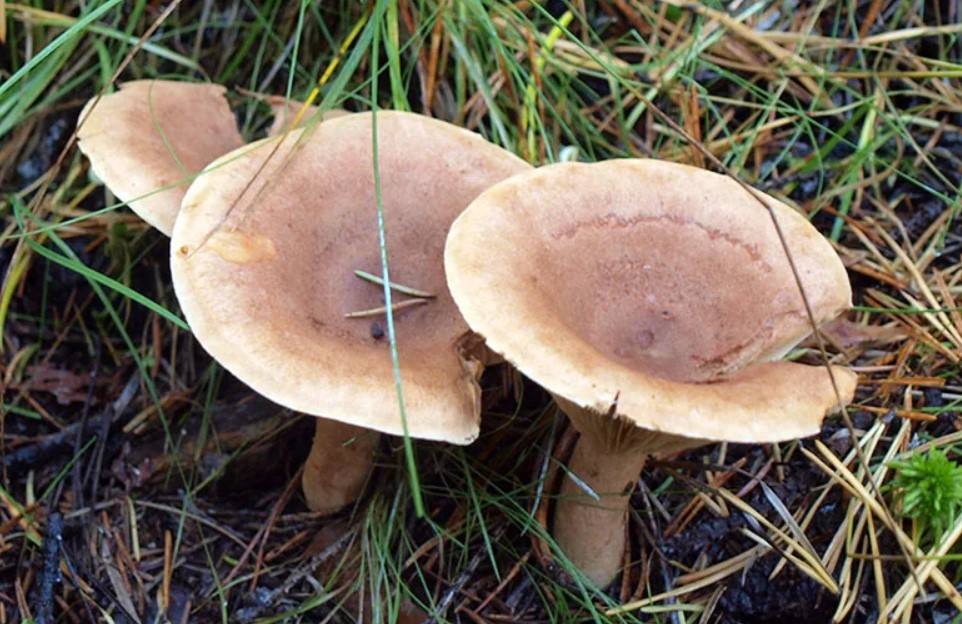
Photo gallery of the gray-pink milk cap
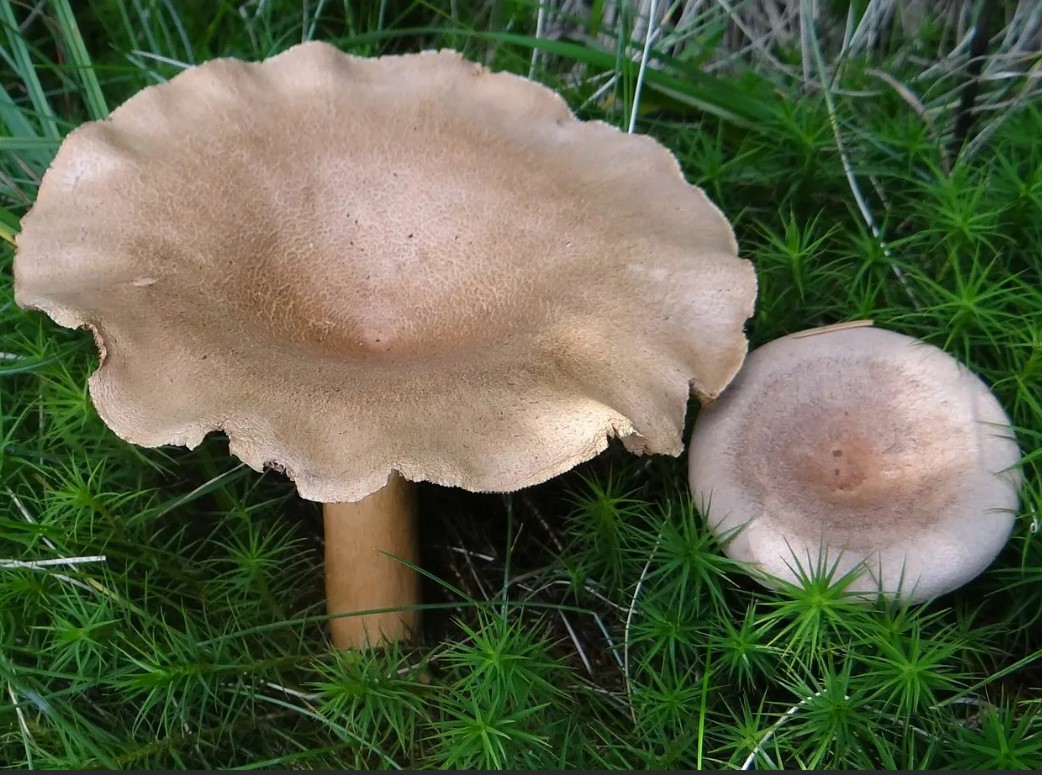
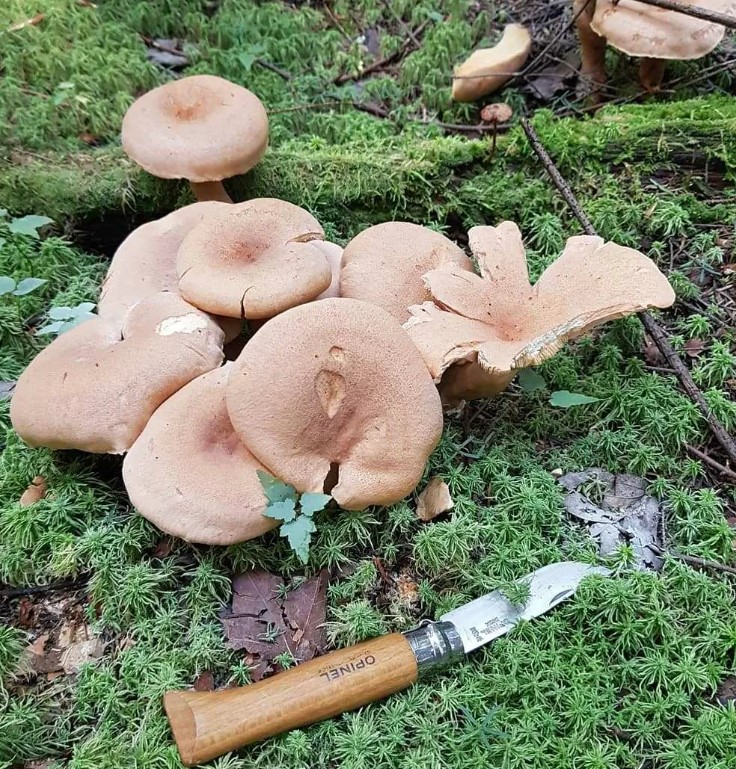
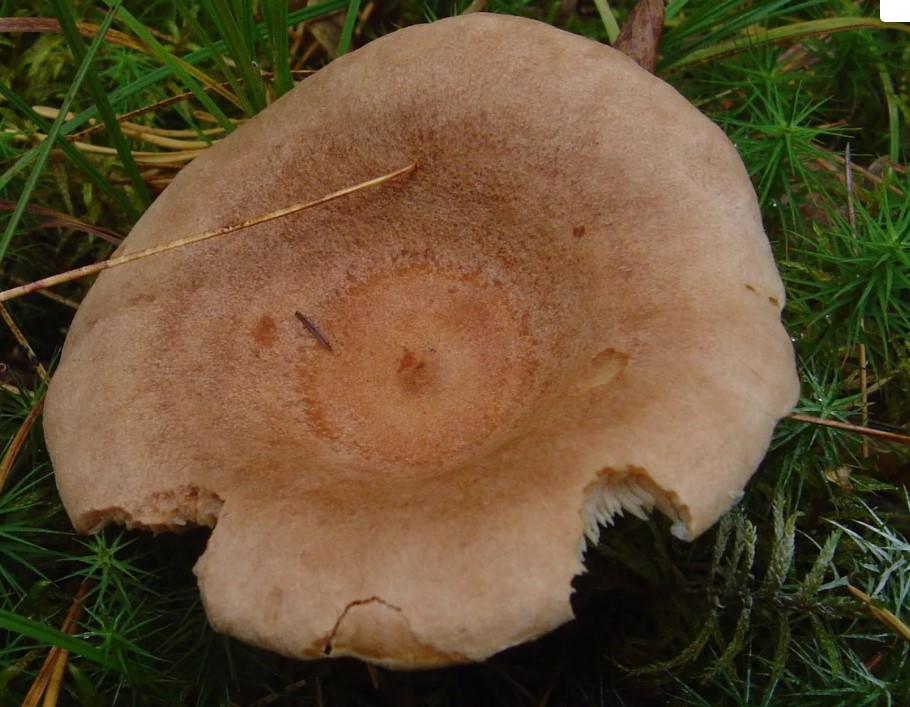
Golden-yellow milk cap (Lactarius chrysorrheus)
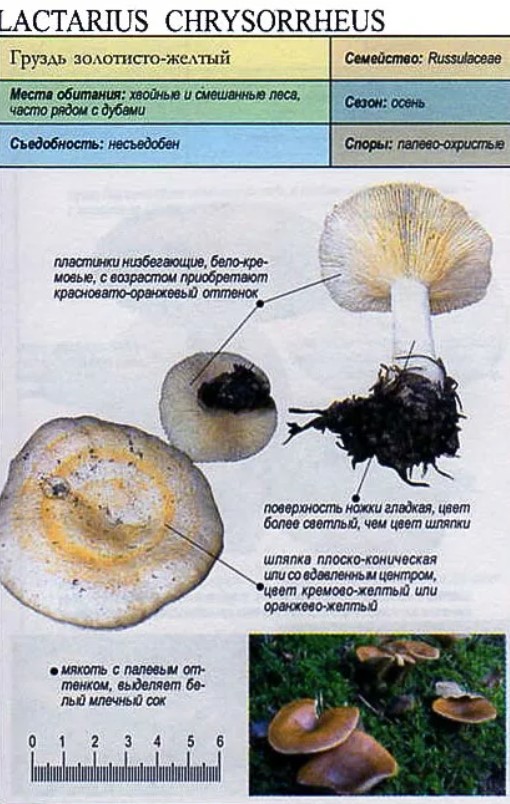
| View | Description | Edibility | Collection deadlines | Where to look |
| Golden-yellow milk cap (Lactarius chrysorrheus) | The cap diameter ranges from 4 to 6 cm, the margins are strongly curled, the color is ochre, and spots and concentric zones are visible on the smooth surface. The stem is up to 8 cm tall. The milky sap changes from white to yellowish when cut. | Inedible, often confused with saffron milk cap. | Summer-autumn. | Deciduous forests, preferring the proximity of chestnut, oak or beech. |
Photo gallery of golden-yellow milk mushrooms
Dark, obscure milkcap (Lactarius obscuratus)
| View | Description | Edibility | Collection deadlines | Where to look |
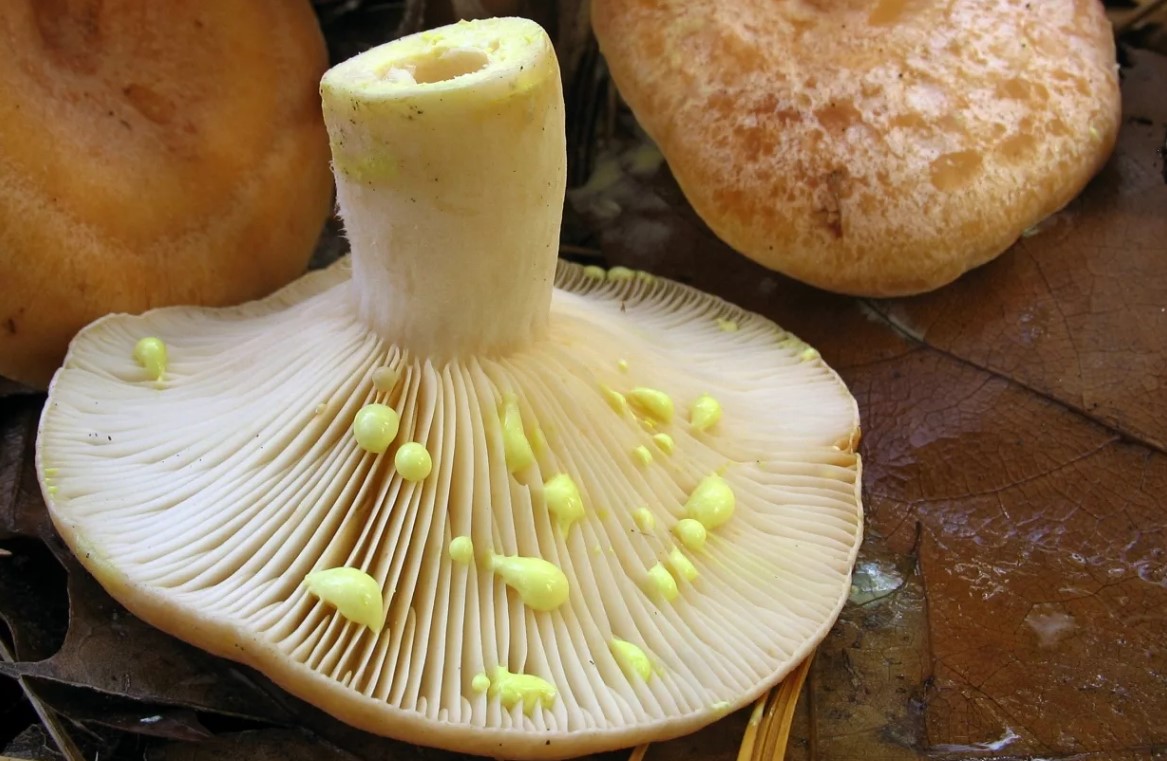
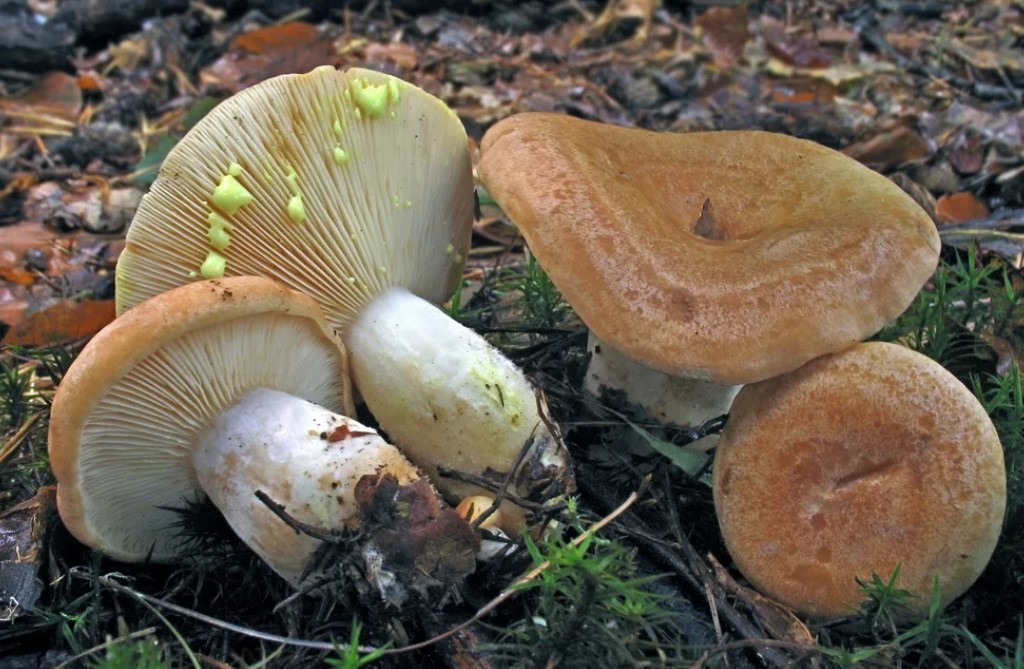
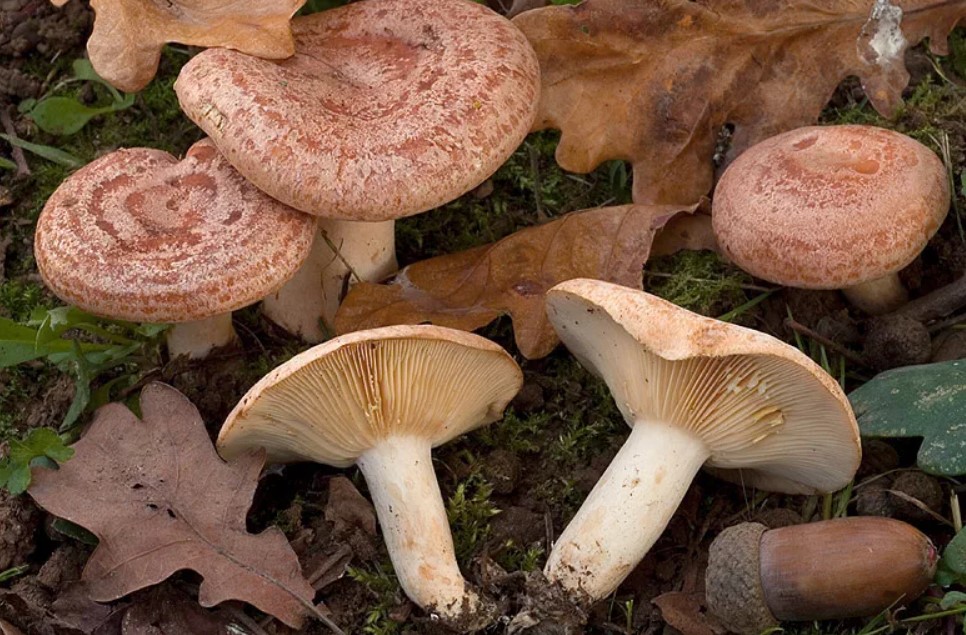
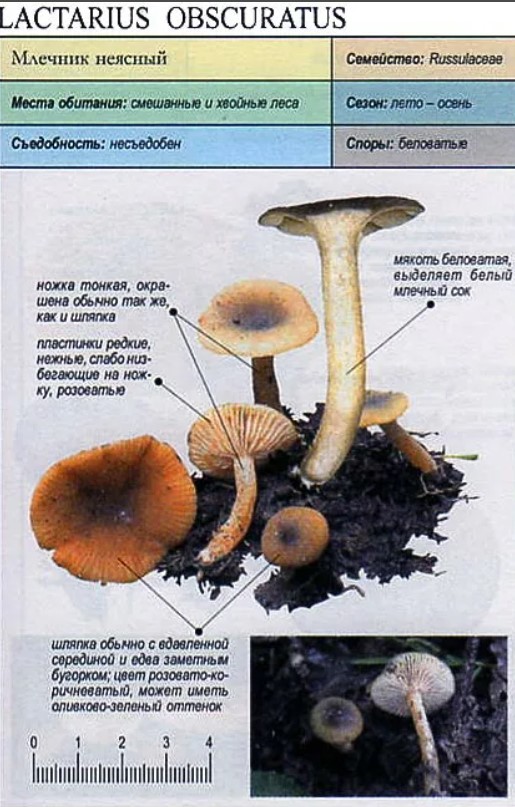
| Dark milkcap (Lactarius obscuratus) | The cap is up to 3 cm in diameter, goblet-shaped, with wrinkled edges and an ochre-brown skin. The stem is up to 3 cm high. The milky sap is watery and white. | Inedible. | July-September. | Grows in mixed and deciduous forests, mycorrhiza with alder. |
Photo gallery of dark milky
Orange milkweed (Lactarius pornínsis)
| View | Description | Edibility | Collection deadlines | Where to look |
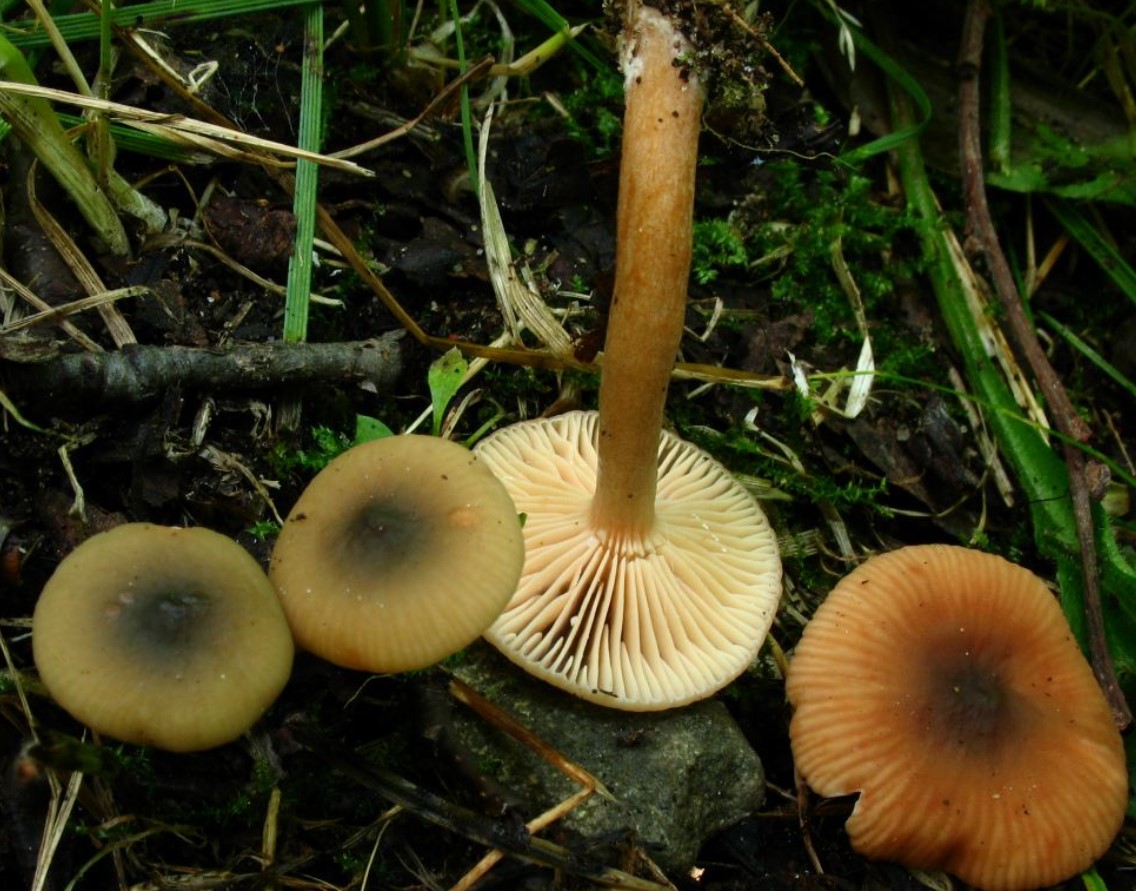
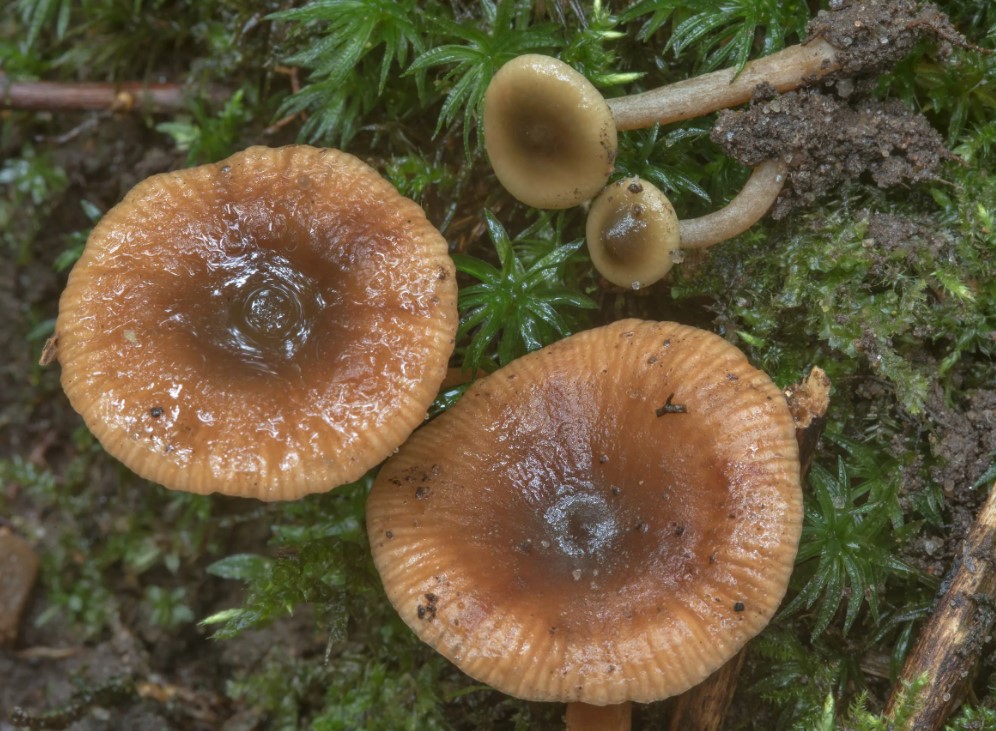
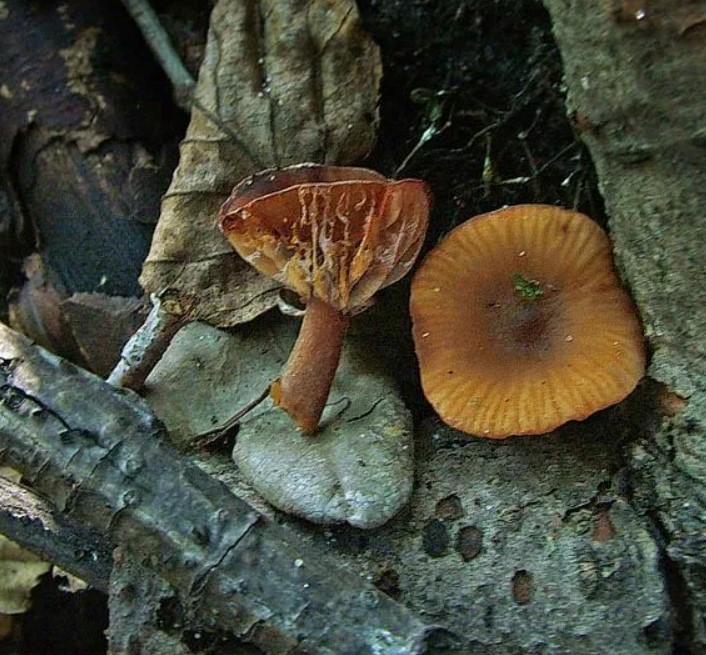
| Orange milkweed (Lactarius pornínsis) | The cap is up to 8 cm in diameter, varying in shape from convex to funnel-shaped. The color is orange, the milky juice is white, and retains its color after cutting. The stem is up to 6 cm tall and hollow inside. The pulp emits a citrus aroma. | Inedible. Slightly poisonous. |
Summer-autumn. | Deciduous forests. |
Photo gallery of orange milkweed
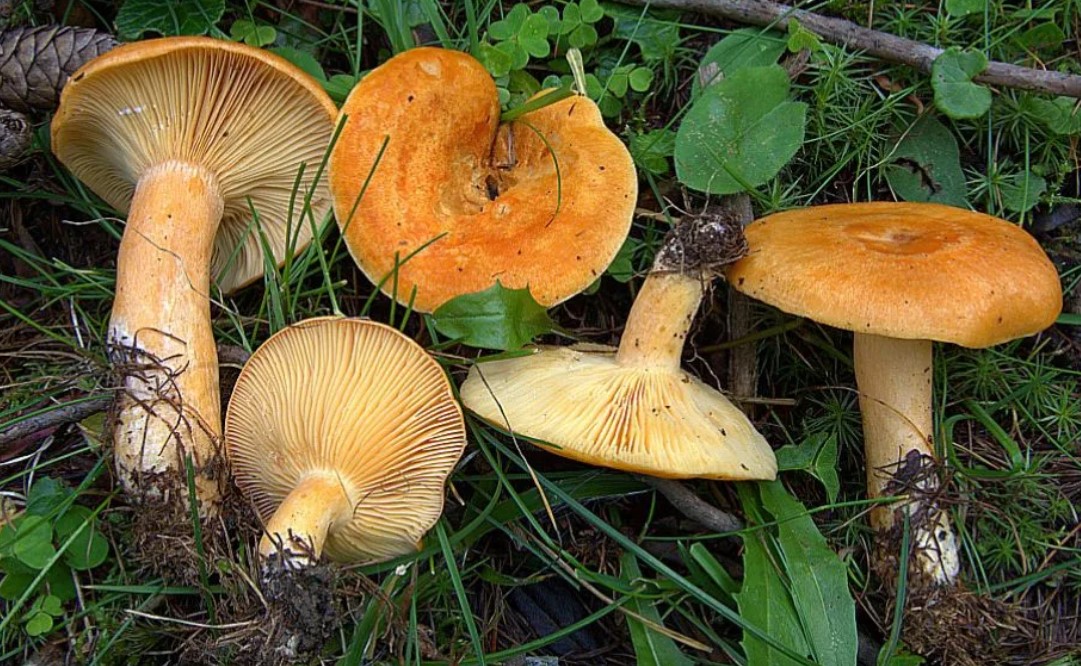
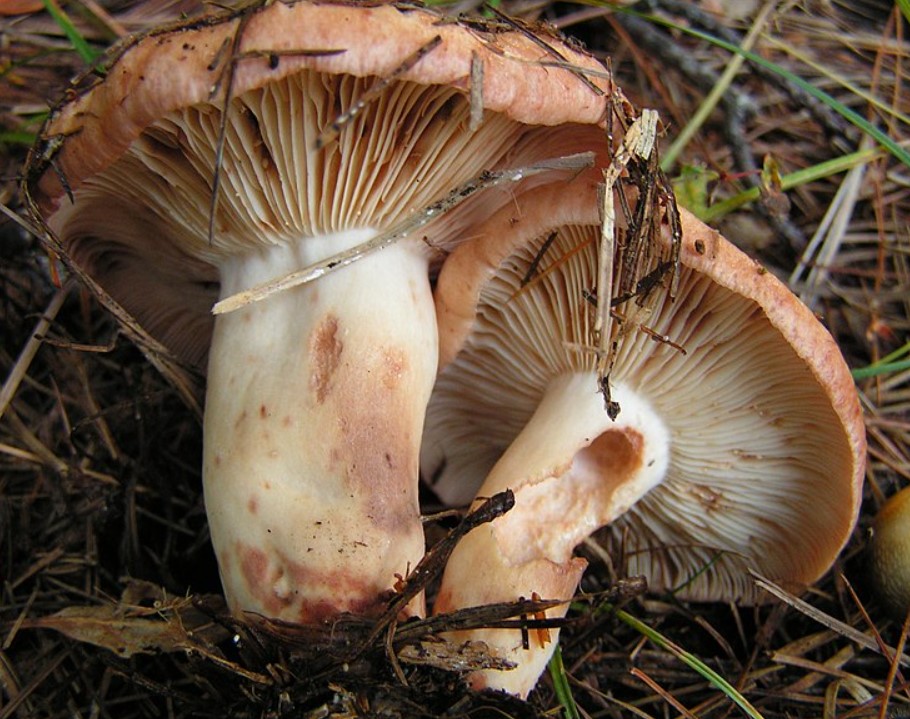
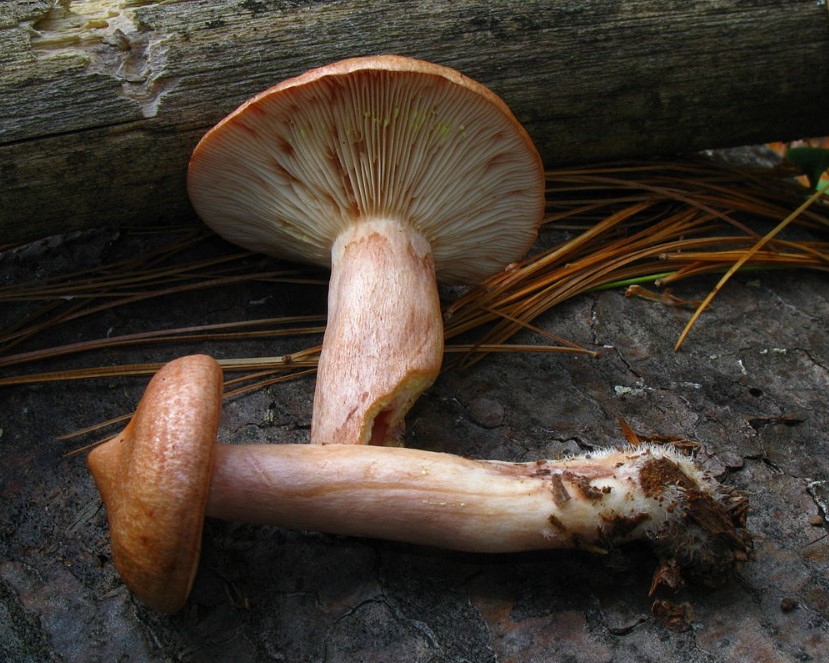
Wine-spotted milkcap (Lactarius vinaceorufescens)
| View | Description | Edibility | Collection deadlines | Where to look |
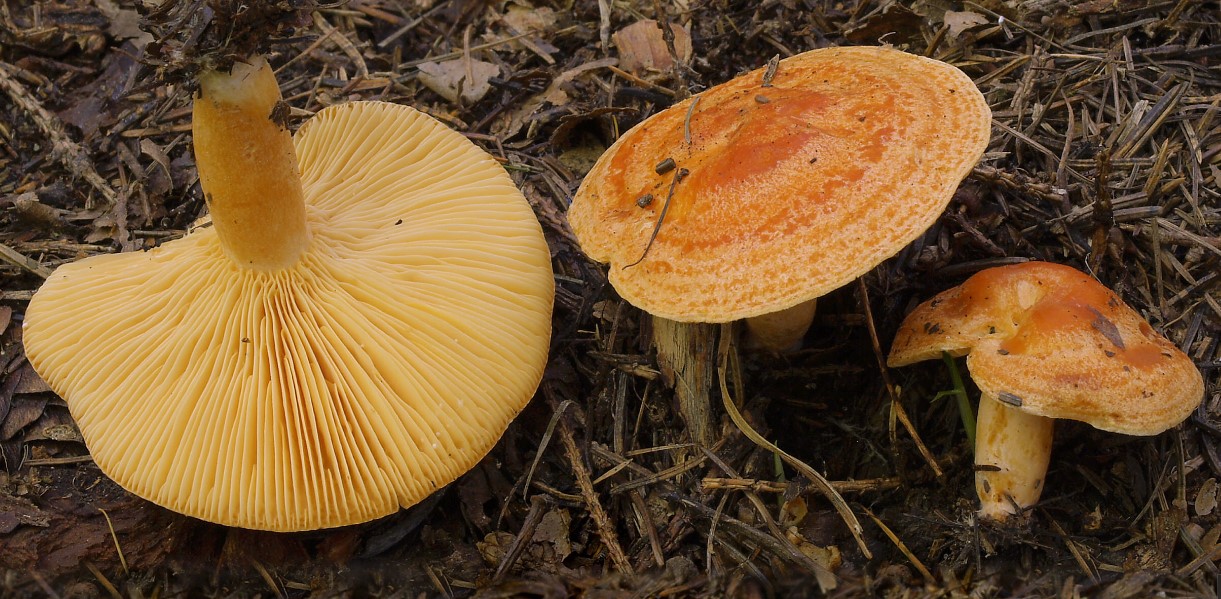
| Wine-spotted milkcap (Lactarius vinaceorufescens) | The cap reaches 4-12 cm in diameter and is pinkish-brown in color. The stem is slightly lighter and reaches 7 cm in height. The milky sap turns yellowish-gray when exposed to air. | Inedible. | July-September. | Mixed forests. |
Photo gallery of wine-spotted milkweed
20 Controversial Types of Milk Mushrooms with Photos and Descriptions in Tables
Some types of milk mushrooms are controversial in their use and are considered inedible by some sources, conditionally edible by others, and very edible by mushroom pickers.
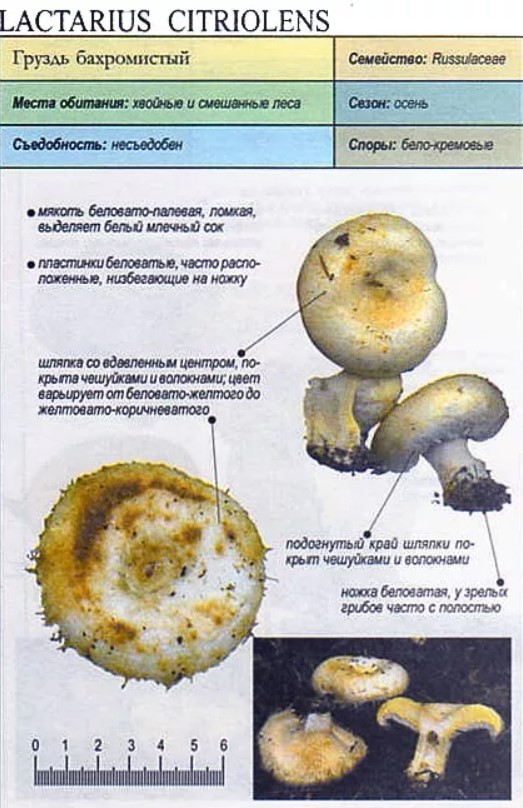
Fringed milk cap (Lactarius citriolens)
| View | Description | Edibility | Collection deadlines | Where to look |
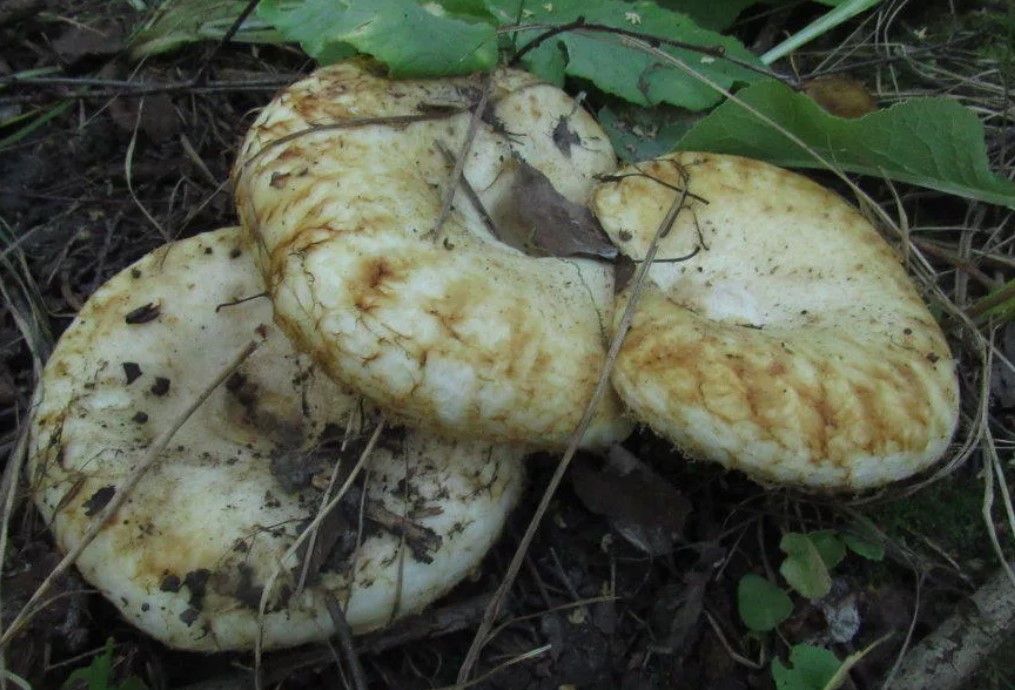
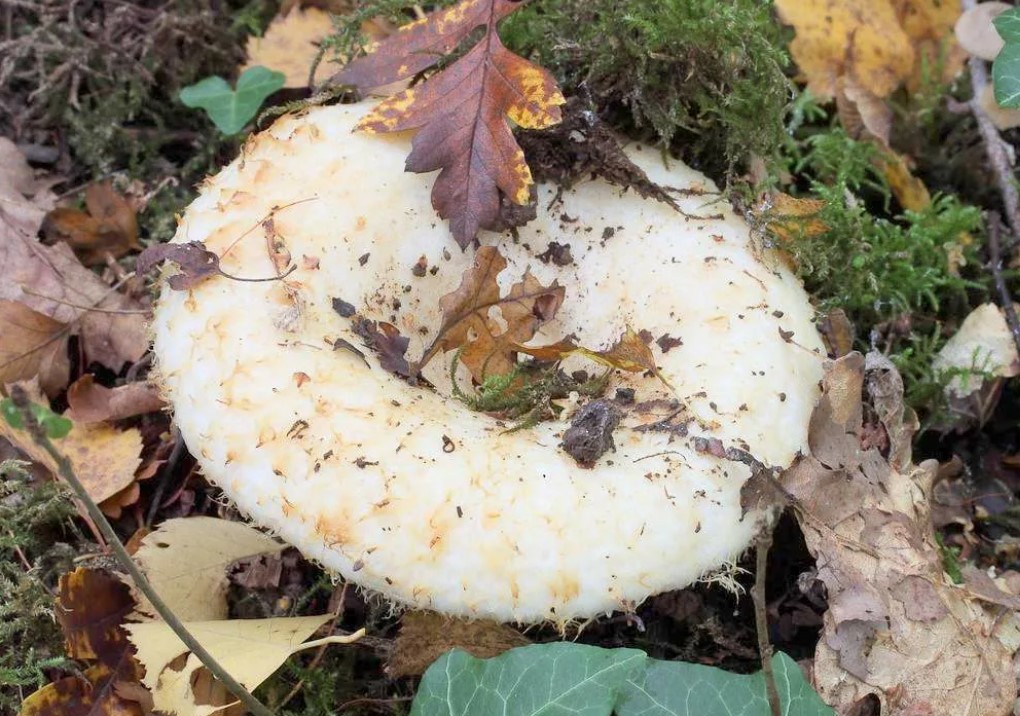
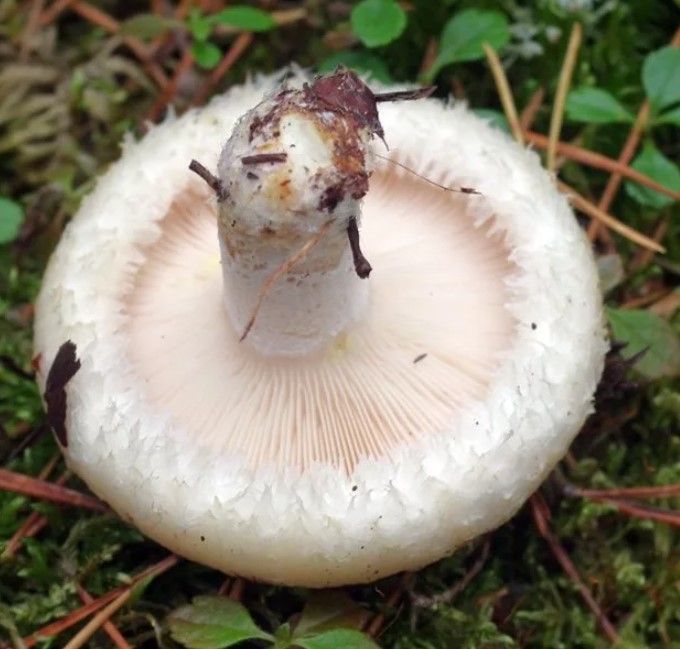
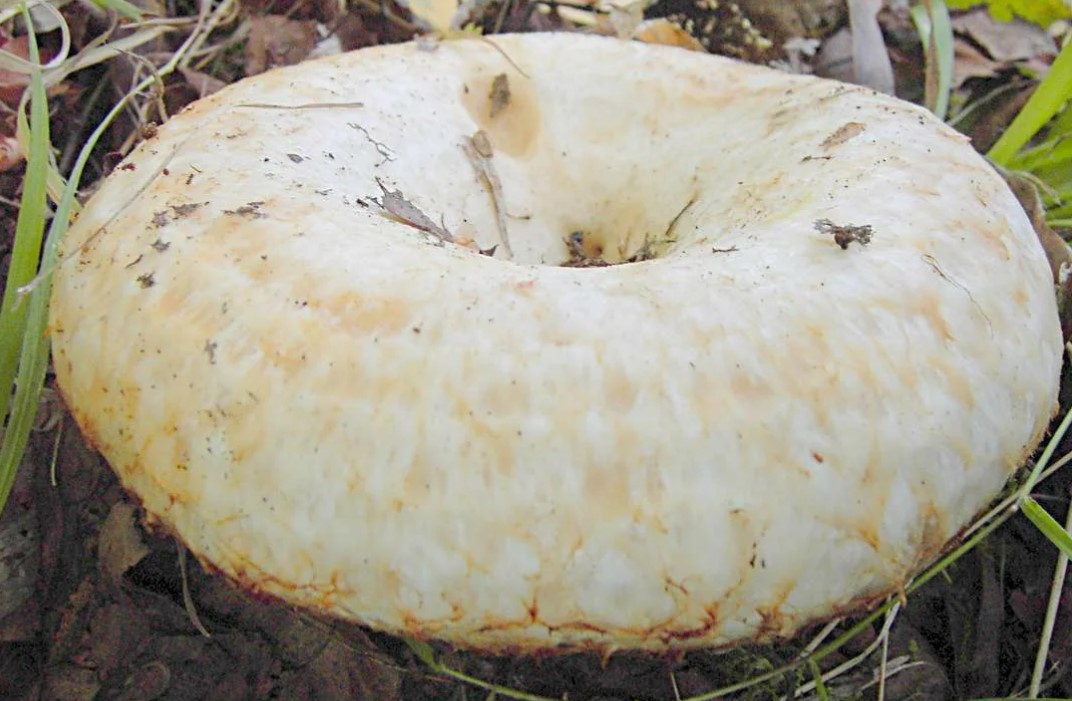
| Fringed milk cap (Lactarius citriolens) | A large mushroom with a cap up to 25 cm in diameter. Initially, the cap is disc-shaped, with a slightly depressed center. With age, it becomes funnel-shaped, and the edges stop curling. The color is yellowish-white, and the skin is hairy. The stem is short and very wide. The flesh has a lemony scent. | It is considered inedible, but non-toxic, so many mushroom pickers eat it after soaking it for a long time. | Mid-July – end of August. | Deciduous forests, likes birches. |
Photo gallery of the fringed milk cap
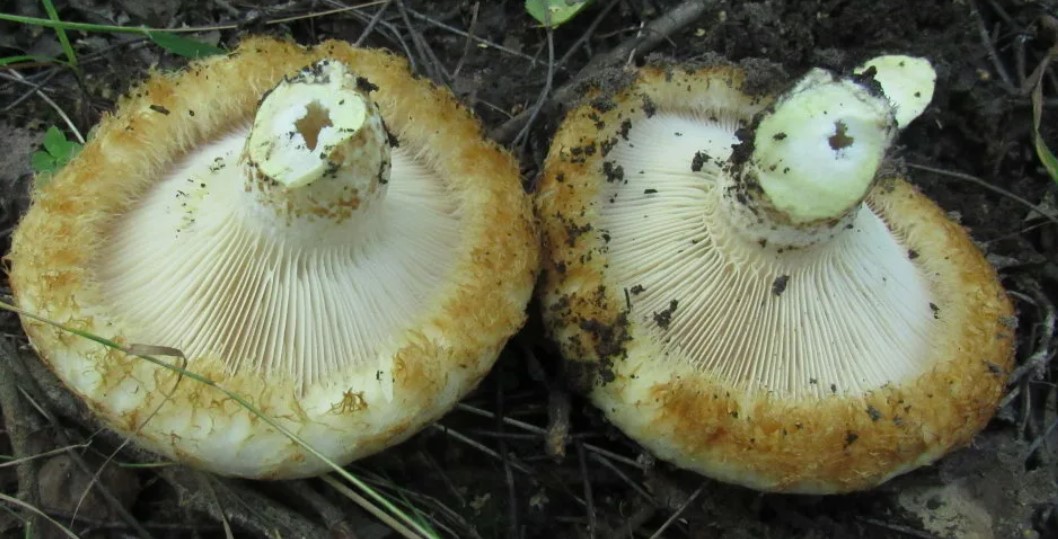
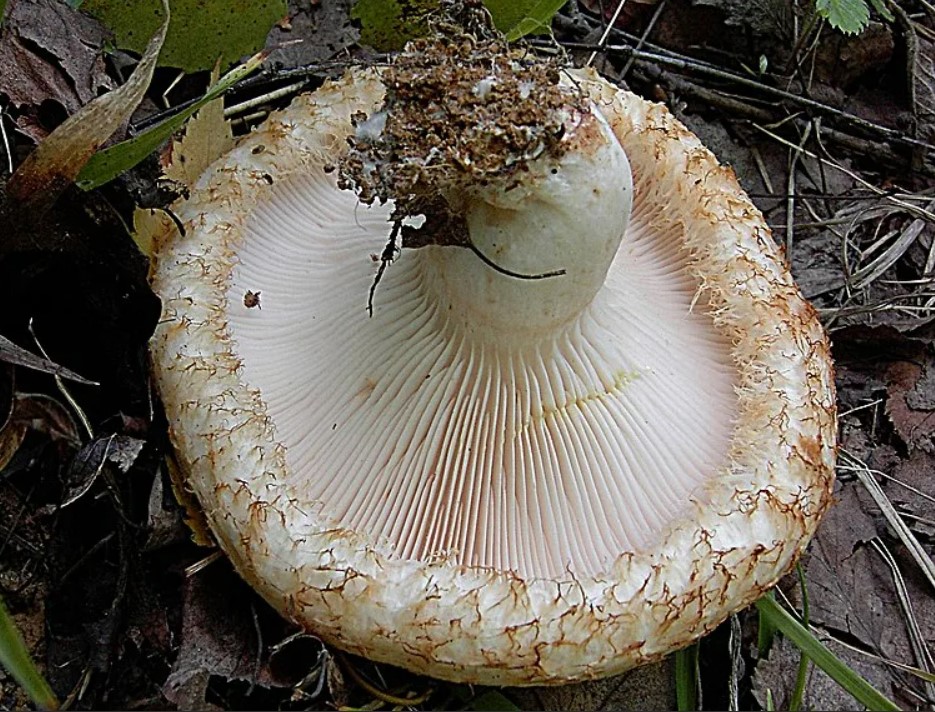
Yellow breast (Lactarius scrobiculatus)
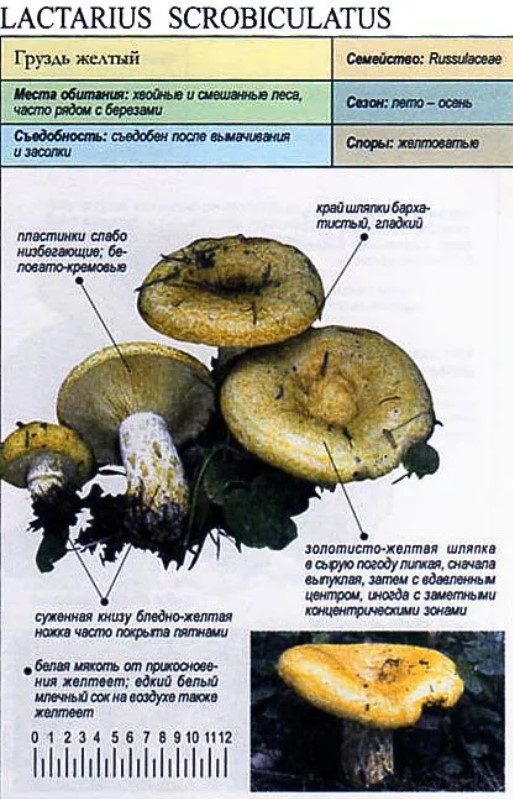
| View | Description | Edibility | Collection deadlines | Where to look |
| Yellow breast (Lactarius scrobiculatus) | The cap is up to 10 cm in diameter. The center is depressed, and the edges are curled. The color is yellowish, with zones on the surface. The milky sap turns yellowish when exposed to air. The stem is up to 8 cm long, thick, and white. | Conditionally edible, according to some sources edible, eaten salted. | July-September. | Mixed forests, prefers birch and spruce. |
Photo gallery of yellow milk mushrooms
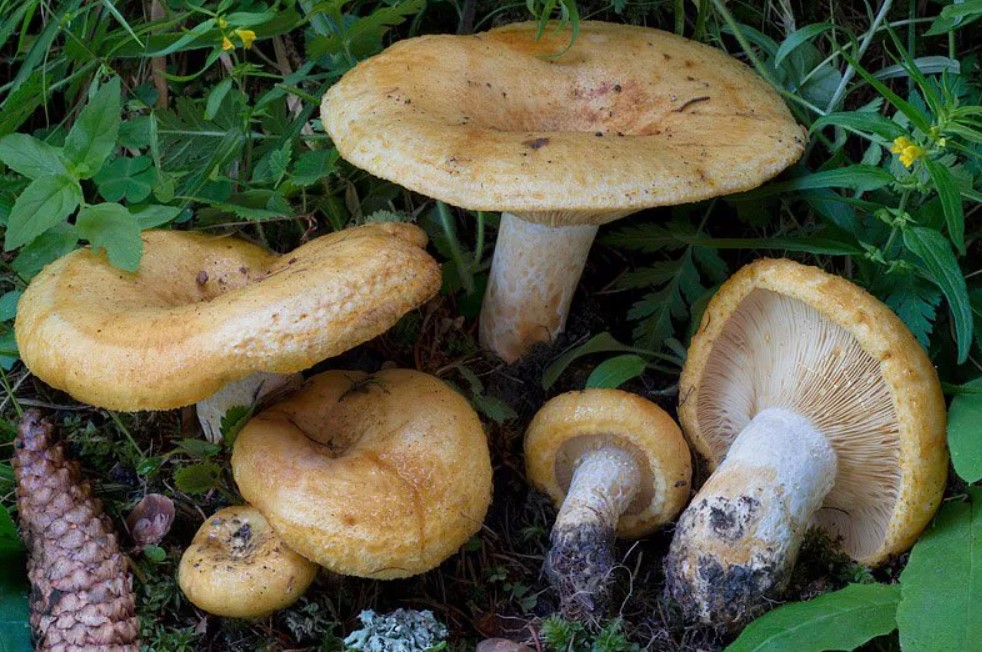
Lactarius azonites
| View | Description | Edibility | Collection deadlines | Where to look |
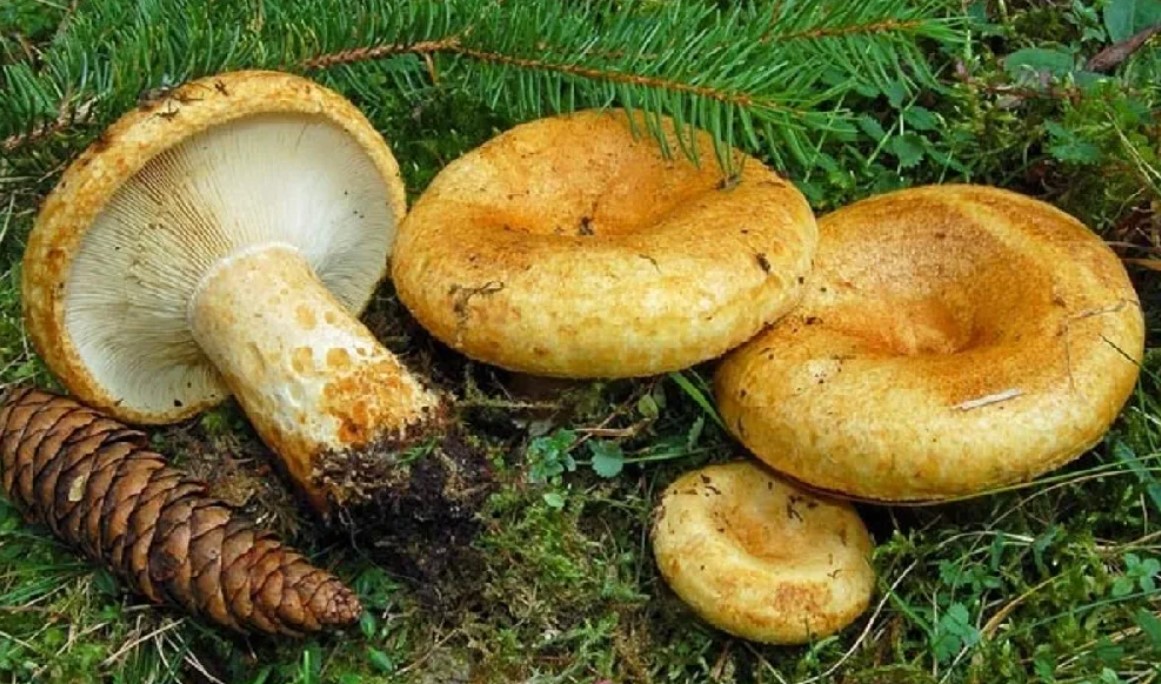
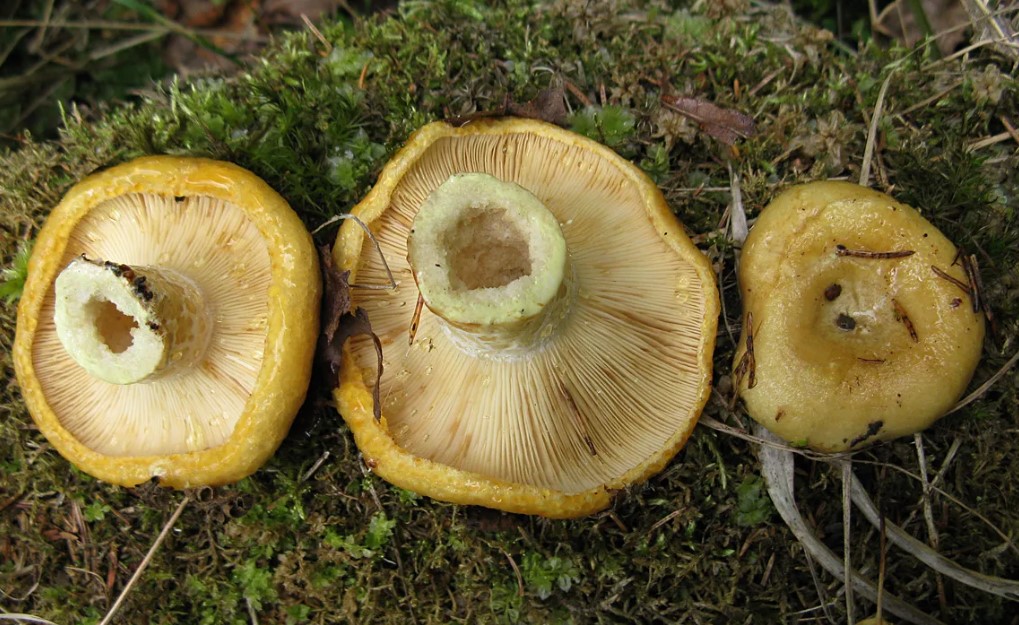
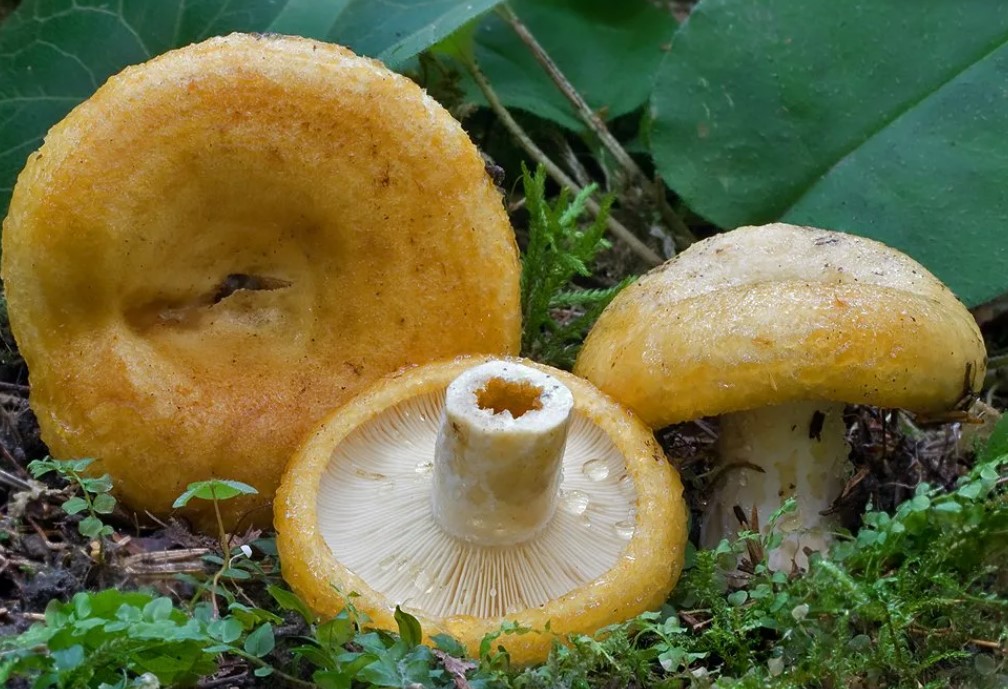
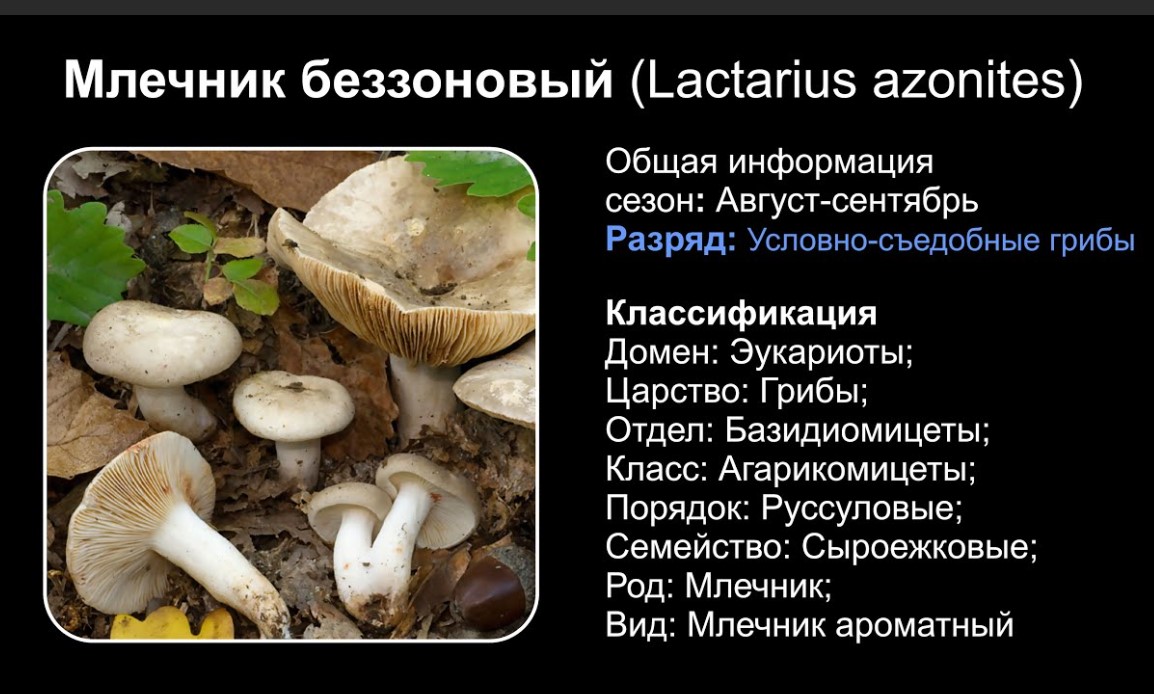
| Lactarius azonites | The cap is slightly depressed in the middle, the edges are smooth, and the color ranges from light to dark brown. The diameter is up to 11 cm. The stem is up to 9 cm tall, matching the cap color or slightly lighter. The milky sap, when cut, takes on a pinkish-orange hue. | Edible. According to some sources, conditionally edible. It is recommended to consume only young specimens. |
July-September. | Broadleaf, mainly oak forests of Eurasia, grows in small groups or alone. |
Photo gallery of zoneless milkweed
Brown milkweed (Lactarius fuliginosus)
| View | Description | Edibility | Collection deadlines | Where to look |
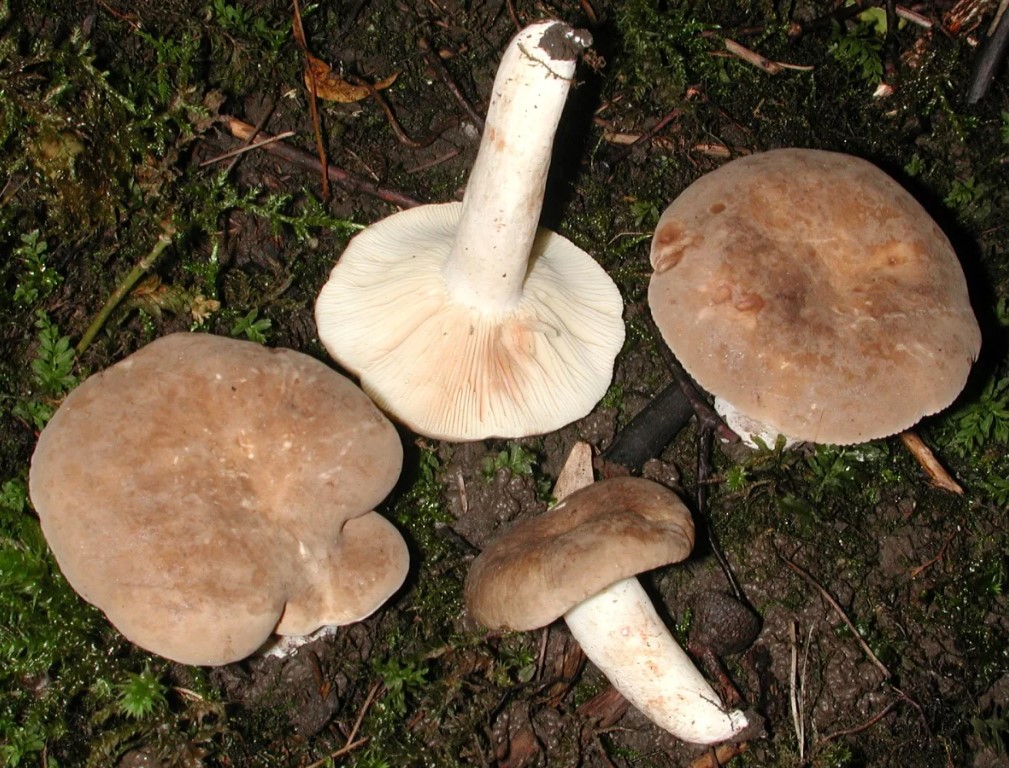
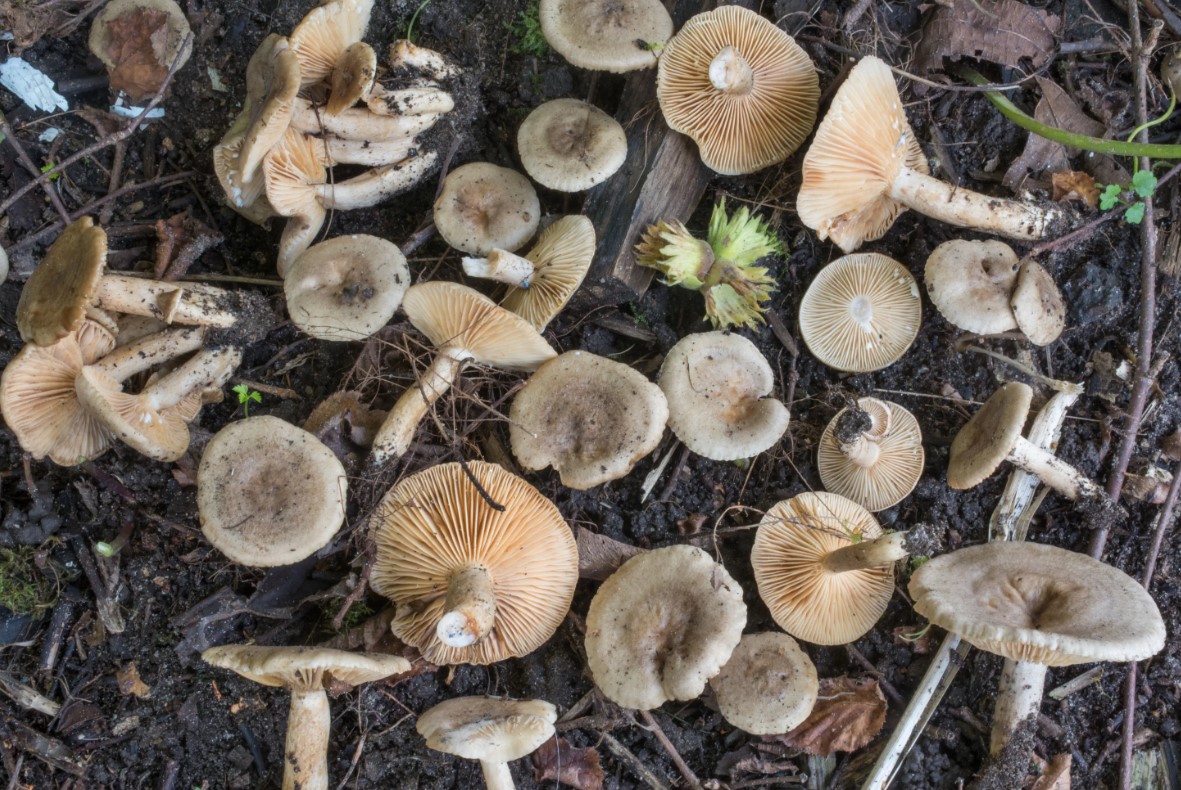
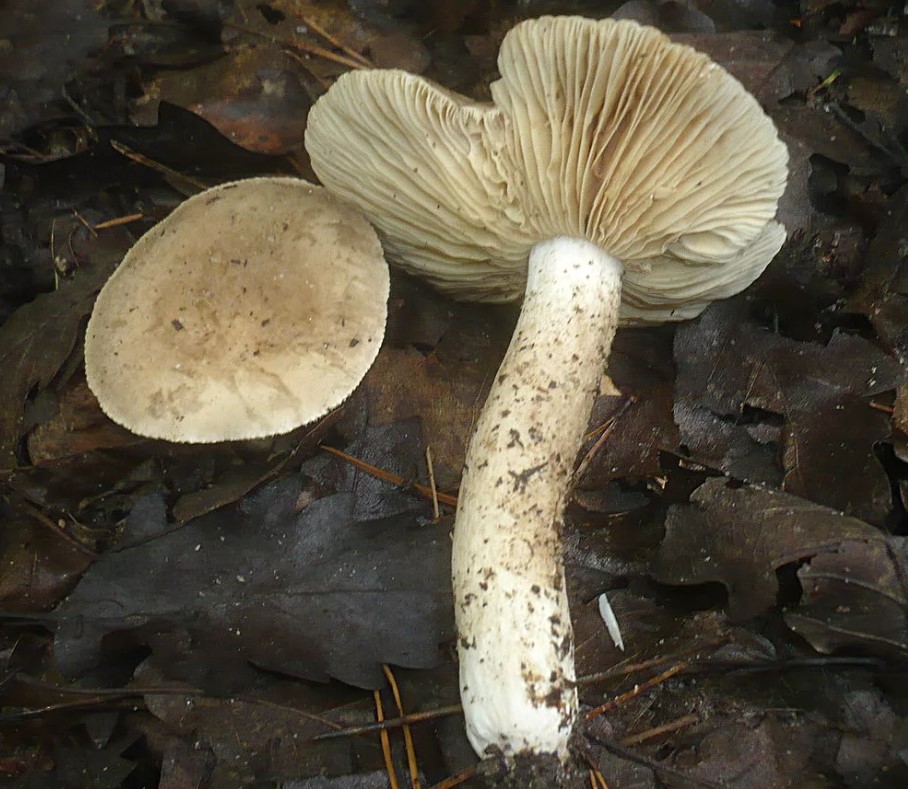
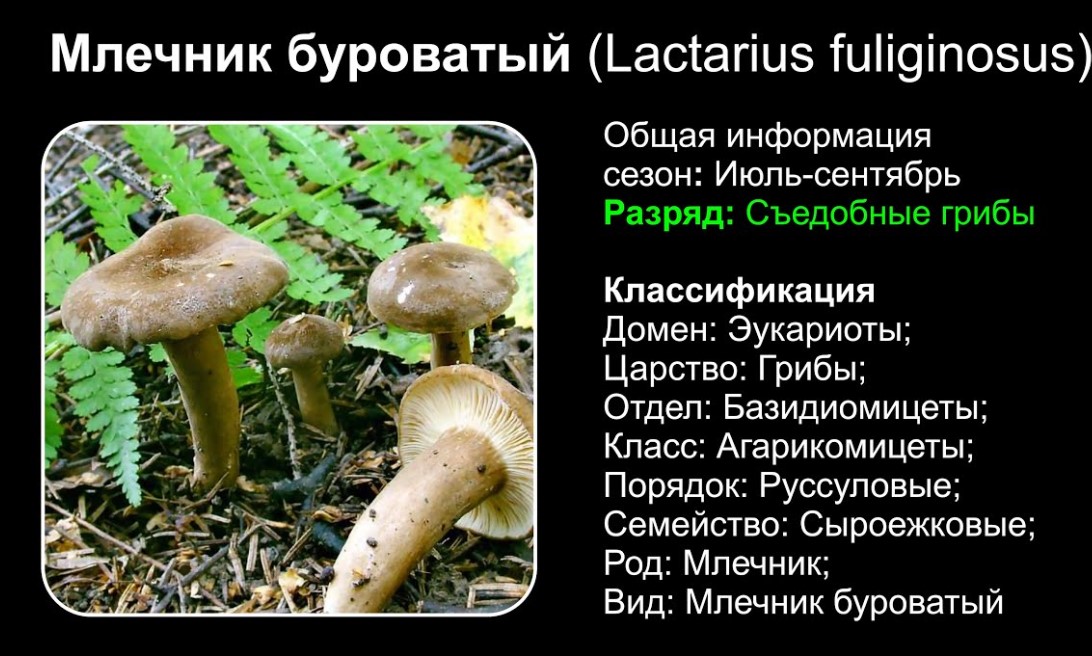
| Brown milkweed (Lactarius fuliginosus) | The cap diameter is 5-10 cm, the margins remain folded for a long time, and only begin to ripple in maturity. The color is brown, but lightens with age. The stem is up to 6 cm tall and thick. | Edible. In some places it is classified as conditionally edible. In Europe, it is considered inedible. | July-September. | Birch forests. |
Photo gallery of brown milkweed
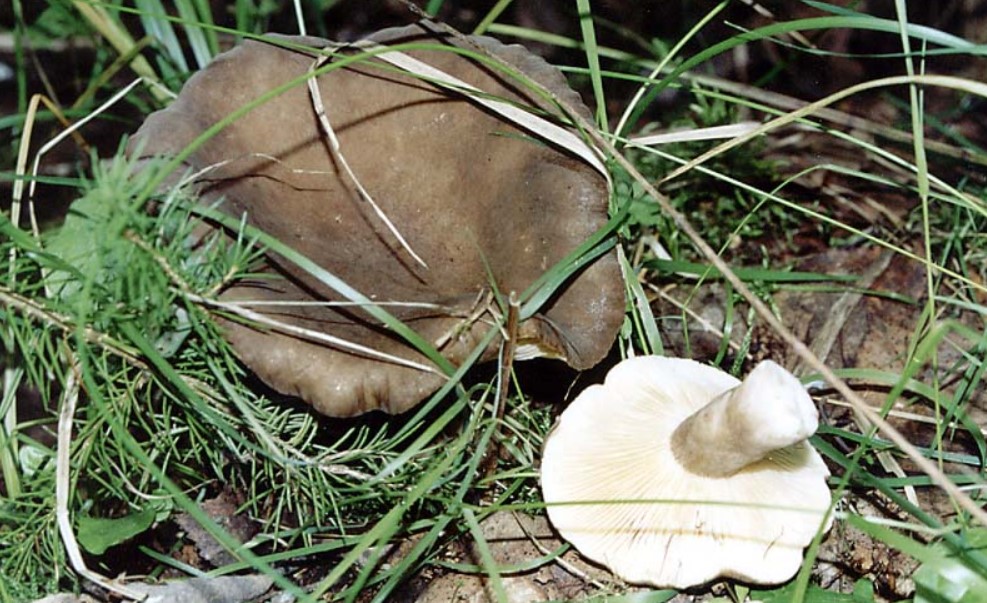
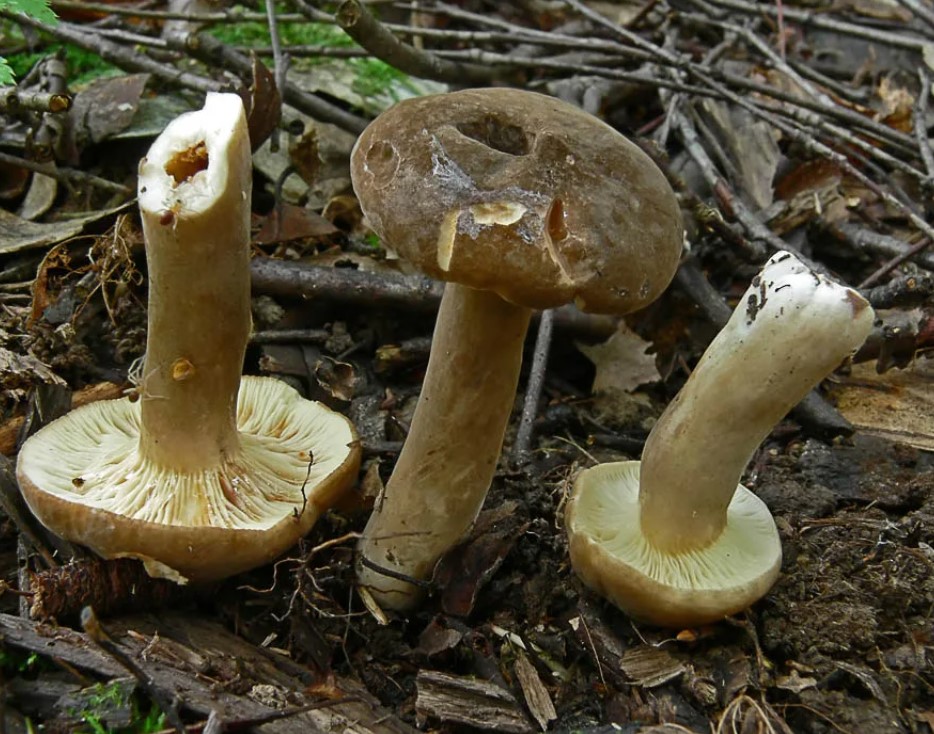
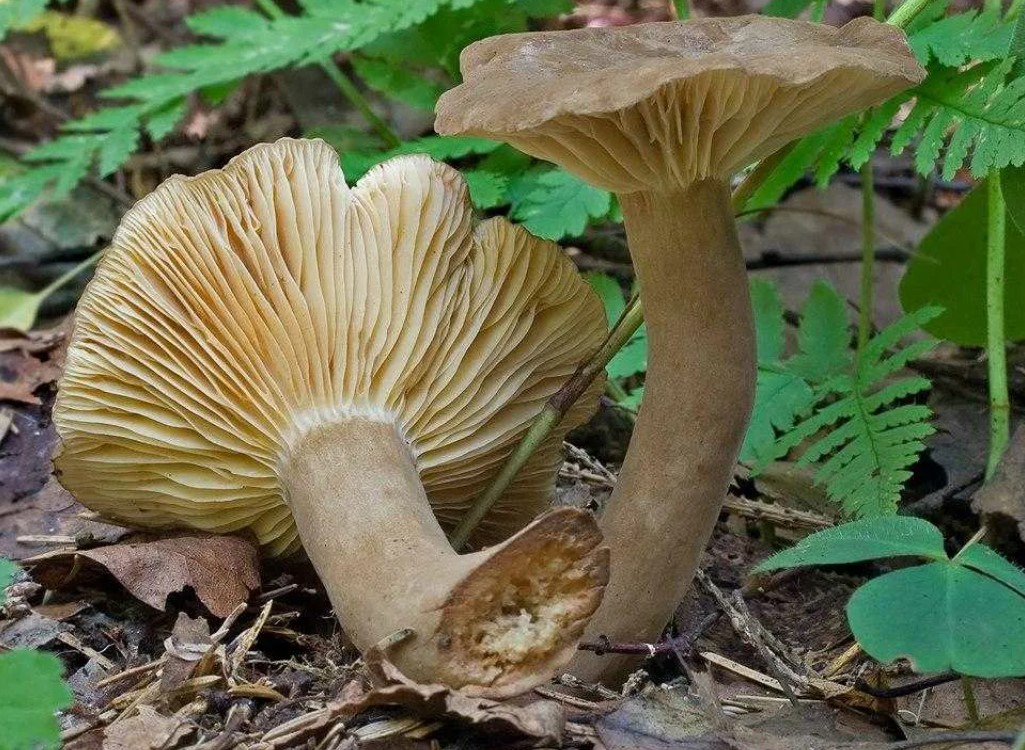
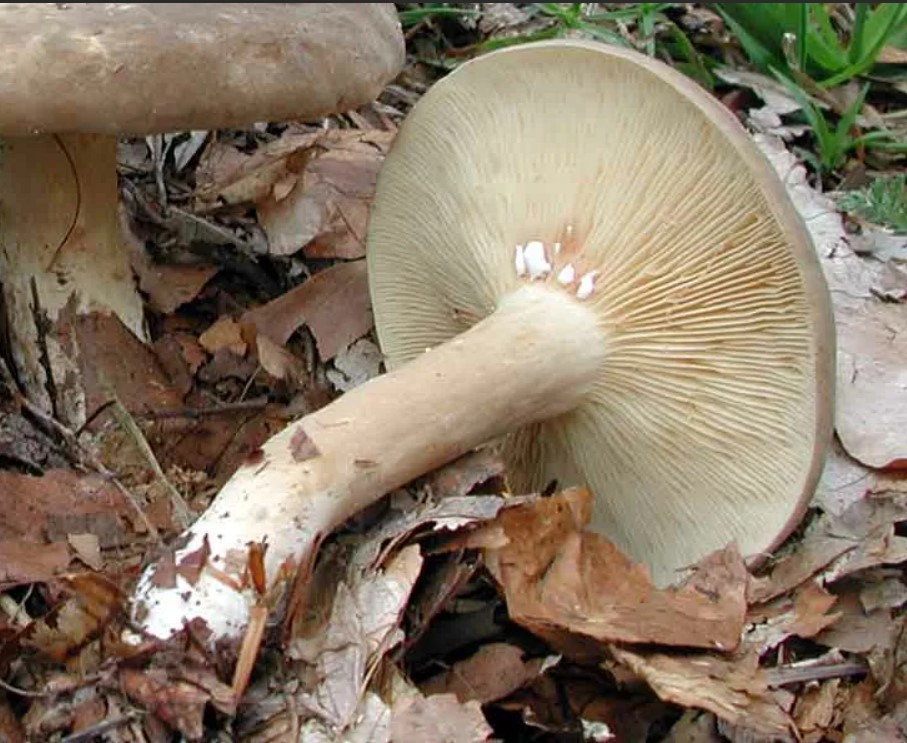
Lactarius hygrophoroídes
| View | Description | Edibility | Collection deadlines | Where to look |
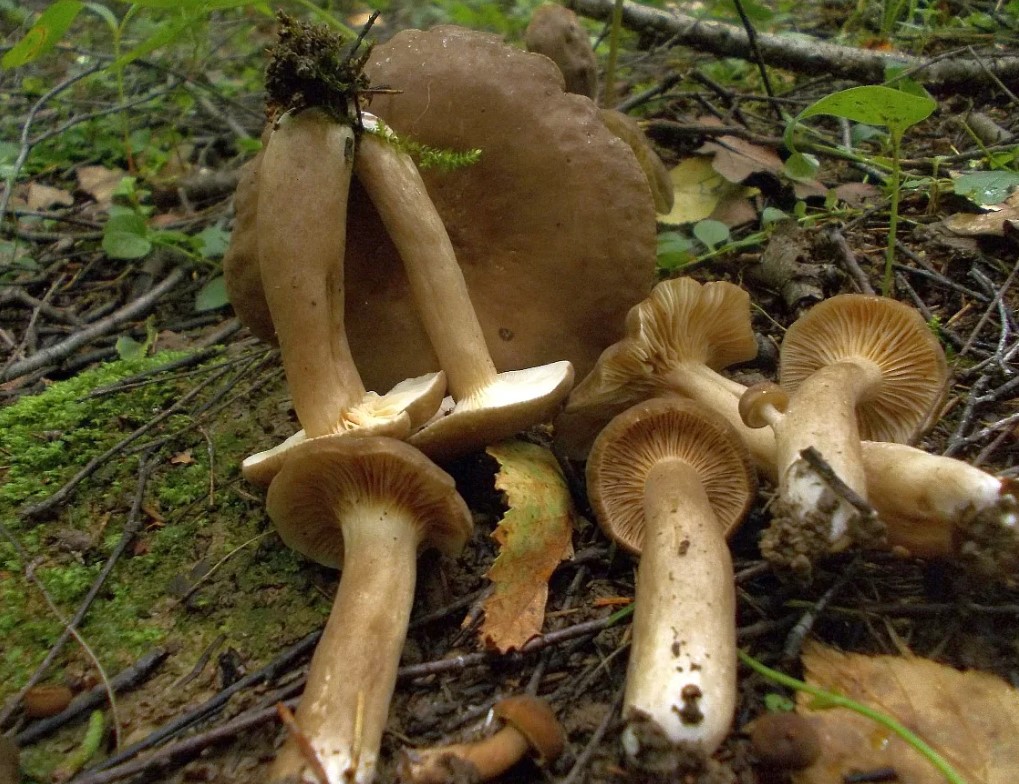
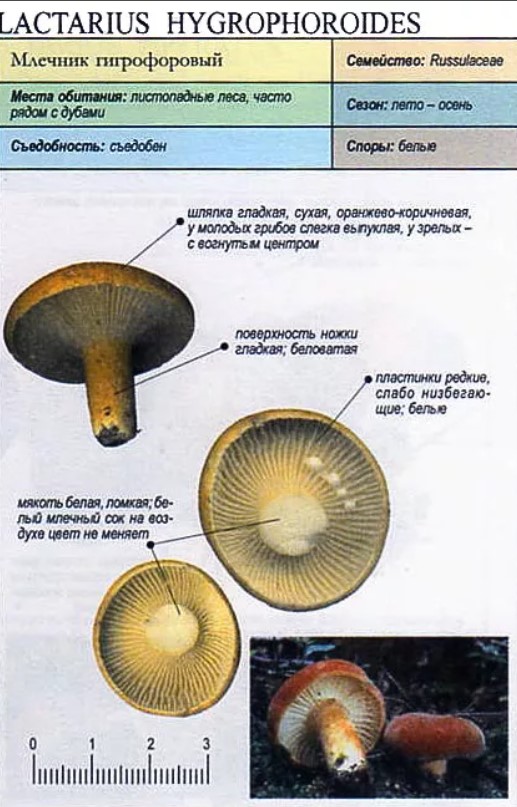
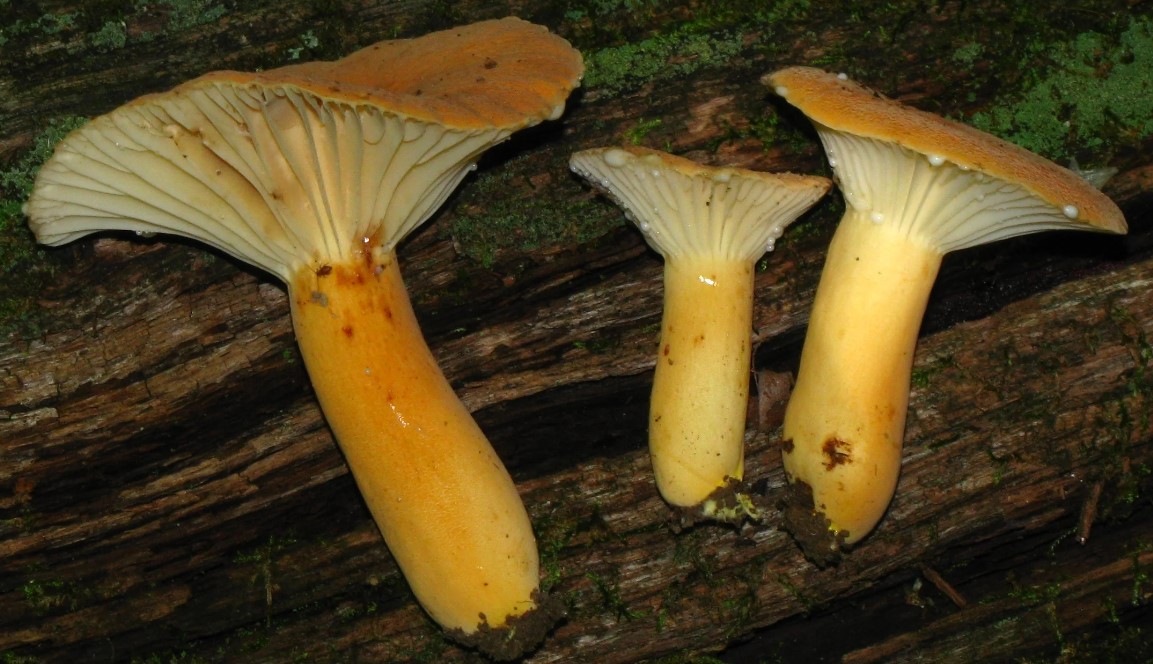
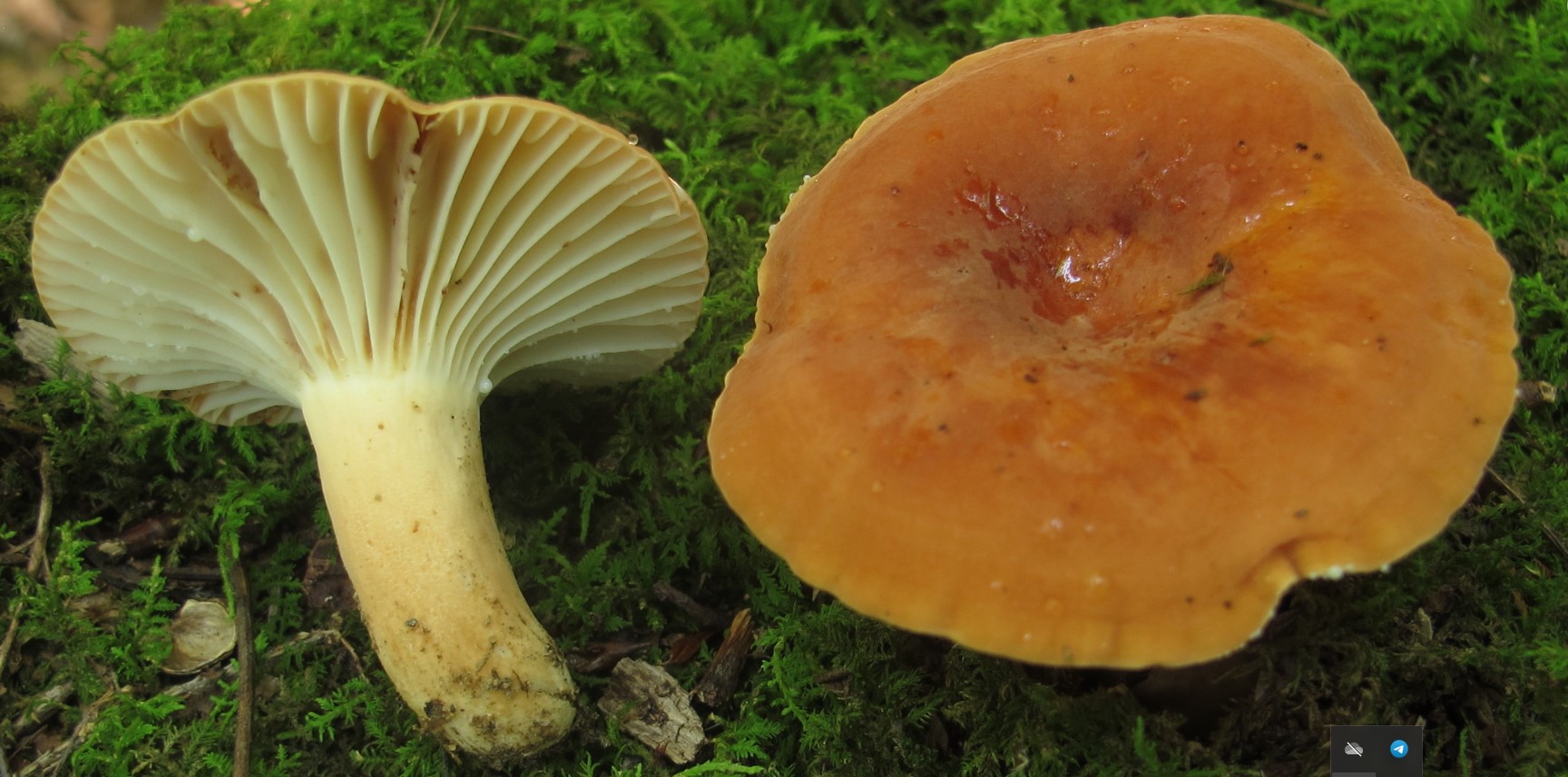
| Lactarius hygrophoroídes | The cap is up to 8 cm in diameter, orange-brown in color, flat, and convex at the beginning of growth. The stem is up to 7 cm high. The milky sap remains unchanged when cut. | In different sources it is considered edible and conditionally edible. | July-September. | Oak forests. |
Photo gallery of the Hygrophorus lactarius
Oak milkcap, neutral (Lactarius quietus)
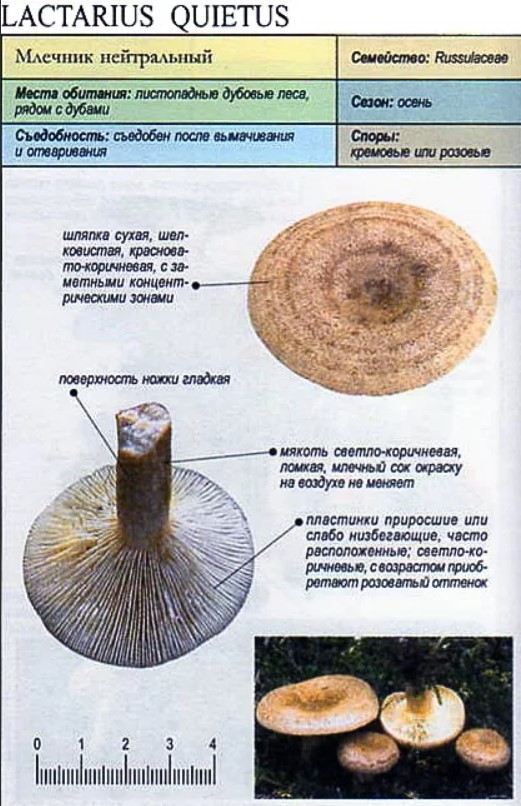
| View | Description | Edibility | Collection deadlines | Where to look |
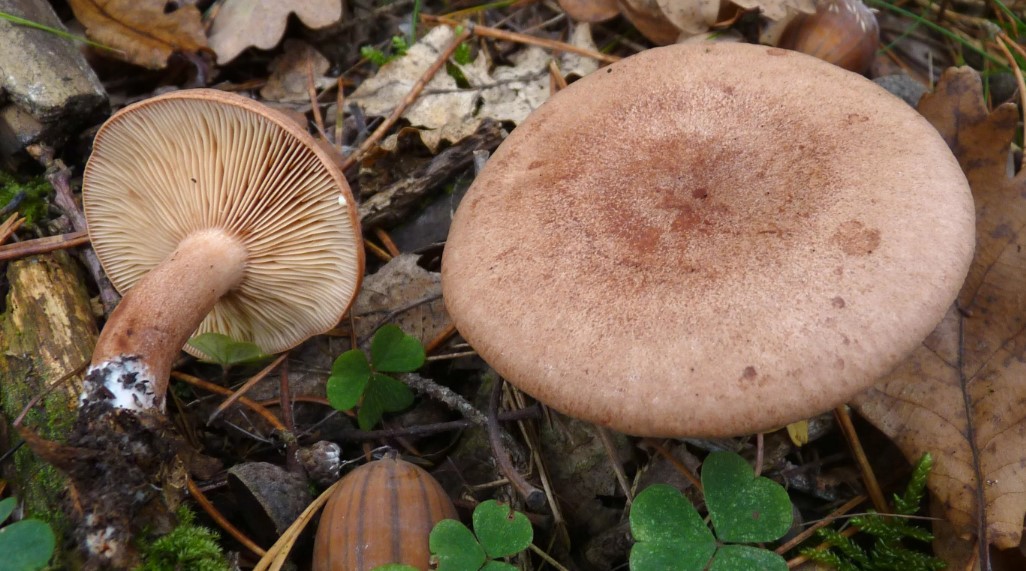
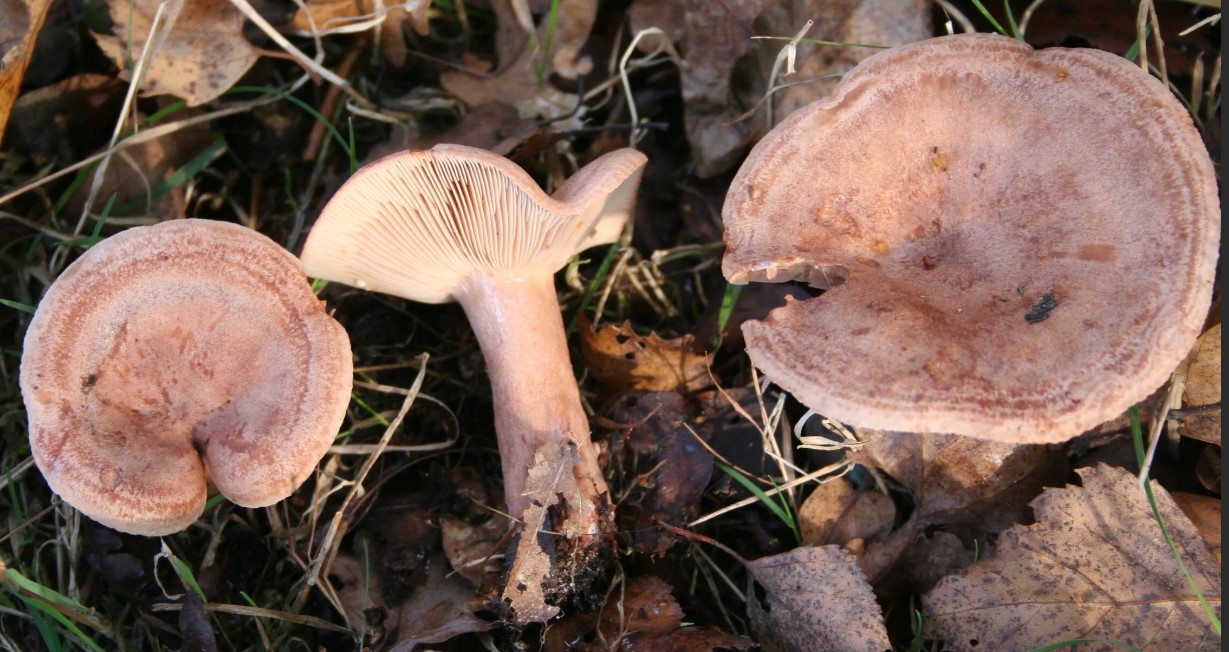
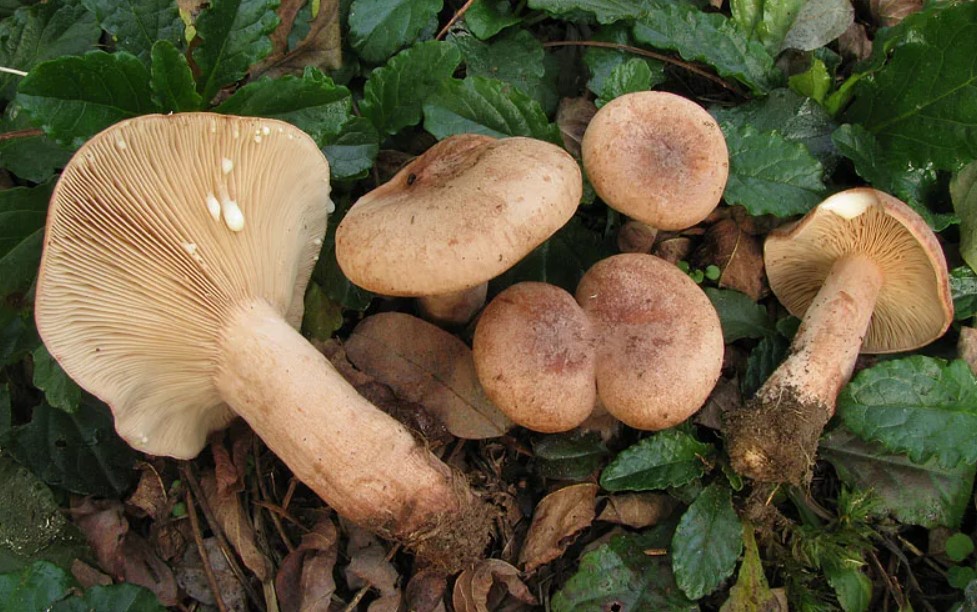
| Oak milkcap, neutral (Lactarius quietus) | The cap diameter ranges from 5 to 10 cm, and the shape is concave in mature mushrooms. The color is creamy, with concentric zones. The milky sap is white. The stem is short, dark at the base. | Edible, but has a specific smell. In some sources it is considered conditionally edible. |
June-October. | Forests where oak grows. |
Photo gallery of oak milkweed
Camphor milkweed (Lactarius camphoratus)
| View | Description | Edibility | Collection deadlines | Where to look |
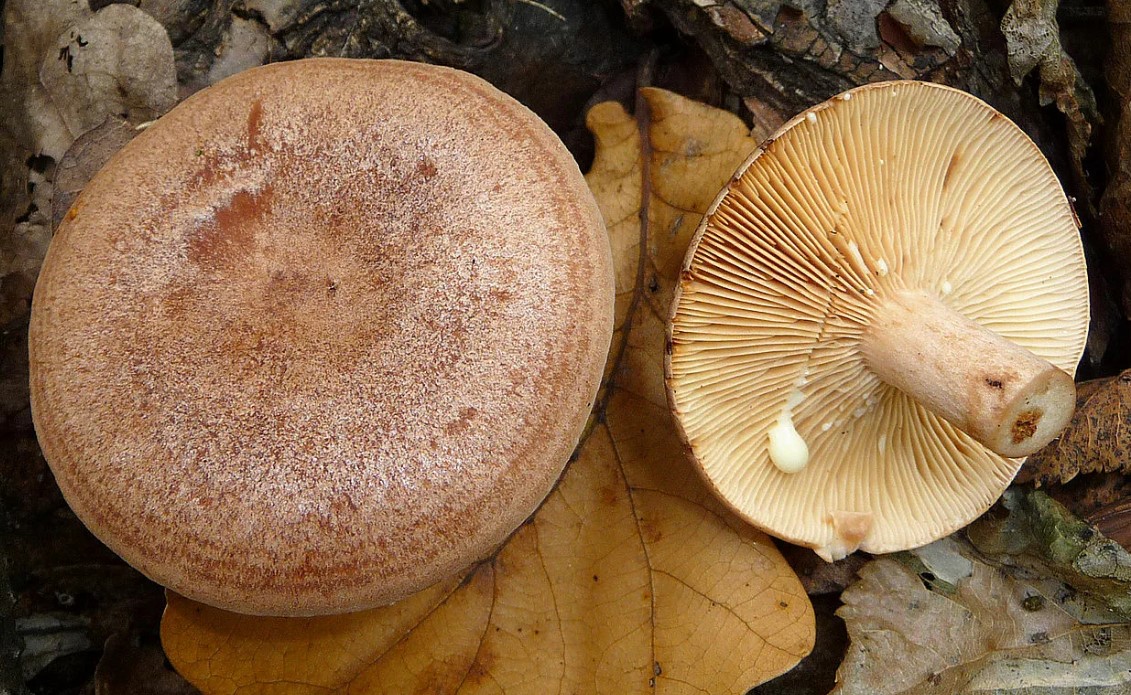
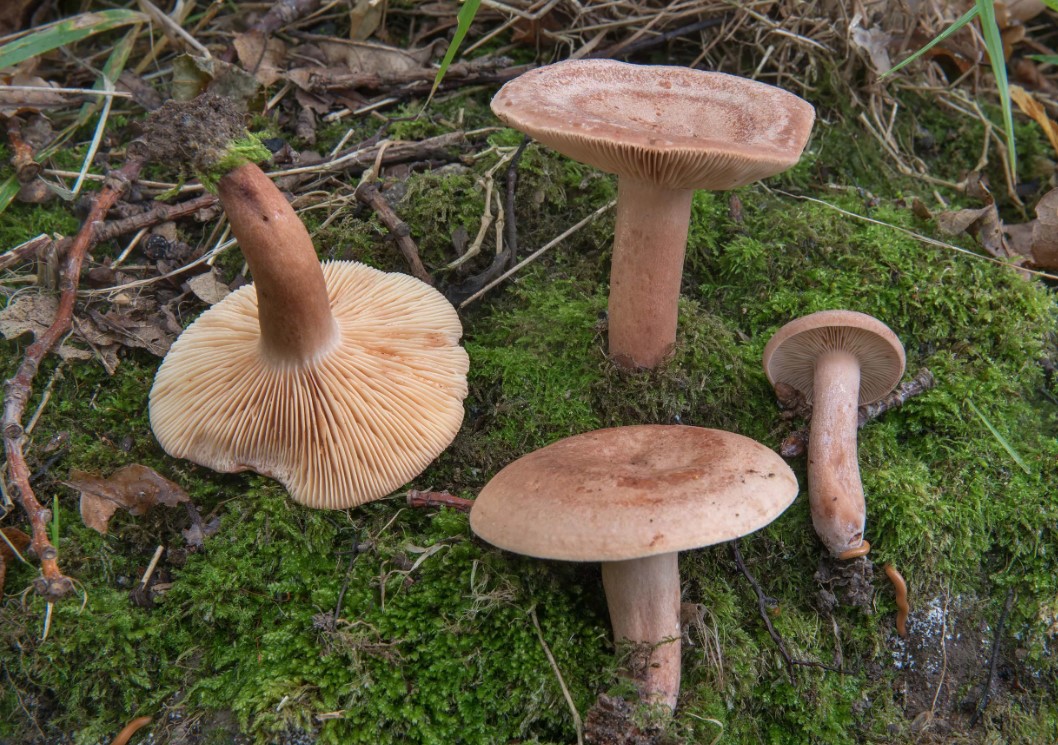
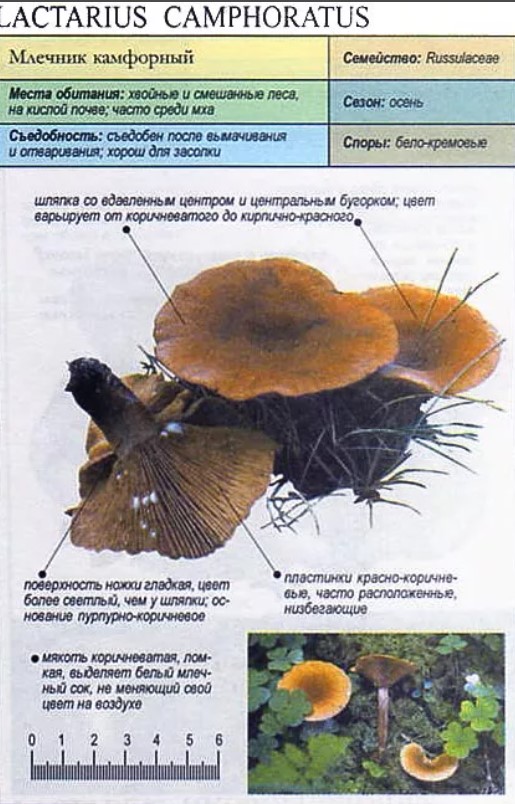
| Camphor milkweed (Lactarius camphoratus) | The cap changes from convex to flat as it grows, with a matte surface. The color is brownish or dark red. The stem is up to 5 cm tall and may be slightly darker in color than the cap. The milky sap does not change color when exposed to air. | Edible, but not the tastiest. Some sources consider it conditionally edible. | July-end of September. | Coniferous and mixed forests. They prefer acidic soil. |
Photo gallery of camphor milkweed
Lilac Milkweed, Lilac Milkweed (Lactarius violascens)
| View | Description | Edibility | Collection deadlines | Where to look |
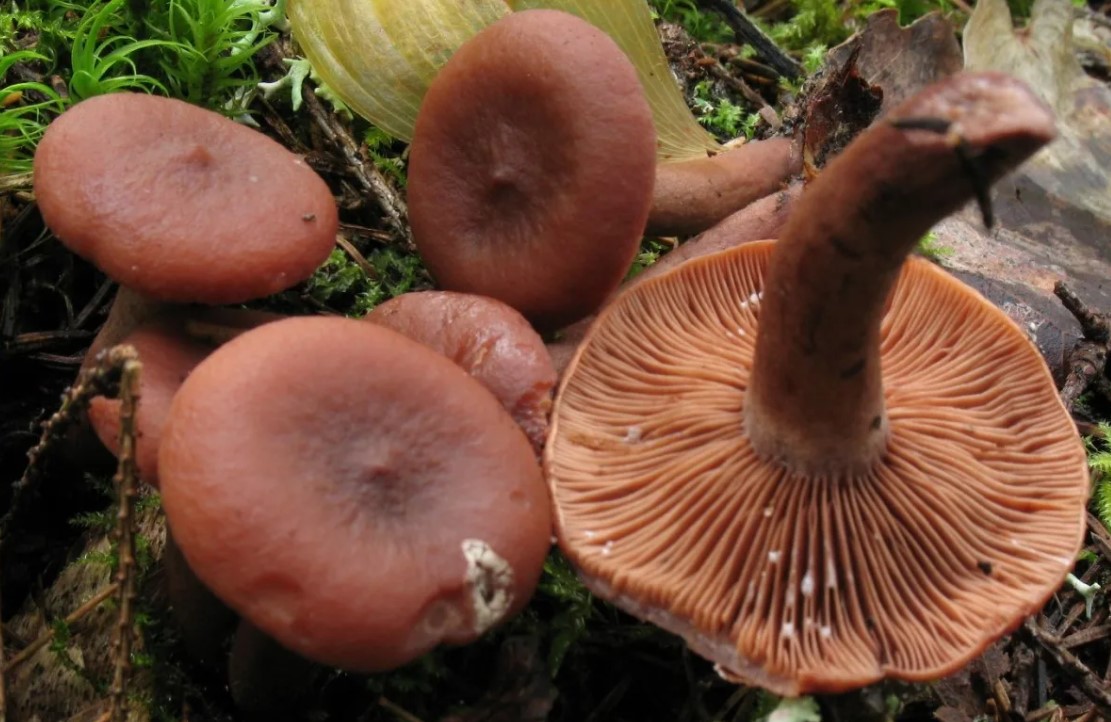
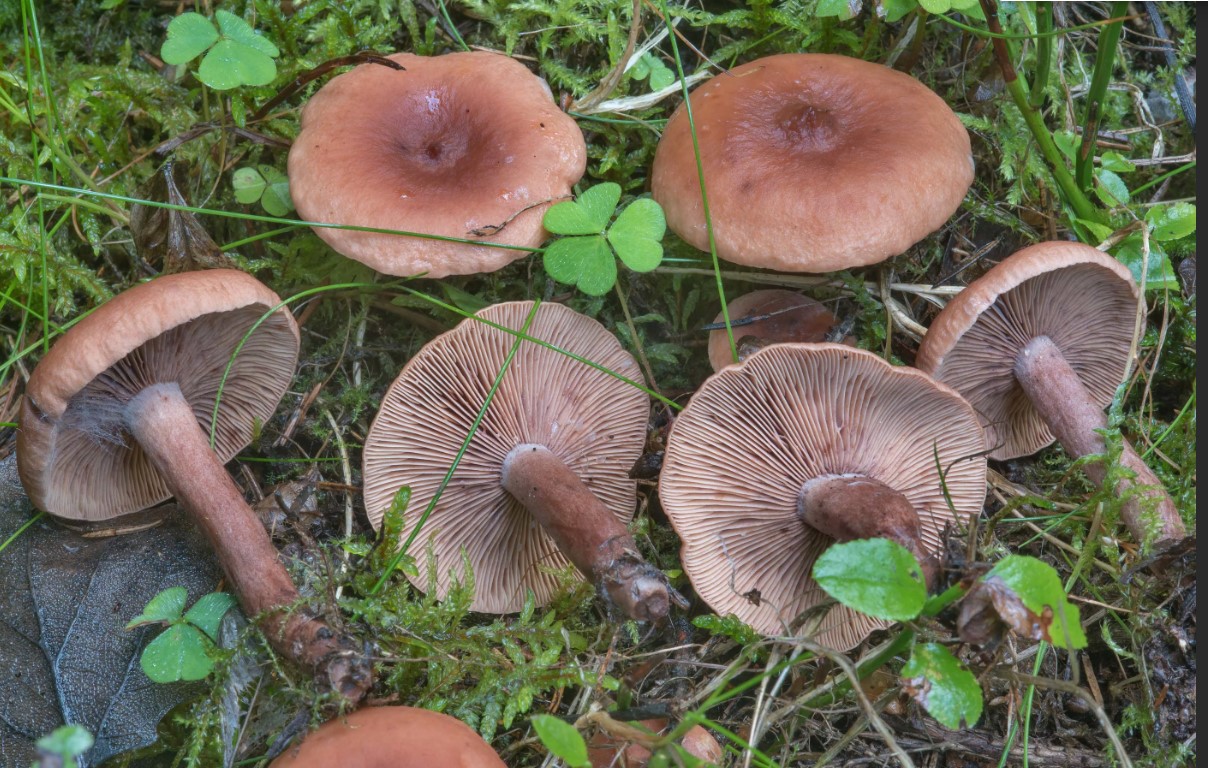
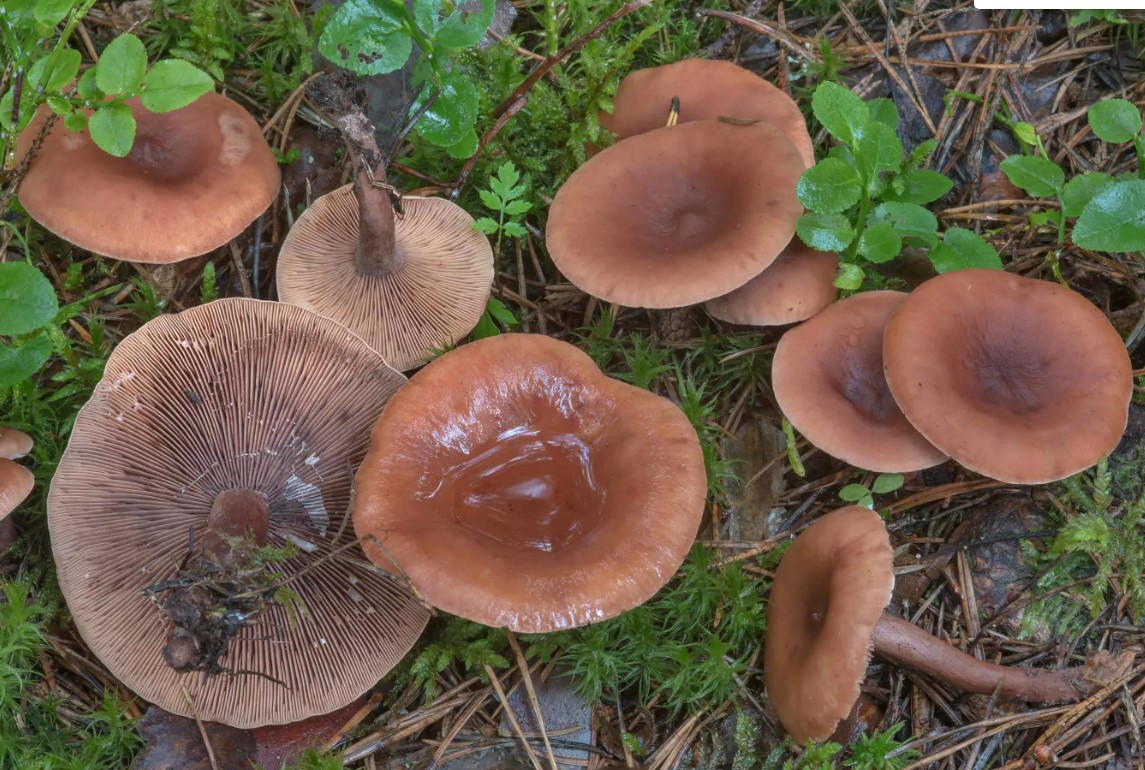
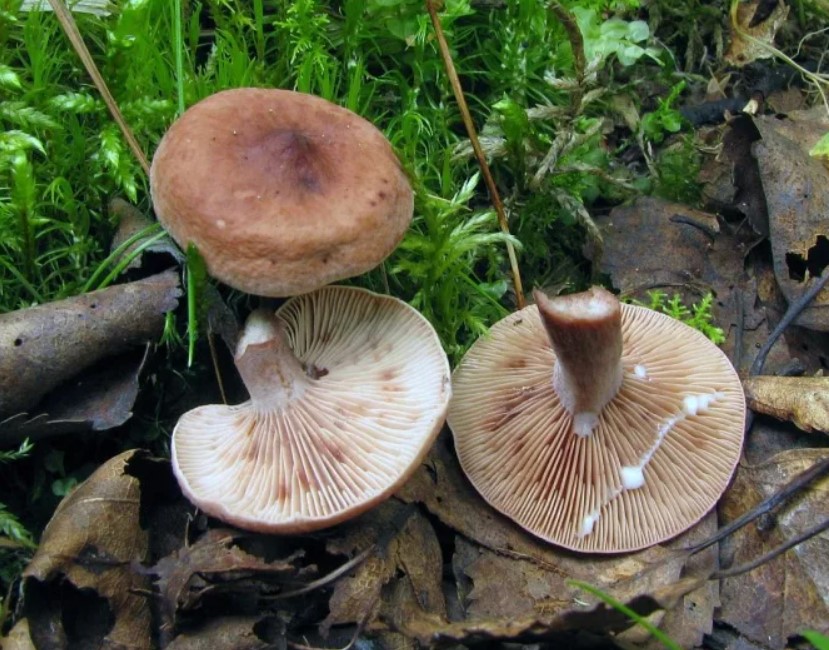
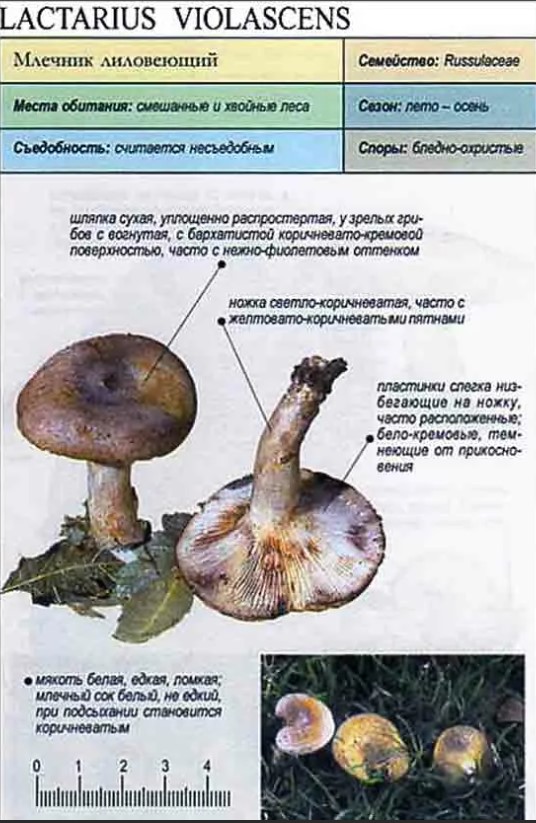
| Lilac Milkweed, Lilac Milkweed (Lactarius violascens) | The cap is 4 to 12 cm in diameter, with drooping or smooth edges. The skin is sticky. The color is grayish-brown or yellow, with pinkish spots on the surface. Concentric zones are weakly defined. The flesh takes on a purple hue when cut. The stem is up to 4 cm tall and changes color when touched. | Depending on the source, it is either conditionally edible or inedible. It is consumed after soaking for 2-3 days, boiling for at least 30 minutes and salting. |
July-September. | Deciduous forests, grows near alder and birch. |
Photo gallery of the purple milkweed
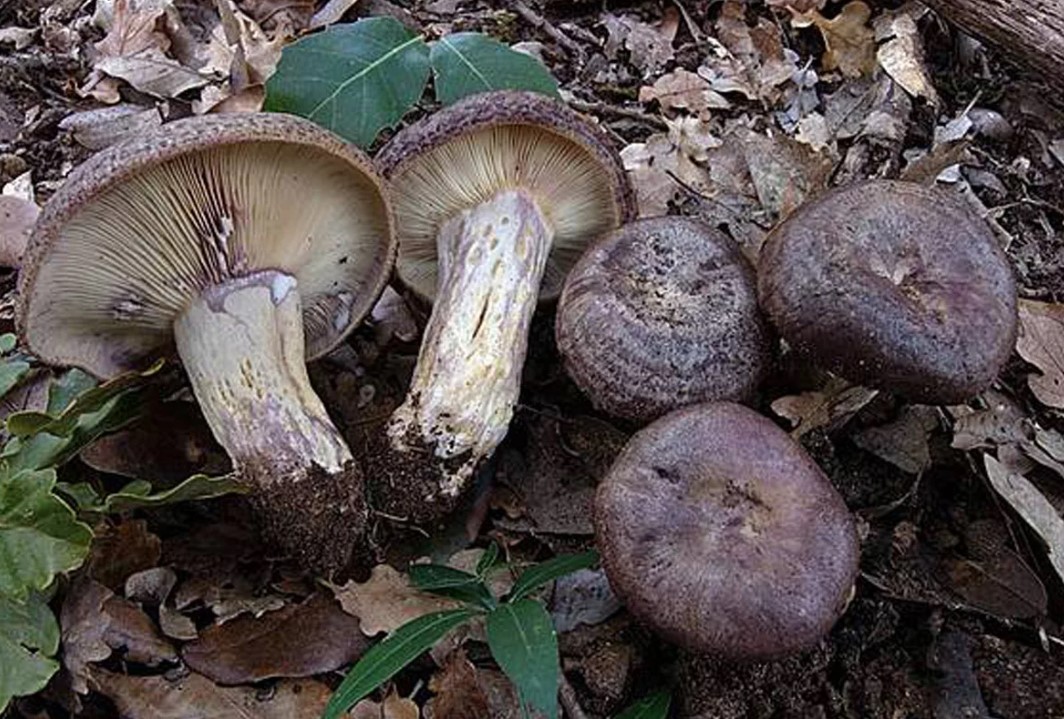
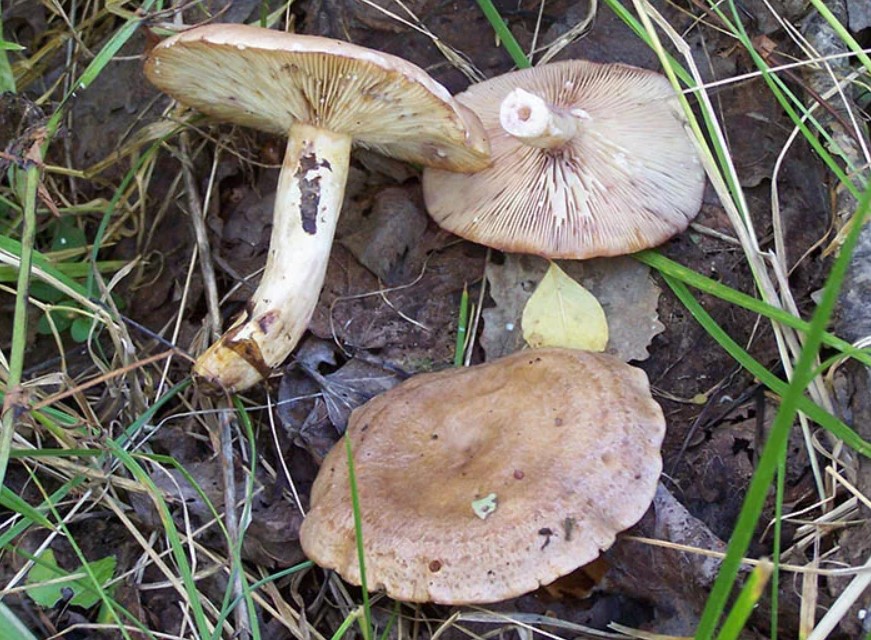
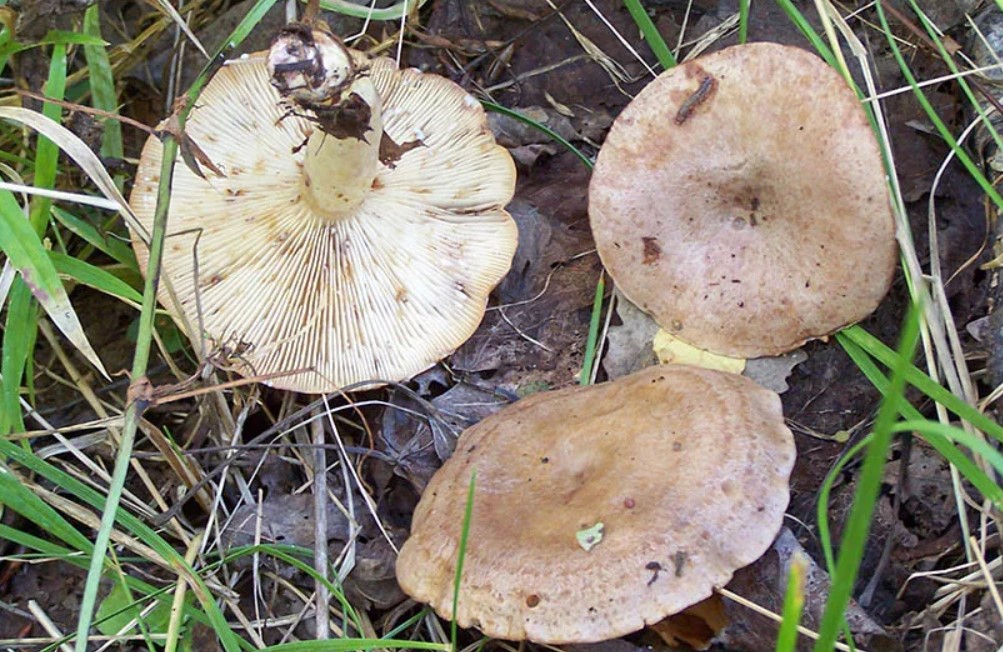
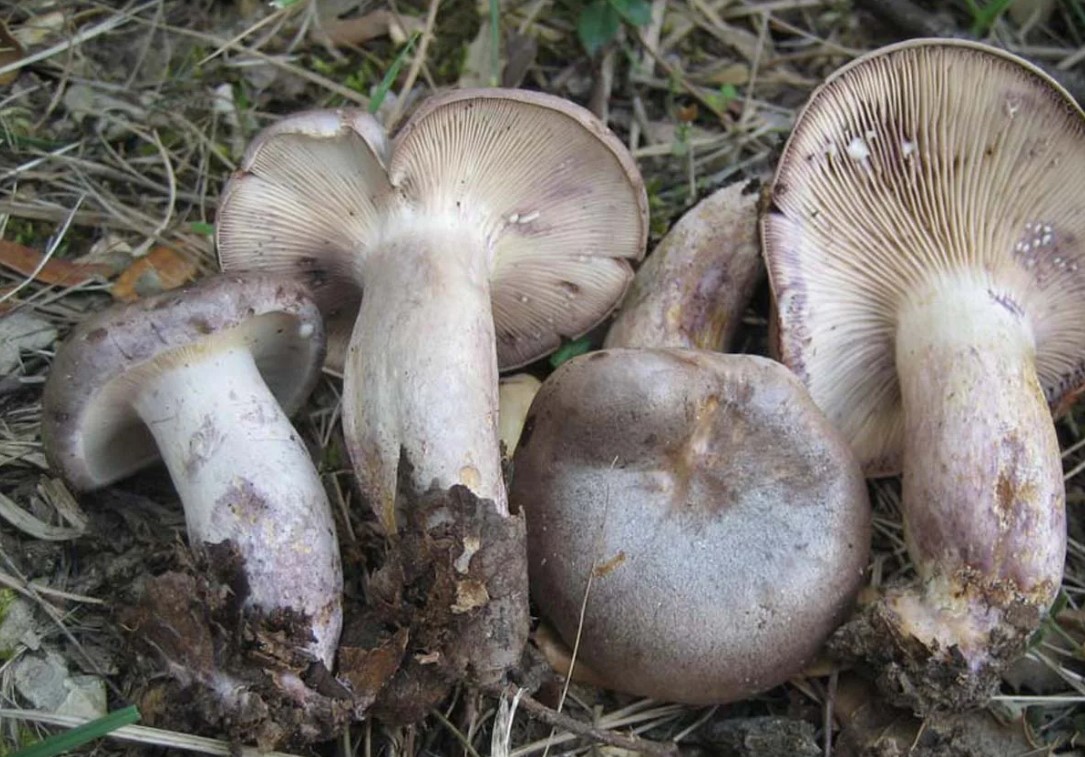
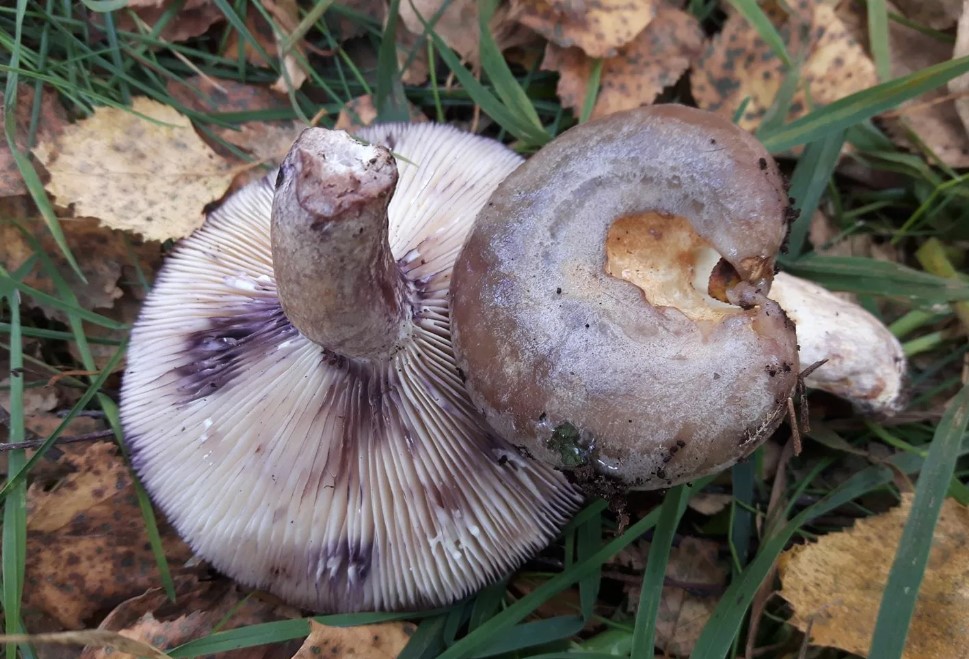
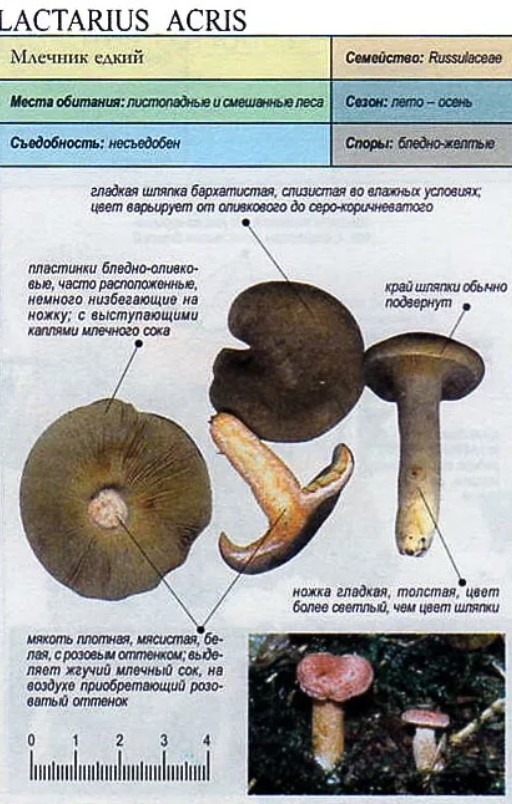
Lactarius acris
| View | Description | Edibility | Collection deadlines | Where to look |
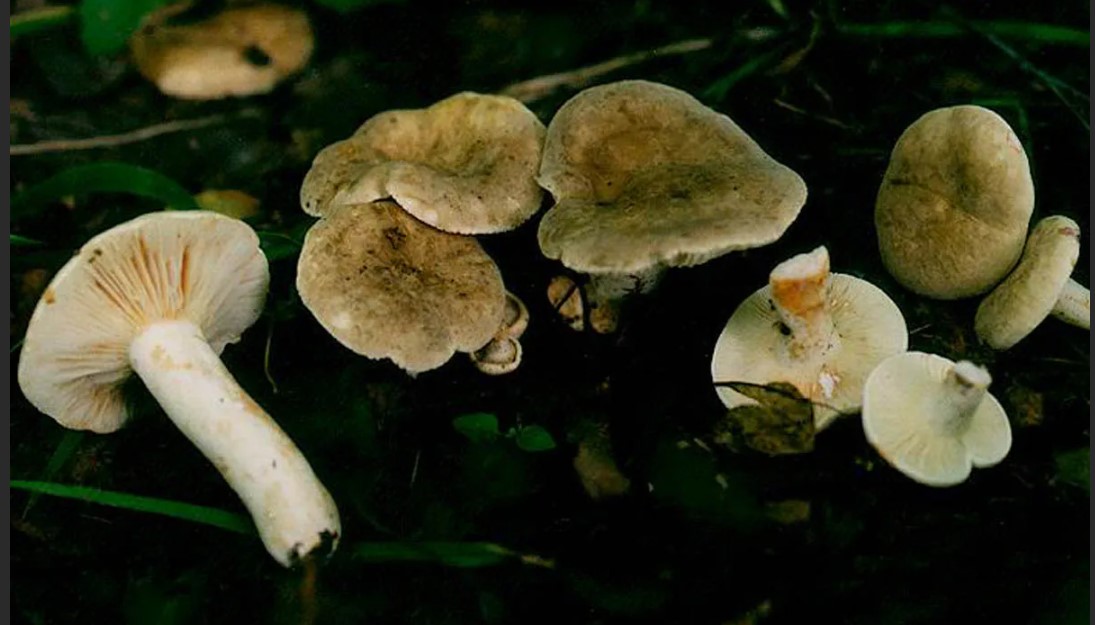
| Lactarius acris | The cap is 3-7 cm in diameter, with a bumpy surface and a wavy edge. The color is gray or olive, and the surface is velvety. The stem is up to 5 cm tall. The flesh turns red when cut, and the flavor is pungent. | Conditionally edible. It is used salted after long soaking and boiling. According to some sources it is considered inedible. |
July-September. | Distributed in deciduous forests, occasionally found near hazel and birch trees. |
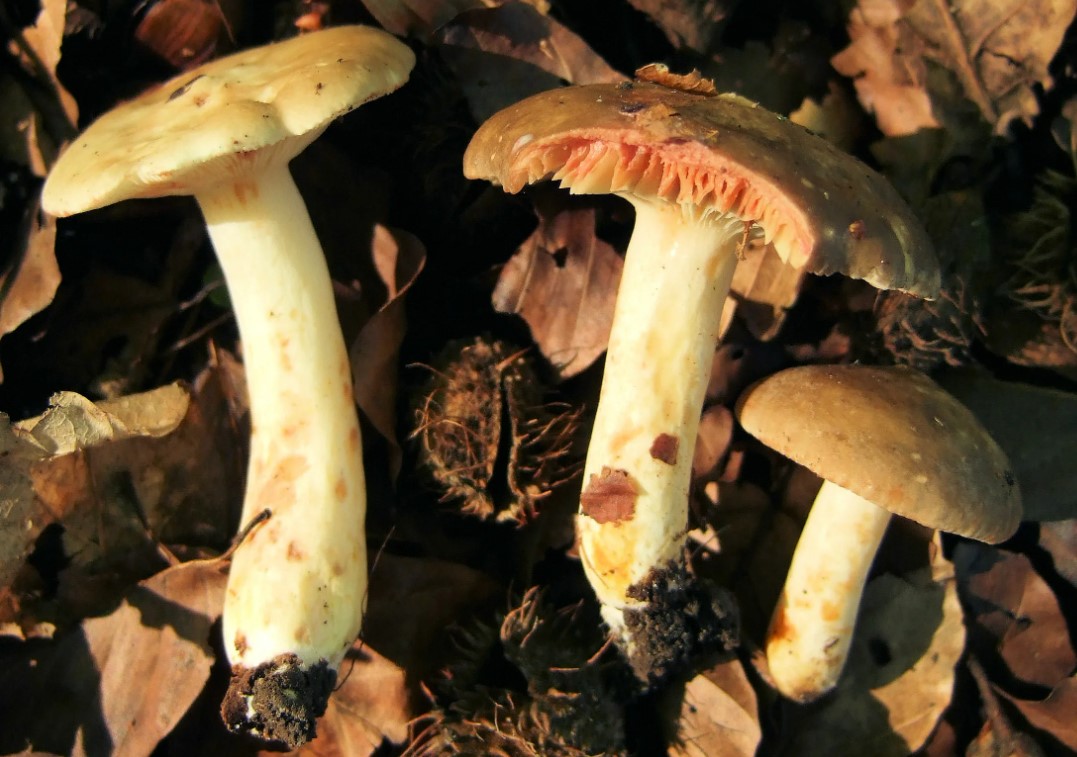
Photo gallery of the acute milkcap
Aspen milk cap (Lactarius controversus)
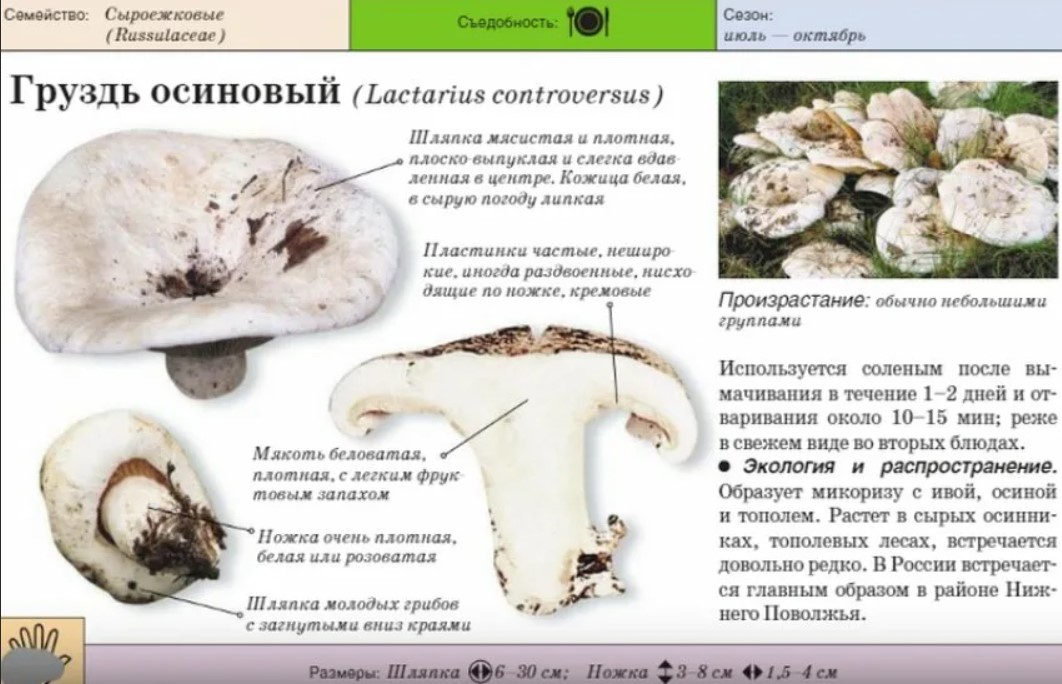
| View | Description | Edibility | Collection deadlines | Where to look |
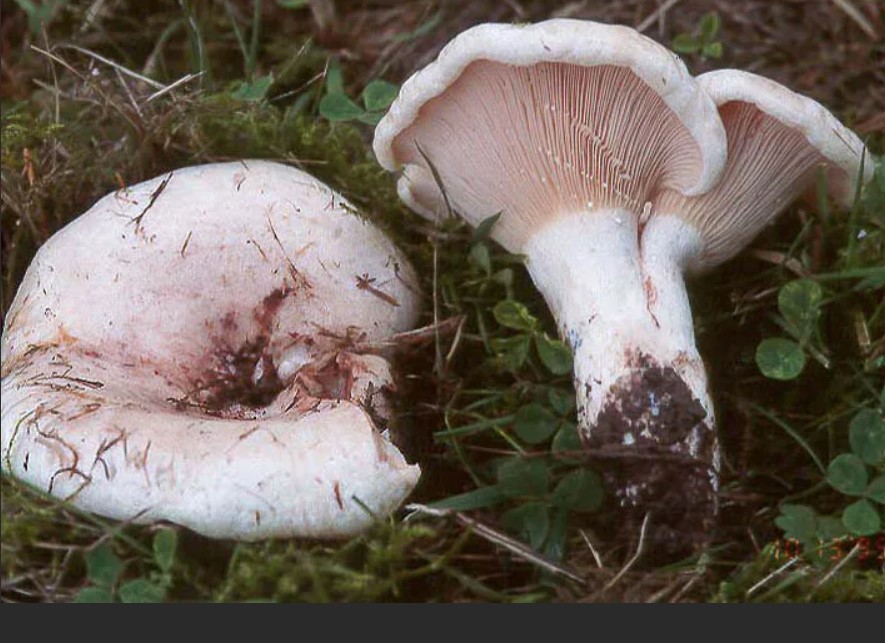
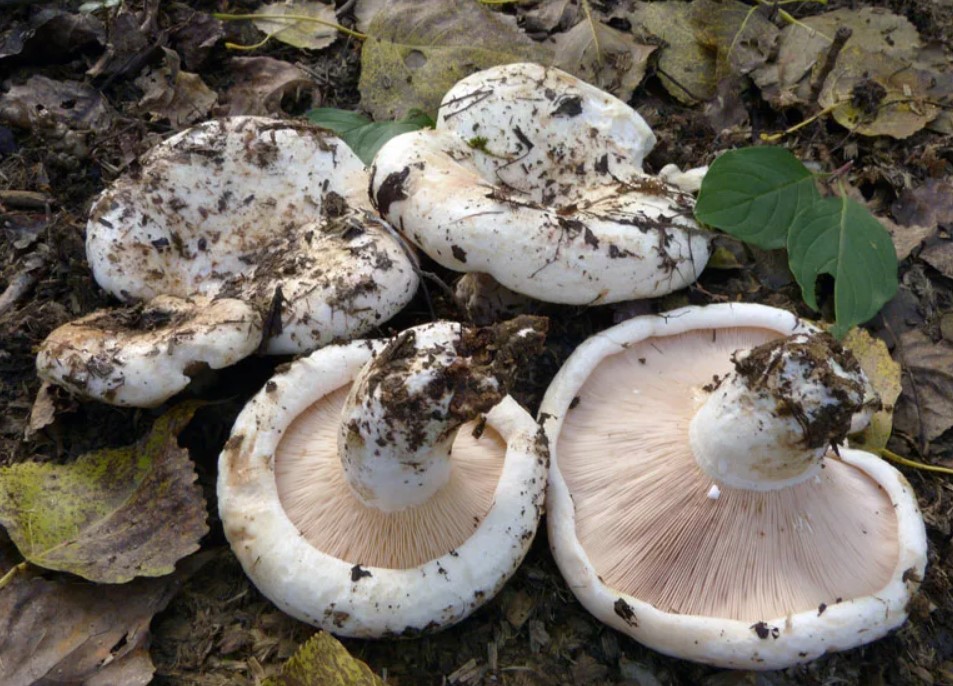
| Aspen milk cap (Lactarius controversus) | The cap diameter varies from 6 to 30 cm; the edges of mature mushrooms are wavy, and the cap shape is flattened and convex. The color is light with pinkish spots, and the skin is pubescent. The stem is up to 8 cm in height. The milky juice is bitter and does not change color. | Conditionally edible. Some sources consider it a good edible mushroom, as it can be eaten fried or boiled, not just salted. |
July-October. | Distributed in the Lower Volga region, it prefers poplars, aspens and willows. |
Photo gallery of aspen milk mushrooms
Peppery milk mushroom (Lactarius piperatus)
| View | Description | Edibility | Collection deadlines | Where to look |
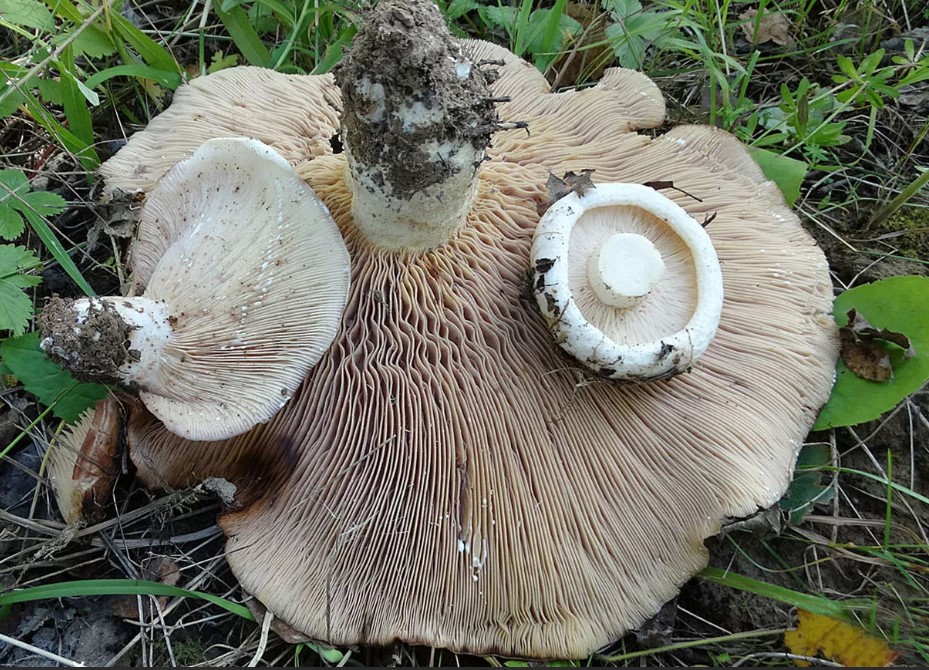
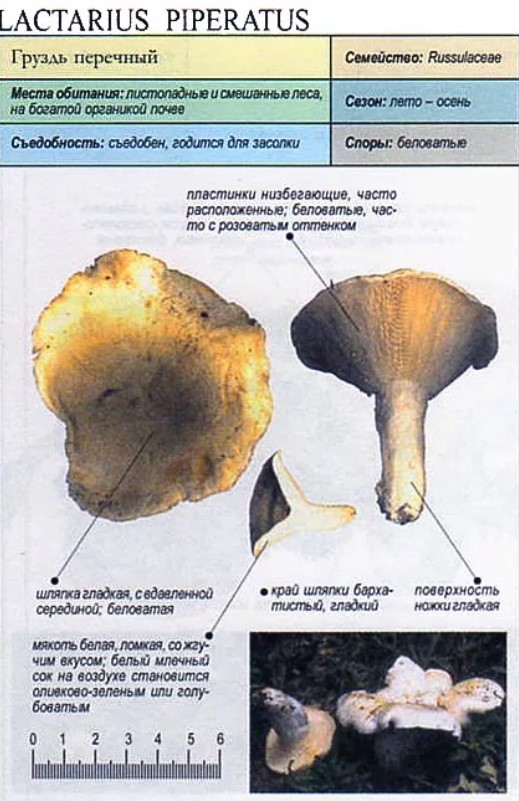
| Peppery milk mushroom (Lactarius piperatus) | The cap diameter is up to 30 cm; the edges are folded under in young mushrooms, later straightening. The skin is white and matte. The stem is 8 cm long, tapering at the base. The milky sap remains virtually unchanged when exposed to air. | Conditionally edible. Often considered inedible, it has a very pungent taste. Used salted or as a seasoning. |
Summer-autumn. | Deciduous and mixed forests, rarely found in coniferous forests. |
Photo gallery of peppery milk mushrooms
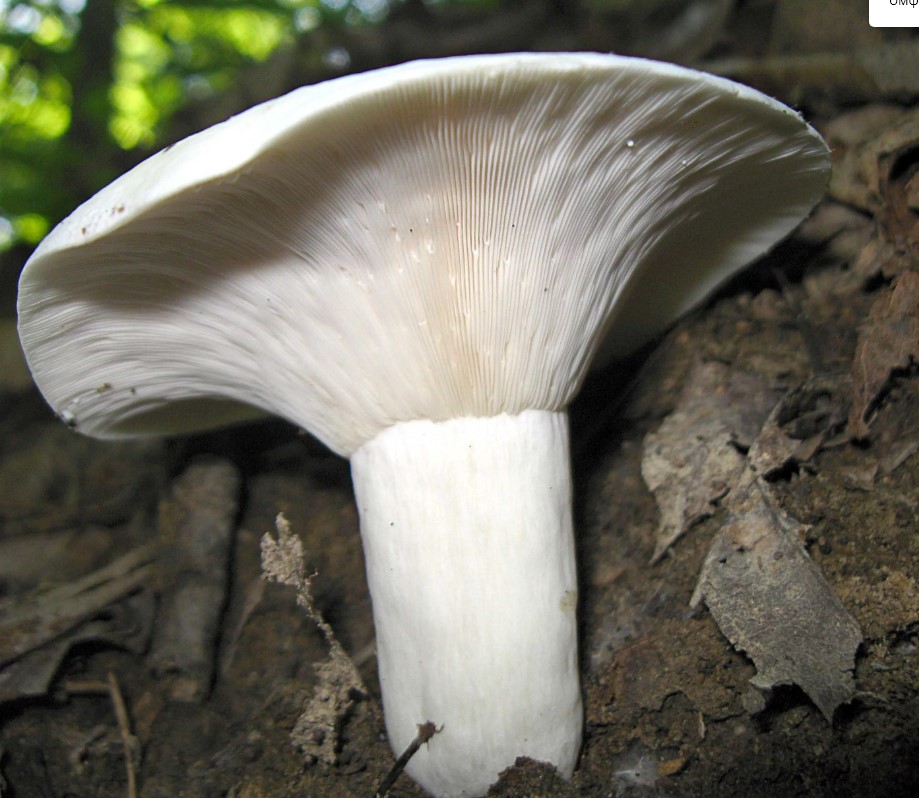
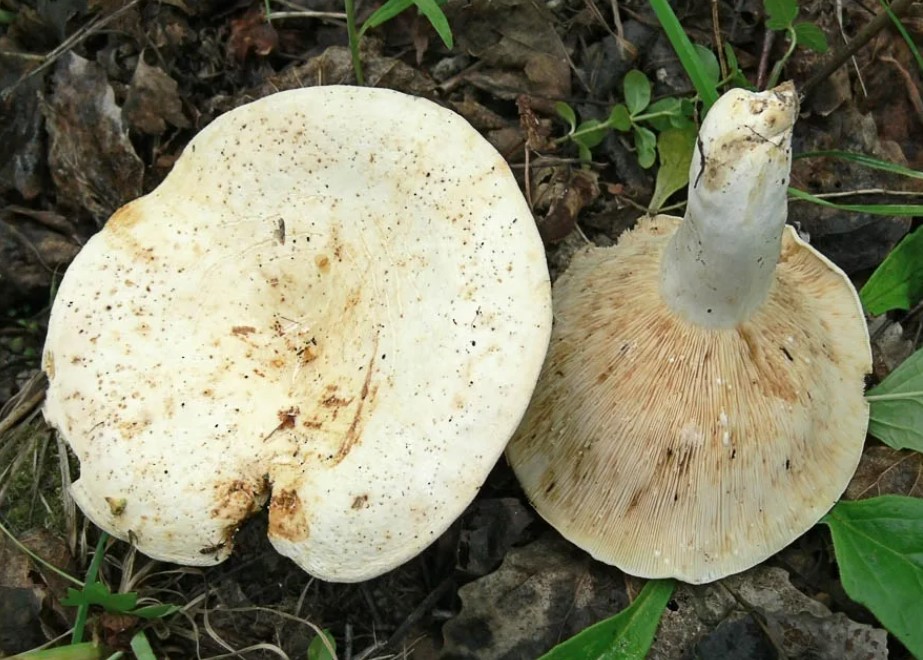
Lactarius thejogalus, Lactarius tábidus
| View | Description | Edibility | Collection deadlines | Where to look |
| Spotted milkweed (Lactarius thejogalus)
Stunted milkweed (Lactarius tabidus) |
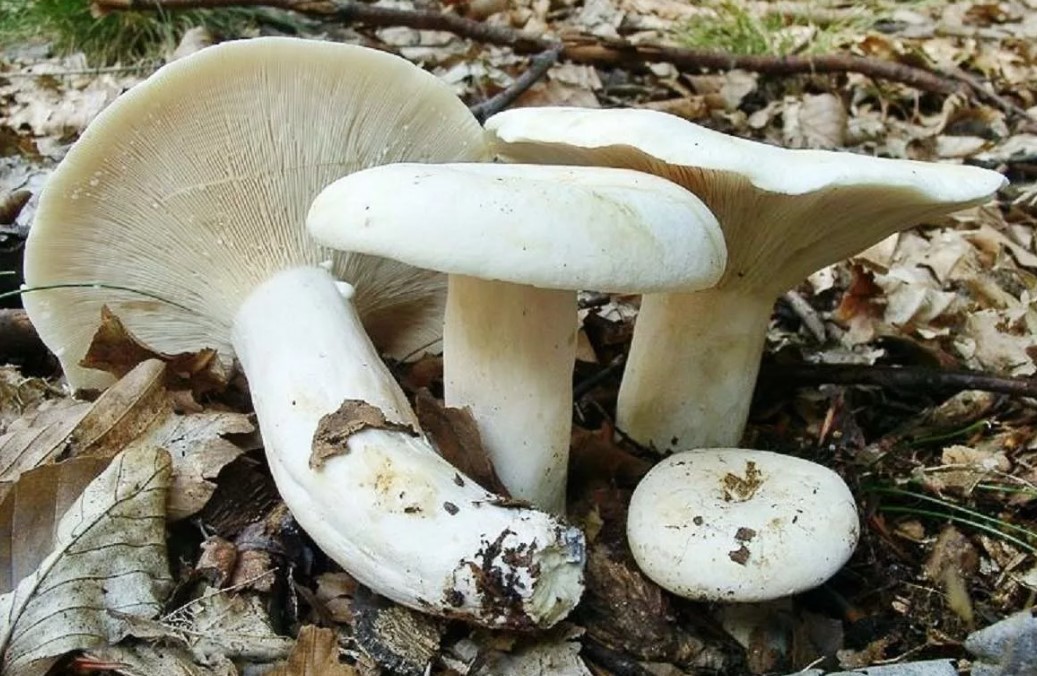
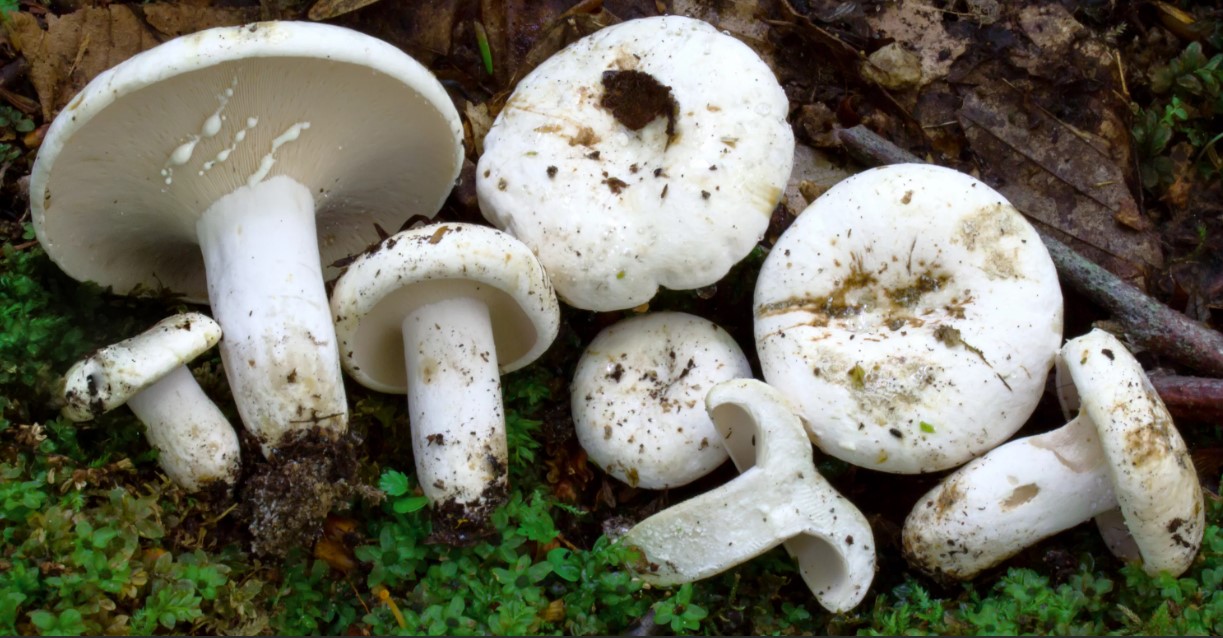
The cap is up to 8 cm in diameter, funnel-shaped in mature mushrooms. The color is pinkish-brown, with brownish spots on the surface. The stem is slightly lighter, up to 8 cm in height. | Conditionally edible.
The Northerners consider it edible. |
July-September. | Mixed and coniferous forests. |
Photo gallery of the sulphur-milky milkcap, the stunted milkcap
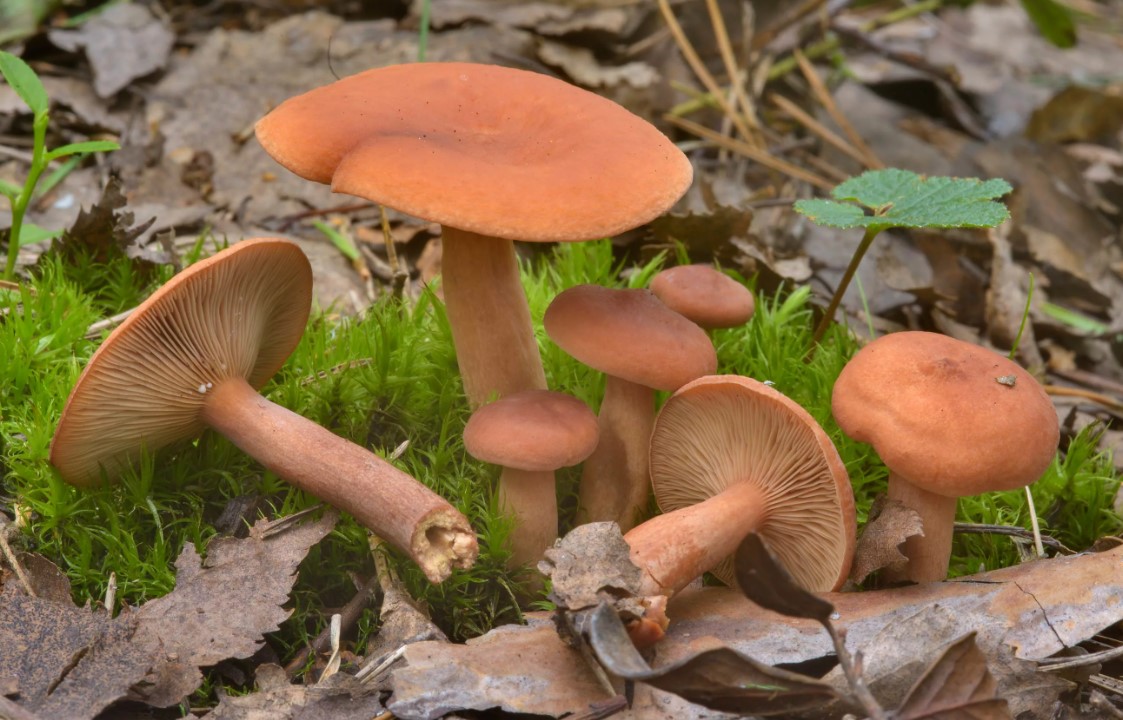
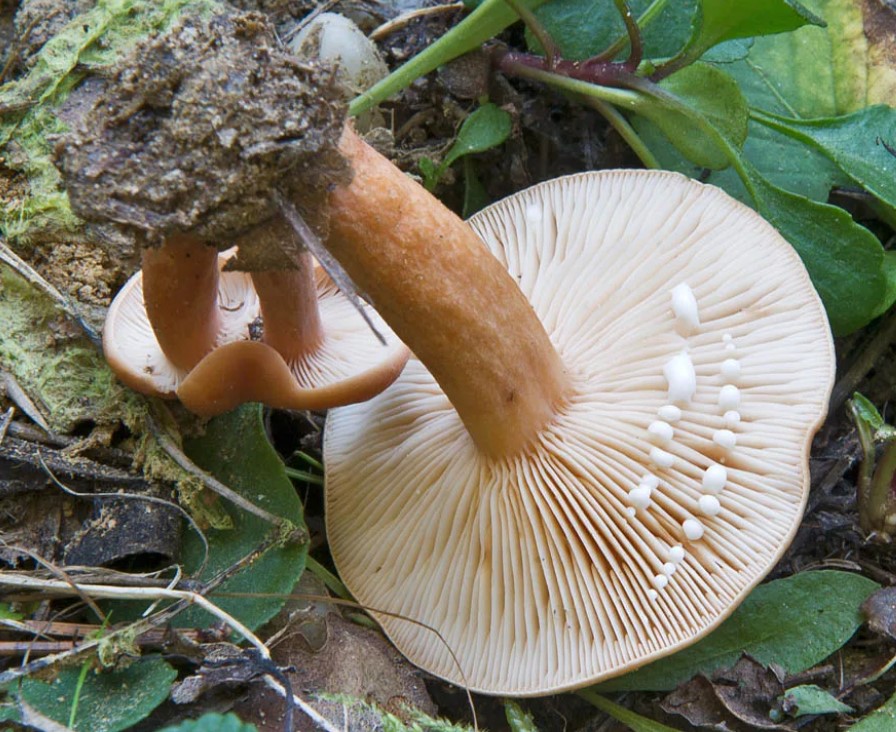
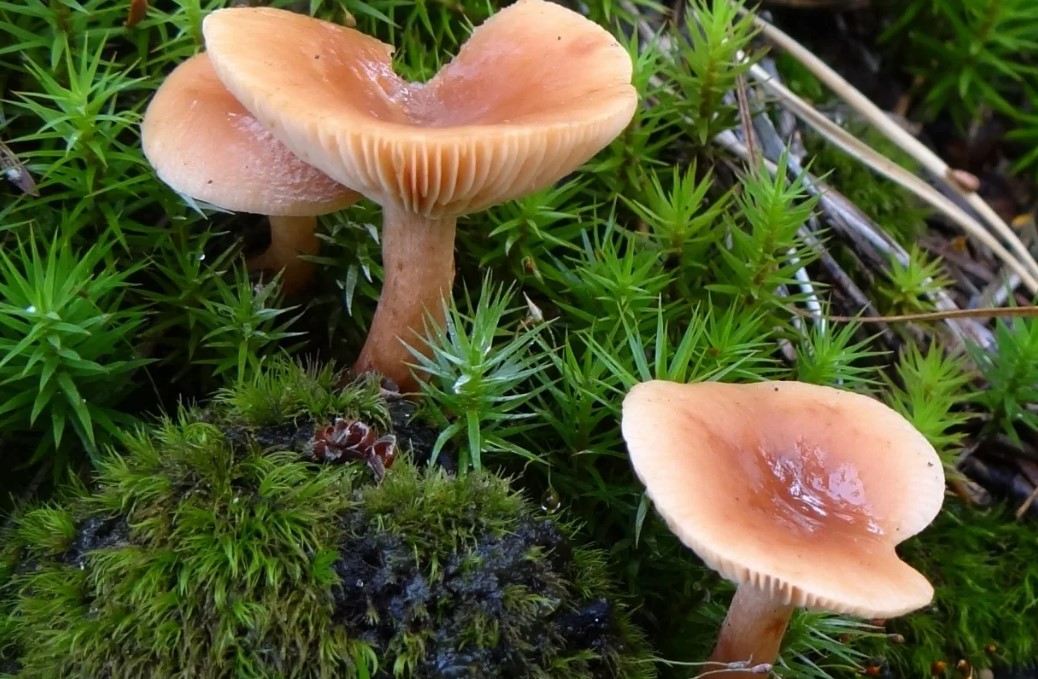
Sweet milk mushroom, red milk mushroom (Lactarius subdulcis)
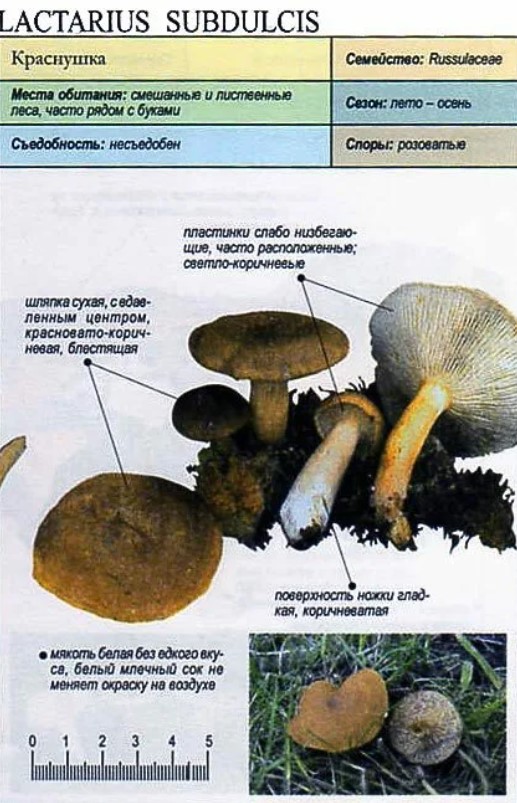
| View | Description | Edibility | Collection deadlines | Where to look |
| Sweet milk mushroom, red milk mushroom (Lactarius subdulcis) | The cap reaches 8 cm in diameter. The color is rusty-red, with smooth edges that may curl slightly inward. The milky sap turns from white to translucent. The stem is up to 5 cm tall, slightly lighter in color than the cap. | Conditionally edible. Often considered inedible. But, according to mushroom pickers, small specimens are quite edible. |
Mid-July-September. | Grows on moss substrates in mixed and broadleaf forests. |
Photo gallery of sweet milk mushrooms
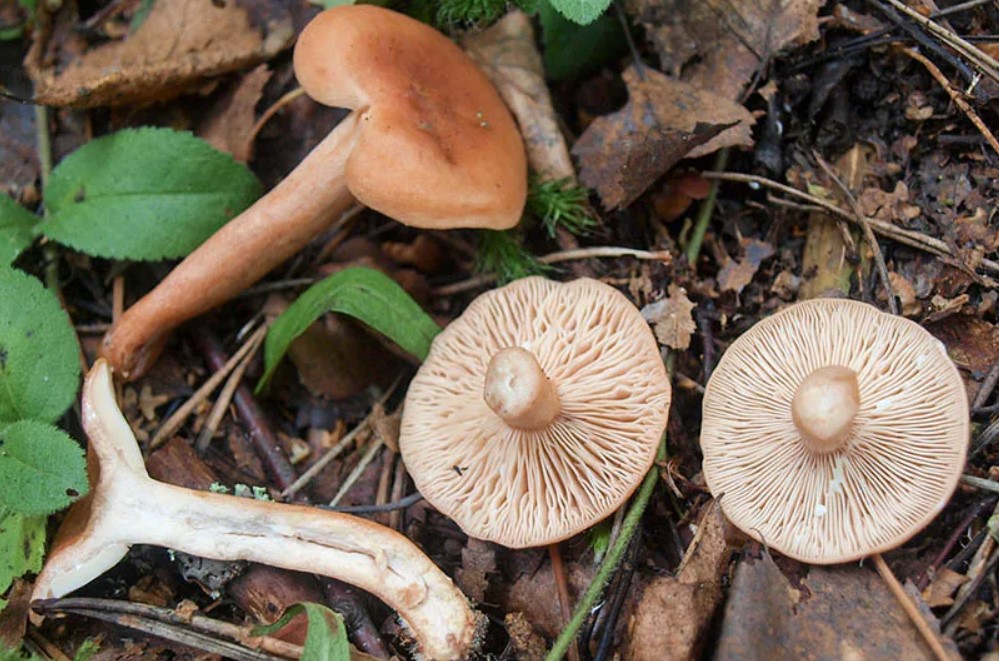
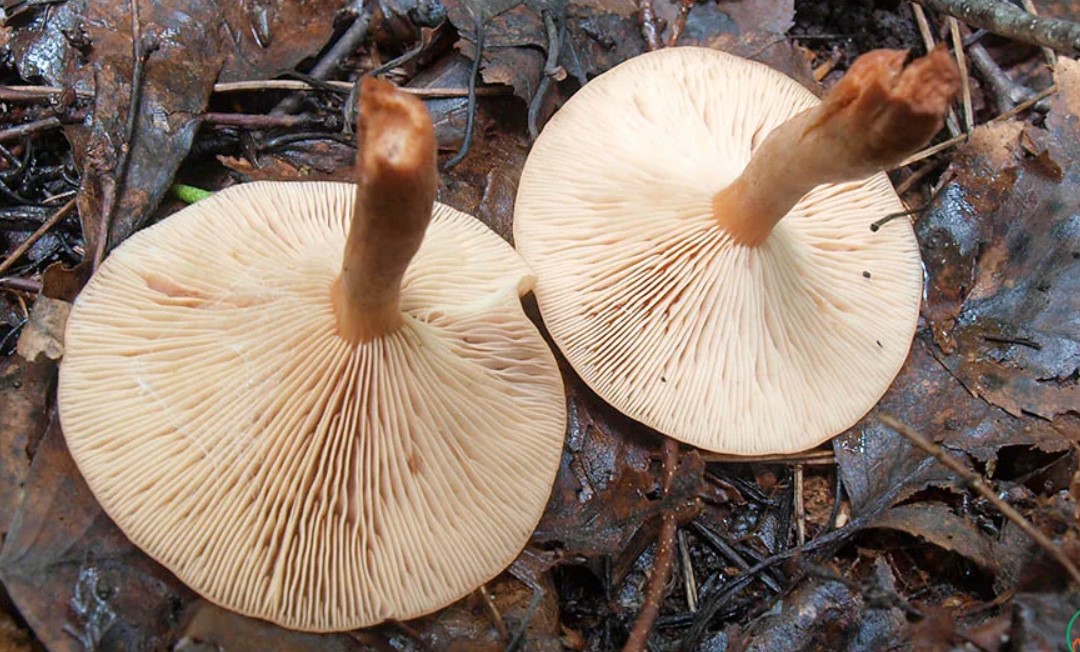
Spiny milkweed (Lactarius spinosulus)
| View | Description | Edibility | Collection deadlines | Where to look |
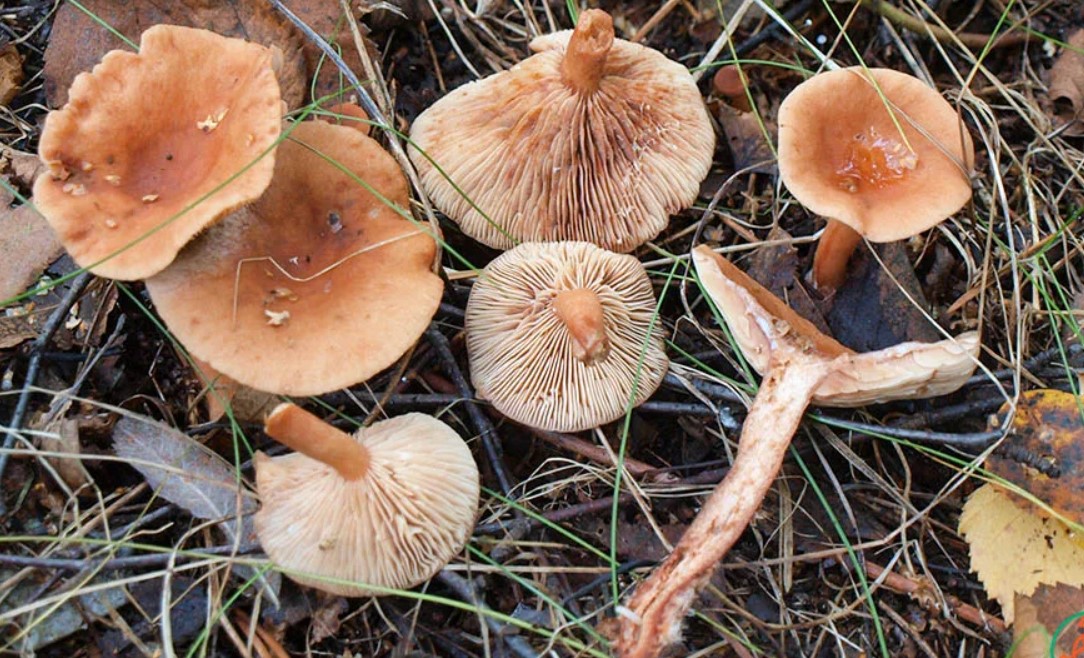
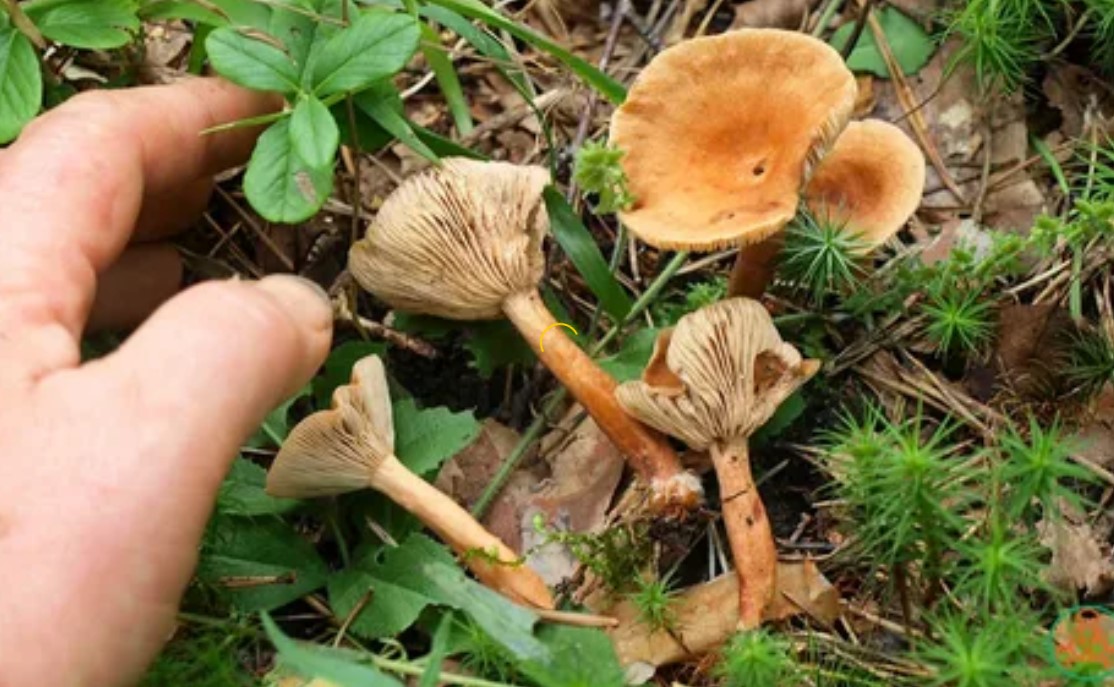
| Spiny milkweed (Lactarius spinosulus) | The cap is 2-5 cm in diameter and spreads out in mature mushrooms. The edges are pubescent and uneven. The milky sap is white. The stem is up to 5 cm tall. | According to some sources, it is inedible. According to others, it is conditionally edible. Mushroom pickers eat them salted. |
August-September. | Lactarius spinosulus grows near birch trees in mixed and deciduous forests. |
Photo gallery of the spiny milkweed
Blue breast (Lactifluus glaucescens)
| View | Description | Edibility | Collection deadlines | Where to look |
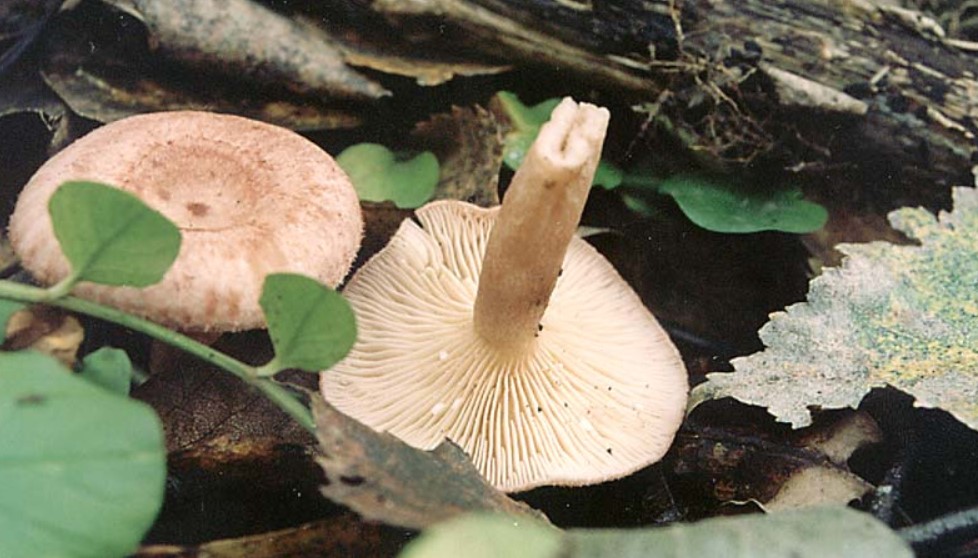
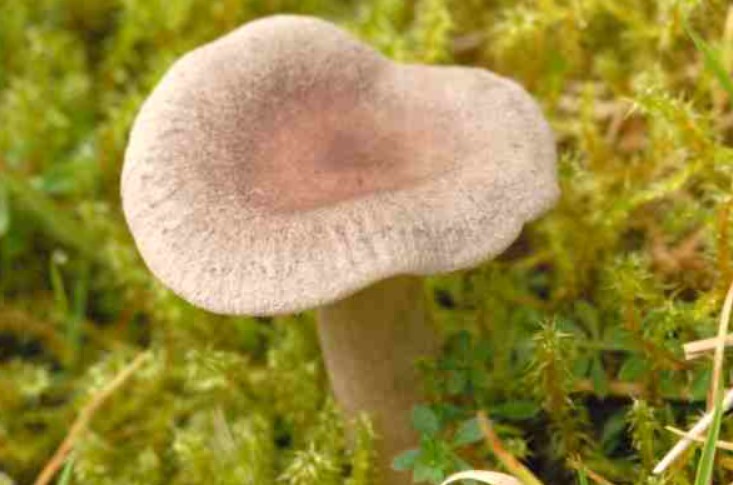
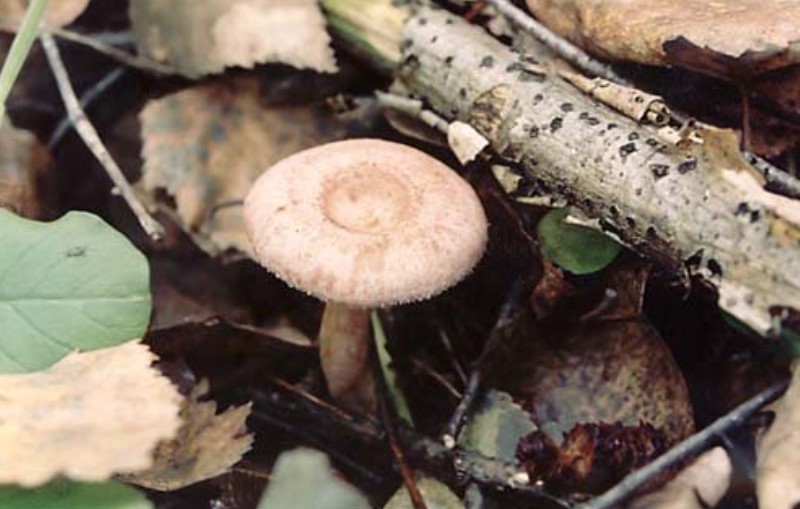
| Blue breast (Lactifluus glaucescens) | The cap is approximately 6-12 cm in diameter, smooth on the surface, and white in color, developing ochre spots with age. The stem is up to 9 cm tall and tapers at the base. The flesh is dense; when cut, the milky sap coagulates, turning green instead of white. | Edible.
Some sources classify it as conditionally edible. Requires careful preparation, including soaking in a salt solution. It is recommended to add spices during cooking. |
July-September. | Deciduous and coniferous forests. |
Photo gallery of bluish milk mushroom
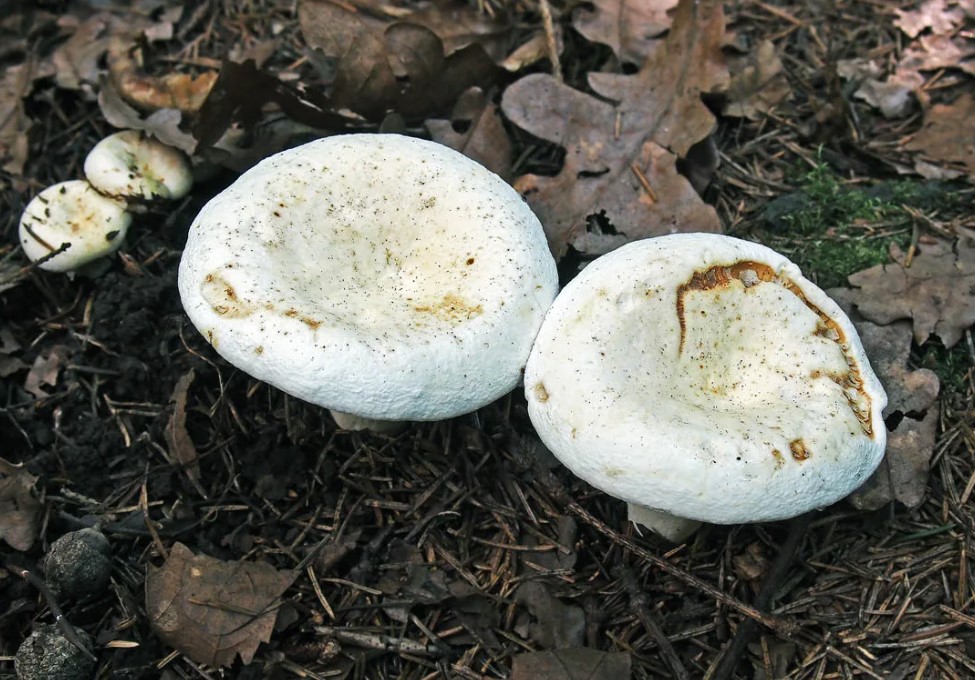
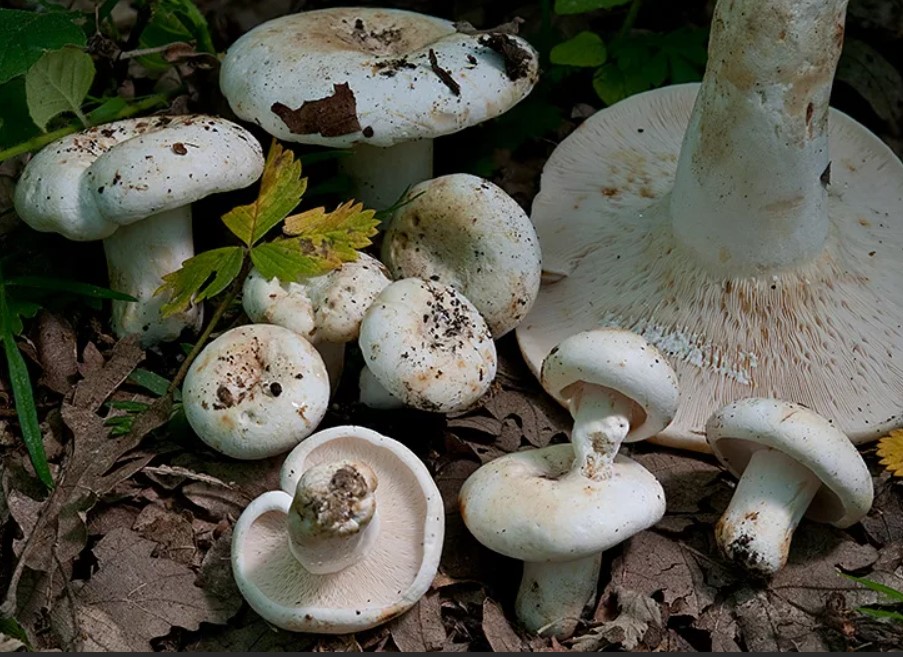
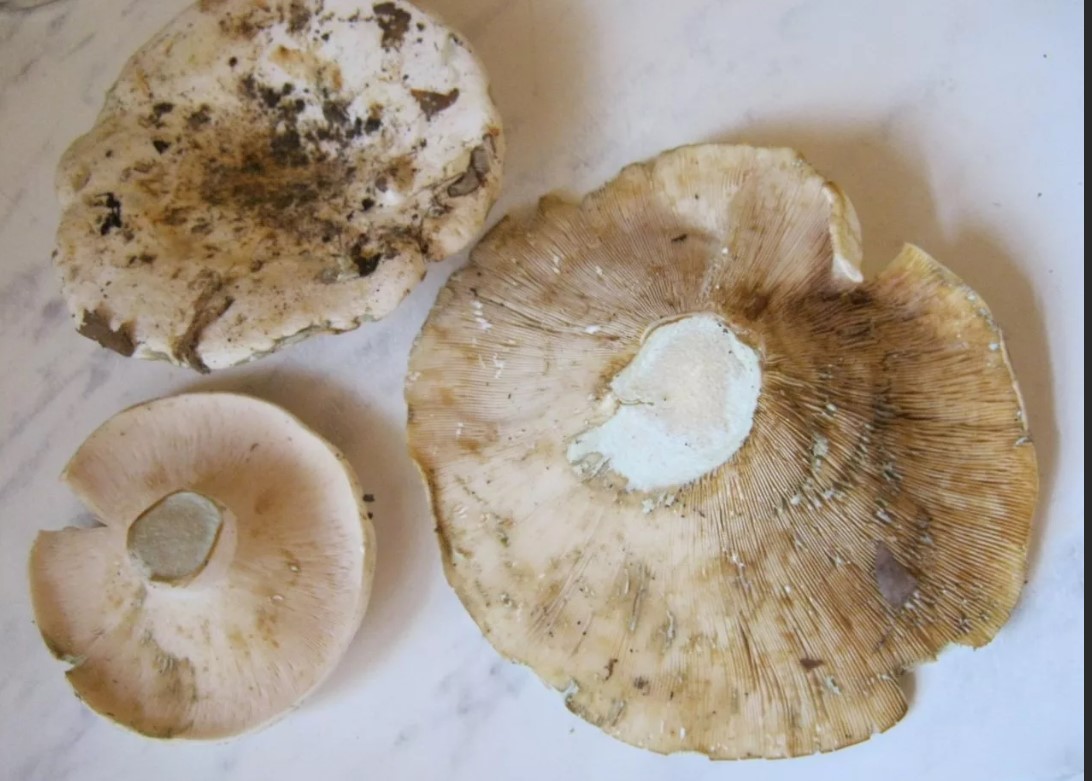
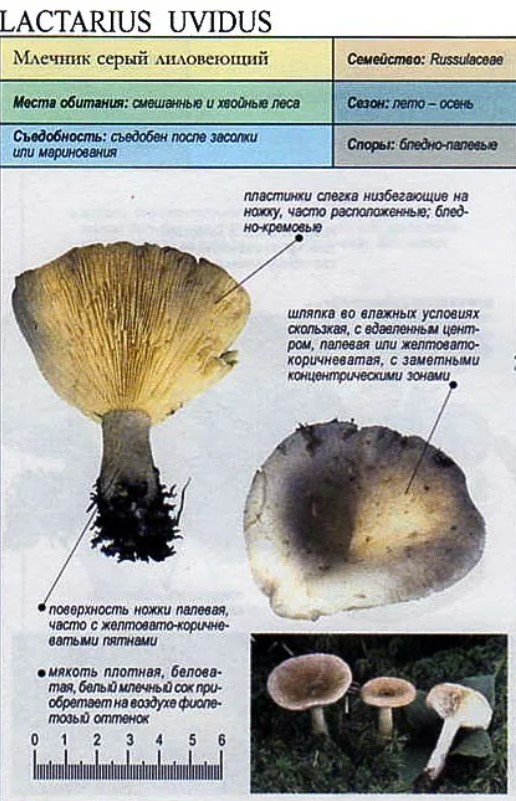
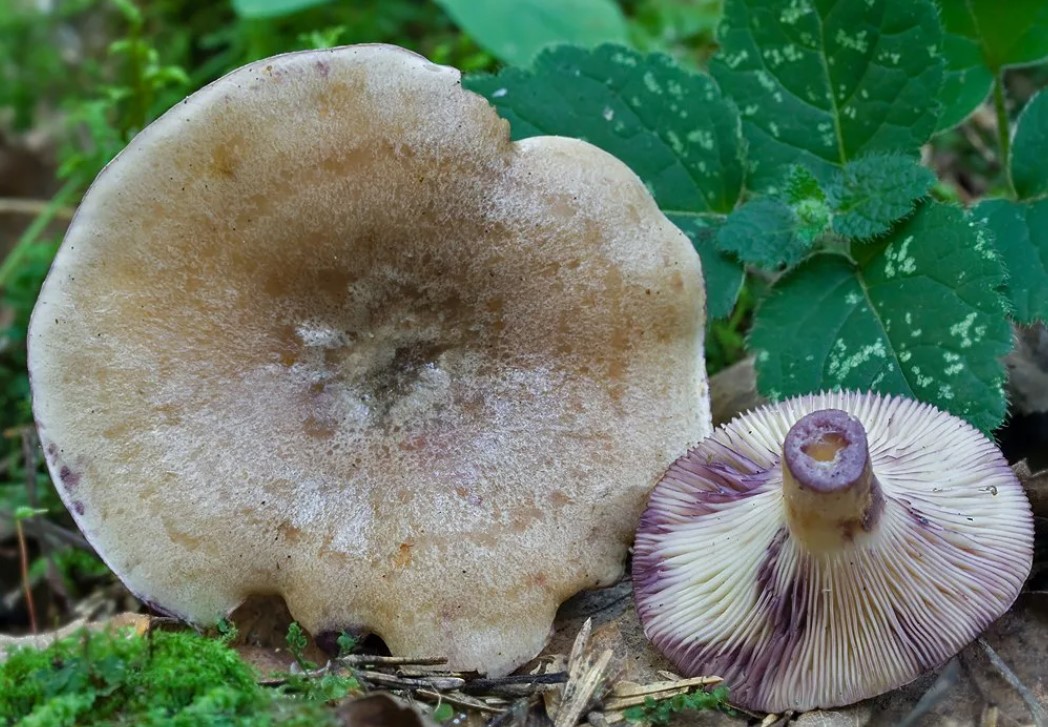
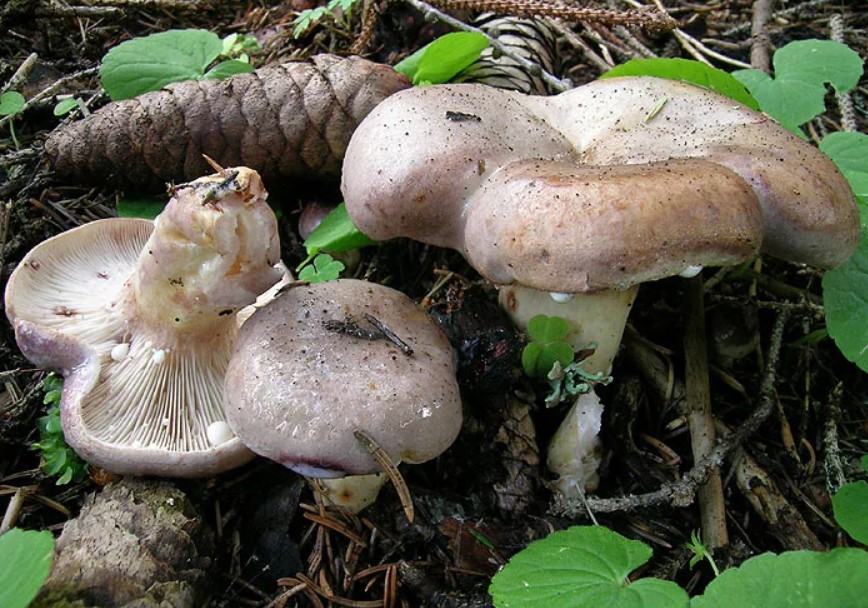
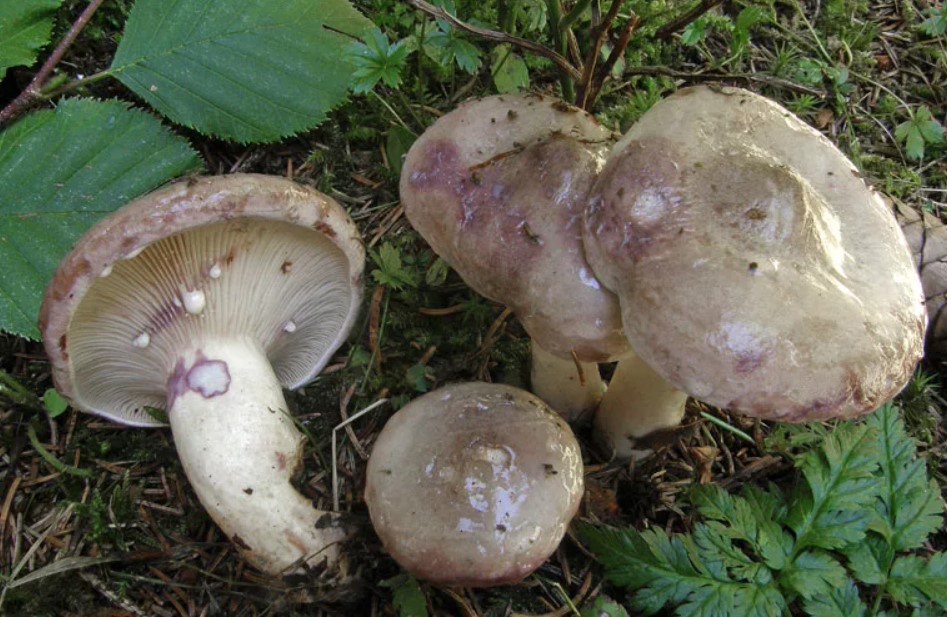
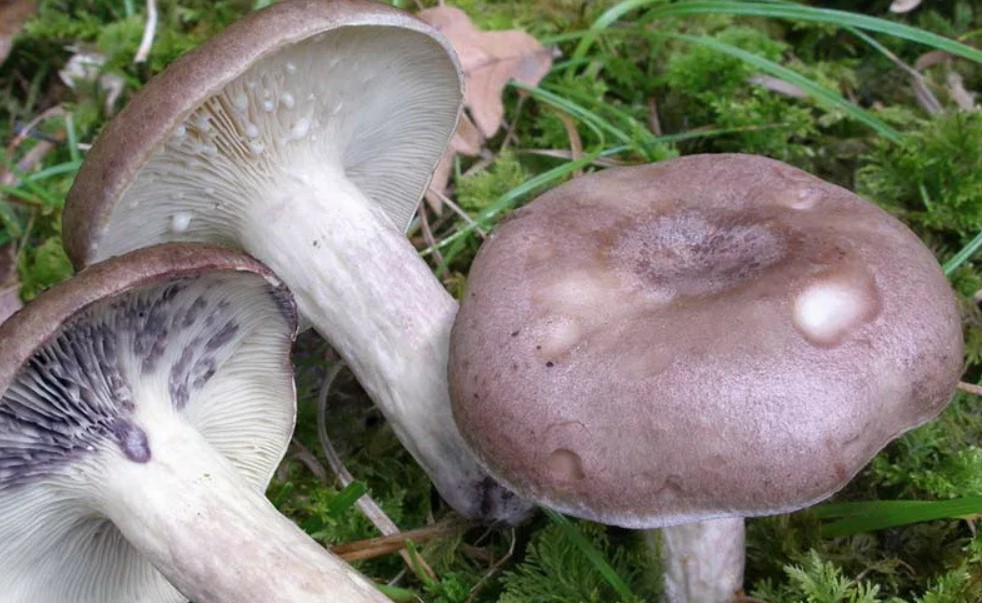
The grey lilac milk cap, the wet milk cap (Lactarius uvidus)
| View | Description | Edibility | Collection deadlines | Where to look |
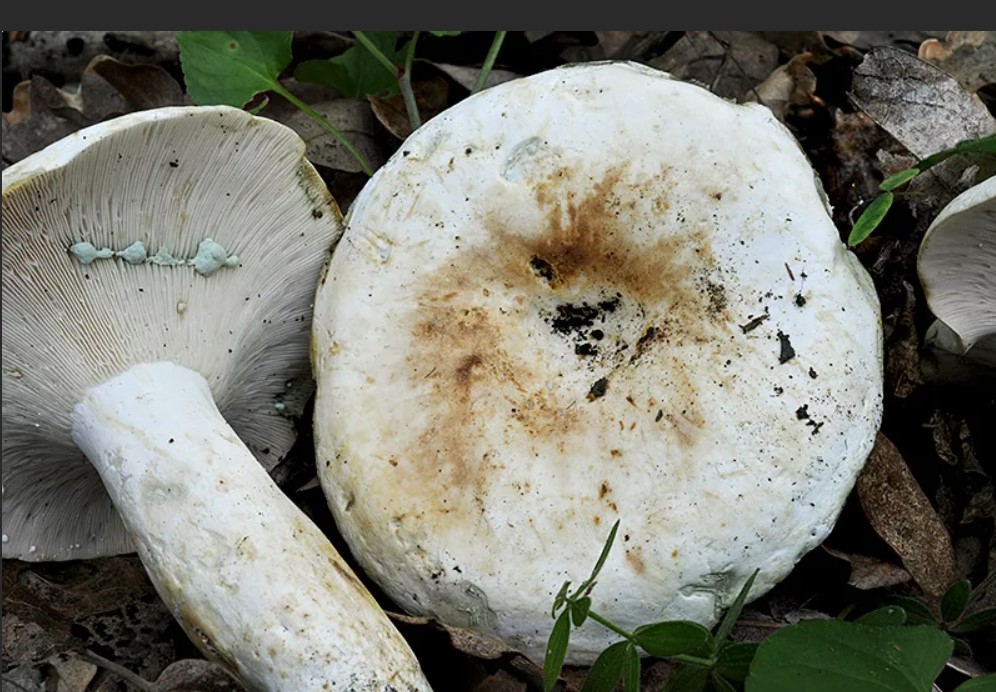
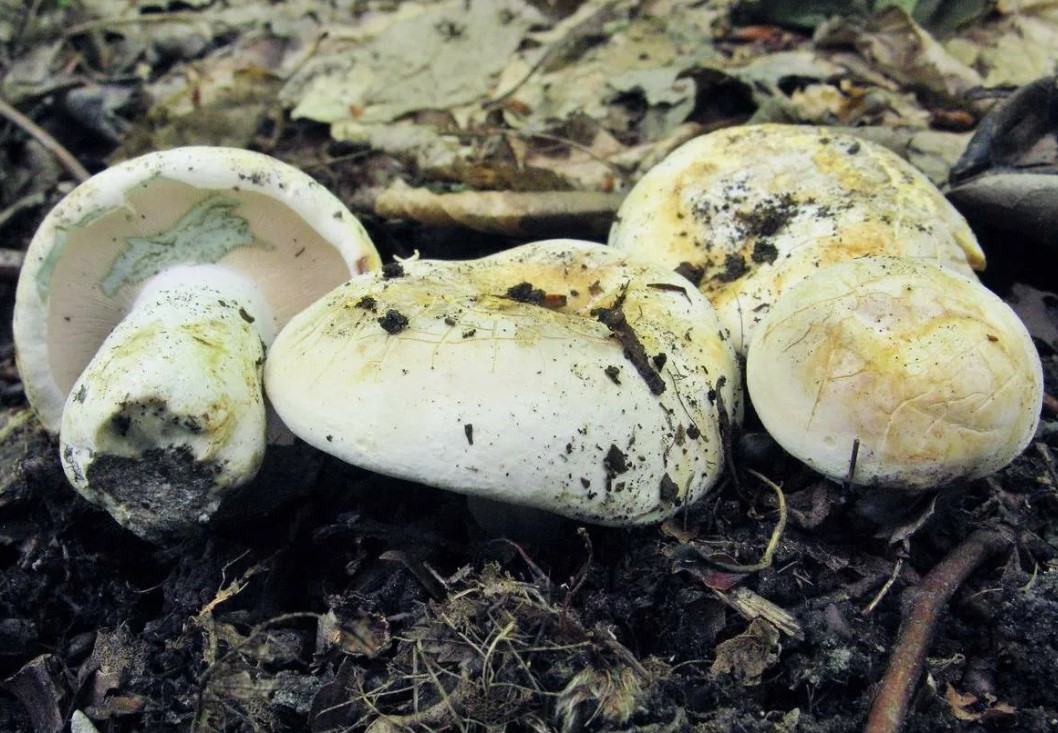
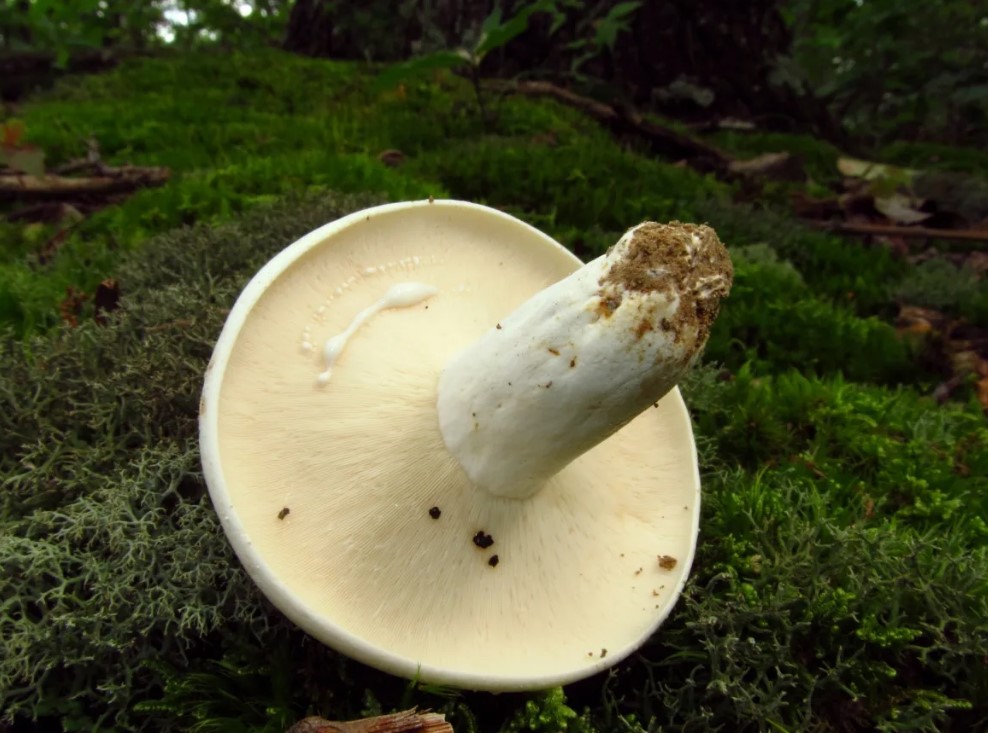
| The grey lilac milk cap, the wet milk cap (Lactarius uvidus) | The cap is 4 to 8 cm in diameter, initially convex, then spreading. The margins are curled and slightly pubescent. The color is grayish, with a purple tint. The stem is up to 7 cm tall. The surface is sticky. It contains a plentiful milky sap, which turns purple when exposed to air. | It is considered conditionally edible. But since it has been little studied, there is a possibility that it is slightly poisonous, so it is not recommended to use it as food. |
August-September. | Grows in mixed forests under birches and willows. |
Photo gallery of wet milkweed
Resin-black breast (Lactarius picinus)
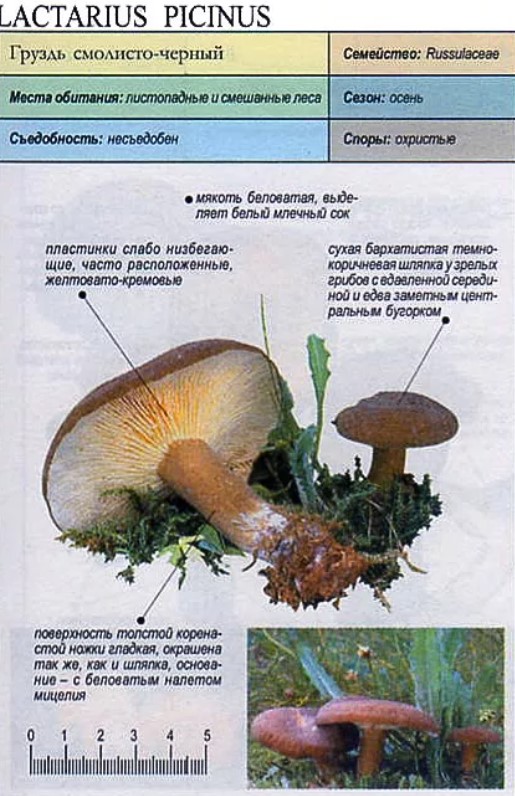
| View | Description | Edibility | Collection deadlines | Where to look |
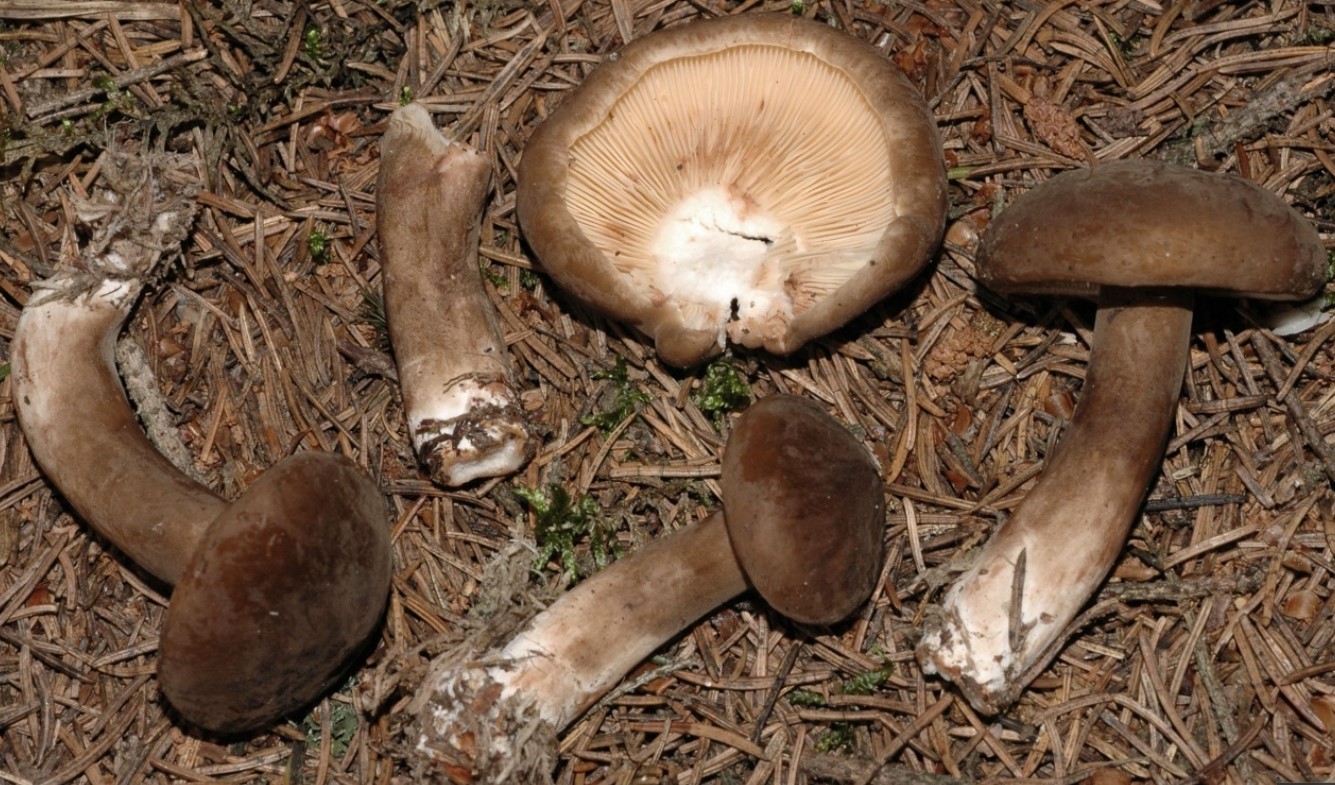
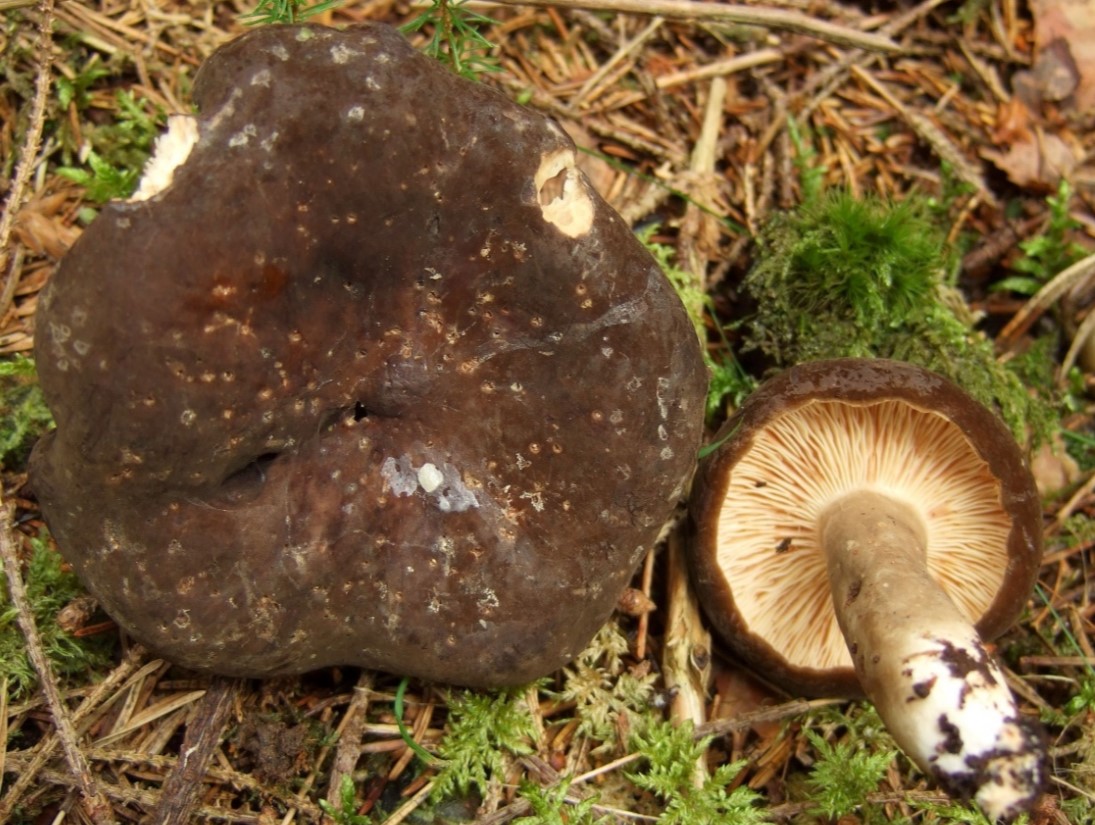
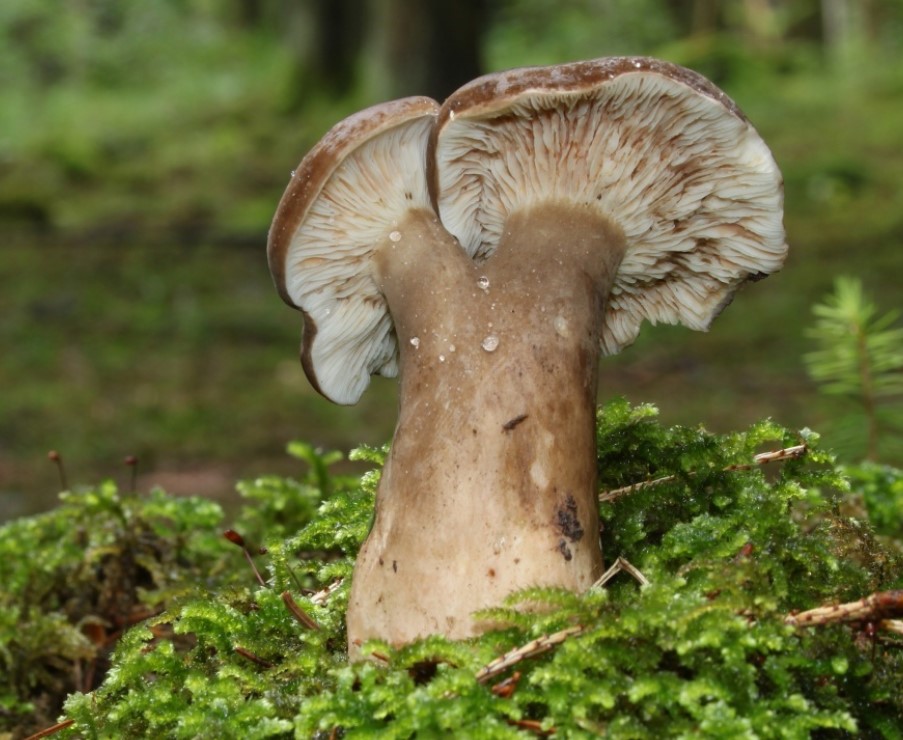
| Resin-black breast (Lactarius picinus) | The cap is 3 to 8 cm in diameter, with a tubercle in the center that later develops into a depression. The color is dark brown or fulvous. The stem is up to 8 cm tall, with a white base and the rest of the stem matching the cap's color. The milky sap turns reddish when cut. | Conditionally edible. Different sources consider it to be either inedible or edible. |
August-September. | Coniferous and pine forests. |
Photo gallery of the resinous black milk cap
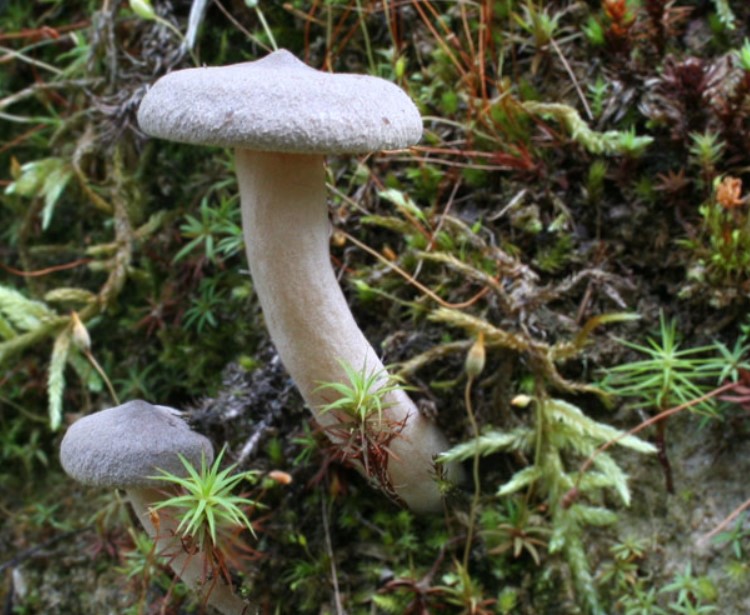
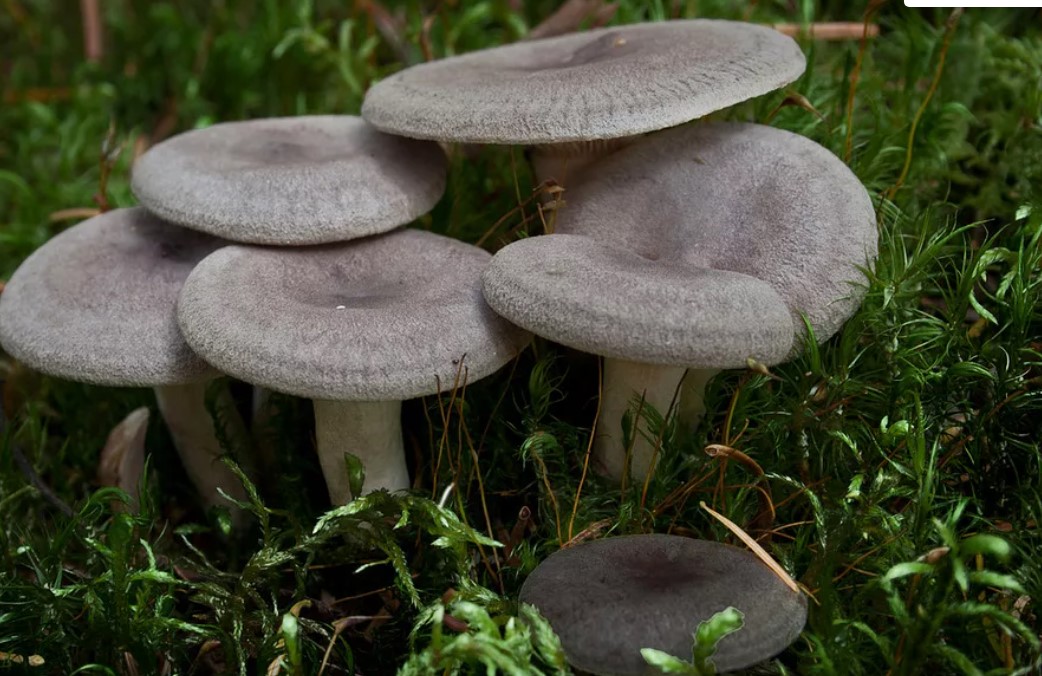
Milk cap (Lactarius mammosus)
| View | Description | Edibility | Collection deadlines | Where to look |
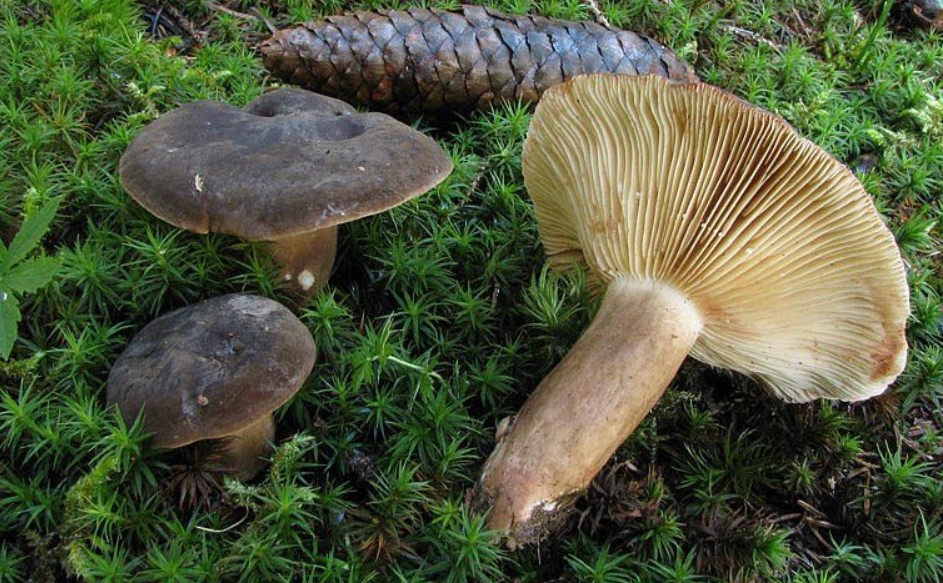
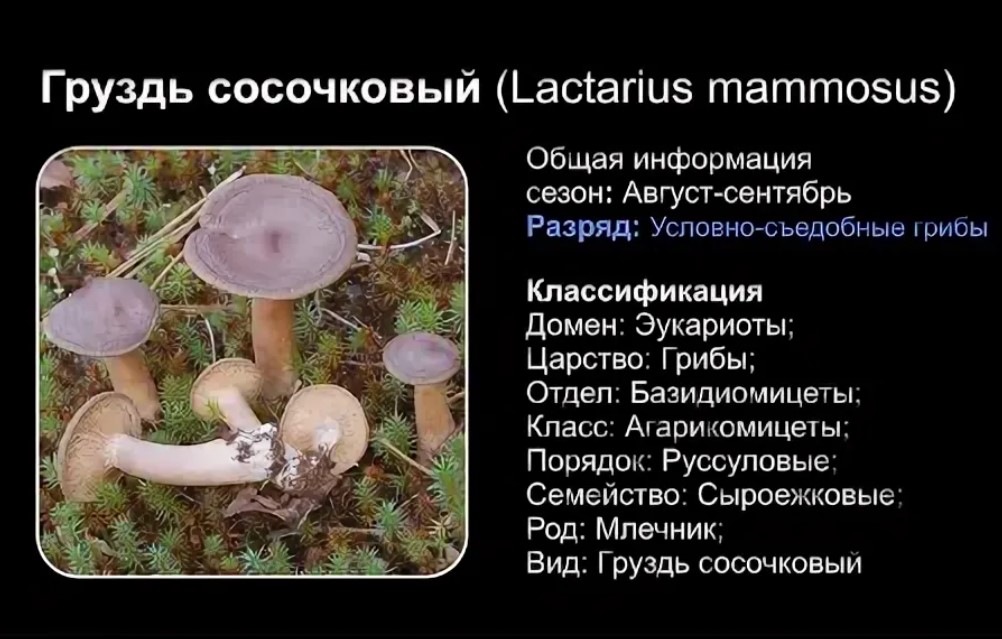
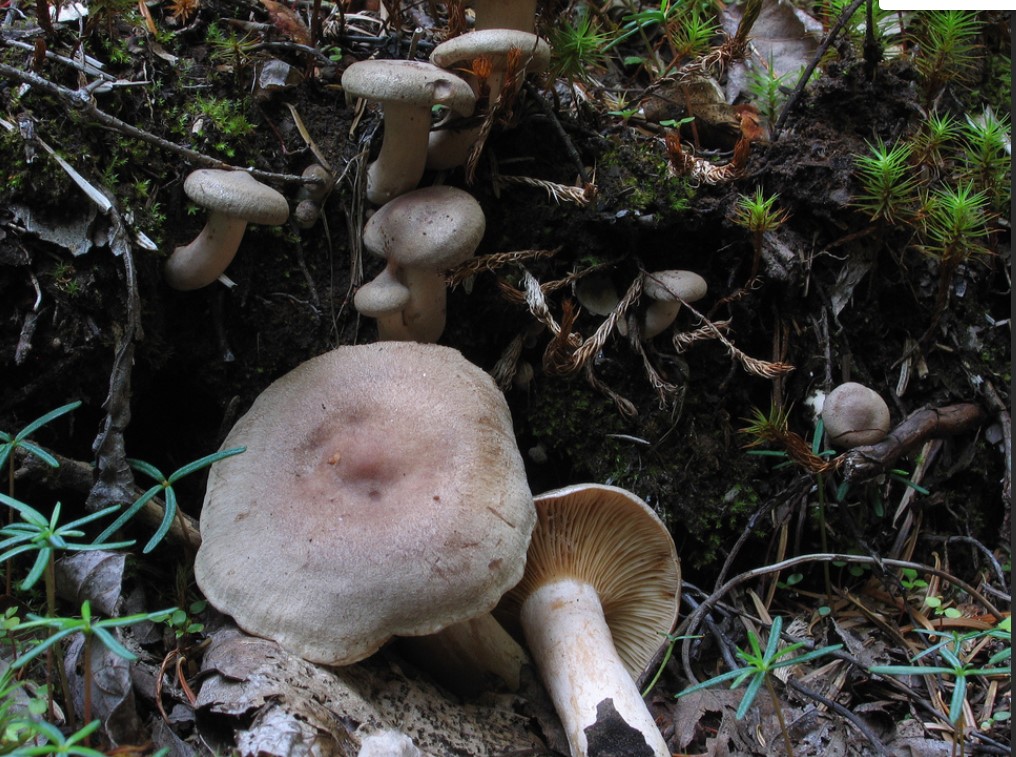
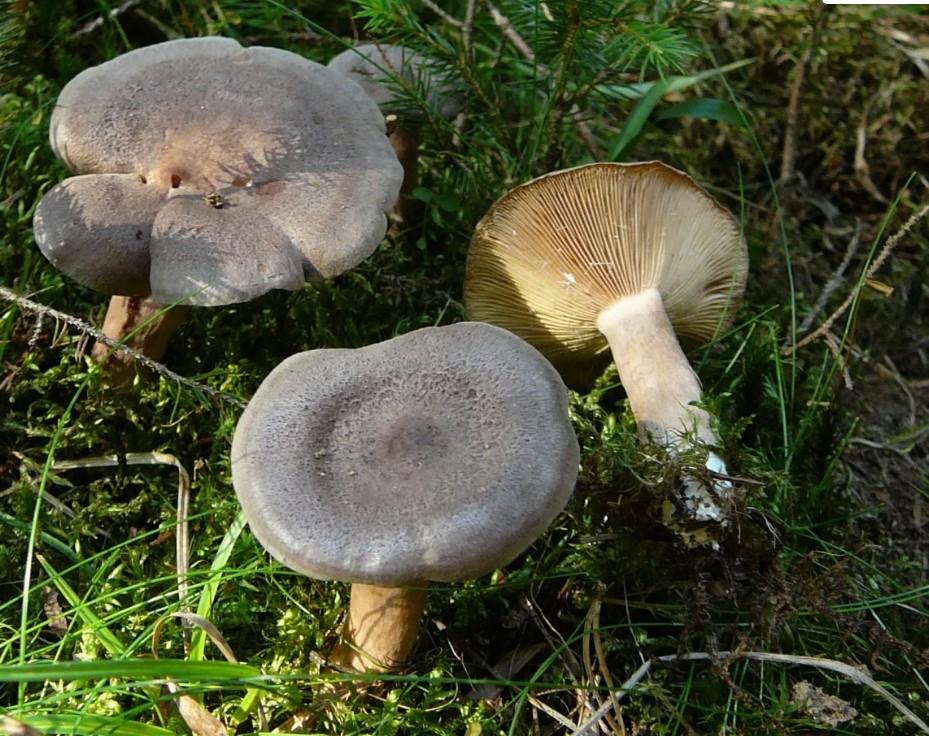
| Milk cap (Lactarius mammosus) | The cap ranges from 3 to 9 cm in diameter, is spreading, and has a tubercle in the center. The color is bluish-gray or grayish-brown. The margins are initially curled inward, then become spreading. The stem is up to 7 cm long. The milky sap is white, present in small quantities, and does not change color when exposed to air. | Conditionally edible. In foreign sources it is considered inedible. |
July-September | It grows near birch trees |
Photo gallery of milk mushrooms
Red pine mushroom (Lactarius semisanguifluus)
| View | Description | Edibility | Collection deadlines | Where to look |
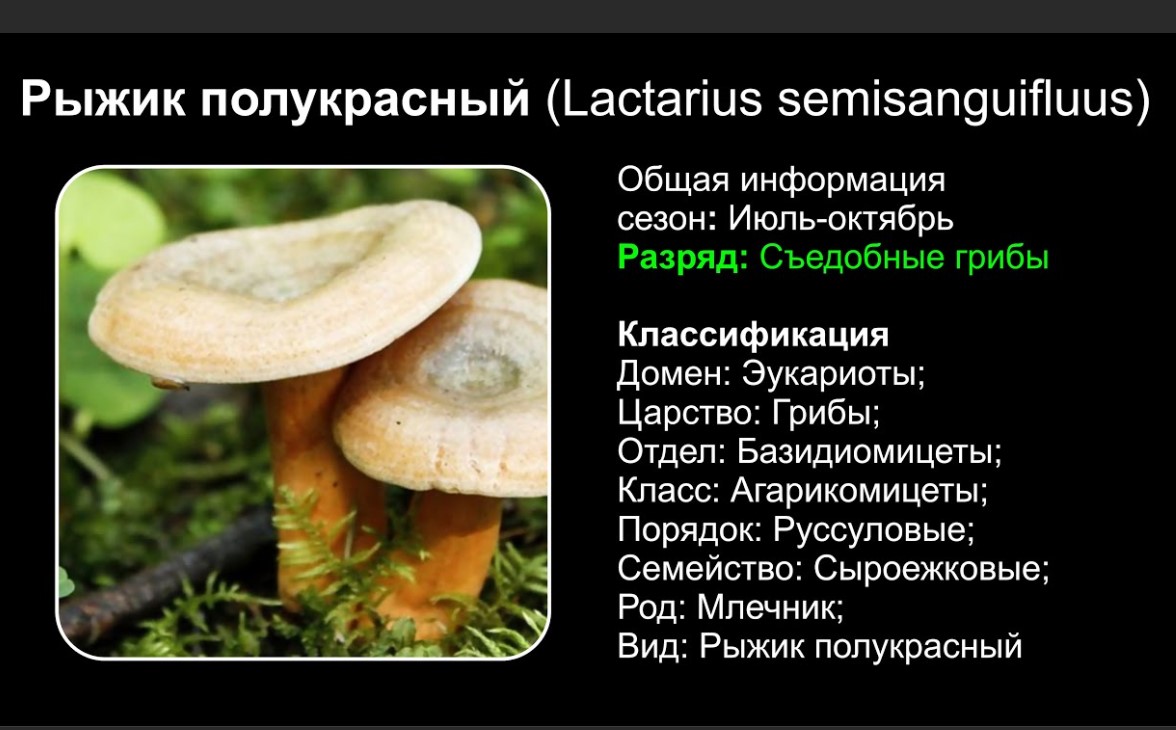
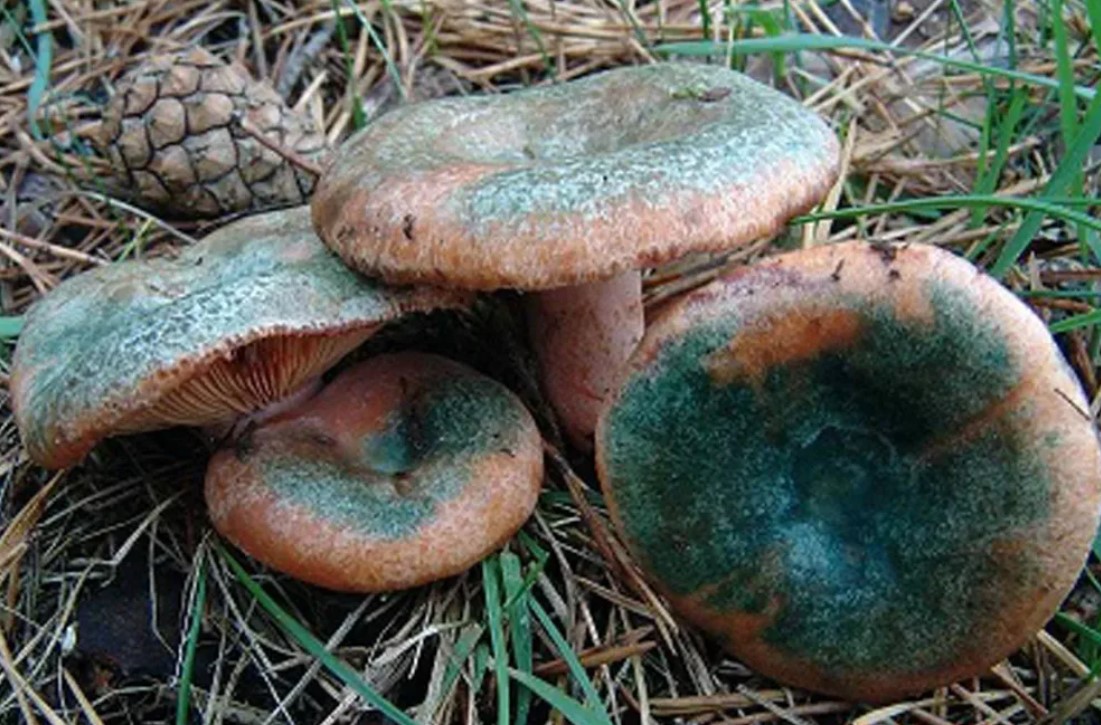
| Half-red saffron milk cap (Lactarius semisanguifluus) | The cap diameter ranges from 3 to 8 cm, with margins initially curled. These straighten as they grow. The cap is orange or ochre in color. Concentric green zones appear on the surface. The skin is dry. When damaged, the flesh turns red and then green. The stem is up to 6 cm tall. | Edible. In some sources it is called conditionally edible. In Italy it is considered a mushroom with low taste qualities. It is recommended to boil for at least 30 minutes, then rinse. In Ukraine the decoction is not used. |
July-October. | Grows near pine trees. |
Photo gallery of the red saffron milk cap
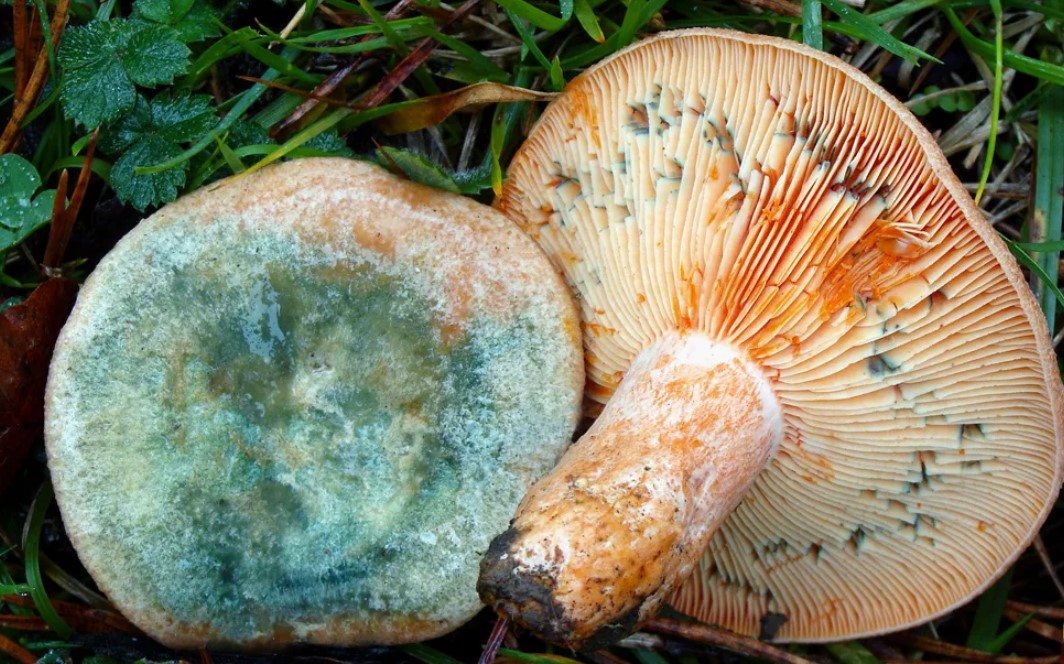
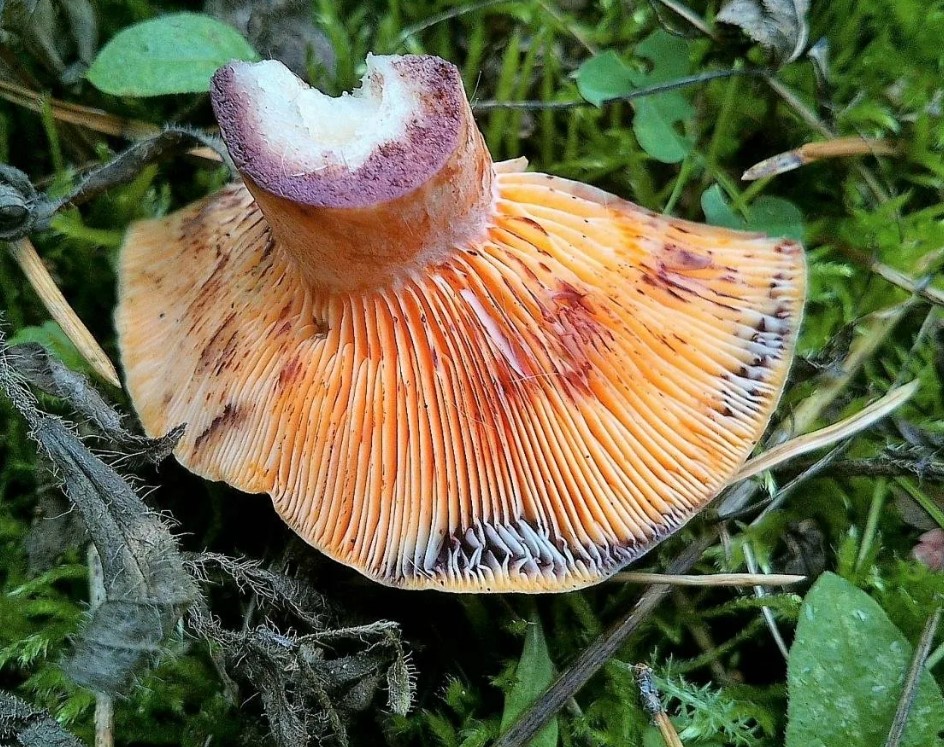
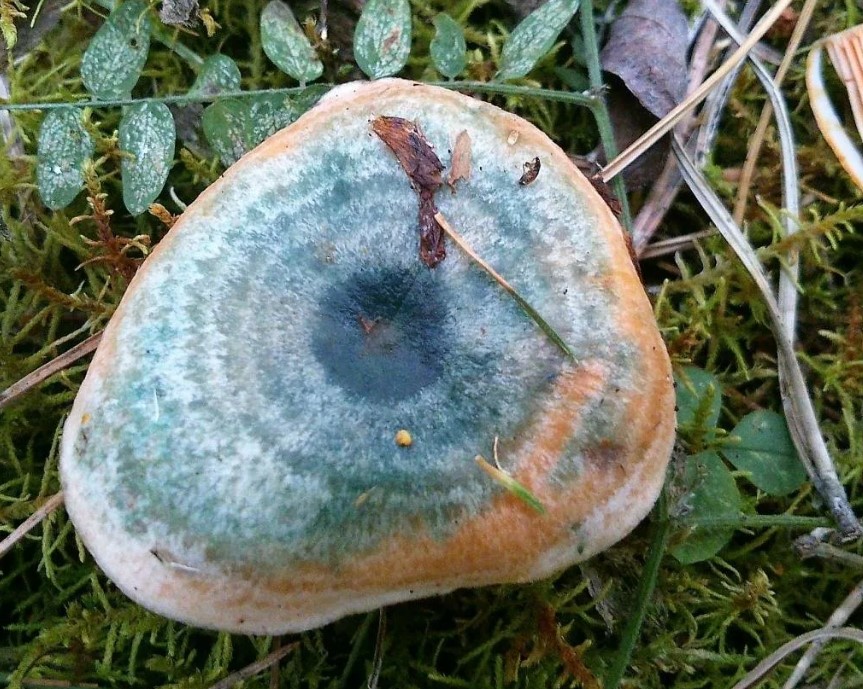
Spruce saffron milk cap (Lactarius deterrimus)
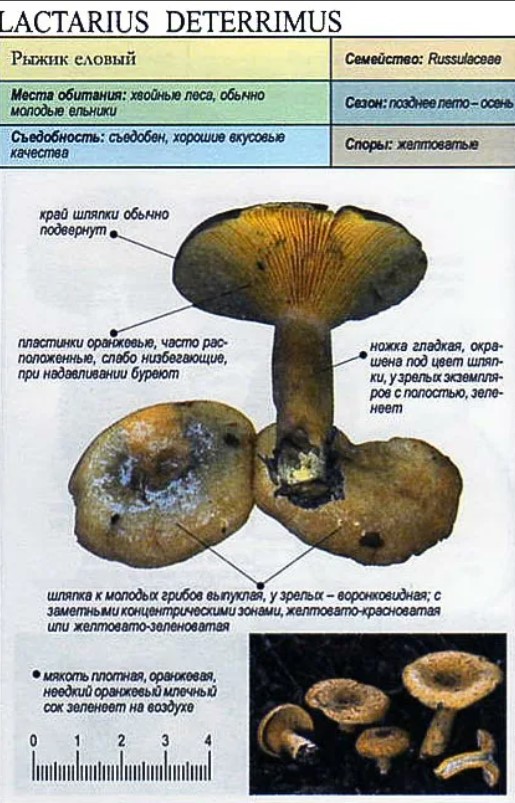
| View | Description | Edibility | Collection deadlines | Where to look |
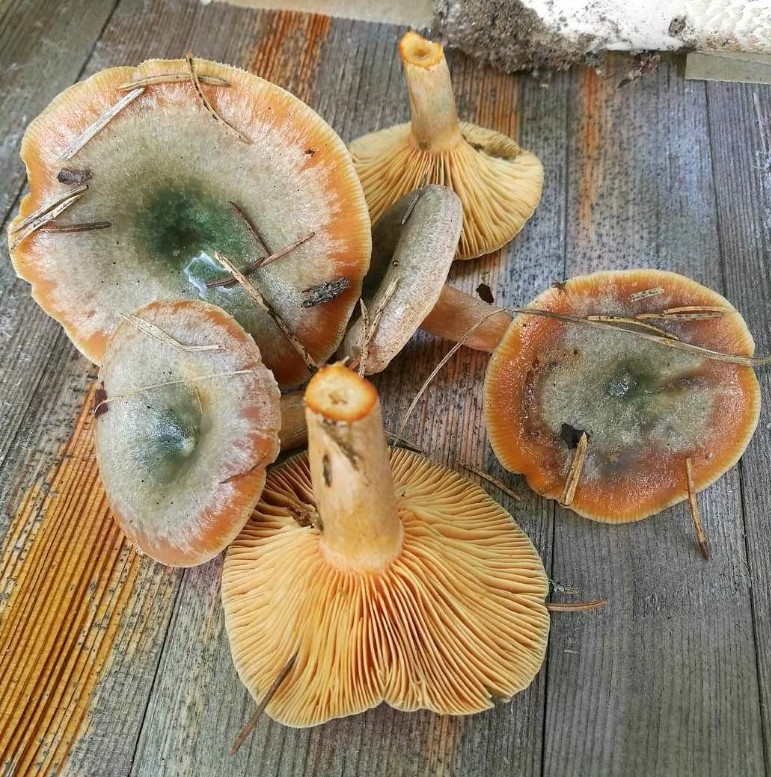
| Spruce saffron milk cap (Lactarius deterrimus) | The cap is up to 8 cm in diameter and initially convex. With age, it becomes concave, with smooth edges. The skin is pale pink or orange. The stem is about 6 cm long. The flesh turns green when damaged. | In Russia, it is considered an edible mushroom. It is used for boiling, frying, pickling, and marinating. It turns green when cooked. Urine turns red after consumption. Abroad it is positioned as an inedible, bitter mushroom. |
Summer-autumn. | Spruce forests. |
Photo gallery of spruce saffron milk cap
Composition and caloric content of milk mushrooms
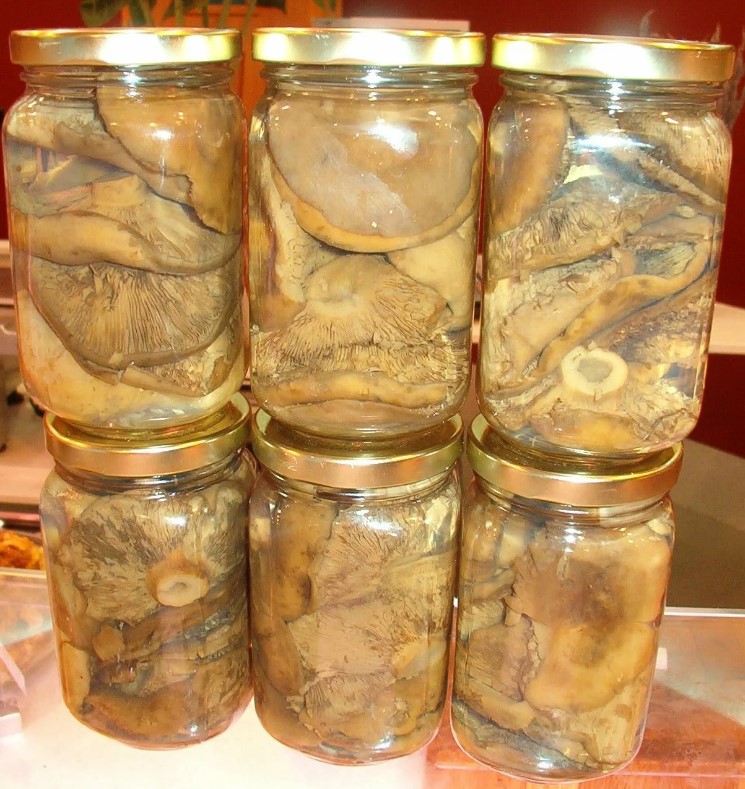
Even our ancestors considered milk mushrooms to be very beneficial and healing. Their benefits are especially enhanced after pickling, as this is when they produce enzymes important for the gastrointestinal tract.
The calorie content of 100 grams of milk mushrooms is low – 17 kcal. In addition, this amount contains:
- 1.3 g carbohydrates;
- 1.2 g protein;
- 0.8 g fat.
Among the most important micro- and macroelements found in milk mushrooms, the following can be highlighted:
- Copper.
- Vitamins B, D, C, PP.
- Lipids.
- Phosphorus.
- Styrene.
- Tryptophan.
- Fiber.
Benefits of milk mushrooms
When consumed in moderation, milk mushrooms have a beneficial effect on the human body:
- Strengthen the immune system due to the high content of vitamin C.
- They normalize the nervous system thanks to B vitamins and help cope with stressful situations.
- They regulate blood glucose levels, preventing sugar from rising, so the food is suitable for people suffering from diabetes.
- Prevention of intestinal problems, in particular constipation, thanks to the fiber contained in mushrooms.
- Helps in the functioning of the bile ducts.
- They help remove sand and stones from the kidneys and improve the functioning of the genitourinary system.
- Bactericidal action against tuberculosis and lung diseases.
- Anti-inflammatory effect due to protein content.
- Improve skin and bone health with vitamin D.
Potential harm of milk mushrooms + contraindications
Despite their benefits, milk mushrooms can be harmful to humans. This primarily concerns excessive consumption. It is recommended to eat mushrooms no more than once every 5-7 days. They are strictly contraindicated for the following groups of people:
- For pregnant and lactating women.
- For children under 10 years old.
- People with chronic gastrointestinal diseases, pancreatitis, and cardiovascular disorders.
Food allergies and individual intolerance to mushrooms are also contraindications. They can sometimes cause poisoning. This may be due to:
- choosing an inedible species.
- consumption of stale product.
- insufficient soaking time.
How to properly pick milk mushrooms
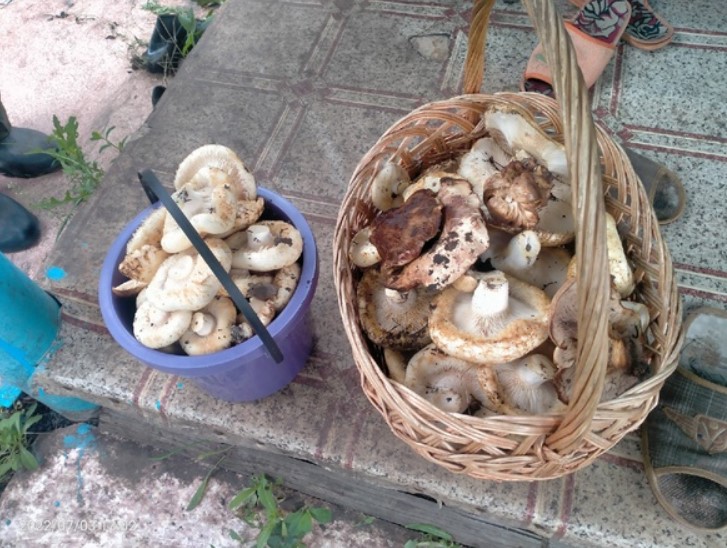
Picking milk mushrooms isn't difficult at all if you know the basic rules for mushroom picking:
- You shouldn't pick mushrooms that grow along roadsides or in polluted areas, as they easily absorb existing toxins.
- You can go looking for milk mushrooms from July to October, but the peak of fruiting occurs in August.
How to properly store milk mushrooms
Washed milk mushrooms and soak them in cold water for 2-4 days. Fresh mushrooms should be processed immediately. They can be stored in the refrigerator, but no longer than 15 hours.
Mushrooms are typically stored salted. However, they can also be boiled, fried, and frozen. Once cooked, the mushrooms are placed in separate containers and placed in the freezer. It's important to avoid refreezing them. At -14°C (-14°F), they will keep for about four months, and at -8°C (-8°F), the shelf life will be extended by another couple of months.
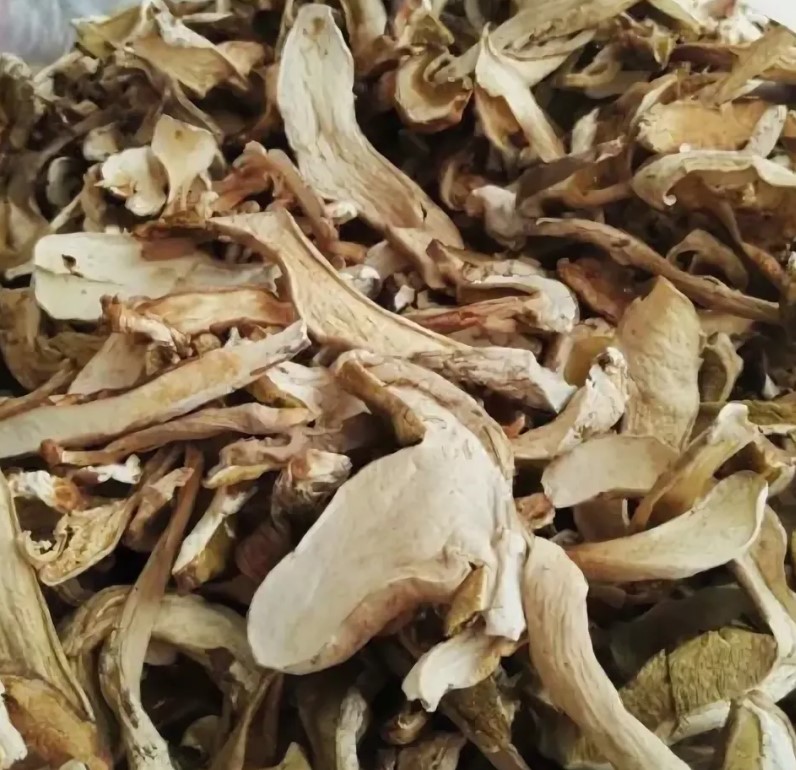
Drying mushrooms is impractical, as the fragile flesh will likely crumble into small pieces. Only large mushrooms that have been soaked in water for at least 72 hours should be used for this purpose. They are laid out on baking paper and placed in an open oven at 50 degrees Celsius (122 degrees Fahrenheit). As the mushrooms dry out, increase the temperature to 70 degrees Celsius (158 degrees Fahrenheit). The average drying time is 10 hours.
How to grow milk mushrooms in your garden
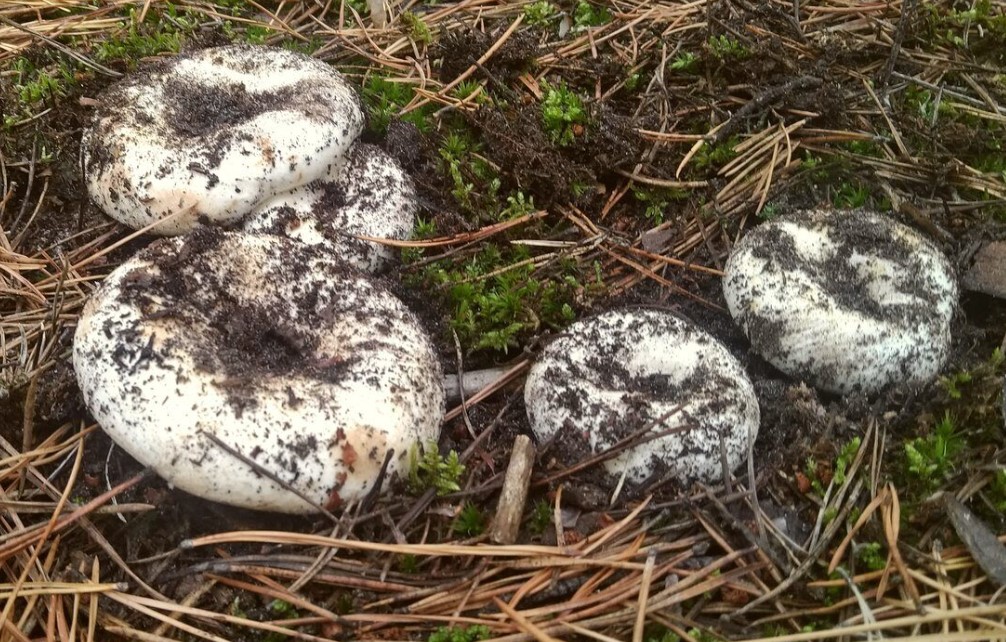
If you purchase high-quality, ready-made mycelium, you can grow milk mushrooms in your garden. It's important to choose a moist location protected from direct sunlight.
For the mycelium to take root, it needs to be next to a birch tree, but hazel, willow or poplar will do.
Next, the mycelium is established. This is done from May to September according to the following schedule:
- Steamed sawdust is mixed with disinfected soil; this will serve as a substrate for milk mushrooms.
- A hole up to 20 cm deep is dug, preferably near the roots of the “partner” trees.
- The substrate is placed on the bottom, the mycelium is placed on top of it and covered with the remaining substrate.
- The planting site is watered with lime solution (50 g per 10 l of water).
The mycelium needs to be regularly watered with warm water; the first harvest can be collected in a year or two.
Cooking Milk Mushrooms: All the Secrets from Top.tomathouse.com
The classic method for preparing milk mushrooms is pickling and marinating. However, these mushrooms can also be used as ingredients in soups, salads, and main courses. The key is to ensure the soaking and cooking times are appropriate to avoid a bitter aftertaste.
Rules for cleaning milk mushrooms
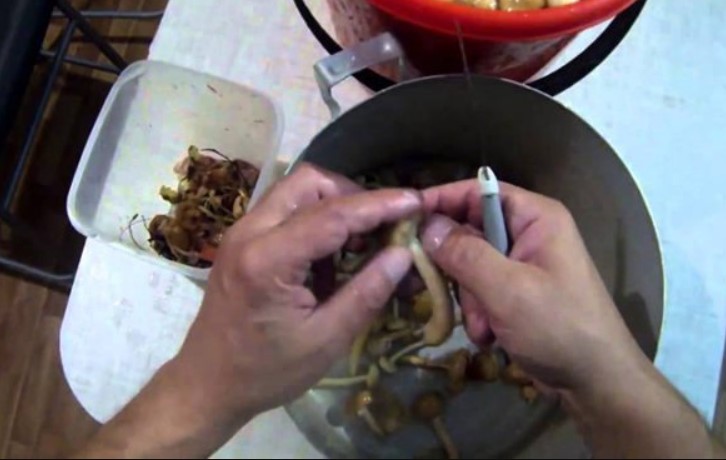
The very first step in preparing any dish is cleaning the mushrooms. This is done as follows:
- Using a brush, remove all forest debris and sand from the milk mushrooms.
- The mushrooms are washed under running water.
- Next, they are placed in a container and filled with water for 2-4 days, after which they are placed in a cool, dark place.
- The water needs to be changed every day, preferably twice - in the morning and evening.
- After this, the mushrooms are cleaned again using a toothbrush and a small knife (for cleaning the gills).
How to boil milk mushrooms
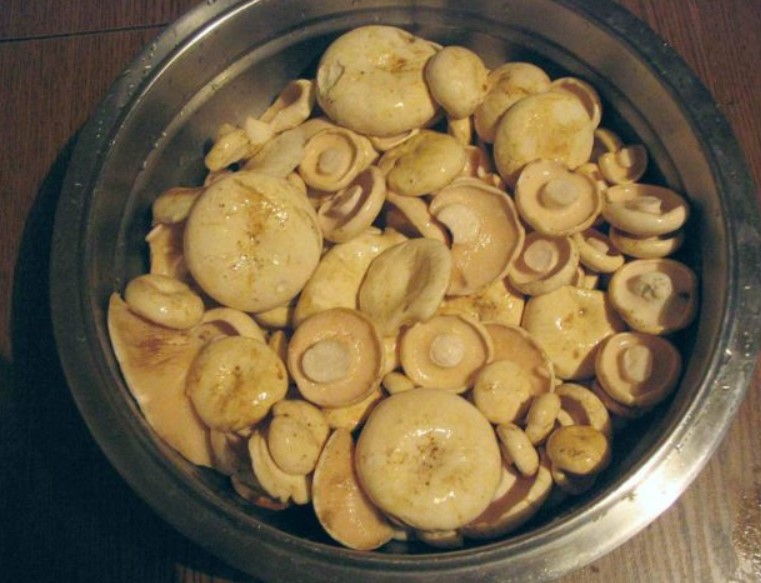
Before cooking, milk mushrooms should be thoroughly washed and cleared of any forest debris. Next, soak them in a brine solution (2 tablespoons per 1 liter) for 1 hour. Then drain the water, place the milk mushrooms in a saucepan, and simmer for 15 minutes.
How to fry milk mushrooms
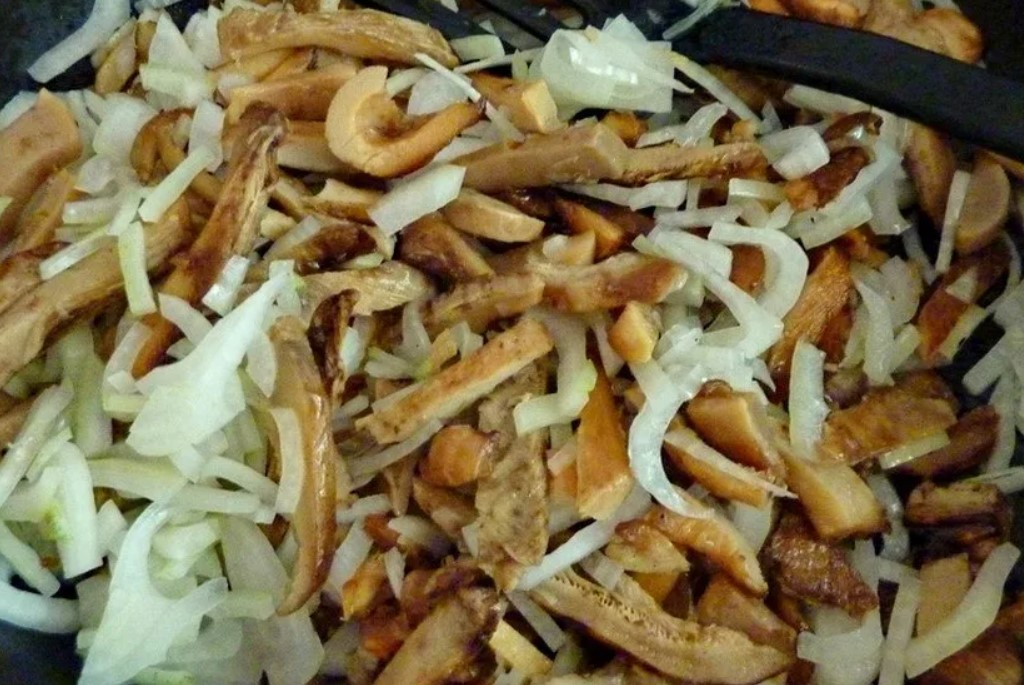
For frying, pre-soaked milk mushrooms are used.
For 800 g of milk mushrooms you will need:
- 3 tbsp sour cream.
- 1 onion.
- 2 tbsp flour.
- 40 g butter.
- pepper and salt to taste.
Preparation:
- Soaked milk mushrooms are boiled in water for 30 minutes.
- Drain the water and let dry in a colander.
- Next, roll them in flour and place them in a hot frying pan with oil and fry for 10 minutes.
- Add finely chopped onion and cook over medium heat for another 5 minutes.
- Add sour cream, salt and pepper, then simmer for 1-2 minutes.
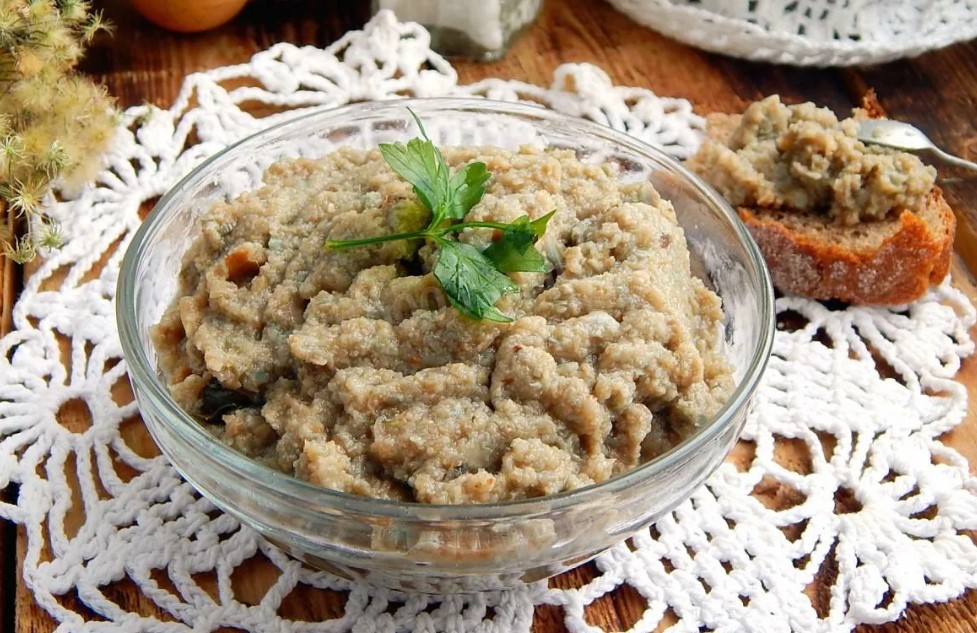
Milk mushroom caviar
Milk mushroom caviar goes perfectly with tomato puree. To prepare, you'll need:
- 2 kg of milk mushrooms.
- 400 g tomato puree.
- 100 g of sugar.
- 80 ml vinegar (9%).
- 8 g citric acid for preservation.
- bay leaf.
- 40 g of salt.
Cooking steps:
- Boil the soaked milk mushrooms with citric acid for about 30 minutes, then chop finely.
- Mix tomato puree, salt and a glass of boiling water.
- Pour the mixture over the mushrooms and add the bay leaf.
- Simmer over low heat for 10 minutes.
Place the caviar in sterilized jars, roll up the lids, turn them over and cover with a warm blanket.
Milk mushroom soup
Milk mushroom soup is very easy to prepare.
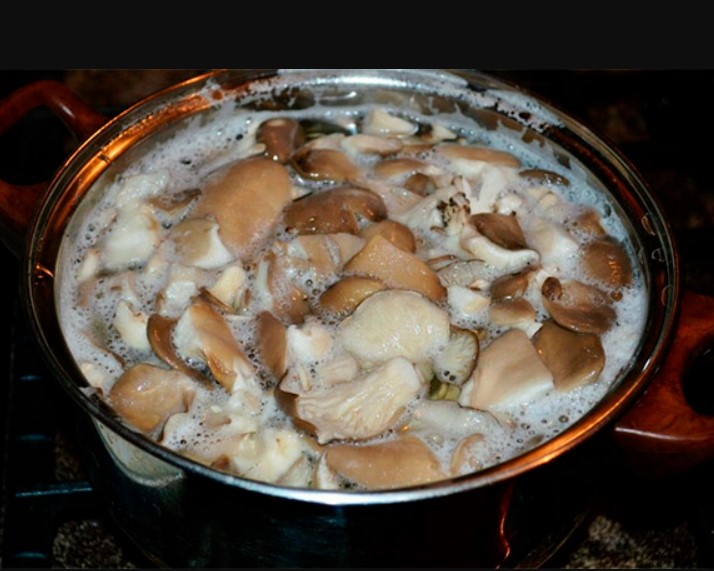
- The sliced and soaked mushrooms are boiled for about 30 minutes.
- Carrots and onions fried in butter are added to them.
- The potatoes are cut into small pieces and also added to the pan.
- If desired, you can add a handful of spider web vermicelli.
- The soup is salted and herbs are added when serving.
Methods of pickling milk mushrooms
How to pickle milk mushrooms: pickling methods
Besides their delicious taste, salted milk mushrooms also offer many health benefits. In many families, pickling recipes are passed down from generation to generation. But there are some general rules:
- All impurities are removed from the mushrooms.
- Milk mushrooms are soaked for 2-4 days in a saline solution at a rate of 10 g per 1 liter.
There are two main ways to pickle milk mushrooms:
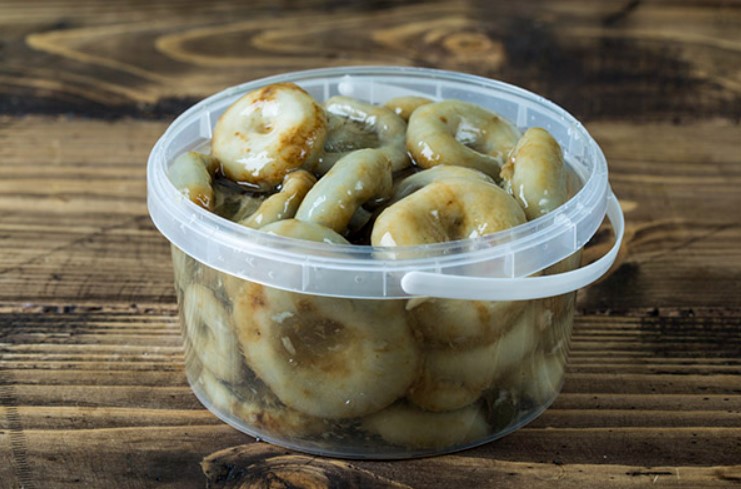
- HotThe brine is prepared separately, and the milk mushrooms are boiled in it for about 30 minutes. They are then rinsed and placed in a large container, salting each layer. A weight is placed on top. The milk mushrooms are left in this state for 30 days.
- ColdPlace the soaked milk mushrooms in a container, and sprinkle each layer with 2 tablespoons of salt. A sprig of dill can be added on top. Next, place the mushrooms under a weight for 45 days, after which they are transferred to jars and filled with the brine. Store in a cool place in jars under plastic lids.
Why do milk mushrooms taste bitter after pickling?
After pickling, milk mushrooms sometimes develop a bitter taste. This can be due to several reasons:
- Not all dirt was removed during cleaning.
- The collection site was contaminated.
- The mushroom was not soaked enough.
- The salting technology was violated.
- Incorrect storage conditions.
- Insufficient salting time (less than 30 days).
There are several ways to correct the situation:
- Rinse with cold water and add sour cream.
- Drain the solution and soak it again for 48 hours, then make a new, saltier solution.
Benefits of salted milk mushrooms
Salted milk mushrooms have a wide range of beneficial properties:
- Strengthening the immune system.
- Glucose level regulation.
- Normalization of the gastrointestinal tract.
- Strengthening the nervous system.
- Antioxidant action.
- Anti-inflammatory effect.
- Reducing the risk of developing stones in the urinary tract and kidneys.
- Prevention of atherosclerosis.
- Strengthening bones.
- Improving skin condition.
- Help in the treatment of lung diseases.
Using milk mushrooms in cosmetology + 4 recipes for skin and hair
Milk mushrooms are used in anti-cancer therapy, inhibiting tumor growth and reducing metastases as part of a comprehensive treatment. In cosmetology, they are included in regenerating serums and nourishing masks.
We offer you several beauty recipes that you can easily use at home.

Anti-acne mask
- 2 milk mushrooms.
- 1-2 tsp sour cream 20%.
Grind the soaked mushrooms into a paste, then add sour cream until it reaches a runny consistency. Apply to a cleansed face for 10 minutes and rinse with warm water. Repeat up to twice a week.
Whitening and smoothing mask
- 2 milk mushrooms.
- Lemon juice – 1 tsp.
Chop the mushrooms, add lemon juice, and apply to your face for 15 minutes, avoiding the eye area. Rinse with warm water.
Nourishing mask
- Milk mushrooms – 2 pcs.
- Oatmeal – 1 tbsp.
Grind the oatmeal in a coffee grinder, add the milk mushroom pulp, mix, and apply to your face for 10 minutes. Remove the mixture with a tissue, then wash with room-temperature water.
For hair shine
To prepare the mask you will need:
- Chopped milk mushrooms – 2 pcs.
- Kefir – 1 tbsp.
- Honey – 2 tbsp.
- Lemon juice – 0.5 tsp.
Mix room-temperature kefir with all ingredients, apply from roots to ends, wrap your head in plastic, and leave for 5-15 minutes. Then rinse your hair as usual.