Landscape design for a summer cottage is often considered an unaffordable luxury, available only to a select few. In reality, it doesn't require a huge amount of effort or expense. Ordinary garden beds can easily be transformed into a designer composition. All the necessary materials are readily available in any ordinary garden. If you need to buy anything, it's very inexpensive, because the most valuable asset here is the idea. All you have to do is choose your favorite idea and begin implementing it.
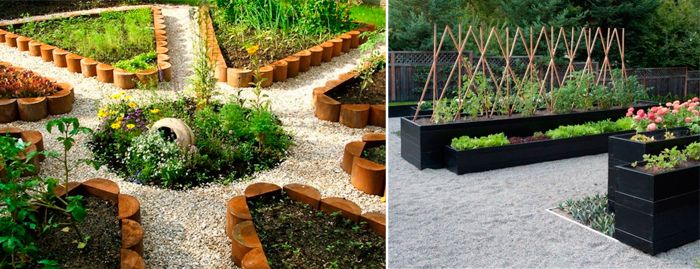
Idea 1. Beds "in a frame"
A tidy garden bed can be created by framing it with ordinary boards. You can use timber, clapboard, or other available wood. To ensure the garden bed lasts for many seasons, it's important to protect the edges from rot. You can treat the wood with a special preservative or use a more affordable solution. Copper sulfate, for example, can be used. Simply dip each board in the solution and then paint the outside. After this treatment, the garden bed will last at least five years.
The tree must not be soaked in used motor oil, otherwise toxic substances will penetrate into the soil.
Idea 2. Beds with unusual edges
By surrounding the garden bed with borders, you can raise it above the ground. This simple solution looks very attractive. Any available materials can be used for the borders: plastic or glass bottles, roof tiles, or pieces of tile—the more unusual, the more interesting. Simply hammer the components along the outline of the future bed; for ease of installation, we recommend marking them out first. If the borders are heavy, make grooves for them, otherwise the structure will be unstable.
Carefully inspect the selected material. Remove any dirty or damaged pieces in advance, otherwise they will ruin the look later.
Idea 3. Moving up
Raised garden beds are a modern trend. They're resistant to rain and sun, and easy to maintain because you don't have to bend down. Even the plants in these beds are stronger and healthier: the structure keeps out weeds and pests.
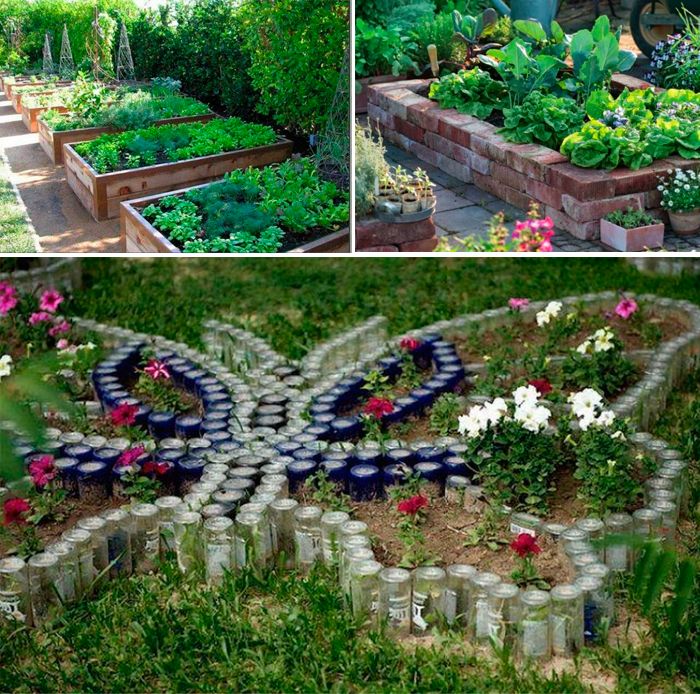
A raised bed can be shaped in any way and constructed from any material. However, strength is paramount. Brick or concrete blocks are commonly chosen for such a bed. If you prefer wood, use the most durable decking boards.
The most convenient bed to care for is one that is 1 m high and 90 cm wide.
Idea 4: Pots instead of flower beds
The plant can be planted in a spacious container. This not only looks stylish but also allows you to move the flowerbed around the site: place it in the sun or move it away from the rain. Plastic basins, barrels, old pots, and other unused containers are all suitable for the "pot." Don't forget the recent trend of growing in bags.
It is better not to make beds in car tires, as they can poison the soil with chemicals.
Idea 5. Multi-level garden beds
Multi-tiered garden beds can help save space in a small area. These structures look very unique, but they require a little more effort to create. A simple version of a multi-tiered garden bed is stacking wooden boxes on top of each other. A ready-made frame can also be found at the store.
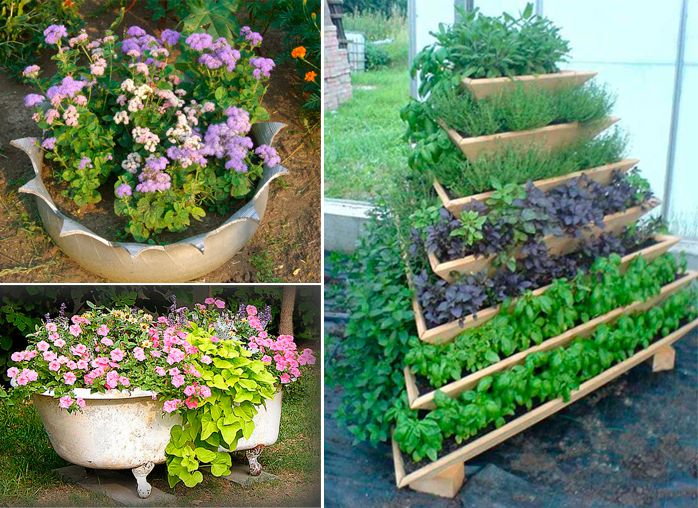
It's recommended to plant zucchini or root vegetables on the first tier, and climbing plants like cucumbers or peas on the top tier. Herbs, peppers, tomatoes, and other vegetables will thrive in the middle tiers. Flowers also look spectacular in this type of bed.
Idea 6. Garden beds with a unique design
A garden bed will be unique if you use up unwanted items. Look around the shed for something. Flowers growing in an old boat look like a unique designer piece. Vegetables can be planted right on the table by filling the holes in the countertop with soil. Fill an old bathtub with soil to create another unique garden bed.
Flower beds aren't the only things that can have unusual geometric shapes. Vegetable beds arranged in a composition look even more interesting.
Idea 7. Paths between beds
Unusual paths will add convenience and a neat appearance to your property. The space between beds can be filled with sawdust, crushed stone, pebbles, and other available materials. Log cuts look especially stylish. Broken tiles and colorful ceramic pieces can be used to create authentic mosaics. Some people make paths from leftover linoleum or old carpets; this is inexpensive and no less interesting.
Benefits of landscaped paths:
- no weeds grow on them;
- It's more comfortable to move around the area.
Regular beds will spread out, so make borders along the edges of the path.
As you can see, vegetable beds can be beautiful and interesting. We've described just a few ways, but there are many more. Once you start designing your plot, you'll have new ideas waiting to be implemented.