Creating a beautiful garden on a site with significant elevation changes can be challenging. The best option is to build retaining walls. This solution can dramatically transform the appearance of the property.
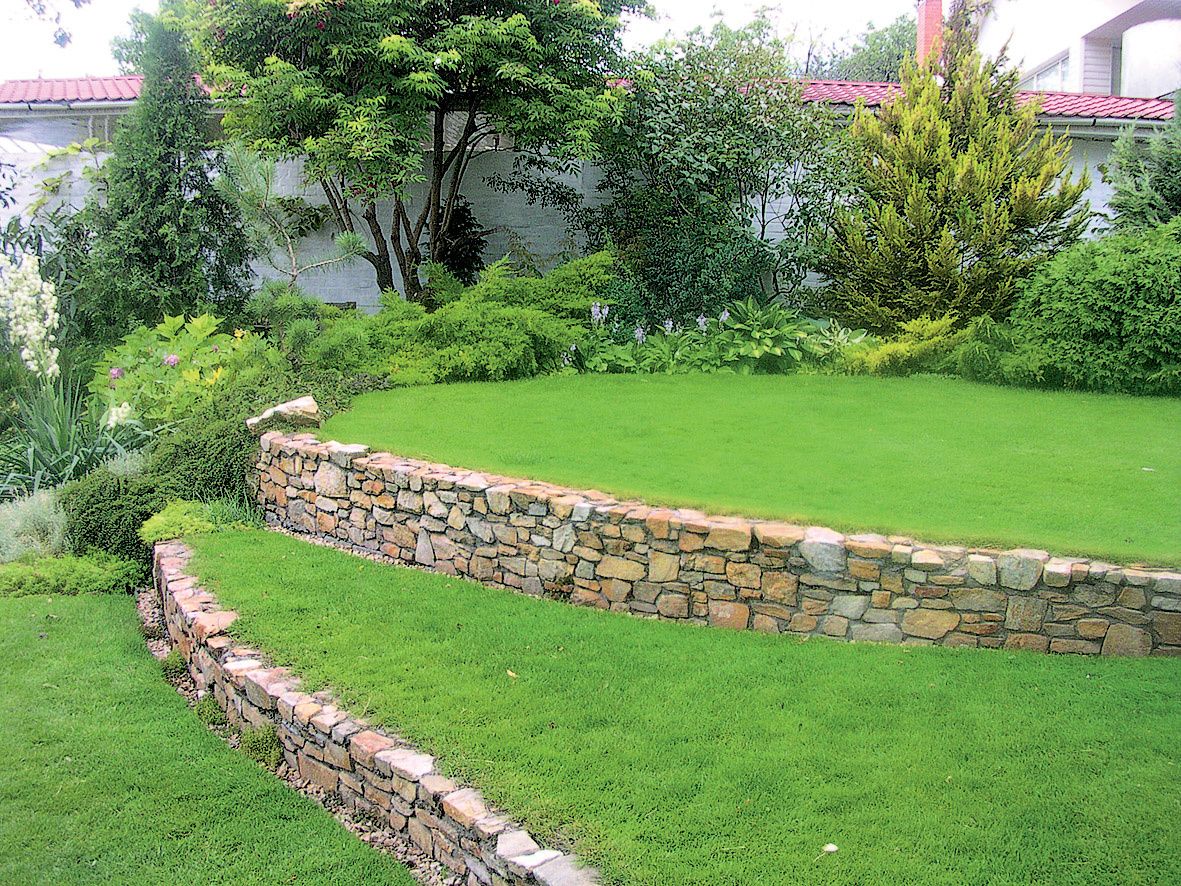
Objectives and design of retaining walls
If the entire site is located on the slope of a ravine or hill, it will be quite difficult to efficiently utilize all the available soil. During cultivation, the soil will gradually slide, which will only worsen the problem. Retaining walls should be installed throughout the site to quickly and permanently solve this problem.
The area needs to be divided into separate sections. Retaining walls will act as demarcation structures. The soil level in each section should be leveled horizontally. The retaining walls will prevent soil from sliding during cultivation.
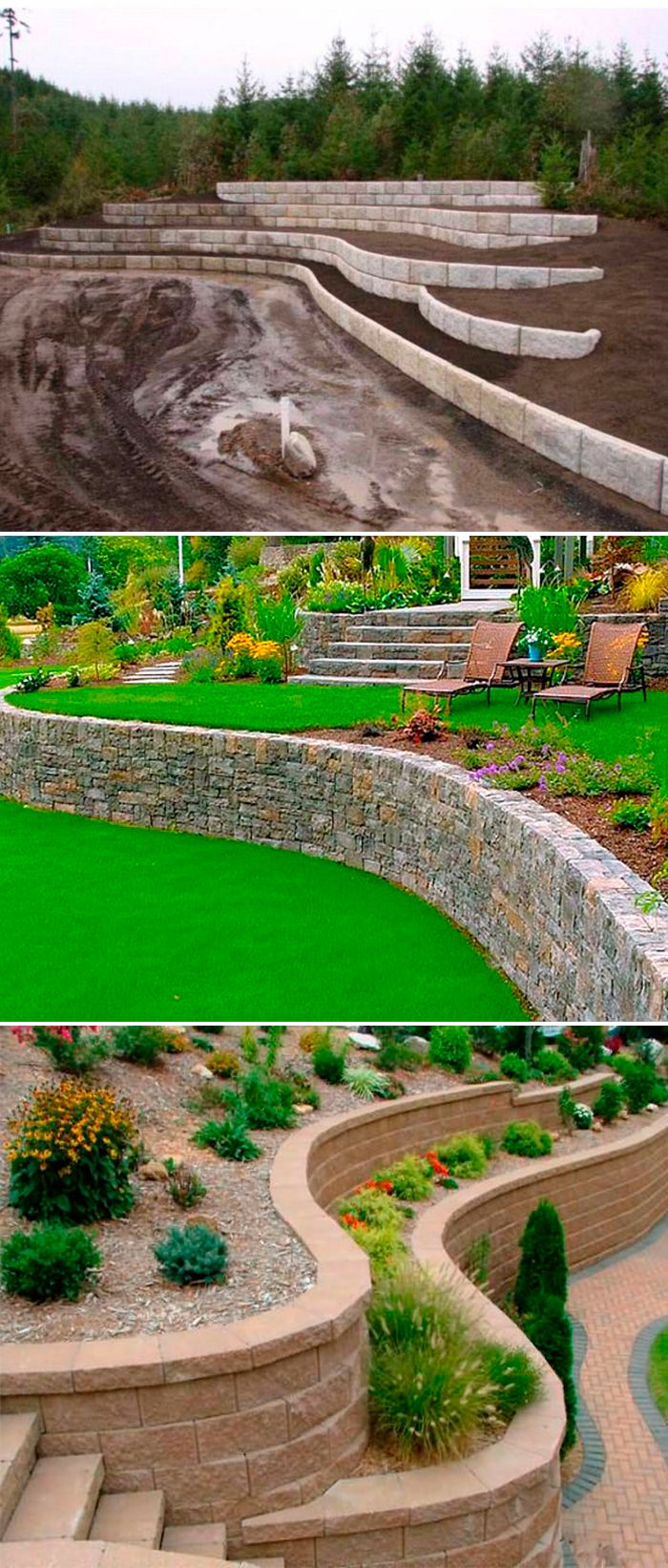
The plot will take on a staircase-like appearance. Each zone, separated by walls, will represent a separate small garden or vegetable patch. The individual sections will resemble steps that form a single, large staircase. Each section can be planted with different flowers and other plants, shrubs, or trees.
There are many ways to construct retaining walls. The materials chosen determine the durability, practicality, and aesthetics of the structure. This method not only prevents soil erosion but also allows for creative zoning of the site and enhances its appearance. Separate areas can be created for recreation, flower growing, crops, and more.
Building retaining walls will dramatically transform the appearance of your property. Therefore, carefully select materials and installation methods to ensure a beautiful and functional site that meets your specific needs. There are many ready-made retaining wall construction solutions available. By evaluating various ideas, you can choose the best option to suit your preferences and budget.
Gabion
A gabion is a three-dimensional structure with a mesh frame filled with stones. The structure's strength is ensured by the mesh frame. Its reliability and robust appearance are achieved by filling the structure with large stones. Stones of various sizes, pebbles, and similar materials can be used.
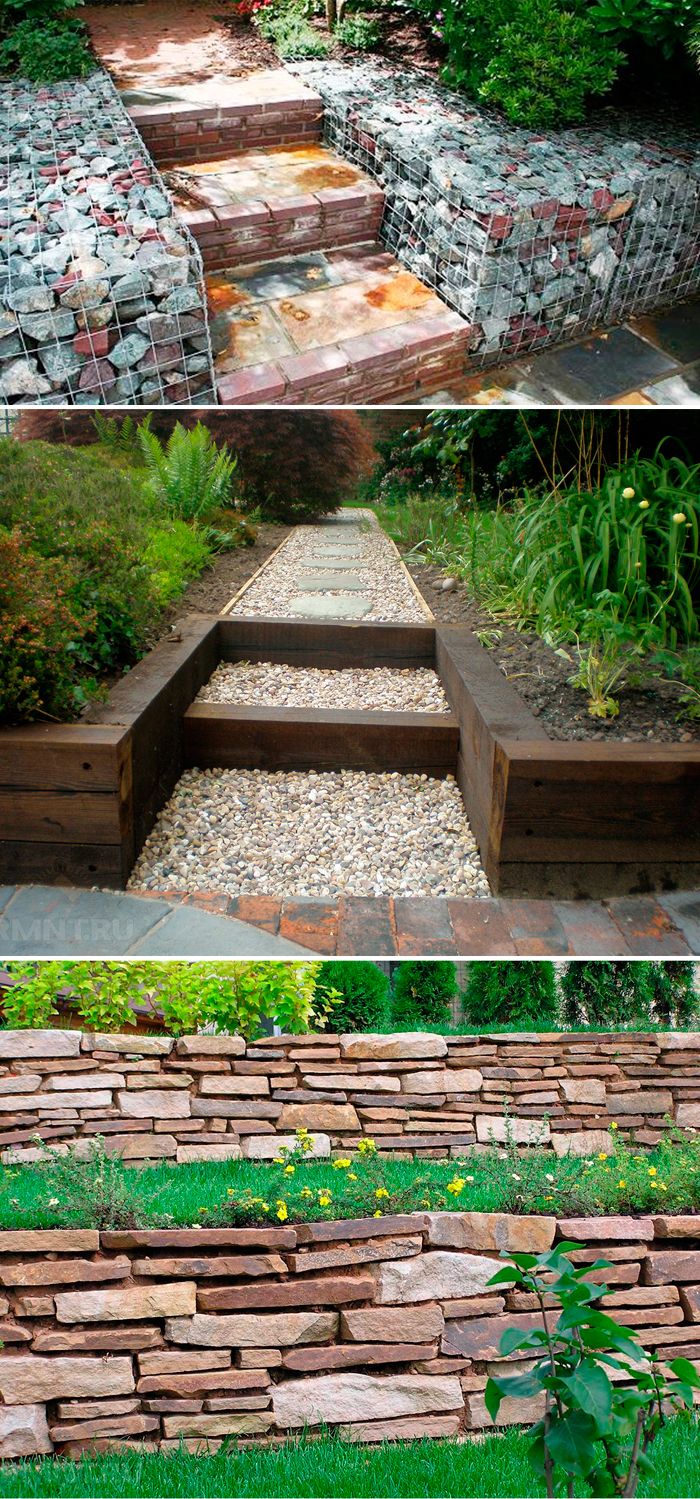
Retaining walls made of wooden sleepers
Regular wooden railroad ties can be used to construct retaining walls. A special impregnation during the manufacturing process ensures a long service life and is resistant to moisture. Fire-resistant wooden ties are even available. They can be used to construct retaining walls of virtually any height. The ties are assembled using staples, nails, or other suitable fasteners.
Stone retaining walls
A more complex method to manufacture, these walls can vary significantly in design depending on the laying method, size, and shape of the stones used. The main difficulty lies in the fact that construction requires stonemasonry skills. However, in terms of aesthetics, practicality, and durability, this option is one of the best.
Metal retaining walls
Sheet steel is used as the main material for the structure. The material must be of sufficient thickness to withstand the load of large amounts of soil. Additional supports and stiffeners can be added to strengthen the structure. To extend the life of the metal, it should be treated with a suitable paint and varnish.
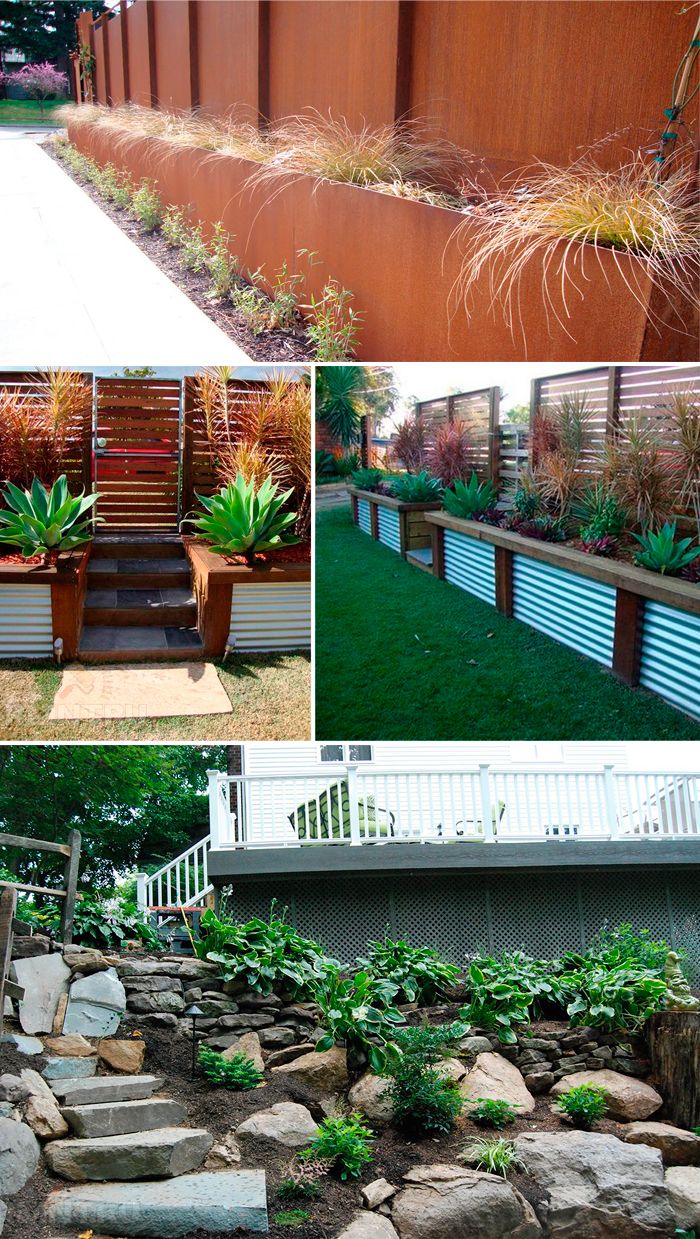
Retaining walls made of corrugated sheets
Due to the presence of ribs across the entire surface, corrugated sheets can withstand significant loads despite their relatively thin thickness. These walls are as reliable as their stone and wood counterparts. They are easy to install. Zinc and polymer coatings provide corrosion protection.
Walls without form made of large stone boulders
The stylistic feature of these walls is the lack of a clear shape and rigid framework. They are assembled from large boulders. Individual stones are placed directly on top of each other in 1-3 rows. The spaces between them can be filled with soil and crushed stone.
Concrete retaining walls
Concrete is one of the most durable and reliable materials. When erecting walls, they can be constructed in virtually any shape. The downside of this method is its expense, as pouring a large area requires a considerable amount of cement mortar. To save money, walls can be filled with stones, crushed stone, broken brick, and similar materials. Precast concrete blocks, installed in the grooves of the support posts, can also be used.